I was recently invited to Kaveri Ponnapa’s book launch that I had been looking forward to.
Many in Mysuru may not recognise her name, but anyone who has even a passing interest in Coorg or the culture of small, distinct communities of this land would certainly know her remarkable work, ‘The Vanishing Kodavas.’
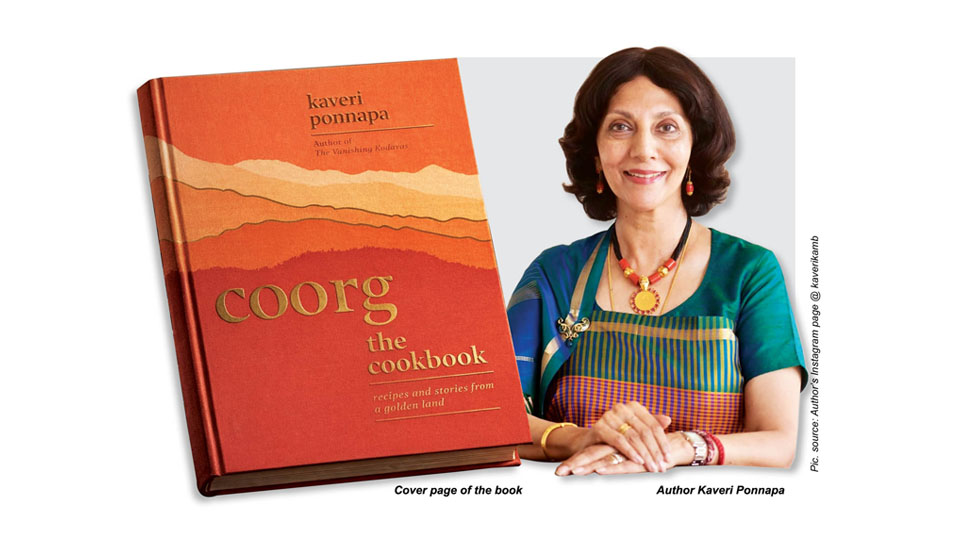
Just like her previous book, which was rich with history, culture and stunning imagery, her latest work, ‘Coorg: The Cookbook — Recipes and Stories from a Golden Land,’ is both beautiful to look at and deeply satisfying to read.
This book nourishes not just the appetite but jogs the memory, too.
‘Coorg: The Cookbook’ has been in the making since 2012 and the patience shows. It is thoughtfully structured into sections such as rice-based dishes, meats, seafood, vegetarian dishes, foraged foods, pickles, sweets and beverages.
Each section opens with a gentle historical introduction explaining how and why these foods became part of the Coorg dining table. It tells us why it is not just about how to cook, but also about understanding why Kodavas cook the way they do.
The book also includes sections on foundational pantry ingredients and the spices and herbs that define Coorg cuisine. For readers unfamiliar with some ingredients, the author thoughtfully offers alternatives.
There is even a section explaining how to use the book, making it as accessible to an outsider who may not be familiar with Coorg cuisine at all. That said, even a Kodava like me had some surprise discoveries.
The first surprise I encountered in the book was that while modern Coorg is synonymous with coffee plantations, it was earlier primarily a land of paddy farmers.
No wonder rice sits at the centre of not only Kodava cuisine but also culture. Appropriately, the first dish the book introduces is the humble yet iconic ‘Akki Otti’ or rice roti.
Another delightful revelation is the long-held myth that Coorg cuisine is dominated by pork. Yes, Coorg is famous for its pork dishes, but the book reminds us that Coorg food is far more diverse.
Of the 132 recipes in the book, just 36 are non-vegetarian dishes and only 6 of them are pork! The remaining dishes feature chicken, mutton, fish and crab.
Meanwhile, there are 45 vegetarian recipes! which include an array of ‘pallyas’ & ‘chutneys.’
So, the notion that Coorg cuisine is dominated by the hog is hogwash.
What also struck me personally were the dishes I had never heard of before. There are recipes such as ‘Miniature Jackfruit Pancakes’ (Coorg name: ‘Chatti Puttu’) and the intriguingly named ‘Steamed Rice Parcels with Hitchhiker Elephant Ear Leaves’! (Coorg name: ‘Mara Kembe Puttu’).
But what truly elevates this book beyond the realm of a cookbook are the stories quietly interwoven along with the recipes. Food, after all, is rarely just about taste; it is about people, places and memories.
Reading about the ‘Nende Kari’ or the ‘Crab Curry,’ transported me back to my childhood in Coorg. I remembered being sent to the paddy fields with my cousin to catch crabs for dinner. We would return with a small mug full, often with bleeding fingers. Crabs can put up quite a fight.
While our grandmother prepared the ‘Nende Kari’ (Crab Curry), we sat near the fireplace listening to her tell stories of elephants straying into plantations, of wild boar hunts and town gossip, all while the aroma of spices slowly filled the kitchen.
This is the kind of book that eventually becomes an heirloom, something to be preserved, treasured and passed down through generations. Kaveri Ponnapa herself writes, “Recipes are cultural inheritances.”
This is why ‘Coorg: The Cookbook’ feels more than just pages of recipes. It takes you on a journey down memory lane.
For many Kodavas living far from their homeland, the book may well feel like a bridge back to traditions that are slowly fading. That alone is reason enough to own a copy.
In many ways, to use a culinary euphemism, this book pairs beautifully with Kaveri’s earlier work, ‘The Vanishing Kodavas.’
One documents the culture, the other documents the cuisine. Culture and cuisine, the two pillars that define every community.
Kaveri Ponnapa observed that “Kodavas are vanishing,” but with her books, she has made sure they will not be forgotten.
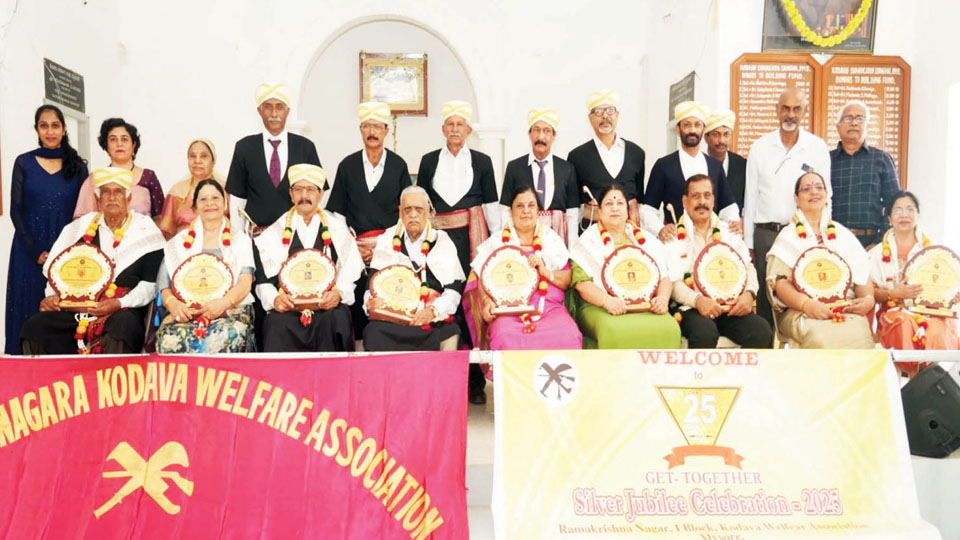
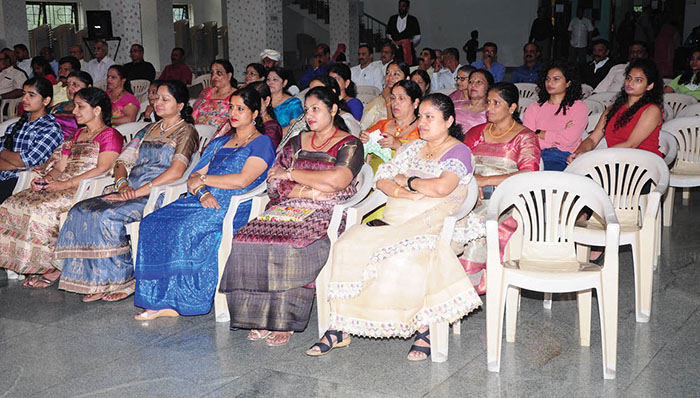
The annual get-together and silver jubilee celebration of Ramakrishnanagar ‘I’ Block Kodava Welfare Association, Mysuru, was held recently at Kodagu Sahakara Sangha in Jayalakshmipuram.
Association President Kodandera Puspha Machaiah presided. The event commenced with a formal inauguration by lighting the lamp followed by invocation by Mundiyolanda Nanda. Secretary Kenjangada Kariappa welcomed.
Condolences were offered to the departed members during the last one year and community extended their heartfelt condolence to the Founder-Editor of Star of Mysore K.B. Ganapathy, in recognition of his exemplary service to journalism and the Kodava community as well as valuable contributions to the society at large. Top scorers in X standard CBSE and II PUC students of 2025 examinations were felicitated with cash prizes.
The Founder Executive Committee Members were felicitated on the occasion for their service rendered for the community.
Annual Report was presented by Treasurer Kotrangada Appanna while Kattera A. Nanaiah, Advisor, highlighted the Association’s milestones over the last 25 years.
Maletira Ganapathy, Vice-President, proposed the vote of thanks. Codanda Swagath, Joint Secretary and all other Committee Members were present. Kotrangada Shruthy Ashwath compered.
source: http://www.starofmysore.com / Star of Mysore / Home> News / August 28th, 2025
In a celebration of heritage, athleticism and community spirit, the Kodava Samaja Youth Wing Mysuru (KSYWM) is set to host the Kodava Hockey Premier League (KHPL 2025) in association with Kodava Samaja Mysuru and under the aegis of Hockey Mysuru. The much-anticipated tournament will take place on June 27, 28 and 29 at the Chamundi Vihar Stadium, Mysuru.
KHPL 2025 will feature ten dynamic franchises — Coorg United, Kodavu Warriors, Pale Taluk, South Side Rangers, Team Kodava Tribe, Connecting Kodavas, Anjigeri Naad, Coorg Titans, Kakot Strikers and MTB Royals — who will compete in what promises to be three days of thrilling hockey action.
The grand player auction is scheduled for June 1 at ibis Styles Mysuru, the official hospitality partner for KHPL 2025.
Office-bearers and Working Committee Members of Kodava Samaja Youth Wing Mysuru — President:Kotera Vedith Uthaiah, Vice-President: Pebbatira Dimple Danny, Secretary: Battira Bojanna, Joint Secretary: Appaneravanda Viharika Mandappa, Treasurer: Hanchettira Varun Nanjappa, Joint Treasurer: Kademada Shreyas Muthanna — seen during the KHPL 2025 logo launch.
Lending prestige and vision to the league is a distinguished panel of advisors including Anjaparvanda B. Subbaiah, Honorary Secretary of Hockey Karnataka and former Olympian; Konganda Dilip Biddappa, President of Hockey Mysore; Pandanda Bopanna, President of Kodava Hockey Academy and Kotera Muddaiah, Vice-President of Hockey Mysore. Mentoring the young talents are two accomplished hockey personalities — Bolliyapanda J. Cariappa, Coach of Indian Junior Hockey Team, and Karineravanda Somanna, a former Indian hockey player.
In a historic first for Kodava hockey, KHPL 2025 mandates each team to include one female player and two emerging players under 18. This progressive step brings gender inclusivity and youth empowerment to the forefront, ensuring 10 women and 20 young talents shine on the Kodava hockey stage.
For details, contact KSYWM
President Kotera Vedith Uthaiah on Mob: 88804-01206.
source: http://www.starofmysore.com / Star of Mysore / Home> Sports / May31st, 2025
C.G. Somiah’s memoirs, in both form and content, reflect his famed qualities: uprightness and modesty.
On The Half-Tones of Truth
It is perhaps an acknowledgement of whatever fairness is left in the system that C.G. Somiah managed to make it to the top echelons of the Indian Administrative Services without ever swerving from his values and convictions.
Born in 1931, Somiah joined the IAS in 1953, beginning in Orissa and ending up in Delhi. It was from his father, a forest officer to whom he was deeply attached, that he internalised the value of honesty. Later, he forged a similar companionship with his wife, Indira, whose counsel he seeks in tricky work situations.
But one wishes he was more introspective on some of the situations he describes. His struggle against the politician-contractor nexus on tendu leaves, for instance, which he won to a limited extent, is now a more serious problem in Orissa, stained with the blood of Maoist and state violence.
There are other passages that break through these self-imposed boundaries. Returning from Koraput, after the inauguration of a chromium factory, he reflects: “On the way back we passed by the Sunabeda where once a virgin forest stood!…. Instead of the twinkling lights of the new township, my eyes could only see the ancient forest that once occupied this land with majestic trees. This is the forest that I had once helped to uproot to make way for the township.” This ambivalence of the administrator, bereft of a universally accepted vision of development, still lingers. On the other hand, his spare style ensures that there is no sensationalising of the many exciting matters of state that could certainly have turned the book into a bestseller.
Union home secretaries always live in interesting times. Somiah’s tenure seems to have been especially so, given the demands of a young prime minister in a hurry, the delicate relationship between the then home minister Buta Singh and his deputy Arun Nehru, negotiating the mistrust between the President and the PM to avoid a constitutional disaster, the successful conduct of Operation Black Thunder and fashioning the Mizo and Gorkhaland accords. Somiah describes these from his vantage point, always careful to narrate only the facts.
What stands out is his innate decency in these difficult situations. After Operation Black Thunder and the successful flushing out of terrorists from the Golden Temple in Amritsar, and when his suggestion to Buta Singh and Governor Siddhartha Shankar Ray about him visiting the Golden Temple and paying his respects is overlooked, he makes the trip with his wife, which assuaged much of the perceived hurt. As home secretary, Somiah was once caught by a Delhi constable for jumping a traffic light while returning from a dinner outing with his family. He paid the fine and got away without disclosing his identity. What is not lost on the reader is that they dined at a very modest restaurant and that the Union home secretary was driving his personal Maruti.
Somiah emerges as a deeply spiritual person, proud of his Kodava heritage. There is no pretended conflict of interest when he, as part of the home ministry, rejects the suggestion to ban the Kodava right to possess guns—he compares it with the right of the Sikhs to hold kirpans. Of course, he also wryly notes that the first time his community chose to honour him was when he had the word ‘general’ suffixed to his name as Comptroller and Auditor General of India!
Somiah is genuinely proud of his contributions even if he recounts them in a manner that would warm the hearts of accountants. On the Shah Bano case, he acknowledges that it is the flip-flop between a decision that was right in secular India and the subsequent backtracking that led to the situation spiralling out of control.
This is an unpretentious book, without any name-dropping on matters of high state policy to suggest the author was the backroom guy who made it possible. Similarly, no pontificating on governance, the staple of many boring civil service memoirs. Instead, just as he diligently worked to excel in tennis in school and later in bridge, Somiah seems to have gone about reaching the top of his profession with his fair share of tribulations, which he takes in his stride.
“C.G. Somiah…stands by what he has written and takes full responsibility for it,” says the publisher’s note. It’s a good summation of Somiah’s approach to work and life—showing the courage to stand for what one believes in.
(R. Gopalakrishnan is additional secretary to the Prime Minister)
source: http://www.outlookindia.com / Outlook / Home> Books / by R Gopalakrishnan (see above) / Outlook Web Desk / February 05th, 2022
Set in the heart of Kodagu (now Coorg), The Tamara Coorg crafts a scenic getaway for the discerning traveller. Surrounded by nature’s bounty and soaked in tales of history, the property gives its guests a peek into the culture and the livelihood of the people in the region.
When it comes to an experiential holiday in the hills, Coorg is the first destination that comes to mind. Previously known as ‘Kodagu’, this hill station has bragging rights to misty mountains, sprawling coffee plantations, quaint monasteries, pepper vines, and a host of other scenic delights for the discerning traveller.
The etymology of the words “Kodava” (referring to the indigenous people, language, and culture) and “Kodagu” (referring to the land) traces back to the root word ‘Koda’ of uncertain meaning. Some speculate it signifies ‘hills’ while others suggest it signifies ‘west.’ In 1956, Kodagu (now Coorg) was established as a district and became a part of the Karnataka state.
The Land of Coffee
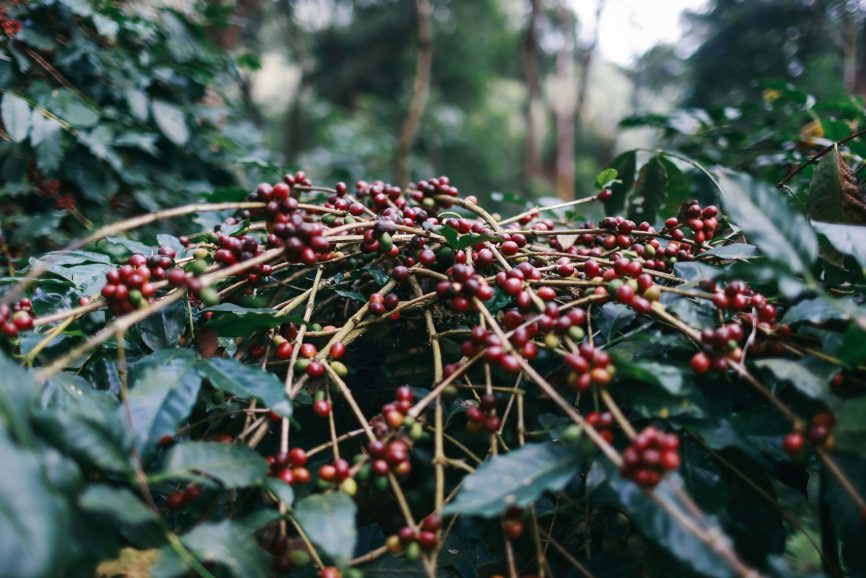
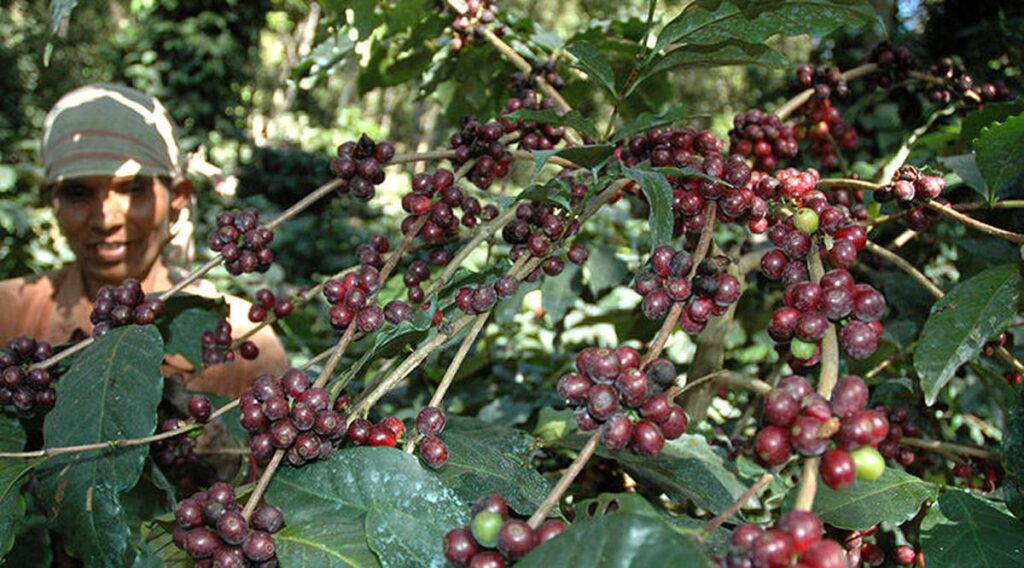
Kodagu thrives as the land of coffee, with the Robusta variety being its primary plantation crop. Notably, Kodagu alone contributes around 33% of India’s coffee production. The region is also renowned for its exquisite wild honey. Nestled within a 184-acre coffee estate, the Tamara Coorg resort stands as a testament to preserving the surrounding ecosystem, untouched by extensive development, making it a truly unique creation in this coffee-rich land.
The flora and fauna of Kodagu
Blessed with three wildlife sanctuaries—Brahmagiri, Talakaveri, and Pushpagiri—and the Nagarhole National Park (also known as the Rajiv Gandhi National Park), located within the Kodagu district, the region boasts an unparalleled wealth of flora and fauna, showcasing its remarkable biodiversity.
Kodava people
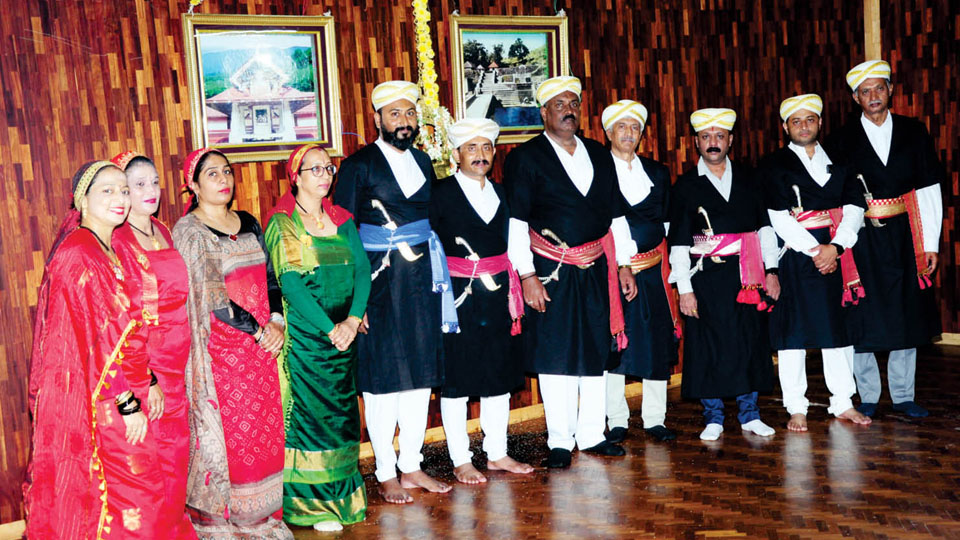
The Kodava people, also known as Kodavas, are the inhabitants of this land. They speak the Kodava language and traditionally identify as land-owning agriculturists, following a patrilineal social order deeply rooted in martial customs. Kodavas hold their ancestors and weaponry in high reverence, and uniquely, they are the only community in India permitted to carry firearms without a licence. Kodagu has also produced several notable hockey players.
Kodava festivities
Kodava festivities revolve around their agricultural practices and military traditions. The community celebrates three main festivals that are distinctive to their culture—Kail Podh, Kaveri Changrandi (Tula Sankramana), and Puthari. In recent times, under the rule of the Haleri Rajas, Kodavas have also embraced a few Hindu festivals, including Ugadi, Ayudha Puja, Dussehra, and Mahashivaratri.
Kodava trails at The Tamara Coorg
Embark on our immersive Kodava Cultural Tour and be transported to a bygone era steeped in tradition. Journey to a nearby village, where a guide will accompany you to an Ainmane, a quintessential ancestral home of the Kodava people.
Walk through the halls of the Ainmane, as it unveils its architectural marvels and treasured artefacts. Delve into the essence of Kodava heritage as you learn about their unique way of life.
Indulge in a tantalising Kodava meal that showcases the region’s authentic flavours and local ingredients. Carry with you cherished memories of the warmth and hospitality as you bid adieu to the Kodava people.
In and around Kodagu
Scouting for activities to partake in when in Kodagu? Here’s a list of destinations that are a stone’s throw from the city and are worth a visit:
Abbey Falls | Distance: 44 km
Talakaveri And Bhagamandala | Distance: 40 km
Bylakuppe | Distance: 76 km
Nalknad Palace | Distance: 7.5 km
Padi Igguthappa Temple | Distance: 9.2 km
Chelavara Falls | Distance: 13 km
Omkareshwara Temple | Distance: 38 km
Raja’s Seat and Nehru Mantap | Distance: 38 km
Madikeri Fort And Palace | Distance: 37 km
For more information about planning a Kodagu itinerary and booking a stay at the plush property of The Tamara Coorg, click here.
source: http://www.cntraveller.in / Conde Naste Traveller / Home> India> Hotels & Resorts / Published by The Tamara Coorg / August 04th, 2023
Kavery Nambisan traces the history and geography of the brew in India in her book ‘Cherry Red, Cherry Black: The Story of Coffee in India’.
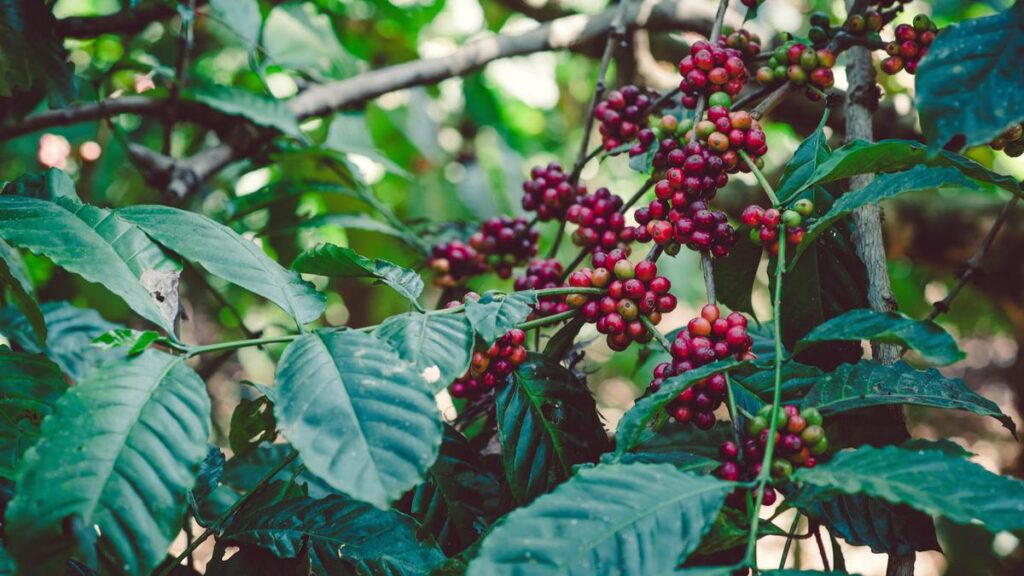
At the Nellikad Coffee Estate in Pollybetta, Coorg | Photo Credit: Special arrangement
When did coffee arrive in India? How did Coorg, a rice-growing area initially, take to growing coffee in large quantities? Where does India stand as a coffee planter and exporter? Kavery Nambisan writes the history of one of the country’s most popular beverages in her new book, Cherry Red, Cherry Black: The Story of Coffee in India. In an interview, she says the history of coffee in India is closely interwoven with global history.
The story goes that an Indian merchant who went on a pilgrimage to Mecca is said to have brought some coffee seeds back with him in the early 17th century, and thus began the backyard cultivation of coffee in parts of then Mysore province, mainly Chikmagalur, Hassan and Coorg. The British saw its potential and expanded the growth of the cash crop. Having worked in the industry — she tried at her hand at berry picking when she was 15 and realised what a tough thing it is — Nambisan also outlines the challenges the industry faces.
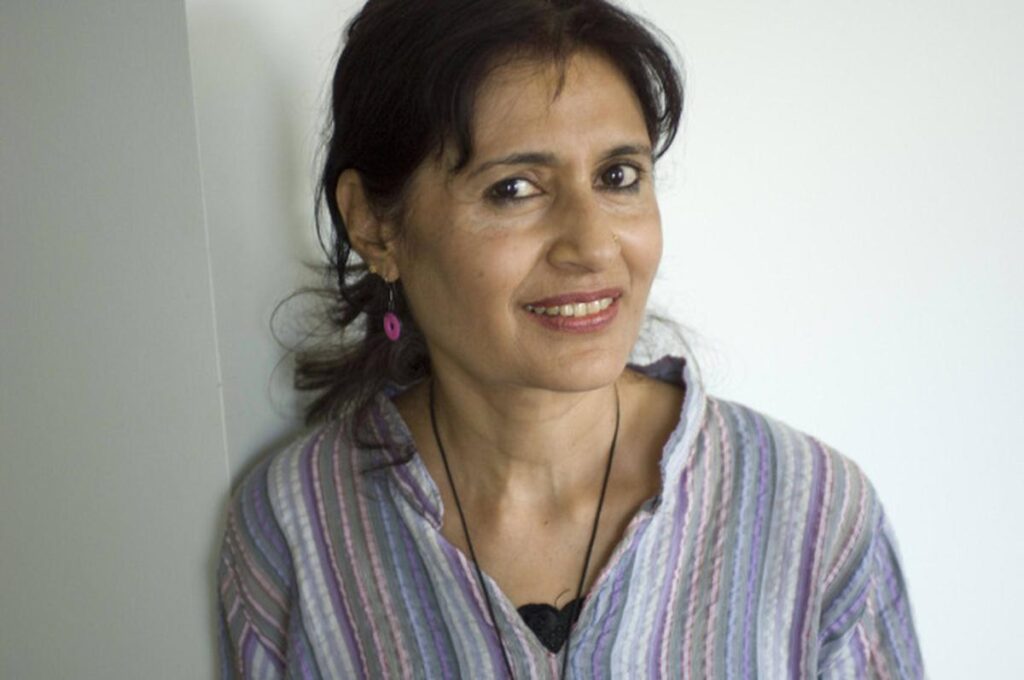
Author Kavery Nambisan | Photo Credit: Special arrangement
You say history has everything to do with the story of coffee in India. Why?
The history of coffee is closely interwoven with global history, particularly from the 18th to the 20th century. It is believed that the stimulant effects were first discovered in Abyssinia when a goatherd noted how his goats frolicked non-stop after eating coffee berries growing in the wild. This led to its cultivation and coffee became something of an energy drink of those days. Its popularity spread to many parts of Arabia and from there to parts of Europe. An Indian merchant who went on a pilgrimage to Mecca is said to have brought some coffee beans back with him and so started the back-yard cultivation of coffee in parts of the Mysore Province, mainly, Chikmagalur, Hassan and Coorg.
By the mid-19th century the British had recognised the potential for growing coffee (and tea) on a large scale. They cut down thousands of acres of forests in these regions for this purpose. The British government which got revenue from its production and export, played a key role in regulating the sale of coffee. The two World Wars challenged the prospects of export and profits while competition from other coffee-growing countries ensured that our own plantations had to work on improving quantity and quality.
Wasn’t Coorg a rice-growing area before the prospect of expanding coffee growth brought the British to the region in large numbers?
The people of Coorg were hunter-peasants right up to the early 19th century when it was annexed by the British. Livelihood was closely tied to paddy cultivation which in turn was dependent on the monsoons. Paddy is a labour-intensive crop and needs workers prepared to work in difficult weather conditions. So the local tribespeople worked in the fields for daily wages. Coffee growing was initially very challenging, and disease often destroyed the crops. But with effective planning, research on the cause of disease, treatment and plant selection, it turned out to be very profitable.
Though the first coffee estate was set up near Mercara, why did coffee growth proliferate in southern Coorg? And what was the variety grown there?
North Coorg where coffee was initially grown receives heavy rainfall which can damage the blossoms and the young berries. Moreover, the area is mostly hilly and so coffee is grown on steep terrain. Within a few decades of cultivation, hundreds of acres of coffee plantations were thus destroyed. Many plantations closed down and some of the British planters went back to England. In Southern Coorg on the other hand, the land is gently sloping, or flat and the rains are not so severe. It is better suited for coffee cultivation. The two varieties of coffee grown are Robusta and Arabica.
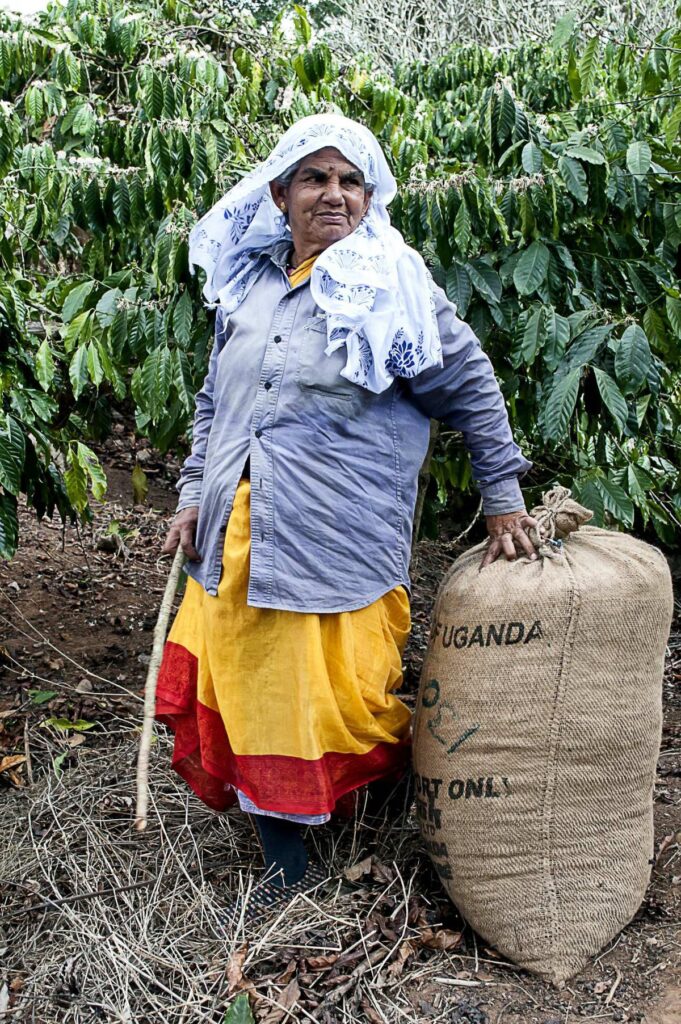
A coffee picker with a sack of harvested beans | Photo Credit: GRJGM
Please share your experience of plucking coffee berries when you were 15. How tough was it?
That was foolish bravado on my part. Perhaps also, the fact that I was of an age when I romanticised manual labour. Coffee plucking itself appears easy when a skilled worker does it. Actually, It is hard work. There are nettled shrubs and creepers that get in the way, abrading palms and scratching the arms and shins. The many insects that creep, crawl and fly will often sting. Dried coffee twigs can poke the eyes for good measure when the picker crouches beneath the bushes to pluck the berries. I was not able to pick as much as I thought I could. But the workers? They talked and laughed all day and plucked enough berries to fill a few sacks each.
Was the rapport between the local Kodavas and the British a happy one? What did they learn from each other?
I guess you could say it was a good rapport. You need to go back in history in order to understand why. Coorg (or Kodagu) was ruled by the Haleri kings for 250 years before the British annexed Coorg in 1834. Coorg was better off under the British. They got schools, dispensaries, apothecaries, etc. Importantly, there was more peace and harmony which came with better administration. Within a few decades, many of the Kodavas became literate. The British found them to be hard-working, honest and trustworthy.
___________________________
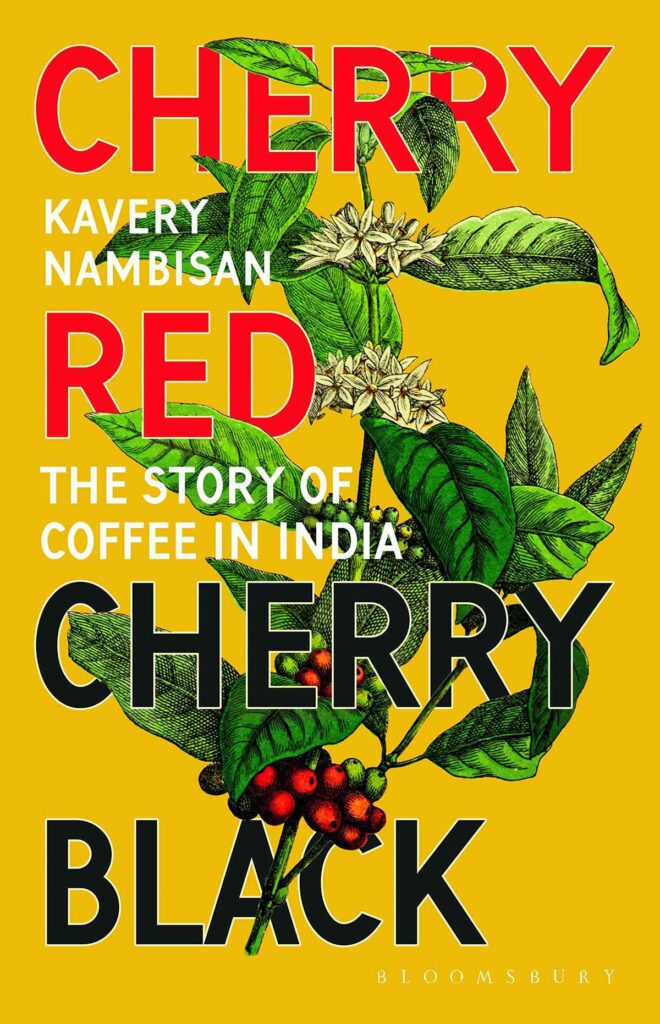
Cherry Red, Cherry Black: The Story of Coffee in India
Kavery Nambisan Bloomsbury
₹699
_________________________
What are some of the concerns about the modern coffee industry?
There are several concerns: Coffee plantations are the result of the felling of large areas of forest land, particularly in and around the Western Ghats. It is also a crop that uses pesticides and chemical fertilizers which denude the soil of its health and vigour. Organically grown coffee is a possibility, but economically it is not viable in large plantations. The climate catastrophes experienced in the last few years has led to destruction and loss of lives. We need to look at alternate ways of producing coffee so the end result is not deleterious to the environment. There are many individuals, groups and a few corporates who are experimenting with new methods. Coffee growing is no longer as lucrative as it once was and there is a need for innovation and the use of methods that are not harmful to the ecosystem.
A farmer in Coorg picks riped coffee beans for pulping | Photo Credit: Sampath Kumar G.P.
From Steeping to the French Press there are many ways to make coffee and you describe them in the book, which is your favourite way to make and drink coffee?
I have been a coffee drinker all my life, naturally. I cannot start the day without coffee. I like it strong, hot and full flavoured. I use a mix of Robusta and Arabica beans, roasted at a mill nearby and powdered at home. I have three methods that I use to make coffee, depending on my mood. The Moka pot coffee, filter coffee or the simple brew, in which you heat fresh water and when it comes to boil, add the coffee powder, cover and let it steep for 2 minutes, strain and serve with hot milk and jaggery.
source: http://www.thehindu.com / The Hindu / Home> Books / by Sandipta Datta / December 09th, 2022
The first Annual General Body Meeting (AGM) and get-together of Pombolak Kodava Koota, Mysuru was held at Kodava Samaja premises in Vijayanagar here recently.
Koota President Mundottira Jaya Chengappa presided.
Theetharamada Dr. Devaki rendered the invocation. Vice-President Thathira Bheemaiah condoled the death of Koota members in the past one year.
Koota’s annual report was read out by Joint Secretary Guddanda Rashmi Uday while the accounts was presented by Treasurer Kullachanda Vinutha Kesari.
The names of new members was read out by Annarkanda Prathima Thimmaiah, who also compered the programme.
Committee Member Boppanda Appaji proposed the vote of thanks.
Various sports and games were conducted for the members present by Sports Committee Member Adikera Sajjan Cariappa.
Cash prizes were presented to meritorious students while the Ph.D awardee Dr. Theetharamada Dr. Devaki was felicitated on the occasion.
Hon. Secretary Chottanda Chengappa, Mallengada Sharanu Somaiah, Theethira Beena, Ammanda Somaiah, Mullanda Vinu Cariappa and others were present.
source: http://www.starofmysore.com / Star of Mysore / Home> News / November 02nd, 2023
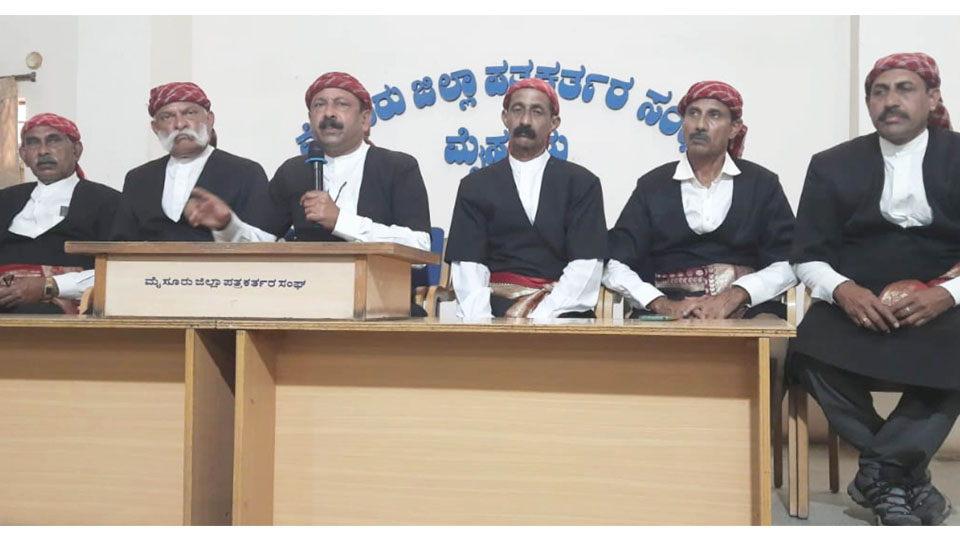
The State Government’s move to release funds for the genealogical study of 18 communities of Kodagu has irked the Codava National Council (CNC) as it has alleged that in the name of studying the genealogy of Kodavas, the Government is cheating the Kodava community by including other non-native communities in the study.
Addressing a press conference at Pathrakartara Bhavan yesterday, CNC Chairman Nandineravanda U. Nachappa said that the State Government must conduct a fair ethnographic study to facilitate the inclusion of the Kodava race under the Scheduled Tribe (ST) list as per the directions of the Karnataka High Court.
Opposing the genealogy study of other communities of Kodagu by suppressing the genuine genealogical study of the Kodava community, Nachappa said that the Kodava race has nothing to do with other communities in Kodagu.
He released a memorandum submitted in this regard to Chief Minister Basavaraj Bommai, Minister for Social Welfare Kota Srinivas Poojari and Chairman of Karnataka Backward Class Commission Jayaprakash Hegde.
Indigenous community
“We don’t have any half-shoots. Kodavas are a single race and a race cannot be multiple communities. How Kashmiri Pundits are indigenous to Kashmir, likewise Kodavas are indigenous to Kodagu. The Kodava race does not come under a quadrilateral caste system and there is no sect, or sub-sect within the Kodava race and do not have multiple communities under its fold,” Nachappa noted.
Those who migrated and settled in Kodagu have copied Kodava culture and are now claiming themselves as Kodavas, the original inhabitants. “They are attempting to delegitimise and uproot the native Kodava race from his soil which is a dangerous act. Under the conspiracies unleashed by them and supported by some elected representatives who have vested interests, the Kodava community is on the verge of losing their unique identity, art and culture,” he said.
Highlighting various documents, gazetteers, census records, Coorg manuals, anthropological surveys and reports, history books, journals and literature from the British era to the Commissions appointed by Governments of independent India like the Havanur Commission Report, Venkatswamy Commission Report and Justice O. Chinnapa Reddy Commission Report, Nachappa said that there is ample proof to establish Kodavas as a unique and exclusive race that has no relation with other communities of Kodagu who are basically migrants.
Why study the migrant population?
“Instead of conducting a study on original Kodava tribalism, the State Government is planning to conduct a study of migrated population and portray it as the study of Kodavas which is an unjust move aimed at destroying the Kodava community. It is an attempt at Kodava race extermination. Everyone wants to use the ‘Kodava brand’ for their ulterior motives and not for protecting or respecting it,” Nachappa added.
The Kodava race has genetically imbibed unique folkloric culture and formulated its own folk legal systems ages ago. Those who infiltrated into Kodagu and have, over the years, copied and aped Kodava culture cannot be called Kodavas,” he noted.
“Instead of destroying the Kodava race by mixing other non-native cultures, the Government must protect their unique identity without any dilution by including Kodavas in the ST list which will be a befitting tribute to the nationalistic and patriotic Kodava race, thereby abiding by true social engineering to save them from extinction,” he urged.
CNC Members Bepadiyanda Biddappa, Kaliyanda Prakash, Chambanda Janathkumar, Apparanda Poovanna and Areyada Girish were present.
source: http://www.starofmysore.com / Star of Mysore / Home> News> Top Stories / March 18th, 2023
At the first glance it seems to be another piece of metal with the sign of a star embossed on it. The hardly visible recipient’s name along with the date it was received is engraved in a corner. To own this piece of metal is an irrepressible desire of every soldier who goes to war. That’s because it represents valor. It’s the ‘Maha Vir Chakra’, second highest gallantry award given to those who exhibit exemplary courage and valiance. It is the Indian equivalent of the ‘Distinguished Service Cross’ of the British. Since 1947, Only 218 braves of the mighty Indian Army have been the proud recipients of the Maha Vir Chakra. 6 among them have received the Maha Vir Chakra twice, also called the Maha Vir Chakra Bar. Considering this, only two from Karnataka, a state which has given some of the most valiant soldiers and officers to the Indian army, have been the illustrious recipients of this gallantry award.One is Squadron Leader Ajjamada B Devaiah famously known as the ‘Tiger of Sargodha’ and the other is Major (Later Lt. Colonel) P S Ganapathi. While the former was martyred in action during the 1965 war and was awarded the Maha Vir Chakra posthumously, the latter is a living example of unparalleled gallantry amongst us today.
Saga of a living memorial
Unlike the brave souls of Punjab, there have been no books published about this hero. He hasn’t given any interviews to TV channels or attended public events which are flashed all across the media. Almost nothing is known about him yet. He is relatively unknown even in his own hometown, Coorg, the land of the brave warriors. Shy of any kind of publicity and one who lives by the dictum ‘Safeguarding the nation is my duty alone’ is how Lt. Col. Puttichanda Somaiah Ganapathi has led his life throughout. Participating in public events is not at all a difficult task. However, Lt. Col.PS Ganapathi believes that safeguarding the honor of the esteemed medal is his paramount duty and is more valuable than any kind of publicity.
At 73 today, Lt. Col.Ganapathi might not have a large frame but his baritone voice, characteristic of military officers, hasn’t waned a bit. Lethargy that comes with age is alien to him. The agility of his mind is intact despite many years of retired life. Currently residing at ‘Sena Vihar’ in Bengaluru, Lt. Col.Ganapathi’s retired life is anything but idiosyncratic with lives of retired people who prefer a laidback existence.An effervescent man, unlike most people his age, he drives to his hometown in Coorg once every month on his own.His life in the concrete jungles of Bengaluru hasn’t sapped his love for farming one bit.His suave demeanor and absence of any signs of pretension for being the proud owner of a national gallantry award, is the true nature of this hero.
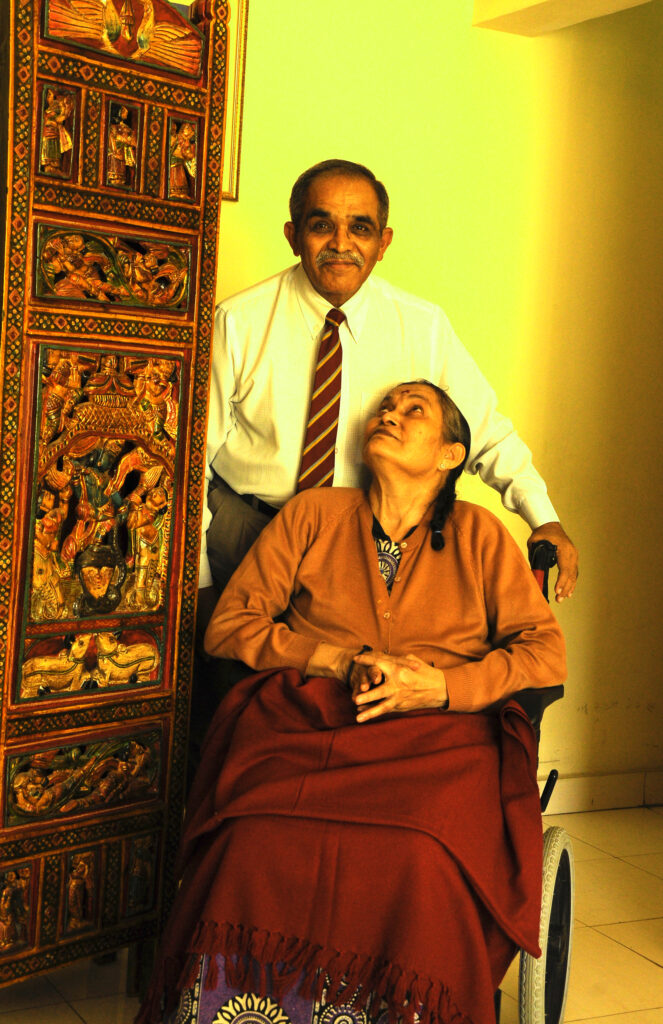
While seated at his home in the multistory apartment complex at the Army’s ‘Sena Vihar’, Lt. Col. Ganapathi began to narrate the stirring story behind his Maha Vir Chakra. He was soon joined by his wife on her wheelchair, with a cup of coffee in her hand. Although, she had heard her husband’s heroic tale umpteen times,her desire to keep listening to the saga made her tolend her ear once again. The showcase behind the Lt. Col. was decked with the upright photo which had captured the invaluable moment when he was presented the MVC by the President. Adjacent to it was the photo of his son, who departed untimely, adorned with a sandalwood garland. The enduring agony of the deceased son was apparent, albeit fleetingly,in the stern battle-hardened face of the Lt. Colonel.
As a worthy prelude to his tale of heroism, Lt. Col. Ganapathi began by recollecting his childhood.
Madikeri Central High school, 1952
After completing his primary education from Napoklu in Coorg, Ganapathi was admitted to the Central School at Madikeri for High school studies. This was the school from where towering personalities like Field Marshal Cariappa and General Thimmayya studied, played hockey and graduated. The Central School was famous all over Coorg for its quality English education, encouragement in sports and its discipline. While most kids ran towards the ‘Mens Compund’ Ground to play hockey as soon as the school bell rang, Ganapathi used to run to the school auditorium to gaze at the large portraits of FM Cariappa and Gen. Thimmayya which were hung on its walls. Years of gazing and drawing inspiration from them, sowed seeds of desire within Ganapathi to join the military and become a decorated officer like the two greats.As soon as he completed the ‘Seventh Form’, he began his preparations and started to spend a lot of time on the ground. He used to sit and listen to the stories of war and valor from retired soldiers in the town. Though many years had passed, the inspirational portraits from his school never ebbed from his mind.
Years later, after completing his college education, Ganapathi joined as a Forrester. While he was posted at Kolhapur in Maharashtra, he attempted to join the military. He failed. He attempted again in Bengaluru and failed yet again. But he did not give up and again attempted to join the military at Bengaluru. He succeeded in this attempt. Ganapathi’s ambition that blossomed at Central High schoolin Madikeri had now come true.He was deputed to the Officers Training Academy (OTA) at Chennai. After the successful training in Chennai, Ganapathi became an officer of the 14th Mahar Regiment.
Within a few days of joining the military, PS Ganapathi duly ingrained the military traits of discipline and diligence. Those portraits of Central High school had only become larger in his mind. He was selected for the Anti-Insurgency battalion formed to tackle the militancy spread in Nagaland and Mizoram. He worked in various areas in the North-East like Palampur, Gangtok, Nathu La, etc. He received further training for a few years in Belgaum. He was then deputed to Assam Rifles. During this period, Ganapathi has served in various regions, under different environments and had experienced adverse conditions from close quarters.
Colombo, 1987 July 29
That was an era during which rivers of blood was flowing all across Sri Lanka. India too bore the brunt of the bloody strife there. Lakhs of people from the affected areas from Sri Lanka sought refuge on the shores of Tamil Nadu daily. The Tamils of Sri Lanka had the sympathy of Indians. India was caught in a quandary over the dispute in Sri Lanka. On the one hand, the Lankan government was adamant on not granting any kind of special status to the Tamils there. The then Prime Minister Rajiv Gandhi, with the arbitration of the then CM of Tamil Nadu MG Ramachandran, invited LTTE’s Chief Prabhakaran to Delhi to deliberate on the Tamil issue. Indian Intelligence institutions had exerted considerable pressure on the LTTE chief. Soon after this, Rajiv Gandhi undertook a tour of Sri Lanka. However, the Tamils of Sri Lanka were displeased at the way their leader was purportedly treated in Delhi. On the very first day of his visit, a Sri Lankan soldier had attacked Rajiv Gandhi with a gun during the ceremonial Guard of Honor. Subsequently, Rajiv Gandhi and the then Sri Lankan President G R Jayavardhane conducted bilateral talks and signed a deal. As per the deal, the Sri Lankan government would recognize the Tamil aspirations and grant special status and privileges to them. India on its part had promised to send its military to Sri Lanka and undertake the task of persuading the Tamils to lay down their arms.
The world assumed that this historic deal would solve the century old dispute and put an end to the 3-decade old cycle of bloodletting in Sri Lanka. India’s initiative to solve the crisis was lauded the world over. It was deemed that the Intervention of India would change the situation in the island nation. Everyone believed that the fighting Tamils would lay down their arms and hoped that the lives of Tamils, who formed 20% of Sri Lanka’s population, would change for the better. Many even penned poems over the cause. Congress leaders in India started to sing paeans to Rajiv Gandhi and even declared that there was no difference between King Ashoka who sent saplings of the Bodhi tree to Sri Lanka and Indira Gandhi’s son Rajiv in their speeches.While all these events were happening, Tamils the world over had exercised a conspicuous silence which was ominous of the lull before astorm. The world had thought that a single treaty would resolve India’s refugee crisis, establish peace in Sri Lanka and assuage sorrows of the Tamils.
Tamilnadu, 1987 August
The Indian troops arrived in Sri Lanka with much zeal to fulfil the obligations of the peace accord. With the over-confidence brought by the success of signing the pact, Indian government sent over ten thousand Indian soldiers to Sri Lanka in the first week of August itself. All the three arms of Indian armed forces crossed the ocean into Sri Lanka. The India troops which consisted of The Sikh Regiment, Maratha Light Infantry, Mahar Regiment, along with battalions of 10th Para Commandos, Armored regiment with U-72 battle tanks, Gorkha and Rajputana battalions, soldiers of 4th mountain division, Chetak and Cheetah helicopters of the Air Force, several units of ‘Marcos’ commandos of the Indian Navy, landed at several places in Jaffna, Trincomalee, Batticaloa, Ampara, and Urumpirai with overweening confidence.
In a land that it did not belong to, in an environment that it was alien to, the Army did not have a faint idea about the war that was about to ensue. The only plan of action in mind was to establish peace. Hence there were no adequate preparations or efficient battle plans. Even the intelligence gathering was not robust enough. The maps of the area were woefully inadequate. In such circumstances, the truth of the grim scenario dawned on the Indian army. The LTTE had armed even the women and children with guns. The LTTE terrorists who had hidden capsules of cyanide, stunned the Indian soldiers. The troops which had arrived with the sole aim of establishing peace in the island, had its plan turn topsy-turvy in just a few days. The LTTE which had mastered the art of subversion, began to hoodwink the Indian Army. At several places, in a beguiling act of reciprocating to the peace accord, LTTE cadres surrendered old and rusted weapons to the Indian Army. A few days later, a leader of the LTTE committed suicide by consuming cyanide. This incident completely grounded any chances of establishing peace in the island nation. LTTE’s Chief Velupillai Prabhakaranused this as an opportunity to declare a direct war against the Indian troops. The war resulted in the martyrdom of 1138 brave Indian soldiers, the same soldiers who had come to the island with an idea of establishing peace. More than 3000 Indian soldiers were critically wounded. By the time the Indian government decided to recall its peace-keeping forces, the Army was decorated with 1 Param Vir Chakra (posthumously) and 6 Maha Vir Chakras. Among the six recipients of the MVCs was PS Ganapathi.
Trincomalee, 1987 July 30
(In first person) I was deputed from the Assam Rifles to the 8th Mahar Regiment. Pursuant to the orders of the government, the first batch of the peace-keeping force was airlifted from Tiruchirapalli to Jaffna on 30th July, 1987. I was in this batch. The dense jungles around Jaffna made me anticipate the struggles we would face in event of a military operation. I had a premonition of the same at the first glance of Jaffna. It did not take many days for my apprehensions to become true. This was because the LTTE waged a direct war against us. Within a few days of our landing, the LTTE attacked the Palali Airbase on the outskirts of Jaffna. The CRPF troops which were part of the peacekeeping force, were also attacked. The Jaffna Radio station was captured. Despite several counter-attacks by our forces, the LTTE did not capitulate easily. Jaffna was LTTE’s bastion and it was fighting to hold on to it at any cost. By this time, we understood that unless the LTTE loses Jaffna, its strength would not be depleted. But the Land mines buried unsuspectingly, suicide squads whose strategies were difficult to comprehend, disheveled all plans of our troops. The situation turned so grave that the then Chief of Army Staff Krishnaswamy Sundarji had to pay a visit to Sri Lanka in October 1987 and guide our troops in the peace keeping operations. The LTTE attacks were so dreadful and brutal that the Sri Lankan army abandoned and withdrew from areas which were the strongholds of LTTE. We were then clear that our next goal was Jaffna.
LTTE had assembled a strong army at a place called Maruthanamadam to defend Jaffna. Unless Maruthanamadam was cleared of the LTTE forces, the path to Jaffna would not be easy. We had to proceed towards Maruthanamadam from our station in Uduvil. Though our troops did not have exact information about this path, we were aware of the fact that LTTE cadres were present on the entire stretch. It was 6AM in the morning of August 11, 1987 when I was summoned by my Commanding Officer of the 8th Mahar Regiment Colonel BS Rathi. He informed me that he was entrusting the task of clearing Maruthanamadam from LTTE militants to me. Maruthanamadam was about 3 KMS from the place we were stationed. Without further delay, I along with 60 of my regiments’ soldiers proceeded towards Maruthanamadam. Our troops were adequately equipped with Medium Machine Guns, Hand grenades, personal weapons and few 106 RCL guns. As we reached Maruthanamadam, we faced heavy resistance. Those 3 KMS we traversed to Maruthanamadam that day is etched in my mind,just like a movie,even to this day.It was an uninhabited area, with kutcha roads.We neared Maruthanamadamaround 7AM. It was an atmosphere of stoic silence characteristic of a graveyard. Though we could see a few houses, no humans were visible. As we mulled over the scenario, a sudden barrage of gun fire fell upon us. We were stunned for a moment. While we deliberated our action, we realized that our estimation
that LTTE had modern weapons was indeed true. We also realized that the gun fire was emanating from within the houses there.Tackling the militants who are hiding inside such houses is a very dangerous operation. We had to overcome the danger at any cost. Lobbing grenades inside the houses through the windows was our only option. I then order my troops to lob 36 High Explosive grenades into the houses. Our soldiers blasted atleast 40-50 houses and destroyed the safe havens of the militants. Havildar Kaka Phule was grievously injured in the operation and attained martyrdom later. He was awarded the Vir Chakra for his courage.
Anaicottai, October 15, 1987
The success of the first operation had given lot of confidence for our troops. Jaffna was still in the hands of the LTTE. We had only advanced by a single step. With each step we took, the dangers only increased. Our next target was the town of Anaicottai. It was also called as Jaffna junction. The path to Jaffna would be easier only if we cleared this junction. LTTE agents were active throughout the path. The stretch was deserted with no signs of human activity. But in the silence that pervaded the area, temple bells used to ring all of sudden. It soon occurred to me as to why the Temple bells tolled when there were no one visible. I had realized at Maruthanamadam that the LTTE was a step ahead of us in gathering intelligence. The temple bells were used from far distances to convey to the LTTE cadres that the Indian Army was approaching Anaicottai. We proceeded with caution after we realized their modus operandi. We now only had enough arms and ammunitions to fight for 12 hours. We did not carry surplus arms as we had expected the 41st Brigade to arrive at Anaicottai by the evening of 16thOctober. As soon as we reached the Jaffna junction where four roads meet, we were attacked by the LTTE with their full might. We had to fight back hard and stop the enemies from advancing further. As the fighting ensued, the sun started to set and darkness had engulfed us. We would not retreat for any reason come what may.By nightfall, it started to rain and our adversaries were merely at a distance of 200 to 300 meters from us. While plain wetlands were behind us, scrub forests lay ahead of us.The ground beneath was sludgy. We were forced to consume rain water itself to quench our thirst.The incessant military operation since morning was taking its toll on our fatigued troops. Everyone ran the risk to slipping into deep sleep if anyone attempted to shut their eyes even for a moment.The gun fire from the enemies used to stop intermittently and start again all of a sudden. This continued throughout the night.I opined that we had to defeat them through the waiting game. I then sent the corresponding message to our headquarters. I received the communication that the 41st Brigade had departed from India and we should keep the enemy engaged until the Brigade arrives. We then received the message that a troop of 1st Maratha Light Infantry commanded by Colonel Oberai and armed with 81MM mortars would come to our rescue. As day and nights passed, we continued to fight the LTTE without as much as battling our eyelids. The putrid rainwater that had accumulated around continued to quench our thirst for days. The LTTE had come as close as 50 meters from us. We could not delay further and began our intense counter attack. Our soldiers fought valiantly like I had never witnessed before. By this time, the 8th Mahar regiment supplemented out efforts with their 81MM mortars and the 31st Light Regiment safeguarded us with their 120MM mortars and they fired upon the LTTE fiercely. While the battle raged on, I was forced to witness the deaths of several of my beloved boys. Unanticipatedly the LTTE fired a large explosive which landed close to me. The intensity of the blast was so deafening that my left ear started ringing. Decades after the war was over and even many years after my retirement, this was the only sound I heard in my left ear. The LTTE forces advanced further maybe after they realized our condition. During one of these nights I positioned myself in the Rifle trench and had my aim directed at the enemy. Despite the incessant and intense gun fire from their side, we did not fire a single shot. Silence from our side gave two soldiers of LTTE the confidence to walk towards our lines with the help of torch lights. I waited in my trench until they came very close to me. When I could see their face clearly, I fired upon them using my Sten machine carbine. Those two bullets I fired at that instant had a tremendous effect on the enemy’s psyche. LTTE’s courage had taken a beating.
The next day, a contingent of 15 soldiers led by Capt. Sunil Chandra arrived to deliver food and ammunitions to our troops. Capt. Sunil was a handsome young man but a tad impulsive, maybe owning to his young blood.While he was conversing with me in the rifle trench, Capt. Sunil got up to light a cigarette. I had forewarned him that lighting cigarettes could be dangerous. He must have taken a puff when his headsurfaced a few inches above the trench. A sniper bullet pierced through his scalp. Capt. Sunil Chandra breathed his last right in front of me. I took a headcount of my troops while lying in the trench itself. 11 of my brave boys had laid down their lives in the battle. I then could feel the heaviness in my heart. Finally on the morning of 19th October, 41st Brigade commanded by Brig. Manjit Singh arrived for our support. By then we had almost vanquished the enemy. A few of them had fled from their positions. For an operation that was supposed to last only 12 hours, we had fought relentlessly for 72 hours.
Uduvil, 25th January, 1988
Pursuant to the operations at Maruthanamadam and Anaicottai, Maj. Ganapathi was deputed to serve at the Army Headquarters at Uduvil. It was 8.30PM in the night of 25th of January. As usual, everyone in the camp were listening to news on the radio. A special bulletin was about to be broadcast. But none were aware of this and were eager to hear the news related to the Republic Day which was a day later.Then the announcement came on the radio that the ‘Indian Government had declared the Maha Vir Chakra for Maj. PS Ganapathi for exemplary courage demonstrated during the operations to clear Jaffna of LTTE militants and for the gallantry displayed during the operations to capture Maruthanamadam and Anaicottai’.
All his friends were elated and joyous. Congratulations poured in from his senior officers and staff. However,Ganapathi was reticent throughout. He neither felt proud for the award nor did he thank anyone.But he asked the only question that was haunting him. “You have bestowed the Maha Vir Chakra on me. But will it be possible to get back those 11 boys whom I lost?”
source: http://www.santoshthammaiah.wordpress.com / December 02nd, 2016
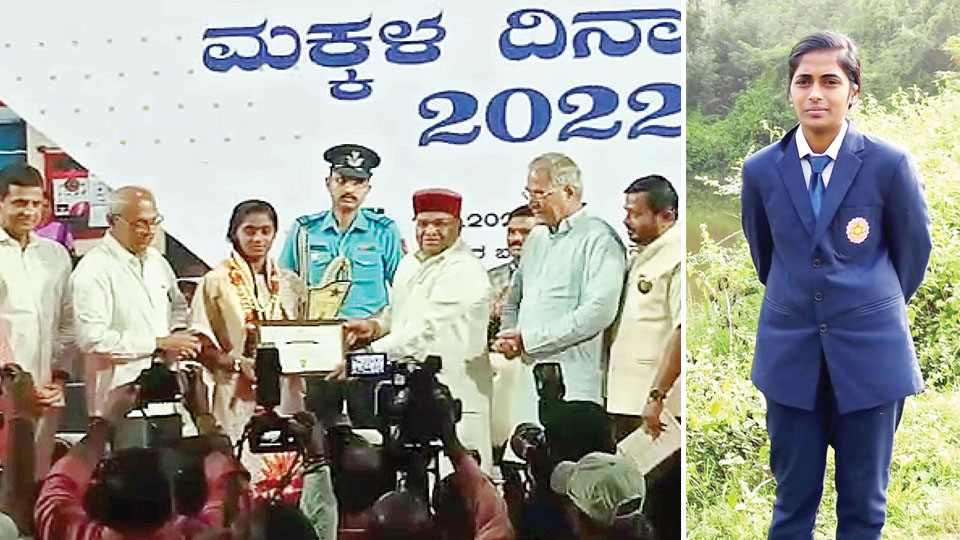
A girl, who had saved an elderly man from drowning in a lake, has been honoured with Keladi Chennamma Bravery Award by Governor Thaawarchand Gehlot at the Children’s Day function held at Jawahar Bal Bhavan in Bengaluru on Nov. 14. The bravery award is instituted by the Department of Women and Child Development.
The girl, who bagged the award is Namratha, daughter of Shabareesh and Shantha couple of Seegethodu in Gonikoppal of Kodagu district.
A student of Sarvadaivatha PU College at Arvathoklu in Gonikoppal.
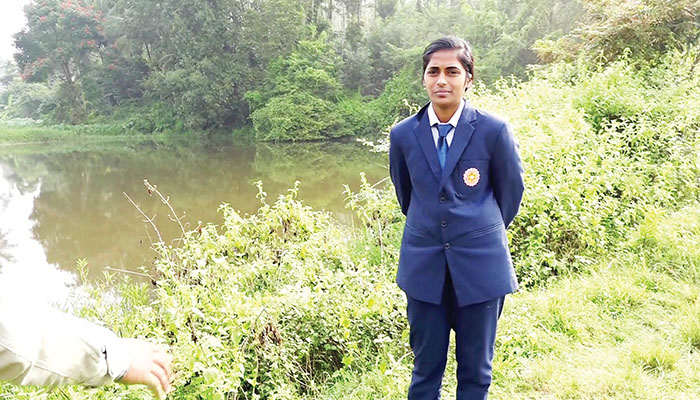
Namratha, on Nov. 6, 2021, was walking towards her home after finishing her college, when she noticed an elderly man drowning in the lake, next to her house. Without thinking twice, Namratha jumped into the lake and dragged the elderly man out of the water, thus saving his life.
The officials of the Department of Women and Child Development, who took notice of this bravery act, recommended the name of Namratha for the Keladi Chennamma Bravery Award.
Namratha has dedicated the award to her parents, College Principal and her School Head Master. Her mother Shantha said she was very happy for her daughter who has saved a life. Namratha has participated in National-level throwball and also bagged many prizes.
source: http://www.starofmysore.com / Star of Mysore / Home> News / November 16th, 2022
WELCOME. If you like what you see "SUBSCRIBE via EMAIL" to receive FREE regular UPDATES.
Read More »