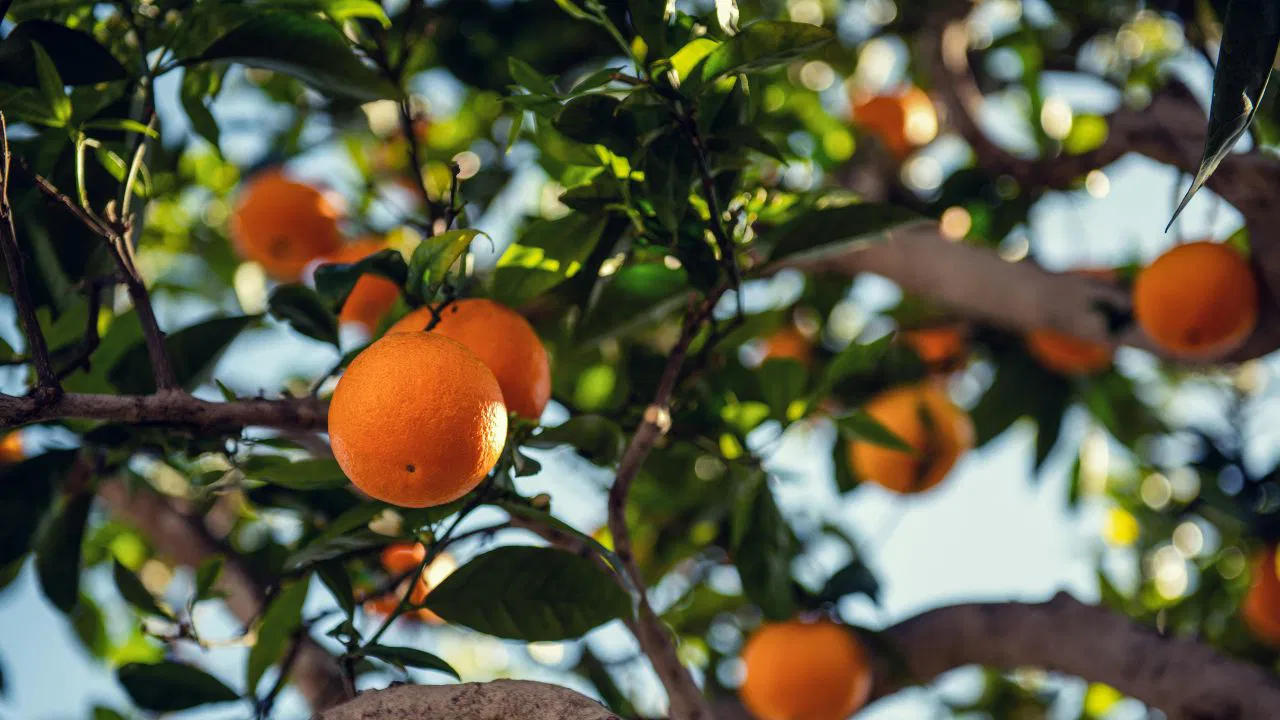
Coorg oranges, a unique citrus variety with a distinct sweet-sour taste, hold cultural, economic, and ecological significance. Despite challenges like declining production and pests, their Geographical Indication recognition offers hope for revival, making them a valuable crop for farmers in Coorg.
Coorg oranges are vulnerable to pest and disease infestations, such as citrus greening, fruit rot, and the damaging effects of citrus psyllids, which degrade fruit quality. (Image Credit- Pexels)
Coorg oranges, a distinctive variety of citrus fruit, are believed to be a man-made hybrid of mandarins (Citrus reticulata). With their greenish-yellow color, tight skin, and sweet-sour taste, these oranges are a significant part of the agricultural landscape in Coorg, Karnataka, India. Historically cultivated in the region, they have played a vital role in local culture, cuisine, and economic development. Although their production has declined over the years, efforts to preserve this unique citrus variety continue through Geographical Indication (GI) recognition and conservation initiatives.
Significance of Coorg Oranges
Coorg oranges hold deep cultural, economic, and ecological significance, symbolizing prosperity and tradition in the Kodava community. Historically cultivated for centuries, they play a vital role in local cuisine, festivals, and agricultural heritage. Economically, these oranges were once a major cash crop, sustaining local farmers and fueling agribusiness, while also contributing to Coorg’s eco-tourism appeal.
Known for their unique sweet-sour taste, Coorg oranges stand apart from conventional varieties with their resilient greenish-yellow skin and rich natural oils, which enhance their aromatic flavor and make them an integral part of the region’s biodiversity.
Coorg Oranges Cultivation
The cultivation of Coorg oranges requires a specific climate and soil conditions, making Coorg’s Western Ghats region an ideal environment for their growth. Their farming involves careful propagation, maintenance, and harvesting techniques.
Soil and Climate Requirements
Prefer well-drained loamy soil with adequate organic matter.
Thrive in the moderate temperatures and high humidity of Coorg.
Rainfall between 1,500 to 2,500 mm annually is ideal for their growth.
Propagation Methods
Primarily propagated through grafting, ensuring genetic consistency and quality.
Requires regular pruning to maintain productivity.
Proper spacing and irrigation enhance yield and fruit quality.
Harvesting Season
The oranges mature between November and January, marking the harvest period.
Farmers pick fruits when they are firm, full-sized, and greenish-yellow.
Post-harvest handling is crucial to maintain freshness and prevent spoilage.
Challenges
Coorg oranges, once historically significant, now face several challenges threatening their continued cultivation. The shift towards coffee plantations over the years has led to a decline in orange orchards, and poor maintenance practices have further reduced fruit yields.
Additionally, these oranges are vulnerable to pest and disease infestations, such as citrus greening, fruit rot, and the damaging effects of citrus psyllids, which degrade fruit quality. Climate change also plays a role, with erratic rainfall patterns disrupting the growth cycle and rising temperatures affecting flowering and fruit development.
On top of these environmental and agricultural issues, orange farmers also struggle with market and economic difficulties, including a lack of support, incentives, and increasing competition from other citrus varieties that impact demand.
Coorg oranges are not just a fruit—they are a symbol of Coorg’s rich agricultural heritage. Despite challenges such as declining production and pest issues, the GI recognition provides hope for revival. Their distinct flavor, nutritional benefits, and historical significance make them an essential part of Coorg’s identity. Conservation efforts and renewed interest in traditional farming practices may help ensure the survival of this remarkable citrus variety.
First published on: 03 May 2025, 17:28 IST
source: http://www.krishijagran.com / Krishi Jagran / Home> Agripedia / by Kirti Narwal / May 11th, 2025
Planters from the Karnataka Spice Association and Chikkamagaluru Planters Association said that reduced harvests in countries like Vietnam and Brazil have triggered a global supply crunch, adding upward pressure on prices.
Bengaluru :
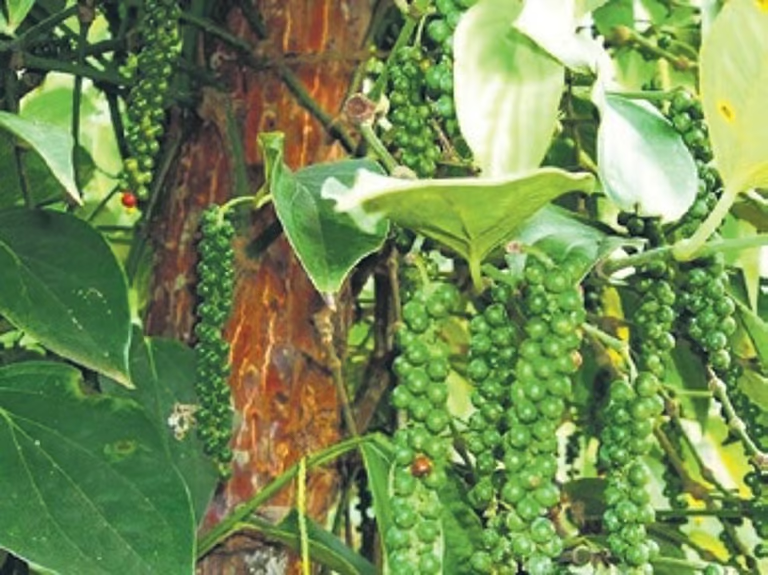
PEPPER, which has already seen a 40% price surge over the past two years, is now expected to touch Rs 900–1,100 per kg owing to a steady decline in production across major growing regions. Pepper prices that hovered around Rs 400-450 per kg two years ago have now climbed up to Rs 700. Cultivators attribute this to erratic rainfall patterns, prolonged dry spells, and a rise in pest and disease pressure that have all disrupted the fragile growing environment the crop depends on.
Planters from the Karnataka Spice Association and Chikkamagaluru Planters Association said that reduced harvests in countries like Vietnam and Brazil have triggered a global supply crunch, adding upward pressure on prices.
Chandrasekhar Reddy from Karnataka Spice Association said, “We have seen a production decline of up to 40% this season as last year, early summer droughts delayed flowering, and the sudden burst of rain in July affected berry setting which disrupted the crop cycle and affected overall volume.”
Pepper grows as a climber on support trees and requires a specific microclimate — moist air, moderate shade, and soil that drains well. While the Western Ghats usually offer such conditions, recent weather fluctuations in places like Kodagu and Chikkamagaluru — which contributes to major pepper production from Karnataka — have made it harder to maintain stable growing environments, cultivators group said, adding that since last year, there has been an increase in fungal diseases like Phytophthora foot rot and anthracnose, which have worsened due to changing moisture levels in the soil.
“Once a vine is infected, especially with root rot, it’s often a total loss. Replanting takes years before it becomes productive. Combined with weather instability, this has caused a steep fall in yields,” Reddy added.
Jagdeesha MK from Chikkamagaluru Planters Association said that no fresh arrivals are expected for at least next two months and that they are re-evaluating crop allocations as they struggle with lower productivity. This supply crunch will drive the market in the coming months, he said.
source: http://www.newindianexpress.com / The New Indian Express / Home> Karnataka / by Rishita Khanna / April 21st, 2025
As part of the National Cattle Disease Control Programme, the 7th round of the foot and mouth disease (FMD) vaccination drive will be conducted in Kodagu district from April 21 for 45 days.
At a recent meeting in Madikeri, Deputy Commissioner Venkataraja instructed officials to make all necessary arrangements to ensure the success of the drive. Stressing the importance of livestock health, he said that FMD poses a serious threat to the farming community by causing significant financial losses. He called on all stakeholders to work together to eliminate the disease through timely vaccination.
Lingaraja Doddamani, Deputy Director of the Department of Animal Husbandry and Veterinary Sciences, noted that FMD is a highly contagious disease affecting livestock such as cattle and pigs. He emphasised that regular vaccination, twice a year, is crucial in preventing the spread of the disease.
Vaccination will be administered to calves older than three months, with a booster dose scheduled three to five weeks after the initial shot. Even pregnant cows and buffaloes can safely receive the vaccine, he added.
Kodagu district is home to 76,920 livestock, and a dedicated team of 75 veterinary staff has been mobilised for the drive. The vaccine is being provided free of cost, and officials have urged farmers and livestock owners to extend full cooperation to the field staff during the campaign.
The vaccination drive is a vital step toward safeguarding animal health and ensuring economic stability for farmers across the district, the officials said.
source: http://www.thehindu.com / The Hindu / Home> News> India> Karnataka / by The Hindu Bureau / April 19th, 2025
This summer was bitter for many homes in Kodagu. Their wells almost dried up before the monsoon broke. But 47-year-old Suraj Ajjikuttira in south Kodagu didn’t have to worry.
His recharge well, probably the first one in hilly Kodagu, ensured that his open well had ample water during the dry season.
Buoyed by his success, Ajjikuttira made it his mission to spread his knowledge of harvesting rain through videos, workshops and meetings. People can even phone and ask him. As a result, awareness is spreading and the recharge well is increasing in popularity. Kodagu now has at least 40 to 50 recharge wells.
Ajjikuttira’s interest in rainwater harvesting began two decades ago, when his 50-foot well, dug in 1979, started going dry. By 2002 he thought he had no option but to dig a bore well for drinking water. Then, fortuitously, he participated in a seminar on rainwater harvesting in Mysore. He picked up the nuances of groundwater recharge very quickly.
Ajjikuttira went home determined to apply his newly acquired knowledge by recharging his bore well. He dug a 10-foot-deep mini well around it. After filling up the mini well with aggregate matter, he diverted run-off from the nearby area into his bore well. The next year itself, the water level in his bore well rose considerably.
“That convinced me about the efficacy of groundwater recharge,” reminisces Ajjikuttira. He doubled his efforts and started a serious attempt to catch all the rainwater he could on his estate. He turned his attention to rainwater falling on his roof, on the vast frontage of his home and the adjoining coffee-drying yard or ‘kana’.
Earlier, all this water used to disappear into a drain. Ajjikuttira now ensured that all run-off got collected at one spot and then flowed out. A leaf separator was attached at the exit point to prevent leaves from clogging this stream of water.
The usual custom is to make a rain pit for such run-off to percolate. But, in this case, the water that was flowing was excessive. After racking his brains, Ajjikuttira dug a recharge well, five feet in diameter, to catch this water. He placed concrete rings along the inner walls of the well 12 feet deep, to prevent its walls from collapsing. The diameter was then reduced. Another six to eight feet were dug and filled with stones to firm up the second stage of the recharge well.
Suraj Ajjikuttira near a large tank which now collects rainwater
Consequently, rainwater collected from about 1,500 square feet of space goes straight into Ajjikuttira’s recharge well and is fully absorbed there. “At the most we get one inch of rain per day. I have designed the recharge well in such a way that even this one inch of water is captured,” he explains. The water that is percolating is estimated to be around two lakh litres.
Ajjikuttira’s well was 42 feet deep when his father got it dug in 1979. In 1994, when the well dried up, it was deepened by another eight feet and eight rings were fixed on its walls. After that the well never dried up. Even during the 2016 drought, Ajjikuttira’s well had eight feet of water. Last year, when wells dried up in Kodagu, Ajjikuttira’s well had 11 feet of water.
The recharge well is a new concept invented in Chennai in the 1990s. Later, the idea was embraced by residents of Bengaluru. The city now probably has around 50,000 recharge wells. The sole purpose of the recharge well is to recharge groundwater. The well can be very small in diameter, as low as three feet.
COFFEE AND RAIN
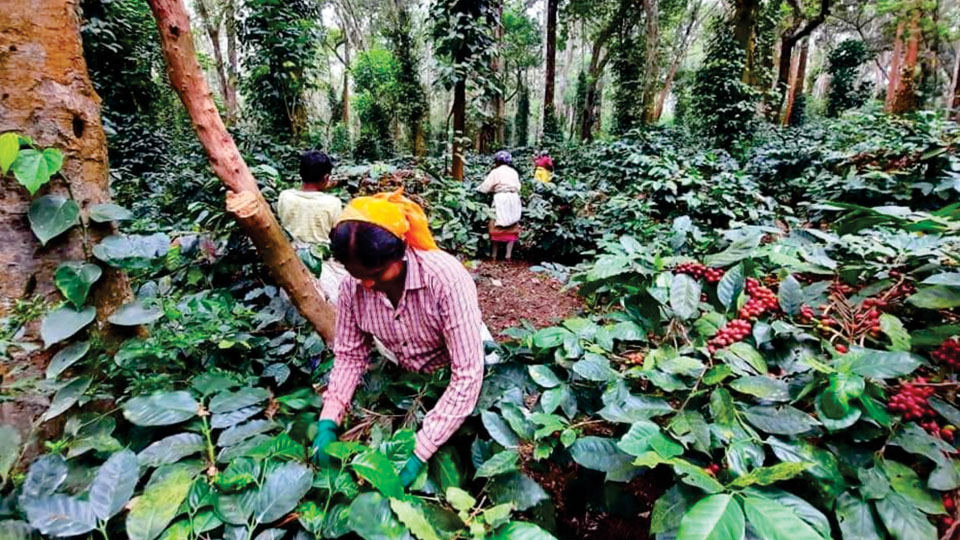
Kodagu district’s main crop is coffee. Coffee plants are rain-fed. The first showers or ‘blossom showers’, received in February and March, are very important for coffee farmers. If it doesn’t rain at this time, farmers have to pump up water from tanks and sprinkle or irrigate the plants.
After the blossom showers are over, coffee plants require a second spell of irrigation within 15 to 20 days. These showers are called ‘back-up’ showers. If the rains fail to arrive then farmers who still have water do a second round of sprinkling.
The water in Ajjikuttira’s tank was hardly sufficient for even one round of irrigation. About 200 metres away from his tank is a huge seven-acre tank called Katibetta Kere. This water body belongs to the revenue department. It has a catchment of around 500 acres. But the tank’s bund had breached in one area and it wasn’t retaining water. Ajjikuttira built a check dam with sand bags in the catchment area so that the tank would retain water and help his own tank absorb some water.
Katibetta Kere is at a higher elevation than Ajjikuttira’s irrigation tank. Subsequently, the department built a concrete check dam for Katibetta Kere. Recalls a happy Ajjikuttira, “Since then, this tank has enhanced water availability in my own tank. Now, even if we do three rounds of irrigation, the tank still has water.”
Rainfall figures differ across Kodagu district. Ajjikuttira’s place receives 54 inches — coffee planters still measure rain in inches — whereas not-so-distant Virajapet gets 70 inches. Wetlands here are dwindling and so is forest cover. Due to various reasons, water availability is worsening in the district. Unfortunately, awareness about rainwater harvesting and groundwater recharge is abysmally low.
Once Ajjikuttira succeeded in augmenting water availability in his estate, he started spreading the idea of water harvesting. In the last 15 years, he has conducted more than 300 awareness sessions on rainwater harvesting in schools, government departments, workshops for citizens and so on.
“In most Kodagu estates, the house is located at a higher level. In the past, the yard for drying coffee beans and paddy used to be built near the paddy fields in a lower area. But due to security reasons the yard is now constructed close to the house. So the typical house would have a large area in front with a drying yard close to it. This entire stretch is either built with concrete or lined with interlocking tiles. So a huge amount of clean water flows on this surface,” says Ajjikuttira.
“We need a structure that can hold this run-off and make it percolate fast. I experimented with the recharge well. Although it is expensive, it does the job efficiently.”
Ajjikuttira is approached by people on the phone or in person for guidance in harvesting rainwater. “If we make arrangements to catch all the run-off from the front area and the drying yard, summer rains alone will ensure the well doesn’t dry up,” he says confidently. A recharge well costs approximately Rs 60,000-70,000.
Ajjikuttira carries out a simple test to check whether the bore well can be artificially recharged. A few barrels of water are kept nearby and poured into the bore well one after another. If the bore well overflows, it indicates that it won’t absorb water and recharge. The idea is then abandoned.
SPREADING AWARENESS
Ajjikuttira has put together a three-part video to spread knowledge on rainwater harvesting in Kodagu. Uploaded on YouTube, it tells people how to use rainwater directly, how to recharge defunct and working bore wells and how to use a recharge well for groundwater recharge.
After taking advice from Ajjikuttira, Tej Thammaiah Ajjikuttira constructed a recharge well 10 feet in diameter and 22 feet deep last year. The well is a big one because Thammaiah’s bungalow, front yard and ‘kana’ spread to about a hectare. The well has cost him Rs 130,000.
Thammaiah’s open well, 60 feet deep, didn’t dry up completely. But by the end of summer it would have only four to five feet of water. Last summer it had 30 feet of water because he followed in Ajjikuttira’s footsteps.
Rakshith of Sulagodu is another estate owner who sought Ajjikuttira’s advice. He has an open well which is 100 feet deep. It used to dry up in summer and he found it difficult even to provide water to his labourers. He built a recharge well which cost him Rs 70,000. Two years later his water woes are over.
“Now I have water up to 25 feet,” he says. “By the end of summer, water levels recede by seven to eight feet. I don’t have to worry about drinking water for many decades to come.”
Soil in Kodagu collapses very easily. Ajjikuttira has noticed that many people dig a recharge pit quite close to the well. “This is highly risky. Many wells have collapsed because pits were dug very close to them. It’s always better to locate the pits about 15 or 20 feet away,” he warns.
He points out that each estate is endowed with expansive areas from where water can be easily harvested. “The shifting of the drying yard from lower areas near paddy fields to the area adjoining the house in an elevated area has also caused water scarcity in open wells. This is because we cement all these areas and never permit water to percolate.” Planters who have realised this are taking corrective measures to allow for percolation.
Coffee estates require huge quantities of water for irrigation to induce flower blossoming. “There are several earthen tanks or keres in Kodagu. You can see these tanks on Google earth. But, unlike the old days, tanks are dug unscientifically. The selection of the site should be such that we can divert streams of water into it. Many new tanks don’t have this.”
Another important groundwater recharge structure in these estates is a legacy of British planters called ‘thottilu gundi’ or cradle pits, so called because of the shape. Thottilu gundis were systematically and periodically dug and cleaned amidst rows of coffee. They would convert surface run-off from the hills into sub-soil seepage that would reach the tank after many months. “Due to the high cost of labour and poor labour availability, many of us have bid goodbye to digging of this very useful system,” laments Ajjikuttira.
Contact Suraj Ajjikuttira at 9901012970
source: http://www.civilsocietyonline.com / Civil Society / Home> Environment / by Shree Padre, Kodagu / August 29th, 2019 (updated December 03rd, 2020)
Venugopal in a pepper garden where, with his advice, yields have increased
Dr Madhugiri Narayana Rao Venugopal, a scientist with the Indian Council of Agricultural Research (ICAR), was living a retired life when a farmer urged him to share his immense knowledge with people who needed it.
Dr Venugopal then stepped in to not just help but also play a transformative role by showing how pepper could be profitably grown on coffee and areca nut plantations. He began travelling 12 to 15 days a month across five districts in Karnataka. With his guidance, farmers have been able to increase their yield and income. He has also helped farmers set up gene banks and improve the quality of plants.
In return for all his help, Venugopal expects nothing from the farmers. He is a humble man and says that his pension is enough for his family. But the farmers have always felt indebted. So, when he fell seriously ill in 2015, farmers contributed to pay the hospital bill.
Below is a piece that appeared in Civil Society’s September-October 2017 edition. Read on.
In the sleepy villages of Sirsi in Karnataka an economic revolution is taking place. In just four years, farmers have tripled their income by growing pepper, the king of spices. Word of pepper’s potential has spread to five districts of Karnataka — Uttara Kannada, Shimoga, Chikmagalore, Hassan and Kodagu — and here too farmers are making money by growing the black spice.
The man behind this silent transformation is 68-year-old Dr Madhugiri Narayana Rao Venugopal, a retired ICAR scientist, affectionately called ‘Pepper Doctor’. By assiduously sharing his knowledge with farmers he has increased their yield of pepper by three to four times.
Dr Venugopal was born in Madhugiri in Tumkur district, the eighth child of Narayana Rao and his wife, Seethamma. In 1977 he joined the Central Plantation Crops Research Institute at Kasargod. He retired in 2009 after 32 years of service from the Regional Research Station of the Indian Institute of Spices Research, Madikeri, as its Principal Scientist and Head. By then he was an acknowledged expert in crops like arecanut, coconut, pepper, ginger, turmeric and cardamom.
Venugopal built a house in Mysore and was looking forward to a quiet life with his family. A few months into retirement, he was invited to a farmers meet in Madikeri. Ravi Ganapathy, a farmer, struck up a conversation with him. “You are a man of immense knowledge,” he said. “Transfer your learning to those who need it instead of killing it.”
His words got Venugopal thinking. He decided he would spend his time helping the farming community. Venugopal began attending meetings of farmers and he didn’t miss a single opportunity to address them. By now he must have attended around 1,300 such meetings. “All I needed was Rs 250 for travel,” he remarks. Alongside Venugopal began identifying farming clusters that could increase their yield of pepper to more than 1,000 tonnes annually.
Why did he choose pepper? “There is money in pepper,” he says. “Coffee growers contend with white stem borer. Arecanut farmers worry about over-production and tea planters have high overheads. Pepper production is stagnant but farmers are keen to increase their income. What they lacked is guidance and adequate planting material,” he explains.
A handful of pepper
“Dr Venugopal has been coming often to our taluka since 2012. At that time, our pepper production was around 75 to 80 tonnes. Now it has reached 300 to 320 tonnes. Within the next two to three years, we will be producing 800 to 900 tonnes,” says Mahabaleshwar B.S., Assistant Director of Horticulture, Siddapura, in Uttara Kannada district.
In the 10 years since he retired, Dr Venugopal has probably achieved more than in the 30 years he worked for the government. Not only has he tripled the income of farmers he has forged deep bonds with them, giving rise to a new model of farmer-scientist relations.
“Scientists use power point presentations to train farmers. But cut and paste guidance isn’t enough. What works for pepper plants in an arecanut garden won’t suit pepper growing on a coffee farm. Scientists should demonstrate their learning on farmers’ fields. Otherwise no cultivation package will succeed,” he says.
In India pepper is cultivated as a mixed crop with arecanut, coffee and tea, unlike in Vietnam, the world leader in pepper production, where it is a mono-crop. “Pepper doesn’t require much space or irrigation. With the right agronomic practices we can augment production phenomenally,” says Venugopal. In another two years Karnataka will produce 65,000 tonnes of pepper or all the pepper India consumes, he says.
BONDING IN CLUSTERS
Dr Venugopal travels at least 12 to 15 days in a month. The farms are not very near. A visit to Sirsi, which is nearly 1,000 km away, requires an overnight journey. He travels by bus and train. In fact, he admonishes farmers if they offer him special attention and happily stays in their homes. What’s more, he doesn’t accept a single rupee for his services.
“My pension is enough for my family”, he says. “I don’t take any money from small farmers. I receive a consultation fee from big farmers that I use for small farmers. They arrange food, bus charges and accommodation, if required.”
Farmers have been encouraged to set up gene bank and nurseries
The first time Venugopal visits a new garden, he enquires how many pepper vines it has. If the number is less, he suggests the farmer plant more. “I tell them this is your yield potential. I ask them if they are ready to achieve a production of 300 to 400 kg per acre with 100 vines. It is not difficult. If the farmer agrees, I advise him from time to time. I also put forth one condition — farmers should implement 80 per cent of my recommendations and inform me. Otherwise, I don’t go there again.” Of course, there are defaulters — as many as six out of 10!
He also has a clear strategy. First, Venugopal identifies clusters that can grow 1,000 tonnes of pepper. Next he finds key farmers — those who are opinion leaders and can share knowledge. He has so far identified 14 clusters in five districts stretching from coastal zones up to an altitude of 1,200 metres with rainfall from 30 to 300 inches.
“After assessing rainfall, soil and so on we can evaluate in general the problems being faced by farmers. But we can’t provide the same advice to the entire state,” he says. In each cluster, Venugopal develops a demonstration plot in the garden of a key farmer. In Uttara Kannada district he has developed three demonstration plots — in Gadikai, Neernalli and Chavatti.
In a way, the clusters act as relay centres of his recommendations. Whenever there is the possibility of a pest attack or quick wilt disease, he alerts the clusters over phone which, in turn, alert their communities. Pepper farmers have formed groups on WhatsApp and they also have organisations. So a lively exchange of information takes place. In the Siddapur taluka alone there are eight such groups. The Sirsi taluka has 10 groups. “In the past, no farmer discussed his pepper farming experiences. Now no development remains uncirculated,” remarks Mahabaleshwar.
Venugopal communicates very carefully. So he doesn’t offer advice over phone when he is travelling. At home, he receives 15 to 30 calls every day from pepper farmers. If it’s a very special case, like a call from a farmer in the northeast wanting to replace rubber with pepper, he suggests a team visit suitable plots and he facilitates training. In a year six to eight such study teams arrive to undergo training.
“Our garden becomes his. He keeps tabs on our agricultural practices and guides us. He takes up all our farming worries. But the income accrues to us,” says Chavatti Shridhara Bhat, a farmer in Sirsi. “When he visits our farms, he is always the leader and we are happy to follow. He even interacts with our workers. Whenever he finds an improved pepper variety, he takes pains to distribute it to all farmers. Varieties from the northeast have been brought here. Our varieties have gone there. Venugopal is like a friend or relative for us.”
Walking past pepper vines followed by farmers
THE RIGHT RESEARCH
The most popular variety of pepper here is Panniyur-1. Pepper growing regions have millions of this variety. But it has a peculiar problem. During its spike formation stage, if there isn’t enough light, the plant produces only female flowers instead of bisexual ones. Laughs Venugopal, “Panniyur-1 is naughty but also a champion. We have had to change production technology because Panniyur-1 is planted very extensively.”
With early irrigation and by preponing flowering, farmers can ensure there is adequate light for a good crop. This is recent acquired research which is being widely disseminated.
A farmer in Somavarpet had been harvesting 28 tonnes of pepper from 38 acres. One year his pepper vines were attacked by quick wilt disease and he got no yield. He discovered that the disease had originated in his neighbour’s garden. Scientists advised him to start control measures from the neighbouring garden. That worked and even after 26 years his vines are healthy. But his neighbour’s vines turned sick and had to be replanted. “The acid test of any experiment is in farmers’ fields,” says Venugopal.
One reason most arecanut farmers were wary about growing pepper is its frequent mass mortality. If there is uninterrupted rain for a few weeks, the dreaded quick wilt disease invariably wipes out vines. Farmers were under the impression that vines have to be constantly replanted to be free of quick wilt. But this fear has considerably declined due to Venugopal’s advice.
THE GENE BANKS
An important prerequisite for pepper development is quality planting material. Throughout his career Venugopal noted that most saplings didn’t measure up. Some had symptoms of nematode, others were infected with phytophthera fungus or virus. Very few nurseries raised healthy planting material.
To overcome this problem, Venugopal insists that every cluster create its own gene bank. Three gene banks have already started in the districts of Sirsi, Shimoga and Hassan. Research and nurseries should go hand in hand is Venugopal’s motto. He has also trained farmers and nurseries to produce pepper plants locally. Today there are 58 farmer-owned nurseries.
The problem with planting material is that only one variety and production technology is promoted whereas the Western Ghat region contains great varietal diversity. Karnataka has 14 documented varieties. Kerala has over 70. “In some areas, we don’t want champions. We need all-rounders — cultivars less susceptible to disease, less sensitive, even if the yield is moderate,” he says.
With this objective Venugopal arranged a nine-day varietal selection process in pepper gardens three years ago. “We selected 17 varieties in Uttara Kannada. In an area where all pepper vines had died, we found a variety called Tirupugere. Both Okkalu and Kari Malligesara varieties fetch Rs 80 more per kg in the local market. Nine out of 17 local cultivars are quite promising and deserve to get geographical identification,” he says.
Take the case of Okkalu. Chavatti Shridhara Bhat was growing this variety on his farm. But it was yielding only 500 gm of crop per vine. Bhat was very disappointed and was all set to cut off his Okkalu vines. Venugopal advised him to give his vines the correct dose of nutrients. Now the same variety produces four kg per vine and traders are paying Bhat `80 more for his pepper crop.
Venugopal with a group of pepper farmers with whom he has formed strong bonds of trust
LEADERS OF FARMERS
Two years ago Venugopal fell seriously ill. After returning from Assam in June 2015, he got paralysed. The disease, called GB Syndrome, affects one in 100,000 people and results from excessive antibody production for a virus. His vision was affected and he couldn’t even lift his hand. For 23 days he was virtually helpless.
Even at this critical juncture, he was more concerned about the thousands of farmers for whom he was a leader. He phoned some of them to whisper a two-line message, “I don’t know if I can visit you again. Please stick to my recommendations.” Groups of farmers started rushing to the hospital. Everyone began praying for him. Eventually, “there was a miracle, a rebirth,” says Venugopal. He began recovering and after two and a half months he was back on his feet, travelling to the fields of farmers.
The hospital bill came to nearly Rs 10 lakhs. Farmers contributed to ease the financial burden. “You are our asset. You have to live for us. We have benefitted so much thanks to you. If every farmer contributes just five kg of pepper we can easily clear this bill,” they kept saying. The Indian Institute of Spices Research reimbursed some money.
Venugopal works quietly, away from the limelight. Yet he has become a legend in these five districts. No ICAR scientist has his dedication and hard work or guides farmers with so much sincerity. There are no parallels to our pepper doctor, say farmers.
Shree Padre travelled to Mysore and Sirsi to speak with farmers and spend time with Dr Venugopal. Yajna took the pictures.
source: http://www.civilsocietyonline.com / Civil Society / Home> Mega Hall of Fame / by Shree Padre (headline edited) / Photographs by Yajna / August 28th, 2019 (updated February 13th, 2023)
Arshiya Bose, the founder of this Bengaluru-based “activist company”, traces its genesis, journey and what this award could mean for the smallholder coffee farmers in the country.
Coffee being dried in a remote hamlet | Photo Credit: Special Arrangement
Arshiya Bose feels that a conversation she had in Coorg, back in 2011, when she was pursuing her PhD at Cambridge, was a “pivotal moment” in her journey towards creating Black Baza Coffee. During her fieldwork to understand the impact of global sustainability certifications on farmers, she met the mother of a local grower from India’s coffee cup. “She asked me if I was going to do anything useful after my PhD,” recalls Arshiya, who soon recognised that while it was wonderful to be so deeply immersed in an academic project, “it can be selfish if that was where it stayed.”
This comment made her realise that much could be done to make coffee cultivation more sustainable — something that is increasingly becoming an important aspect of the industry’s long-term viability, considering both the environmental impact of conventional coffee farming and the fact that the bean is particularly vulnerable to climate change. In 2014, after completing her PhD, she returned to India, going on to start Black Baza two years later, naming the brand after a small, migratory raptor with “its own kind of cult following amongst birders, because it displays such interesting behaviours”.
The beginnings were small: 100 kilograms of coffee bought from four different farms. “Now, of course, that number has grown multifold, and we now work with around 650 farms (mainly in Palani, Wayanad and BR Hills),” says Arshiya of the Bengaluru-headquartered “activist company,” which has just won the Speciality Coffee Association (SCA) 2025 Sustainability Awards in the ‘For Profit’ category. This annual award, by the world’s largest global coffee trade association, recognises “excellence in product innovation, design, and sustainability across the industry” with the winners (Fairtrade International won the ‘Nonprofit’ category) being formally recognised for their achievement at Speciality Coffee Expo in Houston in April.
A selection of Black Baza’s coffees | Photo Credit: Special Arrangement
Standards for sustainability
Admittedly, the word ’sustainable’ is a multifaceted, somewhat indefinable concept, with every organisation, brand, company, Government or country understanding the much-used term differently. “Therefore, we had to almost set our own standards for how we wanted to do things,” says Arshiya.
Black Baza only works with smallholder farmers who have already been growing organic coffee and are committed to maintaining and improving the native forest cover on their farms. “The average landholding on where we work is half-to-one-acre parcels of land in very remote parts of the country, with many belonging to tribal communities… people who’ve been historically marginalised and are vulnerable,” says Arshiya, who has a background in community-led conservation. She adds that Black Baza also helps farmers with the post-harvest process, working very closely on building capacity to produce better quality, speciality coffee, both arabica and robusta.
A coffee training programme being conducted | Photo Credit: Special Arrangement
According to her, considerable care was taken to bring in a system of fair, transparent pricing, placing a premium on the coffee’s quality and the farming practices followed, including the attention paid to preserving the local biodiversity. Making coffee farms friendly to local flora and fauna, she says, is an especially crucial mandate of Black Baza since most coffee-growing areas are in places that are also rich in biodiversity. “That is true across South and Central America, parts of Kenya, Uganda, Indonesia, Malaysia, Thailand, Laos, Vietnam, and the Indian Western Ghats too,” she says.
Keeping with this focus on biodiversity, the names of all of Black Baza’s coffees, which are sold in compostable and degradable packaging, are inspired by various indicator species: organisms whose presence or absence offer insights into overall ecosystem health. Think potter wasps, lion-tailed macaques, otters, Indian moon moths, or the Malabar whistling thrush, “species symbolic of the kind of farming practices we like,” she says.
One of Black Baza’s partners with her produce | Photo Credit: Special Arrangement
The coffee conundrum
The popular belief is that coffee came to India in the 17th Century surreptitiously, smuggled from Yemen by the Sufi saint Baba Budan. “It is a sweet story, but that is not really how coffee became a full-fledged plantation industry. It was a colonial project,” says Arshiya, who, as part of her PhD work, spent a lot of her time in the British Library looking at archives to understand how coffee spread in India. “We know that it was the British East India Company that set up an experimental plot in Thalassery, Kerala, and expanded coffee across India from there.”
This expansion, however, came at a considerable ecological cost, with the British clearing vast hills to grow this coffee, later replanting the land with exotic species like silver oak, once they realised that coffee grew better in shade. “And when they left, they handed over their plantations to their favourite people. And that is where this land inequality came about,” she says. While coffee continues to be grown in large plantations, many coffee farmers cultivate coffee on very small tracts of land, making them especially vulnerable to the vagaries of Nature, including climate change, since coffee is especially susceptible to rising temperatures and rainfall pattern fluctuations. “Smallholder farmers are always more vulnerable in the face of any kind of natural disaster, and that is true of coffee as well,” she says.
Arshiya Bose | Photo Credit: Special Arrangement
Working with more farmers, therefore, is high on the list of Black Baza’s priorities, and Arshiya hopes that the recent SCA recognition can help them achieve this goal. “One of the ways we think of doing this is to develop a green coffee programme, and I think something like SCA enables us to now try to look for partners overseas,” she says, adding that getting into coffee exports would allow them to work with even more farmers. “We have also started expanding beyond coffee into other products that our farmers grow, including cardamom and pepper, and hope to open a couple of cafés soon, as well.”
Bengaluru’s coffee production outlook, global prices, and the importance of value addition in the industry discussed by Coffee Board officials.
Coffee Board Secretary and CEO KG Jagadeesha said nature played a critical role in coffee farming and if plantations get 6-7 months without a dry spell, next year’s yield would be substantially higher than the last two years. | Photo Credit: Special Arrangement
Bengaluru India’s coffee production for the crop year ending in March 2025 is likely to be 3.52 lakh metric tonnes, while the yield for next year is expected to be much higher than last two years’ yield as most plantations have already received adequate blossom showers helping a healthy berry setting, said Coffee Board CEO and Secretary, K.G Jagadeesha.
However, he said, nature played a critical role in coffee farming and if plantations get 6-7 months without a dry spell, next year’s yield would be substantially higher than the last two years.
He further said the board was currently in the process of wrapping up harvest (which just concluded) volumes data for the current year and preparing a production outlook for next year based on post blossom-shower assessment conducted on plantations across the country.
Global coffee prices to remain high for a year: ICO
Quoting International Coffee Organisation (ICO), Mr. Jagadeesha said, global coffee prices were likely to remain high for one more year as most major producing countries were facing drastic climatic changes.
“The current coffee prices may hold for one more year with marginal growth, however may not double or treble as they did a couple of years ago for arabica and robusta, respectively. I just attended the ICO meeting and this is the sense I am getting regarding prices,” he said.
Globally, coffee prices remained too low for 10 years, before they started climbing last two years ago.
India should focus on premiumisation in coffee
Highlighting the importance of value addition in coffee, Mr. Jagadeesha said, some 70% of Indian coffee were exported as green beans which meant the country has been losing out on premiums.
“We are producing the best quality coffee in the world and selling it as green beans in the global markets and someone else is blending, value adding and forking out premiums. This situation has to change by increasing our focus on value addition to fetch premium prices in the global markets. Some of our growers have already started focusing on value add and premiumisation, but the trend has to become industry-wide,’‘ he insisted.
According to Mr. Jagdeesha, post covid, there is a spurt in coffee consumption globally and this trend has been quite evident in India as well.
Coffee Board Chairman M.J. Dinesh said additional strengthening of the domestic market was required to protect coffee growers in the wake of any international price fluctuations.
“A robust domestic market will provide a shield to the coffee growers against the volatile international coffee prices. It will also encourage entrepreneurship and boost employment opportunities and bring in overall improvement in the coffee value chain. Such a scenario will act as a buffer for Indian coffee,” he added.
source: http://www.thehindu.com / The Hindu / Home> Business / by MIni Tejaswi / March 29th, 2025
In the heartland of coffee cultivation, Kodagu, this year’s harvest tells a tale of mixed fortunes.
While coffee production has seen a significant dip due to erratic weather patterns, farmers are finding relief in skyrocketing prices that have touched record highs. However, rising labour and maintenance costs continue to be a concern, particularly for small-scale growers.
A season of contrasts
Kodagu’s major coffee-growing taluks — Madikeri, Virajpet and Ponnampet — are currently in the thick of the Robusta coffee harvest. However, due to inconsistent rainfall last year, coffee yields have plummeted by 30 percent to 50 percent in several plantations. Some lucky farmers have reported decent harvests, but for most, expectations have fallen short.
Yet, what the season lacks in quantity, it makes up for in price. A 50 kg bag of Robusta coffee (with husk) is now fetching between Rs. 12,000 and Rs. 13,000 — a historic high. In comparison, last year’s rates stood at around Rs. 9,000 per 50-kg bag.
The surge in prices is attributed to a global dip in coffee production, particularly in major coffee-producing nations like Brazil and Colombia. For farmers, this unexpected price hike is a much-needed ‘bumper gift’ after a challenging season.
Labour shortage adds to woes
Despite high prices, farmers are struggling to find enough labourers for harvesting. Kodagu traditionally relies on seasonal workers from Tamil Nadu, Assam, and Bihar, who arrive in December for the coffee-picking season.
This year, however, the declining yield and other factors have deterred many workers from making the journey, leaving farmers in distress.
Adding to the challenge, wages have surged. Two years ago, daily wages ranged between Rs. 400 and Rs. 450. This year, rates have shot up to Rs. 550 to Rs. 600 per day, further escalating the cost of cultivation.
To make matters worse, labourers now start work later than before. Earlier, they would begin harvesting by 8.30 am or 9 am and continue until 5 pm. Now, work starts at 10 am and wraps up by 3.30 pm, cutting valuable work hours.
This is mainly due to labourers being transported from distant locations. Apart from higher wages, estate owners must also bear the additional costs of labour contractors, driver fees and vehicle rentals, increasing the financial strain on growers.
First showers in February
In late February, Napoklu and Kaluru regions received their first rainfall of the year. While rain is usually welcomed in Kodagu’s coffee plantations, its timing is crucial.
The downpour has stalled the harvesting process, as ripened coffee cherries remain on plants alongside delicate new coffee blossoms for the next season.
For those who had already completed their harvest, the rain was a relief. But for those still working in the fields, it has become a frustrating setback.
source: http://www.starofmysore.com / Star of Mysore / Home> News / March 06th, 2025
The increasing clamour for varieties of exotic fruits has made avocados aka butter fruit — a popular fruit in India. Often hailed as ‘Fruit of the Rich’, avocados are steadily expanding their market but there only two Indian varieties of the fruit in the country and they are yet to make their mark over the popular Mexican varieties favoured by farmers.
To ensure large scale production of nutrient rich avocados, scientists from Indian Institute of Horticultural Research (IIHR), Bengaluru have developed Arka Coorg Ravi — a complete desi variety of avocado to suit Indian conditions – after working for two decades at Chettalli research station in Kodagu. The new variety is named after IIHR scientist H Ravishankar, who worked at Chettalli station for 35 years and breathed his last a few years ago.
Unlike regular varieties of avocado which yield 60-80 kg of fruits per plant, the new variety will give 100-180 kg per plant, they said. “Avocados have big seeds and less pulp. But this variety comes with small seeds, ensuring 80% pulp recovery and more nutrients on the platter,” revealed BM Muralidhar, fruit scientist at IIHR-Chettalli station.
Initially popular in the coffee growing belt of Karnataka, avocados are now cultivated in large numbers in Mandya, Ramanagara, Bengaluru Rural, Kolar and Chikkaballapur districts.
“The new variety is adaptable to all conditions and over 25,000 plants are being distributed. The IIHR has retained the mother seed and only grafted seedlings will be distributed to the farmers,” he pointed out.
Meaty alternative for vegans
Catering to the growing tribe of vegans and those switching to gluten-free diet, IIHR scientists have developed a healthy alternative to meat by utilising the popular jackfruit. With high content of dietary fibre and bio active components that regulate blood sugar in the body, the ‘Arka tender jack frozen patties and kababs’ are projected as healthy alternatives to meat and maida.
Preethi P, IIHR scientist in post-harvest technology, said, “Most of the vegan patties, kababs products that are in the market are usually a blend of multiple products and full of preservatives that affect health. However, this is completely made from tender jackfruit chunks and free of any preservatives.”
It will be available at half the price of existing brands in the market, she said.
source: http://www.msn.com / MSN / timesofindia.com / Home> City News> Bengaluru News / by Niranjan Kaggare / February 27th, 2025
The sharp rise on February 11 was attributed to severe crop losses in Brazil and Vietnam — world’s leading coffee producers — due to adverse weather conditions.
The sharp rise on February 11 was attributed to severe crop losses in Brazil and Vietnam — world’s leading coffee producers — due to adverse weather conditions. (Shutterstock)
Bengaluru:
Coffee prices in Karnataka’s Kodagu and Chikkamagaluru markets that recently surged to historic levels was driven by a global supply crunch, according to officials familiar with the matter. Arabica Parchment, a premium coffee variety, soared to ₹29,600 per 50 kg bag in Chikkamagaluru, while Kodagu recorded an even higher price of ₹29,800, marking an unprecedented peak.
The sharp rise on February 11 was attributed to severe crop losses in Brazil and Vietnam — world’s leading coffee producers — due to adverse weather conditions. Experts predicted that recovery will take at least five to eight years, as new coffee plants require time to mature and yield produce.
“Coffee prices are heavily influenced by weather conditions, and it’s impossible to assume that current prices will remain steady,” Coffee Board president Dinesh Devavrinda told HT. He advised growers, particularly those with outstanding bank loans, to capitalise on the price surge by opting for the One-Time Settlement (OTS) scheme, which covers the principal amount up to ₹5 lakh.
India produces approximately 365,000 tonnes of coffee annually, with 70% of the yield exported to European markets. Karnataka is the country’s largest coffee producer, accounting for 70% of national output, with Kodagu alone contributing 32%. The state has 246,000 hectares of coffee estates, yielding 220,000 tonnes annually, while Kodagu, spanning 4,102 square kilometers, produces around 120,000 tonnes from 110,000 hectares of estates.
At the beginning of the year, coffee prices were volatile, but a steep upward trend emerged over the past 10 days, with daily price hikes ranging between ₹500 and ₹1,000 per bag. On January 1, Arabica Parchment was priced at ₹17,000 per 50 kg bag but by the end of the month, it rose to ₹23,500. Other coffee varieties also saw significant increases: Robusta Parchment reached ₹24,500, Arabica Cherry was sold at ₹17,000, and Robusta Cherry hit ₹13,500 in Kodagu markets.
According to market analysts, the absence of buffer stock this year has further aggravated the supply shortage, pushing prices to record highs.
Rajiv Kushalappa, managing director of Leonflix Fintech Ventures Pvt Ltd, a Bengaluru-based coffee export firm, pointed to the impact of global shortages. “Thousands of coffee estates have been destroyed in Brazil and Vietnam, leading to a severe supply crunch in the international market. With no buffer stock available this year, prices have skyrocketed and are likely to remain high for some time,” he said.
For coffee growers, the soaring prices offer much-needed financial relief. “This is the first time I am getting such record prices. Growers have long struggled with high production costs, disease outbreaks, and labour shortages. Arabica coffee estates require significant manpower, and labor costs have risen due to shortages. These higher prices will help growers maintain their estates,” Sannuvanda Kaverappa, a grower from Napoklu in Madikeri, said.
Kodagu, nestled in the Western Ghats of Karnataka, is India’s largest coffee-producing region, contributing nearly 32% of the country’s total output. The district, spanning 4,102 square kilometers, is home to vast coffee estates spread across 1.1 lakh hectares. Known for its rich biodiversity and hilly terrain, Kodagu primarily cultivates Arabica and Robusta coffee varieties. Coffee farming, introduced by British planters in the 19th century, remains the backbone of the local economy, with thousands of small and large growers dependent on it. The region’s coffee is highly sought after in international markets, with 70% of India’s coffee production being exported.
source: http://www.hindustantimes.com / Hindustan Times / Home / by Coovercolly Indresh / February 18th, 2025
WELCOME. If you like what you see "SUBSCRIBE via EMAIL" to receive FREE regular UPDATES.
Read More »