Category Archives: Agriculture

Back to the humble beginnings of Nandini in an obscure Kodagu town

Not many know that the birth place of Karnataka Milk Federation is a small town called Kudige in Kodagu district. The Hindu travels back to the roots of India’s second largest milk co-op.
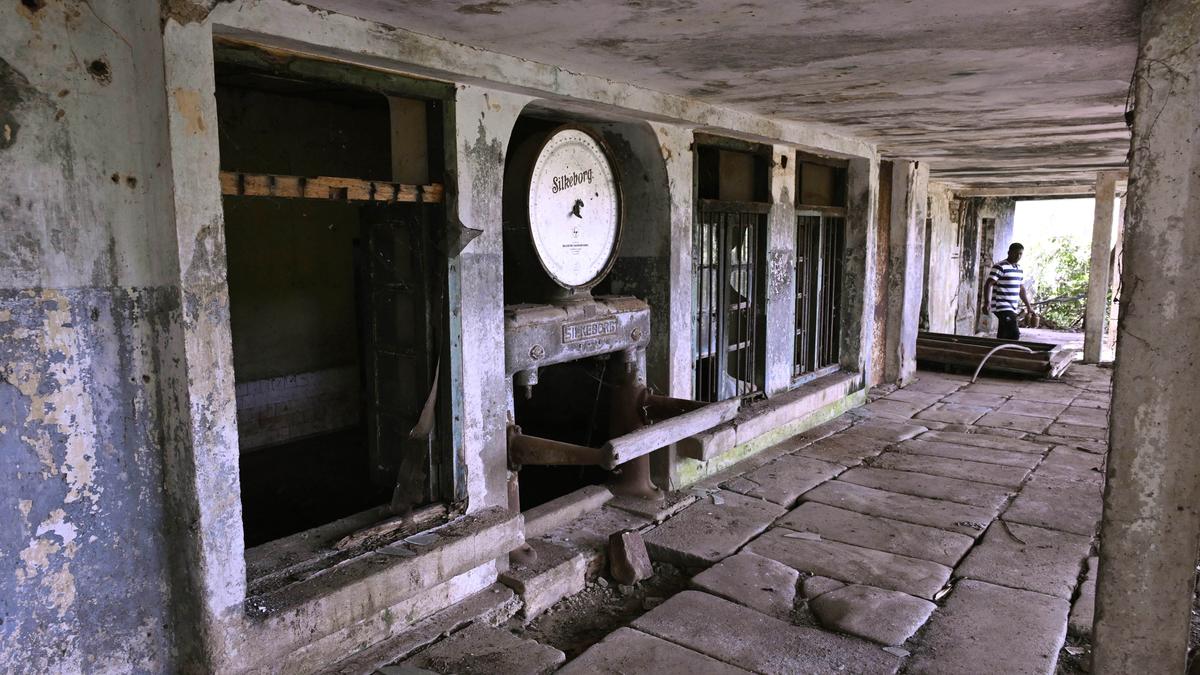
The old dairy facility at Kudige in Kodagu, the birthplace of Karnataka’s first dairy cooperative, long before the rise of the Nandini as a brand. | Photo Credit: K. BHAGYA PRAKASH

In the quiet town of Kudige in Kodagu, an old dairy facility stands as a reminder of the humble beginnings of what would become one of India’s most iconic dairy brands, Karnataka Milk Federation’s (KMF) Nandini. Once a bustling cooperative hub where fresh milk was collected from local farmers, the site now lies in decay, with weathered walls, rusting equipment, empty crates, and broken foundation stones.

This reporter visited Kudige, the birthplace of Karnataka’s first dairy cooperative, long before the rise of the Nandini as a brand, and found that while the original building was in a dilapidated state, a modern, fully operational dairy facility now thrives 500 metres away.

Global recognition

Karnataka’s Nandini milk brand has grown into a globally recognised name, engaged in a range of activities from sponsoring Scotland and Ireland’s cricket teams during the ICC Men’s T20 World Cup last year to constantly launching new products to diversify its business. It has been exploring new markets across the country, competing with Amul, India’s largest dairy producer. However, the roots of this success story trace back to a modest beginning in Kudige back in 1955. The story of this humble origin has largely remained obscured.

Malavika, a long-time resident of Kudige, explained the historical significance of the site, guiding this reporter through the derelict structure. “I have been working here in the Animal Husbandry Department for the past 20 years. My father also worked in this dairy. Now that operations have shifted to the new building, the old one has fallen into disrepair,” she explained.

Inside the old dairy building, the inauguration plaque remains surprisingly intact. It bears the inscription, “Milk Pasteurisation Scheme inaugurated by Lieutenant-Colonel Daya Singh Bedi, then Chief Commissioner of Coorg, on 24 July 1955.”

Malavika guided us through the premises, showing an old weighing machine, various dairy processing machinery, and even glass bottles that were once used to distribute milk. “From this dairy, milk was supplied to different parts of Kodagu, which was then a separate state called Coorg. My father often spoke about how local farmers would bring their milk here, which was then processed and distributed,” she recalled.
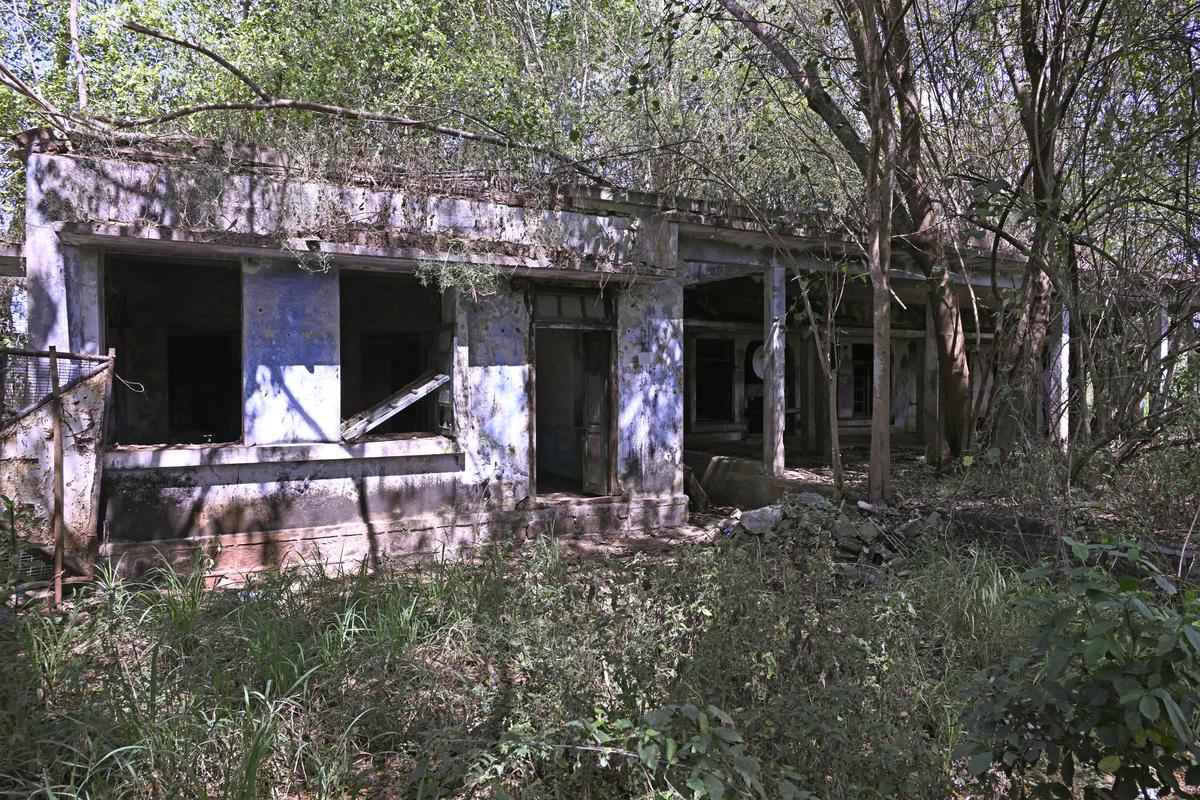
Despite its historical importance, the old dairy building at Kudige in Kodagu has been left in a neglected state. | Photo Credit: K. BHAGYA PRAKASH

Landmark neglected

Despite its historical importance, the old dairy building has been left in a neglected state. The site, currently under the control of the Hassan Cooperative Milk Producers Union (a part of KMF), has not received adequate maintenance. Local residents have raised concerns about its deteriorating condition.

Rudrappa K., a local farmer, expressed his disappointment. “The government should recognise the importance of this building and convert it into a museum or heritage site to showcase how the milk cooperative movement led to the creation of a successful brand like Nandini. Right now, the structure is in terrible condition. People throw garbage inside, and some even trespass into the premises. The authorities, either the government or KMF, should step in and restore this building,” he urged.

The transformation

Speaking to The Hindu, A.S. Premnath, former Managing Director of KMF, highlighted the historical significance of Kudige in Karnataka’s dairy industry.

“Not many people know that KMF had its origins in Kudige. The first dairy cooperative was established here in 1955. KMF itself was founded in 1974 as the Karnataka Dairy Development Corporation (KDDC) under a World Bank-funded project. It was later renamed Karnataka Milk Federation in 1984,” he explained.

KMF currently operates 15 milk unions across Karnataka, sourcing milk from Primary Dairy Cooperative Societies and distributing it to urban and rural consumers. The federation has approximately 28 lakh dairy farmer members across the State.

As Premnath points out, Kodagu is traditionally known for commercial crops like coffee, oranges, and cardamom, but not for dairy farming. This is probably why not many remember that it was also home to Karnataka’s first commissioned dairy plant. “The Kudige dairy was established in 1955. Later, in 1974, an integrated project was launched to restructure the State’s dairy industry on cooperative principles, laying the foundation for a new era of dairy development. With World Bank assistance, a dairy development project was initiated in 1975, initially covering Mysuru, Hassan, Tumakuru, and Bengaluru districts,” he said.

Premnath, who worked at KMF for nearly 40 years, was himself born and raised in Kudige. His father also worked at the dairy. “I have seen the journey of this Kudige from my childhood. The growth of KMF and Nandini is an incredible success story that started in this small village. I still remember how ghee was produced using firewood to boil the milk. ‘Coorg Ghee’ was a sought-after product back then, just like Coorg Coffee and Coorg Honey,” he reminisced.
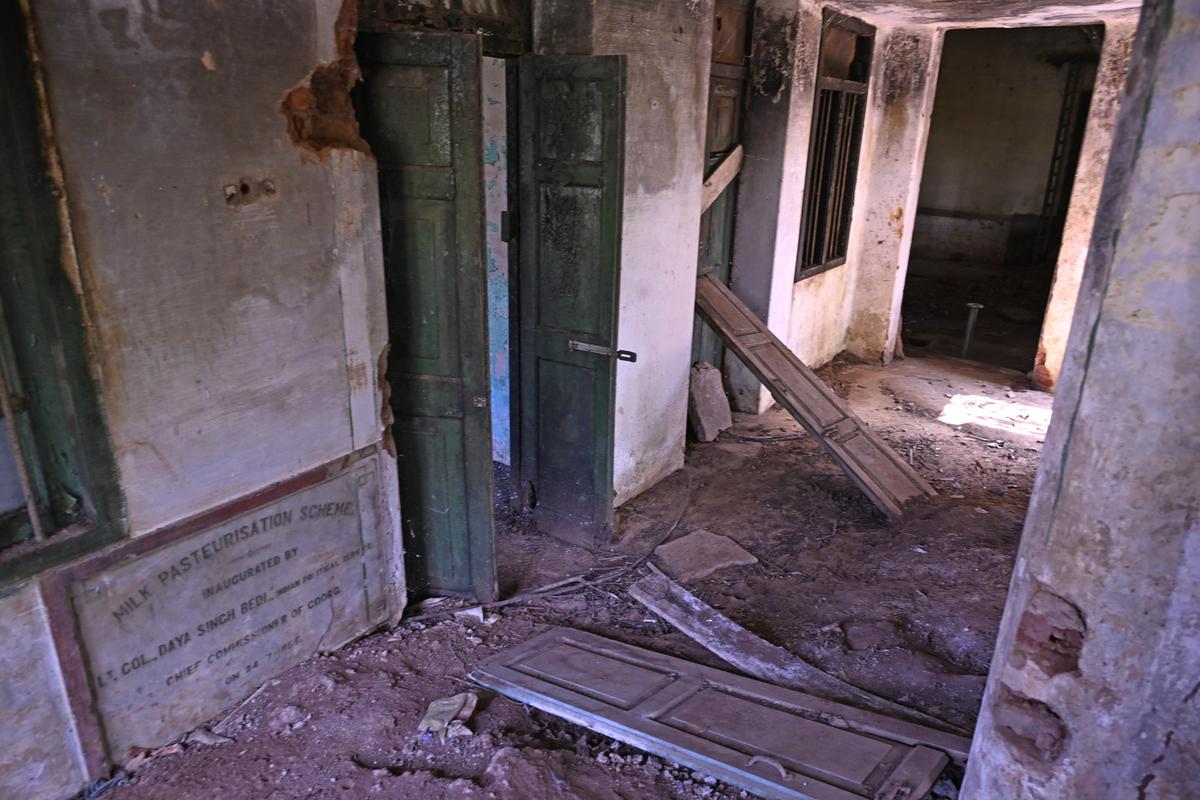
The inauguration plaque that still remains intact. It bears the inscription, “Milk Pasteurisation Scheme inaugurated by Lieutenant-Colonel Daya Singh Bedi, then Chief Commissioner of Coorg, on 24 July 1955.” | Photo Credit: K. BHAGYA PRAKASH

Growth and expansion

In 2024, KMF recorded a 14% increase in milk procurement and a 10% rise in sales of milk and dairy products. As it continues to compete with other milk brands in South and West India, KMF has also expanded its presence in Delhi to further extend its footprint.

Of the nearly one crore litres of milk procured daily, KMF sells around 65 lakh litres as liquid milk, including UHT Goodlife and curd. About eight lakh litres are converted into milk powder for the Ksheera Bhagya scheme, which supplies milk to schoolchildren, while six lakh litres are used for producing milk-based products like ice creams and sweets.

KMF Chairman Bheema Naik spoke about the cooperative’s structure and its impact. “The Amul model of dairy cooperatives was introduced in Karnataka in 1974-75 with financial support from the World Bank, as well as Operation Flood II and III. The three-tier Anand Pattern structure — village-level dairy cooperative societies, district-level milk unions, and the state-level federation —ensures sustainable dairy farming. KMF is among the few cooperatives that have successfully transformed dairying from a secondary occupation into a full-fledged industry,” he said.
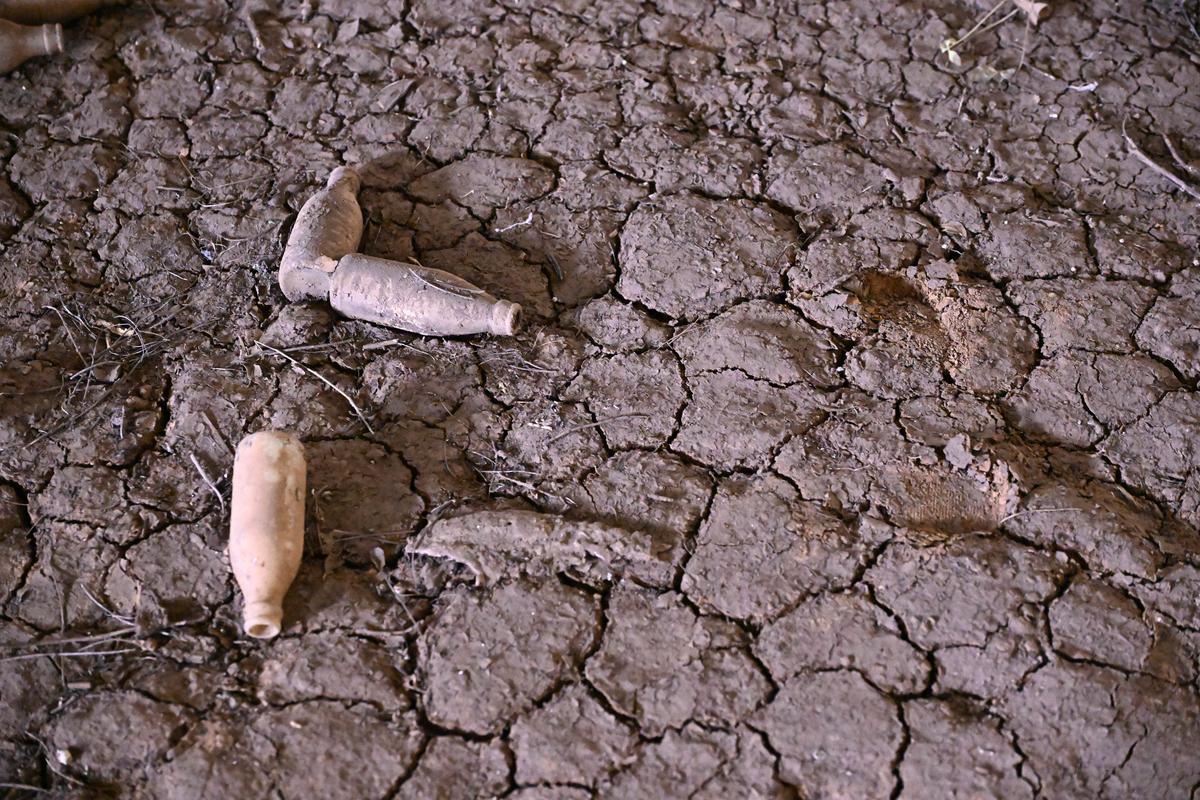
Milk bottles still found at the old dairy facility at Kudige in Kodagu. | Photo Credit: K. BHAGYA PRAKASH

Political controversies

Despite its cooperative structure, KMF has every now and then found itself entangled in the ups and downs of Karnataka’s politics, particularly during elections and milk price revisions. Ahead of the 2023 Karnataka State Legislative Assembly elections, a controversy erupted when the then-ruling BJP government allowed Amul to sell its products in Karnataka. This sparked allegations that Union Home and Cooperation Minister Amit Shah was attempting to merge KMF’s Nandini brand with Amul.

The move triggered widespread protests across Karnataka, with slogans like #SaveNandini and #GoBackAmul trending on social media. Protestors took to the streets, fearing that Nandini’s identity and autonomy were under threat. However, despite these challenges, Nandini remains a strong, homegrown brand that has significantly shaped Karnataka’s and India’s dairy industry, experts in the sector say.

The love for Nandini in Karnataka transcends business, holding deep cultural significance. Kannada cinema legend Dr. Rajkumar served as Nandini’s brand ambassador, free of charge, and even featured in the brand’s first and only television commercial in 1996. His son, Puneeth Rajkumar, later continued the legacy, signing an agreement with KMF in December 2009, again without any fee.

From a small village in Kodagu, Nandini has grown to become the second-largest milk cooperative federation in India. Reflecting on this remarkable journey, Premnath attributed KMF’s success to unwavering consumer loyalty, and the dedication of lakhs of farmers. “The strength of Nandini lies in its cooperative spirit and consumer trust. The farmers who contribute to KMF have made it what it is today,” he said.
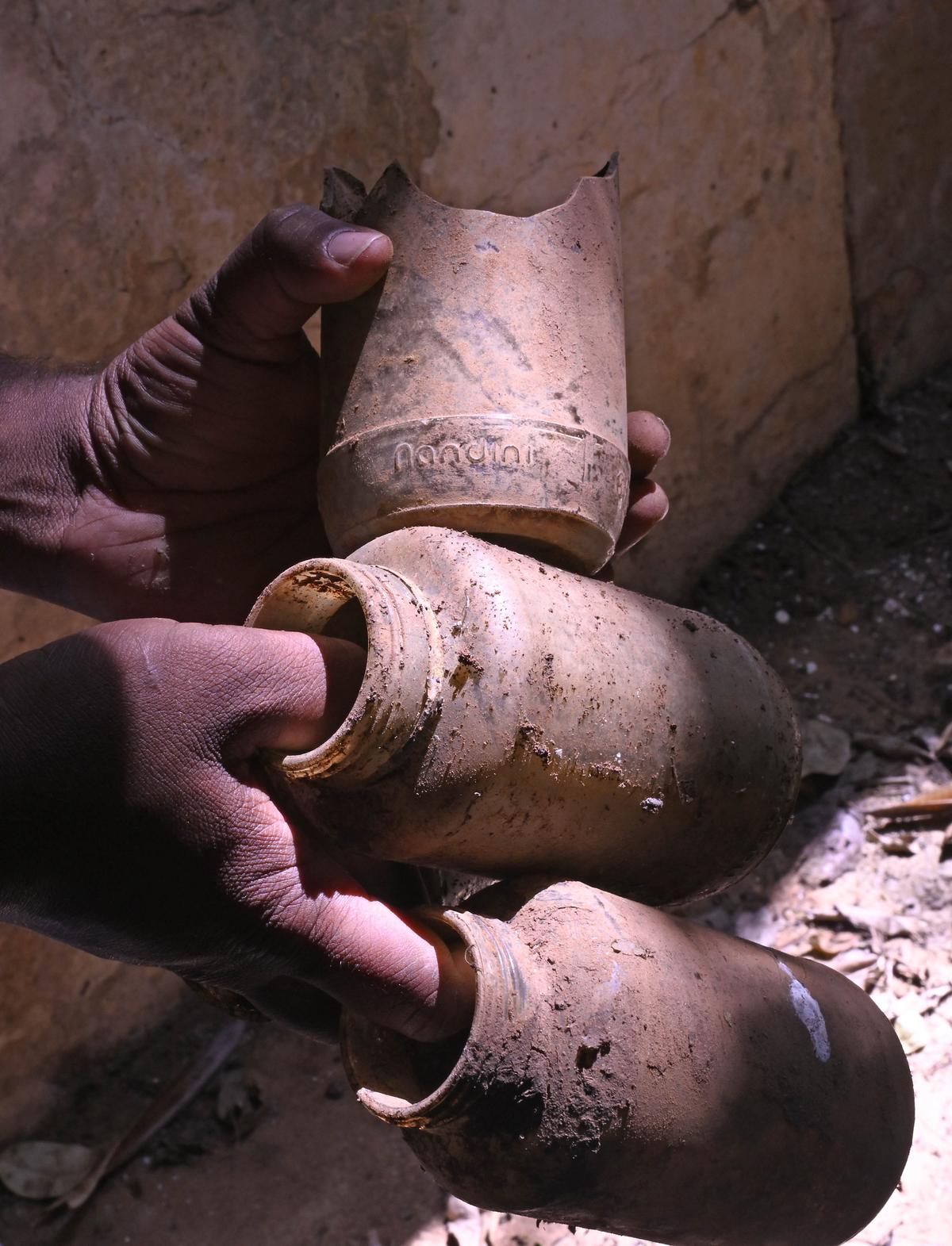
Milk bottles still found at the old dairy facility at Kudige in Kodagu. | Photo Credit: K. BHAGYA PRAKASH

Challenges mount too

While the dairy brand has seen remarkable success, challenges persist as milk unions urge the State government to increase retail prices to ensure better remuneration to the dairy farmers. The farmers have been demanding a hike in incentives, even as KMF faces a glut in milk production.

In June last year, the KMF raised milk prices by ₹2 per litre and added 50 ml to every 500 ml packet. However, KMF officials argue that this increment is insufficient. The federation is facing mounting financial losses from an unsold stockpile of skimmed milk powder (SMP), adding to the strain on the dairy sector.

Amid this surplus, many of Karnataka’s 15 milk unions have reduced procurement prices by ₹2 per litre, triggering discontent among farmers. Currently, most unions pay ₹32.5 per litre to farmers, but in districts such as Kolar, Mandya, and Ballari, the rate has dropped to ₹30. Dairy farmers are also frustrated that the government’s ₹5 per litre incentive, introduced under the Ksheeradhaare scheme, has remained unchanged for over a decade despite increasing production costs.

The Ksheeradhaare scheme was launched in 2008 with a ₹2 per litre incentive, which was later increased to ₹4 per litre in 2013 and ₹5 per litre in 2016. However, since then, there has been no further revision, even as expenses for feed and maintenance have risen significantly. Adding to their woes, the State government has not disbursed these incentives for more than 10 months, leaving farmers struggling financially.

Farmers’ leader Kurubur Shanthakumar criticised the government, alleging that apart from withholding incentives, farmers are also being paid ₹1 less per litre for their milk. “There are approximately 38 lakh dairy farmers in Karnataka, and over 90% of them are women. The government speaks about women’s empowerment, yet it fails to ensure timely payment of their incentives,” he said. He further emphasised that the success of the Nandini brand is due to the efforts of farmers, and therefore, they deserve to be adequately compensated.

The new building of Karnataka Milk Federation at Kudige in Kodagu. | Photo Credit: K. BHAGYA PRAKASH

Consumers chose brand name ‘Nandini’

Interestingly, the name ‘Nandini’ was not chosen by officials at the Karnataka Milk Federation (KMF) but was suggested by the consumers who would go on to support and cherish the brand. According to A.S. Premnath, former Managing Director of KMF, in 1983, KMF decided to introduce a corporate brand identity for its milk and dairy products to strengthen its presence in the market. As part of this initiative, it reached out to consumers, inviting them to suggest a name for the brand. “The response was overwhelming, with a large number of consumers recommending the name ‘Nandini.’ Given the strong public preference for this name, KMF officially adopted ‘Nandini’ as the brand name for its dairy products,” Premnath said.

source: http://www.thehindu.com / The Hindu / Home> News> India> Karnataka / by Darshan Devaiah B.P / February 07th, 2025
Big coffee planters in Karnataka see relief, but small planters continue to face labour shortage

For the past five years, coffee plantations in Kodagu, Chikkamagaluru, and Hassan districts have grappled with a labour crisis during the crucial November-to-March harvest period.

While harvesting requires manual labour, small planters are proposing mechanisation of processes like drying beans and irrigation, which will help reduce dependency on labourers. | Photo Credit: File photo

Karnataka’s big coffee planters, reeling under years of labour shortage, are enjoying a welcome respite this harvest season as migrant workers arrived in sufficient numbers to meet the demand even as coffee prices have hit a record high this year, offering a financial cushion to growers after years of challenges.

For the past five years, coffee plantations in Kodagu, Chikkamagaluru, and Hassan districts have grappled with a labour crisis during the crucial November-to-March harvest period. Planters heavily rely on migrant workers, primarily from Assam and West Bengal, with smaller contingents from Tamil Nadu, Kerala and north Karnataka. However, the COVID-19 pandemic, lockdowns, and state and general elections in those States disrupted the arrival of these workers, exacerbating the shortage.

“We’ve seen a good inflow of labourers from Assam and West Bengal, unlike in recent years,” said Kaibulira Harish Appaiah, former president of the Kodagu Growers’ Association and executive committee member of the Kodagu Planters’ Association.

“All the elections in these States are over. There is no pandemic. This has ensured that workers can travel to Karnataka without disruptions. Coupled with record-high coffee prices, growers are hopeful that this will help recover from the losses incurred over the last 15 years, and help them reinvest in their estates,” he added.

However, workers from Tamil Nadu and north Karnataka have dwindled, opting for construction jobs in urban areas, such as Bengaluru. “These sectors offer regular work and comparable wages, pulling workers away from coffee estates,” said Mr Appaiah.

Kiran Hegde, a planter from Sakleshpur in Hassan, said, “Coffee harvesting is physically demanding and requires precision, which is why we rely on trained workers. The return of migrant workers has brought some relief, but it’s been a tough few years for all of us. If these high prices sustain, it might just give us the breathing room we desperately need.”

Varun Raj, a coffee grower from Mudigere in Chikkamagaluru, said, “We’re finally seeing hope. With global prices rising and labourers returning, it feels like we’re catching a break. However, this is just the beginning — we need sustained efforts to address these challenges for the future. Again next year we don’t know whether the labourers will come and if the price of the coffee will be high.”

Struggle for small growers

While large coffee estates have sufficient labour, small growers are still struggling.

“It usually takes a month to harvest my five-acre plantation with adequate workers. This year, we’ve only managed to cover 30% so far. Despite the high prices, small growers like me cannot afford the increased wages being offered by the larger estates. If we don’t harvest soon, the overripe cherries will drop, causing significant losses,” said Ramesh Uthappa, a planter from Birunani village in Kodagu.

Labour-intensive harvesting requires skilled hands, as the delicate process involves picking ripe cherries without damaging the plant. Workers, often earning double their usual wages, are incentivised to make the long journey to Karnataka.

Planters urge support for coffee mechanisation

Coffee growers rued the lack of support from the State and Central governments as well as the Coffee Board.

M.T. Poovaiah, a coffee planter from South Kodagu, said, “Labour shortages have become a major challenge. Local labourers are no longer available, and we have to rely on workers from Kerala, who come here, work for the day, and return home. We bear their transportation costs and hefty labour charges, which result in significant losses. Around 80% of the profit we earn from coffee goes back into maintaining our estates throughout the year. This includes expenses for harvesting, fertilizers, irrigation, and other essential work.”

Small coffee planters are urging the government to support mechanisation and automation to address labour shortages.

Highlighting this need, Mr Poovaiah added, “To tackle labour shortage problems, mechanisation and automation must be adopted in coffee plantations, and the government, especially the Coffee Board, should assist us. While harvesting still requires manual labour, mechanisation can be applied to processes like drying beans and irrigation, which will help reduce dependency on workers in these areas.”

source: http://www.thehindu.com / The Hindu / Home> Business> Agri-Business / by Darshan Devaiah B.P. / January 17th, 2025

Karnataka High Court orders forest dept to refund Rs 4.33 lakh to Kodagu landowner 

Justice Suraj Govindaraj ruled that the state cannot exploit a mistake made by a citizen in categorising the land as ‘sagu bane land’ when it was, in fact, alienated ‘sagu bane land’, and retain the deposited amount.

Representative image showing a forest./ Credit: DH Photo

Bengaluru:

The Karnataka High Court has directed the Forest Department to refund Rs 4.33 lakh, along with 6 per cent interest, to the legal heirs of a Kodagu landowner, Mahabaleshwar Bhat, who had deposited the amount in 1982.

Justice Suraj Govindaraj ruled that the state cannot exploit a mistake made by a citizen in categorising the land as ‘sagu bane land’ when it was, in fact, alienated ‘sagu bane land’, and retain the deposited amount.

Bhat, who owned 38.5 acres in Biligeri Village, Madikeri taluk, Kodagu district, had received permission on February 1, 1983, to cut 349 trees on the property. He subsequently paid Rs 4,33,082, the assessed value of the trees. However, he later realised that the land had been classified as alienated ‘sagu bane land’ since 1897, making the payment unnecessary.

Bhat requested a refund from the authorities, but his plea was rejected by the Forest Department on April 25, 2012, citing the Karnataka Land Revenue Act, 1964, as grounds for denial. After the department’s appellate authority also dismissed his appeal, Bhat moved the high court.

During the pendency of the case, Bhat passed away and his legal representatives were substituted as petitioners in 2023. The court found that the Forest Department failed in its duty to verify the land’s classification.

“In fact, it was for the assistant and chief conservator of forest to verify these from the records concerned and not go by the statement made by the petitioner himself. Whenever any application is filed by any person claiming permission to cut trees, there is a duty imposed on the authority granting such permission to verify the details. If at all the details had been verified, it would have been clear that the land in question is alienated ‘sagu bane land’ and not un-alienated ‘sagu bane land’.

This aspect has been made clear by the deputy commissioner in his order dated March 29, 2010,” Justice Suraj Govindaraj said.

source: http://www.deccanherald.com / Deccan Herald / Home> India> Karnataka / by Subarna Mukherjee , DH Web Desk / January 03rd, 2025

High Court faults forest authorities for refusing to refund amount deposited by land owner while seeking permission to cut trees 

It is the duty of the forest authorities to verify official records before allowing applications seeking permission to cut trees, the High Court of Karnataka has said, while finding fault with the authorities for refusing to refund the amount deposited by a land owner by mistake, though he was not required to deposit it while seeking permission to cut trees on his land.

Justice Suraj Govindaraj passed the order while allowing a petition filed by N. Mahabaleshwara Bhat, a resident of Biligeri village in Madikeri taluk of Kodagu district.

The petitioner, who died during the pendency of petition filed in 2016, deposited ₹4.33 lakh with the forest authorities to seek permission to cut several trees on his Sagu Bane land.

However, he realised later that his was alienated Sagu Bane land for which there was no need to deposit money, and hence he requested the authorities to refund the deposited amount. But the forest authorities rejected his request, stating that he himself had described his land as Sagu Bane land in his application.

Negating the contention of the authorities, the court said that it was for the Assistant Conservator of Forest and the Chief Conservator of Forest to verify nature of the land from the records and not to go by the statement made in the application.

If at all the details of the land had been verified by the forest authorities, it would have been clear that the land in question was alienated Sagu Bane land as this aspect was made clear by the Deputy Commissioner in his order passed in 2010, the court said, while stating that there was a duty imposed on the authority to very the records before granting such permissions.

source: http://www.thehindu.com / The Hindu / Home> News> India> Karnataka / by The Hindu Bureau / January 03rd, 2024

Coffee prices soar, but 15% loss in yield expected in Karnataka due to vagaries of weather

Many planters are seeing uneven ripening because of multiple rains and multiple blossoms.

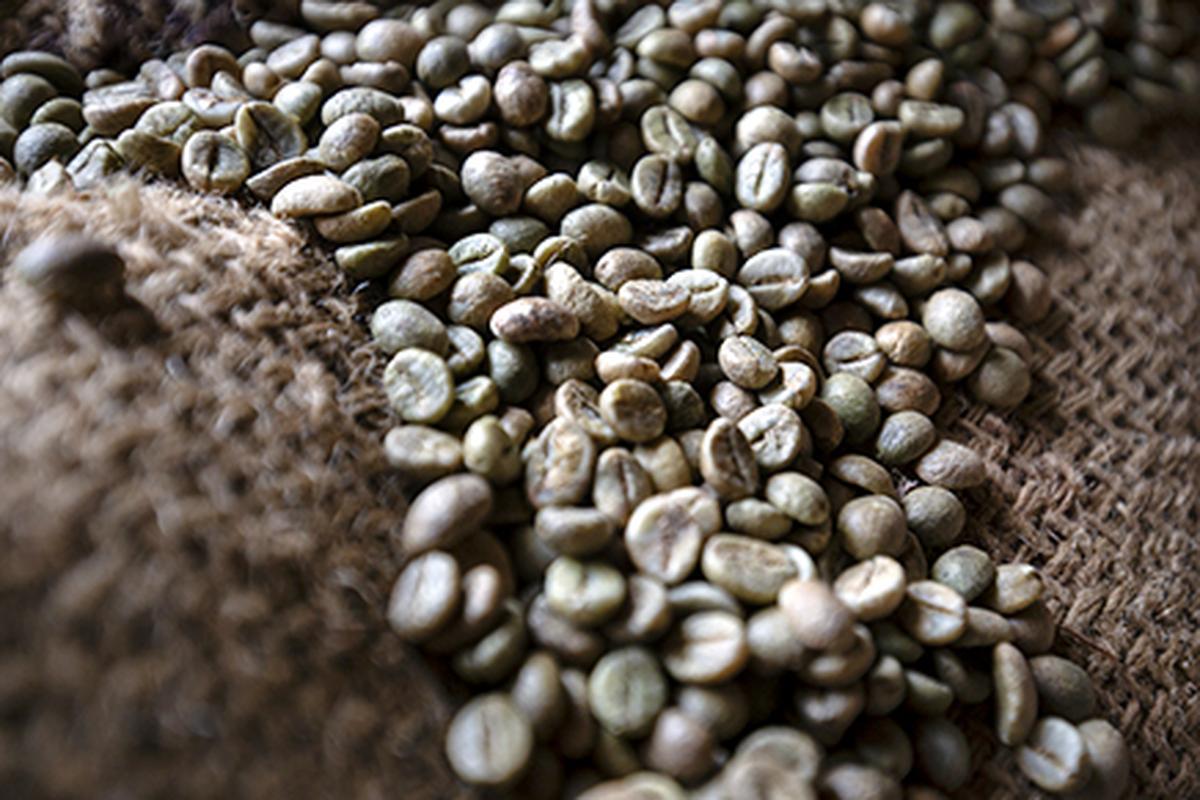
A file photo of coffee beans in an estate in Kodagu district (Coorg) of Karnataka. | Photo Credit: MURALI KUMAR K

Coffee planters are a confused lot this year. On the one hand, coffee prices have hit a record high. On the other, vagaries of the weather through 2023 and 2024 have resulted in erratic ripening and a dip in yield this season. The Coffee Board is estimating an average 15% loss this season due to this.

Coffee is harvested between December and February. 

Rain pattern

“We are estimating more than 15% loss in yield, mostly in Karnataka, because in other coffee growing regions such as Andhra Pradesh and the North East, they receive the northeast monsoon. This time, the southwest monsoon, which covers Karnataka, was heavier and not uniform,” said K.G. Jagadeesha, CEO and Secretary, Coffee Board, adding that the exact figures will be clearer after the post blossom survey in March-April. 

The heavy rain was localised. Some regions received rain well into November. Yield is expected to be hit in the three main coffee districts — Kodagu, Chikkamagaluru and Hassan.

Explaining further, he said, “Last year, there was rain during November-December. Then this year again in January there was rain. Blossom showers during February-March is ideal. If it rains earlier, then uneven berry formation and ripening are observed. We expect a modest production of 3.5 lakh metric tonnes compared to 3.6 lakh metric tonnes last year.”

Naj Chengappa, a planter from Devarapura, south Kodagu, said, “Many planters are seeing uneven ripening because of multiple rains and multiple blossoms. In one coffee tree, we are seeing ripe, green and dried ones. Droppings (of berries) were also observed in high rainfall areas.”

This comes as bad news for planters as coffee prices have hit record highs owing to supply side disruptions in Brazil and Vietnam. “We get no clear information from them on restoration. So, the price may be high till that is restored,” Mr. Jagadeesha said.

Climate resilience

The Coffee Board has urged planters to adhere to best practices to shield themselves from weather variations.

“This year, there was heavy rain. Those who have invested in water conservation will have stored this water and used it for better yield. We have also started the research on climate resilient varieties. We recommend maintaining high carbon content, organic mulching, mixing organic and chemical fertilisers, good shade management and water conservation,” Mr. Jagadeesha said. 

source: http://www.thehindu.com / The Hindu / Home> Sci-Tech> Agriculture / by K C Deepika / December 25th, 2024

Coorg: Where coffee culture meets aspirational avocados

Coorg’s lush landscapes are evolving, with century-old coffee plantations now sharing space with thriving rows of avocado trees, writes GYANESHWAR DAYAL

As I pack my bags in Delhi the AQI is reading staggering 430, the smog has dawned on the city and there is heaviness in the air, eyes burning, breathing is an effort to be undertaken. The touchdown in Kempegowda International Airport Bengaluru is smooth the temperature is almost at par with Delhi but air is breathable. The five hours journey to Coorg is tiring but relaxing scenery changes from rocky to green to lush green, on the way you get to see the Gabbar Singh’s den, the place where Sholay film was shot some 40 years back. On the way we have elephant family waiting for us by the roadside and snake crosses the road as drives pushes the brakes. Yes, all of us have right to live, even snakes!

It is night already and the day is done without much fuss as we retire in 140-year-old property a British bungalow now a tata property -Taneerhulla in ama coffee trail. The morning view from the window is fascinating, Delhi smog has given way to Coorg fog, and AQI has dropped to 43! I take a deep breath, as if to store this purity and carry it back home.

Coorg, or Kodagu as it is known in Kannad is nestled in the heart of the Western Ghats, has a fascinating history shaped by its strategic location, natural resources, and the allure of its spices. This region has been a magnet for traders, rulers, and explorers, each drawn by its bounty and beauty.

The history of Coorg dates back to ancient times, with its mention in early Indian texts like the Sangam literature. The region was originally home to indigenous tribes like the Kodavas, who developed a rich culture centered around nature and agriculture. Kodavas are known for their martial traditions, unique customs, and close-knit community life, which continue to define Coorg’s identity today. Over centuries, Coorg saw the rise and fall of several South Indian dynasties, including the Cholas, Gangas, Hoysalas, and Kadambas. These rulers left their imprint through temples and forts, which stand as silent witnesses to the region’s historical significance.

By the 15th and 16th centuries, the fame of the Western Ghats and their riches spread beyond India’s borders. The spice trade was the primary lure, as Coorg, along with other parts of the Western Ghats, became a significant source of black pepper, cardamom, and other exotic spices. The Portuguese were among the first Europeans to set sail for India, with Vasco da Gama’s arrival in 1498 marking a new era of trade and conquest. Soon, Dutch, French, and British traders followed, vying for control of spice routes. Coorg, though a landlocked region, became an integral part of these trade networks due to its fertile hills and spice plantations.

In the early 19th century, the British annexed Coorg after defeating the local ruler, Chikka Veerarajendra, in 1834. Recognising Coorg’s agricultural potential, the British transformed its economy by introducing coffee cultivation alongside spices. This was the beginning of coffee plantation on commercial scale in Coorg and has stayed that way since. Coffee thrived in the region’s climate, and Coorg became one of India’s premier coffee-producing areas. The planters were of course the British who lived near their plantations. Their Bungalows dot the place and the one we stayed was of course belonged to a British. The British also admired Coorg’s natural beauty. Coorg is often referred to as the “Scotland of India” for its rolling hills, misty valleys, and temperate weather. Under British influence, the Kodavas were granted special privileges, including exemption from the Arms Act, which allowed them to retain their traditional firearms-a legacy still continues.

The Western Ghats, a UNESCO World Heritage Site, are among the most biodiverse regions on the planet. Stretching over 1,600 kilometers from Gujarat to Kerala, these ancient mountains are home to an astonishing variety of flora and fauna.

In Coorg, the Western Ghats reveal their most enchanting side. Dense forests, gurgling streams, and cascading waterfalls dominate the landscape, making it a paradise for nature enthusiasts. The forests host an incredible range of plant species, from ancient trees to medicinal herbs. They are especially known for sandalwood, teak, and bamboo. The Western Ghats are a haven for wildlife, including tigers, elephants, gaurs, and numerous endemic species like the Lion-tailed Macaque and Malabar Civet. The Ghats are also critical for the region’s agriculture, providing a fertile environment for growing coffee, spices, and now avocados.

Coorg’s history is a blend of ancient traditions and modern influences. Its spice heritage continues to thrive alongside its renowned coffee plantations. Now, with the introduction of avocado cultivation by Westfalia Fruit, Coorg is stepping into a new chapter of agricultural innovation.

Tourists visiting Coorg can trace its history through ancient temples, forts, and colonial-era bungalows, all while enjoying its natural beauty and rich culinary traditions. The intertwining of the Western Ghats’ biodiversity with the cultural tapestry of Coorg makes it one of India’s most enchanting destinations.

Coorg’s identity is deeply intertwined with its coffee plantations, which have been the backbone of its economy for decades. Introduced by Baba Budan in the 17th century, coffee found an ideal home in Coorg’s rich soil and temperate climate. Today, the district is one of India’s leading coffee-producing regions, renowned for its Arabica and Robusta beans.

The plantations, often set against misty hillsides, not only produce world-class coffee but also create picturesque landscapes that attract tourists. Coffee estate tours allow visitors to learn about the journey of coffee beans from farm to cup, making them an integral part of the Coorg experience.

Located in southwestern Karnataka, Coorg is a verdant hill station known for its cool climate, scenic views, and pristine environment. It is part of the UNESCO -listed Western Ghats, one of the world’s biodiversity hotspots. The region’s dense forests, cascading waterfalls and diverse wildlife make it a haven for eco-tourism and outdoor activities such as trekking, birdwatching, and nature photography.

Some must-visit spots include the Abbey Falls, Raja’s Seat, Dubare Elephant Camp, and the Brahmagiri Wildlife Sanctuary. The Kaveri River, originating from Talakaveri in Coorg, adds to the district’s charm, serving as a lifeline for the southern states of India.

While coffee remains Coorg’s hallmark, the region is now witnessing a burgeoning avocado revolution, led by Westfalia Fruit, a global leader in avocado production. Recognising Coorg’s favourable climate for cultivation, Westfalia has established a state-of-the-art avocado nursery in collaboration with Sam Agri and Dvori-Or Nursery. The initiative focuses on growing high-quality Hass and other commercial avocado varieties.

The saying, “Where tea and coffee grow, avocados can grow better,” perfectly describes Coorg’s potential. Its tropical climate, high elevation, and fertile soil make it an excellent location for avocado farming. Westfalia’s meticulous approach to planting, nurturing, and harvesting ensures that the avocados meet global quality standards.

Westfalia has already contributed to planting over 500 acres of avocado farms across India, with a target to exceed 1,000 acres by 2026. The Coorg nursery plays a critical role in supplying premium rootstock and planting material, ensuring sustainable practices and high yields. For coffee farmers, avocados offer a promising diversification crop, creating additional income streams and contributing to rural development.

Westfalia, in partnership with the World Avocado Organisation (WAO), is driving efforts to educate Indian consumers about the health benefits and culinary versatility of avocados.

Campaigns like “Avocado Ki Paatshaala,” led by celebrity chef Sanjeev Kapoor, have been instrumental in popularising the fruit.

We get hands on lessons on avocado grafting and cloning the techniques Westfalia is introducing in Coorg for avocado plantation sooner than later Coorg avocados would be available across the country. Avocados is one of the healthy diet options which can served in several avatars from avocado-on-toast to guacamole and even avocado shake and ice cream. This is going to benefit the local farmers as well as they can four to five times the amount they make on coffee.

Coorg’s transformation from a coffee giant to a hub for avocados signifies its adaptability and progressive approach to agriculture. Visitors to Coorg can now enjoy not only a cup of freshly brewed coffee but also a taste of locally grown avocados, blending wellness with indulgence.

Whether you’re exploring its lush landscapes, learning about coffee cultivation, or witnessing the avocado revolution, Coorg offers a unique journey through nature and innovation. This jewel of Karnataka remains a must-visit destination for travellers and a shining example of India’s agricultural potential.

As the time to leave draws near, I find myself reflecting on the air of Delhi and take one last, deep breath of Coorg’s pure, refreshing atmosphere. The aroma of spices beckons us to the local market, where we gather handfuls of fragrant treasures and, naturally, Coorg’s signature Arabica and Robusta coffee. With our bags filled with spices, coffee, and the newfound delight of avocados, we bid farewell to this enchanting land and set out on the highway to Bengaluru. As we journey home, our hearts are brimming with memories that promise to call us back. Coorg is a place one longs to return to-sooner rather than later.

source: http://www.dailypioneer.com / The Pioneer / Home> Sunday Edition> Agenda> Travel / by Gyaneshwar Dayal / December 01st, 2024

Shaded cultivation shields our coffee from climate change challenges: Expert 

Dr. M. Senthilkumar, Director of Research, Coffee Board of India, says that India need not worry too much about losing coffee by 2050.

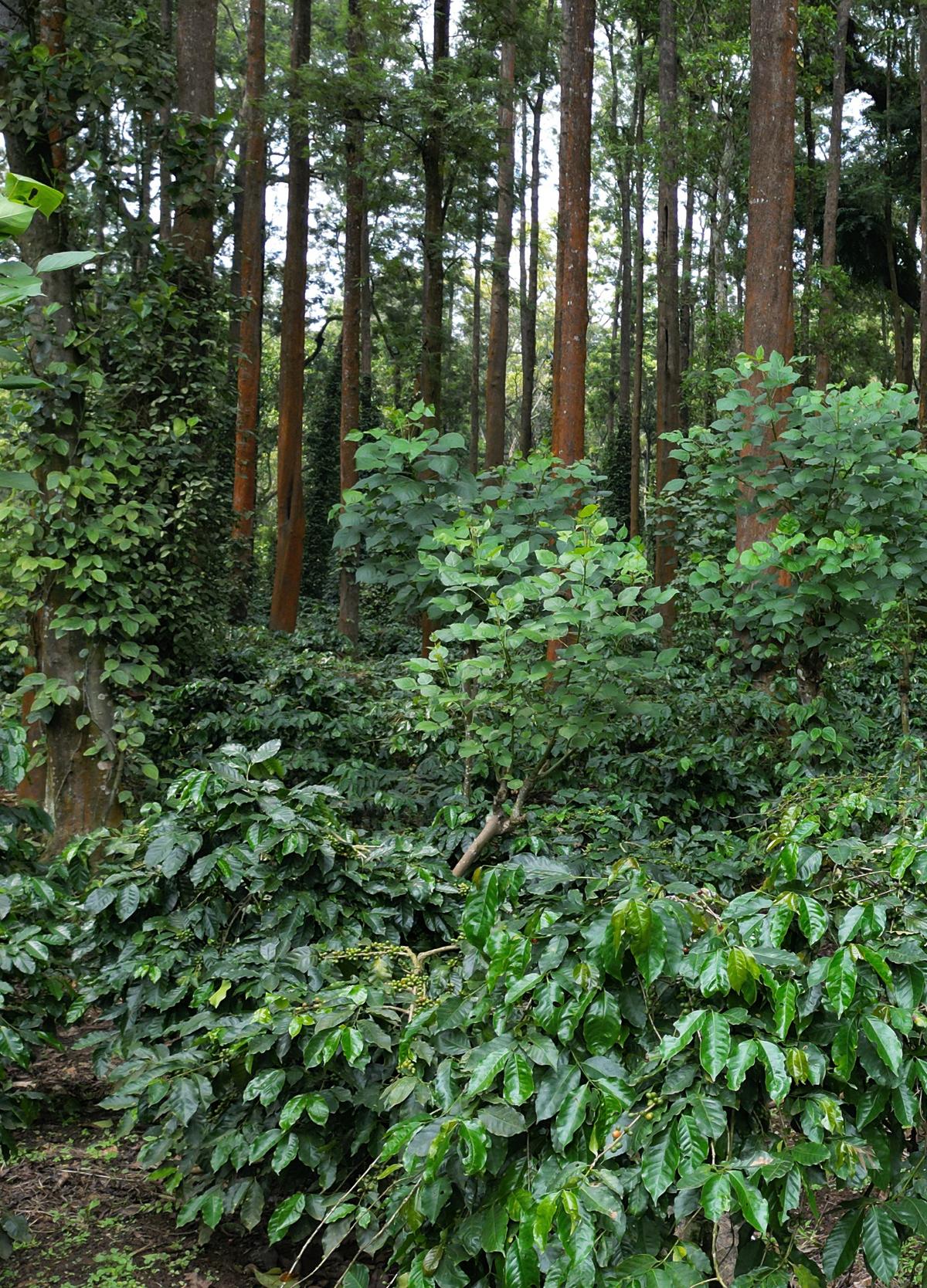
“Of course, climate change is happening not only in India, but around the world but this is not going to make much impact on Indian coffee, when compared with other countries like Brazil and Vietnam. We are a country that does not grow coffee in an open condition. Most of the coffee in India grows in a shaded condition. We are pushing our farmers to grow more traditional and conventional shade trees at the coffee estates – that is deciduous and evergreen trees, which will help create a microclimate that will facilitate comfortable growing of coffee,” Dr. Senthilkumar explained. 

India has rainfall from June to September usually, followed by a drought period of 70 days. “Due to climate change, there is a possibility of drought period being extended. If it extends farmers will have to use methods of artificial irrigation encoring more expenditure,” he added. 

“By 50-100 years from now, climate change can cause problems at any given point as the temperature is increasing by 1.5 degrees centigrade every year. But again, not for Indian coffee. Indian coffee may benefit because of climate change, as other countries will stop producing coffee. But that does not mean we should stop worrying about climate change,” Dr. Senthilkumar said. 

source: http://www.thehindu.com / The Hindu / Home> News> Cities> Bengaluru / by Yemen S / November 29th, 2024

The future of specialty coffee in India looks bright with Rasulpur Coffee Estates

Rasulpur (Kodagu District), KARNATAKA :

In my previous article, I featured an Ethiopian coffee export company who ran her business based on trust. This is factored in two ways; dealing with her farmers and clientele. In this day and age, we can learn a thing or two by understanding the wisdom behind why some people do the things they do, treading a harder path and not resort to shortcuts. They are in it for the long term, not focused on the short term gains. I have nothing but high regard for individuals like Medina.

Continuing a similar conversation, I have been focusing on what exactly is happening at the farm level by getting in touch with the producer directly. In this article, I talk to the owner of a coffee estate farm based in India. Sumaira gives us an insight about how her family’s coffee estate started in the late 18th century, processing techniques employed on her farm, the specialty coffee movement in India, and much more.

source: Rasulpur Coffee Estates

Can you tell me a bit about yourself and Rasulpur Coffee Estates?

I am Sumaira, the owner of  Rasulpur Coffee Estates & Roasters . We are located in the Rasulpur village, Coorg district, in the hot spots of the Western Ghats, India. My entrepreneurship journey has had its shares of ups and downs. I took up a career as an interior designer and worked as a business head for a furniture empire in India. Later on, I moved to the UAE and explored the real estate industry and the coffee sector. I envisioned starting up something of my own, being from a family of coffee planters and having the self-confidence and determination to start my own business. Something clicked the moment I realized how the coffee industry is growing day-by-day.

To add, I am a fifth generation coffee planter who introduced specialty coffee at our estate. We introduced better equipments and techniques, and new processing and fermentation methods which I’ll get into a little later. A laboratory is set up for roasting and cupping to create different roast profiles and new blends at our estate. We believe in helping and encouraging our coffee community, especially the neighboring small and marginal coffee growers to analyze their coffees, and improve their harvesting and processing methods to fetch a better price for their coffee.

The journey of Rasulpur Coffee Estates started in the late 18th century when our ancestors migrated to the Western Ghats of India i.e. Coorg at the time of the British rule, as their main occupation was trading in coffee and spices. They travelled to different parts of Coorg, as they developed a liking towards coffee estates and the greenery, purchased plenty of estates, learnt the methods of coffee cultivation, and started exporting coffee to foreign countries. England was one of the major countries to which coffee was exported to from our estates in that period with the help of the Coffee Board.

We named the estate and brand ‘Rasulpur Coffee’ after the village, Rasulpur, which is on the banks of the Kaveri river in Kodagu district is named after Mr. Rasul Khan, our first generation planter. He cleared the land, started cultivation, built dams for irrigation, made the place livable and initiated agricultural works. Looking at his abilities and progress, the government named this village after him.

In time, our second, third and fourth generation planters purchased more coffee plantations and improved the methods of cultivation, processing, and introduced pulping and irrigation. An R&D team was also set up and a variety of experiments are conducted to this day. The goal here is to enhance the quality of the crops, and advance the processing and post harvesting methods. Our coffee is featured in auctions, supplied for projects, sold locally and exported to wholesalers, cafes, and restaurants. We also ferment micro lots as per requirements from our roasters and young entrepreneurs who are venturing into the coffee industry.

What kind of processing is done on the farm?

Processing on our farm is done in three different ways along with few specialty processing methods, all of which change the sweetness, body and acidity of brewed coffee. These are natural/sun dried, washed, and honey processed.

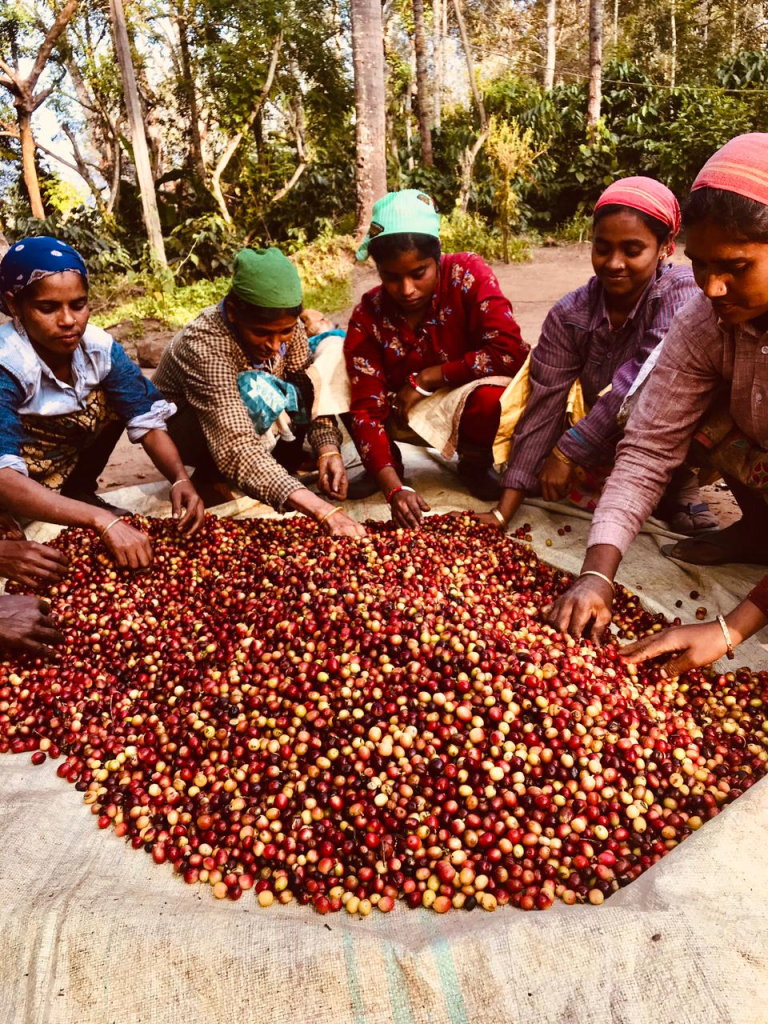
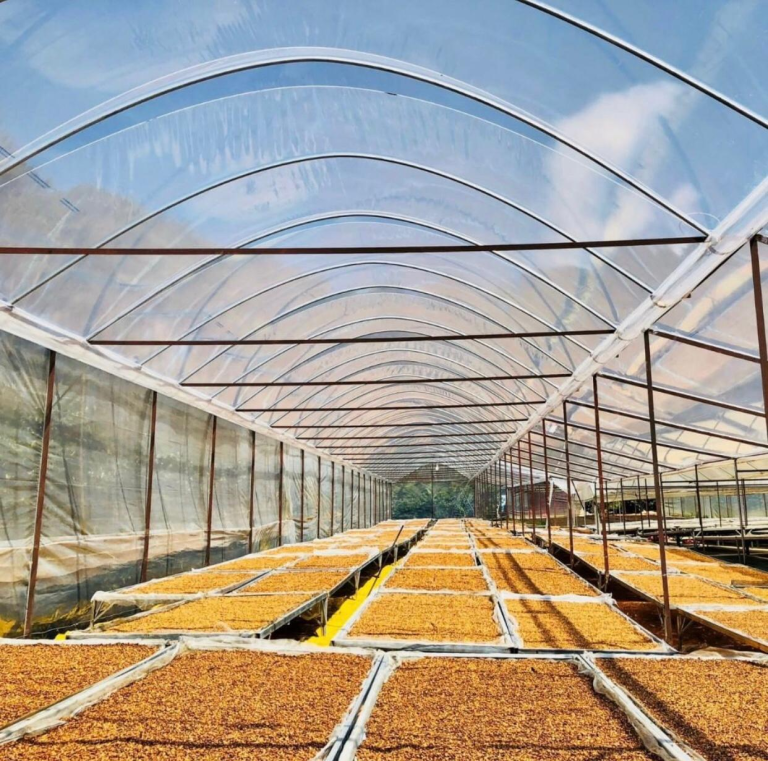
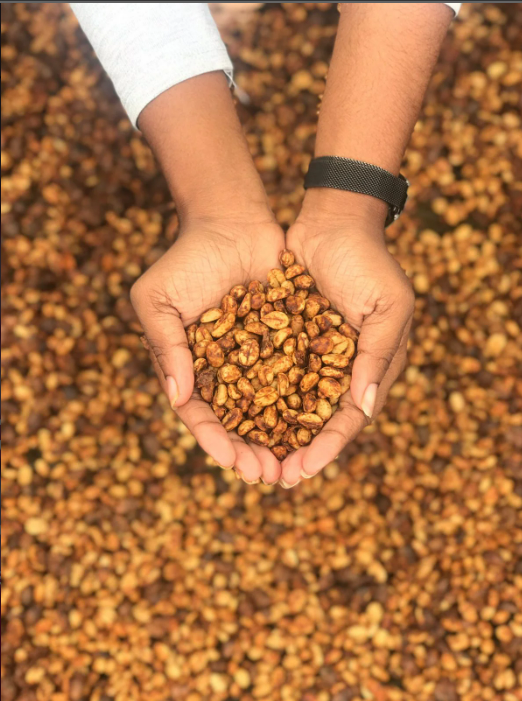
  • Natural/sun dried process. A natural processed coffee, also referred to as dry processed, is a traditional yet common way to process coffee today. Originating in Ethiopia, it involves drying out freshly picked coffee cherries with the seed still inside. To do this, we place the cherries on drying beds in the sun. These beds are either patios or raised drying tables. The cherries have to be rotated and turned to prevent mold, and takes about seven to eight days to ferment. During this time, the sugars and mucilage (the sticky substance that coats the seed) will latch onto the seeds, develop flavours and make them sweeter. Once the coffee is dry, a machine separates the pulp from the seed. Natural coffees are heavy bodied, and have deep, complex tasting notes. This development comes from the way the cherry ferments differently. Natural processed coffees can be difficult to replicate because of the inconsistencies in fermentation. However when done right, these coffees can also be some of the sweetest you’ll taste. It is juicy, syrupy and well worth the extra effort.
  • Washed process. Unlike natural, washed processed coffees are called the opposite, i.e. wet processed. In this scenario, machines called pulpers remove the seeds from the cherries before drying them. However, it is not just any cherry that gets the seed removal treatment. These cherries must have the perfect amount of ripeness to make sure they are sweet enough. To accomplish this, they go through a sorter and are segregated according to density. Once these pulpers remove the skin and pulp from the seeds, they are placed in tanks full of water. The water separates the rest of the mucilage and fruit caked onto the seed. Finally, the seeds are dried on the beds in the sun. Washed processed coffees have cleaner, and more crisp tasting notes when compared to natural processed coffees. The body of a brewed washed coffee is lighter. There is typically more brightness as well, because of a cleaner acidity that balances out the sweetness of the coffee. They are just as fruity as natural coffees, but the flavor notes are easier to differentiate.
  • Honey processed. This method is a combination of both natural and washed. It is a rare and demanding method, and not as commonly practiced as the previous two. However, it produces a unique cup of coffee, with flavours similar to both of the previously described processing methods. During honey processing, a pulper removes the seed from the cherry before it undergoes a drying process. However, it does not go into washing tank to remove the mucilage. That mucilage, which is what the ‘honey’ refers to stays on the seed and is now dried in the sun. The amount of mucilage left behind determines the sweetness, and there are even machines to control the amount on the seed. Like natural process, the seeds are dried on beds. The flavor components of honey coffees are varied and complex. Like washed coffees, they have lighter body and are very syrupy and sweet. Acidity is present but more mellow when compared to washed coffees.
  • Specialty processing. This is an emerging field and we use unique methods like anaerobic, aerobic, natural fermented, and fruit fermented to name a few. We ferment our coffee in a temperature controlled environment, with or without oxygen, followed by controlled drying to bring out unique and funky flavors out of the coffee.

source: Rasulpur Coffee Estates

What is the current state of the specialty coffee industry in India?

The coffee culture in India has evolved over the past decades. The nostalgia-inducing coffee houses were popular meeting grounds until the 1980’s. In the 90’s, cafe culture took over the country and coffee became the trendy drink to try.

Cafes are becoming the primary hangouts for youngsters and coffee found an emerging and appreciative audience. In the past two decades, we have seen a surge of cafes all over the country. They have materialized as a central hub for meeting, whether casual or business, and also doubling up as co-working spaces.

The 2020 pandemic impacted the industry In multiple ways and its effects were manifold. Logistics of coffee exports are pretty bad even today. Traditional coffee plantation owners who supply heavily within India and export to Europe are left with excess stock of coffee that could no longer be shipped to international markets.

Coming to the Indian coffee space, in recent years, the spotlight is on specialty coffee. This movement is picking up speed with many brands and roasters setting up shop. Analysis gives us a deeper understanding on how speciality coffee has emerged as the current buzzword in coffee circles. Current generation and millennials have emerged as the major chunk of consumers of specialty coffee within India.

Increased awareness and interest about coffee augmented by growing exposure to worldwide trends due to rising international travel and social media saw many of them exploring specialty coffee and manual brewing techniques. Lockdowns put a halt to the possibility of exploring cafes and thus many coffee consumers in the country turned to home brewing.

Many retail specialty coffee brands saw skyrocketing sales in 2020 as consumers invested in manual brewing equipment ranging from French Press, Moka Pots, Chemex and Aeropress. The new generation of coffee consumers respect the people behind the product, want to better understand the ‘farm to cup’ journey and are willing to invest in educating themselves on all nuances of coffee.

A few years back, this was largely unheard of. Farmers were just one aspect of the coffee supply chain, but hardly ever found the spotlight on them. Now plantation owners are keen on sharing their stories and experiences, information on their crops and the work they put in to make that perfect cup of coffee.

One can safely say that specialty coffee will not just be a passing trend, but en route to becoming one of the mainstays of the Indian coffee space in the coming decade.

I think there is a lack of communication between the consumers and farmers. I know some of the consumers, including me, have started to pay attention to where exactly the coffee is coming and from which farm. What do you think can be done to fill this gap?

The missing ingredient is awareness. People need to be educated about Indian coffee. The new-generation farmers need to collaborate with the Coffee Board of India and conduct events to promote coffees originating from India within the country and internationally.

Joint efforts need to be made by all coffee enthusiasts to encourage the consumption of coffee by making people understand the benefits of drinking coffee. The government has to support and help promote farmers to come forward and establish their own brands.

Being honest and transparent ensures the consumers and clients knows about the past, present and the way you are going to build a future. Bringing credibility to the table builds trust factor for the brand with the consumers.

I know some of the issues the farmers are facing currently are the increasing production costs, what steps are you employing to change that? Have you increased the price of your coffee to reflect that?

Whether we like it or not, coffee is getting more expensive. It’s important to look at some of the reasons why this is happening, before you potentially do one of the following:

  • Buy less sustainable and ethical coffee because it’s cheaper or
  • Lay blame on the wrong people for higher prices.

There are many factors influencing the cost of coffee from climate change, disruptions to global shipping, consumer demand, and packaging cost. While the need to use more environmentally-friendly packaging for coffee cups and bags is real, so too is the cost for shops switching to compostable or recyclable materials. We have also witnessed fluctuating shortages of packaging stock forcing some companies to find more costly short term solutions to packaging which comes at a higher cost.

Lastly, coming to the cost of quality, producing coffee of higher quality simply costs more. Coffee must be cared, harvesting and processing is hard work. It requires time and physical effort if you want to achieve the highest quality standards. You can’t have it both ways.

source: Rasulpur Coffee Estates

What are your thoughts on transparency? Has it benefitted you in any way?

Yes, by ten-fold. Transparency has improved our overall trust factor in this industry. It solves many problems and even stops disasters before they happen. It expands relationships, increases productivity, strengthens innovation, and improved our revenue.

What is the future of specialty coffee?

By far, the most interesting and exciting coffee segment of the moment is specialty coffee. It is rapidly expanding in India and across the globe as consumers continue to seek out the best cup of coffee to enjoy.

When it comes to coffee quality, specialty coffee is the ‘cream of the crop’ and is likened to fine wines due to its distinctive characteristics and delicious flavour that can only be achieved under certain growing conditions.

In today’s market, specialty coffee has become an intricate science and a global phenomenon that is seeing rapid growth across all sectors. More estates are coming into this specialty game, that will give ‘Indian specialty coffee a lot of mileage.’

What do you do in terms of R&D on Rasulpur Estate

We are currently doing research on developing a hybrid plant which is resistant to white stem borer and leaf rust. These are the two biggest pests and diseases faced by all Arabica growers throughout the world. International Coffee Organization (ICO) is working with different countries to find a solution for this.

This R&D program has been ongoing for the past four years on a 40 year old, 30 ft tall, Arabica plant labelled by us as Rasulpur Arabica. So far, the results look promising and it is resistant to these diseases. We have propagated progenies of this plant by clonal cutting, seed and tissue culture, and cross-bred this plant with other varieties of Arabica.

source: Rasulpur Coffee Estates

About Rasulpur Coffee Estate

Rasulpur Coffee Estates & Roasters is based out of Rasulpur village in Coorg district in the hot spots of the Western Ghats, India. The Estate is run by Syeda Sumaira, a fifth generation coffee planter and entrepreneur.

Fun fact: Coffee farms are the best place to get first hand knowledge about the beverage, how it is grown, harvested and processed. Rasulpur Coffee Estates organizes coffee tours, get in touch with them to find out more.

source: http://www.fltrmagazine.com / FLTR / Home> Insight> People / by Naveed Syed / August 11th, 2022

The journey of coffee in India and the Soliga community’s role in conservation

The journey of coffee in India and the Soliga community’s role in conservation.

“The first record of coffee in India is around 1799, when the British set up an experimental plot in Thalassery, Kerala. From then on, coffee planting came to the Nilgiris, Coorg (now Kodagu) and other parts,” says Arshiya Bose. | Photo Credit: AMANDA PEROBELLI

What will your cup of coffee taste like by 2050? Worse, will you even get your cup of coffee? Alarmist as this question might sound, these questions are being asked for the last 10 days. A study published on PLOS One, a peer-reviewed open-access journal published by the Public Library of Science in January 2022 (Expected global suitability of coffee, cashew and avocado due to climate change), predicts an overall decline in the world’s suitable growing land for arabica coffee by 2050.

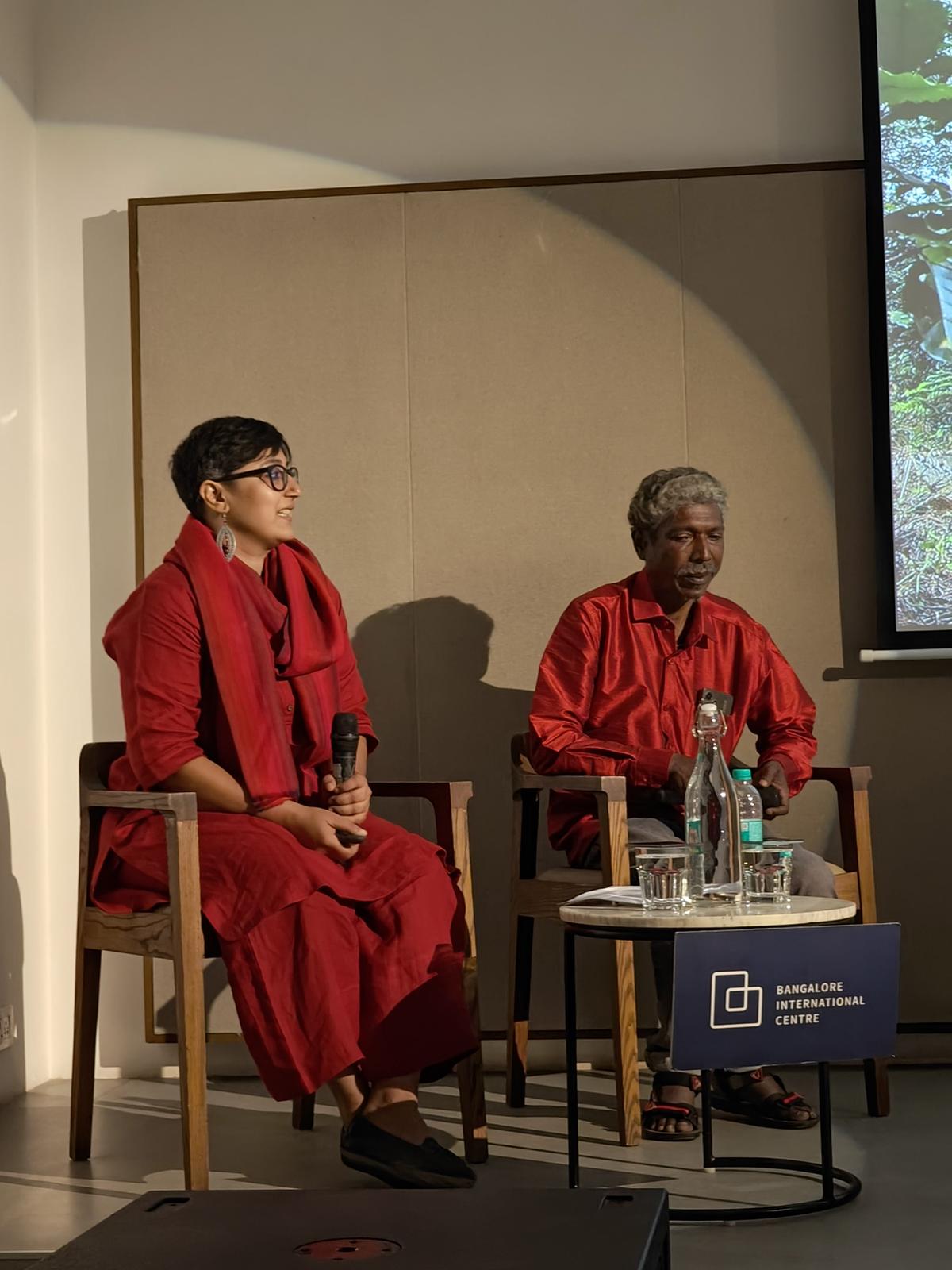
Amidst the worry of what the future holds for coffee, a recent panel discussion at Bangalore International Centre (BIC) explored the ecological history of coffee in India, the impacts of coffee production on biodiversity, producer observations of everyday climate change on their farms and how the Soliga, an indigenous community, grows coffee on the Biligiri Ranganatha Tiger Reserve Hills (B.R. Hills) in Karnataka.  

M. Kethe Gowda and M. Sannarange Gowda. | Photo Credit: SPECIAL ARRANGEMENT

In B.R. Hills area

M. Sannarange Gowda from the Soliga community, who grows coffee on his biodiverse farm in B.R. Hills, leads various capacity-building programmes for regenerative agriculture. The co-founder of a community-led YouTube channel, Kaadina Makkalu, says that the community started growing coffee initially as it was not something that animals preferred eating. M. Kethe Gowda, co-founder of the channel who has over two decades of experience in ecological research on bees and honey, native tree species, and birds, advocates for holistic farming practices that conserve local ecosystems and biodiversity. He leads experimental work on non-chemical approaches to managing pest and disease outbreaks and is passionate about community outreach.

Sannarange Gowda says, “We grew crops like ragi, maize and so on, which would frequently be destroyed or eaten by animals like deer, elephant, wild boar, monkey and birds in the forest and the hill area… Over a period of time, the Horticulture Department started encouraging people in podus (settlements) to grow coffee, because wild animals would pass through the farms and not feed on them. We needed registered land to grow coffee and could not just grow it anywhere. We finally got a piece of land, and since then, we started growing coffee.”

Kethe Gowda goes back to a time when his ancestors lived in the forest, and there were various podus inside the forest. “There we grew crops like ragi, maize, hyacinth beans, dal, pumpkin, mustard and more. The Forest Department at one point wanted all of us inside the forest to live outside the forest, because when tiger reserves were established, that was the rule. We were told we would be given land close to the B.R. Hills area, but we had to come out of the forest.“ Kethe Gowda says that it did not feel right for them to move out of the land they have always called home for centuries.

“We told the forest officials that our crops were ripe, and we could not leave until they were harvested, but they brought in tamed elephants to destroy our crops and asked us to leave. So, this is how we came out of the actual forest and lived in the B.R. Hills area,“ he explains.

Arshiya Bose and M. Sannarange Gowda. | Photo Credit: SPECIAL ARRANGEMENT

A colonial project

Arshiya Bose, who holds a PhD in Geography from the University of Cambridge, U.K., and a Post-Doctoral Fellowship from ETH-Zurich, says that according to legend it was a Sufi saint, Baba Budan, was brought coffee seeds to India. But coffee as we know it today, grown in commercial plantations, was a colonial project.

British planters who came over from Sri Lanka started growing coffee. “The first record of coffee in India is around 1799, when the British set up an experimental plot in Thalassery, Kerala. From then on, coffee planting came to the Nilgiris, Coorg (now Kodagu) and other parts,” says Arshiya, who is the founder of Black Baza Coffee which she started in 2016. It is a social and conservation enterprise that partners with smallholder coffee producers in India’s Western Ghats biodiversity hotspot. Coffee’s journey to India 

“What is fascinating about the way the colonial coffee project went forward is that many of the British planters who were here were actually Naturalists back home in England. So, they kept a very detailed record of not only how they grew coffee, but also what kind of wildlife they saw. There was a prolific writer and journal keeper, Edwin Lester Arnold, who found himself in Coorg around the mid 1800s. In one of his books he describes what kind of wildlife was there. He writes how coffee growers borrowed their coffee planting method from how they cultivated wheat back in England and Europe,” she explains. 

Much has changed since that time and Indian now produces a lot of coffee, being the eight largest coffee producing country in the world as of 2022.

Unlike the British coffee plantations, the Soligas continued growing coffee amid the forest. | Photo Credit: Abhishek Chinnappa

Impact on biodiversity

Arshiya explains that unfortunately, in the process of large-scale cultivation and development of plantations, there has been a huge impact on the kind of biodiversity that existed.

“If you take the map of rainforests in the world or coffee plantations in the world, these maps often overlap almost identically,” she says, adding that there is huge loss of forest cover in India to coffee plantations in districts like Kodagu. Arshia argues that for long-term resilience, coffee should be grown amid trees. “It regulates the kind of humidity, soil moisture coffee needs, and provides the buffer against any kind of extreme events that may happen around you,“ she adds.   

Unlike the British coffee plantations, the Soligas continued growing coffee amid the forest. “We continued to grow coffee under the forest canopies, which is very beneficial. There were jamun, ficus and other threes, because of which wildlife like sloth bear, white-cheek barbet, deer etc. came to feed on the fruit, excrete in the same spot, which would in turn into manure for the coffee plants. I am proud of the wildlife that comes to our farm, which shows how healthy our farm is,” Sannarange Gowda explains with pride.

source: http://www.thehindu.com / The Hindu / Home> News> Cities> Bengaluru / November 29th, 2024

Respite for Indian planters as EU grants time for EUDR compliance

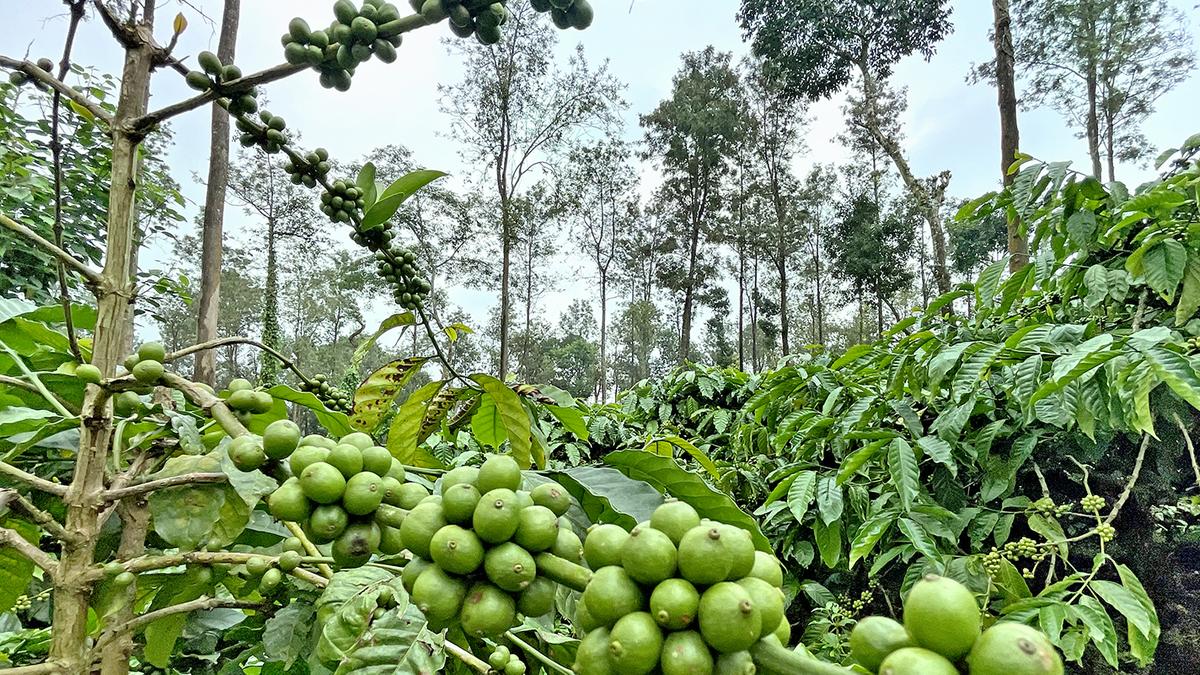
Shade-grown coffee at a Coffee estate in Kodagu district (Coorg), Karnataka. File | Photo Credit: Murali Kumar K.

India’s major plantation sectors such as rubber and coffee have heaved a sigh of relief as the EU Parliament has voted in favour of a proposal by the European Commission to delay the implementation of EU Deforestation Regulation (EUDR) allowing growers, exporters and traders additional time for compliance.

Accordingly, large coffee operators and exporters must meet EUDR regulations by December 30, 2025, while micro and small growers and traders have time until June 30, 2026 to comply, as against the earlier EU set mandatory due diligence procedures and compliance deadline of December 2024.

Being EUDR-compliant indicates a grower’s forest-based coffee produce is legal, and not sourced from any deforested land or unethically cultivated.

Notably, over 70% of Indian coffees are sold in EU countries, and therefore the compliance extension has direct implications on coffee players in India, although India was one among the few countries which grew coffee under two tier thick shade of native trees, say industry players. “Our coffee estates, in addition to coffee and shade trees has diverse flora and fauna. So Indian coffees are most sustainably grown.

In spite of that India opposed EUDR since the compliance does not incentivise sustainably grown coffees,” Coffee Board of India CEO and secretary K.G. Jagadeesha told The Hindu. “Now given that EUDR is a regulation already passed by EU, we have no option but to comply as 70% of Indian coffee exported is going to EU. Coffee Board is developing a platform for assisting coffee producers in India to comply with EUDR. We also welcome the EU decision to extend the deadline,” he added. However, the Coffee Board CEO said EUDR compliance burden on planters and growers would be huge as it required technological and financial resources which won’t be compensated.

Expressing similar concerns K.G. Rajeev, chairman, Karnataka Planters’ Association which represent over 70% of coffee growers in the country, said, ‘‘There are challenges in mobilisation of resources to invest by small and medium sized holdings to be EUDR compliant. Also there are elements of ambiguity. Strict enforcement without clarity on methodology to be implemented may not have desired results. All these may have adverse impact on productivity and profitability of the industry.”

According to Mr. Rajeev, EUDR is a regulation with requirements for due diligence and traceability, which needs lot of data to demonstrate compliance both on ground and documentation. He insisted that Indian coffee couldn’t be compared with coffees in any other geographies as it was predominantly grown under shade.

Coffee activities also encouraged preservation of existing forests which in turn provided habitat for variety of wildlife, avian populations and thus promoted natural biodiversity, he argued. Instead of putting the onus of compliance only on growers, industry institutions and government bodies should help in establishing compliance of regulations, he opined, adding, eco-friendly practices with improved soil health and carbon sequestration aligns with EUDR focus of protection of biodiversity and ecosystem.

Postponement of the implementation of the EU Deforestation Regulation is expected to buoy up the international market for rubber and related products in the short term, said Santosh Kumar, chairman of the Rubber Committee of the United Planters’ Association of Southern India.

“There were ambiguities and concerns in the market. Now that the EUDR will be implemented from 2026, the international market will have a positive impact in the short term,” he said. According to Rubber Board Executive Director M. Vasanthagesan, with the postponement of the regulation by an year, there is more time to prepare the rubber sector. The measures will continue, he added.

The board has entered into an agreement with Hyderabad-based TRST01 as its technology partner to issue due diligence certificates to rubber exporters. “We recently held a stakeholders meeting and will start registering the exporters. We plan to do it in phases, starting with select districts in Kerala. The small-scale exporters will pay an user-fee and register,” he said.

Industry sources said that of the annual production of about 8.5 lakh tonnes of natural rubber, only 4,000 tonnes are exported directly. However, exporters of rubber products will have to source from the growers who are compliant with the EUDR and so the impact will be on the growers.

source: http://www.thehindu.com / The Hindu / Home> Business> Industry / by Mini Tejaswi & M Soundariya Preetha / November 17th, 2024