The entry can be made without partition being effected among them, or an 11-E sketch obtained as regards area falling to the share of each individual family member, the court added.
The Karnataka High Court upheld the amendment brought to the Karnataka Land Revenue Act, regarding the entry of names of all family members of Kodava families in land records as occupants of the land, including Jamma Bane land.
The entry can be made without partition being effected among them, or an 11-E sketch obtained as regards area falling to the share of each individual family member, the court added.
Noting that there is no violation of law in bringing the amendment, Justice Suraj Govindaraj passed the order while dismissing a batch of petitions filed by Brigadier Maletira A Devaiah (retired) and others, questioning the legality of the amendment in terms of Section 20(2) of the Karnataka Land Revenue (III) Amendment Act 2011.
By way of amendment, the names of all members of the family would be entered into Column 9 of the RTC to recognise the rights of the entire family with respect of property owned, including Jamma Bane land.
The High Court directed the Kodagu district administration to issue a circular giving clarity and stating in detail the due process for entering names of joint family landowners into revenue records in terms of the amendment.
The petitioners have contended that the customary law of Kodavas restricts them from alienating the joint family property and there is no individual right for any member of the family in the joint family property.
The state, by way of the impugned amendment, has done away with the culture of Kodavas, thereby violating Article 51-A(f) of the Constitution, they claimed.
source: http://www.newindianexpress.com / The New Indian Express / Home> Karnataka / by Express News Service / August 03rd, 2024
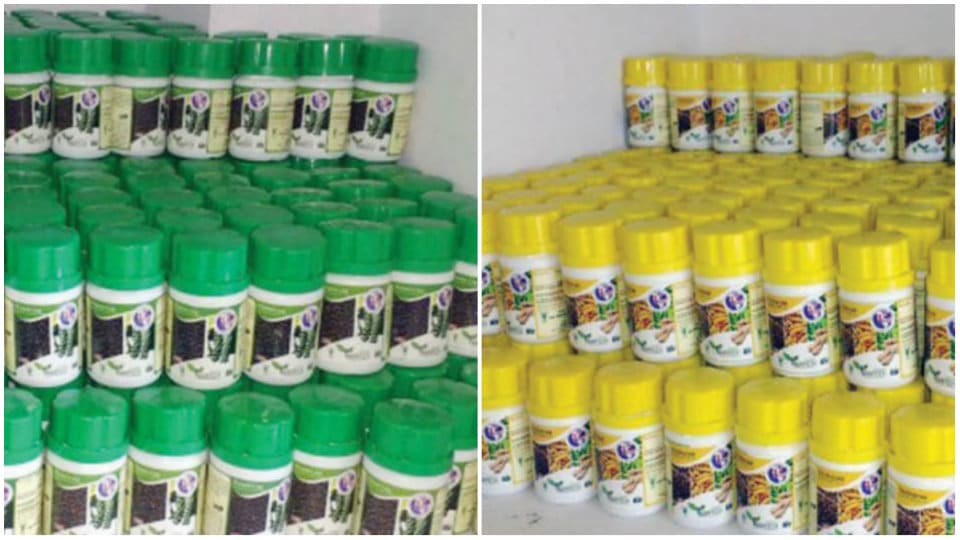
Codagu Agritech at Kudlur in Kushalnagar has come out with Biocapsules for agriculture to provide beneficial bacteria and biocontrol agents to enhance growth, root production, nutrient mobilisation and better yield.
Disclosing this at a press meet at Pathrakartara Bhavan here on Saturday Dr. Chaitra Narayan of Codagu Agritech said that the biocapsule is the world’s first technology where biocontrol agents like Trichoderma and good bacteria are delivered in capsule form which is convenient as one capsule is equivalent to one kg or litre of formulation and handling is easy along with cost effectiveness.
She further said that the biocapsule technology is researched and patented by Indian Institute of Spices Research (IISR) in Kozhikode, Kerala, invented by former IISR Director Dr. Anand Raj.
Dr. Chaitra added that MP Pratap Simha had launched the biocapsules at IISR in Appangala near Madikeri last year.
Continuing, Dr. Chaitra said that Codagu Agritech is the first and only licensed commercial manufacturer of biocapsules with a wide market base in Kodagu, Chikkamagalur and gaining momentum in Maharashtra and a few other States with positive response from farmers.
She added that the biocapsules also protect crops from soil-borne pathogens and it is eco-friendly, easy to store and handle, with a long shelf-life of one year at room temperature and can be applied through drip irrigation.
She further said that the biocapsules are available in two forms — Trichocap (pure formulation of Trichoderma) and Powercap (combination of three plant growth-promoting bacteria strains).
The website of the company www.codaguagritech.com was launched by Dr. P.G. Chengappa, former Vice-Chancellor, University of Agriculture Sciences, Bengaluru.
Dr. B.C. Nanjappa was also present at the press meet.
source: http://www.starofmysore.com / Star of Mysore / Home> News / July 17th, 2017
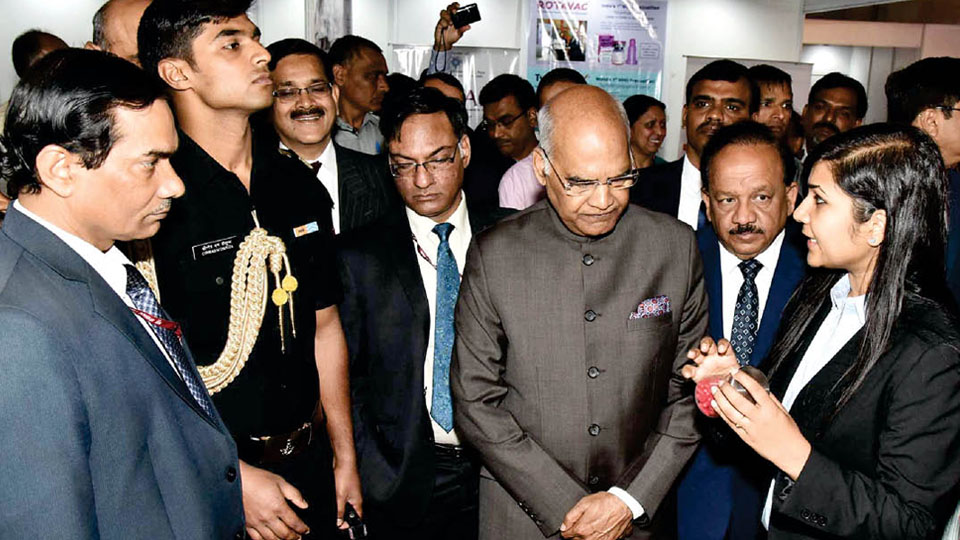
Dr. Chaitra Narayan, Co-founder of Codagu Agritech, Kushalnagar, Kodagu district, was selected as one of the 17 Start-Up entrepreneurs among 150 Indian Council of Agricultural Research (ICAR) Institutes for a presentation of ‘Biocapsule Technology’ before President Ram Nath Kovind.
The event was held at Rashtrapathi Bhavan as part of Festival of Innovation and Entrepreneurship between Mar.19 and 23, 2018. The programme was conducted by the President’s Secretariat in association with National Innovation Foundation and Department of Science and Technology.
At the event in Delhi, Dr. Chaitra Narayan demonstrated the concept of ‘Biocapsule Technology’ to the President and a host of science and technology leaders and heads of research institutions.
Codagu Agritech is the only commercial manufacturer of ‘Biocapsules – Trichocap’ (encapsulated formulation of Trichoderma harzianum) and Powercap (encapsulated formulation of Plant Growth-Promoting Rhizobacteria – PGPR).
This is the world’s first patented technology that has been developed by ICAR – IISR (Indian Institute of Spices Research), Kozhikode. These Biocapsules are extensively recommended for all plantation (pepper, ginger, cardamom etc.) and horticulture (fruits and vegetables) crops.
Farmer feedback in the past two years have proven that Biocapsules efficiently increase the yield, control soil-borne diseases and act as an efficient plant growth promoter.
According to Dr. Chaitra, the main advantage of this technology is that farmers can use a single capsule instead of 1 kg or 1 litre of Trichoderma or PGPR. There is a reduction of cost by 10 times and also with a guarantee of best quality product with a longer shelf life of one year.These Biocapsules can be easily used by dissolving one capsule in 100 litres of clean water.
“We want to make a difference in eco-friendly sustainable agriculture. Due to extensive usage of chemical fertilisers, soil health has been drastically damaged in most cultivable lands. We want to promote eco-friendly solutions to farming community to take agriculture to next level by making latest innovations in chemical-free solutions,” she said.
Codagu Agritech was started in June 2016 by Dr. B.C. Nanjappa of Kodagu and Dr. Chaitra Narayan of Mysuru. While Dr. Nanjappa is a well-known environmentalist in Kodagu, Dr. Chaitra Narayan holds a Ph.D. in Microbiology from the University of Mysore.
source: http://www.starofmysore.com / Star of Mysore / Home> News / March 30th, 2018
Struggling to improve yield levels with traditional methods at his coffee plantation, Hoysala found great success with technological innovations.
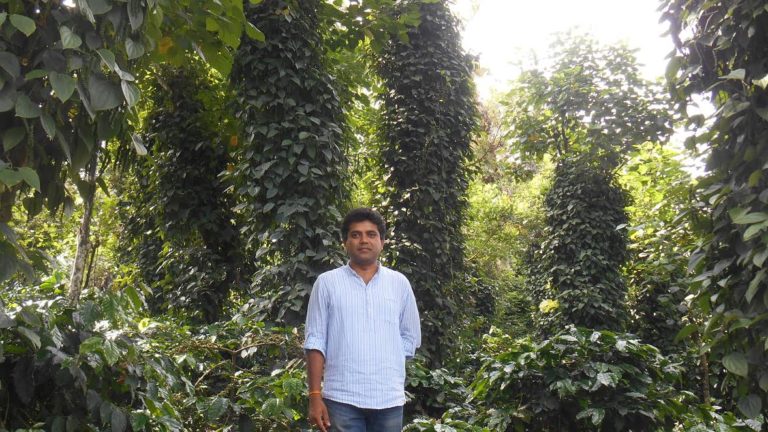
Hoysala at his plantation. Credit: M.J. Prabu
Farming, especially in India, is generally considered to be a traditional field that’s averse to innovation, however M.G. Hoysala’s successful decision to quit banking for farming with the help of technological innovations, shows that keeping an open mind towards new, nontraditional cultivation techniques and interacting with experts in the field is essential for achieving farming success.
While many come into the profession unwillingly, Hoysala represents a section of people that actually wants to take on the family vocation. After spending five years working at a private bank, Hoysala came to realise the importance that the agriculture and plantation sector held for him. So he left his job and took over his father’s coffee plantation.
Since he took over, the Hoysala’s 40 acre farm in Karnataka’s Kodagu district has become a role-model of sorts for the other farms in the area.
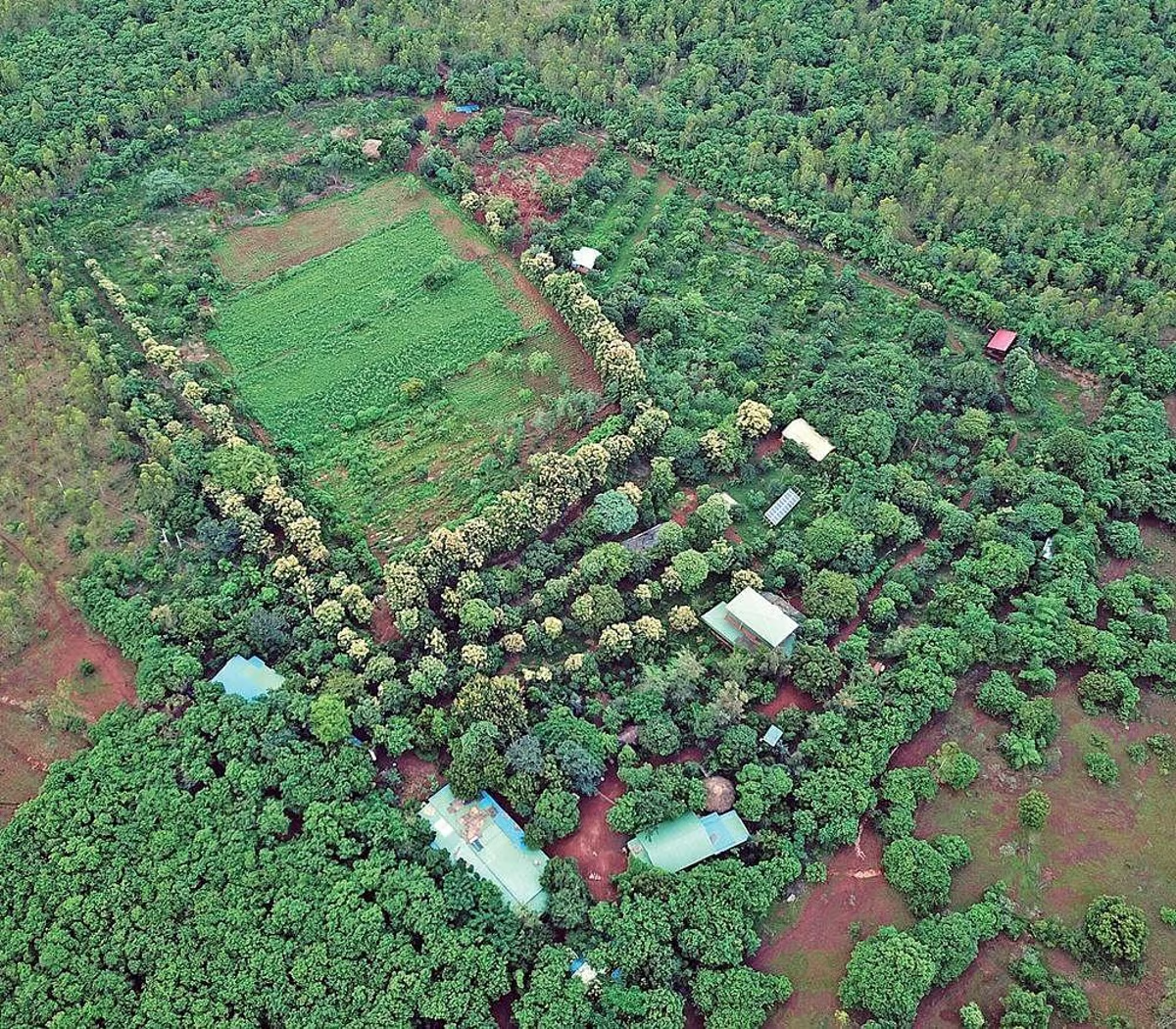
As is common in the region, Hoysala grows Arabica coffee on his farm, but what differentiates his farming practices from the rest is the presence of tall indigenous trees that grow alongside the rows of coffee bushes, their height providing shade for the lower shrubs. Another distinguishing factor is the presence of black pepper vines that cover the trees’ trunks.
Starting off as an amateur, Hoysala initially followed the locally practiced traditional forms of cultivation. However, his lack of experience and the absence of proper guidance worsened his predicament. Disease-damaged crops, low productivity and a lack of knowledge about advanced production technologies were just some of the problems Hoysala faced when he took over the coffee plantation.
Collaborating with experts
Hoysala recalls contacting the Indian Institute of Spices Research around the same time as he started to realise that he would need technology if he wanted to stabilise his plantation’s yield level in a sustainable manner. His association with the institute started when he attended an eye-opening seminar organised by the organisation’s regional station at Madikeri, Kodagu.
That first seminar taught him about the varietal wealth of black pepper along with information on various crop production, protection and processing technologies that were being developed at the institute.
Drawing on his experiences from the banking sector, Hoysala was certain that the timely and meticulous adoption of technologies designed to aid crop production were essential to maintaining a profitable plantation.
“The productivity of vines was below the level of expectation and we could hardly harvest six tonnes from an area of 40 acres. We understood that not adopting recommended measures in time, especially to control diseases, could lead to heavy crop loss,” says Hoysala.
“Moreover, we were unaware that instituting shade regulation before the monsoon and irrigation during the summer months would improve the setting of berries and ultimately increase the yield.”
After Hoysala had established a close relationship with the regional station’s scientists, he set about addressing his plantation’s problems one by one.
Shade regulation was the first priority, followed closely by the scheduling of fertiliser, increasing organic inputs fortified with growth-promoting organisms, regularly monitoring the crops for diseases and irrigation during the summer months.
“By adopting these [new and] improved technologies, we have increased the production from six to 12 tonnes. [Which is] on average a two-fold jump within a time span of five years,” said Hoysala.
The plantation’s irrigation system was further strengthened by the construction of water harvesting structures like farm ponds and bore wells. Besides these measures, Hoysala also had pits dug between the rows of coffee plants to harvest run-off water as it also helps with enriching the soil.
The changes extend to pepper cultivation as well. Two years ago, Hoysala took ten acres of land which was used to grow ginger and transformed it into a well-designed pepper plot with silver oaks to serve as standards for the vines and robusta coffee bushes interplanted with the pepper vines.
It currently costs Hoysala a total of Rs 85,000 per acre to implement these measures along with paying the regular operational costs of running the plantation. In return, he earns Rs 1 lakh per acre per annum from the coffee and black pepper grown on the farm, allowing Hoysala to maintain the sustainable, profitable plantation he aspired to.
For further information, contact: M. G. Hoysala, Sri Siddalingeshwara Estate, Hardur P.O., Suntikoppa, Kodagu, Karnataka–571 237, mobile: 09449682430, Email: hoysala.mg@gmail
and his guide
Dr. S. J. Ankegowda, Principal Scientist and Head, ICAR-Indian Institute of Spices Research Regional Station, Hervanadu Post, Appangala, Madikeri, Karnataka – 571 201, Phone 08272 – 245451; 245514; 298574. Mobile: 09663069241, email:
source: http://www.thewire.in / The Wire / Home> Agriculture / by M J Prabu / December 29th, 2016
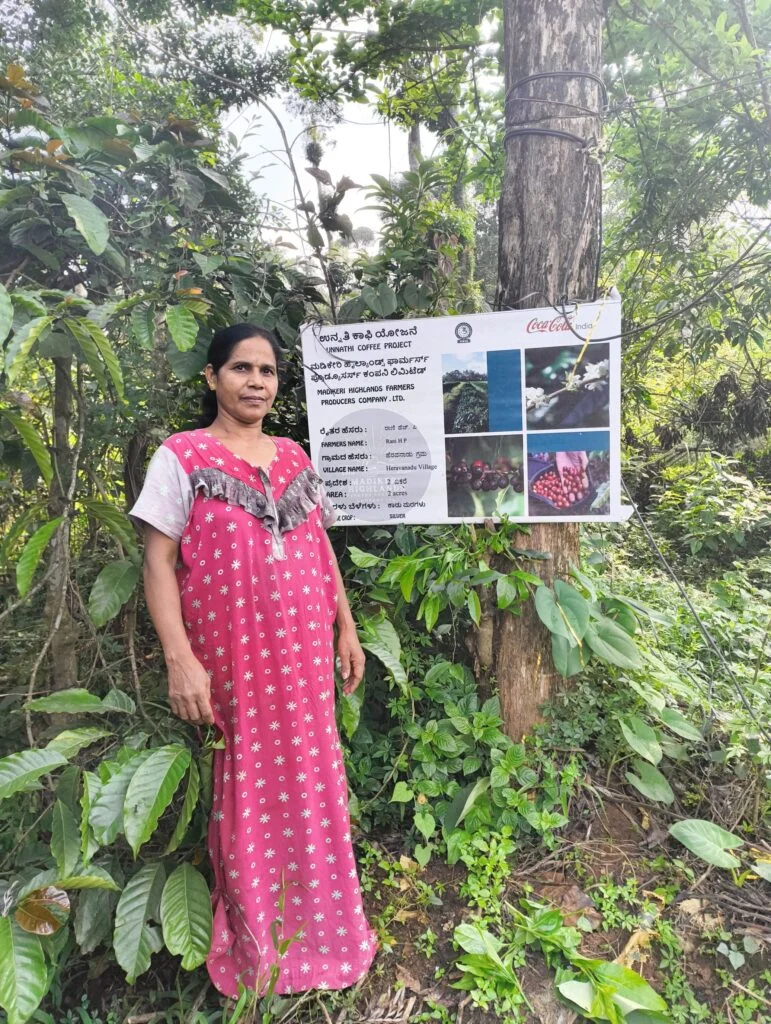
Meet Rani, a resilient woman from Heravanadu, a quaint village nestled in Kodagu’s Madikeri taluk, steeped in the rich history of Mysore’s royal legacy.
A century ago, Heravanadu’s origins were intertwined with the grandeur of Mysore’s royal legacy. The founding families arrived here at the behest of the Mysore king, tasked with caring for the royal horses. When the king eventually left, he granted them the very lands they had nurtured. Thus began the saga of Heravanadu’s small coffee planters and laborers.
Starting as laborers in the fields, they gradually transitioned to cultivating their own land, primarily focusing on coffee. Today, there are approximately 25 coffee farmers in the village, each owning plots of land ranging from 2023 square meters to 8094 square meters.
Rani HP embarked on her journey in Heravanadu as a young bride with hopes and dreams. However, tragedy struck when her husband expired, leaving her with the responsibility of raising their three children and only 8094 square meters of land.
Determined to secure a future for her family, Rani initially worked as a daily wage laborer. Seeking guidance, she turned to the Dharmasthala Sangha (SSG), where she received invaluable support from other women. With their assistance, Rani transformed her barren land into a flourishing coffee plantation over two decades of hard work and dedication.
As the coffee market evolved, so did Rani’s fortunes. From humble beginnings, she now commands a respectable price for her coffee beans, thanks to her expertise and perseverance. The turning point came when Anandana, The Coca-Cola India Foundation spearheading the Unnati coffee project in Coorg, and ISWAR, an NGO, recognized her dedication and offered support to Heravanadu.
Anandana, The Coca-Cola India Foundation, and ISWAR’s collaborative assistance were instrumental in providing specialized training, modern techniques in coffee plantations, and sustainable farming practices to Rani and her fellow farmers. As a result, Rani embodied the true essence of Coca-Cola India’s #SheTheDifference women empowerment campaign, which aims to uplift and empower rural women farmers and entrepreneurs like her.
Recognizing her leadership qualities, Rani was appointed as a board director for the Madikeri Highlands Farmers Producers Company Limited (FPO), launched by ISWAR in Coorg.
Rani’s story epitomizes the collective strength of Heravanadu’s community. With the unwavering support of her fellow villagers and her resilience, she transformed adversity into opportunity. Today, as she tends to her coffee plantation and manages her small coffee shop, Rani stands as an inspiration, showcasing how dedication and community support can lead to success.
Her legacy extends to her son, Raghu, who now manages her plantation and household. Inspired by his mother’s perseverance, Raghu actively participates in the affairs of the FPO, embodying the spirit of hard work and dedication passed down through generations.
source: http://www.businessnewsthisweek.com / Business News This Week / Home> Business / by Mansi )Praharaj / June 14th, 2024
India’s High Range Coffee Curing is poised to become the first farm verified by the Rainforest Alliance to ship EUDR–ready coffee beans to Europe later this month.
The coffee farm partnered with the Rainforest Alliance to meet the necessary compliance requirements of the regulation.
Established in 1995, High Range Coffee Curing is located in the Periyapatna and Kushalnagar Coorg districts, among 142 hectares of tropical forests, and is known for its quality beans.
The farm supplies coffee to leading global coffee brands, roasters and traders in India, including Nestle , Unilever, E-Com Commodities, Olam, Continental Coffee, Louis Dreyfus Company , Vidya Coffee and Allanasons.
EUDR-Ready Coffee
Zaidan M Saly, director of High Range Coffee Curing stated, “Implementing EUDR [EU Deforestation Regulation] posed significant challenges for our team, but with the invaluable guidance from Rainforest Alliance representatives in our region, we overcame them and gained confidence in the process.
“Their expertise made the seemingly daunting task entirely feasible, facilitating a smooth and successful implementation, which now not only guarantees adherence to EUDR regulations but also sparked a revolution in our approach to traceability.”
Rainforest Alliance certification enables coffee and cocoa farmers to opt in for EUDR-aligned criteria.
This allows companies to source from these farms, track ingredients along their supply chains, and leverage farm data to demonstrate compliance with the regulation’s deforestation risk assessment and mitigation requirements by the deadline, at no additional cost.
‘Sustainable Practices’
Miguel Gamboa, coffee sector lead at the Rainforest Alliance stated, “The EUDR represents an important step forward to shift the global coffee sector towards more sustainable practices.
“Yet, many smallholder coffee farmers need support to align with the requirements, including traceability, deforestation risk mapping, local laws, and practical and technical guidance on key environmental practices.”
The Rainforest Alliance has urged the EU Commission not to dilute or delay the legislation or postpone its deadline in response to calls from some companies and governments.
It has also called on companies not to scale back purchases from smallholder coffee farmers, but rather support them in meeting the deadline of this legislation.
Gamboa added, “We are also piloting a deforestation risk assessment offering for companies buying non-certified coffee and cocoa, which we plan to roll out more widely later this year.
“With this offering, we aim to support more companies in their journey to compliance, but more importantly, to also reach non-certified farmers so their products can still be sold on the EU market.”
source: http://www.esmagazine.com / ESM, European Supermarket Magazine / Home> Supply Chain / by Dayeeta Das / May 06th, 2024
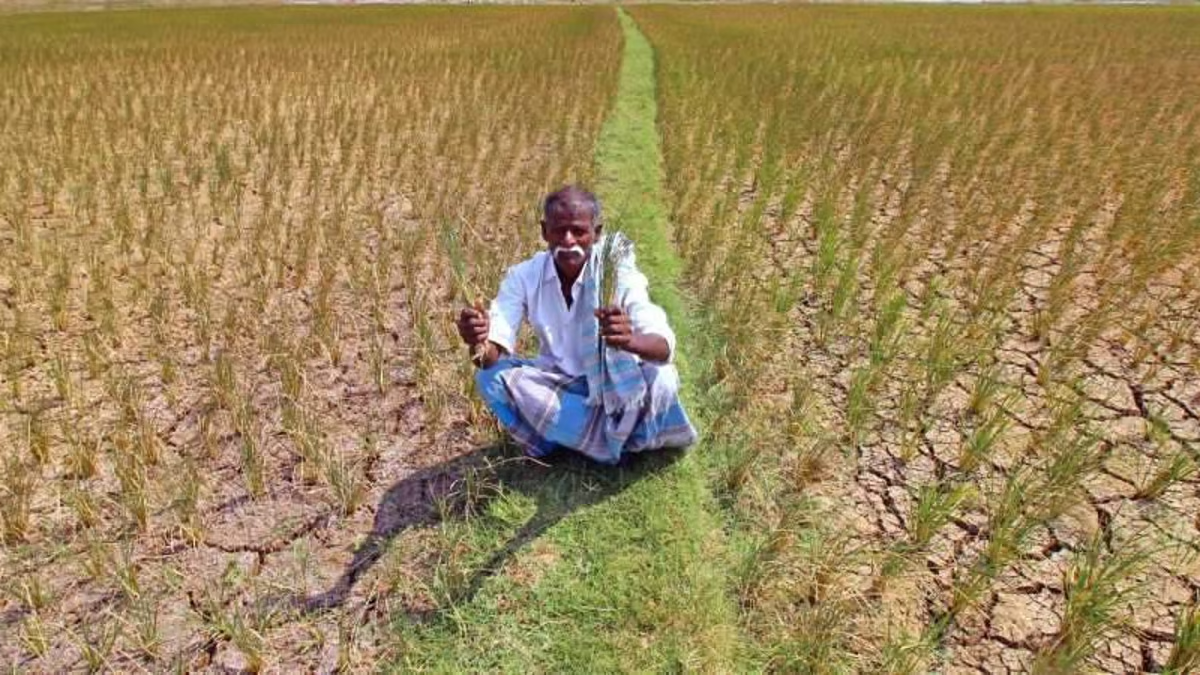
The department had proposed for the release of Rs 8.38 crore as a drought relief fund to be distributed among the farmers of the district.
Image used for representational purposes only,(File photo | EPS)
Madikeri :
A total of 17,297 farmers across Kodagu have been distributed with the drought relief fund from the state. Sources confirmed that many other pending applications are still under scrutiny and will be disposed of shortly.
All five taluks in Kodagu were declared as drought-hit regions this year from the state and over 20,000 farmers from the district applied to avail compensation for the crop loss.
As per the applications received by the agriculture department, 7620.74 hectares of paddy farmland and 2170.36 hectares of maize farmland were affected by drought in total across all the taluks.
The department had proposed for the release of Rs 8.38 crore as a drought relief fund to be distributed among the farmers of the district.
However, applications of 17,297 farmers from the district have been approved so far in ten phases and they have been handed over the total drought relief fund of over Rs 2.83 crore.
Joint Director of the agricultural department, Somasundar confirmed that 17,297 farmers have received only part payment of the drought relief even as applications of 3,263 farmers are still under scrutiny and will be finalized shortly. While a few applications are pending due to technical errors, others are under verification process.
Over Rs 5.54 crore funds are still pending to be distributed to the farmers as per the memorandum submitted to the state from the department.
The Ponnampet taluk is the worst hit region in the district as over 3825 hectares of paddy land has been reportedly affected by drought. A total of 5155 farmers from the region applied for drought relief.
In Somwarpet taluk, 1161 hectares of paddy and 470 hectares of maize farmlands have been affected by drought even as over 7,000 farmers applied for the compensation.
1972 hectares of paddy field in Madikeri and 650 hectares in Virajpet were hit by drought even as 1700 hectares of maize farmland was hit by drought across Kushalnagar taluk.
DC Venkat Raja confirmed that Rs 2.83 crore funds have been so far released to farmers and this includes a minimum compensation amount of Rs 1,000 and a maximum compensation of Rs 2,000 to the affected farmers.
source: http://www.newindianexpress.com / The New Indian Express / Home> Karnataka / by Prajna G R / May 29th, 2024
Forest, Environment and Ecology Minister Eshwar B Khandre said Rs 100 crore has been allocated to undertake a sapling plantation drive for this financial year.
Image used for representational purposes only.
Bengaluru :
Forest, Environment and Ecology Minister Eshwar B Khandre on Tuesday said the forest department’s revenue collection has increased and so has recovery of encroached land.
Khandre told the media that revenue has increased from Rs 263.41 crore in 2019- 20 to Rs 417.84 crore in 2023- 24. Reserved forest area has increased by 3395.73 hectares in 2023- 24, and protected area has increased by 184.52 hectares. The department has also recovered 2602.30 acres of encroached forest land worth Rs 1500 crore.
Khandre said the highest land recovery has happened in Kolar division, of 1392.41 acres of encroached forest land. Also, 5.50 acres have been cleared in Madikeri and 17 acres in Bengaluru’s Kothanur forest division. Around 7,500 acres of forest land in Kodagu, Chamarajanagar and Mysuru which were leased to industries and estates by the British will be recovered as soon as their lease period ends. He said companies which occupy these lands have earned crores of rupees.
The minister said Rs 100 crore has been allocated to undertake a sapling plantation drive for this financial year. In the last fiscal, 5.40 crore samples were planted across the state and a three-month audit is being done to know how many of them have survived.
On the task of filing up vacant posts in the department, Khandre said there are around 6,000 vacancies and steps are being taken to fill them up. In the first phase, 310 posts of watchers have been filled up and the process of recruiting 540 guards is under way. Directions have also been issued to conduct quick written exams to fill up posts in 10 forest zones.
source: http://www.newindianexpress.com / The New Indian Express / Home> Karnataka / by Express News Service / May 29th, 2024
This is only the second documented occurrence of the Ligdus genus in 129 years, according to naturalists.
Ligdus garvale spider discovered in Kodagu district. | Photo Credit: special arrangement
A group of naturalists from Tamil Nadu and Karnataka recently discovered a new species of spider in Kodagu. They named it Ligdus garvale after the village where it was found. Garvale, a village in the Somwarpet taluk of Kodagu district, is where the spider was discovered.
This jumping spider is significant as it represents only the second documented occurrence of the Ligdus genus in 129 years, according to naturalists.
The research team includes John T.D. Caleb from the Department of Anatomy at Saveetha Medical College & Hospital in Chennai, A. Divyashree from Kuvempu University in Shankarghatta, A.P.C. Abhijith from Indraprastha Organic Farm in Mysuru, and Lohith Kumar from Montrose Golf Resort and Spa in Kodagu.
According to Ms. Divyashree, Ligdus garvale was found in Garvale village, which is surrounded by agroforestry. “Coffee plantations are prominent in the area, along with pepper and paddy fields where the Ligdus Garvale, a jumping spider, was found,” she added.
After the team of naturalists observed the spider and recorded their findings, they sent the specimen to Mr. Caleb for anatomical examination. “Ligdus garvale represents just the second recorded occurrence of the Ligdus genus in 129 years. The first, Ligdus chelifer, was documented in Myanmar in 1895,” Mr. Abhijith said.
Mr. Abhijith explained that the eight-legged creature was discovered beneath the leaf of a torch ginger plant in Garvale village in north Kodagu. “The Garvale jumping spider measures approximately 0.2 inches in length. It has eight legs, eight eyes, and a body covered with fine pale hairs. Only one male Garvale jumping spider was found, and the new species was named after the Garvale area where it was discovered. So far, this is the only area where it has been found,” he added.
source: http://www.thehindu.com / The Hindu / Home> News> India> Karnataka / by The Hindu Bureau, Bengaluru / May 24th, 2024
In 2007, Greenhills Estate, a coffee plantation in Kodagu, fell on hard times. Its owner, A.T. Chengapa, had taken ill two years earlier and couldn’t manage his affairs. Grappling with a financial crisis, he sold 25 acres to pay off his debts. But he still owed the banks Rs 40 lakh, Meanwhile, his plantation continued to decline.
Chengapa had two daughters. The younger one, Dalia, 35, resigned from her job at American Express and returned home to revive the family business.
“I had no clue about how to run an estate. Since Dad was ill, everything was in bad shape,” recalls Dalia. “I really didn’t know what to do. Many friends and relatives offered advice. But what we needed was practical help.”
Their heritage bungalow was in a shambles. The plantation workers had all left. The yield of coffee beans had declined drastically. And the estate had very few irrigation facilities.
Dalia approached Care T Acres, a company in Madikeri that manages sick estates. After a visit, the company agreed to take over the 75-acre estate. In 2007, a memorandum of understanding was signed.
The company developed infrastructure. It built a tank and a pumping system. It invested Rs 20 lakh, generated from the estate itself, in the first two or three years.
“The results were amazing after just one year,” recalls Dalia.
The yield of coffee beans has now risen from 250 kg to 800 kg per acre. Income from pepper climbed from Rs 2 lakh to Rs 37 lakh last year.
“Once Care T Acres intervened, all our troubles were over,” says Dalia. “It still seems like a miracle to me. We never dreamed that a sustainable income was possible from coffee and pepper. We refurbished our palatial bungalow with the money and we can now keep it as a hereditary memory.”
Chengapa passed away in 2015 but his sick coffee estate is in good health.
Kodagu is Karnataka’s smallest district but is well known for its coffee. It is recognised across the world. But many of its estates are turning sick. One reason is absentee owners. About 25 per cent of the estates are managed long-distance.
Another reason is that the planters who know how to manage estates are growing old and can no longer cope. The younger generation lacks experience and isn’t as closely linked to the estates and the coffee business as their parents were. Many have been away for their education and though they would like to retain their family estates, they don’t know how to keep them profitable. The result is that they end up selling out.
Care T Acres has revived over 20 sick estates. The company’s promoters say their mission is to provide a service. Relieved estate-owners put it differently: “It’s a Godsend.”
Once Care T Acres takes over, it shoulders all responsibilities. It undertakes cultivation, harvesting and pruning. It builds infrastructure such as tanks, buys machinery, lays pipes for irrigation, upgrades labour lines, pulping units and drying yards. It even markets coffee.
The company deducts its remuneration or share of profits, as the case might be, and transfers the rest to the estate owner. For running the business, there is a joint bank account and every transaction is transparent. The estate owner can carry out checks anytime. Detailed monthly accounts are furnished and the processes are farmer-friendly.
Polibetta Estate was in a similar condition to Greenhills. Five years ago, its 32 acres yielded just nine tonnes of coffee beans. In four years, after Care T Acres took over, production rose to around 30 tonnes. Trees were pruned and weeds cleared. The estate’s 15-year-old coffee plants were manured and irrigated and they revived.
The beginning
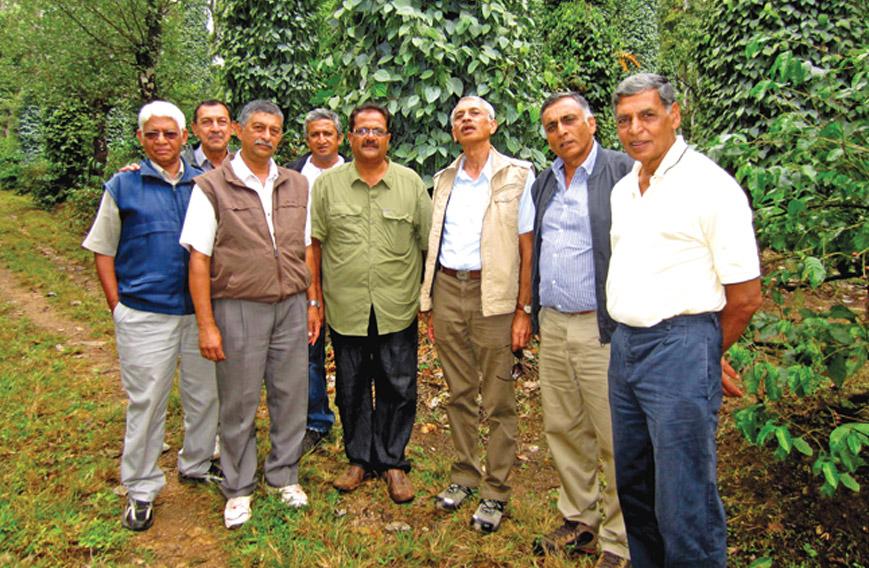
The idea of starting such a company struck Arun Biddappa, a Kodagu planter who traded in coffee in Bengaluru, one day while chatting with Bose Mandanna. The latter was his partner in Karnataka Coffee Brokers and a philanthropic planter. Biddappa stressed the need for a professional service to manage estates like his. Mandanna roped in N.K. Chinnappa, an experienced and skilful manager who had resigned from Tata Coffee, and the three discussed the idea.
They brought in partners like K.M. Cariappa, B. Ram Bopaiah, K.M. Appaiah, N.P. Machaya and K. Ajit Appachu. The concept crystallised into Care T Acres on 15 July 1999. Each promoter invested Rs 1 lakh and a little time and goodwill. The company was named Care T Acres — caretakers with the capacity for managing many, many acres.
Biddappa was the company’s first client. Seeing it shaping up well, he wanted to be part of it. Unfortunately, he passed away in 2006. His wife, Aruna Biddappa, who lives in Mysore, inherited his estate and Care T Acres continues to manage it. “I have two daughters who are studying. We are not in a position to run the estate. Care T Acres are doing this job very well,” she says.
Palani Estate’s story is similar. Lalitha Nanjappa, 76, has two daughters. She lost her husband in 2008 and the estate was in dire straits. The irrigation infrastructure existed only in name. The 52-acre estate yielded a paltry 200 bags of coffee beans.
In 2008 the estate was handed over to Care T Acres. A tank was dug for Rs 5 lakh. Pipelines and machinery worth Rs 10 lakh were bought. Coffee production has increased to 1,350 bags. A drying yard costing Rs 7 lakh is being built. Labour lines have been renovated. A raking-cum-spraying multipurpose machine has also been bought.
“Care T Acres is dedicated and disciplined. Its labour management is excellent. None can fool them,” says Nanjappa. “My only request to them is to continue their wonderful work.”
Blueprint
Care T Acres takes over only sick estates. Currently, the company is managing around 600 acres of coffee estates belonging to 18 planters. Estates below 30 acres aren’t taken up because they aren’t financially viable for both sides.
When the company receives a collaboration request from a coffee estate owner, it conducts a discreet inquiry. Is the owner a team player? If the answer is yes, the company visits the estate.
“We prefer not to take over estates in areas that receive very heavy rainfall like Madikeri and Bhagamandala. Achieving good production there is just a dream,” says K.M. Appaiah.
But if the planter is insistent, Care T Acres makes it clear that production won’t be much. Coffee and pepper grow well only in the traditional coffee-growing belt. These are the two main crops in which Care T Acres has expertise. The company points out that without good yield it can’t insulate the estates from financial problems and make them sustainable.
Care T Acres enters into a five-year understanding with the estate owner. It is renewable by mutual consent. “We have easy exit options too,” says Chinnappa, who is 63. “Either side can prematurely terminate the understanding by paying a particular sum.”
The company draws up a long-term plan to make the estate self-supporting, sustainable and professional. If the client’s family members take back the estate and follow the company’s plan, they will earn reasonable profits without much difficulty.
“Our first priority is to clear the estate’s bank loans. We put in our own funds to do this once a memorandum of understanding is signed. We don’t want the estate owner to take the hasty decision of selling a portion of the estate to meet the expenses of new development works. We also need to get the land documents back from the bank,” explains Chinnappa.
The Robusta variety of coffee beans is more popular here than Arabica because the latter requires more labour and is prone to stem borer menace. Rain is crucial. Since rainfall can vary, irrigation becomes all-important. Estates are vast and most don’t have complete irrigation coverage.
An old adage is popular here: “If you are lucky you will get coffee beans by the tonne. Otherwise you will get a tin.” So if there is timely rain, you will harvest coffee in tonnes. Else, you will turn bankrupt.
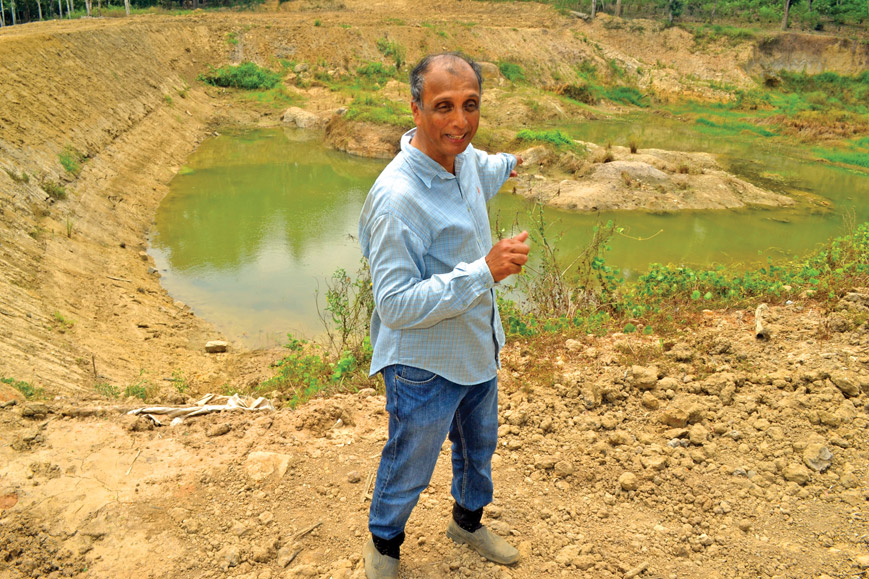
So the company’s first priority is to cover the entire estate with an irrigation network. On Paka Estate, a big abandoned tank is being desilted. On Benlomond estate, the owner, Antony Tharakan, has bought a small piece of land from a neighbour to expand his water tank, which will be done next year.
“When a coffee estate doesn’t have enough water for irrigation, we always suggest investing in tanks,” says Chinnappa.
He also stresses the importance of pruning coffee plants. “It is equal to giving them a dose of manure because you are cutting off unproductive branches. Proper pruning and timely manure in the first year makes production shoot up.”
The first three years are spent in pruning, shade regulation and developing adequate irrigation facilities. Then Care T Acres switches to upgrading processes such as renovation of labour lines, construction of a drying yard, desilting of tanks, developing a pulping unit and so on.
On estates that have been mismanaged for years, pilferage is rampant. “We do the job of policing, too, though it is unpleasant,” says Chinnappa.
Until the estate begins making profits, the company works on a fixed remuneration which depends on the estate’s area, production capacity, the development works to be done and so on.
After the estate has been restored to health and starts making a profit, Care T Acres switches to a profit-sharing mode. Seventy per cent goes to the owner of the estate and 30 per cent to the company. The turnaround usually takes about three years. “But this depends on how far conditions have deteriorated,” says Chinnappa.
Antony Tharakan’s Benlomond estate, for instance, still runs on remuneration six years after Care T Acres took it over. The coffee plants on the 160 acre estate are very old and need to be replaced by younger ones. “You are running an old-age home,” remarked the Care T Acres team after the first inspection.
Seventy-five acres have already been replanted. The company wisely replanted the rest in phases so that the family would have some income. Pepper vines have been planted as shade trees. “In another five years, this will be one of the best maintained estates in this belt,” predicts Mandanna.
The company doesn’t compromise in building infrastructure at considerable cost. It is this investment that ensures a steady rise in production in the coming years. Neither does the company borrow from banks. Instead, it ploughs back the initial profits from the estate.
“Unless this is done, the estate can’t graduate into becoming a very good income-generating proposition,” says Chinnappa. The estate is given an unbelievable facelift in a short span of time. As production goes up, post-harvest processing facilities, starting from the drying yard, have to be upgraded.
Pepper bidding
To ensure their clients get the best prices for pepper, Care T Acres has introduced a unique bidding system. Traders are asked to bid for the year’s crop contract in advance. They pay a deposit beforehand. The traders visit the estates before the bidding process and make an estimate of the prevailing crop. About 30 to 40 traders take part in the bidding process. They write their bidding amounts on slips of paper and hand them over to a Care T Acres representative.
Deliberations are conducted in front of all the traders and estate owners so that the bidding process is transparent. The highest bidder gets to harvest the pepper crop on the estate whose bid he has won. “Since there are about 10 traders competing, the proceeds are higher than what planters used to get earlier,” explains Chinnappa. Every September, the accounts get audited and the estate owner gets his or her share of the proceeds.
By then, the coffee has also been marketed. “We generally make an interim payment to the estate owner months before the coffee is sold because we can’t keep their money in a fixed deposit,” says Chinnappa.
“India’s average production of coffee is 950 kg per hectare of Robusta. Kodagu’s average is higher,” explains Mandanna. “We are happy to say that we get an average of 1,900 kg per hectare, due to the agronomic changes that we make. This is double the country’s average.”
The company’s outstanding capability is that its cost of production is very low. “All credit to Harrisons Malayalam where I worked for 15 years. I learnt to be frugal to the core when I worked there,” recalls Chinnappa.
“See, we are partners in the company and we are all individual coffee planters too,” says Ajit Appachu. “We are not able to keep cultivation expenses on our own estates as low as on estates, managed by our company.” Having a client means taking special care.
Driving force
The company is, in many ways, a one-man show. It is Chinnappa who is at the forefront of handling operations. “But I work with inputs and full backing from all my partners,” he says. “This gives me strength, especially when we face setbacks.”
He admits he is getting on in years and can’t handle the pressure as easily. Every year the company takes over one or two new estates but the older estate owners don’t want their estates back so his burden keeps increasing.
If the company spots a capable family member, it suggests the owner take back the estate once the management agreement lapses. “This way, we can help someone else. But this taking back is not happening,” says Chinnappa.
The company has been flexible and large-hearted with owners. Mandanna cites an example. Three years after they took over a coffee estate, profits had risen. The company was entitled to take a share and not just remuneration. The young lady who managed the estate was getting married and said her family required money. She asked the company to agree to taking a remuneration that year too. The company agreed though it meant forfeiting a considerable profit.
Care T Acres has also, on more than one occasion, volunteered to pay off bank debts of indebted coffee estate owners with its own funds. “We pledged our fixed deposits to the bank and took a loan. The client was asked to pay a small percentage of the interest,” says Chinnappa.
The company is now getting enquiries from distant coffee-growing areas like Chikmagalur and Sakleshpur. “This is physically and mentally a demanding job. If we take up more assignments than we can handle there will be dilution,” explains Chinnappa. It is becoming difficult for the company to recruit efficient field staff. People prefer to work as watchmen for tourist resorts mushrooming all over Kodagu, he says.
Gen next
Chinnapppa handles administration, marketing, field supervision and more. If these divisions were handled by other people, he feels, the company could double the number of clients. He is keen that younger people take over.
His only son, Cariappa, has an MBA degree from the Melbourne Business School. He is a coffee trader in Nairobi, but he has worked with his father for a few years. Chances are that he will return and join Care T Acres.
“I worked with my father for two years. I know the positive impact Care T Acres has had on Kodagu’s coffee farming community. I believe my father has the drive to continue for a number of years. In the near future, I would like to concentrate on building a successful career in coffee trading. When my father decides to step back, we will sit down and discuss the company’s future,” Cariappa said over the phone.
Mandanna is hopeful. “Unless the returns from farming are good we won’t be able to attract our youngsters back to the soil. Now prices are good. I know of many youngsters with good jobs in the city, some from the US, who have returned to farming. In the past few years, I have come across at least 24 cases in Kodagu alone. This has become a trend in Chikmagalur and Sakleshpur too,” he says.
Study tours
Using the profits of the company, the partners of Care T Acres and their families go on a coffee study tour every year. So far they have visited Vietnam, Kenya, Chikmagalur and Pattiveeranpatti in Tamil Nadu. These tours have exposed them to new technologies that can be adopted back home.
“To succeed in farming, innovation is necessary. In Kodagu, some planters have started litchi, apiary and avocado cultivation. Newer cultivation methods are being tried out,” says Mandanna.
“Our Chikmagalur study trip inspired two of my partners, K.M. Cariappa and his brother, K.M. Appaiah, to start drip irrigation. In Chikmagalur there are planters who have doubled their crop yields with this method. Dynamic farmers have started direct export of coffee to countries like South Korea. Each successful innovation can motivate our youngsters to return to farming,” he adds.
Appaiah uprooted 20 acres of his old estate and raised a new coffee plantation on it, incorporating drip irrigation and fertigation. Over the past two seasons, for the first time in Kodagu, this portion of his estate has water nine months of the year. He is also experimenting with another innovative method called agobiada, which involves bending the tip of the young coffee plant to induce multiple stems. Four stems are allowed to go up and sprout berries. Both these innovations were borrowed from Chikmagalur and have doubled the coffee crop there.
Asked to appraise Care T Acres’ work, Chinnappa’s face lights up. “We have ensured that many coffee estates were not sold. We have restored the health of sick coffee estates and helped many Kodagu families lead comfortable lives.”
source: http://www.civilsocietyonline.com / Civil Society / Home> Agriculture / by Shree Padre, Bengaluru / May 02nd, 2016 (updated May 24th, 2020)
WELCOME. If you like what you see "SUBSCRIBE via EMAIL" to receive FREE regular UPDATES.
Read More »