The initiative aims to establish 2,500 coffee kiosks and train women from self-help groups to become successful coffee entrepreneurs.
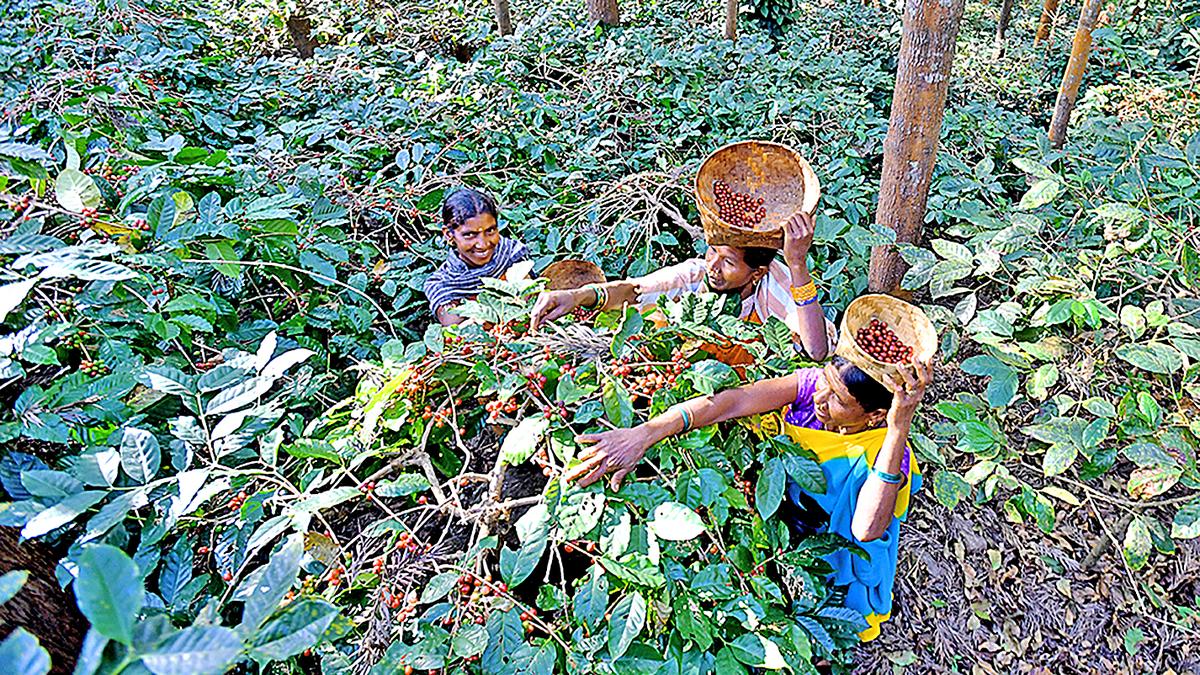
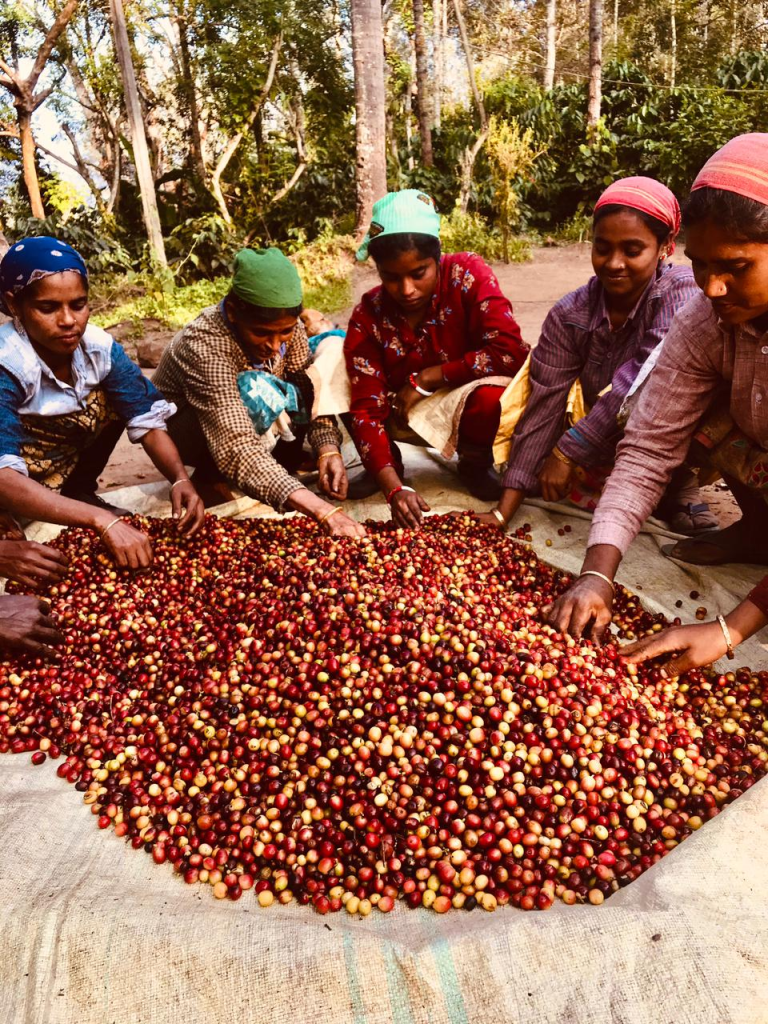
Women harvesting coffee beans. Initially, 400 women will be trained to become master trainers at the coffee board’s head office in Bengaluru. | Photo Credit: K.R. Deepak
The Coffee Board of India, in partnership with the National Livelihood Mission in Karnataka, has initiated a project to empower 1,00,000 women members of National Livelihood Mission Self-Help Groups (SHGs) across the State on coffee brewing techniques and rural cafe management.
To execute the programme, an MoU was signed between K.G. Jagadeesha, CEO and Secretary, Coffee Board, and P.I. Sreevidya, Mission Director of National Livelihood Mission. This was mainly aimed to facilitate the establishment of rural and urban cafes dedicated to offering an authentic filter coffee experience, said the coffee board on Wednesday.
“The coffee board, in collaboration with subject matter experts and in-house specialists, will work along with the Atal Incubation Centre of Coffee Board, the implementing and monitoring partner, to ensure impactful outcomes,’‘ said Mr. Jagadeesha. Ms. Sreevidya added: “This coffee micro entrepreneurial project will provide a new window of opportunities to women empowerment.”
According to the coffee board, the project will be implemented in two phases. Initially, 400 women identified by NLM will be trained to become master trainers at the coffee board’s head office in Bengaluru, who in the second phase will subsequently upskill other women at taluk and hobli levels. The initiative aims to establish 2,500 coffee kiosks and train one lakh women from SHGs to become successful coffee entrepreneurs.
The State government allocated ₹25 crore in its 2024-25 State budget to train one lakh women from NLM SHGs as coffee entrepreneurs. ‘’By supporting potential and existing entrepreneurs, it promotes gender equality, reduces poverty, and fosters opportunities for marginalised women,” Mr. Jagadeesha said.
source: http://www.thehindu.com / The Hindu / Home> News> India> Karnataka / by The Hindu Bureau / January 23rd, 2025
India’s relationship with coffee dates back centuries. The story begins in the 1600s when Baba Budan, a revered holy saint, brought seven Mocha seeds to the hills of Karnataka. This simple act of planting seeds in his hermitage courtyard in Baba Budan Giri marked the beginning of India’s rise as a significant coffee producer. Over the years, coffee cultivation has transformed from a modest practice into a booming industry. Today, India stands as the seventh-largest coffee producer in the world, with exports reaching an impressive $1.29 billion in the fiscal year 2023-24. This figure is nearly double the $719.42 million recorded in 2020-21.
Growing Global Demand for Indian Coffee
The surge in India’s coffee exports can be attributed to the increasing global demand for its rich and unique flavors. In January 2025 alone, India exported over 9,300 tonnes of coffee, with major buyers including Italy, Belgium, and Russia. Approximately 75% of India’s coffee production consists of Arabica and Robusta beans, primarily exported as unroasted beans. However, there is a notable shift towards value-added products, such as roasted and instant coffee, which is further driving the export boom.
The rise of café culture, coupled with higher disposable incomes, has led to a growing preference for coffee over tea among Indian consumers. This trend is evident in both urban and rural areas. Domestic coffee consumption has increased from 84,000 tonnes in 2012 to 91,000 tonnes in 2023. This shift reflects a broader change in drinking habits, as coffee becomes a staple in daily life for many Indians.
Coffee Cultivation in India: A Rich Heritage
India’s coffee is primarily cultivated in the ecologically rich Western and Eastern Ghats, known for their biodiversity. Karnataka leads the nation in coffee production, contributing 248,020 metric tonnes in 2022-23, followed closely by Kerala and Tamil Nadu. These regions are home to shaded plantations that not only support the coffee industry but also play a crucial role in preserving the natural environment. They help maintain the ecological balance of these biodiversity hotspots.
The Coffee Board of India has launched several initiatives to enhance coffee production and meet the growing domestic and international demand. The Integrated Coffee Development Project (ICDP) focuses on improving yields, expanding cultivation in non-traditional regions, and ensuring the sustainability of coffee farming. These measures are part of a comprehensive strategy to strengthen India’s coffee industry, increase productivity, and enhance its global competitiveness.
Empowering Communities Through Coffee Farming
A prime example of successful coffee farming is found in Araku Valley. Here, nearly 150,000 tribal families have collaborated with the Coffee Board and the Integrated Tribal Development Agency (ITDA) to increase coffee production by 20%. This achievement is supported by loans from the Girijan Co-Operative Corporation (GCC). It demonstrates how coffee farming empowers communities and aligns with the vision of Aatmanirbhar Bharat, or self-reliant India.
These initiatives, along with export incentives and logistical support, play a vital role in expanding India’s coffee industry. They not only improve domestic production but also enhance global competitiveness. As India continues to establish itself as a leading player in the global coffee market, the future looks bright for this beloved beverage.
source: http://www.observervoice.in / Observer Voice / Home> News> National / by Shalini Singh / January 21t, 2025
For the past five years, coffee plantations in Kodagu, Chikkamagaluru, and Hassan districts have grappled with a labour crisis during the crucial November-to-March harvest period.
While harvesting requires manual labour, small planters are proposing mechanisation of processes like drying beans and irrigation, which will help reduce dependency on labourers. | Photo Credit: File photo
Karnataka’s big coffee planters, reeling under years of labour shortage, are enjoying a welcome respite this harvest season as migrant workers arrived in sufficient numbers to meet the demand even as coffee prices have hit a record high this year, offering a financial cushion to growers after years of challenges.
For the past five years, coffee plantations in Kodagu, Chikkamagaluru, and Hassan districts have grappled with a labour crisis during the crucial November-to-March harvest period. Planters heavily rely on migrant workers, primarily from Assam and West Bengal, with smaller contingents from Tamil Nadu, Kerala and north Karnataka. However, the COVID-19 pandemic, lockdowns, and state and general elections in those States disrupted the arrival of these workers, exacerbating the shortage.
“We’ve seen a good inflow of labourers from Assam and West Bengal, unlike in recent years,” said Kaibulira Harish Appaiah, former president of the Kodagu Growers’ Association and executive committee member of the Kodagu Planters’ Association.
“All the elections in these States are over. There is no pandemic. This has ensured that workers can travel to Karnataka without disruptions. Coupled with record-high coffee prices, growers are hopeful that this will help recover from the losses incurred over the last 15 years, and help them reinvest in their estates,” he added.
However, workers from Tamil Nadu and north Karnataka have dwindled, opting for construction jobs in urban areas, such as Bengaluru. “These sectors offer regular work and comparable wages, pulling workers away from coffee estates,” said Mr Appaiah.
Kiran Hegde, a planter from Sakleshpur in Hassan, said, “Coffee harvesting is physically demanding and requires precision, which is why we rely on trained workers. The return of migrant workers has brought some relief, but it’s been a tough few years for all of us. If these high prices sustain, it might just give us the breathing room we desperately need.”
Varun Raj, a coffee grower from Mudigere in Chikkamagaluru, said, “We’re finally seeing hope. With global prices rising and labourers returning, it feels like we’re catching a break. However, this is just the beginning — we need sustained efforts to address these challenges for the future. Again next year we don’t know whether the labourers will come and if the price of the coffee will be high.”
Struggle for small growers
While large coffee estates have sufficient labour, small growers are still struggling.
“It usually takes a month to harvest my five-acre plantation with adequate workers. This year, we’ve only managed to cover 30% so far. Despite the high prices, small growers like me cannot afford the increased wages being offered by the larger estates. If we don’t harvest soon, the overripe cherries will drop, causing significant losses,” said Ramesh Uthappa, a planter from Birunani village in Kodagu.
Labour-intensive harvesting requires skilled hands, as the delicate process involves picking ripe cherries without damaging the plant. Workers, often earning double their usual wages, are incentivised to make the long journey to Karnataka.
Planters urge support for coffee mechanisation
Coffee growers rued the lack of support from the State and Central governments as well as the Coffee Board.
M.T. Poovaiah, a coffee planter from South Kodagu, said, “Labour shortages have become a major challenge. Local labourers are no longer available, and we have to rely on workers from Kerala, who come here, work for the day, and return home. We bear their transportation costs and hefty labour charges, which result in significant losses. Around 80% of the profit we earn from coffee goes back into maintaining our estates throughout the year. This includes expenses for harvesting, fertilizers, irrigation, and other essential work.”
Small coffee planters are urging the government to support mechanisation and automation to address labour shortages.
Highlighting this need, Mr Poovaiah added, “To tackle labour shortage problems, mechanisation and automation must be adopted in coffee plantations, and the government, especially the Coffee Board, should assist us. While harvesting still requires manual labour, mechanisation can be applied to processes like drying beans and irrigation, which will help reduce dependency on workers in these areas.”
source: http://www.thehindu.com / The Hindu / Home> Business> Agri-Business / by Darshan Devaiah B.P. / January 17th, 2025
It will be a welcome relief for coffee growers as they are currently bound by international standards.
The certification process involves checking if coffee producers follow guidelines that focus on quality, the environment, and social practices.(Representative image)
Bengaluru :
In a first, the Coffee Board is set to introduce India’s own coffee standards and certification process to recognise the country’s unique coffee varieties.
Coffee standards are rules set to ensure that the produce is grown, processed, and sold in a way that is consistent, of good quality, and enjoyable to drink. These standards cover everything from how coffee is grown and harvested to how it is processed and packed and evaluated for taste and aroma. The certification process involves checking if coffee producers follow guidelines that focus on quality, the environment, and social practices.
Till now, Indian growers were bound by international standards that did not account for the unique conditions in which their coffee thrives, such as cultivation under two-tier thick tree shade.
The board has introduced this plan in response to the high costs of certification, which have hindered many growers from showcasing their coffee internationally. With nearly 85% of Indian coffee remaining uncertified due to lakhs of rupees in costs for international certification, the new Indian standards will come as a welcome relief as certification will now be free, offering a significant opportunity for growers.
Dr KG Jagadeesha, secretary and CEO of the Coffee Board of India, told TNIE that the process is currently in its first stage and aims to position Indian coffee as a unique product with its own distinct identity. “Until now, most coffee varieties have been certified under international standards, which group all types of coffee together under the same conditions. However, Indian coffee is grown in special conditions.
This certification process will recognise and highlight these unique growing conditions, helping Indian coffee stand out and gain its own global recognition,” he said.
Dr Jagadeesha said the cost of certifying, as per international standards even for a small five-acre estate, can range from Rs 3-4 lakh, while board’s certification will be of zero-cost. Growers have to meet strict requirements, filling in various gaps to ensure that their plantations are sustainable.
While experts and a technical core team have finished developing documents, industry professionals are currently drafting the implementation modules, which will be completed in four months, Dr Jagadeesha said.
After this, the technical team will hold consultations with stakeholders and innovative growers to assess whether the procedures are feasible. The process will involve meeting several parameters. Once the estate meets the requirements, an external inspector will visit them for a final assessment.
source: http://www.newindianexpress.com / The New Indian Express / Home> Bengaluru / by Rishita Khanna / January 03rd, 2024
The rare plant can be found in a coffee plantation on the church grounds of the British-built CSI in Pallikunnu near Kuttikkanam.
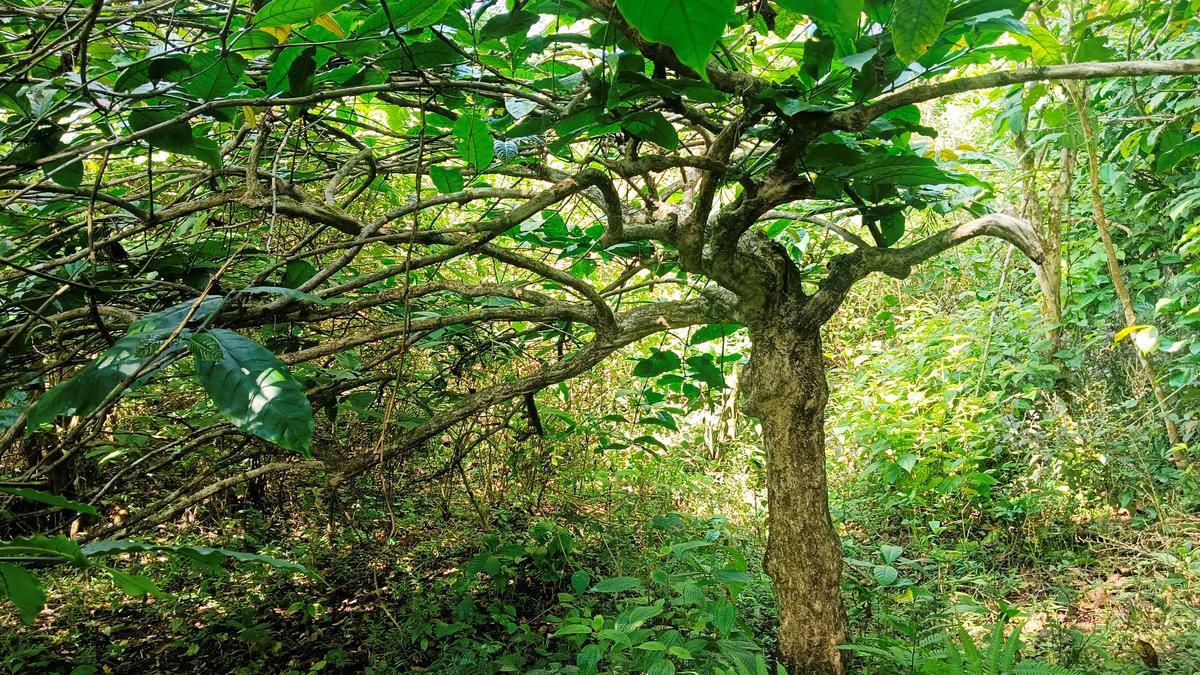
The 150-year-old coffee plant on the church grounds of Pallikkunnu CSI church in Idukki. | Photo Credit: JOMON PAMPAVALLEY
Those who visit the premises of the British-built Church of South India (CSI), in Pallikunnu near Kuttikkanam in the Idukki district, can see a coffee plantation on the church grounds. It is believed that the British planted coffee on the land owned by the church, which is over 150 years old, during the early period of the plantation industry in Peerumade.
The Church Missionary Society (CMS) constructed the cross-shaped church in 1869 on a 15-acre plot of land gifted by the then ruler of erstwhile Travancore. According to church authorities, the church plans to preserve the historically valued coffee plant in Pallikkunnu.
Pallikkunu St. George CSI Church Vicar Fr. Liju Abraham said that the plant is situated among a group of coffee plants on the church property. “Earlier, the church authorities contacted the Coffee Board officials to ensure the protection of the plant. Two years ago, the Coffee Board officials visited the church, inspected the plant, and assured support for its preservation. But the initiative came to a standstill after we failed to get a certificate from the church. The church aims to secure government support for the initiative,” said Fr. Abraham.
CSI East Kerala Diocese public relations officer Viju P. Chacko said, “The church needs to separate the 150-year-old plant from the group of coffee plants and create a special passage for visitors to view the rare plant. The plant could serve as a window for visitors into the plantation culture of Peerumade,” noted Mr. Chacko.
Kerala State Biodiversity Board (KSBB) district coordinator Ashwathi V.S. said that the KSBB can ensure the preservation of biodiversity-rich trees or plants through the Biodiversity Management Committee (BMC) in any area. “The concerned panchayat biodiversity management committee needs to submit a report to the Kerala State Biodiversity Board (KSBB) in this regard.” Additionally, Ms. Ashwathi recommended that the church authorities submit a letter expressing their willingness to preserve the plant.
Interestingly, during the initial period of the plantation industry in Idukki, coffee plants were the crop of choice. The book Above Heron’s Pool by Heather Lovatt and Peter de Jong, describing the plantation history in Peerumade and Vandiperiyar, sheds light on the change. “In 1875, a leaf disease caused significant damage to the coffee plants, prompting the planters to switch to growing tea instead. The book further states that Thengakal, near Peerumade, once achieved the highest coffee yield in southern India, producing two tonnes of cured coffee per acre,” said the book.
source: http://www.thehindu.com / The Hindu / Home> News> India> Kerala / by Sandeep Vellaram / December 29th, 2024
Many planters are seeing uneven ripening because of multiple rains and multiple blossoms.
A file photo of coffee beans in an estate in Kodagu district (Coorg) of Karnataka. | Photo Credit: MURALI KUMAR K
Coffee planters are a confused lot this year. On the one hand, coffee prices have hit a record high. On the other, vagaries of the weather through 2023 and 2024 have resulted in erratic ripening and a dip in yield this season. The Coffee Board is estimating an average 15% loss this season due to this.
Coffee is harvested between December and February.
Rain pattern
“We are estimating more than 15% loss in yield, mostly in Karnataka, because in other coffee growing regions such as Andhra Pradesh and the North East, they receive the northeast monsoon. This time, the southwest monsoon, which covers Karnataka, was heavier and not uniform,” said K.G. Jagadeesha, CEO and Secretary, Coffee Board, adding that the exact figures will be clearer after the post blossom survey in March-April.
The heavy rain was localised. Some regions received rain well into November. Yield is expected to be hit in the three main coffee districts — Kodagu, Chikkamagaluru and Hassan.
Explaining further, he said, “Last year, there was rain during November-December. Then this year again in January there was rain. Blossom showers during February-March is ideal. If it rains earlier, then uneven berry formation and ripening are observed. We expect a modest production of 3.5 lakh metric tonnes compared to 3.6 lakh metric tonnes last year.”
Naj Chengappa, a planter from Devarapura, south Kodagu, said, “Many planters are seeing uneven ripening because of multiple rains and multiple blossoms. In one coffee tree, we are seeing ripe, green and dried ones. Droppings (of berries) were also observed in high rainfall areas.”
This comes as bad news for planters as coffee prices have hit record highs owing to supply side disruptions in Brazil and Vietnam. “We get no clear information from them on restoration. So, the price may be high till that is restored,” Mr. Jagadeesha said.
Climate resilience
The Coffee Board has urged planters to adhere to best practices to shield themselves from weather variations.
“This year, there was heavy rain. Those who have invested in water conservation will have stored this water and used it for better yield. We have also started the research on climate resilient varieties. We recommend maintaining high carbon content, organic mulching, mixing organic and chemical fertilisers, good shade management and water conservation,” Mr. Jagadeesha said.
source: http://www.thehindu.com / The Hindu / Home> Sci-Tech> Agriculture / by K C Deepika / December 25th, 2024
Having nearly doubled its India footprint over the last 12 months to reach 75 stores across 30 cities, Jaipur-based Nothing Before Coffee has now set its sights on international growth.
World Coffee Portal speaks to two of the brand’s co-founders, Akshay Kedia and Anand Jain, about balancing affordability with a premium experience, launching in Europe and why the time is right to seek external investment.
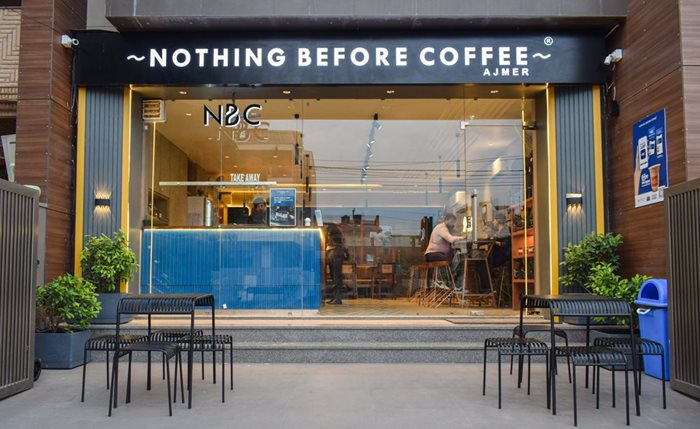
A Nothing Before Coffee store in Ajmer, Rajasthan, India | Photo credit: Nothing Before Coffee
Founded in 2017 by school friends Akshay Kedia, Anand Jain, Ankesh Jain and Shubham Bhandari, Nothing Before Coffee (NBC) is now raising investment to scale its 75-store presence in India and begin the next chapter of its international journey, which began with an outlet in Portugal in April 2024.
The value-focused coffee chain sources coffee from Chikmagalur and Coorg in India’s southern Karnataka state and roasts in-house to supply its growing store portfolio and direct-to-consumer channel. Today, Indian-grown coffee also supplies NBC’s recently opened store in Porto, Portugal, and will travel even further to planned sites in Spain, the UAE and Indonesia.
NBC recently celebrated its seven-year anniversary, tell us about your journey so far.
Akshay Kedia (AK): The journey from four school friends to founders of a growing brand like NBC has been nothing short of incredible. Our seventh-anniversary celebration was truly special, filled with love and joy from our customers. To show our gratitude, we rolled out a special offer – any beverage for ₹99 ($1.18) – and we saw a record-breaking 36,000 transactions during the anniversary weekend on 31 August–1 September 2024, which was four times our usual Saturday and Sunday volumes.
Additionally, our app crossed 100,000 downloads and we were ranked among the top five food & beverage apps on iOS and top 15 on Android in India. These milestones demonstrate the strong connection we’ve built with our audience.
Of course, challenges were part of the journey too. Expanding to over 70 outlets across India and internationally comes with the need to maintain consistent quality and customer experience, which has required constant innovation and rigorous operational standards. However, these challenges have only strengthened our commitment to delivering exceptional coffee experiences.
How has the Indian branded coffee shop market developed over the last seven years and how is NBC responding to these dynamics?
Anand Jain (AJ): Coffee has become an integral part of people’s daily routines in India, whether it’s solo coffee dates, work meetings, or the increasing trend of working from cafés. What was once predominantly a Tier 1 city phenomenon has now expanded to Tier 2 and 3 cities, where coffee is seen as a lifestyle statement and an aspirational product.
At NBC, we’ve aligned ourselves with these changes. We’ve made it a priority to expand into all the major cities while ensuring that we provide high-quality coffee at the right price. The key is to stay connected with our core customers – primarily urban consumers aged 18-35 – by maintaining consistency in both quality and experience.
We position NBC as a mass-premium brand, offering high-quality products at accessible prices, which allows us to appeal to both young professionals and older coffee lovers alike.
Left to right: NBC co-founders Ashkay Kedia, Ankesh Jain, Anand Jain and Shubham Bhandari | Photo credit: Nothing Before Coffee
Are Indian consumers becoming more receptive to premium coffee?
AJ: The future of India’s branded coffee shop market is a mix of both value-focused and premium experiences. We see a diverse range of consumers – some prioritise affordability and value, while others are increasingly willing to spend more for a premium coffee experience. This shift is driven by a growing appreciation for specialty coffee and unique offerings, especially in urban areas where consumers are more discerning and seek out quality.
At the same time, there’s still a strong demand for value-driven options, particularly in smaller cities. The key for brands is to strike a balance, catering to both segments without compromising on quality.
Why is now the right time for NBC to seek external investment for the first time?
AK: We’ve mapped out a clear expansion plan with an aim to open 100 new outlets by 2025 and external investment will play a crucial role in achieving that growth. After successfully establishing our brand across India, the timing is ideal to scale further and enter new markets. We’re confident in our model, our products and the demand for premium yet affordable coffee experiences, making this the right moment to bring in investors to fuel our next phase of growth.
“We see Europe as a key region in our global expansion”
What attracted you to the Portuguese market?
AK: Portugal was an exciting choice for our first international outlet due to its vibrant coffee culture and the country’s growing appreciation for unique coffee experiences. We saw a great opportunity to introduce our signature beverages to a market that values both tradition and innovation in coffee.
Over the past five months, the store has exceeded our expectations. We’ve seen strong customer engagement, and our products have been well received. The positive response has reinforced our belief that our blend of quality, affordability, and innovation resonates across different markets, and it has given us confidence as we continue expanding globally.
Can you tell us more about your plans for Europe?
Our launch in Porto, Portugal, has given us valuable insights into the European market and the response has been very encouraging. Europe has a rich coffee culture and an appreciation for high-quality, crafted coffee experiences, which aligns perfectly with what NBC offers. We see Europe as a key region in our global expansion, and our plan to open 150 outlets will allow us to establish a strong presence. Alongside Europe, we’re also expanding into markets like the UAE and Indonesia, where we see similar opportunities to introduce our unique offerings and build a strong customer base.
NBC is one of the few Indian coffee chains to expand internationally. Do you expect more to follow in your footsteps?
AJ: Expanding internationally can be challenging for Indian brands due to differences in market preferences, operational complexities, and the level of investment required. Many focus on solidifying their presence in the domestic market before looking abroad. However, with Indian consumers’ increasing exposure to global trends, there’s a growing confidence in Indian brands to succeed overseas.
I do believe more Indian brands will venture abroad in the coming years. As the quality of Indian offerings improves and more brands embrace innovation, we’ll see a stronger push towards international expansion, much like what we’re doing at NBC.
This article was first published in Issue 22 of 5THWAVE magazine.
source: http://www.worldcoffeeportal.com / World Coffee Portal / Home> India> News / November 29th, 2024
Dr. M. Senthilkumar, Director of Research, Coffee Board of India, says that India need not worry too much about losing coffee by 2050.
“Of course, climate change is happening not only in India, but around the world but this is not going to make much impact on Indian coffee, when compared with other countries like Brazil and Vietnam. We are a country that does not grow coffee in an open condition. Most of the coffee in India grows in a shaded condition. We are pushing our farmers to grow more traditional and conventional shade trees at the coffee estates – that is deciduous and evergreen trees, which will help create a microclimate that will facilitate comfortable growing of coffee,” Dr. Senthilkumar explained.
India has rainfall from June to September usually, followed by a drought period of 70 days. “Due to climate change, there is a possibility of drought period being extended. If it extends farmers will have to use methods of artificial irrigation encoring more expenditure,” he added.
“By 50-100 years from now, climate change can cause problems at any given point as the temperature is increasing by 1.5 degrees centigrade every year. But again, not for Indian coffee. Indian coffee may benefit because of climate change, as other countries will stop producing coffee. But that does not mean we should stop worrying about climate change,” Dr. Senthilkumar said.
source: http://www.thehindu.com / The Hindu / Home> News> Cities> Bengaluru / by Yemen S / November 29th, 2024
Renaissance Hotels, part of Marriott Bonvoy’s global portfolio of over 30 extraordinary hotel brands, celebrated its 10th annual Global Day of Discovery on November 19, 2024. In celebration of this special occasion, over 170+ Renaissance Hotels properties around the world came together to reimagine their Evenings at Renaissance program with a unique Evenings Market, spotlighting local retailers and businesses.
Over the past ten years, Global Day of Discovery has been the one day in the year when all 170+ Renaissance Hotels around the world activate an elevated, on-property experience – underscoring Renaissance Hotels as one that connects locals and travelers to the DNA of the neighborhood through its unexpected design, experiential entertainment, and spontaneous discovery. Global Day of Discovery 2024 continues to demonstrate Renaissance Hotels’ promise to making measurable impact through supporting local – not just on Global Day of Discovery, but every day – with the launch of R Finds, a global digital marketplace designed for local discovery.
General Manager Sita Lekshmi and Rishwin Devaya
The event at Renaissance Bengaluru Race Course Hotel featured a journey to the sprawling coffee estates of Coorg , curated by the Riverside Coffee Co. and its founder Rishwin Devaya. An immersive Evening Market experience, guests indulged in the finest manual brew coffees, a meet-and-greet with Rishwin, and a special coffee cupping session.
Guests were also treated to expertly crafted coffee-based cocktails by Shyam Kumar, Bar Manager at R Bar and his team of mixologists.
The Culinary team led by Executive Chef Somasundaram G. and Pastry Chef Manivannan G. delighted everyone with a selection of decadent coffee-inspired desserts, creating a perfect fusion of local craft and culinary artistry.
The event concluded with guests connecting over their shared love for coffee, cocktails and discovery, leaving with a deeper appreciation for Coorg’s coffee culture and the hotel’s commitment to championing the local community.
The Global Day of Discover and the launch of R Finds, our very own global digital marketplace is a joyous moment and one to take immense pride in. Through interactive brewing sessions, exquisite coffee-inspired cocktails, and engaging conversations, we created an evening that blended the warmth of local flavors with the spirit of discovery—a true reflection of what Renaissance Bengaluru Race Course Hotel stands for,” said Sita Lekshmi, General Manager, Renaissance Bengaluru Race Course Hotel.
source: http://www.apnnews.com / APN News / Home> Tourism> Hospitality / by NS / November 21st, 2024
In my previous article, I featured an Ethiopian coffee export company who ran her business based on trust. This is factored in two ways; dealing with her farmers and clientele. In this day and age, we can learn a thing or two by understanding the wisdom behind why some people do the things they do, treading a harder path and not resort to shortcuts. They are in it for the long term, not focused on the short term gains. I have nothing but high regard for individuals like Medina.
Continuing a similar conversation, I have been focusing on what exactly is happening at the farm level by getting in touch with the producer directly. In this article, I talk to the owner of a coffee estate farm based in India. Sumaira gives us an insight about how her family’s coffee estate started in the late 18th century, processing techniques employed on her farm, the specialty coffee movement in India, and much more.
source: Rasulpur Coffee Estates
Can you tell me a bit about yourself and Rasulpur Coffee Estates?
I am Sumaira, the owner of Rasulpur Coffee Estates & Roasters . We are located in the Rasulpur village, Coorg district, in the hot spots of the Western Ghats, India. My entrepreneurship journey has had its shares of ups and downs. I took up a career as an interior designer and worked as a business head for a furniture empire in India. Later on, I moved to the UAE and explored the real estate industry and the coffee sector. I envisioned starting up something of my own, being from a family of coffee planters and having the self-confidence and determination to start my own business. Something clicked the moment I realized how the coffee industry is growing day-by-day.
To add, I am a fifth generation coffee planter who introduced specialty coffee at our estate. We introduced better equipments and techniques, and new processing and fermentation methods which I’ll get into a little later. A laboratory is set up for roasting and cupping to create different roast profiles and new blends at our estate. We believe in helping and encouraging our coffee community, especially the neighboring small and marginal coffee growers to analyze their coffees, and improve their harvesting and processing methods to fetch a better price for their coffee.
The journey of Rasulpur Coffee Estates started in the late 18th century when our ancestors migrated to the Western Ghats of India i.e. Coorg at the time of the British rule, as their main occupation was trading in coffee and spices. They travelled to different parts of Coorg, as they developed a liking towards coffee estates and the greenery, purchased plenty of estates, learnt the methods of coffee cultivation, and started exporting coffee to foreign countries. England was one of the major countries to which coffee was exported to from our estates in that period with the help of the Coffee Board.
We named the estate and brand ‘Rasulpur Coffee’ after the village, Rasulpur, which is on the banks of the Kaveri river in Kodagu district is named after Mr. Rasul Khan, our first generation planter. He cleared the land, started cultivation, built dams for irrigation, made the place livable and initiated agricultural works. Looking at his abilities and progress, the government named this village after him.
In time, our second, third and fourth generation planters purchased more coffee plantations and improved the methods of cultivation, processing, and introduced pulping and irrigation. An R&D team was also set up and a variety of experiments are conducted to this day. The goal here is to enhance the quality of the crops, and advance the processing and post harvesting methods. Our coffee is featured in auctions, supplied for projects, sold locally and exported to wholesalers, cafes, and restaurants. We also ferment micro lots as per requirements from our roasters and young entrepreneurs who are venturing into the coffee industry.
What kind of processing is done on the farm?
Processing on our farm is done in three different ways along with few specialty processing methods, all of which change the sweetness, body and acidity of brewed coffee. These are natural/sun dried, washed, and honey processed.
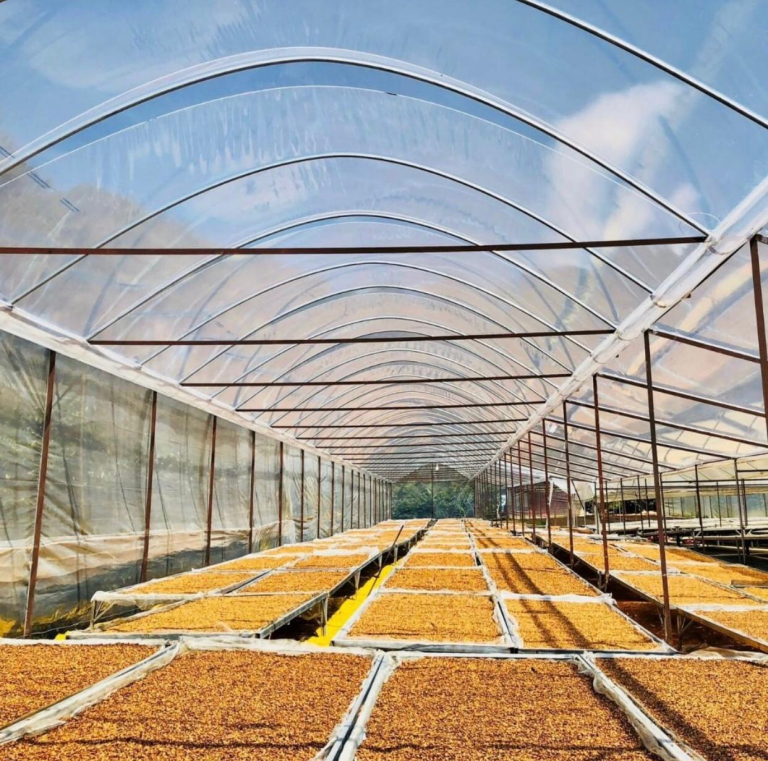
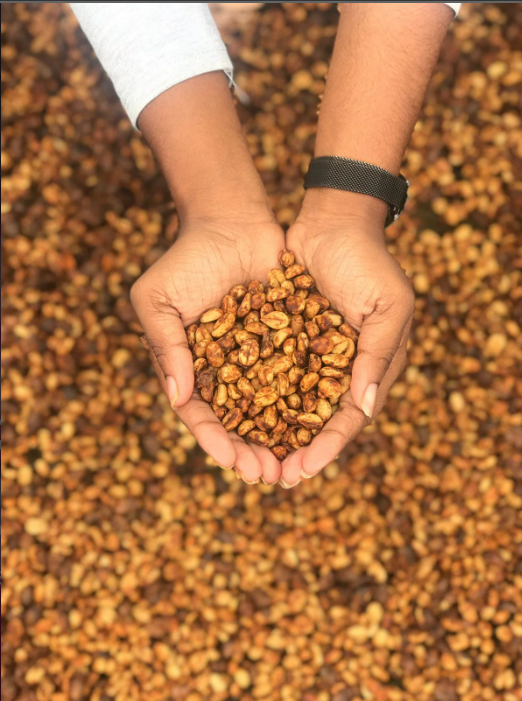
Natural/sun dried process. A natural processed coffee, also referred to as dry processed, is a traditional yet common way to process coffee today. Originating in Ethiopia, it involves drying out freshly picked coffee cherries with the seed still inside. To do this, we place the cherries on drying beds in the sun. These beds are either patios or raised drying tables. The cherries have to be rotated and turned to prevent mold, and takes about seven to eight days to ferment. During this time, the sugars and mucilage (the sticky substance that coats the seed) will latch onto the seeds, develop flavours and make them sweeter. Once the coffee is dry, a machine separates the pulp from the seed. Natural coffees are heavy bodied, and have deep, complex tasting notes. This development comes from the way the cherry ferments differently. Natural processed coffees can be difficult to replicate because of the inconsistencies in fermentation. However when done right, these coffees can also be some of the sweetest you’ll taste. It is juicy, syrupy and well worth the extra effort.
Washed process. Unlike natural, washed processed coffees are called the opposite, i.e. wet processed. In this scenario, machines called pulpers remove the seeds from the cherries before drying them. However, it is not just any cherry that gets the seed removal treatment. These cherries must have the perfect amount of ripeness to make sure they are sweet enough. To accomplish this, they go through a sorter and are segregated according to density. Once these pulpers remove the skin and pulp from the seeds, they are placed in tanks full of water. The water separates the rest of the mucilage and fruit caked onto the seed. Finally, the seeds are dried on the beds in the sun. Washed processed coffees have cleaner, and more crisp tasting notes when compared to natural processed coffees. The body of a brewed washed coffee is lighter. There is typically more brightness as well, because of a cleaner acidity that balances out the sweetness of the coffee. They are just as fruity as natural coffees, but the flavor notes are easier to differentiate.
Honey processed. This method is a combination of both natural and washed. It is a rare and demanding method, and not as commonly practiced as the previous two. However, it produces a unique cup of coffee, with flavours similar to both of the previously described processing methods. During honey processing, a pulper removes the seed from the cherry before it undergoes a drying process. However, it does not go into washing tank to remove the mucilage. That mucilage, which is what the ‘honey’ refers to stays on the seed and is now dried in the sun. The amount of mucilage left behind determines the sweetness, and there are even machines to control the amount on the seed. Like natural process, the seeds are dried on beds. The flavor components of honey coffees are varied and complex. Like washed coffees, they have lighter body and are very syrupy and sweet. Acidity is present but more mellow when compared to washed coffees.
Specialty processing. This is an emerging field and we use unique methods like anaerobic, aerobic, natural fermented, and fruit fermented to name a few. We ferment our coffee in a temperature controlled environment, with or without oxygen, followed by controlled drying to bring out unique and funky flavors out of the coffee.
source: Rasulpur Coffee Estates
What is the current state of the specialty coffee industry in India?
The coffee culture in India has evolved over the past decades. The nostalgia-inducing coffee houses were popular meeting grounds until the 1980’s. In the 90’s, cafe culture took over the country and coffee became the trendy drink to try.
Cafes are becoming the primary hangouts for youngsters and coffee found an emerging and appreciative audience. In the past two decades, we have seen a surge of cafes all over the country. They have materialized as a central hub for meeting, whether casual or business, and also doubling up as co-working spaces.
The 2020 pandemic impacted the industry In multiple ways and its effects were manifold. Logistics of coffee exports are pretty bad even today. Traditional coffee plantation owners who supply heavily within India and export to Europe are left with excess stock of coffee that could no longer be shipped to international markets.
Coming to the Indian coffee space, in recent years, the spotlight is on specialty coffee. This movement is picking up speed with many brands and roasters setting up shop. Analysis gives us a deeper understanding on how speciality coffee has emerged as the current buzzword in coffee circles. Current generation and millennials have emerged as the major chunk of consumers of specialty coffee within India.
Increased awareness and interest about coffee augmented by growing exposure to worldwide trends due to rising international travel and social media saw many of them exploring specialty coffee and manual brewing techniques. Lockdowns put a halt to the possibility of exploring cafes and thus many coffee consumers in the country turned to home brewing.
Many retail specialty coffee brands saw skyrocketing sales in 2020 as consumers invested in manual brewing equipment ranging from French Press, Moka Pots, Chemex and Aeropress. The new generation of coffee consumers respect the people behind the product, want to better understand the ‘farm to cup’ journey and are willing to invest in educating themselves on all nuances of coffee.
A few years back, this was largely unheard of. Farmers were just one aspect of the coffee supply chain, but hardly ever found the spotlight on them. Now plantation owners are keen on sharing their stories and experiences, information on their crops and the work they put in to make that perfect cup of coffee.
One can safely say that specialty coffee will not just be a passing trend, but en route to becoming one of the mainstays of the Indian coffee space in the coming decade.
I think there is a lack of communication between the consumers and farmers. I know some of the consumers, including me, have started to pay attention to where exactly the coffee is coming and from which farm. What do you think can be done to fill this gap?
The missing ingredient is awareness. People need to be educated about Indian coffee. The new-generation farmers need to collaborate with the Coffee Board of India and conduct events to promote coffees originating from India within the country and internationally.
Joint efforts need to be made by all coffee enthusiasts to encourage the consumption of coffee by making people understand the benefits of drinking coffee. The government has to support and help promote farmers to come forward and establish their own brands.
Being honest and transparent ensures the consumers and clients knows about the past, present and the way you are going to build a future. Bringing credibility to the table builds trust factor for the brand with the consumers.
I know some of the issues the farmers are facing currently are the increasing production costs, what steps are you employing to change that? Have you increased the price of your coffee to reflect that?
Whether we like it or not, coffee is getting more expensive. It’s important to look at some of the reasons why this is happening, before you potentially do one of the following:
Buy less sustainable and ethical coffee because it’s cheaper or
Lay blame on the wrong people for higher prices.
There are many factors influencing the cost of coffee from climate change, disruptions to global shipping, consumer demand, and packaging cost. While the need to use more environmentally-friendly packaging for coffee cups and bags is real, so too is the cost for shops switching to compostable or recyclable materials. We have also witnessed fluctuating shortages of packaging stock forcing some companies to find more costly short term solutions to packaging which comes at a higher cost.
Lastly, coming to the cost of quality, producing coffee of higher quality simply costs more. Coffee must be cared, harvesting and processing is hard work. It requires time and physical effort if you want to achieve the highest quality standards. You can’t have it both ways.
source: Rasulpur Coffee Estates
What are your thoughts on transparency? Has it benefitted you in any way?
Yes, by ten-fold. Transparency has improved our overall trust factor in this industry. It solves many problems and even stops disasters before they happen. It expands relationships, increases productivity, strengthens innovation, and improved our revenue.
What is the future of specialty coffee?
By far, the most interesting and exciting coffee segment of the moment is specialty coffee. It is rapidly expanding in India and across the globe as consumers continue to seek out the best cup of coffee to enjoy.
When it comes to coffee quality, specialty coffee is the ‘cream of the crop’ and is likened to fine wines due to its distinctive characteristics and delicious flavour that can only be achieved under certain growing conditions.
In today’s market, specialty coffee has become an intricate science and a global phenomenon that is seeing rapid growth across all sectors. More estates are coming into this specialty game, that will give ‘Indian specialty coffee a lot of mileage.’
What do you do in terms of R&D on Rasulpur Estate
We are currently doing research on developing a hybrid plant which is resistant to white stem borer and leaf rust. These are the two biggest pests and diseases faced by all Arabica growers throughout the world. International Coffee Organization (ICO) is working with different countries to find a solution for this.
This R&D program has been ongoing for the past four years on a 40 year old, 30 ft tall, Arabica plant labelled by us as Rasulpur Arabica. So far, the results look promising and it is resistant to these diseases. We have propagated progenies of this plant by clonal cutting, seed and tissue culture, and cross-bred this plant with other varieties of Arabica.
source: Rasulpur Coffee Estates
About Rasulpur Coffee Estate
Rasulpur Coffee Estates & Roasters is based out of Rasulpur village in Coorg district in the hot spots of the Western Ghats, India. The Estate is run by Syeda Sumaira, a fifth generation coffee planter and entrepreneur.
Fun fact: Coffee farms are the best place to get first hand knowledge about the beverage, how it is grown, harvested and processed. Rasulpur Coffee Estates organizes coffee tours, get in touch with them to find out more.
source: http://www.fltrmagazine.com / FLTR / Home> Insight> People / by Naveed Syed / August 11th, 2022
WELCOME. If you like what you see "SUBSCRIBE via EMAIL" to receive FREE regular UPDATES.
Read More »