Tag Archives: Kodagu District

Badminton: Ashwini Ponnappa interview – ‘I’m starting from scratch, ground zero’

Ponnappa, 33-year-old former World Championship bronze medallist, has formed a new partnership in women’s doubles with 19-year-old Tanisha Crasto.
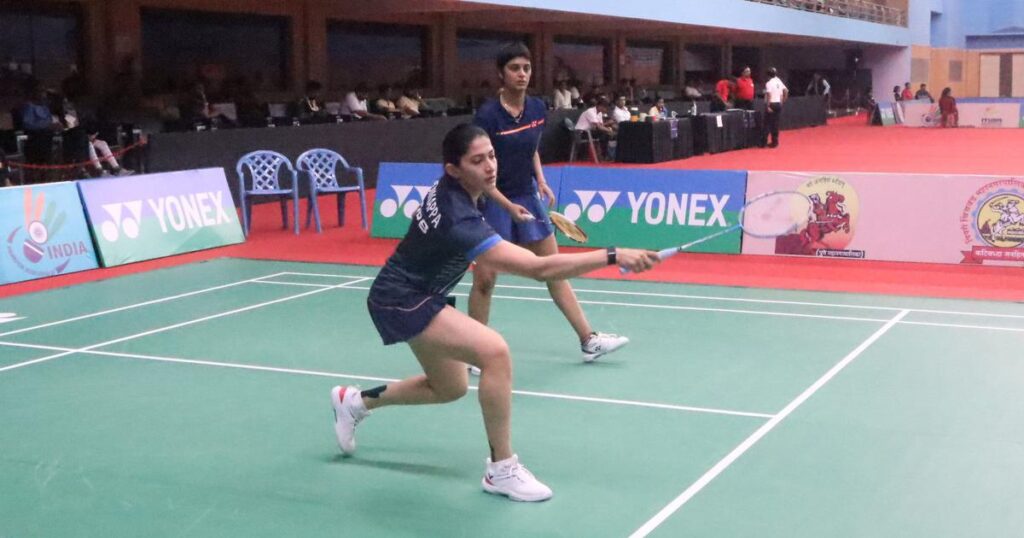
Ashwini Ponnappa along with her new partner Tanisha Crasto in Pune | Senior Badminton National Championships

Through the course of her career, Ashwini Ponnappa has been part of many firsts in women’s doubles for Indian badminton. Ponnappa and Jwala Gutta, became the first Indian women to win a badminton BWF World Championship medal (bronze in 2011). She has won gold, silver and bronze medals at the Commonwealth Games and also the women’s team bronze medal at the Incheon Asian Games in 2014. She has been part of Uber Cup bronze medal-winning squads.

But now the 33-year-old, a veteran of the sport in India, finds herself in the nascent stage of a women’s doubles partnership. In December, she made the decision to pair up with 19-year-old Tanisha Crasto for women’s doubles.

The change sees the once world No 10 women’s doubles player now find herself ranked 141 as a pair with Crasto, albeit they’ve played just two international competitions together – a quarterfinal finish at the Super 500 event in Indonesia in January, followed by a first round exit at the Thailand Open Super 300.

A third event was the quarterfinal finish at the 84th Senior National Championships, at the Balewadi Sports Complex in Pune on Sunday as they put up a good fight before losing against the in-form top-seed pairing of Gayatri Gopichand and Treesa Jolly.

It’s a long way back to the top, but in an interview with Scroll in Pune she asserted she’s looking forward to climbing back up the ladder, while also exploring a new role in commentary.

Excerpts from the interview:

How has the new partnership been working for you?

It’s good. Tanisha is young, she’s very energetic. It’s nice to play with that energy. We haven’t really had many tournaments together, we’ve played two and this is the third. But I’m excited to be here at the Nationals, it’s been a while since I played at this competition.

Earlier you had Jwala Gutta as a partner who was senior to you, then N Sikki Reddy who was not much dissimilar in terms of age. Now you have a partner who is 19. Are you also playing the role of mentor?

You could say that. I would say there’s a vast difference from when I started playing with Jwala to the youngsters now. They’ve all been playing international tournaments from when they were 17 or 18. They’ve all been there, done that. The doubles game has changed and the approach has changed. There’s not a lot of mentoring, she is good in mixed doubles and she’s done well there. Women’s doubles is a little different, but it’s good to have someone who moves into the net. She has that energy and speed on the court.

With age have you changed your approach to the game?

Of course. It’s inevitable for that to happen. I can’t be compared to a 19-year-old in terms of fitness and energy on court. I definitely have to be smarter on court towards the game in order to make sure that I can physically take the toll that badminton has on the body. I have to be very mindful of my training and how I approach the game.

Is it about the warmups and cooldowns getting longer now for you?

Yeah. Probably. But I’ve always been someone who had a longer duration for warmup. But cooldown definitely still needs to get better.

Recently we saw a different side to you – as a commentator. How was that experience?

I happened to be at the tournament and they asked me if I’d like to give it a shot. I felt no harm in doing that, although I feel that it’s not my cup of tea in terms of how I speak. I’d love to get better at it.

But I loved the experience. It was fun being on the other side of the TV. Watching players play you see things differently. You see patterns which you otherwise don’t look out for unless you’re getting ready for a match. That was interesting for me.

I sat for five matches during the Thailand Open, it was interesting for me to watch patterns match out of match. Like if one side was slower or faster, how players dealt with it. You understand that the player who is actually smarter on that day in dealing with the conditions has the upper hand. So that was very interesting that way.

Do you feel there were more expectations when you’re in the commentary box? Since people know here’s someone who has played at the highest level, is there an expectation for some insight which you’d not get otherwise?

Yeah, I am supposed to be the expert. The colour commentary part of it. It does get tricky because, that’s what I meant that it’s not my cup of tea. Not in a bad way, but being articulate about what I see, I’m not a journalist, I’m don’t have the lingo for it. So sometimes I feel, ‘what am I saying?’ Sometimes it’s so repetitive. But it was nice. Although I was a bit nervous, it was an enjoyable experience.

Is that something you’re looking to pursue later on?

Maybe later. Honestly, I don’t know. Right now, I’m definitely focusing on the game. But if I get these opportunities in between to commentate, I’ll definitely give it a shot.

What are the kind of things you and Tanisha have to do off-court just to get the chemistry going to gel on-court? And what are the targets?

This was our third tournament together. We’ve sent out entries for tournaments where we haven’t got an entry. But Tanisha will be playing in mixed doubles (with Ishaan Bhatnagar) in those tournaments. We haven’t had so much time in general to build the partnership because it is brand new, we just started. There’s still a long way to go, we still need that bonding time.

Is that, perhaps the target?

I would say the first target is to get an entry.

You mentioned the doubles game has changed. How?

Over the years the whole approach has changed. When Jwala and I were playing, we were kind of like the path-breakers in a way for doubles. There wasn’t a lot before us. Nobody we could look up to, nobody who had ever won. We had a lot of firsts together. But the game-changer has been that youngsters have been given a lot of exposure to tournaments. They’ve been playing tournaments since they are 17 – that was unheard of back then. We didn’t even have those tournaments in India.

Right now we have four international tournaments in India. You’re giving youngsters an opportunity to get that hunger at a very young age because you’re giving them a taste of what international badminton is. Also, everyone is going out, everyone is sponsored. That’s changed.

That’s why you see a lot of youngsters playing and taking it up. Otherwise, our generation, people in the past, they trained a lot, but never played tournaments. I wouldn’t say you didn’t have that talent back then, you just didn’t know. They were just training, they didn’t have the exposure, no push to go out. That has changed, and that’s why we see a rise in a lot of doubles players playing and doing well.

It’s because they’ve been pushed from a young age, getting out to participate, get that exposure, start training at a young age. These girls are 19. At that time, at 19, nobody was really encouraged to go out.

Yet you’ve remained relevant throughout this. What’s been the changes you’ve had to make in the way you approach the game to continue playing at the highest level?

I would say, I still need to get to the top. I have, in the past. But currently I’m starting from scratch. Ground zero. It’s challenging because you’ve been there and you’re coming back all the way down. It’s a reset.

source: http://www.scroll.in / Scroll.in / Home> Badminton / by Shahid Judge / February 27th, 2023
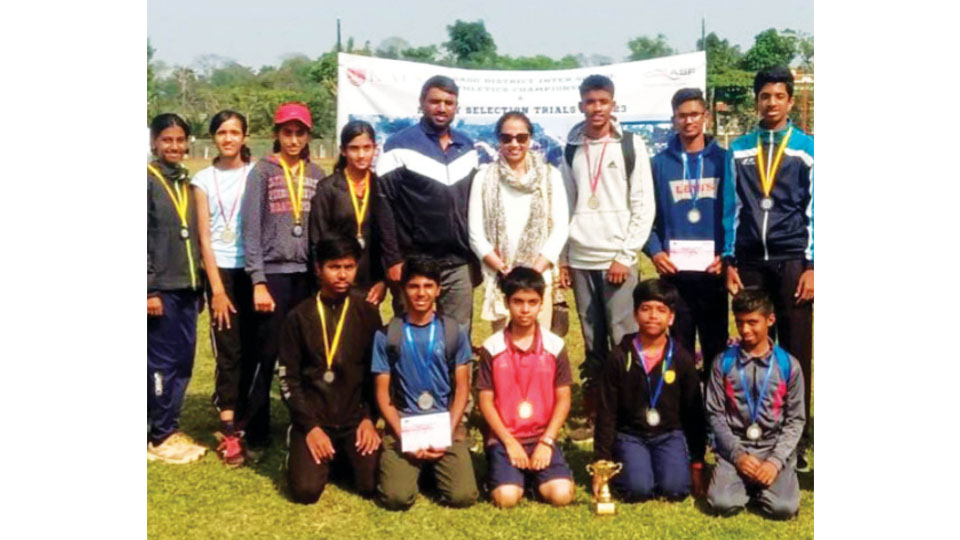
Mysuru Excels In Kodagu Inter-School Athletic Championships

In order to motivate budding athletes, Olympian Ashwini Nachappa’s Sports Academy had organised the Track and Field Championship event for kids under 12, 14 and 16 years at KALS Grounds in Kaikeri, Gonikoppal, on Feb. 7.

Students from various schools in Kodagu, Mysuru, Bengaluru and Mandya participated in the event.

The following students from Mysuru district, coached by Puneeth of Mysore University, have secured a total of 3 Gold, 5 Silver and 8 Bronze medals:

Girls Category

U-16: Charvi – Bronze in 600m; U-14: Ishana Devaiah Pykera (Excel Public School) – Gold in 600m and Silver in 200m; H. Saha (St. Joseph’s School) – Bronze in 600m; U-12: Nischitha Gowda (Vijaya Vittala School) – Bronze in 600m and 100m.

Boys Category

U-16: M.N. Vipul (Sadvidya High School) – Gold in 100m and in 200m along with Individual Championship; Madhu – Silver in 100m and 200m; Kishan – Bronze in 800m; U-14: Ayish – Silver in 200m; Ishaan – Bronze in 100m; U-12: Chiranth – Silver in 600m; Adithya, Shireesh – Bronze in 600m.

source: http://www.starofmysore.com / Star of Mysore / Home> News / February 21st, 2023

DJ Nikhil Chinapa Opens Up About VH1 Supersonic Music Fest: “A Well-Curated Artist Lineup Doesn’t Require International Names…”

Vh1 Supersonic curator Nikhil Chinapa said that it is not important to emphasise on international names to have a well-curated artist line-up,

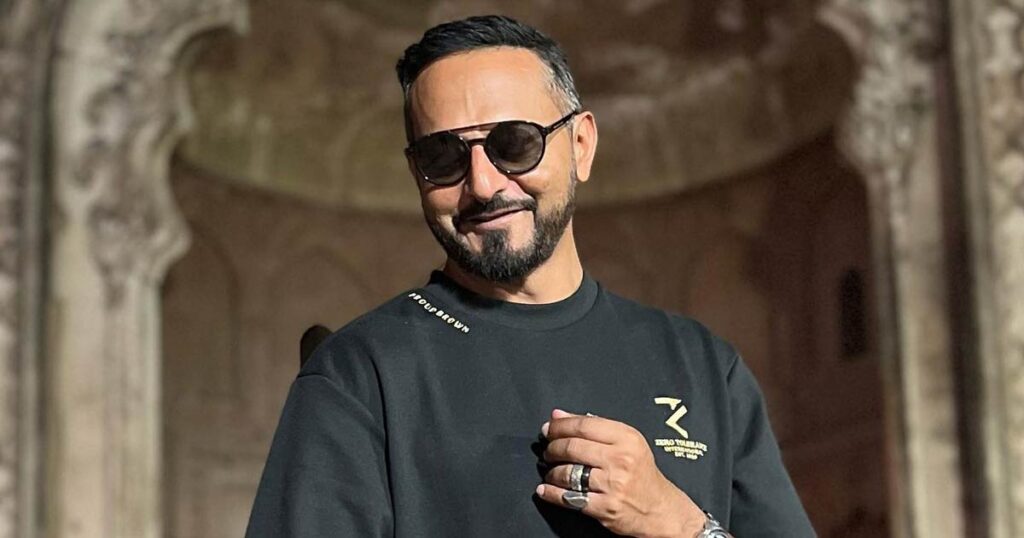
Nikhil Chinapa on Supersonic: Curated artiste lineup matters more than global celebs(Photo Credit –Instagram)

Host, DJ and Vh1 Supersonic curator Nikhil Chinapa said that it is not important to emphasise on international names; but having said that, curating a lineup with artistes one doesn’t normally get to witness, is a part of the plan for his music festival.

The event will see the who’s who of the music world such as American rapper Tyga, English singer Anne-Marie and Nigerian singer-songwriter CKay among many others.

About how important is it to add international names, Chinapa told IANS: “It’s not. Having a well-curated artist lineup doesn’t require an emphasis on international names. That said, curating a lineup with artists you don’t normally get to witness, is a part of our plan. This includes Indian artists who haven’t been to Pune as well as international talent visiting India.”

Nikhil Chinapa is one of the most prominent faces in the music world. He is credited with popularising Electronic Dance Music (EDM) among the Indian youth. He is also known as the Father of Indian Dance Music for his various contributions towards revolutionising the outlook of Dance Music in the country.

Talking about his favourite hotspots where he’s performed and the best venues for performance in the country, Nikhil Chinapa said: “It depends on what we call ‘the room’ – which is more than the venue, it’s also the people, the vibe, the sound system etc. The best rooms are the ones where people come for music, as opposed to selfies. I’m not hating on selfies in a club though… or wait, maybe I am – but just a little bit!”

What is that one thing that is missing in the music scene in India? The 49-year-old, who has been instrumental in popularising DJing as a profession, answered: “Quality music journalism and significantly fewer selectors (music curators, playlist geeks, culture visionaries) than what I would expect a music population as large as ours to have.”

source: http://www.koimoi.com / koimoi.com / Home> Television & Web / by IANS / February 24th, 2023

Moral stories from the south

Giving his childhood memories the form of the written word, author Nitin Kushalappa puts the spotlight on south India’s folklore in his latest book meant for all age groups .

Chennai : 

It was during his school days that the English translation of Pattole Palame, a compilation of folklore, released, mesmerising author Nitin Kushalappa MP. “After school, I would visit Gangaram’s, take the book from the shelf, read it for a while and place it back when it was time for me to leave. I did this until I was able to collect some pocket money over several months, from the change I could spare from bus fare tickets and tea snacks. With this money, I bought the book at Gangaram’s finally,” he shares.

It was this and perhaps several other stories he had heard from his grandparents and relatives that made Nitin take a liking towards folklore. He began reading, writing and seeking more of it. A compilation of his years of living with folklores is Dakshin  – South Indian Myths and Fables Retold. The book on moral stories has 15 retellings of regional folk tales from the southern states. There is the story of Bala Nagamma, the Moon Prince, the cat and the fly and other famous regional tales, which might be lesser-known to English readers.   

Each chapter ends on a moral note. Nitin says that there were more than 15 stories he had written for the book and the themes ranged from love and religion to spirituality and death, which was dropped keeping in mind the audience. 

Nitin calls himself a “random reader” and this book was a long time in the making. With a day job as an engineer, he makes time for his passion. “I do enjoy reading, writing and studying. I did my writing work during the weekends or when I was free. I have had to make some sacrifices, and cut down on time with family and friends. My latest book brought out the child in me and with it many of my childhood memories,” he shares.

Excerpts follow:
Can you tell us about your childhood with your grandparents, the kind of stories you listened to? 

My grandfather was in the army. He told us stories about Coorg and tales that he heard in the army. My mother and my uncles were also storytellers, and our other relatives had stories to tell too. 


Both sides of my family had many books in their houses. I spent a lot of my time in these home libraries. I read comics, fiction, non-fiction and various other genres. Some of the Indian comics, especially Amar Chitra Katha, were based on mythology and folklore.  

At home, my parents deliberately didn’t allow us to have satellite television. This was to ensure that we read books. Hence, books were what entertained us. There was only Doordarshan for us. Once in a while, when we visited friends or relatives, I remember watching television at their places. 


Some of our school teachers were great storytellers. I remember one primary school teacher, Mrs Leo in particular. I spent a lot of time in our school library. I began writing as a kid. I would write down stories that I heard and read. As I grew up, I somehow didn’t discard these notes. 

What was the idea behind Dakshin? 
Some years ago, I was reading AK Ramanujan’s books on Indian folklore. I liked the methods he used while recording and narrating the stories. I was also reading folklore from Europe, North America, Bhutan, Bihar, Marwar, Punjab and other regions, besides mythical stories and fables.

 
There is one particular song called Govina Haadu. It is a popular Kannada song which was taught to children. I learnt it in my school textbook. Nearly everybody in Karnataka knows this song. I have heard several people quote lines from this song. There is something about this song which makes people emotional or nostalgic. I had translated this song word by word, and kept it aside for some years. 

I was also working on my own retellings of the translated songs in Pattole Palame, a compilation of folk songs. I tried searching for different versions in different villages of Coorg, and in other books. 

A few years ago, my book agent Suhail Mathur of The Bookbakers and I were chatting online about potential book projects. There was a requirement to write a book of regional folklore. I was supposed to choose a region or a state. My first choice was to write either on Kodagu (Coorg) or Karnataka. But I found that there was not much material on South Indian folklore itself. So I finally decided to write on folklore from south India and the Deccan. Suhail thought it was a good idea and encouraged me to continue working on this. That is when I grew more focussed. 

How do you think these lesser-known regional tales can be made more popular? 
While preparing for this book, a careful decision was to be made about each story — whether it was worth including or not and how similar or different it was from the original version or the different versions of the tale. We tend to learn more of English and less of our own mother tongues. This has got to do with English becoming the common ground for conversation among people from different languages. If a native speaker doesn’t learn their mother tongue, there is hardly any chance that somebody else will learn it. This way, due to disuse, a language gets lost. 

Every language has its stories. Unfortunately, they remain within the language. With globalisation, languages are quickly disappearing. The Kodava language, also called Coorgi, Coorg or Kodagu, is an endangered language. When a language disappears, the knowledge that was associated with it also disappears. A lifestyle and culture which goes with the language vanishes as well. Translations are unable to completely capture the essence of a story in its original language. 

How do you want this book to make an impact?
These days the visual media has taken up space from the print media. Not many people read books. In the past, parents and caretakers would tell children stories to make them eat and sleep. These days, we tend to allow them to watch YouTube and other videos on smartphones and television. Visual media leaves less room for imagination. Children get addicted to devices and tend to lose out on their creative skills. I hope the habit of reading books makes a comeback. Most successful storytellers are often not authors but script writers. We cannot stop the march of globalisation and progress. Also, I hope filmmakers would make more movies on folklore in our country. 

Why is Coorg often a central subject in your books?
I was born in Coorg and brought up in Bengaluru. My entire education was in Bengaluru. My younger sister and I would spend our vacations in Coorg. I would write on various topics. Around ten years ago, I began a blog. I also wrote to the newspapers. I noticed that my articles on Coorg found more acceptance than my other articles. This must be because a number of people consider me to be an expert on matters pertaining to Coorg. So, I continued to write a lot on Coorg. 

The lessons from each of the stories in the book are plenty, yet you mention only one or two at the end of each chapter. Was it with the intention of making parents and children draw their own interpretation?
To be frank, I initially had long paragraphs on the lessons learnt. The editor Arpita Nath wisely recommended just a couple of lines for each moral lesson and made cuts wherever required. The children and their parents can then go back to the story and discuss it in detail among themselves and understand the lessons better.  

What’s in the pipeline? 
I hope to write more books for children and for other audiences as well. There is another book in the pipeline, this time for older audiences. The manuscript is complete. I have sent it to my book agents Suhail Mathur and The Bookbakers.

Book: Dakshin – South Indian Myths and Fables Retold
Publisher: Puffin Books /Pages: 236 
/ Price Rs.299

source: http://www.newindianexpress.com / The New Indian Express / Home> Cities> Chennai / by Anushree Madhavan / Express News Service / February 27th, 2023
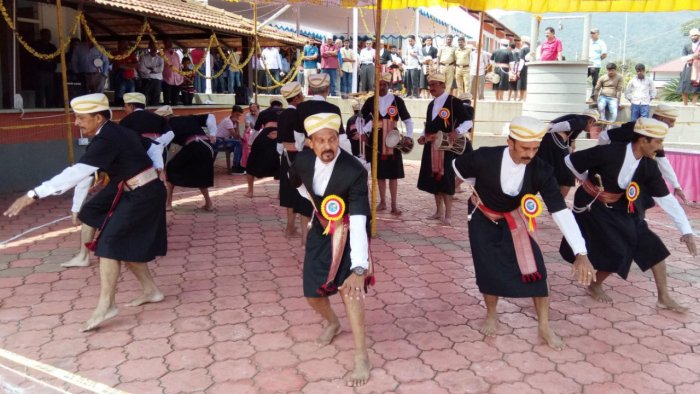
How Kodavas lost their distinct identity – Part I

Can the upcoming Census 2021 and the Karnataka assembly polls bring the spotlight on the decades-old demand of the Kodavas?

Kodavas participate in cultural competitions organised as part of Kodava Namme at Balugodu near Virajpet in October 2017. Credit: DH File Photo

What is a common thread that runs through the following names: Field Marshal KM Cariappa, former Indian hockey team captain MP Ganesh, former Union minister CM Poonacha, sprinter Ashwini Nachappa, and actor Rashmika Mandanna? More than being celebrities in their chosen field of work and belonging to Karnataka, they all trace their origins back to Kodagu district, about 250 kms west of Bengaluru.

Kodavas are a group of people who have a distinct identity — a distinction that is no longer recognised by the State! For decades now the Kodavas have been demanding they be categorised as a distinct group, and two upcoming events could bring to the spotlight on the Kodavas’ cause: the delayed 2021 Census, and the Karnataka Assembly elections.

Unique Identity

The Kodavas were recognised as a distinct ethnic group, even during and much before the reign of the Lingayat rajas who ruled the Kodagu province since the sixteenth century AD. From 1947 till 1956, Kodagu was included in the list of Part C states along with Ajmere, Bilaspur, Bhopal, Tripura, Manipur, Delhi, Kutch, Himachal Pradesh, and Vindhya Pradesh. In 1956, on the recommendations of the States Reorganisation Commission, Kodagu merged with the then Mysore (now Karnataka) state as a separate district.

We do not have evidence as regards the Kodavas’ antecedents, and it is widely believed that they were migrants to the region during the third or fourth century AD. Little is known as to where they migrated from, and what made them settle down in the place they have done so. Going by their physiognomy, and compared with the other communities that inhabit the Kodagu district, the Kodavas are quite distinct and different in many ways.

Language, Religion, Customs

The language they speak, Kodava takk, is undoubtedly a Dravidian language in terms of its grammar and syntax, and is replete with words from the other Dravidian languages, besides words from Urdu, and Farsi.

Their religious practices, traditions, and customary laws too vary a great deal vis-à-vis the other religious groups and castes that are the Kodavas’ co-habitants. The Kodavas’ primary, and almost solitary, religious pursuit has been ancestor propitiation. Every Kodava okka (lineage) traces its descent from its Guru Karanava (common male ancestor) for whom they have a kaimada (shrine) in the vicinity of their ain mane (ancestral house).

The Kodavas do not have temples, nor do they solicit the services of any priests, Brahmin or otherwise, in any of their religious practices or rituals. Their marriages, births, naming ceremonies, deaths, etc, is officiated and performed by one of their own elders, and there is no place in these ceremonies for any Hindu rituals or recitations in Sanskrit or any other language.

In effect, they have no link whatsoever with the practices of the chathur varnas (Brahmin, Kshatriya, Vaishya, Shudra) nor do they have any caste affiliation or internal caste divisions among them, but for a miniscule subgroup known as Amma Kodavas who are, ideally, considered to be vegetarians and teetotallers.

Martial Tradition

The Kodavas have had a martial tradition and have been part of the armies of the Lingayat rajas and later of the British. From the time of the rajas, the Kodavas, along with some other communities, have been the beneficiaries of the lesser taxed jamma land tenure, which mandated that they offer their services to the palace for a few days every month. Details as regards these as also many other matters concerning living conditions and life in general vis-a-vis the rulers were notified as 53 decrees/orders by the penultimate raja of Kodagu, Lingarajendra Wodeyar, in the Hukumnama published in 1811. Jamma landholding conferred the right to possess firearms without licence. This practice is prevalent even today.

The 1941 Census came and went, with most of the Kodavas not realising that they had lost, unreasonably, their unique identity. More about that in Part II.

(MA Kalam, a social anthropologist, is Visiting Professor, Centre for Economic and Social Studies, Hyderabad. The author has been researching in Kodagu since the early 1970s.)

Disclaimer: The views expressed above are the author’s own. They do not necessarily reflect the views of DH.

source: http://www.deccanherald.com / Deccan Herald / Home> Opinion / by MA Kalam / February 23rd, 2023

Gulshan Devaiah Makes A Hearty Meal, And Twitteratis Are Impressed With Its Complexity!

Gulshan Devaiah

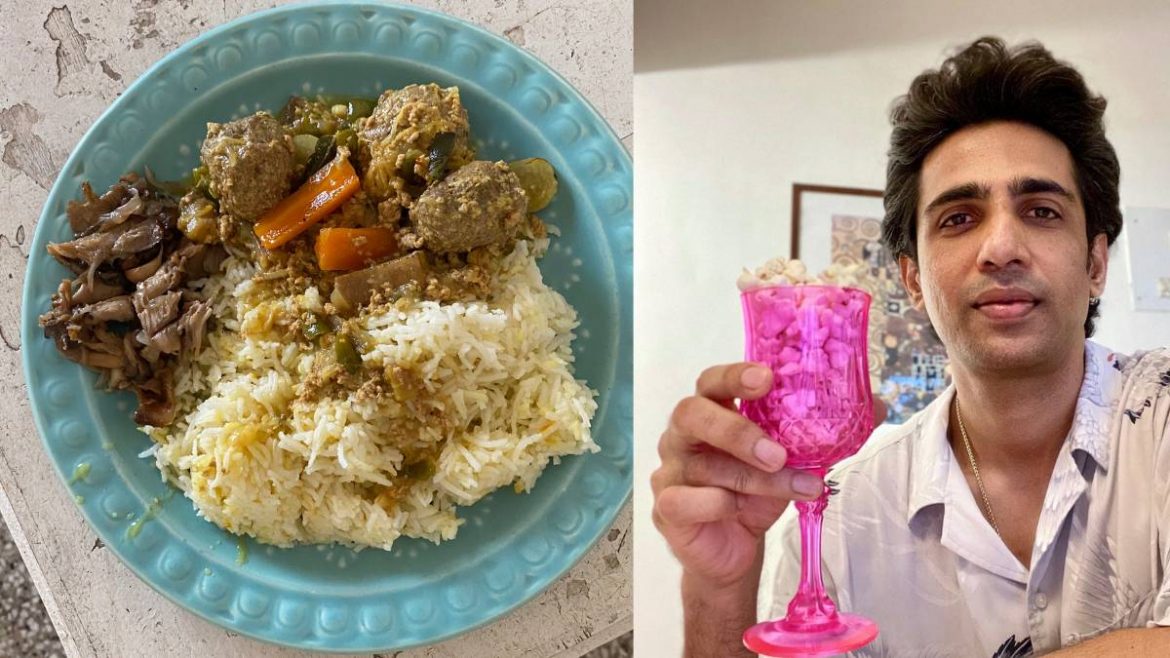
What keeps us updated better than social media apps? Be it a piece of national news, Hollywood gossip or a local incident, social media will be the fastest source of information. The latest piece of interesting info that caught our attention is that Gulshan Devaiah can cook and how! The Hunterrr fame, known for his impressionable acting skills is quite active on Twitter. You can find him giving insight into his days often. This time he posted a picture of a beautifully spread plate with a lot of elements on it. While the food on that plate looked pretty tempting, the caption is what impressed us the most!

Take a look at the plate and the caption yourself!

Gulshan Devaiah Impressed Twitteratis With His Culinary Skills

“SuperGullu”@gulshandevaiah

One meal a day :

Meatball with carrots, white Radish & raw plantain.

Sautéed Mushrooms in garlic butter sauce.

Saffron rice.

3 pears, 6 pieces of ripe jackfruit before this plate.

Finished it off with coconut water & 3 pcs of Royce Nama chocolate

hell yeah!! I can cook

Image

· 5:37 PM / Feb 23, 2023

Hell yeah! He can cook and how! The beautifully set plate explains the reason behind his excitement. Starting with a list of all that we can see on his plate, he talks about his one meal a day. With a portion of saffron rice accompanied by meatballs with white radish, carrot and raw plantain, you can also find sauteed mushrooms on his plate.

His caption also mentions had 3 pears and 6 pieces of ripe jackfruit before having this hearty meal. To finish off this meal, he had some coconut water and 3 pieces of Royce Nama chocolate.

Here’s What The Fans Had To Say About It

Twitteratis were just as impressed with his cooking as we are! While some of them complimented him on his culinary skills, many of them expressed their interest in his movies.

Some also had a question if he consumes only one meal a day! Here are some of the comments.

While it is unclear if this is his only meal for the day, we can certainly appreciate the effort put into making his meal complete.

Cover Image Courtesy: Twitter/@gulshandevaiah

source: http://www.curlytales.com / Curly Tales / Home> Food> Trending / by Mallikas Khurana / February 24th, 2023

Rohan Bopanna and Matthew Ebden win men’s doubles title at Qatar Open 2023

no photo
(Twitter)

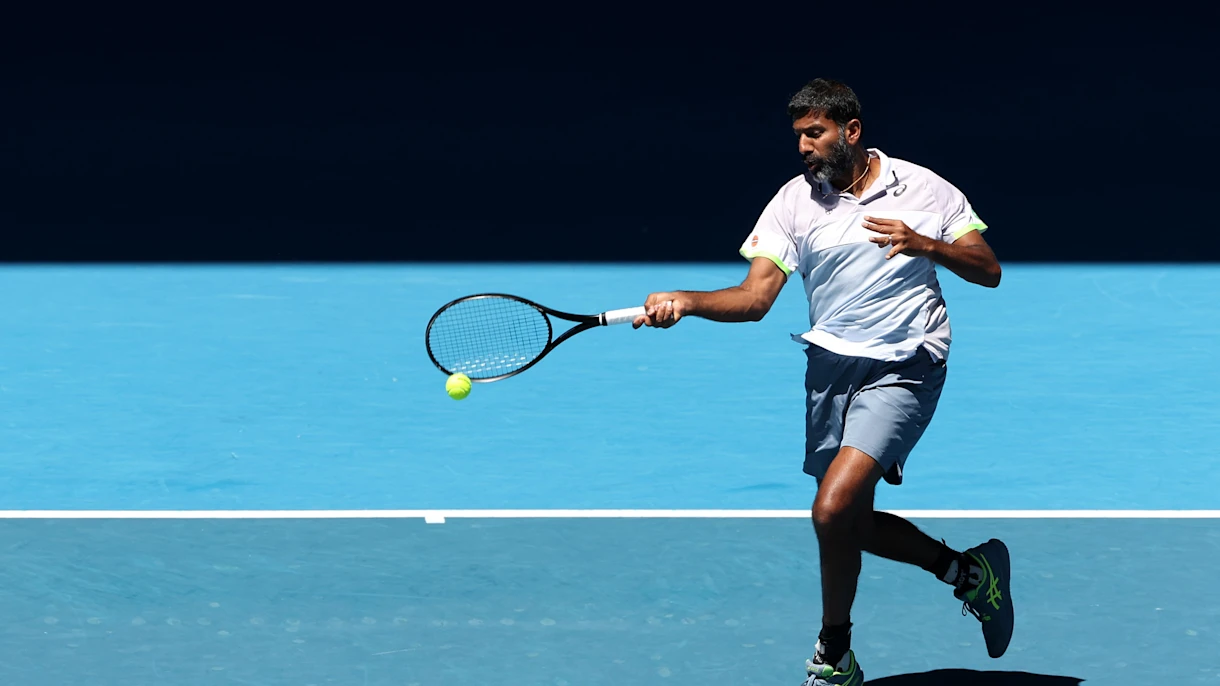
On Friday, Indian tennis player Rohan Bopanna and his Australian partner Matthew Ebden took home the men’s doubles championship in the Qatar Open 2023 tennis competition in Doha. The pair defeated Botic van de Zandschulp of the Netherlands and Constant Lestienne of France 6(5)-7(7), 6-4, 10-6.

It was Rohan Bopanna’s second victory in the Qatar Open. He had finished second last year with Canadian Denis Shapovalov in the doubles competition after winning it in 2020 with his Dutch partner Wesley Koolhof.

Throughout his career, Rohan Bopanna has already won 23 doubles championships. It was his first time playing alongside current Wimbledon  doubles winner Matthew Ebden. At Tel Aviv, Pune, and Adelaide, the Indian tennis player won three championships last year. Bopanna’s first championship of 2023 was the ATP 250 victory in Qatar.

Bopanna and Ebden also advanced to the Rotterdam Open ATP 500 final last week, but they fell to Austin Krajicek of the USA and Ivan Dodig of Croatia in the match tiebreaker following the winning point.

The third-seeded Indian-Australian combination in Doha on Friday had a break advantage at 6-5 in the first set before being pushed back and dropping the set in a tiebreaker. In the second game, both defences improved, and the teams maintained their serves until the ninth game. Bopanna and Ebden, though, triumphed in the tenth game to force a match tiebreak.

Bopanna is ranked No. 37 in the world and No. 17 in the ATP doubles rankings. The match tiebreaker was won in 99 minutes by Ebden after they successfully converted four of six break-point opportunities.

source: http://www.sportscafe.in / Sportscafe / Home> Tennis> National> News / by SportsCafe Desk / February 25th, 2023

Mountain Calling: Hyatt Centric rolls out special brunch menu dedicated to Coorg cuisines

We recommend Pandi Curry, Koli Curry and Baimbale Curry.

Hyatt Centric rolls out special brunch menu

Chef Gaurav Ramakrishnan introduced a special Coorg cuisine brunch at The Bengaluru Brasseri recently. The special brunch includes dishes like Pandi Curry, KadambuttuKummu Curry, Akki Roti, and more. We started off our brunch with Murgh Lasooni Tikka and Indonesian Grilled Fish. The former is a delicacy marinated in yoghurt and a few seasonings while the latter was flavourful and a bit on the spicier side. 

We then decided to check out their special brunch dishes. We started off with boiled rice and Pandi Curry. Boiled rice with pandi curry is like a staple diet in the Coorg region. The pandi curry was made using chilli powder, green chillies, masalas, and Kachumpuli (a dark-coloured vinegar). The delicacy was flavourful and complemented the rice very well. 

Kadambuttu

We went for another round of boiled rice, but this time along with the Koli Curry. This Coorgi-style chicken curry was cooked with grated coconut, tamarind paste, green chillies, and red chilli powder. The dish was more on the spicier side but we loved having it with the steamed rice. 

Next, we tried the Akki Roti with Baimbale Curry. The curry was made with bamboo shoots along with cumin and mustard. The base of the curry was cooked using coconut paste. The dish was delicious and left us craving more.

Koli Curry

Our brunch came to a close with a couple of desserts – Thambuttu and Kaavale Puttu. The former was made with mashed banana pulp and roasted broken rice along with grated coconut while the latter had ripe jackfruit pulp, ghee and cardamom. This dessert was steamed and served in banana leaves. 

If you are looking for a place to try out special Coorg delicacies, the special brunch at The Bengaluru Brasseri is one you should definitely look at. 

₹1,799++ for two. At Hyatt Centric, MG Road 

Email: alwin@newindianexpress.com
Twitter: @al_ben_so

source: http://www.indulgexpress.com / Indulge Express / Home> Food> Bengaluru / by Alwin Benjamin Soji / February 24th, 2023

Saving the koilemeen of Kodagu

Conservationists hope to connect people and the dwindling fish species, to save streams, rivers and otters.

Volunteers conduct survey of the stream to look for signs of Koilemeen and Small Clawed Otters

Madikeri :

Food has a way of bringing people together. Raising awareness using a local delicacy to protect streams and the ecosystem of Kodagu is the unique ‘Koilemeen Project’ — an initiative by conservationist Gopakumar Menon. To understand the motto of the project, it is important to first understand that koilemeen is the Kodava name for freshwater fish, commonly known as Spiny Loach, with the scientific name ‘Lepidocephalichthys thermalis’.

A local variety found in streams and water-filled fields of Kodagu, the koilemeen used to be a popular delicacy in Kodava households during the monsoon. However, the numbers have dwindled over the years due to various reasons, and this is where the ‘Koilemeen Project’ comes into the picture.

The objective is to involve the local community in the conservation of streams and rivers, by connecting the people to their once-popular koilemeen dish, Gopakumar explains. “In the past two decades, there has been a precipitous drop in the availability of Koilemeen. We spoke to several coffee planters and a fish trader in Virajpet, who shared his worry due to the non-availability of koilemeen,” he said.

He explained that the use of chemicals in agriculture and horticulture has severely affected the koilemeen population, which also indicates that stream and river waters are being polluted by chemicals. “Increased use of weedicides, pesticides and other fertilisers have affected the koilemeen, and indicates that our water is polluted. The project addresses the loopholes and tries to bring awareness in the community,” he added. Illegal sand mining across the streams of Kodagu has also affected the koilemeen population.

These tiny fish breed on sand, and with sand illegally mined for commercial purpose, it has affected their numbers. “The fish spawn across paddy fields (during monsoon) and other shallow streams, and swim upstream post the monsoon. However, the use of chemicals, sand mining and deposits of plastic waste across the streams has affected the fish. The project is trying to sensitise locals and get them involved. For the community, koilemeen is an easy logo to enable the conservation process,” he shared.

The group is active across social media platforms, and wants youngsters from the district to get involved in the conservation project. The project team meets small groups of planters and raises awareness on the need to stop the extensive use of chemicals. “We tell planters and farmers about the correct method to use chemicals. We are creating awareness on the hazardous use of weedicide and urging them to use fewer chemicals, while ensuring there is at least a 20-ft gap from the chemical-sprayed area and water source,” he explained.

While the project’s main objective is to protect the streams of Kodagu, the focus is not just the tiny koilemeen fish. The bigger picture includes small clawed otters – a Schedule 1 species under the Wildlife Protection Act, whose habitat is found by freshwater streams of Kodagu.

Small beings in the ecosystem, like small clawed otters, have the same protection right as elephants or tigers, but are less talked about though their existence touches the level of endangerment. Since koilemeen are occasionally hunted, it is being used as a mascot to protect the small clawed otters in their natural habitat of freshwater streams and rivers.

The team — geared in gumboots and equipped with GPS — heads out to survey streams to find signs of small clawed otters. “The signs or presence of otters indicate good health of the ecosystem. We look for droppings or spraint of otters and are collecting data on their habitat,” explained Yashas S, a master’s student, a volunteer for the project. He stresses the need to conserve the riparian habitat to protect small clawed otters.    

The project aims to collect research material on the otters, and find ways to protect them from being poached. “The diet of an otter includes crustaceans and koilemeen. Our aim is to protect the prey which will help conserve the predator. Protecting the prey also means protecting the streams,” explained Gopakumar.

Alongside the community conservation initiative, the project is conducting a baseline analysis on the otter habitat, which will help take an intelligent step towards their conservation.  

Purpose of the project

To involve the community in conservation of fresh water streams, rivers of Kodagu.
Enable conservation by connecting community to their once-favourite delicacy. Protect koilemeen, the prey, in freshwater streams.


Urge planters to opt for organic farming, stop use of harmful weedicides
Protect, conserve vand conduct analysis on small clawed otters, the predator.

source: http://www.newindianexpress.com / The New Indian Express / Home> Good News / by Prajna GR, Express News Service / Februry 26th, 2023

Daredevil Act By Kodagu-Born Vet Saves Leopard In Mangaluru

She sits inside a cage, goes down 25-feet deep well to bring back the feline after darting

Mysore/Mysuru:

One of the most challenging and dramatic animal rescue missions has been accomplished by a Kodagu-born veterinarian Dr. Pandikanda Meghana Pemmaiah, now settled in Mangaluru. 

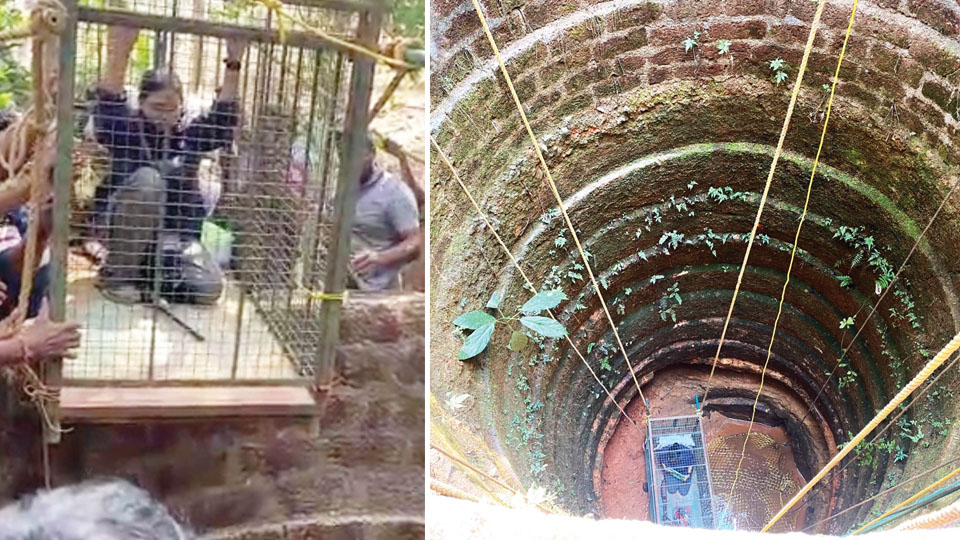
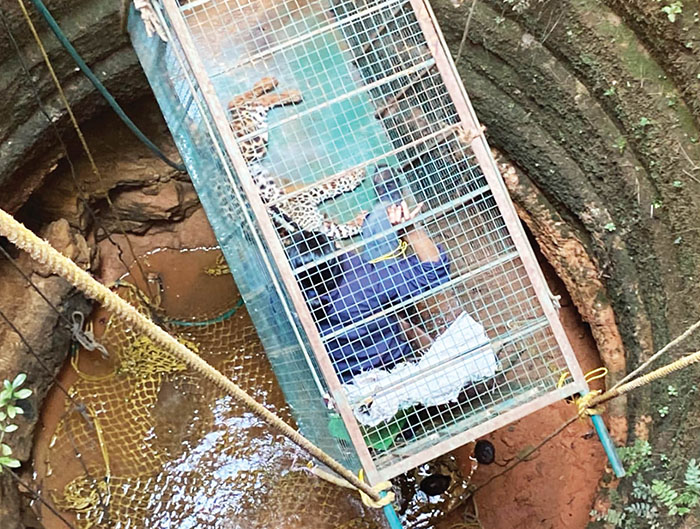
She recently saved a leopard that had fallen inside a 25-feet deep well and performed the act by sitting inside a cage that was lowered into the well to sedate the leopard that was stuck there and starving for 36 hours. She was able to pull the one-year-old feline into the same cage in a tense and dare-devil two-hour rescue operation. Her husband Dr. Yashaswi Naravi too was a part of the rescue mission. 

In fact, it was 31-year-old Dr. Meghana, who volunteered to go down the well. She told Star of Mysore that though she was scared as it was deep inside the well and the leopard was not visible from the top, the adrenaline rush to save the starving and stuck animal overcame the fear.

The incident took place near a house in Niddodi near Kateel in Dakshina Kannada, about 35 km from Mangaluru. “We got a call at 9 am on Feb. 12 from the Forest Department. We are a team from Chitte Pilli, a Wildlife Rescue and Research Centre in Mangaluru and the team comprises me, my husband and experts Dr. Prithvi Salian and Dr. Nafisa Kousar. We reached the place at 11 am with some necessary equipment for the rescue,” she said. 

After successfully tranquillising the big wild cat, Dr. Meghana being pulled up along with the tranquillised leopard inside the cage.

Failed attempts 

The Forest Department had tried to rescue the feline with a ladder and a cage, as in other instances the trapped leopard had walked into the cage when it was lowered inside a well. However, this leopard was unwilling to move, she added. 

The leopard was not visible from the top and it had taken shelter at a cosy spot that was shaped like a cave-like cavity — to avoid falling into the water — inside the sturdy well that was built with stones. The leopard was aggressive when attempts were made by the Department to drain the well water.

“Later, a different strategy was adopted and it was decided to lower a cage carrying a person to tranquillise the leopard and bring it back. We had no other choice and someone had to do it. I volunteered despite the dangers involved,” Dr. Meghana revealed. 

The leopard being treated after capturing in Mangaluru.

A risky mission

The cage was lowered by villagers, volunteers and the Forest Department staff in a coordinated action and with Dr. Meghana holding the tranquilliser gun. “We did not have a visual of the leopard and as such, it was a risky mission as no one had a clue as to how the leopard would react,” she said. 

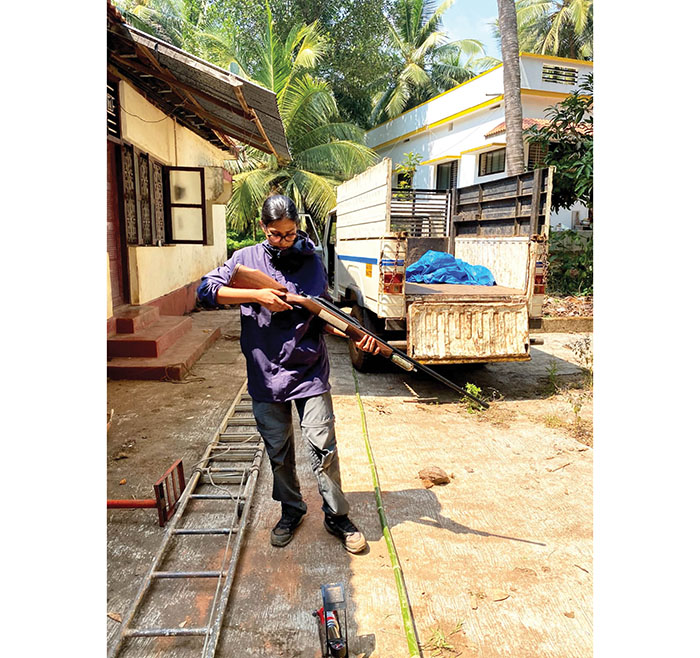
“I waited patiently for a sight of the leopard as the cage was lowered gradually and finally I could spot the animal around 10 to 15 feet inside the well and it was growling at me though it looked exhausted without food and water. I had very little time and hence aimed the dart at the animal and shot at it. Luckily, it was a precision shot and the dart hit the feline’s thigh in the first attempt itself,” Dr. Meghana said. 

Meghana had carried about three to four syringes containing the sedating medicine as she did not know about its weight, size, health and other parameters for darting it. If she missed the aim the first time, she could well refill the tranquilliser gun with the second shot but the leopard could have moved away from the initial close proximity and there was more probability of her missing the shot. 

Growling leopard

“In fact, I had to sit inside the cage for over 15 minutes for the dart to take effect and the leopard was right in front of me. It was growling and looking at me. Slowly, the sedation process began and I tried to pull it to the cage but could not. Another youth got inside the well and helped me and we both put the 25-kg leopard inside the cage. It was a leopardess. Now when I look back, sometimes I fear what could have happened if something had gone wrong,” she said. 

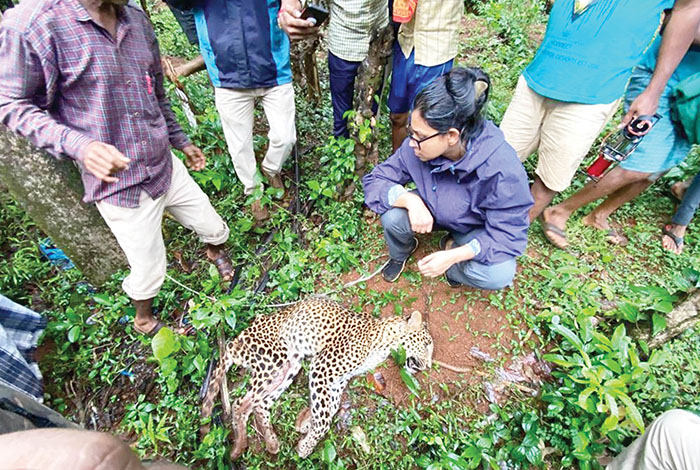
So tense was the situation after the dart was fired that Dr. Meghana sat motionless inside the cage as any movement or noise would disturb the leopard and it would take a long time for the animal to get sedated. Finally, the feline fell unconscious after over 15 minutes. After the leopard was lifted back to the ground, it was checked and the vets found no external injury marks.

“It was a healthy leopard but was exhausted. After administering the required medicines for the feline to rejuvenate and get back its strength so that it has the capacity to hunt on its own, it was handed over to the Forest Department that released it back to the wild,” Dr. Meghana said.

Passion for wildlife keeps her going

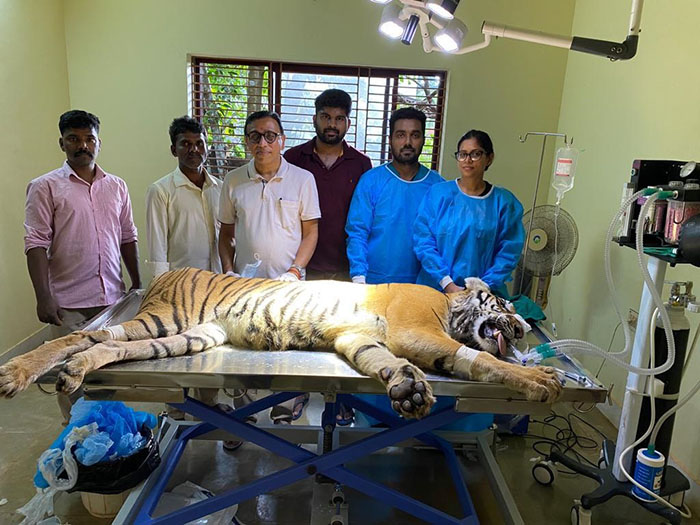
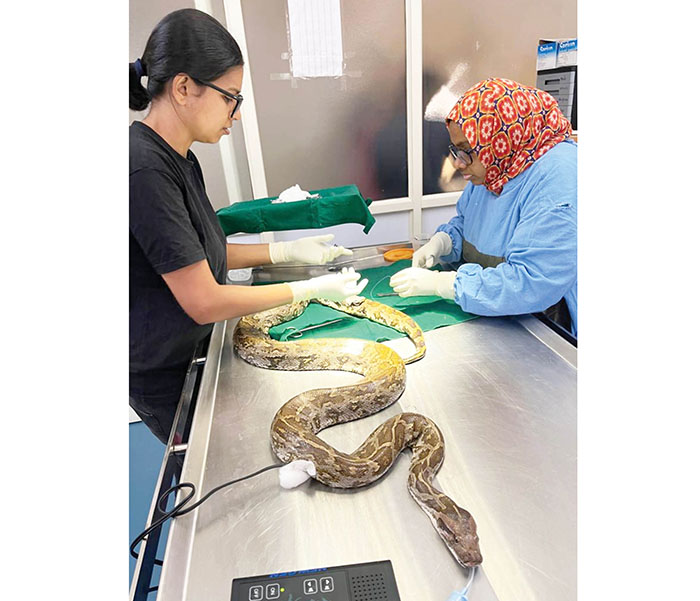
Wildlife rescue operations are nothing new for Meghana and she has been a part of many rescue operations in the last six years in Karnataka. She has been a part of many missions where she has rescued and treated tigers, owls, star tortoises, pariah kites, crows, pigeons, birds and even pythons. 

“Passion about wildlife, increasing human-animal conflicts and the resulting rescue mission keeps me going. I dread to see an animal suffering due to injuries,” she said.

Every year, she does almost 10 darting procedures after following the scientific process and protocols. But this was the first time she had to get down into a well, sitting inside a cage to rescue a leopard. She hails from Halugunda village near Virajpet in Kodagu district and studied in Bengaluru.

Dr. Meghana treating a python.

After completing her PUC from Christ College, Dr. Meghana did her BVSc followed by MVSc in Wildlife and Surgery from Veterinary College, Bengaluru. The next four years, she worked in People For Animals (PFA) as a senior veterinarian and this gave her on-hand exposure to animal rescue and medication.

Her father late Pandikanda M. Pemmaiah was a retired Superintendent of Police and her mother P.P. Sarasu and rest of the family live in Bengaluru. She married veterinarian Dr. Yashaswi Naravi of Mangaluru and both have been working at Chitte Pilli — a Wildlife Rescue and Research Centre.

source: http://www.starofmysore.com / Star of Mysore / Home> News> Top Stories / February 21st, 2023