Deviah Memorial Preparatory (DMP) School is one of the few schools in Karnataka to teach garbology, the study of a community or culture by analysing its waste.
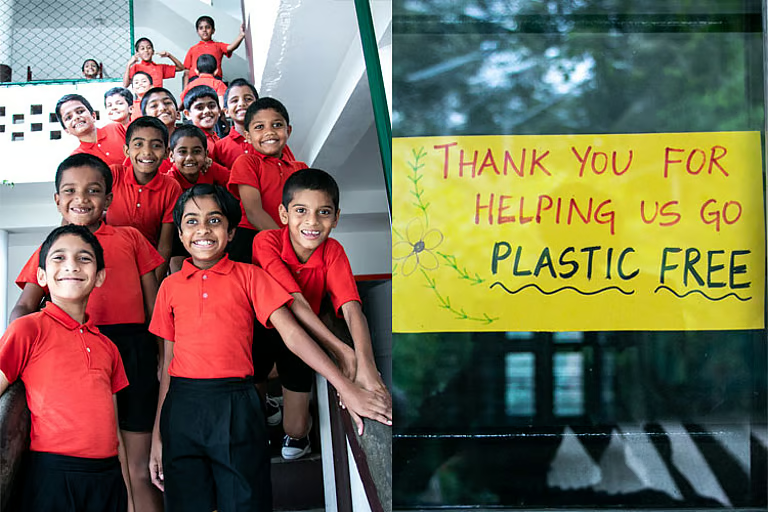
Our waste, our responsibility: A Kodagu school is teaching its students garbology
Multiple hands shoot up in the air, almost instinctively, when the teacher asks the question, “What are the ten categories of waste?”
Subaiah, a scrawny Class 4 student, begins answering the question even before he is prompted. “Paper waste, plastic waste, glass waste, metal waste, construction waste, mixed waste, recyclable waste…”
At this point, Shavari, a Class 5 student standing next to him, cuts in to add, “Hazardous waste, organic waste and e-waste,” to the dismay of the boy.
Inside the Deviah Memorial Preparatory (DMP) School in Kodagu district of Karnataka, this is now a routine after the school introduced Garbology lessons for the students of classes four and five in 2017.
Tucked away just off the Mysuru-Virajpet road in Bittangala village, DMP is one of the few schools in Karnataka to teach garbology – the study of a community or culture by analysing its waste.
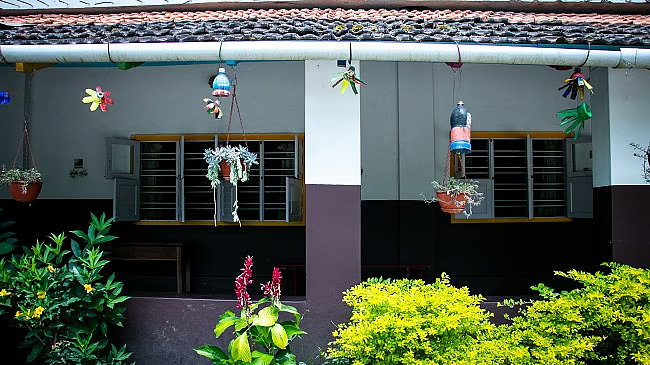
Crafts made out of recycled materials hanging in the school premises
The school was founded by Mundachadira Gangu Deviah in 1981 and is one of the oldest residential schools in Kodagu district. According to MM Deviah, the administrator of the school, the staff has always placed importance on protecting the environment. In the school, there is an almost zero-tolerance policy towards plastic.
“We don’t even allow parents to send items to their children in plastic covers. There have been times when we have returned parcels sent to the school which contain chocolates wrapped in plastic,” Deviah says.
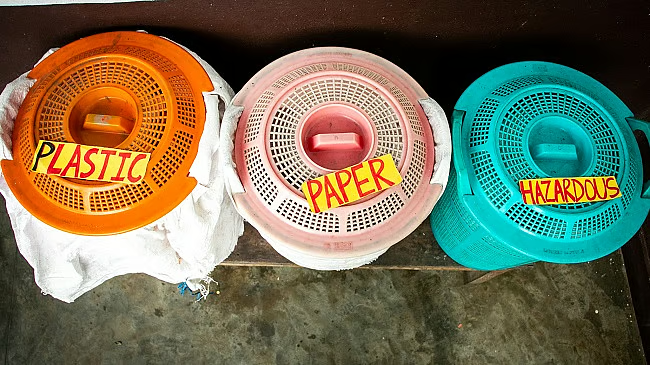
Separate dustbins at the school
The school hopes to set an example to its students by managing the waste created in its own premises effectively. The school building is filled crafts made out of upcycled and recycled plastic. The school maintains separate dustbins for plastic, paper and hazardous waste. The students and teachers grow fruits and vegetables in a field close to the school which is used to cook most of the food prepared by the school. A soapnut liquid is used in place of handwash while natural loofahs are used to scrub the body instead of plastic ones. Kitchen waste generated in the school is also turned into compost and the school is planning to make invitations for their annual day programme using recycled newspaper.
“Even before we began garbology lessons, students were introduced to the idea of reducing and managing waste,” explains Nina Chengappa, a teacher at the school.
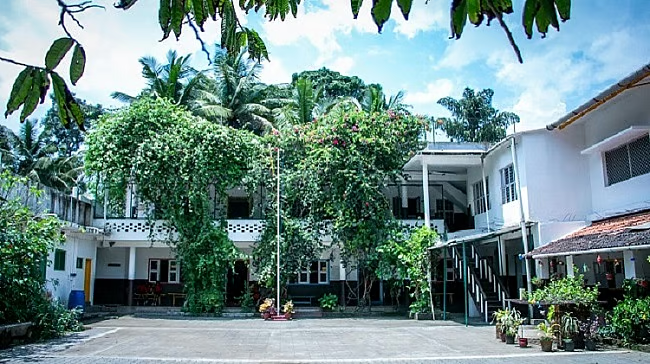
Deviah Memorial Preparatory School, Kodagu
In 2017, garbology was introduced in the class 4 and 5 syllabus. The classes for the subject are held every Tuesday and they are based on material provided by Wasteless, non-profit social enterprise that focuses on innovative education for sustainable waste management. Students are taught about waste management, the different grades of plastic, how much waste is generated in the production of paper, among other topics.
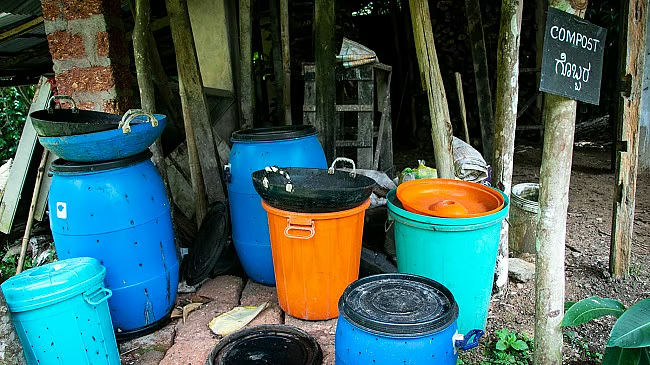
Composting at the school
“We conduct the sessions in such a way that the theory and practical classes go hand in hand. For instance, we teach the students about a land dump and then we take them to a land dump the following week so that they can actually see it. It is not enough that the students visualise it, they need to experience it. But, they are not asked to handle the waste, of course,” says Pavan Aiyappa, the garbology teacher at the school.
According to Pavan, the lessons are designed to create a sense of responsibility among students about managing waste. “The idea is that if the students understand the harmful effects of not managing waste, they will understand it is their responsibility to manage it. We want to teach them that garbage is their own responsibility,” says Pavan.
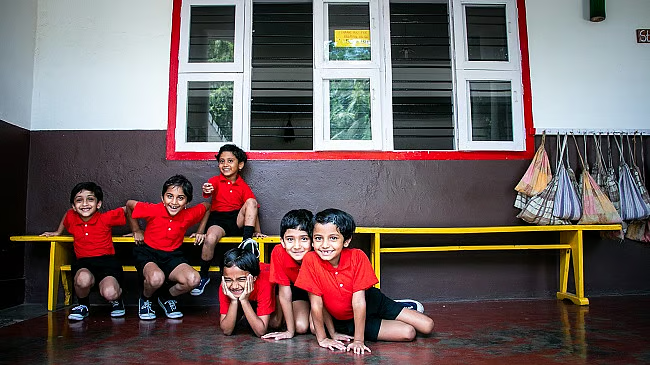
The lessons are not only changing the attitude of students towards waste but it is also giving the teachers plenty to think about. “One of the students suggested to us that the school should stop serving biscuits wrapped in plastic during tea break and instead give fresh fruits since it creates less waste. We realised then that the message is reaching the students,” says Nina.
The students in the school are also changing the attitudes of their family members. They have also enacted plays and recited songs in other schools in the district about managing waste responsibly. “The students are telling their family members not to litter, people listen when children tell them something and that becomes a habit over time and this leads to right choices. The students also perform plays in other schools to spread the word of reducing waste. They have performed in six government schools so far reaching an audience of around 800 students,” adds Pavan.
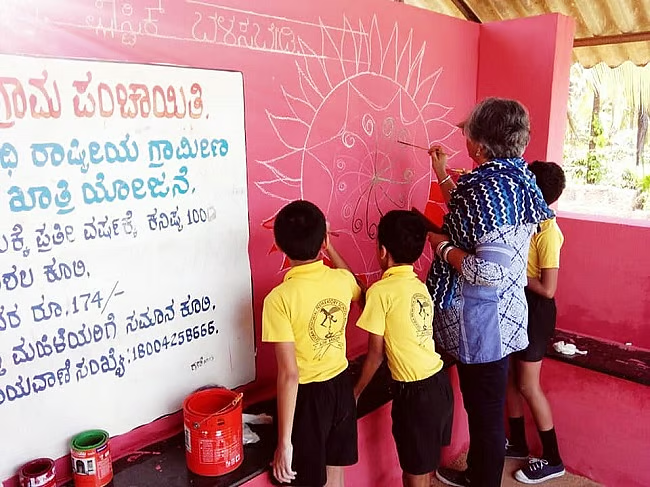
The students cleaned and re-painted a bus-stand on the main road in Bittangala on September 15, World Clean-up Day. They hope to lead by example and spread the message of taking responsibility for the waste created.
“We want to tell students that the waste we create is our responsibility,” says Deviah, before adding, “Even before we started garbology lessons, we used to teach the students here to love nature because we don’t destroy what we love.”
Photographs by: Dhruv Khanna
source: http://www.thenewsminute.com / The NEWS Minute / Home> Karnataka / by Prajwal Bhat / Photos by Dhruv Khanna / October 05th, 2018