Tag Archives: Kakkabe

Tracing Kembatti traditions in Kodagu

In this legend, the three elder brothers living in Kannur send their remaining siblings into Kodagu and Wayanad.

An idol of Pannangalatamme. Credit:  Roshan Bopanna and Chenanda Rohan Ponnaiah

Kodagu folklore speaks of seven divine siblings — six gods and one goddess — who were from Kerala and settled in various parts of Kodagu and the adjacent districts in northern Kerala (Kannur and Wayanad).

In this legend, the three elder brothers living in Kannur send their remaining siblings into Kodagu and Wayanad. The three younger brothers (the eldest among them being Igguthappa) and the only sister enter Kodagu on foot. The sister is the best archer among them; she shoots arrows the farthest. She cooks food for them without using fire, instead relying on the hot sand on the banks of a river.

Igguthappa flings an arrow that lodges itself in the trunk of a mango tree. The sister takes the form of an egret and flies to that tree, near which she takes up residence. There, she fulfils her destiny. This is Pannangalatamme, the goddess of the Kodava-speaking Dalit community, the Kembattis.

The worship of Pannangalatamme and the celebration of her temple festival are central to the Kembatti identity today.

Festivities

Every year, during a two-day festival, members of the Kembatti community gather at the main temple of Pannangalatamme, which is near Kakkabe, a large village in Kodagu. The men dress in traditional wraparound tunics called kuppyas, often coloured red or white. There are also temples dedicated to Pannangalatamme in Beppunaad Armeri and a few other locations.
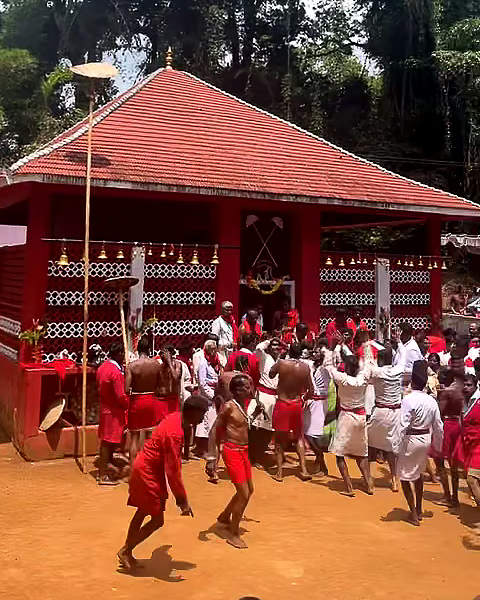
Devotees at the main shrine in Kakkabe Kodagu district. 

The kuppya is a long coat worn by the Kodavas and other natives of Kodagu. It is secured at the waist by a sash called a chele. In the past, the kuppya and chele came in various colours. These days, the kuppya is often black or white, and the chele is gold-embroidered and usually has a silver-covered dagger called the pichekaththi tucked into it.  

The Kembattis were also village musicians, playing the vaalaga, a double-reed wind instrument similar to the oboe, the shehnai, and the nadaswara, which lent its name to the popular folk music of the region.

The Kembattis also blew long brass horns called kombu and played with thaala cymbals. They were often accompanied by drummers called Medas, who otherwise worked with cane, making baskets and mats. Their large drums were of two types: pare and dhol. This motley band of musicians performed at Kodagu weddings, funerals, and temple festivals.

It is difficult to trace the historical timeline of these traditions and temples, which are rooted more in folklore than classical literature. The Kembatti community and the Igguthappa temple are referenced in nineteenth-century texts of the Haleri Rajas, who ruled Kodagu.

The legend of Igguthappa, Pannangalatamme, and their brothers is old and appears probably for the first time in print in the 1870 Gazetteer of Coorg.

In some villages such as Chembebelloor and Bilugunda, the Kodavas, the Kembattis, and others celebrate their annual village festival through various performances in groups, either in disguise or as musicians.

Author Dr Bodukuttada Radhika Kuttappa, who belongs to the community, notes that there are currently 51 Kembatti clan names. On the other hand, Dr M G Nagaraj claims in his 2017 book Kodagina Kembatti Samskriti that there are 97 Kembatti clans in existence. While Dr Radhika listed unique names, Dr Nagaraj counted unrelated clans, sharing the same name as separate entries for different villages. 

source: http://www.deccanherald.com / Deccan Herald / Home> India> Karnataka / by Mookonda Kushalappa / August 07th, 2025
Western Ghats In All Shades Of Green Opens At RMNH

Month-long photo exhibition brings alive one of the jewels that remain on earth

Mysore/Mysuru:

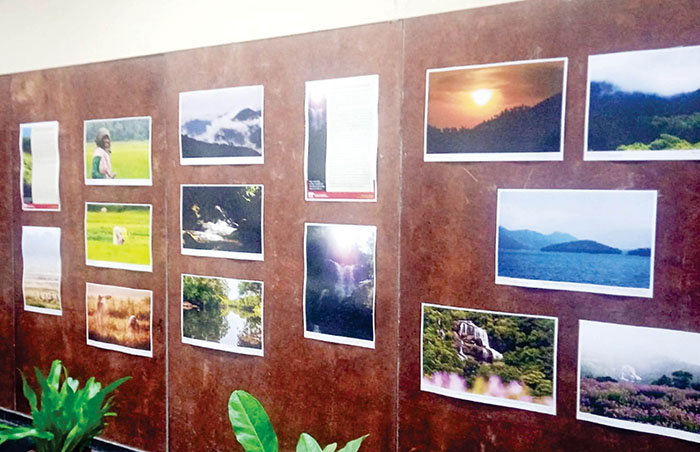
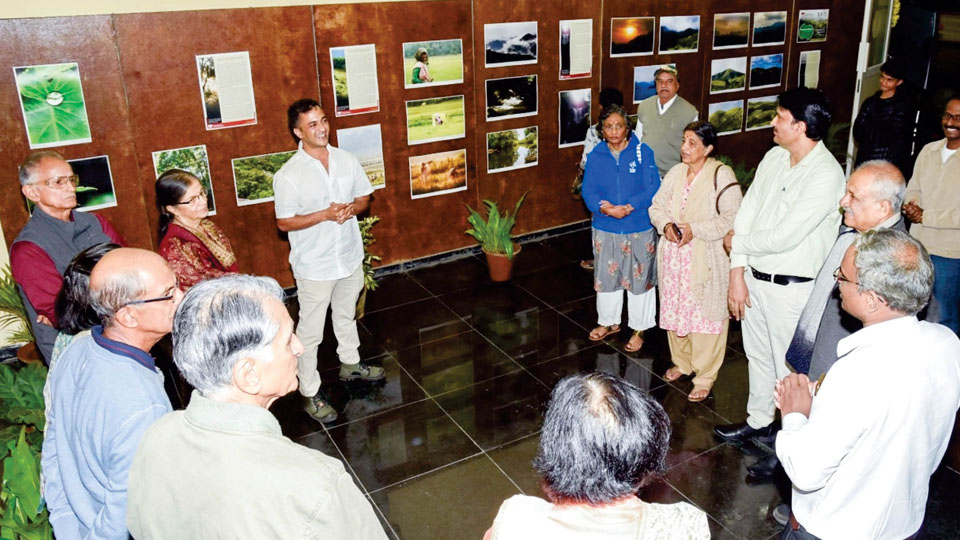
Marking International Mountain Day, a month-long photography exhibition on the theme ‘Western Ghats’ began at Regional Museum of Natural History (RMNH), Siddarthanagar in the city on Sunday (Dec. 11).

The exhibition is an attempt to celebrate the glorious natural history of the mountain range closest to us — The Western Ghats, which cover Kodagu in Karnataka, Ooty in Tamil Nadu and Munnar Hill Range in Kerala.

The expo is a collaborative effort of RMNH and writer, photographer K.C. Mandappa to raise awareness and inspire passion and conservation of mountains that are responsible for life sustenance and also livelihoods.

The photography exhibition was inaugurated by Munnar Tata Tea Estate Manager Dr. K.N. Chengappa in the presence of RMNH Chief Dr. A.P. Tiwari, senior scientists M. Vijay and Education Officer B.S. Yogendra.

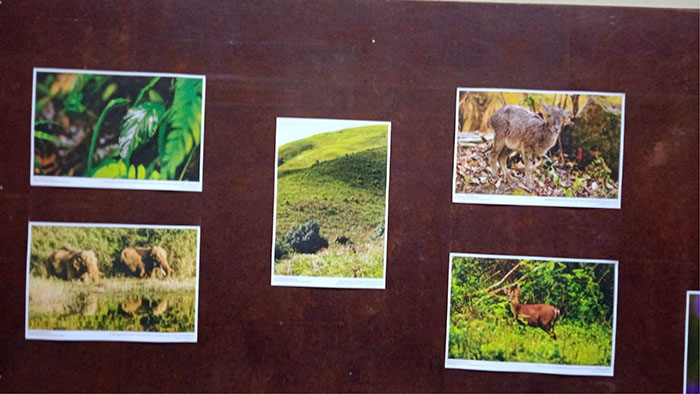
The expo has a total of 36 incredible photographs captured by Mandappa that explore the beautiful scenic geographical features, the flora and fauna, rich greenery and beautiful natural landscapes of Kodagu district. The photograph that displays two wild elephants passing through a water body at Pollibetta in Virajpet taluk, is much symbolic of wildlife and biodiversity in the district.

The photograph of a green snake which can hardly be noticed amidst the rich greenery, showcases the mysteries of nature. A photograph featuring three Nilgiri Tahrs roaming around in Munnar Hill range of Kerala is equally exciting.

Apart from this, the exhibition has many other interesting, exciting and absorbing rare photographs, featuring the hill ranges around the Paadi Igguthappa Temple at Kakkabbe, the flow of Cauvery as a small river near Napoklu, Nilgiri Hill range etc.

Mandappa said that the exhibition, apart from Kodagu district, has many photographs on places close to Mysuru that come under the Western Ghats. Pointing out that the photographs on display cover various aspects and activities concerning wildlife, agriculture, hill ranges, the rich flora and fauna, natural vegetation etc., in Kodagu district, he said that the expo also has many magnificent and captivating photos on Ooty and Munnar Hill ranges and the vast landscapes.

At this exhibition, one can experience the Western Ghats like never before and see some of the most threatened and vulnerable species on the Indian subcontinent in an area that routinely faces obstacles to conservation such as human-wildlife conflict, habitat fragmentation, habitat destruction, and road-related wildlife kills.

RMNH Education Officer B.S. Yogendra said that Mandappa has been excellent in capturing the geographical features of the beautiful landscapes of Western Ghats in a most absorbing manner.

Noting that Mandappa has carried out an in-depth study of the geographical features of Western Ghats, he said that water bodies like lakes and rivers and other water sources can exist only if there are hill ranges.

Pointing out that agriculture is an integral part of our nature, he said that mountains and hill ranges are crucial for survival of wildlife, vegetation and habitation. He further said that the illustration of the photographs too is excellent. “These photographs are arguably the most valuable tools we have for raising awareness and mobilising efforts to protect what jewels remain on this planet,” he added.

Expo open till Jan. 10

 The month-long photography expo which opened on Dec. 11, will go on till Jan. 10, 2023. It will be open on all days from 10 am to 6 pm, barring Monday, which is a weekly-off day and other public holidays.

source: http://www.starofmysore.com / Star of Mysore / Home> News / December 14th, 2022