Tag Archives: Kaveri Nambisan

Lives lived between shame and sunrise

The hamlet of Kesarugattu is evoked with tender fidelity: dusty lanes, temple bells, the drawing of water from wells, gossip thick as humidity, and the invisible yet unbreakable lines of caste that arrange bodies and destinies.
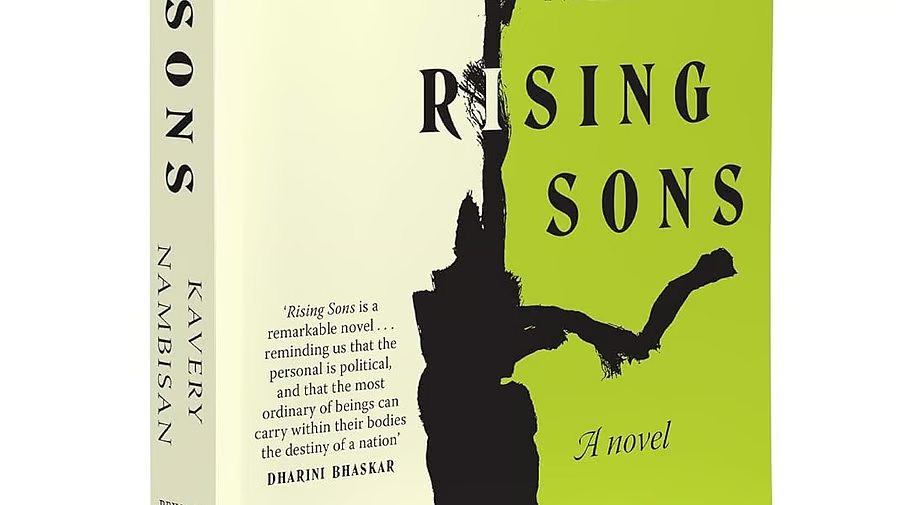
Rising Sons

There is something compelling about Indian fiction that returns to the soil — its memory, its violence, and its stubborn hierarchies — placing ordinary lives against the tremors of national transformation. When such fiction is also shaped by a supple, idiomatic use of language, as in Kavery Nambisan, the result is especially resonant: “No fighting the British. We must ask them gently-gently to leave.” “If a robber enters your home, and you request him to leave, by gently-gently leading him to the door, will he go, leaving behind the bag he just filled with your provisions?” The prose carries the cadence and rhythm of Indian speech, anchoring the novel firmly in its linguistic and cultural terrain.

Kavery Nambisan’s Rising Sons, set in a small village near Mysuru between the 1920s and 1940s, is a quiet yet searing account of the making of modern India — not through the grand speeches of history, but through the fragile interiors of a family trapped between caste, patriarchy, shame, and awakening. At the centre is Devaraya, a Brahmin patriarch whose pursuit of wealth and respectability masks deep fragility. His carefully curated identity begins to fissure from the opening line, when he announces — half-proud, half-playful — that he has “two sons and one-and-a-half daughters.” The “half” is Chinni, the adopted daughter whose presence inside a caste-sanctified household is both an affront to orthodoxy and a reminder that affection in such worlds is always conditional. Nambisan builds her narrative on this foundational crack.

The hamlet of Kesarugattu is evoked with tender fidelity: dusty lanes, temple bells, the drawing of water from wells, gossip thick as humidity, and the invisible yet unbreakable lines of caste that arrange bodies and destinies. Colonial rule hums in the background, but the more immediate and intimate oppressor is caste itself. Ancestral dominance and the fear of social humiliation govern every gesture inside and outside Devaraya’s house. Working in a bank as a peon in Mysuru while running a modest money-lending shop back home, Devaraya embodies the dangerous intersection of caste pride and capitalist ambition. His public face projects ritual purity; his private life is riddled with moral compromise. In a paraphrased confrontation, his younger son Anna articulates the novel’s central fracture: you speak of purity, but conceal your own stains — what kind of honour demands lies? It is a quiet but devastating rebellion, marking the first collapse of the old order.

The revelation of Devaraya’s hidden past — one that undermines the very caste purity he venerates — shatters the world he has built. The family collapses under the weight of shame; one son disappears; Devaraya is disgraced and imprisoned; the village that once deferred to him turns away with vindictive satisfaction. Inside the house, silence becomes a weapon. In another paraphrased exchange, Gowru, his long-suffering wife, speaks with restrained fury accumulated over decades: a home built on fear cannot survive a single gust of truth. The line is quiet on the page but detonates through the moral architecture of the novel.

From the family’s ruins, a new consciousness emerges. Anna is drawn into the freedom struggle. His rebellion is both political and personal — a rejection of shame as a mechanism of control. In a moment that captures the novel’s fusion of private and national liberation, Anna tells his father that if the nation must free itself, individuals must first confront older chains than those imposed by the British. Chinni, meanwhile, becomes the emotional heart of the story. Experiencing progressive hearing loss, dismissed by society and bound by deep affection to Anna, she embodies the resilience of the marginalised. Her silence is not weakness; it is resistance.

One of the novel’s notable achievements is its portrayal of how colonial capitalism intersects with caste hierarchy. In a sharply staged scene, a village priest — the former custodian of ritual prestige — visits the lending shop to deposit his money, bargaining for interest with head bowed. Devaraya’s paraphrased reflection is telling: even gods have begun to bow before Mammon. With this, Nambisan captures an India shifting uneasily from spiritual hierarchy to monetary hierarchy, neither offering dignity to the powerless.

Nambisan writes with felicity and restraint. Some readers may find the pace measured, but the emotional intelligence and historical density more than compensate. At a time when conversations around caste are often flattened into slogans or denial, Rising Sons insists on remembering.

source: http://www.deccanherald.com / Deccan Herald / Home> Features> Books / by Gurucharan Gollerkeri / January 18th, 2026

Why Dr. M. Soni, Kavery Nambisan, And Twisha Ray Are The Three Modern Literary Stars Of 2025

The year 2025 stands as a defining moment in contemporary literature, marked by voices that combine depth, purpose, and cultural relevance. The three modern literary stars of 2025 represent distinct yet powerful dimensions of today’s literary landscape, spanning spirituality, fiction, and poetry. Through thought leadership, storytelling rooted in lived experience, and emotionally resonant expression, these writers have shaped conversations beyond the page. Their work reflects the evolving spirit of literature in a time that values authenticity, insight, and impact, positioning them as influential figures whose words continue to inspire readers, thinkers, and future generations.

The three modern literary stars of 2025 are:

  • Dr. M. Soni
  • Kavery Nambisan
  • Twisha Ray

DR. M. SONI – Empowering Minds Through Knowledge, Purpose, and Practice

Dr. M. Soni stands among the three modern literary stars of 2025 as a respected soft skills trainer, academician, and spiritual author with more than sixteen years of experience across corporate, academic, and consulting domains. Her work focuses on empowering individuals through leadership development, effective communication, and holistic personal growth. Known for seamlessly blending traditional wisdom with modern relevance, she has trained thousands of learners and professionals, helping them unlock clarity, confidence, and purpose.

As an accomplished author, Dr. Soni has written multiple books on spirituality and has co-authored over three hundred and fifty anthologies, reflecting her wide literary influence and disciplined scholarship. Her deep passion for Indian epics and her keen understanding of human behavior come together powerfully in her latest book, Warrior’s Mindset Soft Skills from Indian Mythology. This work transforms timeless mythological narratives into practical tools for professional and personal success. Her writing speaks equally to students, young professionals, and lifelong learners, awakening the inner warrior through wisdom, discipline, and self mastery.

KAVERY NAMBISAN – A Distinguished Voice in Contemporary Literature

Kavery Nambisan is a celebrated Indian novelist and surgeon whose writing has earned her a prominent place among modern literary stars of 2025. Born in the Kodagu district of Karnataka and trained as a surgeon, she has spent much of her medical career serving rural communities across India while simultaneously building a distinguished literary legacy. Her unique perspective as a medical professional deeply informs her fiction and non-fiction work, giving her narratives both emotional depth and social insight.

Her body of work includes several acclaimed novels that explore diverse themes of identity, culture, gender, and history. Early novels such as The Scent of Pepper and Mango-Coloured Fish depict the lives and traditions of Indian society with rich, evocative detail. On Wings of Butterflies offers a powerful narrative rooted in the women’s movement in India, while The Hills of Angheri draws on her own medical experiences to portray the challenges of life as a doctor. Her later novel The Story That Must Not Be Told was shortlisted for prestigious literary awards including the DSC Prize for South Asian Literature and the Man Asian Literary Prize. A Town Like Ours extends her literary exploration to the complex social dynamics of small town India.

In 2025 she added to her remarkable catalogue with Rising Sons, a deeply reflective novel that traces the historical and social contours of village life in southern India. Beyond fiction, her non-fiction work A Luxury Called Health critically examines the Indian healthcare system while weaving personal medical narratives on ethics and care.

Kavery Nambisan’s contribution to Indian English literature is defined by its narrative strength and cultural resonance. Her ability to blend lived experience with literary sophistication continues to inspire readers worldwide and cements her status as a defining literary voice of her generation.

TWISHA RAY – Where Lyrical Depth Meets Modern Introspection

Twisha Ray has emerged as one of the three modern literary stars of 2025, earning recognition as a powerful poetic storyteller known for emotional authenticity and lyrical precision. Her writing reflects a deep engagement with self identity, transformation, and inner endurance, conveyed through vivid imagery and expressive metaphors. With a meditative approach to language, she captures the complexities of human experience in a manner that feels both intimate and universal.

By 2025, Twisha Ray has continued to expand her literary presence through digital publishing, live poetry sessions, and collaborative creative projects. Her work resonates strongly with readers who seek honesty, reflection, and emotional truth through art. Her growing influence highlights the evolving landscape of contemporary Indian literature, where poetic elegance meets raw emotional depth.

Twisha Ray was recently chosen for the Majestic Pen Award 2025 by Cherry Book Awards in recognition of her lyrical storytelling, emotional clarity, and meaningful contribution to India’s modern poetic movement. Her ability to articulate healing and transformation with aesthetic grace has set her apart as a distinctive literary voice. Representing a new generation of Indian poets, she brings authenticity, vulnerability, and innovation to the forefront, making her a compelling and deserving literary figure of 2025.

source: http://www.hindustanmetro.com / Hindustan Metro / Home> Lifestyle> Brandpost / by Abhishek Kapoor / December 23rd, 2025

Lives and nation transformed

‘Rising Sons’ takes us a hundred years back in time to a small village in the southern part of the country.

pix: penguin.co.in

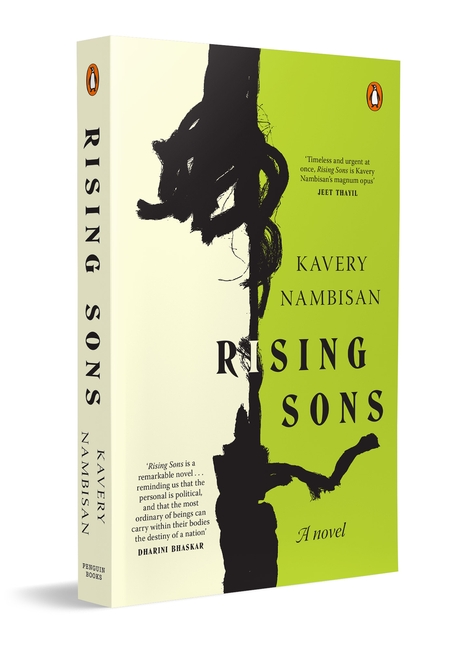
Book: RISING SONS: A NOVEL

Published by: Penguin /Price: Rs 599 / Author: Kavery Nambisan

Kavery Nambisan, a surgeon by profession, has also achieved significant accolades for her writings. She began her career as a children’s author and steadily moved ahead, penning novels like The Scent of Pepper and The Story That Must Not Be Told that have gained her recognition. Rising Sons is her eighth novel. It takes us a hundred years back in time to a small village in the southern part of the country. It is a story that is immersed in the history that shaped our nation.

The general plot seems deceptively simple. It maps the lives of Devaraya’s family members, including his own, and would seem, on the surface, to be a basic coming-of-age story. Devaraya’s statement, “I have two boys and one-and-a-half girls”, opens the narrative and after a few pages it is revealed that the “half girl” is his adopted daughter, Chinni. His wife, Gowru, whom he collected from the Bhoodevi Anatha Ashram in Mysore, had been “orphaned” along with Bhagya when both their fathers were charged with theft and subsequently imprisoned. Their mothers followed their husbands, leaving the bewildered young girls alone. Chinni was Bhagya’s daughter. Devaraya, priding himself in his high Brahmin ancestry, scorned Bhagya who married the Malayali, Dharma, from the fishing community. He took a high-handed pleasure in arranging an abode for Bhagya in his village, Kesarugattu, where he had established himself as an honourable miller and a fair moneylender. He also held a proud position at a Mysore bank and visited his home fortnightly. Devaraya’s other children, the eldest, a boy named Nanju, another boy, Anna, and a daughter, Bhavani, were all overcome by the “darkness” Devaraya brought with him when he visited. The small village strictly adhered to the boundaries set by caste and Chinni’s inclusion in the Brahmin household after the unfortunate fate that befell her parents wagged tongues and incensed minds.

Devaraya was resolute in the education of his boys. Nanju was dutifully sent to the Putter Government High School (for boys) to complete his matriculation. Growing into a deeply thoughtful and keen young man, Nanju seemed to offer to his family a steadfast reputation. But the evils of caste divisions found the family. The revelation of the bitter truth of Devaraya’s childhood and his struggle to find a place for himself in the cruel rural society affected Nanju profoundly. Unable to bear the burden of his caste’s truth, he disappears from the pages of the book. Anna is more stoic in his handling of the shame. Beginning to trace his brother’s footsteps into higher education, Anna found himself getting involved in the struggle for national freedom. Inspired by the ideas of swaraj and the iron determination of the frail Gandhi, Anna and his friends rise above the aspersions of caste and delve into the newly-emerging political scenario. Anna becomes a successful Congressman and finds a life of glamour befitting his new role. Bhavani has long since been married off and is dismissed from the predominant plot line.

What of Chinni, then? Chinni retains the zeal and the sharpness of her rebellious parents. She reads and avidly follows the swadeshi movement. The little hints in the narrative about her relationship with Anna get buried under stories of sermons, speeches, rebellion and illegal pamphlets. Ironically, it is Devaraya’s “half” daughter who ultimately assumes full responsibility for him and his ageing wife.

Nambisan’s own childhood experiences in the warmth of her home colour the pages. Memories of home-cooked food, midnight adventures, and lasting friendships fill the lives of the growing children. The language lovingly encases the softness of these tender moments, moments that fleetingly haunt the characters in their busy adulthood.

In order to rise, one must fall. The novel is more about the poignant falls of fathers and brothers and sisters than about the consequent rise of sons and brothers. Nambisan deftly spins a tale that rushes us through the fast-changing nation at the brink of independence. In the rush, the author does not neglect her characters or her story. Rising Sons rises from amidst the bitter fall of its characters as an epic saga. The tale sits in the history of the country like a glowing ember, a showcase of how lives are changed, or remain unchanged, through the passage of time.

source: http://www.telegraphindia.com / The Telegraph Online / Home> Books / by Tayana Chaterjee / pix: by penguin.co.in / April 04th, 2025

Athur Village in Coorg : A Mini Nursery of Kodava Writers in English

A land known as the nursery of Indian Hockey, Kodagu (Coorg) in Karnataka State has been a cradle for sports and Army.

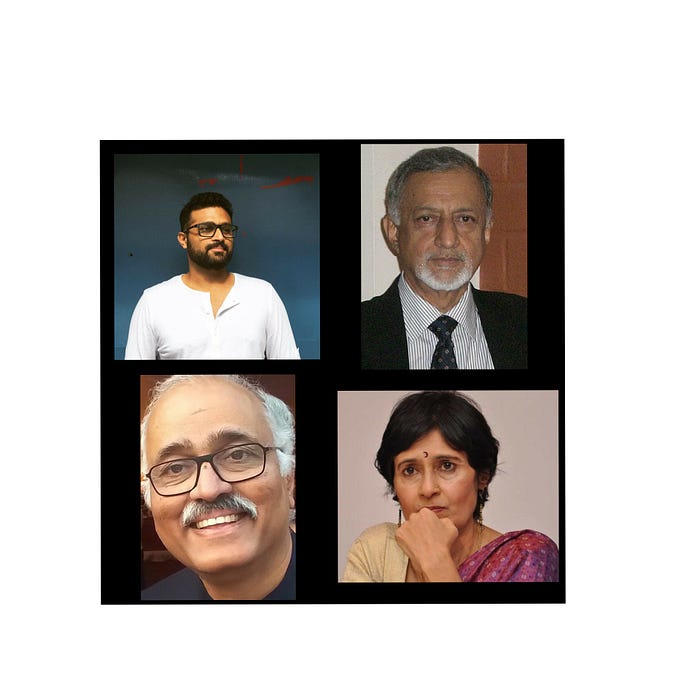
However, located down south of Kodagu, Athur village near Gonikoppal town has been a mini nursery for writers! The village is home to four popular writers in English – C.P Belliappa and his sister, Kaveri Nambisan, P.T. Bopanna and his son Devaiah Bopanna.


It does look like Athur village has given birth to these Kodavas with a talent to be ‘pen-tastic’ not just at an amateur level, but at a professional one.


Growing up, I listened to stories of Princess Victoria Gowramma and Narimangala. My childhood days spun into a web of stories from different Kodava writers narrated to me by my mother. Sometimes, with a tale of a tiger’s tail by C.P. Belliappa.


As a teenager, I pondered over P.T Bopanna’s question, “Are Kodavas Hindus?” and sneaked a laugh at (AIB) All India Bakchod’s comic stories whose head writer was Devaiah Bopanna.


Chepudira P. Belliappa or popularly called as C.P Belliappa pursued a career in engineering. However, settling down in Coorg as a planter, he has been promoting technical education in Coorg. He has also penned many articles and is famous for his books, “Victoria Gowramma: The Lost Princess of Coorg”, “Nuggets from Coorg History”, “Tale of a Tiger’s Tail and other Yarns from Coorg.”

His sister, Kaveri Nambisan has a unique style of writing. Her popular books like “The Scent of Pepper” can take you on a ride to Scotland of India, Kodagu with vibes of ethnicity. Her other books like “Mango-Coloured Fish” and “The Hills of Angheri” showcase stories derived from personal experiences. She is a doctor by profession. Kaveri started off as a writer for children’s magazines. She was recognized as the Coorg Person of the Year in 2005.


A leading author and a journalist, Palanganda T. Bopanna has been writing books about Kodavas and Kodagu. He has promoted several websites, including coorgnews.in, dedicated to Kodagu news. Bopanna is a recipient of the Gourmand international award for his book ‘The Romance of Indian Coffee.’


His son, Devaiah Bopanna, has co-founded a media company called ‘All Things Small’ which concentrates on writing true stories by giving a unique, modern touch to journalism. A Mumbai-based writer, Devaiah adds a tinge of comical approach to his writings.

These writers have touched many hearts with their writings. The root to their writing stems from Athur village and it is my dear hope that more writing talents mushroom from the Kodava land.

source: http://www.medium.com / Medium / Home / by Shrividya Somanna / February 05th, 2021