Tag Archives: kodagu tribals

Innovative daily programme revives tribal student attendance in Kodagu government school

In the past two years, admissions have increased significantly, and from the current academic year, the school has started recording 100% attendance.

Chennangi Government Primary School, located in a tribal settlement in South Kodagu, has introduced a unique concept called Dinnakondu Karyakram, a special programme held every day.(Photo | Express)

Madikeri :

In a heartening initiative aimed at ensuring 100% attendance among tribal students, a government school in Kodagu has taken an extraordinary approach.

Chennangi Government Primary School, located in a tribal settlement in South Kodagu, has introduced a unique concept called Dinnakondu Karyakram, a special programme held every day, which has now made school a fun and welcoming space for all its students. The result: students who once refused to attend classes are now turning up enthusiastically each day.

The school currently has 52 students, all from tribal families. While government schools across the state are allegedly witnessing a sharp fall in admissions due to various issues, this institution is seeing a positive shift. In the past two years, admissions have increased significantly, and from the current academic year, the school has started recording 100% attendance.

“Several tribal students stayed away from the institution. When their parents left for daily wage work, these students sat at home. However, we conducted a survey before the start of this academic year and have ensured that all the children from the tribal colony attend classes at the institution,” shared Susha K K, the headmistress of the institution.

Over five students who had previously discontinued schooling have now returned and are attending classes without hesitation. Last year, the school had introduced Thingaligondu Karyakrama (a special programme every month), where students were encouraged to exhibit their talents through various performances. However, despite this, some students still remained absent.

This prompted the school to implement a new daily programme. As soon as students arrive at the school each morning, they are engaged in various fun activities ranging from yoga, singing, dancing, craft, and literature, to unique games.

“This has resulted in all the students attending classes without fail. To encourage them further, we have started a YouTube channel and we regularly upload the talent shows of the students onto the channel. It is like an incentive to these students, as the entire village watches and celebrates them after watching the YouTube channel,” the headmistress shared.

Admissions have gone up from 39 students to 52 in the past two years. Some students who had even taken transfer certificates were allegedly convinced by the headmistress to return. In addition, the school management conducted awareness meetings with parents, urging them to ensure their children attend school regularly to build a better future.

Despite facing an acute shortage of teaching staff and deteriorating infrastructure, the school management is doing its best to provide quality education to the tribal students.

source: http://www.newindianexpress.com / The New Indian Express / Home> Karnataka / by Prajna GR / August 07th, 2025
What do tribal groups like the Soligas and Yeravas eat?

Loss of habitat and knowledge could adversely impact diets of tribal communities living in Western Ghats .

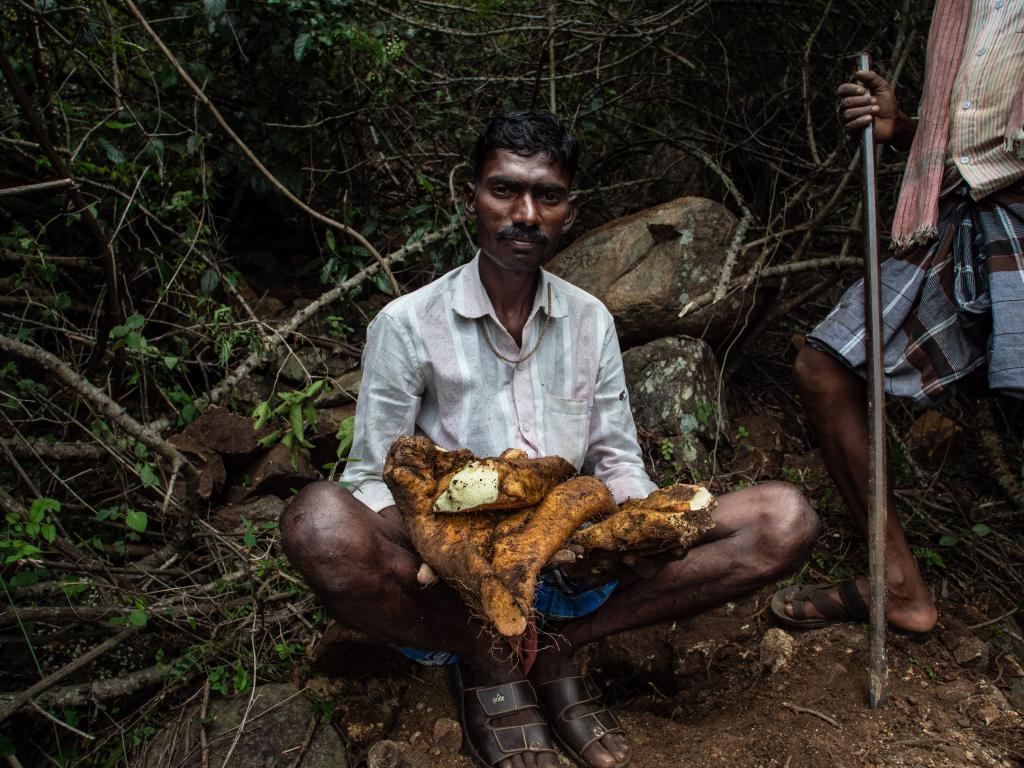
A tribal man foraging benne genasu or sweet potatoes. Photo: ATREE

During summers, members of the indigenous group Soliga form teams to collect honey. The honey bees make their hives in the cracks and crevices of rocky cliffs in the Western Ghats. Collection is not an easy task but the Soligas have centuries of experience and know exactly what to do. They hang from the cliff edges using ropes made from vines and bamboo to first smoke the bees away from the hive and then collect the combs in baskets. The work is done during the night, which makes it more difficult.

Indigenous groups Soligas and Yeravas have been living in the Cauvery Basin and the surrounding hills of peninsular India for thousands of years. A recent book has looked into the diets of these communities, giving fresh insights into the foods that these two tribes forage from the forests. 

Honey is an important part of the diet for the Soliga people, who still forage large parts of their food from the biodiversity-rich Ghats. The Western Ghats are one of the world’s biodiversity hotspots, with over 5,000 flowering plants, 139 mammals, 508 birds and 179 amphibian species. Many of these are part of the diet of the tribal communities in the region. 

Soligas, one of the oldest indigenous communities in the country, are the original inhabitants of Karnataka and live mostly in the Chamarajanagar and Mandya districts. The Yeravas, on the other hand, came to the state from Wayanad district in Kerala and settled in Kodagu district of the state. 

The recently launched Forgotten Trails: Foraging Wild Edibles, authored by Malemleima Ningombi and Harisha RP, chronicled the foods that these two tribes forage from the forests. Such foods form around 25 per cent of the Soligas diet and around 30 percent of the Yerava diet, said Harisha RP, who is a conservation biologist at Ashoka Trust for Research in Ecology and the Environment or ATREE. 

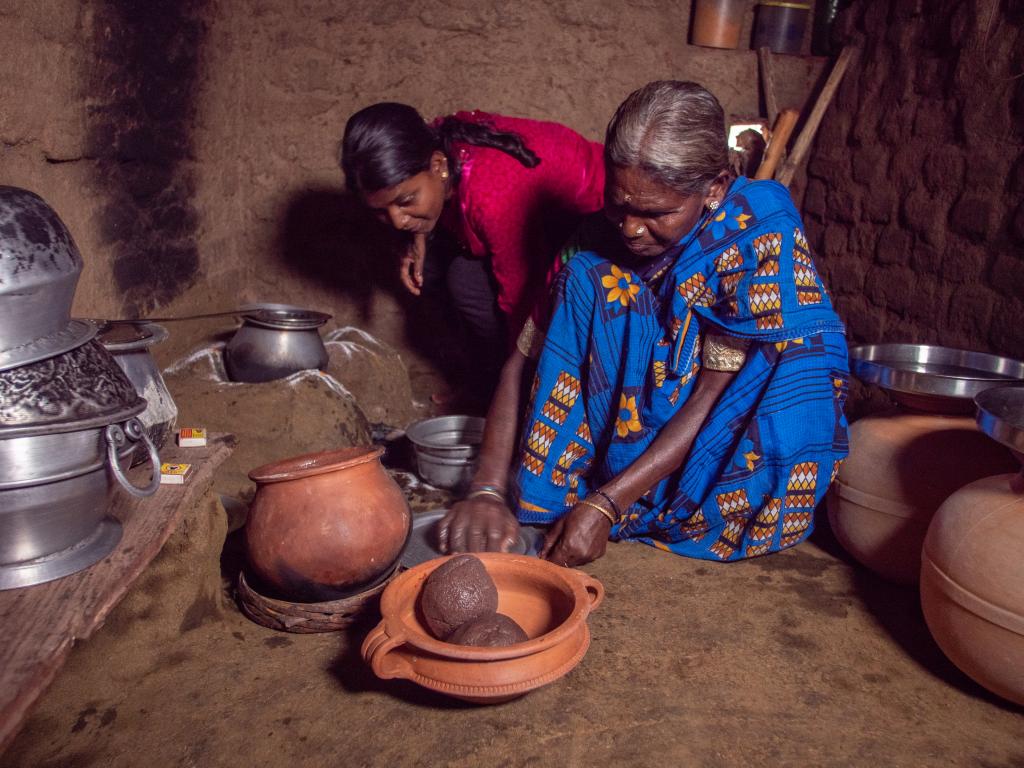
Women cook ragimudde (finger millet balls). Photo: ATREE 

There is not much difference between the diets of these two communities other than that Yeravas use more tubers than Soligas. There are some 10-12 wild food plants that are unique to each community as they live in different landscapes, he added. 

The Soligas and the Yeravas cook using the simplest of recipes — their sambar recipe is extremely similar — but the ingredients can change according to the season. The area witnesses four main seasons: Summer, monsoon, retreating monsoon and winter.  

In the summers, they relish fruits like wood apples and mangoes and greens such as mushte soppu (Holostemma annulare), kaddi soppu (Jasminum sp) or anne soppu (Celosia argentea).

Mushrooms become part of the Yerava diet during monsoons, when they emerge overnight from barren land. Doddbidru or Indian thorny bamboo, shoots up during the rainy season too. The bamboo shoot sambar is consumed with much enthusiasm by the Soligas. 

Cold and local multicoloured corn roasted over the fire used to be consumed often during retreating monsoons. However, this has become rare as communities have stopped cultivating the crop because it was frequently raided and destroyed by animals.  

In winter, when warm foods are needed, the Yeravas, who work as labourers in coffee plantations, depend on the wild berries of various nightshade plants and edible ferns that grow along the streams.

The authors highlighted that the food that Soligas and Yeravas depend on for survival is now affected by changes in land use and shifting policies. Worse, traditional knowledge is steadily being lost as young people are migrating out. This knowledge is important for foraging for the right food. 

For example, the Soligas have learned that bamboo shoots have to be uprooted and de-skinned with bare hands to ensure that they do not become poisonous. Similarly, the Yeravas know first, that all mushrooms are not edible and, second, that care has to be taken that they do not mature and get infested with insects. The skill of collecting the right ones at the right time is getting lost among the younger generation.

There have been efforts to ensure that the next generation understands the value of these plants. For instance, the Soliga community-run business ADAVI promotes the processing and value addition of some cultivated foods and nontimber forest products. The book has documented the wild plants in the area, along with recipes to prepare food from them. This, too, will help preserve and pass on traditional knowledge to the next generation.

The foraging trips help members of the tribe bond and help the next generation assimilate the skill. Foraging together, bonding, coexisting, laughing, arguing, taking risks, making do with what is found and sharing are what bring the community together, said the authors.

source: http://www.downtoearth.org.in / Down To Earth / Home> News> Food / by Vibha Varshney / January 14th, 2024

Subramanian Swamy asks Karnataka CM to form panel to give special status to tribals of Kodagu

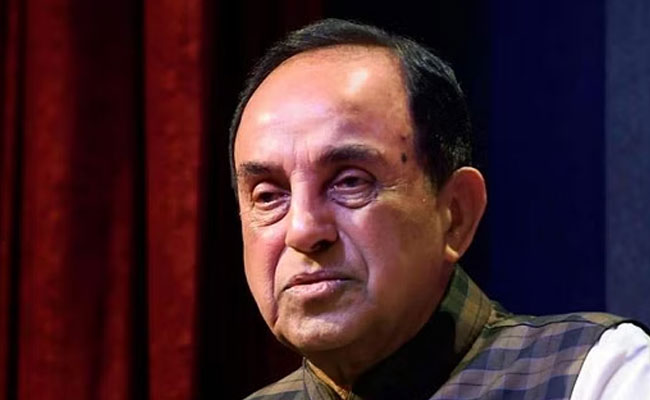
Subramanian Swamy (PTI)

Madikeri:

Former Union Minister Dr. Subramanian Swamy has written to Karnataka Chief Minister Siddaramaiah, urging him to form a commission to provide special status to the tribals in Kodagu, as requested by the Kodava National Council members.

Dr. Subramanian Swamy, who has already approached the High Court with the request to fulfill the demand of the tribal natives of Kodagu for a separate district, has a court hearing of the application on June 14. The veteran politician said that he wanted to meet Siddaramaiah on the occasion.

Referring to the demand of the natives in his letter to the Chief Minister, the former Union Minister stressed on the urgent need to form a government panel that would work at giving special status to the Kodavas in Karnataka.

source: http://www.english.varthabharati.in / Vartha Bharati / Home> Karnataka / by Vartha Bharati / June 10th, 2023

Tribals to Take on City Life in Reality Show


Let alone televisions and cars, even toothbrushes are alien to some of them. Yet, eight tribal men from the interiors of Karnataka have dared to face 60 days of city life in Bangalore for a Kannada reality show, where they’ll learn a few English words and even do ramp walks.From living isolated lives in their respective tribes, these men aged between 25 and 34 will be slipping into jeans and wearing shirts to adapt to the Bangalore crowd for Kannada channel Suvarna’s Halli Haida, Pyeteg Banda, which means – “Village lad lands in the city.”

The show is a result of the success of Pyete Hudgir, Halli Lifeu (City girl, village life), which garnered an average viewership of 1mn people with a maximum response from youths, Anup Chandrasekharan, business head of Suvarna said.

“This new show is a sequel to Pyete Hudgir, Halli Lifeu. For the first season, we took eight city girls to experience village life. But this time, we decided to bring not just village boys but tribals to the city and see how they adapt themselves here,” Chandrasekharan said.

According to Chandrasekharan, it costs them up to Rs700,000-Rs800,000 per episode to produce such a show.

The team behind the show took approximately three months to research on Karnataka tribes and has brought together contestants from tribes such as Bedar, Sholaga, Haki Pikki, Kodavas of Coorg, Kurubas and others.

“Our research teams went to various parts of Karnataka and went into the interiors to look for these boys. It used to be very difficult because even the closest shop to their place of stay used to be 25-30km away.

“It was also extremely tough to convince them, their parents and relatives. In fact, there is going to be one guy on the show whose wife is pregnant, and by the time he goes back to his tribe, she would have delivered their child. Still he has come to see what a city looks like,” Chandrasekharan said.

“Most of them have not seen a TV, a car, a mobile phone. And they don’t even use something as basic as a toothbrush or toothpaste. Here we will try introducing them to many new things,” he said.

The eight tribal contestants will stay at a huge house in Bangalore and will be teamed with one city girl each. The girls will mentor them through their transformation and the contestants will be eliminated one by one in subsequent weeks, depending on their performance.

“We plan to have ramp walk contests, change their dressing style, teach them a few English words – and it should be interesting to see how a person who has lived all his life in a remote place adapts to the city atmosphere,” Chandrasekharan said.

The winner will get a “cash compensation,” but the amount hasn’t been decided yet.

source: http://www.gulf-times. com / Doha / IANS – New Delhi / Tuesday Aug 24th, 2010