How to Save Sepia Heroes

Raghu Karnad, in his debut book brings back memories of World War II through the lives of three men from his family.

Hyderabad :

For my mother, who didn’t let me forget,’ reads the dedication to Raghu Karnad’s debut book Farthest Field: An Indian Story of the Second World War.

The much-acclaimed book that hit the stands last year tells us a story, a part of history that almost slipped out of public memory. In his prologue, Karnad writes: ‘People have two deaths: the first at the end of their lives, when they go away, and the second at the end of the memories of their lives, when all who remember them have gone.’

Thus, people also have two burials – one physical and another when their names and then photographs are forgotten. When their memories had become mere pictures in his grandmother’s home in Madras, Karnad discovered the existence of Bobby (Godrej Khodadad Mugaseth), her brother, trying to cross ‘the farthest field of all’, the second death.

In frames alongside his were photographs of his maternal grandfather Kodandera Ganapathy (Ganny) and Manek Dadabhoy, his brothers-in-arms in the Second World War, one of the first things the family recalled about the three.

So Karnad began with the registry of the Commonwealth, visited their graves and retraced their lives through interviews of those who knew them individually or as part of the British armed force. For, he writes, ‘the larger story was the key to retrieving what I could of their private stories’. But somewhere along the way, this became the story of not just the story of three men of his family, but the untold story of the tens of thousands of soldiers who fought for the British in World War II.

Hyderabad Express interviews the author-journalist before he heads to the Jaipur Literature Festival to be part of a discussion on the forgotten role of India in the First and Second World Wars.

Excerpts

How long have you been working on the book?

I spent three years – a year on research, one year writing, and one year editing it, though it wasn’t that clean-cut. I was still interviewing WW II veterans, whenever I could find one, even in the final lap.

How old were you when you first started asking questions about the photos of Bobby, Ganny and Manek in your grandmother’s house?

I’d seen those photographs right through my young life, but I never did ask questions about them – not while my grandmother, who’s at the centre of the story, was still alive. It wasn’t until four years ago, when I was 28 and working in Delhi, that it slipped out as a wisp of anecdote in a family conversation. But even then, it was just a hint of what would turn out to be their full story.

You write that you couldn’t believe you hadn’t noticed you looked like Bobby. After tracing the threads of their lives, how much do you think you and Bobby have in common?

In some ways, not much – Bobby was a wild, reckless young guy by everyone’s account – he liked to gamble, he really liked to tempt fate, and I doubt he liked sitting still. He wouldn’t have made much of a writer. But there’s a deeper level on which I do imagine I share something with Bobby, which has to do with his loose sense of identity – with not feeling like he belongs too firmly to any of the camps around him – in terms of community, language, national identity.

Do you think of these three as family, or as characters you recreated from the brink of their second death?

I struggled sometimes to reconcile the fact that these young people, who felt like my characters, were also close members of my family. But knowing that helped me check myself when I drifted towards clichés, or got carried away by sentiment. It’s easy to take liberties with the lives and deaths of perfect strangers; it’s not as easy when they’re family.

There are moments in their lives, including a secret romance and a shotgun wedding, which some of my relatives think should not have been shared. But to me those moments were the most valuable and the most moving in the book.

Where all did the research take you?

I travelled quite a lot across the country, from Calicut to Chandigarh and Roorkee. And of course to Manipur and Nagaland – the only parts of mainland India that the fighting actually reached. These were most exciting, because in Manipur, the oldest living memory is of the war – for tribal societies, modernity arrived overnight in the form of hideous industrial war machines. The novelist Easterine Kire described it as being, for the Nagas, like the Big Bang.

It was a chance encounter with one elderly man, Yangmasho Shishak, that opened my eyes to some of the themes that run through Farthest Field. He lives in a village near the Burmese border. He was a teenager when the war came, and found himself serving one side – the British – and then the other – the Japanese. A perfect, one-man symbol of Indians in the war.

The Characters

Bobby, or Godrej Khodadad Mugaseth  was a Parsi native of Calicut. He was Raghu Karnad’s maternal grandmother Nurgesh’s (Nugs) younger brother. Of the three, Bobby,who studied to be an engineer, saw most action in the war. He signed up with the British Indian Army (Bengal Sappers) in 1942, and went to Sudan, Abyssinia, North Africa, Iran, Iraq, before going towards Imphal, where he is buried. He died in 1944.

Ganny, or Kodandera Ganapathy from a Kodava family, was a Karnad’s grandfather, and studied medicine like his wife. Recruited as a military doctor, he was posted deployed at the Northwestern Frontier, home to the Pashtun tribes, in present-day Pakistan. He died of asthmatic bronchitis in December 1942, a month before his daughter, the author’s mother, was born.

Manek Dadabhoy, also a Parsi, was a friend Bobby made in Madras. He married Nugs’ younger sister Kosh (Khorshed). Always fascinated by speed, and signed up with the RAF as a pilot. He was sent to the Northwest Frontier and later, when the Japanese invaded, to Burma where he died in 1943, when his plane crashed.

source: http://www.newindianexpress.com / The New Indian Express / Home> Hyderabad / by Chetana Divya Vasudev / January 26th, 2016

BYTHOOR: An Immortal and Inseparable Bond

In the quiet village of Ullikal near Iritty in Kerala’s Kannur district, stands the ancient Vaithur Kaliyar Shiva temple reverently known as Bythoorappa by the Kodavas. As preparations begin for the annual festivities scheduled from 13 to 26th January, 2026 the temple once again becomes the focal point of an unique cultural and spiritual bond that has endured for generations across state borders.

More than a place of worship, the Bythoorappa temple represents a shared legacy between the people of Kodagu and northern Kerala. For centuries, traditions here have flowed seamlessly across geography, language and community, held together by faith and mutual respect. The administration of the temple itself reflects this harmony, being traditionally managed by a Trust comprising members of both the Kodava and local communities.

One of the most touching sights during the festival is the procession of bulls carrying  offerings of rice from Kodagu. As the bulls walk steadily towards the temple, carrying grains grown by devoted hands , it feels as though the earth itself is offering thanks to the divine. There is a miraculous observation to be made here – the chosen bulls make their way to the temple without being aided – they “know” the way and wait at the destination where the rice is ceremoniously taken as an offering.

Devotees from Kodagu are welcome not as outsiders, but as family returning home. Hospitality here is instinctive, heartfelt and sacred – proof that cultural bonds can be stronger than physical boundaries. In these moments, Bythoorappa becomes more than a deity, and is a sacred guardian of shared heritage,

Among the many okkas spiritually bound by Bythoorappa, the connection of Kodandera Okka stands out rooted in our oral history that speaks of fear, faith and deliverance. Elders recount a grieving period when a Kodava Raja , driven by suspicion and authority, ordered the killing of young boys belonging of a particular clan. As the shadow of death loomed over the Kodandera lineage, an elderly woman of the Gummatira Household is believed to have turned to Lord Bythoorappa in prayerful obeisance.

With no power to resist and nowhere else to seek refuge, she made a solemn vow to the deity, pleading for the lives for the children of her clan and promising lifelong devotion in return. It is legendary folklore that the boys were spared. The clan survived. And with that survival, a sacred bond was sealed.

That vow did not end with her lifetime. Even today a fixed quantity of rice from Kodandera okka is offered at the Bythoorappa temple, faithfully continuing a promise made generations ago. The offering is modest and made with unwavering sincerity.  Each grain standing as silent testimony to gratitude, remembrance and the power of belief, which is not ritual alone, but history placed gently at the feet of the divine.

Bythoor, also known as Baithur, represents faith well beyond stone and sanctum. It is History remembered through faith, a testament of centuries of respectful camaraderie and a symbol of harmony rooted in devotion. As long as prayers rise from both the hills of Kodagu and the plains of Kerala, Baithur will continue to stand as a living bond between the two communities united by solemn belief and heritage.

source: http://www.clnews.in / Coffeland News / Home> Articles / by Kodandera Mamatha Subbaiah / January 21st, 2026

Maharshi Valmiki tribal residential school building inaugurated at Nagarahole

The renovated building of the Maharshi Valmiki Tribal Residential School at Nagarahole, constructed at a cost of ₹1.8 crore, was inaugurated on Friday by Kodagu District In-charge Minister N.S. Boseraju and Chief Minister’s Legal Advisor and MLA A.S. Ponnanna. The project was undertaken jointly by the Kodagu District Administration, Zilla Panchayat, and the Department of Welfare of Scheduled Castes and Scheduled Tribes.

After the inauguration, Minister Boseraju interacted with the students and enquired about their learning environment, food quality, and facilities. He asked whether they were receiving eggs, bananas, and “chikki” as per the weekly menu. When students replied that they had rice, sambar, and ragi balls for lunch, he further inquired about the type of sambar served. The students responded it was made of gram and vegetables, following which the minister advised them to study well and make the best use of government facilities.

Inspecting dormitories and storage rooms, Boseraju said that several deficiencies in the school had been addressed through this renovation, which included new classrooms, solar power installation, playground development, and construction of a protective railway barricade. He added that the Integrated Tribal Development Project (ITDP) would provide additional funds for pending works.

MLA A.S. Ponnanna said efforts were being made to bring tribal students into the mainstream through better infrastructure and learning support. He urged authorities to expedite the remaining works, such as the teachers’ quarters, playground facilities, and iron fencing along the railway boundary. He also appealed for the distribution of Forest Rights Certificates to unregularised tribal families in the Nagarahole region.

On the occasion, Minister Boseraju distributed sports materials to students. Several district and local officials were present.

source: http://www.thehansindia.com / The Hans India / Home> News> State> Karnataka> Bengaluru / by The Hans India / November 05th, 2025

Augmenting economic power of the coffee land

Chikkamagaluru, often called the “Coffee Land of Karnataka,” produces a significant portion of India’s coffee, with vast plantations carpeting its rolling hills. The new rail line is set to revolutionise logistics for farmers and exporters. Previously reliant on road transport, which is prone to monsoon disruptions and higher costs, coffee growers can now anticipate faster, more reliable shipments to ports and markets. This could lower transportation expenses by up to 30%, enhancing competitiveness in global markets.

With better access, investments in agro-tourism and value-added products like specialty coffees could flourish, turning Chikkamagaluru into an even stronger economic power.

In 2025 alone, tourism contributed over Rs. 500 crore to the local economy; with rail access, projections suggest a 20-25% surge in visitors. The misty mornings amid coffee estates, jeep safaris, and temple tours will become more accessible, drawing eco-tourists and history buffs alike.

Looking forward, integrating this line with broader networks, like connections to Mysuru or Mangaluru, could amplify benefits. For Chikkamagaluru’s residents, this isn’t just about trains; it’s about bridging isolation, fostering growth, and preserving the district’s unique blend of nature and culture.

This rail breakthrough signals a new era for Chikkamagaluru, where the aroma of fresh coffee meets the whistle of incoming trains, heralding progress in one of India’s most enchanting regions.

source: http://www.thehansindia.com / The Hans India / Home> News> State> Karnataka> Bengaluru / by The Hans India / January 13th, 2026

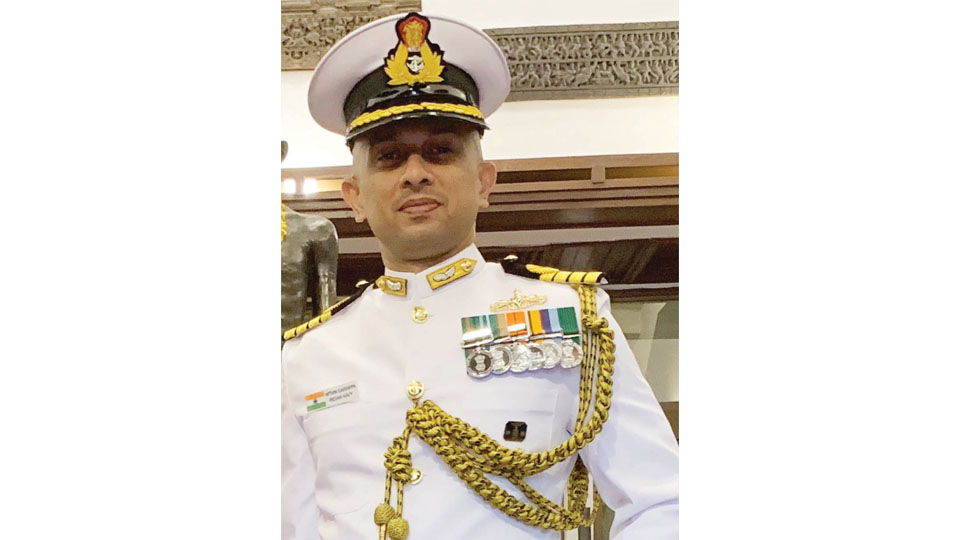
Capt. Nithin Cariappa commands INS Kolkata

Mysuru:

Capt. Maletira Nithin Cariappa, Indian Navy, is the Commanding Officer of INS Kolkata, a state-of-the-art destroyer and a symbol of India’s naval prowess.

A resident of Bogadi in Mysuru, Capt. Nithin Cariappa is an alumnus of St. Joseph’s School and later joined the Rashtriya Indian Military College, Dehradun, followed by the National Defence Academy.  Over his 24-year career, he has commanded INS Ajay, an anti-submarine warfare corvette and INS Kadmatt. He also served as the Naval Advisor at the Indian High Commission in Islamabad, becoming the first Kodava officer to hold this post in Pakistan and to command a Kolkata-class destroyer.

The 163-metre-long, 7,500-tonne warship, with a cruise speed of 30 knots, is equipped with cutting-edge telecommunications and armed with anti-air missiles, anti-submarine weapons, the lethal BrahMos missile, and long-range surface-to-air missiles. Built by Mazagon Docks Ltd., Mumbai, the Kolkata-class destroyers are a testament to India’s naval strength.

His journey stands as an inspiration for Mysuru’s youth, encouraging them to explore the promising career opportunities in the armed forces. Married to Rohini, he is also an avid sportsman, recently completing the Tata Mumbai Full Marathon. 

Capt. Nithin Cariappa’s parents are Maletira Ganesh Bopanna and late Cauvery Bopanna (Gummattira). Ganesh is settled in Bogadi and his second son Nayan Chengappa is a Chief Marine Engineer, assisting New Zealand Navy.

source: http://www.starofmysore.com / Star of Mysore / Home> News / March 07th, 2025

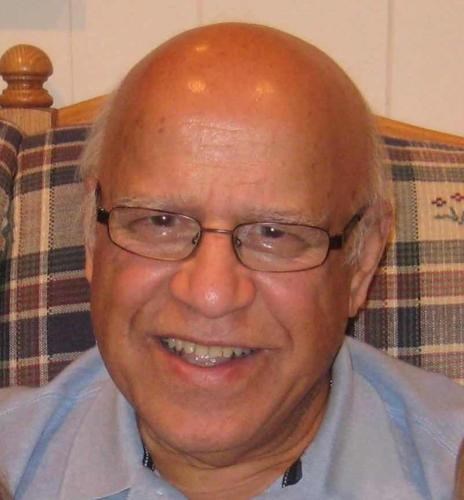
Dr. Maletira Machayya

Obituary : 1937 – 2026

Maletira “Mac” Machayya died January 17, 2026, at Eventide in Fargo, ND. There will be a celebration of life Friday, January 30, from 1 pm to 3 pm at West Funeral Home, West Fargo, ND.

A private inurnment ceremony will take place at Gethsemane Episcopal Cathedral, Fargo.

Maletira Ganapathy Machayya, the son of Dr. Maletira and Bollamma Ganapathy Machayya, was born February 10, 1937, in Madikeri, India.

He earned his medical degree from Madras Medical College, India, in 1960. He completed a General Surgery Residency at Furness General Hospital, Barrow-in-Furness, England, in 1969, and Urology Residency at Preston Royal Infirmary, Preston, England, in 1971.

While in England, he became a Fellow of the Royal College of Surgeons. He completed a rotating internship at Illinois General Hospital in Chicago, Illinois, in 1972.

Mac married Margaret “Maggie” Burns in 1971 in Barrow-in-Furness, England.

In 1972, Mac, Maggie, and newborn son Mark moved to Valley City, North Dakota, where Mac began a distinguished career as a general surgeon. There, they raised their family and made lifelong friends. Mac served the community for many years at Mercy Hospital and Meritcare Clinic, which later became Sanford Clinic. His dedication to patient care earned him the respect and gratitude of countless individuals and families throughout the region.

In his free time, you would find Mac working on a new project around the house, woodworking and creating stained glass art. Mac was also a member of The Lions Club in Valley City. Many memorable summers were spent with family and friends at the cabin on Lake Eunice in Minnesota. Maggie passed away in 2005. In 2013, Mac moved to Fargo to be closer to his family.

He is survived by his three sons, Mark (Katie) with grandchildren Makayla, Dakota, and Memphis, Bemidji, MN; Kevin (Jamie) with grandchildren Josie and Gaby, West Fargo; and Jon (Jill) with grandchildren Ellie, Lincoln, and Vera, West Fargo; sister-in-law June Burns, Barrow-in-Furness, England; and extended family in England and India.

He was preceded in death by his wife; his parents; Maggie’s parents, Edward and Frances Burns; brother Devaiah Ganapathy; sister Maletira Sushiela; and brother-in-law Antony Burns.

Mac’s family is appreciative of the care received from Eventide and HIA Hospice.

In lieu of flowers memorials preferred to Sanford Health Foundation or CHI Mercy Health Foundation Valley City.

Arrangements by West Funeral Home, West Fargo.

To plant trees in memory, please visit the Sympathy Store.

source: http://www.legacy.com/ Machayya

Field Marshal K.M. Cariappa’s 127th birth anniversary celebrated

Mysore/Mysuru:

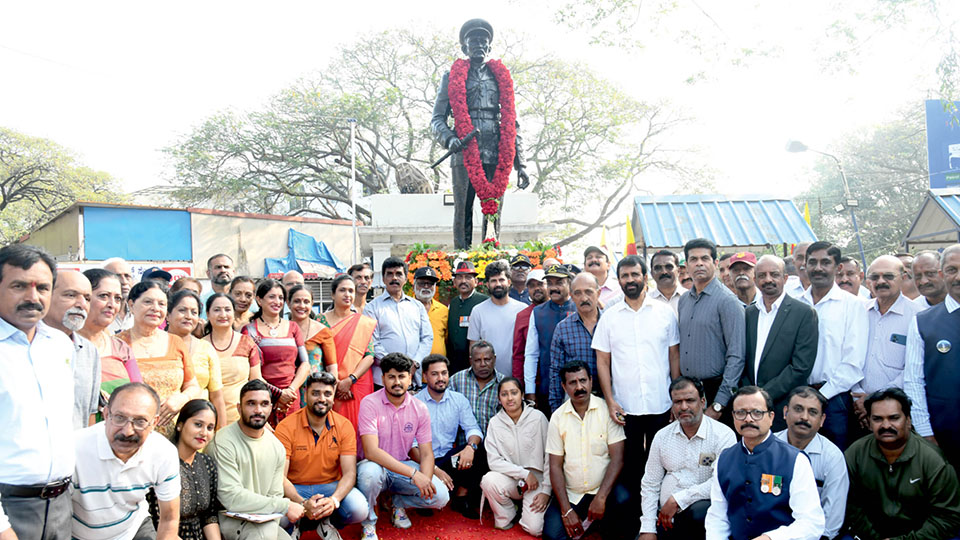
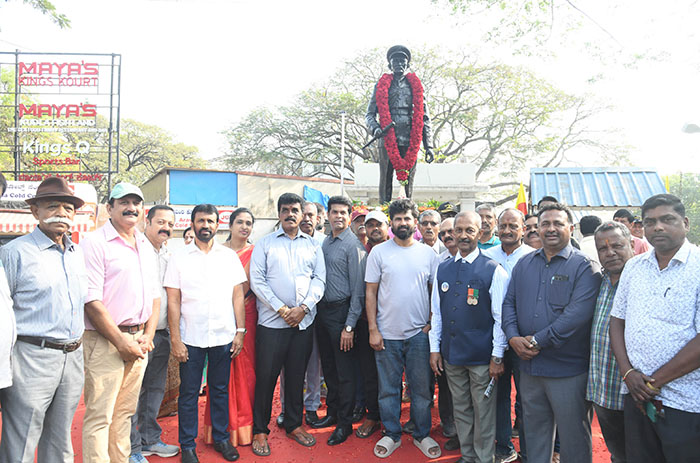
Kodava Samaja, Mysuru, along with the Field Marshal Kodandera M. Cariappa Fans’ Association, Mysuru, celebrated the 127th birth anniversary of Field Marshal K.M. Cariappa.

The programme was organised in front of the statue of Field Marshal Cariappa at the Field Marshal K.M. Cariappa Circle (Metropole Circle) on Vinoba Road this morning.

Former MP Prathap Simha offered floral tributes to the statue and said that celebrating the 127th birth anniversary of Field Marshal Cariappa is a matter of great pride for society. His contributions and valour have earned him immense respect across the nation. Kodagu’s contribution to the country is unparalleled.

He added that no other land could produce patriots and warriors like those from Kodagu. “Patriotism has grown there as a tradition. Though the Kodava community is small, its service to the Armed Forces is immense. It is a privilege for our land to cherish the memory of a leader like Field Marshal Cariappa, born in such a tradition,” he said.

World War II, freedom struggle

Field Marshal Cariappa’s service during World War II and the freedom struggle was exemplary to the world. The rank of Field Marshal is the highest in the Indian Army and it is a matter of pride not only for the Kodava community but also for Karnataka.

“He may not have received the Bharat Ratna, but he was honoured with the rank of Field Marshal,” Simha remarked. He further noted that Cariappa, along with General Kodandera S. Thimayya, gave democratic India a strong shape and direction.

“Even today, the Kodava community has contributed more than 30 Lieutenant Colonels to the Indian Army, five captains to Indian hockey and over 60 players to the sport. “For this, the community must feel proud and continue to grow. As the community grows, so will the nation and  patriotism,” he said.

Former MLA L. Nagendra noted that it was Field Marshal Cariappa who made the entire world turn its attention towards India.

“He must be remembered every single day. When his statue was to be installed at Metropole Circle, many obstacles arose, but all were overcome and today the statue stands tall, and this is a matter of immense pride. In the coming years, thousands from the community should gather together to celebrate Cariappa’s birth anniversary on a grand scale,” Nagendra said.

The event was attended by former Mayors M.J. Ravikumar & H.N. Srikantaiah, former Corporators Pramila Bharath & Maletira U. Subbaiah, Mysuru Kodava Samaja President Ponjanda A. Ganapathy, Kodava Samaja Cultural and Sports Club President Mukkatira C. Ashok and Field Marshal K.M. Cariappa Fans’ Association President Nayakanda Thimmaiah among others.

source: http://www.starofmysore.com / Star of Mysore / Home> News / January 28th, 2026

127th birth anniversary of Field Marshal K.M. Cariappa tomorrow

Kodava Samaja, Mysuru and Field Marshal K.M. Cariappa Fans Club, Mysuru, will celebrate the 127th birth anniversary of Field Marshal K.M. Cariappa at Field Marshal K.M. Cariappa Circle (Metropole Circle) in city on Jan. 28 at 8.30 am.

Mysuru-Kodagu MP Yaduveer Wadiyar, MLAs K. Harishgowda, G.T. Devegowda, T.S. Srivatsa and G.D. Harish Gowda, MLCs C.N. Manjegowda and K.Vivekananda, former MP Prathap Simha, former MLA L. Nagendra, former Mayors M.J. Ravikumar and H.N. Srikantaiah, former Corporators Maletira U. Subbaiah and Pramila Bharath will be the chief guests.

Kodava Samaja President Ponjanda A. Ganapathy, Kodava Samaja Cultural and Sports Club President Mukkatira C. Ashok, Field Marshal K.M. Cariappa Fans Club President Nayakanda Thimmaiah and others will  be present on the occasion.

source: http://www.starofmysore.com / Star of Mysore / Home> In Briefs / January 27th, 2026

Boseraju lays foundation stone for new police residential quarters in Madikeri

Kodagu district in-charge Minister N.S. Boseraju laying the foundation stone for a police residential quarters project in Madikeri in Kodagu district on January 26. Manthar Gowda, Madikeri MLA and Bindu Mani R.N., Kodagu district Police Superintendent, are also seen.  | Photo Credit: Special Arrangement

Kodagu district in-charge Minister N.S. Boseraju laid the foundation stone for a new police residential quarters project near Maitri Police Community Hall in Madikeri on January 26.

The project, which is part of the fifth phase of the Police Housing 2025 scheme, envisages the construction of 12 2-BHK staff quarters and six officers’ quarters.

The work, which is to be executed by the Karnataka State Police Housing and Infrastructure Development Corporation Ltd., Bengaluru, at a cost of ₹5.3 crore, has been entrusted to a private company. 

A statement issued by the Kodagu district Police Superintendent Bindu Mani R.N., said the construction of the residential project is scheduled to be completed in 11 months.

Manthar Gowda, Madikeri MLA, S.J. Somashekar, Deputy Commissioner of Kodagu, Anand Prakash Meena, chief executive officer of Kodagu Zilla Panchayat and other officials were present on the occasion.

source: http://www.thehindu.com / The Hindu / Home> News> India> Karnataka / by The Hindu Bureau / January 26th, 2025