The establishment has introduced a Valentine’s special range of stay experiences, including candlelit dinners, couple-focused spa therapies, guided forest treks, yoga and meditation sessions.
Coorg, a picturesque hill district in Karnataka, known for coffee and natural beauty, is home to Coorg Wilderness Resort & Spa. This luxury retreat offers immersive nature experiences with refined comfort, focusing on “slow luxury” and experiential stays. It provides romantic and wellness-focused offerings, emphasizing connection and renewal for guests.
*AI-generated summary. Check context in original text.
________________
New Delhi:
Located nearly 250 kilometres from Bengaluru, tucked deep within the Western Ghats, Kodagu—better known as Coorg—remains one of Karnataka’s most evocative hill districts. Largely rural and famed for its coffee plantations and gracious hospitality, the region draws thousands of visitors annually with its rolling estates, wildlife reserves, ancient temples, and historic forts. Often referred to as the ‘Scotland of India’ and the ‘Kashmir of the South’, Coorg’s mist-draped hills and dense forests lend it a timeless, almost cinematic charm.
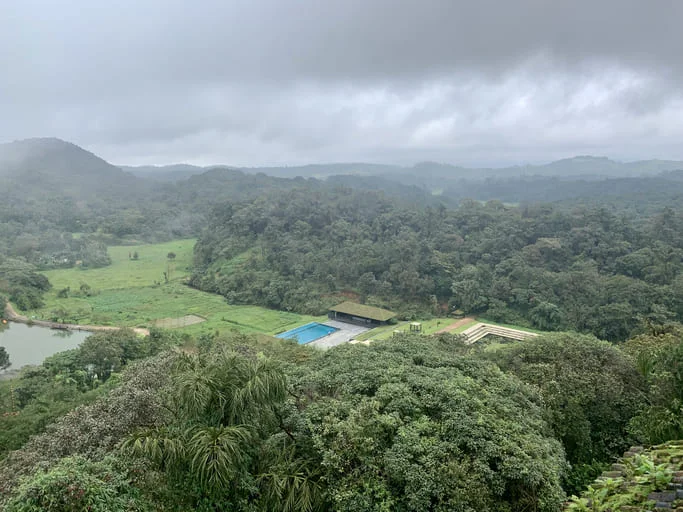
Amid this serene landscape sits Coorg Wilderness Resort & Spa, a secluded luxury retreat designed to immerse guests in nature while offering refined comfort. A venture by Paul John Resorts & Hotels, the resort is perched high above the valleys, offering expansive views, intimate dining spaces, and an atmosphere that encourages guests to slow down and savour their surroundings.
The establishment has introduced a Valentine’s special range of stay experiences that blend wellness, indulgence and romance. From candlelit dinners beneath starlit skies to couple-focused spa therapies, guided forest treks, yoga and meditation sessions, the offerings are designed to foster connection—both with nature and with one another. The emphasis is on unhurried moments—shared silences, long walks through misty trails, and evenings where time seems to stretch effortlessly.
Each experience is crafted to feel personal and understated, allowing luxury to take a quieter, more meaningful form. The resort’s approach reflects a growing shift in travel preferences towards slow luxury and experiential stays that prioritise wellbeing and emotional connection over excess.
By combining immersive natural experiences with elegant hospitality, Coorg Wilderness Resort positions itself as a destination for travellers seeking depth, intimacy, and renewal—making it a compelling addition to upcoming travel and lifestyle features focused on mindful escapes.
Besides Coorg Wilderness Resort & Spa, Paul John Resorts & Hotels’ varied portfolio includes Kumarakom Lake Resort in Kerala, The Paul Bangalore, the colonial-styled Forte Kochi, and Big Banyan Vineyard & Resort near Bangalore. The properties offer curated experiences, ranging from Ayurveda and wellness retreats to urban luxury stays.
source: http://www.theprint.in / The Print / Home> India / by The Print Team / February 05th, 2026
Sangeetha Sambhrama will feature a book, album and website launch, followed by a concert of Madikeri Nagendra’s original compositions.
Madikeri Nagendra’s sonorous voice and unique compositions have a special place in Kannada’s Sugama Sangeetha or journey of musical expression. An event titled, Sangeetha Sambhrama, will be a reminder of a bygone era of music that once played a major role in Karnataka’s musical milieu.
The event commemorates Nagendra’s 75th birth anniversary and has been organised by his son, Bharath Nagendra. Born on September 16, 1950, to a culturally vibrant family, Nagendra’s early exposure to classical music, saw him become a household name and a contemporary of Rathnamala Prakash, Malathi Sharma, Shimoga Subbanna.
According to the Bengaluru-based Bharath, the event will bring together musicians, scholars and connoisseurs of music. The evening will begin with the launch of Madikeri Nagendra – Yashogaathe, a book that chronicles the artiste’s journey. This will be followed by the release of an audio album Geethavenna Jeevana, a compilation of 11 original compositions by Nagendra, orchestrated by Praveen D Rao.
Saanidhya, a website documenting the curated knowledge of Sugama Sangeetha, will also be launched on the occasion. Live music will be presented by vocalists Supriya Raghunandan, Meghana Bhat, Srilakshmi Belmannu, Keerthan Holla, Nishchay Vishwasena and Bhargav HC, as part of the celebrations.
Bharath says Saanidhya is an initiative to create a living archive for the next generation. “There is a dearth of information about Sugama Sangeetha on the internet. In the past, singers kept this form alive by singing compositions of writers such as Kuvempu and Da Ra Bendre. Yashwanth Halebandi, for instance, was known for singing Bendre’s songs. This website is an effort to keep this art form from disappearing.”.
source: http://www.thehindu.com / The Hindu / Home> Entertainment> Music / by Sindhu Nagaraj / February 04th, 2026
Karnataka’s Dean Mascarenhas and experienced co-driver Gagan Karumbaiah sealed their maiden Indian National Rally Championship (INRC) title with a round to spare. – IANS
Indore (MP) (IANS) :
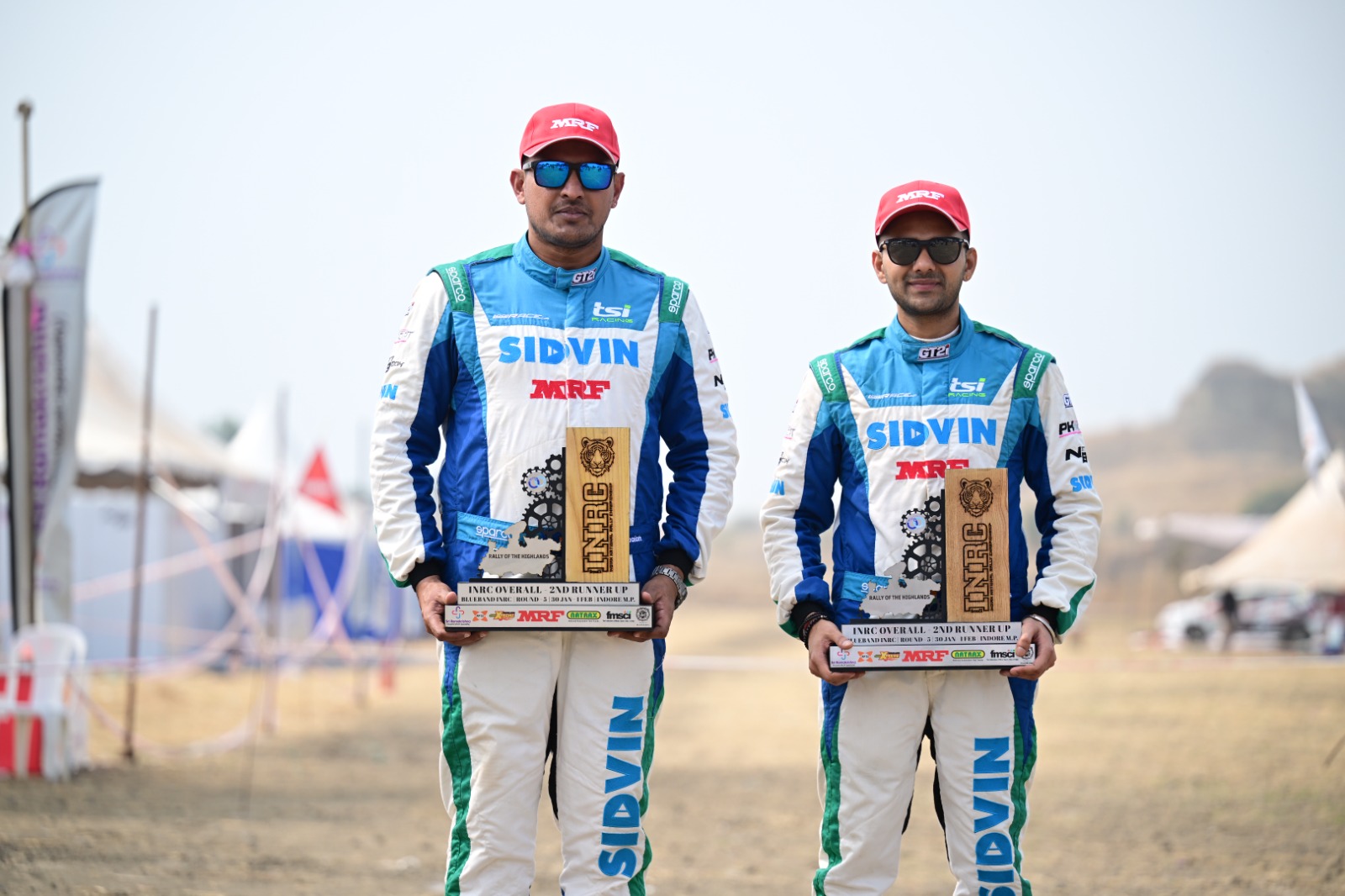
Karnataka’s Dean Mascarenhas and experienced co-driver Gagan Karumbaiah sealed their maiden Indian National Rally Championship (INRC) title with a round to spare, even as their TSI Racing teammates from Himachal Pradesh, Aditya Thakur and Virender Kashyap, clinched overall honours at the Rally of the Highlands, the fifth and penultimate round of the 2025 season, held at the National Automotive Testing Tracks (NATRAX), Pithampur, on Sunday.
Dean and Gagan finished fifth overall on the final day, earning a crucial championship point that gave them an unassailable provisional lead and confirmed their first National title. Dean, who made his rally debut at K1000 in 2010, had narrowly missed out on the championship in 2019 by just one point.
“Incredible. It is an amazing feeling to finally win the Overall National Championship,” said Mascarenhas. “I have waited over 15 years for this moment. A huge thanks to TSI Racing and PH Sport, without whom this would not have been possible. I am especially grateful to my co-driver, Gagan, who has been phenomenal. This is a truly memorable milestone in my career.
The duo has partnered with each other since the Coimbatore Rally in 2019. Despite minor mechanical issues, Aditya Thakur and Virender Kashyap produced a composed drive to secure the rally win.
“We broke the gear mounting in the first stage today, but managed to finish the stage. There was no point pushing after that, so we focused on protecting our position and bringing the car home safely,” said Thakur. “It is a joy to drive this car, and we are delighted to get our first win for the team. Congratulations to Dean on winning the championship.”
Defending champion Karna Kadur, partnered by Musa Sherif, delivered a blistering performance on the final day to finish second overall. However, it was not enough to take the title battle into the final round, as Mascarenhas’ fifth-place finish proved decisive.
In INRC2, Jason Saldanha of Mangaluru, guided by veteran co-driver PV Srinivasa Murthy, claimed victory. Kerala’s Fabid Ahmer and Milen George produced a strong final-day charge to finish second, while Harkishan Wadia and Kunal Kashyap completed the podium.
Chettinad Sporting’s Vishakh Balachandran, with Chiranth Jain, won the INRC3 category ahead of teammates Sheshank Jamwal and Raghuram Saminathan. Anushriya Gulati, partnered by Karan Aukta, finished third, secured the Ladies Class title, and also placed an impressive ninth overall. Phoebe Dale of Meghalaya and Athira Murali completed the podium in that order
In other categories, Bhopal’s Mohammed Kaif Khan, with Jibran Ahmed, won the Gypsy Challenge, while Bengaluru’s Asool Albert John and Kodagu’s Aiyappa Bopanna clinched the Classic Challenge Cup.
Provisional results final:
Overall: 1. Aditya Thakur/ Virender Kashyap (both Himachal) TSI Racing, (01 hour, 39 minutes, 49.2seconds); 2. Karna Kadur (Bengaluru)/ Musa Sherif (Kasargod), Arka Motorsports (01:40:40.0); 3. Dean Mascarenhas (Mangaluru)/ Gagan Karumbaiah (Kodagu) (TSI Racing) (01:41:02.9).
INRC2: 1. Jason Saldanha (Mangaluru)/ PV Srinivasa Murthy (Bengaluru) Arka Motorsports (01:41:21.0); 2. Fabid Ahmer (Palakkad)/ Milen George (Kottayam), Pvt. (01:41:28.8); 3. Harkrishan Wadia (Delhi)/ Kunal Kashyap (Shimla) Arka Motorsports (01: 42:39.0).
The Union government should make regulatory changes and include coffee, tea, and rubber under PMFBY, wherein 80% to 90% of premiums are paid by governments, say planters.
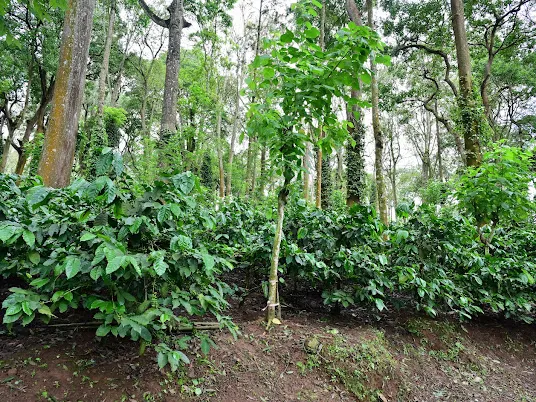
A file photo of the ripened coffee berries at a plantation in Kodagu used for representational purpose only. | Photo Credit: The Hindu
The Karnataka Planters’ Association (KPA), an apex body representing growers in the coffee heartlands of Chikmagaluru, Hassan, and Kodagu, which account for more than 70% of India’s entire coffee production, has strongly demanded the inclusion of coffee farms under a weather-linked crop insurance plan.
M. Salman Baseer, chairman of KPA, told The Hindu that the apex body has been requesting the government to include coffee under a climate-linked insurance plan, considering the crop are being badly hit by droughts or floods year after year.
Excessive rain
“We hope the upcoming Budget will hold some good news for coffee farmers in Karnataka in this regard,” anticipated Mr. Baseer, adding that incessant and excessive rains over the last several years have caused havoc on coffee plantations, resulting in significant crop- and plant losses in Karnataka.
Pradeep Poovayya, a coffee farmer from Kodagu and an executive committee member of the Coorg Planters’ Association, said currently, coffee, rubber, and tea are not covered under Pradhan Mantri Fasal Bima Yojana (PMFBY), which provisions 80% to 90% of premium payments by the governments. “These crops come under the Ministry of Commerce and not the Ministry of Agriculture. This is an unfair classification. While black pepper, coconut, arecanut, and paddy are covered under PMFBY, coffee is not,” Mr. Poovayya highlighted.
Arvind Rao, former chairman of KPA, also noted, “Coffee farming in India is completely dependent on rain and shine. However, unpredictable and extreme weather adversely impacts production, and that has been happening every year for the last many years.”
Input and labour costs
According to Rana George, Managing Director of Kelachandra Coffee, which grows Robusta and Arabica across 7,000 acres of land, climate volatility, rising input and labour costs, and new export compliance requirements are increasing pressure across the value chain.
“The Indian coffee sector needs support that strengthens growers while elevating India as a premium global origin. The Budget can make a meaningful difference through focussed investments in climate resilience, crop advisory and irrigation support, research on high-yield and climate-tolerant varieties, and easier access to long-tenure credit for replantation and farm modernisation,” Mr. George added.
Policy-based approach
Mr. Poovayya said farmers’ lands were often subject to the vagaries of nature, such as fire, floods, landslips, and earthquakes. However, the government only offered short-term relief instead of having a policy-based approach.
“We want regulatory changes to ensure coffee is included under PMFBY, and climate-related crop and land losses should be covered under the National Disaster Relief Fund,” he said, adding that farmers currently receive a meagre ₹35,000 (a sum fixed several decades ago) per hectare of farmland lost and ₹7,000 per acre for crop loss. “These are fixed based on archaic calculations,” Mr. Poovayya said.
source: http://www.thehindu.com / The Hindu / Home> News> India> Karnataka / by MIni Tejaswi / January 31st, 2026
My love affair with coffee started during the lockdown; trying new flavours and textures became an escape for me in those tough times, which has now developed into a regular morning comforting ritual with my coworkers. As I sit here penning down a love story to coffee, my colleagues can spot me sipping on a big tumbler of iced coffee. I had the chance to experience a rich story of coffee-making firsthand, one that had me appreciating this beverage even more. A 6-hour drive from Bengaluru brought me to the Tata Consumer’s plantation on the beautiful slopes of Coorg, which gave me an opportunity to discover and learn all about coffee beans.
Coorg is more than a famous hill station; it is also India’s coffee-growing region. For a coffee-lover like me, this trip became a one-of-a-kind core memory. With tiny droplets of rain and stunning natural visuals, I was transported to a rain-soaked fantasy with the fragrant rustling from the coffee plants. Here I saw the labour and commitment that go into each cup. I was lulled into feeling of calmness, one of nature’s offerings that’s impossible to replicate. Strolling down the road that goes through the plantation with miles of trees and coffee plantations in either direction, I was drawn into the story of coffee. The coffee plants are laden with a green and maroon coloured beans which hang thickly from the branches.
The plantation slopes are renowned for their Arabica and Robusta brews and are surrounded by several lakes, verdant hills, and a diverse range of flora and animals. November is considered to be the best time to pick up the berries and witness the harvest. But when a coffee enthusiast like me is roaming around so much coffee, you can’t help but crave the brown beverage. So, while explaining the foundation and motives of their campaigns and crop, the brand served to cure our coffee craving with steaming hot sips of their best-selling filter kaapis.
A 150-Year-Old Legacy
You might wonder what makes Tata Consumer Products different from its competitors. Tata’s association with the beverage dates back more than 150 years when some tenacious planters from the then-state of Mysore in South India planted the first seeds of the estates and brought coffee to the Coorg Hills. These are some of world’s best coffees, produced by the land and most importantly the local people living there.
source: http://www.elle.in / Elle / Home> Food / by Ekta Sinha / October 09th, 2023
Coffee picking across parts of Chikkamagaluru and Kodagu has slowed down during the peak harvest season after a large section of migrant labourers returned to West Bengal for the Special Intensive Revision (SIR) verification exercise. The sudden labour shortage has pushed up wage demands from the remaining workers, leaving planters caught between the risk of crop damage if harvesting is delayed and the burden of higher labour costs.
The period between November and March is the peak harvesting season for Robusta coffee, when labour requirement is at its highest and timing is critical, N. Bose Mandanna, former Vice-Chairman, Coffee Board of India, said. He added that coffee cherries have to be picked at the right stage of ripeness, but the process has become a hurdle as many migrant workers have returned to their native districts for over 10 days for the verification process.
Delays threaten quality, yield
If harvesting is delayed, the cherries either over-ripen or dry and fall to the ground, where they get damaged and cannot be used, leading to losses. “The quality goes out immediately if fruit is not picked on time,” he said, adding that when the fruit is harvested at the correct time, the pulp extracted during processing is of the best quality, which gets farmers higher prices, and that any delay directly affects the quantity harvested and the quality of coffee produced.
Untimely rains
Adding to the disruption caused by workers leaving for the SIR verification, Abhishiek Ponnappa, a planter and representative of Kodava Coffee Growers, said untimely rainfall in parts of Karnataka and Kerala this January have created a double whammy for the farmers. The rains prevented coffee plants from drying properly, while continuing harvesting under wet conditions risks damaging the plants and affecting the next year’s crop.
Usually, migrant workers return to their home states either before the coffee harvest begins or after it ends in March. This time, however, labour shortage was a challenge throughout January due to SIR verification, as workers began receiving notifications and left within extreme short notice, Harish Maharishi, who owns a plantation in Mudigere, Chikkamagaluru said.
Local workers tied to tourism
In Chikkamagaluru and Kodagu, local workers are largely unavailable in plantation areas, as the growth of tourism has absorbed much of the local workforce, leaving coffee estates heavily dependent on migrant labour, planters said.
Producing one tonne of Robusta green coffee beans requires about 4,500–4,700 kg of coffee fruit. In Indian conditions, an average acre of Robusta yields around 600–700 kg of fruit. At the usual harvesting rate of ₹5 per kg, and assuming a picker harvests about 200 kg a day, it would take roughly 15–17 labourers to harvest one acre of a Robusta plantation, Mr. Mandana explained.
Rising wages
Another concern during large-scale labour shortages is a sharp increase in wage demands, planters said.
Under regular conditions, Robusta pickers are paid ₹4–₹5 per kg because the variety allows large volumes to be harvested in a day. The coffee picked by each worker is weighed, and wages are calculated accordingly. An average worker, Mr. Mandana explained, earns ₹476.11 a day, but those who pluck 200–250 kg can earn ₹800–₹1,200 in a single day. When labour becomes scarce, workers, as planters said they are witnessing now, demand higher rates of ₹7–₹8 per kg, which sharply increases the cultivation cost, leading to a difference of at least ₹600 per worker per day for the same quantity of coffee picked.
source: http://www.thehindu.com / The Hindu / Home> News> India> Karnataka / by Rishita Khanna / January 31st, 2026
The Annual Inter-Sangha Tennis Ball Cricket Tournament in memory of Kannambira Girish Kushalappa was organised by Kodava Samaja Cultural and Sports Club, Mysuru, recently at University and Gangothri Grounds in which 18 teams from different areas participated.
In the finals, Sri Igguthappa Kshemabivridhi Sangha, Hebbal A, emerged winner by defeating Sri Cauvery Kodava Association (Mysore East).
The winning team members are seen with chief guest Ajjikuttira T. Poovaiah (DCF retd.), Kannambira Neeta Kushalappa, Ponjanda A. Ganapathy, President, Kodava Samaja, Mysuru, Machanda Prakash Belliappa, Vice-President of the Club, Aramanamada Ponnanna, Secretary of the Club, along with Club office-bearers and others.
As part of the tournament, an exhibition match was also played between two veteran teams as Mysore North and Mysore South.
source: http://www.starofmysore.com / Star of Mysore / Home> Sports / January 29th, 2026
Tucked away in the Western Ghats of Karnataka, Coorg offers a landscape that feels untouched by time. Rolling coffee plantations, mist-covered hills, dense forests, and slow-paced village life define the region’s character. For travelers seeking nature, heritage, and refined hospitality in one place, Evolve Back, Coorg represents the kind of immersive stay that aligns naturally with Coorg’s surroundings rather than competing with them.
Coorg is not a destination built on spectacle. Its appeal lies in subtlety, where scenery, culture, and experience unfold gradually.
Coorg’s Natural Landscape and Sense of Place
Coorg’s geography shapes every aspect of life here. Forests dominate the terrain, broken by coffee estates and rivers that wind through the hills. The region’s elevation keeps temperatures moderate throughout the year, while seasonal monsoons add depth and greenery to the landscape.
This environment encourages slower travel. Visitors often come to disconnect from urban routines and reconnect with nature. Early mornings are marked by birdsong and mist, while evenings bring quiet walks and unhurried conversations.
The land itself becomes part of the experience, influencing how resorts, homes, and daily life are designed.
Coffee Plantations and Everyday Culture
Coffee is central to Coorg’s identity. Plantations stretch across hillsides, shaping both the economy and the visual character of the region. Estate living is deeply rooted in tradition, with generations of families maintaining ties to the land.
Local culture reflects this connection. Cuisine features fresh produce and bold flavors, while festivals and customs are closely linked to agricultural cycles. Hospitality here feels personal, grounded in familiarity rather than formality.
For visitors, engaging with plantation life adds context to the landscape, turning scenic views into meaningful experiences.
Travel Experiences That Define Coorg
Coorg is best explored at an unhurried pace. Nature walks, plantation trails, river viewpoints, and heritage sites form the core of most itineraries. Unlike destinations driven by constant activity, Coorg offers space to pause.
Popular experiences often include guided estate walks, birdwatching, wellness rituals, and learning about local food traditions. These activities are not designed to fill time but to deepen understanding of the region.
Resorts that recognize this rhythm tend to blend more naturally into Coorg’s setting.
Resorts as Extensions of the Landscape
In Coorg, the best resorts function as extensions of the land rather than isolated luxury structures. Architecture often reflects local styles, using earthy materials, open layouts, and natural textures.
Guests are encouraged to engage with their surroundings rather than retreat entirely indoors. Private courtyards, outdoor baths, and plantation-facing spaces help blur the line between accommodation and nature.
This approach enhances the sense of immersion that Coorg is known for.
Evolve Back, Coorg: A Plantation-Led Resort Experience
Evolve Back, Coorg is set within a working coffee and spice plantation, allowing guests to experience estate life as it naturally exists. The resort’s layout reflects the scale and openness of traditional Kodava homes, with pathways winding through greenery rather than formal corridors.
The focus here is not on visual excess but on thoughtful design that respects the land. Privacy, space, and quiet define the experience, aligning with what many travelers seek when visiting Coorg.
Architecture, Villas, and Spatial Design at Evolve Back Coorg
The resort’s villas are designed to echo local architectural traditions while offering modern comfort. High ceilings, natural materials, and open courtyards create a sense of space without disconnecting guests from the environment.
Many villas include private pools or landscaped areas, encouraging relaxation without distraction. Interiors are intentionally understated, allowing views of greenery and sky to remain central.
This balance between comfort and restraint reflects Coorg’s understated elegance.
Wellness and Slow Living at the Resort
Wellness in Coorg is closely tied to environment and pace. At Evolve Back Coorg, wellness experiences draw from traditional practices and natural surroundings rather than packaged trends.
Spa therapies, yoga spaces, and quiet zones are integrated into the landscape. Guests often find that the setting itself contributes as much to relaxation as any formal treatment.
This emphasis on slow living aligns naturally with Coorg’s rhythm, making wellness feel organic rather than scheduled.
Culinary Experiences Rooted in Place
Food in Coorg reflects the land and its seasons. At the resort, dining experiences highlight local ingredients, regional flavors, and estate-grown produce where possible.
Meals are not rushed. Whether enjoyed in open dining spaces or private settings, food becomes another way to engage with the region’s culture. The focus remains on authenticity rather than theatrical presentation.
For travelers, this creates a deeper connection to place through everyday experiences.
Exploring Beyond the Resort
While the resort offers a self-contained experience, Coorg itself invites exploration. Nearby forest trails, viewpoints, and cultural sites provide opportunities to step beyond the plantation.
Guided excursions often focus on understanding ecology, local history, and traditional livelihoods. These outings complement the resort stay rather than competing with it, reinforcing Coorg’s identity as a destination rooted in nature and heritage.
Returning to the calm of the estate afterward reinforces the contrast between exploration and rest.
Choosing the Right Kind of Stay in Coorg
Not all travelers come to Coorg for the same reasons. Some seek wellness and solitude, others nature and culture, and some a blend of comfort and authenticity.
Resorts that succeed in Coorg tend to respect this diversity. They offer flexibility without overwhelming guests with constant programming. The emphasis remains on allowing visitors to shape their own experience.
This approach suits travelers who value depth over pace.
Summary
Coorg’s appeal lies in its landscapes, coffee estates, and quiet cultural richness. It is a destination best experienced slowly, where nature and daily life intertwine. Resorts that align with this character enhance rather than dilute what makes the region special.
Stays such as Evolve Back, Coorg reflect this philosophy by offering plantation-led hospitality that respects local architecture, environment, and traditions. For travelers planning a visit, platforms like Goibibo provide convenient ways to explore accommodation options and organize a journey that matches Coorg’s calm, immersive appeal.
source: http://www.europeanbusinessreview.com / The European Business Review / Home> Blogs> Culture & Lifestyle / January 30th, 2026
Gulshan Devaiah began his career in Bollywood, like the majority of newcomers from outside the industry, with few roles. Nevertheless, Gulshan’s performance was recognised by the audience as well as the critics.
Image credit : Telegraph India
Gulshan Devaiah began his career in Bollywood, like the majority of newcomers from outside the industry, with few roles. Nevertheless, Gulshan’s performance was well-received by the audience as well as the critics. And he once again enchanted his fans with his most recent part in the web series ‘Duranga’.
Duranga is a suspense series that warrants your attention, and we’ll explain why. One of the most well-liked genres of television shows and films today is a thriller. Who doesn’t love the suspense and terrifying anticipation of what will happen next? The unfolding of the events keep you on the edge of your seat. Without further ado, let’s dive right into it!
Reasons Why Duranga Is Worth Your Time!
Image credit : Duranga Poster
The Duranga Plot Will Keep You Hooked Until The End
It is based on Sammit Patel and Ira’s story. Ira starts looking into several killings committed by a person she believes to be a serial killer’s accomplice, and as a result, she learns some shocking information about her husband’s dark background.
One is kept fairly engrossed in the story and on the edge of their seat by the writing and plot. The length of the episode is critical because thrillers frequently suffer from the risk of being stretched out a little too much, the duration of Duranga is just right for you to keeping yourself interested.
The series avoids trying anything new and succeeds in producing the same impression as the original with a compelling narrative and a crisp screenplay.
The Interesting Choice Of Cast
Gulshan Devaiah As Sammit Patel
Gulshan Devaiah gives his greatest effort yet in Duranga. Gulshan gives a convincing performance as a reserved character who doesn’t experience love, happiness, or grief and uses online courses to learn to grin or cry. He has aced his acting skills with each project he has done and is such an underestimated actor who deserves your time.
Drashti Dhami As Ira
Image credit : Duranga/Screengrab
Drashti Dhami, who plays a cop alongside Gulshan, has established herself in Hindi television dramas, and this is the first time she has performed such an intense and badass part of a cop, carrying a very strong character brilliantly; she has never been seen portraying a role this harsh.
The relationship between Drashti and Gulshan is not particularly endearing, but given the diametrically opposed nature of their characters, it nevertheless manages to explain the lack of blandness.
It is difficult to develop and maintain a career in the film industry, which may be ruthless at times. Gulshan, who has been a part of Bollywood for over a decade, believes that ‘being good is not enough.’
The idea that hard effort helps you sustain and that being competent at your craft is enough is appealing, but it is fiction. Gulshan believes that as an actor, one must learn to build relationships and be in the right place at the right moment.
Here are some characters played by Gulshan that need your attention
1. Ghost Stories
Image credit : Indiatimes
Despite having only 10 minutes of screen time and wearing unrecognisable make-up, the actor received some of the greatest accolades of his career for the character of a village strongman who transforms into the alpha zombie in the horror film Ghost Stories. Devaiah recalls Karan Johar and Reema Kagti complimenting Gulshan for his spooky act. Gulshan had no expectations from the movie and wasn’t sure he would be recognised at all.
Most performers would have turned down the role owing to the limited screen time or unrecognisable makeup. However, we are confident that Gulshan chose craft over fame in this role.
Watch It On Netflix
2. Afsos
Image credit : Prime video/Screengrab
In Afsos, Gulshan plays Nakul, a writer with chronic depression who hires an assassin to kill him after 11 unsuccessful suicide attempts. The plot is unusual; for example, have you heard of someone who is sick of trying to commit suicide hiring a hitman to help them? Anyways, things go wrong when Nakul decides to cancel the assignment after falling in love with his therapist.
Watch It On Amazon Prime Video
3. Goliyon Ki Raasleela Ram-Leela
Image credit : Goliyon Ki Raasleela Ram-Leela/Screengrab
For Sanjay Leela Bhansali’s “Ram Leela,” Gulshan appears in a brand-new appearance. In the film, the gifted actor plays the adversary. The character played by Gulshan is a famous member of the Jadeja clan, a group of Chandrivanshi Rajputs who currently reside in Kutch, Gujarat.
Watch It On Jio Cinema
4. Footfairy
Image credit : Footfairy/screengrab
A monster who suffocates young girls and slices off their exquisite feet to keep as his mementos is the subject of the psychological thriller. Gulshan Devaiah portrays CBI officer Vivaan Deshmukh, who trusts his intuition over anything else. He presents himself as an assured police officer. It was incredible that a film made in 2020 captured people’s attention in 2022 with an OTT distribution on Netflix.
Watch It On Netflix
5. Badhaai Do
Image credit : Badhaai Do/Screengrab
The unexpected component of Badhaai Do is Gulshan Devaiah. The actor who portrays Rajkummar Rao’s love interest in the movie, Guru Narayan, is a lawyer. His character is such a fantastic representation of the LGBTQIA population that is not ashamed to be ‘Gay.’ Though Guru’s character appears for a little moment, he plays an important role in the film.
Watch It On Netflix
6. Mard Ko Dard Nahi Hota
Image credit : Movietalkies
In Mard Ko Dard Nahi Hota, Gulshan plays the character of Karate Mani and Jimmy and is a laughing stock. It was pure joy to witness him flawlessly portray two utterly different personalities in a double role.
Watch It On Netflix
7. Shaitaan
Image credit : Shaitaan/Screengrab
Shaitan was one of the first projects to bring Gulshan the attention he deserved. It was a crime thriller, which was highly opposite of what Bollywood thought of these genres. He portrays the slightly insane, affluent brat Karan ‘KC’ Chaudhary, and his diabolical intensity in the part drew many fans.
Watch it On Netflix Since making his acting debut in That Girl in Yellow Boots in 2010, Gulshan Devaiah has advanced significantly while consistently raising the bar with his films and web series
source: http://www.indiatimes.com / India Times / Home / by Tanishk Juneja / September 01st, 2022
Birth anniversary of General KS Thimayya aka Timmy Sahib, a military legend in his own right.
1. He was the first Indian to ever command an Infantry Brigade during the WWII.
2. His elder brother Ponnappa served in the INA, while his younger brother Somaiah was killed in action in Kashmir.
3. In the Army he had a running feud with his British officers over their snobbery and racism.
4. He wanted to quit the Army and join the freedom movement but was however and fortunately dissuaded by PM Motilal Nehru.
5. During Quit India movement he gave orders to the troops not to fire on the protesters.
6. He oversaw the surrender of INA at Rangoon, his brother, Ponnappa was one of the POW(Prisoner of War).
7. After the Korean War, he played a major role in repatriation of POWs, winning plaudits from General Douglas MacArthur.
8. During the first Kashmir War in 1947, personally led from the front, in a tank to capture the Zozi La Pass.
9. He asked Nehru for just three months to beat back the raiders in Kashmir, however the latter (controversial) referred it to the UN.
10. Had a running feud with the Defence Minister VK Menon (Another LUTYENS Roadblock) over undue interference with Army.
11. Had the foresight to recognize the dangers from China, much before any one.
12. His proposal to appoint Lt Gen Thorat as Army Chief was shot down by Nehru, who instead appointed the mediocre Pran Nath Thapar (Also COR of the RAJPUTANA RIFLES).
He spent his last days in Cyprus , as part of UN Peacekeeping Force during the Civil War there.
He passed away in Cyprus in 1965, due to heart attack.
No important person attended his funeral (like Sam’s), he was buried in a nondescript site at Wilson Garden Cemetery.
When the President of Cyprus, came to India, specifically to honour him, our government (then the LUTYENS), woke up and hastily erected a memorial, at ASC center, Bangalore.
When General Thimayya died in Cyprus, the Cyprus Govt declared a 10 day mourning , and their Flag was at Half Mast !
On his birth anniversary please do forward this to as many as you can.
Posted by a proud RIMCOLLIAN, alumnus of RIMC. VIVA RIMC – JAI HIND!.
source: http://www.clnews.in / Coffeland News / Home> Articles / by CLN Newsdesk / March 31st, 2025
WELCOME. If you like what you see "SUBSCRIBE via EMAIL" to receive FREE regular UPDATES.
Read More »