Category Archives: Women/Girls (wef. Sept 03rd, 2022)

Lives lived between shame and sunrise

The hamlet of Kesarugattu is evoked with tender fidelity: dusty lanes, temple bells, the drawing of water from wells, gossip thick as humidity, and the invisible yet unbreakable lines of caste that arrange bodies and destinies.
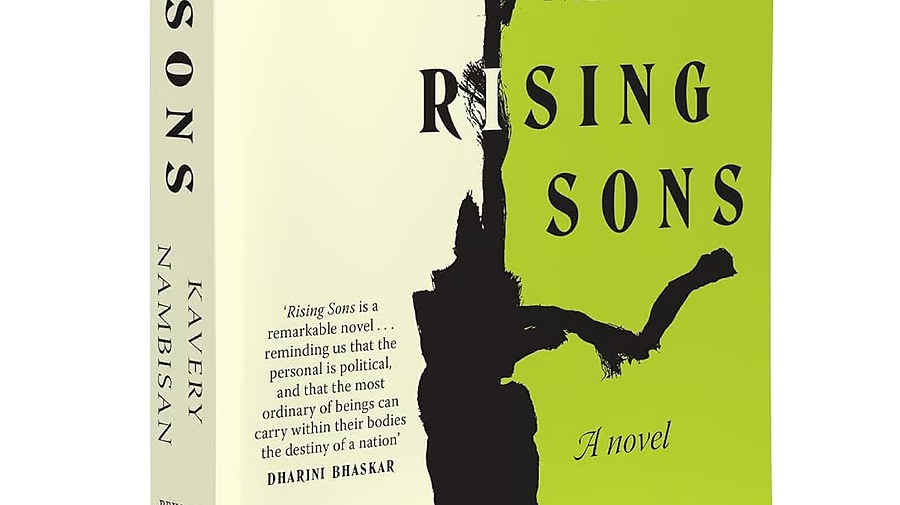
Rising Sons

There is something compelling about Indian fiction that returns to the soil — its memory, its violence, and its stubborn hierarchies — placing ordinary lives against the tremors of national transformation. When such fiction is also shaped by a supple, idiomatic use of language, as in Kavery Nambisan, the result is especially resonant: “No fighting the British. We must ask them gently-gently to leave.” “If a robber enters your home, and you request him to leave, by gently-gently leading him to the door, will he go, leaving behind the bag he just filled with your provisions?” The prose carries the cadence and rhythm of Indian speech, anchoring the novel firmly in its linguistic and cultural terrain.

Kavery Nambisan’s Rising Sons, set in a small village near Mysuru between the 1920s and 1940s, is a quiet yet searing account of the making of modern India — not through the grand speeches of history, but through the fragile interiors of a family trapped between caste, patriarchy, shame, and awakening. At the centre is Devaraya, a Brahmin patriarch whose pursuit of wealth and respectability masks deep fragility. His carefully curated identity begins to fissure from the opening line, when he announces — half-proud, half-playful — that he has “two sons and one-and-a-half daughters.” The “half” is Chinni, the adopted daughter whose presence inside a caste-sanctified household is both an affront to orthodoxy and a reminder that affection in such worlds is always conditional. Nambisan builds her narrative on this foundational crack.

The hamlet of Kesarugattu is evoked with tender fidelity: dusty lanes, temple bells, the drawing of water from wells, gossip thick as humidity, and the invisible yet unbreakable lines of caste that arrange bodies and destinies. Colonial rule hums in the background, but the more immediate and intimate oppressor is caste itself. Ancestral dominance and the fear of social humiliation govern every gesture inside and outside Devaraya’s house. Working in a bank as a peon in Mysuru while running a modest money-lending shop back home, Devaraya embodies the dangerous intersection of caste pride and capitalist ambition. His public face projects ritual purity; his private life is riddled with moral compromise. In a paraphrased confrontation, his younger son Anna articulates the novel’s central fracture: you speak of purity, but conceal your own stains — what kind of honour demands lies? It is a quiet but devastating rebellion, marking the first collapse of the old order.

The revelation of Devaraya’s hidden past — one that undermines the very caste purity he venerates — shatters the world he has built. The family collapses under the weight of shame; one son disappears; Devaraya is disgraced and imprisoned; the village that once deferred to him turns away with vindictive satisfaction. Inside the house, silence becomes a weapon. In another paraphrased exchange, Gowru, his long-suffering wife, speaks with restrained fury accumulated over decades: a home built on fear cannot survive a single gust of truth. The line is quiet on the page but detonates through the moral architecture of the novel.

From the family’s ruins, a new consciousness emerges. Anna is drawn into the freedom struggle. His rebellion is both political and personal — a rejection of shame as a mechanism of control. In a moment that captures the novel’s fusion of private and national liberation, Anna tells his father that if the nation must free itself, individuals must first confront older chains than those imposed by the British. Chinni, meanwhile, becomes the emotional heart of the story. Experiencing progressive hearing loss, dismissed by society and bound by deep affection to Anna, she embodies the resilience of the marginalised. Her silence is not weakness; it is resistance.

One of the novel’s notable achievements is its portrayal of how colonial capitalism intersects with caste hierarchy. In a sharply staged scene, a village priest — the former custodian of ritual prestige — visits the lending shop to deposit his money, bargaining for interest with head bowed. Devaraya’s paraphrased reflection is telling: even gods have begun to bow before Mammon. With this, Nambisan captures an India shifting uneasily from spiritual hierarchy to monetary hierarchy, neither offering dignity to the powerless.

Nambisan writes with felicity and restraint. Some readers may find the pace measured, but the emotional intelligence and historical density more than compensate. At a time when conversations around caste are often flattened into slogans or denial, Rising Sons insists on remembering.

source: http://www.deccanherald.com / Deccan Herald / Home> Features> Books / by Gurucharan Gollerkeri / January 18th, 2026
US honour for Kodagu researcher

Mysore/Mysuru:

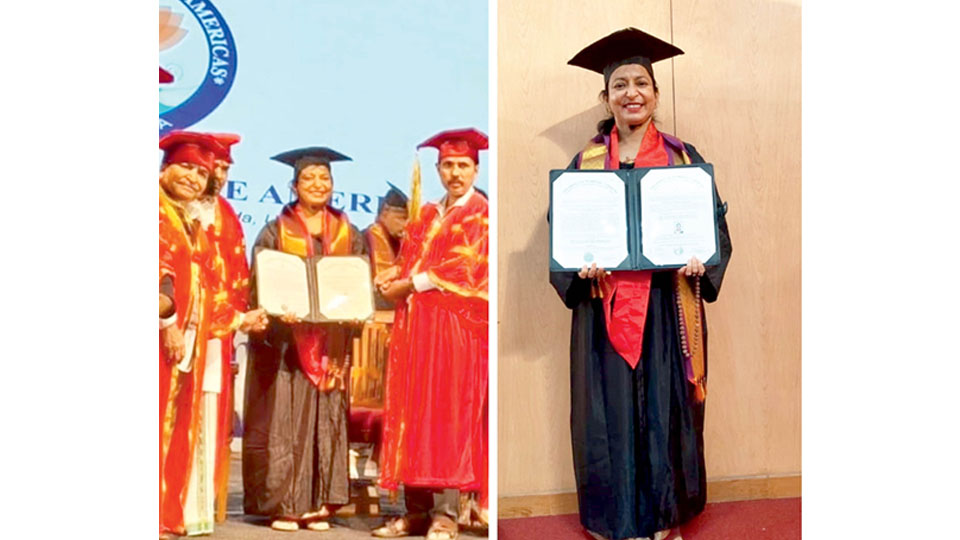
Theetharamada Dr. Devaki (Kollimada) has completed a prestigious Post-Doctoral Research Degree in Commerce from an institution in YUVA University Florida, USA.

She is the only lady from Kodagu to receive this honour in the field of Commerce.

Her post-doctoral study, titled ‘Impact of Yoga Practice on Stress Management Among Higher Secondary School Students in Mysore District,’ explored the effectiveness of structured yoga interventions in reducing stress levels among adolescents.

The research offers valuable insights for educators, policymakers and wellness practitioners, highlighting yoga as a powerful tool for enhancing student well-being.

source: http://www.starofmysore.com / Star of Mysore / Home> News / January 13th, 2025

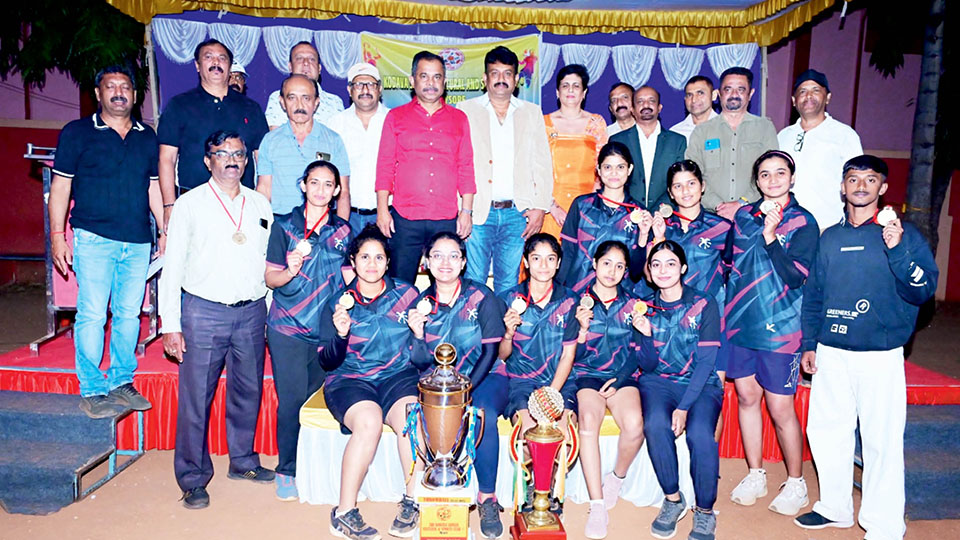
Winners of Kodava Inter-Sangha Women’s Throwball Tournament

Picture shows the winning team with chief guest Jammada Preeth Aiyanna, Club Vice-President Machanda Prakash Beliappa, Club Special Invitee & Sponsor of the event Kuttimada D. Muthappa, Kodava Samaja Mysuru President Ponjanda Ganapathy, Sree Cauvery Educational Institutions Chairman Chottengada Chengappa, Club office-bearers and Directors.

The Annual Kodava Inter-Sangha Throwball Tournament for women, organised by Kodava Samaja Cultural and Sports Club, Mysuru, was inaugurated by city’s renowned Trekker and Kodava Vibhushana awardee Jammada Preeth Aiyanna.

Totally 9 teams participated and the winners were Sri Iguthappa Kshemabivirdhi Sangha, Hebbal.

source: http://www.starofmysore.com / Star of Mysore / Home> Sports / January 05th, 2026

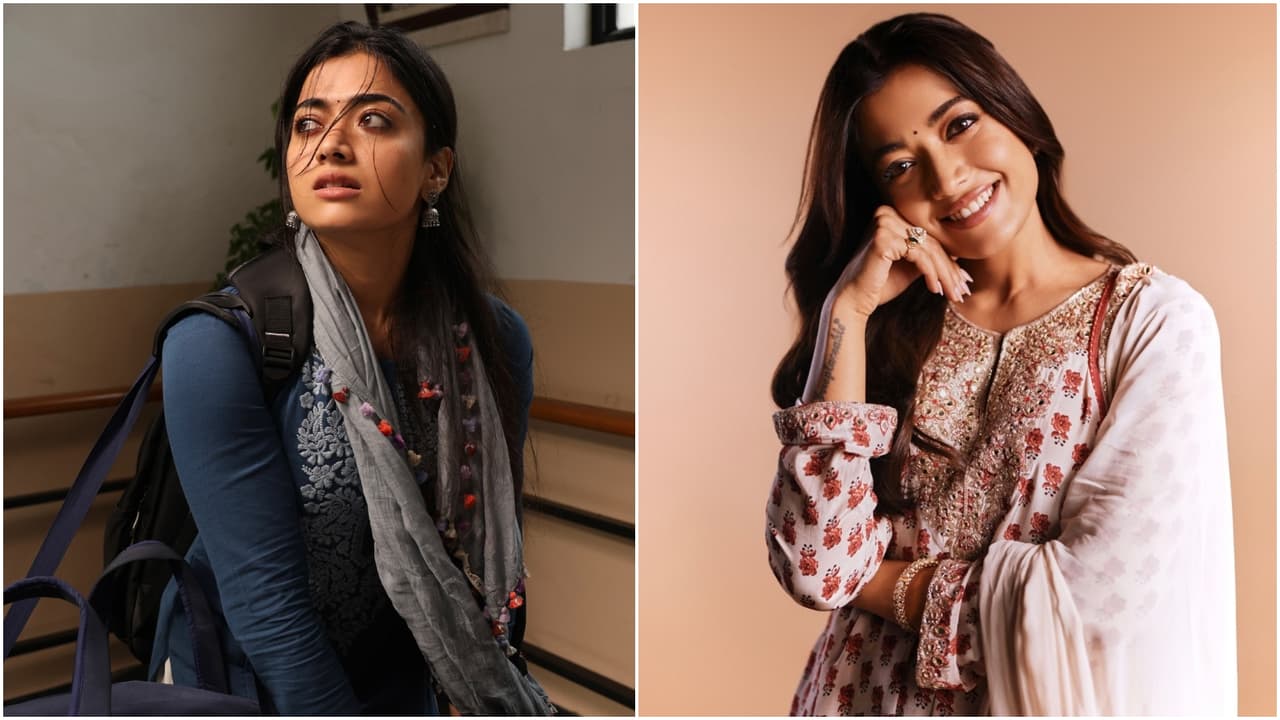
Rashmika Mandanna Becomes Kodagu’s No.1 Taxpayer; Find Out What She Paid

Rashmika Mandanna has added another remarkable achievement to her name by emerging as the highest taxpayer in Kodagu district, creating pride among locals and fans while proving her success goes far beyond the film industry.

From Kirik Party to National Stardom

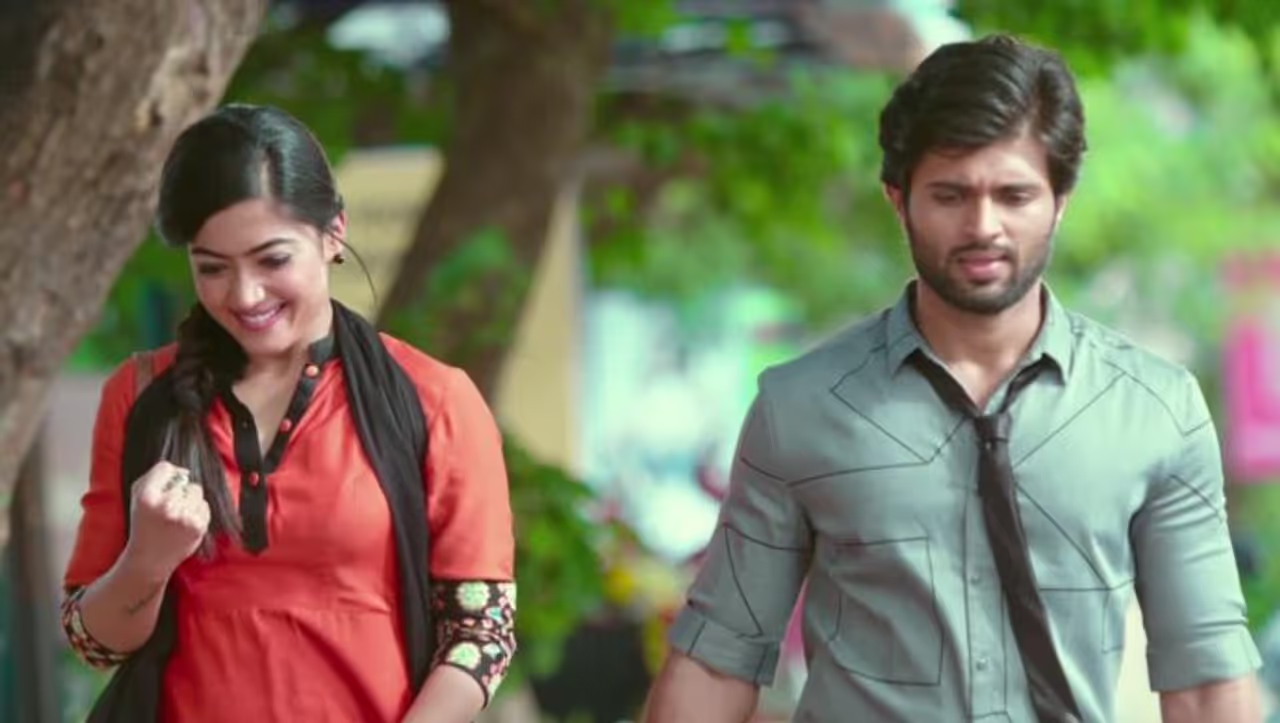
Rashmika Mandanna, fondly called the “National Crush,” has come a long way since her breakthrough in the Kannada film Kirik Party. Today, she stands tall as one of India’s most successful actresses, making a strong impact in South cinema and Bollywood with consistent box office successes.

The Rise of a Box Office Queen

With multiple hit films across languages, Rashmika has earned the title of “Box Office Queen.” Her strong screen presence, versatility, and audience connect have made most of her films commercially successful, placing her among the most bankable stars in the Indian film industry today.

Pride of Kodagu District

Hailing from Virajpet in Kodagu district, Rashmika has become a source of immense pride for her hometown. Kodagu has produced several notable personalities, but Rashmika’s achievements have set her apart, elevating her status beyond cinema and making her a standout figure from the region.

Biggest Taxpayer in Kodagu

In a remarkable achievement, Rashmika Mandanna has emerged as the highest income taxpayer in Kodagu district. She has reportedly paid ₹4.69 crore in income tax for three quarters of the current financial year, securing the top position among all taxpayers in the district.

Marriage Buzz Continues

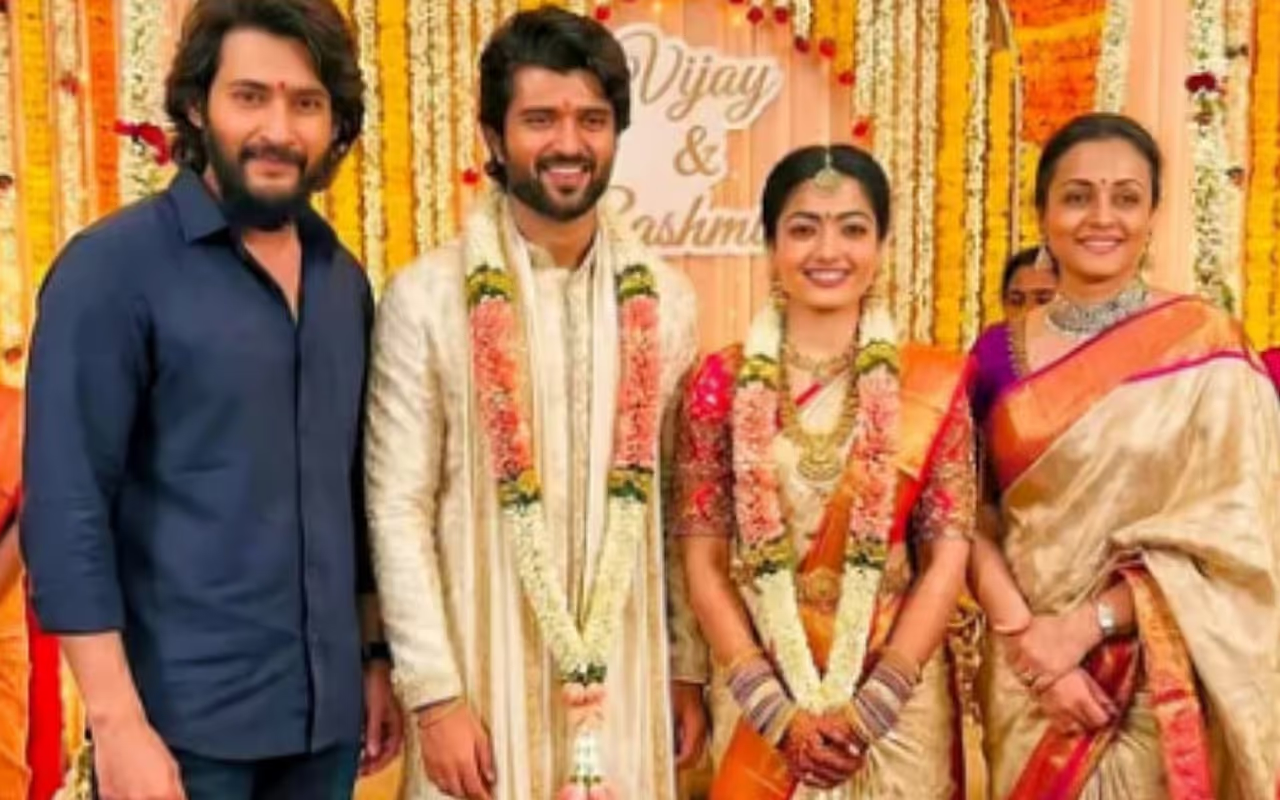
Apart from professional milestones, Rashmika is also in the news for personal reasons. Reports suggest she may soon marry actor Vijay Deverakonda, with rumors pointing to a February 26 wedding in Udaipur. However, no official confirmation has been made by either star yet.

source: http://www.newsable.asianetnews.com / Asianet News, English / Home> Entertainment / by Nancy Tiwari / January 07th, 2025

Why Dr. M. Soni, Kavery Nambisan, And Twisha Ray Are The Three Modern Literary Stars Of 2025

The year 2025 stands as a defining moment in contemporary literature, marked by voices that combine depth, purpose, and cultural relevance. The three modern literary stars of 2025 represent distinct yet powerful dimensions of today’s literary landscape, spanning spirituality, fiction, and poetry. Through thought leadership, storytelling rooted in lived experience, and emotionally resonant expression, these writers have shaped conversations beyond the page. Their work reflects the evolving spirit of literature in a time that values authenticity, insight, and impact, positioning them as influential figures whose words continue to inspire readers, thinkers, and future generations.

The three modern literary stars of 2025 are:

  • Dr. M. Soni
  • Kavery Nambisan
  • Twisha Ray

DR. M. SONI – Empowering Minds Through Knowledge, Purpose, and Practice

Dr. M. Soni stands among the three modern literary stars of 2025 as a respected soft skills trainer, academician, and spiritual author with more than sixteen years of experience across corporate, academic, and consulting domains. Her work focuses on empowering individuals through leadership development, effective communication, and holistic personal growth. Known for seamlessly blending traditional wisdom with modern relevance, she has trained thousands of learners and professionals, helping them unlock clarity, confidence, and purpose.

As an accomplished author, Dr. Soni has written multiple books on spirituality and has co-authored over three hundred and fifty anthologies, reflecting her wide literary influence and disciplined scholarship. Her deep passion for Indian epics and her keen understanding of human behavior come together powerfully in her latest book, Warrior’s Mindset Soft Skills from Indian Mythology. This work transforms timeless mythological narratives into practical tools for professional and personal success. Her writing speaks equally to students, young professionals, and lifelong learners, awakening the inner warrior through wisdom, discipline, and self mastery.

KAVERY NAMBISAN – A Distinguished Voice in Contemporary Literature

Kavery Nambisan is a celebrated Indian novelist and surgeon whose writing has earned her a prominent place among modern literary stars of 2025. Born in the Kodagu district of Karnataka and trained as a surgeon, she has spent much of her medical career serving rural communities across India while simultaneously building a distinguished literary legacy. Her unique perspective as a medical professional deeply informs her fiction and non-fiction work, giving her narratives both emotional depth and social insight.

Her body of work includes several acclaimed novels that explore diverse themes of identity, culture, gender, and history. Early novels such as The Scent of Pepper and Mango-Coloured Fish depict the lives and traditions of Indian society with rich, evocative detail. On Wings of Butterflies offers a powerful narrative rooted in the women’s movement in India, while The Hills of Angheri draws on her own medical experiences to portray the challenges of life as a doctor. Her later novel The Story That Must Not Be Told was shortlisted for prestigious literary awards including the DSC Prize for South Asian Literature and the Man Asian Literary Prize. A Town Like Ours extends her literary exploration to the complex social dynamics of small town India.

In 2025 she added to her remarkable catalogue with Rising Sons, a deeply reflective novel that traces the historical and social contours of village life in southern India. Beyond fiction, her non-fiction work A Luxury Called Health critically examines the Indian healthcare system while weaving personal medical narratives on ethics and care.

Kavery Nambisan’s contribution to Indian English literature is defined by its narrative strength and cultural resonance. Her ability to blend lived experience with literary sophistication continues to inspire readers worldwide and cements her status as a defining literary voice of her generation.

TWISHA RAY – Where Lyrical Depth Meets Modern Introspection

Twisha Ray has emerged as one of the three modern literary stars of 2025, earning recognition as a powerful poetic storyteller known for emotional authenticity and lyrical precision. Her writing reflects a deep engagement with self identity, transformation, and inner endurance, conveyed through vivid imagery and expressive metaphors. With a meditative approach to language, she captures the complexities of human experience in a manner that feels both intimate and universal.

By 2025, Twisha Ray has continued to expand her literary presence through digital publishing, live poetry sessions, and collaborative creative projects. Her work resonates strongly with readers who seek honesty, reflection, and emotional truth through art. Her growing influence highlights the evolving landscape of contemporary Indian literature, where poetic elegance meets raw emotional depth.

Twisha Ray was recently chosen for the Majestic Pen Award 2025 by Cherry Book Awards in recognition of her lyrical storytelling, emotional clarity, and meaningful contribution to India’s modern poetic movement. Her ability to articulate healing and transformation with aesthetic grace has set her apart as a distinctive literary voice. Representing a new generation of Indian poets, she brings authenticity, vulnerability, and innovation to the forefront, making her a compelling and deserving literary figure of 2025.

source: http://www.hindustanmetro.com / Hindustan Metro / Home> Lifestyle> Brandpost / by Abhishek Kapoor / December 23rd, 2025

Wins silver in athletics

Mysore/Mysuru:

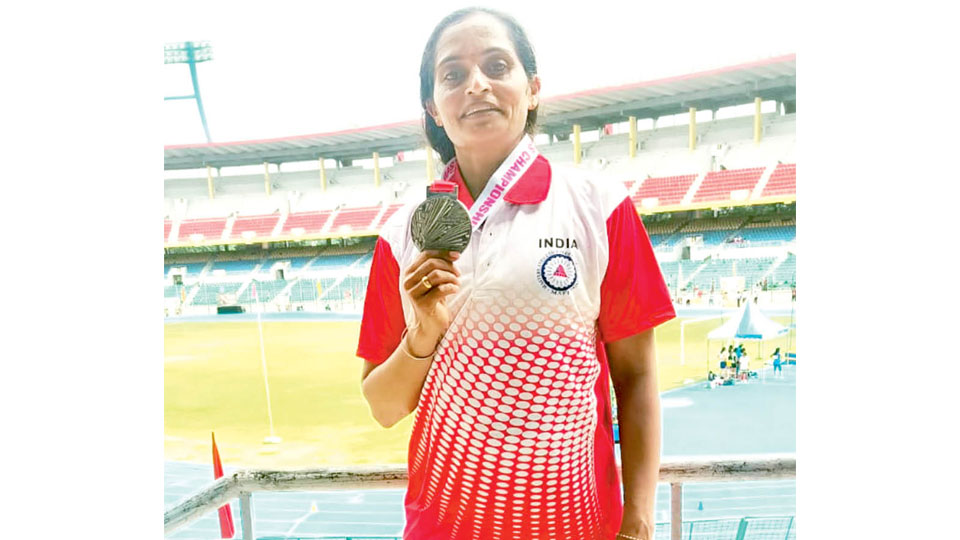
City-based Master Athlete Boppanda Kusuma Bheemaiah has won the silver medal in 800 mts run in 45-plus category at the 23rd Asian Masters Athletics Championship-2025 held at Jawaharlal Nehru Stadium in Chennai recently.

She has also qualified for the World Masters Athletics Championship to be held at Daegu in South Korea in the month of August, 2026.

source: http://www.starofmysore.com / Star of Mysore / Home> Sports / November 13th, 2025

24th AGM of Sri Kavery Kodava Association, Mysuru East held

Mysore/Mysuru:

The 24th Annual General Body Meeting of Sri Kaveri Kodava Association, Mysuru East, located in Vidyashankara Layout, Sathagalli, was held under the leadership of Association President, Kademada M. Belliappa recently.

The meeting took place at the Association’s Hall, situated within the premises of Kodagu Model School on Kaveri Road in Vidyashankara Layout, Mysuru.

Association Secretary P.A. Devaiah presented the annual report while Treasurer P.T. Charmanna placed the financial report.

The President explained the Association’s future plans and outlined the development blueprint for school functioning under the Association’s patronage.

C. Manu Subbaiah rendered the invocation. N. Sunil Muthappa compered. P. Padma Bopaiah proposed the vote of thanks.

source: http://www.starofmysore.com / Star of Mysore / Home> News / November 11th, 2025

N.R. Mohalla Kaveri Kodava Okkoota office-bearers

Mysore/Mysuru:

The 25th Annual General Body Meeting  (AGM) of Kaveri Kodava Okkoota, N.R. Mohalla, was held recently at Kodava Samaja premises in Vijayanagar, Mysuru.

Ponjanda Ganapathy, President of Kodava Samaja, Mysuru, was the chief guest. Thathanda Biddappa, Acting President and Treasurer, presided.

A two-minute silence was observed to mourn the demise of departed Okkoota members.

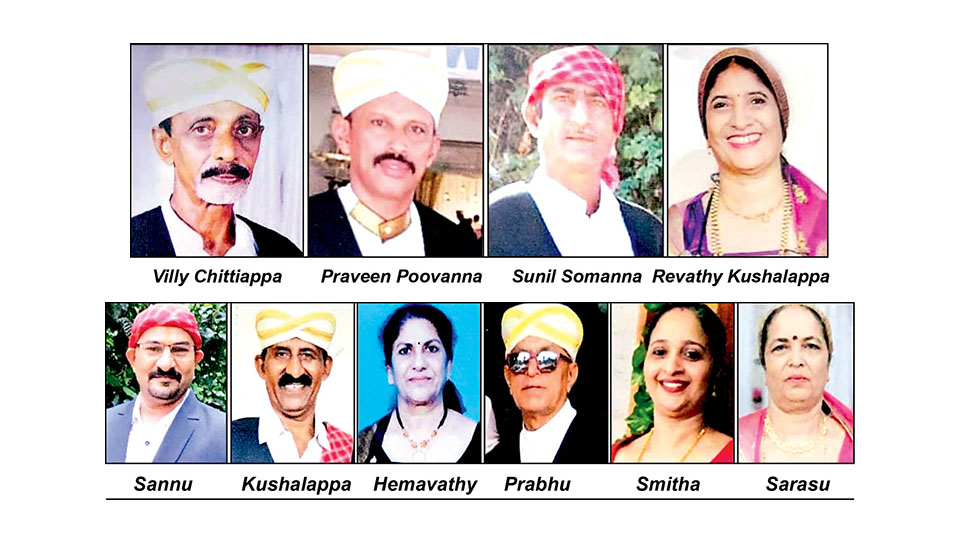
The AGM was followed by the election to the Managing Committee and Committee Members of the Okkoota. The new office-bearers are:

Ajjinikanda U. Villy Chittiappa  – President; Aatrangada Praveen Poovanna – Vice-President; Madetira Sunil Somanna – Secretary and Kotera Revathy Kushalappa – Joint Secretary/Treasurer.

Kotera Kushalappa, Kakamada Prabhu, Nerpanda Sannu, Chottemanda Hemavathy Mohan,  Ballyattanda Sarasu Vishwanath and Chotteyanda Smitha – Committee Members.

The day-long meet comprised cultural programmes and prizes were given to winners of various contests.

Hemavathy Mohan and Sangha Members conducted the sports events. Revathy Kushalappa compered.

source: http://www.starofmysore.com / Star of Mysore / Home> News / November 05th, 2025

This homestay in a Coorg coffee estate offers a glimpse of Kodava culture

Amrith Thimmaiah

The Bungalow 1934 is a 91-year-old family home where traditional Kodava cooking and hospitality are the order of the day.

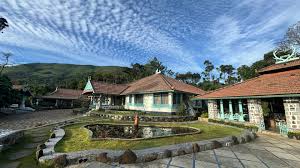
On a hilltop in Coorg, sandwiched between a coffee estate and the Brahmagiri range, Bungalow 1934 is Amrith Thimmaiah’s home and a living chronicle of Kodava culture.

In 1934, Ketolira Diwan Bahadur Chengappa built a home in the typical Kodava-British style of bungalows, set against the backdrop of the Ballyatra hill. When Chengappa became the first Chief Commissioner of Coorg in 1943, the home became the venue for lavish parties for state guests and British officials.

In 2010, the fourth-generation of the family, Amrith Thimmaiah, and his parents Gappu and Fancy Ganapathi, opened their 91-year-old family home as a heritage homestay.

View of Bungalow 1934 set against the Ballyatra Hill / Amrith Thimmaiah

About the homestay

The Bungalow is located in Yavakapadi village, roughly 30km from Virajpet and Madikeri. There are sweeping valley views, as well as a clear view of the Igguthappa temple, a deeply significant site for Kodavas who visit the deity for a bountiful harvest.

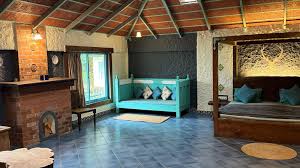
Bedrooms at the Bungalow 1934 / Amrith Thimmaiah

With mud walls, pillars, and beams, the home is a true depiction of Coorg ‘s ainmané or ancestral homes, where vaastu dictates aspects like where the owner’s room should be located (in the kubéra moolé, or south west direction). A sprawling fig tree stands out front, and you enter into a pillared, elevated open veranda where, traditionally, Kodava families gathered for tea, family meetings or an evening drink.

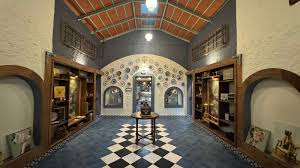
The hall in the Bungalow 1934, with old plates passed from generations in Amrith’s family / Amrith Thimmaiah

Peppered with antiques and with mosaic tile floors, the main bungalow features living spaces, a large common dining area, a room where Amrith stays, and four guest bedrooms. An annexe beside the main bungalow houses two more guest bedrooms. The six spacious rooms are rustic and cosy , with blue tiles, beamed ceilings, in-built fireplaces, and four poster beds. Large windows offer ample sunlight and views of the mountains. When the temperature drops in these misty mountains, there are plenty of fireplaces across the home and porches to curl up with some homegrown coffee.

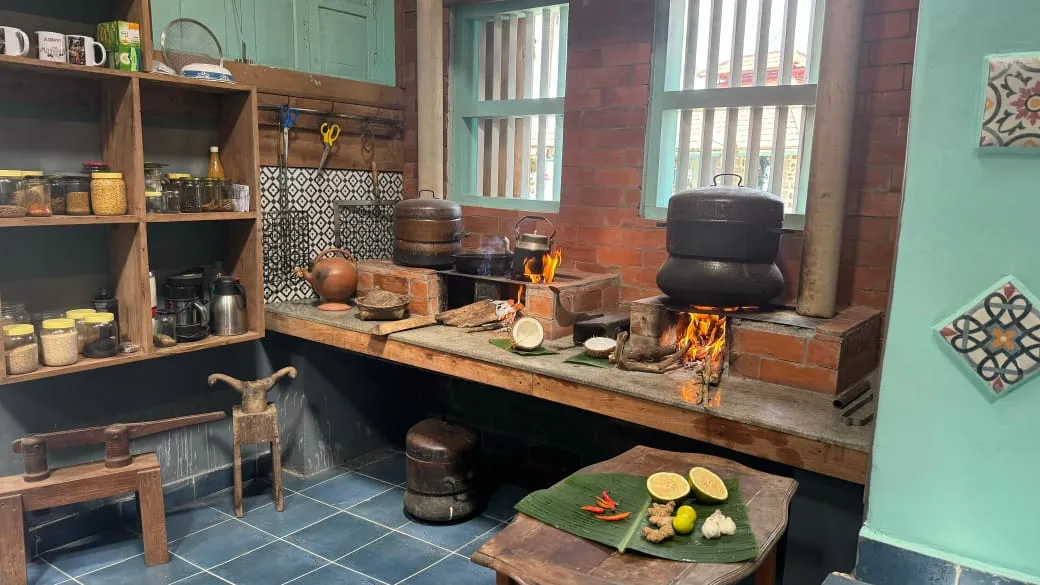
Kitchen at the Bungalow 1934 / Amrith Thimmaiah

The home is surrounded by rosewood, jackfruit and mango trees, and the grounds lead into the 70-acre Green Acres coffee estate. Arabica and Robusta coffee plants grow under a light canopy of Silver Oak, Cedar, and Benteak, dotted with pepper vines and cardamom plants. The buzz of cicadas and birdsong fill the air. Birders will be able to spot hornbills, white-bellied treepies, and the crow pheasant or the chombuka, considered lucky by the Kodavas.

About the hosts

Amrith at the BBQ lunch spread by the stream / Amrith Thimmaiah

Amrith is a rally driver by profession and a passionate host at the homestay, managing bookings personally (the homestay is not listed on any booking platforms), helping with logistics and recommendations. Guests usually come through word of mouth or as repeat visitors, and bookings are confirmed only for days a family member is present at the homestay. Staff leaves and village festivals are respected, and no bookings are made during this time.

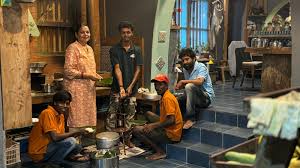
Fancy Ganapathi making Noolputt (steamed rice noodles) with Subbu, Krishna, Chethan & Pavithra / Amrith Thimmaiah

Amrith’s mother, Fancy Ganapathi, is a powerhouse who oversees the food at the homestay. The former lecturer of Kannada literature is a horticulturalist by passion, and a catalyst in forming the 700-member Nature’s Best Food Cluster in Kodagu. The organisation trains grassroot level farmers and enables them to sell their products at outlets in Coorg. “At the Bungalow, I love to share recipes with guests and if someone wants to purchase local produce, I ensure the cluster family provides their products,” she says. Gappu Ganapathi, Amrith’s father, is the backbone of the bungalow and manages the entire coffee plantation.

The Bungalow has 8 to 10 staff members, whose families have been associated with the Ketolira family for generations. Janaki Saraswati, the cook, used to be Amrith’s nanny and was taught heirloom recipes by Amrith’s grandmother.

The food

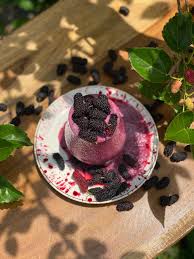
Frozen Mulberry Crush / Amrith Thimmaiah

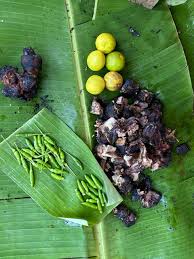
Koli Chuttadh (Chicken woodfire roasted) with bird’s eye chilies and lime / Amrith Thimmaiah

Food at the homestay stays true to any traditional Kodava home, with classic local dishes like khaima undae (mutton keema balls), kori erachi pulao (mutton pulao), pandhi curry and otti (pork curry with rice flatbread). Buffet style meals served in the dining area are generous and take into account dietary preferences. There are numerous vegetarian options within the gamut of Coorg cuisine, featuring seasonal produce like kaaké thopp (black nightshade leaves), kumm curry (mushroom), and kaad maangé curry, a tangy, sweet curry made with Coorg wild mangoes.

Fancy ensures that all dishes are served in the traditional Kodava style: baimbalé with otti (tender bamboo shoot curry with rice flat bread) served with ghee is a common Coorg breakfast; rice cakes or putt with meat curry; chutneys or pajjis made from seasonal produce.

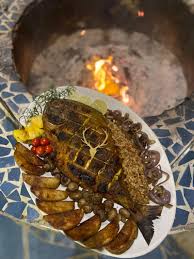
Pomfret Fish Grilled / Amrith Thimmaiah

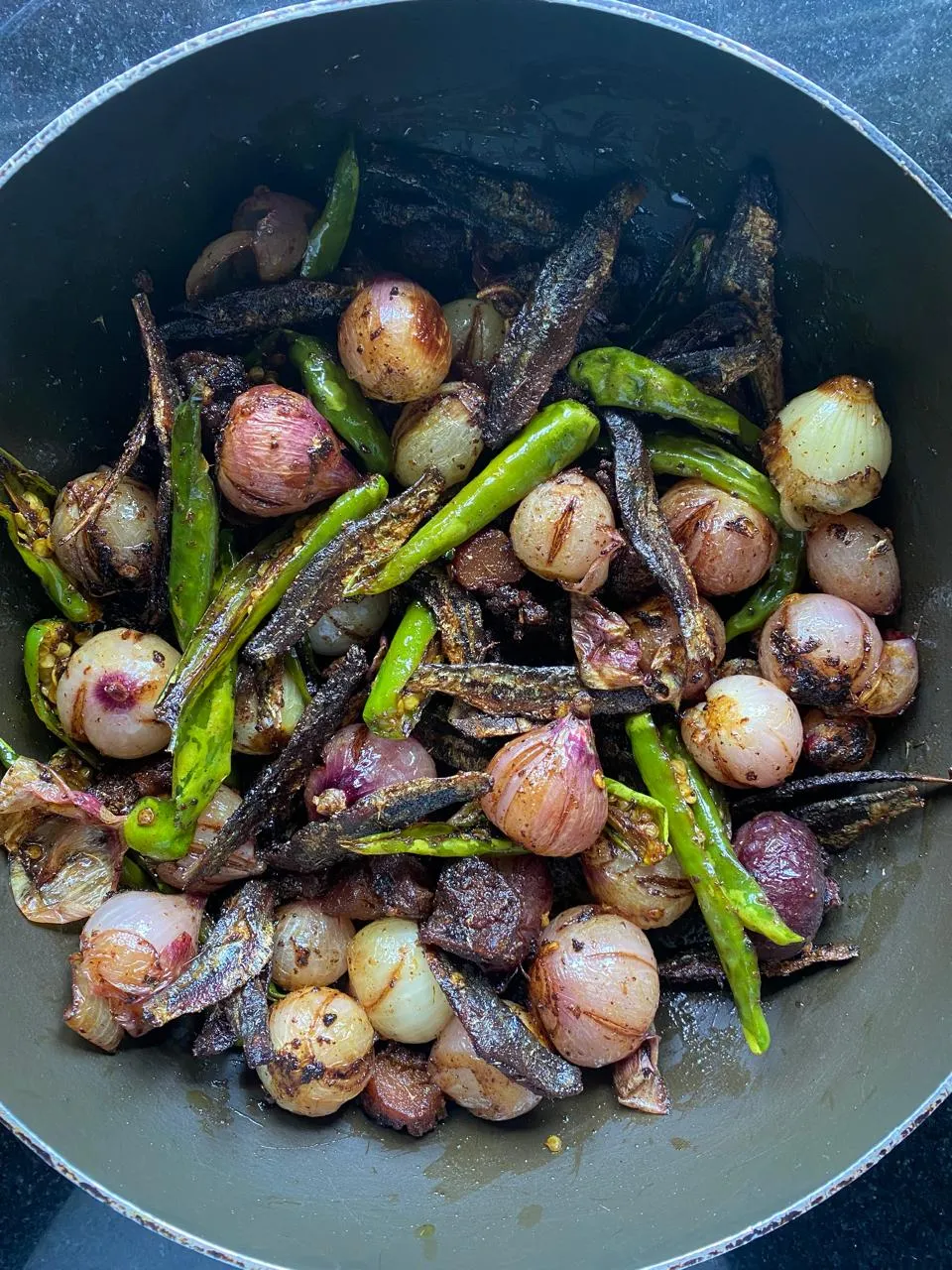
Onak Meen Barthadh (Dried Fish fry) / Amrith Thimmaiah

She also makes fruit wine and chocolates, and her mulberry and pomegranate wines are a hot favourite. This year, she has started to make oil and tea out of the rosemary growing in her small garden. The pathaya or granary on the homestay premises houses the products she makes, and make for perfect souvenirs to take home.

Amrith Thimmaiah

Amrith Thimmaiah

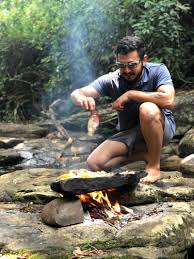
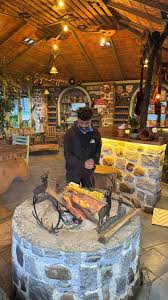
At dusk, Amrith has a house rule: he will host a typical Coorg-style barbeque for guests. Meat is roasted the traditional way over an open wood fire, mixed with finely chopped bird’s eye chili and the juice of bitter lime, to serve up Coorg’s favourite starter, pork chuddals. The family and staff tell stories by the fire, while you can sip cocktails under a star-studded sky with the lights of Madikeri town in the distance.

How to spend 48 hrs at The Bungalow 1934

Sparko at Charandi Polé / Amrith Thimmaiah

The homestay offers plenty of cosy nooks to read, write and while away the hours, but if you want to venture out, Amrith organizes treks to Thadiandamol peak and Chelavara Waterfalls. For those interested, Fancy conducts workshops for chocolate, wine, or jam making (4 people minimum, Rs5,000 per person). Sparko, the family dog, may take you down to a stream a short walk from the bungalow, where you can enjoy a barbeque picnic lunch by the stream.

Amrith Thimmaiah

Take a leisurely 2km walk or a guided plantation tour with Gappu at the coffee estate. Gappu and Fancy live in a home close by, with fish ponds, a cow shed, a coffee drying and storage area, and are happy to invite you over with advance notice.

Address: Yevakapadi, Coorg (Kodagu District), Karnataka

Price is Rs7,500* per person, including all meals, tea & coffee; pet-friendly, except in the monsoon

book now

Getting There: The closest airport is Mysore or Kannur (both 3 hours away). Bengaluru is a 6-hour drive

Instagram: @TheBungalow1934

Website ; +91-9901315437

source: http://www.cntraveller.in / Conde Nast Traveller / Home> Hotels & Homestays / by Sitara Cariappa / July 13th, 2025

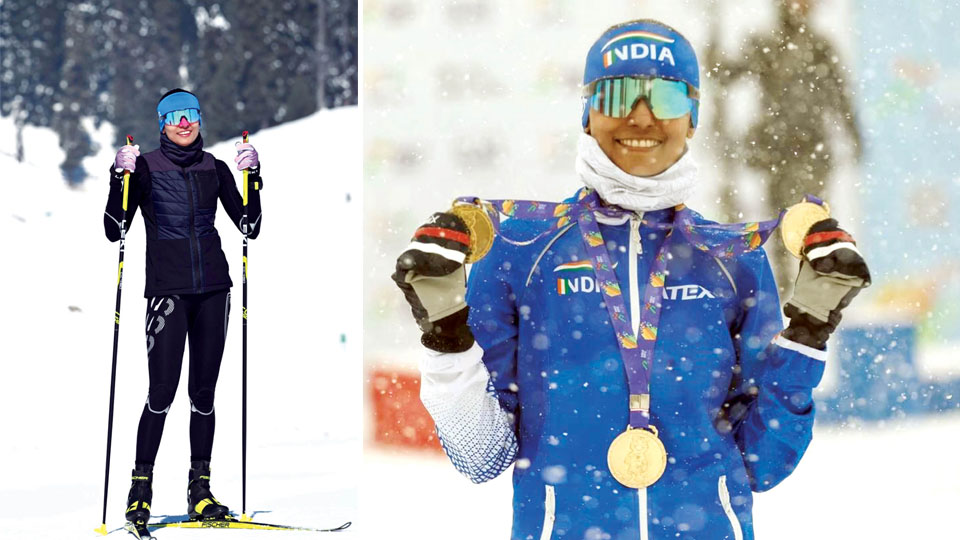
Chasing Gold through Snow. Kodagu’s Thekkada Bhavani becomes the first Indian woman to win international skiing medals

Kodagu’s Thekkada Bhavani becomes the first Indian woman to win international skiing medals

While many youngsters influenced by Bollywood dream of entering the world of glamour and fame, here is a girl who chose a very different path — the icy slopes of the mountains. Inspired by adventure and driven by determination, she turned her passion for mountaineering into a historic achievement, becoming the first Indian woman to win medals at an international-level cross-country skiing championship.

A native of Napoklu in Kodagu district, Thekkada Bhavani Nanjunda defied all odds to make not just her hometown, but the entire State and Nation proud. She clinched bronze medals in the 5 km distance race and 1.3 km sprint at the South American Cross-Country Skiing FIS Competition held at Corralco, Chile, in September this year.

Bhavani has represented India at several prestigious international events, including the Nordic World Championships and the Asian Winter Games. A multiple medal winner at the Khelo India Games and the National Skiing Championship, she is now rigorously training to qualify for the 2026 Winter Olympics in Italy.

Daughter of Thekkada Nanjunda (Shambu) and Parvathi (Divya) of Perur village near Napoklu, Bhavani draws her strength from her roots and family support. Her younger sister, Thekkada Seethamma, works for a private firm in Bengaluru.

Star of Mysore caught up with the trailblazing athlete to learn more about her journey, challenges and preparations for the upcoming Olympics. Excerpts…

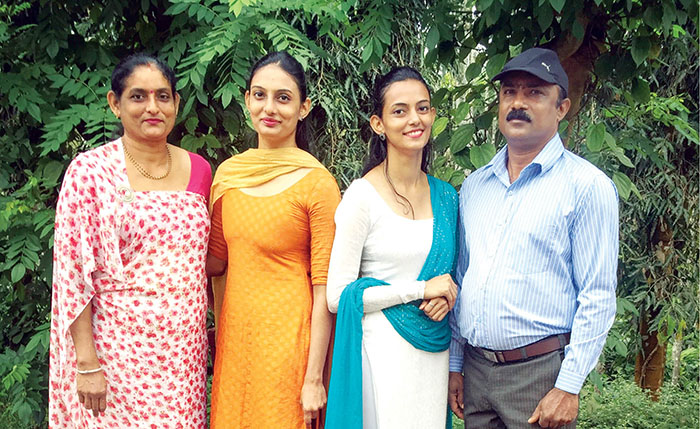
Bhavani (second from right) seen with her father Thekkada Nanjunda (Shambu), mother Parvathi (Divya) and younger sister Thekkada Seethamma.

Star of Mysore (SOM): How did your journey in cross-country skiing begin?

Bhavani: It all started after I watched the movie ‘Yeh Jawaani Hai Deewani’. That’s when I first learned about the majestic Himalayan mountain range, which inspired me to join the NCC Air Wing during my college days.

In 2014, I attended a mountaineering camp in Manali — that was my first encounter with snow, something we never see back home in Kodagu. The experience changed my life completely. I wanted to explore the mountains more deeply and decided to take up skiing so I could glide down the peaks I climbed. Over time, I discovered cross-country skiing and fell in love with it for the endurance, precision, and mental strength it demands.

SOM: What inspired you to pursue adventure sports, and cross-country skiing in particular?

Bhavani: I’ve always been drawn to the outdoors and adventure. But my biggest inspiration came from Marit Bjørgen of Norway — one of the greatest cross-country skiers in history. Her strength, determination, and consistency truly motivated me. Watching her made me want to follow that path and represent India in a sport that very few from our country have even attempted.

SOM: Cross-country skiing is known for its toughness. How did you master such a demanding sport?

Bhavani: It’s been a long and challenging journey. I had no background in snow sports and limited access to proper facilities in the beginning. But I stayed consistent — training first in India, then in New Zealand, and later in Europe. Each season taught me something new — from refining my technique to building endurance and mental resilience. It’s a constant process of learning, and even today, every single day on the snow feels like an opportunity to improve.

SOM: How does it feel to be the only Indian woman to win cross-country skiing medals at an international event?

Bhavani: It’s an incredibly proud and emotional feeling. Standing on the podium with the Indian flag was one of the most special moments of my life. But beyond the medals, it’s about proving that Indian athletes can compete in winter sports at the highest level. I hope my journey inspires more youngsters, especially girls, to explore lesser-known sports and believe that nothing is impossible.

SOM: How have your parents supported you throughout your journey?

Bhavani: My parents have been my biggest strength. Even though they didn’t fully understand the sport initially, they always believed in me and supported my dreams. Their encouragement gave me the courage to pursue such an unconventional path. Every achievement of mine belongs to them as much as it does to me.

SOM: Now that you have reached the international stage, what is your next goal?

Bhavani: My primary focus is the 2026 Winter Olympics in Italy. I want to qualify and represent India with strong performances on the world stage. At the same time, I hope to raise awareness about winter sports and help build better infrastructure in India, so the next generation has opportunities I didn’t have.

SOM: What advice would you give to youngsters wanting to take up cross-country skiing?

Bhavani: I would say, just start. Don’t wait for perfect conditions or ideal facilities. Passion and perseverance can take you a long way. Cross-country skiing challenges you physically and mentally, but it also teaches resilience, patience, and self-belief. If I could do it, coming from a small town in South India, anyone can.

source: http://www.starofmysore.com / Star of Mysore / Home > Feature Articles / October 19th, 2025