Having nearly doubled its India footprint over the last 12 months to reach 75 stores across 30 cities, Jaipur-based Nothing Before Coffee has now set its sights on international growth.
World Coffee Portal speaks to two of the brand’s co-founders, Akshay Kedia and Anand Jain, about balancing affordability with a premium experience, launching in Europe and why the time is right to seek external investment.
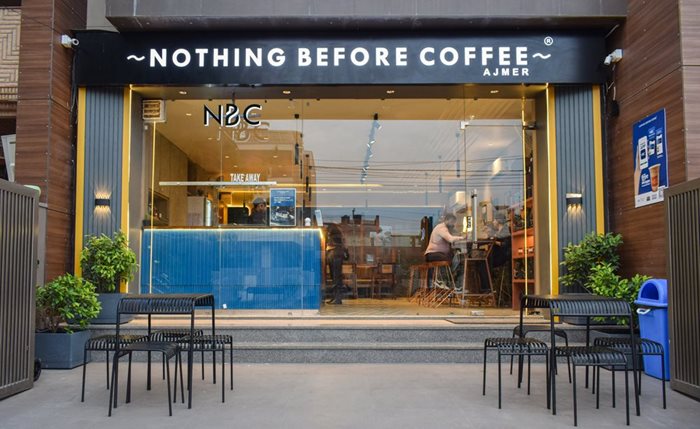
A Nothing Before Coffee store in Ajmer, Rajasthan, India | Photo credit: Nothing Before Coffee
Founded in 2017 by school friends Akshay Kedia, Anand Jain, Ankesh Jain and Shubham Bhandari, Nothing Before Coffee (NBC) is now raising investment to scale its 75-store presence in India and begin the next chapter of its international journey, which began with an outlet in Portugal in April 2024.
The value-focused coffee chain sources coffee from Chikmagalur and Coorg in India’s southern Karnataka state and roasts in-house to supply its growing store portfolio and direct-to-consumer channel. Today, Indian-grown coffee also supplies NBC’s recently opened store in Porto, Portugal, and will travel even further to planned sites in Spain, the UAE and Indonesia.
NBC recently celebrated its seven-year anniversary, tell us about your journey so far.
Akshay Kedia (AK): The journey from four school friends to founders of a growing brand like NBC has been nothing short of incredible. Our seventh-anniversary celebration was truly special, filled with love and joy from our customers. To show our gratitude, we rolled out a special offer – any beverage for ₹99 ($1.18) – and we saw a record-breaking 36,000 transactions during the anniversary weekend on 31 August–1 September 2024, which was four times our usual Saturday and Sunday volumes.
Additionally, our app crossed 100,000 downloads and we were ranked among the top five food & beverage apps on iOS and top 15 on Android in India. These milestones demonstrate the strong connection we’ve built with our audience.
Of course, challenges were part of the journey too. Expanding to over 70 outlets across India and internationally comes with the need to maintain consistent quality and customer experience, which has required constant innovation and rigorous operational standards. However, these challenges have only strengthened our commitment to delivering exceptional coffee experiences.
How has the Indian branded coffee shop market developed over the last seven years and how is NBC responding to these dynamics?
Anand Jain (AJ): Coffee has become an integral part of people’s daily routines in India, whether it’s solo coffee dates, work meetings, or the increasing trend of working from cafés. What was once predominantly a Tier 1 city phenomenon has now expanded to Tier 2 and 3 cities, where coffee is seen as a lifestyle statement and an aspirational product.
At NBC, we’ve aligned ourselves with these changes. We’ve made it a priority to expand into all the major cities while ensuring that we provide high-quality coffee at the right price. The key is to stay connected with our core customers – primarily urban consumers aged 18-35 – by maintaining consistency in both quality and experience.
We position NBC as a mass-premium brand, offering high-quality products at accessible prices, which allows us to appeal to both young professionals and older coffee lovers alike.
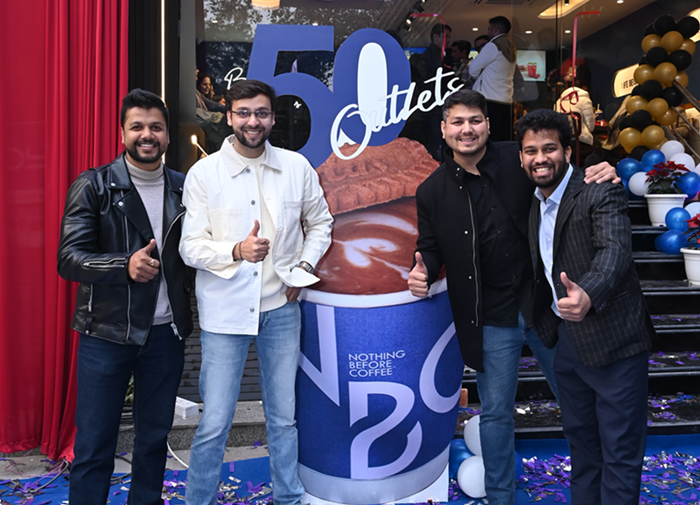
Left to right: NBC co-founders Ashkay Kedia, Ankesh Jain, Anand Jain and Shubham Bhandari | Photo credit: Nothing Before Coffee
Are Indian consumers becoming more receptive to premium coffee?
AJ: The future of India’s branded coffee shop market is a mix of both value-focused and premium experiences. We see a diverse range of consumers – some prioritise affordability and value, while others are increasingly willing to spend more for a premium coffee experience. This shift is driven by a growing appreciation for specialty coffee and unique offerings, especially in urban areas where consumers are more discerning and seek out quality.
At the same time, there’s still a strong demand for value-driven options, particularly in smaller cities. The key for brands is to strike a balance, catering to both segments without compromising on quality.
Why is now the right time for NBC to seek external investment for the first time?
AK: We’ve mapped out a clear expansion plan with an aim to open 100 new outlets by 2025 and external investment will play a crucial role in achieving that growth. After successfully establishing our brand across India, the timing is ideal to scale further and enter new markets. We’re confident in our model, our products and the demand for premium yet affordable coffee experiences, making this the right moment to bring in investors to fuel our next phase of growth.
“We see Europe as a key region in our global expansion”
What attracted you to the Portuguese market?
AK: Portugal was an exciting choice for our first international outlet due to its vibrant coffee culture and the country’s growing appreciation for unique coffee experiences. We saw a great opportunity to introduce our signature beverages to a market that values both tradition and innovation in coffee.
Over the past five months, the store has exceeded our expectations. We’ve seen strong customer engagement, and our products have been well received. The positive response has reinforced our belief that our blend of quality, affordability, and innovation resonates across different markets, and it has given us confidence as we continue expanding globally.
Can you tell us more about your plans for Europe?
Our launch in Porto, Portugal, has given us valuable insights into the European market and the response has been very encouraging. Europe has a rich coffee culture and an appreciation for high-quality, crafted coffee experiences, which aligns perfectly with what NBC offers. We see Europe as a key region in our global expansion, and our plan to open 150 outlets will allow us to establish a strong presence. Alongside Europe, we’re also expanding into markets like the UAE and Indonesia, where we see similar opportunities to introduce our unique offerings and build a strong customer base.
NBC is one of the few Indian coffee chains to expand internationally. Do you expect more to follow in your footsteps?
AJ: Expanding internationally can be challenging for Indian brands due to differences in market preferences, operational complexities, and the level of investment required. Many focus on solidifying their presence in the domestic market before looking abroad. However, with Indian consumers’ increasing exposure to global trends, there’s a growing confidence in Indian brands to succeed overseas.
I do believe more Indian brands will venture abroad in the coming years. As the quality of Indian offerings improves and more brands embrace innovation, we’ll see a stronger push towards international expansion, much like what we’re doing at NBC.
This article was first published in Issue 22 of 5THWAVE magazine.
source: http://www.worldcoffeeportal.com / World Coffee Portal / Home> India> News / November 29th, 2024
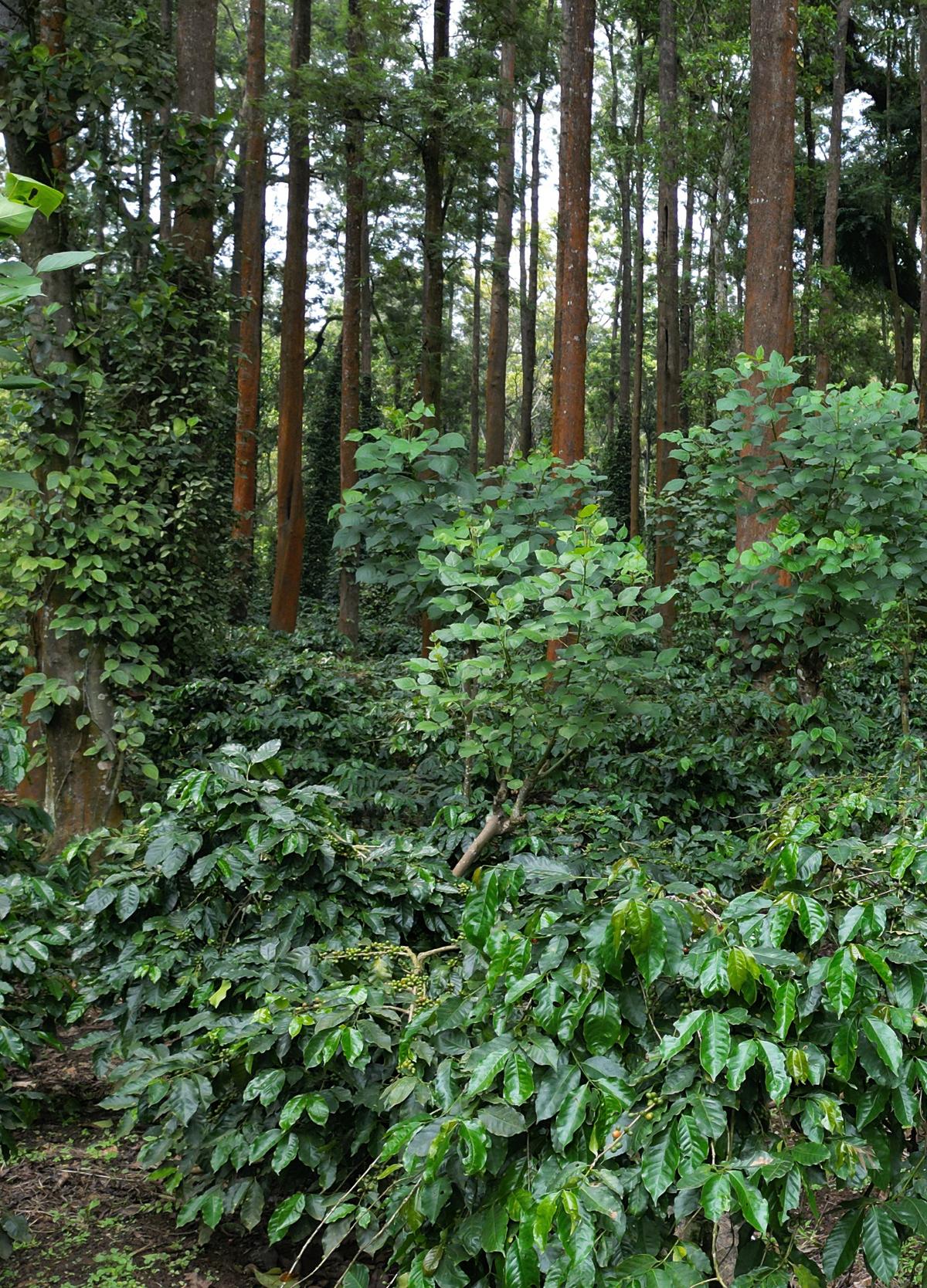
Shade-grown coffee at a Coffee estate in Kodagu district (Coorg), Karnataka. File | Photo Credit: Murali Kumar K.
India’s major plantation sectors such as rubber and coffee have heaved a sigh of relief as the EU Parliament has voted in favour of a proposal by the European Commission to delay the implementation of EU Deforestation Regulation (EUDR) allowing growers, exporters and traders additional time for compliance.
Accordingly, large coffee operators and exporters must meet EUDR regulations by December 30, 2025, while micro and small growers and traders have time until June 30, 2026 to comply, as against the earlier EU set mandatory due diligence procedures and compliance deadline of December 2024.
Being EUDR-compliant indicates a grower’s forest-based coffee produce is legal, and not sourced from any deforested land or unethically cultivated.
Notably, over 70% of Indian coffees are sold in EU countries, and therefore the compliance extension has direct implications on coffee players in India, although India was one among the few countries which grew coffee under two tier thick shade of native trees, say industry players. “Our coffee estates, in addition to coffee and shade trees has diverse flora and fauna. So Indian coffees are most sustainably grown.
In spite of that India opposed EUDR since the compliance does not incentivise sustainably grown coffees,” Coffee Board of India CEO and secretary K.G. Jagadeesha told The Hindu. “Now given that EUDR is a regulation already passed by EU, we have no option but to comply as 70% of Indian coffee exported is going to EU. Coffee Board is developing a platform for assisting coffee producers in India to comply with EUDR. We also welcome the EU decision to extend the deadline,” he added. However, the Coffee Board CEO said EUDR compliance burden on planters and growers would be huge as it required technological and financial resources which won’t be compensated.
Expressing similar concerns K.G. Rajeev, chairman, Karnataka Planters’ Association which represent over 70% of coffee growers in the country, said, ‘‘There are challenges in mobilisation of resources to invest by small and medium sized holdings to be EUDR compliant. Also there are elements of ambiguity. Strict enforcement without clarity on methodology to be implemented may not have desired results. All these may have adverse impact on productivity and profitability of the industry.”
According to Mr. Rajeev, EUDR is a regulation with requirements for due diligence and traceability, which needs lot of data to demonstrate compliance both on ground and documentation. He insisted that Indian coffee couldn’t be compared with coffees in any other geographies as it was predominantly grown under shade.
Coffee activities also encouraged preservation of existing forests which in turn provided habitat for variety of wildlife, avian populations and thus promoted natural biodiversity, he argued. Instead of putting the onus of compliance only on growers, industry institutions and government bodies should help in establishing compliance of regulations, he opined, adding, eco-friendly practices with improved soil health and carbon sequestration aligns with EUDR focus of protection of biodiversity and ecosystem.
Postponement of the implementation of the EU Deforestation Regulation is expected to buoy up the international market for rubber and related products in the short term, said Santosh Kumar, chairman of the Rubber Committee of the United Planters’ Association of Southern India.
“There were ambiguities and concerns in the market. Now that the EUDR will be implemented from 2026, the international market will have a positive impact in the short term,” he said. According to Rubber Board Executive Director M. Vasanthagesan, with the postponement of the regulation by an year, there is more time to prepare the rubber sector. The measures will continue, he added.
The board has entered into an agreement with Hyderabad-based TRST01 as its technology partner to issue due diligence certificates to rubber exporters. “We recently held a stakeholders meeting and will start registering the exporters. We plan to do it in phases, starting with select districts in Kerala. The small-scale exporters will pay an user-fee and register,” he said.
Industry sources said that of the annual production of about 8.5 lakh tonnes of natural rubber, only 4,000 tonnes are exported directly. However, exporters of rubber products will have to source from the growers who are compliant with the EUDR and so the impact will be on the growers.
source: http://www.thehindu.com / The Hindu / Home> Business> Industry / by Mini Tejaswi & M Soundariya Preetha / November 17th, 2024
“Local markets are thriving with the growing demand and most of the farmers would be in a good position where they sell out every year and earn higher profits. They don’t have to sit on stock, they don’t have to wait for a trader to pick up any,” said Viggnesh V, a coffee industry consultant.
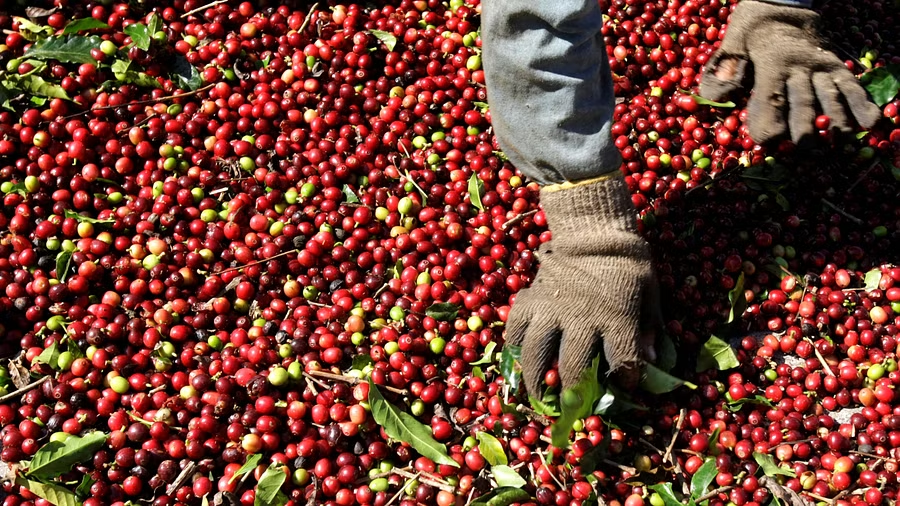
A worker selects arabica coffee beans at Conquista farm in Alfenas in the southern Brazilian city of Minas Gerais. Credit: Reuters photo
Bengaluru:
Extreme climate events leading to untimely rains, fires and droughts across South Asia and Latin America have fueled worries for the already surging coffee prices. This alongside Indian consumers’ rising preference towards coffee as a beverage has proven beneficial for the producers.
“Local markets are thriving with the growing demand and most of the farmers would be in a good position where they sell out every year and earn higher profits. They don’t have to sit on stock, they don’t have to wait for a trader to pick up any,” said Viggnesh V, a coffee industry consultant.
Prices will continue to rise in the foreseeable future, stakeholders and industry experts told DH.
“It is most likely to plateau at max after two years because at the point when it crosses a particular set, it will become completely unaffordable for anyone in the value chain,” Viggnesh said.
Coffee prices, mainly Arabica beans, have touched their highest prices in 13 years due to persistent supply disruptions. Prices are up roughly 40 per cent in 2024 as shortages of the cheaper robusta beans have evoked demand for the arabica variety favoured by specialty chains.
Global scenario
The rally in coffee prices has been gathering pace due to erratic climate in top producer Brazil. The sporadic rains and warmer temperatures have hurt the South American nation’s production.
Prices for the cheaper robusta variety, which is also produced by Brazil have also jumped. This, in turn, has left companies and consumers paying for pricier coffee, and retailers have been scrambling to secure beans.
Vietnam, the second largest producer of coffee is also facing excess rain coupled with farmers shifting to the production of Durian, a fruit widely popular in south Asia which is turning out to be more profitable than coffee.
Indian market expected to grow
The two main varieties of coffee manufactured in India are Arabica and Robusta. Arabica has more demand than robusta coffee due to its mild aromatic flavour. According to the Food and Agriculture Organization of India, about 70 per cent of the total coffee produced in India is exported. India ranks fifth in total coffee exports in the world.
Karnataka produces around 71 per cent of total coffee in India, a majority of which is Robusta. The rest of the production comes from Kerala, Tamil Nadu and the northeastern region. India produced 3,74,200 metric tonnes (MTs) in 2023-24, out of which Karnataka contributed 2,66,885 MT.
India’s coffee market was valued at $478 million in 2022 and is expected to reach $1.2 billion by 2032 at a compound annual growth rate (CAGR) of 9.87 per cent during the forecast period 2024-2033, according to data by Custom Market Insights.
However, several challenges cloud the optimistic future of coffee producers, shortage of labour being one of them. “Almost 65 per cent of our total cost on an estate is labour cost, which has increased steadily over the past few years. 70 per cent of Brazilian coffee crop is done mechanically because their areas are flat, whereas ours are on slopes with coffee trees which makes us highly dependent on labour,” said Jacob Mammen, managing director of Badra Estates located in Chikkamagaluru.
Climate change has been another headwind for coffee producers and experts suggest that it is here to stay. Sudden rain spells have in fact damaged the coffee crops or contributed to low quality.
Some industry insiders say the impact is minimal for now. Suhas Dwarkanath of Benki Coffee said, “To be honest, there have been difficulties in terms of water, temperatures, but it has not affected production majorly because it is not something new.”
However, data by the Coffee Board of India shows a marginal decline in coffee production in India. India produced 3,74,200 MTs in 2023-24 against 3,52,000 MT in 2022-23.
“Now that the middle class is growing and disposable income is increasing, India will become one of the biggest consumers of coffee in the next 3-5 years and the transition can already be seen,” added Benki’s Dwarkanath.
source: http://www.deccanherald.com / Deccan Herald / Home> Business / by Sonal Choudhary / October 21st, 2024
The Hong Kong Cricket Sixes tournament is returning for the first time since 2017. The event will feature 12 nations, competing in six-a-side matches.
FILE PHOTO: Robin Uthappa. | Photo Credit: GETTY IMAGES
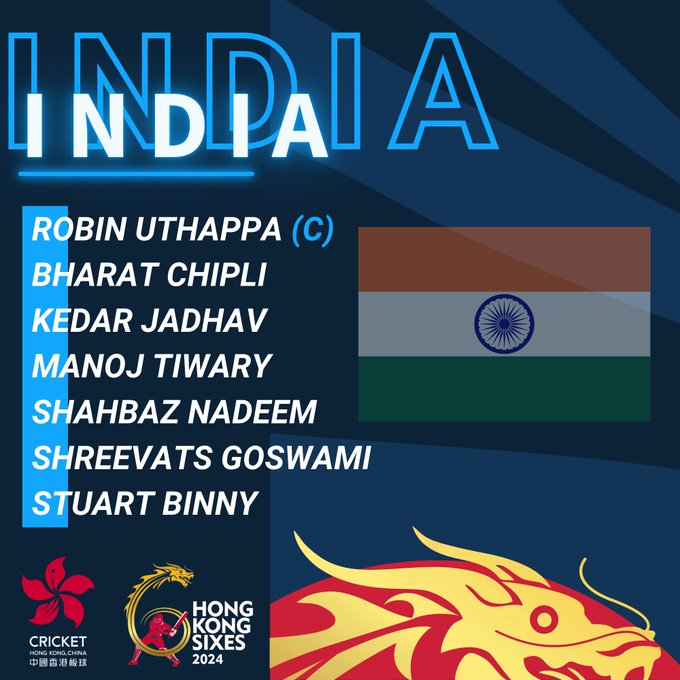
Robin Uthappa will lead a seven-member Indian team at Hong Kong Cricket Sixes tournament, set to be held from November 1 to 3.
The rest of the squad includes Bharat Chipli, Kedar Jadhav, Manoj Tiwary, Shahbaz Nadeem, Shreevats Goswami and Stuart Binny.
The Hong Kong Cricket Sixes tournament is returning for the first time since 2017 and will be played at the Tin Kwong Road Cricket Ground. The event will feature 12 nations, competing in six-a-side matches.
The 12 teams will be divided into four pools of three each, who will compete in a round-robin format. The top two teams in each group will qualify for the quarterfinals. While the winners of the quarterfinals will enter the Cup semifinals, the losers of the quarterfinals will compete in the Plate semifinals.
The bottom-placed team in each pool will play the Bowl Competition.
A total of 29 matches will be played in the three-day tournament.
A Women’s Exhibition Match will also be held on the final day of the tournament to commemorate the 75th anniversary of the founding of the People’s Republic of China.
source: http://www.sportstar.thehindu.con / Sportstar / Home> Cricket / by Team Sportstar / October 12th, 2024
This marks her second appearance at the event, highlighting her growing influence in the global fashion scene
In Frame: Rashmika Mandanna
Actress Rashmika Mandanna on Friday jetted off to Milan, Italy, where she is poised to make her mark once again on the global fashion stage at Milan Fashion Week 2024. This marks her second appearance at the prestigious event, underscoring her rising influence and prominence in the international fashion arena.
She was spotted at the airport radiating charm in a cute and chic outfit, a white sweatshirt and black joggers. With a heartwarming gesture, she made the sweetest heart signs to the photographers, showing off her signature blend of grace and playfulness.
An insider shared, “Rashmika will once again represent India on a global stage alongside numerous other Asian celebrities at Milan Fashion Week 2024.”
The fashion event, showcasing the 2025 spring/summer collections, will run from September 17 to September 23.
Rashmika also took to Instagram Stories to share a selfie from her flight, captioned, “Are you someone who, regardless of the season, always ends up in a sweatshirt or pullover?”
Previously, Rashmika left a lasting impression at Milan Fashion Week with a stunning black gown that won acclaim from fans and critics alike.
In addition to her fashion endeavours, Rashmika is a formidable presence in cinema, with an impressive slate of over eight upcoming films. Her diverse roles range from playing Srivalli in Pushpa 2: The Rule to collaborating with stars like Salman Khan in Sikandar, Dhanush and Nagarjuna in Kubera, Vicky Kaushal in Chhava, Dev Mohan in Rainbow, Ayushmann Khurrana in Vampires of Vijay Nagar, and Ranbir Kapoor in Animal Park.
Rashmika made her acting debut in 2016 with the Kannada film Kirik Party and has since appeared in notable Kannada films like Anjani Putra and Chamak, as well as Telugu hits such as Geetha Govindam, Devadas, Dear Comrade, Bheeshma, and Pushpa: The Rise.
She also stars in the Hindi action drama Animal, directed by Sandeep Reddy Vanga, featuring a stellar cast including Ranbir Kapoor, Anil Kapoor, Bobby Deol, and Triptii Dimri. Additionally, Rashmika appeared in the action thriller Mission Majnu, directed by Shantanu Bagchi and produced by Ronnie Screwvala, Amar Butala, and Garima Mehta, alongside Sidharth Malhotra.
source: http://www.indulgexpress.com / Indulge Express / Home> Celebs / by IANS / September 13th, 2024
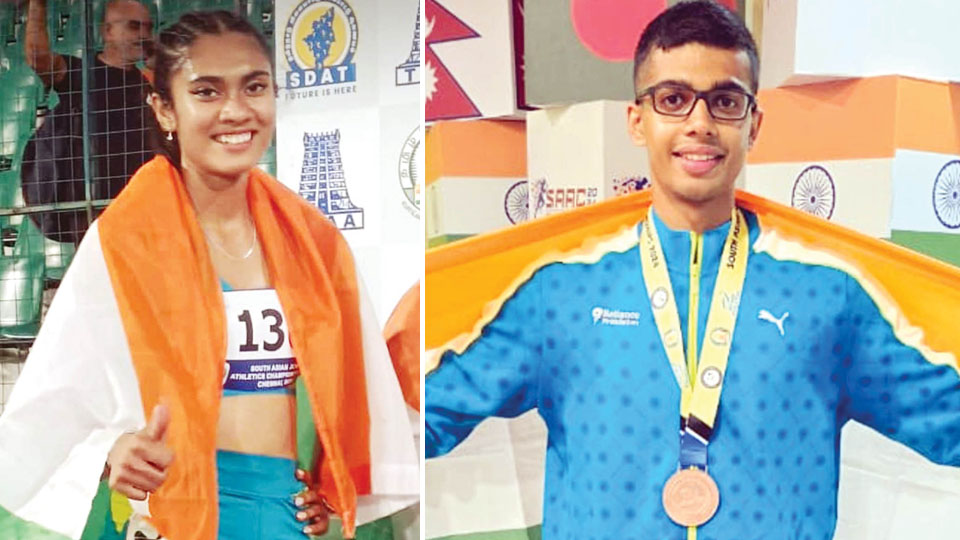
Athlete Bollanda Unnathi Aiyappa, who had won a gold medal setting a new meet record in the South Asian Junior Athletic Meet at Jawaharlal Nehru Stadium, here on Thursday, won her second gold medal setting another new meet record in women’s 200 mts on last day of the Meet.
Unnathi completed the race in the record timing of 23.91sec beating the old record of 24.32 mts set by A. Suseedran at Ranchi in 2013. India’s Nancy (23.11 sec) and Neeru Pathak (29.91 sec) finished in second and third place respectively.
Speaking to Star of Mysore, Unnathi Aiyappa said, she was delighted for having won two gold medals and added that she was in the best of the form because of continuous travelling.
“After World Junior event, I was not able to give my best. I took part in the South Asian Junior Championship with no expectations. But, having won two gold medals has delighted me,” she said.
Though, this was event of the season, Unnathi will be seen in action at the All India Inter University Athletic Championship to be held in December. She is the daughter of Intl. Athletic Coach B.P. Aiyappa and Olympian G.G. Pramila Aiyappa (Guddanda), residents of Bengaluru.
Meanwhile, city’s Thelapanda K. Bopanna won bronze in the men’s 800 mts run. He won bronze with a timing of 1:50.45 sec behind Sri Lanka’s H.D.S. Awishka (1:49.83sec) and India’s Vinod Kumar (1:50.07sec) who won gold and silver respectively.
Bopanna is the son of Dentist T.M. Kalappa and Rachana Kalappa, residents of V.V. Mohalla in Mysuru.
India with a total of 48 medals (21 gold, 22 silver and 5 bronze) finished in the top position of the medals tally followed by Sri Lanka and Bangladesh in second and third positions.
source: http://www.starofmysore.com / Star of Mysore / Home> Sports / September 14th, 2024
Ayatana Hospitality has been honored at the World Travel Awards 2024, with Ayatana Coorg and Ayatana Ooty recognized as leading resorts in Karnataka and Tamil Nadu.
Manila:
Ayatana Hospitality, a premier luxury hospitality brand, has been recognized for excellence in hospitality at the World Travel Awards (WTA) 2024. The awards ceremony held at the City of Dreams in Manila, honoured Ayatana Coorg as Karnataka’s Leading Resort and Ayatana Ooty as Tamil Nadu’s Leading Resort, underscoring the brand’s commitment to delivering exceptional guest experiences.
The World Travel Awards recognises excellence across all key sectors of travel, tourism, and hospitality. As part of the global annual initiative, World Travel Awards covers the entire globe with its Grand Tour which is a series of regional activities to recognise excellence within each continent.
Commenting on the recognition, Vishal Tony, Founder and MD, Ayatana Hospitality said, “We are incredibly honoured to receive the prestigious awards at the World Travel Awards 2024. We were listed among the best resorts, with public voting determining the winner.”
“At Ayatana, our vision is to rediscover the hospitality landscape across the country by launching resorts in historically & ecologically diverse locations. We are constantly working with our service team to improve our services offered to our guests and ensure the experiences they take back home would keep them wanting for more. I want to express my gratitude to our guests and our hardworking team for making this achievement a reality.” he added.
Ayatana Coorg is a luxury resort situated in the serene landscapes of Coorg. Surrounded by lush greenery and captivating views, the property provides a tranquil escape with its luxurious accommodations, top-notch amenities, and unmatched hospitality. The resort offers a perfect blend of nature and luxury, making it an ideal destination for an unforgettable holiday experience.
Ayatana Ooty, located in the Nilgiris Hills in the midst of tea plantations of Ooty is a tranquil resort meticulously designed to ensure ultimate comfort while offering an immersive experience in the heart of nature, surrounded by lush green forests and picturesque mountains. It boasts luxurious accommodations with well-appointed villas offering breathtaking views of the valley.
About Ayatana Hospitality
Established in 2017, Ayatana Hospitalities is a distinguished full-service Hospitality Chain celebrated for its bespoke luxury resorts and hotels. Operating under the umbrella of Aratt, its parent company with a rich legacy tracing back to the early 2000s in the real estate and architecture industry, Ayatana inherits a tradition of excellence.
source: http://www.hospibuz.com / Hospibuz.com / Home> Hotels Hot Topics> Hotel / by Hospibuz / September 10th, 2024
A fountain is also situated in the Raja Seat’s garden.
Paddy plains between the coffee and cardamom plantations, vehicles, and the settlements on the adjacent hill are other attractions of the Raja Seat.
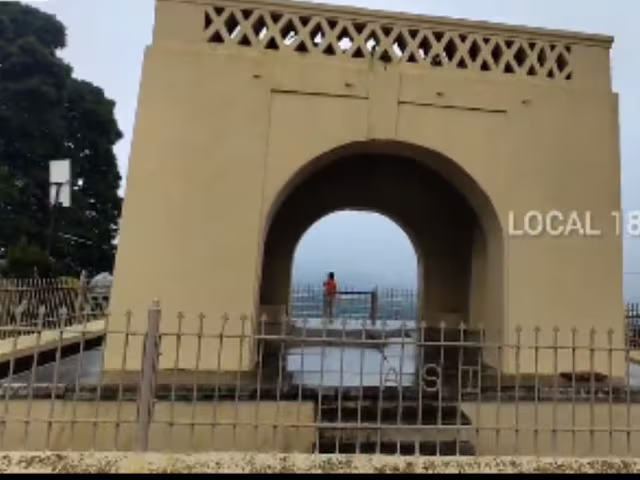
Raja Seat is one of the most famous tourist hotspots in the Madikeri town of Kodagu, Karnataka. According to the Local 18 Karnataka, there is a pleasant atmosphere in Raja Seat, the whole day. This culturally significant site has been constructed on the border of Madikeri town.
After the British rule had ended, the coffins of the natives were moved to different places and a garden was developed there. A moat (deep and wide trench around the rampart of a fortified place (such as a castle) that is usually filled with water) and a garden are situated on both sides of this tourist attraction. Features like the tall mountain peaks and the trees growing on the slopes between them add to the charm of the Raja Seat.
Paddy plains between the coffee and cardamom plantations, vehicles, and the settlements on the adjacent hill are other attractions of the Raja Seat. If you visit this site early morning, you will witness the paddy field covered with a dense fog. The trees on the hills are covered with a mist (a cloud made of very small drops of water in the air just above the ground, that makes it difficult to see).
A fountain is also situated in the Raja Seat’s garden. Ziplining sports are a major source of attraction as well for the children and elders. Zip lining is an action-filled recreational activity that involves riding a steel cable on a protective seat or a belt. In this sport, the people have to ride between two points and generally on a valley that exhibits spectacular scenery. There is also a play park for the younger children. An interesting fact related to Raja Seat is that it was once a British colony.
Raja Seat was known as the place where the King and Queen enjoyed the view of the sunset during the time of King Chikka Virarajendra. During British rule, a grand pavilion with four arches was built here using cement and tiles.
Visiting Hours – Monday to Sunday 9 am to 5 pm
source: http://www.news18.com / News18 / Home> News> India / by Newsdesk, Local18, Bengaluru / July 29th, 2024
Welcome to The Sprudge Twenty Interviews presented by Pacific Barista Series. For a complete list of 2024 Sprudge Twenty honorees, please visit sprudge.com/twenty.
“Today’s earthly embodiment of the virtue of grace would have to be the inimitable Sunalini Menon, an extraordinary woman who I consider to be both a mentor, and one of the world’s greatest coffee cuppers. I first witnessed her quiet self-assurance and profound knowledge of coffee at work in Singapore, when I had just moved from Papua New Guinea. A couple of gentlemen were trying to flog me coffee from Yunnan, China, which was just coming on as an origin. “As good as a Costa Rican hard bean,” they blustered loudly. Sunalini happened to be cupping with and coaching me that afternoon, but they clearly didn’t know her and assumed she was just another woman who could be hoodwinked and bullied.
As we started to cup their samples, Sunalini gently probed them with questions on the varieties they had planted. Was it a first or second-generation cross as the Catimor cup was clearly coming through? Perhaps the parenting might have been from xyz stock as that taste was in the finish, didn’t they think? And where had the progenitor plant material come from as it tasted rather more along the lines of lmn than xyz, didn’t they think?
With every softly spoken question, her deference combined with her indisputable empirical knowledge of what she was cupping put the gentlemen further on the back foot. I watched their posture literally move from forward leaning, imposing, nearly bullying to quiet, defensive, and ultimately defeated. The lids came down over their eyes, their body language shut down, they were silenced. It was a prize-winning performance, the likes of which I have not since seen. Never once did Sunalini raise her voice or humiliate. Instead, with soft-spoken words underpinned by the undisputed certainty of her palate and her knowledge, she whipped them. Always immaculately clad in the bright and decorative costumes of her native India, Sunalini’s personal and professional elegance are an inspiring beacon to other women in coffee.”
Nominated by Shirin Moayyad
How many years have you worked in the coffee industry?
I joined the coffee industry as early as 1971, commencing with the Government of India organization of the Coffee Board, where I served 20 years. When I joined the Board, the marketing for Indian coffee was being carried out by the Board, considering that the farmers, majority of whom were small and tiny farmers, were not very conversant with the marketing of their coffees nor the international market pricing for coffee. In the year 1995, the coffee market got liberalized, with the farmer not only cultivating coffee, but also marketing his coffee produce, when I decided to move from the governmental sector to the private sector, considering that the excitement would now be in the private sector. In fact, when the market got liberalized, I almost decided to give up my job in coffee, as my husband had moved to the Middle East along with my daughter to work in a US bank. However, as the farmers in India requested my help, considering that they were not very familiar with the quality aspects of coffee nor were they conversant with the marketing of their coffee, I decided to stay on in coffee!
I set up a coffee laboratory, which was the first of its kind in India, with the help of the farmers, where I could evaluate the quality aspects of coffees of all in the coffee value chain. Most importantly, my focus was on the coffee farmer and the post harvesting measures he would need to follow and implement on his farm, to ensure the quality of his end product.
My journey started in the private sector on 1st September 1995, with my lab coming into full operation on the 1st of January 1996, handling the quality aspects of Indian coffee from the coffee season of 1995/1996.
A long journey of 50+ years in coffee—energising, stimulating and exciting!
What is your current role in coffee?
My current role in coffee is not only to evaluate the visual and cup quality of coffees grown in India and from across the world, but also to help the Indian coffee farmer and his counterpart in other coffee producing origins to improve the quality of his produce, from the time of harvest till the time the coffee is served to the consumer.
Apart from helping and educating the coffee farmers in India and around the world, I also help in certifying the quality of coffees purchased by international buyers and roasters of coffee, who have specific requirements on the quality of the coffees that they purchase from India.
Teaching and imparting knowledge on the important correlation between post harvest processing of coffee and quality in the cup, has also been an important facet of my career, whereby I have been conducting teaching courses not only in India, but also at the Universita del Caffe, Trieste, Italy, under the University of Udine and the Ernesto Illy Foundation. This has been an important aspect of my career, being able to teach and put across the finer points of quality to young professionals and entrepreneurs, who want to pursue coffee as a career.
The café culture in India, which opened its doors on 1st January 1996, has also enabled me to develop different blends and single origin coffees, helping to present varied taste profiles of coffee to the Indian consumer. The lab helped in developing various blends for the first Café, which started the Café culture in India, with these blends being served, even today, at its various outlets opened in urban and rural India. The lab has helped many cafes in their journey to serve a good cup of coffee to the consumer, which has become an important role in my coffee journey.
I also help in providing consultancy and advice to new start-ups on the quality aspects of coffee, [in particular for] start-ups in roasting and in the cafe industry.
Overall, my current role in coffee is focusing on the quality of the coffee produce, which is cultivated by the producer, exported to the buyer, roasted by the roaster and served in cafes and coffee shops, to be enjoyed by the consumer.
What was your first coffee job?
My first job was that of an Assistant Cup Taster at the Coffee Board of India, a designation which brought with it a lot of laughter. To me, the designation of “Assistant Cup Taster” sounded exotic, whereas, to all my friends, the designation not only brought laughter, but also the exclamation, “you taste cups and cups and even get paid for it.” Well, that was my first coffee job, where I learnt that coffee was a fruit and that we drink the seed of the fruit. I learnt how the seed could be extricated from the fruit, how to roast it, how to brew it, and how to cup it. It has been a long journey of excitement, adventures, and knowledge acquisition, though, at times, it has also been frustrating and disheartening!
Did you experience a life-changing moment of coffee revelation early in your career?
The coffee revelation came early in my career when I went to a coffee farm. I thought coffee harvesting and processing were very simple exercises, with machines carrying out most of the work, but what I saw on the field was a moment of great revelation to me and changed my whole concept of life in general.
I vividly remember my first visit to the coffee plantations. It was truly a memorable experience. Selective harvesting of those ripe red cherries by nimble and experienced hands was a fascinating sight—watching women covering their heads with scarves, tying jute bags around their waist, darting under tall coffee plants with tiny droplets of dew and gusty winds blowing around them, creatures of all sizes and shapes crawling all over them and yet those tender loving hands picking only just ripe red cherries deftly and with speed. What care, what precision, what patience! Look into the bag and you find only just ripe red cherries. Talk to them—there is only a smile which flashes back at you, a smile of satisfaction, a smile of thanks, a smile of humility. I learnt a lesson during that visit that, even in any situation of hardship and difficulty and in adverse conditions of work, you would still need to maintain a balance and carry out the task that is before you with care, humility, and dedication.
The women working in the coffee fields have been a source of inspiration, besides being my role models in my journey in coffee, teaching me my coffee principles, teaching me that life should be accepted in all its fullness and that strength does not come from a physical capacity, but from an indomitable will—the will to survive, the will to move forward, the will and the courage to change the things we can, and the will and the wisdom to accept the things we cannot change.
What facet of the coffee industry has changed the most during your career?
What has changed the most during my career has been the change in the perception of coffee as a brew, as a beverage and as a drink. When I was growing up in coffee, it was coffee brewed on the Indian filter, a contraption which resembles the “Neapolitan” coffee maker of Italy, wherein the coffee is extracted through infusion and by gravity. The coffee, which is brewed, is thereafter mixed with milk and sugar and served in Indian households and in small coffee outlets called “Darshinis”, which are located by the wayside in India.
Today, in India and in other producing and consuming countries, where tea has been the main beverage that is consumed, coffee has become a way of life. It is looked at as a drink, which is not only brewed on the Indian filter and served with milk and sugar, but brewed in exotic ways on different brewing equipment, whose principle of extraction is different, creating different taste profiles in the cup.
In my country, coffee is no longer looked at as a drink for the elderly and to be drunk at home. It is considered a hip beverage and drink, which is served in cafes, which have sprung up in every nook and corner of urban and even rural India. The Millennials and Gen Z’s have changed the face of coffee not only in my country, but also in the world around us, making us understand that there are waves in coffee, which change the appearance of the coffee bean and its taste profile.
At present, issues like quality, sustainability, wellness/health, and convenience are becoming the mainstay of the world coffee industry, with consumers not only wanting to understand the quality, sustainability, and health benefits of the coffee they are drinking, but also wanting their cup of coffee to be served in a convenient format such as a pod, a capsule, an RTD, a cold brew, or as a crafted instant coffee. This is a far cry from the 1960s, when all we saw the bean being extricated from the fruit!
Is there a person or persons who served as your mentor early in your coffee career? How did they impact you?
Yes, there are many persons who have served as my mentors when I started my career in coffee. I was perhaps the first woman to enter the coffee arena in India and I use the word “arena” because coffee was entirely a male-dominated bastion when I entered the Coffee Board of India. I found that I was the only woman in the officer’s cadre at the Board and had to develop the strength to wade through this “male” cup of coffee and not just wade through this cup, but also ensure that my work in the taste profile of the cup would be appreciated!
It has been a long journey… a journey which made me look up to different mentors and individuals, who shaped my life in coffee.
My first mentor was the late Dr. Ernesto Illy, whom I met at a fair in Trieste, when I was busy hanging up various paraphernalia of articles at the India booth. He was surprised to see a young Indian woman in coffee and took me into his fold, teaching me not only the taste aspects of coffee, but also the chemistry behind the taste nuances in coffee. He was a superb taster, helping me to understand how to identify the different attributes in the cup and most importantly, to relate the attributes in the cup to the chemistry of the coffee bean. He mentored me in my coffee career, for which I am extremely thankful.
The late Erna Knutsen, whom I met a couple of times during the SCA events in the US, also helped me to understand that a woman could be strong and grow in coffee, provided she develops the knowledge base in coffee. She helped me to understand that I need to read and learn about coffee, before I could speak on coffee. She made me understand that “knowledge is power” and without a knowledge base, I would be a dormant coffee bean!
Kenneth Davids is another mentor of mine, who helped me to develop my vocabulary in coffee. He is very calm and patient and a brilliant writer, who helped me to understand how to describe a cup of coffee and how to put it across, in a simplistic manner, to the average consumer.
What still surprises you today about coffee, or gives you joy?
Today, what still surprises me about coffee is the fact that I can never say “I know it all.” Every day is a new and stimulating experience for me, giving me joy in understanding and appreciating the various taste nuances and taste profile of a cup of coffee. When you taste pure 100% Arabica of a certain variety, you get certain flavor notes and when I taste the same 100% Arabica, but pertaining to a different variety, I get an array of different flavor notes and that’s what gives me joy—the joy of discovery, the joy of experiencing, and the joy of tasting a varied cup of coffee every day!
What’s something about the coffee industry you’d most like to see change?
The change that I would like to see in the coffee industry is to see the coffee farmer being highlighted and given prominence, when one drinks a cup of coffee. Today, when one drinks a cup of coffee, we are mainly talking about its flavor and perhaps, some information about how it was processed and from where it was obtained. However, not very many consumers are aware of the hands behind the beans, the hands which have toiled and produced that exotic cup of coffee. I would like to see the change where it would be the farmer in focus and thereafter, all the other factors of terroir, altitude, shade pattern, certification, and taste nuances. Giving the farmer the prominence, with his caricature or a photo and a few lines on him/her and the family, could perhaps help in enhancing the taste profile of the cup of coffee, as one would appreciate and understand the hard work that has been put in by those caring hands, to produce that tasty cup of coffee!
What is your most cherished coffee memory?
Among the very many cherished coffee memories that I have, the one that holds a light in my mind is the memory of a hardcore Arabica buyer, who disliked the Robusta bean, but came to appreciate it at my lab. I still remember the hardcore buyer talking only about Arabicas and was even averse to the mention of the word “Robusta”. I wanted to understand why this buyer was so averse to the Robusta bean. Hence, when he came to my lab to carry out cupping of various Arabica coffees, which he was proposing to taste and then purchase, I slipped in a Robusta cup in-between the cups of Arabica coffee and had written the details of the Robusta bean under the cup, as I did with all the Arabicas.
It was a blind cupping session. The buyer was a good taster too. He cupped all the coffees and when he came to the Robusta cup, he stopped for a while, tasted it, re-tasted it, but he did not mention any negatives and proceeded with the cupping. At the end of the cupping round, he came back to this cup of Robusta coffee, tasted it and asked me as to what this cup was all about? My first reaction to his question was not the answer, but asked him as to whether he appreciated the cup or whether this cup was not up to his expectations. The answer I got was quite surprising.
The cupper stated that the cup was different, but he liked it as it had some unique notes, which he found to be not only different, but also very acceptable. I was overjoyed, but did not show my happiness and instead asked him to lift the cup when he would see the details of the coffees, which had been prepared and served at the table for cupping. He lifted the cup and for a moment, his face changed color. I could see him absolutely confused, when he turned round to me and said “No, this cannot be Robusta!” I said yes, it is a well prepared washed Indian Robusta. He was shocked.
What I liked about him was that from that cupping day onwards, while he may not purchase Robustas, he does not talk poorly of the Robusta bean. In fact, whenever he discusses the species of Arabica and Robusta, I can hear him saying that Robusta too is quite a distinct bean and that there are buyers who love the bean and there are those who still have not been able to find the usage for this coffee species. This is a memory that is etched in my mind and which I will never forget.
Do you make coffee at home? If so, tell us how you brew!
Yes, making coffee at home is a ritual. I grew up in a home where coffee was brewed every morning on the Indian filter and me and my sister, as children, would wake up to the aroma of the coffee brewed by my grandmother, which would hit our nostrils and be our “wake up” call for the day to begin.
The brewing is a very simple methodology. The coffee is a form of Drip Filter, brewed by infusion and gravity. The Indian filter comprises two vessels placed one on top of the other. The top vessel has small holes through which the brew is extracted. The coffee powder is placed in the top container and to ensure that the coffee bed is not disturbed when hot water is poured for brewing, a plunger is placed on top of the coffee bed. Hot water is then poured into the top container and the hot water passes through the bed of coffee powder, slowly extracting the coffee flavors from the coffee powder and drips down by gravity into the lower container. Generally, we take about 10g of coffee powder to about 100 to 120ml fresh boiling water, though this ratio would depend on the taste preference of the person who is brewing and drinking the cup of coffee. It takes about eight minutes for the coffee to be brewed and thereafter, a cup of coffee, either with or without milk and sugar is enjoyed.
Depending on the time of day and my mood, I vary my ratio of coffee powder to water and enjoy my cup of ‘black coffee’!
What is your favorite song/music to brew coffee to?
My favourite song is ‘Black Coffee’ by Ella Fitzgerald.
What is your idea of coffee happiness?
My idea of coffee happiness is working with the small coffee farmer, helping him to understand the coffee beans that he produces, standing with him while he processes his coffee beans and thereafter, cupping with him and helping him to understand how the flavor attributes and taste profile get developed in the coffee cup through his helping hands. It gives me joy to see the light and smile on the tiny coffee farmers face when his coffee is recognized and appreciated by roasters, buyers, and consumers around the world. The joy on his face is what brings me happiness.
If you could drink coffee with anyone, living or dead, who would it be and why?
I would like to drink coffee with my late grandmother. It was she who introduced me to the aromatics of coffee. Every week, I would walk with her to the nearby coffee store, where she would chose her roasted beans, prepare her blend, get the blend ground to her specifications and thereafter, carefully carry the coffee packet home, to being brewed every morning. As a child, I was fascinated by this exercise of round shaped beans and flat beans being mixed together; at that point of time, I did not know that it was a mix of round beans of peaberry and flat beans of Arabica.
What I loved about the entire experience was that, I not only walked with my grandmother to the nearby store to see the blend being made and the coffee beans being ground, but also enjoyed the aromatics of the coffee powder and the aromatics of the brew, which hit my nostrils every morning as a “wake up” call to start my day.
My grandmother would brew the coffee on the Indian filter and drink the coffee from a special mug, which we call “Sombu” in India—a large container with a long neck, which can hold almost 400ml. of coffee. She would sit along with my sister and myself, drinking her “Sombu” of coffee, with both of us sisters looking at the coffee beverage “longingly” and drinking our glass of milk. No amount of pleading would enable us to sip her “Sombu” of coffee, but her condition was that, if we study and behave well throughout the day, she would add a few drops of the coffee beverage to our milk, the next day. This is a memory I will never forget.
What’s one piece of advice you would give someone getting their start in the coffee industry today?
Traversing coffee is a very adventurous and stimulating journey, but one needs to learn and understand the different facets of the coffee bean. It is a long journey of studying, understanding, and appreciating the bean, with the challenge of the aromatic nuances of the coffee brew not being easily discernible. However, I can state with confidence that, embarking on the coffee journey is invigorating and inspiring. Once you start on the journey, you will never look back, but only look forward, to continue traversing the flavourful, yet challenging road to energy, excitement and exhilaration!
Thank you so much.
The Sprudge Twenty Interview series is presented by Pacific Barista Series. For a complete list of 2024 Sprudge Twenty honorees and interviews, please visit sprudge.com/twenty.
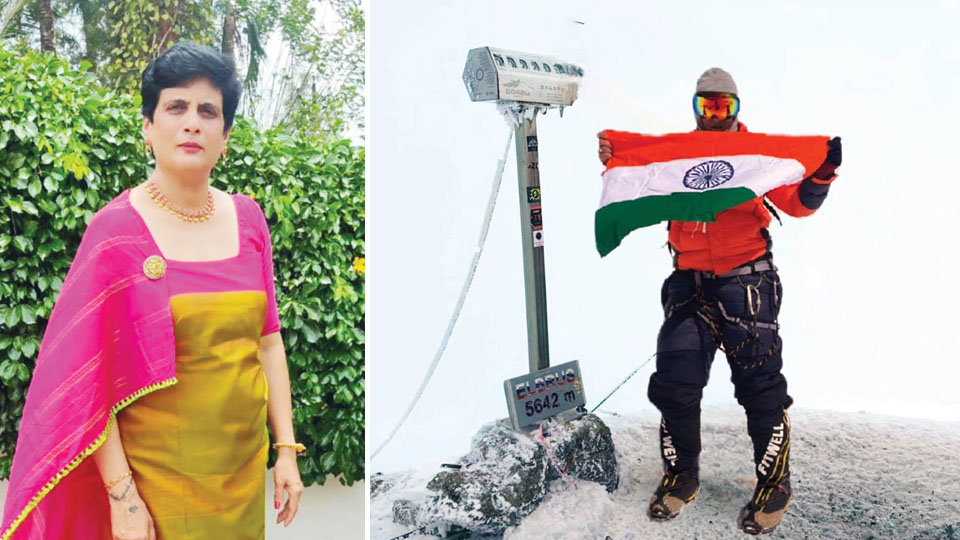
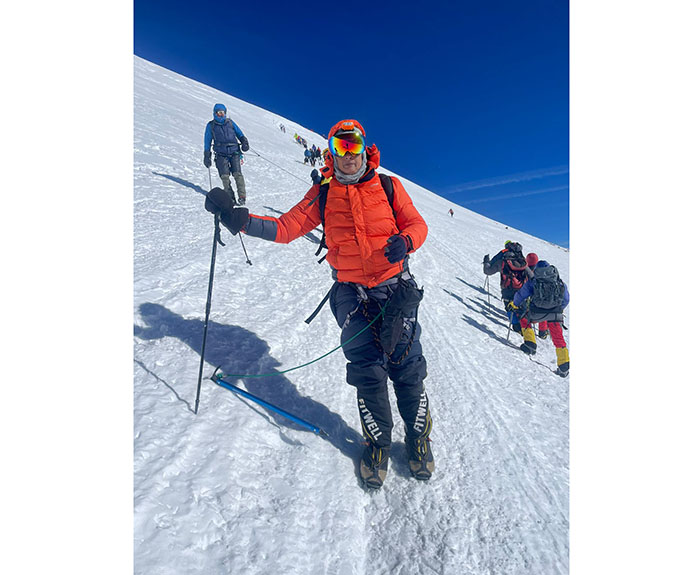
Jammada Preeth Appaiah, a resident of Bannimantap, Mysuru, reached the summit of Mount Elbrus, the tallest mountain in Russia and Europe, on Aug. 17. She completed the climb in 7 hours and 20 minutes, starting at midnight and reaching the peak at 7.20 am. She was part of 11-member expedition team.
Preeth is the second person from Kodagu to achieve this feat, following Tekkada Bhavani from Peroor, Napoklu. In March 2023, Preeth also scaled Mount Kilimanjaro, Africa’s highest peak and the tallest free-standing mountain in the world at 5,895 metres (19,340 feet).
Mount Elbrus, an extinct volcano standing at 5,642 metres (18,510 feet) above sea level, is located deep within the Caucasus range near the Georgia border. This range, which includes 14 of Europe’s highest mountains, spans 700 miles and is home to the tenth-most prominent peak in the world.
Situated in the southern Russian republic of Kabardino-Balkaria, Mount Elbrus is the highest peak of the Caucasus Mountains. Although part of the Caucasus Range, which straddles Asia and Europe, most geographers classify it as the tallest peak in Europe.
Speaking to Star of Mysore over the phone, Preeth Appaiah shared details of her journey to conquer Mount Elbrus. She departed from Mysuru on Aug. 9, arriving in Russia on Aug. 10. On Aug. 11, she undertook an acclimatisation trek to a mountain rich in Molybdenum, standing at 4,120 metres (13,515 feet).
Following this initial trek, Preeth travelled to Elbrus village and completed two more days of acclimatisation walks to Pastukhov Rocks. The final summit push for Mount Elbrus began around midnight, with Preeth reaching the peak by 7.20 am on Aug. 17.
Biting Cold
“Mount Elbrus is fraught with hidden death traps, with temperatures plummeting to minus 35 to minus 40 degrees. The Arctic wind is extremely dangerous and despite wearing five layers of clothing and climbing gear, the cold was unbearable. The mountain is riddled with crevices and craters that can easily be camouflaged by snow in bad weather. We couldn’t summit for two days due to the weather, so we finally made the ascent on Aug. 17,” Preeth recounted.
After successfully scaling Mount Kilimanjaro, Preeth was determined to conquer Mount Elbrus as part of her goal to climb all seven summits — the highest mountains on each continent.
Preeth Appaiah is a home-maker, married to advocate Jammada M. Aiyanna in Mysuru. The couple has two sons, Pratham Poonacha and Aryan Kuttappa. Preeth is the daughter of late Hon. Captain Kunjiyanda Appaiah and Gowramma. Her brother, Kunjiyanda Machaiah (Machu), is a wildlife photographer.
source: http://www.starofmysore.com / Star of Mysore / Home> News / August 20th, 2024
WELCOME. If you like what you see "SUBSCRIBE via EMAIL" to receive FREE regular UPDATES.
Read More »