Several farmlands in South Kodagu have been abandoned owing to bad weather conditions and the increased movement of wild elephants.
Madikeri:
Paddy cultivation in the district is receding compared to yesteryears as farming is yet to pick up pace this monsoon. Changing weather conditions, natural disasters and increased wildlife conflict are other factors affecting paddy cultivation. It is said that only 48 hectares of land have been cultivated with paddy.
Over six years ago, nearly 35,000 hectares of farmlands across Kodagu were cultivated with paddy crops. But, the extent of the cultivation has diminished over the years as the target for paddy cultivation has now been reduced to 30,500 hectares by the agriculture department.
“The increasing wildlife conflict can be seen as one of the reasons for the farmers to give up paddy cultivation in several farmlands in the district. Further, many farmers have also taken to the cultivation of horticulture crops. Increased conversion of farmlands to areca nut estates has reduced paddy cultivation,” opined Shabana Sheikh, the Joint Director of the Agriculture Department.
A total of 23180 hectares of farmland was cultivated with paddy achieving a target of 76% last year. Over 384 hectares suffered crop loss due to rainfall last year.
The farmers of South Kodagu have increasingly given up paddy cultivation. Out of the 14000 hectares of targeted cultivation, only 9960 hectares were cultivated for paddy last year. Several farmlands in South Kodagu have been abandoned owing to bad weather conditions and the increased movement of wild elephants.
With monsoons delayed in the region this year, the paddy transplantation work is yet to pick up pace in the district. In Madikeri taluk, only 40 hectares of farmlands have recorded paddy transplantation work to date this year. Meanwhile, eight hectares of farmland have witnessed paddy transplantation in Somwarpet taluk. Nevertheless, as per the data recorded by the department, no farmlands have yet been cultivated for paddy due to delayed rains across South Kodagu including in Virajpet and Ponnampet taluks.
source: http://www.newindianexpress.com / The New Indian Express / Home> States> Karnataka / by Express News Service / July 11th, 2023
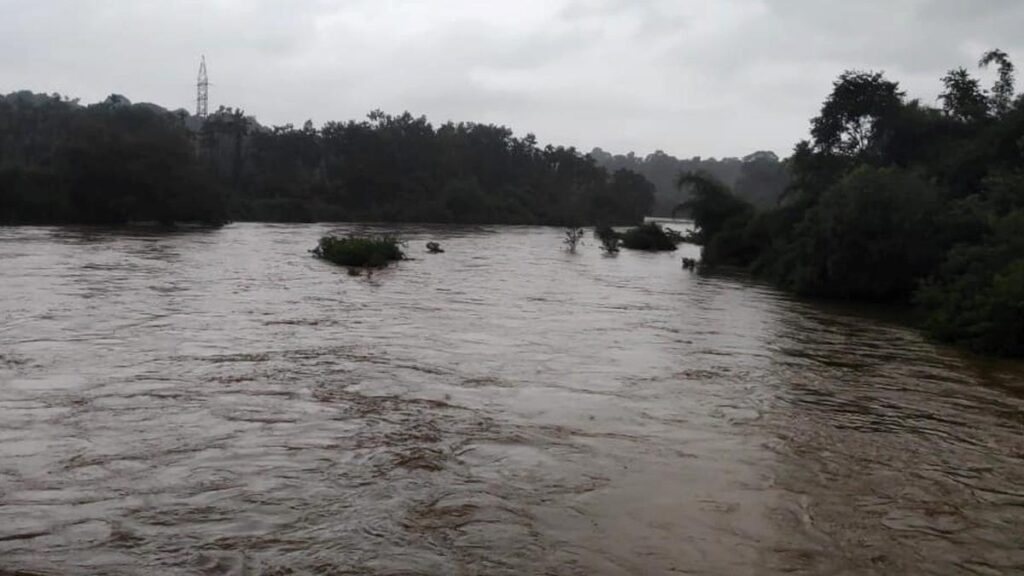
The Cauvery near Betri in Kodagu district brimming with water due to heavy rains on Thursday. | Photo Credit: SPECIAL ARRANGEMENT
All schools and anganwadis in Kodagu will remain closed on Friday as a precautionary measure in view of the incessant rains across the district.
A communique was issued by Deputy Commissioner of Kodagu Venkat Raja. Meanwhile, the India Meteorological Department (IMD) said monsoon was vigorous and active over south interior Karnataka with very heavy rainfall of 120 mm reported in Bhagamandala during the 24-hour period ending 8.30 a.m. on Thursday.
The IMD has forecast heavy rains at isolated places over Shivamogga, Chikkamagaluru, Hassan, and Kodagu district on July 7 and 8.
Though the monsoon progression into Kodagu has been slow, the last 72 hours has shown some traction with moderate to heavy rains in the Cauvery catchment areas.
The cumulative rainfall since the advent of South West Monsoon since June 1 till date is below normal in Kodagu (-79%), Mysuru (-40%), Mandya (-23%), Hassan (-63%), and Chamarajanagar (-32%).
But the 24-hour period ending at 8.30 a.m. on Thursday saw Kodagu registering 58.12 mm of rainfall and this has been the trend since the past few days shoring up hopes of monsoon gaining vigour.
Apart from Bhagamandala (120 mm), heavy rains were also recorded at Sampaje (98.5 mm), Shantalli (100 mm), Madikeri Kasaba (54.20 mm), Napoklu (76.40 mm), Virajpet (68.4 mm), Hudikeri (53.3 mm), Srimangala (59.4 mm), Ponnampet (50 mm), and Ammathi (50 mm). Rains have also lashed other places like Suntikoppa, Kushalnagar, and Kodlipet.
The inflow into the Harangi reservoir was at the rate of 1,557 cusecs and the inflow is expected to increase owing to the current spell of rains in the next few days.
However, the cumulative rainfall since the advent of south west monsoon from June 1 till date is below normal in Kodagu (-79%), Mysuru (-40%), Mandya (-23%), Hassan (-63%), and Chamarajanagar (-32%).
source: http://www.thehindu.com / The Hindu / Home> News> India> Karnataka / by The Hindu Bureau / July 06th, 2023
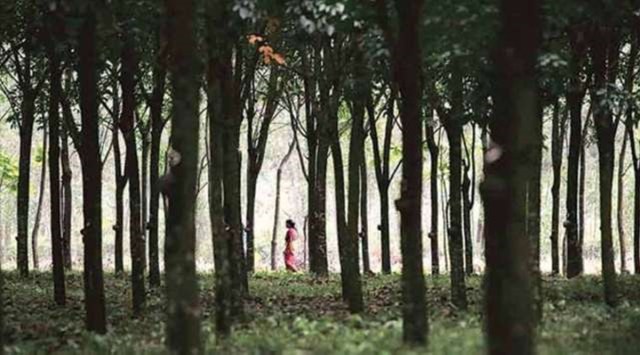
While 70% of saplings are that of native trees, 30% are crops that have some economic value.
Picture for representational purpose only | (Pic: Express)
The College of Forestry at Ponnampet, in collaboration with Sucden India, is involved in an afforestation drive across Kodagu. The initiative called the Sustain Landscape Project involves the distribution of native varieties of tree saplings among farmers.
Plans are afoot to plant them across sacred groves in the district.
Kari Mara (Diospyros ebenum), ‘Karadimara (Chukrasia tabularis), Dhoopa mara (Vateria indica), Kari Dhoopa (Canarium strictum) to name a few, are native trees that once dotted the Kodagu landscape.
Older generations are familiar with the tree species but these are alien to the present generation. The increased demand for wood and medicines along with galloping urbanisation has led to plummeting of the native trees. To revive the trees, Ponnampet Forestry with support from Sucden India this sustainable plan was devised.
“Community forestry is being promoted through the project with seedlings of the native trees being distributed to the farmers of the district. We have been conducting this initiative for the last three years. Final-year students of the college look after the seedlings of the native trees and a few economic crops, under the experiential learning model. The students receive stipends from Sucden and the seedlings raised in the college nursery are then distributed to farmers,” said K Nanaiah, assistant professor of the college.
Look at the numbers The seedlings are distributed for free to the farmers. While 70% of saplings are that of native trees, 30% are crops that have some economic value, he said. Since 2020, a total of 250 farmers (the majority in South Kodagu) have received the saplings and raised them. The college students have also planted saplings across river banks and other protected areas across South Kodagu.
This year, they plan to expand the initiative across Kodagu, he said. The college has invited the participation of various Sacred Grove Temple committees. “Communities must be involved for this sustainable initiative. If this does not happen, we will devise other plans to plant these saplings,” he said.
The project initiative has achieved a success rate of over 50% with 25,000 to 30,000 saplings have been planted so far. They are now targeting 60,000 plantations by this year.
source: http://www.edexlive.com / Edex Live, The New Indian Express / Home> News> Kodagu / by Prajna GR / July 03rd, 2023
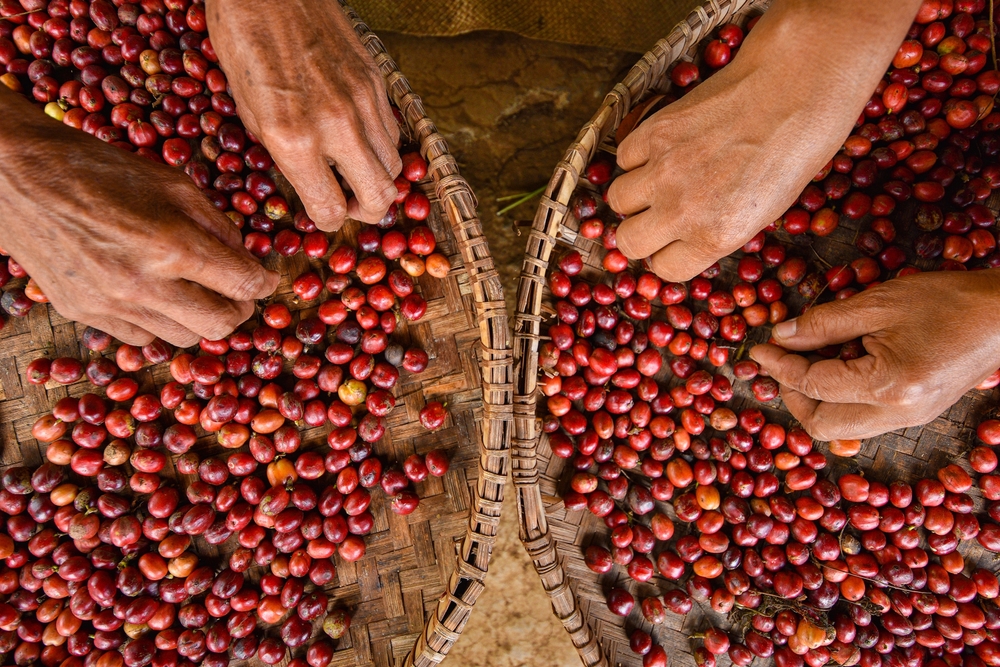
India’s coffee growth is being affected by unpredictable weather patterns, including insufficient rainfall, temperature fluctuations, drought, and heavy flooding.
While Baba Budan, the Sufi monk, planted the smuggled seven coffee beans in the bountiful hills of Chikmagalur, little did he know that India, one day, would be the 6th largest coffee producer, with Karnataka contributing 71 per cent of coffee production to the world. Though the coffee culture has evolved through the years, and there has been a significant boom globally for coffee, the threat for your morning cup is real and is right there knocking on the doors–climate change!
Unpredictable weather patterns are affecting most parts of the world, including India. The country grows a lot of Robusta and Arabica, and both these varieties suffer prolonged periods of inadequate rainfall, temperature rise, drought and heavy flooding.
The Case With Arabica And Robusta Samia Subhani, a fourth-generation coffee planter and the founder of “The Kaimara Belt Coffee,” sounded distressed. Her family has been into coffee growing and trading for over 150 years, and their estate in the Baba Budangiri hills grows Arabica, the most demanding variety. Subhani’s estate has 50-80 farmers working on the plantation daily, all dependent entirely on coffee farming. But with the ongoing effects of climate change, coffee is going through a difficult phase putting all their lives at risk.
Arabica is the most demanding variety of coffee when it comes to cultivation. Photo Credit: Shutterstock
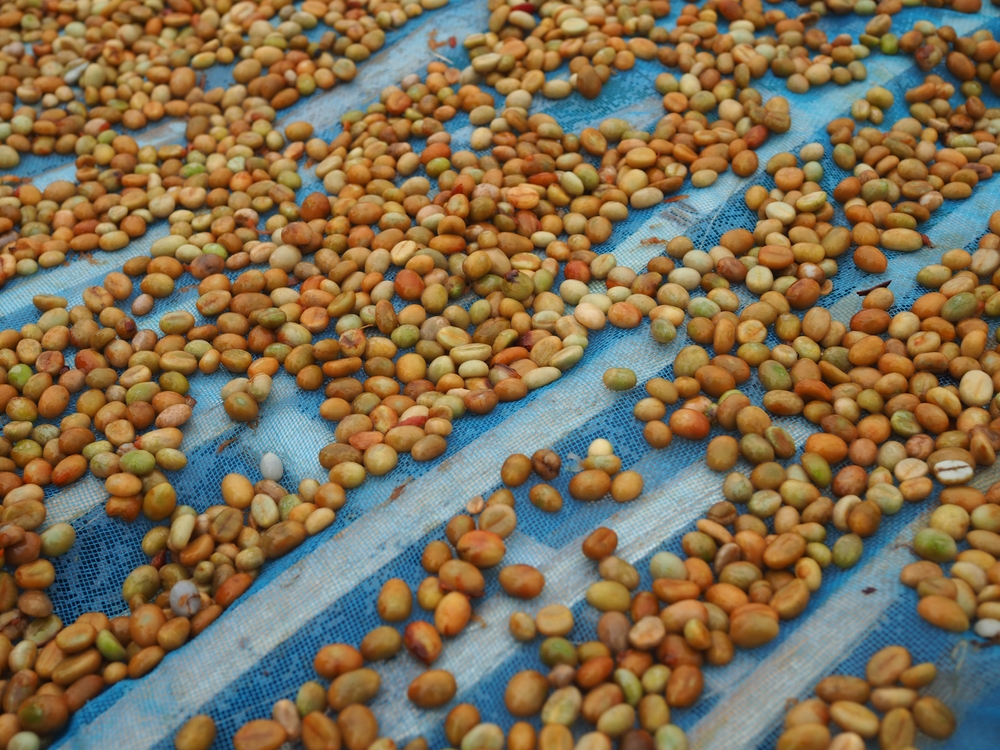
“Climate change causes leaf shedding, reduced coffee plant productivity, and increased vulnerability to pests. Extreme cold delays plant flowering and lowers berry quality. Heavy rains at irregular times cause cherries to burst and drop prematurely. Continuous heavy rains before harvest prevent drying, leading to crop spoilage,” Subhani explained.
But like they say, every solution has a problem. Subhani mentioned that we must dig deeper into our pockets and follow some mitigation measures to maintain the yield and deliver quality coffee to patrons. “So, we provide artificial rains during droughts, maintain proper irrigation in the system, avoid using harmful pesticides to control soil erosion and use only soil-friendly organic fertilisers.”
While this is the situation in an Arabica coffee plantation at Chikmagalur, Coorg, popularly known as the “Scotland of India,” is known to grow more of Robusta.
“Climate change is certain to impact coffee yields due to temperature changes. Coorg is experiencing water scarcity, affecting coffee production. Coffee plants require water, nutrients, rainfall, and sunshine for healthy growth and harvest. Fluctuations in yield have increased, with lower yields in recent years. Delayed monsoons in Coorg will further reduce usable berry production,” said Shruti Shibulal, CEO and Director of Tamara Leisure Experiences.
Though these climatic impacts are less friendly to coffee crops, Shibulal believes they have the advantage of scientific studies to inform how we can prepare for this impending change. Collaboration and knowledge sharing between those with high knowledge of the crop and those with research-driven and technological expertise is vital to assess, test and implement viable solutions.
Robusta is grown extensively in Coorg. Photo Credit: Shutterstock
“The Tamara Coorg is a 100 per cent organic plantation. Therefore, our irrigation is entirely dependent on rainfall. Rainwater harvesting tanks here facilitate the annual reuse of 90 lakh litres of rainwater. These reserves do marginally help us contend with unpredictable weather patterns. However, the coffee trees depend on rain and sunshine in balanced intervals to yield the greatest number of healthy berries,” she added.
According to Shibulal, instead of using measures like industrial fans or increased labour to speed up the drying process of coffee berries, they focus on protecting and nourishing their coffee trees using organic fertilisers and natural supplements. They also prioritise sustainable practices like reusing rainwater for irrigation and actively monitoring soil health. She further emphasised the importance of maintaining a tree canopy structure, which creates a favourable micro-climate for coffee plants and supports biodiversity.
“I would turn my support to local and regional producers or individual plantations (whenever possible). Smaller establishments will face greater challenges during times such as these. As consumers, we must lend our loyalty to those actively pursuing practices that combat climate change in the long run,” Shibulal concluded.
Climate Change Affecting Coffee Planters All Over Tapaswini Purnesh, a fifth generation coffee planter and Director–Marketing & Promotions of Classic Coffee, mentioned that other coffee planters, including the Harley Estate at Sakleshpur in Karnataka, are also battling climate change.
“The worst scenario is the last 4 to 5 years, where we have been experiencing heavy rains during harvest season, i.e., November to February, which normally is a complete dry spell. India is unique to the sun drying of coffee. However, due to unseasonal rains during harvest, plantations are now installing mechanical dryers to avoid quality deterioration,” Purnesh said.
She also stated that coffee production is highly labour-dependent. In the long run, finding labour may become increasingly challenging, an evident trend. As the cost of implementing adaptive measures rises and the arduousness of growing quality coffee amidst climatic pressures is considered, customers must acknowledge that good coffee comes with a price tag. “The coffee growers will be motivated to enhance and refine their coffee cultivation practices if they receive adequate remuneration from the price realisation.”
Meanwhile, the latest estimates warn that climate change may mean that as much as half of the land used for coffee production worldwide may no longer be suitable for it by the middle of the century if global warming continues at this rate. So, as all these coffee planters suggest, every citizen must be more responsible towards our environment, travel responsibly, and follow more sustainable practices to save our environment and the most loved, coffee.
source: http://www.outlookindia.com / Outlook Traveller / Home> Explore> Story / by Deepa Shri Rajan / June 25th, 2023
“During pre-monsoon, I spotted a couple of Giant African Snails on coffee plants and I got rid of them.
Giant African Snails feed on leaves and a branch of coffee plants in Handli village
Madikeri :
With the arrival of the monsoon, coffee growers of Handli village near Shanivarasanthe in north Kodagu are fighting a harmful invasive species. The Giant African Snails have invaded a majority of the estates in the village with coffee growers struggling to rid the estates of these pests.
“During pre-monsoon, I spotted a couple of Giant African Snails on coffee plants and I got rid of them. Now, there is an army of these pests and they are destroying my crops — coffee, pepper vines and plantains,” Suresh Babu, a coffee grower, told TNIE.
The snails feed on stems, leaves and creepers. The farmers rued that the snails multiply quickly and there seems to be no solution in sight to get rid of them. “We are now hiring labourers to remove these snails from the plants. However, this is a disgusting job and we have to pay extra to labourers. A majority of the labourers do not want to take up this task as these snails are slimy,” said Kumar, another grower.
The residents explained that the attacks from these snails across estates have been reported every year during the wet season for five years now. While the government provided some compensation and remedy during the previous years, it is not the case now, said another coffee grower.
“There needs to be a scientific solution to this problem. Coffee Board scientists have to come up with a permanent solution to rid the estates of these snails even as government support to the affected growers is the need of the hour,” concluded Kumar.
source: http://www.newindianexpress.com / The New Indian Express / Home> States> Karnataka / by Prajna GR, Express News Service / June 12th, 2023
Traders from the Middle East introduced the beverage to the Mughal empire but the British made tea the subcontinent’s preferred drink.
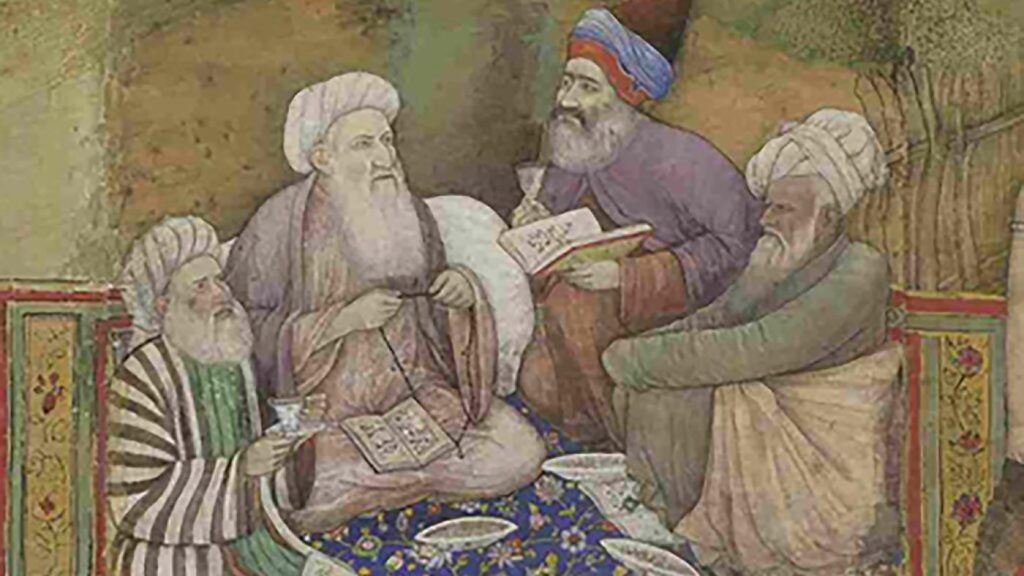
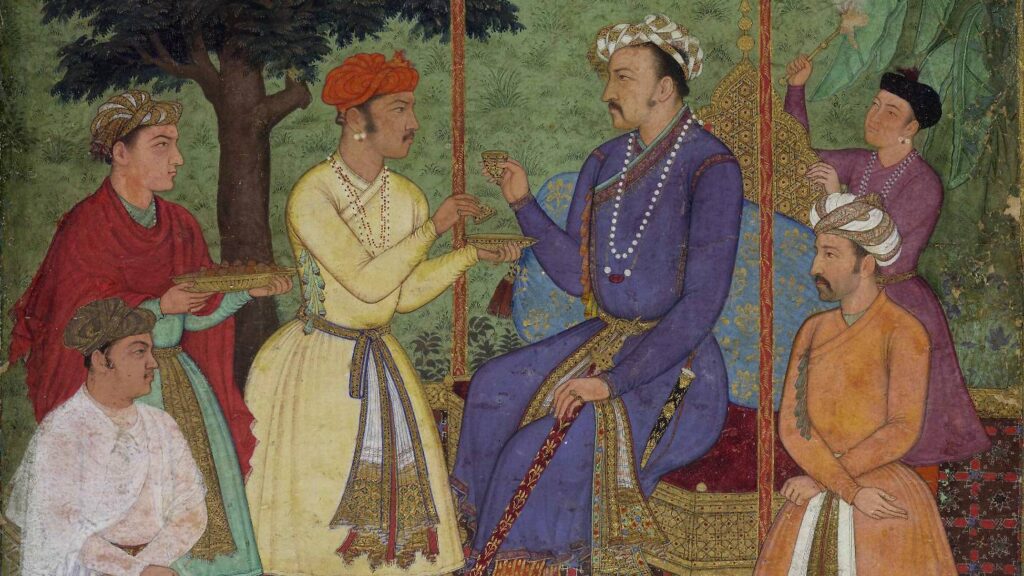
Mughal men drink an unidentified beverage in a 17th century painting later recreated as a drawing by Rembrandt (Public domain)
The sun sets behind regal yet dilapidated Mughal mansions and the magnificent dome of the Jama Masjid as the call for the evening prayer fills the auburn sky in Old Delhi.
Chandni Chowk’s bustling streets reverberate with the sound of honking cycle rickshaws navigating the serpentine lanes.
The sunset marks the beginning of business hours in the neighbourhood, which emerged during Mughal emperor Shah Jahan’s rule; a pocket within the once spectacular walled city of Shahjahanabad, founded in 1648.
Immersed in the soundscape, one’s senses are drawn to the aroma of food being prepared, complemented by the unmistakable scent of masala chai – the Indianversion of spiced tea.
Tea stalls, resembling busy beehives, draw Delhiites patiently waiting for their daily dose of evening tea – some having travelled from the far ends of the city to satisfy their craving.
Tea is without a doubt a national obsession in India. However, the incredible popularity of the drink in the subcontinent is less than two centuries old and only came about as a result of British rule in the region.
It may come as a surprise, but before the arrival of the British, it was coffee that Indians preferred.
Sufis and merchants
Coffee was brought over from the Horn of Africa to Yemenat some point in the 15th century and later spread north into the Near East and then to Europe by the 16th century.
The beverage also spread eastwards, and India’s Mughal elite was quick to adopt it as their beverage of choice.
While the Mughal Emperor Jahangir had a penchant for wine – preferring the Shiraz variety – both Hindu and Muslim nobility in his court freely indulged in coffee.
Edward Terry, a chaplain with the English embassy at Jahangir’s court, mentions that members of the court were captivated by the then-novel qualities of coffee, believing it could “invigorate the spirits, aid digestion, and purify the blood”.
The coffee bean was brought to the subcontinent by Arab and Turkic traders who had strong trade ties with the Mughal Empire.
They not only brought coffee, but also other items, including silk, tobacco, cotton, spices, gemstones, and more from the Middle East, Central Asia, Persia, and Turkey.
By the time Shah Jahan ascended to the Mughal throne, interest in coffee had grown exponentially across Indian society (Public domain)
Such goods would reach the farthest corners of India, including the easternmost region of Bengal. By the time Jahangir’s son, Shah Jahan, ascended to the throne (1628-1658), interest in coffee had spread across society.
Coffee was considered a healthy drink, an indicator of social mobility, and an integral part of Delhi’s elite social life.
Like Terry, another contemporary European visitor, the German adventurer Johan Albrecht de Mandelslo, wroteabout his travels in the east through Persia and Indian cities, such as Surat, Ahmedabad, Agra, and Lahore in a memoir titled The Voyages and Travels of J Albert de Mandelslo.
A painting titled ‘The Ottoman Sultan and His Haseki’ by an unnamed artist (Wikimedia)
In 1638, Mandelslo describes kahwa (coffee) being drunk to counter the heat and keep oneself cool.
In his workTravels in The Mogul Empire (1656-1668), Francois Bernier, a French physician, also refers to the large amount of coffee imported from Turkey.
Besides its use in social settings and supposed effects to ward off heat, the drink also had a religious purpose for the subcontinent’s ascetics.
Like their brethren in the Middle East and Central Asia, India’s Sufis consumed coffee before their night-long reverential rituals known as dhikr (the remembrance of God).
Legend has it that a revered Sufi saint named Baba Budhan carried back seven coffee beans in the folds of his robe on his way back from Mecca in 1670, planting the seeds for Indian-origin coffee cultivation in a place called Chikmagalur.
While this story may or may not be true, today the Baba Budhangiri hill and mountain range in the Indian state of Karnataka bears his name and remains a significant centre for coffee production, as well as housing a shrine dedicated to the Sufi saint.
In another variation of the legend, shared by the government’s Indian Coffee Board, the Sufi saint travels to Mochain Yemen and manages to smuggle out the beans discreetly despite strict laws on their export.
Culture of consumption
From the 16th century onwards, India became host to a cafe culture influenced by the one emerging in the Islamic empires to the west, particularly cities such as Damascus, Aleppo, Cairo, and Istanbul.
The nascent coffee culture found expression in Shahjahanabad’s own “qahwakhanas”, or coffee houses.
In her essay Spilling the Beans: The Islamic History of Coffee, food historian Neha Vermani describes the coffee served at the Arab Serai, which was “famous for preparing sticky sweet coffee”.
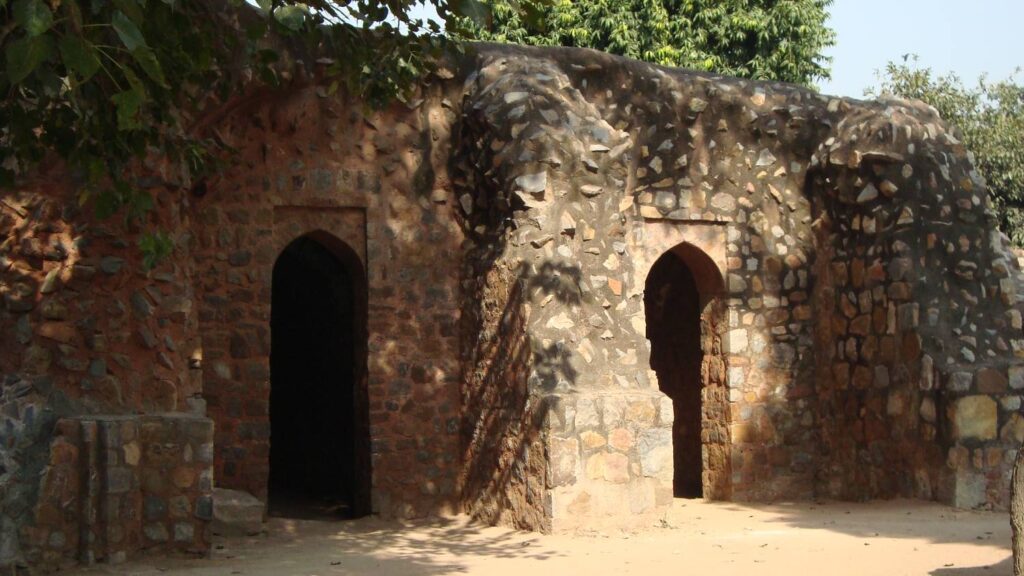
The Arab Serai became known for its sticky sweet coffee (Wikimedia)
The Serai, which was commissioned in 1560 by Hamida Banu, the wife of Mughal Emperor Humayun, still stands today as part of a Unesco heritage site ; the wider complex of Humayun’s tomb.
Historians say it was used as an inn by Arab religious scholars who accompanied the royal on her pilgrimage to Mecca and that it was also used to house craftsmen from the Middle East who were working for the Mughals.
Historian Stephen Blake in his 1991 workShahjhanabad: The Sovereign City in Mughal India 1639-1739 describes coffee houses as places where poets, storytellers, orators, and those “invigorated by their spirits” congregated.
Blake described how vibrant these coffee houses were, their milieu of poetry recitals, storytelling and debates, long hours of playing board games, and how these activities impacted the cultural life of the walled city.
Coffee houses of Shahjhanabad, like those of Isfahan and Istanbul, accelerated the rise of a culture of consumption and a thriving food culture, with residents frequenting snack sellers offering savouries, naanwais baking bread, and halwais specialising in confectionery.
This is a legacy that continues to be felt in Old Delhi’s Shahjahanabad area to this day.
While Blake’s descriptions paint a picture, there are no extant visual depictions of the interiors of these establishments, and unlike their Ottoman or Safavid counterparts, there are no miniatures or Orientalist artworks depicting what they would have looked like.
Rembrandt depictedMughal men drinking something very closely resembling coffee but the Dutch artist does not identify the contents of their cup, and never visited India. But his images were inspired by Mughal paintings brought over to the Netherlands by Dutch traders.
The man who swore by his Turkish coffee
Provincial courts sought to replicate the ambience of Shahjahanabad and embraced the cafe culture on offer there. Among them, none cherished coffee more than Alivardi Khan, the Nawab Nazim of Bengal.
Khan was of Arab and Turkman descent and ruled Bengal from 1740-1756. Known as a diligent ruler, coffee and food were the two biggest pleasures of his life.
Seir Mutaqherin or the Review of Modern Times, written by one of the prominent historians of the time, Syed Gholam Hussein Khan, offers a fascinating description of Alivardi Khan’s routine.
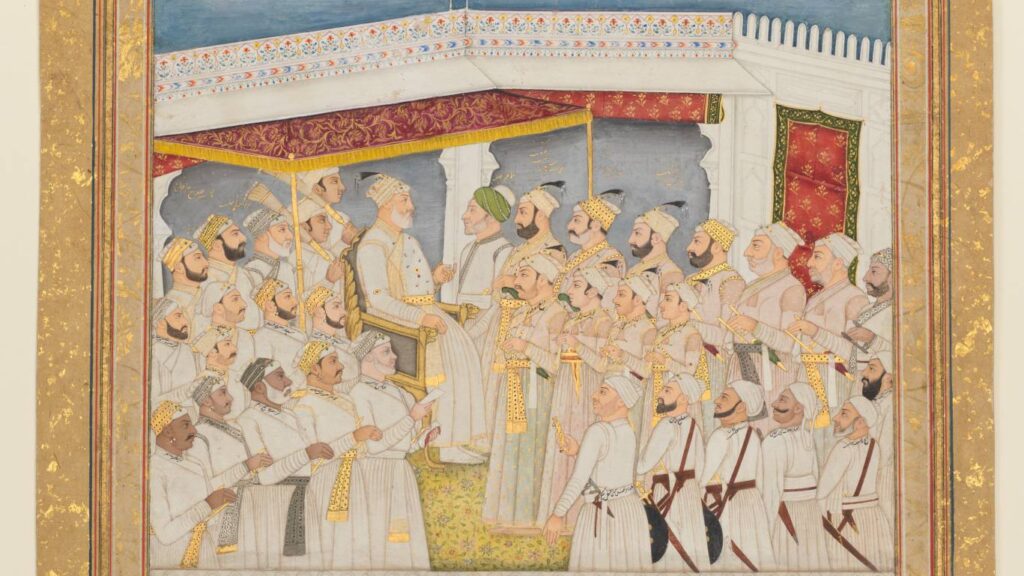
Alivardi Khan, seen here on his throne, liked the finer things in life, including coffee (Metropolitan Museum of Art/Public domain)
He writes: “He always rose two hours before daylight; and after having gone through evacuations and ablutions, he performed some devotions of supererogation and at daybreak, he said his prayers of divine precepts, and then drank coffee with choice friends.
“After that he amused himself with a full hour of conversation, hearing verses, reading poetry or listening to some pleasing story.”
This morning routine was followed by a bespoke Persian dish prepared by the nawab’s personal chef.
Khan’s portrayal presents Nawab as a man of fine taste, who valued the luxuries of courtly life as much as effective governance.
A connoisseur of exquisite food, witty conversations, and premium Turkish coffee, Khan went to great lengths to acquire the best coffee beans, importing them from the Ottoman Empire and bringing them all the way to Murshidabad, his capital.
The coffeehouse ‘is a social space created and shaped by the people themselves’ (MEE)
He believed in nothing but the best for his court. Not only were his coffee beans imported, but his kitchen staff also hailed from places renowned for their culinary excellence, such as Persia, Turkey, and Central Asia.
The royal household employed a diverse range of professionals, including storytellers, painters, coffee makers, ice makers, and hakims (physicians).
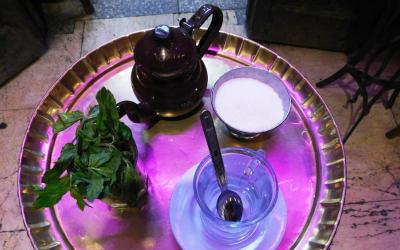
Tea has been grown in India since the 19th century (Wikipedia)
Khan personally handpicked his baristas (qahwachi-bashi), who brought along their specialised coffee-making equipment.
The descriptions paint a vivid picture of courtly culture, a world of opulence, artistry, and a profound affinity with caffeine.
It is puzzling, therefore, to pinpoint exactly when Mughal coffee culture vanished from pre-colonial Bengal, but it likely lasted until at least 1757.
Siraj ud-Daulah, Khan’s grandson and successor, could not live up to his grandfather’s legacy, and faced with threats from the British, the courtly culture swiftly dissipated, along with Bengal’s fortunes.
When Bengal lost the decisive Battle of Plassey in 1757, the East India Company took control of the region, and slowly coffee vanished from public consumption and consciousness.
Tea farming takes over
The rise of the East India Company, which was the primary agent of British control in India, marked the end of the subcontinent’s dominant coffee culture.
Britain’s penchant for tea began in the late 17th century and China was its main supplier.
Lizzy Collingham writesin her book Curry: A Tale of Cooks and Conquerors that between 1811 and 1819 “70,426,244 pounds” out of a total of “72,168,541” pounds of imports from China were associated with the tea trade.
She remarks that Britain, therefore, had an “interest in finding an alternative source for tea”.
With its fertile soils and appropriate weather conditions, India was the perfect spot.
In February of 1834, then Governor General William Bentick appointed a committee to look into India’s potential as a place to set up the East India Company’s own tea production unit.
In the native Indian population, they found not only workers who would cultivate and harvest the leaves but also consumers of the beverage.
As coffee production became overshadowed by tea farming, Indian tastes also shifted to the latter.
Further consolidating the decline of Indian cafe culture was the British ban on Indians visiting coffee houses, which were barred to all but Europeans.
Nevertheless, reports of the death of coffee in India were premature.
Regardless of British influence on local culture, the subcontinent was not immune to global trends.
The Indian historian and author, AR Venkatachalapthy, writes in his 2006 book In Those Days There was No Coffee: Writings in Cultural History that there was no escaping the physical effects or symbolism of coffee in late 19th century British India.
“Drinking coffee, it appears, was no simple quotidian affair. Much like history, the nation-state, or even the novel, coffee too was the sign of the modern,” he writes.
Enthusiasm for coffee grew at the turn of the 20th century, and the same book quotes adverts for coffee in south India in the 1890s: “Coffee is the elixir that drives away weariness. Coffee gives vigour and energy.”
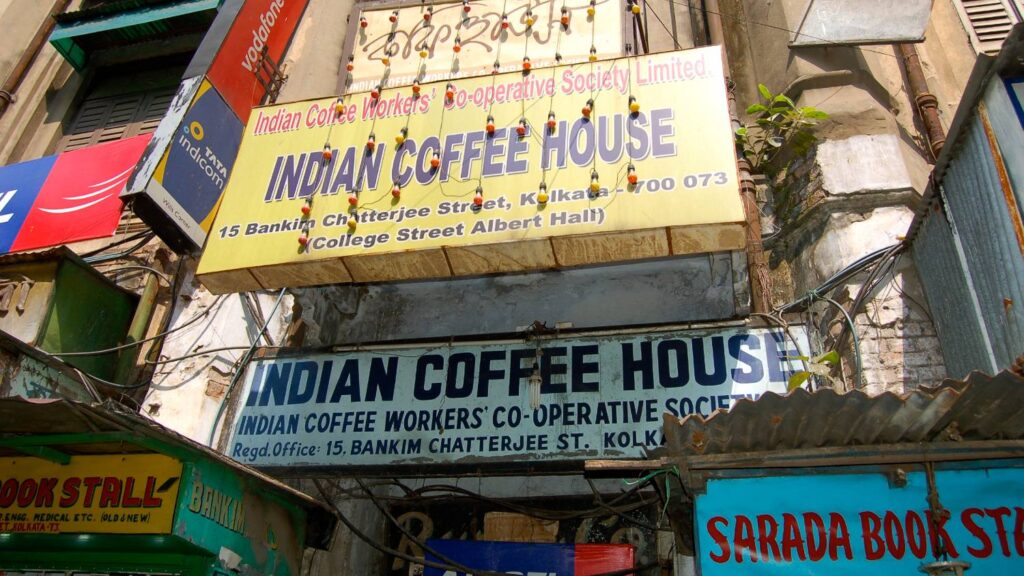
This energy and vigour were first reflected in the east, in the colonial city of Calcutta (present-day Kolkata) where the first Indian-run coffee shop, named Indian Coffee House, opened in 1876.
The Indian Coffee House is run by Indian worker’s cooperatives and is open to all (Wikipedia)
Turning into a chain in the 1890s, by the first half of the new century the name Indian Coffee House would be adopted by a growing network of 400 coffee houses run by Indian workers’ cooperatives, with only Indian-origin coffee.
These were the people’s coffee houses where any Indian could walk in without being discriminated against on the basis of their race.
Today, the ambience of the Indian Coffee House reminds one of the inclusivity of coffee shops in historic Shahjhanabad.
The chain is one of many Indians can visit, with others including the Bengaluru-based Coffee Day Global, which now has more than 500 outlets in the country despite only opening its first in 1996.
Six years later Starbucks entered India’s voluminous urban market and the rules of the brew changed forever in the subcontinent.
source: http://www.middleeasteye.com / Middle East Eye / Home> Discover> Food & Drink / by Nilosree Biswas, New Delhi / June 05th, 2023
According to the researchers, with the discovery of the new species, the number of bent-winged bats in India has increased from 4 to 5.
OU scientist discovers new species of Bat (Photo: Twitter)
Hyderabad:
Eminent zoology scientist from Osmania University Dr Bhargavi Srinivasulu, along with her son, Aditya Srinivasulu, has discovered a new species of bat from Karnataka’s Coorg.
The mother-son duo have named their discovery, ‘Miniopetrus srinii Srini’s Bent-winged Bat’, discovered in a cave in Makuta of Kodagu district (Coorg).
The research papers were submitted on Saturday and the expert committee cleared the papers and conferred the rare honour.
“We collected the specimens of bats from a large subterranean cave in the dense jungles of Western Ghats in Makuta, we doubted that this could be a cryptic species of bat, which we had tentatively identified as the Small Bent-winged Bat,” said Dr Bhargavi.
Found in southern Europe, Africa, Madagascar, Asia, Australia, New Caledonia and Vanuatu, Bent-winged Bats are small-sized bats that live in large colonies of a few hundred individuals in caves.
According to the researchers, with the discovery of the new species, the number of bent-winged bats in India has increased from 4 to 5.
The specimens of bats were collected from a large subterranean cave in the dense jungles of the Western Ghats in Makuta. The Small Bent-winged Bat is reported from the Nicobar Islands, peninsular India, Nepal and Northeast India.
Talking about the multiple works they undertook in discovering the new bats, Dr Bhargavi said, “Our research on Andaman bats has revealed that the fauna on the islands are genetically different from those on mainland India. We conducted morphological, cranial, echolocation and genetic studies to determine the relationship between the Makuta specimens and others.”
A peer-reviewed scientific mega journal for animal taxonomists named Zootaxa has published the description of the new species that were named in honour of Prof C Srinivasulu, a bat biologist working at the varsity.
source: http://www.siasat.com / The Siasat Daily / Home> News> Hyderabad / by News Desk / May 29th, 2023
The passions that have been running high over the Cauvery have eclipsed that the river’s birthplace is in Kodagu district, where it is an integral part of the lives of the Kodavas, but not in terms of drinking water.
Journalist and author PT Bopanna has eloquently spoken about what the Cauvery means to the Kodavas, one of the communities of people who live within Kodagu district. The identity of the Kodavas is deeply linked with the river, which rises in Talacauvery. Ironically, Madikeri city, the district headquarters, frequently faces a drinking water problem.
“The Rs 230-crore Harangi project has been conceived for the benefit of politically powerful Mysore and Hassan districts. Though the Harangi Dam (in picture) is in Kodagu and the major catchment area of the Cauvery is also in Kodagu, the irrigation potential from the project for Kodagu is a measly 607 hectares, out of the 54,591 hectares of total irrigation potential,” Bopanna says on his website Coorgnews.in.
He pointed out that 1,909 acres of land in 13 villages had been submerged by the construction of the Harangi dam in Somwarpet taluk.
“See, we don’t benefit from the Cauvery at all. Every year the river floods and the roads get blocked. We are always inconvenienced by the Cauvery. We just want our basic water needs met, and it’s a small place,” Bopanna says.
Although people are worried about drinking water supply from the Cauvery, Bopanna says that in Kodagu, people are worried more about a larger problem.
“I’m worried about deforestation,” Bopanna says. Falling in the Malenadu region, Kodagu district houses 4,102 sq km of the Western Ghats, making it look as if a green carpet is spread across the land. It is one of the least populated districts in the state.
Referring to the 400kv power line from Yelwal in Mysuru to Kozhikode in Kerala, a distance of 55m, Bopanna said: “This government-sponsored deforestation needs to stop.”
According to some estimates, 55,000 trees will be cut in thick forest areas to set up the line. Activists have alleged that a few thousand trees have been cut in violation of the law.
“When trees were being cut for that power line, not a single politician made any noise. They weren’t bothered. This clearly reveals their short-sightedness and their lack of understanding about the effects of deforestation. Rainfall has become erratic in the region,” Bopanna says.
He advocates a complete ban on tree felling and the conversion of agricultural land for commercial purposes. “But Kogadu’s politicians depend on the timber lobby and sand mining. They have not allowed a discussion on the Kasturirangan report.”
Now he’s worried. Drought-like conditions that occurred only once in five years in the past, are now almost an annual feature. “We need to save the Western Ghats to save the Cauvery (for all of us). That’s the core issue.”
source: http://www.thenewsminute.com / The News Minute / Home> News> Cauvery Dispute / by Aneesha Sheth / September 22nd, 2016
The RTI further revealed that the Bhadravathi forest division in Shivamogga did not spend a single rupee on afforestation since 2015.
The RTI further revealed that the Bhadravathi forest division in Shivamogga did not spend a single rupee on afforestation since 2015. (Representational)
From 2015 to 2022, the Karnataka Forest Department spent Rs 1.98 crore and Rs 49,95,067 on afforestation in Kushalnagar and Bhagamandala forest ranges, respectively. The two forest ranges are located in Kodagu district. The figures were shared by the department in response to an RTI filed by The Indian Express.
The RTI further revealed that the Bhadravathi forest division in Shivamogga did not spend a single rupee on afforestation since 2015.
The amount spent on afforestation includes maintenance of the forests. However, some of the officials within the forest department opined that the forest department should concentrate on afforestation in the drier parts of Karnataka rather than spending crores in the Western Ghats.
“The Western Ghats has many naturally regenerated seedlings. The department should have pumped funds in greening the dry regions of Karnataka like Vijayapura, Raichur, Gadag and Koppal. These regions have less than 5 per cent green cover. Even in the Dakshina Kannada region, a huge amount is spent on afforestation,” a senior Indian Forest Service (IFS) officer of the Karnataka Forest Department said on condition of anonymity. Notably, a response from Dakshin Kannada forest region is still awaited.
Every year, Kodagu faces floods and huge loss of property and human lives.
Amount spent on afforestation in Bhagamandala range
2015-2016: Rs 15,82,293
2016-2017: Rs 3,10,974
2017-2018: Rs 3,66,500
2018-2019: Rs 14,33,305
2019-2020: Rs 4,03,750
2020-2021: Rs 3,02,865
2021-2022: Rs 3,35,720
2022-2023: Rs 2,59,660
Amount spent on afforestation in Kushalnagar range
2015-2016: Rs 11.17 lakh
2016-2017: Rs 12.90 lakh
2017-2018: Rs 24.66 lakh
2018-2019: no data
2019-2020: Rs 27.90 lakh
2020-2021: Rs 66 lakh
2021-2022: Rs 14.47 lakh
2022-2023: Rs 44 lakh
source: http://www.indianexpress.com / The Indian Express / Home> News> Cities> Bangalore / by Aksheev Thakur / Bengaluru – April 30th, 2023
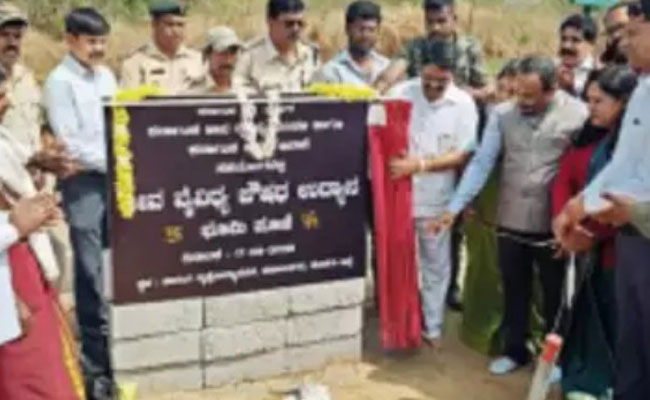
The work to develop the first biodiversity park of the state was launched in Harangi, by laying the foundation stone on Friday.
Legislator Appachu Ranjan, who conducted the ‘bhoomipooja’ for the biodiversity park work, said, “India is the biggest exporter of medicinal herbs. The new park will help us.”
He said that a medicinal herbal park will also be opened in Bhagamandala soon.
“Medicinal plants are needed to cure diseases. Also, the environment will be healthy if there is enough greenery,” he pointed out.
Karnataka Biodiversity Board chairperson Napanda Ravi Kalappa, who presided over the ceremony in Harangi, said that a master plan of building a model medicinal garden in the district was readied by the Board. The park is also being launch to conserve the richness of the flora of Kodagu, he added.
“The Karnataka Biodiversity Board intends to establish similar parks in every panchayat of Kodagu. The Coorg Mandarin used to be an exclusive plant to Kodagu, but is virtually not to be found anywhere now. Research is now being conducted to promote this species,” Kalappa said.