Category Archives: Agriculture

Maddu thoppu: Magic leaves of monsoons

And one such way, followed traditionally and scientifically, is consumption of dishes made from a highly medicinal plant.

Dishes prepared from bamboo shoot are also the highlight of ‘Kakkada padinent’ I Prajna GR

Madikeri :

Monsoon in Kodagu is synonymous with chilly weather due to continuous rainfall. While the traditional houses in the district are equipped with fireplaces to warm up the ambience, the people of Kodagu follow certain indigenous ways to stabilise the body temperature. And one such way, followed traditionally and scientifically, is consumption of dishes made from a highly medicinal plant, locally known as ‘Maddu thoppu’ (medicinal leaves). And this festival of leaves was celebrated on August 3.

With scientific name ‘Justicia Wynaadensis’, ‘Maddu thoppu’ grows abundantly as a bushy shrub in the humid tropical belts of Kodagu. “In 1921, botanist J S Gamble, former official of the forest department, had recorded the abundance of this plant in the evergreen forests of the Western Ghats – from South Canara, Kodagu to Wayanad, Eastern Nilgiris and South Malabar,” says Ulliyada Daty Poovaiah, ex-president of Kodava Academy.

With slender stems and hunter green leaves, they grow like an army of soldiers at places where there is scanty sunlight. They earn special status during ‘Aashada masa’ in the Hindu calendar, also known as ‘Kakkada masa’ in Kodava calendar. This month begins on July 17 and ends on August 16. “The ‘Kakkada’ month is considered inauspicious and no important ceremonies or celebrations take place during this one month,” says historian Bacharaniyanda Appanna.

While tradition says that this month is inauspicious, there is a reason behind it. This monsoon month demands complete attention in the paddy fields and since Kodagu is an agriculture-based district, every household involved themselves in agricultural activities and there was no time for any other kind of celebrations,” explains Daty.

And the continuous work on farmlands in cold weather demanded one to be fit, which is when ‘Maddu thoppu’ came into attaining special status during this inauspicious season. ‘The presence of numerous phyto components lends credence to the use of the plant as a medicinal herb by the local community,” states Dr Latha  D in a study conducted on this medicinal plant. With anti-microbial effects, they fight various pathogens that spread widely during the monsoons. “While Justicia Wynaadensis has high medicinal value and is used widely in Ayurveda medicine, the plant attaining maximum medicinal value on the 18th day of ‘Aashada’ month is more of a belief,” explains Ayurveda doctor Udayashankar. 

And hence the people of Kodagu religiously follow the ritual of plucking the leaves of ‘Maddu thoppu’ on the 18th day of ‘Kakkada’ and indulge in a variety of elaborate cuisines. “The plant is believed to give 18 types of medicines during this month and a variety of dishes including ‘Maddu thoppu halva’ and  ‘Maddu thoppu’ porridge are prepared using pure, traditionally extracted honey. (The plant is believed to lose its medicinal components one by one after the 18th day).

Along with this, a variety of dishes are prepared from country chicken, colocasia leaves, bamboo shoot, crabs, jackfruit and are laid alongside paddy-arrack, which are all believed to stabilise the body heat during chilly monsoons,” explains Daty. This marks the celebrations of ‘Aati padinent’ (padinent translating into 18th day in Kodava language), which falls on August 3 every year. While the presence of Justicia Wynaadensis in the backyards of houses is reducing after urbanisation, they are still widely present on the peaks in the district.

source: http://www.newindianexpress.com / The New Indian Express / Home> Bengaluru / by Prajna GR / Express News Service / August 05th, 2018

Coffee Dasara brews hope for growers amid challenges

45 stalls celebrate Kodagu’s coffee culture as top growers honoured

Madikeri:

The Coffee Dasara celebration held on Wednesday at Gandhi Maidan, Madikeri, captivated visitors with a vibrant display of coffee culture, featuring 45 thematic stalls and a strong message of solidarity with coffee growers grappling with persistent challenges.

The event was jointly organised by the Madikeri Dasara Committee, Madikeri Dasara Cultural Committee and the Coorg Planters Association inside the Sakamma Auditorium, named after Karnataka’s first woman coffee entrepreneur. The coffee mega event was executed and coordinated by H.T. Anil.

Inaugurating the celebration, Madikeri MLA Dr. Mantar Gowda highlighted that despite favourable market prices, coffee growers continue to face serious hardships.

“Labour shortages, climate fluctuations, and market instability are major hurdles, especially for small-scale producers. We must unite to tackle these challenges,” Dr. Mantar Gowda urged.

Dr. Mantar Gowda noted that Kodagu district accounts for nearly 75 percent of Karnataka’s coffee production and stressed that Coffee Dasara, which began last year, should become an annual platform to foster dialogue and development.

Madikeri MLA Dr. Mantar Gowda with Coffee Dasara Convener H.T. Anil during the event.

Crop insurance coverage

Coffee Board Chairman Dinesh Devavrinda underscored the need for insurance coverage for coffee crops, similar to schemes available for arecanut and pepper. He pointed out that coffee is cultivated not only in Karnataka’s Kodagu, Hassan and Chikkamagalur districts but also across the north-eastern States and encouraged farmers to take pride in their profession.

Kodagu Deputy Commissioner Venkat Raja reaffirmed the administration’s commitment to supporting farmers, promising to act as a bridge between growers and policy-makers. He announced plans to launch video-based training programmes on coffee cultivation and marketing, emphasising the urgent need for modernisation in the 21st century.

Technical insights

Several experts shared technical insights during the event. Dr. Ichettira Mandappa, Coffee Board Director, spoke about maintaining quality in coffee cultivation, coffee grower Karan discussed emerging varietals in coffee farming, Jermie D’Souza presented research on dwarf robusta strains while Dr. Chendrimada Captain Thimmaiah, Assistant Director, Veterinary Services, explained the role of soil fertility in improving yields.

The event also featured a felicitation ceremony honouring outstanding coffee farmers, recognising their contributions to the industry.

Growers felicitated

Distinguished coffee growers were felicitated by International Booker Prize-2025 winner Deepa Bhasthi, who hails from Madikeri. They included Vinod Shivappa, former President of UPASI (United Planters’ Association of Southern India), S.M. Chengappa, progressive farmer from Kiragandur, Lava Edadante from Edadante village, D.P. Ravishankar from Ponnampet, D.Y. Abdul Razak from Kodlipet, Vikram from Masagodu, Robert from Ponnathmotte in Chettalli and Nizamuddin Siddiqui, senior coffee entrepreneur from Madikeri.

Prominent dignitaries present included the Coorg Planters Association Chairman A. Nanda Belliappa, Madikeri Town Municipality President and Madikeri Dasara Committee Chairperson     P. Kalavathi, Madikeri Dasara Committee office-bearers, Jyothika of Women’s Coffee Awareness Forum, former MLCs Veena Achaiah and S.G. Medappa.

source: http://www.starofmysore.com / Star of Mysore / Home> News / September 28th, 2025

Kail-Poldh Fest at Balugodu

Federation of Kodava Samajas, Balugodu, Virajpet and its Women’s Wing have jointly organised Kail-Poldh Festival  on Sept. 13 (Saturday) at 10 am at the Samaja premises in Balugodu.

Ayudha Puja will be held at 10 am.

On the occasion, coconut shooting and various competitions will be conducted, according to a press release.

source: http://www.starofmysore.com / Star of Mysore / Home> In Briefs / August 26th, 2025

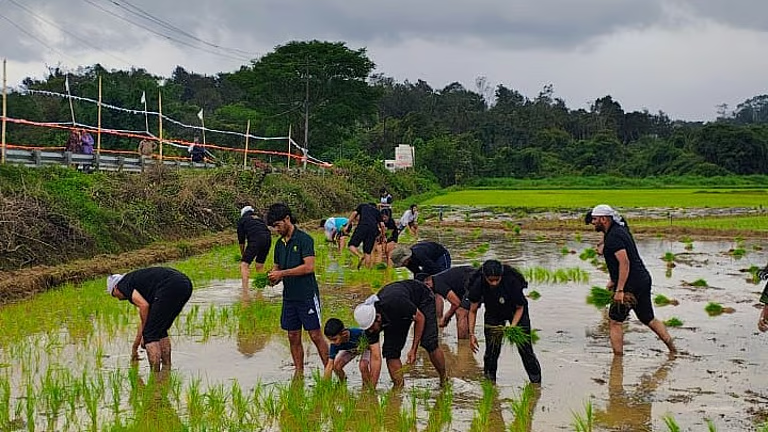
Kodava youngsters indulge in ‘naati pani’ on abandoned farmland in Madikeri

The paddy farmland that had not recorded any farming activity for many years, was revived following the efforts of the organisation that pulled in over 150 youngsters to take up paddy cultivation activity.

Amidst the chilly weather and rainfall, the youngsters cultivated the land for paddy with great enthusiasm. Photo | Express

Madikeri :

Over 150 youngsters from the Kodava community, working in different cities, visited the district to take part in a unique initiative called ‘naati pani’ aka paddy cultivation.

Organised by Connecting Kodavas, the initiative aimed at promoting the ancestral culture of paddy cultivation among the younger generations.

It was a day filled with fun, frolic and hard work, as youngsters who usually sat in front of their computer systems for a change toiled across the slushy 10-acre farmland in Mutharmudi.

As confirmed by the sources, the 10-acre farmland belonging to the Kembadthanda family in Mutharmudi had been left vacant for several years. The Connecting Kodavas organisation approached the family and detailed its plan to revive the farmland with a unique initiative.

The paddy farmland that had not recorded any farming activity for many years, was revived following the efforts of the organisation that pulled in over 150 youngsters to take up paddy cultivation activity.

For over seven years, the organisation has been hosting this ‘naati pani’ initiative and has so far revived several abandoned farmlands. Each year, the organisation selects an abandoned farmland, which is prepared for paddy farming by youngsters who are getting back in touch with their roots.

The initiative was supported by various organisations including Mysuru Kodava Students Association, Kodava Samaja Youth Wing and others.

Apart from the cultivation process, the unique dishes prepared during the monsoon months are also served to the participants.

Amidst the chilly weather and rainfall, the youngsters cultivated the land for paddy with great enthusiasm. Several elders who have been practicing agriculture for several years guided the youngsters even as the organisation confirmed to continue the initiative in the coming years.

The event was curated by Connecting Kodavas organisation head Niram Nachappa and others.

source: http://www.newindianexpress.com / The New Indian Express / Home> Karnataka / by Express News Service / August 18th, 2025

Paddy diversity, agricultural heritage highlighted in Mysuru desi rice mela

Nearly 200 varieties of indigenous rice varieties on display at the desi rice mela, which was inaugurated in Mysuru on Saturday. | Photo Credit: M.A. SRIRAM

The two-day desi rice mela commenced in Mysuru on Saturday, with seed conservators expressing concern that commercial crops were pushing the traditional paddy varieties to the brink.

The objective of the mela is to highlight the paddy diversity that existed in the Old Mysuru region, and how scores of indigenous paddy varieties are going out of vogue due to the proliferation of hybrid varieties and shifting consumer preference to white polished rice.

With over 200 paddy varieties on display, the mela is being held at Nanjaraja Bahadur Choultry, and has been organised under the aegis of Sahaja Samrudha and the Save Our Rice Campaign. Also on display are traditional rice varieties from different States, including rare types such as red rice, aromatic rice, black rice, medicinal rice, and bold-grained rice, along with value-added rice products.

Paddy conservators from across the State are selling their own desi rice directly. Seeds of popular varieties like Rajamudi, Burma Black, Sidda Sanna, Ratnachudi, Navara, Govind Bhog, HMT, and Sindhoor Madhusale are also on display and for sale.

The mela was inaugurated by B.P. Ravishankar, a seed conservator from Hudoor in Ponnampet, Kodagu. He has preserved as many as 57 desi rice varieties.

“Paddy cultivation is becoming increasingly expensive. With the arrival of commercial crops, traditional paddy varieties are being pushed to the margins and the government must provide necessary support to bring these desi rice varieties back into farmers’ fields”, said Mr. Ravishankar.

Unveiling medicinal rice varieties, Shridevi Annapurna Singh, former Director of the Central Food Research Institute, said that traditional varieties are rich in nutrients, while the black and red rice varieties have medicinal properties, and called for their inclusion in people’s diets.

Presiding over the event, G. Krishna Prasad, Director of Sahaja Samrudha and the Organic Farmers’ Collective, said that farmer-breeders in Karnataka have developed excellent paddy varieties like Sidda Sanna, Sindhoor Madhusale, Andanoor Sanna, and NMS-2. “The government must take steps to release these varieties, which are popular among farmers,” he said.

Mr. Prasad also cautioned against any attempts by the government to introduce transgenic paddy varieties that pose risks to the environment and consumer health. Farmers and consumers must remain vigilant to prevent transgenic paddy from entering farmers’ fields, he added.

C. Shanthakumar, the coordinator of Save Our Rice Campaign, said that Karnataka was the home of paddy diversity, but hundreds of varieties have been lost due to lack of demand. ‘’The desi rice mela has been organised to create awareness among farmers and consumers about nutrient-rich, traditional paddy varieties suited to local food habits,” he added.

The mela also offers millets, vegetable seeds, tubers, organic products, and fruit saplings that are for sale.

source: http://www.thehindu.com / The Hindu / Home> News> India> Karnataka / by The Hindu Bureau / August 09th, 2025

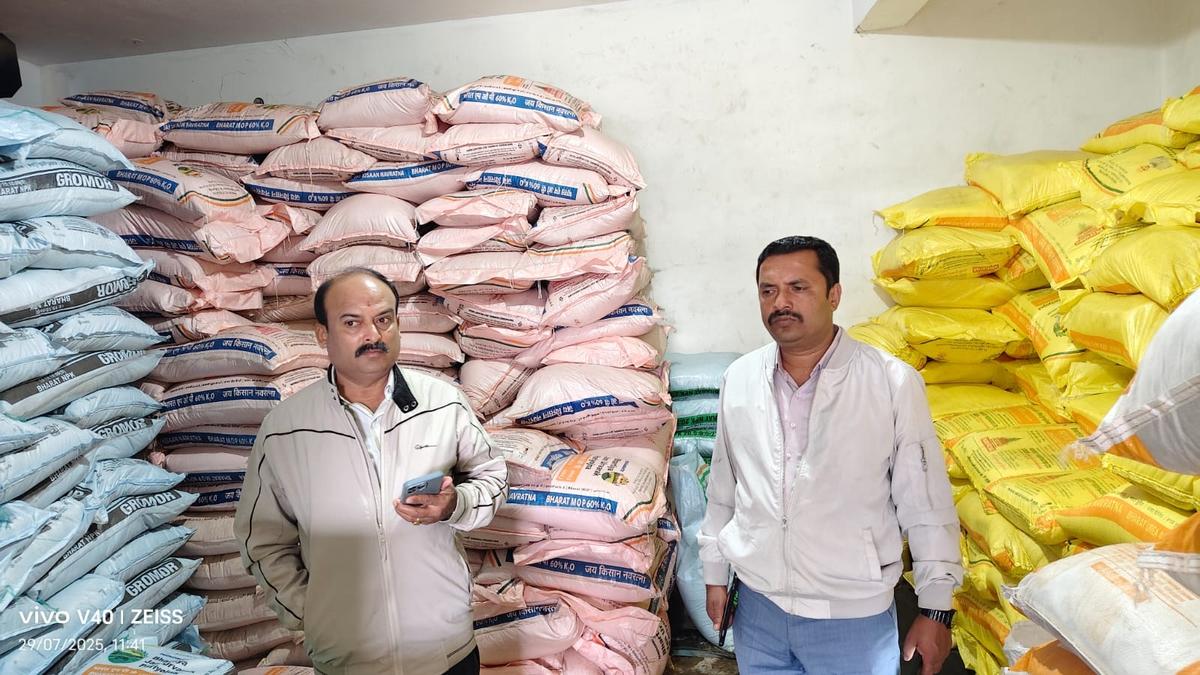
No fertilizer shortage in Kodagu, says Joint Director of Agriculture

Agriculture Department officials conducting an inspection of the fertilizer stocks in Kodagu on Tuesday. | Photo Credit: SPECIAL ARRANGEMENT

There is no shortage of fertilizers in Kodagu, and farmers in the district need not worry about the availability of fertilizers, stated Chandrashekar, Joint Director of Agriculture, Kodagu, in a press release.

The official stated that 90,444 MT of fertilizers have been made available to farmers in the district, and 60,126 MT have already been distributed. The remaining 30,318 MT are currently in stock, and they include 5,855 MT of urea, 1,643 MT of DAP, 5,526 MT of MOP, 16,250 MT of NPK Complex, and 1,043 MT of SSP.

The Joint Director said farmers are engaged in agricultural activities, with the sowing of paddy and maize crops in full progress in the district, in view of good rainfall. Out of the total sowing target of 30,525 hectares, sowing or transplantation has been completed so far in 5,864 hectares.

This year, it was estimated that 88,677 MT of fertilizers were required for agriculture, horticulture and coffee crops in Kodagu. Various manufacturing companies supplied 54,520 MT of fertilizers as of July 28.

source: http://www.thehindu.com / The Hindu / Home> News> India> Karnataka / by The Hindu Bureau / July 29th, 2025

Ginger under siege: Pyricularia Fungus identified in Kodagu district

A newly identified fungal disease has emerged as a significant threat to ginger cultivation in Karnataka, prompting an urgent advisory from the ICAR–Indian Institute of Spices Research (ICAR-IISR). Researchers from the premier spices research institute have confirmed that the pathogen Pyricularia spp.—typically associated with blast diseases in monocot crops like rice and wheat—has, for the first time, been found infecting ginger crops in the Kodagu district.

The outbreak, which escalated rapidly during the 2024 growing season, has already caused an estimated 30 per cent yield loss in affected farms. The disease manifests initially as leaf yellowing with small dark olive-green to black lesions, progressing swiftly to defoliation and plant collapse. While rhizomes may appear outwardly unaffected, early leaf loss significantly hampers rhizome development, reducing both quality and weight.

The severity of the outbreak has been linked to specific weather conditions during August and September 2024, when intense morning dew in Kodagu created ideal conditions for fungal spore germination and field-level spread. Interestingly, other major ginger-producing belts in Karnataka and Kerala have not reported similar infections, suggesting the outbreak may be microclimate-driven. Researchers at ICAR-IISR’s regional station in Appangala played a critical role in field monitoring and sample analysis, though challenges in preserving infected tissue during transport slowed initial confirmations.

ICAR-IISR has issued comprehensive control recommendations to mitigate the disease and prevent recurrence. These include fungicidal seed treatment of rhizomes using either Propiconazole (1 ml/litre) or a Carbendazim-Mancozeb mix (2 g/litre), followed by storage in dry, ventilated conditions. For standing crops, preventive foliar applications of Propiconazole (Tilt) or Tebuconazole (Folicur) are advised approximately four months after planting. If early symptoms appear—particularly dark pinhead spots with surrounding chlorosis—immediate fungicide application is critical due to the pathogen’s rapid spread. Field observations have confirmed infections in fields up to 20 kilometers apart, indicating strong airborne mobility.

As an interim measure, ICAR-IISR has advised farmers in high-risk zones to suspend ginger cultivation until further assessments are completed. Ongoing research aims to better understand the pathogen’s adaptation to ginger, map its lifecycle triggers, and evaluate long-term solutions, including resistant varieties and sustainable biological controls.

The emergence of Pyricularia on a non-traditional host like ginger has raised new concerns among plant pathologists and agro-climatic researchers. It also underscores the urgent need for robust surveillance systems, climate-linked disease forecasting, and strategic extension services to protect India’s spice economy.

source: http://www.agrospectrumindia.com / Agro Spectrum / Home> Crop Protection / by Crop Protection / July 04th, 2025

CCRI researchers focus on four climate-resilient coffee varieties

The species identified are — Coffea stenophylla, Coffea racemosa, Coffea liberica and Coffea excelsa.

Representative Image

Bengaluru :

As climate change is affecting harvesting and cropping patterns of all agriculture produce, coffee growers too are facing challenges. To address the issue, researchers are working on climate-resilient coffee varieties.

The Centre for Excellence of Central Research Institute (CCRI) located in the Coffee Research Sun Station, Chettalli in Kodagu has identified four wild coffee varieties that are particularly resilient to climate change.

Cup tasters discovered that Coffea stenophylla tastes close to Coffea arabica. This has raised hopes that consumers may soon have a new climate resilient option to choose from.

New coffee varities will have to be blended

“There is resistance in these wild varieties as they have stood the natural test of time. They have strength in their roots, have high yields and can withstand high temperatures. The four varieties are different from the existing and popular Arabica and Robusta coffees. During research, these varieties were found growing naturally in the wild and even in the estates of some coffee growers,” said Jeena Devasia, Divisional Head, Plant Breeding and Genetics, CCRI, Chettahalli substation, told The New Indian Express.

During the study, researchers found historical evidence to show that Robusta is equal to Coffea stenophylla in taste and texture. “If all goes well, consumers will soon get a new climate-resilient coffee variety to choose from,” she said.

Researchers said wild varieties are found all over India. Some are also found in the Himalayan zone, growing naturally as trees. “The region under coffee cultivation is gradually increasing in India,” added Jeena.

Some companies are exporting some of the wild coffee varieties that are growing in their estates. Komal Sable, South India Coffee Company Partner, said they are exporting around 5.5 tonnes of green Coffea excelsa to the US, UK, Netherlands, Switzerland and other places. While some countries are consuming it as single origin and others are blending it, he added.

Explaining the advantages and disadvantages, coffee tasters and traders said it could be difficult for consumers to immediately accept the new variety as they have a set taste suiting their platter. The new varieties are climate resilient and need less pesticides. They are less acidic in nature and are more sweet. Some even have a fruity flavour and are less bitter.

Coffee Board officials said that when these varieties are launched in the domestic market, they will have to be blended to meet the consumers’ demand.

Experts said there are around 120 globally identified and accepted coffee varieties. The list continues to have additions and deletions depending upon research and quality reports. Tests and tasting is an ongoing process and is the need of the hour, they added.

Karnataka produces

72,020 metric tonnes of Arabica coffee

1,76,000 metric tonnes of Robusta coffee

Total area under coffee production — 2,48,020 acres (70.5% of coffee-growing areas in the country)

source: http://www.newindianexpress.com / The New Indian Express / Home> Karnataka / by Bosky Khanna / September 25th, 2024

Parliamentary delegation visits spices research station in Kodagu

The Parliamentary Standing Committee on Agriculture, Animal Husbandry, and Food Processing, headed by Charanjit Singh Channi, a member of the Lok Sabha, visited the ICAR-Indian Institute of Spices Research (IISR), Regional Station, at Appangala in Kodagu on Friday.

The delegation comprised 12 members of the Lok Sabha, four members of the Rajya Sabha, and officials from the Lok Sabha Secretariat. During the visit, the institute organised an exhibition highlighting the latest varieties and technologies in spice cultivation developed by the ICAR-IISR. Mr. Channi, the chairman of the committee, inaugurated the exhibition.

A meeting was convened, where R. Dinesh, Director of ICAR-IISR, Kozhikode, presented a comprehensive overview of the activities and achievements of the institute.

The committee had discussions with the scientists and officials from the ICAR-IISR. Officials present at the event included Sudhakar Pandey, ADG (FVS&MP), ICAR, New Delhi, S.J. Ankegowda, principal scientist and head, ICAR-IISR, Regional Station, Appangala, and senior officials and staff from the ICAR-IISR and its regional station.

The event also featured an insightful interaction with Prema Ganesh, a progressive farmer from Maragodu, who shared her experiences regarding spice farming in Kodagu.

source: http://www.thehindu.com / The Hindu / Home> News> India> Karnataka / by The Hindu Bureau / May 24th, 2025

NGO integrates AI-based siren system to warn Kodagu villagers of elephant movement

Using this app, people can update the last location where they spotted a wild elephant, and through an AI-based system, the movement of the elephant will be traced.

The siren system is being installed across 12 conflict zones in Virajpet limits. (Photo | Express)

Madikeri :

A new initiative to prevent untoward incidents related to wildlife movement is being undertaken on a trial basis in Kodagu. Funded by a private company, the early warning system has been installed by Support for Network and Extension Help Agency (SNEHA), an NGO.

An early warning system in the form of a siren to alert residents about wildlife movement within a one-kilometre radius has been installed by SNEHA on a trial basis in wildlife conflict regions across Virajpet in Kodagu.

The NGO is currently in the process of installing 12 such sirens across the conflict zones of Badaga Banangala and surrounding areas. While the initiative is currently at a trial stage, SNEHA plans to expand it further by introducing automated alert systems.

“This initiative is being carried out by SNEHA in Odisha and Kodagu regions. We are looking at developing the system further to ensure an automated alert system,” explained Ramaswamy Krishnan, the Executive Director of SNEHA.

He said the NGO has developed a mobile application called SNEHA Kalpvaig Elephant Tracker, which is being uploaded online to become accessible to all.

Using this app, people can update the last location where they spotted a wild elephant, and through an AI-based system, the movement of the elephant will be traced.

Further, based on the location of the elephant, a siren will be triggered to alert residents within a one-kilometre radius.

“The users who have this application can learn about the movement of the elephant, and this application is linked with the siren system. We have also placed about four camera traps in conflict zones, and these cameras are being monitored by the staff at the office to activate the siren manually,” he explained.

The cameras click pictures every minute, and these photographs are reviewed by the appointed staff, who can activate the siren if an elephant is detected within the designated area.

“We want to make this an automated system, and we are devising plans where the cameras can automatically detect wildlife movement,” he confirmed. When the sirens are activated, a voice alert message is also sent through the mobile application simultaneously.

The alert system is currently being implemented in Kodagu on a trial basis, with the NGO having formed a tracking team to monitor wildlife movements.

A total of 12 sirens have been installed across conflict zones in the Virajpet limits. The initiative is being funded by Sucden Coffee Pvt Ltd and is being implemented in collaboration with the Forest Department.

source: http://www.newindianexpress.com / The New Indian Express / Home> Karnataka / by Prajna GR / May 30th, 2025