The average coffee production in Brazil is 60 million bags a year, whereas in India, it is below six million bags.
Farm gate price of raw berries touch a record ₹106 a kg against ₹80 last year
Lending fresh hopes to coffee farmers, the price of the Robusta variety of coffee has reached an all-time high, thanks to a sharp decline in production.
The farm gate price of raw Robusta coffee berries touched a record ₹106 a kg in Wayanad market on Friday, as against ₹80 a kg during the corresponding period last year.
The State government had announced that it would procure coffee from farmers at a minimum support price (MSP) of ₹90 a kg when the market price of raw coffee was ₹61 a kg two years ago.
A sharp decline in coffee production in Brazil, a major coffee-producing country, owing to severe frost was the major reason for the rise in price, trading sources said.
The average coffee production in Brazil is 60 million bags (a bag of 60 kg) a year. But the production declined to 50 million bags this season. A drought-like situation in the coffee-growing regions of that country during the post-harvest period also contributed to price hike, sources said.
The average coffee production in India is below six million bags a year. A huge disparity in production and supply was the major reason for the price hike. Moreover, the depreciation of Indian rupee to US dollar was also reflected in the rise in price, sources added.
“However, the current upswing in price will not benefit coffee farmers in the country as most of them have already sold the produce at a low price,” Prasanth Rajesh, president, Wayanad Coffee Growers’ Association (WCGA), told The Hindu.
“The fortune of Indian coffee farmers depends on the misfortune of farmers in Brazil,” Mr. Rajesh said, adding that such a situation should change as it would not offer a sustainable income to farmers.
A quick intervention by the Coffee Board to increase internal consumption of coffee is the need of the hour, he said .
Though the State government had announced an MSP of ₹90 a kg, most farmers are yet to benefit from it as the government has fixed a ceiling limit of one acre for procurement, he said.
All farmers, irrespective of land holding, should get the MSP since input cost, especially that of fertilisers, had gone up by more than 200%, he added. The Coffee Board has projected a crop size of 3.42 lakh tonnes in the country during 2021-22 in its final estimates.
source: http://www.thehindu.com / The Hindu / Home> News> India> Kerala / by E.M. Manoj / Kalpeta – September 24th, 2022
Traveling to Coorg? Get your hands on these 5 items.
Coorg garners a lot of love and attention for its picturesque landscapes, coffee plantations, steep hills, lush forests, and countless streams.A favorite travel destination of many around the world, the “Scotland of India” has so much to offer that you just can’t get enough of.So if you’re visiting “Kashmir of the South”, here are five souvenirs you must get home.
Coffee cup of India
Coffee
As mentioned above, Coorg is famous for its coffee plantations. In fact, it’s known as the “Coffee cup of India”.The coffee here is aromatic, full-bodied, and tastes mild, so you must grab some for home. Additionally, Coorg also produces the world’s costliest coffee called civet coffee (kopi luwak) and is a major exporter of coffee beans including Arabica and Robusta.
Flavorful
Homemade wines
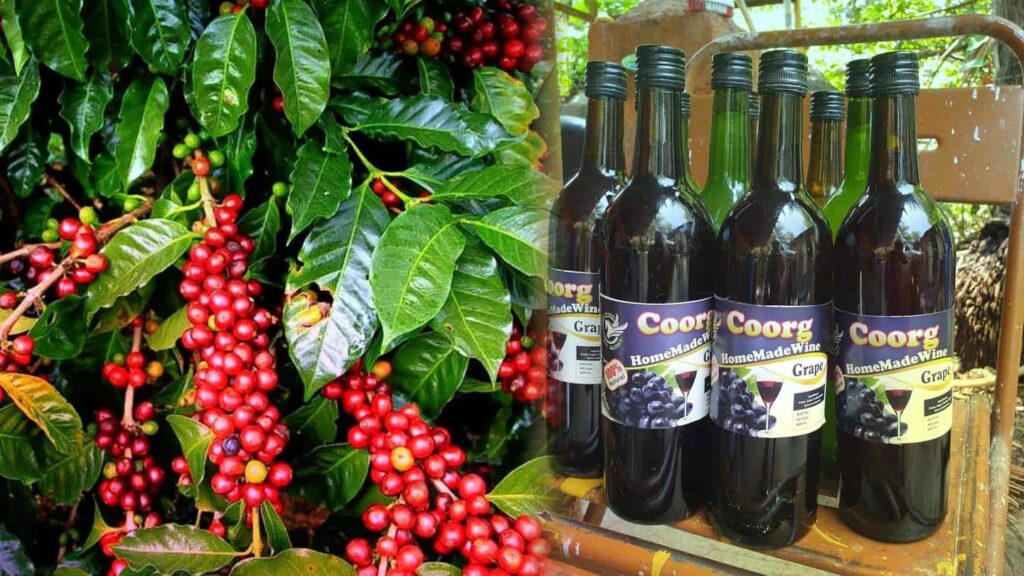
Homemade wines in Coorg are popular, utterly delicious, and won’t burn a hole in your pocket.These hearty concoctions feature not only grapes but also have the goodness of ingredients including ginger, apricot, pineapple, litchi, gooseberry, passion fruits, etc.Some even include saffron and dry fruits.You can score wines in flavors including pomegranate, cheeku, coffee, etc on your way back home.
Choco goodness
Homemade chocolates
Chocolates are among the most sought-after souvenirs that tourists buy in Coorg.These chocolates are homemade and feature 100% organic ingredients sourced from the plantations at this gorgeous hill station.They are available in a variety and are known to be irresistibly tempting.Although you can find them at all local stores, Choci Coorg is a place you must bookmark for chocolaty shopping.
The ‘sweet’ side of Coorg
Honey
Coorg was once the leading exporter of honey and its quality is absolutely second to none.The honey produced is cent percent organic, so you can easily buy some bottles and take home.However, before you purchase, make sure they feature an AGMARK as it ensures its quality.This will also help you steer clear of honey that’s adulterated and sold at exorbitant prices.
Information
What is AGMARK?
AGMARK is a certification for all agricultural products which ensures that they are of the highest quality, conform to hygiene standards, and are fit to use. The mark is given to fruits, vegetables, pulses, cereals, honey, oils, ghee, spices, wheat, butter, flour, oilseeds, etc.
As spicy as it gets
Spices
Coorg’s agricultural scene is quite impressive as it’s blessed with a bounty of nature.The hill station offers an eclectic array of spices that you can use for cooking and get reminded of your #CoorgDiaries one bite at a time.So when you visit this idyllic destination, do shop for cardamom, black pepper, basil, cumin, oregano, rosemary, clove, thyme, mint, sage, etc.
Information
What else can you buy in Coorg?
Coorg is also famous for oranges, dry fruits, herbal oils, silk sarees, handmade soaps, flavored teas, wooden and coconut artifacts, traditional jewelry, etc.
Each of these items is easily available across the hill station and makes for the perfect souvenir that you can take home.
source: http://www.newsbytesapp.com / News Bytes / Home> News> Lifestyle News / by Anujj Trehaan / September 14th, 2022
Coffee Board of India has decided to launch four premium coffees under the ‘India Coffee’ brand as well as two affordable coffees under the ‘Coffees of India’ brand on Amazon. | Photo Credit: MURALI KUMAR K
As international price volatility challenges prevail, the Coffee Board is strengthening the domestic appeal for pure coffee across the country
Coffee Board of India, a body that represents coffee growers and coffee industry in the country, has decided to expand its reach by launching four premium coffees under the ‘India Coffee’ brand as well as two affordable coffees under the ‘Coffees of India’ brand on Amazon, said K.G. Jagadeesha, IAS, CEO & Secretary, Coffee Board on Monday.
“Now, we are expanding our reach by launching four premium coffees such as Coorg Arabica Coffee (GI), Chikmagalur Arabica Coffee (GI), 100% Arabica coffee and a blend of Arabica and Robusta under ‘India Coffee’ brand,’‘ he said.
The launch would also include affordable coffees such as 100% Arabica and a blend of Arabica and Robusta under the ‘Coffees of India’ brand, he said.
“Coffee Board’s collaboration with Amazon is expected to boost domestic coffee consumption. Our coffees are sourced from the best coffee estates to suit the taste of millions of coffee connoisseurs across the country,” Dr. Jagadeesha added.
As international price volatility challenges prevail, the Coffee Board was in the process of strengthening the domestic appeal for pure coffee across the country, Coffee Board CEO further stated.
Sourced from Karnataka
Coffee consumption in the country is on the rise. Through this association, a premium range of coffees will be available on Amazon.in, that are sourced from the coffee-producing regions of the country in Karnataka, as per Amazon.
“This is in line with our endeavour to offer flavours of Indian coffee at value offers to our customers,’‘ said Nishant Raman, Director – IN Consumables, Amazon India, in a statement.
The country’s coffee exports stood at a rise of 90% in April-June 2022 over the same period in FY 2013-14. As the seventh largest coffee producer in the world, India exports 70% of its coffee overseas. Acclaimed as a region known for the origin of high-quality coffee, India has created a niche for itself with seven GI-registered coffees that are offered globally, according to Coffee Board.
source: http://www.thehindu.com / The Hindu / Home> News> India> Karnataka / by Special Correspondent / Bengaluru – September 12th, 2022
The fragrance of coffee itself dissolves every stress in your mind. Drinking coffee is like giving your soul that much needed hug. Coffee is more than just a beverage to all the coffee lovers for sure. It’s their escape sometimes and sometimes just a companion. Just like libraries are heaven for book lovers, Coffee estates are the same for coffee lovers. If you too are someone who loves coffee and want to grab a brew at a coffee estate, here are the five best ones in India.
1. Kerehaklu Eco Retreat, Chikmagalur
Kerehaklu Eco Retreat is nestled in the lush greenery of Chikmagalur’s coffee plantation. The old water body that lies within the confines of the coffee farms bears the name Kerehaklu. This resort with rustic setting also promises the most spectacular panoramic views of the Kudremukh Mountain Range. With coffee plantations spread across 275 acres, the air here is filled with the divine aroma of coffee.
2. Palace Estate, Coorg
The Palace Estate is nestled in the lap of the highest mountain peak in Coorg, “Thadiyandamol ” peak of the Western Ghats. The Palace Estate is a 50-acre traditional farm that grows fruits like oranges, bananas, avocados, and cardamom as well as coffee, cardamom, and pepper. The homestay offers luxurious wooden rooms with all needed facilities and a small library. You can take a tour of several different coffee plantations from the homestay.
3. Rainforest Retreat at Mojo Plantation, Coorg
If you are someone who loves nature and coffee both alike, then Rainforest Retreat at Mojo Plantation is just for you. The delicious meals are made using biogas from their gobar-gas plant, and the cottages here were created using environmentally responsible construction techniques. Do not miss having a warm cup of coffee here while overlooking the plantations.
4. Tranquil Resort, Wayanad
The Tranquil Resort is tucked away peacefully among a 126-year-old coffee and spice estate. This stay offers pure serenity amidst the divine aroma of coffee. You can choose from the type of stays as per your preference from cottage to treehouses. You can go on a tour of this 400 acre spread plantation and enjoy your freshly brewed coffee. You can choose from 10 of their bio-diverse walking trails.
5. Grassroots, Kerala
The land of spices and coffee offers you a glamping experience like no other. What is more beautiful than sipping on some hot coffee as you overlook lush green coffee plantations. Grassroots resort in Kerala offer you to stay amidst the coffee plantation in spacious luxury tents and feel pure serenity. The sound of the river flowing, the bird chirping, lush greenery and the fragnance of coffee is surely going to give you the best experience to all your senses.
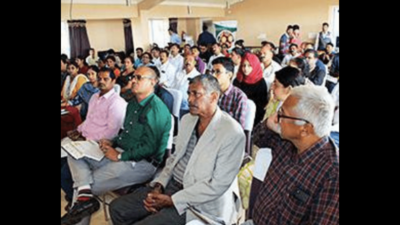
A capacity building programme for Kodagu coffee growers was organised by the Federation of Indian Export organisation in Madikeri.
A capacity building programme for Kodagu coffee growers was organised by the Federation of Indian Export organisation in Madikeri.
The initiative was hosted under the flagship of the ministry of commerce with support from the state agriculture department.
Experienced coffee growers of the district attended the event.
The need for the promotion of international coffee trade was highlighted during the programme. The facilitators sensitised the entrepreneurs, farmers and exporters on the potential of exporting coffee and spices from the district.
The various trade opportunities in the international market, the role of various agencies, the role of free trade agreements and various other schemes under the Directorate General of Foreign Trade were explained to the growers in detail.
A total of 75 participants comprising farmers, farmer produce organisations and entrepreneurs took part in the session.
Lokesh HD, ITS, Jt. DGFT Bengaluru was the chief guest of the event. Babu Reddy DR, DD of Coffee Board spoke on coffee exports and GI Coffee. The role of banking, industrial policy, Indian trade portal and schemes under spices board were highlighted during the session.
Shabhana M Sheikh, JD of district agriculture department was also present .
source: http://www.timesofindia.indiatimes.com / The Times of India / Home> News> City News> Mysuru News / by TNN / September 08th, 2022
Coffee Board of India has invited applications for admission to the Post Graduate Diploma in Coffee Quality Management (PGDCQM) for the academic year.
The course has been designed to support the requirements of the Indian coffee industry for trained personnel with the specific knowledge and skills required to function as coffee tasters.
Course content includes Coffee cultivation practices, post-harvest management and practices, Coffee Quality Evaluation, Roasting and brewing techniques, Marketing and Trade, Quality assurance systems (Theory and Practical sessions).
The duration of the course is 12 months split into 3 trimesters and is conducted in English.
Free accommodation will be provided only during the first trimester at CCRI, Balehonnur, Chikmagalur.
Eligibility: Applicant must hold a Bachelor’s degree with at least one of the subjects namely Botany, Zoology, Chemistry, Biotechnology, Bioscience, Food Technology, Food Science, Environmental science or should hold a Bachelor’s degree in Agricultural sciences.
Admissions are open to those from open category and preference is given to those sponsored by coffee industry.
Selection will be based on academic record, personal interview and sensory evaluation test.
Application: Application forms can be downloaded from www.indiacoffee.org or collected personally from Coffee Board, Bangalore.
Application fee of Rs.1500/- has to be paid online.
Filled in application form along with necessary documents should reach ‘Divisional Head, Coffee Quality, Coffee Board, No.1, Dr.B.R.Ambedkar Veedhi, Bengaluru-560 001’ by 16th September 2022.
Foreign students admitted under open and sponsored categories should be well versed in English language. Their admission is subject to the clearance of Govt. of India.
Interview and selection will be on 30th September 2022.
Course Fee is Rs.2,50,000/-. (Rs,1,25,000/- for SC/ST).
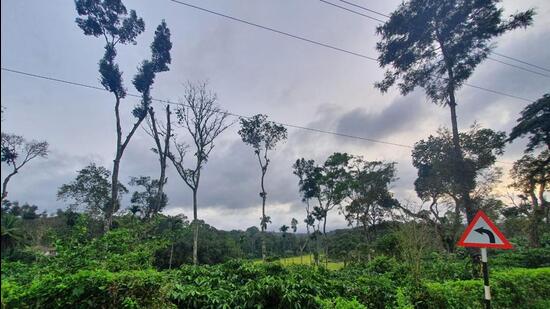
Heavy and unseasonal rains since July have led to most of the coffee dropping off the plants, which planters estimate has led to a 30-35% decline in production in the state.
Since 2018, problems for Karnataka coffee growers have only compounded, making it harder to survive on a product whose prices have seen violent fluctuations as it is connected to global markets while internally few factors have changed to help their cause.
Heavy and unseasonal rains since July have led to most of the coffee dropping off the plants, which planters estimate has led to a 30-35% decline in production in the state.
Ground reality
Coffee growers have multiple challenges such as increasing labour costs due to dire shortage, crop damage, landslides, human-animal conflict, unseasonal rainfall, price fluctuations and the recent proposal on eco-sensitive zones in the western ghats among others.
“The rains have been very heavy and prolonged downpour this time and especially high in the Western Ghats region has led to wet-foot conditions and dropping of coffee. The coffee, which is supposed to be harvested by December, is largely damaged and we estimate a 30% loss in crop,” said Bose Mandanna, a coffee planter and former member of the coffee board.
Hassan, Chikmagalur and Kodagu are the biggest growing coffee regions in the country, accounting for 241,650 tonne production out of total 342,000 tonne produced in India.
With at least 70-80% of the total produce exported globally, coffee was among the biggest foreign exchange earning sectors. However, the importance of this sector has declined over the years, especially the booming information technology and related industries which overshadow plantation revenues now.
“Coffee is a commodity where prices are determined at a global level. But having a strong domestic market is an insulation whenever there is a price variation. So, we don’t want to increase domestic consumption because our coffee is regarded as very high quality and has good demand in the international market. But if there is a bumper production in Brazil and Vietnam, the prices will collapse. At that time, the farmers should not feel that they have suffered a huge loss. That time having a strong domestic market is very important and the coffee board is balancing both,” said KG Jagadeesha, CEO & secretary of the Coffee Board of India.
Nature’s fury
In 2018, 39 villages near Madikeri and Somwarpet experienced several landslides as the downpour wreaked havoc in several parts of Karnataka, especially Kodagu, that resulted in permanent plantation land loss to over 8,000 people, according to Nanda Belliappa, a coffee planter in Huttihole Post, Madapur village near Madikeri.
Several planters have since gone to court seeking relief for permanent land loss due to landslides which they claim was “not an act of god but certainly was a manmade disaster”.
“The incessant heavy rainfall and the huge amount of water released from the reservoirs causing fluctuations resulted in hydrostatic pressure due to which landslides occurred at various places, more particularly in the 39 villages. The river water had entered the plantation zones that were quite far away from the river bed,” according to a petition filed in (Karnataka High court) in 2020.
Located near Harangi Dam, this belt saw the most amount of devastation, in which over 100 people in the state lost their lives.
Belliappa lost nine acres permanently and received ₹35,000 per acre compensation, which was capped at a maximum of 2 ha (1 ha=2.47 acres) or around ₹1.75 lakh as per the National Disaster Relief Fund (NDRF) norms.
“Around 8,000 planters have been displaced. Totally if you see around 900 ha are lost. We are demanding that we be given the same compensation when the government acquires land for roads or other developmental works. On that basis, if we have lost land, the government has to compensate on that level which is normally three or four times the guidance value,” Belliappa said.
Jagadeesha said: “NDRF norms are the same for all farmers as it does not differentiate between coffee or arecanut or anyone else. The compensation is paid at ₹36,000 per hectare for crop loss. For land loss it is a bit more. But the compensation which is paid to a paddy or agricultural farmer or ragi or jowar or coffee is the same. The demand by coffee growers is that plantation crops are different. Even in the (coffee) act, a small coffee grower is classified as 10 hectares whereas it is only 2 hectares. So, they are asking if compensation can be done up to 10 ha.”
He said post the 2018 landslides, a committee under the Karnataka chief secretary did send recommendations to the union government at least three times but are yet to hear back from the Centre.
“The committee unanimously recommended that the compensation be increased from ₹36,000 to ₹72,000 and the 2ha limit be increased to 10 ha. That recommendation has gone, but we have not heard anything. We have written three to four times from the coffee board. We are in favour of giving more compensation to coffee growers because the investment is more,” he said.
Proposed new coffee act
The union government has proposed to replace the 80-year-old Coffee Act with the Coffee (Promotion and Development Bill) 2022 that is expected to come up in the next session of Parliament. “These are very old laws and the idea is only to simplify them, make it easier to do business, ensure that the small people in the different areas like coffee growing, tea growing do not have to suffer from high levels of compliance burden,” Piyush Goyal, the minister for commerce and industry, had said, PTI reported in July.
Among the changes proposed in the new act is the shifting of coffee from the commerce and industries department to agriculture, which, it believes, would give the planters all the benefits from significantly large agricultural schemes.
But, how does this impact coffee growers?
Planters, who spoke to HT, said there was definitely more money and funds in the agriculture department, but fear that coffee would not be treated as a priority when compared to other crops such as paddy, wheat and others. They also said coffee requires officials with expertise in the subject.
“The situation today is that even after cultivating coffee under shade for about 170 years, we are still not globally recognised as shade-grown coffee. These are the things that the coffee board needs to do. The moment the shade is more, our yield productivity will come down to the tune of one-third of what Brazilians do. They have open field cultivation. Coffee boards need to promote, they should certify and see to it that sustainable activity which is practised in the coffee industry gets recognised globally,” said Vishwanath KK, an executive member of the Codagu Planters Association.
Vishwanath said the Indian council of agricultural research must do the research and the commerce ministry should focus on trading, promotion and other commercial activities. “The coffee board served its purpose. The last 20 years there is a clear disconnect between the farmers and the board and the research. Now, there has to be an opportunity for the commodity to take it to the next level,” he said.
Jagadeesha said the proposed coffee act is scheduled to come up in the next session of Parliament, but added that the proposal to change from commerce and industry department to agriculture will make no difference on the ground.
“One of the reasons is since the agricultural department has a bigger budget, the farmers may benefit from this. That too is only an expectation,” he said. However, he said this proposal has not moved on paper and since coffee was export heavy, it will remain with the commerce and industries ministry.
source: http://www.hindustantimes.com / Hindustan Times / Home> Cities> Bengaluru News / by Sharan Poovanna, Bengaluru / August 22nd, 2022
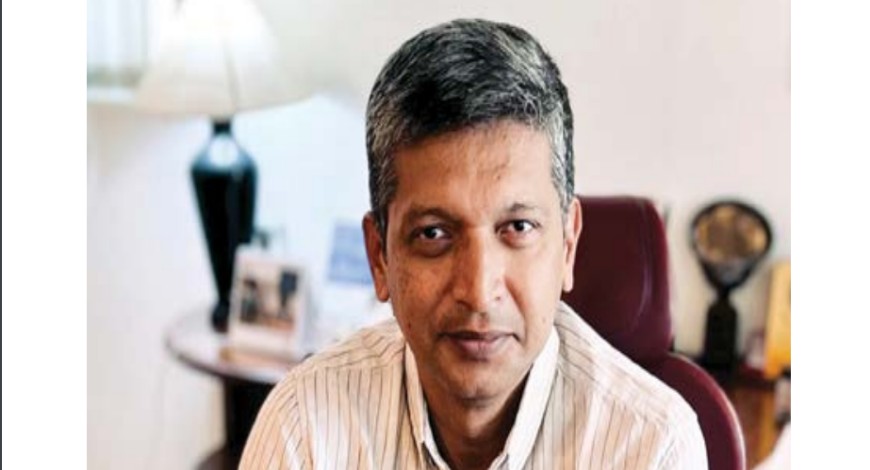
Chacko Thomas, the managing director and chief executive officer at Tata Coffee, has nearly three decades of rich experience in the Plantation industry
Chacko Thomas is a Bachelor of Science with a specialisation in Computer Science from University of Jodhpur. He has rich experience in Plantations, Business Strategy, Sales and Marketing. Thomas has been associated with Tata Coffee since August 2015. Before joining Tata Coffee, he was the MD of Kannan Devan Hills Plantations Company at Munnar. Thomas is an alumnus of INSEAD Fontainebleau having done his advanced management programme there.
Thomas has a strong track record in business transformation, delivering sustainable results and building and leading high-performing teams in India and Vietnam, according to his online profile. He also has an extensive experience in general management, setting up distribution channels and running own businesses. He has held board positions in companies in US, Sri Lanka and India. Currently, as its MD and CEO, Tata Coffee is today one of the largest integrated coffee companies serving over 40 countries.
The company states that its suit of major products like Green Bean, Instant Coffee, Tea and Pepper are all about giving consumers a taste of the Tata Coffee goodness. The company has around 8,000 MT annual capacity of shade-grown Arabica and Robusta. Around 90 per cent of its washed Arabica is exported as premium green bean to roasters. The company has 13 Arabica estates that are Starbucks C.A.F.E. Practices certified.
The company’s instant coffee comes in various customised blends that appeal to the palate of its customers, brands, private labels, distributors and large global roasters. Being eco-conscious, all three of its plants – in Theni (Tamil Nadu), Toopran (Telangana) and Vietnam – are fuelled by renewable energy sources.
The company’s distinctive variants of instant coffee are packaged in a fully automated packing unit and delivered across countries like Russia, Africa, Europe and emerging markets like Southeast Asia and the Middle East.
Business Growth
On a yearly basis, consolidated net profit of Tata Coffee surged 10.32 per cent to Rs 233.40 crore on a 4.81 per cent rise in revenue from operations to Rs 2,363.50 crore in FY22 over FY21. Tata Coffee’s revenues from instant coffee business consisting of India and Vietnam grew by nearly 9 per cent during the fourth quarter, driven by improved realisations despite lower exports from India consequent to delay in despatches. There has also been an improved margin driven by higher proportion of specialty/differentiated products as well as lower costs. The sales to all key markets have been robust. For the financial year, the revenues from instant coffee business grew by 20 per cent with improved margins. The order book continues to be healthy both, at India and Vietnam, the company said.
Commenting on the performance, Thomas, said, the performance of instant coffee business continued to be robust. “Our Plantation performance on Green Bean Coffee and Pepper during the year had also been strong, aided by improved realisations. Our subsidiary, Eight O’Clock Coffee [EOC] recorded improved performance during the quarter owing to better realisations and favourable channel mix,” he said.
In March, Tata Consumer Products (TCPL) had announced the merger of all businesses of Tata Coffee with itself as part of a reorganisation plan in line with its strategic priority of unlocking synergies and efficiencies.
The plantation business of Tata Coffee (TCL) demerged into TCPL’s wholly-owned arm TCPL Beverages & Foods (TBFL). The remaining business of TCL, consisting of its extraction and branded coffee business, merged with TCPL.
source: http://www.businessworld.in / Business World / Home / August 17th, 2022 / Magazine August 23rd, 2022
Coffee is the most consumed beverage in the world. Cold, hot, or roasted there are plenty of variations. It has become an essential part of many people’s lives. There are many cultures around the world that serve coffee using different ingredients and techniques. From Dalgona coffee to quirky vacuum Syphon coffee. If you want to try this unique Syphon coffee then head to this Big Cup Café in Coorg.
Read this article to learn about the intricate art of making vacuum Syphon coffee.
What makes Vacuum Syphon Coffee Different Than The Rest
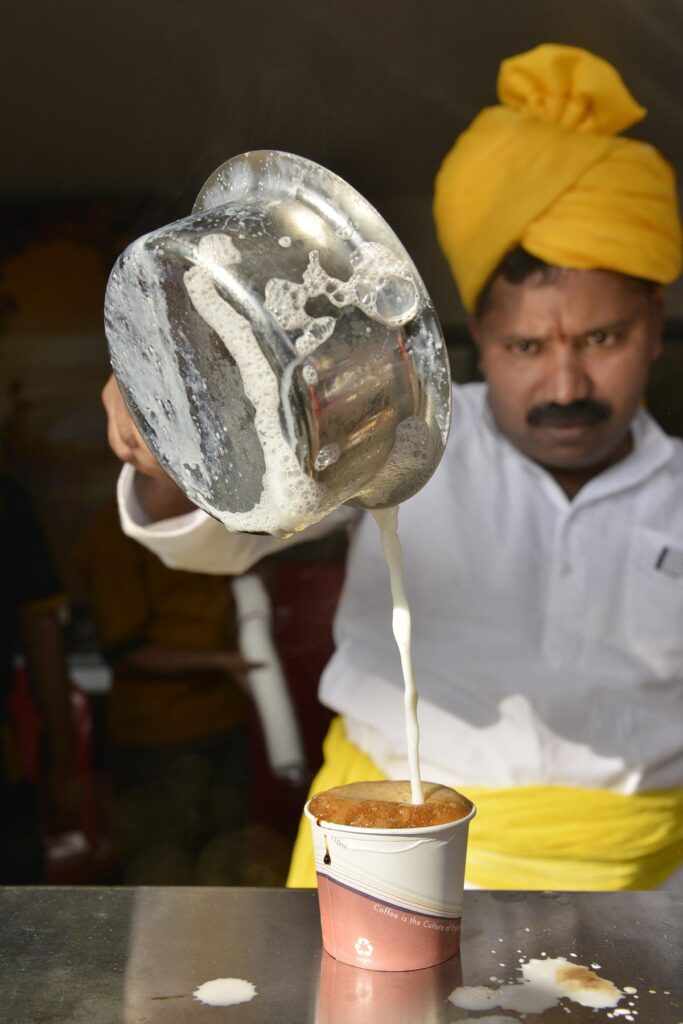
If you are a coffee lover you should definitely try this vacuum syphon coffee. The technique used behind this coffee is quite difficult as it is based on the concepts of physics. Siphon coffee has the advantage of altering the flavour of coffee to the point where flavours are more apparent than pour-over techniques. Siphon allows the coffee’s flavours to develop more fully and it brings out some notes that you wouldn’t be able to detect in other methods. The first thing you’ll taste in a freshly made cup of Syphon brewed coffee is the flavour profile.
Big Cup Café offers this unique vacuum Syphon coffee, which is as amusing as it is delicious. This café is located in Coorg, Karnataka the coffee bowl of India. The café is run by planter families based in the town. They have owned and managed coffee plantations for generations and Big Cup is the fusion of expertise in farming and hospitality. The café’s mission is to provide quality coffee, harvested right from its estates and provide a world-class coffee experience to its guests in a relaxed and calming atmosphere.
Big Cup Café is located in 3 different spots in the country. The Flagship café is in Coorg, followed by Sharjah and a recent addition in Bhubaneshwar, Odisha. They are planning to open their café in Chennai and Bangalore.
Head to this café in Coorg and devour this unique vacuum Syphon coffee.
Call to help preserve memories of a vanishing people
While modernisation has opened many opportunities for the well-qualified, it has also distanced the young from their heritage and culture. This is even more accentuated amongst Kodavas living outside Kodagu. There is a need to establish a platform where young Kodavas could learn and keep in touch with the community’s heritage, cultural practices, folklore, music, dance, festivals and history, says Mrs. Codanda Rathi Vinay Jha, IAS (Retd.) and Chair, India Foundation for the Arts (IFA), who has initiated establishing a Virtual Museum of Kodava Heritage & Culture named ‘Sandooka,’ a treasure trove of information. —Ed
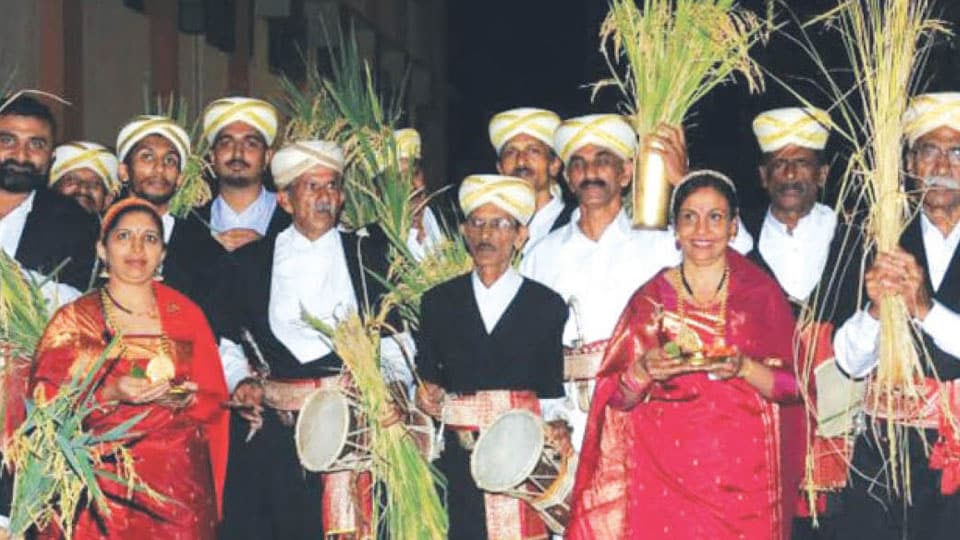
Kodavas are a micro-minority community in India, who live in Kodagu (Coorg) in Karnataka State. It is estimated that there are about 1,50,000 ethnic Kodavas within and outside Kodagu.
Kodavas, by virtue of living quite isolated in a densely wooded hilly terrain on the Western Ghats of India since time immemorial, have developed their own unique culture, physical attributes, cuisine, language, attire, religious rituals and practices.
Over the centuries, Kodavas adapted themselves to the harsh weather conditions, dangers from wild animals and the inhospitable terrain of Kodagu and transformed the land to an idyllic haven it is today. With the passage of time, they toiled literally with bare hands to cultivate paddy in the valleys.
With the forests providing bountiful supply of wild game, they became expert hunters initially with bows and arrows, and later with firearms which enabled them to emerge as a warrior race. They transformed the fertile land and were able to grow enough paddy that they could export to neighbouring areas.
The interactions with immediate neighbours in present day Kerala, Mysuru and Mangaluru, influenced the Kodava language, places of worship, construction of their dwellings and some of the religious practices as well. However, Kodavas still retain their fundamental philosophy of ancestor and nature worship. They come under the broad umbrella of Hinduism.
Kodagu was ruled by Kodava Nayakas or Palegars who were basically warlords. The Haleri dynasty established their rule in Kodagu after cleverly replacing the hopelessly divided Nayakas during the early part of the 17th century. The Haleri Rajas ruled for over two centuries until the British takeover of the administration in 1834 after deposing the last Raja. During the rule of the Haleri Rajas and later the British, Kodavas remained the prominent community very much involved in the administration.
During the British rule, education was introduced and this brought about quantum changes in the lifestyle of the Kodavas. Kodavas found several employment opportunities. Introduction and scientific cultivation of coffee and spices vastly improved the economy of the region. Kodava culture and ethos found expression in the writings by the British, European and Kodava authors.
By the time India got her independence, many Kodavas held important and high-level offices in sectors such as the Defence Forces, Administration, Revenue Department, Forest Department, Police, in the field of Education, Engineering and Medicine.
Kodavas have several distinctive elements in their social, cultural and religious practices. One of them is the deferential status given to women. There is no dowry system in the community. Centuries ago, widow remarriage was permitted. This enlightened attitude is now reflected in well-educated Kodava women shining in a variety of fields.
After India’s independence many Kodavas ventured out of Kodagu seeking better opportunities in education, employment, business and sports. Kodavas are now spread all over the globe. The last three decades has seen a large number of Kodavas migrating outside the country. There is now a sizable number of Kodava diaspora in the US, Canada, UK and Australia. In many cases, there are a couple of generation of Kodavas born and brought up outside Kodagu and outside India as well.
While modernisation has opened many opportunities for the well-qualified, it has also distanced the young from their heritage and culture. This is even more accentuated amongst Kodavas living outside Kodagu. There is a need to establish a platform where young Kodavas could learn and keep in touch with the community’s heritage, cultural practices, folklore, music, dance, festivals and history.
It is with this aim in mind that Mrs. Codanda Rathi Vinay Jha, IAS (Retd.), as Chair, India Foundation for the Arts (IFA), initiated establishing a Virtual Museum of Kodava Heritage & Culture (VMKHC). This project is evocatively named — Sandooka — a treasure trove of information. IFA has successfully supported several path-breaking projects in the field of art and culture.
Sandooka will be a living museum that will be interactive and open to receiving relevant new materials from the public. People, especially the future generations of Kodavas, will have an easily accessible platform to gather details of their heritage. Weblinks will also be given to some of the websites dealing with Kodava culture. It is hoped that this treasure trove of information will be of immense help to those who wish to carry out further research on Kodavas. VMKHC will cover the following aspects of Kodagu and Kodavas:
1. Customs and Rituals
2. Cuisine
3. Architecture
4. Clothes and Jewellery
5. Art & Craft
6. Landscape
7. Literature and Folklore
8. Community Histories
9. Festivals
The project is generously funded with a Corporate Social Responsibility (CSR) grant from Recaero India Pvt. Ltd., which is a pioneer in the field of aerospace engineering and is headed by Vinay Jha, IAS (Retd). A highly professional team has been forged to deal with every aspect of the project. The team comprises:
Lina Vincent – Project Head; Upasana Nattoji Roy – Designer (Switch Studio); Saurav Roy – Designer (Switch Studio) and Mookanda Nitin Kushalappa – Researcher.
IFA office-bearers are: Arundhati Ghosh (Executive Director) and Darshana Davé (Project Co-ordinator); Advisory Group: Rathi Vinay Jha, C.P. Belliappa and Hemanth Sathyanarayana.
Sandooka invites submission of Kodava artefacts, rare photographs, antiques including jewellery (photos) and anecdotes of yore. All accepted materials will be given due recognition and credits. Sharing your valuable knowledge and collections will enrich the contents of Sandooka.
For details of submission of materials, please visit: www.sandookamuseum.org
source: http://www.starofmysore.com / Star of Mysore / Home> Feature Articles / by C.P. Belliappa / August 01st, 2022
WELCOME. If you like what you see "SUBSCRIBE via EMAIL" to receive FREE regular UPDATES.
Read More »