Jharkhand Chief Minister Hemant Soren arrived in Kodagu district along with his family for a three-day private visit and is currently staying at a luxury resort near Madikeri.
Soren reached Madikeri on Sunday evening and was received by Assistant Commissioner Mithun Chakravarthy on behalf of the District Administration. Kushalnagar Tahsildar Sridhar has been appointed as the protocol officer for the visit.
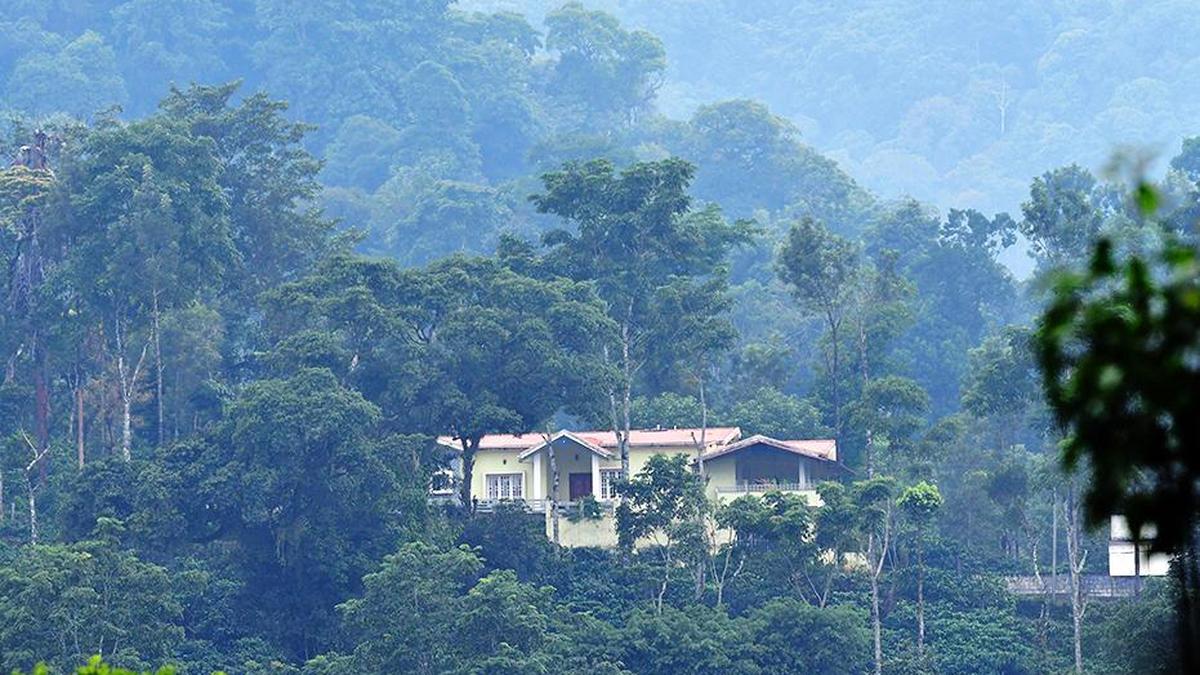
The Chief Minister and his family are staying at the Leela Palace resort at Kadagadalu on the outskirts of Madikeri.
During the visit, they toured popular tourist destinations including Dubare Elephant Camp and Cauvery Nisargadhama near Kushalnagar.
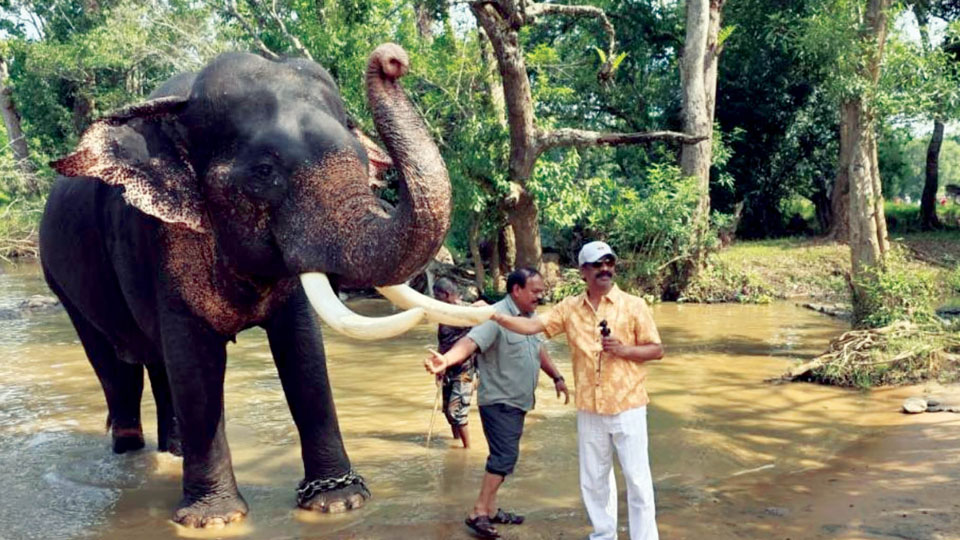
Yesterday morning, Soren was welcomed by camp elephant Sri Rama at Dubare Elephant Camp. The Chief Minister, who appeared delighted by the interaction, posed for photographs with the elephant before proceeding to Cauvery Nisargadhama, where he spent time near the river and clicked photographs.
Soren was accompanied by Assistant Conservator of Forests (ACF) Gopal, Range Forest Officer (RFO) Rakshith and Dubare Deputy Range Forest Officer (DRFO) Ranjan. Several staff members and mahouts were also present at the camp.
Sources said that Soren is expected to stay in Kodagu for two more days before returning to Jharkhand.
Tight security arrangements have been made in view of the Chief Minister’s visit. As he is under Z-Plus category security cover, public access has been restricted at certain locations visited by him.
Kodagu Superintendent of Police (SP) R.N. Bindu Mani told Star of Mysore that details of the Chief Minister’s movements could not be disclosed due to security reasons.
source: http://www.starofmysore.com / Star of Mysore / Home> News / May 12th, 2026
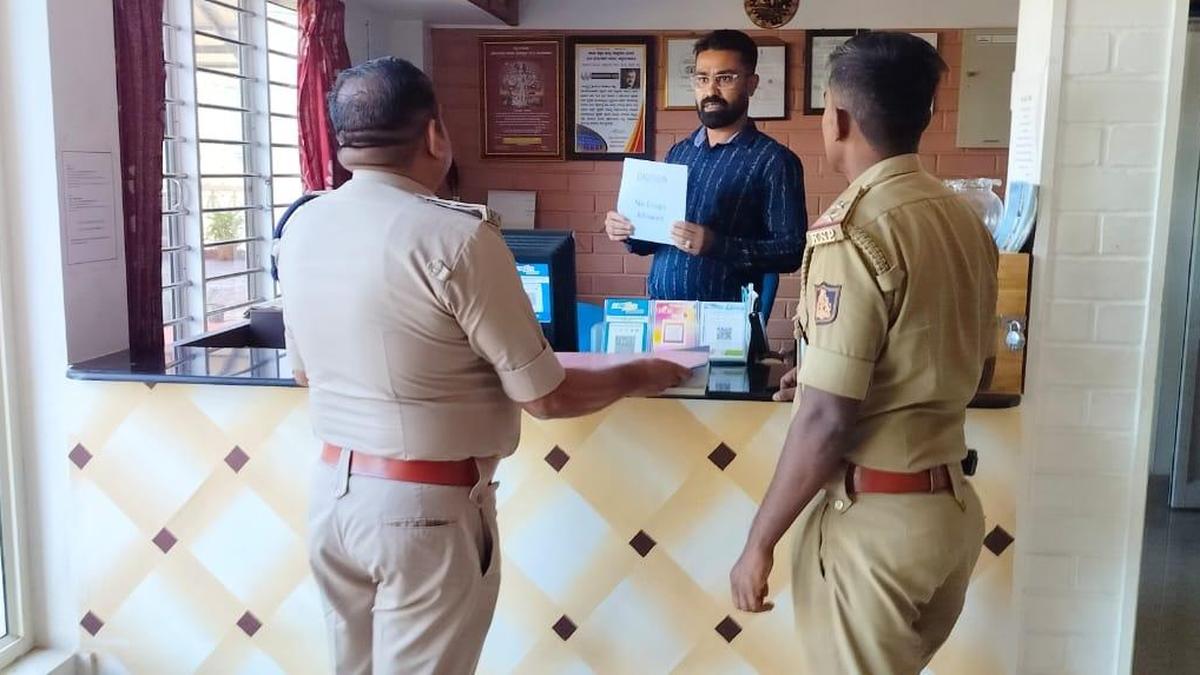
A file photo of Chikkamagaluru police visiting a resort in the district to check if the owner have implemented measures to ensure the safety of tourists. | Photo Credit: Special Arrangement
As part of the new measures, every staff member working at these properties, including permanent and contract employees, will have to undergo background verification at the local police station.
Following the sexual assault on a U.S. tourist at a Kodagu homestay, the government of Karnataka has made police verification of staff mandatory for all homestays and bed-and-breakfast properties. Travellers, as per a recent circular, will be able to check whether a property is registered with local authorities before checking in.
Moreover, for police monitoring, all registered properties will be linked to the Karnataka Police Smart E-Beat system, to allow beat constables to make regular visits, verify guest records and log their inspections through GPS-based tracking. District administrations have been told to form joint inspection teams with police and tourism officials to carry out surprise checks and identify unregistered properties operating illegally.
The government of Karnataka is planning to strengthen emergency response by linking registered properties directly to the 112 system to allow distress calls from these locations to be treated as priority tourist emergencies for quicker police response, officials told The Hindu.
The rules were updated following a recent incident where the victim had alleged that her drinks were laced with intoxicants by a homestay staff member who assaulted her. She had accused the homestay owner of attempting to suppress the incident and failing to help her in approaching the police.
Background verification
As part of the new measures, every staff member working at these properties, including permanent and contract employees, will have to undergo background verification at the local police station. Property owners must keep these records ready, either physically or digitally, for inspection by police or tourism officials.
Report by May 15
All Deputy Commissioners, tourism officials, Police and Women and Child Development departments have been directed to co-ordinate and implement the new rules, and submit a compliance report to the Tourism Department by May 15.
For properties hosting foreign tourists, owners and managers will be trained to correctly record and report guest details through the police-prescribed system, with random checks to ensure compliance.
Tourists can verify antecedents of accommodation
As per a senior official, the Tourism Department will publish and regularly update an online list of all registered homestays and bed-and-breakfast properties in Karnataka for tourists to check. Travel agents, tour operators and online booking platforms have been told to work only with registered properties, while non-compliant properties could be removed from listings until they meet the rules. These properties will have to display their registration certificates and licences at the entrance or reception so guests can easily check if the property is authorised to operate, according to a recent circular.
Emergency contact details, including 112, the national tourist helpline (1800111363 or on a short code 1363), women’s helpline and child helpline numbers, along with details of the nearest hospital and local authorities, must be displayed at all properties. Hospitality staff will undergo training on gender sensitisation, the POSH Act, 2013 and the POCSO Act, 2012. Properties will have to display QR codes for the Karnataka State Police SOS mobile app, Tourism Department stated.
source: http://www.thehindu.com / The Hindu / Home> News> India> Karnataka / by Rishita Khanna / May11th, 2026
Over 2,000 coffee plants, 250 pepper vines cut down at Kalakooru village
Madikeri:
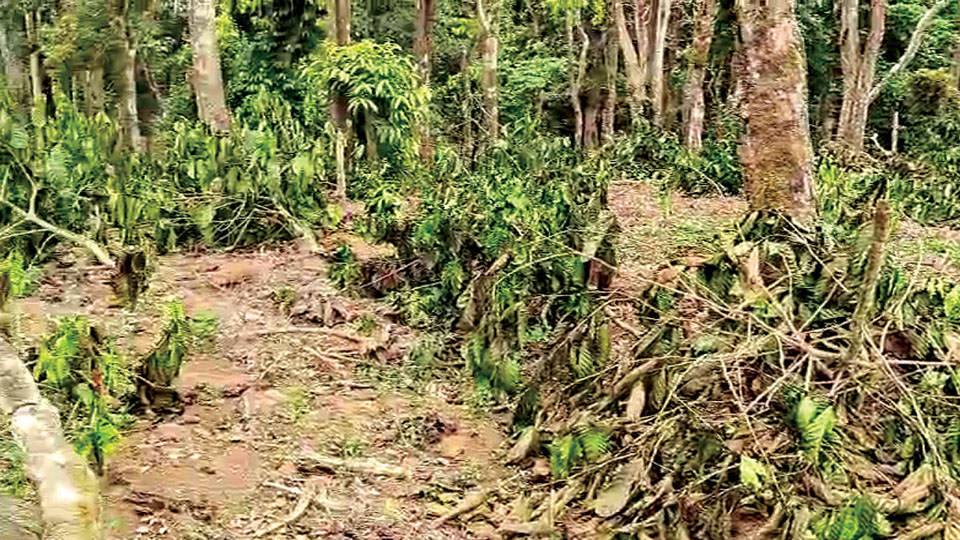
In a shocking incident of large-scale vandalism, unidentified miscreants entered a coffee plantation at Kalakooru village near Birunani in Ponnampet taluk of Kodagu district and destroyed more than 2,000 coffee plants and 250 pepper vines, causing losses estimated to run into several lakhs of rupees.
The plantation belongs to Kuppanamada Gautham, who had carefully developed the four-acre estate over the years with seven-year-old coffee plants and pepper vines. The estate was equipped with modern surveillance measures, including CCTV cameras installed at strategic locations.
The incident took place while Gautam and his family were away in Mysuru to attend a wedding ceremony. Taking advantage of their absence, miscreants trespassed into the plantation and carried out widespread destruction.
In addition to cutting down the crops, the perpetrators disconnected and took away the CCTV cameras in an attempt to erase evidence.
The destruction was extensive, with coffee plants and pepper vines cut at ground level, leaving no scope for regrowth. Gautham now faces the difficult and expensive task of re-establishing the plantation from scratch.
Villagers described the act as deliberate and well-planned. They pointed out that the scale of destruction indicated the involvement of at least eight to ten persons.
The incident triggered outrage among villagers and members of the local farming community, who strongly condemned the destruction of crops and demanded immediate action against those responsible.
Hudikeri Revenue Inspector Santhosh visited the spot and inspected the damaged estate. Srimangala Police Station Inspector A.S. Ravindra, along with his team, also visited the plantation. Police deployed a dog squad to gather clues.
source: http://www.starofmysore.com / Star of Mysore / Home> News / May 08th, 2026
Dr. Aeklavya Panjali conducting hands-on courses throughout the year in Cicero, New York.
The New York Implant Institute has provided excellence in dental implant education since 2007 at its dental implant institute in Cicero, NY, and the next course will take place May 15 to May 16 with limited seats available.
Aeklavya Panjali, DDS, MS, FAGD, DICOI, who is an international speaker on dental implants, teaches the courses. He is certified in IV sedation dentistry, invisalign, dental implants and cosmetic dentistry.
Prof. Dr. Al Panjali earned his DDS at NYU College of Dentistry and went on to complete a Master’s in Oral Implantology at Goethe University in Frankfurt, Germany—one of Europe’s leading implantology programs. He holds Diplomate status with the International Congress of Oral Implantologists (ICOI)—a credential held by fewer than 3,000 dentists worldwide. He serves as a Clinical Professor at the Coorg Institute of Dental Sciences and has lectured on 4 continents.
The New York Implant Institute offer hands-on implant training through its dental implant CE courses and live surgery courses that stay with you for life. Join these seminars and take the next step in advancing your skills with implant courses for dentists.
The May 15-16 course is a Level 3 two-day hands-on course worth 16 CE credits, titled “Platelet Rich Fibrin (PRF), With GBR (Guided Bone Regeneration) and Ridge Augmentation.” This is an advanced course for implant site development with autologous growth factors.
Other courses later this year include:
• LEVEL 4 – Live Patient Surgical Course – 5‑Day Intensive Program Overview
July 1–6, 2026 – 2 seats available
August 9–14, 2026 – Weekday – (Monday–Friday) November 4–9, 2026
• LEVEL 5 – IMPLANT PROSTHODONTICS
• LEVEL 6 ALL ON “X” – The Workflow with Hands on Clinical Sessions. June 12 – 13, 2026
• LEVEL 7 – LIVE SURGERY FOR ALL ON “X” WITH SAME DAY CONVERSION
August 28 – 29, 2026
DIGITAL WORKFLOW FOR FULL ARCH WITH NEODENT – A HANDS ON COURSE
The aroma of freshly crushed black pepper, the earthy warmth of slow-cooked curries, and the comforting simplicity of traditional home recipes – this March, Madras Kitchen Company invites Chennai to step into the rustic kitchens of Coorg with “The Kodava Kitchen.”
Hosted at The Westin Chennai Velachery, this limited-period culinary celebration from 20th to 29th March, available for lunch and dinner, brings the bold and soulful flavours of Kodava cuisine to the city. Known for its generous use of spices, aromatic herbs, and the iconic tang of kachampuli (Coorg’s signature vinegar), Kodava cooking is a heartfelt tribute to the land, its forests, and its people.
Curated as an A la carte experience, the menu showcases time-honoured recipes passed down through generations—each dish reflecting the robust character of Coorg’s hill kitchens. Guests can begin their journey with appetisers such as Anjal Fish Fry, a coconut-tawa fried coastal delicacy, the rich and peppery Chillkana Pandi (slow roasted pork with crushed black pepper), or the flavourful Kodavu Yerachi Fry, a dry mutton preparation infused with poppy seeds, cinnamon and green chillies.
Vegetarian diners can savour traditional bites like Baimbale Barthadh, a spiced tender bamboo shoot fry, Soppu Vadai, crisp spinach and lentil dumplings, and Akki Rave Baje, a comforting semolina fritter delicately flavoured with cumin and green chillies.
The experience continues with hearty mains that truly capture the spirit of Kodava cooking. Signature dishes include Pandi Curry with Kadambattu, the iconic Coorg pork curry served with steamed rice balls, Coorg Yerachi Curry with Nool Puttu, a robust lamb curry paired with delicate string hoppers, and Koli Chekke Kari with Akki Otti, chicken cooked with raw jackfruit in a fragrant coconut and tamarind gravy. Vegetarian favourites such as Tarkari Gassi with Ney Kool (Ghee Rice) and Kumbla Curry with Akki Otti, a comforting pumpkin and coconut curry, celebrate the region’s produce and spices.
No culinary journey is complete without a sweet finale. Guests can indulge in the indulgent Oreo & Coorg Coffee Baked Cheesecake or savour the rustic charm of Jackfruit Steamed Puttu, a traditional dessert that perfectly captures the flavours of the hills.
Date: 1st-10th May 2026
Time: Lunch and Dinner
Price: A la Carte
Venue: Madras Kitchen Company, The Westin Chennai Velachery
For Reservations: 8939892001
With its warm ambience and thoughtfully curated menu, The Kodava Kitchen promises not just a meal but a journey—one that transports diners from Chennai’s bustling cityscape to the misty hills and homestyle kitchens of Coorg.
source: http://www.chennaipatrika.com / Chennai Patrika /Home / by Press Release / May 04th, 2026
With the possibility of monsoon rains commencing in the first week of June, Minister in charge of Kodagu district N.S. Boseraju has issued directions to officials to expedite and complete the ongoing roadworks at the earliest.
Chairing the district-level Karnataka Development Programme (KDP) progress review meeting in Madikeri on Tuesday, Mr. Boseraju instructed the officials to take up necessary pothole filling up works across Kodagu district at the earliest.
While directing the officials to ensure the public do not face inconvenience during the rainy season, the Minister expressed dissatisfaction over the poor pace of roadwork. Though the government has allocated hundreds of crores of rupees for road maintenance across the State, the delays by engineers were tarnishing the government’s image, he rued.
His observations came amid demands by other people’s representatives including Madikeri MLA Mantar Gowda, who sought for not only swift completion of the roadworks in the constituency, but also ensure good quality work.
He also sought early construction of the Aigoor bridge, repair of Galibeedu road and the maintenance of roads in Mutlu, Hammiyala, Devasthuru, Hanchinadu, and other areas.
Vice-chairman of Sports Authority of Karnataka (SAK) Arun Machaiah too pointed out that many roadworks, including Karike Road, were still pending and sought that the works be taken up urgently.
Kodagu District Guarantee Scheme Implementation Committee president Teetira Dharmaj Uthappa too highlighted the need to repair roads in Bittangala, Titimati, Balugodu, and other areas.
Reviewing works related to the Chamundeshwari Electricity Supply Corporation (CESC) in Kodagu, Mr. Boseraju said the government had released ₹110 crore each for the two Assembly constituencies in Kodagu and instructed the officials to ensure proper power supply to the people of the hilly district.
When the CESC officials pointed out that Karnataka Power Transmission Corporation Limited (KPTCL) works are in progress in Hudikeri and Balale while work on sub-stations are being initiated in Kalathmadu, Siddapur, and Katakeri, the Minister expressed dissatisfaction that discussions on power substations have been ongoing for over a year without sufficient progress.
Deputy Commissioner S.J. Somashekar, Zilla Panchayat CEO Anand Prakash Meena, Superintendent of Police Bindu Mani, Assistant Commissioner Nitin Chakki and Deputy Conservator of Forests Abhishek also participated in the meeting.
source: http://www.thehindu.com / The Hindu / Home> News> India> Karnataka / by The Hindu Bureau / May 06th, 2026
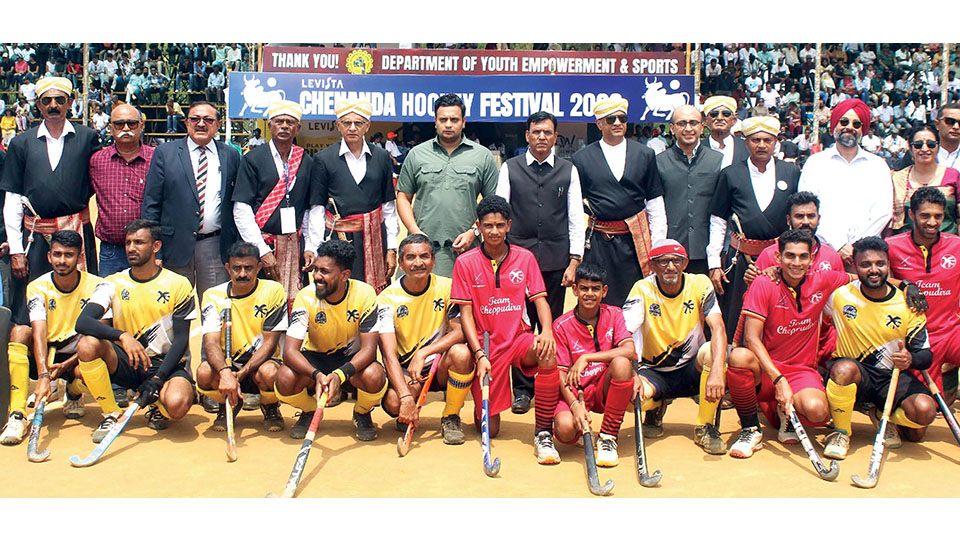
Amid loud cheers from a packed crowd of over 25,000, the Kulletira family team clinched the ‘Chenanda Cup’ at the 26th Kodava Family Hockey Tournament defeating the Cheppudira family 3–1 yesterday.
The final of the month-long Kodava Family Hockey Festival was held yesterday at General Thimmaiah Stadium in Cheriyaparambu near Napoklu. With this win, Kulletira lifted their fourth title in the prestigious tournament.
The summit clash saw an evenly fought first half, with Cheppudira earning several penalty corners but failing to convert them. Both teams scored once in the third quarter to keep the contest open. However, Kulletira took control in the final quarter, striking twice to seal the victory.
Roshan Lokesh, Avaneesh Mandappa and Shubham Chettiyappa scored a goal each for Kulletira, while Vachan Chinnappa netted the lone goal for Cheppudira.
The winning Kulletira family team was awarded Rs. 3 lakh and a silver rolling trophy. Runners-up Cheppudira family received Rs. 2 lakh and a trophy, while Paradanda family, who finished third, received Rs. 1 lakh.
The festival concluded with the ceremonial handover of the flag to the Ajjikuttira family, who will host the 27th edition in 2027. The Chenanda family, organisers of this year’s event, handed over the flag.
Mandaviya assures support
Union Minister for Youth Affairs and Sports Mansukh Mandaviya, who was the chief guest, assured financial support to promote sports, stating that such assistance is the Government’s responsibility and not charity.
He said he had long heard about the Kodava community’s passion for hockey and was glad to witness it first hand. Referring to the International Olympic Committee’s vision of sports as a unifying force, he noted that the Kodava community had upheld this spirit for generations.
“This land has produced 18 Olympians. It is the duty of both the Centre and the State to nurture Kodagu’s sporting talent,” he said. He added that sports should remain free from politics and promised to promote shooting in the region by identifying and training young talent.
Mysuru-Kodagu MP Yaduveer Krishnadatta Chamaraja Wadiyar said the festival reflects the growing sporting culture in the country. Highlighting Kodagu’s contribution to Indian sports, he said the family hockey tradition inspires youth, encourages women’s participation and strengthens national unity.
He urged the Centre to set up a shooting academy in Kodagu under the Khelo India scheme.
Virajpet MLA A.S. Ponnanna termed the festival a model initiative for the district. He said work on an 11-acre sports training centre at V. Badaga village in Virajpet has already begun with State support and appealed to the Centre for assistance in building a stadium.
Kodagu Hockey Academy, President Pandanda K. Bopanna, retired Justice Ajjikuttira S. Bopanna, SLN Coffee CEO Saheed Singh, Dr. Santosh Uthappa of Narayana Hospital, Sports Authority of Karnataka Vice-Chairman Cheppudira Arun Machaiah and others were present.
source: http://www.starofmysore.com / Star of Mysore / Home> Sports / May 03rd, 2026
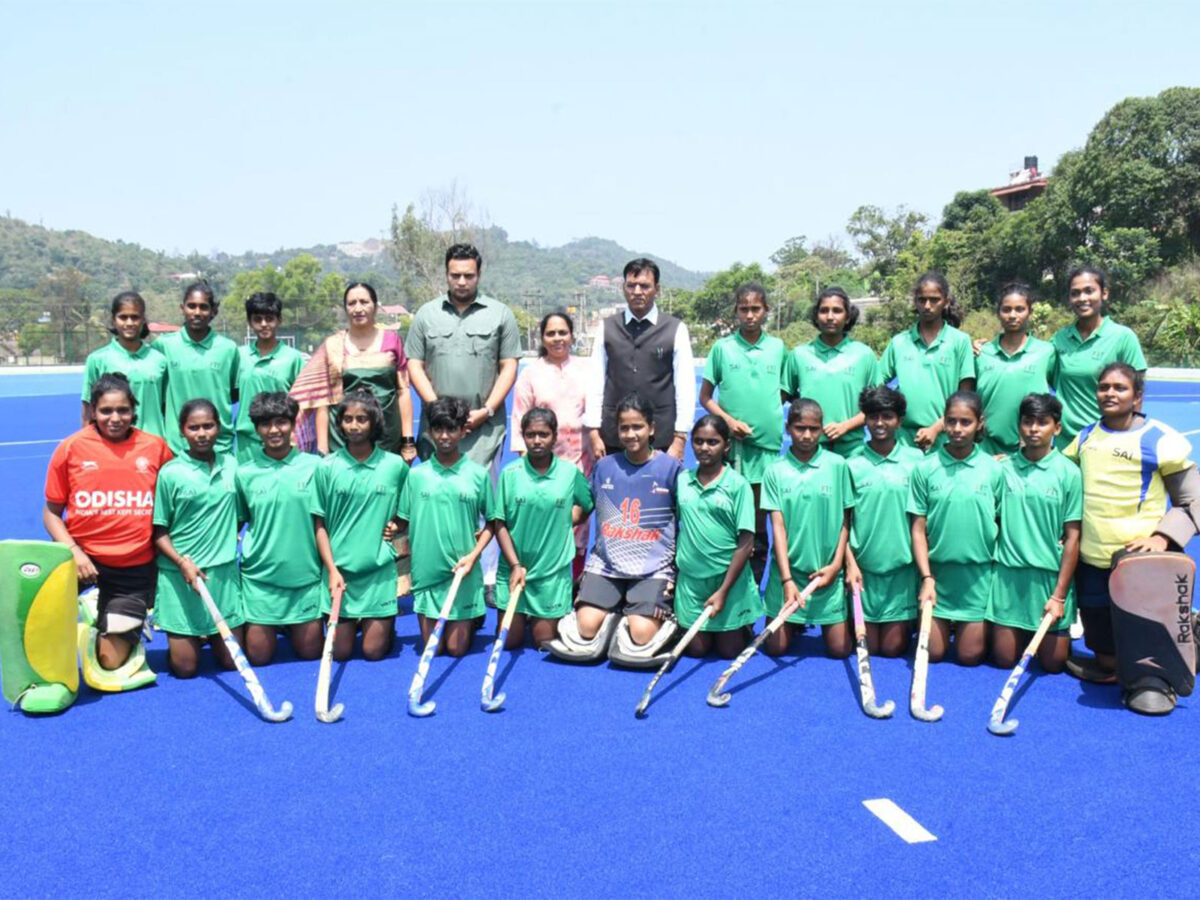
ANI Photo | Union sports minister meets women hockey players at SAI Madikeri Centre
Union Minister of Youth Affairs and Sports Mansukh Mandaviya visited the Sports Authority of India (SAI) Training Centre in Madikeri on May 2 and engaged with women hockey players from the Kodava community at the conclusion of a month-long hockey festival.
Mandaviya emphasised the importance of nurturing talent from across India to achieve the nation’s ambitions of becoming a global sports powerhouse. He highlighted the contributions of the Kodava community in promoting field hockey, noting that Kodagu district is considered one of the cradles of Indian hockey. Over 50 players from the community have represented India internationally, including seven Olympians such as P Govinda, MP Ganesh, MM Somaiya and CS Poonacha.
“Future Olympians in the making! Met with the rising stars of Indian Hockey from the SAI Training Centre (STC), Madikeri, Karnataka,” Mandaviya stated in a post on X.
The minister remarked that the Union Government is committed to developing a comprehensive sports ecosystem and identified the forthcoming 2030 Commonwealth Games in Ahmedabad as a positive step. He added that India’s rich talent pool provides strong prospects for sporting dominance.
“Taking inspiration from our Hon’ble Prime Minister Narendra Modi’s vision, the Sports Ministry is committed to nurturing the wide talent pool available across various parts of the nation. Unearthing and nurturing talent from different parts of the country can only ensure that we fulfil the dream of Modi ji. The bigger the talent pool, more the chances of us performing better in big ticket events. I am confident that both Indian men and women will register solid performance in the Commonwealth Games in 2030, where hockey is likely to make a return,” Mandaviya said.
The SAI Training Centre in Madikeri spans 5.49 acres in the hill station region of Kodagu District, approximately 1,100 metres above sea level. It operates as a feeder centre for 22 National Centres of Excellence (NCOEs) across India. Facilities include an artificial hockey turf, a 60-bed hostel, dining hall and kitchen. Around 50 girls from the Kodava community train there for various hockey events organised across Karnataka.
source: http://www.thenewsmill.com / The News Mill / Home> Sports / by The News Mill (with ANI inputs / May 02nd, 2026
Despite sufficient time being given to homestay owners, it has been observed that many establishments remain unregistered. | Photo Credit: File Photo
All homestays operating in Kodagu district have been instructed by the Tourism Department authorities to be mandatorily registered.
As per government orders, it is mandatory for all homestays operating in the district to register with the Tourism Department. Despite sufficient time being given to homestay owners, it has been observed that many establishments remain unregistered, said a press statement issued by the office of the Deputy Director of the Tourism Department in Madikeri on Friday.
The instructions by the Tourism Department have come in the wake of an alleged sexual assault on a woman from the U.S. in a homestay in Kodagu district.
Pointing out that the district administration has taken serious note of many homestays remaining unregistered and had earlier directed that all unregistered homestays complete their registration immediately, the Tourism Department said, “Homestays operating without registration must cease all unauthorised activities forthwith.”
Licenses of homestays operating illegally in the district have already been cancelled, the Tourism Department said, before warning that legal action will be initiated against those continuing to operate in violation of the rules, without registration with the Tourism Department.
The homestays that have already obtained licenses from the Tourism Department and whose validity of five years is nearing expiry have also been instructed to renew their licenses.
source: http://www.thehindu.com / The Hindu / Home> News> India> Karnataka / by The Hindu Bureau / May 01st, 2026
‘Sapientia-26,’ the Annual Inter-College Fest was held on Apr. 13 at Sapient College on KRS Road in Metagalli here.
The valedictory and prize distribution ceremony was held at North Avenue.
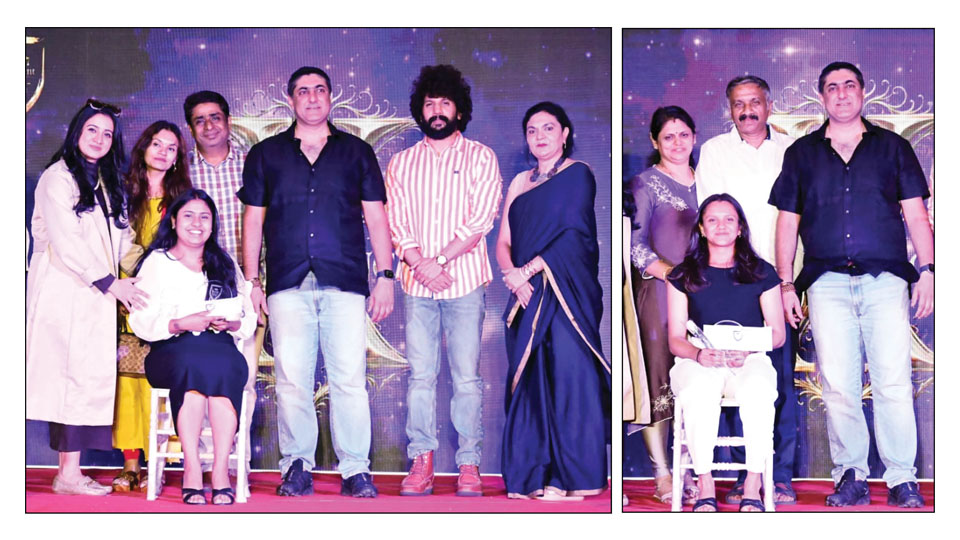
The chief guests for the event were the well-known film celebrity couple Bhuvann Ponnannaa and Harshika Poonacha, who herself is a gold medallist in Engineering.
They, along with Sapient College Chairman P. Daljeet Ram, presented trophies and cash prizes worth over Rs. 1.50 lakh to the winning teams.
The couple motivated the gathered students with their own life experiences and appreciated the growth and reputation of Sapient College in such a short period of time.
As part of the programme, students of the college presented various cultural activities and entertained the gathering.
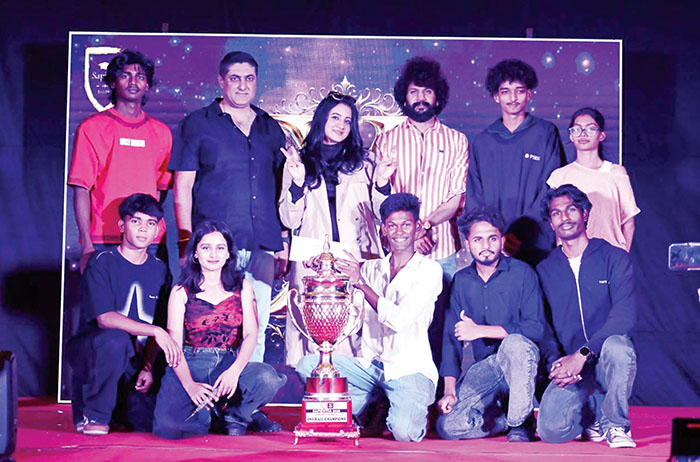
SBRR Mahajana First Grade College team which won the overall winners’ trophy at ‘Sapientia-26’ with the guests.
The two State toppers of Sapient PU College were honoured on stage by the dignitaries, along with other UG toppers in the presence of their families and gathering of students, for their outstanding academic achievements.
SBRR Mahajana First Grade College Team emerged as the overall winners of Inter-College Fest securing the trophy along with a cash prize of Rs. 25,000.
The event was attended by Sapient College Director Yeshmik Daljeet Ram, Dean Dr. Sujatha Bopanna, Principal Dr. K. Ganesh, Administrative Officer Sujit Padival, teaching and non-teaching staff.
source: http://www.starofmysore.com / Star of Mysore / Home> News / April 29th, 2026
WELCOME. If you like what you see "SUBSCRIBE via EMAIL" to receive FREE regular UPDATES.
Read More »