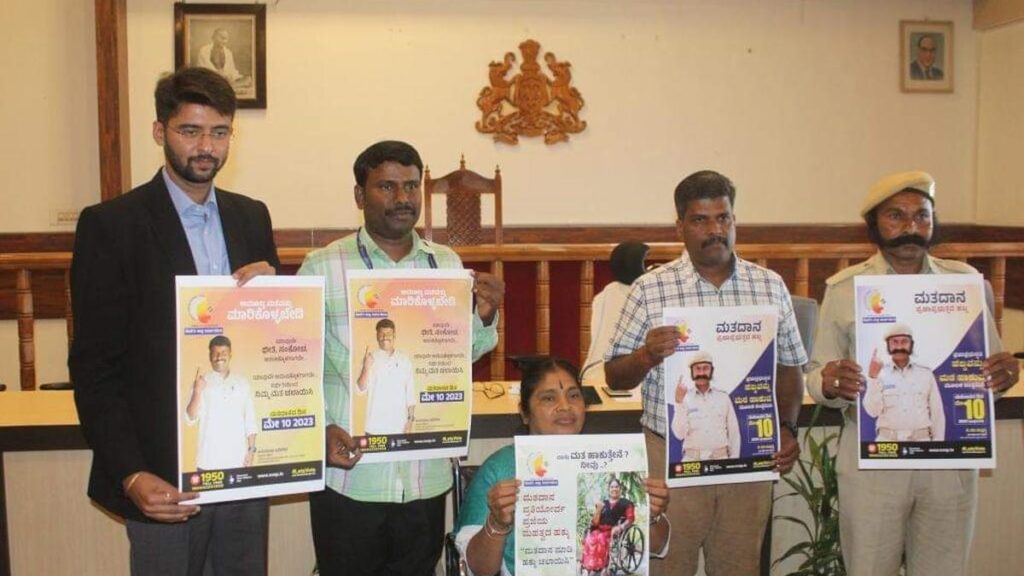
Kodagu DC B.C. athish (second from right) with SVEEP ambassadors Eshwari, Ravi Muthappa and Basavaraj Badiger in Madikeri on Thursday. Kodagu ZP CEO S.Prakash is also present. | Photo Credit: SPECIAL ARRANGEMENT
The Kodagu district administration has appointed a few commoners drawn from the civil society as its ambassador for Systematic Voters Education and Electoral Participation (SVEEP) drive.
The ambassadors are S.K. Eshwari of Mekari village who is specially abled; Basavaraj Badiger, an arts and painting teacher from 7 Hoskote Government Higher Primary School; and K. Ravi Muthappa who is a Home Guard personnel. They were felicitated by the Deputy Commissioner of Kodagu B.C. Satish, ZP CEO S. Prakash and others on behalf of the SVEEP committee with shawl and fruits on Thursday and the posters to create voters awareness and education were also released on the occasion.
The authorities said though Ms. Eshwari is specially abled she was determined to overcome it and despite certain limitations, mastered various types of crafts and has been described as a role model for others. Determined to be self-reliant, Ms. Eshwari mastered sewing and has taken to sports in a big way including wheel chair race, swimming etc. As an individual who was schooled at home, Ms. Eshwari is also into writing poetry and stories, scripting plays and has won state-level prize in poetry writing, the authorities added. This apart she is also into vegetable carving and has spread the message of Swacch Bharat, wealth from waste and plastic-free drive among other such national programmes and has won many awards.
Similarly, Mr. Basavaraj Badiger has his own achievements and has been a fine arts teacher since 16 years. His works have been exhibited in different parts of the State including at Pattadakal festival, Badami festival etc and he has won the best teacher award at the taluk level. Besides, he has also won a state-level award for teachers’ co-curricular activities.
Mr. K.Ravi Muthappa has been with the Home Guards sinc 13 years. Belonging to Ivathoklu near Cheerambani, he has engaged himself in social service since many years. His services are sought during accidents in rivers, waterfalls and lakes and he has retrieved 39 human bodies so far. In the 2019 floods that ravaged the district Mr. Muthappa was instrumental in retrieving 5 bodies of a family that was buried in the slush in Korangala.
The three will take part in various voters awareness programme in the days ahead, said the authorities.
www.thehindu.com / The Hindu / Home> News> India> Karnataka / by The Hindu Bureau / April 06th, 2023
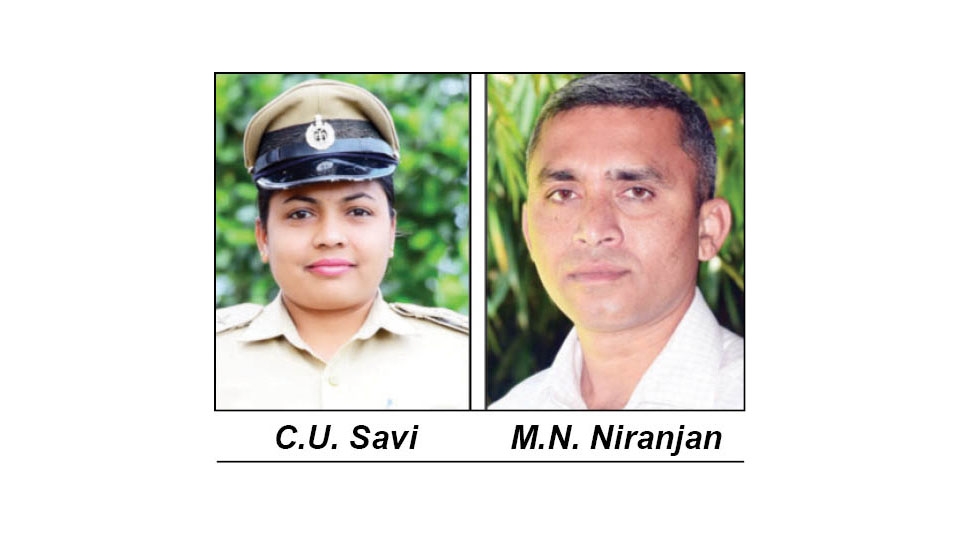
Two Police personnel from Kodagu have been selected for the Chief Minister’s Medal for their exemplary service in the Department.
They are Madikeri Division’s CID Forest Mobile Squad Sub-Inspector C.U. Savi and District Crime Detection Unit Head Constable M.N. Niranjan.
Savi has been serving in the Police Department since 13 years and has served at many places including Nanjangud and Bylakuppe and is presently serving in Madikeri Division. She is a native of Kolakeri.
M.N. Niranjan is a resident of Ashokapura in Madikeri and is serving in the Police Department since 22 years.
He had served in various Police Stations including Madikeri Rural Police Station and is presently serving at District Crime Detection Unit.
source: http://www.starofmysore.com / Star of Mysore / Home> News / April 03rd, 2023
Indian rally pair of Mangaluru’s Jason Deepak Saldanha and co-driver Thimmu Uddapanda Bopanna from Kodagu made a stunning international debut by winning the national RAAT Thailand Rally Championship in their class at the Kanchanaburi stages here on Sunday.
Driving a Suzuki Swift 1.6L six-speed stock car in the RC2.1 class for Team Rally Insight, the top Indian rallyists made their way to the top of the class while achieving a creditable overall fourth among a strong field of 56 entries in different classes, including the top Rally 1 Super 4w drive class.
Beating rivals with superior and powerful cars, the Bengaluru pair, who recently took part in the South India Rally, performed beyond expectations.
With limited options, and only a few minutes of testing the new car and the new terrain, they excelled with a display of controlled speed and fine rally skills in the final six special stages ton Sunday and improved to fourth overall and first in their class, apart from the second place in the 2WD Cup that are held concurrently.
They clocked 1hr and 17 minutes.
The two Indian coffee planters will return to take part in the six remaining rounds of the Blueband Sports FMSCI Indian National Rally Championship (INRC) under Dark Don team but will also explore opportunities to extend their international experience.
(This story has not been edited by Devdiscourse staff and is auto-generated from a syndicated feed.)
source: http://www.devidiscourse.com / Devidiscourse / Home> News> Sports> Article / by PTI , Kanchanapuri / March 26th, 2023
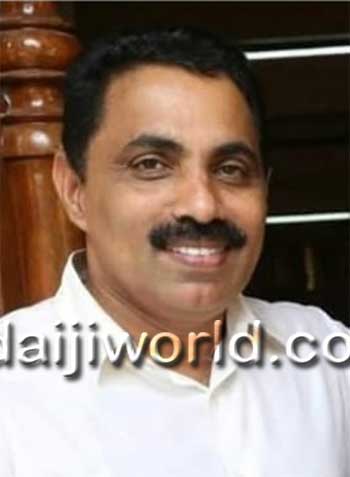
B R Rathnaker Shetty, senior advocate of Virajpet and organizations was unanimously elected president of District Bantara Sangha in their general body meeting held at Agnonima resort, Virajpet on Sunday, January 8. He is active in several local groups.
The elections were held in the meeting presided over by their former president Narayana Rai. Balakrishna Rai and Narayan Rai were elected honorary presidents. Shabarish Shetty, Virajpet was elected chief secretary. The new office bearers and presidents of five taluks were elected during the meeting.
B Rathnaker Shetty who fought the highest number of cases in Virajpet and Kodagu courts was felicitated in his office for his special achievements by Virajpet taluk, Tuluverena Janapada Koota.
District committee members B M Ganesh, Divya, Bharath Rai, Vinod Poojary, B G Anita, Sharath Rai, Ganesh Perambadi and taluk president K C Shabarish Shetty were present.
source: http://www.daijiworld.com / Daijiworld.com / Home> Karnataka / by Daijiworld Media Network – Kodagu (EP) / January 10th, 2023
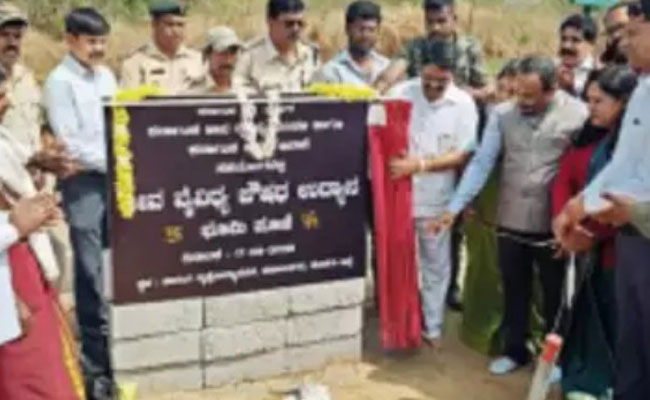
The work to develop the first biodiversity park of the state was launched in Harangi, by laying the foundation stone on Friday.
Legislator Appachu Ranjan, who conducted the ‘bhoomipooja’ for the biodiversity park work, said, “India is the biggest exporter of medicinal herbs. The new park will help us.”
He said that a medicinal herbal park will also be opened in Bhagamandala soon.
“Medicinal plants are needed to cure diseases. Also, the environment will be healthy if there is enough greenery,” he pointed out.
Karnataka Biodiversity Board chairperson Napanda Ravi Kalappa, who presided over the ceremony in Harangi, said that a master plan of building a model medicinal garden in the district was readied by the Board. The park is also being launch to conserve the richness of the flora of Kodagu, he added.
“The Karnataka Biodiversity Board intends to establish similar parks in every panchayat of Kodagu. The Coorg Mandarin used to be an exclusive plant to Kodagu, but is virtually not to be found anywhere now. Research is now being conducted to promote this species,” Kalappa said.
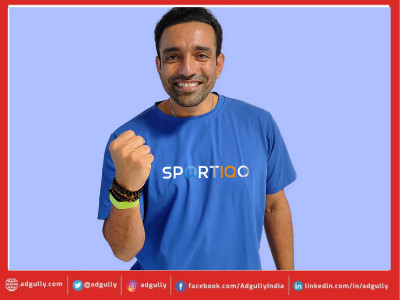
Sportiqo, a blockchain-based fantasy sports platform has announced ace Indian cricketer Robin Uthappa as their brand ambassador. Sportiqo marked the beginning of its operations in India in the month of February and so far, amassed 32,000 active users owing to its beta launch. The stylish batter from Karnataka, Robin is a generational talent, wanted by every cricket league in the world. Uthappa was a part of the Indian squad which won the ICC World T20 in 2007. He is known for his masterful batting performances and his great impact on his team’s success.
Speaking on the association, Robin Uthappa said, “Sportiqo is the perfect platform where I am able to find a cohesive link between sports and technology. The stock market is something that is often portrayed as being meant for a particular segment of the audience but with Sportiqo sports fans across age groups would not only be able to learn how the stock markets work but at the same time be able to use their sporting knowledge and skills to do it in a fun and engaging manner.”
He further added, “Making the youth learn about investing and trading using cricket is a great idea. India needs creative options to improve the financial literacy of the masses and I am glad that Sportiqo is addressing that gap. I am proud to be associated with the platform.”
“We are delighted to welcome Robin Uthappa to the Sportiqo family as our new brand ambassador. He is one of the most exciting cricketers of his era. said Anindya Kar, Chief Product Officer and Co-Founder of Sportiqo. “With his disruptive and instinctively innovative approach to his sport, Robin Uthappa embodies the same pioneering spirit that will drive Sportiqo to keep pushing boundaries in the sector.”
Sportiqo will also launch a host of digital campaigns with Robin Uthappa in the near future.
Sportiqo has so far, raised $1.25 million (Rs. 10 crores) in the pre-seed round from angel investors with a focus on user acquisition in its first phase post-launch. The cricket stock market platform is already live for the ILT20 League, and Pakistan Super League (PSL) and additionally, in the coming time, Sportiqo will add a portfolio of other sports and leagues as well such as the English Premier League and the Indian Premier League among others.
source: http://www.adgully.com / AdGully / Home> Marketing / by Adgully Bureau / March 21st, 2023
Bopanna thus surpassed Daniel Nestor of Canada, who had claimed the 2015 Cincinnati Masters to become the oldest champion at the age of 42.
Matthew Ebden, of Australia, left, and teammate Rohan Bopanna, of India, hold up the men’s doubles winner’s trophy at the BNP Paribas Open tennis tournament.(Photo |AP)
Indian Wells :
India’s Rohan Bopanna became the oldest ATP Masters 1000 champion when he and his Australian partner Matt Ebden claimed the men’s doubles crown at the BNP Paribas Open here.
The 43-year-old Bopanna and Ebden, 35, defeated top-seeded Wesley Koolhof of the Netherlands and Neil Skupski of Britain 6-3, 2-6, 10-8 in the final on Saturday.
“Truly special. It’s called Tennis Paradise for a reason,” said Bopanna, who was playing in his 10th ATP Masters 1000 final.
“I’ve been, over the years, coming here and seeing all these guys win for so many years. I’m really happy that Matt and I were able to do this and get this title here.
“It’s been some tough matches, close matches. Today we played against one of the best teams out there. Really happy that we got the trophy.”
Bopanna thus surpassed Daniel Nestor of Canada, who had claimed the 2015 Cincinnati Masters to become the oldest champion at the age of 42.
“I spoke to Danny Nestor and I told him sorry I’m going to beat his record,” he joked.
“Winning the title, that stays with me, so really happy with that. ” It was the 43-year-old’s fifth Masters 1000 doubles title and first since he won in Monte Carlo in 2017.
This was the third final of the year for the Indo-Australian duo.
He now holds 24 tour-level trophies in his cabinet.
The Indo-Australian pair stunned defending and two-time desert titlists John Isner and Jack Sock in the semi-finals, while getting the better off Canadian singles stars Felix Auger-Aliassime and Denis Shapovalov in the quarters.
Bopanna and Ebden had defeated Rafael Matos and David Vega Hernandez in their opening match.
A former World No.3, Bopanna jumped four places to No.11 in the Pepperstone ATP Live Doubles Rankings.
source: http://www.newindianexpress.com / The New Indian Express / Home> Sports> Tennis / by PTI / March 19th, 2023
The State Government’s move to release funds for the genealogical study of 18 communities of Kodagu has irked the Codava National Council (CNC) as it has alleged that in the name of studying the genealogy of Kodavas, the Government is cheating the Kodava community by including other non-native communities in the study.
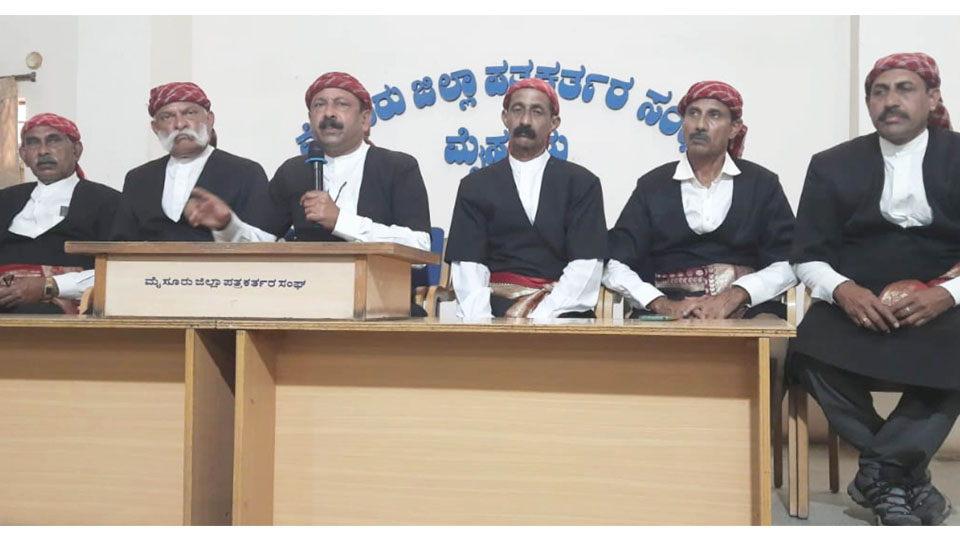
Addressing a press conference at Pathrakartara Bhavan yesterday, CNC Chairman Nandineravanda U. Nachappa said that the State Government must conduct a fair ethnographic study to facilitate the inclusion of the Kodava race under the Scheduled Tribe (ST) list as per the directions of the Karnataka High Court.
Opposing the genealogy study of other communities of Kodagu by suppressing the genuine genealogical study of the Kodava community, Nachappa said that the Kodava race has nothing to do with other communities in Kodagu.
He released a memorandum submitted in this regard to Chief Minister Basavaraj Bommai, Minister for Social Welfare Kota Srinivas Poojari and Chairman of Karnataka Backward Class Commission Jayaprakash Hegde.
Indigenous community
“We don’t have any half-shoots. Kodavas are a single race and a race cannot be multiple communities. How Kashmiri Pundits are indigenous to Kashmir, likewise Kodavas are indigenous to Kodagu. The Kodava race does not come under a quadrilateral caste system and there is no sect, or sub-sect within the Kodava race and do not have multiple communities under its fold,” Nachappa noted.
Those who migrated and settled in Kodagu have copied Kodava culture and are now claiming themselves as Kodavas, the original inhabitants. “They are attempting to delegitimise and uproot the native Kodava race from his soil which is a dangerous act. Under the conspiracies unleashed by them and supported by some elected representatives who have vested interests, the Kodava community is on the verge of losing their unique identity, art and culture,” he said.
Highlighting various documents, gazetteers, census records, Coorg manuals, anthropological surveys and reports, history books, journals and literature from the British era to the Commissions appointed by Governments of independent India like the Havanur Commission Report, Venkatswamy Commission Report and Justice O. Chinnapa Reddy Commission Report, Nachappa said that there is ample proof to establish Kodavas as a unique and exclusive race that has no relation with other communities of Kodagu who are basically migrants.
Why study the migrant population?
“Instead of conducting a study on original Kodava tribalism, the State Government is planning to conduct a study of migrated population and portray it as the study of Kodavas which is an unjust move aimed at destroying the Kodava community. It is an attempt at Kodava race extermination. Everyone wants to use the ‘Kodava brand’ for their ulterior motives and not for protecting or respecting it,” Nachappa added.
The Kodava race has genetically imbibed unique folkloric culture and formulated its own folk legal systems ages ago. Those who infiltrated into Kodagu and have, over the years, copied and aped Kodava culture cannot be called Kodavas,” he noted.
“Instead of destroying the Kodava race by mixing other non-native cultures, the Government must protect their unique identity without any dilution by including Kodavas in the ST list which will be a befitting tribute to the nationalistic and patriotic Kodava race, thereby abiding by true social engineering to save them from extinction,” he urged.
CNC Members Bepadiyanda Biddappa, Kaliyanda Prakash, Chambanda Janathkumar, Apparanda Poovanna and Areyada Girish were present.
source: http://www.starofmysore.com / Star of Mysore / Home> News> Top Stories / March 18th, 2023
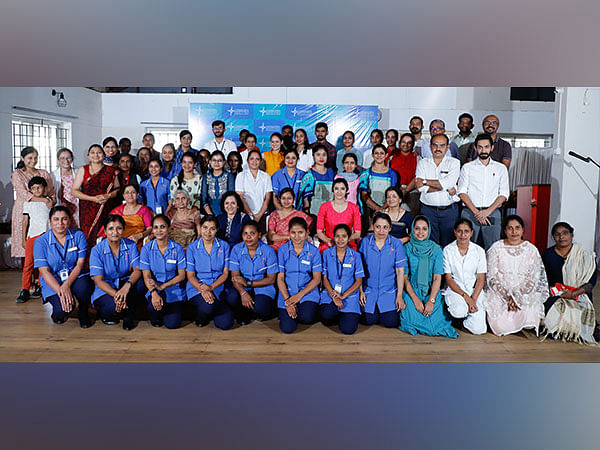
On the occasion of International Women’s Day, Lopamudra Hospitals, Gonikoppal organized a special event to celebrate women.
The event was graced by three renowned women from the region, Dr Gowramma Paruvangada, Consultant OBG at PNM hospitals, with five decades of practice in mother and child care, Dr. Fathima Kariappa, President of IMA Virajpet and Consultant OBG at Virajpet Nursing Home, and Uzma Jabeen, Panchayat Development Officer, the youngest in the district of Kodagu.
The event was presided over by the Managing Directors, Capt. Madappa M. A. and Dr Amrit Nanaiah M.M., a Consultant Physician at the Hospital. Dr Soumya Ganesh Nanaiah the Director of the Lopamudra Drishti Eye Hospital, a Cataract and Refractive Surgeon was present. She also emceed the event. Dr Sonia Mandappa, Consultant OBG, and Dr Trupthi Uthappa, Consultant ENT, were also present.
Speaking of their varied experiences, the Chief Guests enlightened the gathering on a multitude of topics.
Dr. Gowramma Paruvangada spoke about her long-standing commitment to serve women from rural parts of the country and her willingness to contribute more to the society at large. Dr Fathima Kariappa reminisced about how the babies she helped deliver were today doctors at the very Lopamudra Hospitals. She also emphasized the importance of women empowerment in today’s society and the role of family as an institution. Uzma Jabeen highlighted various government schemes available for women and how they could avail the benefits by contacting her.
The event was a sequel to a ‘Women’s Health Camp’ that saw more than 100 women availing the benefits of a health package curated to check overall well-being of women.
On the event of International Women’s Day, the hospital unveiled its new logo and a toll-free number for quick response. The hospital can now be reached at 1800 8333653. They also inaugurated the B Scan recently installed at the eye hospital. The B Scan is the first to be installed in Kodagu district. It can be used to assess the posterior segment of the eye in cases of media opacities and can be useful in cases of advanced cataracts
Dr Ruth Adhlaka, a Consultant Physician at the hospital, gave the vote of thanks, acknowledging the importance of such events and the hospital’s commitment to serving and empowering women.
Every part of our country has traditional ‘power foods’ that are simple, healthy and practical. Maize, bajra, jowar, dozens of varieties of millets and many more of rice.
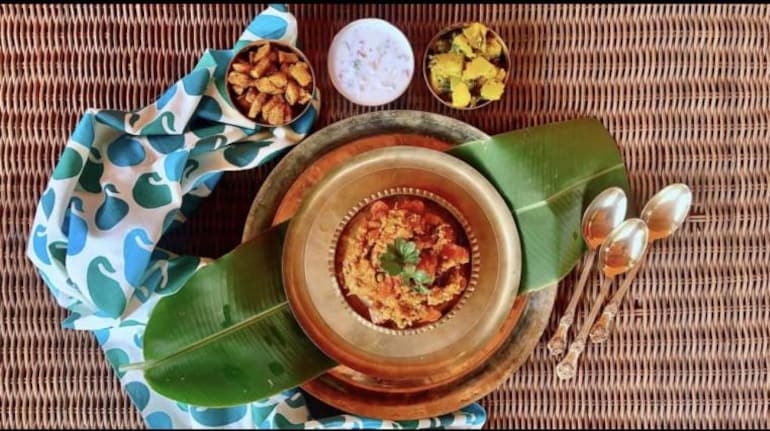
Varagu Millet Tomato Pulao. Many of India’s ‘power foods’ like bajra, jowar, maize and several varieties of millets are easier to cultivate than rice or wheat. (Photo courtesy Shradha Saraf)
Having visited Bihar after many years, I was on my way to Patna airport to catch the return flight to Bangalore. Like most Biharis the driver was a talker, and a good one. After depleting our views on the political scene in the country and Bihar in particular, we were still two hours from Patna. Murari asked if I had eaten.
“No.”
“Aap Litti kayenge?”
“Hahn, kayenge.”
Litti roasted over hot coals on a chill morning in January is a treat not to be missed. It is like a wheat bun filled with a sattu, onion and jeera stuffing and traditionally eaten with a favourful tomato-rich baigan bartha cooked in mustard oil. We finished off with adrak ki chai and re-joined the commotion on the road. The hearty breakfast for two cost Rs 60.
The car sped forward and my thoughts lingered in reverse gear, dwelling on the years I spent as a surgeon in a busy mission hospital in Mokama, a hundred kilometers from Patna. In the post-operative phase after any abdominal surgery when a patient asked, “Can I eat sattu?” you knew he was on his way to recovery.
In Bihar sattu (roasted and powdered channa) is considered essential to wellbeing. It is vital for all Biharis; for those who have lived and worked there too it is a thumbs-up favorite. I used to drink sattu instead of the mid-morning tea during my years there. It is high in protein, easily digested and has a cooling effect in summer months. Patient-attenders always bring dry sattu for their use. Mixed with water and some salt, and eaten with green chillis and raw onion, it is also a convenience-food that can be carried on long journeys.
Every part of our country has traditional ‘power foods’ that are simple, healthy and practical. Maize, bajra, jowar, dozens of varieties of millets and many more of rice. However, our palates have got used to the monotonous taste of white rice and chappatis made from polished wheat. Their blandness demands highly spiced gravies thick with grease. Much worse are the maida-based snacks, breads, buns and sugary or deep-fried foods. Maida is refined wheat flour with all its nutrients removed, providing only the calories. It should not have a place in any kitchen cupboard or should be purchased only if necessary, for occasional use. In my childhood days it was popularly known as ‘Merkin Podi’ meaning ‘American Powder.’
Healthy eating is now increasingly common among upper class but upper class is only a small fraction in a country of 140 crore people. Most Indians cannot afford the luxury of eating the right foods. They are the daily-wage-earning labour in factories, construction, agriculture, domestic and hotel work; vendors, autorickshaw and bus drivers; the safai karmacharis, well- diggers, potters, plumbers, cowherds; their old and their young. Their main concerns regarding food are the cost of food, appeasement of hunger, cooking time and expense, and taste.
Until the early 1990s, an average family was satisfied with grains, pulses and locally grown vegetables, with meat, eggs, milk and fruit used sparingly. In my career I have seen how those who ate the most basic but natural food rarely suffered from heart disease, diabetes, obesity or high blood pressure. These diseases affected those who could eat processed foods with their high content of sugar, salt, fat and chemical preservatives – namely the privileged classes.
With globalization, the floodgates of consumerism were opened and cheap, heavily processed food became affordable. It satisfied on all counts – Good to taste, economical, satiating and without the hassles or the expense of cooking. Result: A staggering number of our citizens belonging to all social strata began to suffer from the above ailments, plus others like recurring stomach disorders, reduced fertility, dental caries, anaemia and in children the attention deficit hyperactivity disorder or ADHD.
It is disturbing to acknowledge that our country is in the grip of a huge nutritional dilemma. India’s future will be shaped as much by the health of our people as by education, job availability and a more just distribution of wealth.
Every problem comes with a remedy. Here are some which will go a long way in ensuring good health for all our citizens.
As it is with most problems, one must go to the basics.
Many of the ‘power foods’ like bajra, jowar, maize and several varieties of millets (the pearl, the finger and the foxtail millet, to name a few) are easier to cultivate than rice or wheat. They need little water. It is possible to harvest two crops a year and in the intervening months, vegetables can be grown in the fields, thus promoting crop rotation. We should be replacing rice and wheat cultivation with these grains in a nationwide project. Rice and wheat can be grown in judiciously chosen water catchment areas. Thus, we can conserve millions of tonnes of water every year and bring remarkable improvement in the nutritional status countrywide. Children will have stronger bones, teeth and muscle and will no longer suffer from anaemia.
_____________________________
KAVERY NAMBISAN is an Indian surgeon and author of books like The Scent of Pepper, A Luxury Called Health: A Doctor’s Journey Through The Art, and Cherry Red, Cherry Black. Views expressed are personal.
___________________________
source: http://www.moneycontrol.com / Money Control / Home> News> Health & Fitness / by Kaveri Nambisan / March 05th, 2023
WELCOME. If you like what you see "SUBSCRIBE via EMAIL" to receive FREE regular UPDATES.
Read More »