Capital infusion to fuel café expansion, retail growth and production infrastructure.
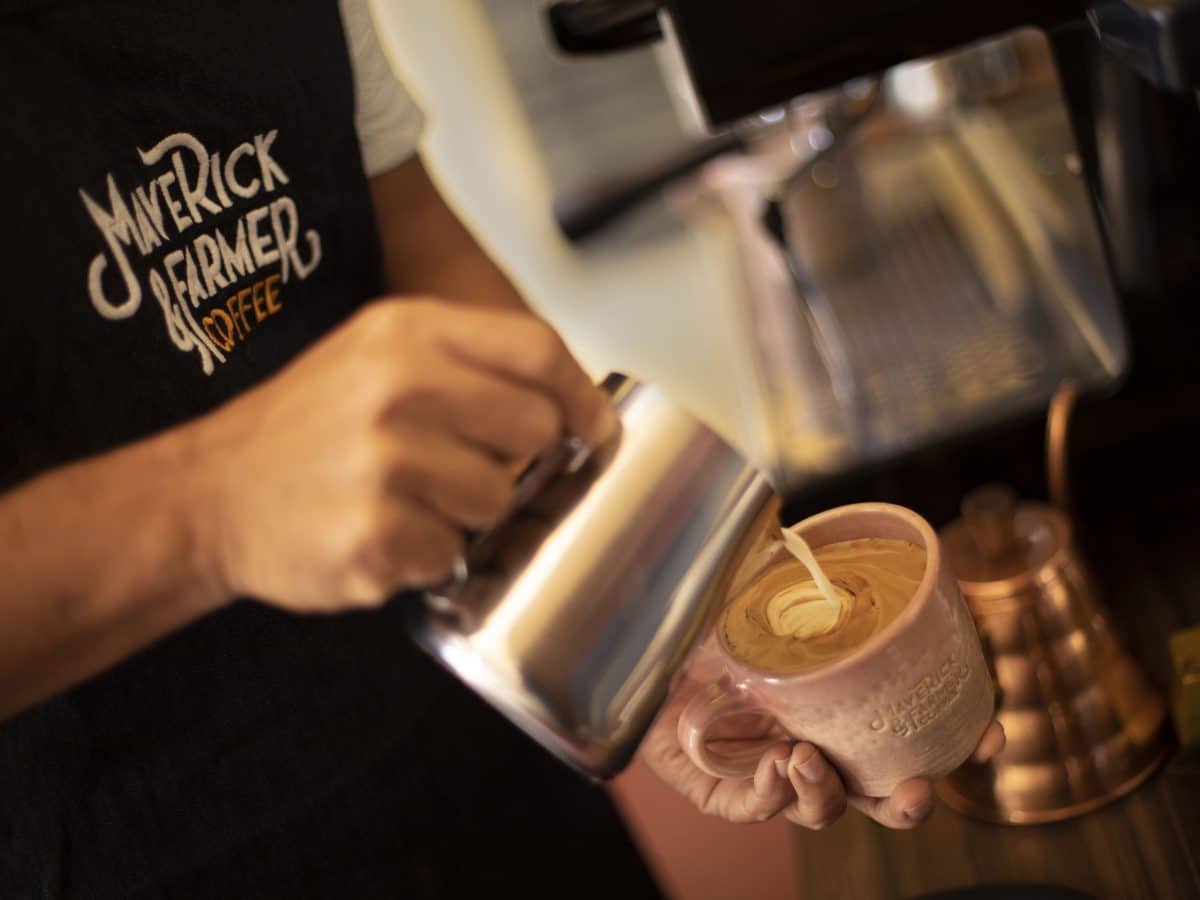
Good Farmer Food Concepts, the company that founded artisanal coffeebrand Maverick & Farmer Coffee and Square Burgers & Co., has raised $1.5 million in an ongoing Pre-Series A round. The company’s first external fundraising has been led by investment firm CreedCap with participation from Indian tennis star Rohan Bopanna and former Indian cricket team captain Rahul Dravid, along with Meraki Sport & Entertainment.
Planned use of funds
The company will utilize the fresh funds to expand its national presence with its cafes, invest in R&D and production infrastructure, and bolster and grow the brand’s retail vertical. The retail segment focuses on creating various SKUs of specialty coffee roasts and nurturing the home brewer experience by curating a variety of equipment. The brand’s new outlets in the pipeline are in Mumbai, Delhi NCR, Goa, and Bangalore. The company currently operates seven outlets in Bangalore and Goa and expects to reach ten by the end of the year.
Founders and brand philosophy
Founded by Ashish D’abreo, Sreeram Gangadharan, and Tej Thammaiah, Good Farmer Food Concepts is built on a product-first philosophy and a strong focus on quality and innovation. The company blends experimentation with coffee for retail, community-driven cafes, and a health-forward take on fast food. Maverick & Farmer is known for its experimental and maverick approach to Indian coffee, while Square Burgers & Co. continues to grow as a health-first food brand.
Co-founder’s perspective
“Before expanding, we first ensured that our people and operations were completely in order. Once that foundation was set, we began exploring funding and new locations. From the outset, we knew that each Maverick & Farmer Café should tell its own story and connect with a unique community. With Square Burgers, our vision was clear—we wanted to experiment with health-forward fast food. The current round of funding has enabled us to bring these ideas to life,” said Sreeram Gangadharan, Co-founder, Good Farmer Food Concepts.
Investor association and brand support
Bopanna has previously collaborated with the brand on a signature blend called the Rohan Bopanna Masterblend and has been closely associated with its evolution over the years. Dravid, who has long supported homegrown businesses built on strong fundamentals, joins the cap table for the first time.
“I’ve watched Maverick & Farmer grow from the very beginning and what’s always stood out to me is the honesty and intent behind the brand. Their commitment to quality, experimentation and staying true to their roots is rare. I’m proud to continue supporting their journey and excited to be part of what’s in store next,” said Rohan Bopanna.
source: http://www.hotelierindia.com / Hotelier India / Home> Operations / January 12th, 2026
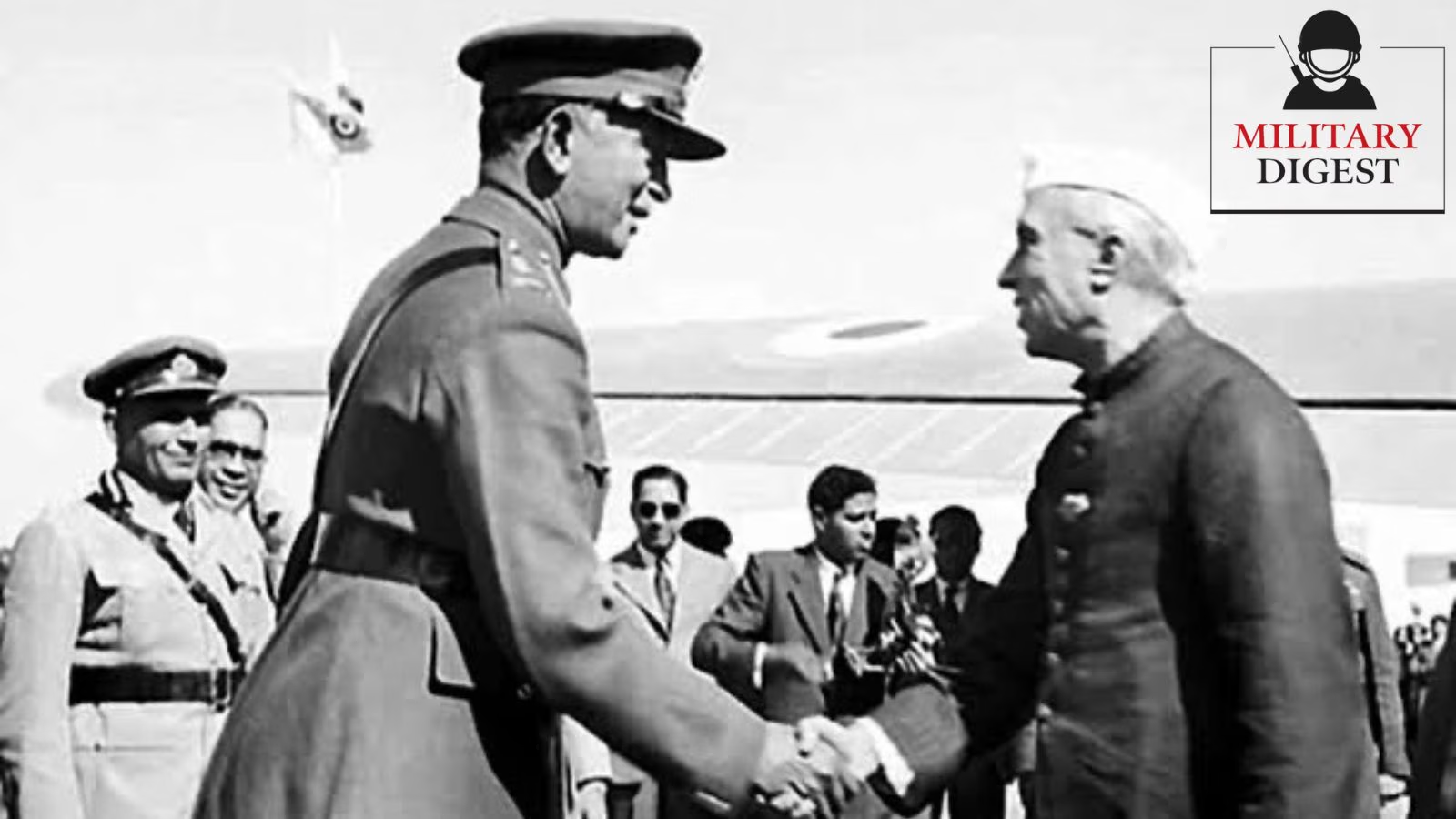
With Chief of Army Staff General Upendra Dwivedi slated to hold an annual press conference ahead of Army Day, a look back at certain events that took place soon after General K M Cariappa took over as the Army chief.
General KM Cariappa and Jawaharlal Nehru
Chief of Army Staff General Upendra Dwivedi will hold an annual press conference on January 13 ahead of Army Day, January 15. It was on January 15, 1949, that General K M Cariappa (later Field Marshal) took over as the commander-in-chief and chief of army staff of the Indian Army—the first Indian to do so.
It is an apt occasion to look back at certain events that took place soon after General Cariappa took over as the Army chief, setting the tone for an apolitical Army in Independent India. The then prime minister, Jawaharlal Nehru, chided General Cariappa for having publicly praised the Government saying that it should have been avoided and that military officers should not broach political subjects in public. A letter that he wrote to General Cariappa on May 24, 1949, forms part of the Nehru Archives.
In an interview at Dehradun on May 2, 1949, Cariappa remarked, “The achievement made by the country under Pandit Nehru’s leadership in so short a period has no parallel in history.” He added that “the last Commonwealth Conference in London, when seen in clear perspective, will be found to have been a great triumph for the prime minister”. He also said that the people had not clearly appreciated the all-round progress made by the leadership.
Nehru was not pleased about these remarks made by the Army chief and conveyed his displeasure to him in no uncertain terms. “About three weeks ago, you made a statement to the press in the course of which you congratulated me for my work at the Commonwealth Conference in London. You further drew attention to the all-round progress made by the present leadership in the country. I am grateful to you for what you said. But this raises an important point, and indeed the press has drawn attention to this. Should our officers, civil or military, even including the head of the Army, express any opinion in regard to political subjects in public,” he said.
Nehru questioned whether senior officers should speak in praise of the work of the Government.
“Indeed should they deliver public speeches at all except on matters strictly confined to their own work or some social or cultural subjects? What you said was harmless enough, but there is always a danger in touching upon political questions. Obviously, it would be highly improper for an officer to criticise Government, more especially on a political issue. If this is so, then praise of Government should also be avoided,” said Nehru.
‘Avoid public statements completely’
The then prime minister said he was drawing the Army chief’s attention to this matter as Cariappa set the tone for the Army, and Nehru did not want the Army to get mixed up in any way with politics. “You yourself have made this clear on many occasions. In the past I did not like the activities of some Sikh officers who indulged in communal politics. The safest course, therefore, is for all officers to avoid public speaking or public statements completely except on strictly limited topics. Sometimes an officer may not even know the exact political significance of some issue or some remarks he might inadvertently make,” he said.
Nehru noted that the Government had the largest political party and organisation at its back.
Nevertheless, there are other parties and groups, and they might object to the Army doing or saying something in praise or in criticism of political parties or ideologies, he said.
Nehru said Field Marshal Bernard Law Montgomery, a noted British military personality of World War II, is apt to let himself go in public. “He has been repeatedly asked by the British Government not to do so. Recently, I was in Switzerland, and some members of the Swiss Federal Government told me how they had been greatly embarrassed at a rather casual remark of Montgomery in Switzerland,” he said.
In fact, Nehru and Cariappa continued to spar on various issues even after the retirement of the latter as Army Chief.
Cariappa’s unhappiness over Himachal L-G appointment
In a letter written to the prime minister in 1958, General Cariappa expressed unhappiness over the report regarding the appointment of J K Bhonsle, who had been a member of the Indian National Army, as the Lieutenant Governor of Himachal Pradesh. Cariappa had written that Bhonsle, by serving in the INA, had shown disloyalty to the then Government and had also been disloyal to the traditions of the Army.
Cariappa had also expressed his disagreement with the military guard firing a ‘feu-de-joie’ (ceremonial rifle volley), sounding of the Last Post on bugles, and so on, as is done at military funerals, at Rajghat, the samadhi of Mahatma Gandhi, on January 30. He said he found it “out of place” in that atmosphere of “sanctity, purity and solemnity”.
Nehru responded by saying that the military honours at Rajghat were decided upon after careful consideration. On the issue of Bhonsle, Nehru said that whether he did right or not when he joined the INA under very peculiar circumstances in Malaya was a subject on which there might be differences of opinion.
“You know that we have not criticised our present army officers or men because they served the then British Government in India loyally. We have spoken highly of our army. But it is another matter for us to condemn for ever a person who, in a peculiar set of circumstances, thought it his duty to serve his country in another way. I do not know what I would have done if I had been in such a position,” he said.
Nehru commented that British army officers functioned with neither ability nor courage in Malaya. “Ultimately, they meekly surrendered, having made a mess of things. In India, conditions were very peculiar, and the country generally was opposed to the British. If a young Indian was affected by this widespread sentiment in India, I certainly am not prepared to blame him,” he said.
source: http://www.indianexpress.com / The Indian Express / Home> News> Cities> Chandigarh / by Man Aman Singh Chhina / January 11th, 2026
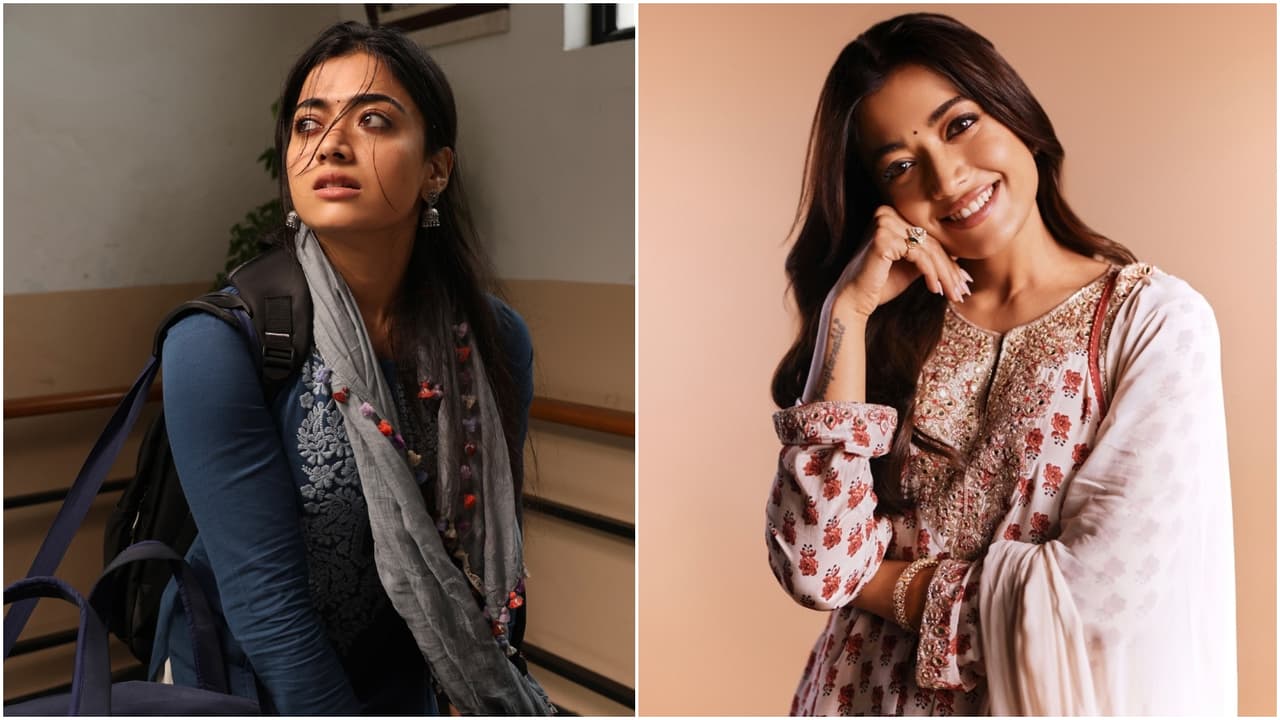
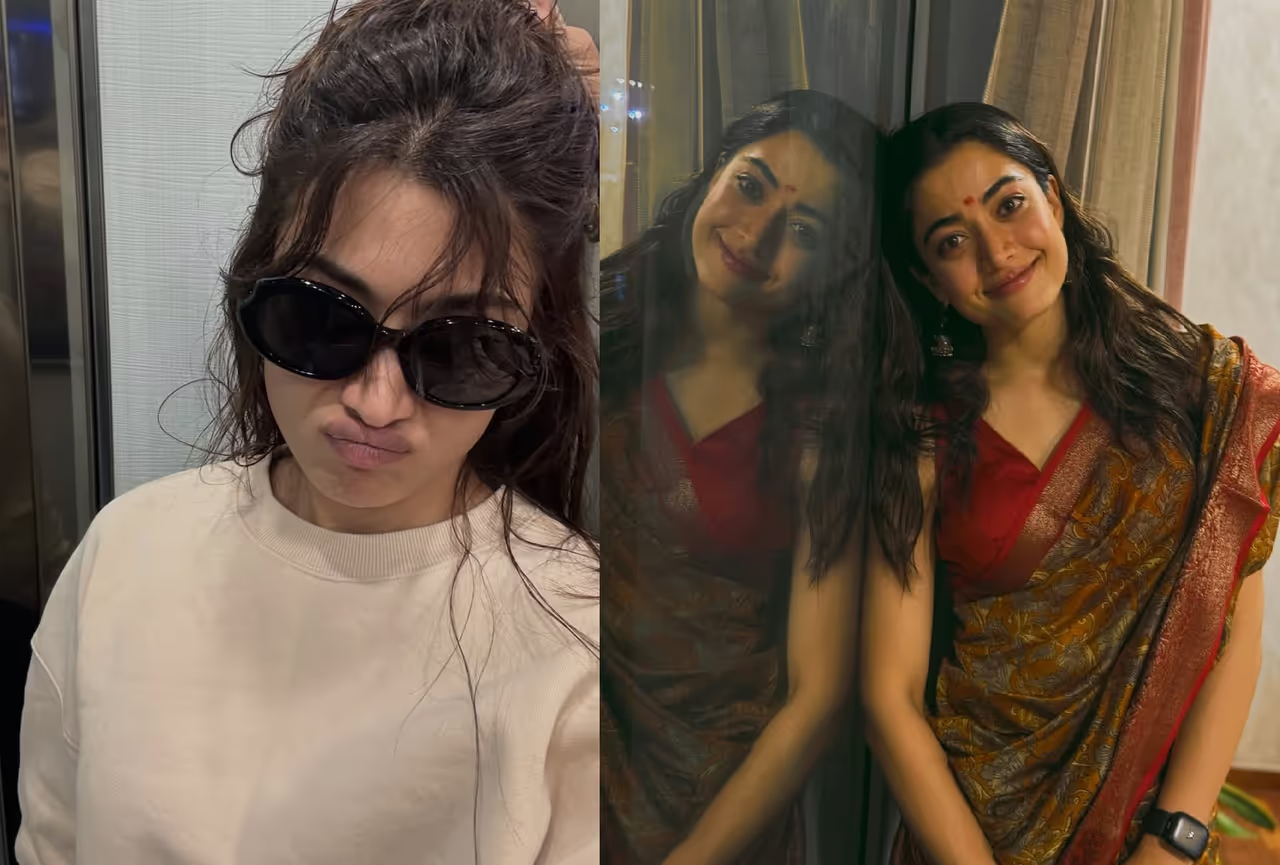
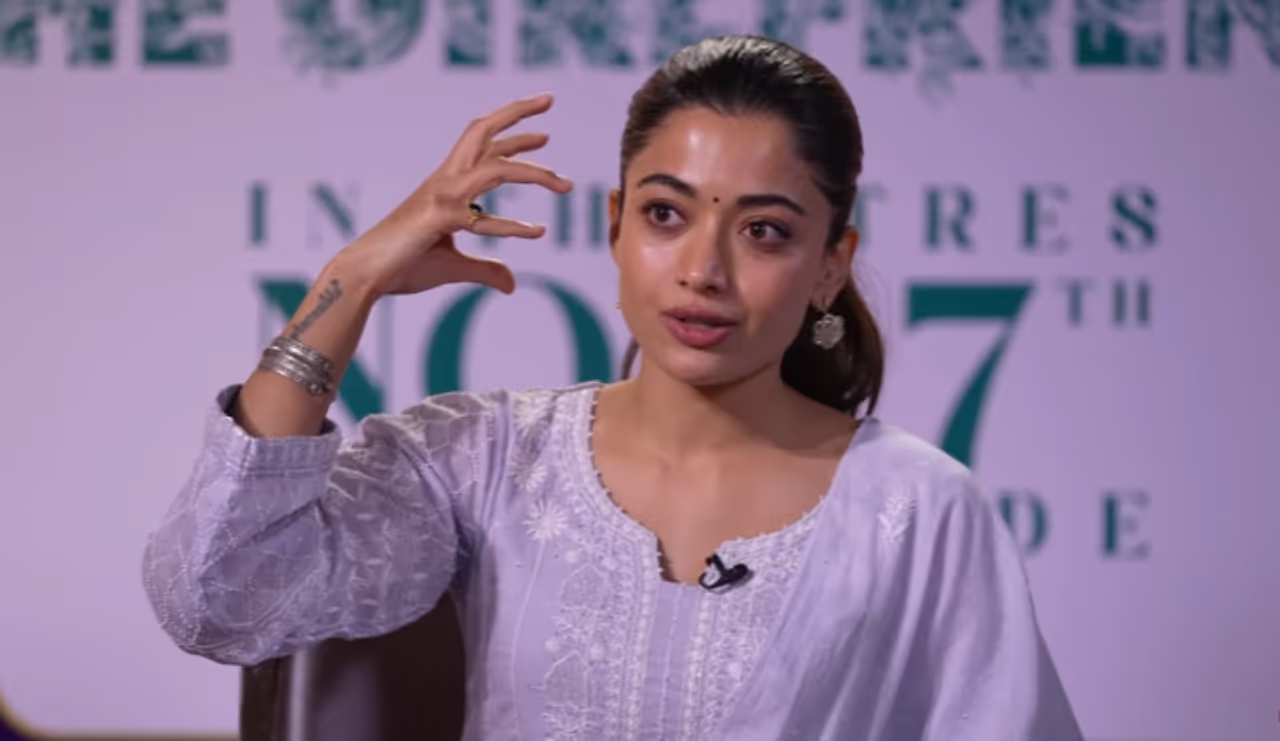
Rashmika Mandanna has added another remarkable achievement to her name by emerging as the highest taxpayer in Kodagu district, creating pride among locals and fans while proving her success goes far beyond the film industry.
From Kirik Party to National Stardom
Rashmika Mandanna, fondly called the “National Crush,” has come a long way since her breakthrough in the Kannada film Kirik Party. Today, she stands tall as one of India’s most successful actresses, making a strong impact in South cinema and Bollywood with consistent box office successes.
The Rise of a Box Office Queen
With multiple hit films across languages, Rashmika has earned the title of “Box Office Queen.” Her strong screen presence, versatility, and audience connect have made most of her films commercially successful, placing her among the most bankable stars in the Indian film industry today.
Pride of Kodagu District
Hailing from Virajpet in Kodagu district, Rashmika has become a source of immense pride for her hometown. Kodagu has produced several notable personalities, but Rashmika’s achievements have set her apart, elevating her status beyond cinema and making her a standout figure from the region.
Biggest Taxpayer in Kodagu
In a remarkable achievement, Rashmika Mandanna has emerged as the highest income taxpayer in Kodagu district. She has reportedly paid ₹4.69 crore in income tax for three quarters of the current financial year, securing the top position among all taxpayers in the district.
Marriage Buzz Continues
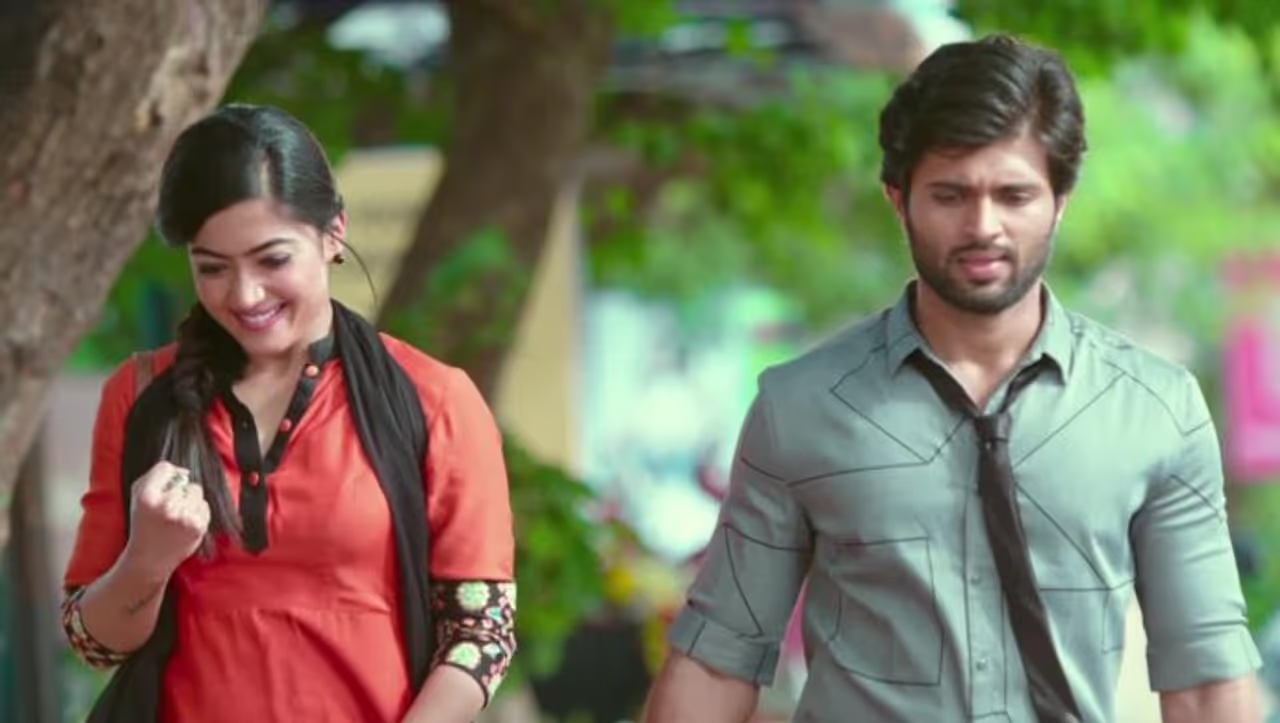
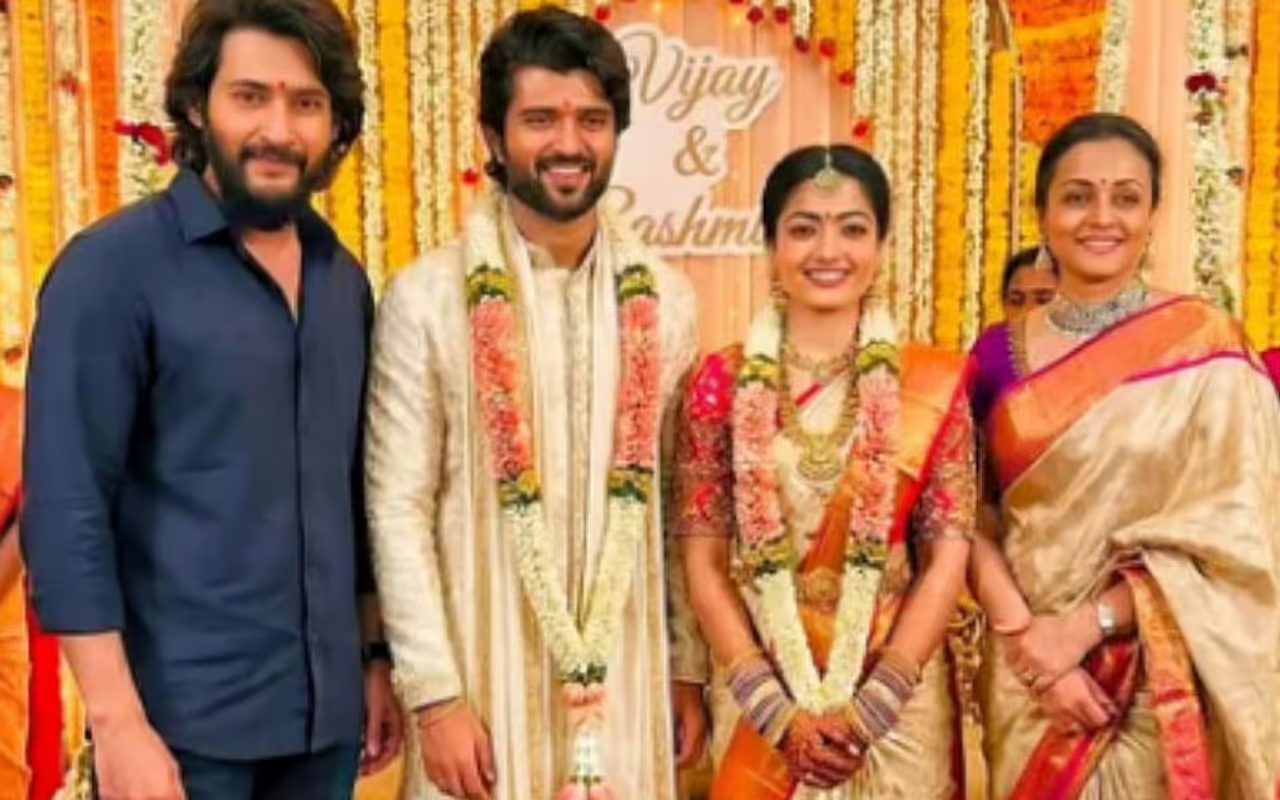
Apart from professional milestones, Rashmika is also in the news for personal reasons. Reports suggest she may soon marry actor Vijay Deverakonda, with rumors pointing to a February 26 wedding in Udaipur. However, no official confirmation has been made by either star yet.
source: http://www.newsable.asianetnews.com / Asianet News, English / Home> Entertainment / by Nancy Tiwari / January 07th, 2025
The year 2025 stands as a defining moment in contemporary literature, marked by voices that combine depth, purpose, and cultural relevance. The three modern literary stars of 2025 represent distinct yet powerful dimensions of today’s literary landscape, spanning spirituality, fiction, and poetry. Through thought leadership, storytelling rooted in lived experience, and emotionally resonant expression, these writers have shaped conversations beyond the page. Their work reflects the evolving spirit of literature in a time that values authenticity, insight, and impact, positioning them as influential figures whose words continue to inspire readers, thinkers, and future generations.
The three modern literary stars of 2025 are:
Dr. M. Soni
Kavery Nambisan
Twisha Ray
DR. M. SONI – Empowering Minds Through Knowledge, Purpose, and Practice
Dr. M. Soni stands among the three modern literary stars of 2025 as a respected soft skills trainer, academician, and spiritual author with more than sixteen years of experience across corporate, academic, and consulting domains. Her work focuses on empowering individuals through leadership development, effective communication, and holistic personal growth. Known for seamlessly blending traditional wisdom with modern relevance, she has trained thousands of learners and professionals, helping them unlock clarity, confidence, and purpose.
As an accomplished author, Dr. Soni has written multiple books on spirituality and has co-authored over three hundred and fifty anthologies, reflecting her wide literary influence and disciplined scholarship. Her deep passion for Indian epics and her keen understanding of human behavior come together powerfully in her latest book, Warrior’s Mindset Soft Skills from Indian Mythology. This work transforms timeless mythological narratives into practical tools for professional and personal success. Her writing speaks equally to students, young professionals, and lifelong learners, awakening the inner warrior through wisdom, discipline, and self mastery.
KAVERY NAMBISAN – A Distinguished Voice in Contemporary Literature
Kavery Nambisan is a celebrated Indian novelist and surgeon whose writing has earned her a prominent place among modern literary stars of 2025. Born in the Kodagu district of Karnataka and trained as a surgeon, she has spent much of her medical career serving rural communities across India while simultaneously building a distinguished literary legacy. Her unique perspective as a medical professional deeply informs her fiction and non-fiction work, giving her narratives both emotional depth and social insight.
Her body of work includes several acclaimed novels that explore diverse themes of identity, culture, gender, and history. Early novels such as The Scent of Pepper and Mango-Coloured Fish depict the lives and traditions of Indian society with rich, evocative detail. On Wings of Butterflies offers a powerful narrative rooted in the women’s movement in India, while The Hills of Angheri draws on her own medical experiences to portray the challenges of life as a doctor. Her later novel The Story That Must Not Be Told was shortlisted for prestigious literary awards including the DSC Prize for South Asian Literature and the Man Asian Literary Prize. A Town Like Ours extends her literary exploration to the complex social dynamics of small town India.
In 2025 she added to her remarkable catalogue with Rising Sons, a deeply reflective novel that traces the historical and social contours of village life in southern India. Beyond fiction, her non-fiction work A Luxury Called Health critically examines the Indian healthcare system while weaving personal medical narratives on ethics and care.
Kavery Nambisan’s contribution to Indian English literature is defined by its narrative strength and cultural resonance. Her ability to blend lived experience with literary sophistication continues to inspire readers worldwide and cements her status as a defining literary voice of her generation.
TWISHA RAY – Where Lyrical Depth Meets Modern Introspection
Twisha Ray has emerged as one of the three modern literary stars of 2025, earning recognition as a powerful poetic storyteller known for emotional authenticity and lyrical precision. Her writing reflects a deep engagement with self identity, transformation, and inner endurance, conveyed through vivid imagery and expressive metaphors. With a meditative approach to language, she captures the complexities of human experience in a manner that feels both intimate and universal.
By 2025, Twisha Ray has continued to expand her literary presence through digital publishing, live poetry sessions, and collaborative creative projects. Her work resonates strongly with readers who seek honesty, reflection, and emotional truth through art. Her growing influence highlights the evolving landscape of contemporary Indian literature, where poetic elegance meets raw emotional depth.
Twisha Ray was recently chosen for the Majestic Pen Award 2025 by Cherry Book Awards in recognition of her lyrical storytelling, emotional clarity, and meaningful contribution to India’s modern poetic movement. Her ability to articulate healing and transformation with aesthetic grace has set her apart as a distinctive literary voice. Representing a new generation of Indian poets, she brings authenticity, vulnerability, and innovation to the forefront, making her a compelling and deserving literary figure of 2025.
source: http://www.hindustanmetro.com / Hindustan Metro / Home> Lifestyle> Brandpost / by Abhishek Kapoor / December 23rd, 2025
Ahead of the India hockey team’s Australia tour, Poovanna CB, a first-time player from Karnataka, reflects on aspirations for the 2026 World Cup.
Poovanna CB
Bengaluru boy Poovanna CB, a 22-year-old hockey player, originally from Kodagu, has been included in the 24-member national team for the first time. “A couple of years ago, my goal was to be here in the core team. Now that I’m here, I’m just happy to play alongside those I’ve always wanted to play with,” he says, sharing his excitement. “All these players have a lot of experience in the game and I’m learning a lot. I admire Manpreet’s energy, seeing him play like that, Harmanpreet’s consistency and attitude towards the game, Hardik and how hard he plays, and Abhishek and Sukhjeet, who have made a lot of difference for the team in the last couple of years,” he adds, speaking to CE on the hockey field at the Sports Authority of India (SAI) grounds, ahead of his departure with the team to Australia for a four-match series.
The lead-up to the Australia tour has meant rigorous practice for Poovanna, with his days starting early and involving two training sessions before wrapping up in the evenings. He explains, “I get up at 6.30am, freshen up, have breakfast and mentally prepare for the intensity of the day’s training, which starts at 8.30am. Red days are high intensity, orange is a little intensive, and on green days we focus on technicalities and concentration.” In between practice sessions, the youngster has also been pursuing higher studies, “I’ve also been attending online seminars and classes for my MBA and try to read a few chapters of books in between,” he says.
Hailing from Kodagu and being surrounded by a rich hockey culture as a child was how Poovanna first got introduced to the sport. Recalling those early days, he credits his mother with pushing him to pursue the sport further, saying, “As a Kodava, we have huge hockey festivals and my dream as a kid was to play for the family team. I started in Class 5 and would play whenever I got some free time.” He adds, “It was my mom who really wanted to make me something of player. I got selected for one of the first batches in Ashwini Nachappa’s academy. Those three years really helped me grow. The coaches there taught me a lot in terms of my fitness and physicality – I think that’s when I grew up.”
Players from Karnataka and particularly Kodagu, were once a common sight in hockey teams but that hasn’t been the case for the last few years. Poovanna comments, “A few years ago, we had a lot of Karnataka players like Raghunath, SK Uthappa, SV Sunil, in the team which was really nice to see. It is sad that it’s just me now; I would like to see more players with me from Karnataka.” He speculates that the reason may be a lack of opportunities to compete. “We need more exposure tournaments where more players can play and talents can be found. There are hundreds of players and one tournament cannot accommodate them all. In Punjab, things have improved a lot, and there are many opportunities for kids to compete in and showcase their talents,” he says.
source: http://www.newindianexpress.com / The New Indian Express / Home> Bengaluru / by Mahima Nagaraju / August 12th, 2025
India also outclassed Pakistan in the 1975 WC final.
In the last half a decade, the Indian men’s hockey team have bagged two bronze medals at the Olympic Games, and that brought a lot of joy to the fraternity.
India had to wait a bit before experiencing Olympic glory, but that was not the case for a major part of the last 100 years. With 13 medals at the Olympic Games, and three at the World Cup, India is among the most decorated teams in the sport.
Reflecting on India’s glorious history, a two-time World Cup medallist (1973 and 1975) and an Olympic medallist (1972), BP Govinda said, “It is a nice thing and a big achievement that we can celebrate such a glorious 100 years of Indian hockey.
“The journey started all the way back in 1928 with our first Olympic medal, and we are all very happy that Hockey India is making a celebration of this landmark of 100 years.”
Considered to be one of the fastest players during his era, BP Govinda was a crucial part of the Indian team. In 1973, it was his goal that helped India overcome Pakistan in a thrilling semi-final, before they went onto finish with silver.
In the next World Cup in 1975, BP Govinda again played a big role in the team’s success, scoring important goals in the tournament, as India outclassed arch-rivals Pakistan in the final to win the coveted gold medal.
Reflecting on the memories of those World Cup campaigns, BP Govinda said, “1975 World Cup we really outclassed Pakistan in the finals, but before that Malaysia gave us a very tough time in the semi-finals.”
He further added, “When we won the gold medal in 1975 in the World Cup in Kuala Lumpur, there is no words to express the feeling. All the members of the Indian team were overjoyed, and there was a lot of emotions, as it was a first World Cup gold medal, and of course we were all very thrilled to stand on the podium.”
Now as a former player, and a fan of the sport, BP Govinda believes the current generation of players should always aim high.
He said, “As a team, the Indian men’s hockey team should always expect a lot from themselves. It is important to be aiming for the top prize, the team should always aim for a gold medal. We have won two bronze medals in the last two Olympics, I hope we can make it better in the next Olympics and World Cups.”
source: http://www.khelnow.com / Khel Now / Home> Field Hockey / by Alex / November 05th, 2025
The Codava National Council (CNC) marked “Pathalodhi”, the auspicious 10th day after Talacauvery’s holy water emergence, with poignant ceremonies at Mullusoge War Memorials, Madikeri Fort, and Naalnaad Palace in Kodagu.
Under Chairman N.U. Nachappa Codava, the events on October 26, celebrated Codava martial valour and lamented over two centuries of royal tyranny that decimated the indigenous Animistic tribe from 1633 to 1834.
Mullusoge, along the Cauvery near Kushalnagar, hosted tributes to Codava warriors who thwarted Hyder Ali and Tipu’s assaults more than 32 times, preserving Codavaland’s independence. Meedhi offerings exalted these protectors against Mysore aggression.
At Madikeri Fort (9:30 AM), the CNC mourned 40,000+ Codavas slaughtered inside, with 842 clans extinguished by Tipu and Rajas. The fort’s 201-year dark era saw Chaadi Siddi (spy)-executed beheadings for trivial defiance, epitomised by Tipu’s Devattparamb betrayal massacre. Oblations prayed for victims’ repose and CNC’s success in securing ST status and self-rule.
Naalnaad Palace in Yevakapadi (12:30 PM) saw floral honours for clans wiped out by Keladhi/Paaleri rulers. Abductions for royal gratification led to infants’ live burials in “Nagaari Kund”; resisters like Puliyanda Karicha were elephant-dragged to death. Kaapala mercenaries from Malabar enforced decapitations. Masti Venkatesha Iyengar’s “Chikavira Rajendra” immortalises this savagery, the CNC highlighted.
Post-1947 governance inherited this persecution, the CNC charged, exploiting Codava loyalty before erasure. Calling for atonement, it demanded GOI and GOK enact ST listing, 6th Schedule autonomy, “Gun-Thok” safeguards under Articles 25–26, and a unique 2026–27 census identifier for the non-caste, Animistic Codavas.
Participants with Nachappa were Chambanda Janath, Nandetira Ravi Subbaiah, Thennira Mina, Areyada Girish, Puttichanda Don Devaiah, Apparanda Viju, Apparanda Prasad, Nandineravanda Bopanna, Apparanda Prakash, Apparanda Vivek, Mekerira Babbu, Areyada Savan, Kupadhira Rani Monnapa, and Kupadhira Monnappa, uniting in solemn remembrance.
source: http://www.thehansindia.com / The Hans India / Home> News> State> Karnataka / by Hans News Service / October 26th, 2025
MLA for Madikeri Mantar Gowda has sanctioned a grant of ₹3 lakh from the MLA Local Area Development Fund for the development of the statue of Field Marshal K.M. Cariappa, the first Commander-in-Chief of the Indian Army, and its surrounding park in Madikeri.
During their visit to Madikeri on Tuesday, Tennira Maina, district president of the Rajiv Gandhi Panchayat Raj Organisation, and Mandira Sada Muddappa, nominated member of the Madikeri City Municipal Council, submitted an estimate for the proposed development works. Responding to their proposal, Dr. Gowda announced the grant.
Speaking on the occasion, Dr. Gowda said that Field Marshal Cariappa and General K.S. Thimayya were exceptional military leaders and it is the duty of every Indian to honour their contributions.
The MLA said that he would continue to extend full support to all programmes and initiatives associated with these great leaders.
source: http://www.thehindu.com / The Hindu / Home> News> India> Karnataka / by The Hindu Bureau / October 28th, 2025
The Bungalow 1934 is a 91-year-old family home where traditional Kodava cooking and hospitality are the order of the day.
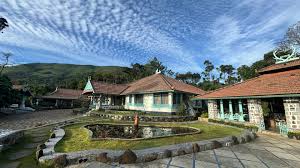
On a hilltop in Coorg, sandwiched between a coffee estate and the Brahmagiri range, Bungalow 1934 is Amrith Thimmaiah’s home and a living chronicle of Kodava culture.
In 1934, Ketolira Diwan Bahadur Chengappa built a home in the typical Kodava-British style of bungalows, set against the backdrop of the Ballyatra hill. When Chengappa became the first Chief Commissioner of Coorg in 1943, the home became the venue for lavish parties for state guests and British officials.
In 2010, the fourth-generation of the family, Amrith Thimmaiah, and his parents Gappu and Fancy Ganapathi, opened their 91-year-old family home as a heritage homestay.
View of Bungalow 1934 set against the Ballyatra Hill / Amrith Thimmaiah
About the homestay
The Bungalow is located in Yavakapadi village, roughly 30km from Virajpet and Madikeri. There are sweeping valley views, as well as a clear view of the Igguthappa temple, a deeply significant site for Kodavas who visit the deity for a bountiful harvest.
Bedrooms at the Bungalow 1934 / Amrith Thimmaiah
With mud walls, pillars, and beams, the home is a true depiction of Coorg ‘s ainmané or ancestral homes, where vaastu dictates aspects like where the owner’s room should be located (in the kubéra moolé, or south west direction). A sprawling fig tree stands out front, and you enter into a pillared, elevated open veranda where, traditionally, Kodava families gathered for tea, family meetings or an evening drink.
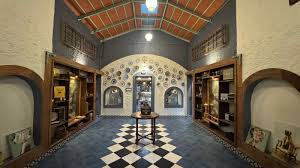
The hall in the Bungalow 1934, with old plates passed from generations in Amrith’s family / Amrith Thimmaiah
Peppered with antiques and with mosaic tile floors, the main bungalow features living spaces, a large common dining area, a room where Amrith stays, and four guest bedrooms. An annexe beside the main bungalow houses two more guest bedrooms. The six spacious rooms are rustic and cosy , with blue tiles, beamed ceilings, in-built fireplaces, and four poster beds. Large windows offer ample sunlight and views of the mountains. When the temperature drops in these misty mountains, there are plenty of fireplaces across the home and porches to curl up with some homegrown coffee.
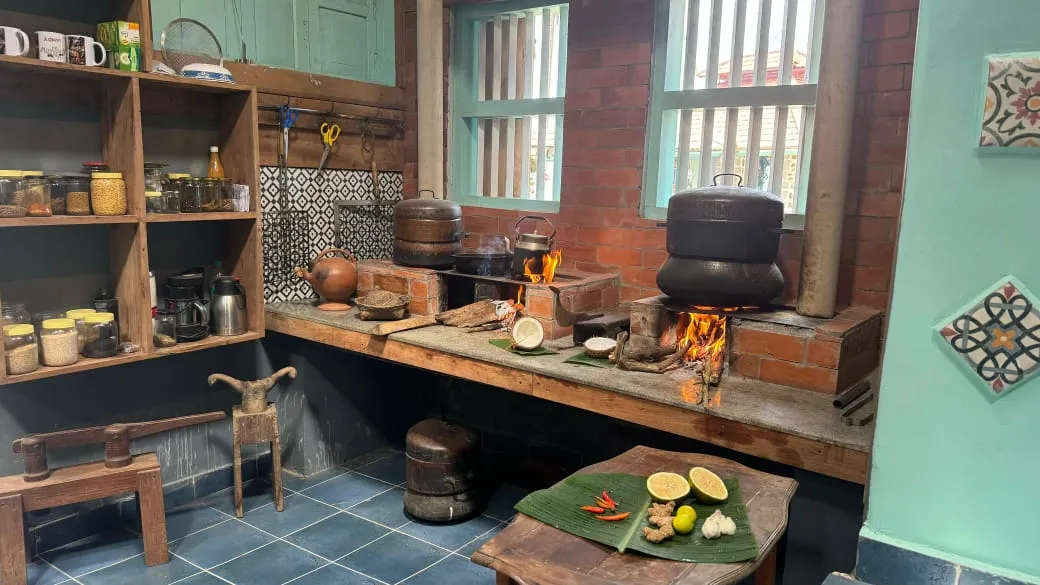
Kitchen at the Bungalow 1934 / Amrith Thimmaiah
The home is surrounded by rosewood, jackfruit and mango trees, and the grounds lead into the 70-acre Green Acres coffee estate. Arabica and Robusta coffee plants grow under a light canopy of Silver Oak, Cedar, and Benteak, dotted with pepper vines and cardamom plants. The buzz of cicadas and birdsong fill the air. Birders will be able to spot hornbills, white-bellied treepies, and the crow pheasant or the chombuka, considered lucky by the Kodavas.
About the hosts
Amrith at the BBQ lunch spread by the stream / Amrith Thimmaiah
Amrith is a rally driver by profession and a passionate host at the homestay, managing bookings personally (the homestay is not listed on any booking platforms), helping with logistics and recommendations. Guests usually come through word of mouth or as repeat visitors, and bookings are confirmed only for days a family member is present at the homestay. Staff leaves and village festivals are respected, and no bookings are made during this time.
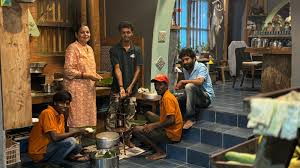
Fancy Ganapathi making Noolputt (steamed rice noodles) with Subbu, Krishna, Chethan & Pavithra / Amrith Thimmaiah
Amrith’s mother, Fancy Ganapathi, is a powerhouse who oversees the food at the homestay. The former lecturer of Kannada literature is a horticulturalist by passion, and a catalyst in forming the 700-member Nature’s Best Food Cluster in Kodagu. The organisation trains grassroot level farmers and enables them to sell their products at outlets in Coorg. “At the Bungalow, I love to share recipes with guests and if someone wants to purchase local produce, I ensure the cluster family provides their products,” she says. Gappu Ganapathi, Amrith’s father, is the backbone of the bungalow and manages the entire coffee plantation.
The Bungalow has 8 to 10 staff members, whose families have been associated with the Ketolira family for generations. Janaki Saraswati, the cook, used to be Amrith’s nanny and was taught heirloom recipes by Amrith’s grandmother.
The food
Frozen Mulberry Crush / Amrith Thimmaiah
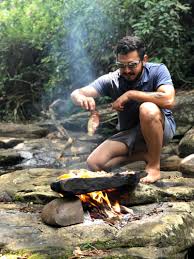
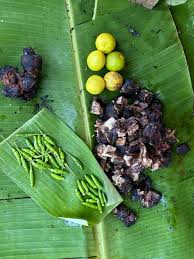
Koli Chuttadh (Chicken woodfire roasted) with bird’s eye chilies and lime / Amrith Thimmaiah
Food at the homestay stays true to any traditional Kodava home, with classic local dishes like khaima undae (mutton keema balls), kori erachi pulao (mutton pulao), pandhi curry and otti (pork curry with rice flatbread). Buffet style meals served in the dining area are generous and take into account dietary preferences. There are numerous vegetarian options within the gamut of Coorg cuisine, featuring seasonal produce like kaaké thopp (black nightshade leaves), kumm curry (mushroom), and kaad maangé curry, a tangy, sweet curry made with Coorg wild mangoes.
Fancy ensures that all dishes are served in the traditional Kodava style: baimbalé with otti (tender bamboo shoot curry with rice flat bread) served with ghee is a common Coorg breakfast; rice cakes or putt with meat curry; chutneys or pajjis made from seasonal produce.
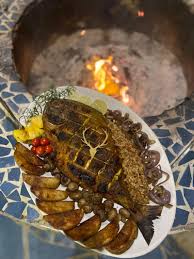
Pomfret Fish Grilled / Amrith Thimmaiah
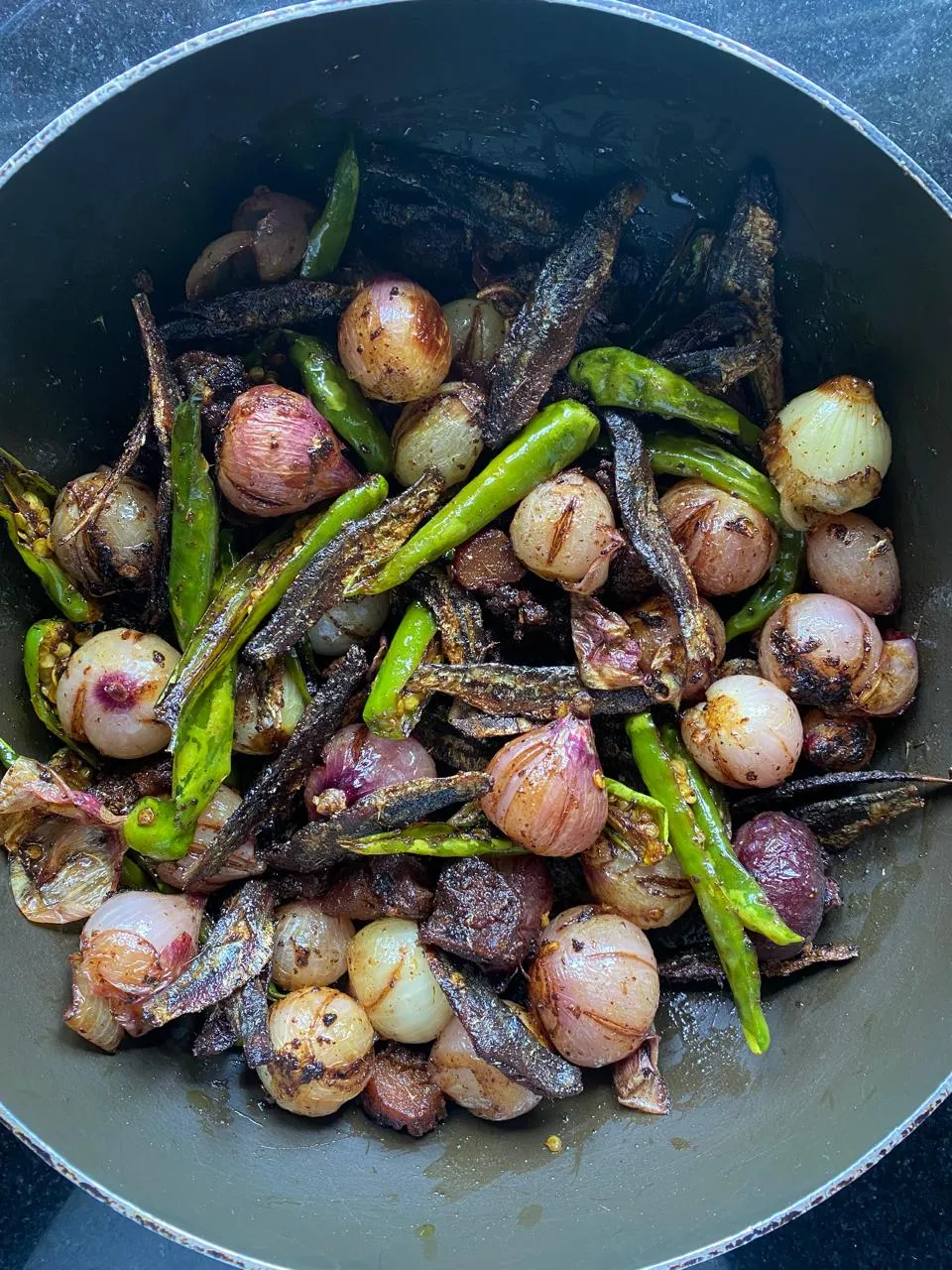
Onak Meen Barthadh (Dried Fish fry) / Amrith Thimmaiah
She also makes fruit wine and chocolates, and her mulberry and pomegranate wines are a hot favourite. This year, she has started to make oil and tea out of the rosemary growing in her small garden. The pathaya or granary on the homestay premises houses the products she makes, and make for perfect souvenirs to take home.
Amrith Thimmaiah
Amrith Thimmaiah
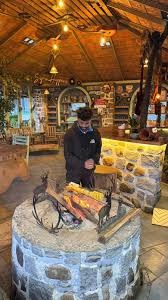
At dusk, Amrith has a house rule: he will host a typical Coorg-style barbeque for guests. Meat is roasted the traditional way over an open wood fire, mixed with finely chopped bird’s eye chili and the juice of bitter lime, to serve up Coorg’s favourite starter, pork chuddals. The family and staff tell stories by the fire, while you can sip cocktails under a star-studded sky with the lights of Madikeri town in the distance.
How to spend 48 hrs at The Bungalow 1934
Sparko at Charandi Polé / Amrith Thimmaiah
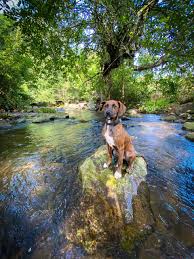
The homestay offers plenty of cosy nooks to read, write and while away the hours, but if you want to venture out, Amrith organizes treks to Thadiandamol peak and Chelavara Waterfalls. For those interested, Fancy conducts workshops for chocolate, wine, or jam making (4 people minimum, Rs5,000 per person). Sparko, the family dog, may take you down to a stream a short walk from the bungalow, where you can enjoy a barbeque picnic lunch by the stream.
Amrith Thimmaiah
Take a leisurely 2km walk or a guided plantation tour with Gappu at the coffee estate. Gappu and Fancy live in a home close by, with fish ponds, a cow shed, a coffee drying and storage area, and are happy to invite you over with advance notice.
The Codava National Council (CNC) held its 16th human chain awareness campaign in Ammathi of Virajpet taluk on Tuesday, October 21, rallying for the indigenous Codava community’s constitutional recognition and territorial sovereignty.
Under the leadership of Chairman N.U. Nachappa Codava, an advocate, the event spotlighted demands for Codavaland’s political autonomy, Scheduled Tribe (ST) designation, reserved seats in Parliament and State Assembly similar to Sikkim’s “Sangha” model, and enduring rights to ancestral properties and the Animistic “thok-gun” firearm tradition integral to Codava ceremonies.
Nachappa stressed that Codava survival hinges on securing a distinct ethnic identity in the 2026-27 national census through a dedicated column and code, enabling constitutional protections for their mono-ethnic, Animistic faith, which venerates the Cauvery River, forest deities, and ancestral graves without mainstream religious or caste affiliations.
Unlike conventional practices, Codava weddings feature a sacred “patthak” tied by the bride’s mother and obligatory offerings of alcohol and pork, aligning with global indigenous groups like Jharkhand’s Santal (proclaimed Sarna by CM Hemant Soren) or the Kalash, protected by UNESCO’s heritage framework.
From 1871 to 1931, colonial censuses acknowledged Codavas as a unique non-religious, non-caste entity, a status lost post-1947 as they were merged into dominant categories, obliterating their distinctiveness. Nachappa warned that without census reinstatement, their political and cultural voice risks permanent suppression, undermining self-determination.
The CNC voiced concerns over alleged plots to integrate Bangladeshi Rohingyas into Kodagu’s voter rolls, inflating demographics for political gain, and criticised unauthorised land conversions for resorts, such as a 16-acre township within a 2,400-acre estate, enabled by lax governance.
To address labour needs without compromising local rights, Nachappa suggested a guest worker permit system, modelled on the 2015 Modi-Sheikh Hasina Dhaka agreement, mandating seasonal migrants’ return to their regions.
The peaceful chain, joined by Codava leaders like Udianda Chondamma, Badumanda Sanvi Dechamma, and Inanda Prakash Ganapathy, vowed to continue the struggle in the name of sacred Codava symbols and the Constitution, closing with the National Anthem.
The 17th chain is scheduled for Monday, October 27, 2025, in Srimangala, building on events in places like Madapur and Chettalli to amplify Codava advocacy for justice and recognition.
source: http://www.hansindia.com / The Hans India / Home> News> State> Karnataka / by The Hans India / October 21st, 2025
WELCOME. If you like what you see "SUBSCRIBE via EMAIL" to receive FREE regular UPDATES.
Read More »