Category Archives: Arts, Culture & Entertainment

Know Your City: From hosting Queen Elizabeth to reviving lost saris, how Chimy Nanjappa shaped Karnataka’s craft heritage

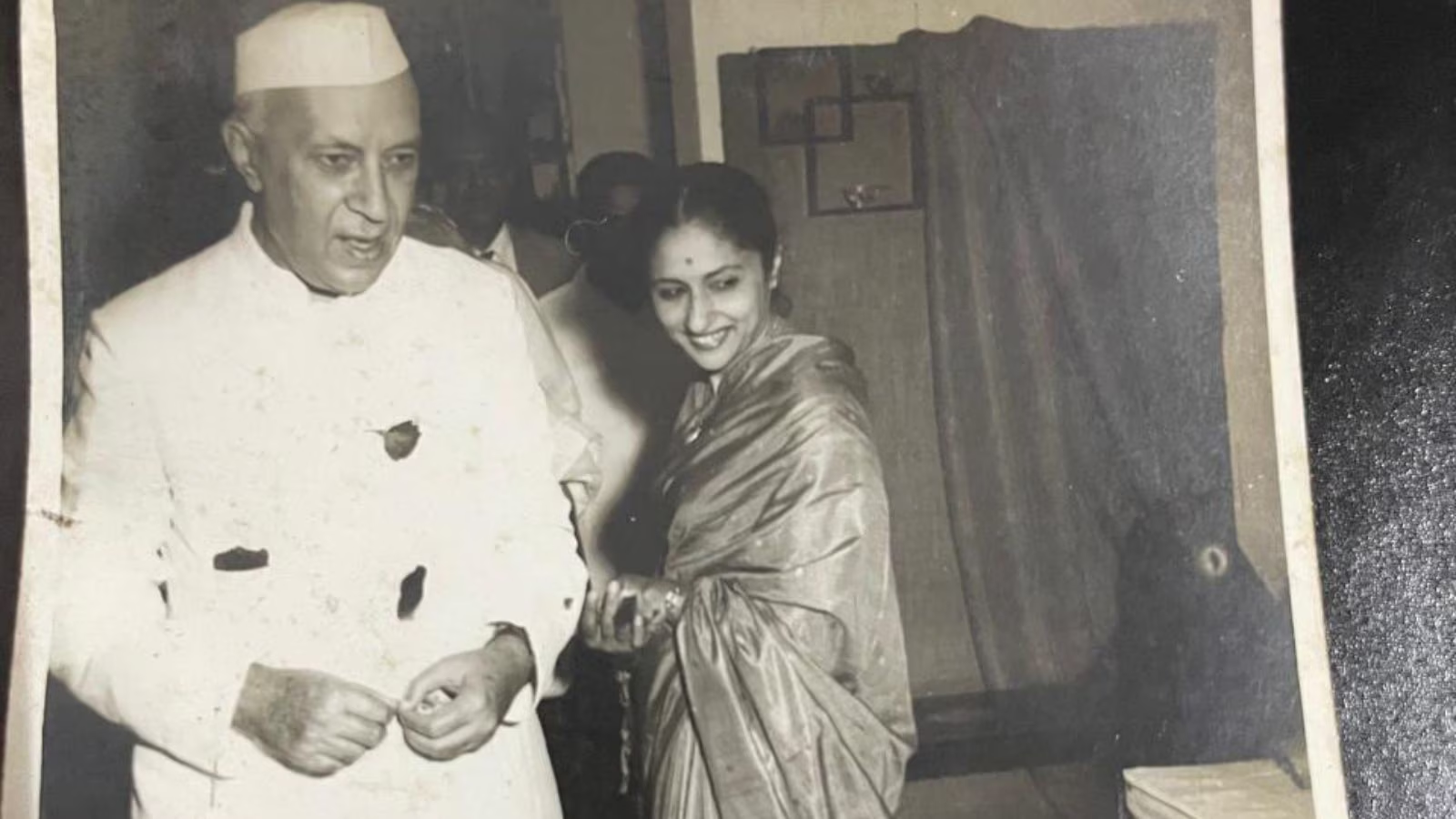
In the early days, says Muddaya, several dignitaries visited Cauvery Handicrafts Emporium and were hosted by Chimy—from Prime Minister Jawaharlal Nehru to Sri Lankan premier Sirimavo Bandaranaike, and even a young Queen Elizabeth.

Chimy Nanjappa’s passion for Karnataka’s textiles and crafts lives on at the Vimor Museum of Living Textiles in Bengaluru.

When one speaks of textiles and fine crafts in Karnataka, the Cauvery Handicrafts Emporium on MG Road in Bengaluru is one of the first places that comes to mind. The shelves of the state-owned emporium are packed with a vast array of the traditional crafts of Karnataka—from intricate silver-based Bidriware items to charming Channapatna toys. However, this wasn’t always so. And one of the people who painstakingly worked to transform the emporium into a showcase of the state’s finest creations was the late Chimy Nanjappa.

Chimy was selected to head the emporium in the late 1950s—then known as Mysore Arts and Crafts Emporium—by its governing board, which included many women, including Sudha Reddy, a proponent of Indian handicrafts.

“It was not a cakewalk for her. In those days, women did not work and close up a place as huge as Cauvery and then walk home at 8 pm,” Chimy’s daughter, Pavithra Muddaya, recalls.

Born in 1928 in Madikeri, Chimy did not have an easy childhood as she lost both parents by the age of nine. She went on to pursue higher education in Chennai, securing a BCom degree, and later settled in Bengaluru after marrying advocate A C Nanjappa. With the family facing financial difficulties in the early days, she began working as an assistant manager at Cauvery Handicrafts Emporium, before being promoted to manager.

“She had nothing by way of a background in the field and had previously done accounts work…but life forces you to take up opportunities,” says Muddaya, adding that her mother always said that women need to work and be financially independent. She also credits her father’s role in encouraging and supporting Chimy, recalling him as a person who held views that would be considered progressive even today.

In the early days, says Muddaya, several dignitaries visited Cauvery Handicrafts Emporium and were hosted by Chimy—from Prime Minister Jawaharlal Nehru to Sri Lankan premier Sirimavo Bandaranaike, and even a young Queen Elizabeth.

In 1963, cultural activist and author Pupul Jayakar, a major mover in the revival of traditional crafts and culture, recruited Chimy to represent Indian textiles at the New York World Fair the next year. It turned out to be a success, says Muddaya, recounting what an IAS officer familiar with the event told her. “Good lord, nobody could go past her without buying something!”

Later, Chimy was offered an opportunity to head an outlet anywhere in the world under the Handicrafts and Handlooms Export Corporation, but declined, refusing to be a “second-class citizen” in a foreign country.

After A C Nanjappa passed away in 1974, Chimy went on to start the Vimor Handlooms, a home store specialising in handloom sarees and textiles. Muddaya remembers, “No one who came to her for help was sent away…she would give weavers’ addresses to people. Freedom fighter and social reformer Kamala Devi Chattopadhyay would say that anyone coming to the Regional Design Centre (on Church Street) without a recommendation could ask my mother for one.” Vimor would go on to revive many traditional sari styles, such as one dubbed the ‘Cubbonpete’ sari.

Those interested in Chimy Nanjappa’s legacy in textiles may visit Vimor Museum of Living Textiles after making an appointment. The exhibits on display include saris up to a century old, in styles that are not often seen today.

source: http://www.indianexpress.com / The Indian Express / Home> News> Cities> Bangalore / by Express News Service / March 13th, 2026

A cookbook with stories

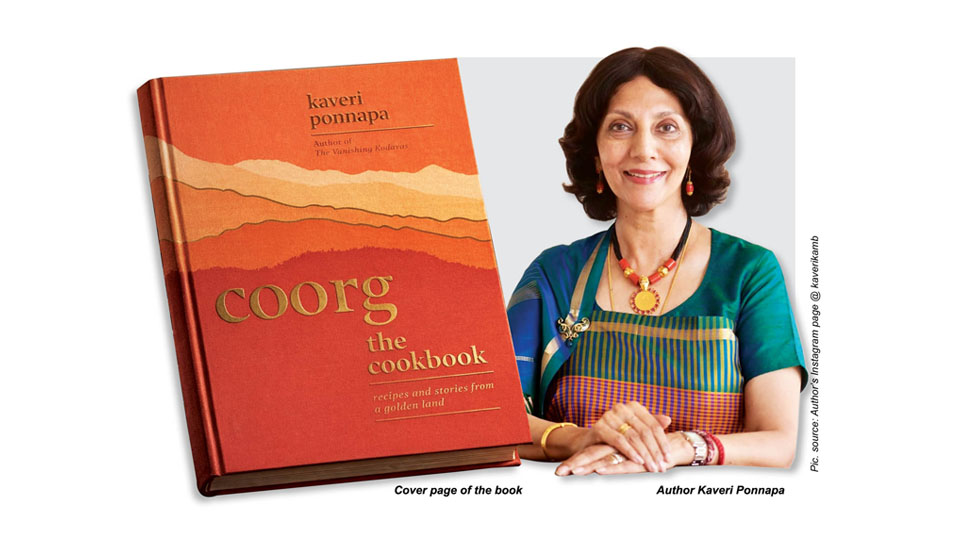
I was recently invited to Kaveri Ponnapa’s book launch that I had been looking forward to.

 Many in Mysuru may not recognise her name, but anyone who has even a passing interest in Coorg or the culture of small, distinct communities of this land would certainly know her remarkable work, ‘The Vanishing Kodavas.’

Just like her previous book, which was rich with history, culture and stunning imagery, her latest work, ‘Coorg: The Cookbook — Recipes and Stories from a Golden Land,’ is both beautiful to look at and deeply satisfying to read.

This book nourishes not just the appetite but jogs the memory, too.

‘Coorg: The Cookbook’ has been in the making since 2012 and the patience shows. It is thoughtfully structured into sections such as rice-based dishes, meats, seafood, vegetarian dishes, foraged foods, pickles, sweets and beverages.

Each section opens with a gentle historical introduction explaining how and why these foods became part of the Coorg dining table. It tells us why it is not just about how to cook, but also about understanding why Kodavas cook the way they do.

The book also includes sections on foundational pantry ingredients and the spices and herbs that define Coorg cuisine. For readers unfamiliar with some ingredients, the author thoughtfully offers alternatives.

There is even a section explaining how to use the book, making it as accessible to an outsider who may not be familiar with Coorg cuisine at all. That said, even a Kodava like me had some surprise discoveries.

The first surprise I encountered in the book was that while modern Coorg is synonymous with coffee plantations, it was earlier primarily a land of paddy farmers.

No wonder rice sits at the centre of not only Kodava cuisine but also culture. Appropriately, the first dish the book introduces is the humble yet iconic ‘Akki Otti’ or rice roti.

Another delightful revelation is the long-held myth that Coorg cuisine is dominated by pork. Yes, Coorg is famous for its pork dishes, but the book reminds us that Coorg food is far more diverse.

Of the 132 recipes in the book, just 36 are non-vegetarian dishes and only 6 of them are pork! The remaining dishes feature chicken, mutton, fish and crab.

Meanwhile, there are 45 vegetarian recipes! which include an array of ‘pallyas’ ‘chutneys.’

So, the notion that Coorg cuisine is dominated by the hog is hogwash.

What also struck me personally were the dishes I had never heard of before. There are recipes such as ‘Miniature Jackfruit Pancakes’ (Coorg name: ‘Chatti Puttu’) and the intriguingly named ‘Steamed Rice Parcels with Hitchhiker Elephant Ear Leaves’! (Coorg name: ‘Mara Kembe Puttu’).

But what truly elevates this book beyond the realm of a cookbook are the stories quietly interwoven along with the recipes. Food, after all, is rarely just about taste; it is about people, places and memories.

Reading about the ‘Nende Kari’ or the ‘Crab Curry,’ transported me back to my childhood in Coorg. I remembered being sent to the paddy fields with my cousin to catch crabs for dinner. We would return with a small mug full, often with bleeding fingers. Crabs can put up quite a fight.

While our grandmother prepared the ‘Nende Kari’ (Crab Curry), we sat near the fireplace listening to her tell stories of elephants straying into plantations, of wild boar hunts and town gossip, all while the aroma of spices slowly filled the kitchen.

This is the kind of book that eventually becomes an heirloom, something to be preserved, treasured and passed down through generations. Kaveri Ponnapa herself writes, “Recipes are cultural inheritances.”

This is why ‘Coorg: The Cookbook’ feels more than just pages of recipes. It takes you on a journey down memory lane.

For many Kodavas living far from their homeland, the book may well feel like a bridge back to traditions that are slowly fading. That alone is reason enough to own a copy.

In many ways, to use a culinary euphemism, this book pairs beautifully with Kaveri’s earlier work, ‘The Vanishing Kodavas.’

One documents the culture, the other documents the cuisine. Culture and cuisine, the two pillars that define every community.

Kaveri Ponnapa observed that “Kodavas are vanishing,” but with her books, she has made sure they will not be forgotten.

P.S. : You can order your copy athttps://kaveriponnapa.com/coorg-the-cookbook/coorg-the-cookbook/

e-mail:  vikram@starofmysore.com

source: http://www.starofmysore.com / Star of Mysore / Home> Columns in Black & White> Top Stories / by Vikram Muthanna / March 03rd, 2026

Who Is Madan Mandanna? Meet the Supportive Father of Rashmika Mandanna

Madan Mandanna, father of Rashmika Mandanna, has stayed away from the spotlight but has always supported her. Here’s everything you need to know about her father and the role he played in her journey.

Image Credit : Instagram

A Pillar of Support

Madan Mandanna, father of actress Rashmika Mandanna, has mostly stayed away from the public eye, but he has been a strong support for his daughter throughout her journey. Born in a Kodava Hindu family in Virajpet, Kodagu, Karnataka, he played a key role in shaping Rashmika’s values and career.

Image Credit : Instagram

Entrepreneurial Roots

Madan is a successful businessman who runs a coffee estate and owns a function hall called Serenity in Virajpet. His work shows the family’s entrepreneurial spirit, long before Rashmika became a household name in films.

image credit : X

Family First

Though he avoids the limelight, Rashmika often credits her father for teaching her important life lessons like hard work, humility, and determination. These values have helped her navigate the challenges of the entertainment industry successfully.

image credit : Instagram

Close-Knit Family

Madan is married to Suman Mandanna, a homemaker. Together, they raised Rashmika and her much younger sister, Shiman Mandanna. Rashmika occasionally shares glimpses of her parents on social media, showing the love and close bond in their family.

From Humble Beginnings to Stardom

Despite her fame as a pan-India actress, Rashmika often reflects on her modest upbringing. Her family faced financial struggles, but Madan’s guidance and support were crucial in helping her rise from Virajpet to becoming one of India’s most popular and loved stars.

source: http://www.newsable.asianetnews.com / Asianet News / Home> English> Entertainment / by Nancy Tiwari / March 05th, 2026

Traditional Coorgi rituals at Rashmika Mandanna, Vijay Deverakonda’s second ceremony explained: All about Kodava wedding

Inside Vijay Deverakonda and Rashmika Mandanna’s Kodava wedding: traditional Coorgi outfits to groom’s ritual shave and bath and bride’s ‘bale iduva’ ceremony.

Rashmika Mandanna and Vijay Deverakonda’s second wedding ceremony was all about traditional Coorgi rituals. (Couple in a still from Dear Comrade)

Following a morning ceremony steeped in Telugu traditions, actors Rashmika Mandanna and Vijay Deverakonda chose to celebrate the second leg of their wedding on February 26 by honouring Rashmika’s heritage with a traditional Kodava wedding. 

While the morning belonged to the groom’s culture, the afternoon and evening shifted to the lush wedding traditions of Coorg (Kodagu). Distinct from typical Hindu ceremonies, a Kodava wedding is a unique cultural experience centred around ancestors, nature, and community rather than Vedic rituals or a priest.

The preparation: Oorkuduvo

As per Kodavaclan.com’s blog, the festivities begin with the Oorkuduvo, where both families gather to prepare the wedding venue. This involves the ritualistic cutting of vegetables and pork — a staple of Kodava feasts — and the construction of the five-legged pandhaal (pendal). Interestingly, one pillar of this structure must come from a ‘milk-producing tree’, topped with jackfruit leaves and adorned with mango leaf swags. This structure remains standing for several days following the nuptials as a symbol of the new union.

Wedding attire of Coorgi ceremony

The couple look striking in traditional Coorgi garb: the groom dons a white kupya (a long tunic-style coat), cinched with a red-and-gold silk chele (waistband). He carries the peeche kathi (traditional dagger) and wears a peta (turban). The bride wears a vibrant silk saree, draped in the famous Kodava style — pleats tucked at the back and the vastra (headscarf) elegantly tied at the nape of her neck.

Key rituals: From bales to baale kethuvadh

The ceremony features several deeply symbolic rituals that define the warrior-tribe heritage of the Kodava

1. Before the main event, the groom undergoes a ritual shave where milk is applied to his face using blades of grass. Following this, he is given a ritual bath by his mother and two married women, symbolising purification.

2. The bride participates in the bale iduva, where a traditional bangle seller places coloured glass bangles on her wrists. Per custom, at least one pair of black bangles is included to ward off the evil eye.

3. In one of the most spirited displays of the day, the maternal uncles of the couple perform the baale kethuvadh. This involves cutting through nine banana stems with a single stroke of the odikathi (warrior knife), followed by a joyful dance to the beats of the valaga (traditional music).

The main wedding ceremony

The core of the wedding, the dampathi muhurtha, takes place on a decorated dais. Unlike most Indian weddings, there is no agni (fire) or pheras. Instead the couple sit on mukkalis (three-legged stools). Elders and family members shower them with rice and blessings. The groom offers his bride a sip of milk and presents her with cheela pana (a bag of coins). The ceremony concludes with the exchange of garlands and the groom helping his bride to her feet.

The final rituals

The celebration isn’t without a bit of drama and humour. During the batte thadpo, the bride’s cousin playfully blocks the couple’s path, jokingly claiming the groom should have married her. They can pass only after the groom’s side offers a gold coin as a guarantee of her well-being.

The day concludes with the Ganga pooje (Neer Edpo). The bride carries pots of water from a well while balancing on a thombuda (head-rest), taking small, rhythmic steps as the groom’s family dance around her. This symbolises her integration into her new household and her strength in managing her future responsibilities.The double-ceremony day ends with the kombarek kootuvo, where the groom officially welcomes the bride to their private quarters, gifts her a gold wedding band, and the two seek final blessings as a wedded couple.

Note to readers: This report is based on user-generated content. HT.com has not independently verified the claims and does not endorse them.

This article is for informational purposes only.

source: http://www.hindustantimes.com / Hindustan Times / Home / by Sanya Panwar / February 26th, 2026

CNC demands inclusion of Kodava language in 8th Schedule

Inclusion of Kodava language in the Eighth Schedule will provide legal, cultural, and educational benefits to the Kodava community.

CNC members stage a protest in front of the deputy commissioner’s office in Madikeri on Saturday. / Credit: DH Photo

Madikeri: 

Marking International Mother Language Day, leaders of the Codava National Council (CNC) staged a protest in front of the Deputy Commissioner’s office here on Saturday, demanding that Kodava language be included in the Eighth Schedule of the Constitution.

CNC President N U Nachappa placed several demands, including the inclusion of Kodava Thakk in the Eighth Schedule as recommended in the report of the Commission headed by noted linguist Pandit Dr Sitakant Mahapatra.

He urged that on the lines of Konkani language model and similar to the proposal for Tulu, Kodava be declared an official language of the state under Articles 345 and 347 of the Constitution, and implemented in administration and education under Article 350.

Inclusion of Kodava language in the Eighth Schedule will provide legal, cultural, and educational benefits to the Kodava community. Official recognition by the Central government will enhance the language’s prestige and prevent it from being treated merely as a dialect. It would also facilitate the introduction of Kodava as a medium of instruction in school curricula.

He also alleged that the names of local Kodava folk villages, hamlets, and even festivals have been altered into Kannada, distorting them. This, he said, reflects disregard for Kodava heritage and uniqueness and amounts to a violation of human rights.

A memorandum was submitted to the government through DC S J Somashekar on the occasion.

source: http://www.deccanherald.com / Deccan Herald / Home> India> Karnataka / by DHNS / February 22nd, 2026

Taj Madikeri Resort & Spa: Coorg’s Ultimate Eco-Luxury Escape That Will Blow Your Mind!

Image generated with Ai

The Taj Madikeri Resort & Spa,  nestled in the lush landscapes of Coorg, is a pioneering example of sustainable luxury. Developed by Indian Hotels Company Limited (IHCL) under its ESG+ framework, the resort is a perfect blend of environmental conservation, community development, and responsible operations. Built within a sprawling 180-acre rainforest, the resort stands as a testament to IHCL’s commitment to long-term ecological stewardship.

Eco-Conscious Construction Practices

One of the standout features of Taj Madikeri Resort & Spa is its eco-conscious construction. The development process took seven years, with a firm commitment to preserving the natural surroundings. Remarkably, not a single tree was cut down during construction. The resort was built on just 30 acres of land, with careful attention to maintaining the land’s natural contours. Pathways were created without leveling the terrain, and excavated soil was repurposed to form a freshwater lake. This lake now serves multiple purposes, from supporting aquatic life to attracting migratory birds and aiding in rainwater harvesting.

The resort also employed innovative construction techniques to reduce environmental impact. Compressed stabilised earth blocks were produced on-site from displaced soil, which were then sun-dried rather than baked, significantly lowering emissions and leaving a minimal construction footprint.

Thriving Biodiversity and Environmental Integrity

The resort’s commitment to environmental integrity is evident in its thriving biodiversity. Taj Madikeri Resort & Spa is home to 310 species of birds68 species of butterflies79 species of mammals, and 32 species of frogs. The resort boasts an impressive Air Quality Index consistently below 3, ensuring a clean and healthy environment for both guests and wildlife. Additionally, the property has maintained a plastic-free environment, reinforcing its dedication to sustainable practices.

A unique feature of the resort is its Batracharium, which was established after identifying frog species found on the property. Guests can learn about the region’s ecological richness through guided tours with in-house naturalists. The resort also offers a Biodiversity Photography Club, where both associates and guests are encouraged to capture and appreciate the natural heritage of the resort.

Immersive Nature Experiences for Guests

Taj Madikeri Resort & Spa offers its guests a unique opportunity to engage deeply with nature. Guided forest walks, led by in-house naturalists, provide guests with a chance to explore the rich flora and fauna of the surrounding rainforest. A Butterfly Park, honey cultivation with 32 active bee colonies , and pottery sessions  using natural materials all encourage a deeper connection with the environment.

The resort also highlights the Kodava culture through its heritage conservatory, which celebrates the region’s traditions while connecting cultural preservation with ecological sustainability.

Sustainable Operations and Resource Efficiency

Taj Madikeri Resort & Spa’s commitment to sustainability extends to its daily operations. Public spaces within the resort are naturally ventilated, reducing the reliance on air-conditioning and lowering energy consumption. Natural lighting is maximized, while LED lights and low-wattage outdoor illumination are used to minimize energy use and protect nocturnal species in the area.

The resort goes a step further by treating and reusing all of its wastewater for irrigation and flushing. Over the past two years, more than 84% of the resort’s electricity has been sourced from wind energy. This energy-efficient approach aligns with the resort’s commitment to reducing its carbon footprint and supporting renewable energy initiatives.

Electric Mobility: A Step Towards Zero Emissions

Continuing its sustainability efforts, the resort has recently introduced electric mobility on its estate. After extensive trials to adapt the vehicles to the resort’s challenging terrain, the resort replaced its petrol-driven gypsies with Tata Punch electric vehicles (EVs). These zero-emission vehicles not only reduce the environmental impact but also minimize noise and disturbance to the wildlife. The resort’s focus on safety has led to the installation of reinforced bars, non-slip flooring, transparent rain covers, and weather-resistant interiors, ensuring accessibility for all guests, particularly the elderly.

Community Engagement and Local Development

Taj Madikeri Resort & Spa’s impact extends beyond environmental conservation to community development. More than 31% of the resort’s associates come from neighbouring villages, supporting local employment and skill development. The resort also works closely with artisans and regional producers, ensuring that economic benefits flow into the surrounding community.

The resort’s commitment to community engagement is an integral part of its business model, helping to uplift local communities while promoting responsible tourism practices.

Global Recognition for Sustainable Tourism

Taj Madikeri Resort & Spa’s dedication to environmental and community stewardship has earned it global recognition. The resort has been awarded the EarthCheck Gold Certification, a testament to its leadership in responsible tourism and its commitment to sustainable practices. This prestigious certification highlights the resort’s ongoing efforts to minimize its environmental impact while providing a luxury experience rooted in nature.

Conclusion: A Model for Eco-Friendly Luxury Tourism

Taj Madikeri Resort & Spa, Coorg, sets a new standard for eco-friendly luxury tourism. With its focus on sustainable construction, thriving biodiversity, resource efficiency, and community development, the resort offers an unparalleled experience for guests seeking to connect with nature while enjoying the comforts of luxury. Recognized globally for its commitment to responsible tourism, the resort remains a beacon of sustainability in the hospitality industry.

source: http://www.travelandtourworld.com / TTW / Home> Hotels and Resorts> India / February 17th, 2026

Musical evening in Bengaluru in honour of Madikeri Nagendra’s birth anniversary

Sangeetha Sambhrama will feature a book, album and website launch, followed by a concert of Madikeri Nagendra’s original compositions.

Madikeri Nagendra’s sonorous voice and unique compositions have a special place in Kannada’s Sugama Sangeetha or journey of musical expression. An event titled, Sangeetha Sambhrama, will be a reminder of a bygone era of music that once played a major role in Karnataka’s musical milieu.

The event commemorates Nagendra’s 75th birth anniversary and has been organised by his son, Bharath Nagendra. Born on September 16, 1950, to a culturally vibrant family, Nagendra’s early exposure to classical music, saw him become a household name and a contemporary of Rathnamala Prakash, Malathi Sharma, Shimoga Subbanna.

According to the Bengaluru-based Bharath, the event will bring together musicians, scholars and connoisseurs of music. The evening will begin with the launch of Madikeri Nagendra – Yashogaathe, a book that chronicles the artiste’s journey. This will be followed by the release of an audio album Geethavenna Jeevana, a compilation of 11 original compositions by Nagendra, orchestrated by Praveen D Rao.

Saanidhya, a website documenting the curated knowledge of Sugama Sangeetha, will also be launched on the occasion. Live music will be presented by vocalists Supriya Raghunandan, Meghana Bhat, Srilakshmi Belmannu, Keerthan Holla, Nishchay Vishwasena and Bhargav HC, as part of the celebrations.

Bharath says Saanidhya is an initiative to create a living archive for the next generation. “There is a dearth of information about Sugama Sangeetha on the internet. In the past, singers kept this form alive by singing compositions of writers such as Kuvempu and Da Ra Bendre. Yashwanth Halebandi, for instance, was known for singing Bendre’s songs. This website is an effort to keep this art form from disappearing.”.

source: http://www.thehindu.com / The Hindu / Home> Entertainment> Music / by Sindhu Nagaraj / February 04th, 2026

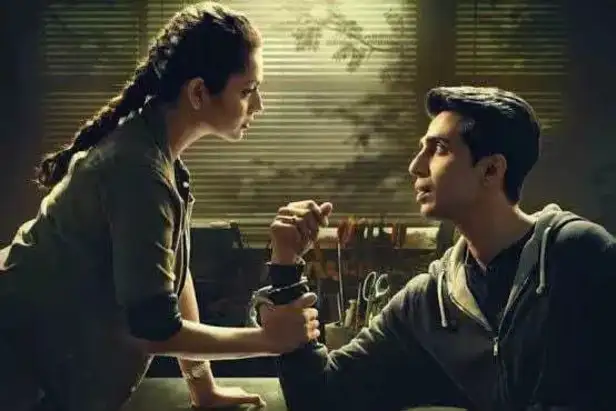
Gulshan Devaiah Strikes Gold With ‘Duranga’, 7 Times He Nailed His Characters With Perfection

Gulshan Devaiah began his career in Bollywood, like the majority of newcomers from outside the industry, with few roles. Nevertheless, Gulshan’s performance was recognised by the audience as well as the critics.

Image credit : Telegraph India

Gulshan Devaiah began his career in Bollywood, like the majority of newcomers from outside the industry, with few roles. Nevertheless, Gulshan’s performance was well-received by the audience as well as the critics. And he once again enchanted his fans with his most recent part in the web series ‘Duranga’.

Duranga is a suspense series that warrants your attention, and we’ll explain why. One of the most well-liked genres of television shows and films today is a thriller. Who doesn’t love the suspense and terrifying anticipation of what will happen next? The unfolding of the events keep you on the edge of your seat. Without further ado, let’s dive right into it!

Reasons Why Duranga Is Worth Your Time!

Image credit : Duranga Poster

The Duranga Plot Will Keep You Hooked Until The End

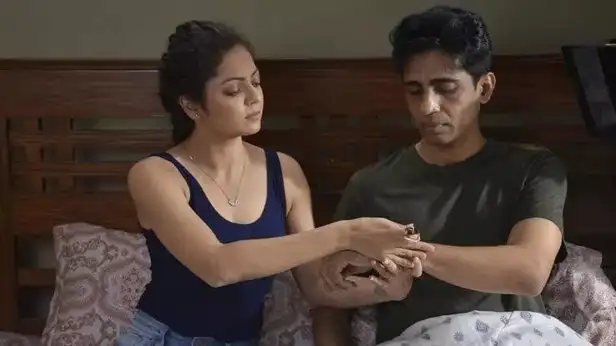
It is based on Sammit Patel and Ira’s story. Ira starts looking into several killings committed by a person she believes to be a serial killer’s accomplice, and as a result, she learns some shocking information about her husband’s dark background.

One is kept fairly engrossed in the story and on the edge of their seat by the writing and plot. The length of the episode is critical because thrillers frequently suffer from the risk of being stretched out a little too much, the duration of Duranga is just right for you to keeping yourself interested.

The series avoids trying anything new and succeeds in producing the same impression as the original with a compelling narrative and a crisp screenplay.

The Interesting Choice Of Cast

Gulshan Devaiah As Sammit Patel

Gulshan Devaiah gives his greatest effort yet in Duranga. Gulshan gives a convincing performance as a reserved character who doesn’t experience love, happiness, or grief and uses online courses to learn to grin or cry. He has aced his acting skills with each project he has done and is such an underestimated actor who deserves your time.

Drashti Dhami As Ira

Image credit : Duranga/Screengrab

Drashti Dhami, who plays a cop alongside Gulshan, has established herself in Hindi television dramas, and this is the first time she has performed such an intense and badass part of a cop, carrying a very strong character brilliantly; she has never been seen portraying a role this harsh.

The relationship between Drashti and Gulshan is not particularly endearing, but given the diametrically opposed nature of their characters, it nevertheless manages to explain the lack of blandness.

It is difficult to develop and maintain a career in the film industry, which may be ruthless at times. Gulshan, who has been a part of Bollywood for over a decade, believes that ‘being good is not enough.’

The idea that hard effort helps you sustain and that being competent at your craft is enough is appealing, but it is fiction. Gulshan believes that as an actor, one must learn to build relationships and be in the right place at the right moment.

Here are some characters played by Gulshan that need your attention

1. Ghost Stories

Image credit : Indiatimes

Despite having only 10 minutes of screen time and wearing unrecognisable make-up, the actor received some of the greatest accolades of his career for the character of a village strongman who transforms into the alpha zombie in the horror film Ghost Stories. Devaiah recalls Karan Johar and Reema Kagti complimenting Gulshan for his spooky act. Gulshan had no expectations from the movie and wasn’t sure he would be recognised at all.

Most performers would have turned down the role owing to the limited screen time or unrecognisable makeup. However, we are confident that Gulshan chose craft over fame in this role.

Watch It On Netflix

2. Afsos

Image credit : Prime video/Screengrab

In Afsos, Gulshan plays Nakul, a writer with chronic depression who hires an assassin to kill him after 11 unsuccessful suicide attempts. The plot is unusual; for example, have you heard of someone who is sick of trying to commit suicide hiring a hitman to help them? Anyways, things go wrong when Nakul decides to cancel the assignment after falling in love with his therapist.

Watch It On Amazon Prime Video

3. Goliyon Ki Raasleela Ram-Leela

Image credit : Goliyon Ki Raasleela Ram-Leela/Screengrab

For Sanjay Leela Bhansali’s “Ram Leela,” Gulshan appears in a brand-new appearance. In the film, the gifted actor plays the adversary. The character played by Gulshan is a famous member of the Jadeja clan, a group of Chandrivanshi Rajputs who currently reside in Kutch, Gujarat.

Watch It On Jio Cinema

4. Footfairy

Image credit : Footfairy/screengrab

A monster who suffocates young girls and slices off their exquisite feet to keep as his mementos is the subject of the psychological thriller. Gulshan Devaiah portrays CBI officer Vivaan Deshmukh, who trusts his intuition over anything else. He presents himself as an assured police officer. It was incredible that a film made in 2020 captured people’s attention in 2022 with an OTT distribution on Netflix.

Watch It On Netflix

5. Badhaai Do

Image credit : Badhaai Do/Screengrab

The unexpected component of Badhaai Do is Gulshan Devaiah. The actor who portrays Rajkummar Rao’s love interest in the movie, Guru Narayan, is a lawyer. His character is such a fantastic representation of the LGBTQIA population that is not ashamed to be ‘Gay.’ Though Guru’s character appears for a little moment, he plays an important role in the film.

Watch It On Netflix

6. Mard Ko Dard Nahi Hota

Image credit : Movietalkies

In Mard Ko Dard Nahi Hota, Gulshan plays the character of Karate Mani and Jimmy and is a laughing stock. It was pure joy to witness him flawlessly portray two utterly different personalities in a double role.

Watch It On Netflix

7. Shaitaan

Image credit : Shaitaan/Screengrab

Shaitan was one of the first projects to bring Gulshan the attention he deserved. It was a crime thriller, which was highly opposite of what Bollywood thought of these genres. He portrays the slightly insane, affluent brat Karan ‘KC’ Chaudhary, and his diabolical intensity in the part drew many fans.

Watch it On Netflix
Since making his acting debut in That Girl in Yellow Boots in 2010, Gulshan Devaiah has advanced significantly while consistently raising the bar with his films and web series

source: http://www.indiatimes.com / India Times / Home / by Tanishk Juneja / September 01st, 2022

Lavender bloom transforms Kushalnagar’s Thavarekere

Madikeri:  

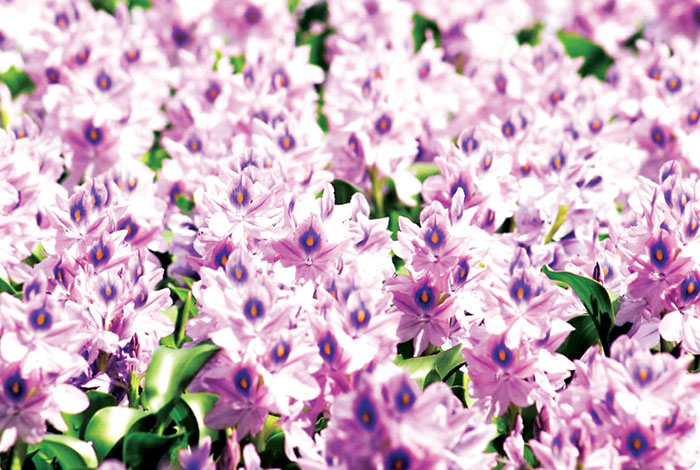
The blooming lavender to pink flowers at Thavarekere in Kushalnagar have become a captivating attraction, drawing travellers, tourists and locals alike. Nestled quietly among forest shrubs along the Highway, the lake has suddenly amplified its natural charm.

Typically adorned with lotus flowers, the lake is now blanketed in a striking expanse of lavender blossoms. This breathtaking transformation, stretching across the waters, offers a stunning visual spectacle. For the first time, such vibrant blooms have appeared here, leaving visitors both surprised and enchanted.

Residents of Kushalnagar recall that the lake was once abundant with lotus flowers, which earned it the name Thavarekere (Thavare means lotus in Kannada). However, over time, the unchecked inflow of sewage into the lake has allowed invasive water hyacinth — a free-floating perennial aquatic plant — to take over and now bloom in full.

The lake’s new-found allure is drawing crowds who pause along the roadside to soak in the surreal scenery. The surge in visitors has even prompted Police deployment to regulate traffic and maintain order in the area.

source: http://www.starofmysore.com / Star of Mysore / Home> News / June 30th, 202

Millet dishes take centre-stage at traditional food revival competition in Madikeri

Millet dishes take centre-stage at traditional food revival competition in Madikeri.

Dishes prepared from millets grabbed the attention at a cooking competition organised in Madikeri to revive forgotten culinary traditions. | Photo Credit: Special Arrangement

Traditional dishes prepared with millets emerged as the highlight of a cooking competition organised in Madikeri, in Kodagu district of Karnataka, to revive forgotten culinary traditions.

Over 60 teams participated in the district-level competition, organized by the Kodagu district administration, Zilla Panchayat, and the Department of Agriculture. | Photo Credit: Special Arrangement

Over 60 teams participated in the district-level competition, organized by the Kodagu district administration, Zilla Panchayat, and the Department of Agriculture at the office of the Joint Director of Agriculture in Madikeri earlier this week.

The exhibition showcased an impressive variety of snacks and dishes prepared using diverse millets, including jowar, ragi, foxtail millet, pearl millet, kodo millet, barnyard millet, and little millet.

Among the creative entries were ragi dosa, nippattu, chakli, kodu bale, kajjaya, millet payasa, millet pulao, ragi biscuits, white jowar biscuits, millet cake, millet paddu, millet laddu, brinjal cutlet, and foxtail millet dosa.

Separate prizes were awarded across three categories: spicy dishes, sweet dishes, and forgotten traditional dishes. | Photo Credit: Special Arrangement

Other notable dishes were jackfruit cutlet, buki kajjaya, ragi laddu, gulige payasa, sajje nadu, foxtail millet cutlet, papaya halwa, pearl millet halwa, millet vade, and fenugreek leaf vade.

Separate prizes were awarded across three categories: spicy dishes, sweet dishes, and forgotten traditional dishes. First prize winners received ₹5,000, second prize ₹3,000, and third prize ₹2,000.

Speaking at the event, Joint Director of Agriculture Chandrashekar emphasized the nutritional benefits of millets, and encouraged people to incorporate them in their daily diet. He highlighted that millet consumption strengthens bones and provides essential calcium.

Awareness rally

Prior to the competition, an awareness rally on the importance of millets was flagged off by Kodagu Zilla Panchayat Chief Executive Officer Anand Prakash Meena.

NCC students, farmers, and officials from the Agriculture and Horticulture departments participated in the rally, which began from the fort premises in Madikeri and concluded at Gandhi Maidan.

Addressing participants at the fort premises, Mr. Meena stressed that millets are nutrient-rich. He called for greater awareness about their benefits. He opined that incorporating millets helps maintain a balanced diet, and can aid in managing diabetes and blood pressure.

source: http://www.thehindu.com / The Hindu / Home> News> India> Karnataka / by The Hindu Bureau / January 16th, 2026