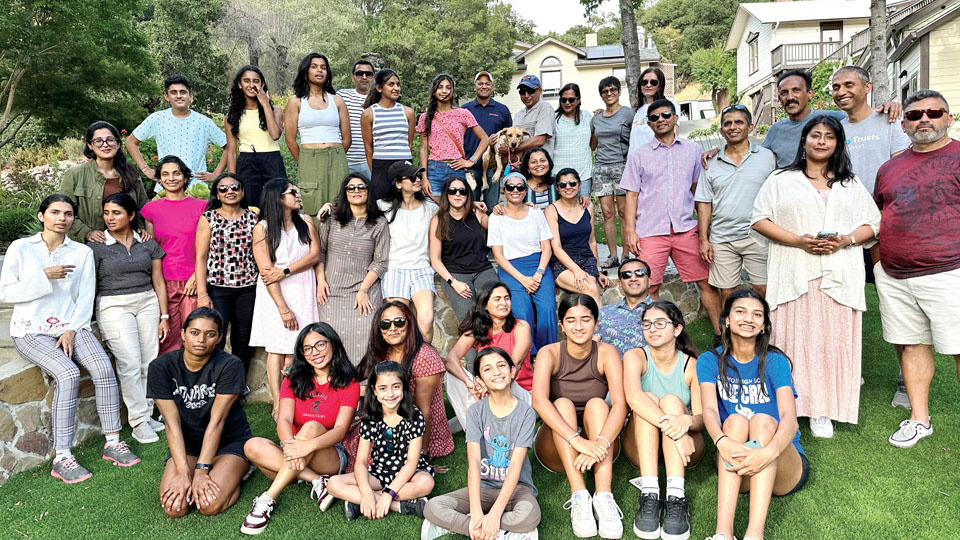
The Annual Kodava Convention in North America is scheduled to take place on Sept. 2 and 3, 2023, in the San Francisco Bay Area, famously known as Silicon Valley. The convention will culminate on Sept. 3, coinciding with the Kodava community’s Kailpoldh festival. The inaugural day’s events will start at 5 pm.
This convention is a tradition spanning approximately 15 years. This time, over 500 Kodavas and their families from across the United States have registered to participate in the event, which is jointly organised by around 40 Kodava families.
According to the organisers, the two-day event will see the participation of Kodava guests from around the world. They have received well-wishes from notable Kodavas, including individuals from the military, sports, and the entertainment industry.
Registration had to be closed due to limited seating capacity. Local families will come together to showcase the cultural events that reflect the deep-rooted Kodava heritage and their unique talents, as stated by the organisers.
The programme will feature a blend of traditional and cultural events, including Baalo Paat performances, Kailpodh Ayudha Puja, Kodava cultural dances, Kodava Koota updates, an entrepreneurial mixer, a Kodava cultural skit, and the traditional Bolakaat.
This convention serves as a gathering for Kodava brethren from across North America, providing an opportunity to meet, learn and celebrate the rich Kodava culture. This year’s convention is aptly named ‘namme-by-the-bay’ and promises to offer attendees a unique opportunity to delve deeper into the world of Kodava tradition, unique attire, art, cuisine, culture and the deities.
source: http://www.starofmysore.com / Star of Mysore / Home> News / September 02nd, 2023
Dr. Cheranda Koushik Ponnanna has been appointed as a Visiting Fellow at the National Institute of Health (NIH), National Institute of Diabetes and Digestive and Kidney Diseases (NIDDK), Phoenix, Arizona.
He will be conducting his Post Doctoral Resarch on the Genetic Basis of Type 2 Diabetes and Obesity. He holds a Ph.D in Genetics from University of Mysore. He is the son of Cheranda Ravi Thimmaiah and Usha from B. Shettigeri, Kodagu.
source: http://www.starofmysore.com / Star of Mysore / Home> In Briefs / August 14th, 2023
A Special General Body Meeting of Gokulam Kodava Sangha will be held on Aug. 15 (Tuesday) at 9.30 am at Kodava Samaja (Ground Floor) in Vijayanagar 1st Stage.
AGM:
The 17th Annual General Body Meeting (AGM) of the Sangha will also be held on the same day at 10.30 am.
Get-together:
The AGM will be followed by the get-together at 11.30 am.
Ammatanda K. Chinnappa, Sangha President, will preside, according to a press release from Chendanda Navin, Hon. Secretary of the Sangha.
source: http://www.starofmysore.com / Star of Mysore / Home> In Briefs / August 14th, 2023
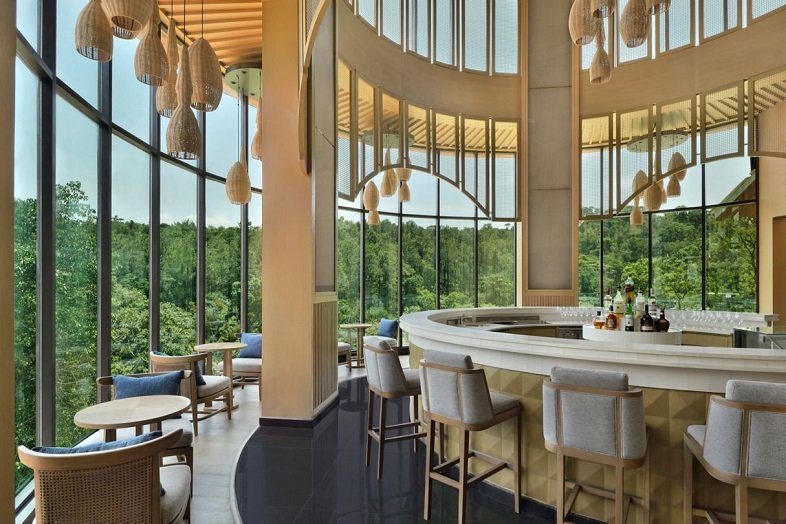
Marriott Hotels, an esteemed flagbearer within Marriott Bonvoy’s illustrious array of 31 hotel brands, has unveiled the Coorg Marriott Resort & Spa amidst the tranquil landscapes of Coorg, Karnataka. Nestled amid the verdant expanse of the Makandur forest, this modern haven offers a gateway to immersive local escapades, all cradled within the serene sanctuary of a lush botanical haven.
Renowned as one of Southern India’s premier hill station destinations, Coorg boasts enchanting vistas of mist-shrouded hills and luxuriant landscapes, providing a picturesque canvas for travelers. What sets this locale apart is not only its breathtaking natural allure but also the spectrum of exhilarating activities on offer, including intrepid treks, exploration of coffee plantations, and the enchantment of cascading waterfalls.
“We are thrilled to bring Marriott Hotels to Coorg, famously known as the Scotland of India, a land endowed with breath-taking natural splendor and glorious history. This opening underlines our commitment and focus as we continue to expand our footprints across leading travel destinations within India, providing travelers with trusted and high-quality accommodation choices” said Ranju Alex, Area Vice President, South Asia, Marriott International. “Marriott Hotels continues to live its legacy of Wonderful Hospitality, earning the trust of travelers around the globe.”
With 108 elegantly appointed villas and cottages, the Coorg Marriott Resort & Spa showcases panoramic emerald landscapes. Each villa boasts abundant natural light, plush bedding, and modern conveniences. Moreover, the resort extends its warm hospitality to four-legged companions, enhancing the vacation experience.
Within the dining sphere, the resort presents a diverse culinary offering. Madiker Kitchen caters to a global palate with international favorites and traditional Coorgi cuisine. Grills By The Valley promises a forest-framed dining experience with innovative dishes and skillfully crafted cocktails. The Greatroom welcomes guests to indulge in artisanal teas, coffees, and creatively infused cocktails amidst a library setting. As the day winds down, the swim-up Pool Bar provides an ideal setting for sundowners and light bites.
“We are delighted to welcome guests to our stunning new resort in Coorg,” said Randal Whelpdale, General Manager at Coorg Marriott Resort & Spa. “Coorg is a unique blend of serene landscapes, vibrant traditions, and outdoor adventure. We are thrilled to showcase its natural beauty and charm through our exceptional facilities, curated local experiences, and warm hospitality.”
source: http://www.businessnewsweek.in / Business News Week / Home> Business / by Sujata / August 11th, 2023
Coorg-style chicken curry is probably one of the best examples to understand the palate of the locals.
Coorg-style chicken curry is quite popular. Here’s what makes it so unique. / Photo: Stock
Highlights
Coorgi chicken is one of the most delightful recipes
Here’s what makes the dish so unique locally
It has a generous use of spices that are grown in Coorg
We just love how varied Indian cuisine is! Every time we delve in deep, we come across some unique sub regional cuisine that mesmerizes us with their flavours, aroma and use of ingredients. This time, we came across a delicious chicken curry from the South Indian region – Coorg. Popularly referred to as ‘The Coffee Country’, Coorg or the Kodagu district of Karnataka boasts of its distinctive cooking style. The food pattern here is defined by its extensive flora and fauna and changes as per the season and its produce. And the Coorg-style chicken curry is probably one of the best examples to understand the palate of the locals. Let’s find out what makes the dish so unique and how to make it at home.
What Is So Special About Coorg-Style Chicken Curry:
This delicious dish is referred to as koli kari in regional language, where koli stands for chicken and kari is curry in English . A part of the Kodava cuisine (the food culture of Coorg district), koli kari is characterised by the generous use of spices, which are traditionally produced and picked in the coffee estates of the region. Another ingredient that makes koli kari so unique is kachampuli – the local version of the balsamic vinegar, extracted from a fruit called kudampuli. It has its own taste and aroma that adds on to the flavours of the chicken curry. Sounds indulgent, indeed!
How To Make Koli Kari | Coorg-Style Chicken Curry Recipe:
Here, we bring the authentic recipe of koli kari for you to try at home. This particular recipe is shared by Chef Anahita Dhondy on her Instagram handle, where she mentions, “Koli kari recipe is essentially a chicken curry made Kodava style with the usage of coconut paste and spices. It is a flavour packed chicken curry from South India. They make their food flavoursome and spicy, which makes it likeable by all.” She also states that if you do not find kachampuli, then don’t worry, simply eliminate it from the recipe.
To start with, clean and marinate the chicken curry with simple salt, red chill and turmeric and let it rest for at least two hours. Then add some clove, cinnamon in the wok and toss. Then add garlic, onion and other masalas and cook for some time. To it add marinated chicken and mix with the spices. Keep the flame low to avoid it from sticking to the base or getting burnt.
After a while, add coconut paste and a few other spices and cook. Here, you can adjust the quantity of coconut paste as per your preference. Finally, if you have kachampuli, add it to the dish along with green chillies and coriander leaves and turn off the heat. And you have koli kari ready to be relished.
What To Pair With Koli Kari | What Goes Best With Koli Kari:
Koli kari is usually paired with akki roti, ghee rice or as per Chef Anahita Dhondy, you can have it with paputt too. For the unversed, paputt is a traditional Kodava rice cake, made by steaming rice with few basic spices. In the post on Instagram, she also gave us the recipe for paputt.
To make paputt, you need to first wash the broken rice and place it in a heat-proof plate. To it, add ingredients like grated coconut, salt, sugar and few other spices. Then pour water, covering the rice and the other ingredients. Now place the plate in a steamer and prepare it until it turns soft and well-cooked. Finally, cool it down, cut into triangles and serve hot with koli kari.
source: http://www.food.ndtv.com / NDTV Food / Home> Food & Drink / by Somdatta Saha / August 06th, 2023
KC Ganapathy will pair up with Varun Thakkar to represent India in the men’s 49er event at Tokyo 2020.
Indian sailing star KC Ganapathy not only made his country proud but also put his community — Kodava — on the sailing map of the world by making a cut in the 49er event (with crew member Varun Thakkar) for Tokyo 2020 at the Mussanah Open Championship earlier this year.
For the uninitiated, the Kodavas are a tribe from the Kodagu region of Karnataka in India, who speak the Kodava language. And the 26-year-old will be the first from his community to represent India at the Olympics.
His journey to the pinnacle of the sporting event has been challenging as after losing his father, Deepak Chengappa, it was his mother Reshma Chengappa, who ran the furniture business for his family in Chennai.
However, his achievement is also fulfilling for his grandmother Padma Prathap, a resident of Kolthodu village near Hatur in South Kodagu, as she has seen Ganapathy overcome all the odds.
“He won the Under-12 National Championship and has come a long way. I pray for his success every moment,” she told the starofmysore.com.
Incidentally, his journey is also inspiring for his Indian sailing contingent teammates, who have seen his never-say-die spirit at close quarters.
It happened so in 2020, that after being reduced to visual training for a major part of 2020 in Chennai, Ganapathy and his crew member Thakkar decided to train in South India in Rameswaram. However, the plan turned out into a disaster, as a bike accident almost reduced his chances of competing any further.
Ganapathy suffered a hairline fracture on the foot along with a soft tissue damage. But he was able to pull off the recovery in no-time, thanks to the doctors and training process he was asked to follow. His teammate Vishnu Sarvanan, a laser radial class sailor, has had a lot of respect for him ever since.
“When I got into sailing for the first time, I kind of looked up to him,” Vishnu told the New Indian Express.
Moreover, Ganapathy also worked on putting up weight to balance his boat (along with his partner), which needs a minimum of 160 kilograms on board. And from quitting school to pursue sailing on a full-time basis, Ganapathy has come a long way in pursuit of making his dreams count
When will KC Ganapathy’s campaign at Tokyo 2020 begin?
Varun Thakkar and KC Ganapathy will begin their campaign at Tokyo 2020 on July 27, Tuesday, in the men’s 49er Race 1.
source: http://www.olympics.com / Olympics.com / by Samrat Chakraborty / July 26th, 2023
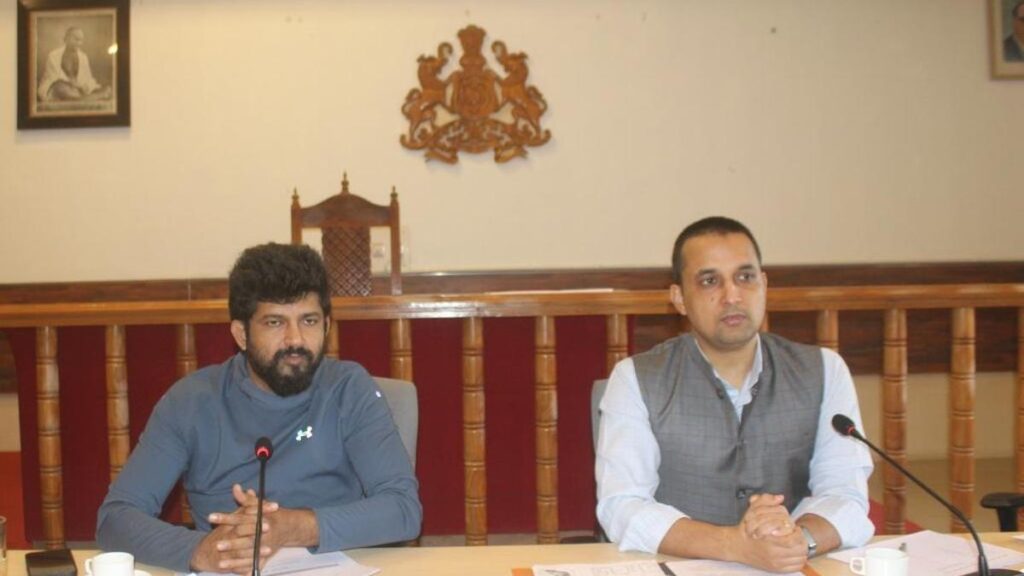
MP urges CM to release an additional sum of ₹70 crore for the 450-bed teaching hospital of Kodagu Institute of Medical Sciences.
Pratap Simha, MP, at the meeting on KIMS in Madikeri on Friday. Deputy Commissioner Venkatraja is also seen. | Photo Credit: SPECIAL ARRANGEMENT
Mysuru-Kodagu MP Pratap Simha on Friday urged Chief Minister Siddaramaiah to release an additional sum of ₹70 crore for the completion of a 450-bed teaching hospital for Kodagu Institute of Medical Sciences (KIMS) in Madikeri. A sum of ₹100 crore had been released for the hospital project and additional funds are essential for completing the works, he added.
Earlier, the MP held a meeting with the officials and doctors of KIMS on establishing a critical care center on the KIMS premises in Madikeri. The proposed center has been estimated to cost₹29 crore, he said.
Engineer Rajesh told the meeting that the critical care center has been proposed on 45-cent land on the KIMS campus and the tender process had also been done. He said the general wards of the teaching hospital of the KIMS are likely to be completed by November. The works need additional funds for completion, he said, adding that the critical care center will be completed in the next 15 months.
Mr. Simha told the officials to send the proposal on a critical care center to the government for the funds. MRI equipment for the teaching hospital and the mother and child hospital for Kodagu has become essential for improving public healthcare services, he added.
The hospital doctors and staff told the MP about the need for constructing quarters for the KIMS staff. In reply, the MP said suitable land for the staff quarters will be provided.
The concerned engineers told the meeting that the land on Murnad Road belonged to the KIMS and the same land parcel can be used for building KIMS’ staff quarters.
source: http://www.thehindu.com / The Hindu / Home> News> India> Karnataka / by The Hindu Bureau / July 28th, 2023
In South Kodagu, the rainfall has receded and the region is exposed to some sunlight, resulting in an increased number of estates recording stalk rot disease.
For representational purpose only | EPS
Madikeri:
Several coffee estates across Kodagu are already facing the brunt of monsoons and changing weather patterns. The coffee plantations, especially in the South Kodagu region, are showing severe signs of stalk rot disease and the coffee growers are worried.
“The stalk rot disease usually affects the coffee plants during mid-monsoons – especially in August, when the rainfall gets heavy. However, the coffee stalks and coffee beans are rotting at the beginning of monsoons this year,” shared Devaiah, a grower in the Srimangala belt of South Kodagu.
Several crops across the coffee estates are affected by rotting disease and controlling the spread of the disease amidst the bad weather condition has become a herculean task to the growers. Amidst the increased loss of yield due to wildlife conflict, the spread of the rotting disease is adding more woes to the growers’ troubles.
While stalk rot disease is an age-old condition that has been affecting coffee plants – especially the Robusta variety of coffee– the cases of the disease spreading have increased invariably in the recent past. Changing weather patterns is concluded as one of the reasons for the increased spread of the disease, as George Daniel, DD of Chettalli Coffee Board explained, “Weather conditions play an important role in the spread of stalk rot disease. The soil will have increased moisture content during monsoons. When this moisture is exposed to even little sunlight, it gives a perfect ground for the mushrooming of anthracnose fungus – which causes the stalk rot disease.”
In South Kodagu, the rainfall has receded and the region is exposed to some sunlight, resulting in an increased number of estates recording stalk rot disease.
“At first, just one or two coffee cherries will start to rot. within a day, the entire plant gets affected. It is important that the affected parts of the plants are immediately cut off and buried under the soil to prevent further spread of the endemic,” added George. He analyzed that estates that have reported stalk rot in the previous years are more prone to the disease.
He suggests that the growers spray Opera Fungicide – One ml of the fungicide mixed with One liter of water – to curb the disease spread. “The mixture must be sprayed when rain takes a break,” he added. Further, it is important that growers carry out pre-preparations for monsoons as spraying 0.5% Bordeaux mixture would help curb the growth of fungus in monsoons.
“The Robusta variety of plants is highly affected by the disease. However, Arabica varieties too are prone to the disease. Sanitation work of the plantation including pruning of the crops, reduction of shade, proper lighting and air circulation plays an important role in preventing stalk rot disease in plantations,” he said.
Coffee berries begin to drop following infection from stalk rot disease.
source: http://www.newindianexpress.com / The New Indian Express / Home> States> Karnataka / by Express News Service / July 27th, 2023
Stays at a resort in Galibeedu, visits General Thimayya Museumat Madikeri and Suttur Mutt in Mysuru
Madikeri/Mysuru:
After attending the Opposition unity meeting at Taj West End, Bengaluru, on July 18, former Uttar Pradesh (UP) Chief Minister (CM) and Samajwadi Party leader Akhilesh Yadav headed to Kodagu to stay at Taj Madikeri Resort & Spa, Coorg in Monnangeri village, near Galibeedu.
Interacting with a few resort staff and the guests for a few moments, Akhilesh said that he had come to Kodagu a couple of times when he was a student at Sri Jayachamarajendra College of Engineering (SJCE) (now JSS Science and Technology University) and had visited Madikeri to witness the night-long Dasara procession.
Before heading to Kodagu, Akhilesh had a stopover in Mandya where he rested at a private hotel and he met his old friends and classmates.
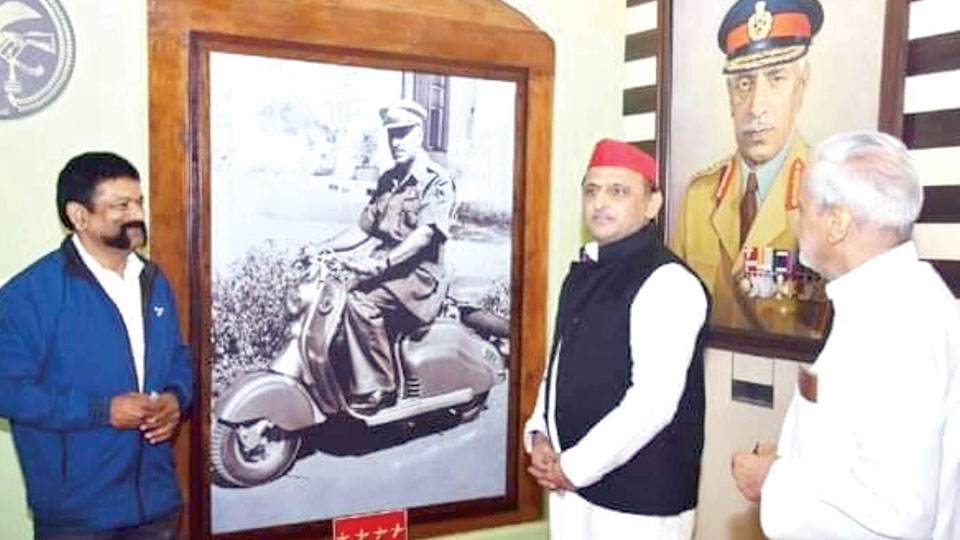
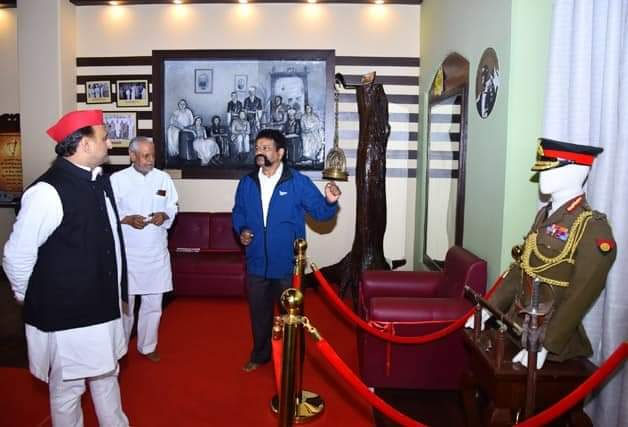
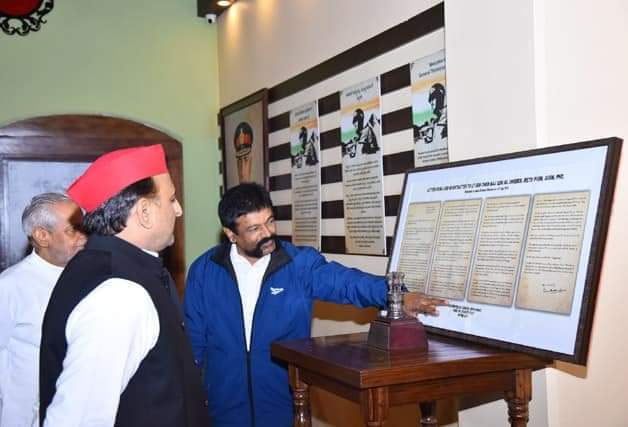
After his night’s stay in Kodagu, the Samajwadi Party leader took time yesterday morning to visit General Thimayya Museum at Madikeri which celebrates the life of former Army Chief General Kodandera Subayya Thimayya, housing a variety of antique weaponry and war relics.
Welcoming the former UP CM, Museum Manager Subedar Major Gowdanda Thimmaiah, took him around the Museum and explained to him how ‘Sunny Side,’ the erstwhile ancestral house of General Thimayya, who served as the Chief of Army Staff from 1957 to 1961, has been renovated and converted into the Museum.
Accompanied by party National Spokesperson Rajendra Chowdhuri, Akhilesh Yadav went to every section of the Museum and was curious to know the tradition of warriors and how the Kodagu district became a nurturing place for Field Marshal K.M. Cariappa, General Thimayya and other numerous Lieutenant Generals, Brigadiers, Majors and the other Defence Services officers.
The Kodagu Police had provided tight security to the visiting VIP and media persons were not allowed inside the Museum during his visit. Only one camera person was allowed to click photos. Here too, Akhilesh spoke about his warm association with Madikeri and Mysuru.
“I studied in a Military School and read about General Thimayya. I recently came to know about this historic and well-maintained Museum and I had made up my mind to visit Madikeri. I bow to the celebrated General and the soil of Kodagu,” he said.
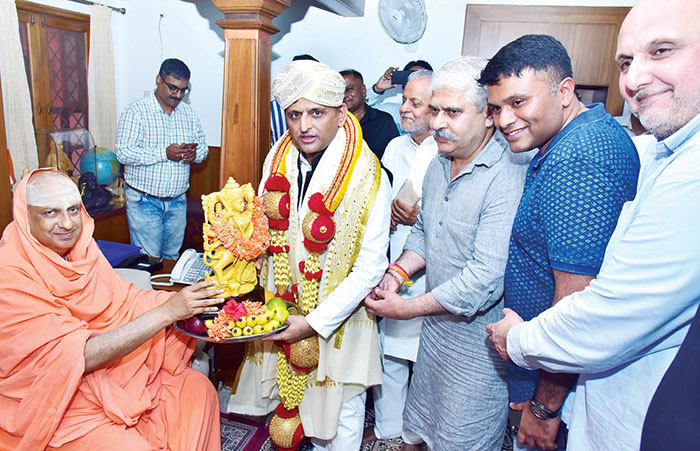
Picture shows Suttur Seer Sri Shivarathri Deshikendra Swamiji blessing the Samajwadi Party leader during his visit to Suttur Mutt at the foot of Chamundi Hill in city.
Akhilesh returned to Mysuru where he caught up with a few of his friends and classmates. At SJCE, between 1990 and 1994, Akhilesh studied Civil Engineering before proceeding to Australia for MS in Environmental Engineering.
His classmate Dashrath Rai and others accompanied Akhilesh to Suttur Mutt where the former UP CM took the blessings of Sri Shivarathri Deshikendra Swamiji. The Swamiji felicitated Akhilesh and presented a memento.
source: http://www.starofmysore.com / Star of Mysore / Home> Feature Articles> Top Stories / July 209th, 2023
Helps Forest Officers effectively plan operationsand drive pachyderms back into jungle.
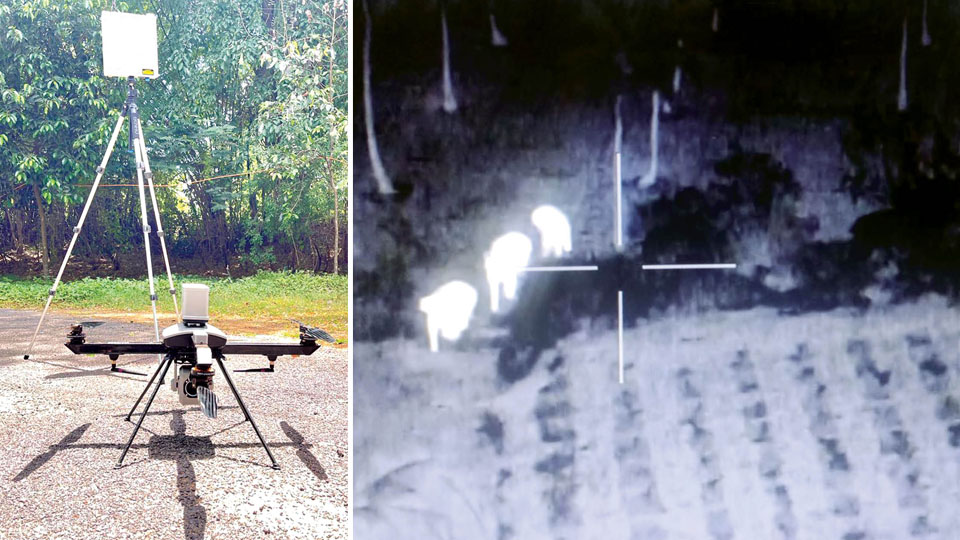
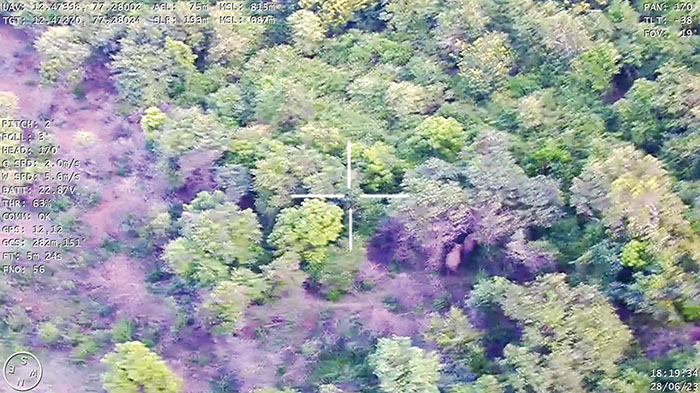
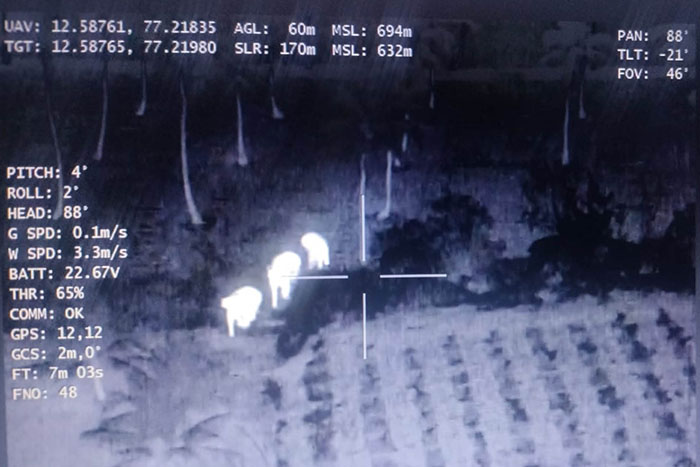
Amid the rise in the human-elephant conflict in some forested pockets of Kodagu along the Nagarahole Tiger Reserve, the Forest Department has deployed a hi-tech thermal drone to keep track of daytime and nocturnal movements of wild elephants inside forest ranges and human habitats.
The drone technology was first used in Nagarahole to control forest fires and now, there are three such drones there. However, a need was felt to acquire a thermal drone due to the increasing human-elephant conflict.
Sources said while managing the human-elephant conflict, the safety of elephants and also humans has been a major concern for the Forest Department and the wildlife activists as deaths of animals are being frequently reported from various parts of the district as they come into contact with live electricity wires.
Due to the need, one thermal drone was brought to Nagarahole in January this year at a cost of Rs. 25 lakh. Monitoring the movement of the elephants has always been a challenge for the Department amid several limitations.
“Now we have been using a thermal drone and it detects live objects through their body temperature and those get flashed on the computer screen. It gives us a proper count of a herd and the number of calves,” Nagarahole Tiger Reserve Director Harshakumar Chikkanaragund told Star of Mysore.
The drone can also be used to drive the elephant herd away from a potential danger area as its location can be pinpointed. The drones are not only helping the staff determine the herd composition and drive them in a desirable direction but also prevent casualties.
Heat signatures of living species
Unlike drones with normal cameras that rely on light signals to capture images, thermal drone cameras pick up heat signatures of living species in motion. This makes thermal drones ideal for deployment after sunset, complementing the use of normal drones during daylight hours.
“By accurately detecting herd movements, determining their composition and tracking elephant directions, objective decisions can be made for deploying elephant squads. Thermal drone cameras have become an invaluable asset for night-time operations. They enhance situational awareness, ensuring efficient management of wild elephant movements and mitigating potential conflicts,” Harshakumar added.
According to Deputy Range Forest Officer (DRFO) Yogeshwari Desai, who has been trained to use the thermal drone, the machine has a 2-km range and can fly 400 metres above the surface. It has a powerful thermal sensor and night vision ‘positive image’ technology cameras. It is convenient to use and the exact location can be ascertained. If one has to do physical combing even for a 2-km range, a lot of manpower and equipment is needed,” she explained.
Easy navigation inside woods
The camera on the drone operates based on the location information obtained via GPS, enabling easy navigation of the elephants’ whereabouts. Additionally, the drones produce minimal noise, allowing the staff to monitor animals such as elephants, tigers and other wildlife without causing any disturbance
During the night, the thermal drones conduct operations using radar, ensuring that local residents are not inconvenienced. Once the specific location of the elephants is identified, the information is sent to the Task Force and the teams proceed to drive the elephants back into the forest.
It also becomes easy to spot the origin of forest fire and extinguishers can be rushed to the place, she said. The drone has a backup of 40 minutes and after that, the battery must be charged. The drone has three batteries.
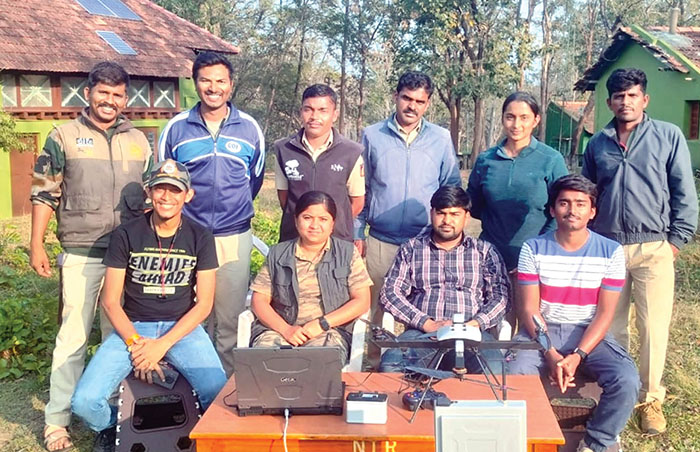
The team that has been trained to operate thermal drone at Nagarahole.
Trained team
Before the drone was deployed, a New Delhi-based team trained eight operators at Nagarahole. They are DRFO Jyothi Kumar and Forest Guard Sunil Nellebidu (Antharasanthe), DRFO B.B. Mahesh Kumar (D.B. Kuppe), DRFO Chethan Kumar Kolur (Nagarahole), DRFO Yogeshwari Desai (Anechowkur), DRFOs K.K. Arpitha and H.N. Madhuprasad (Hunsur) and Forest Guard Basavaraju (Veeranahosahalli).
The operators were trained for six days at Dammanakatte, Veeranahosahalli and Moorkal ranges that abut human habitats. The Nagarahole Director further said that they will seek aid from wildlife-related organisations, NGOs and firms to sponsor more such thermal drones for effective management of conflict zones.
source: http://www.starofmysore.com / Star of Mysore / Home> Feature Articles, Top Stories /July 18th, 2023
WELCOME. If you like what you see "SUBSCRIBE via EMAIL" to receive FREE regular UPDATES.
Read More »