All posts by admin

Restoration of Bamboo Club in Kodagu

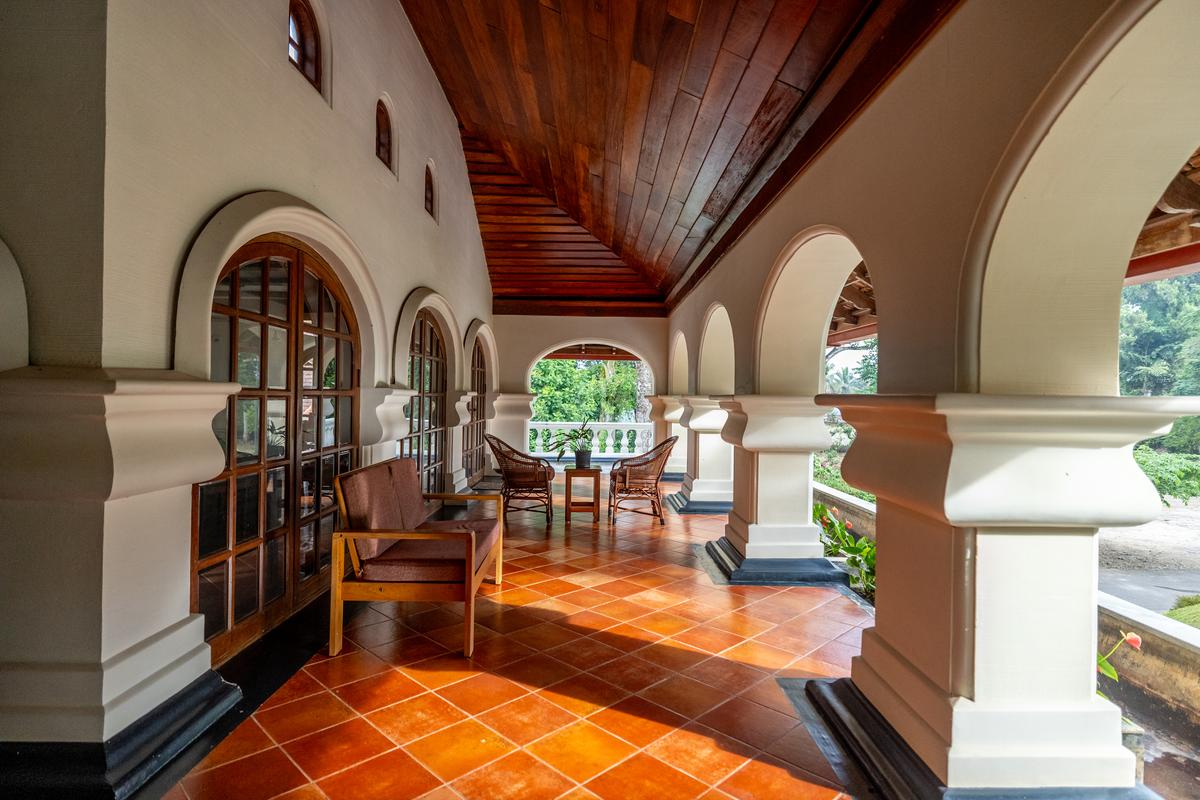
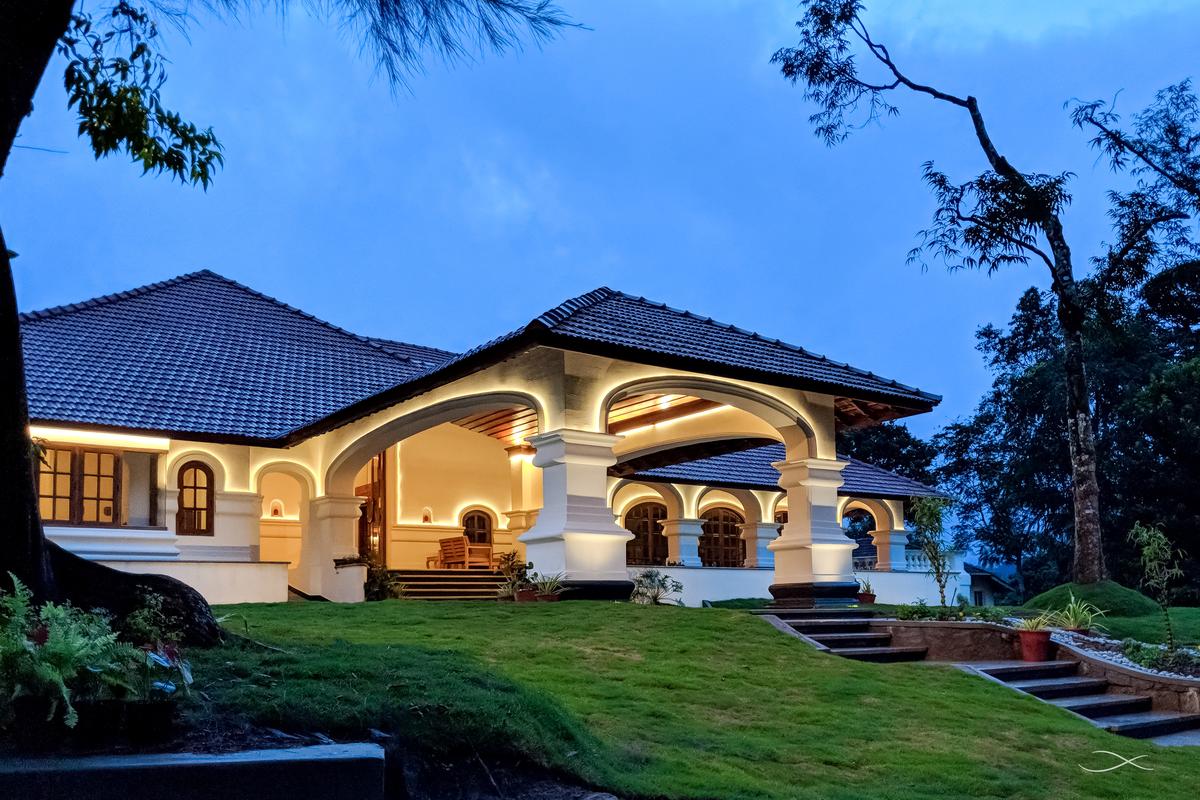
The restoration project of Bamboo Club in Kodagu included creating an overhang of Mangalore tiles in the front of the building, and enabling ample sunlight to stream into the interiors.
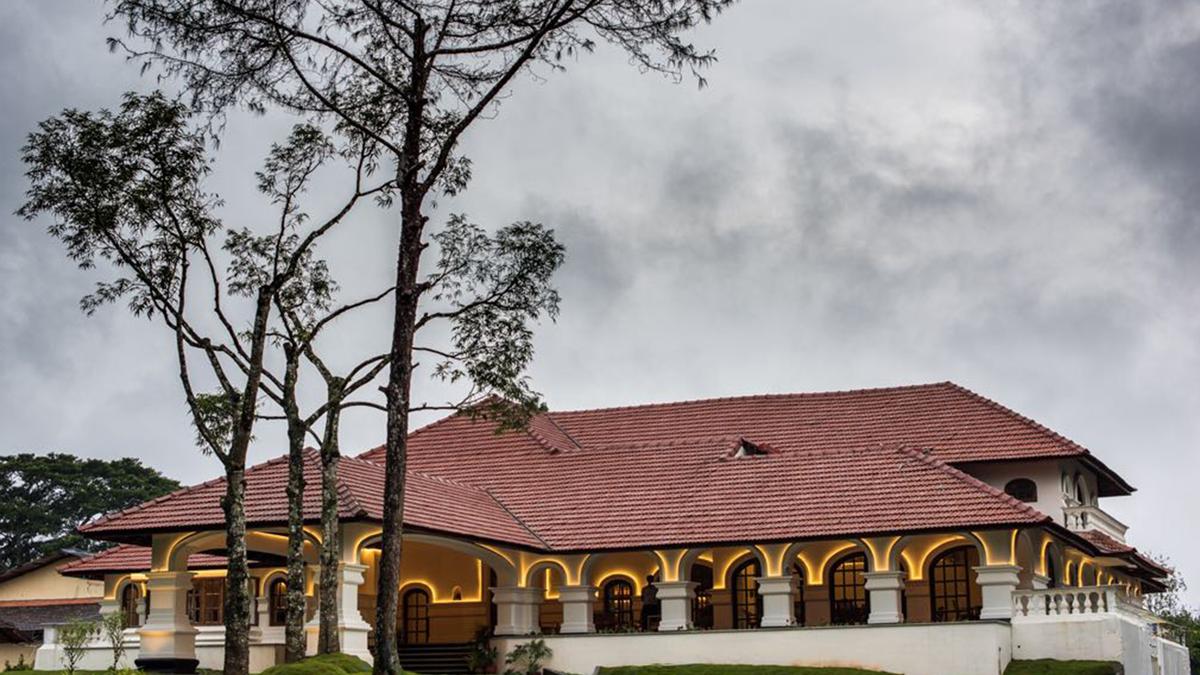
It is a nearly 140-year-old structure, built during the colonial era as a club for the Englishmen who had made the picturesque Kodagu their home. Nestling amidst the thick greens of the sprawling coffee estates, the Bamboo Club, built in 1886, had greatly weathered with time, displaying multiple erroneous interventions to meet altered functionalities as well as address structural repairs.

What architect George Ramapuram of Earthitects noticed while taking up the restoration of this heritage structure was random additions. Starting from an asbestos roof on the façade to make-shift toilets and rooms at the rear of the building, the interventions were totally out of sync with the original plan and language of the building. “The interiors were dimly lit because of limited access to direct sunlight. A false ceiling had been added to the ballroom to stem rainwater leakage, and this further added to the dinginess besides cutting down on the volume of the interiors,” points George.
Modifying the arches

Given the weathering structural form, George decided to start the restoration by first addressing the multiple arches that lined its expansive corridors. While retaining these multiple arches, George decided to deftly tweak their shape a bit to visually expand the individual arches. This was complemented by greater detailing brought to the columns to enhance the colonial visual appeal. “The originality of the individual arches was not tampered with; in fact, it was painstakingly retained to ensure they existed as a cohesive unit post the intervention to expand the sprawling verandas,” he states.

Tiling it right

His next line of intervention addressed the Mangalore tiled roof, which had an intrusion of asbestos over the years to cover the additional rooms brought in to meet various functional requirements. “The original structure came with a tiled roof, and the asbestos was brought in much later. This becomes clear on inspecting the shift in the gradient of the roof, which marks the beginning of the asbestos,” explains George. The asbestos roof was dismantled as part of the intervention, at the front as well as the rear of the building, with the Mangalore tiles extended to cover the open corridors.
The rain shield

Kodagu is famous for its copious rain, with many areas reporting flooding during the peak monsoons. Sensitive to this, George created a large overhang of Mangalore tiles in the front of the building to shelter the entrance and the interiors from heavy seasonal rains. “The overhang of the tiles was extended to a height of about 2m to cover the eave board, a basic requirement to shield the interiors from the heavy rains,” he explains.

Incidentally, George did not stop there but created a porch at the entrance to facilitate vehicle drop-off during these heavy rains. A driveway was thus created over the expansive steps leading to the entrance gate of the club. Given the ragged state of these steps, George brought in a design intervention over the same, where their structural form was redone to lend aesthetics. George went further to green the landscape around the steps, besides retaining the existing trees around it. Black Kota stone was used to lay the treads in stark contrast to the lush greens surrounding it, thus offering the club a grand entry.

Energising the interiors

The next level of intervention was the interiors that required major transformation, given their dowdy state with scant infiltration of natural light. “The interior spaces came with their defined functionalities, each evolving over time based on emerging requirements. However, the spaces came with very limited natural light, affecting the functionality as well as the energy of the individual zones,” elaborates George.

Given the colonial period of the structure, the interiors originally came with high volume, “yet there were no skylights to let in natural light into the spaces”. Worse, the main congregating room, which was the ballroom, had been fitted with a false ceiling to arrest water leakage during the heavy monsoon periods. “This reduced the volume of the interiors, making them feel smaller and also dark with the low level of natural light.”

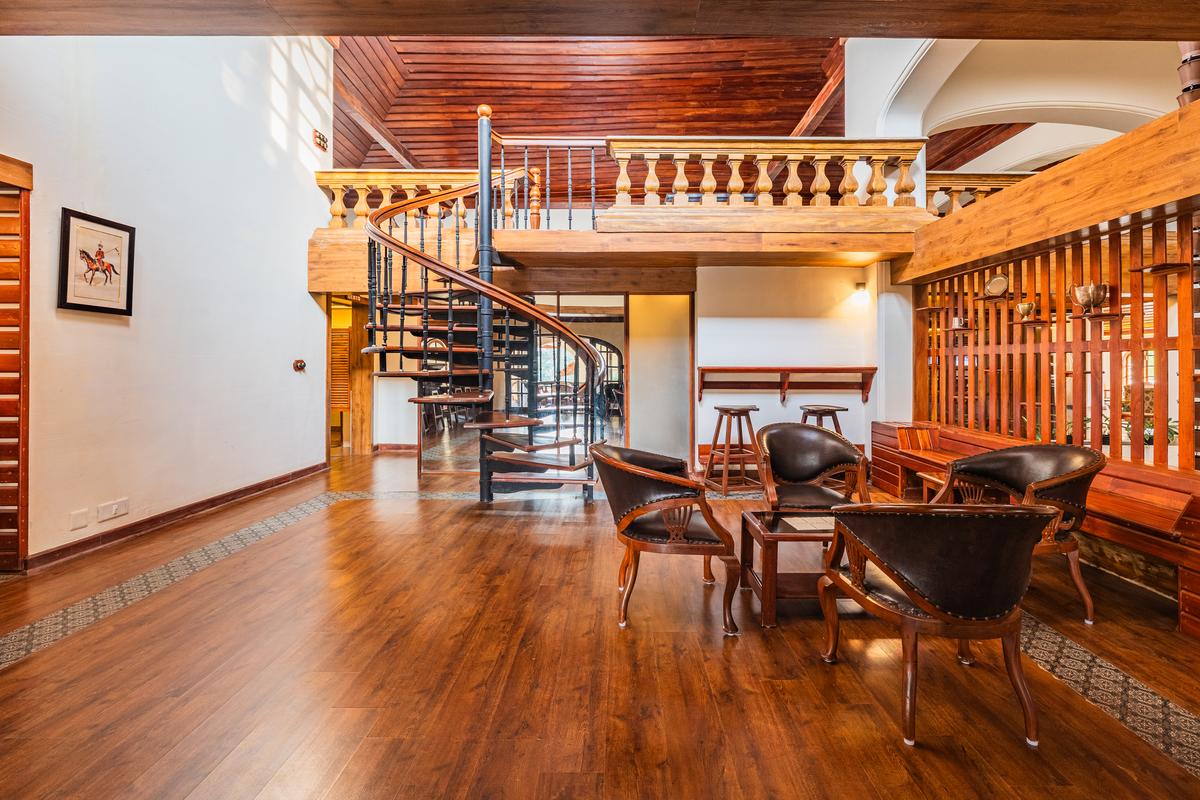
George then began his intervention in the interiors by first dismantling this false ceiling to expose an existing double-height ceiling. This automatically increased the internal volume of this congregating space. The presence of the double height further enabled him to create a mezzanine floor over the bar area to overlook the internal courtyard. To visually connect to the exterior corridors, George opened up the existing windows both vertically and horizontally. Lending warmth to the interiors is a rich play of wood, featuring as reapers and planks on the walls, staircase treads, flooring, as well as the ceiling.
Intervening sensitively

Further, arched openings were created to enable ample sunlight to stream into the ballroom and bar area, besides lending a sense of grandeur to the interiors by their presence. In tune with this design intervention, George also increased the height of the entrance doorway, making the interiors appear larger and more open. “While these interventions were executed, utmost care was taken to ensure the essence of the original structure was preserved through the restoration”, points George. Even the original furniture was meticulously retained where possible, thus keeping the interventions limited chiefly to the structural restoration.

“While the club features as a strong recall of the colonial structural form, the elements of the same have, over the years, been absorbed into the native style of the Kodagu region to adapt to the prevailing local conditions. This explains the presence of some of the local architecture of Kodagu in the structural form”, elaborates George.

Restructuring the rear

The rear of the club had witnessed haphazard additions to the structure in the form of changing rooms, make-shift toilets to meet altering functional requirements. These were carefully removed and replaced with large arched windows. The Mangalore tile roof extends over this as an overhang around the corridor that runs through the main structure. Random rubble wall and a colonial-inspired balustrade border this open corridor. Crowning these interventions is the insertion of a large exit door that features over a flight of steps, lending a composition to the rear section and its exit, a similar grand feature as lent to the main entry.

source: http://www.thehindu.com / The Hindu / Home> Life & Style> Homes & Gardens / by Nandhini Sundar / April 25th, 2025
Mysuru Kodava Samaja launches new website

kodavasamajamysuru.com

Mysuru:

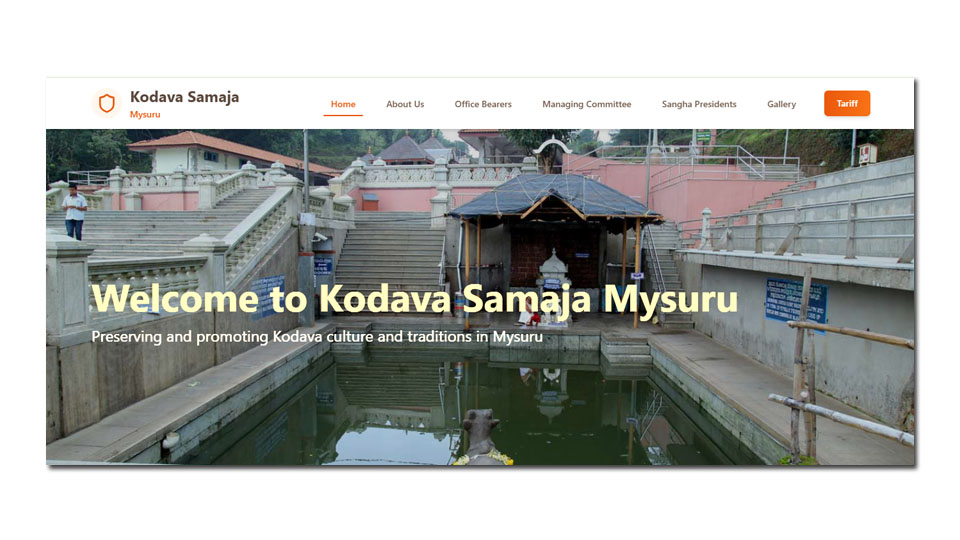
The Mysuru Kodava Samaja officially launched its new website, https://kodavasamajamysuru.com/ at a programme held at the Samaja  premises in Vijayanagar First Stage, Mysuru, recently.

The new website, a first for the Samaja, was the brainchild of President Ponjanda A. Ganapathy. His son, Ponjanda Gyan Ponnappa, conceptualised, designed, developed and hosted the website entirely free of cost.

In addition to the website, Gyan has contributed several other pro-bono digital initiatives, including the ‘Kodava Thandh Bendhu Matrimonial App’ (available on Google Play Store), the Youth Wing website youthwing.kodavasamajamysuru.com, the donor coupon lucky draw software and website, and an Android app for Kaveri Vidya Samsthe (featuring both admin and user applications). Sree Cauvery Educational Institutions in Kuvempunagar is run by the Samaja.

Launched on Apr. 12, 2025, the new website serves as a comprehensive resource for information about the Mysuru Kodava Samaja and its initiatives.

The event began with President Ponjanda Ganapathy sharing insights into the Samaja’s activities. He honoured several generous donors who contributed to the Samaja’s developmental projects through a fund-raiser coupon system, presenting them with gold coins as tokens of appreciation.

To encourage donations, Samaja’s administrative team had introduced an innovative donor coupon scheme, which included exciting gifts through a lucky draw.

Top fund-raisers — including individuals, keris (family groups) and sanghas (associations) — were recognised and awarded for their selfless efforts in helping the Samaja meet its financial goals. The fundraising drive was a resounding success.

The Kodava Samaja office-bearers are also trying to secure a grant of Rs. 10,00,000 from the Karnataka Government under the Kodava Community Hall Development Scheme. Sources said that the process to receive funds has started and the money will be sanctioned soon.

As part of its developmental plans, the Samaja has decided to erect a life-size statue of Gen. Kodandera S. Thimayya within its premises using a portion of the funds raised.

The event was attended by Samaja Vice-President Machimada P. Nanaiah, Honorary Secretary Ketolira A. Belliappa, Joint Secretary Ajjikuttira Diana Poovaiah and Treasurer Ittira G. Kashiyappa, among others.

source: http://www.starofmysore.com / Star of Mysore / Home> News / April 23rd, 2025

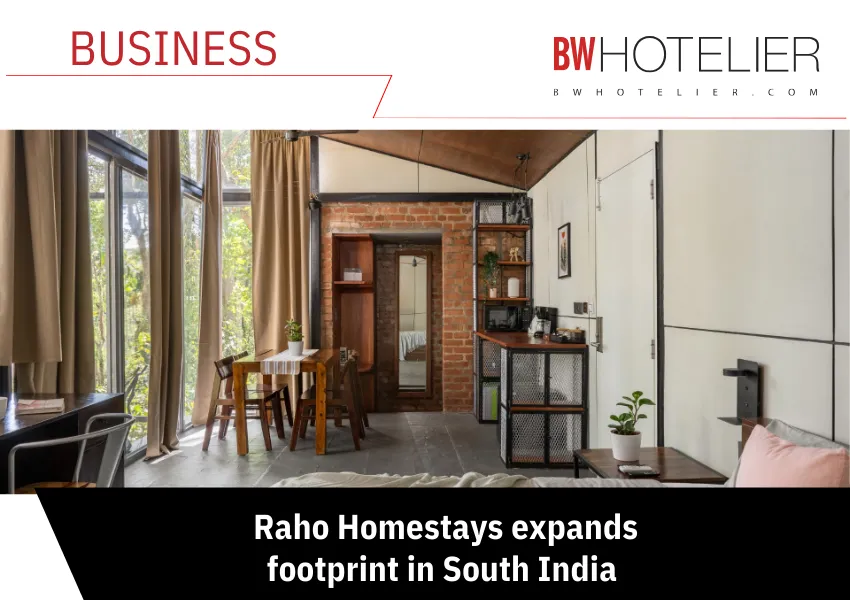
Raho Homestays expands footprint in South India

Raho’s current portfolio includes over 50 well-designed rooms across Coorg, where guests are encouraged to slow down and reconnect with nature.

Bengaluru-based Raho Hospitalities is accelerating its expansion in South India, with plans to enter popular destinations such as Ooty and Gokarna. The company currently operates four properties and is developing a fifth in Coorg, aiming to offer premium yet affordable homestay experiences that blend comfort with culture.

Raho’s current portfolio includes over 50 well-designed rooms across Coorg, where guests are encouraged to slow down and reconnect with nature. The brand places strong emphasis on local experiences, offering activities such as the Coffee & Pepper Tour, nature walks, and traditional Kodava-style meals. These immersive offerings are designed to help travellers engage deeply with regional traditions and landscapes.

“Our focus is on developing a strong operational network across specific locations in South India. This enables us to improve operational efficiency and ensure we create a vibrant atmosphere for our guests”, says Gautham Somana, Co-Founder & CEO of Raho Hospitalities. 

In Coorg, visitors can also explore Tadiandamol peak, participate in yoga and meditation sessions, or simply unwind around a bonfire. Raho’s ethos of “Come Home to Nature” guides its approach to hospitality, placing authenticity, sustainability, and guest comfort at its core.

source: http://www.bwhotelier.com / BW Hotelier / Home> Business / by BW Online Bureau / April 22nd, 2025

Pepper to touch Rs 1000/kg as erratic weather, diseases slash output by 40%

Planters from the Karnataka Spice Association and Chikkamagaluru Planters Association said that reduced harvests in countries like Vietnam and Brazil have triggered a global supply crunch, adding upward pressure on prices.

Bengaluru :

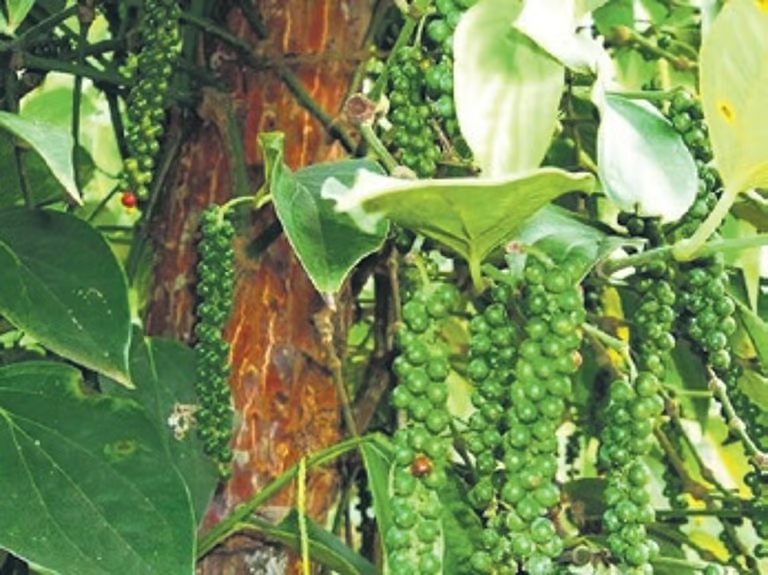
PEPPER, which has already seen a 40% price surge over the past two years, is now expected to touch Rs 900–1,100 per kg owing to a steady decline in production across major growing regions. Pepper prices that hovered around Rs 400-450 per kg two years ago have now climbed up to Rs 700. Cultivators attribute this to erratic rainfall patterns, prolonged dry spells, and a rise in pest and disease pressure that have all disrupted the fragile growing environment the crop depends on.

Planters from the Karnataka Spice Association and Chikkamagaluru Planters Association said that reduced harvests in countries like Vietnam and Brazil have triggered a global supply crunch, adding upward pressure on prices.

Chandrasekhar Reddy from Karnataka Spice Association said, “We have seen a production decline of up to 40% this season as last year, early summer droughts delayed flowering, and the sudden burst of rain in July affected berry setting which disrupted the crop cycle and affected overall volume.”

Pepper grows as a climber on support trees and requires a specific microclimate — moist air, moderate shade, and soil that drains well. While the Western Ghats usually offer such conditions, recent weather fluctuations in places like Kodagu and Chikkamagaluru — which contributes to major pepper production from Karnataka — have made it harder to maintain stable growing environments, cultivators group said, adding that since last year, there has been an increase in fungal diseases like Phytophthora foot rot and anthracnose, which have worsened due to changing moisture levels in the soil.

“Once a vine is infected, especially with root rot, it’s often a total loss. Replanting takes years before it becomes productive. Combined with weather instability, this has caused a steep fall in yields,” Reddy added.

Jagdeesha MK from Chikkamagaluru Planters Association said that no fresh arrivals are expected for at least next two months and that they are re-evaluating crop allocations as they struggle with lower productivity. This supply crunch will drive the market in the coming months, he said.

source: http://www.newindianexpress.com / The New Indian Express / Home> Karnataka / by Rishita Khanna / April 21st, 2025

FMD vaccination drive to begin in Kodagu from April 21

As part of the National Cattle Disease Control Programme, the 7th round of the foot and mouth disease (FMD) vaccination drive will be conducted in Kodagu district from April 21 for 45 days.

At a recent meeting in Madikeri, Deputy Commissioner Venkataraja instructed officials to make all necessary arrangements to ensure the success of the drive. Stressing the importance of livestock health, he said that FMD poses a serious threat to the farming community by causing significant financial losses. He called on all stakeholders to work together to eliminate the disease through timely vaccination.

Lingaraja Doddamani, Deputy Director of the Department of Animal Husbandry and Veterinary Sciences, noted that FMD is a highly contagious disease affecting livestock such as cattle and pigs. He emphasised that regular vaccination, twice a year, is crucial in preventing the spread of the disease.

Vaccination will be administered to calves older than three months, with a booster dose scheduled three to five weeks after the initial shot. Even pregnant cows and buffaloes can safely receive the vaccine, he added.

Kodagu district is home to 76,920 livestock, and a dedicated team of 75 veterinary staff has been mobilised for the drive. The vaccine is being provided free of cost, and officials have urged farmers and livestock owners to extend full cooperation to the field staff during the campaign.

The vaccination drive is a vital step toward safeguarding animal health and ensuring economic stability for farmers across the district, the officials said.

source: http://www.thehindu.com / The Hindu / Home> News> India> Karnataka / by The Hindu Bureau / April 19th, 2025

IBNII Coorg unveils Four Palatial Presidential & Honeymoon Suites

Coorg: 

The IBNII Coorg, an eco-luxury nature resort renowned for its seamless blend of opulence and sustainability, has unveiled its newest crown jewels palatial new suites:

Two resplendent Presidential Suites and two exquisitely appointed Honeymoon Villa Suites, offering an elevated escape for travellers seeking privacy, comfort, and immersive nature experiences. Designed to provide an intimate retreat, these newly added suites seamlessly combine Luxury with the untouched beauty of Coorg’s landscapes, these sanctuaries of serenity promise discerning travellers an elevated sojourn where privacy, indulgence, and nature converge in perfect harmony.

Cradled within the resort’s majestic 125-acre expanse of unspoiled verdure, the Presidential Suites and Honeymoon Villa Suites stand as the epitome of refined indulgence and serene seclusion. These sanctuaries have been masterfully conceived to offer an unparalleled confluence of grandeur and tranquillity amidst nature’s untouched splendour.

Dr. Sherry Sebastian, Managing Director, The IBNII Coorg, said, Luxury at IBNII is about creating meaningful experiences while staying true to our environment. These new suites embody that vision—where guests can indulge in comfort  without compromising on sustainability.”

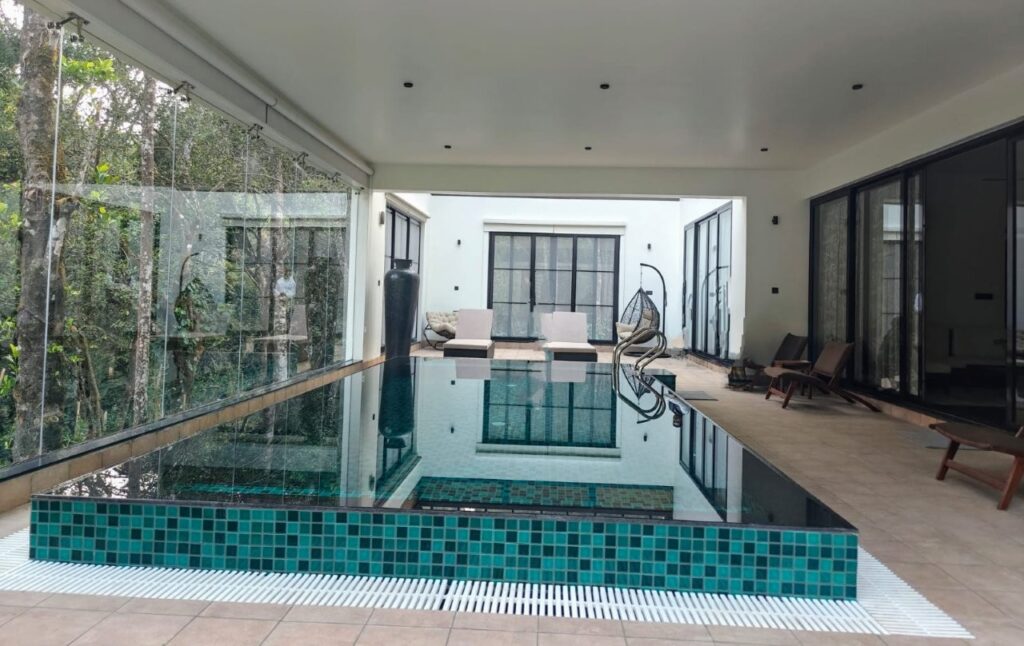
The two stately Presidential Suites, sprawling across an impressive 3,000 square feet, exude sophistication with their expansive dual-bedroom layout, each complemented by an opulent en-suite bath, a tastefully appointed living room, elegant bar counters, and a private indoor temperature-controlled swimming pool adorned with see-through glass walls that unveil panoramic views of the surrounding emerald foliage.

Exclusively designed for romantic interludes, the two Honeymoon Villa Suites span approximately 1,700 square feet and offer an intimate retreat with a lavishly proportioned bedroom, an indulgent en-suite bath, a plush living space, bespoke indoor massage beds, and a temperature-controlled swimming pool with an integrated jacuzzi — all encased within floor-to-ceiling glass walls that frame the poetic beauty of the forest beyond.

Each suite is a harmonious blend of artisanal craftsmanship and contemporary luxury, adorned with handcrafted wooden interiors, sweeping glass facades, and expansive private decks that dissolve the boundaries between the curated comforts of the indoors and the tranquil embrace of nature’s masterpiece.

Committed to sustainable hospitality, The IBNII Coorg has integrated eco-conscious practices into the design and construction of these suites. Locally sourced materials, energy-efficient systems, and minimal waste initiatives ensure that luxury coexists with responsibility.

Every detail of these suites is crafted to enhance the guest delight. From plush interiors reflecting the charm of Coorg’s natural surroundings to customised Wellness experiences, the new additions cater to travellers looking for a refined yet immersive stay. Guests can enjoy bespoke meal options prepared by IBNII’s chefs, personalised wellness therapies, and exclusive access to Ayurveda, yoga, and spa services for a truly rejuvenating escape.

As one of Coorg’s finest eco-luxury retreats, The IBNII Coorg continues to offer a perfect getaway for honeymooners, families, and discerning travellers. With an existing collection of 23 private pool villas, 12 wooden cottages, 8 Forest view cottages and a dedicated Aarogya wellness sanctuary spread over 60 acres, the resort remains a sought-after destination for those looking to reconnect with nature seeking Well – being to rediscover oneself and attain Self Realization steeped in 1.5 acres of Lush green clean air per person .

Located just 5.5 hours from Bangalore Airport and 2.5 hours from Mysuru railway station, The IBNII Coorg offers an unmatched blend of seclusion and accessibility.

source: http://www.kashmirvision.in / Kashmir Vision / Home> KV News / by Rayees Ahmed Kumar / October 11th, 2023

India’s Nothing Before Coffee raises $2.3m to fuel outlet growth

The affordable coffee chain is seeking to reach more than 150 outlets across India’s Tier 2 and 3 cities by the end of 2026

Left to right: Nothing Before Coffee co-founders; Shubham Bhandari, Akshay Kedia, Anand Jain and Ankesh Jain | Photo credit: Nothing Before Coffee 

India’s Nothing Before Coffee (NBC) is gearing up for a fresh expansion drive after securing $2.3m in a pre-series A funding round led by Mumbai-based Prath Ventures. The round also saw participation from SYL Investments, Warmup Ventures & Mars Shot Ventures. 

In a press release, NBC said it would continue to target growth in India’s ‘largely untapped’ Tier 2 and 3 cities, where it says major coffee chains have yet to venture. The affordable coffee chain, which has previously sold promotional beverages for ₹99 ($1.18), reiterated its goal to resonate with younger Indian consumers and said it could reach 150 stores in India by the end of 2026. 

NBC also said the funding would be used to strengthen its digital platforms, which include an in-house app, invest in its supply chain and roll out new store formats, such as kiosks and smaller cafés.

“This funding milestone is a strong validation of our vision and operating model. At Nothing Before Coffee, we’ve built a brand that combines affordability, quality, and deep cultural resonance – especially in India’s Tier 2 and Tier 3 markets. With strong unit economics and consistent consumer love, we are now well-positioned to scale rapidly,” said Ankesh Jain, Co-founder, Nothing Before Coffee.

Founded in Jaipur in 2017, Nothing Before Coffee operates more than 85 stores across 35 cities in India, alongside a single site in Portugal, which opened in April 2024. The value-focused coffee chain sources coffee from Chikmagalur and Coorg in India’s southern Karnataka state and roasts in-house to supply its store portfolio and direct-to-consumer channel. 

The coffee chain has previously stated it was seeking $4m to reach 400 sites in India by 2026 and facilitate planned expansion in Europe and the Middle East.

“As a fund, we’ve long believed in the growing demand for coffee and vibrant café experiences across India – not just in metros, but well beyond Tier-1 cities. In all our research, NBC consistently stood out for the vibrance in their cafés, the affordability of their pricing, and the quality of their offerings,” added Piyush Goenka, founder of Prath Ventures.

India’s burgeoning domestic coffee shop market has courted millions of dollar’s of investment over the last 18 months as operators rush to be the first to open stores in the country’s untapped urban areas.

Specialty coffee groups Blue Tokai Coffee Roasters and Subko Coffee Roasters have raised $35m and $10m respectively to scale their operations, while affordable operator abCoffee and specialty coffee start-up First Coffee raised $3.4m and $1.2m to accelerate the roll-out of their on-the-go focused store networks. 

In December 2024, Bangalore-based Fast Coffee raised $1m in a funding round led by venture capital firm Bloom International Ventures to fund plans to reach 10 stores by the end of 2025.

source: http://www.worldcoffeeportal.com / World Coffee Portal / Home> Industry Reports> India> Weekly Coffee Dose / April 17th, 2025

Gateway Coorg

Gateway Coorg Opens Its Doors

Indian Hotels Company (IHCL), India’s largest hospitality company, today announced the opening of Gateway Coorg, a serene retreat nestled in the heart of Karnataka’s coffee country.

Enveloped by lush rainforests and scenic trails, Gateway Coorg features 55 spacious rooms and suites that reflect the tranquillity of their natural surroundings. Guests can indulge in regional and global flavours at Ghat’s Café, unwind at Coorg Cellar, or sip artisanal blends at the Coffee Lounge. The resort is a haven for food enthusiasts, with a menu that showcases the bold flavours of traditional Kodava cuisine alongside contemporary favourites. Wellness and recreation are integral to the experience with a spa, outdoor swimming pool, and a fully equipped fitness centre.

Often referred to as the ‘Scotland of India,’ Coorg’s rolling hills and coffee estates offer a beautiful backdrop for exploration.

With the addition of this hotel, IHCL will have 26 hotels in Karnataka including 13 under development.

Hotel website

Gateway Hotels & Resorts

Gateway Coorg / Galibeedu, 571201 / India / +91 82723 52000

Hotel Website

source: http://www.hospitalitynet.org / HospitalityNet / Home> Hotel Development> Now Open / April17th, 2025

Kodagu takes to recharge wells to harvest rainwater

A typical recharge well

This summer was bitter for many homes in Kodagu. Their wells almost dried up before the monsoon broke. But 47-year-old Suraj Ajjikuttira in south Kodagu didn’t have to worry.

His recharge well, probably the first one in hilly Kodagu, ensured that his open well had ample water during the dry season.

Buoyed by his success, Ajjikuttira made it his mission to spread his knowledge of harvesting rain through videos, workshops and meetings. People can even phone and ask him. As a result, awareness is spreading and the recharge well is increasing in popularity. Kodagu now has at least 40 to 50 recharge wells. 

Ajjikuttira’s interest in rainwater harvesting began two decades ago, when his 50-foot well, dug in 1979, started going dry. By 2002 he thought he had no option but to dig a bore well for drinking water. Then, fortuitously, he participated in a seminar on rainwater harvesting in Mysore. He picked up the nuances of groundwater recharge very quickly.

Ajjikuttira went home determined to apply his newly acquired knowledge by recharging his bore well. He dug a 10-foot-deep mini well around it.  After filling up the mini well with aggregate matter, he diverted run-off from the nearby area into his bore well. The next year itself, the water level in his bore well rose considerably.

“That convinced me about the efficacy of groundwater recharge,” reminisces Ajjikuttira. He doubled his efforts and started a serious attempt to catch all the rainwater he could on his estate. He turned his attention to rainwater falling on his roof, on the vast frontage of his home and the adjoining coffee-drying yard or ‘kana’.

Earlier, all this water used to disappear into a drain. Ajjikuttira now ensured that all run-off got collected at one spot and then flowed out. A leaf separator was attached at the exit point to prevent leaves from clogging this stream of water.

The usual custom is to make a rain pit for such run-off to percolate. But, in this case, the water that was flowing was excessive. After racking his brains, Ajjikuttira dug a recharge well, five feet in diameter, to catch this water. He placed concrete rings along the inner walls of the well 12 feet deep, to prevent its walls from collapsing. The diameter was then reduced. Another six to eight feet were dug and filled with stones to firm up the second stage of the recharge well.

Suraj Ajjikuttira near a large tank which now collects rainwater

Consequently, rainwater collected from about 1,500 square feet of space goes straight into Ajjikuttira’s recharge well and is fully absorbed there. “At the most we get one inch of rain per day. I have designed the recharge well in such a way that even this one inch of water is captured,” he explains. The water that is percolating is estimated to be around two lakh litres.

Ajjikuttira’s well was 42 feet deep when his father got it dug in 1979. In 1994, when the well dried up, it was deepened by another eight feet and eight rings were fixed on its walls. After that the well never dried up. Even during the 2016 drought, Ajjikuttira’s well had eight feet of water. Last year, when wells dried up in Kodagu, Ajjikuttira’s well had 11 feet of water.

The recharge well is a new concept invented in Chennai in the 1990s. Later, the idea was embraced by residents of Bengaluru. The city now probably has around 50,000 recharge wells. The sole purpose of the recharge well is to recharge groundwater. The well can be very small in diameter, as low as three feet.

COFFEE AND RAIN

Kodagu district’s main crop is coffee. Coffee plants are rain-fed. The first showers or ‘blossom showers’, received in February and March, are very important for coffee farmers. If it doesn’t rain at this time, farmers have to pump up water from tanks and sprinkle or irrigate the plants.

After the blossom showers are over, coffee plants require a second spell of irrigation within 15 to 20 days. These showers are called ‘back-up’ showers. If the rains fail to arrive then farmers who still have water do a second round of sprinkling.

The water in Ajjikuttira’s tank was hardly sufficient for even one round of irrigation. About 200 metres away from his tank is a huge seven-acre tank called Katibetta Kere. This water body belongs to the revenue department. It has a catchment of around 500 acres. But the tank’s bund had breached in one area and it wasn’t retaining water. Ajjikuttira built a check dam with sand bags in the catchment area so that the tank would retain water and help his own tank absorb some water.

Katibetta Kere is at a higher elevation than Ajjikuttira’s irrigation tank. Subsequently, the department built a concrete check dam for Katibetta Kere. Recalls a happy Ajjikuttira, “Since then, this tank has enhanced water availability in my own tank. Now, even if we do three rounds of irrigation, the tank still has water.”

Rainfall figures differ across Kodagu district. Ajjikuttira’s place receives 54 inches — coffee planters still measure rain in inches — whereas not-so-distant Virajapet gets 70 inches. Wetlands here are dwindling and so is forest cover. Due to various reasons, water availability is worsening in the district. Unfortunately, awareness about rainwater harvesting and groundwater recharge is abysmally low.

Once Ajjikuttira succeeded in augmenting water availability in his estate, he started spreading the idea of water harvesting. In the last 15 years, he has conducted more than 300 awareness sessions on rainwater harvesting in schools, government departments, workshops for citizens and so on.

“In most Kodagu estates, the house is located at a higher level. In the past, the yard for drying coffee beans and paddy used to be built near the paddy fields in a lower area. But due to security reasons the yard is now constructed close to the house. So the typical house would have a large area in front with a drying yard close to it. This entire stretch is either built with concrete or lined with interlocking tiles. So a huge amount of clean water flows on this surface,” says Ajjikuttira.

“We need a structure that can hold this run-off and make it percolate fast. I experimented with the recharge well. Although it is expensive, it does the job efficiently.”

Ajjikuttira is approached by people on the phone or in person for guidance in harvesting rainwater. “If we make arrangements to catch all the run-off from the front area and the drying yard, summer rains alone will ensure the well doesn’t dry up,” he says confidently. A recharge well costs approximately Rs 60,000-70,000. 

Ajjikuttira carries out a simple test to check whether the bore well can be artificially recharged. A few barrels of water are kept nearby and poured into the bore well one after another. If the bore well overflows, it indicates that it won’t absorb water and recharge. The idea is then abandoned.

SPREADING AWARENESS

Ajjikuttira has put together a three-part video to spread knowledge on rainwater harvesting in Kodagu. Uploaded on YouTube, it tells people how to use rainwater directly, how to recharge defunct and working bore wells and how to use a recharge well for groundwater recharge.

After taking advice from Ajjikuttira, Tej Thammaiah Ajjikuttira constructed a recharge well 10 feet in diameter and 22 feet deep last year. The well is a big one because Thammaiah’s bungalow, front yard and ‘kana’ spread to about a hectare. The well has cost him Rs 130,000.

Thammaiah’s open well, 60 feet deep, didn’t dry up completely. But by the end of summer it would have only four to five feet of water. Last summer it had 30 feet of water because he followed in Ajjikuttira’s footsteps.

Rakshith of Sulagodu is another estate owner who sought Ajjikuttira’s advice. He has an open well which is 100 feet deep. It used to dry up in summer and he found it difficult even to provide water to his labourers. He built a recharge well which cost him Rs 70,000. Two years later his water woes are over.

 “Now I have water up to 25 feet,” he says. “By the end of summer, water levels recede by seven to eight feet. I don’t have to worry about drinking water for many decades to come.”

Soil in Kodagu collapses very easily. Ajjikuttira has noticed that many people dig a recharge pit quite close to the well. “This is highly risky. Many wells have collapsed because pits were dug very close to them. It’s always better to locate the pits about 15 or 20 feet away,” he warns.

He points out that each estate is endowed with expansive areas from where water can be easily harvested. “The shifting of the drying yard from lower areas near paddy fields to the area adjoining the house in an elevated area has also caused water scarcity in open wells. This is because we cement all these areas and never permit water to percolate.” Planters who have realised this are taking corrective measures to allow for percolation.

Coffee estates require huge quantities of water for irrigation to induce flower blossoming. “There are several earthen tanks or keres in Kodagu. You can see these tanks on Google earth. But, unlike the old days, tanks are dug unscientifically. The selection of the site should be such that we can divert streams of water into it. Many new tanks don’t have this.”

Another important groundwater recharge structure in these estates is a legacy of British planters called ‘thottilu gundi’ or cradle pits, so called because of the shape. Thottilu gundis were systematically and periodically dug and cleaned amidst rows of coffee. They would convert surface run-off from the hills into sub-soil seepage that would reach the tank after many months. “Due to the high cost of labour and poor labour availability, many of us have bid goodbye to digging of this very useful system,” laments Ajjikuttira.

Contact Suraj Ajjikuttira at 9901012970

source: http://www.civilsocietyonline.com / Civil Society / Home> Environment / by Shree Padre, Kodagu / August 29th, 2019 (updated December 03rd, 2020)

M.N.R. Venugopal – The Pepper Doctor

Venugopal in a pepper garden where, with his advice, yields have increased

Dr Madhugiri Narayana Rao Venugopal, a scientist with the Indian Council of Agricultural Research (ICAR), was living a retired life when a farmer urged him to share his immense knowledge with people who needed it.

Dr Venugopal then stepped in to not just help but also play a transformative role by showing how pepper could be profitably grown on coffee and areca nut plantations. He began travelling 12 to 15 days a month across five districts in Karnataka. With his guidance, farmers have been able to increase their yield and income. He has also helped farmers set up gene banks and improve the quality of plants.

In return for all his help, Venugopal expects nothing from the farmers. He is a humble man and says that his pension is enough for his family. But the farmers have always felt indebted. So, when he fell seriously ill in 2015, farmers contributed to pay the hospital bill. 

Below is a piece that appeared in Civil Society’s September-October 2017 edition. Read on.

In  the sleepy villages of Sirsi in Karnataka an economic revolution is taking place. In just four years, farmers have tripled their income by growing pepper, the king of spices. Word of pepper’s potential has spread to five districts of Karnataka — Uttara Kannada, Shimoga, Chikmagalore, Hassan and Kodagu — and here too farmers are making money by growing the black spice. 

The man behind this silent transformation is 68-year-old Dr Madhugiri Narayana Rao Venugopal, a retired ICAR scientist, affectionately called ‘Pepper Doctor’.  By assiduously sharing his knowledge with farmers he has increased their yield of pepper by three to four times.

Dr Venugopal was born in Madhugiri in Tumkur district, the eighth child of Narayana Rao and his wife, Seethamma. In 1977 he joined the Central Plantation Crops Research Institute at Kasargod. He retired in 2009 after 32 years of service from the Regional Research Station of the Indian Institute of Spices Research, Madikeri, as its Principal Scientist and Head. By then he was an acknowledged expert in crops like arecanut, coconut, pepper, ginger, turmeric and cardamom.

 Venugopal built a house in Mysore and was looking forward to a quiet life with his family.  A few months into retirement, he was invited to a farmers meet in Madikeri. Ravi Ganapathy, a farmer, struck up a conversation with him. “You are a man of immense knowledge,” he said. “Transfer your learning to those who need it instead of killing it.”

His words got Venugopal thinking. He decided he would spend his time helping the farming community. Venugopal began attending meetings of farmers and he didn’t miss a single opportunity to address them. By now he must have attended around 1,300 such meetings. “All I needed was Rs 250 for travel,” he remarks.   Alongside Venugopal began identifying farming clusters that could increase their yield of pepper to more than 1,000 tonnes annually.

Why did he choose pepper? “There is money in pepper,” he says. “Coffee growers contend with white stem borer. Arecanut farmers worry about over-production and tea planters have high overheads. Pepper production is stagnant but farmers are keen to increase their income.  What they lacked is guidance and adequate planting material,” he explains.

A handful of pepper

“Dr Venugopal has been coming often to our taluka since 2012. At that time, our pepper production was around 75 to 80 tonnes.  Now it has reached 300 to 320 tonnes. Within the next two to three years, we will be producing 800 to 900 tonnes,” says Mahabaleshwar B.S., Assistant Director of Horticulture, Siddapura, in Uttara Kannada district.

In the 10 years since he retired, Dr Venugopal has probably achieved more than in the 30 years he worked for the government. Not only has he tripled the income of farmers he has forged deep bonds with them, giving rise to a new model of farmer-scientist relations.

“Scientists use power point presentations to train farmers. But cut and paste guidance isn’t  enough.  What works for pepper plants in an arecanut garden won’t suit pepper growing on a coffee farm. Scientists should demonstrate their learning on farmers’ fields. Otherwise no cultivation package will succeed,” he says.

In India pepper is cultivated as a mixed crop with arecanut, coffee and tea, unlike in Vietnam, the world leader in pepper production, where it is a mono-crop. “Pepper doesn’t require much space or irrigation. With the right agronomic practices we can augment production phenomenally,” says Venugopal. In another two years Karnataka will produce 65,000 tonnes of pepper or all the pepper India consumes, he says.

BONDING IN CLUSTERS 

Dr Venugopal travels at least 12 to 15 days in a month. The farms are not very near. A visit to Sirsi, which is nearly 1,000 km away, requires an overnight journey. He travels by bus and train. In fact, he admonishes farmers if they offer him special attention and happily stays in their homes. What’s more, he doesn’t accept a single rupee for his services.

 “My pension is enough for my family”, he says. “I don’t take any money from small farmers. I receive a consultation fee from big farmers that I use for small farmers. They arrange food, bus charges and accommodation, if required.”

Farmers have been encouraged to set up gene bank and nurseries

The first time Venugopal visits a new garden, he enquires how many pepper vines it has. If the number is less, he suggests the farmer plant more. “I tell them this is your yield potential. I ask them if they are ready to achieve a production of 300 to 400 kg per acre with 100 vines. It is not difficult. If the farmer agrees, I advise him from time to time. I also put forth one condition — farmers should implement 80 per cent of my recommendations and inform me. Otherwise, I don’t go there again.” Of course, there are defaulters — as many as six out of 10!

He also has a clear strategy. First, Venugopal identifies clusters that can grow 1,000 tonnes of pepper. Next he finds key farmers — those who are opinion leaders and can share knowledge. He has so far identified 14 clusters in five districts stretching from coastal zones up to an altitude of 1,200 metres with rainfall from 30 to 300 inches.

“After assessing rainfall, soil and so on we can evaluate in general the problems being faced by farmers. But we can’t provide the same advice to the entire state,” he says.  In each cluster, Venugopal develops a demonstration plot in the garden of a key farmer. In Uttara Kannada district he has developed three demonstration plots — in Gadikai, Neernalli and Chavatti.

In a way, the clusters act as relay centres of his recommendations. Whenever there is the possibility of a pest attack or quick wilt disease, he alerts the clusters over phone which, in turn, alert their communities. Pepper farmers have formed groups on WhatsApp and they also have organisations. So a lively exchange of information takes place. In the Siddapur taluka alone there are eight such groups. The Sirsi taluka has 10 groups. “In the past, no farmer discussed his pepper farming experiences. Now no development remains uncirculated,” remarks Mahabaleshwar.

Venugopal communicates very carefully. So he doesn’t offer advice over phone when he is travelling. At home, he receives 15 to 30 calls every day from pepper farmers. If it’s a very special case, like a call from a farmer in the northeast wanting to replace rubber with pepper, he suggests a team visit suitable plots and he facilitates training. In a year six to eight such study teams arrive to undergo training.

 “Our garden becomes his. He keeps tabs on our agricultural practices and guides us. He takes up all our farming worries. But the income accrues to us,” says Chavatti Shridhara Bhat, a farmer in Sirsi. “When he visits our farms, he is always the leader and we are happy to follow. He even interacts with our workers.  Whenever he finds an improved pepper variety, he takes pains to distribute it to all farmers. Varieties from the northeast have been brought here. Our varieties have gone there. Venugopal is like a friend or relative for us.”

Walking past pepper vines followed by farmers

THE RIGHT RESEARCH 

The most popular variety of pepper here is Panniyur-1. Pepper growing regions have millions of this variety. But it has a peculiar problem. During its spike formation stage, if there isn’t enough light, the plant produces only female flowers instead of bisexual ones. Laughs Venugopal, “Panniyur-1 is naughty but also a champion. We have had to change production technology because Panniyur-1 is planted very extensively.”

 With early irrigation and by preponing flowering, farmers can ensure there is adequate light for a good crop. This is recent acquired research which is being widely disseminated.

 A farmer in Somavarpet had been harvesting 28 tonnes of pepper from 38 acres. One year his pepper vines were attacked by quick wilt disease and he got no yield. He discovered that the disease had originated in his  neighbour’s garden. Scientists advised him to start control measures from the neighbouring garden. That worked and even after 26 years his vines are healthy. But his neighbour’s vines turned sick and had to be replanted. “The acid test of any experiment is in farmers’ fields,” says Venugopal.

One reason most arecanut farmers were wary about growing pepper is its frequent mass mortality. If there is uninterrupted rain for a few weeks, the dreaded quick wilt disease invariably wipes out vines. Farmers were under the impression that vines have to be constantly replanted to be free of quick wilt. But this fear has considerably declined due to Venugopal’s advice.

THE GENE BANKS 

An important prerequisite for pepper development is quality planting material. Throughout his career Venugopal noted that most saplings didn’t measure up. Some had symptoms of nematode, others were infected with phytophthera fungus or virus. Very few nurseries raised healthy planting material.

To overcome this problem, Venugopal insists that every cluster create its own gene bank. Three gene banks have already started in the districts of Sirsi, Shimoga and Hassan. Research and nurseries should go hand in hand is Venugopal’s motto. He has also trained farmers and nurseries to produce pepper plants locally. Today there are 58 farmer-owned nurseries.

The problem with planting material is that only one variety and  production technology is promoted whereas the Western Ghat region  contains great varietal diversity. Karnataka has 14 documented varieties. Kerala has over 70. “In some areas, we don’t want champions. We need all-rounders — cultivars less susceptible to disease, less sensitive, even if the yield is moderate,” he says.

 With this objective Venugopal arranged a nine-day varietal selection process in pepper gardens three years ago. “We selected 17 varieties in Uttara Kannada. In an area where all pepper vines had died, we found a variety called Tirupugere. Both Okkalu and Kari Malligesara varieties fetch Rs 80 more per kg in the local market. Nine out of 17 local cultivars are quite promising and deserve to get geographical identification,” he says.

Take the case of Okkalu. Chavatti Shridhara Bhat was growing this variety on his farm. But it was yielding only 500 gm of crop per vine. Bhat was very disappointed and was all set to cut off his Okkalu vines. Venugopal advised him to give his vines the correct dose of nutrients. Now the same variety produces four kg per vine and  traders are paying Bhat `80 more for his pepper crop. 

Venugopal with a group of pepper farmers with whom he has formed strong bonds of  trust

LEADERS OF FARMERS 

Two years ago Venugopal fell seriously ill.  After returning from Assam in June 2015, he got paralysed. The disease, called GB Syndrome, affects one in 100,000 people and results from excessive antibody production for a virus. His vision was affected and he couldn’t even lift his hand. For 23 days he was virtually helpless.

Even at this critical juncture, he was more concerned about the thousands of farmers for whom he was a leader. He phoned some of them to whisper a two-line message, “I don’t know if I can visit you again. Please stick to my recommendations.” Groups of farmers started rushing to the hospital. Everyone began praying for him. Eventually, “there was a miracle, a rebirth,” says Venugopal. He began recovering and after two and a half months he was back on his feet, travelling to the fields of farmers.

The hospital bill came to nearly Rs 10 lakhs. Farmers contributed to ease the financial burden.  “You are our asset. You have to live for us. We have benefitted so much thanks to you. If every farmer contributes just five kg of pepper we can easily clear this bill,” they kept saying. The Indian Institute of Spices Research reimbursed some money.

Venugopal works quietly, away from the limelight. Yet he has become a legend in these five districts. No ICAR scientist has his dedication and hard work or guides farmers with so much sincerity. There are no parallels to our pepper doctor, say farmers. 

Shree Padre  travelled to Mysore and Sirsi to speak with farmers and spend time with
Dr Venugopal. Yajna took the pictures.

source: http://www.civilsocietyonline.com / Civil Society / Home> Mega Hall of Fame / by Shree Padre (headline edited) / Photographs by Yajna / August 28th, 2019 (updated February 13th, 2023)