Bengaluru travel and hospitality companies have shifted itineraries to accommodate the holiday rush.
A Jayanagar-based travel company has switched from tempo travellers to mini buses to meet the high demand for trips within Karnataka this long weekend. Credit: MuddieTrails
With the Labour Day holiday falling on a Thursday (May 1), Bengalureans are turning the mid-week break into a long weekend by taking Friday off from work. Some are heading out on treks and road trips across Karnataka, while others are flying to destinations in other states or even abroad.
Harshitha Karunakar is off on a four-day vacation to Sri Lanka starting Thursday. She admits their schedule is “a bit packed for an international trip”, but the timing worked well for her family — her mother, a schoolteacher, is on summer break, and her retired father is free to join. “I applied for leave a month ago,” said the content writer. Their itinerary includes Buddhist temples, colonial landmarks, beaches, and sites linked to the ‘Ramayana’.
Former communications professional Brian Ammanna and his friends are limiting their road trip to three days. They are returning Saturday to avoid Sunday traffic. They will explore eateries in Mysuru before heading to Kodagu to unwind. Since most stays in Kodagu were expensive due to the long weekend rush, they booked one near Madikere, half an hour away.
Product manager Bharat Vijay and his mother Uma Devi, a field engineer assistant, are using the flexibility of remote work to start their trip on Wednesday. They will backpack through Kodagu, trekking up the Tadiandamol peak, and visiting monasteries and coffee estates.
Advocate Shamanth Surendra has settled for a day trip. Along with his biker friends and cousins, he plans to ride up to the Mallappa Konda hill — on the Karnataka-Tamil Nadu-Andhra border — and the Bolumalai Fort in Tamil Nadu.
But some like IT professional Preeti K had to drop her family travel plans. She said most “decent hotels and resorts” in places like Kodagu, Kotagiri and Wayanad are either sold out or charging twice or more due to the long weekend demand.
‘Enquiries up by 2.5 times’
Travel and hospitality companies have shifted itineraries to accommodate the holiday rush. Muddie Trails, Jayanagar, saw enquiries more than double and responded by increasing their group trips to Ooty, Kodaikanal, and Munnar from one to three each. “One trip will start Thursday night,” said operations manager Shirky Sreemath.
Plan The Unplanned, Hulimavu, has scheduled two treks for May 1 — to Makali Durga and Kaiwara, both within 80 km of Bengaluru. As of Tuesday, each had 8-10 enquiries, mostly from 21-to-35-year-olds, but no confirmed bookings. “Long weekend plans are usually last-minute, so we are hopeful the slots will be filled by Wednesday,” said founder Jatin Munvar.
Chazing Sunsets, Chickpet, had sold 11 of 15 slots for a four-day jungle trail by Monday. “Mostly families with young children are booking. It becomes a short summer vacation for them,” said founder Rohit Kumar.
Nomadic’s hostel in Kodagu, which can accommodate 16 visitors, is fully booked. “Some guests have even opted to sleep on extra mattresses. We have had to decline more requests,” said founder Sandeep T K. And their D D Hills campsite in Tumakuru, which holds twice as many, has only a few tents left. “All these bookings are from Bengaluru,” he added.
Those seeking a long vacation had factored in the May 1 break well in advance. Sreemath’s company, for instance, had secured 50-60% of its bookings to Arunachal Pradesh as early as January, anticipating the holiday. Of these, 70% of travellers are from Bengaluru. “Booking early helps avoid expensive flights,” he explained.
source: http://www.deccanherald.com / Deccan Herald / Home> India> Karnataka> Bengaluru / by Barkha Kumari / April 30th, 2025
Shree Kaveri Kodagu Mahila Sangha conducts annual cultural contests
Mysuru:
Shree Kaveri Kodagu Mahila Sangha, Mysuru, conducted its annual cultural competitions on Apr. 13 at Kodagu Sahakara Sangha premises in Jayalakshmipuram.
Inaugurating the programme by lighting the traditional lamp, Kodagu Model School (Vidyashankar Layout, Sathagalli, Mysuru) Education Council Chairperson Chowrira Seethamma Kalaiah, who was the chief guest, spoke on preserving Kodava land, language, their unique attire, customs and traditions which are the real assets of Kodava community, whose population is dwindling alarmingly of late. Calling upon the parents and elders to impart knowledge on culture and tradition to their children, she felt for an urgent need to create awareness among youths on Kodava culture (Kodavame).
Kollira Bollamma Kuttappa, President, Kodagu Mahila Sangha, welcomed and presided.
K. Kavya Kuttappa, Vice-President; K. Bhavani Belliappa, Secretary; M. Jaya Muthappa, Treasurer; A. Tara Somaiah and P. Vimala Poonacha, Joint Secretaries; K. Pushpa Machaiah and K. Pushpa Nanaiah, Organising Secretaries and P. Lovely Appaiah, Kodagu Mahila Sangha Advisor, were present.
Mysuru Kodava Samaja President Ponjanda A. Ganapathy, former Samaja Presidents Moovera K. Kuttappa, Kekada M. Belliappa and Kattera A. Kariappa and Kodagu Sahakara Sangha President Chambanda Nanjamma were the special invitees.
The Sangha members and their children actively participated in singing, dance, pick-and-speak and drawing competitions.
Kaliyanda Renu Muthamma (Kodava songs, Pick & Speak), Anusha Kumar (Dance), Vidyashree (Singing) and Mukkaty Muthappa (Drawing) were the judges. The event concluded with prize distribution by Machanda Jaya Muthappa. Kodandera Pushpa Machaiah proposed a vote of thanks.
source: http://www.starofmysore.com / Star of Mysore / Home> News / April 24th, 2025
As part of the National Cattle Disease Control Programme, the 7th round of the foot and mouth disease (FMD) vaccination drive will be conducted in Kodagu district from April 21 for 45 days.
At a recent meeting in Madikeri, Deputy Commissioner Venkataraja instructed officials to make all necessary arrangements to ensure the success of the drive. Stressing the importance of livestock health, he said that FMD poses a serious threat to the farming community by causing significant financial losses. He called on all stakeholders to work together to eliminate the disease through timely vaccination.
Lingaraja Doddamani, Deputy Director of the Department of Animal Husbandry and Veterinary Sciences, noted that FMD is a highly contagious disease affecting livestock such as cattle and pigs. He emphasised that regular vaccination, twice a year, is crucial in preventing the spread of the disease.
Vaccination will be administered to calves older than three months, with a booster dose scheduled three to five weeks after the initial shot. Even pregnant cows and buffaloes can safely receive the vaccine, he added.
Kodagu district is home to 76,920 livestock, and a dedicated team of 75 veterinary staff has been mobilised for the drive. The vaccine is being provided free of cost, and officials have urged farmers and livestock owners to extend full cooperation to the field staff during the campaign.
The vaccination drive is a vital step toward safeguarding animal health and ensuring economic stability for farmers across the district, the officials said.
source: http://www.thehindu.com / The Hindu / Home> News> India> Karnataka / by The Hindu Bureau / April 19th, 2025
Indian Hotels Company (IHCL), India’s largest hospitality company, today announced the opening of Gateway Coorg, a serene retreat nestled in the heart of Karnataka’s coffee country.
Enveloped by lush rainforests and scenic trails, Gateway Coorg features 55 spacious rooms and suites that reflect the tranquillity of their natural surroundings. Guests can indulge in regional and global flavours at Ghat’s Café, unwind at Coorg Cellar, or sip artisanal blends at the Coffee Lounge. The resort is a haven for food enthusiasts, with a menu that showcases the bold flavours of traditional Kodava cuisine alongside contemporary favourites. Wellness and recreation are integral to the experience with a spa, outdoor swimming pool, and a fully equipped fitness centre.
Often referred to as the ‘Scotland of India,’ Coorg’s rolling hills and coffee estates offer a beautiful backdrop for exploration.
With the addition of this hotel, IHCL will have 26 hotels in Karnataka including 13 under development.
This summer was bitter for many homes in Kodagu. Their wells almost dried up before the monsoon broke. But 47-year-old Suraj Ajjikuttira in south Kodagu didn’t have to worry.
His recharge well, probably the first one in hilly Kodagu, ensured that his open well had ample water during the dry season.
Buoyed by his success, Ajjikuttira made it his mission to spread his knowledge of harvesting rain through videos, workshops and meetings. People can even phone and ask him. As a result, awareness is spreading and the recharge well is increasing in popularity. Kodagu now has at least 40 to 50 recharge wells.
Ajjikuttira’s interest in rainwater harvesting began two decades ago, when his 50-foot well, dug in 1979, started going dry. By 2002 he thought he had no option but to dig a bore well for drinking water. Then, fortuitously, he participated in a seminar on rainwater harvesting in Mysore. He picked up the nuances of groundwater recharge very quickly.
Ajjikuttira went home determined to apply his newly acquired knowledge by recharging his bore well. He dug a 10-foot-deep mini well around it. After filling up the mini well with aggregate matter, he diverted run-off from the nearby area into his bore well. The next year itself, the water level in his bore well rose considerably.
“That convinced me about the efficacy of groundwater recharge,” reminisces Ajjikuttira. He doubled his efforts and started a serious attempt to catch all the rainwater he could on his estate. He turned his attention to rainwater falling on his roof, on the vast frontage of his home and the adjoining coffee-drying yard or ‘kana’.
Earlier, all this water used to disappear into a drain. Ajjikuttira now ensured that all run-off got collected at one spot and then flowed out. A leaf separator was attached at the exit point to prevent leaves from clogging this stream of water.
The usual custom is to make a rain pit for such run-off to percolate. But, in this case, the water that was flowing was excessive. After racking his brains, Ajjikuttira dug a recharge well, five feet in diameter, to catch this water. He placed concrete rings along the inner walls of the well 12 feet deep, to prevent its walls from collapsing. The diameter was then reduced. Another six to eight feet were dug and filled with stones to firm up the second stage of the recharge well.
Suraj Ajjikuttira near a large tank which now collects rainwater
Consequently, rainwater collected from about 1,500 square feet of space goes straight into Ajjikuttira’s recharge well and is fully absorbed there. “At the most we get one inch of rain per day. I have designed the recharge well in such a way that even this one inch of water is captured,” he explains. The water that is percolating is estimated to be around two lakh litres.
Ajjikuttira’s well was 42 feet deep when his father got it dug in 1979. In 1994, when the well dried up, it was deepened by another eight feet and eight rings were fixed on its walls. After that the well never dried up. Even during the 2016 drought, Ajjikuttira’s well had eight feet of water. Last year, when wells dried up in Kodagu, Ajjikuttira’s well had 11 feet of water.
The recharge well is a new concept invented in Chennai in the 1990s. Later, the idea was embraced by residents of Bengaluru. The city now probably has around 50,000 recharge wells. The sole purpose of the recharge well is to recharge groundwater. The well can be very small in diameter, as low as three feet.
COFFEE AND RAIN
Kodagu district’s main crop is coffee. Coffee plants are rain-fed. The first showers or ‘blossom showers’, received in February and March, are very important for coffee farmers. If it doesn’t rain at this time, farmers have to pump up water from tanks and sprinkle or irrigate the plants.
After the blossom showers are over, coffee plants require a second spell of irrigation within 15 to 20 days. These showers are called ‘back-up’ showers. If the rains fail to arrive then farmers who still have water do a second round of sprinkling.
The water in Ajjikuttira’s tank was hardly sufficient for even one round of irrigation. About 200 metres away from his tank is a huge seven-acre tank called Katibetta Kere. This water body belongs to the revenue department. It has a catchment of around 500 acres. But the tank’s bund had breached in one area and it wasn’t retaining water. Ajjikuttira built a check dam with sand bags in the catchment area so that the tank would retain water and help his own tank absorb some water.
Katibetta Kere is at a higher elevation than Ajjikuttira’s irrigation tank. Subsequently, the department built a concrete check dam for Katibetta Kere. Recalls a happy Ajjikuttira, “Since then, this tank has enhanced water availability in my own tank. Now, even if we do three rounds of irrigation, the tank still has water.”
Rainfall figures differ across Kodagu district. Ajjikuttira’s place receives 54 inches — coffee planters still measure rain in inches — whereas not-so-distant Virajapet gets 70 inches. Wetlands here are dwindling and so is forest cover. Due to various reasons, water availability is worsening in the district. Unfortunately, awareness about rainwater harvesting and groundwater recharge is abysmally low.
Once Ajjikuttira succeeded in augmenting water availability in his estate, he started spreading the idea of water harvesting. In the last 15 years, he has conducted more than 300 awareness sessions on rainwater harvesting in schools, government departments, workshops for citizens and so on.
“In most Kodagu estates, the house is located at a higher level. In the past, the yard for drying coffee beans and paddy used to be built near the paddy fields in a lower area. But due to security reasons the yard is now constructed close to the house. So the typical house would have a large area in front with a drying yard close to it. This entire stretch is either built with concrete or lined with interlocking tiles. So a huge amount of clean water flows on this surface,” says Ajjikuttira.
“We need a structure that can hold this run-off and make it percolate fast. I experimented with the recharge well. Although it is expensive, it does the job efficiently.”
Ajjikuttira is approached by people on the phone or in person for guidance in harvesting rainwater. “If we make arrangements to catch all the run-off from the front area and the drying yard, summer rains alone will ensure the well doesn’t dry up,” he says confidently. A recharge well costs approximately Rs 60,000-70,000.
Ajjikuttira carries out a simple test to check whether the bore well can be artificially recharged. A few barrels of water are kept nearby and poured into the bore well one after another. If the bore well overflows, it indicates that it won’t absorb water and recharge. The idea is then abandoned.
SPREADING AWARENESS
Ajjikuttira has put together a three-part video to spread knowledge on rainwater harvesting in Kodagu. Uploaded on YouTube, it tells people how to use rainwater directly, how to recharge defunct and working bore wells and how to use a recharge well for groundwater recharge.
After taking advice from Ajjikuttira, Tej Thammaiah Ajjikuttira constructed a recharge well 10 feet in diameter and 22 feet deep last year. The well is a big one because Thammaiah’s bungalow, front yard and ‘kana’ spread to about a hectare. The well has cost him Rs 130,000.
Thammaiah’s open well, 60 feet deep, didn’t dry up completely. But by the end of summer it would have only four to five feet of water. Last summer it had 30 feet of water because he followed in Ajjikuttira’s footsteps.
Rakshith of Sulagodu is another estate owner who sought Ajjikuttira’s advice. He has an open well which is 100 feet deep. It used to dry up in summer and he found it difficult even to provide water to his labourers. He built a recharge well which cost him Rs 70,000. Two years later his water woes are over.
“Now I have water up to 25 feet,” he says. “By the end of summer, water levels recede by seven to eight feet. I don’t have to worry about drinking water for many decades to come.”
Soil in Kodagu collapses very easily. Ajjikuttira has noticed that many people dig a recharge pit quite close to the well. “This is highly risky. Many wells have collapsed because pits were dug very close to them. It’s always better to locate the pits about 15 or 20 feet away,” he warns.
He points out that each estate is endowed with expansive areas from where water can be easily harvested. “The shifting of the drying yard from lower areas near paddy fields to the area adjoining the house in an elevated area has also caused water scarcity in open wells. This is because we cement all these areas and never permit water to percolate.” Planters who have realised this are taking corrective measures to allow for percolation.
Coffee estates require huge quantities of water for irrigation to induce flower blossoming. “There are several earthen tanks or keres in Kodagu. You can see these tanks on Google earth. But, unlike the old days, tanks are dug unscientifically. The selection of the site should be such that we can divert streams of water into it. Many new tanks don’t have this.”
Another important groundwater recharge structure in these estates is a legacy of British planters called ‘thottilu gundi’ or cradle pits, so called because of the shape. Thottilu gundis were systematically and periodically dug and cleaned amidst rows of coffee. They would convert surface run-off from the hills into sub-soil seepage that would reach the tank after many months. “Due to the high cost of labour and poor labour availability, many of us have bid goodbye to digging of this very useful system,” laments Ajjikuttira.
Contact Suraj Ajjikuttira at 9901012970
source: http://www.civilsocietyonline.com / Civil Society / Home> Environment / by Shree Padre, Kodagu / August 29th, 2019 (updated December 03rd, 2020)
The Sidapur Museum of coffee where you can brew your own cup
SNUGGLED in the midst of 300 acres of verdant coffee and spice plantations in a picturesque pastoral setting, Evolve Back Resort in Kodagu has catapulted Kodagu onto the national tourism map. The luxury brand has ventured into the holiday hospitality business in this region. Owned by the Ramapuram Group, which has been in the plantation business since 1921, the resort is renowned for its beauty, facilities and hospitality.
In keeping with its avowed philosophy of offering exquisite, true-to-the-land experiences, the resort allows guests to sample plantation life at its graceful best. This is made possible by the traditional-style accommodation, and the host of facilities that the resort offers. The wide choice of accommodation includes Kodava-style Ayenmanes with private pools and plantation cottages. An Ayurveda spa, a gym, a conference hall, an infinity pool and three restaurants —Peppercorn, Plantation Leaf and Granary — are also on offer.
Boating in a four-acre private lake, guided plantation tours, coracle rides, birdwatching, cycling, and visiting the resort’s own school are some of the activities arranged for guests. We returned with memories of straight-from-the-heart service, pampering, privacy, tranquility and a multitude of enjoyable experiences firmly rooted in the natural environs and culture of the land.
At the Sidapur Museum of Coffee and Culture we experienced the thrill of making our own brew right from pulping, grading, roasting, grinding and cupping in. With the invigorating aroma of coffee in the air, we strolled around the museum and got a taste of how life was lived in the old days in Coorg. We found Coffeeology, a daily live session on the art and science of gourmet coffee, most interesting.
The museum offers different sections that showcase the story of the Ramapuram family, the history of coffee in Coorg, how coffee is cultivated globally and the art of brewing the perfect cup. It recreates a space evoking the rustic feel of a coffee plantation, with materials and objects used in the past and the present, reminiscent of eras gone by and ways of life that have been replaced with the onset of modernity.
Large, dented copper and brass vessels of unique shapes and sizes line the walls, each harbouring their unique stories. A few of the objects are from the Ramapuram family collection — a hand-operated coffee roaster and a typewriter that were very much in use on the Chikkana Halli Estate. The coffee grinder in the museum has had quite a journey. It belonged to a Kodava gentleman who ran a coffee house in Lahore before the Partition, after which it was transported to Bangalore and housed in Chinny’s Café on Brigade Road for many years.
restaurant which overlooks an infinity pool
Steeped in local lore and legend, the resort prides itself on locally inspired activities and initiatives which include school adoption, cultural shows by local artistes, providing them with a supplementary means of income, and schoolteachers’ training which demonstrate that responsible tourism is not a one-way street. Right from the native and eco-friendly architecture to the locally inspired activities and interaction with ethnic communities, the entire experience is life-enriching.
In keeping with its eco-friendly ethos, concerted efforts are made to conserve water. The cornerstone of the resort’s water conservation programme is the hotel’s own sewage treatment plant (STP). The treated water is used for irrigation in the gardens at the resort’s premises. The STP not only preserves the quality of fresh water resources, but reduces the amount of water used by the hotel. An extensive drip irrigation system allows the resort to use less water. A reverse osmosis plant installed in each cottage provides 100 percent safe drinking water while reducing the negative impact of over 50,000 plastic bottles every year. Other commendable water conservation programmes of the resort include rainwater harvesting and the ozonisation plant for the main swimming pool.
The resort’s solid waste management efforts are noteworthy too. Apart from the segregation of degradable and biodegradable waste, plastic, glass, metal and paper are sent for recycling. STP sludge is used as fertilizer. The use of CFL lamps, electronic key tags, and installation of governors on diesel generator sets have helped in conservation of energy. A company-owned wind power generator offsets power consumption and supplies surplus power to the government.
No tree has been cut down during the construction and the enormous ficus tree next to the pool has been there since before its inception. The landscape is beautifully laid out with indigenous flowering shrubs and plants. It is difficult to find exotic flora in the resort. All the trees and plants are named and this makes for an enjoyable and informative walk. Steps have also been taken to minimize formal landscaping.
With green consciousness catching on, travellers are heading to resorts with excellent responsible tourism bona fides.
Currently, local employment at the resort has been stepped up. The resort shows its concern for the community by organizing structured community development programmes. Cultural shows are carried out by the locals, providing them supplementary income.
The indigenous guides and staff are the faces of the resort’s claim to fame. These signature holidays which preserve the purity of nature and culture of the land have received due global recognition and prestigious awards. At the end of the stay, even a casual visitor will be converted into a sustainable tourism practitioner.
Fact File
Getting there: Distance from Bengaluru — 230 km / Distance from Mysuru — 100 km / Email: coorg@evolveback.com
source: http://www.civilsocietyonline.com / Civil Society / Home> Travel / by Susheela Nair / November 23rd, 2023 (updated February 29th, 2024)
For many of us, coffee is the fuel behind our mornings, meetings, or late-night study sessions. But behind every cup is a harsh reality: coffee farming is often unsustainable. It’s estimated that, for every cup we sip, about one square inch of rainforest is destroyed .
So, what’s a coffee lover to do?
The good news is there are coffee brands out there that are pioneering sustainability — Canadian brands like Forest Bean .
Forest Bean offers true forest-grown coffee, cultivated at high elevations and nurtured by biodiversity. Crafted purposefully, it’s perfect for coffee fans, roasters, and cafes seeking naturally grown, premium-quality beans. Ethically sourced from micro-lot farms in India, locally roasted Forest Bean inspires a deeper connection to nature and craft.
We spoke to Dr. Pete Poovanna , founder and executive director of Forest Bean Coffee, to find out what makes their beans stand out from the crowd.
Rooted in India, Roasted in Canada
Forest Bean
Forest Bean’s farms are located on the hilly forested heartland of the Indian Western Ghats, a UNESCO World Heritage site.
The company was founded by Dr. Poovanna after he moved to Vancouver in 2013 for PhD in sustainable energy engineering, and was struck by Canada’s coffee culture and how our love for it was affecting the environment.
Born and raised in Coorg located in the heart of the Western Ghats himself, he was influenced by his parents’ land management as sixth-generation coffee farmers, and his community’s spiritually-rooted practices called “sacred grove farming.”
source: youtube.com
Determined to make a difference, he launched Forest Bean Inc. to bring sustainably grown Indian coffee to coffee connoisseurs around the world.
The farm
Forest Bean
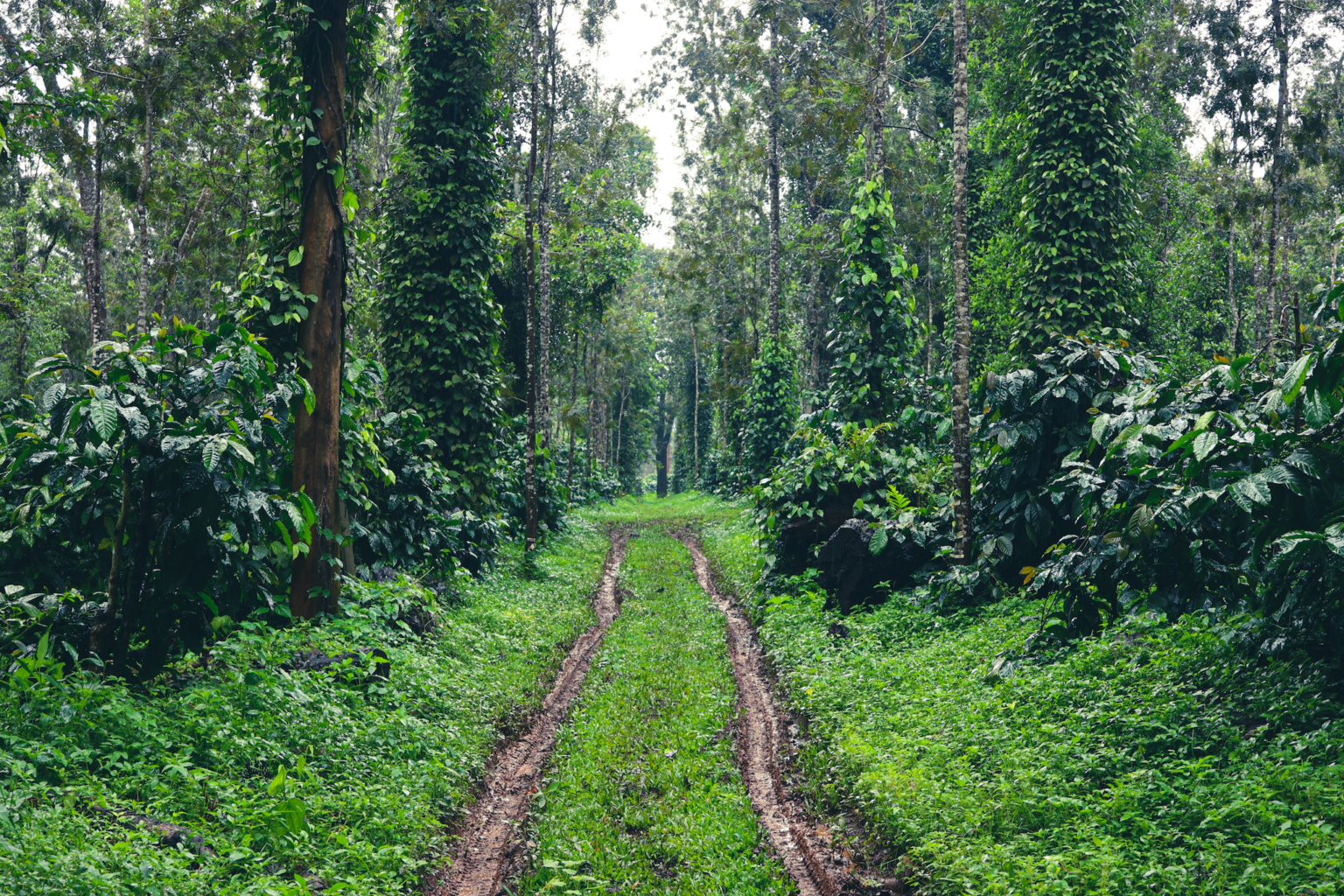
At Forest Bean’s farms, coffee beans are grown naturally under two-tiered shade on micro-lots with the utmost emphasis on sustainability.
“Sacred grove farming utilizes traditional agroforestry methods, meaning our coffee plants thrive under natural forest shade alongside native flora and fauna,” Dr. Poovanna explains.
We believe protecting the farm by not felling trees or harming wildlife, the reigning deity will protect us in return, and the farmers will prosper. This approach enriches soil naturally, conserves water, and protects the rainforest ecosystem.”
Forest Bean
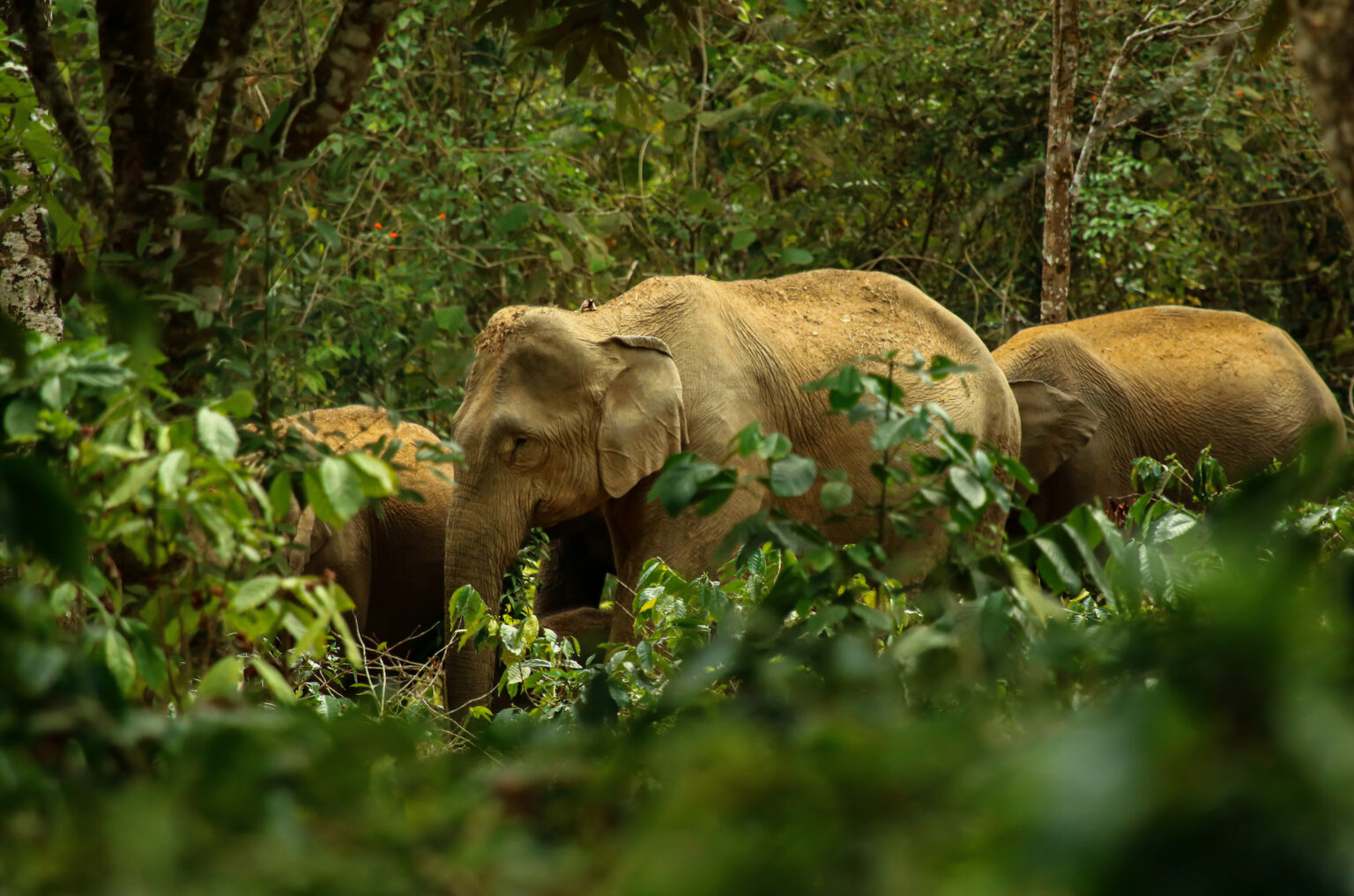
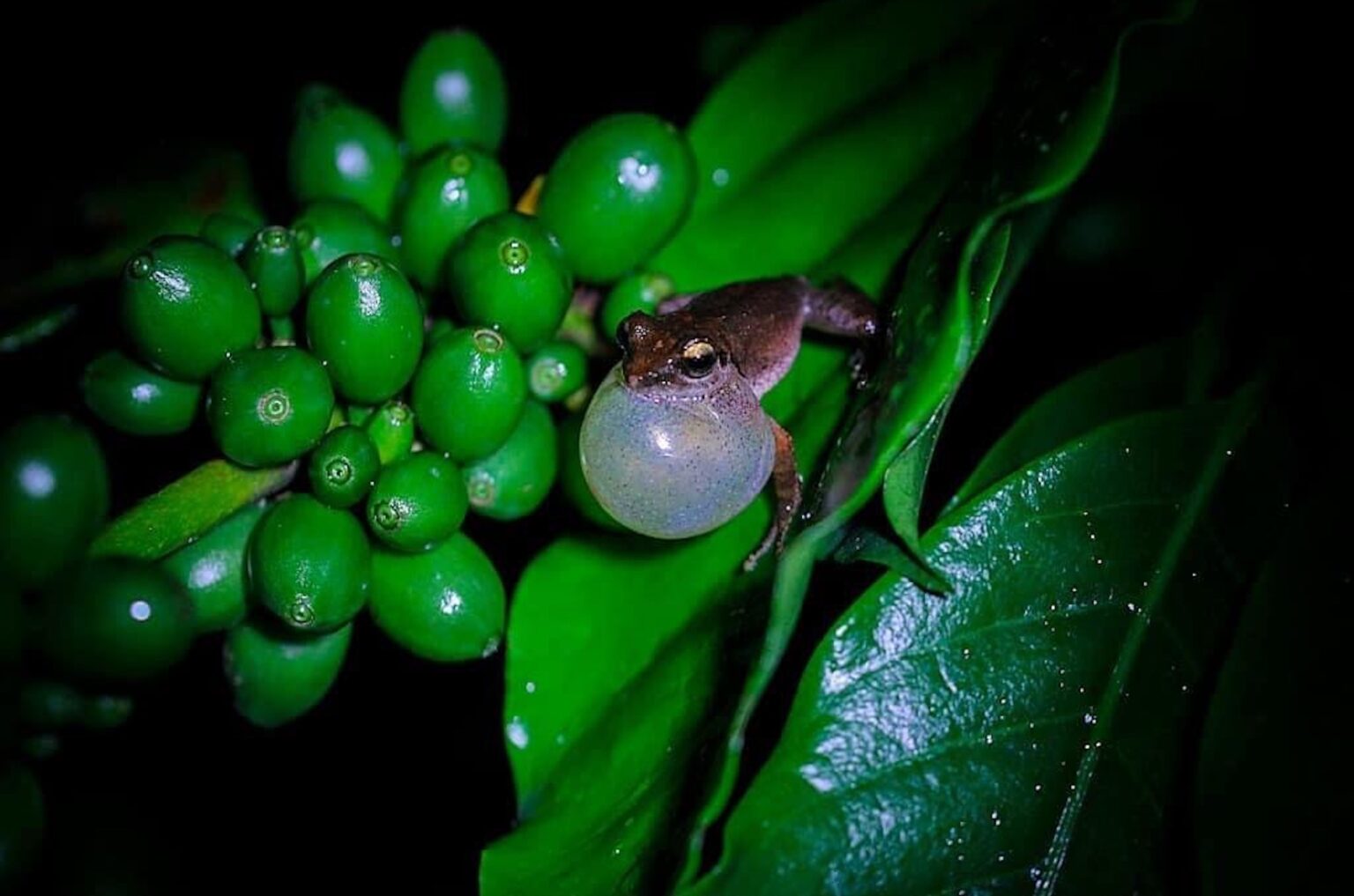
The farms produce some of the highest quality coffee while providing a natural habitat for a multitude of animals — birds, bugs, wild cats, apes, elephants, and more thrive alongside coffee plants.
Amid widespread greenwashing, Dr. Poovanna emphasizes that true sustainability in coffee production needs to address the entire lifecycle, farming practices included. He explains that only focusing on clean packaging or green transportation ignores the industry’s larger environmental impacts like deforestation and carbon loss during cultivation — something he says actually undermines genuine sustainability efforts.
Time-honoured traditions
Forest Bean
The Forest Bean coffee farmers, who belong to the ancient Kodava and Adivasi communities, employ traditional farming practices. Each bean is handpicked.
“Indian farming traditions are rooted in generations of Indigenous knowledge that prioritize sustainable coexistence with nature. By supporting and collaborating with Indigenous farmers, Forest Bean preserves these time-tested agricultural practices, ensuring cultural sustainability and economic empowerment.”
Forest Bean
The presence of Totem Figurines on our farms shows the deep cultural significance of the coffee forest and surrounding wilderness. Totem Figurines have been scattered throughout the farm for centuries.
Roasted locally in Vancouver
Forest Bean
Forest Bean coffee beans are roasted right here in Vancouver. Due to its unique growing methods, it offers distinct, vibrant flavours. Expect balanced acidity, smooth sweetness, nuanced notes of chocolate, nuts, berries, spices, and a uniquely rich, aromatic complexity.
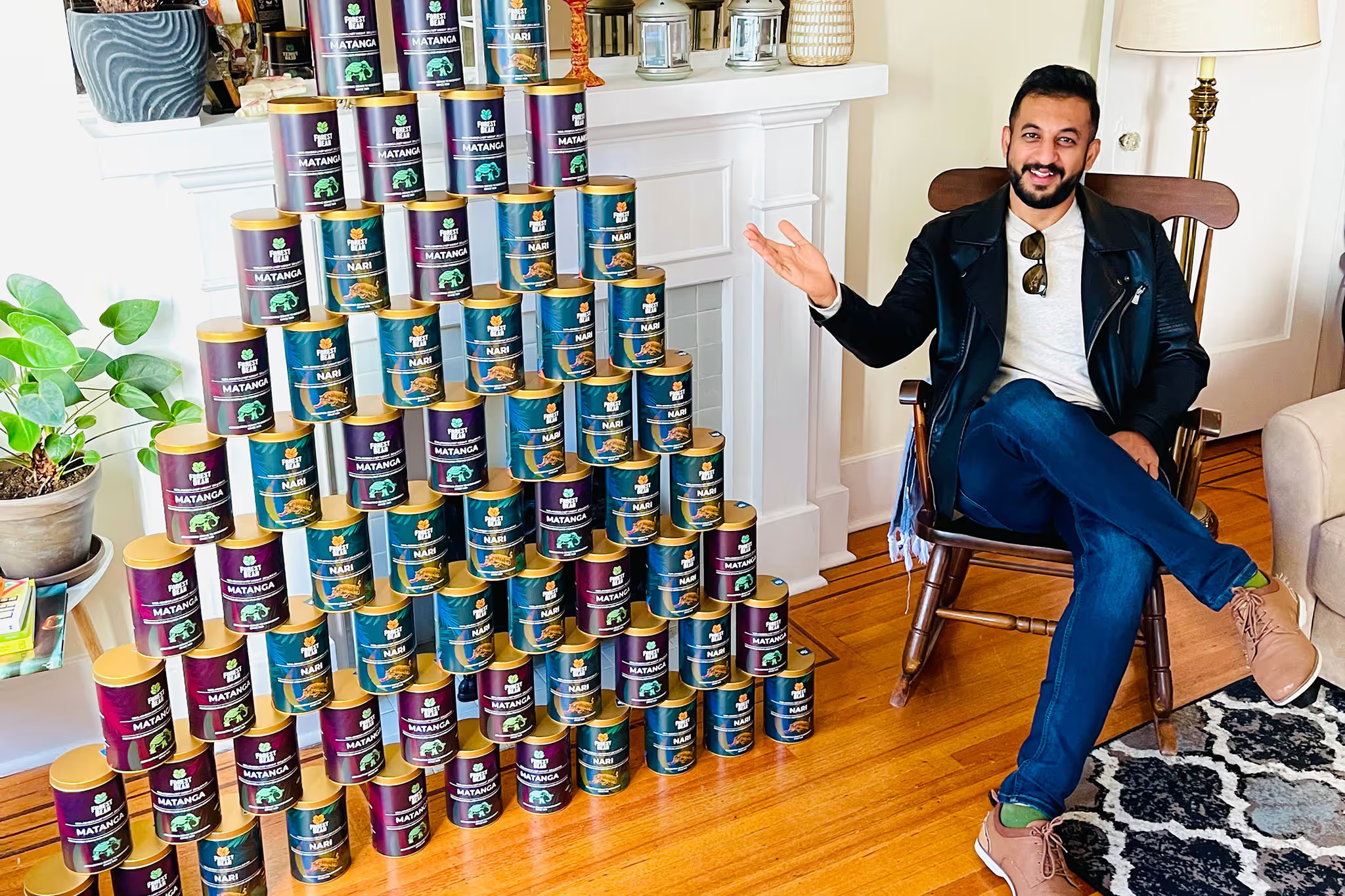
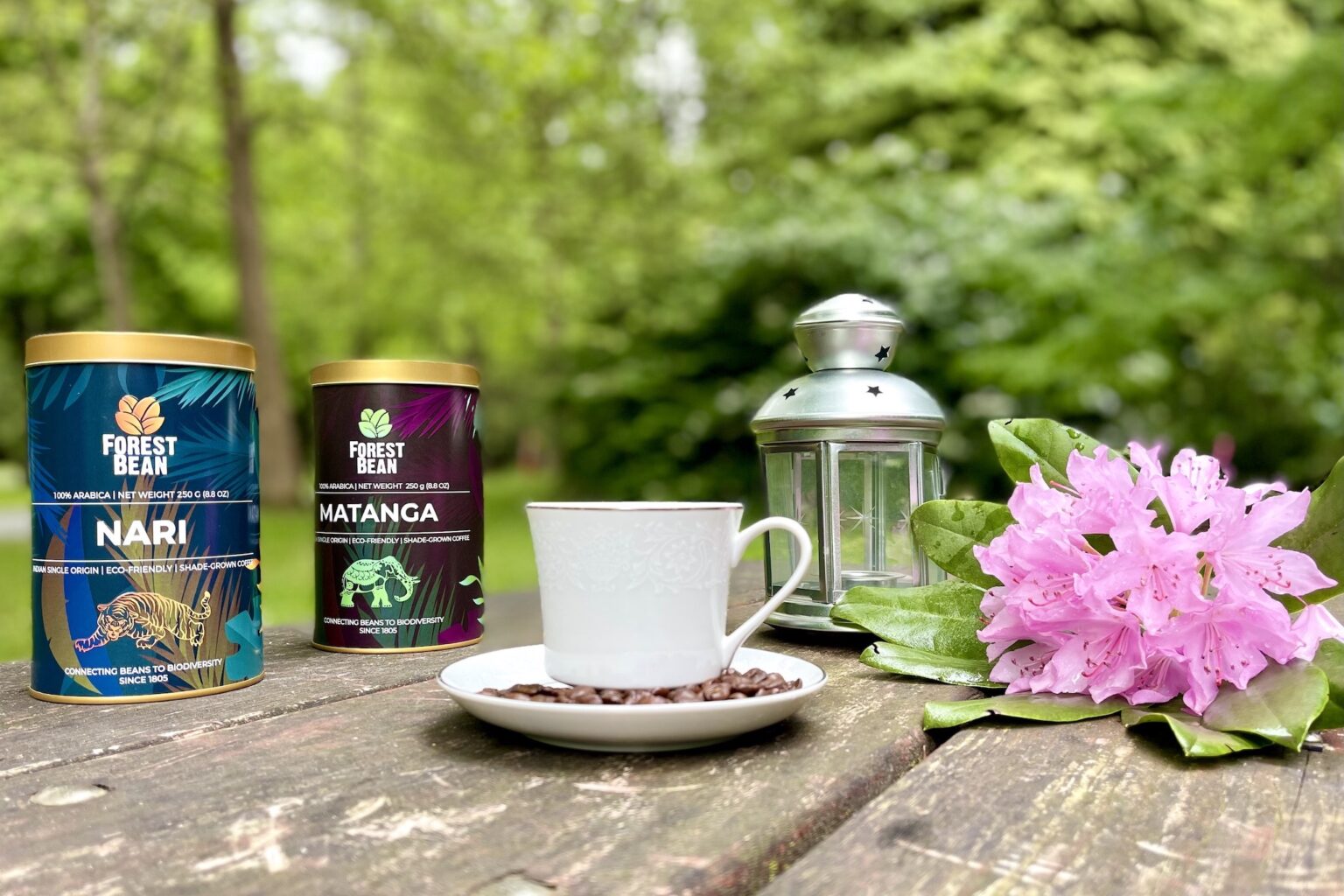
“Our Bababudangiri single-origin Arabica, washed-process micro-lot, is very popular for its exceptional smoothness and balanced acidity; it’s called Medium Roast NARI , which means Tiger. Our Coorg micro-lot, Italian Espresso roast is also a favourite, known for its bright notes and rich complexity. It’s called MATANGA , meaning Elephant.”
Forest Bean
With every sip, you’re not just enjoying world-class coffee — you’re supporting a movement that values forests, farmers, and the future.
Head over to theforestbean.com to purchase it for yourself or make wholesale enquiries.
Shree Kaveri Kodagu Mahila Sangha, Mysuru, will conduct cultural competitions on Apr.13 (Sunday) at 10.30 am at Kodagu Sahakara Sangha premises in Jayalakshmipuram.
Chowrira Seethamma Kalaiah will be the chief guest. Kollira Bollamma Kuttappa, President, Shree Kaveri Kodagu Mahila Sangha, will preside.
K. Kavya Kuttappa, Vice – President; K. Bhavani Belliappa, Secretary; M. Jaya Muthappa, Treasurer; A. Tara Somaiah and P. Vimala Poonacha, Joint Secretaries; K. Pushpa Machaiah and K. Pushpa Nanaiah, Organising Secretaries and P. Lovely Appaiah, Kodagu Mahila Sangha Advisor, will be present on the occasion.
The Sangha members and their children can participate in drawing, singing, dance, pick-and-speak competitions.
For registration and details, contact Mob: 98862-84474, 99642-36284 or 77600-47102, according to a press release.
source: http://www.starofmysore.com / Star of Mysore / Home> In Briefs / April 08th, 2025
‘Rising Sons’ takes us a hundred years back in time to a small village in the southern part of the country.
pix: penguin.co.in
Book: RISING SONS: A NOVEL
Published by: Penguin /Price: Rs 599 / Author: Kavery Nambisan
Kavery Nambisan, a surgeon by profession, has also achieved significant accolades for her writings. She began her career as a children’s author and steadily moved ahead, penning novels like The Scent of Pepper and The Story That Must Not Be Told that have gained her recognition. Rising Sons is her eighth novel. It takes us a hundred years back in time to a small village in the southern part of the country. It is a story that is immersed in the history that shaped our nation.
The general plot seems deceptively simple. It maps the lives of Devaraya’s family members, including his own, and would seem, on the surface, to be a basic coming-of-age story. Devaraya’s statement, “I have two boys and one-and-a-half girls”, opens the narrative and after a few pages it is revealed that the “half girl” is his adopted daughter, Chinni. His wife, Gowru, whom he collected from the Bhoodevi Anatha Ashram in Mysore, had been “orphaned” along with Bhagya when both their fathers were charged with theft and subsequently imprisoned. Their mothers followed their husbands, leaving the bewildered young girls alone. Chinni was Bhagya’s daughter. Devaraya, priding himself in his high Brahmin ancestry, scorned Bhagya who married the Malayali, Dharma, from the fishing community. He took a high-handed pleasure in arranging an abode for Bhagya in his village, Kesarugattu, where he had established himself as an honourable miller and a fair moneylender. He also held a proud position at a Mysore bank and visited his home fortnightly. Devaraya’s other children, the eldest, a boy named Nanju, another boy, Anna, and a daughter, Bhavani, were all overcome by the “darkness” Devaraya brought with him when he visited. The small village strictly adhered to the boundaries set by caste and Chinni’s inclusion in the Brahmin household after the unfortunate fate that befell her parents wagged tongues and incensed minds.
Devaraya was resolute in the education of his boys. Nanju was dutifully sent to the Putter Government High School (for boys) to complete his matriculation. Growing into a deeply thoughtful and keen young man, Nanju seemed to offer to his family a steadfast reputation. But the evils of caste divisions found the family. The revelation of the bitter truth of Devaraya’s childhood and his struggle to find a place for himself in the cruel rural society affected Nanju profoundly. Unable to bear the burden of his caste’s truth, he disappears from the pages of the book. Anna is more stoic in his handling of the shame. Beginning to trace his brother’s footsteps into higher education, Anna found himself getting involved in the struggle for national freedom. Inspired by the ideas of swaraj and the iron determination of the frail Gandhi, Anna and his friends rise above the aspersions of caste and delve into the newly-emerging political scenario. Anna becomes a successful Congressman and finds a life of glamour befitting his new role. Bhavani has long since been married off and is dismissed from the predominant plot line.
What of Chinni, then? Chinni retains the zeal and the sharpness of her rebellious parents. She reads and avidly follows the swadeshi movement. The little hints in the narrative about her relationship with Anna get buried under stories of sermons, speeches, rebellion and illegal pamphlets. Ironically, it is Devaraya’s “half” daughter who ultimately assumes full responsibility for him and his ageing wife.
Nambisan’s own childhood experiences in the warmth of her home colour the pages. Memories of home-cooked food, midnight adventures, and lasting friendships fill the lives of the growing children. The language lovingly encases the softness of these tender moments, moments that fleetingly haunt the characters in their busy adulthood.
In order to rise, one must fall. The novel is more about the poignant falls of fathers and brothers and sisters than about the consequent rise of sons and brothers. Nambisan deftly spins a tale that rushes us through the fast-changing nation at the brink of independence. In the rush, the author does not neglect her characters or her story. Rising Sons rises from amidst the bitter fall of its characters as an epic saga. The tale sits in the history of the country like a glowing ember, a showcase of how lives are changed, or remain unchanged, through the passage of time.
source: http://www.telegraphindia.com / The Telegraph Online / Home> Books / by Tayana Chaterjee / pix: by penguin.co.in / April 04th, 2025
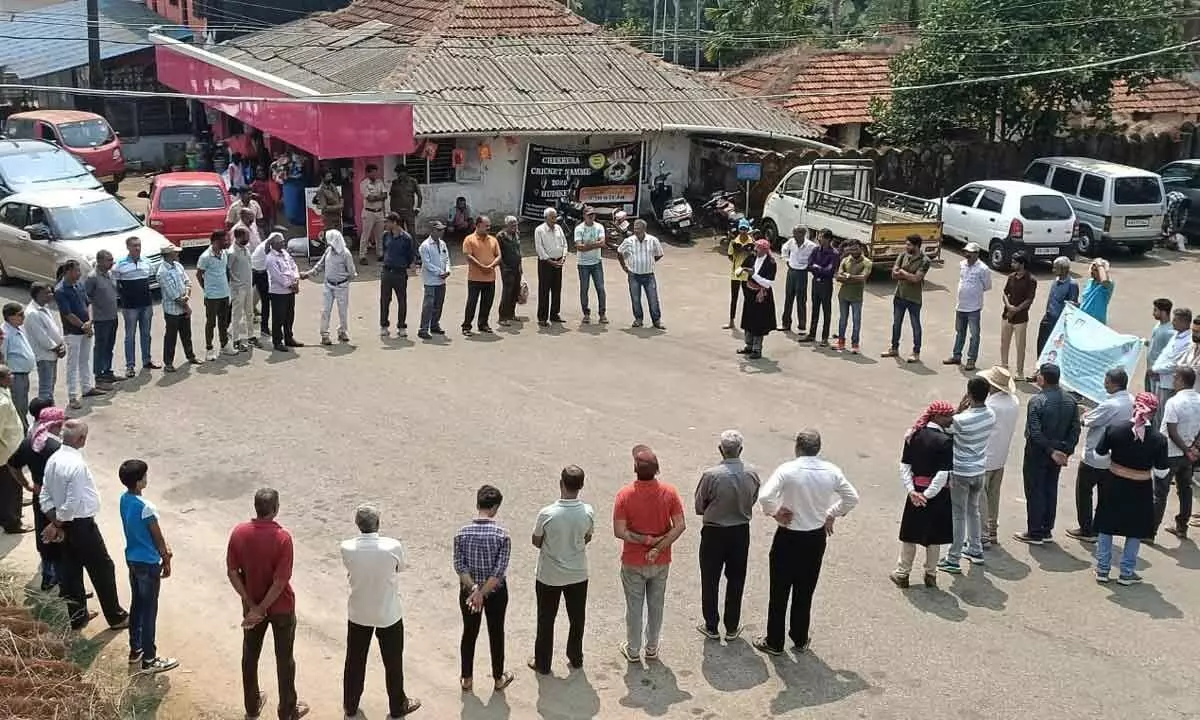
The Codava National Council (CNC) organised a human chain demonstration in Birunani on Monday, urging the Union Government to address their long-standing demands.
Madikeri :
The Codava National Council (CNC) organised a human chain demonstration in Birunani on Monday, urging the Union Government to address their long-standing demands. The primary demand is the creation of exclusive Codava constituencies for the Assembly and Parliament to ensure adequate representation of the community within their traditional homeland.
The CNC expressed concerns that the ongoing delimitation process may overlook the interests of the Codava community. Leaders fear that political influences could result in the merging of Codavaland with neighbouring areas, undermining the representation of the indigenous Codavas.
The CNC has put forward two proposals: carving out dedicated Assembly and Parliamentary constituencies in Codavaland and creating exclusive representative bodies for the Codava community, similar to the Sangha Constituency for the Buddhist monastic community in Sikkim.
The CNC also reiterated its demand for Scheduled Tribe (ST) status under the Indian Constitution, highlighting the community’s distinct identity, culture, and history. The demand is anchored in Articles 244 and 371, along with provisions in the Sixth and Eighth Schedules, which recognise and protect tribal communities and languages.
The CNC argues that this misrepresentation has led to a gradual erosion of the community’s identity, describing it as a violation of international conventions on indigenous rights.
A writ petition filed by former Member of Parliament Dr. Subramanian Swamy in the Karnataka High Court seeks adjudication of the Codavas’ demands. The CNC is also advocating for recognition of Codavas under international frameworks such as the United Nations Declaration on the Rights of Indigenous Peoples.
The CNC has called for the restitution of ancestral lands that were taken over by various rulers, including the Keladi dynasty, British authorities, and subsequent governments.
The CNC remains firm in its demand for recognition as a distinct indigenous community and continues to engage with constitutional and legal avenues to secure their rights. The human chain event at Birunani marked the latest step in the community’s long-standing struggle for recognition and justice.
Is Sullia being pitched to be an assembly segment of Mysuru-Kodagu LS constituency?
In another development, DV Sadananda Gowda (former MP) and Shobha Karandlaje, representing Bengaluru North LS constituency, have been alleged to have brought pressure on the central government to annexe Sullia Assembly constituency, which is currently one of the eight assembly segments in Dakshina Kannada Lok Sabha constituency, to be a part of the Mysuru-Kodagu Lok Sabha constituency. The Codavas point out that this move will further strengthen the Vokkaliga dominance in the Kodagu district and will worsen the Codava community’s representation in the Karnataka assembly. “This is in a preliminary stage, and in the coming days we will further investigate the effects of the inclusion of the Sullia Assembly constituency into the Mysuru-Kodagu Lok Sabha constituency.”
source: http://www/thehansindia.com / The Hans India / Home> News> State> Karnataka / by The Hans India, Hans News Service / March 31t, 2025
WELCOME. If you like what you see "SUBSCRIBE via EMAIL" to receive FREE regular UPDATES.
Read More »