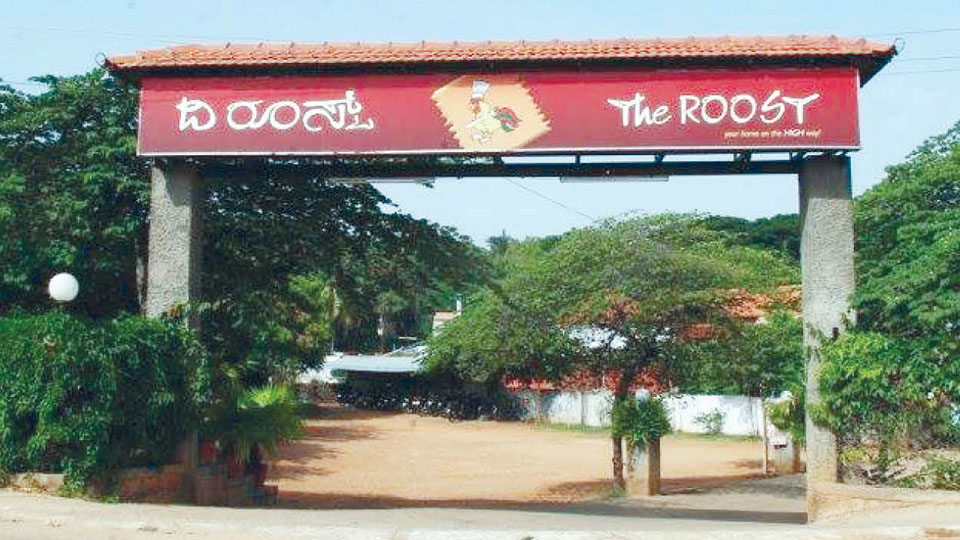
The curtains will come down tonight on ‘The Roost’, the popular garden restaurant and hotel on Hunsur Road at Hinkal that has been part of Mysuru’s social landscape for nearly three decades.
The establishment will serve its last customers on May 31, marking the end of a 30-year journey that has left behind countless memories for patrons.
Speaking to Star of Mysore, Founder Konganda Dilip Biddappa said, the closure follows the expiry of the property’s long-term lease. The restaurant was established on Jan. 19, 1996, on a 30-year lease, which was later extended by three years. “With no further extension possible, I have to vacate the premises,” Dilip said.
He described the parting as an amicable arrangement, a “golden handshake” with the property owners, but admitted that leaving was emotional.
“We are leaving with a heavy heart. When I took over this place, it was just a jowar field. Every plant on this one-acre property was planted by us,” he recalled.
Over the years, ‘The Roost’ grew from a modest eatery into a well-known landmark, particularly popular for hosting Kodava community gatherings, family functions and social events. Besides its sprawling garden restaurant, the property also featured 12 guest rooms.
Dilip attributed much of the restaurant’s longevity to the support of his staff and patrons. “I have been fortunate to have a wonderful team and loyal customers who have stood by me for decades,” he said.
Though ‘The Roost’ will cease operations, Dilip said, the brand itself will live on. The property is set to be taken over by the landowners and reopened under new management. “I am retaining the brand name if I start a new venture in the future,” he said.
source: http://www.starofmysore.com / Star of Mysore / Home> News / May 31st, 2026
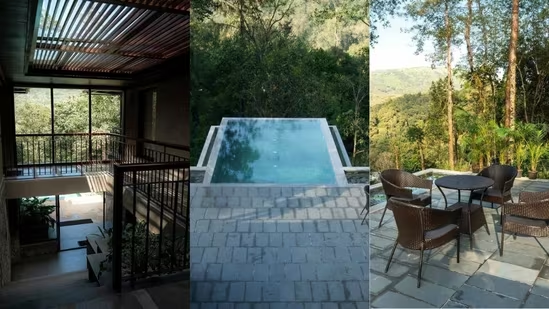
Here’s a sneak peek into a luxury nature resort in Coorg, featuring surreal views and a floating pool overlooking hills and lush greenery.
Priyam Saraswat gave a tour of this stunning villa in Coorg. (ayatana.residences/Instagram)
Set amidst the mountains in Coorg, this stunning villa is one of the most surreal spots, offering calming interiors, a floating pool at its centre, and panoramic views. Content creator Priyam Saraswat took to Instagram on April 12, 2026, to share the glimpses of this villa that offers luxury amidst nature at its best. Let’s take a closer look at the villa.
Inside the villa
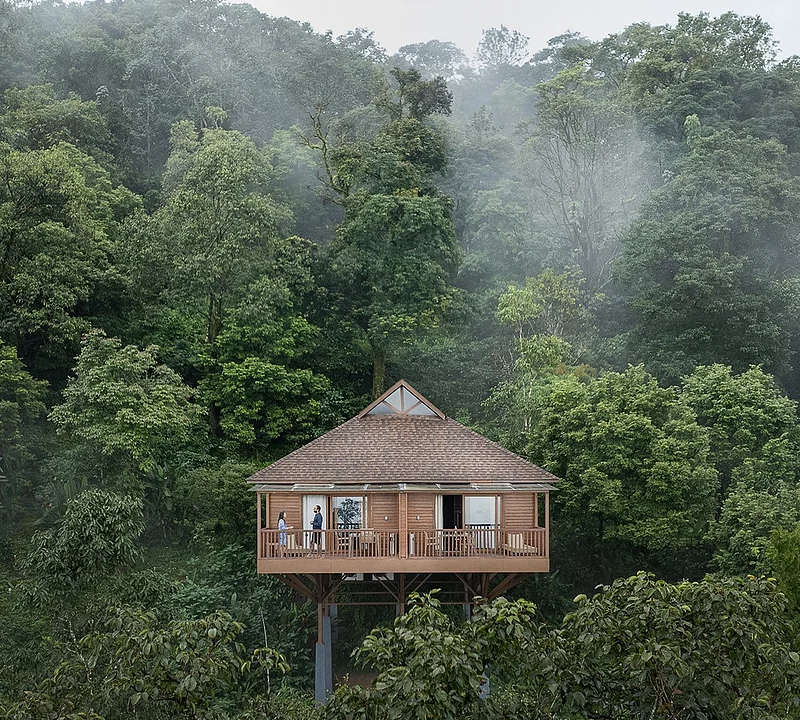
Within Ayatana, a luxury nature resort, this villa is one of the recently launched projects that offers luxury to travellers amidst nature. In order to save the natural earth, all the structures in this villa are built on stilts. Surrounded by greenery all around, the property features minimalistic decor with calming interiors worth visiting for.
The highlight of the villa is its private floating pool built amidst trees and nature. The pool is designed with sharp linear geometry and vanishing edges that visually merge with the landscape. The water body acts as a reflective architectural element, amplifying openness and luxury while cooling the microclimate around the villa.
Into the bedrooms
The villa features two bedrooms, each with one master suite. The calming wooden and earthy interiors of the room makes it perfect for relaxation. The massive space inside the bedroomdelights with a beautiful swing overlooking the mountains and views. The bathroom features an open shower space that looks surreal.
This villa interior leans heavily into tropical modern architecture, where the design blurs indoor and outdoor living while maximising natural light, ventilation and landscape views. The central void creates a dramatic double-height atrium that visually connects different levels of the house. It allows daylight to penetrate deep into the interiors while also improving passive cooling and airflow, a signature feature in contemporary homes built in humid, hilly regions like Coorg. Large floor-to-ceiling glass panels erase the boundary between the interiors and the surrounding greenery.
The architectureintentionally frames the forest and mountain views almost like a living artwork. The space uses clean lines, exposed geometry and a restrained material palette instead of decorative detailing. The focus remains on volume, light and proportion rather than ornamentation.
The extended sloping metal roof with deep overhangs serves both functional and aesthetic purposes by protecting interiors from heavy rainfall and harsh sunlight, encouraging passive cooling, creating shaded outdoor transition zones, and enhancing the sleek contemporary silhouette.
Note to readers: This report is based on user-generated content from social media. HT.com has not independently verified the claims and does not endorse them. This article is for informational purposes only.
source: http://www.hindustantimes.com / Hindustan Times / Home / by Anukriti Srivastava / June 01st, 2026
The tragedy raises urgent questions about the continued use of captive elephants for tourism, festivals, and processions in the name of tradition, even as shrinking habitats, broken elephant corridors, and rising human interference intensify conflict between humans and wildlife.
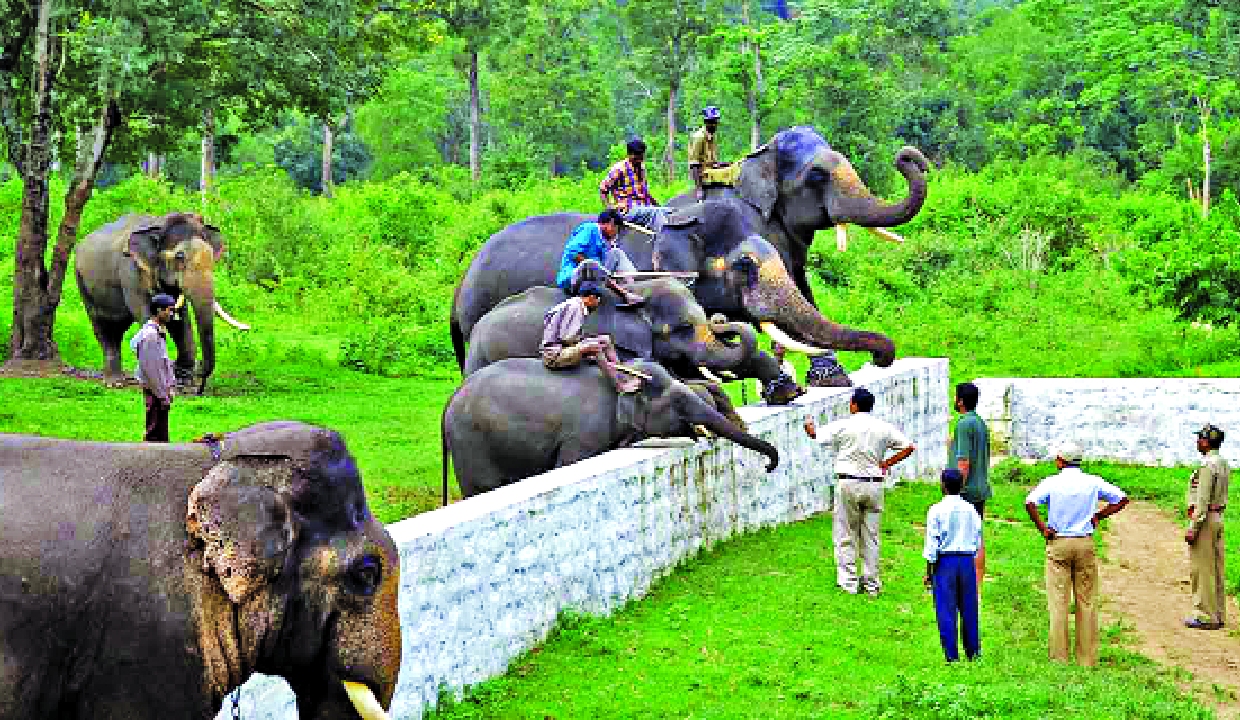
This week’s tragedy at Dubare elephant camp in Kodagu district, deep inside Karnataka’s Western Ghats, questions the decision of the authorities to permit tourists to bathe captive elephants in the flowing waters of the Cauvery River. This camp is located deep within forests dominated by the movement of wild elephants. All captive elephants in this camp were not born in captivity; many were captured from the wild and later tamed in such camps. It is not fair to conclude that tamed elephants have shed all their wild characteristics and fully obey the command and control of their masters – mahouts and kavadis. There have been instances in the past where elephants have killed their masters – mahouts and kavadis. There have also been instances where elephants did not obey the commands of the mahout and ran amok, inflicting casualties and death among crowds.
Captive elephants are often subjected to torture by mahouts using iron ankushes, which can cause bleeding and septicaemia. The footpads of elephants are frequently injured from walking on paved roads. Though camps have treatment facilities under the supervision of veterinary doctors, bleeding from earlobes and footpads is often neglected, and the elephants continue to suffer.
Let me examine in this piece how far we are justified in taking elephants for processions during special occasions and marriages where large crowds gather, and how far we are justified in continuing age-old traditions where tourists are permitted to pour water and rub the elephants’ bodies while standing beside them. On several occasions, I have personally failed to convince the Karnataka government not to use captive elephants during Mysuru Dussehra. The argument advanced was: why discontinue traditions?
Captive elephants were extensively used in dragging timber logs across hilly terrain in forestry operations in the past. The Forest Department maintained elephant camps for such operations. However, maintaining these camps was always costly, which restricted their expansion. As forestry operations have now been scaled down and tree felling in hilly terrains prohibited in the interest of conservation, these camps have largely lost their relevance.
Now, bureaucrats and politicians see these camps as permanent centres for training wild elephants that stray out of forests, damage crops and property, and threaten human lives. Earlier, the Karnataka Forest Department carried out khedda operations to capture only a few elephants needed for logging operations. However, with the advent of safer tranquillising techniques, more and more wild elephants are being captured. The department often comes under public pressure to capture elephants straying into villages. The argument advanced is that the elephant population in the wild is increasing due to conservation, and the excess population must therefore be brought into captivity. Wild elephants involved in conflicts, when translocated several hundred kilometres away into another elephant habitat, have often returned to their original homes within weeks, strengthening the argument for bringing such elephants into captivity.
In an era when elephant habitats are continuously fragmenting and shrinking owing to the expansion and widening of linear infrastructure, diversion of forests for mining, industries and development projects, and unauthorised encroachment on forest land, wild animals — especially elephants — are left with little option but to migrate in search of food, shelter, and water, thereby straying into human settlements.
The spread of invasive species and forest fires has also degraded elephant habitats. Palatable plant species and bamboo forests have suffered extensive damage, forcing elephants to move out of forests regularly. Elephant corridors that once provided migratory routes have been occupied by humans. Human settlements and cultivation inside forest pockets have expanded, to the detriment of conservation.
Captive elephant camps like Dubare are themselves islands of human activity within forests. As part of their daily routine, camp elephants are released into forests during the daytime, where they interact with wild elephants. Fights between captive and wild elephants are reported regularly. There have even been instances where captive elephants were killed by wild tuskers. Aggression is a natural part of elephant behaviour and cannot always be controlled by a mahout’s ankush. Sometimes, the animals can surprise us.
About a decade ago in Karnataka’s Kalaburagi district, an elephant in a procession kicked its mahout in full public view. The kick was mild and the mahout survived the scare. Feeling insulted, the mahout attempted to attack the elephant with an ankush. The elephant became even angrier and kicked him with such force that he fell nearly 20 feet away and died. Elephants killing their mahouts is not uncommon, and such incidents have been reported from across the country.
Within a herd, stronger elephants are also known to target weaker members. This is what happened at Dubare earlier this week. A tusker attacked a makhna (another male elephant without tusks) while tourists were permitted to bathe the herd. The hostility had likely built up over time, and on that fateful day, the tusker chose to attack the makhna in full view of tourists. The makhna collapsed onto a female tourist bathing it, crushing her to death. The tusker continued attacking the makhna until the mahout managed to calm it down. Despite the best treatment provided at the camp, the makhna died the following day.
Dubare camp also has tourist lodges run by the state-owned Jungle Lodges and Resorts (JLR). One of the activities offered to tourists is bathing the camp elephants, while another is jeep safaris through nearby forests to view wild animals. It has also been found that the entire camp and JLR premises lie within a corridor historically used by wild elephants. Blocking this corridor has disrupted elephant movement and intensified human-elephant conflict.
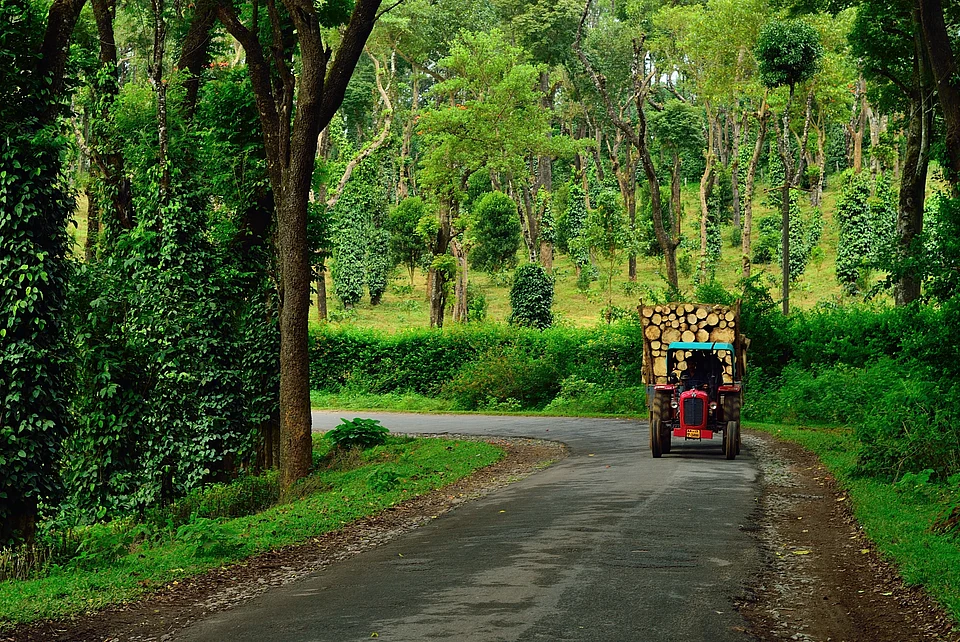
There are other forest pockets in Kodagu that have been granted for coffee estates. These estates too obstruct elephant corridors. More than 10,000 acres of coffee estate owned by Tata lie within this corridor. The entire estate is fenced, diverting elephants into human settlements and aggravating conflict. Sometimes elephants break through the fencing and enter the estates, threatening workers’ lives. Even the narrow roads inside coffee estates are covered by drooping coffee branches on both sides, limiting visibility. Estate management must ensure better visibility and safer movement.
This is a vicious cycle. As wild elephant movement is obstructed, incidents of conflict increase, and every human death places additional pressure on the Forest Department to capture the elephants involved and bring them into captivity. The continued operation of such elephant camps and JLR facilities is not in the interest of conservation.
Such elephant camps should be downsized in a phased manner, and corridors must be restored by removing fencing in Tata Coffee estates and around JLR properties. Tourists should not be allowed near camp elephants, and under no circumstances should close interactions be permitted. Tourist viewing areas should instead be cordoned off, allowing visitors only to observe elephants bathing in the river from a safe distance.
Dubare camp also has tourist lodges run by the state-owned Jungle Lodges and Resorts (JLR). One of the activities offered to tourists is bathing the camp elephants, while another is jeep safaris through nearby forests to view wild animals. It has also been found that the entire camp and JLR premises lie within a corridor historically used by wild elephants.
The writer is a retired Head of Forest Force, Karnataka, and teaches Economics at the Karnataka Forest Academy; Views presented are personal.
source: http://www.dailypioneer.com / The Pioneer / Home / by B K Singh / May 28th,2026
Plantation stays in Coorg offer immersive escapes set within working coffee estates. Blending heritage bungalows, villas and homely retreats, they invite travellers to slow down and experience life shaped by nature, mist, and coffee culture.
Shutterstock : Book a stay in the coffee and pepper plantations of Coorg
Coorg’s plantation stays sit within working coffee and spice estates, offering quiet retreats shaped by the landscape. From heritage bungalows to hillside cottages, each stay reflects a slower rhythm of life rooted in nature, local culture, and the everyday workings of the plantation.
Old Kent Estates & Spa, Madikeri
Old Kent Estates & Spa was established in 1864. Photo: oldkentestates/Instagram
Set within a 200-acre coffee and spice estate in Suntikoppa, Old Kent Estates & Spa offers a refined plantation retreat shaped by Coorg’s colonial past. Established in 1864 by British Lieutenant Colonel WR Wright, the property preserves the character of a historic planter’s residence while introducing contemporary comforts. Surrounded by coffee bushes, cardamom groves and towering teak trees, the estate remains deeply connected to the landscape that defines Kodagu.
Design & Spaces
The estate blends British colonial architecture with Tudor Revival influences, featuring deep verandahs, period detailing and heritage-inspired interiors.
The restored nineteenth-century bungalow, known as The Lodge, houses a library, games room, home theatre, and a formal dining space.
Walking trails designed by Italian mountaineer Lorenzo Gariano wind through coffee, cardamom and pepper plantations shaded by teak, rosewood, and mahogany trees.
Accommodation includes a mix of heritage lodge rooms and expansive English-style cottages set across the plantation. The cottages feature private gardens, spacious living areas, and large bathrooms equipped with jacuzzis, rain showers, and traditional bucket baths.
Amenities
Guests can explore guided plantation trails, birdwatching routes and nature walks across the estate’s 200 acres.
The property also offers a spa, movie room, library, outdoor games and telescope-assisted stargazing experiences.
Dining at The Perch and Gordon’s Saloon focuses on multi-cuisine fare alongside freshly ground estate coffee and locally sourced ingredients.
The Information
Address: Thaikappa Estate, Horoor Post, Old Kent Estate Rd, Suntikoppa, Kodagu, Karnataka 571237
Room Rates: Approximately INR 7,000–12,000 per night, depending on season, taxes and inclusions
Website: www.oldkentresorts.com
Evolve Back Coorg
Evolve Back Coorg offers a deeply immersive plantation stay – Photo: evolvebackcoorg/Instagram
Set within a 300-acre working coffee and spice estate near Virajpet, Evolve Back Coorg offers a deeply immersive plantation stay shaped by the landscape of Kodagu. Formerly known as Orange County, the resort combines eco-conscious luxury with traditional Kodava design design and a strong connection to plantation life. Surrounded by dense greenery, the property focuses on quiet, nature-led experiences rather than overt indulgence.
Design & Spaces
The resort draws inspiration from traditional Kodava architecture, with tiled roofs, carved wooden doors, rustic interiors and earthy textures that blend seamlessly into the surrounding plantations.
Accommodation includes Lily Pool Villas and Heritage Pool Villas, featuring private pools, spacious living areas, four-poster beds, red oxide flooring and plantation-facing sit-outs designed for privacy and quiet.
Guided plantation walks, coffeeology sessions and birdwatching trails allow guests to engage closely with the estate’s coffee and spice-growing landscape.
Amenities
Dining options include The Granary for multi-cuisine fare and Peppercorn, a speciality grill restaurant overlooking the plantation lake.
The property also features the Ayura Ayurvedic centre, infinity and family pools, a reading lounge and a Coffee and Culture Museum dedicated to Coorg’s plantation heritage.
The Information
Address: Chikkana Halli Estate, Karadigodu Post, Siddapur, Virajpet, Kodagu, Karnataka 571253 Room Rates: Rates generally start from approximately INR 29,750–35,000 per night per couple, including accommodation, breakfast, dinner and taxes. Seasonal offers for longer stays may include resort credits and discounted pricing. Website: www.evolveback.com/coorg/
The Tamara Coorg
The resort combines eco-conscious luxury with a strong sense of place / Photo: thetamaracoorg/Instagram
Perched more than 3,500 feet above sea level in the Western Ghats, The Tamara Coorgoffers an immersive plantation retreat within a 180-acre coffee, cardamom and pepper estate. The resort combines eco-conscious luxury with a strong sense of place, allowing guests to experience the rhythms of estate life while surrounded by dense forest and rolling hills. With sustainability at its core, the property focuses on quiet, nature-led hospitality shaped by the landscape of Coorg.
Design & Spaces
The resort features 56 cottages built on timber stilts to preserve the natural terrain, with architecture inspired by traditional Kerala design and crafted largely from Canadian spruce wood.
Accommodation ranges from Luxury Cottages to spacious suites with private Jacuzzis, all featuring large sundecks overlooking forest canopies, hillsides and seasonal waterfalls.
Plantation walks, coffee-tasting sessions and the signature Blossom to Brew experience introduce guests to the estate’s coffee-growing heritage, while The Verandah — a restored nineteenth-century workers’ residence — now serves as a library and tasting space.
Amenities
Guided treks, birdwatching trails, forest therapy walks and seasonal waterfall explorations form a key part of the experience at the resort.
Dining focuses on fresh, estate-grown ingredients and regional Kodava cuisine, alongside a range of Indian and international dishes.
Sustainability initiatives include organic farming, waste management systems and a no-plastic philosophy integrated across the property.
The Information
Address: The Tamara Coorg, Kabbinakad Estate, Yevakapadi, Napoklu, Madikeri, Karnataka 571212 Room Rates: Rates generally start from approximately INR 25,245 per night for two adults, with pricing varying by cottage category and season. Website: www.thetamara.com/coorg-resort/
Amni Estate
Amni Estates offers a deeply secluded stay centred on simplicity, nature and slow living / Photo: amni.coorg/Instagram
Hidden within a coffee plantation in the hills of Coorg, Amni Estate offers a deeply secluded stay centred on simplicity, nature and slow living. Family-run and entirely off-grid, the property trades conventional luxury for silence, rugged beauty and an intimate connection with the surrounding landscape. With its antique-filled interiors and misty plantation setting, the estate feels closer to a private countryside retreat than a typical homestay.
Design & Spaces
The property features stone cottages built across grassy slopes in the Balyaatra range, designed to blend naturally into the plantation landscape.
Interiors are layered with antiques collected over decades, including Victorian lamp posts, cast iron fountains and reclaimed railway sleepers that give the estate its old-world character.
Accommodation is centred around a two-bedroom cottage suited to small groups, with quiet corners, hammocks and open spaces that encourage guests to slow down and settle into estate life.
Amenities
Guided walks through the coffee and spice plantations offer a closer look at the estate’s flora, seasonal produce and surrounding forests.
Guests can spend their time fishing in the pond, gathering around bonfires or simply exploring the grounds alongside Zeiss, the estate’s well-known resident dog.
Meals are home-cooked and rooted in traditional Kodava cuisine, with family recipes and locally sourced ingredients forming the heart of the dining experience.
The Information
Address: Guyya (near Galibeedu), Madikeri, Kodagu, Karnataka Room Rates: Rates are generally around INR 12,000+ per night for two, inclusive of meals and curated activities, depending on season and group size. Website / Instagram: @amni.coorg
Silver Brook Estate
Silver Brook Estate is a quiet homestay shaped by forested greens, silver oaks and a stream / Photo: silverbrook.homestay/Instagram
Tucked into a 6-acre coffee plantation in Kadagadal, near Madikeri, Silver Brook Estate is a quiet homestay shaped by forested greens, silver oaks and a stream that runs through the property. The setting feels intimate and unhurried, with bird calls, plantation paths and open sit-outs defining the rhythm of the stay. It is designed for travellers looking for a simple, nature-led break close to town.
Design & Spaces
The estate is spread across coffee plantations shaded by silver oak, pepper vines and fruit trees, with a natural brook running through the grounds.
Accommodation is set within a main bungalow and select rooms, designed for small groups, couples and families seeking a homely plantation setting.
Common areas include a library, hammocks and open garden spaces that encourage slow, outdoor living within the estate.
Amenities
Home-style Kodava meals are a highlight, with traditional dishes such as pandi curry and pepper chicken served by the hosts.
The property supports relaxed activities like estate walks, birdwatching and bonfire evenings in the open courtyard.
Its location makes it convenient for day trips to nearby attractions such as Abbey Falls, Dubare Elephant Camp and Nagarhole National Park.
The Information
Address: Kadagadal, near Madikeri, Kodagu, Karnataka
Room Rates: Typically range between INR 5,800–7,400 per night for double occupancy, often including breakfast (season and room type dependent).
Website: www.silverbrookestate.in/home
FAQs
What is a plantation stay in Coorg? A stay set within working coffee or spice estates, offering quiet surroundings, nature views and a slower pace compared to typical resorts.
Best time to visit? October to March is ideal for pleasant weather. Monsoon (June to September) is lush but rain-heavy.
How do you reach these stays? Most require private taxis or self-drive vehicles, as they are located outside town areas and deep within estates.
What activities are offered? Plantation walks, birdwatching, coffee tours, spa treatments, and nature experiences are most common.
Do I need to book in advance? Yes, especially during peak season and weekends due to limited rooms.
What should I pack? Comfortable walking shoes, light layers, insect repellent, and rain protection during monsoon.
source: http://www.outlooktraveller.com / Outlook Traveller / Home> Story / by OT Staff / curated by Anuradha Sengupta / May 18th, 2026
Set amid coffee and spice farms in South India’s Coorg Region, the new resort will be part of The Leela Palaces, Hotels and Resorts’ portfolio.
The Leela Coorg Forest Sanctuary. / Credit: The Leela Palaces, Hotels and Resorts
Key Points:
The Leela Coorg Forest Sanctuary will feature 71 private villas surrounded by lush greenery and coffee estates near Madikeri, in Karnataka’s Coorg region.
Guests will enjoy wellness experiences such as yoga, Ayurvedic therapies, and a Turkish hammam at a 27,000-square-foot spa, along with access to a lake and family-friendly amenities.
The resort reflects the brand’s shift toward nature-focused retreats, offering privacy and restoration in a serene setting.
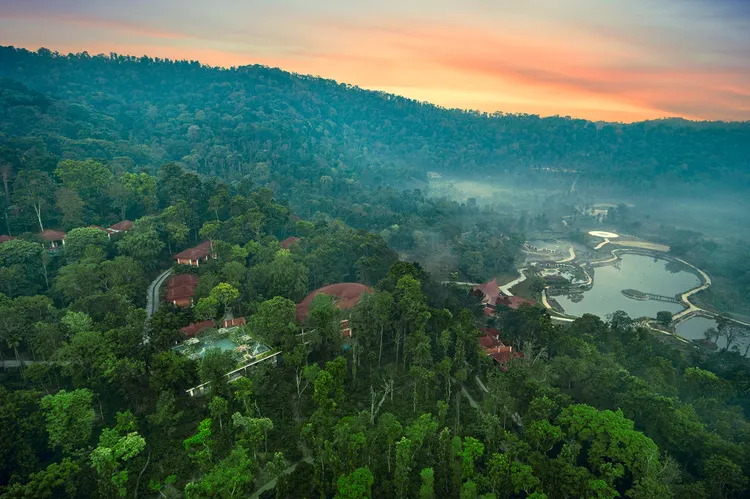
A new luxury retreat is coming to one of South India’s atmospheric hill regions. Later this year, The Leela Palaces, Hotels and Resorts, a 2025 Global Vision Awards winner , will launch The Leela Coorg Forest Sanctuary, a 76-acre, all-villa hideaway set amid coffee estates and misty, forested hills near Madikeri, in Karnataka’s Coorg region.
“The Leela Coorg Forest Sanctuary offers a rare synthesis of wilderness, wellness, and warmth of true Indian luxury for travelers who seek space, stillness, and a genuine connection to nature,” Anuraag Bhatnagar, the brand’s chief executive officer, shares in a statement shared with Travel + Leisure.
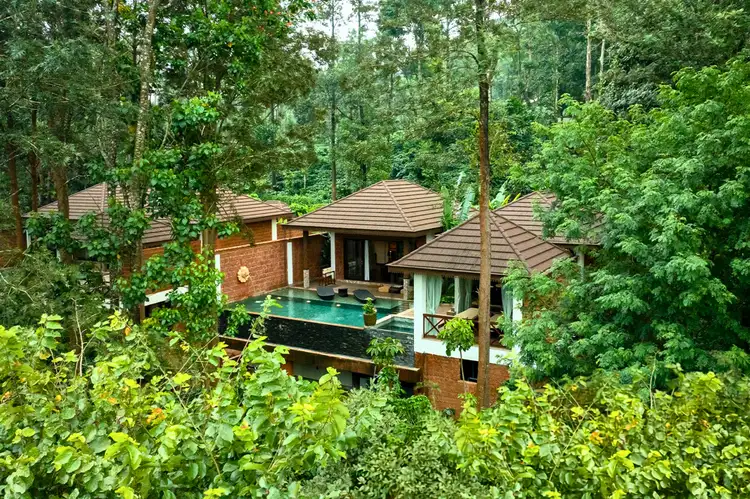
Exterior view of a villa with a private plunge pool. / Credit: Sounak Ghosh / The Leela Palaces, Hotels and Resorts
The resort’s accommodations will include split-level family villas and intimate retreats for couples, all tucked into the surrounding greenery. At the top end, a four-bedroom presidential villa will come with a private pool and wellness facilities.
The setting is a big part of the draw. Coorg, in the Western Ghats, is known for its cooler climate, waterfalls, and rolling spice farms. It’s also one of India’s most important coffee-growing districts. That heritage will show up in the resort’s bean-to-cup coffee programming, including a plantation walk and tasting at Modur, one of Coorg’s oldest coffee estates.
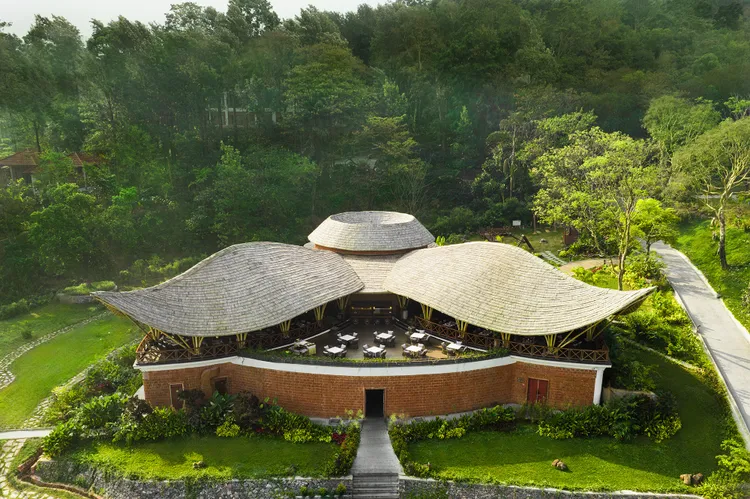
Exterior of the restaurant. / Credit : The Leela Palaces, Hotels and Resorts
On the dining front, the resort is planned with four venues spanning regional and global cooking, including a striking bee-shaped all-day dining restaurant, an overwater dining space, and a lounge.
Wellness will be just as central to the experience, too. Aujasya by The Leela Spa, the resort’s 27,000-square-foot sanctuary drawing inspiration from the brand’s signature wellness program, will offer yoga by the lake, pranayama breath control, Ayurvedic and global therapies, Swedish and Balinese massage, aromatherapy, a Turkish hammam, panoramic sauna, steam, Jacuzzi, and relaxation areas.
The Leela Coorg Forest Sanctuary. / Credit: Sounak Ghosh/The Leela Palaces, Hotels and Resorts
The seven-acre lake will allow rowing, fishing, and kayaking. Other planned activities include guided nature walks, birding, cycling, stargazing, and forest trails leading to two natural waterfalls. There will also be a family-friendly outdoor play area.
The project marks a new direction for The Leela. Best known for grand city hotels and palace-style stays, the Indian luxury brand is using the Coorg property to introduce its first Sanctuary, a concept focused on nature, privacy, and restoration rather than polished city glamour. The move comes as the company marks its 40th anniversary and expands further into destination-driven leisure travel.
source: http://www.travelandleisure.com / Travel + Leisure / Home / by Regan Stephen / May 14th, 2026
Jharkhand Chief Minister Hemant Soren arrived in Kodagu district along with his family for a three-day private visit and is currently staying at a luxury resort near Madikeri.
Soren reached Madikeri on Sunday evening and was received by Assistant Commissioner Mithun Chakravarthy on behalf of the District Administration. Kushalnagar Tahsildar Sridhar has been appointed as the protocol officer for the visit.
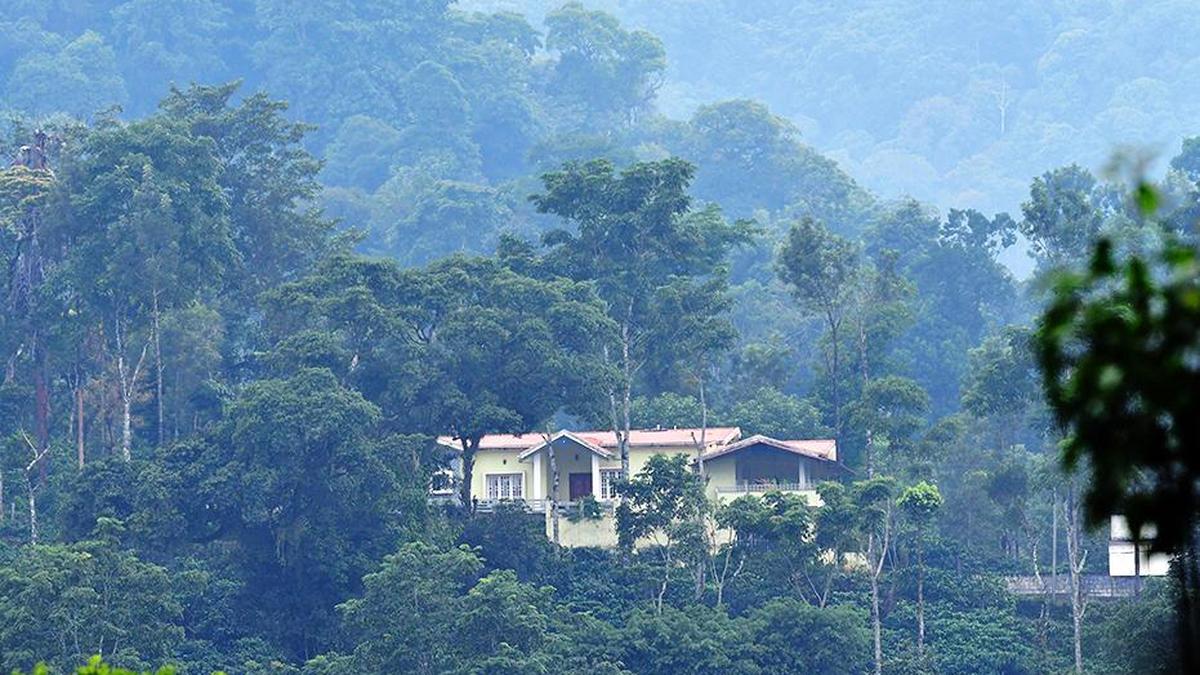
The Chief Minister and his family are staying at the Leela Palace resort at Kadagadalu on the outskirts of Madikeri.
During the visit, they toured popular tourist destinations including Dubare Elephant Camp and Cauvery Nisargadhama near Kushalnagar.
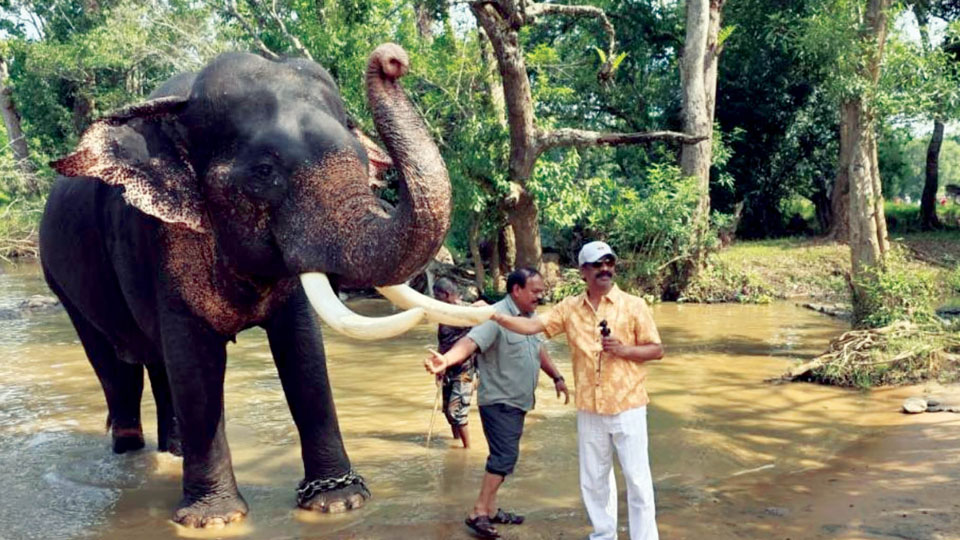
Yesterday morning, Soren was welcomed by camp elephant Sri Rama at Dubare Elephant Camp. The Chief Minister, who appeared delighted by the interaction, posed for photographs with the elephant before proceeding to Cauvery Nisargadhama, where he spent time near the river and clicked photographs.
Soren was accompanied by Assistant Conservator of Forests (ACF) Gopal, Range Forest Officer (RFO) Rakshith and Dubare Deputy Range Forest Officer (DRFO) Ranjan. Several staff members and mahouts were also present at the camp.
Sources said that Soren is expected to stay in Kodagu for two more days before returning to Jharkhand.
Tight security arrangements have been made in view of the Chief Minister’s visit. As he is under Z-Plus category security cover, public access has been restricted at certain locations visited by him.
Kodagu Superintendent of Police (SP) R.N. Bindu Mani told Star of Mysore that details of the Chief Minister’s movements could not be disclosed due to security reasons.
source: http://www.starofmysore.com / Star of Mysore / Home> News / May 12th, 2026
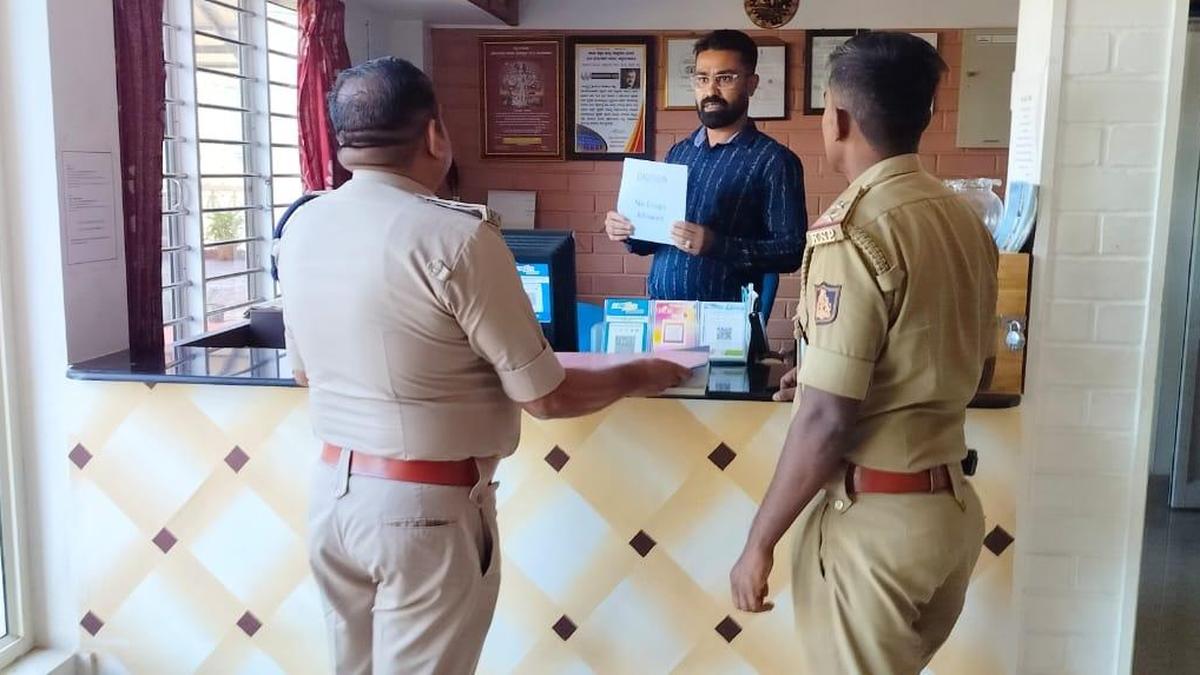
A file photo of Chikkamagaluru police visiting a resort in the district to check if the owner have implemented measures to ensure the safety of tourists. | Photo Credit: Special Arrangement
As part of the new measures, every staff member working at these properties, including permanent and contract employees, will have to undergo background verification at the local police station.
Following the sexual assault on a U.S. tourist at a Kodagu homestay, the government of Karnataka has made police verification of staff mandatory for all homestays and bed-and-breakfast properties. Travellers, as per a recent circular, will be able to check whether a property is registered with local authorities before checking in.
Moreover, for police monitoring, all registered properties will be linked to the Karnataka Police Smart E-Beat system, to allow beat constables to make regular visits, verify guest records and log their inspections through GPS-based tracking. District administrations have been told to form joint inspection teams with police and tourism officials to carry out surprise checks and identify unregistered properties operating illegally.
The government of Karnataka is planning to strengthen emergency response by linking registered properties directly to the 112 system to allow distress calls from these locations to be treated as priority tourist emergencies for quicker police response, officials told The Hindu.
The rules were updated following a recent incident where the victim had alleged that her drinks were laced with intoxicants by a homestay staff member who assaulted her. She had accused the homestay owner of attempting to suppress the incident and failing to help her in approaching the police.
Background verification
As part of the new measures, every staff member working at these properties, including permanent and contract employees, will have to undergo background verification at the local police station. Property owners must keep these records ready, either physically or digitally, for inspection by police or tourism officials.
Report by May 15
All Deputy Commissioners, tourism officials, Police and Women and Child Development departments have been directed to co-ordinate and implement the new rules, and submit a compliance report to the Tourism Department by May 15.
For properties hosting foreign tourists, owners and managers will be trained to correctly record and report guest details through the police-prescribed system, with random checks to ensure compliance.
Tourists can verify antecedents of accommodation
As per a senior official, the Tourism Department will publish and regularly update an online list of all registered homestays and bed-and-breakfast properties in Karnataka for tourists to check. Travel agents, tour operators and online booking platforms have been told to work only with registered properties, while non-compliant properties could be removed from listings until they meet the rules. These properties will have to display their registration certificates and licences at the entrance or reception so guests can easily check if the property is authorised to operate, according to a recent circular.
Emergency contact details, including 112, the national tourist helpline (1800111363 or on a short code 1363), women’s helpline and child helpline numbers, along with details of the nearest hospital and local authorities, must be displayed at all properties. Hospitality staff will undergo training on gender sensitisation, the POSH Act, 2013 and the POCSO Act, 2012. Properties will have to display QR codes for the Karnataka State Police SOS mobile app, Tourism Department stated.
source: http://www.thehindu.com / The Hindu / Home> News> India> Karnataka / by Rishita Khanna / May11th, 2026
The aroma of freshly crushed black pepper, the earthy warmth of slow-cooked curries, and the comforting simplicity of traditional home recipes – this March, Madras Kitchen Company invites Chennai to step into the rustic kitchens of Coorg with “The Kodava Kitchen.”
Hosted at The Westin Chennai Velachery, this limited-period culinary celebration from 20th to 29th March, available for lunch and dinner, brings the bold and soulful flavours of Kodava cuisine to the city. Known for its generous use of spices, aromatic herbs, and the iconic tang of kachampuli (Coorg’s signature vinegar), Kodava cooking is a heartfelt tribute to the land, its forests, and its people.
Curated as an A la carte experience, the menu showcases time-honoured recipes passed down through generations—each dish reflecting the robust character of Coorg’s hill kitchens. Guests can begin their journey with appetisers such as Anjal Fish Fry, a coconut-tawa fried coastal delicacy, the rich and peppery Chillkana Pandi (slow roasted pork with crushed black pepper), or the flavourful Kodavu Yerachi Fry, a dry mutton preparation infused with poppy seeds, cinnamon and green chillies.
Vegetarian diners can savour traditional bites like Baimbale Barthadh, a spiced tender bamboo shoot fry, Soppu Vadai, crisp spinach and lentil dumplings, and Akki Rave Baje, a comforting semolina fritter delicately flavoured with cumin and green chillies.
The experience continues with hearty mains that truly capture the spirit of Kodava cooking. Signature dishes include Pandi Curry with Kadambattu, the iconic Coorg pork curry served with steamed rice balls, Coorg Yerachi Curry with Nool Puttu, a robust lamb curry paired with delicate string hoppers, and Koli Chekke Kari with Akki Otti, chicken cooked with raw jackfruit in a fragrant coconut and tamarind gravy. Vegetarian favourites such as Tarkari Gassi with Ney Kool (Ghee Rice) and Kumbla Curry with Akki Otti, a comforting pumpkin and coconut curry, celebrate the region’s produce and spices.
No culinary journey is complete without a sweet finale. Guests can indulge in the indulgent Oreo & Coorg Coffee Baked Cheesecake or savour the rustic charm of Jackfruit Steamed Puttu, a traditional dessert that perfectly captures the flavours of the hills.
Date: 1st-10th May 2026
Time: Lunch and Dinner
Price: A la Carte
Venue: Madras Kitchen Company, The Westin Chennai Velachery
For Reservations: 8939892001
With its warm ambience and thoughtfully curated menu, The Kodava Kitchen promises not just a meal but a journey—one that transports diners from Chennai’s bustling cityscape to the misty hills and homestyle kitchens of Coorg.
source: http://www.chennaipatrika.com / Chennai Patrika /Home / by Press Release / May 04th, 2026
Despite sufficient time being given to homestay owners, it has been observed that many establishments remain unregistered. | Photo Credit: File Photo
All homestays operating in Kodagu district have been instructed by the Tourism Department authorities to be mandatorily registered.
As per government orders, it is mandatory for all homestays operating in the district to register with the Tourism Department. Despite sufficient time being given to homestay owners, it has been observed that many establishments remain unregistered, said a press statement issued by the office of the Deputy Director of the Tourism Department in Madikeri on Friday.
The instructions by the Tourism Department have come in the wake of an alleged sexual assault on a woman from the U.S. in a homestay in Kodagu district.
Pointing out that the district administration has taken serious note of many homestays remaining unregistered and had earlier directed that all unregistered homestays complete their registration immediately, the Tourism Department said, “Homestays operating without registration must cease all unauthorised activities forthwith.”
Licenses of homestays operating illegally in the district have already been cancelled, the Tourism Department said, before warning that legal action will be initiated against those continuing to operate in violation of the rules, without registration with the Tourism Department.
The homestays that have already obtained licenses from the Tourism Department and whose validity of five years is nearing expiry have also been instructed to renew their licenses.
source: http://www.thehindu.com / The Hindu / Home> News> India> Karnataka / by The Hindu Bureau / May 01st, 2026
Kodagu SP K Bindu Mani convened a meeting with owners of hotels, resorts, homestays, and travel agencies to reinforce safety protocols for tourists.
Image used for representational purposes only.
Madikeri :
Homestay owners in Kodagu have called on the state government to take immediate action against more than 2,000 illegal homestays operating in the district.
The demand comes in the wake of a sexual assault on a US tourist at a registered homestay in Kutta, which has raised serious concerns about tourist safety.
Speaking at a press conference in Madikeri, members of the Kodagu District Homestay Association also urged the government to fill the vacant post of Deputy Director of the Tourism Department.
Association president Monthi Ganesh said the lack of proper oversight has left many tourism operators without guidance and contributed to illegal activities in the sector.
“The district is a major tourist hub, with thousands of homestays and numerous resorts. Yet, the post of Deputy Director has been vacant for several months, which hampers proper regulation,” Ganesh said.
She emphasised that strict enforcement against illegal homestays is essential, including police action to ensure visitor safety.
Association member KM Karumbaiah revealed that while 2,470 homestays are officially registered, over 2,000 others are operating without authorisation. Members also raised concerns about tourists being misled by brokers near bus stands and other public spaces, who direct them to illegal accommodations.
Condemning the recent assault at Devi Villa homestay in Kutta, Ganesh noted that the facility was registered with the tourism department. She argued that the Deputy Commissioner could have suspended the license instead of cancelling it outright, given that the case is still under investigation.
Police Strengthen Tourist Safety Measures
Kodagu SP K Bindu Mani convened a meeting with owners of hotels, resorts, homestays, and travel agencies to reinforce safety protocols for tourists.
The SP instructed owners to comply with the law and warned that they would be held accountable for any illegal or criminal activity on their premises.
Facility owners were instructed to submit complete staff details and, in the case of foreign guests, file a C Form at the nearest police station.
Similar meetings were held across the district by local police stations, focusing on the implementation of safety measures for visitors to the region.
source: http://www.newindianexpress.com / The New Indian Express / Home> Karnataka / by Express News Service / April 26th,2026
WELCOME. If you like what you see "SUBSCRIBE via EMAIL" to receive FREE regular UPDATES.
Read More »