Several key issues in the district concerning the forest department have been highlighted by the various organisations.
Madikeri:
Ramalinga Reddy, Minister of Forest, Ecology and Environment, said the state government will hold a special meeting on Monday to find a resolution to the proposed Kasturirangan Report.
The minister, who heard the grievances related to wildlife conflict in Kodagu from the various communities and organisations in the district, assured to hold meetings with the revenue minister and the Chief Minister to find a permanent solution.
Speaking to the media after heading the grievance meeting, he said that several key issues in the district concerning the forest department have been highlighted by the various organisations.
“The wild elephant and tiger conflict, Kasturirangan Report, the need to establish an elephant corridor, request for increase in wildlife compensation, section 4 issue and the revenue land issue near Harangi have been highlighted by the various groups in the district,” the minister said adding that a meeting with the revenue minister and the Chief Minister will be held to find solution to the problems.
He assured that a special meeting will be called to discuss the issues, including the Kasturirangan Report.
Meanwhile, hundreds of residents arrived at the Deputy Commissioner’s Office in Madikeri to highlight their grievances with the minister.
Representatives from the Kudiyara community, Communist Party of India (CPI), Bharatiya Janata Party (BJP), Coorg Planters’ Association (CPA), Estate Workers’ Union, Labour Union and several other residents and growers living in wildlife conflict zones met the minister and submitted memorandums of their demands.
Initially, former BJP MLA KG Bopaiah spoke and gave suggestions to the state to fight the wildlife conflict. He requested the department to cancel the elephant chasing missions in the district to prevent further damages to estates of growers. He requested the state to hold a meeting and find a scientific solution to the Kasturirangan Report.
Various other issues, including the Section 4, C and D land and the need to revive Elephant Trenches, were highlighted by Bopaiah.
The minister later met the farmers and received memorandums from them. MLAs AS Ponnanna, Dr Mantar Gowda, PCCF (Wildlife) Kumar Pushkar, PCCF Meenakshi Negi, Kodagu CCF Sonal Vrishni, Deputy Commissioner Somashekar S.J and other officials were present during the meeting.
source: http://www.newindianexpress.com / The New Indian Express / Home> Karnataka / by Express News Service / August 28th, 2026
In the previous government, Ponnanna was then chief minister Siddaramaiah’s legal adviser.
A S Ponnanna / Credit: DH File Photo
Bengaluru:
Virajpet MLA A S Ponnanna, whom the Congress had picked as its nominee for deputy speaker in the Assembly, was appointed Wednesday as Chief Minister DK Shivakumar’s political secretary with a Cabinet rank.
Ponnanna, a first-time MLA, was sulking after being chosen for the deputy speaker’s position instead of a ministerial position. In the previous government, Ponnanna was then chief minister Siddaramaiah’s legal adviser.
Now, the Congress may propose former minister Mankal Vaidya for the deputy speaker’s position. Vaidya, who belongs to the Mogaveera (fishermen), was dropped from the list of Cabinet inductees at the last minute, replaced by SS Mallikarjun.
Meanwhile, senior Congress lawmaker RV Deshpande has been re-appointed as chairperson of the Karnataka Administrative Reforms Commission with a Cabinet rank. This makes him the only Brahmin holding a Cabinet-rank position.
On Wednesday evening, Shivakumar held a meeting with his deputy G Parameshwara, Karnataka Congress president BK Hariprasad, ministers KJ George, MB Patil, KH Muniyappa, UT Khader, Krishna Byre Gowda, Priyank Kharge, Dr Yathindra Siddaramaiah, former speaker KR Ramesh Kumar and former Legislative Council chairperson VR Sudarshan to discuss strategy for the upcoming legislature session.
According to sources, Shivakumar said in the meeting that he would helm the government’s defence over the Oppostion’s attack on the Bidadi township project.
Shivakumar also urged lawmakers to back Planning Minister B Nagendra, whose induction will be questioned by the Opposition BJP and JD(S) for the Bellary MLA faces corruption allegations.
source: http://www.deccanherald.com / Deccan Herald / Home> India> Karnataka / by Bharath Joshi / August 12th, 2026
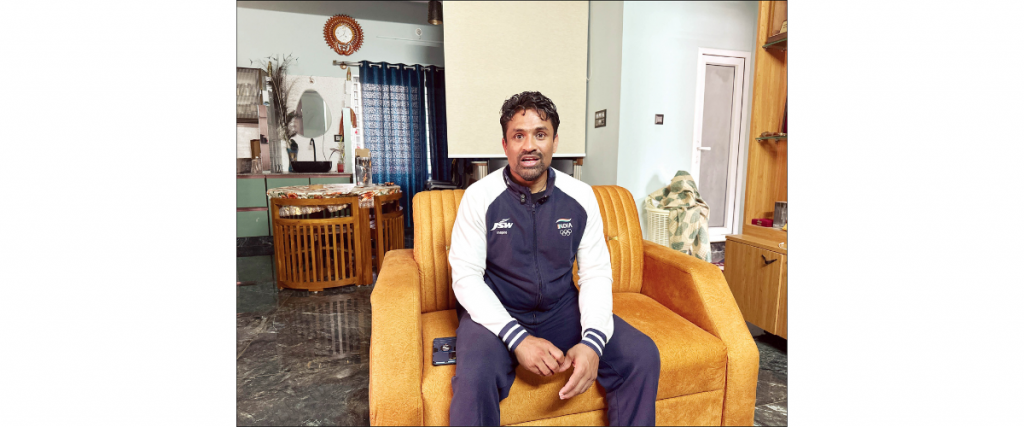
Boxing needs a bigger push in South India, says Indian men’s boxing head coach C.A. Kuttappa.
Hailing from Kokeri village in Napoklu, Kodagu, the land known for producing Olympians and brave hearts, Chenanda Achaiah Kuttappa (C.A. Kuttappa) is an internationally known boxing coach who has been credited with shaping some of the best Indian boxers, including Olympic medallist Vijender Singh, Suranjoy Singh, Shiva Thapa and Amit Panghal, among others..
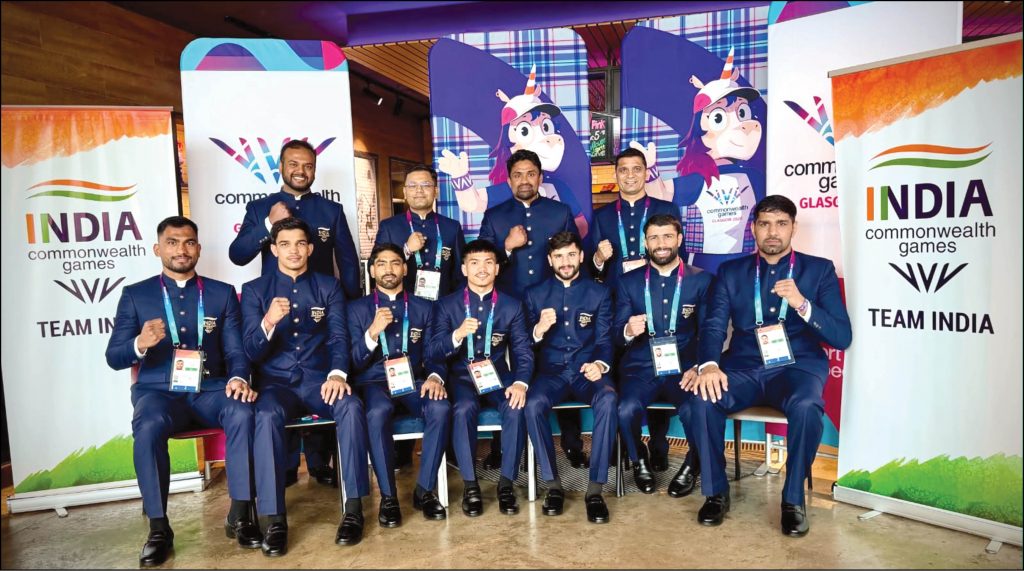
An ex-serviceman, Kuttappa, who retired as a Subedar from the Madras Engineering Group (MEG) earlier this year, is currently the head coach of the Indian men’s boxing team that won two gold and two silver medals at the recently held Commonwealth Games in Glasgow, Scotland.
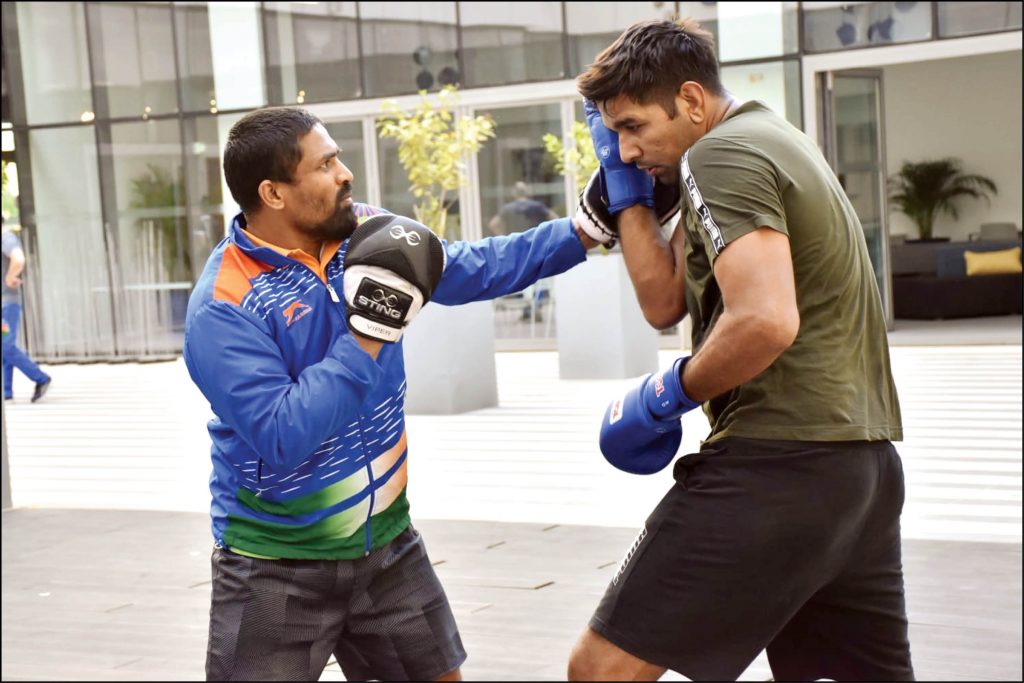
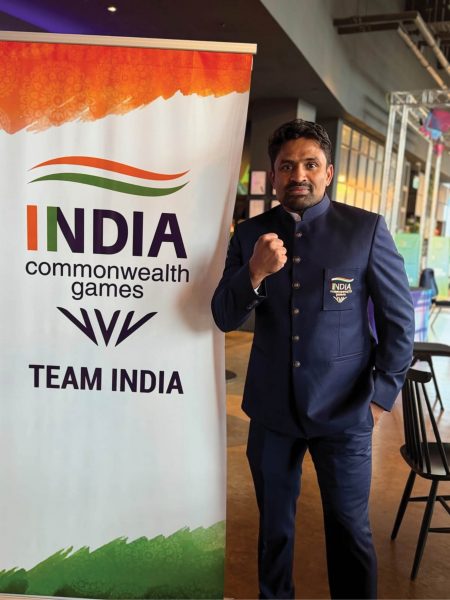
Kuttappa training one of the boxers during the preparatory camp for Commonwealth Games-2026 which concluded recently.
A Dronacharya Awardee (2018), Kuttappa previously worked with the Indian men’s boxing team as head coach from 2018 to 2021, during which an Indian boxer won a silver medal at the 2019 World Championships.
Kuttappa (standing second from right) seen with the Indian men boxers at Glasgow, Scotland.
Kuttappa was also part of the Indian boxing support staff during the 2008 Beijing Olympics, when Vijender Singh won a bronze medal. He was also the head coach during the Paris 2024 Olympics.
After a break of a year, the Boxing Federation of India (BFI) re-appointed him as the head coach of the Indian men’s boxing team ahead of the 2026 Commonwealth Games and Asian Games.
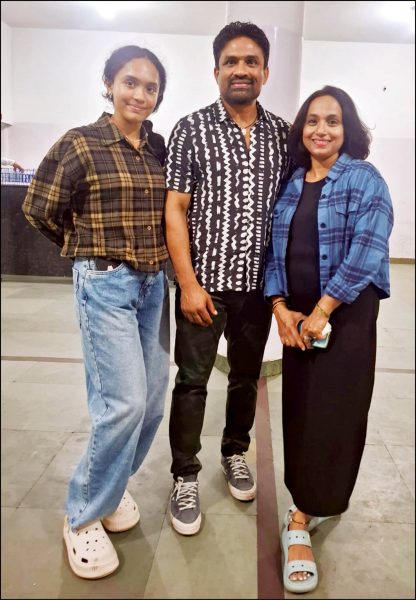
Kuttappa flanked by his wife P.U. Ashwini (right) and daughter C.K. Yudhi.
A resident of Gokulam 1st Stage in Mysuru city, Kuttappa is married to P.U. Ashwini and the couple has a daughter, C.K. Yudhi
Star of Mysore caught up with C.A. Kuttappa during his recent visit to Mysuru following the heroics of the Indian boxing team at the Commonwealth Games 2026. Excerpts:
Star of Mysore (SOM): Sir, firstly, thank you for talking to Star of Mysore. The recent achievements in boxing at the Commonwealth Games-2026 have been spectacular compared to previous Games. What do you have to say about that?
C.A. Kuttappa: The achievements have been remarkable. We have been able to achieve success because of our hard work and the efforts of the coaches and supporting staff, including doctors, physiotherapists, psychologists, nutritionists and others.
SOM: How was the preparation for the Commonwealth Games? Winning seven gold medals in boxing is a great achievement.
Kuttappa: After the Nationals, we went for build-up competitions in Spain and the Czech Republic, where we won a lot of medals. Later, we got good opportunities to participate in other international boxing events in which our top boxers selected for the Commonwealth Games took part. We also keep track of the progress being made by lower-ranked boxers who are in the No. 2 and No. 3 positions.
They play a crucial role as backups in case the top-ranked players miss the main event due to injuries or other reasons. We have been able to achieve good results because of the Sports Authority of India (SAI) and the Boxing Federation of India (BFI), as they provided us with the much-needed exposure and opportunities to prove our potential, which we did at the Commonwealth Games.
SOM: Compared to previous years, the Government of India has been encouraging sports. How do you think it has helped sportspersons?
Kuttappa: Yes, we are getting a good budget for boxing as well. People always compare other sports with cricket. It is a different sport. They have done extremely well and we cannot be compared with them.
We also need to do well at the international level. If we want to be considered at the same level as cricket, we need to work hard, plan well and execute those plans to win more medals at the international level.
SOM: What was the feeling when the boxers you coached were winning gold medals at Glasgow?
Kuttappa: As a coach, it is a completely different feeling. We always plan before the bouts. Watching videos of the opponents and discussing their styles, attacks and movements are some of the things we do. It is important as it helps our boxers understand the strengths and weaknesses of their opponents.
There are times when we change our strategies and tactics during the bout. When our execution goes according to our plans, the results will be satisfactory, just like at the Commonwealth Games.
SOM: With the Commonwealth Games mission accomplished, the next target is the Asian Games. How are the preparations?
Kuttappa: Yes, we are now preparing for the Asian Games to be held in Japan from Sept. 19 to Oct. 4. Compared to the Commonwealth Games, the Asian Games is a tougher competition. Countries like Uzbekistan and Kazakhstan, which are among the top-ranked boxing countries in the world, will be competing as well.
They are really good in terms of technique and tactics. The intensity of the bouts will be high and mentally demanding. Come what may, we are confident of doing well in the Asian Games, similar to what we achieved in the Commonwealth Games.
SOM: Talking about boxing, most of our boxers are either from North or Northeast India. Where is South India lacking?
Kuttappa: Most of our boxers are indeed from the North or Northeast. People there think of boxing as a sport, but here it is considered fighting. I always tell my boxers not to take the punch but to hit the punch. We need to educate parents and children about boxing as a sport in South India.
In the North or Northeast, the situation is entirely different. People take up boxing as a profession. There are boxers earning a good Rs. 15 lakh to Rs. 20 lakh every month. The State Governments have been extending all necessary help, with sponsors also coming forward to support top-ranked and high-performing boxers.
In the South, importance is given to very few sports and people insist on getting their children educated rather than allowing them to pursue sports as a profession.
SOM: Speaking about yourself, you come from Kodagu, which is famous for hockey and producing soldiers for the Indian Army. How did boxing happen to you?
Kuttappa: I started my boxing career in 1992. Before that, there was a selection process for only three sports disciplines: Swimming, volleyball and boxing. Since I was good at athletics and sports, I passed the physical fitness test and they asked me to choose between the three games. I asked them for some time and told them I would like to try all three sports before making a choice. I tried all three and finally selected boxing.
In fact, one of my father’s cousins, C.C. Machaiah, who is an Arjuna Awardee in boxing, had also told me about how boxing as a profession would be useful and help me financially.
In the first year, there were no results as I was still in the learning process. In the next two years, I won the sub-junior and junior titles for Karnataka and the junior national championship. After joining the Indian Army, I represented Karnataka in many national-level competitions and also won a bronze medal at the National Games held in 1997.
After I was injured and stopped boxing, I was thinking about what to do next when my senior officers advised me to continue with boxing. So, I completed my diploma in boxing and joined the national camp as a coach. I have trained Olympic medallist Vijender Singh, Akhil and other top boxers and continue to train boxers even today.
SOM: How does it feel to be awarded the prestigious Dronacharya Award at a young age?
Kuttappa: It is satisfying. I believe it is a result of hard work and sacrifice. You should ask my wife and my mother. They both know the amount of time I have dedicated to my profession.
I only get to spend one or two months at home. Most of the time, I am travelling with the team, preparing them for competitions. I have taken up the responsibility of the national team and it is my duty to ensure they do well and bring laurels to the country.
SOM: Sir, thank you so much for your time and all the best for the Asian Games and the 2028 Summer Olympics.
Kuttappa: Thank you.
source: http://www.starofmysore.com / Star of Mysore / Home> Columns> Special Interview / by S.N. Venkatnag Sobers / August 12th, 2026
Sri Kavery Kodava Association, Mysore East, celebrates 25th anniversary.
Mysuru:
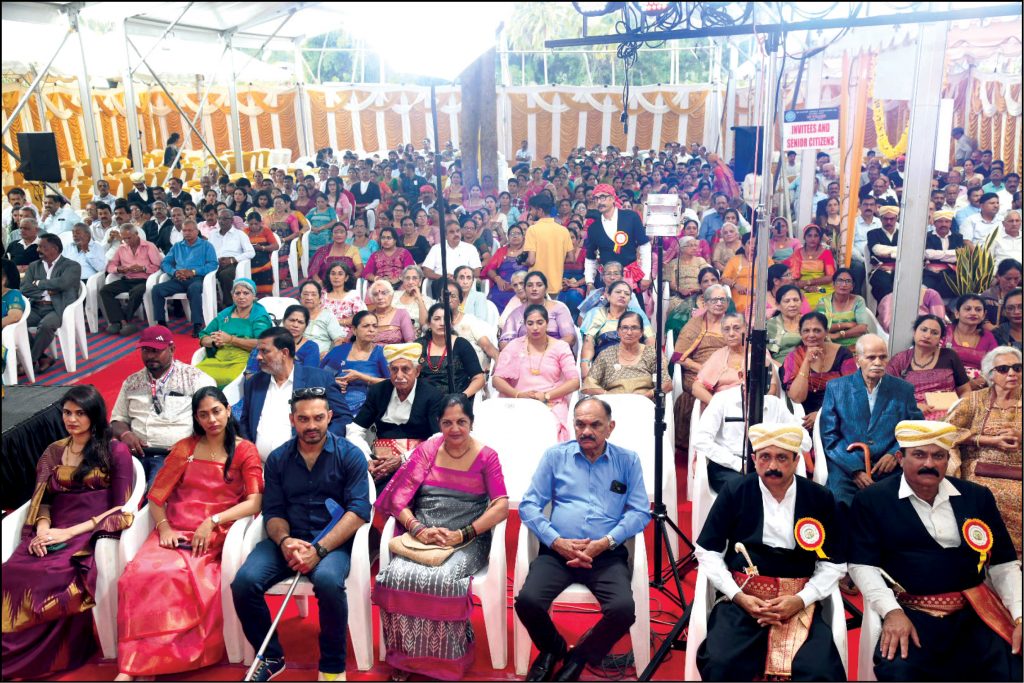
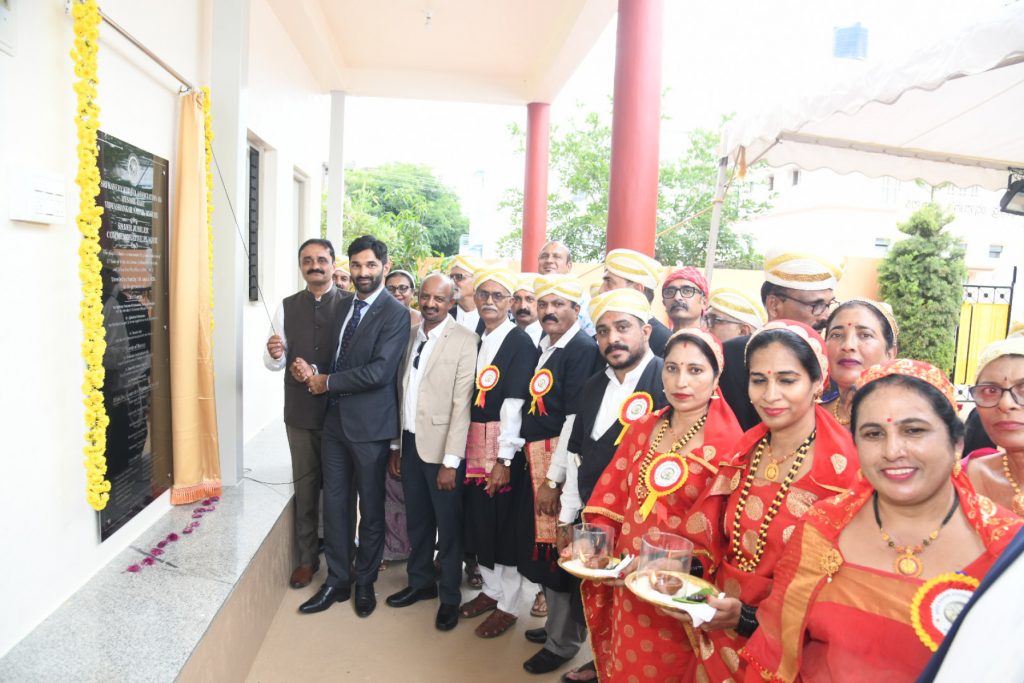
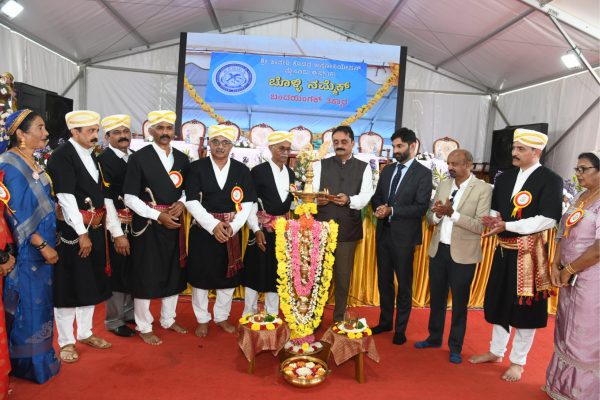
Sri Kavery Kodava Association, Mysore East, celebrated its 25th anniversary with traditional fervour at its Kodagu Model School premises in Vidyashankar Layout, Sathagalli, yesterday.
Mukkatira Punit Kuttayya, Deputy Commissioner of Income Tax, Hyderabad; Dr. Thithira Roshan Appachu, Chief Electrical Inspector, Government of Karnataka and Ex-Officio Additional Secretary (Licensing), Energy Department and Ponjanda Ganapathy, President, Kodava Samaja, Mysuru, were the guests of honour. Kademada Jaya Belliappa, President of Sri Kavery Kodava Association, Mysore East, presided.
A section of audience
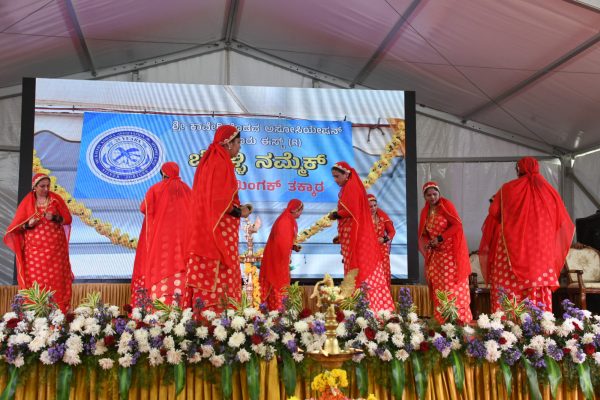
As part of the silver jubilee celebrations, cultural programmes were held from morning till evening, featuring traditional Kodava dances and other performances. Association members and their families participated in large numbers. A short documentary tracing the 25-year journey of the Association was also screened. Members showcased Kodava heritage through various traditional and cultural activities, highlighting the community’s customs and traditions.
Mysuru-Kodagu MP Yaduveer Krishnadatta Chamaraja Wadiyar released the Association’s silver jubilee souvenir. Addressing the gathering, he praised the Kodava community for its unique culture and customs, describing them as exemplary.
He said Kodagu, nestled in nature’s lap, was not only a premier tourist destination but also a region of immense cultural significance. He appreciated the Association for preserving Kodava traditions over the past 25 years and passing them on to younger generations. He also commended the efforts of senior members and office-bearers.
Prizes were distributed to participants of the cultural events. The celebrations concluded with a variety of performances. Pandiyanda Padma, Vice-President; Pattada Sachin Devaiah, Secretary; Neravanda Sunil Muthappa, Joint Secretary; Pattamada Arun Cheramanna, Treasurer and others were present.
source: http://www.starofmysore.com / Star of Mysore / Home> News / August 10th, 2026
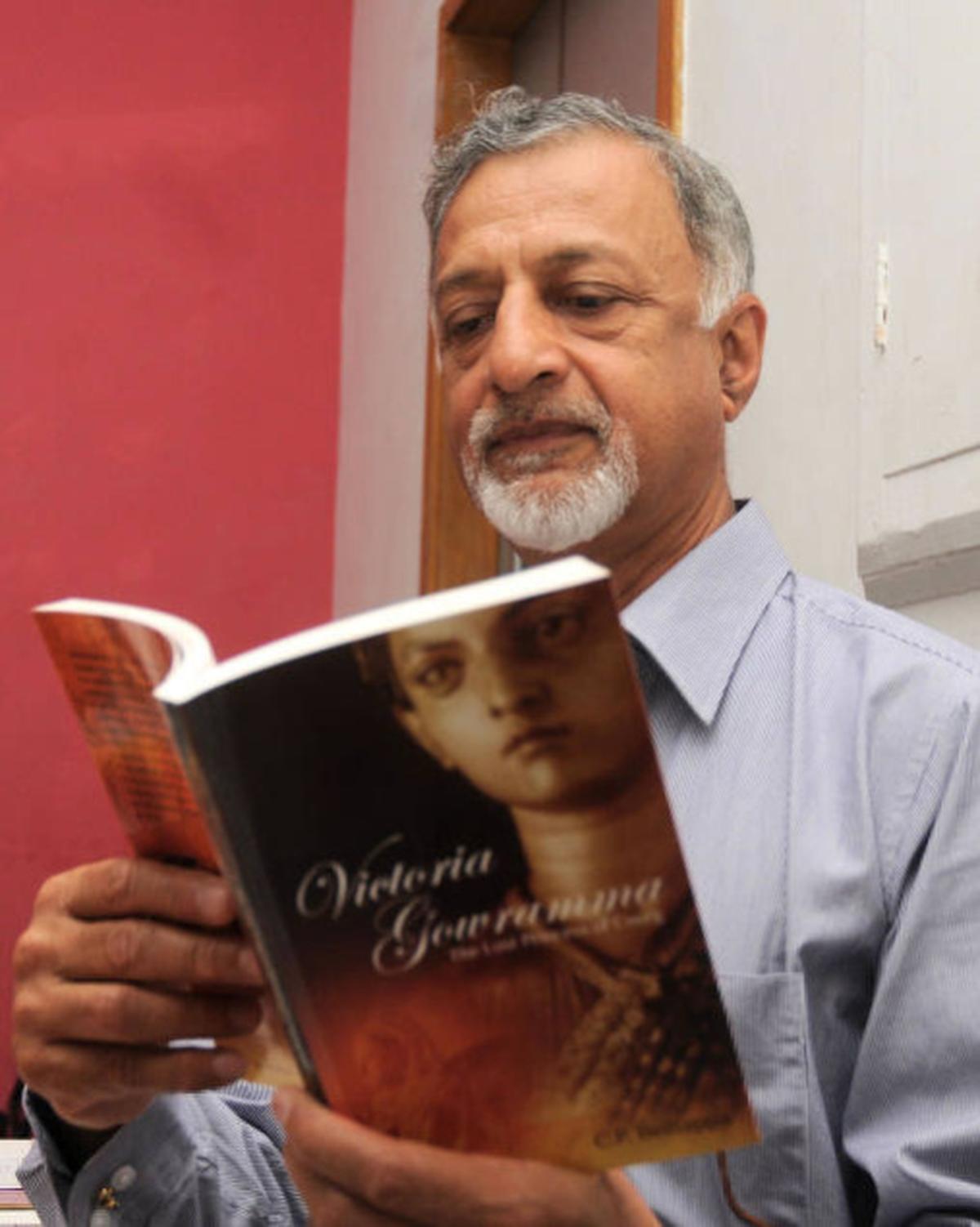
C.P. Belliappa’s A Slice of History: `Victoria Gowramma : The Lost Princess of Coorg’, brings to life the tragic tale of the princess from Coorg
A Slice of History: C.P.Belliappa’s `Victoria Gowramma : The Lost Princess of Coorg’. Photo: M. Vedhan
In a quiet corner of the Brompton Cemetery in London lies a 19th Century grave partially covered by undergrowth. The graceful stone cross above it is slightly broken, but the epitaph composed by Queen Victoria can still be read: “Sacred to the memory of the Princess Victoria Gouramma (sic), daughter of the ex-Raja of Coorg…”
That’s where the strange and tragic tale of Victoria Gowramma, the princess from Coorg who was raised Christian and became Queen Victoria’s goddaughter, ended in 1864. But, her story has come to light again in all its fascinating detail, thanks to C.P. Belliappa’s rigorously researched book “Victoria Gowramma: The Lost Princess of Coorg”, which was recently launched in the city.
“Historical writings on Coorg — mostly gazetteers by the British who lived there during the 19th Century — mention the story of Gowramma and her father, the exiled Raja Veerarajendra, in a paragraph or two,” says Belliappa, author of “Tale of a Tiger’s Tail & Other Yarns from Coorg” and “Nuggets from Coorg History”. “But the details were never there, and I got more and more inquisitive.”
Accidental discovery
His big break came when he accidentally stumbled upon three books written in the 19th Century by people who knew both the Raja and his daughter.
“I was able to download them — for free! — from www.archive.org, where old books are digitised and uploaded,” he says. “They were authentic, first-hand accounts, and comprised 75 per cent of the information I needed.”
The rest he found from the digital archives of The Times, London — reports of court functions and events that contained all sorts of interesting titbits of information. .
“Victoria Gowramma…” traces the intriguing series of events surrounding the princess’ journey to England with her father in 1852, and her difficult and often lonely life there subsequently. The various threads include the exiled Raja’s attempts to reclaim the wealth the British took from him (his reason for taking Gowramma to England in the first place), and the grand plans by Queen Victoria to match-make between Gowramma and another young royal convert to Christianity, Maharaja Duleep Singh of Punjab.
“Queen Victoria believed that if two royals converted to Christianity were married, and their children were born Christian, it would encourage more of their subjects to convert,” says Belliappa. “What’s interesting is that although the plan didn’t work, the Queen continued to be fond of Gowramma to the very end.”
Power dynamics
The book, then, is more than just a portrait of a princess; it gives you a glimpse into the political and religious power dynamics of the time. With its wealth of primary sources, it’s a solid historical work, though Belliappa admits that he was very tempted to go the historical fiction route. “I gave it a lot of thought, and decided finally that the facts themselves were so sensational that they didn’t need fictionalising,” he says.
Since the book’s release in England last year, the author has uncovered even more interesting nuggets of information — for instance, after a bit of detective work, he’s discovered that direct descendants of Gowramma live on to this day in Australia. “I have enough material to add at least an epilogue in future editions of the book,” he says. “It’s been a very exciting time.”
source: http://www.thehindu.com / The Hindu / Home> Books / by Divya Kumari / March 04th, 2011
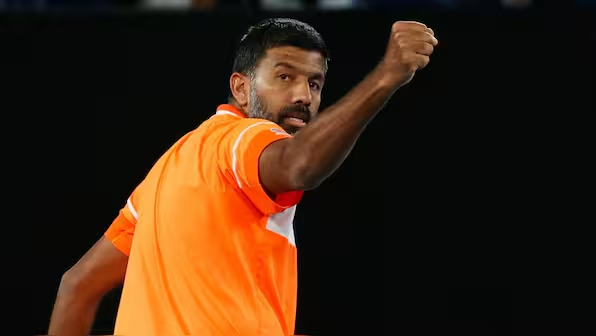
Indian tennis legend Rohan Bopanna reflects on his journey in the sport from a late start in Coorg to Grand Slam success and becoming World No.1 in doubles at the age of 43.
Rohan Bopanna officially retired from tennis in November 2025 at the age of 45. Image: Reuters
In an interview with ATP Tour last year after his retirement announcement, Rohan Bopanna had this to say when asked about his career – “I think my career is a story of patience, discipline and self-belief.”
He wasn’t exaggerating. Ask any sports psychologist worth his or her salt and they will tell you that Rohan Bopanna’s tennis career can be a case study in those three simple and yet absolutely invaluable qualities – patience, discipline and self-belief. After all, he went from almost quitting the sport in 2021 to enjoying the best phase of his career in which he won the Australian Open men’s doubles title in 2024 and became the oldest man to climb to the very pinnacle of the ATP doubles rankings.
With Bopanna bringing the curtain down on his tennis career last year, Indian tennis bid adieu to the last of the “Fab-Four” who conquered the Grand Slams. A look back at his incredible journey in which he truly peaked past the age of 35 and continued to play at the highest level despite “no cartilage” in his knees due to “severe long-term wear and tear”, makes for fascinating reading.
The tennis journey, for Rohan, began later than most others who take up the sport professionally. Studies have shown that most tennis pros pick up the sport between the ages of four and seven. Rohan was 11 when he started playing tennis – an age when most of his peers were already mastering tactical and technical skills. Most coaches will tell you that it is very, very difficult for someone to start playing tennis at 11 and then go on to become a professional player on the Tour. It takes significant talent, training, investment and also mental toughness. In his case it was the challenges that drove him to excel.
“I started playing tennis relatively late at age 11, though sports were always central to my life in Coorg. Initially driven by curiosity and competition, I quickly fell in love with the individual challenge of being on court and figuring things out on my own,” Bopanna told Firstpost in an exclusive interview.
Rohan Bopanna won the Australian Open men’s doubles title in 2024 at the age of 44. Image: Reuters
Bopanna on forming Indo-Pak Express with Aisam
Bopanna was born and grew up in picturesque Coorg. Dubbed “the Scotland of India”, Coorg is of course famous for its coffee plantations, moss-covered hills and stunning Western Ghats landscapes. What it is not known for are tennis academies. His father played a pivotal role in helping him pursue his passion, including building a tennis court on their coffee plantation estate in Coorg. That gave him the wings he needed to fly. He moved to an academy in Pune when he was 14 and had to go through quite the grind. Though he turned professional in 2003 and played both singles and doubles (reached a world ranking of 213 in singles in 2007), it wasn’t until 2010 that he really understood the path he needed to exclusively follow – the path of the doubles game. In 2010 Bopanna reached the final of the US Open men’s doubles with Aisam-ul-Haq Qureshi, the other half of the famous “Indo-Pak Express”. And that was what convinced Bopanna that he needed to focus on the doubles game.
“Reaching the 2010 US Open final with Aisam was a major turning point. It gave me the clarity that I could compete consistently at the highest level in doubles. I decided to commit fully to the format to maximize my strengths,” Bopanna further told Firstpost.
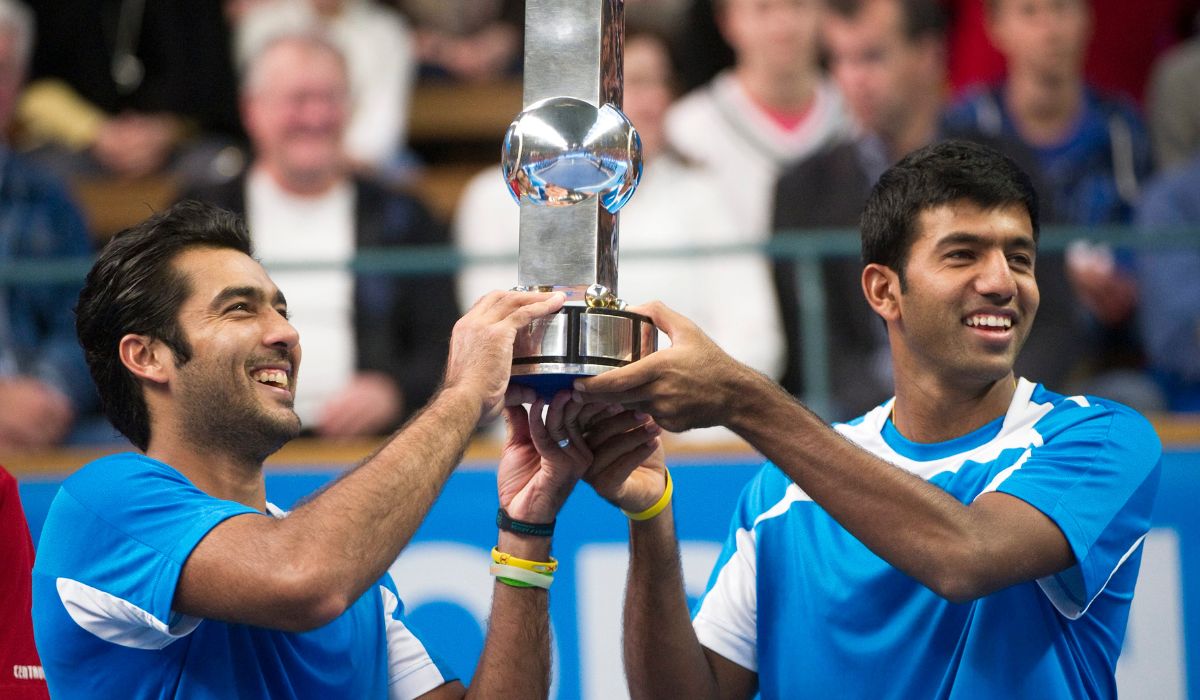
The Indo-Pak Express followed up that US Open success with the 2011 Paris Masters title. The duo in fact, went on to win titles on all three surfaces (grass, clay and hard) and the list includes the 2011 Stockholm Open, the 2011 Halle Open, the 2010 South Africa Tennis Open, and the 2014 Dubai Tennis Championships. Bopanna and Aisam subsequently also reunited in 2021 after a seven-year split. Overall, across doubles and mixed doubles (in which he won the 2017 French Open title) the list of Bopanna’s tennis partners makes for very impressive reading. It includes Mahesh Bhupathi (played with him in the 2012 London Olympics), Leander Paes (played with him in the 2016 Rio Olympics), Divij Sharan (won the 2018 Asian Games men’s doubles gold medal with him), Edouard Roger-Vasselin (reached the 2013 Wimbledon semi-finals with him), Matthew Ebden (won the 2024 Australian Open with him), Aisam, along with Ivan Dodig, Denis Shapovalov, Pablo Cuevas, Florin Mergea, and N Sriram Balaji. In the mixed doubles he played alongside the likes of Gabriela Dabrowski (won the 2017 French Open title with her), Sania Mirza (reached the 2023 Australian Open final and the semi-finals of the 2016 Rio Olympics), Timea Babos (reached the 2018 Australian Open final) and Rutuja Bhosale (won the 2022 Asian Games mixed doubles gold medal with her).
Aisam-Ul-Haq Qureshi of Pakistan and a young Rohan Bopanna celebrate a win in 2011. Image: Reuters
“I shared a natural chemistry with Mahesh Bhupathi and Aisam-ul-Haq Qureshi that translated into great results. In mixed doubles, playing with Sania Mirza was special because our deep friendship built a foundation of trust on the big stages,” Bopanna further shared with Firstpost.
Notably, Rohan and Aisam launched the “Stop War, Start Tennis” peace campaign and were conferred with the 2010 Arthur Ashe Humanitarian of the Year award for promoting peace through tennis.
When Bopanna came close to quitting tennis
Like any other professional sports career, Bopanna’s too, saw some real dark lows. He came very close to quitting the sport twice – once in 2019 and then again in 2021. The first was after he discovered that he had “no cartilage” left in his knees, which of course severely affected his mobility and left him in a lot of pain. Bopanna in fact has gone on record in the past to say that he was having two to three painkillers a day. What really helped was Iyengar yoga – something he began practising during the Covid pandemic, doing one and half hour sessions, four times a week. The second really low phase was when he just wasn’t managing to win matches post Covid. The “hard quarantine” he was under in Melbourne was beginning to take its toll. After the Covid lockdowns were lifted and he went back to pro tennis, Bopanna lost his opening seven tour-level matches, going five months without a win. The then 41-year-old seriously contemplated retirement at the time. It is famously documented how a conversation with his wife, Supriya, who asked him to treat this as “a new challenge rather than a limitation” made him change his mind. What followed was the best phase of his career. It was then that Bopanna, as he told ATPTour.com- “started playing my best tennis.”
“Tennis has made me mentally resilient, teaching me to stay grounded through both success and failure. Beyond the court, I am grateful for the global community I’ve built; I have friends in nearly 50 countries who offer a perspective on the world that goes far beyond the tour,” Bopanna further told Firstpost.
Anyone who has tracked Bopanna’s career will, of course, be curious to know just how it felt to have that incredible second wind, where he found himself as the oldest first-time world number one in men’s doubles, at 43 – something that he ensured for himself when he and Ebden beat Argentina’s Maximo Gonzalez and Andres Molteni in straight sets at the 2024 Australian Open. So, what did that mean to him? I had to ask him that.
“Reaching World No. 1 was special because it represented longevity and the belief that age is not a limitation if you take care of your body and stay hungry for success,” was Rohan’s answer – something that can well be a mantra for youngsters who are just picking up the sport.
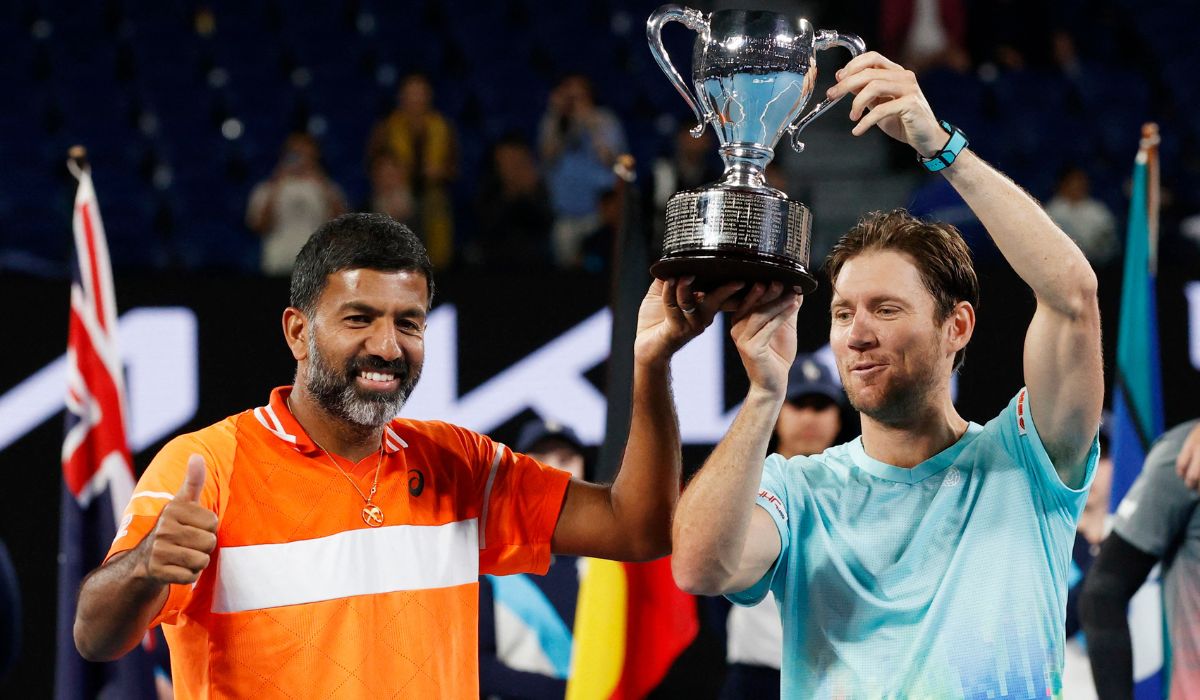
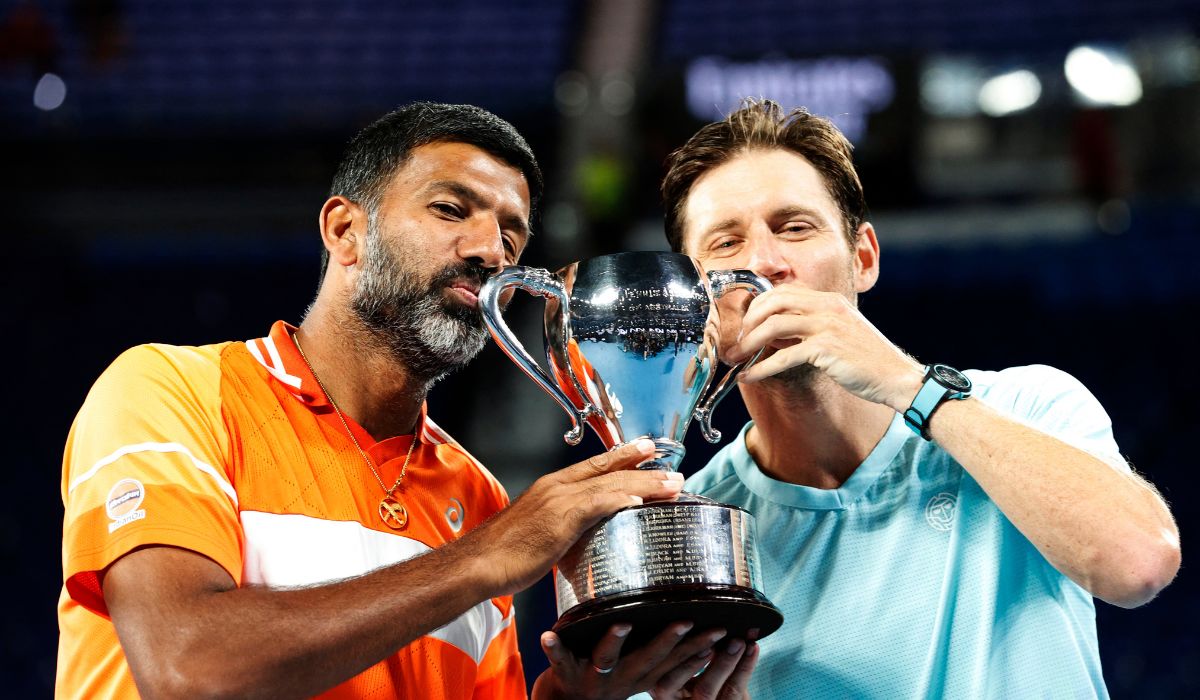
Of course, Bopanna and Ebden didn’t just stop there – they went on to win the whole thing, beating Simone Bolelli and Andrea Vavassori in the final. He was 43 years, 10 months, and 24 days old. This was a significant achievement for Bopanna, who in 17 previous appearances at the Australian Open had never progressed beyond the third round in the men’s doubles draw. It was also yet another indicator of just how successful the late blooming phase, if one can call it that, was for one of Indian tennis’ biggest legends. The cherry on the cake (though technically the announcement was made one day before the final) was Bops being conferred with India’s fourth-highest civilian honour – the Padma Shri. He had come a long way from deciding to focus on the doubles game in 2010. A few smart decisions yielded great returns in ensuring that he continued to remain a force to be reckoned with well into his 40s.
“The 2010 US Open gave me the initial belief. The second turning point came much later when I invested in a full-time physio. Prioritizing recovery and smarter scheduling allowed me to extend my career and play my best tennis into my 40s,” Bopanna further told Firstpost.
Bopanna reveals his sweetest victory
Apart from his achievements on the Tour, Bopanna has served Indian tennis diligently over many, many years. Apart from winning two Asian Games gold medals – one each in the men’s doubles and mixed doubles – he has represented the country in three editions of the Olympics (2012, 2016, 2024) and also played Davis Cup for India over two decades – from 2002 to 2023, collecting the Arjuna Award (2018) and of course the Padma Shri (2024).
So, I asked him – “You have two Grand Slam titles under your belt, but you also have two Asian Games gold medals and won multiple Davis Cup matches. Looking back at your career, if you had to pick the sweetest victory of them all, which one would it be?”
This is Bopanna, who famously told the chair umpire that a ball that had been ruled out when struck by his opponents in a crucial phase of the final of the 2023 US Open men’s doubles had actually touched his elbow. No one saw that happen and the point had already been awarded to Bopanna and Ebden. So, I was of course expecting an honest answer.
“The Australian Open title is a career highlight as the culmination of years of effort. However, representing India in the Davis Cup or Asian Games always carries a unique emotional value,” the two-time Grand Slam champion said.
Bopanna and Australia’s Matthew Ebden celebrate the men’s doubles final win at Australian Open. Image: Reuters
Post retirement, Bopanna’s biggest focus now is to help Indian tennis as best as possible. The Rohan Bopanna tennis academy is doing some great work, targeting structured coaching pathways for youngsters that fuels holistic development and high-performance training and mentorship. And you can bet that three of the core personal values being taught there are – patience, discipline and self-belief.
source: http://www.firstpost.com / FirstPost. / Home / by Akaash Dasgupta / April 27th, 2026
As a part of its commitment in honouring the legacy of the framers of the Constitution of India, The Constitution Museum & The Rights and Freedoms Academy, O.P. Jindal Global University commemorates the 115th Birth Anniversary of Shri C.M. Poonacha by curating an exhibition in his memory. Shri Poonacha, a Member of the Constituent Assembly, served independent India as the Chief Minister of Coorg, the Union Minister of Railways and as the Governor of Madhya Pradesh and later Odisha.
The exhibition displays original photographs capturing various moments of Shri Poonacha’s life, epistles, books, constitutional and other official documents, and other memorabilia belonging to Shri Poonacha. The exhibition also features a historically significant ampoule containing the ashes of Mahatma Gandhi, which Shri Poonacha received and kept in reverence throughout his life.
In the Constituent Assembly Shri Poonacha made impactful contributions in the Provincial Constitution Committee and the Committee on Chief Commissioners’ Provinces. In the Assembly Debates, Sri Poonacha articulated the significance of the Coorg Province in the emerging federal structure of India. He also advocated for a measured degree of autonomy to the provinces, emphasizing the importance of preserving the cultural and political identity of Coorg while remaining firmly anchored in the unity of India.
Inaugurating the exhibition, Prof. (Dr.) C. Raj Kumar, Vice Chancellor, O.P. Jindal Global University stated that, “The Constitution Museum and the Rights and Freedoms Academy—India’s first museum dedicated to the constitution—remain deeply committed to honouring the legacies of each of the 300 members of the Constituent Assembly. Entering the fourth quarter of the century leading up to 100 years of Indian Independence, we carry a moral responsibility to contribute to nation-building. Through these exhibitions, we strive to continually remind the people of India about the dreams of a bygone generation—their unwavering dedication to the nation and profound commitment to justice and liberty. In doing so, the Constitution Museum at JGU fulfils its purpose as vital educational space for cultivating constitutional morality”. In April 2025, the Museum hosted a similar exhibition in memory of Shri R. Sankar, the member of the Constituent Assembly from Travancore-Cochin. The present exhibition will remain open for the public from 15th to 18th October 2025.
The exhibition commenced, with an engaging panel discussion titled “C.M. Poonacha: A Constitutional Exemplar: In the Words of His Children” which set the tone for an insightful exploration of Shri Poonacha’s legacy.
Speaking in the panel discussion inaugurating the exhibition, and remembering their father’s legacy, Mr. C.P. Belliappa, son of Shri Poonacha, and Mrs. Vijaya Muthanna and Dr. Kaveri Nambisan, daughters of Shri Poonacha, observed that “Our father upheld constitutional values in all aspects of life. He was a man of principles who never compromised his ethics for his personal gains—he left his education to participate in the national movement heeding to Mahatma Gandhi’s call. Throughout his life he remained a true Gandhian—he believed in the power of satyagraha, ahimsa, and social upliftment of masses. He held Coorg close to his heart yet not forgetting his primary allegiance to the nation”.
The exhibition will close on the 18th October 2025.
(Disclaimer: The above press release comes to you under an arrangement with O.P. Jindal Global University and PTI takes no editorial responsibility for the same.). PTI PWR
This is an auto-published feed from PTI with no editorial input from The Wire.
source: http://www.thewire.in / The Wire / Home> English / by PTI PRNEWS / October 16th,2025
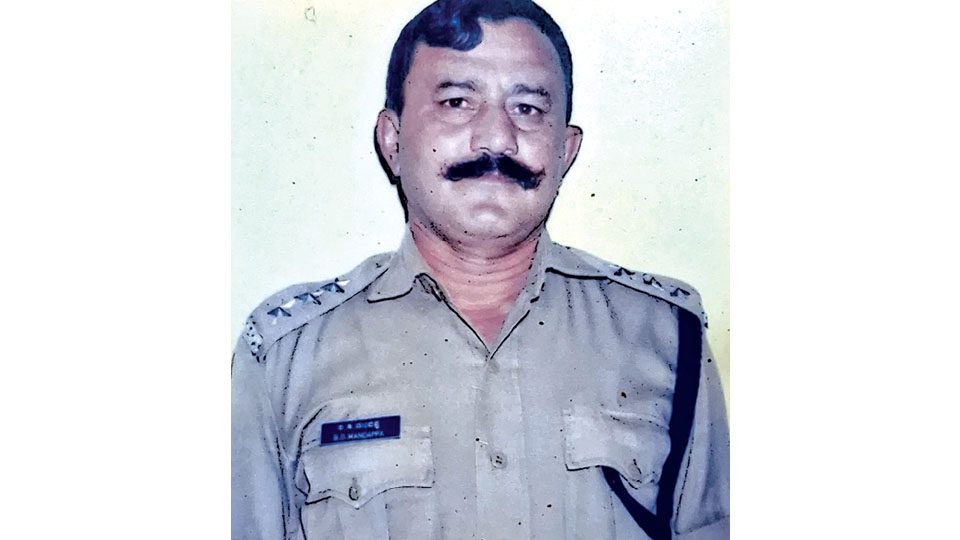
Buttiyanda D. Mandappa (Prabhu), retired Karnataka State Reserve Police (KSRP) Superintendent of Police (SP), Mysuru District and a resident of Nangala village, Bittangala Post in Virajpet taluk of Kodagu district, passed away yesterday. He was 78.
He leaves behind his wife Vimala (Poodrimada), daughter Allumada Swagi Naveen and a host of relatives and friends.
Mandappa was a prominent officer in the Special Task Force (STF), which was formed to eliminate forest brigand Veerappan. He had sustained injuries in the shootout which took place on Aug. 14, 1992, in which SP Harkrishna and Sub-Inspector Shakeel Ahmed were martyred.
Mandappa was a recipient of the President and Chief Minister’s Medal for his meritorious service. Last rites were held at Nangala village this afternoon, according to family sources.
source: http://www.starofmysore.com / Star of Mysore / Home>News / December 01st, 2025
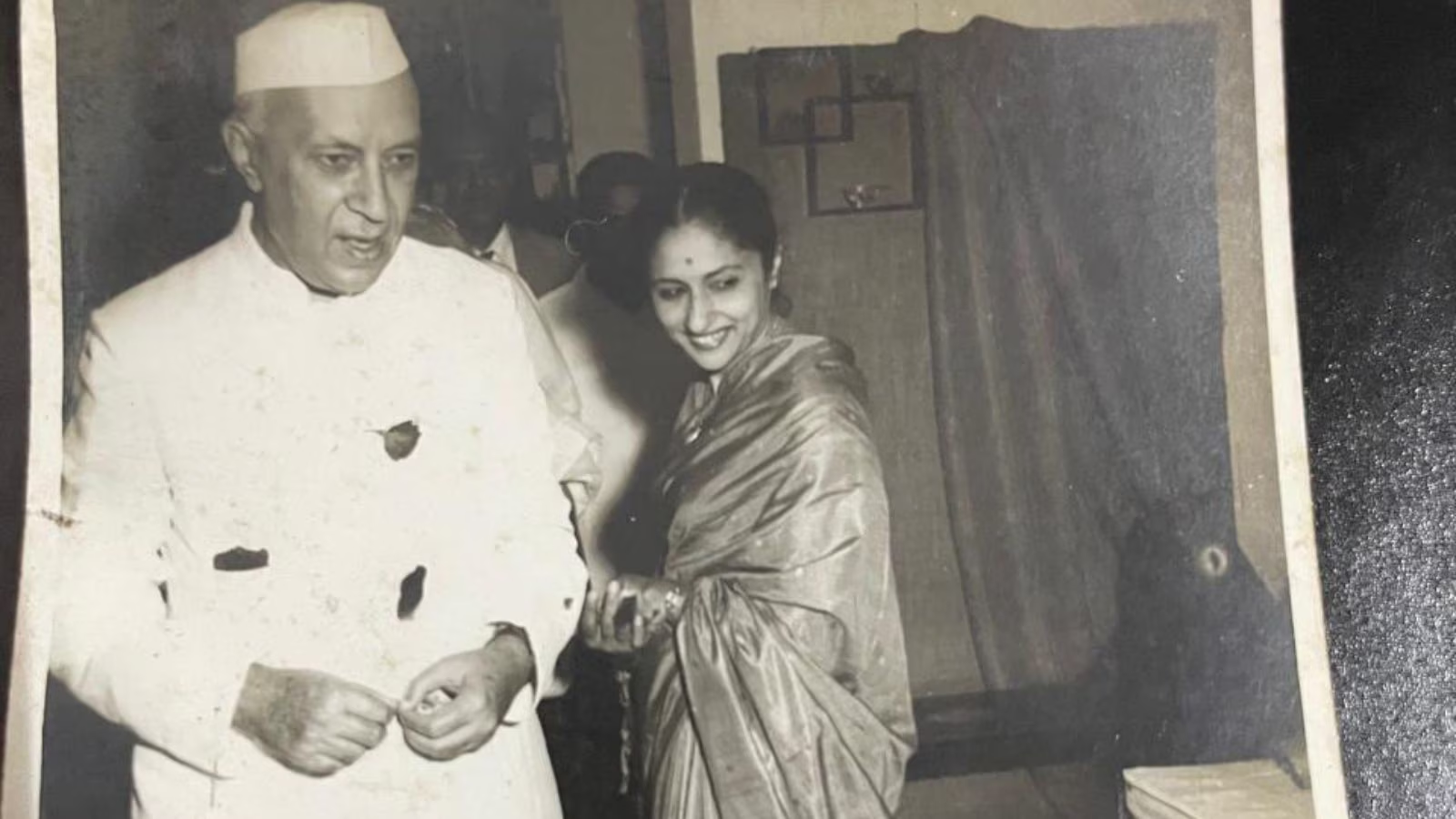
In the early days, says Muddaya, several dignitaries visited Cauvery Handicrafts Emporium and were hosted by Chimy—from Prime Minister Jawaharlal Nehru to Sri Lankan premier Sirimavo Bandaranaike, and even a young Queen Elizabeth.
Chimy Nanjappa’s passion for Karnataka’s textiles and crafts lives on at the Vimor Museum of Living Textiles in Bengaluru.
When one speaks of textiles and fine crafts in Karnataka, the Cauvery Handicrafts Emporium on MG Road in Bengaluru is one of the first places that comes to mind. The shelves of the state-owned emporium are packed with a vast array of the traditional crafts of Karnataka—from intricate silver-based Bidriware items to charming Channapatna toys. However, this wasn’t always so. And one of the people who painstakingly worked to transform the emporium into a showcase of the state’s finest creations was the late Chimy Nanjappa.
Chimy was selected to head the emporium in the late 1950s—then known as Mysore Arts and Crafts Emporium—by its governing board, which included many women, including Sudha Reddy, a proponent of Indian handicrafts.
“It was not a cakewalk for her. In those days, women did not work and close up a place as huge as Cauvery and then walk home at 8 pm,” Chimy’s daughter, Pavithra Muddaya, recalls.
Born in 1928 in Madikeri, Chimy did not have an easy childhood as she lost both parents by the age of nine. She went on to pursue higher education in Chennai, securing a BCom degree, and later settled in Bengaluru after marrying advocate A C Nanjappa. With the family facing financial difficulties in the early days, she began working as an assistant manager at Cauvery Handicrafts Emporium, before being promoted to manager.
“She had nothing by way of a background in the field and had previously done accounts work…but life forces you to take up opportunities,” says Muddaya, adding that her mother always said that women need to work and be financially independent. She also credits her father’s role in encouraging and supporting Chimy, recalling him as a person who held views that would be considered progressive even today.
In the early days, says Muddaya, several dignitaries visited Cauvery Handicrafts Emporium and were hosted by Chimy—from Prime Minister Jawaharlal Nehru to Sri Lankan premier Sirimavo Bandaranaike, and even a young Queen Elizabeth.
In 1963, cultural activist and author Pupul Jayakar, a major mover in the revival of traditional crafts and culture, recruited Chimy to represent Indian textiles at the New York World Fair the next year. It turned out to be a success, says Muddaya, recounting what an IAS officer familiar with the event told her. “Good lord, nobody could go past her without buying something!”
Later, Chimy was offered an opportunity to head an outlet anywhere in the world under the Handicrafts and Handlooms Export Corporation, but declined, refusing to be a “second-class citizen” in a foreign country.
After A C Nanjappa passed away in 1974, Chimy went on to start the Vimor Handlooms, a home store specialising in handloom sarees and textiles. Muddaya remembers, “No one who came to her for help was sent away…she would give weavers’ addresses to people. Freedom fighter and social reformer Kamala Devi Chattopadhyay would say that anyone coming to the Regional Design Centre (on Church Street) without a recommendation could ask my mother for one.” Vimor would go on to revive many traditional sari styles, such as one dubbed the ‘Cubbonpete’ sari.
Those interested in Chimy Nanjappa’s legacy in textiles may visit Vimor Museum of Living Textiles after making an appointment. The exhibits on display include saris up to a century old, in styles that are not often seen today.
source: http://www.indianexpress.com / The Indian Express / Home> News> Cities> Bangalore / by Express News Service / March 13th, 2026
In this photo essay, we showcase more exhibitors at IICF 2026, along with expert insights.
Bengaluru recently hosted the 2026 edition of the India International Coffee Festival (IICF) at Chamara Vajra, Jayamahal Road. See our earlier coverage of the World Coffee Conference in 2023 here.
“We estimate that 20,000 visitors attended the three-day IICF event. The energy on the floor was indicative of strong commercial engagement,” Hamsini Appadurai, President of the Specialty Coffee Association of India (SCAI), tells YourStory.
The festival featured India’s geo-tagged coffee varieties such as Coorg Arabica Coffee, Wayanad Robusta Coffee, Chikmagalur Arabica Coffee, Araku Valley Arabica Coffee, and Bababudangiris Arabica Coffee. There were also international brands such as MilkLab (Australia), Astoria Coffee Machines (Italy), and Probat Coffee Roasters (Germany).
IICF had parallel workshops on Farm to Cup: Post-Harvest Processing 101; Robusta Tasting: Processing Methods; Roasting Fundamentals: Profile Building & Tasting; Coffee Species Showcase & Guided Tasting; Manual Brewing and Espresso Brewing; and Marketing Specialty Coffee: Storytelling & Tasting;
There were panel discussions on a range of provocative topics: Why Biodiversity Is the Foundation of Coffee’s Future; and The New Coffee Farmer: Balancing Yield, Quality, and Profit in a Changing Market.
Many visitors said they appreciated the opportunity to learn about coffee trends and network with coffee lovers and industry professionals. “Exhibitors were pleased with the promotion of the shared vision and passion of the industry,” Appadurai adds.
She explains that the Australia delegation places IICF right up there along with other global events such as World of Coffee Dubai, World of Coffee Indonesia, World of Coffee Bangkok, FHA Singapore, and Melbourne International Coffee Expo.
“The festival was a rich source of inspiration and strategic thinking. One initiative already taking shape for the next edition is a dedicated micro-lot auction for roasters, an exciting development that we believe will add significant value to the specialty coffee ecosystem,” Appadurai says.
Last year, Nestlé India strengthened its premium at-home offering by bringing Nespresso to the country. “With this, we cater to consumers seeking super premium coffee experiences at home,” says Sunayan Mitra, Director – Coffee and Beverages, Nestlé India.
It has expanded its NESCAFÉ Ready-to-Drink cold coffee portfolio, and developed NESCAFÉ Ice Roast. At IIFC, it showcased Duo Gusto, a pioneering solution that dispenses both hot and cold beverages from a single machine. “Innovation in cold beverages is equally central to Nestlé’s out-of-home strategy,” he adds.
Next year’s IICF will have more stalls. “We would like to secure a larger venue, and significantly increase our international visitor footprint. The vision is to position IICF as a truly world-class destination event for the global specialty coffee industry,” Appadurai describes.
“Coffee is an experience, not merely a beverage We are witnessing a meaningful shift from coffee as a functional caffeine fix to coffee as a lifestyle and cultural statement,” observes Komal Sable, Co-Founder, South India Coffee Company.
Gen Z is driving experimentation and discovery. “Younger consumers are far more open to exploring new formats and alternative milk pairings,” she adds.
Sustainability and ethical sourcing are now baseline expectations. “But they must coexist with convenience. Today’s consumer demands transparency and responsibility, delivered in formats that fit seamlessly into a fast-paced lifestyle,” Sable explains.
Coffee makers are responding to these trends and shifts. “They need to be agile, transparent, and have stronger storytelling. Responsibility must begin at the origin,” she affirms.
Producers also bear a responsibility to better educate roasters, buyers and end consumers about the expertise, risk and dedication involved in cultivating quality coffee. “When that story travels clearly through the value chain, it builds a deeper, more authentic respect for origin,” Sable suggests.
Coffee thus lends itself well to purpose-led enterprise. “It brings together agriculture, branding, community, and commerce in a deeply meaningful way. The growth of specialty coffee and direct-to-consumer models has also lowered the barriers to entry,” she says.
More women are stepping into roles that were historically male-dominated. “These include estate leadership, green buying, roasting, and supply chain management,” she observes, citing diverse examples from Kaveri Coffee, Coromandel Coast, Sangameshwar Coffee, and Coffee Mechanics.
“Creating intentional platforms that spotlight women in coffee is essential not only for representation but also for building lasting confidence, access and opportunity within the ecosystem,” Sable emphasises.
Coffee today is not simply about selling a beverage. “It is about shaping culture. And women are trailblazing that shift in remarkable ways across every level of the industry,” she says with pride.
However, the coffee industry is facing challenges like unpredictable rainfall, rising temperatures, and shifting crop cycles that directly affect quality, yields and costs at origin. “Supporting producers and investing in long-term ecosystem partnerships is not a choice — it is essential to the future of coffee,” she cautions.
SCAI and the Coffee Board of India are committed to driving knowledge transfer within the industry. “We will have expanded workshops, masterclasses and curated learning experiences. The best is very much yet to come,” Appadurai signs off.
Now what have you done today to pause in your busy schedule and harness your creative side for a better world?
(All photographs taken by Madanmohan Rao on location at IICF 2026.)
source: http://www.yourstory.com / Your Story / Home> Food & Beverages / by Madanmohan Rao / March 08th, 2026
WELCOME. If you like what you see "SUBSCRIBE via EMAIL" to receive FREE regular UPDATES.
Read More »