Category Archives: Inspiration / Positive News and Features

Coorg content creator Rida Tharana’s ethereal white gown at Cannes 2026 red carpet spotlights Indian craftsmanship

Rida Tharana makes Coorg proud, picks Nikhil Gajare gown spotlighting Indian craftsmanship for her Cannes red carpet debut. See all the photos.

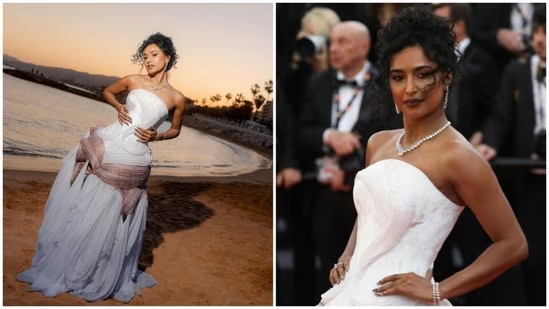
Coorg-born fashion and lifestyle content creator Rida Tharana officially made her red carpet debut at the 79th Cannes Film Festival on May 13. A day later, Rida took to Instagram to unveil a series of photos that showcase her look that seamlessly bridges the gap between avant-garde global fashion and the meticulous handiwork of Indian artisans.

Rida’s sculptural ivory gown at Cannes 2026

For her walk across the iconic Cannes Film Fetival red carpet, Rida Tharana chose a custom creation by Indian designer Nikhil Gajare. The gown is a striking example of contemporary couture, featuring a structured, strapless corset bodice and intricate curved paneling that flows across the torso, creating a 3D effect that mimics the organic lines of a seashell.

The rigid structure of the bodice gives way to a voluminous, multi-layered chiffon skirt, allowing for a dramatic twirl that captured attention. A unique, copper-toned pleated sash wraps around the hips, providing a metallic pop against the pristine ivory fabric and highlighting the fusion of different textile techniques. To complete the regal ensemble, Rida wore diamond jewellery by Sennes, with her hair styled in a high, textured, voluminous updo.

Rida’s candid post

Beyond the glamour of the red carpet, Rida shared a deeply personal message regarding her journey to Cannes. In her Instagram post, she admitted that her initial reaction to the invitation was to decline. “When I first found out I had the opportunity to walk the Cannes red carpet, I said no. I didn’t think I deserved it. I questioned myself every second,” she revealed

She credited her management team for pushing her beyond her self-doubt. Rida’s post touched on the rollercoaster of emotions — from the fear of public criticism to the eventual realisation that this was her moment to own. She also revealed that the choice of designer was deliberate. Having worked with Nikhil previously, Rida noted that the piece ‘felt like her’. She likened the experience to a childhood dream, stating that while she never had Barbie dolls growing up, the gown made her feel like a princess.

The debut marks a significant milestone for the creator, and by choosing to wear an emerging Indian couturier on one of the world’s most scrutinised stages, Rida reinforced her reputation as a cultural curator, proving that the journey from Coorg to Cannes is paved with hard work, authenticity, and a bit of self-belief.

“When I say this year is mine, I mean it. This year, and everything that comes after, is mine,” she concluded.

source: http://www.hindustantimes.com / HindustanTimes / Home / by Sanya Panwar / May 14th, 2026

Joshna finds joy in longevity after nearly three decades on court

Joshna Chinappa’s immediate target is the upcoming Asian Games in Aichi-Nagoya, Japan, while the Los Angeles Olympics is not on her radar at the moment.

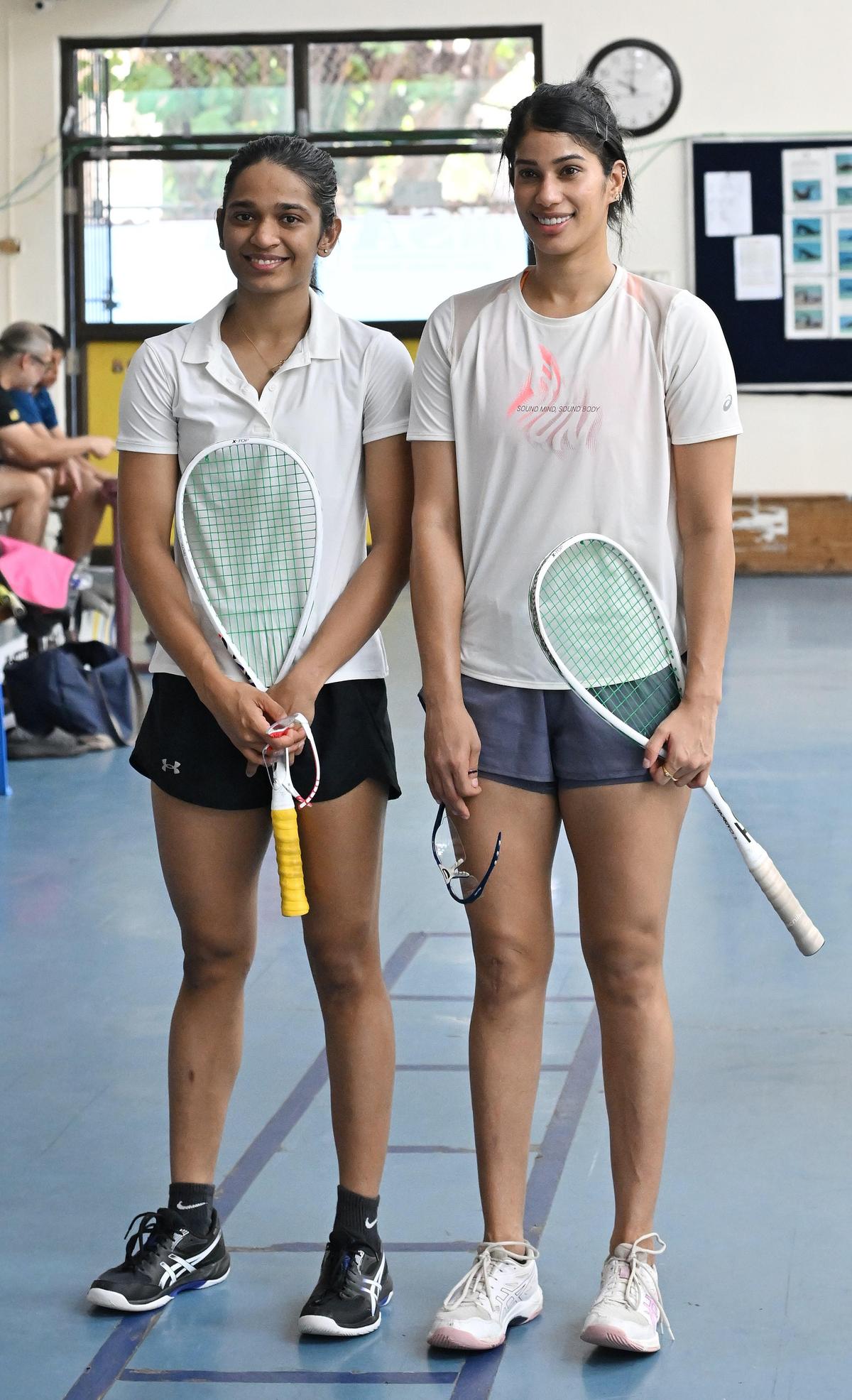
Joshna Chinappa reached the women’s doubles final alongside Rathika Seelan at the National doubles championships on Friday. | Photo Credit: VELANKANNI RAJ B

Having played  squash since the age of nine, Joshna Chinappa continues to defy time and expectation. Now 39, she remains among India’s finest players, currently ranked World No. 71 and second only to Anahat Singh among Indian women.

Through dedication, discipline and an enduring love for the sport, Joshna continues to set new benchmarks.

So, after nearly three decades on court, what has changed? Joshna has found a different perspective.

“In the last couple of years, I’ve learned to be very detached from the outcomes. I ensure that I do what I need to do to be able to play and train and give it my best. If it doesn’t work out, it’s also okay,” Joshna told Sportstar after reaching the women’s doubles final with Rathika Seelan and the mixed doubles final with Velavan Senthilkumar at the National doubles championships here on Friday.

The results suggest that the shift in mindset has worked in her favour. This season, Joshna captured the Japan Open title, her 11th Professional Squash Association Tour crown and her first in a decade, besides finishing runner-up in two events at home.

The journey, however, has not been easy. Joshna has battled persistent physical setbacks, particularly after undergoing a second surgery on her right knee following the 2023 Asian Games. Yet, she has carried herself with remarkable poise and resilience, continuing to compete against opponents nearly half her age.

“I have not taken a break ever, except for the two knee surgeries. I always say it was the anaesthesia that kept me out. Other than that, I have always been playing back-to-back,” she said with a smile.

“I am also at the stage where it doesn’t excite me to play 12 tournaments a year.”

For now, the immediate target is the forthcoming Asian Games. The 2028 Los Angeles Olympics is not on her radar at the moment.

But beyond medals and rankings, Joshna understands the significance of simply being able to compete at this stage of her career.

“Any match or tournament that I’m able to play is a huge gift for me. To still do that, play at that level and compete with the best girls in the world, is very encouraging. For me now, it’s more about enjoying my game,” she said.

source: http://www.sportstar.thehindu.com / Sportstar / Home> Squash / by K Keerthivasan / May 15th, 2026

Know Your City: From hosting Queen Elizabeth to reviving lost saris, how Chimy Nanjappa shaped Karnataka’s craft heritage

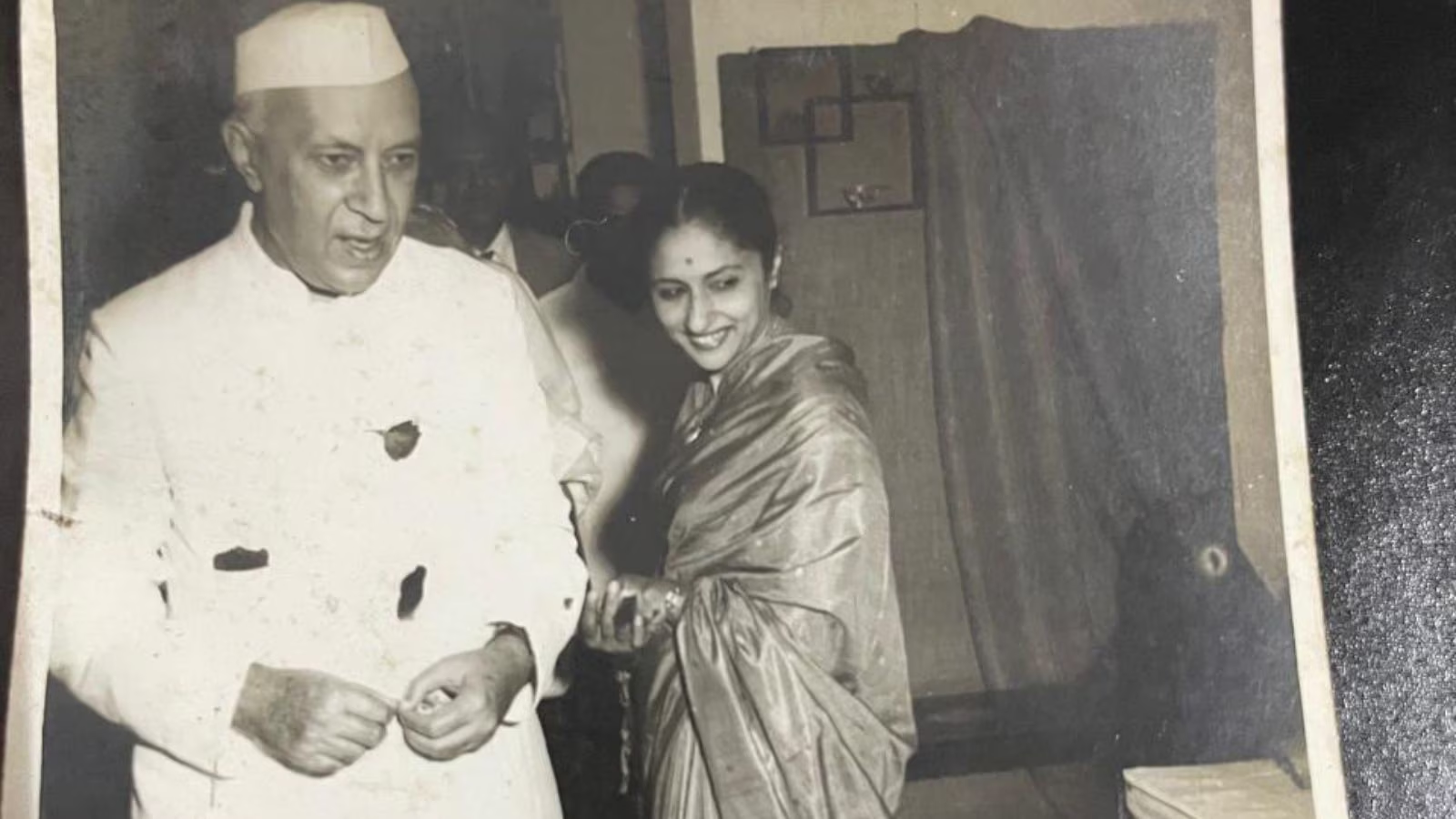
In the early days, says Muddaya, several dignitaries visited Cauvery Handicrafts Emporium and were hosted by Chimy—from Prime Minister Jawaharlal Nehru to Sri Lankan premier Sirimavo Bandaranaike, and even a young Queen Elizabeth.

Chimy Nanjappa’s passion for Karnataka’s textiles and crafts lives on at the Vimor Museum of Living Textiles in Bengaluru.

When one speaks of textiles and fine crafts in Karnataka, the Cauvery Handicrafts Emporium on MG Road in Bengaluru is one of the first places that comes to mind. The shelves of the state-owned emporium are packed with a vast array of the traditional crafts of Karnataka—from intricate silver-based Bidriware items to charming Channapatna toys. However, this wasn’t always so. And one of the people who painstakingly worked to transform the emporium into a showcase of the state’s finest creations was the late Chimy Nanjappa.

Chimy was selected to head the emporium in the late 1950s—then known as Mysore Arts and Crafts Emporium—by its governing board, which included many women, including Sudha Reddy, a proponent of Indian handicrafts.

“It was not a cakewalk for her. In those days, women did not work and close up a place as huge as Cauvery and then walk home at 8 pm,” Chimy’s daughter, Pavithra Muddaya, recalls.

Born in 1928 in Madikeri, Chimy did not have an easy childhood as she lost both parents by the age of nine. She went on to pursue higher education in Chennai, securing a BCom degree, and later settled in Bengaluru after marrying advocate A C Nanjappa. With the family facing financial difficulties in the early days, she began working as an assistant manager at Cauvery Handicrafts Emporium, before being promoted to manager.

“She had nothing by way of a background in the field and had previously done accounts work…but life forces you to take up opportunities,” says Muddaya, adding that her mother always said that women need to work and be financially independent. She also credits her father’s role in encouraging and supporting Chimy, recalling him as a person who held views that would be considered progressive even today.

In the early days, says Muddaya, several dignitaries visited Cauvery Handicrafts Emporium and were hosted by Chimy—from Prime Minister Jawaharlal Nehru to Sri Lankan premier Sirimavo Bandaranaike, and even a young Queen Elizabeth.

In 1963, cultural activist and author Pupul Jayakar, a major mover in the revival of traditional crafts and culture, recruited Chimy to represent Indian textiles at the New York World Fair the next year. It turned out to be a success, says Muddaya, recounting what an IAS officer familiar with the event told her. “Good lord, nobody could go past her without buying something!”

Later, Chimy was offered an opportunity to head an outlet anywhere in the world under the Handicrafts and Handlooms Export Corporation, but declined, refusing to be a “second-class citizen” in a foreign country.

After A C Nanjappa passed away in 1974, Chimy went on to start the Vimor Handlooms, a home store specialising in handloom sarees and textiles. Muddaya remembers, “No one who came to her for help was sent away…she would give weavers’ addresses to people. Freedom fighter and social reformer Kamala Devi Chattopadhyay would say that anyone coming to the Regional Design Centre (on Church Street) without a recommendation could ask my mother for one.” Vimor would go on to revive many traditional sari styles, such as one dubbed the ‘Cubbonpete’ sari.

Those interested in Chimy Nanjappa’s legacy in textiles may visit Vimor Museum of Living Textiles after making an appointment. The exhibits on display include saris up to a century old, in styles that are not often seen today.

source: http://www.indianexpress.com / The Indian Express / Home> News> Cities> Bangalore / by Express News Service / March 13th, 2026

CNC demands inclusion of Kodava language in 8th Schedule

Inclusion of Kodava language in the Eighth Schedule will provide legal, cultural, and educational benefits to the Kodava community.

CNC members stage a protest in front of the deputy commissioner’s office in Madikeri on Saturday. / Credit: DH Photo

Madikeri: 

Marking International Mother Language Day, leaders of the Codava National Council (CNC) staged a protest in front of the Deputy Commissioner’s office here on Saturday, demanding that Kodava language be included in the Eighth Schedule of the Constitution.

CNC President N U Nachappa placed several demands, including the inclusion of Kodava Thakk in the Eighth Schedule as recommended in the report of the Commission headed by noted linguist Pandit Dr Sitakant Mahapatra.

He urged that on the lines of Konkani language model and similar to the proposal for Tulu, Kodava be declared an official language of the state under Articles 345 and 347 of the Constitution, and implemented in administration and education under Article 350.

Inclusion of Kodava language in the Eighth Schedule will provide legal, cultural, and educational benefits to the Kodava community. Official recognition by the Central government will enhance the language’s prestige and prevent it from being treated merely as a dialect. It would also facilitate the introduction of Kodava as a medium of instruction in school curricula.

He also alleged that the names of local Kodava folk villages, hamlets, and even festivals have been altered into Kannada, distorting them. This, he said, reflects disregard for Kodava heritage and uniqueness and amounts to a violation of human rights.

A memorandum was submitted to the government through DC S J Somashekar on the occasion.

source: http://www.deccanherald.com / Deccan Herald / Home> India> Karnataka / by DHNS / February 22nd, 2026

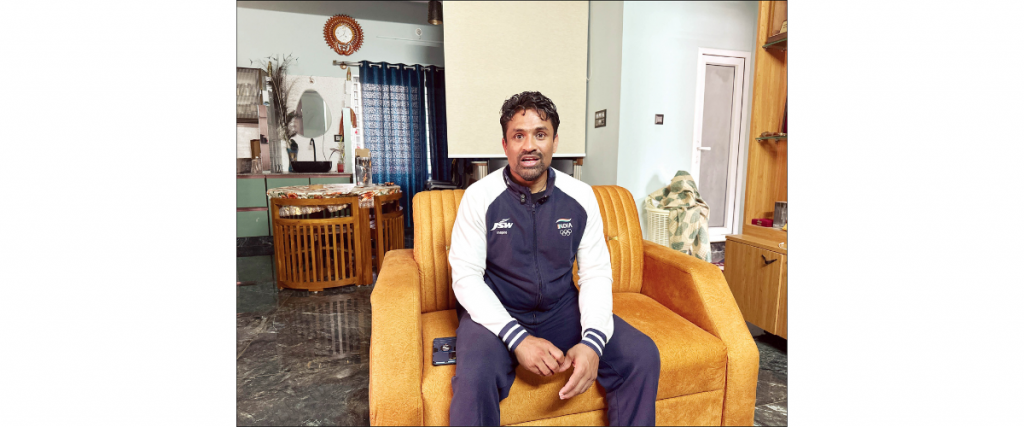
Olympic Medallist Boxer Vijender, Tennis Ace Rohan Bopanna To Flag Off New Delhi Marathon On Sunday

Olympic medallist Vijender Singh and tennis star Rohan Bopanna will flag off the 11th Cognizant New Delhi Marathon at Jawaharlal Nehru Stadium on Sunday. Over 30,000 runners from 31 countries are expected to participate across full, half, 10K and 5K categories. The event, recognised by AFI and World Athletics, also serves as an Asian Games qualifier.

Olympic medallist boxer Vijender Singh (L) &tennis player Rohan Bopanna (R) | File Pic

New Delhi: 

Olympic medallist boxer Vijender Singh and the country’s ace tennis player Rohan Bopanna will flag off the 11th edition of the Cognizant New Delhi Marathon from the Jawaharlal Nehru Stadium here on Sunday.

With over 30,000 participants expected to take part, the marathon is set to be one of the largest sporting events in the country.

Certified as a National Marathon by the Athletics Federation of India (AFI), recognised by the Association of International Marathons and Distance Races (AIMS), and acknowledged by World Athletics, the event continues to strengthen its position on the global athletic calendar.

This edition of the event has attracted participants from 31 countries, 490 cities, and 32 states and Union Territories of India.

The event will be held in four categories — full marathon, half marathon, 10K and 5K.

India will be represented by an elite contingent, which includes Anish Thapa, A.B. Belliappa, Man Singh, Akshay Saini, T. Gopi, Bhagirathi Bisht, Nirmaben Thakor Bharatjee, Ashwini Madan Jadhav, Disket Dolma, and Stanzin Dolkar.

The marathon also serves as a qualifying race for the upcoming Asian Games.

Inclusivity and Social Impact

In a step towards greater inclusivity, the marathon will host approximately 20 visually-impaired athletes, reaffirming its commitment to creating an accessible and empowering sporting platform.

The event has also raised Rs 10 lakh, which has been contributed to the AFI as support for its junior development programs to help in strengthening grassroots athletics in the country.

“The New Delhi Marathon is not just a race; it’s a celebration of human spirit, perseverance, and unity. We are proud to witness such incredible global participation and to continue fostering an inclusive and inspiring event. Our goal is to create a platform where every runner — from elite athletes to first-timers — can push their limits and be part of something much larger than themselves,” said Nagaraj Adiga, Race Director & CMD, NEB Sports.

Rajesh Varrier, President – Global Operations and Chairman and Managing Director of Cognizant India added: “The participation of elite runners at the New Delhi Marathon reinforces its stature as one of the leading long-distance events in Asia and inspires every runner to push their limits.

AFI treasurer, Stanley Jones said the event is a perfect platform for country’s long-distance runners to make a mark.

“The National Marathon serves as a premier platform for India’s elite long-distance runners. With only the highest-performing athletes qualifying to represent the nation at events such as the Asian Games, competitions of this stature play a crucial role in identifying and preparing top talent,” he said.

Sustainability Initiatives

The marathon continues its strong focus on environmental responsibility by implementing comprehensive waste segregation, promoting recycling across the venue, partnering with environmental organisations and local authorities and encouraging greener practices among participants.

(Except for the headline, this article has not been edited by FPJ’s editorial team and auto-generated from an agency feed.)

source: http://www.freepressjournal.in / The Free Press Journal / Home> Sports / by PTI / February 20th, 2026

Return of the… Mahseer

A conservation story from River Cauvery.

On 2018, the International Union for Conservation of Nature (IUCN) classified the Orange-Finned or Humpback Mahseer as ‘Critically Endangered.’

Yet, in the protected stretches of the River Cauvery in Kodagu, the species is found in abundance, thanks to the efforts of Coorg Wildlife Society (CWS) and the family of Chendanda S. Ponnappa and his son Chendanda P. Aiyappa. Mahseer conservation in Cauvery has a history that goes back nearly four decades. It began in 1985, when Ponnappa, a member of CWS, asserted at a meeting that Mahseer still thrived in the Cauvery at Dubare and Valnoor.

At the time, doubts were raised about the fish’s presence in the river. To settle the debate, Ponnappa landed a 44-kg Mahseer in July 1985 at Valnoor, conclusively proving that the iconic fish — known locally as ‘Bommeen’ or ‘Boltha Meen’ in Kodava Thakk and ‘Bilimeenu’ in Kannada — was very much alive in the river. The Cauvery is home to Golden, Silver and Black Mahseer.

The river watchers who keep an eye on illegal fishing and other activities that are detrimental to Mahseer conservation.

That single act marked the beginning of organised Mahseer conservation in Kodagu. Soon after, the Coorg Wildlife Society approached the Fisheries Department, which leased a 25-kilometre stretch of the Cauvery, from Siddapur Bridge to Kushalnagar Bridge, to the Society in 1985 and declared it a protected zone for Mahseer.

The move was accompanied by wide publicity against destructive fishing practices such as dynamiting, the use of nets, copper sulphate poisoning and even poisoning with wild fruits, methods that were rampant at the time and posed a serious threat to aquatic life. Once the lease was handed over, such practices were completely banned and strict enforcement followed.

Equally significant was the crackdown on riverbank encroachments. After the declaration of the Mahseer protected zone, previously unreported encroachments were identified and cleared. “The CWS deserves full credit for making the riverbanks along the protected stretch encroachment-free,” Aiyappa told Star of Mysore.

Science-backed conservation model

C.S. Ponnappa oversaw the conservation operations in the initial years, laying the foundation for what would later evolve into a science-backed conservation model. Subsequent studies established that the Humpback Mahseer, endemic to the Cauvery, is among the largest freshwater fish in India, growing up to 63-kg.

“For nearly 20 years, the CWS successfully protected the original 25-km stretch. Encouraged by the results, the Fisheries Department later extended our responsibility to a nearly 100-km stretch of the Cauvery from Bethri Bridge to Kushalnagar and the Barapole River. While we managed and protected about 95-km for a decade, logistical challenges forced us to withdraw from Barapole,” Aiyappa revealed.

“Conservation along the Bethri-Kushalnagar stretch also proved difficult due to dense coffee estates on either side and the influx of a floating population. Eventually, efforts were refocused on the original stretch between Siddapur and Kushalnagar,” he said.

“Over the past decade, this protected stretch was further extended to 35-km, up to Shirangala. Today, Mahseer is conserved from Siddapur Bridge to Shirangala till the River Cauvery leaves Kodagu,” Aiyappa noted.

Radio-collaring efforts

One of the most significant contributions of the CWS has been scientific research. The Mahseer telemetry study conducted was the first-of-its-kind in India.

Over 40 Mahseers were caught, fitted with radio transmitters and released back into the river to study. However, known for their intelligence, the fish often rubbed the transmitters against rocks and managed to dislodge them.

Despite these challenges, researchers were able to gather valuable data on migration patterns and habitat preferences during high-water conditions.

National institutions such as the Central Inland Fisheries Research Institute and the Central Institute of Freshwater Aquaculture undertook five years of research in the region.

“Until then, there was little data on the upper reaches of the Cauvery, covering water quality across seasons, sediment composition, riparian vegetation and fish diversity. We supported these studies by providing staff and access to field locations. The findings, expected to be released soon, will offer deeper insights into the river’s ecology, including its insect and plant life,” Aiyappa revealed.

Ban on mining, fishing

“We also collaborated with Carleton University, Canada, on a study examining post-release mortality of Mahseer. The results were encouraging, showing a survival rate of 99.5 percent among fish that were caught and released,” Conservationist Aiyappa said.
Legal intervention has also played a conservation role. An order was obtained from the Karnataka High Court banning sand mining in Mahseer-protected areas. Four full-time river watchers now patrol the stretch, monitoring illegal activities and gathering information on netting.

“With dynamiting and chemical poisoning classified as serious offences, such activities have virtually disappeared from the protected zones. Public awareness has grown to the extent that locals now alert authorities to any violations,” he noted.

Mahseer, Aiyappa points out, is among the most intelligent freshwater fish. Their survival over millions of years is testimony to their adaptability. The Mahseer derives its name from Sanskrit — ‘mahat’ (big) and ‘śiras’ (head).

Conservation efforts here go beyond a single species. The Cauvery is home to over 100 endemic fish species, all of which are protected under the current ecosystem-based conservation model. By minimising human intervention, aquatic life has begun to thrive across the protected stretches.

Mahseer is not edible. Wherever they thrive, invasive species such as Catfish and Tilapia fail to survive. Eating Mahseer causes persistent vomiting, possibly due to its high protein content or toxic fat composition. Today, the fish is globally renowned as a sport species rather than a food fish.

Since 2018, following directions from the Fisheries Department, Aiyappa has been attempting to breed the Humpback Mahseer and Orange-Finned Mahseer in captivity. Several attempts failed due to unforeseen challenges.

“Currently, juvenile fish have been collected and are being reared in controlled conditions at the Mahseer hatchery in Harangi,” he said.

This effort is ongoing to develop brood stock. Aiyappa remains hopeful. If successful, even 100 fishlings released into the wild would mark the first instance of captive breeding of a critically endangered freshwater fish in India.

The presence of Mahseer of various sizes in the protected areas already points to a positive trend, proof that the species is breeding, returning and repopulating the Cauvery under sustained conservation efforts.

source: http://www.starofmysore.com / Star of Mysore / Home> Feature Articles / by B.C. Thimmaiah / February 16th, 2026

From Darkness to Opportunity- Aahwahan Foundation’s Solar Initiative Brings Light to Remote Kodagu Villages

Karnataka : 

In the remote villages of Karnataka’s Kodagu district, nightfall once meant darkness, uncertainty, and limitation. For hundreds of families, kerosene lamps were the only source of light, children struggled to study after sunset, and women faced safety concerns while completing daily chores. That reality is now changing with the launch of Project Chirag – Solar Village Initiative by Aahwahan Foundation.

The initiative is being implemented across 17 villages, including Nittur, Ponnappasanthe, Balele, Balyamandur, Nalkeri, and Kirgur, reaching 630 households and benefiting a population of 2,243 people. Designed to address energy poverty in underserved rural communities, Project Chirag provides clean, reliable solar-powered electricity to homes that previously had little or no access to dependable lighting.

Each household has been equipped with a comprehensive solar lighting system consisting of a 150Wp solar panel, a 120Ah solar tubular battery, and a 10A charge controller. The system powers four energy-efficient LED lights—two 10W and two 5W—along with an 18W pedestal fan and a mobile charging facility. With up to 48 hours of backup, families now have access to 3–4 hours of lighting and up to 8 hours of fan usage per cycle, depending on sunlight and consumption patterns.

The impact of the initiative goes beyond illumination. With safer, brighter homes, children are able to study in the evenings, women can carry out household activities without fear, and families feel more secure after dark—an important change in villages located near forest areas with frequent wild animal movement. The availability of electricity has also enabled small business owners and home-based entrepreneurs to extend their working hours, contributing to improved household incomes.

Reflecting on the transformation, Mr. Braja Kishore Pradhan, CEO & Founder of Aahwahan Foundation, said, “When I first visited these villages, darkness wasn’t just about the absence of light—it reflected a lack of opportunity, safety, and dignity. Through Project Chirag, we are seeing children study without fear, women move freely after sunset, and families reclaim their nights. Solar energy has restored not just visibility, but hope and independence.”

Residents across the villages echo this sentiment. “Before Project Chirag, studying and working after sunset was extremely difficult. Now our homes are bright, and life feels safer and easier,” said a resident of Nittur. A villager from Ponnappasanthe added, “Solar lights have changed everything for us. Children can study, women feel safer at night, and small businesses are growing.”

By replacing kerosene lamps with renewable solar power, Project Chirag is also delivering environmental benefits, reducing indoor air pollution and dependence on fossil fuels. Built with durable components and secure wiring, the systems are designed for long-term reliability and sustainability.

Project Chirag demonstrates how clean energy can become a catalyst for social development, combining safety, education, livelihood enhancement, and environmental responsibility. In the villages of Kodagu, electricity is no longer a luxury—it is becoming the foundation for opportunity, dignity, and a brighter future.

source: http://www.thecsruniverse.com / The CSR Universe / Home> Article / by The CSR Universe Team / February 05th, 2026

Field Marshal K.M. Cariappa’s 127th birth anniversary celebrated

Mysore/Mysuru:

Kodava Samaja, Mysuru, along with the Field Marshal Kodandera M. Cariappa Fans’ Association, Mysuru, celebrated the 127th birth anniversary of Field Marshal K.M. Cariappa.

The programme was organised in front of the statue of Field Marshal Cariappa at the Field Marshal K.M. Cariappa Circle (Metropole Circle) on Vinoba Road this morning.

Former MP Prathap Simha offered floral tributes to the statue and said that celebrating the 127th birth anniversary of Field Marshal Cariappa is a matter of great pride for society. His contributions and valour have earned him immense respect across the nation. Kodagu’s contribution to the country is unparalleled.

He added that no other land could produce patriots and warriors like those from Kodagu. “Patriotism has grown there as a tradition. Though the Kodava community is small, its service to the Armed Forces is immense. It is a privilege for our land to cherish the memory of a leader like Field Marshal Cariappa, born in such a tradition,” he said.

World War II, freedom struggle

Field Marshal Cariappa’s service during World War II and the freedom struggle was exemplary to the world. The rank of Field Marshal is the highest in the Indian Army and it is a matter of pride not only for the Kodava community but also for Karnataka.

“He may not have received the Bharat Ratna, but he was honoured with the rank of Field Marshal,” Simha remarked. He further noted that Cariappa, along with General Kodandera S. Thimayya, gave democratic India a strong shape and direction.

“Even today, the Kodava community has contributed more than 30 Lieutenant Colonels to the Indian Army, five captains to Indian hockey and over 60 players to the sport. “For this, the community must feel proud and continue to grow. As the community grows, so will the nation and  patriotism,” he said.

Former MLA L. Nagendra noted that it was Field Marshal Cariappa who made the entire world turn its attention towards India.

“He must be remembered every single day. When his statue was to be installed at Metropole Circle, many obstacles arose, but all were overcome and today the statue stands tall, and this is a matter of immense pride. In the coming years, thousands from the community should gather together to celebrate Cariappa’s birth anniversary on a grand scale,” Nagendra said.

The event was attended by former Mayors M.J. Ravikumar & H.N. Srikantaiah, former Corporators Pramila Bharath & Maletira U. Subbaiah, Mysuru Kodava Samaja President Ponjanda A. Ganapathy, Kodava Samaja Cultural and Sports Club President Mukkatira C. Ashok and Field Marshal K.M. Cariappa Fans’ Association President Nayakanda Thimmaiah among others.

source: http://www.starofmysore.com / Star of Mysore / Home> News / January 28th, 2026

127th birth anniversary of Field Marshal K.M. Cariappa tomorrow

Kodava Samaja, Mysuru and Field Marshal K.M. Cariappa Fans Club, Mysuru, will celebrate the 127th birth anniversary of Field Marshal K.M. Cariappa at Field Marshal K.M. Cariappa Circle (Metropole Circle) in city on Jan. 28 at 8.30 am.

Mysuru-Kodagu MP Yaduveer Wadiyar, MLAs K. Harishgowda, G.T. Devegowda, T.S. Srivatsa and G.D. Harish Gowda, MLCs C.N. Manjegowda and K.Vivekananda, former MP Prathap Simha, former MLA L. Nagendra, former Mayors M.J. Ravikumar and H.N. Srikantaiah, former Corporators Maletira U. Subbaiah and Pramila Bharath will be the chief guests.

Kodava Samaja President Ponjanda A. Ganapathy, Kodava Samaja Cultural and Sports Club President Mukkatira C. Ashok, Field Marshal K.M. Cariappa Fans Club President Nayakanda Thimmaiah and others will  be present on the occasion.

source: http://www.starofmysore.com / Star of Mysore / Home> In Briefs / January 27th, 2026

Military Digest | When Nehru chided General Cariappa for publicly praising his Government

With Chief of Army Staff General Upendra Dwivedi slated to hold an annual press conference ahead of Army Day, a look back at certain events that took place soon after General K M Cariappa took over as the Army chief.

General KM Cariappa and Jawaharlal Nehru

Chief of Army Staff General Upendra Dwivedi will hold an annual press conference on January 13 ahead of Army Day, January 15. It was on January 15, 1949, that General K M Cariappa (later Field Marshal) took over as the commander-in-chief and chief of army staff of the Indian Army—the first Indian to do so.

It is an apt occasion to look back at certain events that took place soon after General Cariappa took over as the Army chief, setting the tone for an apolitical Army in Independent India. The then prime minister, Jawaharlal Nehru, chided General Cariappa for having publicly praised the Government saying that it should have been avoided and that military officers should not broach political subjects in public. A letter that he wrote to General Cariappa on May 24, 1949, forms part of the Nehru Archives.

In an interview at Dehradun on May 2, 1949, Cariappa remarked, “The achievement made by the country under Pandit Nehru’s leadership in so short a period has no parallel in history.” He added that “the last Commonwealth Conference in London, when seen in clear perspective, will be found to have been a great triumph for the prime minister”. He also said that the people had not clearly appreciated the all-round progress made by the leadership.

Nehru was not pleased about these remarks made by the Army chief and conveyed his displeasure to him in no uncertain terms. “About three weeks ago, you made a statement to the press in the course of which you congratulated me for my work at the Commonwealth Conference in London. You further drew attention to the all-round progress made by the present leadership in the country. I am grateful to you for what you said. But this raises an important point, and indeed the press has drawn attention to this. Should our officers, civil or military, even including the head of the Army, express any opinion in regard to political subjects in public,” he said.

Nehru questioned whether senior officers should speak in praise of the work of the Government.

“Indeed should they deliver public speeches at all except on matters strictly confined to their own work or some social or cultural subjects? What you said was harmless enough, but there is always a danger in touching upon political questions. Obviously, it would be highly improper for an officer to criticise Government, more especially on a political issue. If this is so, then praise of Government should also be avoided,” said Nehru.

‘Avoid public statements completely’

The then prime minister said he was drawing the Army chief’s attention to this matter as Cariappa set the tone for the Army, and Nehru did not want the Army to get mixed up in any way with politics. “You yourself have made this clear on many occasions. In the past I did not like the activities of some Sikh officers who indulged in communal politics. The safest course, therefore, is for all officers to avoid public speaking or public statements completely except on strictly limited topics. Sometimes an officer may not even know the exact political significance of some issue or some remarks he might inadvertently make,” he said.

Nehru noted that the Government had the largest political party and organisation at its back.

Nevertheless, there are other parties and groups, and they might object to the Army doing or saying something in praise or in criticism of political parties or ideologies, he said.

Nehru said Field Marshal Bernard Law Montgomery, a noted British military personality of World War II, is apt to let himself go in public. “He has been repeatedly asked by the British Government not to do so. Recently, I was in Switzerland, and some members of the Swiss Federal Government told me how they had been greatly embarrassed at a rather casual remark of Montgomery in Switzerland,” he said.

In fact, Nehru and Cariappa continued to spar on various issues even after the retirement of the latter as Army Chief.

Cariappa’s unhappiness over Himachal L-G appointment

In a letter written to the prime minister in 1958, General Cariappa expressed unhappiness over the report regarding the appointment of J K Bhonsle, who had been a member of the Indian National Army, as the Lieutenant Governor of Himachal Pradesh. Cariappa had written that Bhonsle, by serving in the INA, had shown disloyalty to the then Government and had also been disloyal to the traditions of the Army.

Cariappa had also expressed his disagreement with the military guard firing a ‘feu-de-joie’ (ceremonial rifle volley), sounding of the Last Post on bugles, and so on, as is done at military funerals, at Rajghat, the samadhi of Mahatma Gandhi, on January 30. He said he found it “out of place” in that atmosphere of “sanctity, purity and solemnity”.

Nehru responded by saying that the military honours at Rajghat were decided upon after careful consideration. On the issue of Bhonsle, Nehru said that whether he did right or not when he joined the INA under very peculiar circumstances in Malaya was a subject on which there might be differences of opinion.

“You know that we have not criticised our present army officers or men because they served the then British Government in India loyally. We have spoken highly of our army. But it is another matter for us to condemn for ever a person who, in a peculiar set of circumstances, thought it his duty to serve his country in another way. I do not know what I would have done if I had been in such a position,” he said.

Nehru commented that British army officers functioned with neither ability nor courage in Malaya. “Ultimately, they meekly surrendered, having made a mess of things. In India, conditions were very peculiar, and the country generally was opposed to the British. If a young Indian was affected by this widespread sentiment in India, I certainly am not prepared to blame him,” he said.

source: http://www.indianexpress.com / The Indian Express / Home> News> Cities> Chandigarh / by Man Aman Singh Chhina / January 11th, 2026