Category Archives: Women/Girls (wef. Sept 03rd, 2022)

Documenting Kodava Culture: A Trip That Rearranged Something in Me

Under the “Enhancing Indic Oral Culture” initiative on Wikimedia Projects

For the past two years, our team (Mr Santhosh Notagar and Mr Hariprasad Shetty) has been part of the Enhancing Indic Oral Culture on Wikimedia projects initiative, travelling across North Karnataka to record folk traditions before they quietly slip out of living memory. I had already written about our time with the Lambani community for this same project. When it came time to choose a language for Phase 2, our team settled on Kodava — the language of Coorg. And if I’m honest, this one felt personal long before it felt like work.

I’ve lived in Mangalore for four years now, and in that time I’ve crossed paths with more students and colleagues from Madikeri and the wider Coorg region than I can count. There was always something different about them — an energy I couldn’t quite name. Part of it, I think, was how close they lived to nature. Part of it was the quiet pride with which they carried their traditions, their attire, their food, into every room they walked into. When we realized how little of Kodava language and community history existed online, it felt less like spotting a gap and more like being handed a responsibility.

A Sunday in Madikeri

On June 21st, 2026, a Sunday, we drove up to Madikeri to meet Mr. Bopanada Poonacha—a man who earned a Master’s degree in the Kodava language in his late fifties, not for a career, not for a title, but purely because the subject wouldn’t let him go. I haven’t stopped thinking about that. Most of us spend our fifties trying to hold on to what we’ve already built. He spent his time learning something new, just because it mattered to him. He and his family welcomed us the way you’d welcome someone you’d been waiting for, not strangers arriving with a camera. His home stopped me at the doorway—Kodava architecture everywhere, warm and lived-in, nothing performative about it. But it was the small temple space inside that undid me a little. It wasn’t like any traditional temple space we would usually find in other parts of Karnataka. Just a single traditional lamp, kept burning, representing Kaveri Amma. No face, no form — just light, quietly doing the work that a thousand statues elsewhere try to do. Standing in front of it, something in me went still. I understood, in a way I hadn’t before, why the river and the mountain and the forest hold the place they do in Kodava belief. Nature isn’t decoration for their faith. It is the faith, unguarded and unadorned.
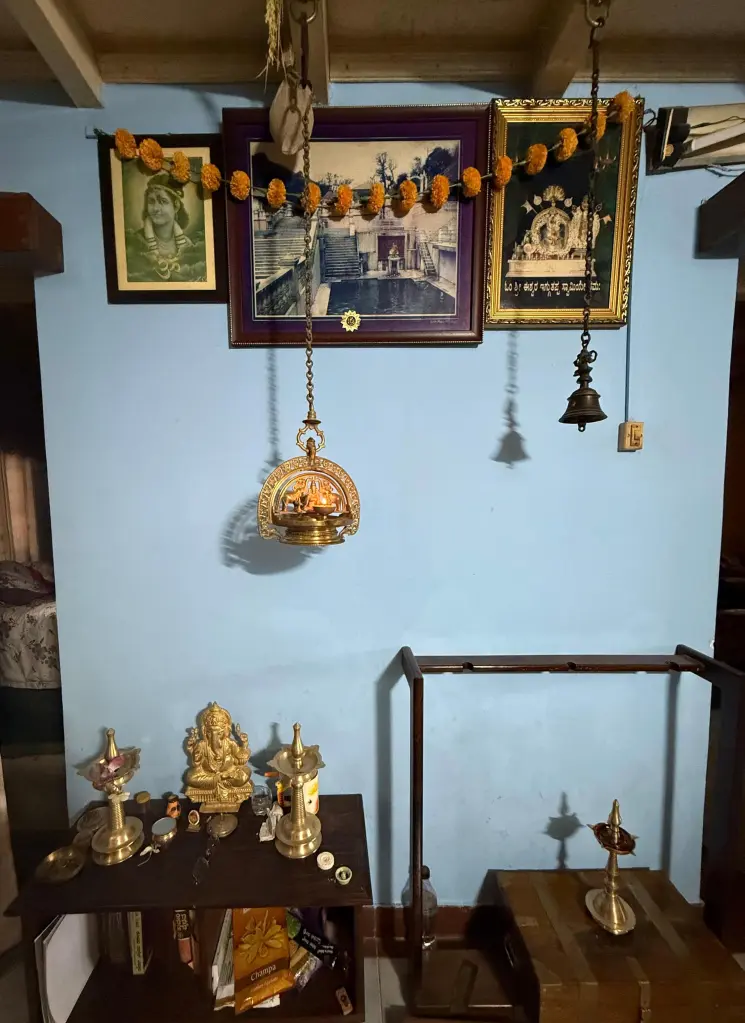
The temple consisting of mainly a lamp inside traditional Kodava House
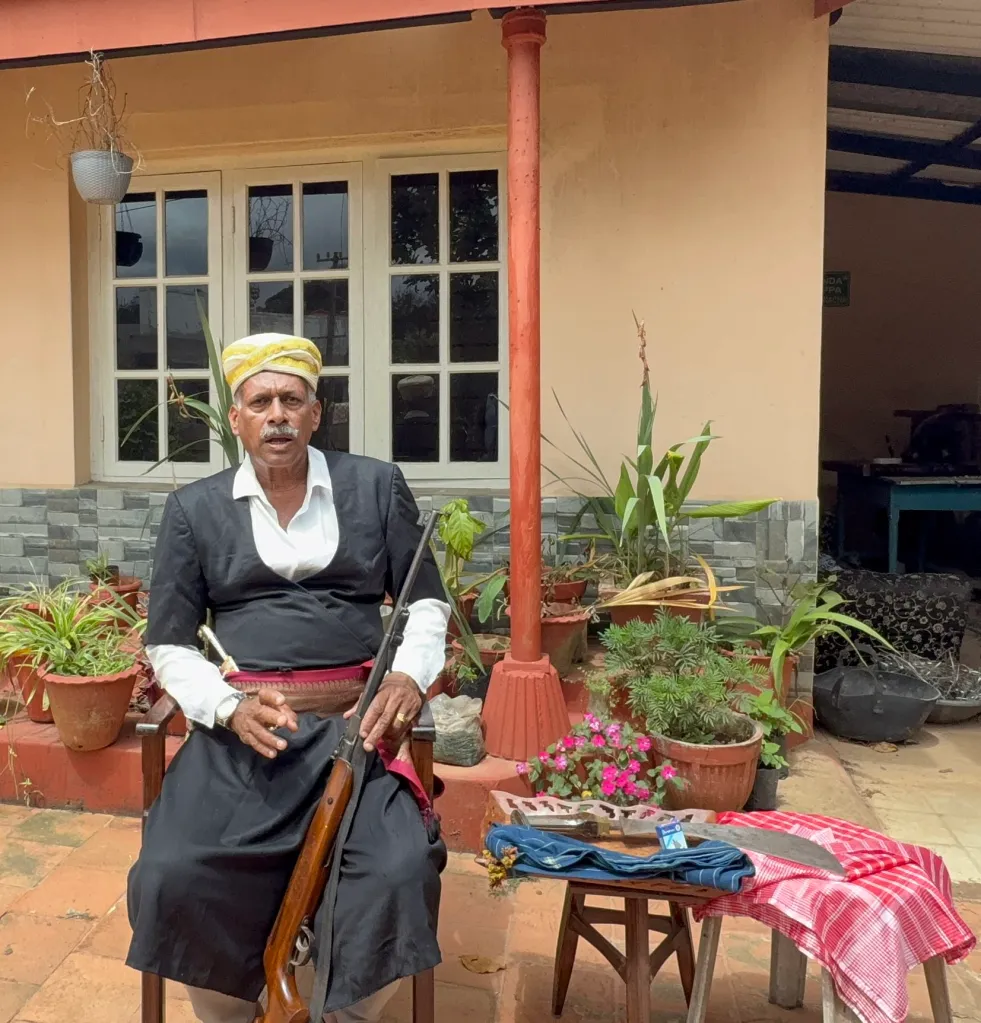
Mr. Bopanada Poonacha in Kodava traditional attire for DDIOC 2026 project interview

Small details kept finding me after that, the way they do when your heart is already open. None of the homes had ceiling fans—they’d simply never needed one, the climate having always taken care of that for them. It was only with the creeping heat of climate change that families were beginning to bring in stand fans, almost reluctantly, like admitting something they didn’t want to admit. And every home had a garden, not manicured for show but genuinely alive—flowering plants, fruit-bearing saplings, and soil that clearly got tended to before breakfast. Nature at home first, in the plainest, most literal sense I’ve ever seen it practiced.

History, Food, and a Marriage That Belongs to No One Else

Mr. Poonacha spoke for hours, and it never once felt like an interview. It felt like being let into a room we hadn’t yet earned entry to. He told us how Talakaveri came to be and why nature is the most celebrated god in Kodava belief and walked us through their food and their history of hunting. He described their attire in loving detail. And then he told us something that quietened the whole room: a Kodava wedding has no priest presiding over it at all. No outsider is called in to make the moment official. It’s the community itself, the family itself, that carries the ceremony from start to end—and it’s the mother who ties the mangalasutra on her daughter, no one else, no exception. I’ve sat through weddings my whole life where the most sacred moment is handed to someone outside the family to perform. Here, it never leaves the people it belongs to. I didn’t expect that detail to move me the way it did, but it did.

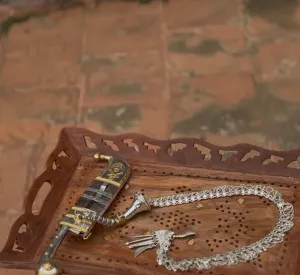
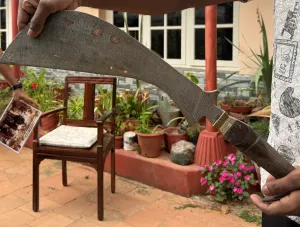
One of the things Mr. Poonacha spent the most time on, almost like he wanted to make sure we got it exactly right, was the story behind the Kodava logo. It comes from the region’s martial heritage, he explained, and brings together three objects that have carried Kodava identity for generations: the Peeche Kathi, a traditional dagger; the Odi Kathi, a broad-bladed war sword; and a thok, a gun. Listening to him lay out each piece—what it was used for, what it meant to carry one, and why all three together and not just one—I realized the logo wasn’t a design choice at all. It was a whole history of a warrior community, folded down into a symbol small enough to wear.

By the time we were ready to leave, the family sent us off with homemade wine—brewed from betel leaves, from grapes, or whatever the season had given them that year. It felt less like hospitality and more like being fed by people who had quietly decided, somewhere in those few hours, that we were worth feeding properly.

Why This Stayed With Me

I’ve documented culture before, but this trip sat differently in my chest. Maybe because Kodava is endangered enough that almost none of what we recorded — the lamp, the wedding customs, the mangalasutra tradition, Mr. Poonacha’s own story—existed anywhere online before us. Maybe because somewhere between the doorway and the temple lamp, I stopped thinking of this as fieldwork and started feeling like a guest who’d been let in on purpose.
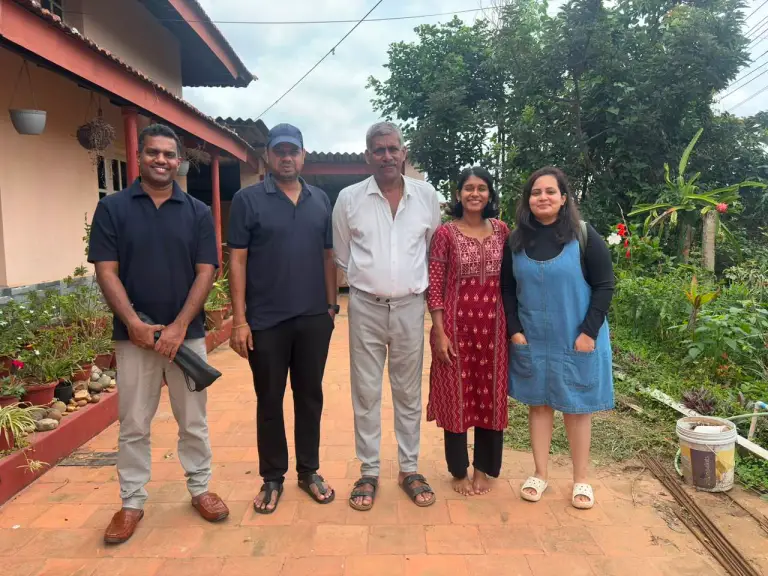
Kannada Wikipedia Team (DDIOC 2026) along with Mr. Bopanada Poonacha and his daughter

Two years into this project, I’ve learned that the folk songs and oral histories we record are never really the whole story. The whole story is also in the fan that isn’t there yet, the lamp instead of the idol, and a man who decided in his late fifties that a language still deserved his full attention. I came back from Madikeri a little quieter than I left, in the good way—the way you get when something has genuinely rearranged a small part of how you see the world. If our footage means even one more person online meets Kodava culture the way we got to meet it—with warmth and without a screen standing between them and it—then this trip did exactly what it set out to do.

source: http://www.diff.wikimedia.com / Diff / Home / by Reema Jalihal / August 26th, 2026
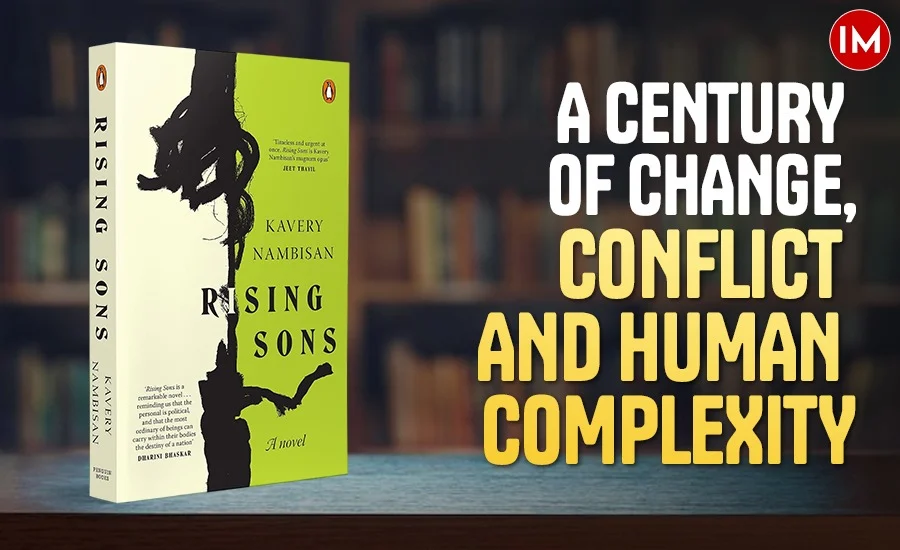
Kavery Nambisan’s Rising Sons Is a Witty, Tender Portrait of India in Transition

Kavery Nambisan’s Rising Sons traces generations, identities and a changing India through humour, tenderness and sharp social observation.

“At times, we observe a change in a person when, in actual fact, it is the situation that has changed. At other times, we fail to see the transformation, perceiving instead that the varied situation makes it appear so.” Our narrator in Rising Sons — an omniscient, non-bodied voice which carries the keen intelligence and wry sensibility of the book’s accomplished author Kavery Nambisan — knows the universal complexities of person and situation. There are other eternal truths observed by this narrative voice too, which occasionally address the reader directly and thus bring us into the story as characters produced by similar contexts of a country changing over a century.

Mud is life for the fifty-seven families in the village of Kesarugattu, and the rain-fed rivers are the water which sustain life. “We romanced the outside world through the newspaper. Knowledge burnished our rustic minds,” informs the narrative voice. “One day, we read the scandalous writings of a young wife of a Brahmin from Poona, about the plight of women,” and though the words of Tarabai’s letter resonated with our own book’s protagonist Gowru, who was also the young wife of a Brahmin, we will refrain from further description of her and instead move forward a couple decades to her titular sons. The eldest was Nanju, who dreamed of greatness, and “thought of himself in the guise of Vivekananda, of Aurobindo, of Tilak, but never as Gandhi. Personality and image mattered. His admiration settled on Naoroji, the elegant Parsi gentleman who had performed the unique feat of opposing the British while being friends with them.” The younger was Anna, who went to see owls with the Ai people at night, and spoke at a Congress rally in Mysoor “about growing up, his schoolboy dreams, his college days, the gradual understanding of how we were being ruled by a race of people from a faraway land and about the sure and steady swell of opposition to their rule”.

The father of these sons — and the husband of Gowru — is the twice-born Devaraya. He is a protagonist too. There are other fathers and sons, like Keshava Pujari and Vibhushana. There are also daughters: most notably Chinni, born to Gowru’s childhood friend Bhagya and her Malayali husband Dharma.

Chinni, who understood early that the world is tilted because people hide their real selves, had written a two-page letter to Bhagat Singh in prison expressing both her admiration and displeasure: “Displeasure about the way the shooting had been done, without careful planning. If I had been there, I would have helped, I wrote. I added that I was ready to marry him, in prison, and carry out the unfinished work. It was a serious proposal of marriage.” She had her reservations about Gandhi and the ideals of sacrifice which he advocated. Wearing khadi whilst privileging the language of the colonizer seemed like contradictory swadeshi to Chinni. Could simplicity of clothes genuinely lead to a corresponding transformation as simplicity of spirit? An ascetic is ascetic regardless of what they wear; external image is only one thread of internal coherence. But enough about Chinni — we must get back to the sons now.

These are the main characters we are introduced to in the novel, but there are many other fishes we meet in the pond of Kesarugattu, and in the rivers which bring them there. There are Ai tribals, Brahmins, Chandals, Mussalmans. There is Shantadevi, Muduki, Uzman and Maimoona, Sumana, Hanumantha, Gagana, Vaidehi… and even if we visit these others only briefly, their essential contours reveal themselves to us clearly through the narrative voice, which gives even minor characters the dignity of keen attention. When the scene shifts to Delhi, there is “the old mother of the driver Karthab Singh and the roasted mutton pieces she fed him while crooning love songs about the longing to shield her beloved from all danger by enfolding him in her long hair. Her husband was long dead, and she had short, wispy hair that could not protect an ant. But singing love songs gave her pleasure.”

There is also another protagonist from the village who may be listed here last but in no feasible circumstance could be considered the least, and that is Kuppu the dog: “He is still there, our beautiful all-black Kuppu — at times he is a playful little pup, at times an adolescent, and, at other times, an aged, lumbering, peace-loving fellow. Which is why people say, Kuppu is forever.”

The eternal archetypes which our transient human and non-human characters embody are depicted with such genuine tenderness that even if the book were indeed re-titled Ondu Kaththeya Atma Kathe or ‘Memoirs of a Donkey’ (as one protagonist suggests grimly), it could still trace many of the same waves of supple affection and insightful censure which characterize Rising Sons.

Donkeys do not seem to have pride or prejudice, however, which are among the main themes of this book. Character decides destiny because it shapes our choices, but a bruised ego leads to reaction rather than choice — the spirals which emerge from wanting to be seen in certain ways can extend to dangerous shadows. Nambisan is an observer of individual tendency as much as of the social structures of family and village and politics which shape new citizens of a new country, which have shaped us..

Humans have a deep desire to ease each other’s pain, and a difficulty in balancing that against the restoration of their own selves. Idealism fights the cynicism of reality and sometimes stumbles so frequently that it becomes entirely unsteady. In India, virtues of Brahmin non-covetousness and Gandhian restraint were unable to stem the blood-dimmed tide of greed and vanity which too are fundamental human vices. This slow percolation of a self-serving culture in the outward guise of piety pushes the Ai people – rooted to the earth and all her creatures – into wearing “half-pants” and “proper saris” instead of the simple lengths of cloth which they traditionally used to wrap around their bodies. There is also the implicit bleakness of rural India becoming urban in the strange erosions and sediments which have metamorphosed Bengloor into Bangalore. Much is found, much is lost. Yet despite the fact that this pace of change is almost tragic when viewed as a generational saga, it is delivered through an authorial voice so deft and irreverent that this reader found herself smiling often, and on more than one page even laughing out loud.

Rising Sons is a story on fertile ground and rich soil, with much to recognize in the moments it portrays, as a missive which illumines the heart. It weaves its chapters in leisurely visits to the interior lives of its characters and their contexts in a manner which justifies the Irawati Karve quote with which the book begins: “Human toil, expectations, hates, friendships—all seem puny and without substance, like withered leaves eddying in the summer wind. But the people who toiled and dreamed and loved seem unforgettable…”

source: http://www.indianmasterminds.com / Indian Masterminds / Home> Book Reviews> Features / by Yauvanika Chopra / September 05th, 2026

Diya wins silver

Yonex-Sunrise India Junior International Grand Prix-2026

Mysuru: 

Diya Bheemaiah of Kodagu, along with her Doubles partner Keerthi Manchala of Telangana, won silver medal at the Yonex-Sunrise India Junior International Grand Prix 2026 at the PDMBA Sports Complex in Pune recently.

The fourth-seeded Indian pair went down in straight set 15-21, 11-21 to Thailand’s pair of Chattrat Mardankul and Peerploy Suttiwarayanon.

Players from India, Indonesia, Malaysia, Thailand, the USA and the UAE participated in the tournament.

This is the fourth international medal Diya has won in the U-19 junior category.

Previously, she secured a silver medal in Girls Doubles and a bronze medal in Singles at the Nepal International Series 2024 as well as a gold medal in the Girls Doubles category at the Kotak India Junior International Series 2026 held earlier this month. 

Diya Bheemaiah, a II PUC student of Vidhyaashram, is the daughter of Boppanda Bheemaiah and K.K. Kusuma (Kambiranda), residents of Mysuru. She trains under Coach Arun Pemmaiah at Sports Park, Mysuru and under international badminton coach Ivan Sozonov at the National Centre of Excellence in Guwahati, Assam

source: http://www.starofmysore.com / Star of Mysore / Home> Sports / September 01st, 2026

Kail-Poldh get-together

Mysuru: 

The Annual Kail-Poldh Festival-2026  get-together will be held on Sept. 6 (Sunday) at 9.30 am at Kodava Samaja premises in Vijayanagar 1st Stage here.

Devanira Preeth Ganapathy, Additional Commissioner of Income Tax, Bengaluru, Chiriapanda S. Suresh Nanjappa, President of Kodava Samaja, Bengaluru and Ajjinikanda Mahesh Nachaiah, Chairman of Karnataka Kodava Sahitya Academy, will be the chief guests.

Samaja President Ponjanda A. Ganapathy will preside.

The event comprises Ayudha Puja, Sports and Games, Lucky Dip, honouring eminent Kodavas and distribution of scholarship to Kodava students under the following category — Class 10: CBSE, State, ICSE; PUC: CBSE, State, ICSE; Degree: Arts, Science, Commerce, Law, MBBS, Nursing, Home Science/ Hotel Management & Engineering; Post Graduation in the above category, Civil Services; Doctorate degrees from the Government recognised Universities and Sports: Represented State, National and International level.

source: http://www.starofmysore.com / Star of Mysore / Home> News / August 31st, 2026

Brothers with Kodagu roots make their mark in American Ice Hockey

Mysuru :

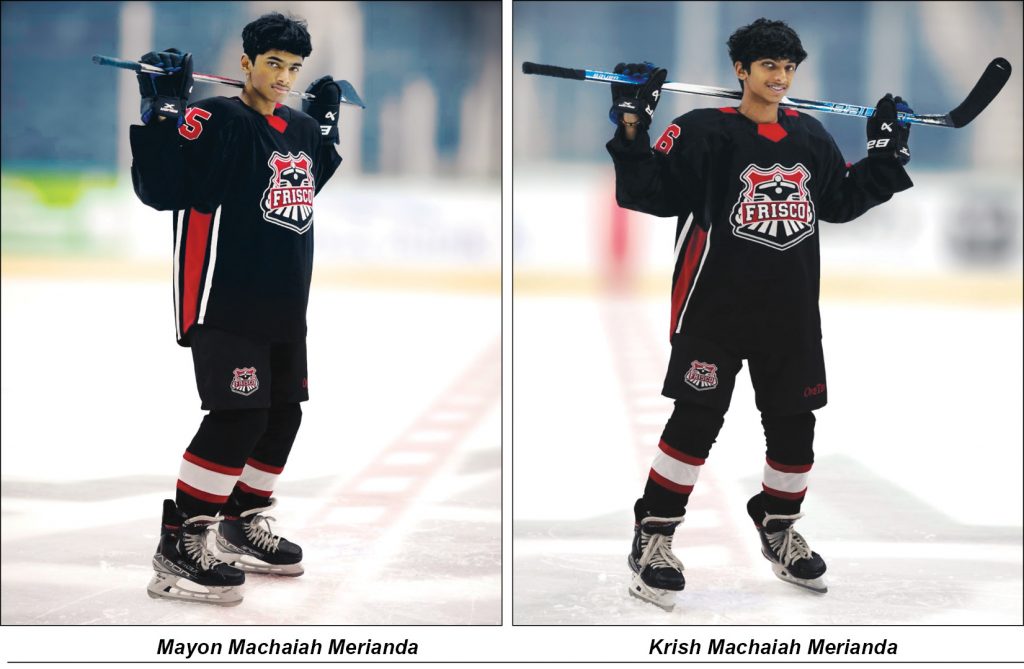
Two brothers with family roots in Kodagu and Mysuru have made their mark in American Ice Hockey after earning selection to competitive teams of the Frisco Hockey Association, Texas, USA.


While 15-year-old Mayon Machaiah Merianda has been selected to the Frisco Varsity Team, his 13-year-old younger brother Krish Machaiah Merianda has secured a place in the Frisco Varsity Junior Team for the Summer 2026 season.


Mayon, a Grade 10 student at Independence High School, Frisco, earned promotion to the Varsity squad following his performances in previous seasons. Krish, who recently completed Grade 8 at Nelson Middle School, secured his place in the Junior Varsity team after consistent performances at the developmental level.


The brothers belong to the Meriyanda family of Kodagu, with their ancestral roots tracing back to the historic Meriyanda Ainmane. They are the sons of Srikanth Thimmayya, Founder and Chief Executive Officer of SHIRO Technologies and Dr. Gangamma Chenenda, a Physician based in Dallas, Texas.


Their late grandfather Merianda K. Thimmayya, was an advocate, who had settled in Mysuru after moving from Kodagu several decades ago while their grandmother Sharada Thimmayya, continues to reside in Mysuru. Despite growing up in the United States, Mayon and Krish maintain close ties with Karnataka through regular visits to Mysuru and Kodagu.

Their success stands as an inspiring example of how young people with roots in Kodagu and Mysuru are making their presence felt in diverse fields and sporting arenas across the world.

source: http://www.starofmysore.com / Star of Mysore / Home> News / June 03rd, 2026

‘Rethinking language biases would enable us to look more holistically at agroecological practices’

Molecular biologist Sujata Goel on the importance of “weeds”, modern approaches in science communication & India’s organic farming policies.

Nearly 30 years ago, molecular biologists Sujata Goel and her partner Anurag left Delhi to build a life closer to nature in Karnataka’s Kodagu district. Over the years, they began working closely with local farmers to understand how agroecological plantations could be developed at scale, combining their expertise in academic biology with generations of local ecological knowledge to co-create natural solutions for coffee and spice plantations. Communication techniques that closed language and knowledge gaps were essential in this confluence of modern scientific understanding with centuries-old local wisdom.

The couple has been actively researching natural alternatives to chemical pesticides, starting with a makeshift laboratory on a wooden table on their 25-acre ecologically sustaining plantation to test how certain plant species that are considered “weeds” have properties to turn away pests and provide other benefits to cultivated plants. Since then, Sujata has taken their research to public platforms and official channels to advocate for bans on use of agri chemicals in Coorg’s coffee and spice plantations. Coorg is home to Talakaveri, the source of River Kaveri — the lifeline of multiple South Indian states. The chemicals sold to and used by planters, seep into the soil and contaminate this vital waterbody.

Today, Sujata works with a small team of farmers, naturalists and conservationists to bring awareness about the lethal impacts of weedicides that has gradually crept into the agricultural practices in and around plantations in this area. 

She has also taken these ideas to the international stage through the Organic Farming Association of India, serving as its president and helping organise a global symposium in 2017. In the conversation with Down To Earth, she discusses the methods and importance of such dialogue, the evolving approaches of communicating science with local communities and what she has learnt about organic farming in India as a practitioner. 

Preetha Banerjee: How has science communication changed over the years and what channels and techniques do you use to raise awareness among local farmers? What has been the impact of the Internet?

Sujata Goel: Most people across villages including farmers use the internet comprehensively. Several village Panchayats, Planters and Farmers have created Whatsapp groups to exchange and share information regarding everything related to cultivation, from weather forecasts to agricultural practices, government schemes and subsidies available, and other related matters. We are using such platforms in collaborations with scientists to spread awareness about the carcinogenic and lethal effects of many of the agrichemicals which are rampantly being used in the fields now. It is important to remember that these lands constitute a catchment area being the primary recipients of the South-west monsoons, providing water for much of peninsular India. Spraying pesticides and weedicides around paddy fields have contaminated wetlands, which is extremely dangerous since these wetlands are the life source of all flowing water. These wetlands are also precious because they recharge ground water and must be protected from such thoughtless destruction at all costs.  

PB: Over three decades of working with farmers, how have you seen science communication evolve?

SG: Whatsapp groups and Instagram seem to be the most accessible to farmers. Since multiple language use is now possible, these are popular, especially in rural areas. Several workshops are also held remotely, and farmers are able to attend them from their own places of residence and work. This helps cut costs of holding such study programs and enables organisations such as Organic Farming Association of India (OFAI) to invite scientists to such platforms without disrupting their work schedules.

PB: Modern agricultural science promotes a negative association with “weeds”. Is there another way to look at weeds? What have you learnt from traditional wisdom and your own research?

SG: Words like “pest” and “weed” have evolved through western agricultural practices. They tend to designate some species desirable and others not. Many native plants which we call weeds were consumed as food not long ago and continue to do so. Many species which we eliminate under the garb of “weeds” play an essential role not only in the overall ecosystem, but also in producing our own food. They not only create habitats for local biodiversity but also offer pollinators necessary grounds for foraging and survival. Rethinking our language biases would enable us to look more holistically at the philosophy behind our practices.

This brings us to the issue of weedicides, which have slowly infiltrated Kodagu’s coffee plantations in the past ten years. We now notice deformities and dead bodies of animals in the once-lively streams that are the arteries of this landscape. The poisoning of freshwater species is just an indicator of the impact these chemicals have on human health.

This year, in February 2026, the multinational company, Bayers, announced that it will pay $7.25 billion to settle thousands of US lawsuits alleging that its Roundup weedkiller has caused a vast number of individual cases of cancer. That these family of carcinogenic agri-chemicals were lethal to all life forms was substantiated by rigorous scientific research decades ago and has been available in the public domain, and yet their marketing continues unabated. Are these the substances which international companies promote and enforce on the planet and escape all forms of control? Who becomes accountable for such acts of deliberate genocide?

PB: Why is it important to think about biodiversity as an entire ecosystem rather than as individual species? What does this mean for agricultural productivity?

SG: Sustenance of the ecology of a farm depends upon the richness of its biological diversity. Plants and insects, fungi and soil microorganisms have all co-evolved for millions of years. Good farming practices aim to understand the importance of biodiversity and try to mimic nature by providing niches for diverse plants, animals, insects, bacteria and fungi. The ‘ecosystem services’ provided by this biodiversity are invaluable, not just for farmers, but for all of life surrounding us. These range from encouraging populations of pollinators, soil recharge and nutrient cycling, disease regulation, water harnessing, and carbon sequestration among others.

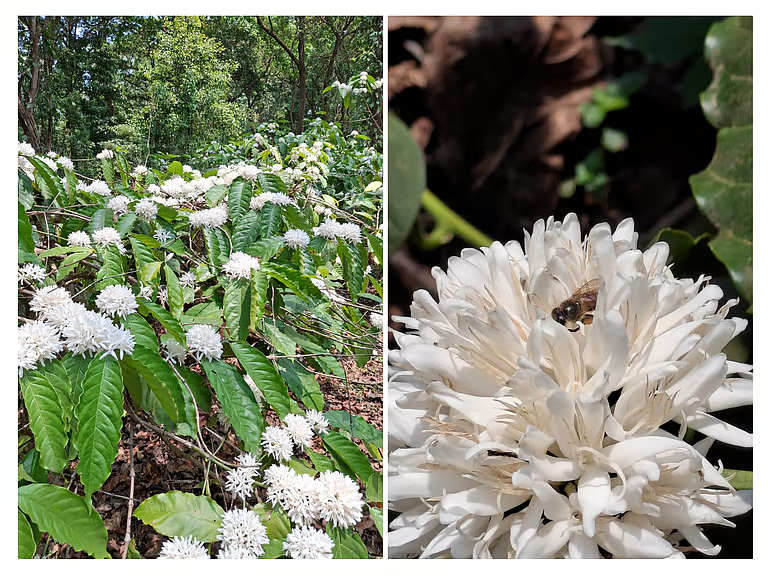
On organic farms such as ours that have no trace of chemicals around, parasitic and predatory insects colonise native plant species and play significant roles in maintaining disease-free crops. Integration of fallow areas, leaving riparian stretches rich with local weeds, and generous mulching has allowed a rich buildup of biodiversity in the fields. As a result, we now have excellent populations of spiders, wasps, dragonflies, frogs, lizards, snakes and a wide range of birds, all of which contribute towards building up of a diverse and healthy agri-ecosystem.

Birds are amazing for their ability feed on insects and caterpillars; spiders are indiscriminate trappers of a whole range of insects. Wasps lay their eggs on larvae, which hatch and being carnivorous, start feeding on the grubs which would otherwise damage the crops. Bats, frogs, skinks, lizards, shrews, mantids, are insect feeders and form an intricate link in the food web of the forest ecosystem.

Beneficial microorganisms contribute to a rise in detritus activity of the soil, increased nitrogen fixation, and increase in nutrient cycles. Areas where grasslands are encouraged become sponges for harnessing rainwater to replenish water tables and aquifers. It is these who are the true regenerators of our soils and agri-ecosystems.

PB: How has India’s approach to organic farming changed over the past three decades?

SG: Across our agricultural landscapes, farmers are beginning to feel the “bite” of 60 years of aftermath of the green revolution. Widespread losses due to climate extremes being experienced in different parts of the world now are adding to the need to desperately regenerate degraded lands. This is possible only through farming practices which totally exclude use of agri-chemicals, and at the same time, enabling viable practices to revive our soils.

There is no half measure. The governing bodies of our country must make up their minds that when they announce policies and projects to support organic farming, whether that is their true intent and how such projects can be implemented in light of subsidies and other supportive mechanisms offered for purchases of the very agri-chemicals which are responsible for the damage. Through field-based education and changes in policies to ensure that farmers are economically protected, it is possible to scale up on organic practices to feed our populations. This has been amply demonstrated by the truly progressive farmers across the world.

source: http://www.downtoearth.org.in / Down To Earth / Home> Environment / by Preetha Banerjee / August 22nd, 2026

SCA announces board of directors candidates

Sunalini Menon started working for the Coffee Board of India in 1971. Image CoffeeLab

The Specialty Coffee Association (SCA) has announced the candidates for its latest SCA Board of Directors Elections.

Following nominations and then interviews with the SCA Nominations Committee, Ahmed Bin Sulayem, Executive Chairman and CEO of DMCC; Sunalini N. Menon, President of Coffeelab Limited; and Karsten Ranitzsch, Global Head of Coffee at Nestle Nespresso S.A have been shortlisted.

From 1 to 30 September, a Nominations by Petition period will commence. Applicants not selected through the nominations and interview process who collect at least 100 signatures from SCA professional members or the primary contact of a company member can be added to the final ballot by petition.

The final ballot will be announced on 13 October. SCA members will be invited to vote for the new director from 1 to 30 November, with the result of the election to be announced on 15 December.

The SCA Board of Directors consists of 15 volunteer members, supported by CEO Yannis Apostolopouloss and the SCA staff. According to the organisation, the board supports the work of the SCA and provides mission-based leadership and strategic governance.

The SCA is the world’s largest coffee trade association. It was established in 2017 with the merger of the Specialty Coffee Association of America and the Specialty Coffee Association of Europe.

source : http://www.gcmag.com / Global Coffee Report / Home> News / by Kathryn Lewis / August 28th, 2026

Tamara Leisure Experiences Shines With Five FHRAI Awards Across Hotels, Talent and Wellness

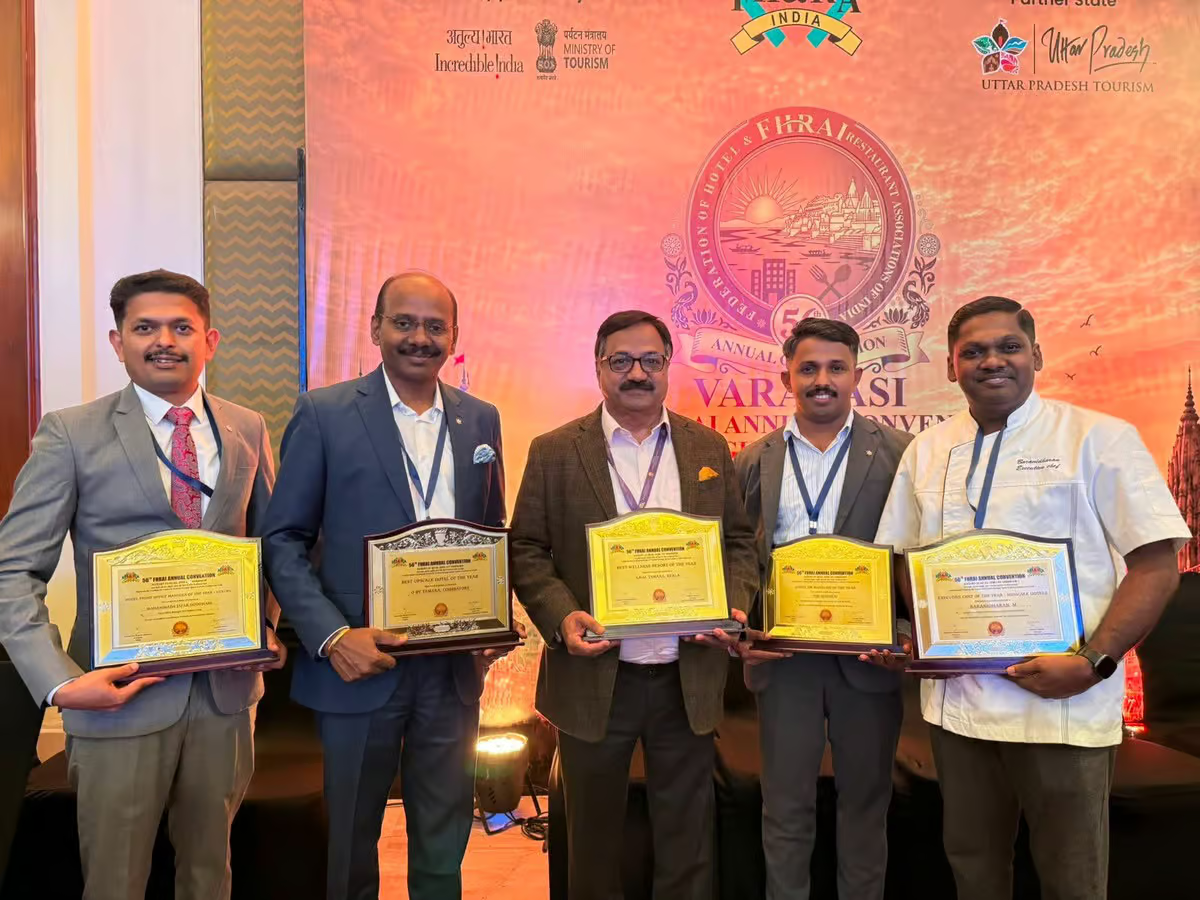
Tamara Leisure Experiences (TLE) has written another chapter in its success story by winning five key awards at the FHRAI 56th Annual Convention. The awards are a testimony of TLE’s focus on leadership, innovation in food and beverage, engagement of employees, performance of properties and social wellness. The awards appreciate TLE for providing experiences with a ‘people’ and a ‘purpose’ touch and incorporating ‘place’ through real time experiences offered during their stays.

The awards reflect the diverse strengths of TLE’s hospitality portfolio. At The Tamara Coorg, Mohd Jafar was honoured as Hotel Front Office Manager of the Year – Luxury Hotels (Male), recognising his contribution to delivering exceptional guest service. Chef Baranidharan M from O by Tamara Coimbatore received the title of Executive Chef of the Year – Midscale Hotels (Male) for his culinary leadership and innovation. Jijo Mathew from O by Tamara Thiruvananthapuram was recognised as Human Resources Manager of the Year – Upscale Hotels (Male), highlighting the group’s strong focus on talent development and workplace excellence.

Further strengthening TLE’s achievement, O by Tamara Coimbatore was awarded Best Upscale Hotel of the Year, while Amal Tamara received the award for Best Wellness Resort. The recognition celebrates Amal Tamara’s unique approach to holistic Ayurvedic wellness and its efforts to provide transformative wellbeing experiences. Together, these accolades underline TLE’s continued pursuit of excellence across its properties and its dedication to redefining contemporary hospitality.

Speaking on the recognition, Samir M.C., CEO, Tamara Leisure Experiences, said, “These recognitions are particularly meaningful because they reflect the different elements that come together to define Tamara – our people, our destinations and the experiences we create. We have always believed that responsible and memorable hospitality is built through authentic engagement with our guests, our teams and the places in which we operate. To see this philosophy recognised across both individual and property categories is a strong affirmation of the work our teams do every day.”

The FHRAI 56th Annual Convention, hosted from August 21 to 23, 2026, at Taj Ganges, welcomed over 1,000 delegates from India and international markets, including policymakers, hospitality leaders and key stakeholders from across the  tourism and hospitality sector. The event provided a significant platform for discussions, partnerships and industry collaboration, focusing on the changing priorities and future direction of Indian hospitality.

The recognition highlights TLE’s core belief that hospitality should extend beyond delivering memorable guest stays and create a positive impact on people, communities and the destinations where its properties operate. This commitment is reflected through its strong focus on local employment, with nearly half of its workforce recruited from surrounding communities. By generating employment opportunities and supporting local livelihoods, TLE ensures its properties remain deeply connected with regional traditions, cultural identity and the natural landscapes that define each destination.

With modern travellers increasingly searching for authentic experiences, cultural connections and meaningful journeys, TLE continues to develop hospitality concepts that celebrate a strong sense of place. From the nature-inspired luxury of The Tamara Coorg and stylish urban experiences at O by Tamara to the personalised Ayurvedic wellness offerings at Amal Tamara, each property reflects a unique interpretation of responsible hospitality. Through its philosophy of Responsible and Memorable Hospitality, TLE focuses on preserving local heritage, strengthening communities and creating experiences that deliver lasting value for guests and the destinations they visit.

source: http://www.travelandtourworld.com / Travel andTour World (TTW) Home> Hotel News / by Benny Mehera / August 25th, 2026

Thekkada Bhavani from Kodagu wins silver medal in cross-country skiing in New Zealand

While the main event spans 42 km, the 21 km race offered Bhavani a strategic platform to venture into long-distance racing and ski-marathon formats.

Madikeri :

In a notable achievement for Indian winter sports, Thekkada Bhavani from Kodagu has secured a silver medal at the Merino Muster cross-country skiing event held at Snow Farm in New Zealand.

Competing in the Women’s 30s age category for the 21 km race on August 22, Bhavani completed the course in 1:34:38, making her the first Indian woman to both participate in and win a medal at an official Worldloppet Skiing Federation event.

The Merino Muster stands as one of New Zealand’s premier long-distance cross-country skiing competitions and serves as a key leg on the international Worldloppet circuit.

While the main event spans 42 km, the 21 km race offered Bhavani a strategic platform to venture into long-distance racing and ski-marathon formats.

Bhavani’s remarkable finish in New Zealand is another addition to her recent international successes.

During the 2025-26 winter season, Bhavani earned distinction as the first Indian woman to win an International Skiing and Snowboard Federation (FIS) medal.

She also holds the honour of being the first Indian cross-country skier to qualify and race in the FIS Cross-Country Ski World Cup, expanding her competitive range from sprint and distance races into long-distance endurance circuits.

Bhavani is currently undergoing an extended international training program at Snow Farm. Her preparation and international exposure have been made possible through financial and logistical backing from the Reliance Foundation and the Government of Karnataka, which contributed Rs 10 lakh through its Department of Youth Empowerment and Sports to support her training.

Reflecting on her achievement, Bhavani noted that competing in her first Worldloppet race served as an important test of her endurance training.

She expressed that earning a category win in the 21 km event provides substantial confidence as she prepares for the upcoming international season.

source: http://www.newindianexpress.com / The New Indian Express / Home / by Express News Service / August 25th, 2026

Shilpa Nanjappa bags UstadBismillah Khan Yuva Puraskar

Mysuru:

 Acclaimed Bharatanatyam artiste from Kodagu, Mukkatira Shilpa Nanjappa, has been selected for the prestigious Ustad Bismillah Khan Yuva Puraskar for 2024 by the Sangeet Natak Akademi (SNA) under the category ‘Overall Contribution and Scholarship in the Performing Arts.’

The award is India’s highest honour for performing artistes under the age of 40. Shilpa is the first person from Kodagu and the first Kodavathi to receive the coveted recognition.

Candidates are nominated by eminent artistes and previous SNA awardees and are evaluated on the strength of their body of work and contributions to the performing arts.

In the ‘Overall Contribution and Scholarship’ category, artistes are expected to demonstrate not only excellence in performance but also significant contributions through research, teaching, curation and allied activities.

In Shilpa’s case, the award recognises more than a decade of work in documenting, preserving and promoting Kodava culture and heritage through academic research, alongside a distinguished performing career spanning nearly three decades.

She was awarded the prestigious two-year Fellowship for Cultural Resources and Training (CCRT) for 2019-2021. Her topic was ‘Adaptation of Kodava language/literary compositions into the classical format and Bharatanatyam’.

Shilpa Nanjappa is the daughter of Allaranda Uthappa and Kaveriamma couple. She is married to Mukkatira Pavan Nanjappa. 

Stamp of approval for Kodava culture 

Born in Bengaluru and at present settled in Kodagu after her marriage, Shilpa Nanjappa is also an ‘A’ grade artiste of Doordarshan. Speaking to Star of Mysore, Shilpa said that being nominated itself was a significant honour because nominations come from senior members of the fraternity.

“When members of the dance community hold me in such high regard, that recognition alone feels significant. For the first time in my life, an award is not about me; it is about the work, the community and a stamp of approval for Kodava culture and heritage,” she said.

“I have dedicated more than a decade to propagating and preserving this tradition. I hope this recognition helps the Kodava language reach places it has never reached before. This award is a huge acknowledgement for micro-culture representation in larger cultural spaces and is integral to the survival of micro-cultures,” she said.

source: http://www.starofmysore.com / Star of Mysore / Home> News / June 16th, 2026