The ‘Tiger is burning bright’! One of Odisha’s most celebrated homegrown brands has grabbed global spotlight amid efforts by the state to showcase its economic strengths and investment potential on international platforms.
Here we are talking about Koraput Coffee, specifically its premium Tiger Bright blend, which was included in special MEA’s media kit at the BRICS India 2026 Summit at Bharat Mandapam in New Delhi. Curated under the Centre’s One District One Product (ODOP) initiative, the kit highlights India’s regional diversity alongside items such as Bihar’s sattu and makhana and a Bandhani-printed stole.
The recognition of the tribal-grown coffee was celebrated by Odisha Chief Minister Mohan Charan Majhi, who praised the milestone on X as a moment of immense pride that reflects the state’s rich natural heritage, hard work, and growing global identity.
“Over the past few days, I have been speaking about #Odisha on global platforms, inviting the world to see the opportunities, strength and potential of our State. Today, it is especially heartening to see Koraput Coffee telling another side of Odisha’s story at the BRICS India 2026 Summit,” he wrote.
Linking the moment to Prime Minister Narendra Modi’s “Vocal for Local” initiative, he added, “This is the Odisha I want the world to know—rooted in its soil, proud of its identity and confident in sharing its story with the world.”
Koraput Collector Manoj Satyawan Mahajan described the inclusion as a matter of immense pride. “Koraput Coffee is not just a product; it represents the hard work of our tribal farmers, the unique agro-climatic conditions of Koraput and the rich natural heritage of the district,” he said. The exposure, he added, would strengthen the brand’s identity, raise awareness of its quality and open new market opportunities that benefit local growers and the regional economy.
A Journey Rooted in History
The story of Koraput Coffee stretches back nearly a century. In the early 1930s, Rajbahadur Rama Chandra Deo, the polyglot ruler of the then Koraput (Jeypore) principality and a coffee enthusiast, experimentally planted the first seeds and established small gardens in the region’s rolling hills and forests. Government efforts followed in the 1950s and 1960s, when the Odisha Soil Conservation Department expanded plantations—particularly around the Machkund basin—to prevent siltation in the Jalaput reservoir, recognising the crop’s dual ecological and agricultural value. Private planters later joined, though commercial scale and organised marketing remained limited for decades.
A decisive revival began in 2017 with the formation of the Coffee Development Trust under the district administration, aimed at transforming Koraput into a coffee hub and providing structured support to tribal cultivators. The formal branding came on 11 September 2019, when TDCCOL—under the state’s ST & SC Development Department—launched “Koraput Coffee.” The initiative created an end-to-end value chain covering procurement, processing, packaging and marketing, ensuring a greater share of returns reached the tribal growers who form the backbone of production.
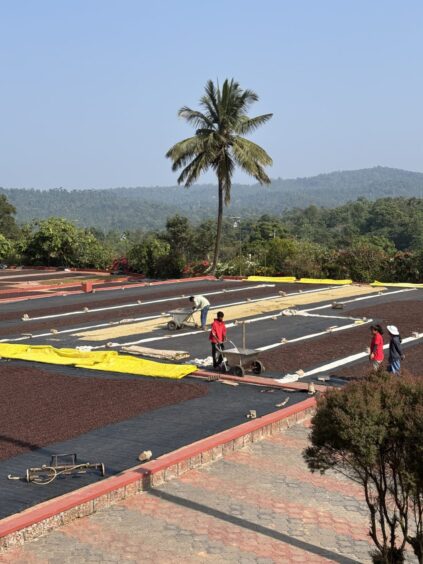
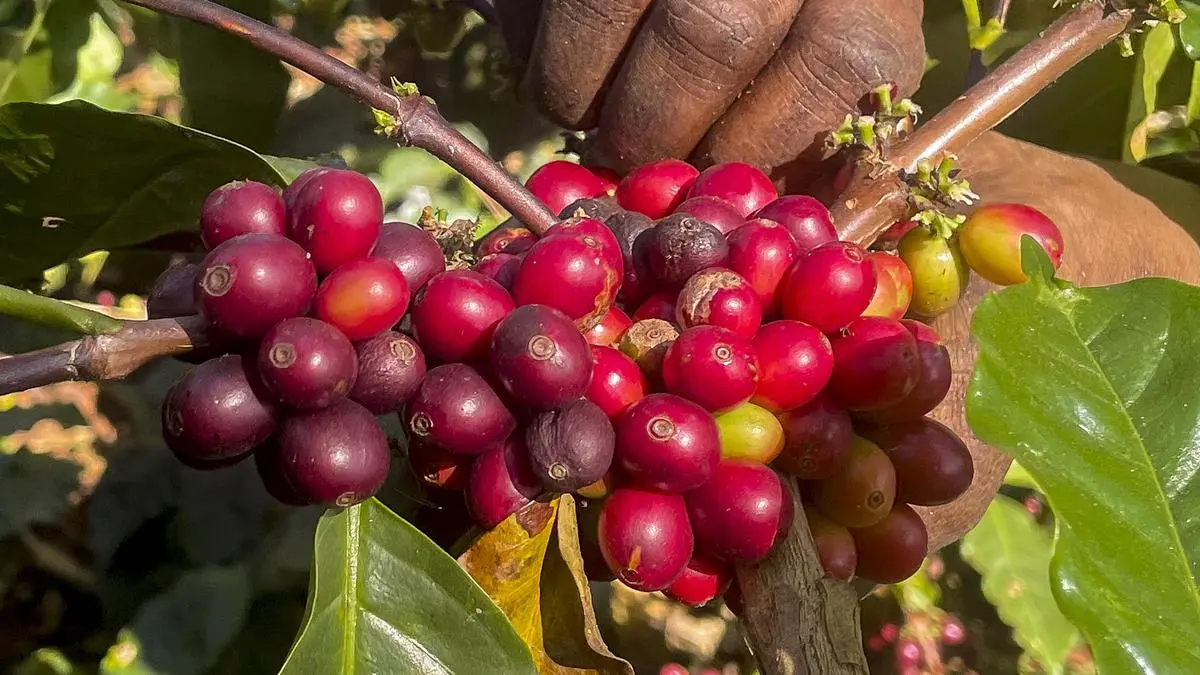
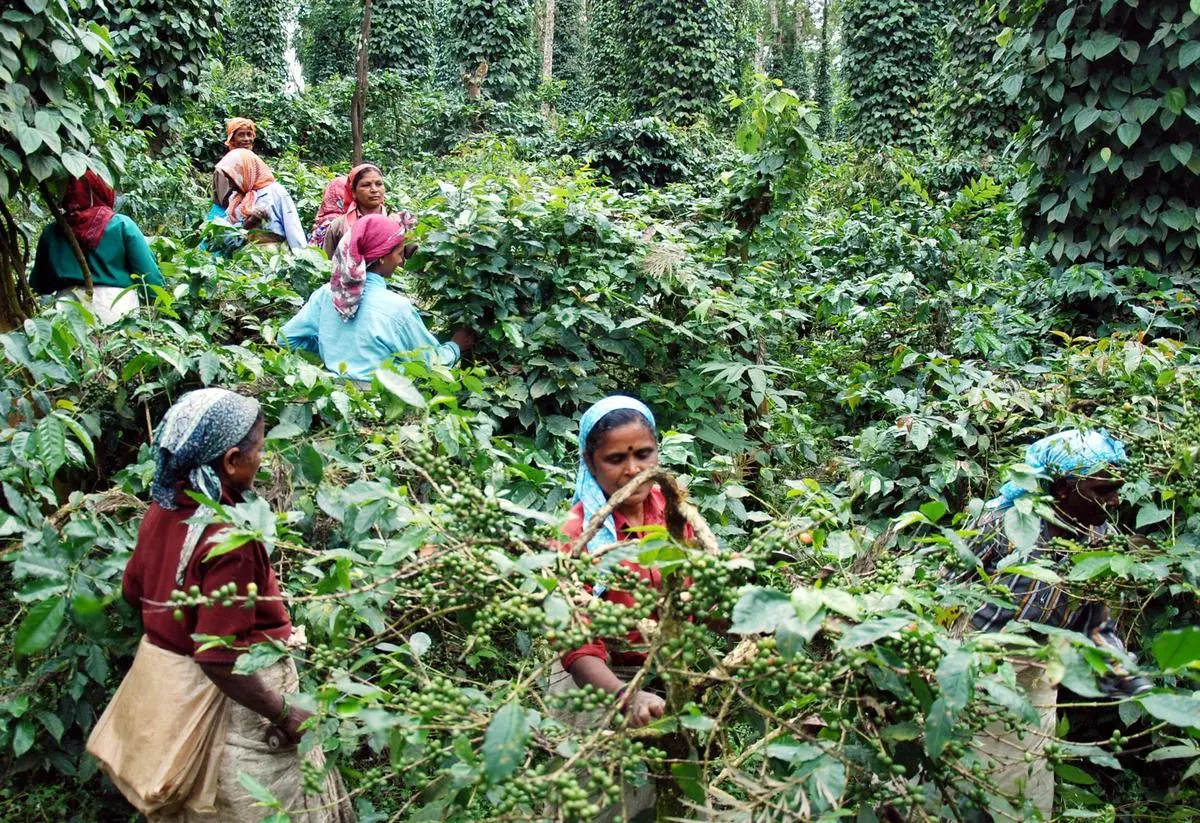
Today the coffee is cultivated as 100% Arabica, shade-grown under mango, jackfruit, citrus and other native trees in blocks including Laxmipur, Kashipur, Dasmantpur, Nandapur, Lamtaput, Koraput and Pottangi. Elevations of around 900–950 metres (and higher in places), cool climate, adequate rainfall and laterite soils create ideal conditions. Cherries are handpicked at peak ripeness, carefully processed (often washed), sun-dried on raised wooden beds and roasted under strict hygiene standards. The area under cultivation has expanded significantly—from roughly 2,000 hectares around 2018 to more than 4,400 hectares in recent years—with tribal farmers managing a substantial portion.
Tiger Bright and Growing Recognition
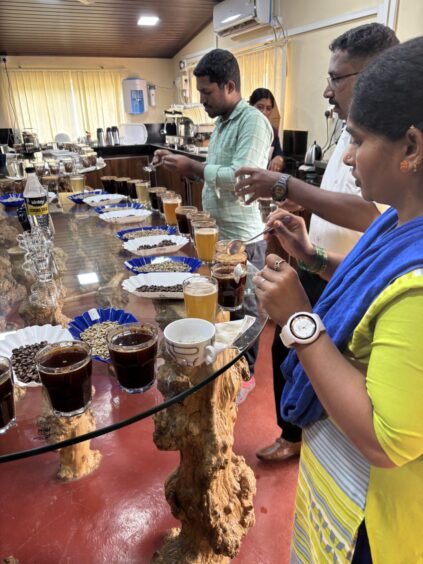
Tiger Bright, the premium Arabica blend, embodies the brand’s distinctive character: bright tropical citrus notes of orange, lemon and sweet lime balanced by undertones of caramel, chocolate and cocoa. A carefully calibrated mix of light, medium and dark roasts delivers consistency. The coffee has earned national accolades, including two Fine Cup Awards at Know Your Kaapi (KYK) 2024 and a fourth-place ranking in the Coffee Board’s Flavour of India Fine Cup 2024.
Procurement figures illustrate the transformation. In the 2025–26 season TDCCOL procured a record 102.54 metric tonnes of coffee fruit—nearly triple the 34.68 MT of 2022–23—benefiting around 360 tribal families, including 71 women farmers. Payments of ₹1.07 crore have been transferred directly to growers’ bank accounts, replacing cash transactions, while Smart Cards aid identification and tracking for a growing share of producers. TDCCOL operates eight Koraput Coffee brand cafés across Odisha and Delhi (including one at NALCO Damanjodi), which generated ₹1.64 crore in sales in FY 2023–24. More than 10,000 packs of Tiger Bright have been commercialised, alongside roasted beans and other value-added offerings.
“The presence of Tiger Bright at the BRICS Summit marks a significant milestone. What began as an experimental royal plantation and later a soil-conservation measure has evolved into a branded specialty product that carries the identity of Koraput’s tribal communities onto a global diplomatic platform. Officials and growers alike see the recognition as validation of sustainable livelihoods, value addition and the potential of India’s regional and tribal produce to compete and connect on the world stage, exactly the story Chief Minister Majhi wants the world to hear,” an official release added.
source: http://www.odishabytes.com / Odisha Bytes / Home> Odisha / by OB Bureau / September 12th, 2026
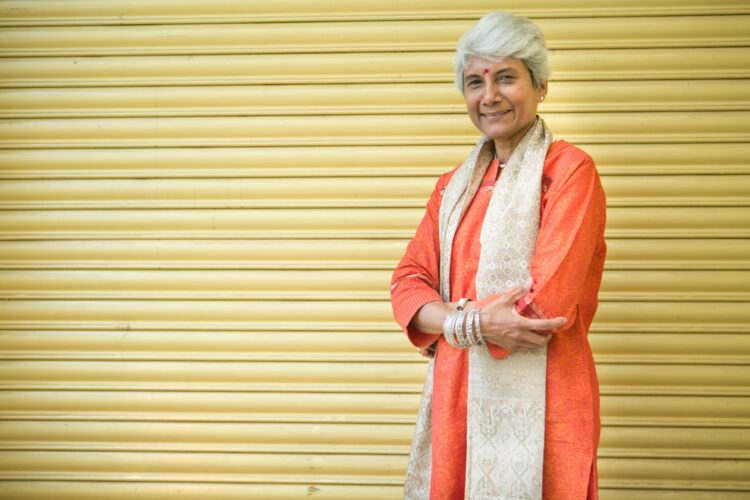
Sunalini Menon started working for the Coffee Board of India in 1971. Image CoffeeLab
The Specialty Coffee Association (SCA) has announced the candidates for its latest SCA Board of Directors Elections.
Following nominations and then interviews with the SCA Nominations Committee, Ahmed Bin Sulayem, Executive Chairman and CEO of DMCC; Sunalini N. Menon, President of Coffeelab Limited; and Karsten Ranitzsch, Global Head of Coffee at Nestle Nespresso S.A have been shortlisted.
From 1 to 30 September, a Nominations by Petition period will commence. Applicants not selected through the nominations and interview process who collect at least 100 signatures from SCA professional members or the primary contact of a company member can be added to the final ballot by petition.
The final ballot will be announced on 13 October. SCA members will be invited to vote for the new director from 1 to 30 November, with the result of the election to be announced on 15 December.
The SCA Board of Directors consists of 15 volunteer members, supported by CEO Yannis Apostolopouloss and the SCA staff. According to the organisation, the board supports the work of the SCA and provides mission-based leadership and strategic governance.
The SCA is the world’s largest coffee trade association. It was established in 2017 with the merger of the Specialty Coffee Association of America and the Specialty Coffee Association of Europe.
source : http://www.gcmag.com / Global Coffee Report / Home> News / by Kathryn Lewis / August 28th, 2026
Total coffee shipments, including re-exports, rose to 318,287 tonnes by August 23, driven by robusta and instant coffee, even as rising inventories and Brazil’s harvest outlook pushed global prices lower
India’s coffee exports are running well ahead of last year’s pace, powered by strong shipments of robusta and a sharp increase in instant coffee re-exports. But the export momentum is unfolding against a more complicated backdrop: global coffee prices have started to retreat as expectations of a faster Brazilian harvest and rising robusta inventories weigh on the market. According to the Coffee Board’s Daily Coffee Market Report dated August 24, 2026, India’s total provisional coffee exports, including re-exports, reached 318,287 metric tonnes between January 1 and August 23, 2026, compared with 258,066 metric tonnes during the corresponding period last year. That represents an increase of roughly 23.3 per cent, highlighting the strong momentum in India’s coffee trade during the first eight months of the year.
Indian coffee exports alone, excluding re-exports, stood at 239,828 tonnes, up from 193,975 tonnes during the corresponding period last year. This translates into a growth of nearly 24 per cent, with robusta emerging as the largest contributor to the increase.
Robusta Leads the Export Charge
The biggest movement came from robusta cherry, where provisional exports climbed to 135,480 tonnes, compared with 105,223 tonnes a year earlier. That is an increase of nearly 29 per cent, making robusta cherry by far the largest category in India’s coffee export basket during the period. Arabica parchment exports rose to 39,380 tonnes, from 31,400 tonnes in the same period last year, while Arabica cherry shipments increased to 10,360 tonnes, compared with 8,715 tonnes. In contrast, robusta parchment exports slipped marginally to 18,896 tonnes from 19,230 tonnes. Roasted coffee seed exports rose to 72 tonnes, against 51 tonnes in the previous year, while roast and ground coffee increased to 343 tonnes from 290 tonnes.
The other major contributor was instant coffee. Provisional exports of Indian instant coffee rose to 35,297 tonnes, compared with 29,066 tonnes in the corresponding period last year. In addition, provisional instant coffee re-exports reached 78,459 tonnes, up from 64,090 tonnes a year earlier. This took total instant coffee shipments, including re-exports, to 113,756 tonnes, compared with 93,156 tonnes last year.
The numbers underline an important feature of India’s coffee trade. While green coffee continues to dominate exports, the role of value-added and re-exported instant coffee has become increasingly significant. Of the total 318,287 tonnes shipped during the period, instant coffee, including re-exports, accounted for more than one-third of the total export volume.
Global Coffee Prices Turn Lower
The export strength, however, is coming at a time when international coffee markets are losing some of their recent momentum. According to the Coffee Board’s market analysis, coffee prices settled sharply lower in the latest trading session, with robusta falling to a one-week low. The market came under pressure on expectations that drier weather in Brazil could accelerate the country’s coffee harvest. At the same time, rising inventories added to concerns over robusta supply.
ICE robusta inventories climbed to an 8.75-month high of 4,732 lots, adding further pressure to the market. December Arabica futures declined by 2.02 per cent, or 6.65 US cents per pound, to close at 322.65 US cents per pound. September ICE robusta futures fell by 2.81 per cent, or $104 per tonne, to settle at $3,598 per tonne. The futures curve also reflected a softer price outlook across later contracts. Arabica futures for September 2026 were quoted at 358.75 US cents per pound, equivalent to about Rs 757.06 per kg, while the December 2026 contract stood at 322.65 US cents per pound, or approximately Rs 680.88 per kg. The March 2027 contract was lower at 309.75 US cents per pound, equivalent to around Rs 653.65 per kg.
Robusta futures showed a similar pattern. September 2026 robusta was quoted at $3,598 per tonne, equivalent to approximately Rs 344.40 per kg, while the November 2026 contract was at $3,618 per tonne, or around Rs 346.31 per kg. The January 2027 contract stood at $3,600 per tonne, equivalent to approximately Rs 344.59 per kg. The Coffee Board report used an exchange rate of Rs 95.72 per US dollar.
Indicator Prices Show a Wide Arabica-Robusta Gap
The International Coffee Organization’s group indicator prices also showed the continued premium commanded by Arabica.
Other Mild Arabica was quoted at 370.78 US cents per pound, or approximately Rs 782.44 per kg, compared with 370.03 US cents per pound in the previous reading. Robusta, meanwhile, was quoted at 182.18 US cents per pound, or about Rs 384.45 per kg, marginally lower than the previous level of 182.20 US cents per pound. The difference between Arabica and robusta prices remains substantial, although the global market is increasingly being shaped by expectations around supply conditions, particularly in Brazil, and the movement of exchange-traded inventories.
Karnataka Prices Remain Firm
Despite the correction in international futures, raw coffee prices in Karnataka remained firm as of August 23.
Arabica parchment was quoted between Rs 25,000 and Rs 25,500 per 50 kg, while Arabica cherry traded in the range of Rs 13,700 to Rs 15,000 per 50 kg. Robusta parchment was priced between Rs 18,000 and Rs 18,500 per 50 kg, while robusta cherry was quoted at Rs 10,000 to Rs 11,000 per 50 kg. At the auction level, Arabica Plantation PB was quoted at Rs 708 per kg, while the AA grade stood at Rs 700 per kg. Grade A was priced at Rs 671 per kg, BBB at Rs 574 per kg, and C at Rs 416.50 per kg.
In the robusta segment, Robusta Parchment AA was quoted at Rs 450 per kg, while BBB was priced at Rs 395 per kg and AAA at Rs 381 per kg. Robusta Cherry AB was quoted at Rs 406 per kg, with BBB at Rs 393 per kg and AAA at Rs 379 per kg. The Coffee Board data also showed differentials across coffee categories. Arabica Plantation A was quoted at New York +15 to +18, while Arabica Cherry AB was at New York -25 to -30. Robusta Parchment AB carried a differential of LIFFE +1,300 to +1,500, while Robusta Cherry AB was quoted at LIFFE +350 to +415.
Export Growth Meets a More Difficult Pricing Environment
The bigger question for India’s coffee sector is whether the strong volume performance can continue if global prices remain under pressure.
The Coffee Board’s latest report points to two forces working in opposite directions. On one side, Indian exports are showing strong growth across several categories, with robusta cherry and instant coffee emerging as the biggest drivers. On the other, expectations of faster harvesting in Brazil and a build-up in robusta inventories are beginning to weigh on international benchmark prices. For exporters, that could mean a shift from a market defined largely by strong volumes to one where realisations become increasingly important. Higher shipments do not automatically translate into proportionately higher export earnings if benchmark prices continue to soften.
For now, India’s coffee industry has a substantial volume cushion. Total shipments have already crossed 318,000 tonnes before the end of August, while Indian-origin coffee exports alone are approaching 240,000 tonnes. Robusta cherry has consolidated its position as the dominant export category, while instant coffee continues to strengthen India’s presence in the higher-value segment of the trade.
The months ahead will determine whether this export momentum can be sustained in a changing global market. Brazil’s harvest progress, global inventory levels, currency movements and the direction of Arabica and robusta futures will all influence the price Indian exporters can command. The current numbers, however, leave little doubt about one thing: India is shipping significantly more coffee into the global market than it did a year ago. The next challenge will be to ensure that volume growth is matched by sustainable realisations.
Coffee Board Secretary and CEO Kurma Rao shared the export statistics.
Coffee Board’s Chairman MJ Dinesh confirmed that 45% of India’s total coffee is exported to the European Market.(Photo | X, @CoffeeboardI)
Madikeri :
Coffee Board of India has requested coffee growers to register on the India Coffee App to align with the European Union’s Deforestation Regulation (EUDR). Speaking at a conference, the Board’s Chairman MJ Dinesh confirmed that 45% of India’s total coffee is exported to the European Market.
In the event organised by the Coffee Board in Kudumangalore near Kushalnagar on Saturday, Dinesh said that 29 European coffee-growing countries have come together to implement the EUDR rule with the aim of protecting the environment by keeping global warming in mind.
He detailed that the European Union is a primary importer and re-exporter of all coffee, including the green, roasted and instant varieties and said that 45% of the total coffee exports reach the European market, with 16% being exported only to Italy.
He shared that under EUDR mandates, EU importers must prove their coffee was grown on land that has not undergone deforestation after December 31, 2020. He confirmed that India is currently classified under the EUDR low-risk category and only 1% of Indian coffee exports undergo global quality checks.
“By providing this platform natively, the Coffee Board helps growers bypass private third-party services that charge up to 35 dollars per tonne of exported coffee. Using a government-backed app also protects national agricultural data and security,” he said.
Coffee Board Secretary and CEO Kurma Rao shared the export statistics.
Dr Pradeep Babu, Deputy Director of Research, conducted a lecture and interactive session with local growers and industry stakeholders.
source: http://www.newindianexpress.com / The New Indian Express / Home> Karnataka / by Express News Service / August 17th, 2026
The third edition of IICF will bring together growers, roasters, café brands, baristas, equipment manufacturers, and coffee consumers on a farm-to-cup platform.
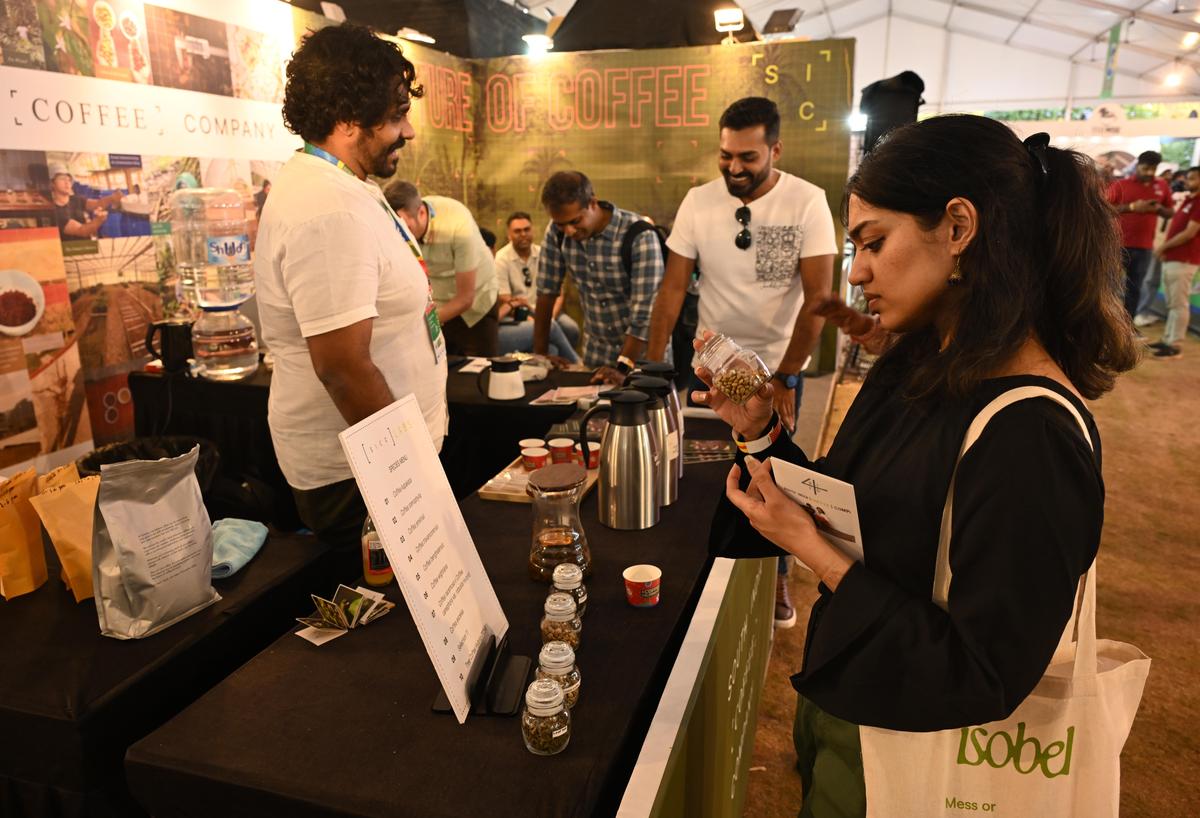
Visitors check varieties of coffee during the India International Coffee Festival (IICF) 2026 in Bengaluru on February 12, 2026. | Photo Credit: ALLEN EGENUSE J
Organised by the Coffee Board of India in association with the Specialty Coffee Association of India (SCAI), the third edition of IICF will bring together growers, roasters, café brands, baristas, equipment manufacturers, and coffee consumers on a farm-to-cup platform.
The event comes as domestic coffee consumption shows significant room for expansion. While cities account for nearly 70% of consumption and southern India contributes 75-80% of the country’s coffee consumption, coffee is gaining popularity in northern, western and eastern markets. India’s per-capita coffee consumption remains at just 0.07 kg annually, compared with the global average of 1.3 kg.
“IICF has become an important platform for India’s coffee community at a time of remarkable growth,” said Kurma Rao M., CEO & Secretary, Coffee Board of India. “As café culture spreads across India and a new generation embraces coffee, the home market holds enormous potential, even as Indian coffee earns its place on the world stage.”
“India has grown some of the finest coffee on Earth for generations, and now, at last, India is drinking it,” said Hamsini Appadurai, President, SCAI and organiser, IICF.
A key attraction at the conference will be the National Coffee Championships, including the 26th National Barista Championship, Brewers Cup, Indian Filter Coffee Championship, Latte Art Championship, and, for the first time, Coffee in Good Spirits. Winners will represent India at corresponding World Coffee Championships.
The championship qualifiers will be held in Bengaluru, Delhi and Navi Mumbai between August and October 2026, ahead of the national finals in Bengaluru.
source: http://www.thehindu.com / The Hindu / Home> News>India> Karnataka /by The Hindu Bureau / August 20th, 2026
Roy Coffee Co., a specialty coffee brand founded by Mounika Devakonda, has launched direct-to-consumer with small-batch, single-origin coffees sourced from India and select global origins. The brand sold out its initial inventory within 48 hours of launch and has announced a second production run.
Roy Coffee Co. launches with two SKUs, both small-batch roasted in Los Angeles and fully traceable from farm to cup. The Signature Espresso Blend ($25 / 8.7 oz) is sourced from India, Guatemala, and Colombian Pink Bourbon. The Rotating Single Origin Subscription ($29 / 8.8 oz) features hand-selected beans curated at peak harvest and rotates seasonally. A decaf SKU is in development. All subscription orders ship free, as do purchases over $50.
Devakonda founded the brand after tasting Indian-origin specialty coffee for the first time on a trip to India in 2022, an experience that led to 18 months of research before launching. The brand is currently evaluating retail and wholesale partnerships, with a New York City presence under consideration for 2026.
“Even if nothing comes of this business, I’m just glad I can get a really good, consistent cup of coffee that I know is ethically sourced and high quality. If people love it as much as I do, that’s just a bonus.” – Mounika Devakonda, Founder & CEO, Roy Coffee Co.
About Roy Coffee Co.
Roy Coffee Co. is a specialty coffee brand founded by Mounika Devakonda, focused on exceptional coffees from unconventional origins, starting with India. Small-batch roasted in Los Angeles, every product is fully traceable from farm to cup and built for the coffee drinker who treats their morning ritual as something worth protecting. Available online at roycoffeeco.com with subscriptions starting at $25/month and free shipping on all subscription orders. Follow @roycoffeeco on Instagram and TikTok.
source: www.bevnet.com / BEVNET./ Home> BevNET / by Press releases posted by Roy Coffee Co & MPR Studios- PR Agency / June 04th, 2026
Get the inside story as MacBeans Aberdeen launches its Indian coffee trilogy.
All Indian coffee from MacBeans is farmed organically.
MacBeans in Aberdeen explores the world of Indian coffee, offering fresh blends, single origins and new flavour experiences.
MacBeans Coffee Roasters in the corner of Little Belmont Street in Aberdeen has been open for 37 years. It’s now one of the oldest surviving High Street coffee roasters in Scotland. And unlike most other retailers, it roasts its coffee right on its premises.
For the past several weeks, MacBeans has been roasting coffee freshly delivered from India, which the proprietor, Brian Milne visited early this year.
About 20% of the coffee sold at MacBeans is sourced from India. The shop carries single origin coffees from the South Asian country. But it also uses Indian coffee in many of its own MacBeans blends.
As a former oilfield chemist with a passion for coffee, Brian Milne does not source his coffee blindly. With direct connections to producers all around the world, Brian is able to work closely with them to deliver the highest quality beans to use in every customer’s cup of coffee.
A Passage to India
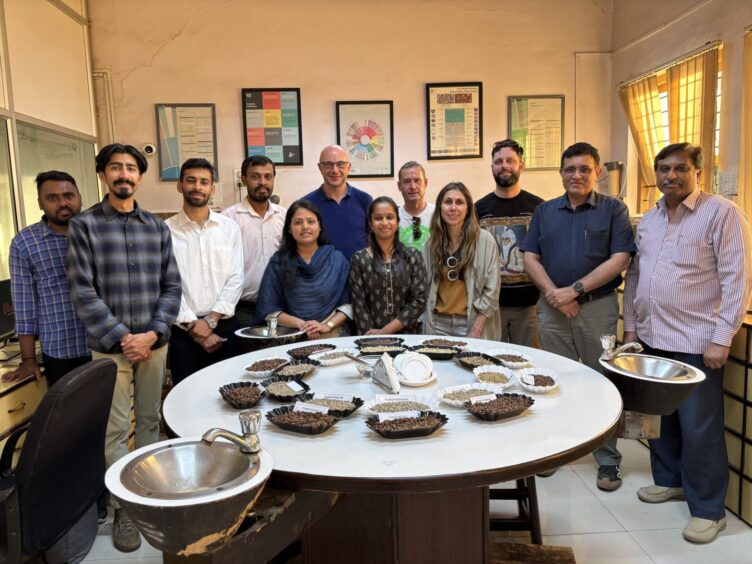
MacBeans’ proprietor, Brian Milne (center) meets with coffee producers in India
Last January, Brian went on a ten-day trip to South India, facilitated by MacBeans’ coffee importer, to visit different coffee plantations and meet with local producers.
Brian says: “A big part of my drive with our coffee is to make sure I understand where the coffee comes from. Going on these trips is a good opportunity to learn more about what’s happening in each country and finding things that we can support.”
In Bangalore, he met with agricultural communities and local cooperatives, even India’s coffee minister.
Brian shares: “We got to tour The Coffee Board of India’s facility and that really appealed to my background in analytical chemistry. I got very excited over some of the lab equipment because they were doing a lot of work to develop and standardise the quality of the coffee that comes out of India.
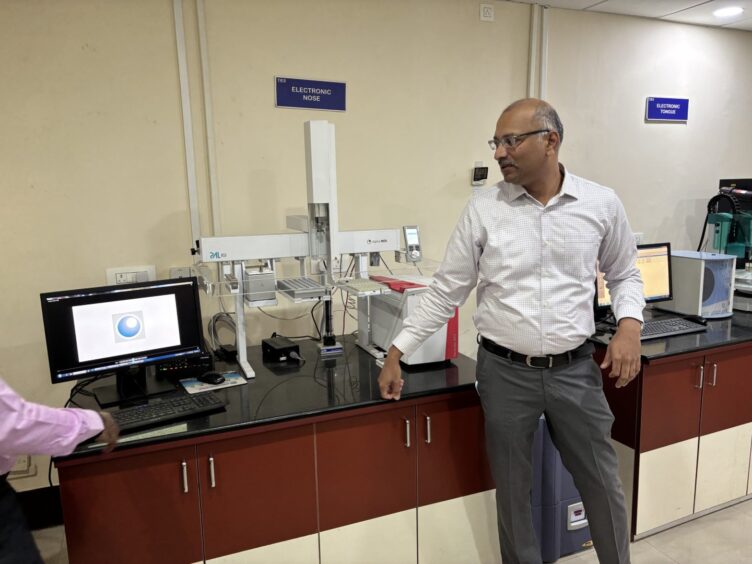
“They had an artificial nose and an artificial tongue – analytical instruments designed to analyse the coffee for the compounds that contribute to its aromas and its flavour profile.
An electronic nose analyses coffee for compounds that contribute to its aroma.
“They are building a library of their coffees to keep track of the quality, which was very interesting.
“They also do a lot of agricultural training. A lot of the agronomists who support the farmers have all been trained by or worked with the Coffee Board of India. So there’s a lot of governmental support at that level to help the local coffee producers.”
Caring for the environment
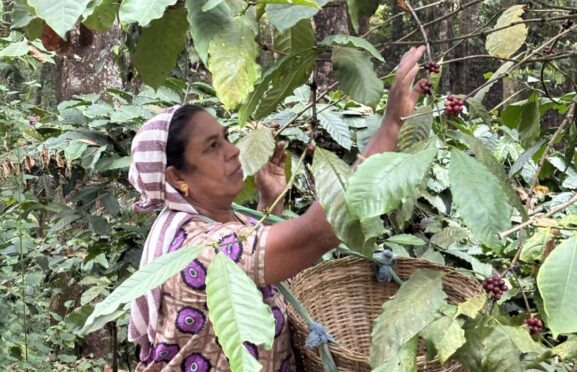
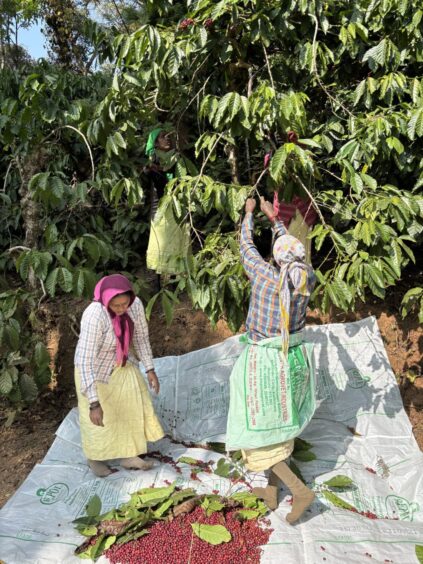
Coffee beans are handpicked by workers in India.
Brian observed that Indian producers followed strict environmental practices. This aligns with the principles of MacBeans, where all the coffee is free of pesticides and farmed organically.
Brian notes: “They reuse a lot of the biomaterials like leaves that have dropped. When they pulp the coffee cherries, all the fruit flesh is composted. That’s what they put back onto the land to help fertilise the crop.
“Because water can be scarce, the processors also collect and recycle the water used from washing the coffee. That’s purified through reed bed processes and reused. So they’re very considerate of the environment.”
People at the heart of the business
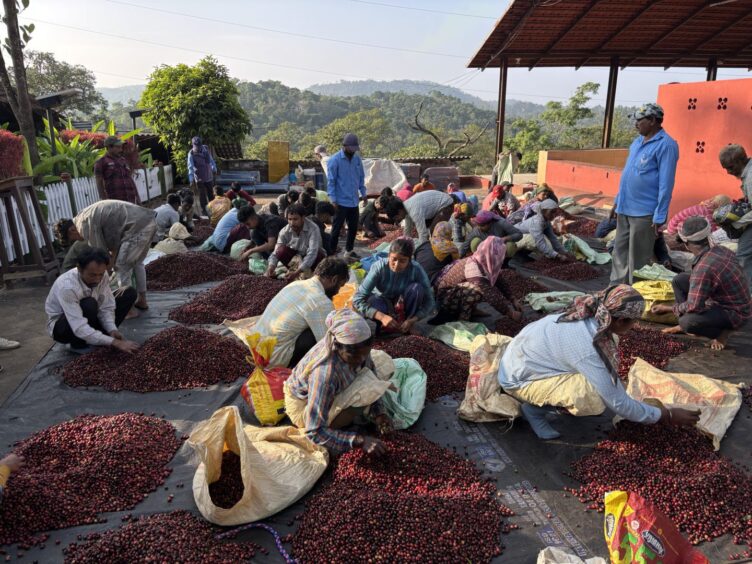
Hundreds of people are employed in Indian estates to produce coffee.
Before his visit, Brian knew that India was among the top 10 coffee producers in the world. But he didn’t understand the scale of the production until he saw it for himself.
“During harvest time, the estates we visited would employ about 1,000 people – pickers, processors. But even outside the harvest, there would be 600 or 700 people employed to tend to the land and maintain the plants.
“People are at the heart of the whole process. There are estates owned by families or cooperatives working with small landowners. They all work together to produce their coffee to manage it and support it. It’s a people business.”
The story behind the Monsoon Malabar
Indian workers dry coffee beans in the sun.
On his trip, Brian discovered more about one of MacBeans’ more popular coffees – the Monsoon Malabar.
“What I knew about it was that it was just an aged coffee. Apparently, that came about a hundred years ago when they were shipping coffee from India on long journeys on sailing ships.
“Researchers found that when the coffee got to Europe, it tasted a lot more mellow than it did when it was at origin. They worked out that it was attributed to the damp environment in ships and the extended time the coffee spent in that environment.
“Today, coffee makers in India are replicating that aging process now called monsooning. They harvest the coffee then wash and dry it as normal. But afterwards, it is aged in the monsoon rains then dried in warehouses on the Malabar coast, resulting in a very smooth and mellow coffee.”
This ageing method as well as the production zones are strictly defined by regulations to protect the production and authenticity of the Monsoon Malabar. It’s a system that’s similar to the DOC system for Italian wines.
Busting the Robusta myth
Brian also travelled to Chikmagalur, the heartland of coffee production in South India, right at the tail end of the Robusta crop harvest and the beginning of the Arabica harvest.
MacBeans does not sell Robusta as a single origin coffee. It’s so intensely flavoured that it can be bitter and even unpalatable.
“In India, producers are investing a lot of time and effort into how they treat Robusta coffee when it’s harvested to improve its flavour and develop it into a specialty coffee.
“There’s a method sometimes called the honey process where you pulp the cherries. But you don’t wash off the little bits that stick. So then you still get all kind of fruitiness to the coffee, but it’s a much milder effect.
“They’re also co-fermenting coffees with other fruits in barrels from a few days to a few weeks. The amount of time makes a huge difference to the flavour.
“The trip was an eye-opener for me. I always thought of Robusta as a low-grade coffee that we added to some of our blends to make them stronger in caffeine and in flavour. But we had to be careful about how much we put in because it can affect the taste detrimentally.
“Now I have a much bigger appreciation for the quality of Indian Robusta and its potential to broaden people’s profiles and expectations of coffee. So I’ve committed to use only Indian Robusta. The coffee that I saw being harvested is now in the shop, ready to sell.”
A reminder, though, to those who favour the milder Arabica coffee but would like to explore speciality Robusta. Brian says: “It’s like tasting wine and comparing it to beer; they’re very different – different in the mouth, different flavour profiles.”
The taste of coffee depends on the beans and roasting methods used.
Try MacBeans’ new India coffee trilogy
Of course, Brian was also able to sample Arabica coffee produced at many of the estates.
“There was a huge variety in the flavours that we tried. Some were very fruity, sharp, distinctive flavours that would be great to try.
“We’ve now got Indian Mysore, an Arabica coffee that forms part of our blends. We also roast it as a single origin Indian coffee. The coffee we have now is from the harvest period that started from the end of 2025 and finished up in February this year.”
The Mysore will be combined with Monsoon Malabar and India Tiger Stripes to form MacBeans’ newest coffee trilogy. Inspired by Brian’s recent trip to India, each bag is bursting with flavours just waiting to be explored by eager coffee aficionados.
Coffee Exports Jump 26.6% YoY To 1.74 Lakh Tonnes In Early 2026: Coffee Board
New Delhi, (KNN) :
India’s coffee exports increased 26.6 per cent year-on-year (YoY) to 1.74 lakh tonnes during January–April 2026, led by strong growth in robusta and instant coffee shipments, according to data from the Coffee Board of India.
Exports stood at 1.37 lakh tonnes in the corresponding period last year. India exports a mix of arabica, robusta and instant coffee.
Export Value and Realisations Improve
In value terms, coffee exports rose to Rs 936.57 crore from Rs 757.07 crore a year earlier. Unit value realisation also edged up to Rs 4,94,766 per tonne, compared with Rs 4,75,023 per tonne in the same period last year, PTI reported, citing the coffee board data.
Robusta Leads, Arabica Declines
Robusta exports recorded a sharp 36 per cent rise to 85,168 tonnes, up from 62,736 tonnes a year ago. Instant coffee shipments also increased to 20,332 tonnes from 17,504 tonnes, while re-exports of instant coffee rose to 38,169 tonnes from 30,274 tonnes.
In contrast, arabica exports declined significantly by 58 per cent to 30,589 tonnes, compared with 72,479 tonnes in the year-ago period.
Sector Shows Signs of Structural Shift
Industry experts said India’s coffee sector is gaining momentum in 2026, with its role in the global market gradually evolving beyond its traditional position as a robusta-focused exporter.
Rising export values, higher imports for processing, and steady domestic consumption indicate a sector at a potential turning point.
Record Output Expected
The Coffee Board has projected record production of 4,03,000 tonnes for the 2025–26 crop year (October–September), with output expected to grow across key producing states such as Karnataka, Kerala and Tamil Nadu.
Arabica production is estimated at around 1,18,000 tonnes, while robusta output is expected to exceed 2,84,000 tonnes, supported by improved yields and favourable moisture conditions.
Climate Risks Persist
Despite the positive outlook, experts cautioned that weather volatility and climate-related risks remain key challenges for the sector going forward.
(KNN Bureau)
source: http://www.knnindia.co.in / KNN, Knowledge & News Network / Home> Sector> Export-Import / by KNN Bureau / May 05th, 2026
A new climate analysis finds India’s coffee farms absorbed 30 extra days of harmful heat annually because of carbon pollution. Researchers are racing to find alternatives before Arabica and Robusta run out of room.
A worker picks ripe coffee cherries at Kelachandra Coffee Estate, in Chikkamagaluru district, Karnataka, on January 10, 2026. | Photo Credit: Laxmi Devi Aere/PTI
More than two billion cups of coffee are consumed every day, and for several years now, surging prices and falling production have marked the global coffee trade. Farmers in the world’s top five coffee-producing countries have faced mounting losses because of a warming planet, and India’s coffee sector is not immune. A new analysis by Climate Central, an independent group of scientists and communicators who research the changing climate, finds that 25 coffee-growing countries together accounting for about 97 per cent of global production all experienced more coffee-harming heat over the past five years.
Kristina Dahl, Climate Central’s Vice President for Science, explained to Frontline in an email interview why coffee was chosen as the subject. “Coffee is one of the most popular beverages in the world and a daily staple for billions of people,” she said. “It also provides a very direct and tangible link between climate change and everyday life. Any climate-driven disruption to coffee production has global ripple effects—from farmers in the ‘bean belt’ to consumers worldwide.”
Coffee plants are highly sensitive to temperature. When maximum temperatures regularly exceed 30°C, the quality and quantity of bean harvests decline. Reduced harvests and lower-quality beans tighten global supplies, contributing to price volatility—as seen in December 2024 and again in February 2025, when global coffee prices reached record highs, Dahl said. For farmers, many of them smallholders, lower yields, crop losses, and the cost of adapting to new conditions strain already thin profit margins.
The analysis, which examined daily temperatures between 2021 and 2025 across 25 major producing countries, is the first to directly attribute the increase in coffee-harming heat days—defined as days when maximum temperatures exceeded 30°C—to climate change using attribution science, she said. Climate Central drew on its Climate Shift Index, which compares observed temperatures to modelled estimates of temperatures in a hypothetical world without carbon pollution. Last year, the organisation conducted a similar attribution analysis on cocoa, another climate-sensitive crop.
Heat is already impacting harvests
The top five coffee-growing countries—Brazil (roughly 37 per cent of global production), Vietnam (17 per cent), Colombia (8 per cent), and Ethiopia and Indonesia (6 per cent each)—together are responsible for 75 per cent of world’s supply, experienced an average of 57 extra coffee-harming heat days per year because of climate change. Brazil averaged 70 additional harmful heat days annually; Indonesia 73; Vietnam 59; Colombia 48; and Ethiopia 34.
The situation is particularly acute in Asia, Dahl pointed out. Thailand recorded an average of about 75 additional harmful heat days a year. India, which contributes approximately 3.5 per cent of global coffee production, experienced an average of 118 coffee-harming heat days per year between 2021 and 2025, of which 30 were attributable to climate change. In a world without carbon pollution, India would have had roughly 88 such days instead of 118. Kerala recorded 65 additional heat days linked to climate change annually; Tamil Nadu 43; and Karnataka, India’s largest coffee-producing State, 32.
These impacts are not theoretical. “In practical terms, rising heat is already affecting harvests in major coffee-producing countries, threatening both quantity and quality,” Dahl said. She pointed out that while earlier studies had linked rising temperatures, drought, and shifting rainfall to reduced yields and shrinking suitable growing areas, the Climate Central analysis adds a new dimension: it quantifies precisely how many additional harmful heat days can be attributed to carbon pollution.
Beyond heat, the analysis notes that climate impacts are worse for Arabica plants, which account for about 60–70 per cent of global supply, since they are more sensitive than Robusta varieties to temperatures above 30°C. Pests and diseases—coffee leaf rust and the coffee berry borer in particular—also intensify with climate change. Without significant reductions in carbon emissions, suitable land for coffee farming could decline by up to 50 per cent by 2050, according to earlier research cited by Dahl. “Adaptation and resilience can only take farmers so far,” she said.
Wild species and the search for alternatives
India is the world’s fifth-largest Robusta producer, and about 80 per cent of its coffee is grown by smallholders, according to World Coffee Research. The country’s coffee exports earned approximately $1.28 billion in fiscal year 2023–24, making it a significant agricultural earner.
Akshay Dashrath, co-founder of the South India Coffee Company (SICC), which he set up in 2017 with his wife Komal Sable as a sourcing and logistics platform, has been researching Excelsa (Coffea dewevrei) since 2019. He found a market initially difficult to reach, but publications by the Royal Botanic Gardens, Kew, on Excelsa and related species accelerated demand. He has been working with Kew for three to four years on climate-resilient coffee species, running trials of Excelsa, Stenophylla, and four coffee species native to India—Coffea bengalensis (found from Chikmagalur to Thailand), Coffea travancorensis, neobridsoniae, and wightiana—on his family’s Mooleh Manay Estate in North Coorg, Karnataka. For the past two years, he has also been breeding Excelsa for better cup quality and commercial viability.
“A hotter environment means coffee is under stress: production per plant reduces, cup quality drops, and the plant weakens. It is happening in specific blocks—those with less shade are more susceptible to disease, and once the plant is weak, it becomes prone to fungal infection,” Dashrath said. He described a severe leaf rust outbreak on his farm: the heavily shaded plants survived, but those under direct sunlight lost their foliage.
Rising heat is not the only problem. He pointed out that for Robusta—and for Arabica—dry air matters as much as temperature. “Heat with dry air is more damaging to certain species,” he said. Excelsa, native to Central Africa, tolerates heat, dry air, and drier soils better than Arabica or Robusta because its root system goes considerably deeper, giving it access to soil moisture that shallower-rooted varieties cannot reach. Dashrath puts Excelsa’s root depth at 4.5 to possibly 7–8 feet, compared with Robusta at 2.5 feet and pure Arabica at around 3 feet.
Coffee plants are highly sensitive to temperature. When maximum temperatures regularly exceed 30°C, the quality and quantity of bean harvests decline. | Photo Credit: Prakash Hassan
Indian coffee has been grown under shade since the 1850s, making canopy management central to the crop’s culture. However, Dashrath notes that many growing belts are now thinning their canopy to increase yields by admitting more sunlight, and supplementing Robusta with external irrigation—a trend that could leave farms more exposed to heat and moisture stress.
India also carries a legacy of genetic limitations. “Historically, we had access to diverse germplasm, including hybrids of Arabica, Liberica, and Excelsa,” Dashrath said. “But in the 1940s, the research focus shifted towards developing Arabica–Robusta hybrids for leaf rust tolerance.” The result is that the country’s commercial varieties remain concentrated in two species highly sensitive to warming. The Central Coffee Research Institute, founded in 1925, is conducting research on climate-resilient coffee, though its director did not respond to a request for comment.
The case for Excelsa as a climate buffer became clearer to Dashrath in July 2024, when 33 inches of rain fell on his farm in a single month—far more than the typical annual average of 58 inches. Arabica and Robusta could not withstand the waterlogging, but Excelsa’s deeper root system held. “When we talk of climate-resilient coffee, we need species that can handle not only heat but also climate variability,” he said.
Stenophylla (Coffea stenophylla), a wild species from West Africa, offers another avenue. Rediscovered in Sierra Leone in 2018 after not being seen in the wild since 1954, Stenophylla has been found to tolerate temperatures significantly higher than Arabica while producing a comparable flavour profile, according to research published in Nature Plants in 2021 by scientists from the Royal Botanic Gardens, Kew, the University of Greenwich, CIRAD, and researchers in Sierra Leone. It is currently on the IUCN Red List as “Vulnerable.”
Excelsa currently accounts for about 1 per cent of the global coffee market and is grown commercially in small quantities in Chikmagalur and Coorg. SICC received a grant from Coffee Circle last year to grow Excelsa on trial plots across six different sites; the data from those trials has been shared with Kew, which is mapping climate conditions from Uganda to India and parts of South-East Asia. The trials are informing a broader picture of which plant material performs under changing conditions.
Still, Dashrath is candid about the timeline. Arabica has been bred for around 600 years; Robusta for 150. Excelsa is a wild species with considerable variation from plant to plant, and no consistency in yields. Getting it to a standard where it can compete in commodity markets is a 20–25-year project, he said. “The market is there, but it needs more breeding, standardised seeds, and testing before it can be deployed at scale. Currently it is a niche product, priced rather high.”
There are over 120 recognised coffee species, according to Kew researchers, though most are either inedible or commercially unviable. Coffea racemosa, from Mozambique, has also attracted attention for its claimed heat tolerance, though published data on its upper temperature threshold remain limited. Dashrath is blunt about the bottom line: “If the world gets warmer, coffee-growing areas may shift, or alternatives like Excelsa may need to move to centre stage. To sustain coffee, we need to start looking outside the realm of Arabica and Robusta.”
Concerns about Arabica’s future are felt most acutely in Ethiopia, the crop’s birthplace. Dejene Dadi, General Manager of the Oromia Coffee Farmers Cooperatives Union (OCFCU), one of Ethiopia’s largest smallholder coffee cooperatives and exporters, put the stakes plainly: “Coffee farmers in Ethiopia are already seeing the impact of extreme heat. Ethiopian Arabica is particularly sensitive to direct sunlight. Without sufficient shade, coffee trees produce fewer beans and become more vulnerable to disease.” He called for governments to act on climate change and invest in smallholder organisations capable of scaling up adaptation. “Coffee farming is part of our cultural heritage, and coffee trees are symbols of continuity and pride,” he added. “Ethiopia is the birthplace of coffee, and Ethiopian coffee farmers are key to safeguarding its future.”
Research at the Royal Botanic Gardens, Kew—through a project focused on Excelsa and Liberica coffee and related species, with field and farm trials across Africa and Asia—offers some grounds for cautious optimism. The work is designed to identify which species combinations can sustain coffee cultivation in warming conditions and provide farmers with alternatives to the two varieties that currently dominate.
For India’s approximately 3.6 lakh coffee farmers, most of them dependent on Robusta for their livelihoods, and for the country’s coffee export sector—worth close to $1.3 billion in FY2023–24 and significantly more since—the challenge from climate change is not distant. It is measured, now, in 30 extra days of harmful heat each year, and rising.
Meena Menon is a freelance journalist and visiting postdoctoral fellow at Leeds Arts and Humanities Research Institute, University of Leeds.
____________
Summary
A Climate Central analysis reveals that 25 major coffee-producing countries, including India, are experiencing increased ‘coffee-harming heat’ due to climate change, impacting global production and prices. India faces an average of 118 such days annually, with 30 directly attributable to climate change. This heat stress reduces yields and quality, particularly for sensitive Arabica plants. Researchers are exploring climate-resilient coffee species like Excelsa and Stenophylla, which exhibit better tolerance to heat and variable weather conditions. While these alternatives offer hope, their widespread commercial adoption requires significant research and development, highlighting the urgent need for climate action and adaptation strategies to safeguard the future of coffee.
Key Questions & Insights(AIⓘ)
What is the primary finding of Climate Central’s analysis regarding global coffee production?
Why was coffee chosen as the subject for Climate Central’s analysis?
How does high temperature affect coffee plants and global coffee prices?
What is ‘coffee-harming heat’ as defined by Climate Central?
How many additional coffee-harming heat days did India experience annually due to climate change between 2021 and 2025?
Which Indian states were most affected by climate change-linked heat days for coffee production?
Why are Arabica plants more vulnerable to climate change than Robusta varieties?
What is the potential impact of climate change on suitable land for coffee farming by 2050?
What is the significance of Excelsa coffee in the context of climate change?
What is the current status of Excelsa in the global coffee market?
What is Stenophylla and why is it considered a promising alternative coffee species?
What is the main challenge for India’s coffee sector due to climate change?
_____________
source: http://www.frontline.thehindu.com / Frontline / Home> India> Environment> Digital Exclusive / by Meena Menon / February 25th, 2026
There’s more to Coorg than the coffee plantations, resorts and mountains shrouded in mist.
There are no Café Coffee Days or Baristas in the coffee county. Instead, vistas of stumped coffee plants growing in the shade of benevolent native trees stretch through silence broken by whistling wind and falling yet uplifting waterfalls. Wild elephants meander in the plantations in the day and fireflies fly in the plantations at night. Coorg is a country painted on a canvas and brought to life.
When you travel within India, you feel the truth of the cliché you’ve heard since childhood — India is many countries into one. How different are the people, their attires, aspirations, lives and even histories and humanities.
The bumpy, washed out road from Mangalore to Coorg changes its rough character drastically the moment it enters the Coorg district.
Perched on the Western Ghats of Karnataka, Coorg or Kodagu has gained its popularity in India in the recent years. She has claimed her place as a coffee plantation hill station, like her near and distant tea plantation cousins Kodaikanal, Ooty and Darjeeling. And with this claim numerous new resorts in the region have burgeoned, many of them located inside the coffee estates.
According to popular belief, coffee in India is rooted in a mystical beginning in the 17th century. The Muslim saint Baba Budan, returning from a pilgrimage, clandestinely brought along seven coffee seeds from Yemen (from where it was forbidden to take coffee seeds) and planted them in Chandragiri hills in Karnataka. These hills are now known as Baba Budan Giri. Like the seven skies and the seven rounds of Kabaa, the holy significance of number seven led him to carry seven seeds.
Kodavas are the main ethnic group of Coorg, carrying a rich farming and militia history. It is a culture that thrives on Nature, not industry. Paddy fields in the foothills and coffee plantations on the slopes, mainly around the district headquarter Madikeri, are the traditional and main source of livelihood.
What is different about the coffee country is not just the coffee, but guns. The Kodavas, being warriors in ancient times, worship arms. Guns are an important part of the festivals of this region. “Most families carry two or three guns,” says Biju, the co-owner of a coffee plantation that spreads over 400 acres. He continues with a glint in his eyes, talking about his passion, i.e., guns. “And yet it is one of the safest places to live in. The crime against women is quite rare and they are the main decision makers in many families.”
That is indeed reflected in the sex ratio where the number of females exceeds the number of males.
There are other ethnic communities and forest-dwelling hunter and gatherer tribes as well. Water is aplenty and the main river of the region is Cauvery. Coffee makes Coorg one of the richest districts of India. Sunil, the co-owner of a coffee plantation and The Porcupine Castle resort answers with a knowing grunt, when we inquire where we can find good coffee, “The coffee that you’re used to , is a mixture of different varieties of coffees.
And each one has a secret formulation, which the company doesn’t disclose. They just buy the raw coffee variety from us like Robusta and Arabica and process and mix it themselves.”
Nonetheless, the Indian coffee is supposed to be one of the finest in the world, grown fully in the shade of eucalyptus, vanilla and native evergreen and leguminous trees. The shade giving trees not only protect the coffee plants but also enrich the soil and prevent erosion. The exotic, full-bodied taste and aroma finds its way to your cup through intense labour and extraordinary care.
The coffee plantations are as multicultural and inclusive as the medley that is India. Pepper, cardamom, vanilla, a local variety of orange and bananas share the same home, drawing their daily supply of nutrients from the shared pool of coffee plantations.
The homesick British, who once inhabited the cool climes of Coorg, named it the Scotland of India. British architecture still stands strong in Madikeri and many tourists visit the same. Around 5 km away from Madikeri is Abbey Falls, a sight to behold, provided it’s not a public holiday.
There is Iruppu Falls too where you can actually go inside the water. An elephant camp of the forest department at Dubare is another tourist attraction and so is Nisargadhama, an island in Cauvery. For the religious, there is Talacauvery, the origin of Cauvery, with a Lord Brahma temple on the bank. For the adventurous, there are the Nagarhole National Park, and Brahmagiri, Talacauvery and Pushpagiri Wildlife Sanctuaries. You can hope to catch a glimpse of a tiger, gaur, dhole (wild dog), leopard or elephant that magnanimously let you pass through the privacy of their living space.
Ever wondered what we would do if a tiger or a guar or a dhole or a leopard enters the privacy of our home or our garden or our street or even our city?
But the Kodavas and the other ethnic groups and tribals of Coorg don’t mind them coming in to their plantations and passing by their villages.
They know better than us that the mountains and fields belong as much to a lonely elephant or a pack of dholes. If I were to settle in the coffee country, it won’t be only for the lush landscape or healthy sex ratio or rich culture; it will be for the forgotten pleasures of experiencing synergy with nature.
source: http://www.thehindu.com / The Hindu / Home> Todays Pages> Features> Metroplus / by Arefa Tehsin / May 18th, 2016
WELCOME. If you like what you see "SUBSCRIBE via EMAIL" to receive FREE regular UPDATES.
Read More »