In a touching act of humanity, a grieving wife chose to give life to others by consenting to donate her husband’s organs after he was declared brain dead at Kodagu District Hospital, Madikeri, managed by Kodagu Institute of Medical Sciences (KIMS).
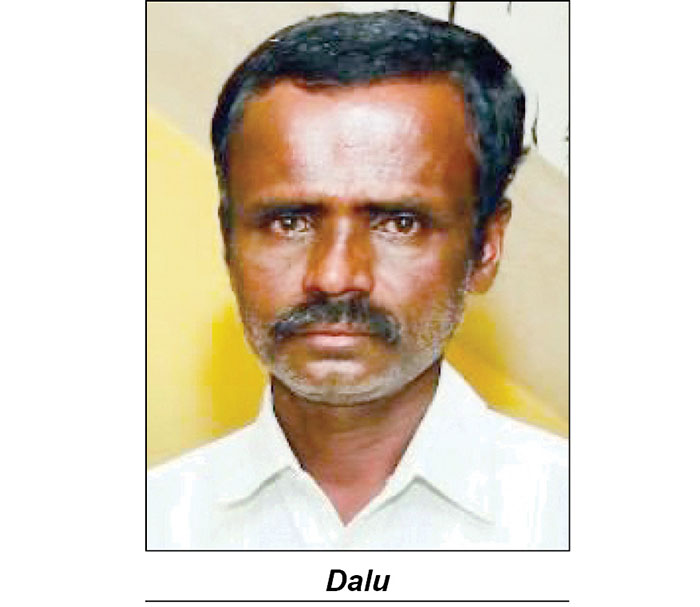
Dalu, 46, a resident of Aravathokkalu village in Ponnampet taluk, had suffered severe head injuries after falling at his house on May 17. Despite treatment, he succumbed to his injuries, following which his wife Rajeshwari agreed to donate his organs.
The donation marked the first organ retrieval procedure in the history of Kodagu District Hospital. Doctors retrieved his heart, kidneys and corneas, which were later transported under ‘zero traffic’ arrangements to hospitals in Mysuru and Bengaluru for transplantation.
Dalu was initially treated at Gonikoppal Government Hospital before being shifted to Madikeri District Hospital on May 19 after his condition deteriorated. A CT scan revealed critical internal head injuries.
Family consent, procedure
On May 22, doctors confirmed brainstem death after two rounds of examinations by a medical board and mandatory observation procedures under Indian law. The family was subsequently counselled on organ donation and Dalu’s wife, Rajeshwari, gave her consent.
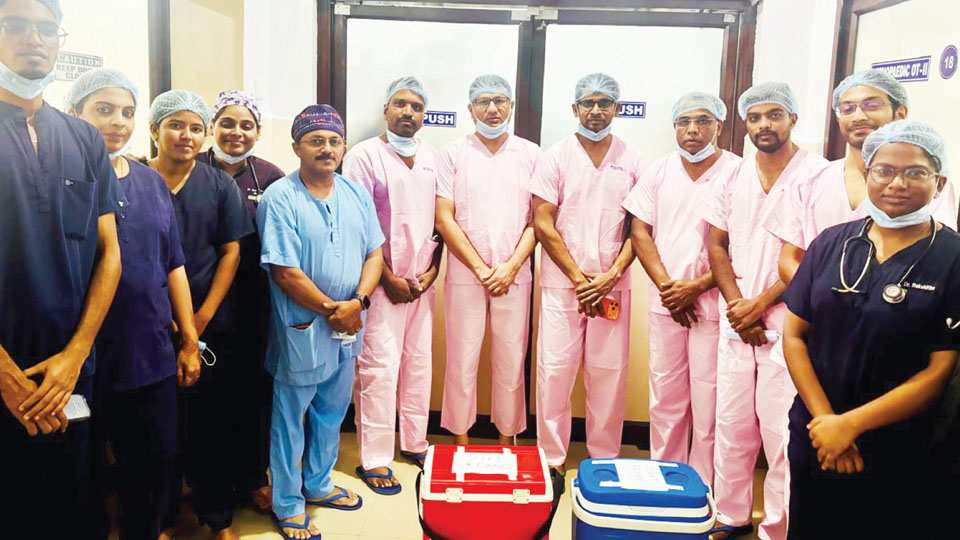
The organ retrieval surgery was carried out in the early hours of May 23 under the guidance of Kodagu Medical College Dean Dr. A.J. Lokesh and Senior Surgeons Dr. Somashekar and Dr. Nanjundaiah.
ICU Specialist Dr. Nishid Joseph and Nursing Officer Pavan continuously monitored and stabilised the donor’s condition ahead of the procedure.
Nursing staff Jayashree, Anil and Manjunath, along with Senior Nursing Officers Vasanth and Mahesh, assisted through the night.
To Mysuru and Bengaluru hospitals
By 2 am, Surgeons had successfully retrieved the two kidneys, heart and corneas. Medical teams from Mysuru and Bengaluru, including specialists from JSS Hospital and Narayana Hrudayalaya, participated in the procedure. The organs were dispatched to recipient hospitals by 6 am. The hospital later held a solemn ‘walk of honour’ for Dalu. Rajeshwari was also presented with an official organ donation certificate in recognition of the family’s decision.
Speaking emotionally, Rajeshwari said, “We wanted his death to give life to others, so we agreed to donate his kidneys, eyes and heart,” she said.
source: http://www.starofmysore.com / Star of Mysore / Home> News / May24th, 2026
Following the consent by the victim’s family, the management at the hospital contacted several other hospitals and made a list of the recipients.
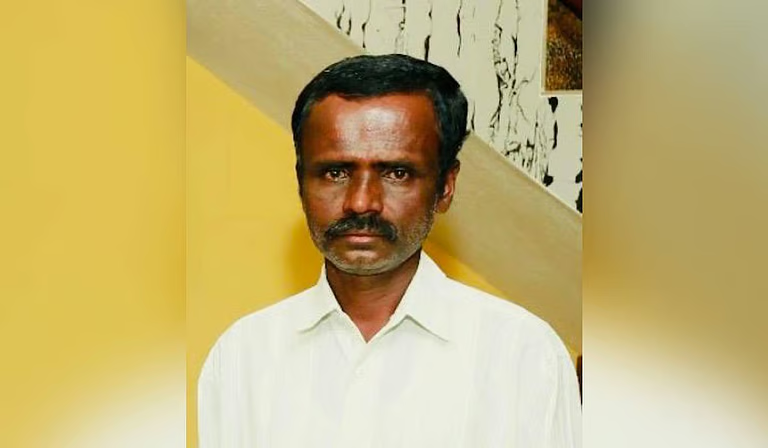
Dalu (46), a resident of Arvathoklu near Gonikoppal, was admitted to the District Hospital aka Kodagu Institute of Medical Sciences (KoIMS) after he suffered severe head injuries in an accident. Photo | Special Arrangement
Madikeri :
A 46-year-old man, declared brain dead, gave a new lease of life to over four people after his family donated his organs. In a landmark achievement, the organ donation procedure was conducted for the first time at the District Hospital in Madikeri.
Dalu (46), a resident of Arvathoklu near Gonikoppal, was admitted to the District Hospital aka Kodagu Institute of Medical Sciences (KoIMS) after he suffered severe head injuries in an accident. However, Dalu was not responding to the treatment, and after 48 hours of observation, a two-stage medical committee conducted the examination and confirmed loss of brain stem functions. The hospital declared him brain dead.
While tragedy struck the family of Dalu after he was declared brain dead on May 19, Dalu’s wife Rajeshwari, took a bold step. Following counseling by the medical experts at the District Hospital, Rajeshwari agreed to donate the organs of her husband.
“My husband suffered continuous epilepsy attacks on May 17 and he was shifted to the District Hospital. After several tests, the doctors at the hospital confirmed that my husband was brain dead on May 19,” recalled Rajeshwari. An estate worker who also works as domestic help to run her family, Rajeshwari decided to donate her husband’s organs after she learnt that it would help many patients.
Following the consent by the victim’s family, the management at the hospital contacted several other hospitals and made a list of the recipients. As Dr Nanjundaiah, District Surgeon, explained, “We are intimidated about the organ donation to Jeevasarthakathe (state government body that coordinates organ transplantation) and hospitals that were in need of organs were recognized.”
The kidneys of Dalu were donated to recipients registered with JSS Hospital in Mysuru even as expert doctors Dr Vijay and Dr Manjunath Shetty, who visited the District Hospital to retrieve the kidney conducted the transplantation in Mysuru. Further, corneas were transplanted to registered recipients at Mysuru Medical College.
Since the functioning of the heart of Dalu was slow, the heart valves were retrieved and the transplant was done at a private hospital in Bengaluru. “However, we could not find a recipient for lungs and hence we did not remove Dalu’s lungs,” Dr Nanjundaiah confirmed. He added that since Kodagu Institute of Medical Sciences has already been accredited by SOTTO and NOTTO, the case was reported to the State Organ and SOTTO. The organ procurement process was carried out under the guidance of SOTTO.
The operation was carried out under the leadership of KoIMS Dean Dr Lokesh AJ., Hospital Superintendent Dr. Somashekar and District Surgeon Dr. Nanjundaiah. ICU team Dr. Nishid Joseph and Nursing Officer Pawan worked tirelessly to keep the patient’s condition stable.
In the surgery that began at 2 am on Saturday, two kidneys, heart valves and eye corneas were successfully harvested. Neurosurgeons Dr. Sachin Dharwadkar and Dr. Vijayakumar, who arrived from Mysore, carried out the kidney harvest. Dr. Abhinandan and Dr. Chandrashekar collected the heart valves, and Dr. Shruti and the team collected the corneas. Nursing staff Jayashree, Anil and Manjunath and senior nursing officers Vasanth and Mahesh performed the task efficiently.
Meanwhile, Dalu’s remains were handed over to the family through a ‘walk of honour’ after the medical experts honored the donor’s service.
source: http://www.newindianexpress.com / The New Indian Express / Home> Karnataka / by Express News Service / May 23rd, 2026
Dr. Aeklavya Panjali conducting hands-on courses throughout the year in Cicero, New York.
The New York Implant Institute has provided excellence in dental implant education since 2007 at its dental implant institute in Cicero, NY, and the next course will take place May 15 to May 16 with limited seats available.
Aeklavya Panjali, DDS, MS, FAGD, DICOI, who is an international speaker on dental implants, teaches the courses. He is certified in IV sedation dentistry, invisalign, dental implants and cosmetic dentistry.
Prof. Dr. Al Panjali earned his DDS at NYU College of Dentistry and went on to complete a Master’s in Oral Implantology at Goethe University in Frankfurt, Germany—one of Europe’s leading implantology programs. He holds Diplomate status with the International Congress of Oral Implantologists (ICOI)—a credential held by fewer than 3,000 dentists worldwide. He serves as a Clinical Professor at the Coorg Institute of Dental Sciences and has lectured on 4 continents.
The New York Implant Institute offer hands-on implant training through its dental implant CE courses and live surgery courses that stay with you for life. Join these seminars and take the next step in advancing your skills with implant courses for dentists.
The May 15-16 course is a Level 3 two-day hands-on course worth 16 CE credits, titled “Platelet Rich Fibrin (PRF), With GBR (Guided Bone Regeneration) and Ridge Augmentation.” This is an advanced course for implant site development with autologous growth factors.
Other courses later this year include:
• LEVEL 4 – Live Patient Surgical Course – 5‑Day Intensive Program Overview
July 1–6, 2026 – 2 seats available
August 9–14, 2026 – Weekday – (Monday–Friday) November 4–9, 2026
• LEVEL 5 – IMPLANT PROSTHODONTICS
• LEVEL 6 ALL ON “X” – The Workflow with Hands on Clinical Sessions. June 12 – 13, 2026
• LEVEL 7 – LIVE SURGERY FOR ALL ON “X” WITH SAME DAY CONVERSION
August 28 – 29, 2026
DIGITAL WORKFLOW FOR FULL ARCH WITH NEODENT – A HANDS ON COURSE
In the remote villages of Karnataka’s Kodagu district, nightfall once meant darkness, uncertainty, and limitation. For hundreds of families, kerosene lamps were the only source of light, children struggled to study after sunset, and women faced safety concerns while completing daily chores. That reality is now changing with the launch of Project Chirag – Solar Village Initiative by Aahwahan Foundation.
The initiative is being implemented across 17 villages, including Nittur, Ponnappasanthe, Balele, Balyamandur, Nalkeri, and Kirgur, reaching 630 households and benefiting a population of 2,243 people. Designed to address energy poverty in underserved rural communities, Project Chirag provides clean, reliable solar-powered electricity to homes that previously had little or no access to dependable lighting.
Each household has been equipped with a comprehensive solar lighting system consisting of a 150Wp solar panel, a 120Ah solar tubular battery, and a 10A charge controller. The system powers four energy-efficient LED lights—two 10W and two 5W—along with an 18W pedestal fan and a mobile charging facility. With up to 48 hours of backup, families now have access to 3–4 hours of lighting and up to 8 hours of fan usage per cycle, depending on sunlight and consumption patterns.
The impact of the initiative goes beyond illumination. With safer, brighter homes, children are able to study in the evenings, women can carry out household activities without fear, and families feel more secure after dark—an important change in villages located near forest areas with frequent wild animal movement. The availability of electricity has also enabled small business owners and home-based entrepreneurs to extend their working hours, contributing to improved household incomes.
Reflecting on the transformation, Mr. Braja Kishore Pradhan, CEO & Founder of Aahwahan Foundation, said, “When I first visited these villages, darkness wasn’t just about the absence of light—it reflected a lack of opportunity, safety, and dignity. Through Project Chirag, we are seeing children study without fear, women move freely after sunset, and families reclaim their nights. Solar energy has restored not just visibility, but hope and independence.”
Residents across the villages echo this sentiment. “Before Project Chirag, studying and working after sunset was extremely difficult. Now our homes are bright, and life feels safer and easier,” said a resident of Nittur. A villager from Ponnappasanthe added, “Solar lights have changed everything for us. Children can study, women feel safer at night, and small businesses are growing.”
By replacing kerosene lamps with renewable solar power, Project Chirag is also delivering environmental benefits, reducing indoor air pollution and dependence on fossil fuels. Built with durable components and secure wiring, the systems are designed for long-term reliability and sustainability.
Project Chirag demonstrates how clean energy can become a catalyst for social development, combining safety, education, livelihood enhancement, and environmental responsibility. In the villages of Kodagu, electricity is no longer a luxury—it is becoming the foundation for opportunity, dignity, and a brighter future.
source: http://www.thecsruniverse.com / The CSR Universe / Home> Article / by The CSR Universe Team / February 05th, 2026
Colorectal Cancer (CRC) is a common and deadly disease that affects the colon and rectum. It can cause bleeding, pain, weight loss and fatigue. It is often mistaken for piles and not diagnosed early enough. CRC can be prevented by screening and through healthy habits.
CRC is the seventh most common cancer in India, with over 27,000 new cases and 19,000 deaths in 2018. It affects both men and women, mostly after 50 years of age.
Causes
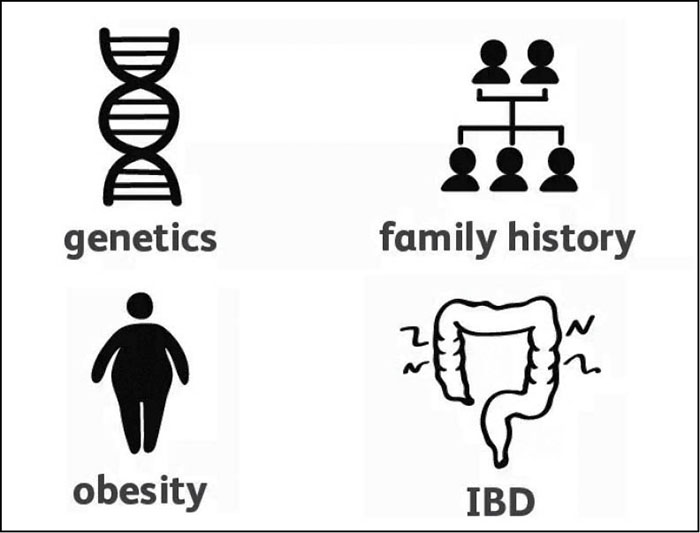
The exact cause of CRC is unknown, but some factors increase the risk:
Age: Older people are more likely to get CRC.
Diet: Eating too much red meat, processed meat and fat can raise the risk.
Obesity: Being overweight or obese can make CRC more likely.
Smoking: Smoking can damage the DNA of the colon and rectum cells.
Alcohol: Drinking alcohol can affect how the body works.
Inactivity: Not exercising can increase the risk.
Inflammatory Bowel Disease: Having long-term inflammation of the intestines, such as Crohn’s disease or ulcerative colitis.
Family history: Having a relative who had CRC or polyps can make CRC more likely.
Polyps: CRC usually starts from a benign growth called a polyp on the colon or rectum lining. The most common type of polyp that can turn into CRC is an adenoma.
Diagnosis, Screening & Staging
The best way to prevent CRC is to find and remove polyps before they become cancerous. This can be done by regular screening tests that check the colon and rectum for any problem.
Diagnostic and screening tests
Consult colorectal surgeon: This is the first and best step. A colorectal surgeon is a specialist who has extensive training and experience in diagnosing and treating CRC.
Colonoscopy & biopsy: This test uses a tube with a camera to look at and remove any polyps or tumours in the colon and rectum. It is usually done under sedation or general anaesthesia to make it comfortable for the patient.
Screening tests can lower CRC cases and deaths by removing precancerous polyps and finding early-stage tumours that are easier to treat.
Treatment
The treatment of CRC depends on many things, such as the type, grade, stage, location, and features of the tumour, as well as the patient’s health and choice. A team of colorectal experts is needed to ensure the best result. Each tumour is different and each patient is unique, hence an individualised treatment plan is chalked out by a robust multi-disciplinary team led by colorectal surgeons is vital.
A colorectal surgeon is a specialist who has extensive training and experience in performing surgery for CRC.
Treatment options
Surgery: This is the main treatment for most CRC cases. It involves removing the tumour, lymph nodes and some normal tissue around it. It can be done as open or laparoscopic and robotic methods. Minimal invasive techniques when carried out by specialists result in better patient satisfaction, early discharge, improved quality of life, lower blood loss, less pain, shorter hospital stay, faster recovery, lower risk of infection, lower risk of bleeding, lower risk of recurrence, lower risk of complications, etc.
Radiation therapy: This can be used before or after surgery to kill any cancer cells left behind. It works by using high-energy rays or particles to damage DNA. It can also help radiotherapy work better.
Chemotherapy: This is used for advanced or spread CRC that has reached other parts of the body. It works by using drugs that kill cancer cells or stop them from growing. It can also help radiotherapy work better.
Targeted therapy: This is by using drugs that target specific genes involved in CRC. They work by blocking or interfering with how these genes function. They can also help radiotherapy work better.
The five-year survival rate for CRC in India was around 50% in 2018. There is evidence that sub-specialisation in colorectal surgery improves outcomes.
By Dr. Nikhil Nanjappa, Consultant Surgical, Gastroenterologist & Colorectal Surgeon, Aceso BKG Health Care, Mysuru
source: http://www.starofmysore.com / Star of Mysore / Home> Feature Articles / by Dr. Nikhil Nanjappa / September 23rd, 2023
In a curious case, a 10-cm-long worm was surgically removed from a man’s eye. The 66-year-old man, a former soldier from Cherambane in Madikeri taluk, had been experiencing persistent itching in his left eye for a month.
He visited the Iksha Super Specialty Eye Hospital in Madikeri on the September 12, where Dr A G Chinnappa examined him.
Upon examination, Dr Chinnappa found a swelling on the conjunctiva (the white part of the eye) that was moving. A scan revealed a long worm inside the swelling.
An emergency surgery was performed, and the worm was removed. The worm measured 10 cm in length. Further microscopic examination confirmed that the worm was a Loa loa, a type of parasitic worm commonly found in Africa. If left untreated, the man could have suffered from blindness. The successful surgery has saved the man’s vision, and he is receiving further treatment.
“We could see some movement on the eye ball and subjected him to a scan which revealed the presence of a worm. We immediately performed surgery under local anasthaesia. We were surprised that the worm was still alive and was 10 cm long”, said Dr Chinnappa.
source: http://www.english.public.tv / Public TV / Home / by Public TV English / September 20th, 2025
Kodagu, often hailed as the ‘Land of Spices’ and the ‘Scotland of India’, is not only known for its lush coffee estates and spice plantations but also for producing some of the country’s finest athletes and brave soldiers. Adding to this legacy is 22-year-old Monnanda Tasmai Cariappa, an emerging talent in the world of motorcycle racing.
Tasmai recently made a stunning international debut by clinching second place in the SP400 (400cc) category at the BRIC Superbike Championship-2025 held in Thailand, a performance that has turned heads in the racing circuit.
Now, with his eyes set firmly on representing India at the highest level of motorsport, Tasmai is revving up for Indian Superbikes League (ISBL) selections scheduled to take place in Bengaluru next week. His passion runs so deep that he made the bold decision to put academics on hold — despite excelling in his II PUC — to pursue a professional career in motorsport.
A resident of Kuvempunagar in Mysuru, Tasmai is the son of Dr. Monnanda Nalini Somaiah, Professor, Department of Studies in Botany, Manasagangothri, University of Mysore.
Star of Mysore caught up with the promising racer as he gears up for the ISBL trials. Excerpts…
Star of Mysore (SOM): Being such a high-risk sport, how did you get into motorcycle racing?
Tasmai Cariappa: I’ve been passionate about racing from a young age. I grew up watching MotoGP and other races on television, which sparked my interest. After I turned 18, I got my first bike — a KTM Duke 390 — and started riding on the curvy roads of Chamundi Hill, which I loved.
During those rides, I met a few fellow enthusiasts who were already participating in races organised by KTM. That motivated me to take things more seriously. I enrolled in track training academies in 2019 and again in 2022, held in Coimbatore and Chennai. After completing the training, I began competing in Indian National Racing events in the 165cc category.
From the album – Tasmai Cariappa with his racing icon Marc Marquez of Spain.
SOM: Who has been your biggest inspiration among professional racers?
Tasmai Cariappa: Spanish racer Marc Márquez has been a huge inspiration for me. It’s not just his aggressive racing style, but also his mental strength and unshakeable determination that I admire. Despite suffering multiple injuries, he’s always managed to make a strong comeback and dominate on the track.
SOM: How did your family react when you told them you wanted to pursue racing?
Tasmai Cariappa: In the beginning, I didn’t inform my parents. I first shared my interest with my grandmother, Monnanda Jooby Somaiah, who supported me financially so I could join a racing academy. Only after completing my training did I inform my mother and my aunt, Rajini Somaiah, who works as a scientist in St. Louis, USA. Since then, they’ve all been very supportive of my racing journey.
SOM: Mysuru doesn’t have dedicated racing tracks. Where do you usually practice?
Tasmai Cariappa: I regularly train in Bengaluru, Coimbatore and Chennai. Bengaluru is my primary practice location because it has three Go-Kart tracks. I frequently ride at the Velocity International Circuit in Kolathur and the Aruani Grid in Dommasandra. Additionally, I visit the Madras International Circuit in Chennai and the Kari Motor Speedway in Coimbatore every month for advanced training.
SOM: Motorcycle racing involves a high risk of accidents. How do you manage that risk?
Tasmai Cariappa: Yes, the risks are there. But as you gain experience and improve your riding skills, the risk starts to reduce. A major part of staying safe also depends on the quality of your racing gear — your race suit, helmet, gloves and boots.
High-quality gear plays a crucial role in protecting you during crashes. Apart from that, maintaining physical fitness is essential — it strengthens your body and helps you recover quickly in case of a fall.
SOM: Injuries take time to heal and can be expensive to treat. Since motorsport doesn’t get much support in India, how do you manage your finances?
Tasmai Cariappa: In professional racing, we have what’s called Circuit Insurance, which covers medical expenses during events. However, beyond that, it’s essential to consult reputable doctors and physiotherapists. They help design recovery plans, recommend the right nutrition, and guide you to bounce back faster and stronger.
SOM: Is the fitness routine for motorsport different from other sports?
Tasmai Cariappa: Absolutely. Racing demands both physical and mental strength. It’s not just about building muscle or endurance — it’s about total body fitness. My routine includes CrossFit, Yoga, mobility drills, reflex training for quicker reactions, and stamina-building exercises. Mental sharpness is just as important as physical readiness when you’re on the track.
SOM: What kind of diet do you follow?
Tasmai Cariappa: Diet varies from person to person based on their age, weight, and the bike category — whether it’s 400cc, 600cc or 1000cc. As the G-force increases with higher-capacity bikes, your body needs to be strong enough to handle it. So, nutrition plays a critical role. Most of us follow a high-protein, low-carb, and fibre-rich diet. You can’t just eat anything — every element in the diet must be planned to support your performance.
SOM: You’ve chosen the Kawasaki Ninja 400 as your race bike. Why that model?
Tasmai Cariappa: In my category, riders can opt for the Yamaha R3 or KTM RC 390 as well. But I’ve chosen the Kawasaki Ninja 400 because it performs better at the top end and has a more reliable engine.
It also has a slight edge in displacement — about 50cc more than the Yamaha R3 and KTM RC 390, which makes a difference in race conditions. For long runs of 8-10 laps, engine reliability becomes crucial, and the Ninja 400 holds up very well.
Proud moment – Tasmai with his mother Dr Nalini Somaiah
OM: Do you see yourself racing in higher categories in the future?
Tasmai Cariappa: Yes. I want to race in higher categories — especially in the 1000cc segment. But I believe in taking it step by step. It’s a physically demanding sport, and it’s important to gradually build your knowledge of the bike and your own skill level before moving up. My dream is to represent India on the global stage at world championship-level events.
SOM: What are your thoughts on the newly launched Indian Superbike League (ISBL)?
Tasmai Cariappa: Indian motorsport is growing and the ISBL is a fantastic opportunity for aspiring racers. It’s especially valuable for those who are passionate about racing but don’t own a superbike. Ducati stepping in to provide the bike and gear for selected riders is a big move for the sport in India. The selection process will be tough, but getting through it would be a game-changing opportunity for any racer.
SOM: Thank you, and all the best !
Tasmai Cariappa: Thank you !
source: http://www.starofmysore.com / Star of Mysore / Home> Feature Articles / by S N Venkatnag Sobers / July 12th, 2025
Relentless rains continue to lash Kodagu, pushing rivers and streams well above the danger mark. Authorities have evacuated residents from low-lying areas and declared a holiday for all schools and colleges today, as the region remained under a red alert issued until 8 am this morning.
But as Kodagu battles the fury of nature, its most critical weather monitoring tools are failing. Of the 104 Telemetric Rain Gauges (TRGs) installed across the district, 56 — over 54 percent — are non-functional. Shockingly, there is no clear timeline for when these essential devices will be restored.
In a glaring act of official negligence, a TRG installed at Kanoor Gram Panchayat in Ponnampet Taluk — an area known for heavy rainfall — has been placed under a roof. Ironically, it is installed to measure rain but placed where it does not rain.
This baffling decision has rendered the gauge completely useless. With not a drop of rain reaching the sensor, accurate data from this high-rainfall zone is lost. Residents said that the TRG was installed two months ago and nothing has been done to rectify the construction anomaly.
Furious residents have flayed the Panchayat for such incompetence, calling out the lack of basic common sense and waste of public funds. TRGs are vital for real-time rainfall data collection and help agencies like the Karnataka State Natural Disaster Monitoring Centre (KSNDMC) issue timely flood alerts and coordinate emergency responses.
With more rain forecast and rivers swelling dangerously, the failure to properly install and maintain these gauges could cost lives, and underscores a disturbing lack of preparedness to face the monsoon.
source: http://www.starofmysore.com / Star of Mysore / Home> News> Top Stories / June 26th, 2025
Using this app, people can update the last location where they spotted a wild elephant, and through an AI-based system, the movement of the elephant will be traced.
The siren system is being installed across 12 conflict zones in Virajpet limits. (Photo | Express)
Madikeri :
A new initiative to prevent untoward incidents related to wildlife movement is being undertaken on a trial basis in Kodagu. Funded by a private company, the early warning system has been installed by Support for Network and Extension Help Agency (SNEHA), an NGO.
An early warning system in the form of a siren to alert residents about wildlife movement within a one-kilometre radius has been installed by SNEHA on a trial basis in wildlife conflict regions across Virajpet in Kodagu.
The NGO is currently in the process of installing 12 such sirens across the conflict zones of Badaga Banangala and surrounding areas. While the initiative is currently at a trial stage, SNEHA plans to expand it further by introducing automated alert systems.
“This initiative is being carried out by SNEHA in Odisha and Kodagu regions. We are looking at developing the system further to ensure an automated alert system,” explained Ramaswamy Krishnan, the Executive Director of SNEHA.
He said the NGO has developed a mobile application called SNEHA Kalpvaig Elephant Tracker, which is being uploaded online to become accessible to all.
Using this app, people can update the last location where they spotted a wild elephant, and through an AI-based system, the movement of the elephant will be traced.
Further, based on the location of the elephant, a siren will be triggered to alert residents within a one-kilometre radius.
“The users who have this application can learn about the movement of the elephant, and this application is linked with the siren system. We have also placed about four camera traps in conflict zones, and these cameras are being monitored by the staff at the office to activate the siren manually,” he explained.
The cameras click pictures every minute, and these photographs are reviewed by the appointed staff, who can activate the siren if an elephant is detected within the designated area.
“We want to make this an automated system, and we are devising plans where the cameras can automatically detect wildlife movement,” he confirmed. When the sirens are activated, a voice alert message is also sent through the mobile application simultaneously.
The alert system is currently being implemented in Kodagu on a trial basis, with the NGO having formed a tracking team to monitor wildlife movements.
A total of 12 sirens have been installed across conflict zones in the Virajpet limits. The initiative is being funded by Sucden Coffee Pvt Ltd and is being implemented in collaboration with the Forest Department.
source: http://www.newindianexpress.com / The New Indian Express / Home> Karnataka / by Prajna GR / May 30th, 2025
RAdm IB Uthaiah, took over as the Director General, Warship Design Bureau, New Delhi, from RAdm Bimal Kumar.
Commissioned into the Indian Navy in Nov 1987, RAdm IB Uthaiah is an alumnus of the Naval College of Engineering, INS Shivaji, Lonavala, and holds an M. Tech and M. Phil degree in addition. In a career spanning over 35 years, he has served the Indian Navy in various capacities; with appointments at the Warship Design Bureau, Training Academies, Naval Dockyard (Vzg), all Naval Commands and the Naval Headquarters.
On being elevated to Flag Rank, the officer has tenanted appointments as Additional Director General (Technical), Project Seabird; Admiral Superintendent, Naval Dockyard, Visakhapatnam, and Chief Staff Officer (Technical), at the Headquarters, Eastern Naval Command, prior taking over his current assignment.
source: http://www.aviation-defence-universe.com / Aviation & Defence Universe / Home> Navy / February 01st, 2023
WELCOME. If you like what you see "SUBSCRIBE via EMAIL" to receive FREE regular UPDATES.
Read More »