When Ian Selley Trains Kodagu’s Budding Footballers

IanSelley01KF22may2020

Kodagu is synonymous with hockey and the annual Kodava Hockey Festival is quite popular and a huge crowd-puller, providing a platform to budding players. In recent years, young sports enthusiasts from the district have also been showing interest in football too. As a result, many clubs have come up and have been organising tournaments to boost their interest in the game.

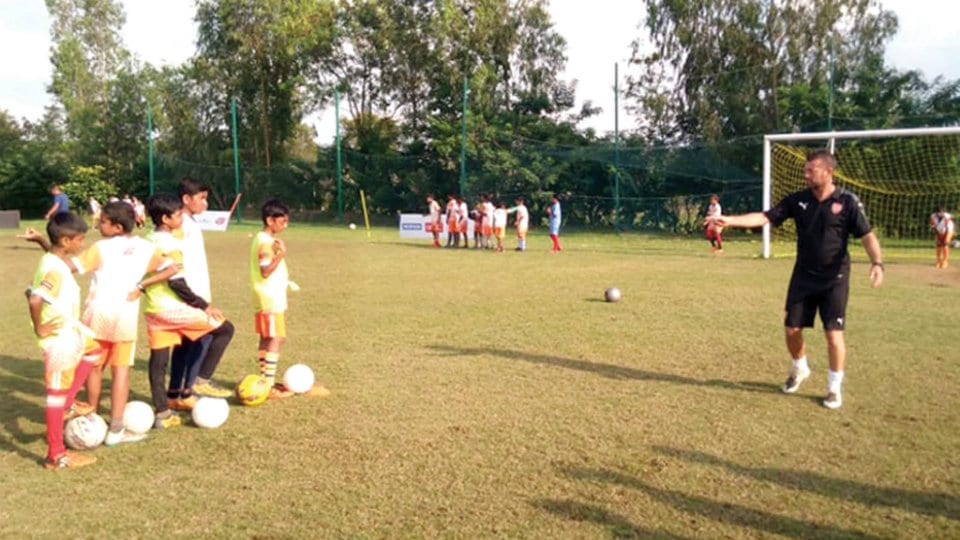
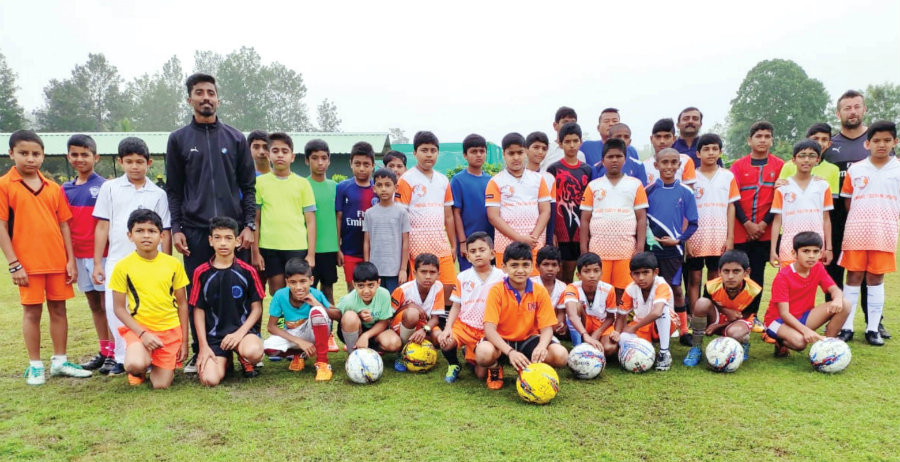
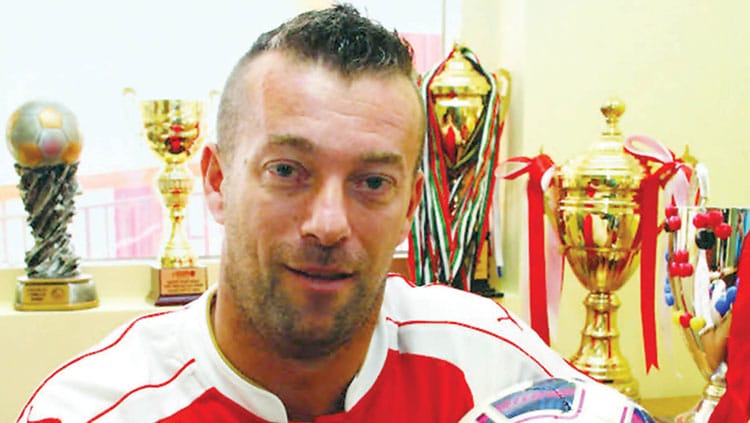
The INS (Ichettira Naren Subbaiah) Sports Centre at Kushalnagar that has now taken up the ambitious task of training young talents from the district, had recently organised a one-week coaching session with UK’s Arsenal football team coach and former England player Ian Selley.

Over 50 young football players from all over the district including Kushalnagar, Maragod, Suntikoppa, Murnad and Ammathi participated in the training session held at INS Centre at Guddehosur.

Free training

Even as the training session was conducted by Ian Selley, coaching classes too were provided free of cost to all students. INS Trustee Ponnappa said that Ian Selly’s remuneration and other expenses were incurred by the sponsors. The training, which was conducted up to 5 pm for six days, included special skill training and rules of the game.
IanSelley02KF22may2020

About Ian Selley

British footballer Ian Selley is an ex-player of Arsenal Football Club and has served as the head coach at the Arsenal Soccer School, Dubai. Ian was the youngest player to make it to the Arsenal senior team that won the FA Cup (Football Association Challenge Cup) and UEFA Cup (Union of European Football Associations Cup). He had just turned 18 years when he made it to the senior team.

This was Ian Selley’s first visit to India. The idea of bringing him here opened up opportunities for European clubs and also has given an indication to the European scouts about the potential available here. His visit also opens up avenues of invitation into prestigious youth football tournaments in Europe and football scholarship programmes for talented kids.

The INS Sports Centre is also working on identifying and grooming those players to be sent to UK. Organisers hope that such coaching programmes open up new avenues for young footballers. The entire camp was sponsored by INS Sports Centre, in association with sponsors.

Youngsters, who attended the training, appreciated the coaching style and discipline of Ian Selley. Ian’s eyes welled up before he left after he witnessed his life-size image on the walls of INS Sports Centre displayed as a thanksgiving gesture. He promised to visit Kodagu again and help train footballers of this province as it holds a special place in his heart.

In memory of their late son

Naren, son of Ichettira Subbaiah, was a good footballer and his parents had many dreams about their son’s future. But their dreams were shattered as Naren was killed in an accident a few years ago.

To keep his memory alive, his parents decided to take up some meaningful project in their hometown and thus INS Sports Centre was born. Subbaiah, along with their other son, Ponnappa started shuttle badminton, cricket and football coaching at the INS Centre.
IanSelley03KF22may2020

No difference between players: Ian Selley

Sharing his experience in Kodagu, Ian Selley said that there is no difference between Indian and foreign players. “Except for language barrier as a few students struggled to understand English, the training session was fruitful and all youngsters seemed to have learnt a lot,” he said. For April next year, Ian has invited five talented children to UK to participate in matches along with young European football counterparts.

source: http://www.starofmysore.com / Star of Mysore / Home> Sports / October 14th, 2019
Looks are a-changin’

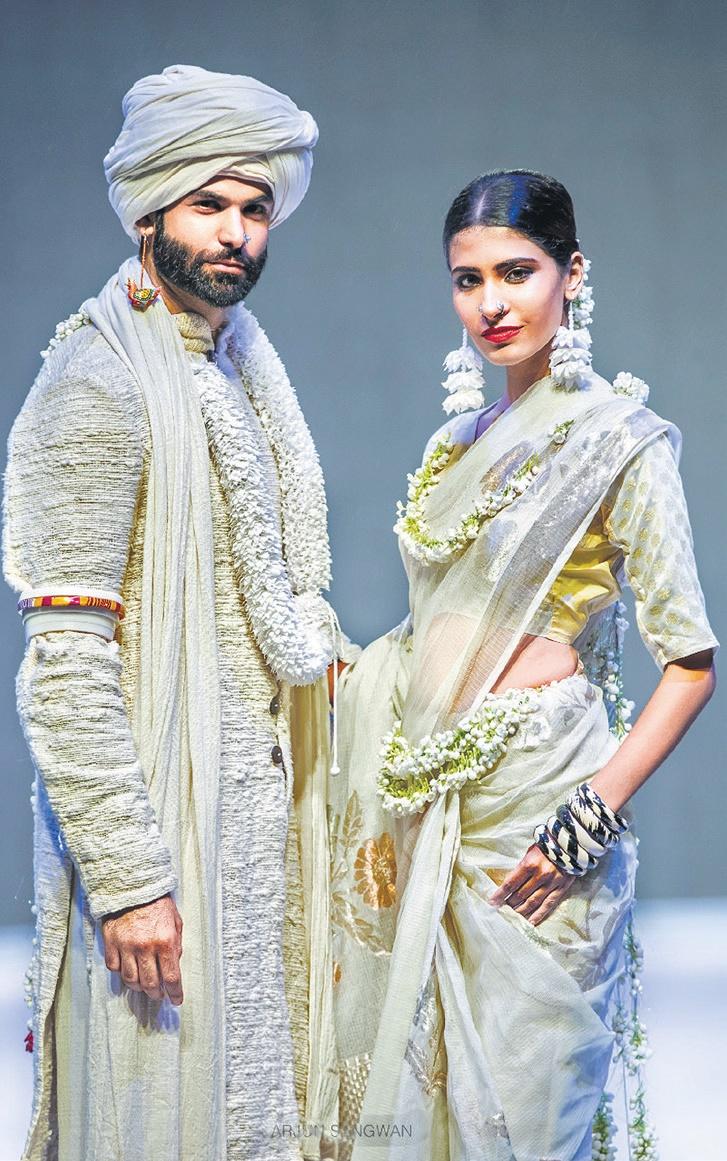
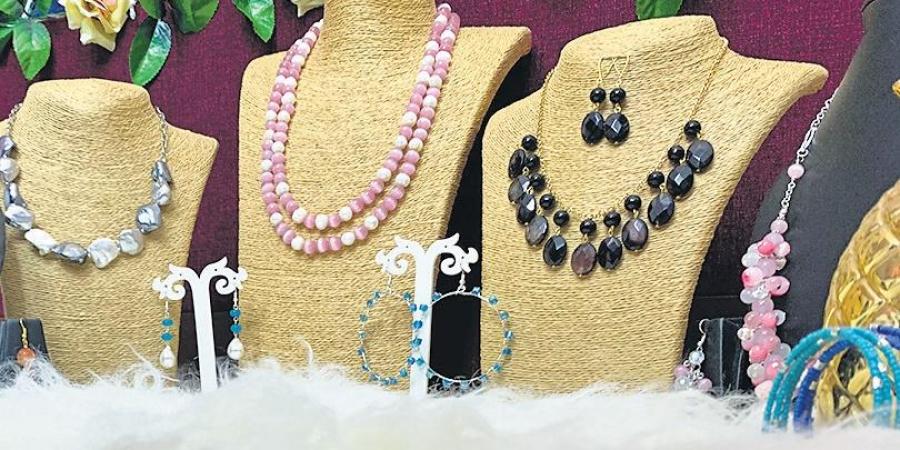
Stock up on handlooms, eye make-up, and neck and hand jewellery, as post-pandemic life looks set to see a change in style mantras

PrasadBidappa01BF22may2020

Bengaluru :

Fashion in the beginning of 2020 was slowly moving towards a more conscious and sustainable approach, and the pandemic has only helped in further validating this cause. The COVID-19 outbreak will redefine fashion and style trends, say experts, with people moving towards natural, breathable fabrics.

“The economic slowdown has been felt by consumers, designers and as well as artisans,” says fashion curator and brand consultant Sarayu Hegde. With the buzz at this point being local manufacturing, Hegde points out that there is newfound pride in wearing the ‘Made in India’ tag now more than ever before. Weaves like Ikat and Uppada are likely to gain even more popularity. “In the recent past, there has been a shift by designers and brands towards using more indigenous material. Also, a lot of plant-based fabrics like banana, bamboo, jute, aloe vera, flax and hemp are currently being used to make sustainable clothing. I would like to see designers creating garments and products with an Indian soul while keeping in mind a more global sensibility,” she says.

PrasadBidappa02BF22may2020

Agrees fashion guru Prasad Bidapa who lives in the hope that the Indian customer will now realise that there is nothing as precious as traditional Indian hand-woven textiles. “In this COVID age, a khadi gamchha used as a breathable face mask is infinitely better than any synthetic mask which recycles stale, poisonous air. We need to support the artisanal textile crafts of India,” he says.

Both Hegde and Prasad resonate one thought: the importance of slow fashion. “Fashion will be back in a celebratory manner. Just like in the 1920s, except we hope that people will choose mindful indulgence as opposed to over-indulgence,” says Hegde. “No more impulse buying, but to upcycle our wardrobes and to retain the best of it, to wear again, should be key. We must be prepared to invest in quality, not quantity,” says Bidapa.

source: http://www.newindianexpress.com / The New Indian Express / Home> Cities> Bengaluru / by Vidya Iyengar, Express News Service / May 21st, 2020

From Big Fat To Short And Simple Wedding

KodavaWedding01KF21may2020

Will ‘at home marriages’ be the in-thing henceforth?

Mysore/Mysuru:

Novel Coronavirus crisis has felled many. And the ‘big fat Indian wedding’ is surely one among them. Thousands gather for dazzling multi-day weddings which are fun, lavish and it fuels a massive industry. Thanks to a Coronavirus-affected world, these weddings are seen now as virus-super-spreader events and many stay away from them.

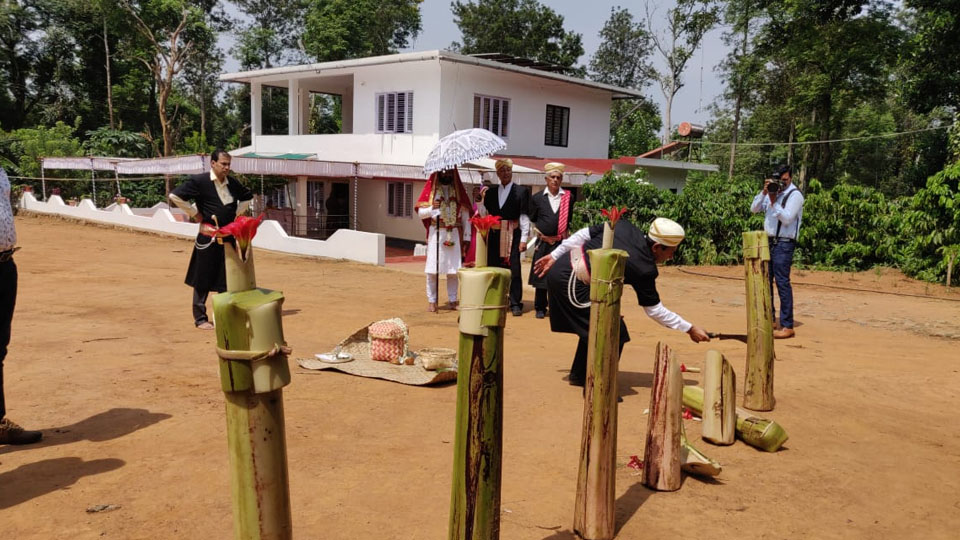
So, the weddings adopted to a new normal – simple and a small affair with limited guests. While many couples have taken the easy way out and postponed their weddings hoping for better days, many weddings are conducted as spartan affairs with just the couple and their immediate families. And instead of choultries, such ceremonies are held at homes.

Theetharamada Gagan Appaiah and Kuttanda Kavery.

Weddings at homes

The couple, their parents, a few relatives and some close friends can be in attendance at homes and it is possible to do a simple wedding with just 50 or so people as per the Government guidelines. At such a spartan wedding, all guests can wear masks and gloves and social distancing could be maintained at all times, and food could be served carefully to prevent any congestion at the tables.

This is the way weddings are happening in Kodagu district and in Mysuru for the past one month during lockdown which also covered a peak marriage season. Numbers of small marriage ceremonies that have taken place in the districts suggest that more and more people are liking it.

Kunchettira Jayanth Subbaiah, an Officer in the Indian Navy at Karwar, was to get married to K. Prajna at Napoklu Kodava Samaja on May 9 and 10 and had invited over 2,000 guests for a grand ceremony. But due to COVID-19 lockdown, the family elders decided to conduct the wedding in their house and only 20 to 25 close relatives were invited. Social distancing was strictly followed at the small event.

Small but traditional

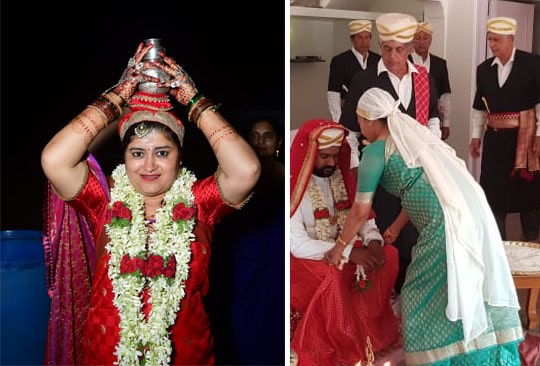
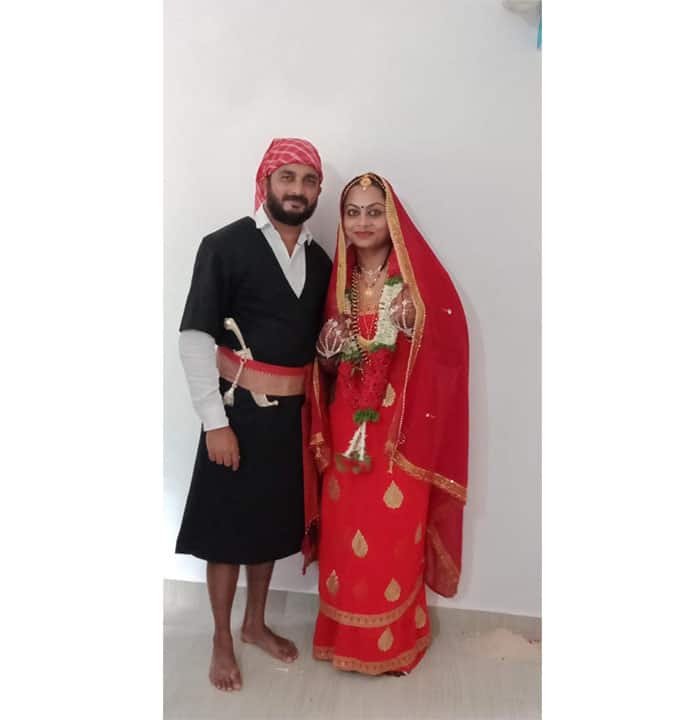
Theetharamada Gagan Appaiah got married to Kuttanda Kavery (Kirthana) in a simple ceremony on May 6 at their homes in a traditional Kodava ‘single muhurtha’ ceremony. Their wedding was originally planned on Apr. 29 at Palm Valley near Gonikoppal and due to lockdown, the family decided to keep it a small affair.

Gagan’s father Vijay told ‘Star of Mysore’ that only 20 to 25 close relatives participated in the wedding. “Both of our families were comfortable with the small ceremony. But we made sure that all the Kodava traditions were followed and we were happy for our children. It was a simple but traditional ceremony and I am planning a similar ceremony for my younger son Ben Aiyappa,” he said.

Ranjitha and Sreenidhi were to get married on Apr. 29 and 30 and they had booked a Choultry in Mysuru after paying Rs. 90,000 advance. Due to lockdown, both the families decided to perform the wedding at the bride’s home in city. They got married on Apr. 30 at a simple ceremony and only 20 close relatives were in attendance.

No lavish affair

Nayakanda Sona married Karthamada Sunil in a traditional ceremony at one of their elders’ home and over 50 guests participated. Both the traditional Kodava Oorkuduva ceremony and the Dampathi Muhurtha were held at home and all the traditions were followed.

Sanjith, a resident of Mysuru, planned a lavish wedding on May 3 at a reputed Choultry on the Ring Road in Mysuru and had paid an advance of Rs. 1.25 lakh. “Due to lockdown, our families decided to hold the wedding in the first week of June. It will be a small ceremony at home and only close relatives will be invited,” Sanjith said.

Nayakanda Sona and Karthamada Sunil.

Lockdown-forced move

Commenting on many people catching up with a trend of simple weddings at their homes, former President of Mysore Kodava Samaja Moovera K. Kuttappa told ‘SOM’ that it is a lockdown-forced move. “Once the lockdown is lifted, things will be normal,” he said.

“Earlier, all weddings in Kodagu were held at homes and Ain Manes (traditional Kodava ancestral home). Later, we shifted to Kodava Samajas. Now due to lockdown, we are back to home weddings. I am happy that all Kodava traditions are followed. But if you take a larger picture, it is a loss to the Kodava Samajas who have properties, marriage halls and staff to maintain. If weddings are held at Samajas, there will be revenues to support Kodava institutions. If not, it is a loss,” he pointed out.

“Marriages during lockdown are very slim affairs and may not find traction in the society. But we believe a trend has been set to reduce marriages to a one-day affair instead of two days. 100 guests are acceptable from either side and a marriage banquet for 200 people is much more manageable than one for 1,000,” said one of the office-bearers of Ponnampet Kodava Samaja.

source: http://www.starofmysore.com / Star of Mysore / Home> Covid-19 / News / May 20th, 2020

Changed Batting Technique to Pursue Test Cricket at The Wrong Age: Robin Uthappa

Robin Uthappa had made quite an entry to international cricket, nearly becoming the first India batsman to hit a century on ODI debut in 2006

Robin Uthappa has said he pursued Test cricket at the wrong age which cost him some of his batting aggression and consequently, became his undoing.

Uthappa had made quite an entry to international cricket, nearly becoming the first India batsman to hit a century on ODI debut in 2006. Known for his aggressive approach, he was part of India squad that went on to win the inaugural ICC World T20 in South Africa.

However, his international career fizzled out as he brought out a change in his technique to realise the dream of playing Test cricket.

“My biggest goal was to play Test cricket for India,” Uthappa said during a Rajasthan Royals podcast session. “Had I pursued that at 20-21, I probably by this time would’ve played Test cricket. I wanted to have no regrets at the end of my career and wanted to be sure that I brought the best out of me.”

To tune himself to the rigours of Test cricket, Uthappa took the help of Pravin Amre and improved his technique to bring in consistency but in the process lost his natural flair.

“Hence at 25, I decided to overhaul my batting technique under Pravin Amre and became a technically better batsman who could be there for long and bat for long hours and be more consistent, which made me let go of some of my batting aggression in the process,” he said.

Uthappa played 46 ODIs and 13 T20Is for India but never played Test cricket and at 34, it seems a distant possibility that he’ll ever make his international comeback.

“I thought to play Test cricket for India, I needed to alter my technique …….In hindsight, I may have pursued the goal at the wrong time at 25 years of age,” he said.

However, during his India career, Uthappa managed to become a world cup winner.

Under MS Dhoni, India beat Pakistan in the final to lift the silverware and Uthappa recounts the days following that historic win.

“After winning the World Cup, I did not sleep for three days straight. It didn’t really hit us initially; we were just ecstatic that we beat Pakistan in the finals,” he said.

“The enormity of it hit us when we landed in India. The reception we received was massive, I mean Bombay doesn’t stop for anyone, that day the entire city came to a standstill and moved only in the direction our bus was moving. Bizarrely we went through all of the Indian weather in that one day.

“What would usually take 45 minutes to an hour on a normal day, took us 5 and a half hours on that particular day. It went from being cold to rainy to humid and then hot. By the time we reached Wankhede, we were famished.

“I remember people throwing water, fruits, and chocolates at us so that we don’t lose energy and keep going. It was fun and all of us really cherished those memories. It was a massive relief to win a World Cup after 1983.

“I don’t think words do justice to the emotion of being a World Cup winner. It surpasses pretty much everything you feel as a cricketer. It’s a bit complex but it’s one of the most amazing feelings you get as an athlete.

“Simply because it makes you feel proud that you made a difference and added value to your team at that point in time to win a world championship. You have played your part and everybody has to play their part to win a World Cup.”

source: http://www.india.com / India.com / Home> Sports / by india.com sports desk / edited by Feroz Khan / May 20th, 2020

Rev. Fr. Joseph Aloysius D’Mello Passes Away In City

FrJosephKF20may2020

Mysore/Mysuru:

Rev. Fr. Joseph Aloysius D’Mello (72), a priest of the Diocese of Mysore, passed away in the early hours today ( May 19). He was sick for the last few years and since the last five months was under medical treatment in St. Joseph’s Hospital, Mysuru.

Profile: Fr. Joseph D’Mello was born in Kedamullur village, Virajpet Taluk, Kodagu district, on Feb.20, 1947 to Rozario D’Mello and Mary Menezes, the third child among six children. He is survived by three elder sisters and a younger brother (Advocate Davis D’Mello) and sister.

After completing his school studies in Virajpet, he joined St. Mary’s Minor Seminary later, completed his Priestly studies at St. Peter’s Pontifical Seminary, Bangalore. He was ordained Priest for the Diocese of Mysore on April 4, 1973 at St. Anne’s Church, Virajpet, by Rt. Rev. Dr. Mathias Fernandes, the then Bishop of Mysore.

He has served as Assistant Parish Priest at St. Joseph’s Cathedral, Parish Priest at Sacred Heart Church, Vontikoppal, St. Joseph’s Church, Mandya, Our Lady of Velangani Church, Hanur, St. Joseph’s Cathedral, Mysore, Holy Family Church, Hinkal and Infant Jesus Church, Nanjangud. He was also the Secretary of Mysore Diocesan Educational Society (MDES) between 1989 and 1996.

His contribution to the field of education has been great. He founded St. Joseph’s School at Mandya, improved the educational institutions at Hanur and St. Philomena’s institutions at St. Joseph’s Cathedral. As the Secretary of MDES, he supported many rural educational institutions in the Diocese of Mysore.

Soft spoken and humane, Fr. Joseph D’Mello was an excellent musician and mastered Gregorian Music. He had the honour of being the General Choir Master at St. Peter’s Seminary. Since 2015 he has been residing at Prashantha Nilaya, retired Priests Home in Mysuru.

Funeral mass: Respecting the restrictions laid by the Government during the present lockdown, the funeral mass was held at Prashantha Nilaya by the two Bishops, Curia members, inmates of Priests’ Home and a few close relatives at 11.30 am. His body was interred at the Catholic Cemetery in Gandhinagar at 12.30 pm today.

Condoled: Most Rev. Dr. K.A. William, Bishop of Mysore, Most Rev. Dr. Thomas Antony Vazhapilly, the priests and religious of the Diocese of Mysore have condoled his death.

source: http://www.starofmysore.com / Star of Mysore / Home> News / May 19th, 2020

Rashmika Mandanna arranges food for police, home guards

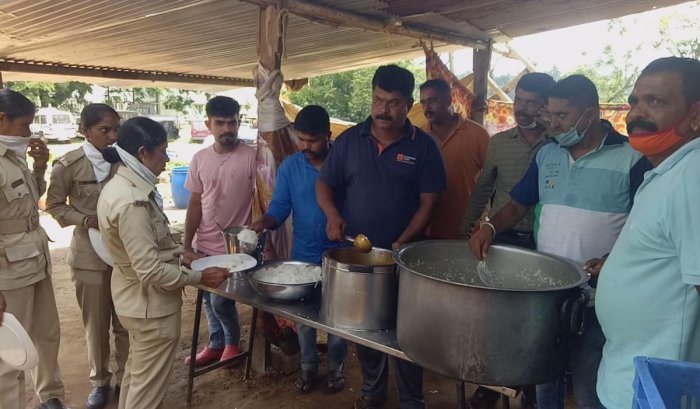
Food is supplied to the police and home guards in Virajpet.

Actor Rashmika Mandanna has made arrangements to supply food for the police and home guards, who have been implementing lockdown guidelines effectively in Virajpet.

The food is being supplied for 150 people including police and home guards for the last 10 days.

The food is prepared in Serenity Hall owned by Rashmika’s father M Madan Mandanna and later taken in a vehicle to reach out to the police and home guards. Arrangements have been made to supply both vegetarian and non-vegetarian food.

Serenity Manager Vikki Changappa said that Rashmika has asked to make arrangement for the food till May 17.

source: http://www.deccanherald.com / Deccan Herald / Home> State> Manglauru / by DHNS, Virajpet / May 17th, 2020

Chennai-based coffee startup Farmgate is bringing Arabica beans from Coorg to store shelves

FarmgateKF18may2020

Now, filter coffee for conference calls: Chennai-based coffee startup Farmgate is bringing Arabica beans from Coorg to store shelves, and filter coffee machines to workplaces.

“We have been producing coffee for over 100 years,” says 30-year-old Lakshmanan Sevugan, about his family’s coffee estates in Coorg.

So far, however, the family has only been supplying quality Arabica and Robusta beans to coffee makers and agents. Now, the millennial entrepreneur is changing things. “Usually, these sales that happen through a farm gate, where agents come and buy, are called farm gate sales,” he says, explaining the logic behind the name of his new coffee brand.

Farmgate Coffee, ironically, aims to do the exact opposite of traditional farmgate sales. “We want to give our customers the direct farm to cup experience,” says Lakshmanan. This is what the startup has been trying to do ever since its launch in August.

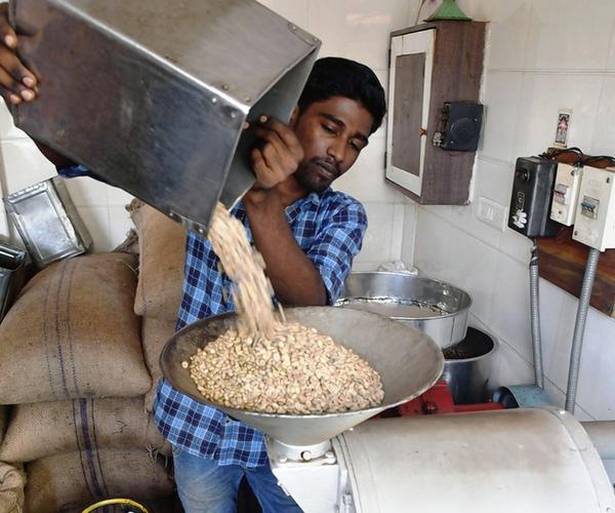
Arabica beans are brought from the estates in Coorg to Chennai, roasted, ground and blended in Mylapore, and packaged in specific blends with chicory, at Farmgate’s corporate office in Nungambakam. They are then sent to clients like restaurants and coffee shops, each of which orders a unique blend for customers.

“We are focusing on Arabica for now. I have grown up drinking this coffee. I like it to be 100% coffee, but the studies we did show that people prefer different blends,” shrugs Lakshmanan. In fact, 60% of the people they studied with preferred coffee mixed with chicory “because they do not like the pure bitterness of it,” says Lakshmanan.

The coffee is not only for businesses, however. A specific 80% medium-roast coffee to 20% chicory blend, called Namma Chennai, is packaged for retail, and has shown up at a few store shelves around the city. Two more will be up by the end of this year.

“We don’t have distributors as such; we operate the entire supply chain ourselves, since we are still a small startup,” says Lakshmanan. His ambitions don’t end there, probably because his love for coffee itself doesn’t end at the pick stage or with any particular roast, but in a dabara of steaming filter coffee. “I love filter coffee; I would take a break and walk out to drink some, back when I had an office job.”

Farmgate02KF18may2020

Lakshmanan is convinced that most office-goers — not only in Chennai and Bengaluru but also Mumbai, Delhi and other parts of the country — would jump at the chance to have filter coffee at work. “But all they get are cappuccino machines, or the option of getting filter coffee delivered from somewhere. It doesn’t taste the same,” he says.

So next up Farmgate’s sleeve is a filter coffee solution, including a blend and a filter coffee machine. “It is a pure play filter coffee vending machine, a separate vessel where decoction is collected, and kept heated at 70 degrees Celsius over a hot plate,” he explains. The machine — currently used by the Farmgate team in their office — then lets the drinker choose a ‘filter coffee’ option.

The device is not developed by Farmgate, but by a private firm that they have tied up with. “We are still a small startup, we don’t have the budget to make our own machines. Just like we don’t have the budget to set up our own roastery, yet.”

Farmgates coffees are roasted and ground, according to its clients’ requirements, at Sundaram Coffee in Mylapore, which has been in the business for over 70 years. Coffee beans are sent to Sundaram every other day, and roasted, cooled, then ground in small batches of five kilos each. “The lesser the amount, the more attention we can give while roasting, and the better taste we get,” says Magan Pradeep, branch manager of Sundaram Coffees in Mylapore.

Back in the coffee estates, picking season has begun. “Arabica till January and Robusta till March. So I will be visiting Coorg more frequently over the next few months. I’m going there next week, in fact,” smiles Lakshmanan.

source: http://www.thehindu.com / The Hindu / Home> Life & Style> Food / by Megha Majumdar / November 18th, 2019

Lockdown leads to blood shortage, people urged to donate blood

With the suspension of blood donation camps, in view of the lockdown, the health authorities are reportedly facing a shortage of blood, especially in Kodagu district. The Kodagu Institute of Medical Sciences, Madikeri, which has set up a 100-bed COVID-19 isolation ward, has been making appeals to people to donate blood so that the stock can be replenished.

Ravi Karumbaiah of the District Blood Bank, KIMS, Madikeri, told The Hindu that some donors and members of a few NGOs had come forward to donate. “The donors are escorted to the blood bank on reaching the hospital and blood is drawn after completing the mandatory formalities. Their general health conditions are examined before blood is drawn. We recommend that only healthy persons donate blood,” he said.

Dr. Karumbaiah said the hospital was in touch with NGOs and had hopes of replenishing the stock in three days. “For the time being, there is no need to worry, but we want to keep blood in stock, given the lockdown. We shall draw blood lasting for only one month, as we store blood for 35 days from the date of collection. Today, 15 persons donated blood,” he said. “We need 150 to 200 units of blood a month.”

Though the district hospital’s blood bank maintains that the available stock could last a few days, it aims to stock up for at least one month.

Kodagu has reported one COVID-19 case, and stringent measures are in place to prevent the spread of the novel coronavirus.

source: http://www.thehindu.com / The Hindu / Home> News> States> Karnataka / by Shankar Bennur / Mysuru – March 28th, 2020

Field Marshal KM Cariappa 27th Death Anniversary: Lesser-Known Facts About The First Commander-in-Chief of Indian Army

Field Marshal KM Cariappa (Photo Credits: indianarmy.nic.in)

It is the 27th death anniversary of Field Marshal KM Cariappa on May 15 this year. He was the first Indian Commander-in-Chief of the Indian Army in Independent India. KM Cariappa is widely regarded as one of the most-decorated Indian Army officers of all times. There’s a lot to know when it comes to his life and achievements of his illustrious military career. If you are looking for interesting facts about Lt Gen KM Cariappa, his life, career, etc., then you have to come to the right place. We, at LatestLY, bring you some of the lesser-known facts about General Cariappa as we observe his 27th death anniversary.

1. KM Cariappa was born in a family of farmers, on January 28, in 1899, in Coorg. Not many people know that his childhood pet name was ‘Chimma’.

2. During his college days around 1917, he came to know about the Indian Army’s recruitment exercise. KM Cariappa was one of the 42 applicants out of 70 who were selected. The rest, they say, is history.

3. In 1925, KM Cariappa was sent on a world tour, where he came across a lot of foreign cultures, soldiers, and public. He was nicknamed ‘Kipper’ by a wife of a British officer who couldn’t pronounce his name.

4. In 1942, when he was promoted as the acting lieutenant colonel and the commanding officer of 7th Rajput Machine Gun Battalion, KM Cariappa became the first Indian to do so, in the Indian Army.

5. In the same year, i.e. 1945, he was promoted to the post of Brigadier. This made KM Cariappa the first Indian officer to fully attain this rank.

6. Not many people know that KM Cariappa was the officer-in-charge of the division of Army and its assets during the time of India’s independence in 1947.

7. During the First Indo-Pakistani War 1947-48, when the Indian Army HQ had strictly instructed to not conduct any operation in the Kashmir Valley, KM Cariappa didn’t obey the orders and instead launched offensive strikes in the region. The result of it was that India was able to assert its control over Ladakh and nearby regions.

8. In 1949, when Indian Army had to appoint the first Indian Commander-in-Chief (C-in-C), there were two other contenders, i.e., Shringanesh and Nathu Singh, along with KM Cariappa, who was in contention too. However, it was KM Cariappa who eventually took over as the first Indian C-in-C of independent Indian Army.

9. It is a little-known fact that the phrase ‘Jai Hind’, which was the slogan of Subash Chandra Bose-led Indian National Army (INA), was adopted by KM Cariappa, and has since then been the formal phrase to greet each other in the armed forces.

10. KM Cariappa retired from the post of Commander-in-Chief in 1953, after serving the position for 4 years.

11. Not many people know that he has also served as the Indian High Commissioner to Australia, New Zealand, after his retirement, until 1956.

12. KM Cariappa was also honoured with the Legion of Merit by American President Harry S Truman – one of the rare feats.

13. After being persuaded a lot by his friends and family members, KM Cariappa also tried his luck in politics. In 1957 Lok Sabha Elections, he contested unsuccessfully from North-east Bombay seat, against Krishna Menon.

14. In 1986, the government conferred the rank of Field Marshal on KM Cariappa as a mark of honour and recognition of his illustrious career spanning over three decades. He, along with Field Marshal Sam Manekshaw, are the only people who have been accorded this honour, till date.

15. As per a legend, when his son, KC Cariappa was captured as a prisoner-of-war (POW) in the Indo-Pakistani War 1965, KM Cariappa was contacted by Pakistani General Ayub Khan informing him about his son’s safety, and even offered his release. However, KM Cariappa proudly replied, “He is my son no longer. He is the child of this country, a soldier fighting for his motherland like a true patriot. My many thanks for your kind gesture, but I request you to release all or release none. Give him no special treatment.”

KM Cariappa breathed his last on May 15, 1993. After suffering from arthritis and heart problems, he died in his sleep at Bangalore Command Hospital. As India observes the 27th death anniversary of the decorated soldier of the Indian Army, we at LatestLY, thank KM Cariappa enough for his selfless services, and wish his soul rests in peace!

source: http://www.latestly.com / LatestLY / Home> Lifestyle> Festivals and Events / May 17th, 2020

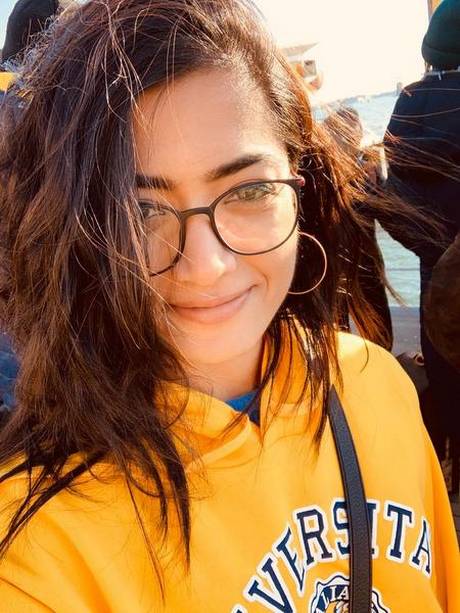
When Rashmika Mandanna went on a solo trip to Venice

Rashmika Mandanna on her Venice trip   | Photo Credit: Special Arrangement
Rashmika Mandanna on her Venice trip | Photo Credit: Special Arrangement

The ‘Bheeshma’ actor reveals how one missed train stop led to an unforgettable travel memory, as she covered every inch of Venice on foot.

Exploring Venice on foot tops Rashmika Mandanna’s list of adventures from her many travels, although, given a second chance, she might get off at the right train stop this time. On the plus side, she says, “I feel like I’m a boss of Venice now.”

The story goes such: having requested a break from filming a song for Bheeshma, Rashmika opted to travel to Venice from Rome via Florence on train.

“I knew that my stop would arrive at noon,” she says. Once aboard, the train operator threw two different options. “One stop at 11.45 and the other at 12.15. I thought the earlier option was better and ended up getting off at the wrong station,” she adds.

Up ahead were two more options: either walk for two-and-a-half hours with her luggage to get to her hotel in Venice, or travel by cab to a point midway and then take a water taxi.

Rashmika Mandanna on her Venice trip   | Photo Credit: Special Arrangement
Rashmika Mandanna on her Venice trip | Photo Credit: Special Arrangement

She took the cab but, as fate would have it, she could not find a boat service/operator who could speak or understand English.

“I was awestruck. The entire world comes here for vacation. Maybe, it was my bad luck that nobody could understand what I was trying to ask them, like ‘where to go’, ‘how do you reach here’,” she says.

The actor decided to wing it and find her own way, perhaps, falling back on the solo traveller spirit, a move she would later regret as she ended up at the hotel only at 2 am.

“I have never walked so much in my life. It was just me dragging my suitcase and walking around a residential street; there was not a single soul in sight. My phone battery was going to give up, I didn’t have a map and I started to think ‘okay, what if I am supposed to spend the rest of my life here?’,” she laughs, adding, “I’m not kidding because I was so scared. Imagine, you are walking and you don’t see any one, there are just two people walking by and staring at you, probably because they think you are weird.”

Sightseeing in Venice   | Photo Credit: Special Arrangement
Sightseeing in Venice | Photo Credit: Special Arrangement

The experience only strengthened her resolve to overcome the language barrier.

“I stayed in the hotel the next day because I was tired, but then the next two days I was out and about, taking the water taxis all around Venice trying to figure out the city, which stop connected to which place, talking to locals and clicking pictures. I did get lost in Venice but now I feel like I know each and every spot there.”

source: http://www.thehindu.com / The Hindu / Home> Entertainment> Movies / by Pradeep Kumar / May 13th, 2020