Read about Nidhi’s eerie experience

You’d think that shooting for a romantic number in a Kannada film would be all mushy and breezy, but the experience that Nidhi Subbaiah had while filming for one in her upcoming film Nanna Ninna Prema Kathe was anything but that.

The actress tells us, “We were shooting at this place called the Jamkhandi palace, which is in a dilapidated condition.

NidhiKF30mar2016

This was a romantic song, but I had a weird feeling throughout when we were there. After we had wrapped up the shoot, someone asked us about our film and where we were shooting.

It was only then that people told us about the belief that the place was haunted, since two lovers had committed suicide there.”

Nidhi is quick to laugh it off, thanking her stars that she got to know about this only when they finished shooting at the location.

The film, being directed by debutant Shivu Jamkhandi, also stars Vijay Raghavendra and Tilak.

source: http://www.timesofindia.indiatimes.com / The Times of India / News Home> Entertainment> Kannada> Movies / Sunayana Suresh / TNN / March 30th, 2016

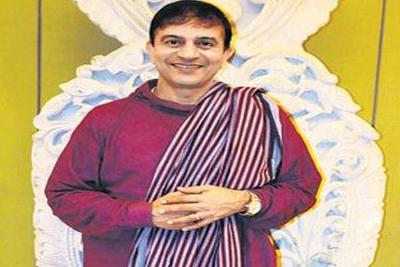
Healthtech Startup Healtheminds Gets Undisclosed Amount From Robin Uthappa’s Caffeine Ventures

HealtheMindsKF29mar2016

And joining in the ever growing list of sports personalities investing in startups, Robin Uthappa, through his VC firm Caffeine Ventures, has invested an undisclosed amount in Healtheminds, a healthcare technology startup.

These newly raised funds will be used by the company to launch a new product and to increase its reach across India. The company will also hire for its operations team.

Founded in 2013 by Ankita Puri – a former investment banker and Sunita Maheshwari, Yale-trained cardiologist, Healtheminds focuses on tackling mental and emotional problems of patients. The company also has an online platform through which users can connect with counsellors, psychologists and coaches through video, telephonic and chat communication systems.

It claims that currently, there are more than 70 professionals across India on its platform. It provides video counselling while keeping the identity of the caller anonymous. Until now, the company was bootstrapped and claims that of doubling its users every month. The company aim to do at least 5,000 online therapy sessions each month on the platform.

Robin Uthappa, who invested in this round, said,

I invested in HealthEminds to help break this barrier that is holding people back from reaching their full potential. Today, online is a great medium for people to easily reach out for help whether it is to overcome depression, blocks or break barriers in their lives with the right help.

Commenting on investment from Robin, Sunit Maheshwari, co-founder of the company, said,

It’s wonderful to have an investor on board who understands the importance of the mind in sport and in health.

The company is charging between ₹500 and ₹1500 per session depending on the professional. It works with 45 mental healthcare professionals nationally and is targeting to increase this number to 100 by the end of the calendar year. Healtheminds panel of professionals comprises of renowned psychologists, counsellors, life coaches, psychiatrists and nutritionists, who are all equipped to help improve personal and professional development.

Users can book an online session with a professional of their choice at a time that suits them and have a video session from the comfort of their home.

As for Uthappa, this is not the first time he is investing in a startup. Earlier, he had invested close to Rs 1.5 crore in iTiffin – a Bangalore based healthy food/tiffin delivery service provider.

source: http://www.thetechportal.in / TheTechPortal.in / Home> News> Start-Ups / by Jeet Suthar / March 29th, 2016

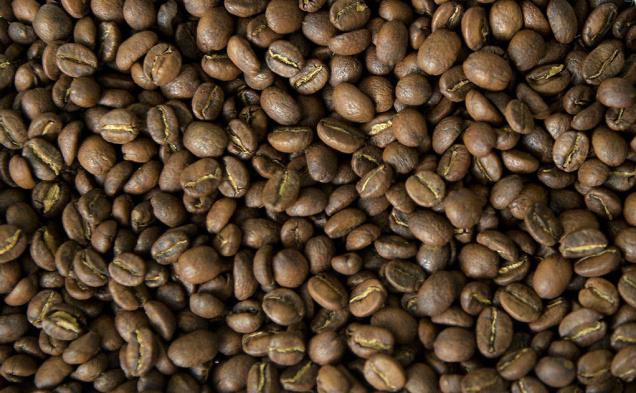
Weak economy spurs demand for low-priced coffees

Drop in prices hurts realisations even as shipments see 18% growth in March quarter

coffeeKF29mar2016

Bengaluru :

Sluggish economic conditions in part of Europe and West Asia is triggering demand for the low-priced coffees such as the robusta cherry and instant varieties as consumers in these regions are seen shifting to the cheaper beverage, exporter said.

The trend is reflected in the increased shipments of these varieties from India over the past three months.

Higher shipments
“We are noticing a trend that buyers in Europe and the Gulf Countries are seen buying more of cheaper coffees than in the past,” said Ramesh Rajah, President of the Coffee Exporters Association.

The shift in preference in the Gulf nations could be influenced by the drop in oil prices.

Permits rise
Total coffee permits issued by the Coffee Board for the January 1-March 24 period were up around 18 per cent at 90,274 tonnes (76,567 tonnes in corresponding last year), primarily driven by a surge in shipments of robusta cherry and the instant variety.

Permits issued for robusta cherry were up 32 per cent at 40,618 tonnes (30,756 tonnes), while for instant coffee shipments including that of re-exports, the permits issued were up 13 per cent at 25,299 tonnes (22,416 tonnes) for the period.

For the robusta parchment or the washed robusta, which command a premium in the world market, the permits issued dropped around 23 per cent to 5,822 tonnes (7,595 tonnes).

Changing preferences
However, the premium variety arabica parchment saw an increase in demand at 15,099 tonnes (11,837 tonnes).

Coffee Board officials also attributed the increase in demand for robusta cherry and instant coffee to some extent to the shift in consumer preferences to cheaper varieties in markets such as Europe.

An early harvest of robustas has also contributed to the increase in shipments as more coffee was available for exporters with growers, especially the smaller ones, preferring to sell their produce as prices continued to remain volatile.

An official with a global trading house attributed the jump in the January-March quarter shipments to an early robusta crop this year and also to the front-loading of sales by the producers, wherein growers sold off their produce as soon as it was ready to sell a few weeks ago.

But now, the market arrivals have slowed down as growers – especially the larger ones – are beginning to hold back their produce, the official said.

The harvest of robusta is complete and the growers, especially the Arabica producers are looking forward the blossom showers in the week ahead.

Export realisations
Though the March quarter shipments have been good, the earnings are likely to be under pressure due to lower prices.

The per tonne realisation has dropped considerably to ₹1,55,077 in March quarter as compared to ₹1,77,660 in the corresponding period last year.

Exporters are a bit sceptical of sustaining the growth trend in shipments in the year ahead.

“The near term order books are good, but there is slackness in the medium to long-term,” Rajah said.

The Coffee Board has pegged the 2015-16 crop at 3.5 lakh tonnes – a seven per cent increase over the previous season’s 3.27 lakh tonnes.

source: http://www.thehindubusinessline.com / Business Line / Home> Economy> AgriBusiness / by Vishwanath Kulkarni / Bengaluru – March 28th, 2016

Kodava music with a twist

Kundul Kyamo, a Kodava album, talks about the harsh realities of life with a light-hearted undertone

Kodava music with a twist

Back in the earlier days, going to a gig meant listening to ‘wandering sadhus’ sitting around the biggest tree in the village, who would convey socially relevant messages through songs. The closest the current generation has got to this is listening to folklore from their grandparents, usually when they are trying to put the kids to sleep. A 37-year-old journalist from Bengaluru, Boppanda Jeffrey Aiyappa has tried doing the same, by releasing an album in Kodava Takk (Spoken by Kodavas/people from Coorg).

Kundul Kyamo (meaning The Barking Deer in the Hill) is an 8-track album that was released on the 12th of this month at the Karnataka Kodava Sahitya Academy (KKSA) event held in Mysuru.

What makes the album standout is that Aiyappa, who has also penned 7 songs of the album, talks about the harsh realities in today’s society, but in a rather funny way. The album is a compilation of several genres such as parody, romance and devotional. The album starts off with a devotional song dedicated to goddess Bhagavathi Devi and the rest is mostly a fun-fest. “The title track Kundul Kyamo is about a man called Choma hunting Barking

Deer and how his associate snitches on him to the cops because he didn’t get a large share of meat. Aiynga Boys (sung by Chaitra Nanaiah) is about gender hypocrisy where a girl is judged (character assassination) if she is friends with a couple of boys, but it’s not the same with boys,” says Aiyappa. The album talks about the taboos that exist in society, whilst giving out a positive message such as don’t hunt, don’t judge in haste etc.

Aiyappa, who has been singing since he was in school, has always had the fascination to write his songs. His tryst with events and functions made him a hit among the local crowd and they used to request him for his songs. It was in 2011 when he decided to release an album called Bengaluru Bavo. Though the album fared pretty decently in terms of sales, songs like Cheriya Manelu Ippuliya from the album tasted success only 4 years later, thanks to people sharing on social media and whatsapp. The song was also played at the Madikeri Dussera. Post the success of Bengaluru Bravo, Aiyappa started working on his second album last April, after he was encouraged by Biddatanda S Thammaiya, president of KKSA. Aiyappa started working on the album recently, although he had written the songs way back. After work he would sit for a couple of hours late in the night and work in his bedroom studio using synthesizers, software, which was later worked upon in the studio as well. 1000 copies of Kundul Kyamo were made and it is on the verge of being sold out within just 15 days of its release, and this is a record of sorts in the Kodava music scene.

Taking a cue from his first album, which gained popularity on social media, Aiyappa released a teaser, of what the stories in the songs would be about, on YouTube and social media “that went viral in the Kodava circles, so much so that I got about 20 forwards of my own teaser, without people realising that it was me who made it,” he says. Aiyappa’s story is a textbook example of how, if encouraged by people, artists can go to great distances, considering the fact that he released an album in Kodava Takk, a language not spoken by many.

“The generation that was born after the 90s are the ones who have shown great interest in my music. People from our generation or the older ones are like ‘ok he is a singer, good for him’. I have got phone calls from parents of kids who tell that they purchased the album because their kids nagged them to,” Aiyappa says. Well, Kudos to Aiyappa for taking a leap of faith and proving a point. Probably with more support and encouragement we can look at artists taking songs of our regional languages mainstream as well.

Kundul Kyamo Available at Coorg Stores near Kodava Samaja and at Kodava Samaja Club

source: http://www.bangaloremirror.com / Bangalore Mirror / Home> Columns> Sunday Read / by Prashanth Vidyasagar, Bangalore Mirror Bureau / March 27th, 2016

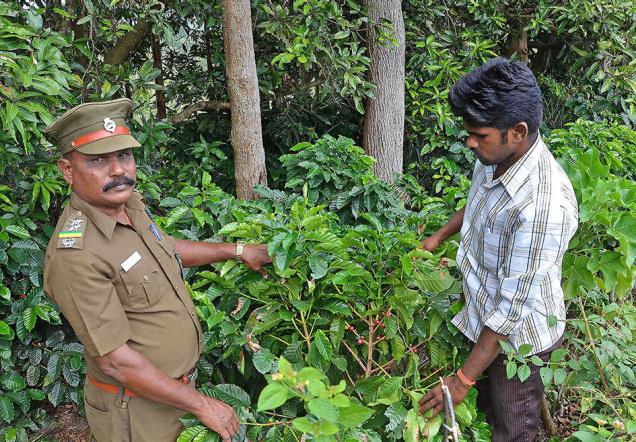
Coffee plantation being tried at Pachamalai

A forest official in Pachamalai at a patch of land where a coffee plantation is being raised.— PHOTO: B. VELANKANNI RAJ

600 fingerlings from Thanjavur being reared in ponds near Top Sengattupatti

As part of livelihood support initiative for tribal men and women of Pachamalai, a series of innovative income-generating activities have been taken up under the Integrated Tribal Development Programme being implemented by the National Bank for Agricultural and Rural Development through Hand-in-Hand, a non-governmental organisation.

Coffee plantation has been taken up on an area of 100 acres of land and the plants have been registering an appreciable growth in the last six months.

“Being a shade-loving plantation crop, coffee plants should be raised on areas with adequate shade,” said Kannan, coordinator of the Hand-in-Hand.

He said that the coffee plants of ‘Selection’ variety had been brought from Kolli Hills and had been given to tribal farmers after an initial exposure visit to the plantations there.

Based on the success of growth of coffee plants in Pachamalai, the Coffee Board had come forward to extend its support.

“In fact, the Board had gathered the details of tribal farmers cultivating coffee in the villages on the hills,” he added. Maximum advantage of shady areas at Pachamalai had been taken.

Fish ponds

For the first time, two fish ponds had been set up to benefit the tribal farmers.

A total of 600 fingerlings of katla, rohu, and mirgal varieties had been brought from Thanjavur and is reared at a couple of ponds set up at Puthur village near Top Sengattupatti.

The fishes which were let out in the pond two months ago, now weighed 200 grams. “The weight will increase up to one kg in four months or so, indicating an attractive revenue for the tribal farmers,” he said.

Desi bird rearing has been another innovative vocation in which six women had been imparted special training.

“With the desi birds being reared in the open at the backyard, as against the use of cages, the birds will fetch attractive returns,” Mr. Kannan said.

The women have been rearing ‘Asil 1’ and ‘Asil 2’ variety of birds which will fetch a monthly revenue ranging between Rs.1,000 and Rs.1,500.

All these vocations have been introduced to diversify the economic activities of tribal farmers who have been largely depending on the cultivation of tapioca and castor.

source: http://www.thehindu.com / The Hindu / Home> News> Cities> Tiruchirapalli / by Special Correspondent / Tiruchi – March 27th, 2016

O! Success So Sweet!

When things around you are falling apart, there are only a few who not only rise to the occasion, but also create opportunities for themselves and others. Having been able to support the tribals, rural folk, and small farmers with her brand Nectar Fresh, Chayaa Nanjappa is one such example.

Chayaa’s single-minded efforts have established her honey brand – Nectar Fresh – in a highly quality-conscious premium segment. While serving high-end hotels and resorts, she (her brand) has created employment and better earning opportunities for tribals and marginal farmers. In fact, she has come a long way since the launch of the brand in 2007, and now she receives orders from importers from different parts of the world who want to buy honey from her company. She is also hopeful that Nectar Fresh products will soon be decked up at Walmart stores.

The honey market is a crowded space with big brands at play, so what made a small Khadi & Village Industries Board-backed rural enterprise from Mandya (in Karnataka) to earn a name for itself in both domestic and international markets? According to her, it is their obsession for quality that has made the brand stand out. The global exports of natural honey is about $2.3 billion (CY2014), of which India’s share is just $77 million, which is a minuscule 3.5%. Nanjappa saw the potential for growth. When she started in 2007, total honey production by her company was just 20 tonne per month. That has now increased to 200 tonne per month. And the company has plans to further increase the production to 400 tonne per month in the near months.

Earlier, she would export through agents, but presently, the company has started exporting under its own brand name. That most of her new orders are accounted for by referrals from existing, happy clients is a sign of her company’s product quality.

In the domestic market too the company has positioned itself strategically at few select outlets like Himalaya Drugs and Kerala Ayurveda, and serves brands like Kitchens of India, etc., to stay away from the clutter.

Though the company has expanded its product portfolio with jams, sauces, and coffee, honey still remains the mainstay. Her efforts in the field of rural empowerment and giving tribals and marginal farmers opportunities to sell their produce in the global market has earned her many state and national-level accolades, including the Priyadarshini Award by Federation of Indian Women Entrepreneurs (FIWE). She proudly says that Nectar Fresh has become the first brand in India to use women-owned logo of WEConnect International, a US-based women entrepreneurs’ body which supports brands that stand for quality. Chayaa is a social capitalist who deserves much praise.

TDB: What was life like before you started Nectar Fresh, and what made you take up entrepreneurship as a profession?

Chayaa Nanjappa (CN): I started this business at a point in time when I was going through a tough phase in my life due to personal reasons. I got into the business because I wanted to do something to keep myself busy and be independent, and create employment to help other needy people. And that’s how Nectar Fresh Foods came into existence. Initially, I started it as a small scale unit in Bangalore, but later, I moved to Mysore.

TDB: How did you manage the initial funding? Why honey and food products only?

CN: As my place of origin is Coorg, I looked at products which can be related to the region. Long ago, Coorg was known for its honey but, gradually, the honey production fell to shockingly low levels. So, I decided to source best quality honey from different parts of the country and market it under the brand name Nectar Fresh in small quantities. I underwent a week-long training on honey production at the Central Bee Research and Training Institute in Pune and learnt technicalities involved in the production and storage of honey.

I had lost my father and had no one to look up to for guidance. I took some financial help from my mother. I prepared a project report based on which I got a loan of Rs.10 lakh from a bank. I also got a lot of support from the Khadi and Village Industries Board.

TDB: Having started with just a corpus of Rs.10 lakh is very interesting and inspiring. What was your initial approach?

CN: I market my products on my own across India; I have no budget for advertisements. My approach was to do something new and give a unique positioning to my product. There was a monopoly of honey brands from Germany and France in the high-end segment of the hospitality industry in India. No Indian brand was catering to the segment that includes high-end hotels and resorts. I maintained product quality from the very beginning. Quality and world-class packaging helped us to break the monopoly of foreign brands. To counter MNCs, we expanded our product line, and now supply an entire basket of products including honey, jam, sauce and coffee.

TDB: Tell us something about your export markets. And how exactly did you foray into them?

CN: Until recently, we were exporting through agents but are now exporting directly across the globe. We are enhancing production capacity of honey from 200 tonne per month to 400 tonne per month to meet demand from export markets. We also have plans to produce 50 tonne of jam per month. Well, ITC was the first organisation that recognised us for our quality, and thus, I got my first order from them. The association with ITC gave me the confidence to approach other premium hotels. My export orders started coming when people started noticing our products in some of the premium hotels in India. The positioning of our products in these hotels helped in image building. Two months ago, we started exporting directly under our brand name.

TDB: You have ventured into a highly competitive segment, both in the domestic as well as overseas markets. How do you deal with competition?

CN: Our products stand for quality, and it’s an integral part of our brand. Nectar Fresh has grown due to our ethics in business. Because of positive word of mouth, farmers have remained loyal to us, and for the last five to six years we have held on to the same group of suppliers. We source directly from farmers and with the growth of the company, farmers have also benefitted. We may be a small-scale unit, but from the batch code, we can trace a product from the level of procurement to final despatch. That’s how we maintain consistency in quality in the entire process. It’s because of the quality of our products that even people from US and Germany come to our small unit and buy from us.

TDB: What role has your family played in your success? Were there initial apprehensions?

CN: As I have already mentioned, I started my business when I was going through a rough phase in life, and due to that my mother had her apprehensions. But still, she encouraged me. My close friends supported me a lot too. Rajappa, my business partner, has been a big, big, big support.

TDB: What would be your advice to all, especially women, who want to take a plunge into entrepreneurship in general, and exports and imports in particular?

CN: Work hard. If you are really focused, you can achieve the impossible. My new unit in Mandya in Karnataka is a 100% rural enterprise, but I haven’t availed any subsidy for it. The system is such that it will take its own time. Instead of wasting time and energy on it, if you focus it on your work, you will get better results. My past experience made me realise this, and this time I applied for a loan from a bank and set up my unit without taking any subsidy. There are many opportunities for those living in urban areas, but the necessities of rural women need to be addressed. They can make a big difference to exports. They have world class products around them, but they don’t know how to take them to market.

source: http://www.thedollarbusiness.com / The Dollar Business / Home> Cover Story> March 2016> Power Woman> O Success, So Sweet / by Sisir Pradhan / March 20th, 2016

Planters feel relieved as Karnataka scraps agriculture income tax

Bengaluru :

In a relief to the beleaguered coffee, tea and rubber growers in Karnataka, the State government has proposed to abolish the agriculture income tax with effect from April 1, 2016.

“There is a long standing demand of growers of coffee, tea, rubber and other plantation crops to abolish Agricultural Income Tax. I propose to abolish Agricultural Income Tax with effect from 1st of April 2016,” Karnataka Chief Minister Siddaramaiah said presenting the State Budget for 2016-17 here on Friday.

With this, Karnataka, the largest coffee producer, has followed the neighbouring Tamil Nadu, which had abolished agriculture income tax way back in 2004. Even Kerala has provided a relief to the planters community by exempting the income tax for a year in 2016-17.

Karnataka’s latest move will provide relief to about two dozen companies such as Tata Coffee and Bombay Burmah Trading Corporation that operate coffee, tea and rubber plantations in the State besides thousands of individual coffee growers. Plantation companies had to pay a 35 per cent tax on their net income in the State and the total outgo in the State is estimated at around ₹20 crore.

“It is a good news for the plantation industry and will give us a boost,” said Baba PS Bedi, Chairman of the Karnataka Planters’ Association (KPA). Bedi further said the proposed move would provide some relief for the plantation sector that is becoming unviable, reeling under the impact of declining realisations and rising input costs.

Though Karnataka had suspended the agriculture income tax for individual growers way back in 2004 when the coffee prices had touched a 100-year-low of around 0.40 cents per pound, the growers had to wait for the notification every year exempting the income tax. “It was a kind of Damocles Sword hanging on our head. Now, with this budgetary announcement, we need not have to worry at all,” said N Bose Mandanna, a large grower at Suntikoppa.

K Kurian, Managing Director of Devon Plantation & Industries Ltd, said the move would help the plantation companies to re-invest in developing their estates in the long run.

Besides providing a higher allocation of ₹4,344 crore to the agriculture department, Karnataka is targeting to distribute ₹11,000 crore in agriculture loan to 23 lakh farmers in the State. To implement the new crop insurance scheme during 2016-17, the State has earmarked ₹675.38 crore.

source: http://www.thehindubusinessline.com / Business Line / Home> Markets> Commodities / by The Hindu Business Line Bureau / March 18th, 2016

Prasad Bidapa in Pakistan fashion week

PrasadBidappaKF24mar2016

Prasad Bidapa is doing a fashion show. What’s new, you might ask. Well this one is in Pakistan.

And naturally, Bidapa is thrilled.`Shaan-e-Pakistan: Kya Dilli Kya Lahore’, organised by Huma Nassr, is an annual three-day event in Lahore intended as a plat form for the singers, dancers and designers of both nations.

And Bidapa has company not just from the fashion industry but from the music industry as well, such as popular singer Atif Aslam.

Now this is a cross-border collaboration worth strutting his stuff for.

source: http://www.timesofindia.indiatimes.com / The Times of India / News Home> Entertainment> Kannada / Bangalore Mirror Bureau / March 23rd, 2016

Rwanda: How Agro-Tourism is Marketing Rwanda’s Coffee

Need is the mother of all innovations, goes an old adage. It is also true that solutions to most of our problems are always around us. So, when a Huye-based farmer sought sustainable ways to market local coffee and promote Rwanda’s unique tourism attractions to the outside world, the resources at hand came in handy.

The farmer created a ‘coffee experience tour’ hiking trail across the Huye Mountain Coffee plantation and the historically important Nyirankoko hill just above the plantation. Where does the coffee you drink at Ban Café or any other coffee houses come from? Or why would one visit a coffee or tea farm, or a cattle ranch? These questions are expounded on during the hike and, by the time one descends the hill, they are ready to roast and brew their first coffee as the hike takes you through all the stages of the coffee production process, right from planting to roasting and coffee brewing. The ‘coffee tour experience’ trail is unique in that it has created a synergy, promoting agriculture and tourism as one product.

This agro-tourism initiative is essential as the country seeks more products to market to the world and boost tourism receipts. It is even more important as it creates awareness about the two sectors, helping expand their markets and add value to clients’ experience in the process.

The approach has made it possible for farmers working with Huye Mountain Coffee to get a ready market abroad and better prices for their coffee. Besides, it strengthens efforts by the government and other stakeholders to create 200,000 off-farm jobs per annum under the second Economic Development and Poverty Reduction Strategy (EDPRS II). Innovative approaches like this one will play an instrumental role in helping the country realise this objective.

Agro-tourism, in simple terms, involves any agriculturally based operation or activity that brings visitors to a farm or ranch, according to Farm Concern international (FCI), an Africa- wide market development agency focusing on commercialisation of smallholder farmers and agro- pastoral communities.

Huye Mountain Coffee tour experience trail

When I visited the recent Made-in-Rwanda expo at Gikondo Show Grounds in Kicukiro, Huye Mountain Coffee was one of the exhibitors. A closer look at the brochures from the attendants at the stall indicated that the firm was more than just a coffee processor. I learnt from the brochures that they had recently introduced a new product targeting coffee lovers and buyers – the ‘coffee tour experience’. This was intriguing… so I was curious to go check it out.

About 10 days later, I hit the trail in company of other 10 visitors from the US. Our guide for the day was Aloys, or Mr Coffee, as he is fondly called, who took us through the trail on paper at the reception centre at Gako trading centre, explaining the various 12 stages of the coffee tour in preparation for the hike. After the briefing we boarded our vehicles for a two-kilometre ride on a rather bumpy and steep gravel road to the starting point. The trail begins at about 1,689 metres above sea level, with an introduction about coffee planting and the initial growing stages of the crop.

We went through other stages, and I learnt that the coffee tree life cycle is over 50 years. We also learnt of some of the enemies of coffee, like the berry bola disease, leaf rust disease, coffee bug that gives unpleasant potato taste. Mr Coffee says the firm mostly uses organic means to fight these enemies, including tobacco and pyrethrum organic pesticides. The harvesting stage comes next (during my visit it was off-season) that prepares visitors for the exciting coffee roasting (using Rwandan traditional means) at 1,870 metres above sea level. This is done under an acacia tree that provides much-needed shade (on day hot day like when I visited). It’s here that we introduced to the coffee roasting process using the Rwandan traditional technology.

One gets that sense of satisfaction roasting green coffee beans to a rich dark brown (colour) that makes for aromatic coffee distinct to Rwanda. And the aroma… Nothing beats the aroma of freshly roasted Rwanda coffee!

‘Tour of Rwandan culture and history’

The icing on the hike is when visitors embark on the second segment of the trail, which marks the ‘tour of Rwanda culture and history’ as visitors explore the breathe-taking Nyirankoko rock, just about a 100 metres from the coffee plantation.

Mr Coffee takes you through the history of Rwanda particularly during the era of the kingdom and inter-kingdom conflicts. He tells us that the hill’s name originate from an incident in 1348 following a confrontation with the then Burundi kingdom army. The name was given to Nyirarutenge by king Kigele I for her heroic acts in helping them defeat the Burundian army, according to legend.

Nyirarutenge was buried at the foot of the rock after she was killed by the Burundi kingdom soldiers. The rock and hill were to later be renamed Nyirankoko by the king in honour of Nyirarutenge.

“From then onwards, all Rwanda kings would hold planning meetings with their military advisors at the rock before any military operations with neighbouring kingdoms and communities to ensure victory,” Mr Coffee concludes the legend.

He notes that the rock, shaped like a meeting place at the top, is complete with a chairman’s chair, and ‘stairs’ leading up from the bottom of the rock’s upper side. Standing on top of the rock, one can see all the surrounding villages, terraced hill bellies, meandering roads and pathways in the lower valley and shinny tin roofed houses of communities surrounding the ‘holy’ mountain.

The final lap of the hike leads you to the hilltop. When here, you cannot ask more; this is the highest peak at 1,986 metres above sea level, but it’s almost flat. It hosts the ‘coffee tour experience’ trail monument and gardens, complete with tents and chairs. Those too tired can grab much-needed rest, relax, and stretch their aching muscles and bones.

Atop Nyirankoko mountain, one is able to see all the surrounding communities, Huye Mountain on the eastern side, Huye town, Nyanza town, Rugwogwe, Mount Simbi, as well as Sovu town and Gako trading centre.

The monument that tells of the history of the enterprise; the pedestal that has a pot and a coffee tree growing therein, also documents the humble beginnings of the leading coffee washing station in Huye District, from the time they were using wooden ‘bicycles’ to ferry red coffee cherries to their small washing station way back in the late 2000s.

The enterprise now operates a fully-automated washing station at the foothill. Mr Coffee says the coffee tree in the pot signifies the firm’s resolve to promote coffee drinking among Rwandans as part of the local culture.

He argues that since the country grows the beans, Rwandans should partake of the beverage as part of the daily menu besides earning foreign exchange from the beans. Mr Coffee believes the ‘coffee tour experience’ will greatly impact the competitiveness of Rwanda’s coffee, noting that most visitors write blogs about the hike when they return to their home countries.

“This is a plus for Rwandan coffee and for us; we are currently expanding potential and giving opportunity for others to join the sector,” adds David Rubanzangabo, the brain behind the venture and the Huye Mountain Coffee chief executive.

He told me later, that the ‘coffee tour experience’ was introduced partly to demystify the coffee production value chain because many coffee lovers, including Rwandans, don’t know much about the beverage, especially how it is made.

He adds that though the firm opened shop around 2011, “it was like something was always missing to make the enterprise more beneficial.” Rubanzangabo says the tour is also strategic marketing, noting that visitors who participate in the hike “will always remember Rwanda’s unique coffee and recommend it to others”.

“It (tour) is a big marketing tool for us… the agriculture-tourism mix helps hit multiple birds with one stone – we teach visitors about our coffee and its importance to Rwanda’s economy, they get to understand why it’s costly on shelves in their home countries, and we also showcase Huye and Rwanda tourism attractions to the outside world,” he explains. He argues that creating a synergy between the two sectors benefits every stakeholder, and gives more value to visitors and local products (tourist attractions and coffee).

Tourists narrate experience

Randall Diericks US citizen resident in Kigali, says the coffee tour opened his eyes to the realities about coffee farming, noting that he now understands ‘where my coffee comes from’.

He says the hike of the Nyirankoko hilltop after initial coffee processing tour gives a rich historical perspective of Rwanda, and adds value to trail, enriching the visitors’ experience. He says the Nyirankoko rock atop the hill is like that in the legendary “Lion King” kids’ cartoons. Przemek Praszcalek from the US, says it was fun learning about coffee and hiking. He says the traditional coffee roasting at the third stop on the hike was insightful, and the “roasted beans were aromatic and delicious”.

Advisory

The hike will take you under three hours, especially as Mr Coffee puts his charm to use explaining the making of Rwandan coffee, detailing all the processes from the garden to the cup. After hiking, tourists are taken through the coffee pulping process at the plant’s modern coffee washing station downhill.

From the reception centre in Gako town, one can use a bike or car to the starting point that’s about 2km away.

You are advised to carry fresh drinking water, sports shoes or jungle boots can suffice for the hike, and you need not carry warm clothing, especially during the dry season. Don’t forget that camera to capture the moments.

The hike is suitable for most people, including kids of five years of age, and grannies. The day I was there, there were about four kids (and they made it to the top effortlessly), and a granny who could be close to 80 years of age.

Challenge that birthed Huye Mountain Coffee

Rubanzangabo worked with two USAID-sponsored projects (PEARL and SPREAD) that were promoting coffee growing in the area in early 2000s.

He says when President Paul Kagame was launching one them in 2002[3], he challenged him, asking what would become of the initiative at the end of the projects. He said, “After these white men have left, will you be able to continue on your own.” That put the entrepreneur in him (Rubanzabagabo) to test, and vowed to carry on similar work as was being done by the two projects, giving birth to Huye Mountain Coffee brand operated by David and Family Company Limited, years later. The brand name derives from the fact that most of the coffee (70 per cent) processed by the firm is provided by farmers around Mount Huye. He says the firm works with over 600 farmers organised in 24 savings groups.

PPP model

The venture is a perfect example of how the country can use the private-public partnerships (PPP) model to promote investment and spur development initiatives across the country. Rubanzangabo says the firm is working with the local and central governments to promote the ‘coffee experience tour’ trail, especially among Rwandans.

Only about 10 local people have so far participated in the hike almost a year (nine month to be exact) since the trail and agro-tourism venture were initiated, according to Mr Coffee.

Mr Coffee says the majority of the tourists are from the US, Europe, Japan, Australia and China. Rubanzabagabo says Nyirankoko mountain belongs to the district but was given to the firm by the local authority for tourism and projects that benefit the community. As a result, people from the surrounding communities are not charged hiking fees, and 5 per cent of the tour earnings support community projects. Ironically, this incentive has not excited them to go hiking already! Both the local authority and central government provide security along the trail and on the plantation, and help promote the trail as a tourism product.

Rubanzangabo says that they are working with local leaders to promote the trail among the community and surrounding districts, and the general Rwandan population.

The firm sells most of its coffee to global brand; Stumptown Coffee Roasters of USA, Falcon Coffee Roasters (England), L Coffee of South Korea, UCC from Japan and Single Origin Coffee Roasters of Australia. The coffee is marketed under the Huye Mountain Coffee brand name, according to Rubanzabagabo.

source: http://www.allafrica.com / allAfrica / Home> The New Times / Opinion by Stephen Nuwagira / March 22nd, 2016


Bottling it up: Man Owns Over 200 Pegs

Bengaluru :

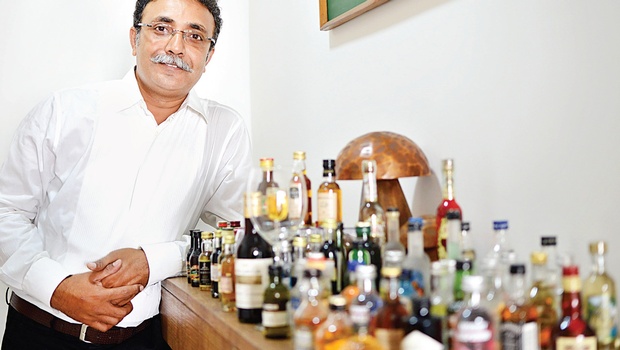
Hailing from Kodagu — where no feast or ceremony is complete unless liquor is served — Kishoo Uthappa, a civil contractor, has a large collection of miniature liquor bottles.

Bottles01KF22mar2016
He saw his uncle’s collection when he was in high school in 1985, and got an empty mini bottle from him. That was the start of his own collection of liquor and cologne bottles. However, he stopped adding cologne bottles to the stash about three years ago as the content evaporates quickly.

Kishoo says, “I pick up a bottle or two when I see them at stores. They are pretty expensive. I pick up some from the airport where they are easily available. I now have a collection of 200 full bottles of scotch and vodka, especially Absolut — which has come up with its own collection of different kinds of bottles. ”

He has a mini bar at home with all kinds of bottles for his guests. “I relish every flavour of alcohol now. I used to drink one or two brands before. But now I find everything enjoyable,” he says with a laugh.

His family is proud of his collection. “I was talking to one of my friends about Absinthe, a drink with 75 per cent alcohol content. It is banned in most countries. I was telling him how I would love to own a bottle and my son reminded me that I already do have a miniature from Germany,” he recalls.

Kishoo buys and exchanges bottles with people on his Facebook page  Pushkar V

On some Sundays, they take the collection out, clean the bottles and rearrange them.

Peg bottles are new in India, he says. “The smallest bottles otherwise are of 250 ml here. But in Europe, peg bottles are very common.”

Kishoo started a Facebook page a year ago that now has about 200 followers. While he has bought bottles from some, he has found some fraudsters too. “I had once transferred money to a guy who promised me some mini bottles but I never received them,” he says.

Kishoo has also reported fake profiles, owners of which download pictures of bottles from the Internet and portray them as their collection.

He never sells anything from his collection but is ready to exchange. He says, “It is my hobby and I don’t intend to make any money out of it.”

source: http://www.newindianexpress.com / The New Indian Express / Home> Cities> Bengaluru / by Akhila Damodaran / March 21st, 2016