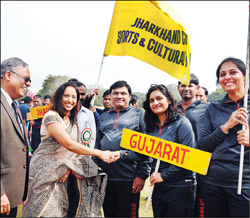
Ashwini Nachappa opens BSNL Athletic Meet

Urges Govt. to employ sports achievers
AshwiniKODAGU20jan2016

Mysuru :

Achievers in sports must be given employment in Public Sector Undertakings (PSUs), said former International Athlete Ashwini Nachappa here this morning.

She was speaking after inaugurating the three-day BSNL Employees All-India Athletic Championship 2015-16 at Chamundi Vihar Stadium here under the aegis of Mysore Telecom District, Mysuru.

Providing jobs in the PSUs for those who excel in sports will inspire others to take to sports which in turn will help the country progress in the field of sports, she observed.

Ashwini further said that sports persons should be encouraged in their endeavours to come out with flying colours and added that there was no age limit for sports as anyone could take up sports whenever they developed interest.

Earlier, Ashwini Nachappa was introduced to the athletes from Karnataka, Andhra Pradesh, Assam, Chhattisgarh, Gujarat, Himachal Pradesh, Jharkhand, Maharashtra, Kerala, Manipur, NRT-Delhi, Punjab, Rajasthan, Tamil Nadu, Uttar Pradesh, Uttarakhand and other States who are in city to take part in the event.

P. Nagaraju, Chief General Manager, Karnataka Telecom Circle, presided. Principal General Manager and Championship Chairman K.L. Jayaram, International Referee A. Bricto Joy and BSNL officials V.K. Singh and Sampath Kumar were present on the occasion.

More than 500 athletes are competing in various track and field events to be held during the three-day championship which includes100 mts sprint, 200 mts sprint, 400 mts race, 800 mts race, 1,500 mts run, 3,000 mts run and 5,000 mts run, discus throw, shot put, hammer throw, javelin throw, long jump, high jump, triple jump and pole vault.

source: http://www.starofmysore.com / Star of Mysore / Home> General News / Wednesday – January 20th, 2016

Poovamma is ‘Coorg Person of the Year-2015’

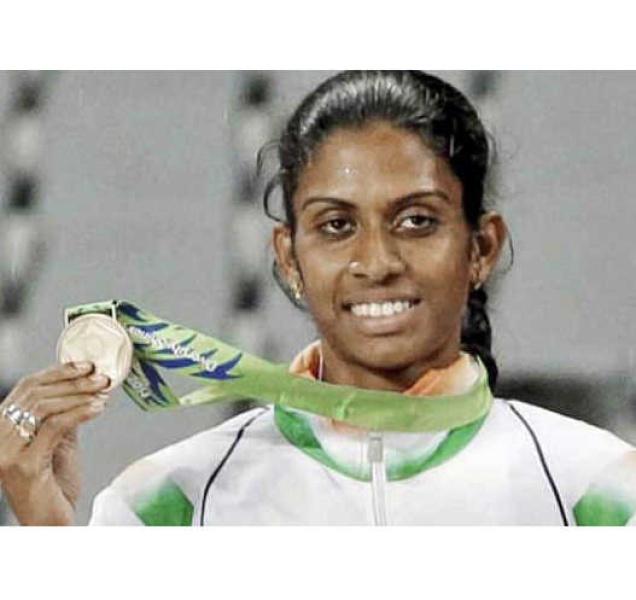
Athlete M.R. Poovamma.— PHOTO: By Special Arrangement

Athlete M.R. Poovamma, winner of the 2015 Arjuna award for her contributions in the field of athletics, is the ‘Coorg Person of the Year, 2015.’

Machettira Raju Poovamma, (25), a native of Kodagu, won the gold medal inwomen’s 4×400 meters relay at the 2014 Asian Games in Incheon, South Korea and clinched a silver in the 400m race in the Asian Championships at Wuhan, China, last June.

Ms. Poovamma participated in the 2008 Beijing Olympics and is currently ranked No.2 in Asia in the 400 meter category.

She was chosen as the ‘Coorg Person of the Year, 2015’ in a poll conducted by www.coorgtourisminfo.com, according to a release.

Daughter of M. G. Raju and Jaji, Poovamma completed her bachelor’s degree in business management from SDM College of Business Management, Mangaluru.

The past winners of this award include Dr. Kavery Nambisan, novelist (2005), Dr. Boverianda Nanjamma Chinnappa, researcher (2006); Robin Uthappa, cricketer (2007), Joshna Chinappa, squash player (2014), the release stated.

source: http://www.thehindu.com / The Hindu / Home> National> Karnataka / by R. Krishna Kumar / Mysuru – January 18th, 2016

Words of wisdom

The quintessential Indian grandmother tells consumers what they ought to drink and why in late entrant Tata Coffee Grand’s launch campaign

TataGrandCoffeeKF18jan2016

Tata Global Beverages recently entered the instant coffee market with the launch of Tata Coffee Grand. The company has backed up the launch with a high decibel multi-media campaign. The protagonist is an Indian grandmother dressed in traditional south Indian attire. However, she appears in the garb of a hip-hop artiste, complete with contemporary accessories and sunglasses. The spirited granny takes on a bunch of youngsters as she raps about ‘coffee, the way it should be’.

With the new product, Tata Coffee is eyeing the Rs 1,300 crore instant coffee market in India dominated by Hindustan Unilever’s Bru and Nestle’s Nescafe. “Strategically we have strong competition,” says Sushant Dash, regional president, India, Tata Global Beverages. “There are players that have been entrenched in the market for long. To compete against them, it was not good enough for us to be a me-too brand. To make an impact, we had to break the category norms through our product offering, packaging and communication.”

The brief to the creative agency, Mullen Lintas, was to come up with a differentiated brand and communication strategy, encompassing the product’s packaging, imagery etc. So instead of the regular browns and greens Tata Coffee Grand stands out in its blue packaging. Similarly, the television commercial (TVC) highlights the spirited and quirky side of an older generation, rather than talking directly to a younger audience.

Dash says, “Being a late entrant in the market, we needed to talk about the product, highlight the strong heritage and plantation expertise that we offer and others do not. And as we spoke to young people, we could not sound boring. At the same time, we needed an authoritative figure to talk about our product. Who better than a granny to do all this.”

He adds that the one person who enjoys maximum credibility in a family or the society at large is the grandmother. She comes with a lot of experience and wisdom. At the same time she can be wicked in her own way. She is highly opinionated and can become animated if she does not agree with someone else’s point of view. Young at heart, the granny represents wit and humour in equal measure. And, if required, she can be up to any challenge.

The company launched the Tata Grand Coffee with a 360 degree virtual reality tour where drinkers could experience the entire product journey. Also, instead of launching the brand through traditional channels, the company introduced the product online as part of an exclusive tie-up with Amazon. “In the next six to seven months our sole purpose will be to create awareness and motivate people to re-evaluate what they are drinking,” says Dash. While picking the granny as a central character, the decision swung in favour of a South Indian character because South is the coffee heartland of India. The creative heads threw in rap to add that extra ‘swagger’ to the granny’s character.

“The brief to us was simple,” says Shriram Iyer, national creative director, Mullen Lintas, “to create disruptive and differentiated communication, just like the product. Coffee, being a staple beverage in the South of India with Tamil Nadu being the unofficial expert of the beverage, we have taken the highest authority of coffee from Tamil Nadu as the ambassador for the brand.”

What makes Tata Coffee Grand a disruptive product? The company sources the coffee beans from its own plantations and the coffee has decoction crystals in it. “In terms of the execution, the key challenge for us was getting the casting of the granny right: We needed someone who, while retaining her authoritative stance, could also add oodles of ‘coolness’ to the film,” says Iyer.

Industry estimates put the budget for the campaign at Rs 20 crore. Digital media will be an integral part of the campaign. The company is using digital media to create intrigue around the protagonist. It has planned a few short films exclusively for the digital media where the granny will be seen walking into real situations unannounced and slapping people around her if she is not happy with their choice of drink. Dash likens these films to topical advertisements by Amul, which are an entertaining take on contemporary issues. Similarly, the Tata Coffee granny’s take on real-life situations will be worldly-wise.

Brand: Tata Coffee Grand
Budget: Rs 20 crore
Agency: Mullen Lintas

source: http://www.business-standard.com / Business Standard / Home> Management> Features> Advertising / Sangeeta Tanwar / January 11th, 2016

Leagues have taken different sports to different cities : Ashwini Ponnappa

Badminton player Ashwini Ponnappa speaks about her plans for the Olympics, sporting rivalry and how the league format has changed sports in the country. Excerpts…

GAME PLAN FOR THE OLYMPICS

The last time, Jwala (Gutta) and I waited for the last tournament to actually secure a spot in the Olympics. This time, we’re kind of there, but there are a couple of tournaments left and anything could happen because we have a lot of players behind us who are from different countries, who do have a chance of getting ahead of us. So we’re aiming to be in the top 10 by the end of the qualifying period.

LEAGUE MATCHES HAVE CHANGED THE SPORTS CULTURE IN INDIA

Now you can go and watch sports for entertainment. In the past, you only had leagues on TV, but now you can go to the stadium and watch the matches, and it’s got a festive feel. One of the nice things is that it’s taken different sports to different cities. So people watch live action in front of them, as opposed to watching it on TV. You have top sports stars playing in front of you, and it’s always fun to go and watch that because it’s totally different when you’re watching it on TV. These sports (badminton, tennis, football and kabaddi) have got more of a fan following now because of that.

PLAYING ON THE SAME TEAM AS YOUR OPPONENTS

The leagues have also given us an opportunity to interact and mingle with players from other countries who we’d normally see only on the other side of the court. That’s not something that usually happens because otherwise, you’re playing for your respective countries. But now, the league has given us a chance to make new friends, learn different things about each other and find out how training is in their country.

MATCH EXPOSURE IS IMPORTANT

I had said earlier that training, for Jwala and me, was difficult, since we lacked support in terms of not having a professional doubles coach or a centre with sparring partners where the two of us could train together. Now, we do have training in Hyderabad, so I go there. But with leagues like this, you get a lot of match exposure, which is really important for your sport and it helps you get better.

source: http://www.timesofindia.indiatimes.com / The Times of India / News Home> Sports> Badminton / by Anjali Muthanna / TNN / January 18th, 2016

Enhancing Coffee Productivity and Small Farm Profitability

by Dr Amrit Patel

Favourable climatic factors along with a fairly dry spell of 70 to 90 days make Kerala an ideal place to grow coffee. About 76,000 holdings of average size of 1.1 hectare symbolise Kerala a small-holder coffee state but provides livelihood to one lakh families.

Since 1976, Kerala Forest Development Corporation has been managing all coffee estates. In 1990-91, Kerala had 84,016 hectare with coffee production of 21,884 tonne accounting for 31.06% and 12.89% share respectively in India. After two decades, during 2011-12, the area declined significantly to 20.53%, whereas the production substantially increased 21.65% of that in India.

Thus, yield which was very low at 260.47 kg/ha in 1990-91 as compared to 627.42 kg/ha of national average increased substantially to 809.52 kg/ha as compared to national average of 763.73 kg/ha in 2011-12. However, productivity of the coffee in terms of bearing area in Kerala (705 kg/ha) is lower than the national average [826 kg/ha].

Kerala accounts for 20.70% of total coffee area in India. Robusta variety having average lifespan of 60-80 years and requiring least pesticides covers 95% of planted area. For 2014-15, final estimates of total production of coffee in Kerala indicate 67,700 tonne [Arabica 2055 tonne and Robusta 65,465 tonne]. Robusta and Arabica account for 96.70% and 3.30% coffee production respectively in Kerala as against 70.03% and 29.97% respectively in India. Robusta fetches lower prices in domestic and international markets and its brewing value is comparatively lower than Arabica. Though irrigation can increase yield of Robusta by 60% to 70% small coffee growers do not provide irrigation due to high costs of sprinkler/drip irrigation system.

Planters prefer multi-cropping pattern [coffee, tea and spices] to optimally utilise resources and insulate plantation from vagaries of nature and market. A special feature of coffee plantation in Kerala is that coffee plants are grown under the shade of tall shady trees. Conducive climate, hills, greenery, flora and fauna enhance Malabar region’s attraction for tourists. Monsooned coffee is a special delicacy of the region. A less known fact about Malabar coffee is that it was discovered by accident. Wayanad region covers more than 33% of district’s coffee area and coffee is grown as a single crop as also with pepper. About 90% holdings in Wayanad region are below two hectare and are mainly owner-operated with least engagement of casual wage labour.

Marketing
With the economic liberalisation in 1991, the role of the Coffee Board has been diluted and the coffee pooling system was abrogated. In 1993, the Internal Sales Quota entitled coffee growers to sell 30% of their produce in the country. Subsequently, the amended Free Sales Quota in 1994 permitted growers to sell between 70% and 100% of their coffee either domestically or internationally. And finally, amendment in 1996 allowed them the freedom to sell their produce wherever they wished. This led to the emergence of intermediaries in the trade and in absence of regulated and development authority to coordinate and provide directions for coffee marketing, the middlemen collect coffee directly from farmers at reduced price and sell to wholesalers/exporters at high price. To tide over financial difficulties, farmers are often tempted to sell coffee in advance of the harvesting season which fetches low prices.

After the withdrawal of the Coffee Board, the vacuum created has been to some extent replaced by private sector initiatives like Indian Coffee Trade Association which began auctioning on a periodic basis. There are also efforts towards online trading which is being conducted through portal commodityindia.com. However, fact is that less than 10% of coffee is sold through auctions as most small growers prefer to sell unprocessed crop directly to exporters or roasters through agents.

With the rising coffee consumers in Kerala the demand for domestic consumption is expected to rise. In this context, when international coffee chains are already planning their aggressive strategic entry in Kerala, domestic coffee chains are also expanding their businesses to capitalise the market opportunities. The latest entrants include Hilite Group of Kozhikode, Beans and Flavours, a small coffee blender from Idukki district, and Tonico. The Hilite Group is reportedly planning to establish a chain of 100 coffee shops. The domestic coffee chains have the potential to succeed and produce some global brands on account of factors like ambience, product quality and services.

However, in the coffee value chain farmers capture not more than 20% of the end value. Other intermediaries and traders (local and international) and roasters gain substantially. It is estimated that roasters alone retain about 30% of the value. Brands also play an important role in the value chain. Since it is a buyers’ market, buyers collectively put in serious efforts to reduce the value for the primary producers. Mechanisms like certification are aimed at allowing fair margins at the producer level but in reality they become counterproductive.

Government’s Support
Government has initiated measures to help farmers raise coffee productivity, quality and small farms’ viability that include, among others, [i] restructuring bank loans and providing interest relief to coffee growers (a subsidy of 5% to small growers and 3% to large growers on working capital) [ii] rainfall insurance as a risk management support for coffee growers in collaboration with Agricultural Insurance Corporation [iii] in June 2010, the coffee debt relief package was implemented for the debt ridden small coffee growers with a total financial implication of Rs 241.33 crore [iv] Since April, 2003, Government of India has set up a Price Stabilization Fund aimed at providing financial relief to the growers when the prices of the commodities covered fall below a specified level [v] Investment in coffee gardens are subsidised ranging from 20% to 40% depending on the size of the holdings [vi] Coffee Board facilitates support for establishment of processing units, formation of growers’ collectives, among others.

Need for Focussed Attention

Action Research:
here is immediate need to mount Action Research Project to study comprehensively and understand following facts and suggest changes in policy and programme in consultation and dialogue with farmers.

[A] The reasons for coffee growers’ inability to [i] replant Arabica coffee being superior in many respects to Robusta [ii] irrigate Robusta coffee to increase yield by 60% to 70% when subsidy and bank credit is available to augment water resources [iii] upgrade quality of coffee when the Coffee Board provides support for establishing processing units, formation of growers’ collectives, etc. [iv] adopt scientific plant protection measures to control stem borer infestation [v] access services of technical staff for adopting scientific practices evolved by the regional research station to increase productivity, quality and profitability of coffee.

[B] Slow growth and development of coffee economy and impact on coffee growers’ financial status despite significant support is extended by the government and the Coffee Board in various forms.

[C] Farmers not benefitting despite the fact that the prices progressively increasing during 2004-05 to 2011-12 [i] in the international markets from 69.72 US cent/lb to 202.16 for coffee and for future trading in New York at 90.38 to 244.26 for Arabica and 34.09 to 97.25 for Robusta and [ii] in auction markets in India from Rs 72.16/kg to Rs 240.61 for Arabica and Rs 34.94 to Rs 113.99.

Enabling Measures:
Following enabling measures are necessary for enhancing coffee productivity, quality, and financial viability of small farms
.Product diversification, mechanisation of specific farm operations, professional management and technical inputs, post-harvest processing, supplementary income earning opportunities to enable small growers to remain in production chain with cost- competitiveness.
.Enhancing domestic consumption to help in price stability.
.Labour and social security reforms to enhance productivity and cost-competitiveness
.To crystallise in unambiguous terms the role of the government, International Coffee Organisation, Coffee Board, trade exchanges and traders to ensure reasonable returns to small growers and their effective participation in the markets.
.Vertical integration of small producers on lines of Amul Dairy and Gujarat Milk Marketing Federation in Gujarat to enhance value for the primary producers.
.Optimum utilisation of services currently offered by the Coffee Board viz. research, extension, development, quality ‘upgradation,’ economic & market intelligence, internal & external promotion of coffee marketing and labour welfare to create visible impact on coffee farmers’ economy.
.Efficient use of subsidy schemes for replantation, water augmentation, quality ‘upgradation’ and farm mechanisation should motivate/encourage growers to replant coffee with Arabica variety, provide irrigation to Robusta coffee, reduce labour-cost and improve productivity and quality of coffee.
.Creating awareness among farmers and facilitating them to access information through media and ICT about the online trading platforms and futures markets that should help them to take informed decision for their benefits.

(The author is former deputy general manager, Bank of Baroda, Gujarat. He can be contacted at dramritpatel@yahoo.com)

source: http://www.fnbnews.com / Food & Beverage News / Home> Top News / by Dr. Amrit Patel / January 16th, 2016
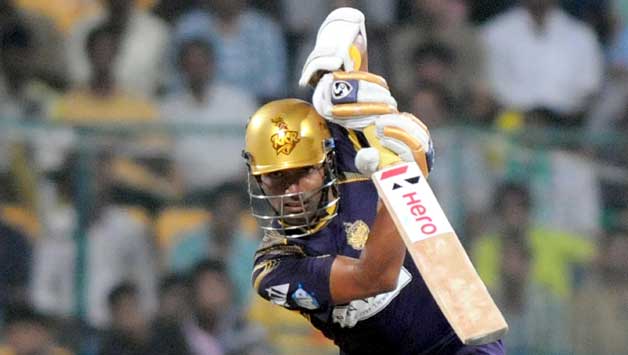
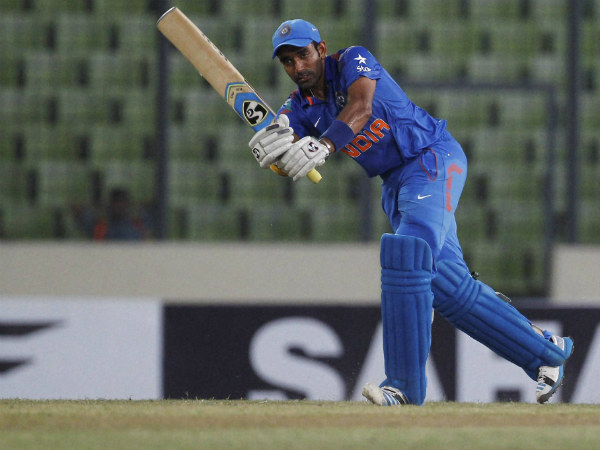
Robin Uthappa becomes first batsman to breach 1,000-run mark in Syed Mushtaq Ali Trophy

Robin Uthappa will hope that his milestone will help inspire the team to a comeback in the tournament.

Robin Uthappa is known for his explosive stroke-play © IANS (File Photo)

Robin Uthappa has become the first batsman to register over 1,000 runs in the Syed Mushtaq Ali Trophy. This is testimony to the Karnataka batsman’s explosive abilities with the bat which have also made him a prominent name in the Indian Premier League (IPL). Uthappa achieved the milestone en route his knock of 48 against Odisha which enabled Karnataka to take an easy six wicket win. Uthappa is a Karnataka stalwart and has been with the team for a long time now. In all, Uthappa has played 183 T20 matches including games for India and IPL teams and has scored an astonishing 4,665 runs at an average of 29.71.

Uthappa will hope that this milestone brings him in focus of the national selectors and perhaps an opportunity for him to make a comeback in the near future. Uthappa’s team Karnataka has not being doing too well in this edition of the Syed Mushtaq Ali Trophy. They have played five games and won only two while facing defeat in the other three.

Uthappa will hope that his milestone helps inspire Karnataka from here on and that they can pull off a miracle to stay alive in the tournament. Uthappa is a senior member in the Karnataka side and he holds a strong sway in the mood of the team. This feat will help brighten his mood and is likely to give the team bit of a psychological uplift. Uthappa has been a bright spot in Karnataka’s dull campaign having scored 205 runs in the five games so far at an average of 41 and strike-rate of a magnificent 139.45.

source: http://www.cricketcountry.com / Cricket Country / by CricketCountry Staff / January 09th, 2016

T20: Robin Uthappa powers Karnataka to victory

Cuttack :

Opener Robin Uthappa and Stuart Binny made short work of a modest chase to add to the team’s bowling effort as Karnataka outplayed Odisha by six wickets in the Group D Twenty20 match of the Syed Mushtaq Ali Trophy here today.

If medium-pacer Abhimanyu Mithun and leg-spinners Shreyas Gopal and KC Cariappa, sharing two wickets each, set up the win for Karnataka then the 53-run fourth-wicket partnership between Uthappa (48) and Binny (32 not out) helped the R Vinay Kumar-led side achieve the target in 17.5 overs.

A file picture of Robin Uthappa

Uthappa smashed six fours and a six in his 41-ball stay, while Binny’s 30-ball knock was laced with two fours and a six.

Leg-spinner Tukuna Sahoo bagged two wickets, while Deepak Behera and Basant Mohanty picked up a wicket each.

Earlier put into bat, Odisha suffered from lack of partnerships against a disciplined Karnataka attack to stumble to 102 for seven in 20 overs. Abhishek Yadav top-scored with 31 runs as the rest of the batting disappointed.

Brief Scores: Odisha 102/7 in 20 overs (Abhishek Yadav 31, Biplab Samantray 19; Abhimanyu Mithun 2-13, Shreyas Gopal 2-15, KC Cariappa 2-14) Karnataka 106/4 in 17.5 overs (Robin Uthappa 48, Stuart Binny 32 not out; Tukuna Sahoo 2-17)

Points: Karnataka 4, Odisha 0.

PTI

source: http://www.oneindia.com / One India / Home> News> Sports> Cricket / by PTI / Saturday – January 09th, 2016

Virajpet post office gets rail booking system

The South Western Railway has commissioned Computerised Advanced Reservation System at Virajpet post office at Virajpet in Kodagu district.

This is the 10th India Post Computerised Advanced Reservation Centre (PRS) in Mysuru division.

Working hours

The facility in South Coorg will benefit those in surrounding areas like Gonikoppal, Ammathi, Ponnampet and others, said K. Anil Kumar, Senior Divisional Commercial Manager.

The working hours of the PRS will be from 8.30 a.m. to 2.30 p.m. except on Sundays and general holidays. All transactions including tatkal bookings will be undertaken here.

In addition to normal charges, the following commission is payable per ticket: sleeper and II sitting – Rs.15; 3AC and AC chair car – Rs. 20 and other upper classes – Rs. 30, a release said.

For cancellation of reservations, in addition to normal cancellation charges, a commission of Rs. 10 per ticket will be levied.

Rajkumar Lal, Divisional Railway Manager, South Western Railway, Mysuru, said this facility would be very useful for people of South Coorg.

source: http://www.thehindu.com / The Hindu / Home> National> Karnataka / by Special Correspondent / Mysuru – January 13th, 2016

NMPT conducts trade meet with coffee exporters in Kodagu

Mangaluru:

New Mangalore Port Trust (NMPT) conducted a trade meet with coffee exporters and logistics providers from Madikeri, Kushalnagar, Chikmagalur, and Hassan regions at Kushalnagar recently.

A press release by NMPT said here on Tuesday the initiative was taken to facilitate a face-to-face interaction between coffee exporters, custom house agents, mainline vessel operators, logistic providers, and the port trust.

PC Parida, NMPT Chairman, said coffee exporters from Madikeri, Kushalnagar, Chikmagalur, and Hassan regions exported around 1.59 lakh tonnes of coffee in 2014-15 from NMPT.

The growing frequency of container vessels calling at the port, coupled with improved road connectivity and infrastructure at the port, had helped the port achieve the export performance. He hoped the trend would continue in the current fiscal also.

Suresh P Shirwadkar, Deputy Chairman, and Nownith Kumar, Senior Deputy Traffic Manager, spoke on the occasion.

The release said coffee exporters assured that they would route their consignments through New Mangalore Port.

source: http://www.thehindubusinessline.com / Business Line / Home> Economy> Logistics / The Hindu Bureau / Mangaluru -January 12th, 2016

Museum’s brew of history and mystery

Could this be the great-grandfather of Dunedin’s coffee culture?

Fished out of a landfill and rescued by Gasworks Museum volunteers, the La Pavoni Italian espresso machine may be the first imported into Dunedin.

It was understood the machine was used in George St’s Little Hut coffee bar, one of Dunedin’s first cafes, Gasworks Museum Trust board member Ann Barsby said yesterday.

It had been rescued and transferred to the museum ‘‘several years ago” but was only recently put on display. She hoped the machine could be restored, though ‘‘several” thousands of dollars could be needed.

‘‘I’m told by the Gasworks volunteers the boiler is what needs repairing, which is a complicated and expensive job.”The trust did not have the funds to carry out those repairs, though they did have the time and expertise, she said.

Mrs Barsby said she hoped the public – and perhaps Dunedin’s coffee companies – could be coaxed into contributing.

‘‘It would be splendid because it would be great if we could produce coffee using the original authentic machine.”

Mrs Barsby was interested to hear from anyone who had information on the machine’s provenance, or who was willing to contribute to fixing it.

– craig.borley@odt.co.nz
source: http://www.odt.co.nz / Otago Daily Times / Home> News> Dunedin / by Craig Borley / Friday – January 08th, 2016