B’luru MP announces Rs.10 lakh for Conservation of Kodagu Mandhs

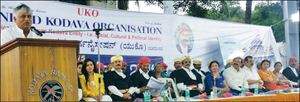
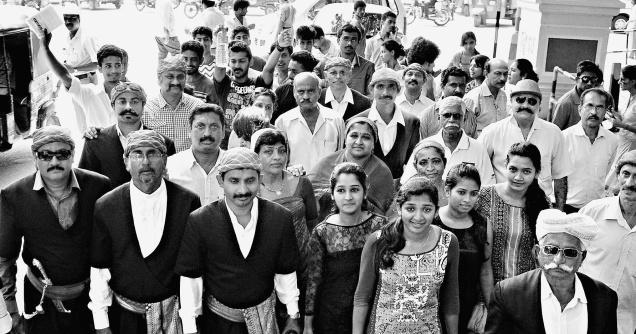
Mandya MP C.S. Puttaraju is seen addressing the gathering at the valedictory of ‘Jabhoomi Baalo-2015’ padayatra at Kodava Samaja in Bengaluru yesterday.

Bengaluru :

Rajya Sabha member from Bengaluru, Kupendra Reddy, has promised Rs. 10 lakh for conservation of Kodagu mandhs and revival of paddy cultivation across Kodagu district, said Mandya MP C.S. Puttaraju at the valedictory of ‘Jabhoomi Baalo-2015’ padayatra at Kodava Samaja in Vasanthnagar here yesterday.

Puttaraju said that he was authorised to announce this by MP Kupendra Reddy, who is currently in USA, on his behalf.

Stating that Reddy has announced Rs. 10 lakh for UKO’s cause as the first instalment, Puttaraju said Reddy has promised more funds for UKO’s various plans.

Stating that the people of Mandya were always indebted to river Cauvery, which originates in Kodagu, Puttaraju assured of extending all support for the protection of Kodava land, culture and its environment.

UKO Convenor Kokkalemada Manju Chinnappa, in his address, said that the funds provided by Kupendra Reddy will be utilised for conservation of Kodagu mandhs and other programmes. He also said that Puttaraju has handed over Rs. 10 lakh grant to UKO as the first instalment as promised by Reddy.

Karnataka State Handicrafts Development Corporation Chairperson Shantheyanda Veena Achaiah, former MLC Cheppudira Arun Machaiah, Kodagu District Congress President Biddatanda T. Pradeep, former Kodagu District BJP President Machimada M. Ravindra, Federation of Kodava Samajas President Mallengada Dada Belliappa, Bengaluru Kodava Samaja President Mandeda Ravi Uthappa, Vice-President Mukkatira Vani Nanaiah, Secretary Chennapanda Subbaiah, actress Prajwal Poovaiah, Madikeri Kodava Samaja President Moovera Shambu Pemmaiah, Ponnampet Kodava Samaja Secretary Chottekmada Rajiv Bopaiah, Kodava Sahitya Academy President Biddatanda S. Thammaiah, UKO office-bearers and others were present.

source: http://www.starofmysore.com / Star of Mysore / Home> Generla News / Monday – October 05th, 2015

Farmer on Padayatra to Bengaluru to ensure Kodagu remains green

Manju Chinnappa and team began walking from Talacauvery to Bengaluru to stress need to save the district’s ecosystem.

ManjuChinnappaKF04oct2015

This farmer has been walking for 11 days to take his fight against environment degradation in Kodagu district. Manju Chinnappa, 37, started his padayatra from Talacauvery on September 18. Chinnappa, a native of Hudikeri, started the movement after severe drought that affected Virajpete this year. A Bcom graduate, Chinnappa says, “Even from my early days, I wanted to work towards the preservation of the culture and tradition of my motherland. Over the years, the district has seen several atrocities on land, deforestation and cultural aggression. The main aim of this walkathon is to bring to the attention of the social and economic problems that Kodagu district faces today. I hope it motivates people to preserve the culture and sanctity of the native people.”

Chinnappa has managed to cover close to 25 kms everyday and en route he is celebrated by the people of that particular village who walk with him for a few kilometres to express their support. On Monday, he reached Mysuru. He also gives awareness talks on how to keep the heritage of the district alive.

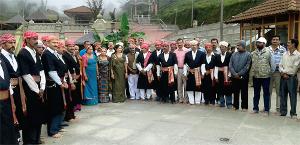
A founder of the United Kodava Organisation that was formed in 2011 to focus on preserving the environment and heritage of the place, he says, “We know merely submitting a resolution to the state government might not bring much change. We wanted to make a noise through this padayatra to get the attention of as many people as possible. We hope to reach Bengaluru by October 4 and we want to submit a memorandum to the chief minister regarding our demands.” His plan is to cover a distance of 414 km considering he has taken a route inside Kodagu within the villages to spread his message. After reaching Bengaluru, the final leg will start at 9 am from Jnanabharathi campus (Bangalore University) where the local Kodava population will join him in the walk up to 20 kms that will culminate at the Kodava Samaja in Vasantha Nagar. The local Kodavas will come in their traditional dress to show their support to Chinnappa.
Chinnappa says, “In the name of tourism, several trees are being removed which has harmed the people living in that region. Our main resolution is to put pressure on authorities to stop the conversion of wetland not only in Kodagu but across the state. Many infrastructure plans by the state government have destroyed the ecology of the district completely and we want to draw everybody’s attention to this.”

The Kodava community in the city is all set to welcome Chinnappa. They have also started a Facebook page to update the information of padayatra from time to time.

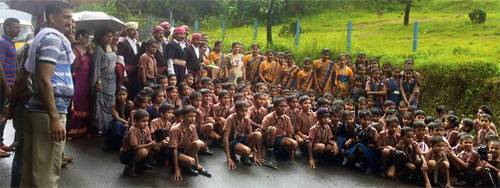
Children are also taking part

Route plan

Talakaveri-Igguthappa Temple-Madikeri-Bayarambada-Virajpet-Gonnikoppa-Anechowkur-Hunsur bypass- Mysuru-Srirangapatna-Mandya-Chennapatna-Bidadi-Jnanabharathi-Kodava Samaj, Bengaluru

source: http://www.bangaloremirror.com / Bangalore Mirror / Home> Bangalore> Others / by Vandana Kamath, Bangalore Mirror Bureau / September 30th, 2015

Colombia coffee producers face crisis due to ‘El Niño’ water shortages

Colombia’s coffee production is predicted to fall 18% for the second half of the year amid water shortages caused by the “El Niño” weather phenomenon.

This warning comes as latest coffee production figures show an increase of 16% for September compared to the same month last year, with a total of 1 million 60-kg bags, reported Colombian Coffee Growers Federation, the FNC.

FNC chief Roberto Velez reported, “the subject of coffee, for many reasons has brought zero profits, or even negative, regarding revenues there have always been problems of climate change, labor and fertilizer, which generally increase the costs.”

Velez said that while coffee production levels so far this year have been strong, however, predictions are that 18% of coffee produced in the second half of the coffee will be lost due to “EL Niño.” The drought will also have negative effects on the quality of the beans produced.

The chief reported a “fragile equation” in the balance between costs of production and growth of coffee, something that most affects small and medium growers sensitive to changes in the market.

The “El Niño” weather phenomenon is affecting northern and western regions of the country since this February, and is set to reach new levels of intensity. The weather event has caused water shortages resulting in high losses for agriculture and livestock.

The FNC has worked aggressively since the late 1950s to bring Colombian coffee to the number two spot for global production, second only to Brazil. However, in recent times a booming business from Vietnam has overtaken the country and Colombia is now the third largest coffee producer in the world.

source: http://www.colombiareports.com / Colombia Reports / Home> Economy / posted by Emma Rosser / October 10th, 2015

‘Use Indian coffee products to promote local growers’

The Indian coffee would get a better price if we stop depending on foreign countries and start using more coffee products of Indian origin, said Central Coffee Research Centre Director Dr Y Raghuramulu.

He was speaking at a programme organised at the Navodaya Vidyalaya in town as part of the International Coffee Day celebrations on Thursday.

“In America, the average consumption of coffee by a person is four to five kg a year. In India, however, it is barely 100 gm. The consumption is increasing by six per cent every year,” he said and added that Brazil had created awareness among children about use of coffee about 10 years ago. “As a result, Brazil stands second in the list of countries that are the highest consumers of coffee in the world,” he said.

The International Coffee Organisation (ICO) has called upon all coffee-growing nations to celebrate Coffee Day on October 1 every year, to protect the interest of coffee growers and nations. “From next year onwards, the day would be celebrated with road shows and various other programmes,” he said.

‘Chicory is good’
Dr Raghuramulu claimed that chicory is good for health and a maximum of 49 per cent of chicory can be added to the coffee powder.

“The carbohydrate content of chicory makes the coffee a bit thicker. Chicory is usually grown in some parts of Andhra Pradesh, Kerala and few other states. It is also used in the production of biscuits,” he said.

In his inaugural speech, Sahyadri Coffee Growers’ Association President M S Sundaresh Gowda said that the imagination behind Coffee Day would help the growers. The market for coffee can be extended by creating awareness about the drink in North India, he added.

Meanwhile, ‘Coffee Karma’, a 20-minute documentary on the birth of coffee was screened at Navodaya Vidyalaya hall. An exhibition was held as a part of Coffee Day on different coffee species, possible diseases, pesticides and other things. More than 1,500 people watched the documentary and free coffee was served to all.

Balehonnur JCI President Dayakar N Suvarna, Navodaya Vidyalaya Principal K Rameereddy, Coffee Board scientists were present.

source: http://www.deccanherald.com / Deccan Herald / Home> District / Balehonnur / DHNS – October 02nd, 2015

From Assam to Hassan in search of work

More than 5,000 people from Darang and neighbouring districts of Assam have found work in plantations of Belur and Sakleshpur taluks.— Photo: Prakash Hassan

Assam may be famous for its tea gardens, but a good number of Assamese workers have found employment in the coffee estates of Chikkamagaluru and Kodagu.

More than 5,000 people from Darang and neighbouring districts of Assam have come to work in plantations of Belur and Sakleshpur taluks. Many more work in estates spread over Chikkamagaluru and Kodagu districts.

“We hardly find jobs in our hometown. If we get work for a week, we remain jobless for next few weeks,” said Habizur Rahman (25), who has been working in Hasurugudda Estate of IBC company near Arehalli in Belur taluk for the last four years. Both men and women are enrolled as contract workers in estates for a daily wage of Rs. 228. In Assam, women hardly get the opportunity to earn in fields, he said.

The wave of migration started five years ago, when a manager of an estate in Belur taluk came in contact with planters in Kodagu, where workers from Assam had begun to arrive. “Those days we were struggling to get local people to work. We were looking for people who could work. The first batch of 25 people came from Assam five years ago. As they got work for the entire year and wages were better than what they got in their homeland, they brought more people from their State,” said Fazlur Rahman, manager with IBC estate.

Election trips

The manager pointed out that many planters have employed Assamese as they are hard workers, though they are not well-versed in the skill of maintaining coffee. These workers have brought their family and all of them make a trip to their homeland during elections. “Voting is significant as there is a serious issue of illegal migrant voters from Bangladesh,” said Shwahidul Islam, who always keeps his voter’s identity card in his pocket.

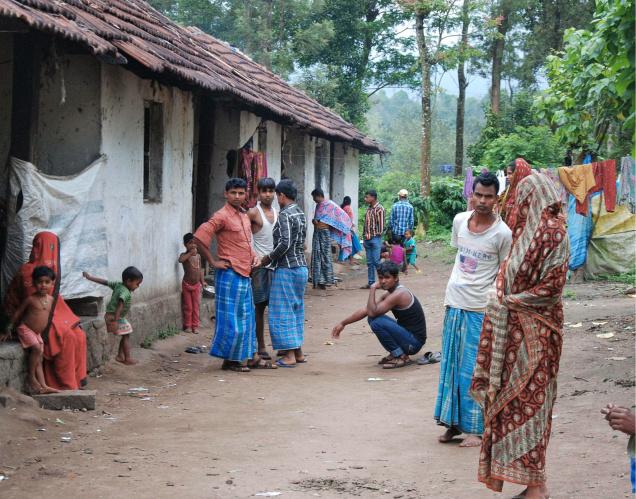
However, the workers are unhappy with the poor facilities provided in the estates. Around two or three families are forced to settle in one house with plastic sheets to separate them. For over 80 families there is only one toilet, in one of the estates visited by The Hindu .

“We repeatedly demand for proper facilities, but our cry does not reach the people concerned. If anyone falls sick, we neither get paid holiday nor medical expenses reimbursed,” said Habizur Rahman.

The district administration has set up a tent school for children of migrant workers, but they find this of no use. “We need a proper school where our children can get education from teachers who know Hindi,” said Marina Khatun, one among the women workers in the estate.

source: http://www.thehindu.com / The Hindu / Home> National> Karnataka / by Sathish G.T. / Hassan – September 27th, 2015

India Hockey Midfielder SK Uthappa Geared Up for New Zealand Challenge

India hockey mid-fielder SK Uthappa said that team team would aim to become a stronger attacking unit during the upcoming away Test series against New Zealand.

SK Uthappa says New Zealand tour will help India polish our skills for the 2016 Rio Olympics. (Image: Hockey India)

New Delhi:

The Indian hockey team would aim to become a stronger attacking unit during the upcoming away Test series against New Zealand as it prepares for the Hockey World League in November-December, mid-fielder SK Uthappa has asserted.

Aiming to do well in the tournament, which is scheduled from October 2 to 11, Uthappa said the team would look to showcase the dexterity gained from the ongoing preparatory camp.

The New Zealand tour will be in preparation for the Hockey World League Raipur scheduled from November 27 to December 6 in Raipur, followed by the all important Rio Olympics next year. (Team Working on Penalty Corners And Defence, Says Manpreet Singh)

Well aware of the fact that mid-fielders have played an active role in scoring goals, Uthappa emphasised on ball possession to craft well-connected passes.

Speaking ahead of the Tour, Uthappa said, “The team has been trying to give their best so far and the New Zealand tour will help us to polish our skills for the most important 2016 Rio Olympics. We aim to capitalise more goal scoring opportunities and make our attack even stronger in the tour ahead.

“We will look to carry out our game strategies in high detail and structure as we expect an intense clash. The coach is working on different combinations so that we are aware what works best for us before the all important tournaments ahead. With Manpreet and Dharamvir back in the squad it automatically adds huge boost to the line-up.”

India and New Zealand A will be playing their first match on 2nd October 2015 in Auckland.

source: http://www.sports.ndtv.com / NDTV.com / Home> NDTV Sports> Hockey> News / by Press Trust of India / Sunday – September 27th, 2015

Power line through Kodagu is ready

Madikeri :

The Power Grid Corporation of India (PGCI) has completed the project to supply power from Kaiga to Kozhikode in Kerala amid protests. The 400kV transmission line was opposed in Kodagu on grounds that it would damage forest cover. Due to opposition from environmental organizations and farmers’ association and court cases, work had been halted for some time in Kodagu.

While the line was in place in Kerala, the missing link has now been completed. PGCI warned people that it’ll charge the line and residents of the area should be careful.

The 120-km high-tension wire from Mysuru to Kozhikode passes through 55km in Kodagu. Of this, 4.45km is forest land, while the remaining is private land and plantations. The lines in Mysuru and in the opposite direction between Manandavadi and Kozhikode were completed two years ago.

Workers on coffee plantations and school children would face the maximum threat. Following protests, the Kodagu district administration distributed compensation to land owners where power lines passed. The PGCI completed the project with police protection and many cases were booked against agitators.

The corporation said the wire through Kodagu was laid 15 metres above the ground and would not harm elephants.

source: http://www.timesofindia.indiatimes.com / The Times of India / News Home> City> Bengaluru / TNN / September 29th, 2015

Kodava march reaches Mysuru

Members of United Kodava Organisation taking out a padayatra from Talacauvery to Bengaluru, passed through Mysuru on Monday.— PHOTO: M.A. SRIRAM

The Talacauvery to Bengaluru padayatra launched by the United Kodava Organisation (UKO) reached Mysuru on Sunday.

The participants stayed overnight at the Kodava Samaja at Vijayanagar in the city, before resuming their journey towards Bengaluru on Monday. The purpose of the walk is to to draw the attention of State and Union Government to their demands for development of Kodagu and Kodavas

UKO convener Kokkalamada Manju Chinnappa said the 17-day-long padayatra, which began from Talacauvery on September 18, will reach Bengaluru on October 4, after covering 414 km.

The UKO has sought a law to check conversion of agricultural land into non-agricultural purposes, subsidy of Rs. 10,000 per acre for growing paddy, stopping forced eviction of small coffee growers and dropping the Union government’s proposal to allow Foreign Direct Investment (FDI) in coffee cultivation.

The participants, who are scheduled to stay overnight at Baburayana Koppal near Srirarangapatna on Monday night, will pass through Mandya, Maddur, Channapatna and Ramanagaram before reaching Bengaluru

source: http://www.thehindu.com / The Hindu / Home> National> Karnataka / by Special Correspondent / Mysuru – September 29th, 2015

Deep in the land of Kodavas

KakotParambuKF29sept2015

One morning, I came to a place, known as Kakot Parambu, near the town of Virajpet. Parambu, meaning a holy meadow in the Kodava language, is known for its scenic beauty.

The green landscape stretches over a hillock within a gateway and is visible from the road. Before it stands a school ground and a ceremony hall. At one side within the precincts is a small shrine dedicated to Chavundi (Chamundi), while on the other side is the Kakot Achchayya Temple.

Legend has it that Kakot Achchayya and his sister Kakot Akkavva walked to this place in the ancient times. Kakot Achchayya, also known as Kombu Meeshe (horn moustache) Achchayya, had a manservant called Kari Kotta to attend to them.

They settled down here and a Mahadeva Temple was built for them. Over the years, the Kakot Achchayya Temple came to be known as the Kala Bhairaveshwara Temple.

The Kala Bhairaveshwara Temple has a horse figure representing the kshetrapala, guardian of the region, overlooking it. Behind this temple is the shrine of the kodi beera (war hero). This smaller shrine is dedicated to an ancestor of the Mandetira family who had died a violent death. He is represented by a rock placed upon a platform. To the side of the main shrine is a large tree upon a platform called the Kariyappa Sthana.

Beyond that is the shrine of Akkavva, known as Akkavva Sthana, which has a well near it. Before the Akkavva shrine is a tree with the small figure of a crane under it. Beside this tree is a temple pond which also has a similar crane figurine by its steps.

The Mandetira family is the Deva Takka of the temple. Deva Takka family members are responsible for the management of the temple. According to their family tree, the earliest known Mandetira ancestor is one Bogayya. His son Achchunna was the brother-in-law of Utta Nayaka of Kadnur, a very powerful chieftain in the 1780s. Achchunna went to Tulunad (Dakshina Kannada) and sent an archak (priest) called Sankana from that land.

Sankana and his descendants, the Kukkemane family, thereafter served as the priests of the Kakot Temple. Achchunna never returned. A memorial was built for him there at Kodapada village in Dakshina Kannada. During times of strife and conflict, Achchunna’s son Medayya was beheaded by a king. A memorial, called the Kodi Bira Sthana, was built for him at the place behind the temple where his head fell. Medayya’s young son Subbayya was the last remaining member of his family.

His widowed mother, who was from the Iychettira family, raised him. Upon coming of age, Subbayya joined the Raja’s government and was given his family property. A painting, which shows him paying the Raja his respects, was commissioned in 1805.

Subbayya remained in the government of the Kodagu Rajas for a long while, serving under Dodda Vira Rajendra, Devammaji, Linga Rajendra and Chikka Vira Rajendra. When the British took over the administration of Kodagu in 1834, the native officers were all retained. Unlike his father Medayya who had antagonised the ruling power of his times, Subbayya had remained loyal to the Rajas and later to the British, under whom he came to earn a medallion and pension for three generations. He later retired as parupatyagara, a senior government official.

Much of the family history has been documented by the clan members. The Mandetira, the Kukkemane, the Nellamakkada and a number of other families have helped renovate the temple over generations. Every year, ceremonial dances are held in the Kakot Parambu mand. In 2007, the Mandetira family organised the annual Kodava Hockey tournament.

The Ainmane, the ancestral home of the clan, has a wooden portico and entrance wall. A family tree of the Mandetiras is displayed by the entrance. The beautiful but small and old painting depicting the Kodagu Raja Dodda Vira Rajendra and Mandetira Subbayya is within a wooden frame placed on the wall behind the hanging prayer lamp. The kaimada, a private shrine built in remembrance of clan ancestors, and a sanctuary for el koot murthy (seven spirit-deities) are located nearby.

source: http://www.deccanherald.com / Deccan Herald / Home> Supplements / by M P Nitin Kushalappa / September 29th, 2015