17
A memorial in honour of Appaiah Gowda
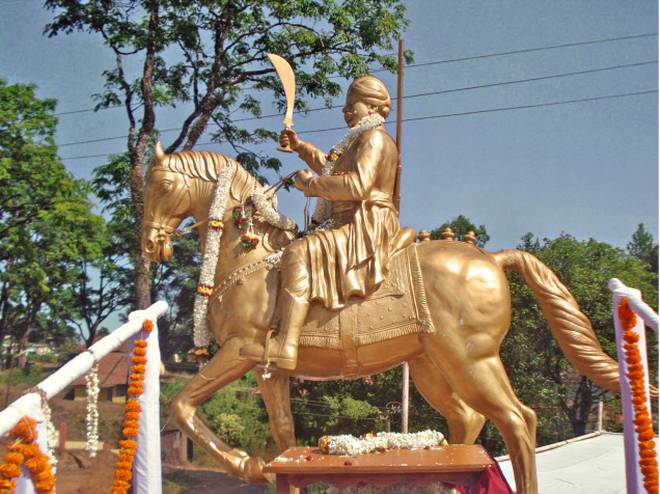
He was hanged by the British in Madikeri on October 31, 1837
Chief Minister D.V. Sadananda Gowda said on Monday that his government would take steps to initiate the process of development in Kodagu, a land known for its warriors, freedom fighters and natural landscape.
He was addressing a gathering at the Gandhi Maidan here after unveiling a bronze statue of Guddemane Appaiah Gowda at Field Marshal K.M. Cariappa Circle.
Appaiah Gowda was a freedom fighter, who was hanged by the British on charges of sedition on the fort premises here on October 31, 1837.
Mr. Sadananda Gowda’s wife Dotty hailed from Guddemane family. She was also present.
The Chief Minister said that he had taken nearly six months to visit Kodagu as he was being pressured by Madikeri MLA M.P. Appachu Ranjan and Speaker of the Legislative Assembly K.G. Bopaiah to take steps to solve the vexed Jamma Bane issue in Kodagu before the visit.
Responding to the demands made by Mr. Ranjan and M.C. Nanaiah, MLC, Mr. Gowda said that he would take steps to include a proposal to set up a medical college in Kodagu in the next budget.
A sum of Rs. 322 crore had been spent on various development projects such as roads, bridges, and buildings in Kodagu in the past few years. A sum of Rs. 115 crore would be sanctioned to the district in 2011-12, he said.
On considering Mr. Ranjan for inclusion in the next Cabinet expansion, Mr. Gowda said how could he deny it when he himself was the Chief Minister and he was versed with the requirements of Kodagu. All 122 MLAs from the BJP were capable of becoming Ministers, but it was not possible owing to restrictions.
Mr. Gowda, who conducted a progress review meeting involving officers of various departments at the Sudarshan Guesthouse, took exception to the tardy progress in the execution of projects under the Mahatma Gandhi National Rural Employment Guarantee Act (MGNREGA) in Kodagu. He instructed the officials to speed up work on the projects.
Of the 3,850 projects planned under the scheme in Kodagu, only 508 had been completed, according to officials.
Expressing dissatisfaction over the implementation of drinking water projects in the district, Mr. Gowda directed the officials to complete them in a month.
Of the 235 projects, only 22 had been completed in the current year, the officials stated.
Of the Rs. 8.5 crore earmarked for drinking water schemes in Kodagu in the current year, only Rs. 3.75 crore had been spent. Mr. Gowda announced that he would take the issue of lack of progress in the execution of projects in six departments seriously.
Mr. Gowda and Air Marshal K.C. Cariappa (retd.), son of Field Marshal K.M. Cariappa, paid respects to Field Marshal Cariappa’s statue.
source: http://www.thehindu.com / The Hindu / Home> National> Karnataka / by Jeevan Chinnappa / Madikeri – January 03rd, 2012 (updated July 25th, 2016)
KARBONN SMART KPL: Uthappa powers Bijapur Bulls to victory

Mysuru :
A blitzkrieg by left-hander J. Suchith, who hammered the fastest 50 of KPL, a 15-ball 54 for Mysuru Warriors, was not enough to stop the Bijapur Bulls from bulldozing their way to a convincing seven-wicket win over Mysuru Warriors in the Karbonn Smart KPL 2015 at the SDNR Wadiyar Grounds here yesterday.
Suchith’s blazing knock, studded with three fours and six towering sixes, matched Yusuf Pathan’s 15-ball 50 for Kolkata Knight Riders against Sunrisers Hyderabad in the IPL 2014 season.
Chasing a target of 167 set by Warriors, Bijapur Bulls were well served by Robin Uthappa (49 n.o, 34 b, 3×4, 2×6) and opener Rajoo Bhatkal (40, 21b, 6×4, 1×6).
The Bulls were cruising along the chase all through with the openers putting on 66 for the first wicket. Then Uthappa took over and in the company of Sunil Raju (23) and M. Nidesh (24 n.o.,) guided the team towards victory. The wins also puts Bijpaur Bulls on top of the table with 11 points from five wins and one washed out contest.
Robin Uthappa was awarded the Man of the Match.
Earlier, Suchith’s knock and new skipper, CM Gautam’s 58 were the highlights of the Mysuru Warriors innings, who became virtually the first team in the league to face bowing out of competition. Taking first strike, the Warriors batsmen showed positives in their approach. There were small and useful partnerships up the order. But unable to step on the run-rate meant the team would finish with a total of a little too few.
But Suchith plundered the last two overs scoring 23 from the 19th and the last five balls of the 20th over, Abhimanyu Mithun was hammered for 24 runs which took the team to 167 from 120 in 18th over.
Seven-wicket win for Bellary Tuskers
In an earlier tie, skipper Bharat Chipli and Amit Vemra batted well to guide Bellary Tuskers register a seven wicket win over Belagavi Panthers.
A match-winning third wicket partnership off 111-runs in 84 balls between skipper Bharat Chipli 63 (54b, 3x4s, 3x6s) and southpaw Amit Verma 52 n.o. (48b, 4x4s, 2x6s), helped Bellary Tuskers to defeat Belagavi Panthers by a seven wicket margin.
Earlier, Belagavi Panthers batting first, began confidently with their openers Abhisek Reddy 35 (34b, 4x4s) and Stalin Hoover 23 (15b, 5x4s) adding 46-runs for the opening wicket in 5.3 overs, but after the fall of Stalin, wickets fell at regular intervals and Belagavi Panthers ended up scoring 136 for seven in 20 overs. R. Jonathan (20) and wicket-keeper bat G.S.Chiranjeevi (20) were the other contributors. Prasanna Patil impressed for Bellary Tuskers with three for 20.
In reply, Bellary Tuskers scored 137 for three in 19.2 overs. After a shaky start (21 for two in 4.2 overs), Bharat Chipli and Amit Verma pulled them out of the woods and helped their team cruise to a comfortable seven wicket win.
After five games, Bellary Tuskers have secured six points are placed third in the points table, while Belagavi Panthers having qualified with nine points from five games are in the second position.
The Scores Mysuru Warriors 167 for five in 20 overs (C.M. Gautham 58, J. Suchith 54 n.o., A. Mithun two for 35) lost to Bijapur Bulls 171 for three in 19.4 overs (Robin Uthappa 49 n.o., Rajoo Bhatkal 40, R.Samarth 34).
Belagavi Panthers 136 for seven in 20 overs (Abhishek Reddy 35, Stalin Hoover 23, G.S. Chiranjeevi 20, R. Jonathan 20, Prasanna Patil three for 20) lost to Bellary Tuskers 137 for three in 19.2 overs (Bharat Chipli 63, Amit Verma 52 n.o, H.S. Sharath two for 23).
source: http://www.starofmysore.com / Star of Mysore / Home> Sports News / Tuesday – September 15th, 2015
Annual General Body Meeting
The 9th Annual General body Meeting (2014-15) of Sri Kaveri Kodagu Mahila Sangha will be held on Sept. 18 at 10.30 am at Kodava Samaj in Vijayanagar in city.
Sangha President Balyamanda Sarasu Nanaiah will preside, according to a press release from Hon. Secretary Ponjanda Lovely Appaiah.
source: http://www.starofmysore.com / Star of Mysore / Home> In Brief / Tuesday – September 15th, 2015
Local talent will take the stage at the MACArts Festival
MISSISSAUGA Arts Council is putting Mississauga’s talent on the world’s stage with the MACArts Festival.
“We’re bringing the world together through art, and we want to make sure the great talent in this city is there,” Ken Jones, president of the Mississauga Arts Council said. “We want to make sure that this world-class talent has an audiences here at home, and abroad.”
This inaugural event will feature homegrown talent on the main stage Glenn Chipkar and the Big Swing Shift Band. Chipkar grew up in Mississauga and began singing the songs of the big band era 10 years ago. The show was created as a tribute to his father, and Chipkar’s been entertaining the GTA ever since.
The Mississauga Pops are has been a part of the city’s music scene for the past 30 years, and their brining their expertise to the stage in a Broadway medley that features the vocal talents of City Centre Musical Productions. This is a local collaboration not to be missed.
Sampradaya Dance Creations will also create a piece that is exclusive to the festival, the piece will feature talented dancers trained in this city by the amazing Lata Pada, C.M. Founder, Artistic Director of Sampradaya Dance. Pada has contributed extensively to the South Asian Dance community here in mississauga and internationally, and received the Order of Canada for her efforts.
Children’s group Sonshine and Broccoli, will also take the stage! The pair met at Sheridan College, and have been making children smile ever since! The pair have created two albums and a show, titled “I Want to Be” and they will perform Saturdayafternoon in the Square.
The amphitheater will also feature multiple emerging local acts including blues artist Donna King, local vocal trio 3 Mezzos, and singer songwriter Jason James.
The MACArts Festival is in its inaugural year, and we’re bringing the world together through art!
MACArtsFestival
Saturday September 19
Celebration Square in Mississauga
11 a.m. – 10 p.m.
Featuring a medley of arts vendor booths, visual artist exhibitions, storytelling and lectures, craftwork, and live performing arts – showcasing emerging, established and multicultural talent. The festival will feature top talent such as Glenn Chipkar and the Big Shift Swing Band, Sampradaya Dance Creations, the Mississauga Chinese Arts Organization, Marie Ann Longlade School of Dance, and more.
Short URL: http://www.voiceonline.com/?p=46407
source: http://www.voiceonline.com / The Indo Canadian Voice / Home / by Rattan Mall / Monday – September 14th, 2015
Cauvery theerthodbhava on Oct 17
Madikeri :
The annual theerthodbhava of river Cauvery will occur at the holy pond at its birth place Talacauvery at 12.15am on October 17.
Cauvery water will spring at the ‘Kundike’ at the thula sankramana muhurtham.
Apart from devotees from Kodagu, a large number of people from Mandya, Mysuru and Bengaluru and also from neighbouring Kerala and Tamil Nadu are expected to witness the religious ceremonies.
source: http://www.timesofindia.indiatimes.com / The Times of India / News Home> City> Mysuru / TNN / September 12th, 2015
Primm lecture to feature coffee historian Steven Topik

Like many people, Steven Topik’s coffee habit was formed in college. But it’s become a lot more than a caffeine fix to the historian in the years since.
“I experienced coffee as a site of sociability, a drug, an academic subject and a commodity,” says Topik, a professor of history at the University of California, Irvine, who is writing a world history of the popular beverage.
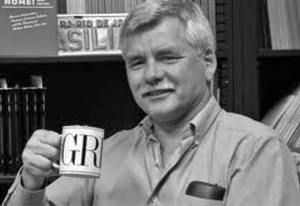
He will discuss it in St. Louis Sept. 14 as a guest of the University of Missouri–St. Louis. Titled “Why Americans drink coffee: the story of an unlikely romance,” his address is this year’s James Neal Primm Lecture in History. Free and open to the public, the event begins at 7 p.m. at the Missouri History Museum (5700 Lindell Blvd).
Leading up to his visit, which is sponsored by UMSL’s Department of History and the Missouri History Museum, UMSL Daily caught up with Topik on all things coffee, history and St. Louis.
Your interest in coffee is obvious given the topic of your upcoming lecture, and the picture of you on the event flier suggests you enjoy drinking coffee as well as writing about it. Is that the case? And if so, how many cups a day do you drink on average?
I drink about two cups of coffee a day. Sometimes a little more.
How did you arrive at this intellectual exploration of coffee and its history?
My interaction with coffee started at home since my father, from Germany, and my mother, from Austria, drank coffee. Then when I was 12 years old my younger brother and I went with my mother to visit her mother in Vienna and lived for six months in her coffeehouse, so I experienced coffee as a site of sociability. But I only started drinking coffee in college when the stuff coming out of our percolator was more a drug to help us study than a tasty beverage.
In graduate school I decided to study the history of Brazil to understand its development. Since my area was political economy and Brazil has been the world’s leading exporter of coffee for over 150 years, it was a natural subject to study.
I also experienced coffee in its three most historically important geographic areas: the United States, Europe and Brazil. Since I became interested in issues of economic development and underdevelopment which led me to world history, coffee emerged as a wonderful vehicle to examine issues of exchange, development, colonialism, imperialism, the Cold War, national identity, public spaces, ecological issues and many more.
Without giving away too much of what you’ll discuss Monday evening, why is it that the story of America’s enthusiasm for coffee is “an unlikely romance” in your view?
I called it an “unlikely romance” because many coffee aficionados discuss coffee’s “romance” and tell stories of dancing goats, spies and military heroes to explain coffee’s global spread. Coffee’s global reach is often treated as something obvious that needs no explanation: people on every continent drink coffee because it tastes good. In fact, there were many barriers to coffee’s diffusion.
In the U.S. we have various stories about coffee’s ties to our national identity linking it to John Smith, colonial coffee houses, the Boston Tea Party, the westward movement and values like liberty, sovereignty, industriousness, battlefields and innovation. Some of that is historically true. Much of it, however, is more sales pitch than historically accurate portrayals.
The “romance” is unlikely also because coffee was not native to the U.S., it does not grow in the U.S., we had no important coffee colonies and most ex-British colonies favor tea over coffee. But I will explain that the U.S. becoming the world’s leading coffee importer does make sense in light of many other historical currents like trade in the Atlantic, immigration from Europe, anti-tax sentiment and coffee’s pharmacological effects.
What role has St. Louis played in the history of coffee?
While St. Louis is not as closely linked to the history of coffee in the U.S. as it is to the history of beer, or tea (British tea publicists claimed the first time iced tea was introduced was at the 1904 World’s Fair [though this is dubious]), it does have a significant role. Missouri was important in disseminating coffee in the U.S. because Independence, Mo., was the starting point of the Santa Fe Trail, and coffee for the Oregon Trail or the wagon trains to California set out from Missouri.
The coffee was imported from South America in New Orleans and then brought up the Mississippi River. By the 1860s-70s, St. Louis had seven coffee roasting companies, which made it a center of coffee roasting in the Midwest. The first commercial coffee roasting machine in the Midwest was worked by James H. Forbes in 1854. In 1911 the National Coffee Roasters’ Traffic and Pure Food Association was founded in St. Louis – a forerunner of first the National Coffee Roasters Association and then the Associated Coffee Industries of America. Coffee traders from St. Louis played significant roles in it. I’m afraid that’s as much as I know about the role of St. Louis in the coffee trade, though I’m hoping to learn more on my visit.
Looking at the history of commodities and the world economy, what lessons do you find for today?
The study of commodities and commodity chains are excellent means of understanding the Janus-headed relationship of coffee growing areas (and other agricultural ones) and coffee importing areas. It allows one to examine not just the economic dimensions of the spread of a global commodity and the international linkages it creates, but also the evolving and sometimes contradictory importance of natural endowment, religion, culture, technology, gender and racial relations to shaping history. It is a means of understanding why the export of commodities has historically created both development in importing countries and sometimes underdevelopment in exporting countries.
Short URL: http://blogs.umsl.edu/news/?p=58726
source: http://www.blogs.umsl.edu / UMSL Daily / by Evie Hemphill / September 09th, 2015
Newly elected corporators learn lessons in Madikeri
The corporators-elect of Congress,who are camping at two resorts in Madikeri, were on Wednesday given a special lecture on the rights and responsibilities of the corporators.
Yeshwantpur legislator S T Somashekhar, Tarikere MLA Srinivas and senior corporator Gunashekhar delivered lectures for two hours at Vivanta By Taj hotel.
Senior corporator Padmavathi said that the elected members should understand the stand of their party on a particular issue. She said that they should support their party colleagues in meetings and should launch an attack to counter the Opposition parties. She said that the mayor should allot the funds available at his/her disposal equitably. The members elected for the first time heard the lectures attentively.
Some members expressed the opinion that the poor and the downtrodden had overwhelmingly voted for them. Hence, special programmes should be launched for their welfare. The corporators-elect cancelled their plan to visit the Dubare elephant camp in order. According to sources, the plan was dropped as otherwise it would convey a wrong message to people.
source: http://www.deccanherald.com / Deccan Herald / Home> City / Madikeri (Kodagu Dist) / DHNS – September 10th, 2015
Tracking those cup o’ Joes
We Indians love our coffee, but do we really care where it is coming from? Is it organic, does it harm the biodiversity or conserve it? What kinds of practices are adopted? Come to think of it, considering the amount of coffee we consume, there could not be a better time than now, to start dwelling on these questions.
A coffee addict and a conservationist, Arshiya Bose, aware of the ecological footprint of each cup of coffee she consumes, started by not only being a conscious consumer but also initiated a similar change among others through her establishment, Black Baza Coffee — where wildlife conservation and incentivised shade-grown coffee production go hand in hand.
Having completed a PhD in Sustainable coffee certifications and Biodiversity conservation from the University of Cambridge, in the year 2014, Arshiya has come a long way in applying theories on ground.
“India is one of the few countries in the world where shade-grown coffee has been the norm for over 180 years. It’s now, in the recent past, that these practices have been compromised for quicker yields and better profits,” says Arshiya, who spent several years investigating the practices and challenges of coffee growers in Coorg. The coffee estates in the Western Ghats host several wildlife species — right from myriad species of migratory birds to small mammals.
While she understands the need to protect these species, Arshiya believes it can be best achieved by positively engaging coffee growers by incentivising best practices. She started her project with a few coffee growers in Kodagu, on three estates. “The process of engaging has been slow and yet fruitful. I approached farmers and explained the sustainable and long-term benefits of shade-grown coffee. The farmers agree to adopt certain practices and we buy their coffee in return and ensure improved economic returns. The practices don’t just help sustain wildlife, but improves the water and air quality, besides the health of the soil.”
Real picture
The farmers grow coffee under the shade of forest trees, keeping at least 60 per cent tree canopy cover — a minimum of 100 trees and 20 species of indigenous trees per acre. “We reforest farms by planting rare and endemic forest trees that provide critical habitat for a wide variety of wildlife. Streams, rivulets and ponds on farms and surrounds are protected from harmful effluents and of course, no chemical pesticides are used,” explains Arshiya.
Though a majority of coffee growers still ensure their estates harbour several species of native trees — the demand for quicker yields is pushing more farmers to plant exotic species like the silver oak (Grevillea robusta) that affect the condition of the land. Explains Arshiya, “The big exotic tree is silver oak, increasingly the most common shade tree especially for new conversions to coffee. An average plantation usually has 20-30 per cent shade cover, 60-80 trees per acre, where over 20 per cent of all trees are silver oak with less than 10 species of trees per acre. In our plantations, we have over 60 per cent shade cover, 100 trees per acre, and less than 20 per cent of all trees are silver oak. We plant over 22 species of different native trees per acre.”
Know your source
Talking about fair-trade market practices, Arshiya says, “Just certifying healthy practices won’t benefit farmers. The kind of market they are exposed to matters most. We want people to be more conscious of the kind of coffee they drink everyday and know more about the farmer who grows it for them,” she asserts.
Arshiya, through her enterprise, ensures that farmers are economically benefited for their practices and a coffee drinker feels proud to be involved in conservation by making right choices.
Arshiya has been monitoring the impact for the last few years, including camera trapping to document wildlife in the estates. “We measure the impact of our changed farming practices through monitoring the diversity of trees, birds, insects, mammals and all sorts of biodiversity. Our estates support a range of wildlife species.”
Many of these species may frequent several neighbouring coffee farms too, but Arshiya believes these protected patches of coffee estates can be potential roosting spots for several birds and a safe habitat for diverse small mammal and macro-life in the future.
source: http://www.deccanherald.com / Deccan Herald / Home> Supplements> Environment / by Gana Kedlaya / DHNS – September 08th, 2015

