‘Coffee plantation in Kodagu can not be considered as deemed forest’

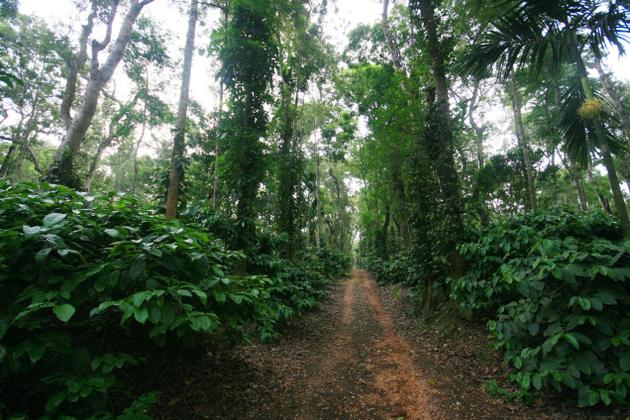
Kodagu Circle Chief Conservator of Forest Jagmohan Varma has clarified that coffee plantation in Kodagu can not be considered as deemed forest. This is based on the government’s order that plantation in private property should not be considered as deemed forest.

Speaking to Deccan Herald, the officer said that the process of identifying deemed forest is under progress in the district, in the backdrop of the Supreme Court and State government’s order.

It is a common notion that a land with features of forest is deemed forest. But, as per the government order dated May 15, 2014, private plantation with any number of forest will not be considered as deemed forest. Therefore, there is no reason for coffee, cardamom, pepper and rubber planters to worry about, he assured.

Private forest

Explaining the word ‘private forest’ as defined in the government order, the Chief Conservator of Forest said that private forest is the land comprising of more than 50 trees per hectare land and each tree with a width of more than 30 cm. “The forest department along with revenue department is collecting details about private forests in the district. A district-level meeting chaired by Deputy Commissioner Anurag Tewari too has been convened. Village level inspection will be carried out soon,” he said.

Further, Jagmohan Varma said that the State government’s order describes a wide range of forests that exist in Kodagu, including Forest-Paisari which is considered as forest land.

According to Coorg Land and Revenue Regulation 1899, Section 143, Sub Section (1) (F), Forest-Paisari land has been notified as forest in 1901. Therefore, the recent order too considers Forest-Paisari as forest land.

The land that is mentioned as forest in government documents, will be considered as deemed forest. The government has given the instruction to all district administration to submit a detailed report on deemed forest in every district, within May 15.

What is deemed forest?

Deemed forest is the private and paisari land with forest like features. The Supreme Court while hearing Godavarman Thirumalapad case in 1995, had directed all the States to collect information about deemed forest. Following the order, the State government polled information about forest land and deemed forest.

However, the survey was not concrete, as the deemed forest list also comprised of paisari and empty (khulla) land and details like survey number and map too was not appropriate.

Therefore, re-survey has been taken up to prepare a comprehensive report on deemed forest in the State.
DH News Service

source: http://www.deccanherald.com / Deccan Herald / Home> District / by Shrikanth Kallammanavar / Madikeri – DHNS, November 06th, 2014

Union Forests Ministry approves Kushalnagar–Madikeri rail line survey

UnionForestsKF15nov2014
With this, Mysore–Madikeri project has taken a step forward

The Mysore–Madikeri railway line project has taken a step forward with the Ministry of Environment and Forests (MoEF) issuing clearance for the survey work between Kushalnagar and Madikeri.

Meeting
This was disclosed by Railway officials at the Divisional Railway Users’ Consultative Committee meeting here on Wednesday.

The environmental clearance was received last week and the authorities plan to complete the survey and submit the report to the Railway Board by March 31, 2015.

The preliminary engineering-cum-traffic survey for the railway line was launched in December 2011, but was taken up only between Mysuru and Kushalnagar and the partial survey report was submitted to the Railway Board. Though the project was shelved by the Railway Board on grounds of being commercially unviable, the State government has evinced interest in the project and has agreed to take it up on a cost-sharing basis, apart from providing land to the Railways.

The first phase of the project entails providing railway link between Mysuru and Kushalnagar at a cost of Rs. 660 crore. It will also connect Hunsur and Periyapatna.

Interestingly, the project was included in the Railway Budget 2010–11 under the ‘socially desirable rail connectivity’.

The first proposal for providing a rail link between Mysuru and Madikeri was mooted in 1881-82, according to the Mysore Gazetteer.

Another project

On the Shivamogga–Harihar railway line project, it was pointed out that the detailed survey for the new broad-gauge line had been completed. The 76-km project is expected to cost Rs. 832 crore and will be taken up on a cost-sharing basis between the Railways and the State government. Though the Railway authorities had sought 1,000 acres of land, it is yet to be acquired.

The work can commence, provided the State government hands over adequate land to take up the work on at least a 40-km stretch, according to the officials.

Divisional Railway Manager Rajkumar Lal, Senior Divisional Commercial Manager Anil Kumar, senior officials of different departments from the Railways, and stakeholders from various districts coming under the Mysore Railway Division were present.

source: http://www.thehindu.com / The Hindu / Home> News> National> Karnataka / by R. Krishna Kumar / Mysuru – November 06th, 2014

Coffee planters peg coffee bean production at three lakh tonnes

CoffeeBeansKF14nov2014

Coffee planters have pegged coffee bean production at three lakh tonnes for 2014-15 (post-blossom estimates) against the Coffee Board’s projections of 3,44,750 tonnes.

The reason for stagnation in bean production is attributed to rampant pest attacks from white stem borers (WSB) across Arabica growing regions in Karnataka, which accounts for 70 per cent of the country’s output. To avoid the spread of borers, many planters have resorted to uprooting plants infected by WSB in estates.

There has been severe WSB attacks in Arabica plantations in Kodagu, Chikkamagalur and Hassan districts, according to Karnataka Planters Association (KPA) Chairman D. Govindappa Jayaram.

The Board estimated domestic Robusta production at 1,05,500 tonnes and Arabica at 2,39,250 tonnes. While the KPA said the Board’s estimates for Robusta production would be reached, it would not in the case of Arabica production. Arabica production would reach only 60,000 tonnes for the year. Hudhud cyclone has caused severe damage to Arabica plantations in Andhra Pradesh, the KAP said.

The Board estimation for Karnataka is 2,48,300 tonnes with 80,700 tonnes of Arabica and 1,67,600 tonnes of Robusta.

Coffee planters deliberated on various issues confronting the industry during the 56th AGM of the KPA here. Home Minister K J George said a meeting between growers and Chief Minister Siddaramaiah would be convened to address the grievances of the industry.

BJP MP Shobha Karandlaje, said no pesticides have been found to tackle WSB in the country. “Now, WSB infected plants are being removed or burnt to prevent spread of the disease,” she said.

The severe incidence WSB is due to the continuous dry weather from October 2013 to April 2014 and high temperature during summer months had ruined Arabica prospects, planters said.

The Coffee Board has set a target to achieve four lakh tonnes of bean production in the country through area expansion and productivity enhancement in the next 5-10 years, a growth of over 30 per cent over the current production level.

In 2013-14, production stood at 304,500 tonnes.

source: http://www.thehindu.com / The Hindu / Home> News> Cities> Bengaluru / by Nagesh Prabhu / Bengaluru – November 14th, 2014

MLA’s son ties knot in US

MLAsSonKF13nov2014

Madikeri MLA Mandepanda P. Appachu Ranjan celebrated his eldest son Dr. Mandepanda Vikram Poovaiah’s wedding with Vietnamese scientist Kim at a ceremony held at Laguna Beach, California recently.

Appachu Ranjan’s son, who is settled in USA and works as a Principal Chip Designer, got married in traditional Kodava wedding style.

The ceremony was attended by the MLA’s wife Shyla, his second son Dr. Cariappa, daughter Ksheera and about 30 family members along with some relatives of the bride.

source: http://www.starofmysore.com / Star of Mysore / Home>General News / Friday, November 07th, 2014

Best App in Asia award to Hyderabad entrepreneur

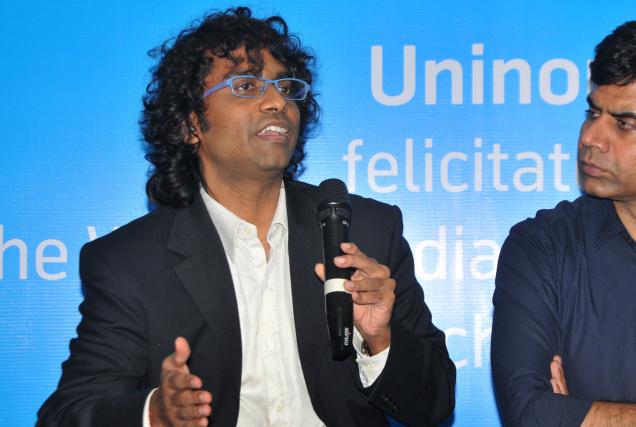
The Best App In Asia category of the digital winners 2014, Raghu Kanchustambham, explains about his application in Hyderabad on Wednesday. Photo: G. Ramakrishna / The Hindu

The app helps coffee growers to get instant returns for their produce. Livelihood 360 is also capable of estimating quantity of the produce in the fields and sell the crop at fair price.

The coffee farmers of Araku valley these days get instant returns for their produce. Gone are the days when they had to wait for nearly a month till the buyers completed the weighing process of the produce and release money through co-operative society. Thanks to a mobile application developed by Hyderabad-based entrepreneur, Raghu Kanchustambham, there is no waiting period.

The app dubbed as ‘Livelihood 360 (L360)’ was adjudged the Best App of Asia in the Telenor Digital Winners Conference, a global competition held in Oslo, Norway this month. The award came with a cash prize of Rs. 9,79,000, which will be utilised by the developer to further “scale up” the concept.

It all started when Mr. Raghu, who has a start-up ‘Concept Wave’, met the officials of Naandi Foundation, which was already working with the coffee farmers of Araku valley. “The basic premise was to utilise technology and reach to those people not having access to technology and internet. I visited Araku valley and spent time with them and learnt a lot about their lifestyle and livelihood,” he said.

Mr. Raghu said the previous system of remittance to coffee growers in Araku was taking about a month. The coffee growers would take their produce to a prescribed ‘adda’ where the truck drivers would collect and transport coffee beans to another location for weighing and valuing. “We gave the truck drivers an application that would quantify the yield and also determine the quality instantly. The drivers will immediately remit the amount on the spot to farmers,” he explained.

Livelihood 360 is also capable of estimating quantity of the produce in the fields and sell the crop at fair price. “We have already adopted this application among 12,000 coffee farmers in 650 villages of Araku. Between 40 and 50 truck drivers from Araku were given training on using the application on a feature phone and not a smart phone,” he explained.

source: http://www.thehindu.com / The Hindu / Home> News> Cities> Hyderabad / by M. Sai Gopal / Hyderabad – November 12th, 2014

The legend of the hills

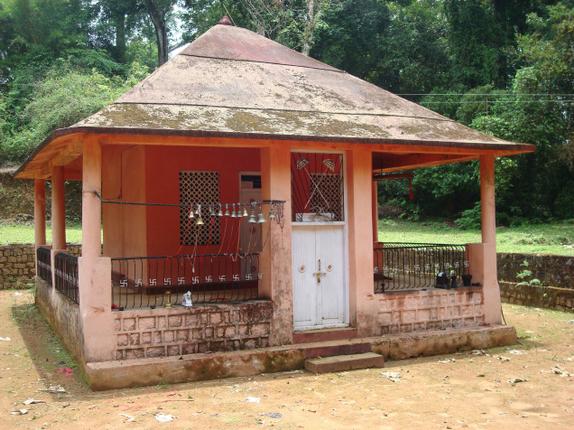
Panagalammai temple. / Photo: Lakshmi Sharath / The Hindu

Who is Iguthuppa, the lord who can’t bear to see anyone hungry?

Our journey into Coorg’s heritage takes us on a spiritual quest — atop mountains, inside forests and coffee estates and by the riverside. These are temples etched in the cultural landscape of the Kodavas, although some of them never find mention in any religious texts.

It is misty as we climb a small hilltop to the Padi Iguthuppa temple in Kakkabe. The bells toll the moment we enter the temple, as a gentle breeze blows from the rolling hills around.

The priest Kush Bhat welcomes us and insists we stay back for lunch. “No one comes to the Iguthuppa temple and goes away without lunch,” he says. For, Iguthappa means giver of food, and the deity is a form of Subramanya or Muruga, son of Shiva.

Legend has it that centuries ago, Shiva and Subramanya came here, and loved the hills so much that they decided to settle down here. The temple is known to feed every visitor, and all pilgrims offer food, not money, to the deity. “Iguthappa told the people of Coorg that they would never go hungry as long as he was there and if they accepted him as God,” explains Kush Bhat.

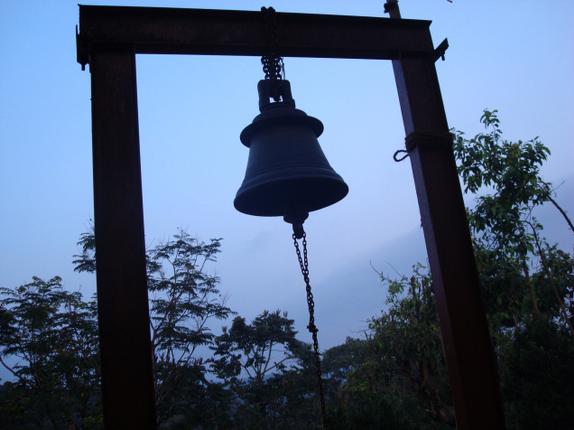
The bell tolls at Iguthuppa temple. /  Photo: Lakshmi Sharath / The Hindu
The bell tolls at Iguthuppa temple. / Photo: Lakshmi Sharath / The Hindu

Now, every festival of the Kodavas starts with an invocation to Iguthappa; the most important festival of the temple is Tulabharam.

We go to the another Iguthappa temple in Naljee, inside a forest through a lush coffee plantation. There is not a soul around, and it is peaceful to just listen to the sounds of the forest.

These monuments are probably lost to the average tourist, but one finds sanctity in the silence around them.

source: http://www.thehindu.com / The Hindu / Home> Features> Friday Review> History & Culture / by Lakshmi Sharath / August 08th, 2010

Coffee in Coorg

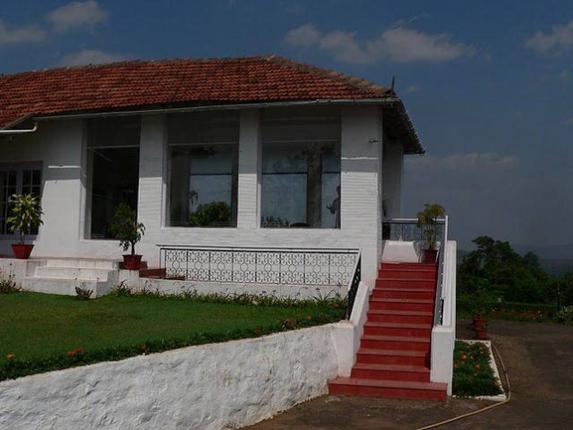
Cottabetta Bungalow. Tata owns seven bungalows in Coorg, and every bungalow is set amidst a 1,000 acre plantation.

COTTABETTA BUNGALOW

SOUTH KODAGU, KARNATAKA

USP: Live the planter’s life

There is freshness in the crisp air caressing your face. Picture-postcard greenery fills your senses. Add to it a welcome shower. There is magic in Coorg, the coffee country.

SMELL THE BEANS At Cottabetta Bungalow. Photos: Special Arrangement

The escape to the Tata plantation coffee trails in Coorg during the monsoon turns out to be a bonanza. After a six-hour drive from Bangalore, past the Mysore Highway, Ranganathittu bird sanctuary, bamboo forests, cinnamon trees interspersed with teak trees on which pepper vines climb to great heights, and the ubiquitous coffee plantations, we reach Tata’s bungalow in Cottabetta (meaning cold mountain).

Tata owns seven bungalows in Coorg, and every bungalow is set amidst a 1,000 acre plantation. The three-bedroom and five-bedroom bungalows, occupied by the managers of Tata, have been converted into cottages, superior, luxury and heritage rooms and heritage suites. “The bungalows went vacant after the managers took VRS. As the butlers, cooks and gardeners continued working to maintain the bungalows, our management came up with the idea of homestays,” says K.C. Poovaiah, head of Plantation Trails, Tata Coffee.

Once occupied by British planters, the bungalows are more than 100 years old, but modified suitably for modern-day needs. Every bungalow is built on a higher elevation, overlooking the mountains and the plantations. Cottabetta is one of them. And, what a view! The majestic mountains open up — on the south is Kerala and to the North is Periyapatna, Kushal Nagar and the Madikeri hills.

Once occupied by British planters, the bungalows are more than 100 years old, but modified suitably for modern-day needs.

As you take in the picturesque landscape from the portico, a curved road amidst the Tithimathi forests catches your eye. “It is a part of the Mysore Road,” Poovaiah explains. “When the British planters used to drive down, they would dim and dip the headlights at this point to alert the cooks.”

I check into one of the luxury rooms — the decoration is minimal but it has the comfort of a home. However, the bathroom is lavish with a bath tub. And, there is a beautiful balcony to sit and soak in the silence.

Barbets, drongos, golden orioles, parakeets, red whiskered bulbuls, flower peckers and sunbirds flutter by and feast on the jamuns, guavas, chikkus, mangoes and gooseberries, the inter-crops supported by the plantations.

Our tour of the bungalows begin with Woshulli, known for the spectacular view it offers of the Durbeen (binoculars) Road snaking through the plantations. (Vishal Bhardwaj has shot here for his new film “Saat Khoon Maaf”, starring Neil Nitin Mukesh, Priyanka Chopra and John Abraham.)

At the manicured 25-acre, nine-hole golf course in Polibetta, it is monsoon magic again. As it buckets down, we take cover under the majestic ficus tree, watch the rain pour down in sheets and sprint back to the car.

Then, we set off to Surgi bungalow and the plantation trail at Taneerhulla and Woshulli plantations spread across a sprawling 1,340 acres. “We get tonnes of litchis every year,” says plantation guide M.K. Umesh, pointing to the giant litchi tree (planted by the British) at the bungalow.

Umesh peppers the trail with scary elephant stories, and we stop at intervals to touch and smell coffee beans, pepper and vanilla. The Robusta coffee bushes here are 130 years old. Back at the bungalow, biting into crisp, hot onion pakodas served by the courteous staff, sipping coffee and watching the mist-capped hills is just the perfect way to end a beautiful outing in the hills.

source: http://www.thehindu.com / The Hindu / Home> Features> Metroplus> Travel / by K. Jeshi / August 26th, 2010

The pulse of Pollibetta

PollibettaKF12nov2014

The most conspicuous thing to note about Pollibetta, deep in the heart of Coorg, South-West of Bangalore, is that there is absolutely nothing to do in this town.

Ask any inhabitant or a visitor and you see him struggle to list out the usual touristy stuff and happening places that are there to see. This was precisely the reason why this town had been highly recommended and also why we had motored down all the way from Bangalore, 250 km away.

We wanted to relish the mountain fresh air, inhale the invigorating aroma of coffee and pepper, and to be amidst misty hills, sprawling coffee plantations and breathtaking landscapes. This was the way to experience Coorg without the crowds.

It was dark by the time we took the curved road through the Tithimathi forests to arrive at the centre of the town. After a six-hour drive from Bangalore, past the Mysore Highway, through bamboo forests, silver oak trees interspersed with teak trees and the ubiquitous coffee plantations, we reached Pollibetta’s main road.

A few shops were still open on (what, in the usual hill-station jargon, would be termed the Mall Road) the main road where all tourists and town folk converge for their evening stroll. Only on this road there were hardly any folks but we did manage to find somebody to guide us to our destination – the Bamboo Club.

This southern part of Coorg was known earlier as the Bamboo District, and so, the club started by coffee planters in keeping with the British tradition of establishing a club wherever they resided, became the Bamboo Club, a ‘Little England’ where they could meet, play games, dance and party to overcome their nostalgia for home.

The club, which continues to be a home-away-from-home for today’s members was to be our abode for the duration of our stay at Pollibetta. True to club traditions, we were handed a strict dress code, after conforming to which, we made our way to the club dining room.

A three-course dinner served by uniformed attendants later, we turned in for a restful sleep, tired after our journey through the plantations and forest trails that were waiting to be discovered at break of day. We woke the next morning to the chatter of birds and to see through the windows, acres and acres of coffee plantations interspersed with tall gigantic silver oak trees. From the beautiful balcony, meant to sit at and soak in the ambience, we could see several varieties of bamboo forests with myriad butterflies of striking colours darting here and there.

We had to choose from a number of recreational activities that included a safari through coffee plantations, nature walks, bird watching and trekking. Instead, we chose to visit a temple. One of the several dotting the cultural landscape, this was devoted to Lord Ganapathy. We had to drive through a lush coffee plantation, as the temple was situated inside the forest.

The architecture and layout were relatively modern, except for the sanctum sanctorum which was laid out in traditional temple style. The gopuram was positioned with sculptures culled from mythology.

There was not a soul around, and it was peaceful to just listen to the sounds of the forest. As typical city dwellers used to the din of the metro living, we could not
immediately adjust to the pace of Polli-betta life and so, as to do something, we decided to go on a tour of the Raj-era estate bungalows that dot the plantations.

Once occupied by British coffee planters, the bungalows are more than 100 years old. Every bungalow was built on an elevation, overlooking the mountains and the
plantations so that the British planters could lead lives of perfect tranquillity
waited upon by butlers, cooks and gardeners. Later, managers of the Tata group occupied these heritage bungalows for a while, till the management came up with the idea of homestays. Talk about the perks of a job!

We first visited the Woshully Estate Bungalow where the European planters had first met in the 1880s to establish the Bamboo Club. The view of plantations, from here, was so spectacular that we were not surprised the bollywood film Saat Khoon Maaf starring Neil Nitin Mukesh, Priyanka Chopra and John Abraham was shot here.

Another heritage bungalow we visited was the Thaneerhulla Bungalow, so known because of the beautiful water pond that’s just a short walk away. We could imagine the bullock carts and the horse-drawn carriages emptying the planters onto the bungalow’s patio in a bygone era. With antiquated wooden floors and a cosy fire place, this bungalow had an old world charm about it.

There were several others we could see, but we decided to visit only the Cottabetta Bungalow. The freshness of the crisp air caressed our faces picture-postcard
greenery filled our sight. The majestic mountains seemed to open up from the bungalow’s veranda — on the south was Kerala and to the North, Kushal Nagar and the Madikeri hills.

There was a hill we wanted to climb where porcupines inhabited the area
earlier. The driveway was quite challenging. The slope was so steep that our car’s engine roared, coughed and spluttered in protest, but it was worth it.

Back at the club, biting into crisp, hot onion pakoras, sipping coffee and
viewing the mist-capped hills was just the perfect way to end a beautiful outing in the forests, while narbets, drongos, parakeets, bulbuls, flower peckers and sunbirds flurried by. It seemed like there was not much to do apart from lounging around in the bungalow, and yet, there was so much to soak in.

source: http://www.deccanherald.com / Deccan Herald / Home> Supplements> Spectrum / by Dipika Priyan Naik, Bangalore / DHNS – November 11th, 2014

MoEF gives clearance for Kushalnagar-Madikeri railway line survey

The Mysore-Madikeri railway line project has inched a step forward with the Ministry of Environment and Forests (MoEF) issuing clearance for the survey work between Kushalanagar and Madikeri.

This was disclosed by the railway officials at the Divisional level Rail Users Consultative Committee meeting on Wednesday. The environmental clearance was received last week and the authorities plan to complete the survey and submit the report to the Railway Board by March 31st, 2015.

The preliminary engineering-cum-traffic survey for the proposed railway line was launched in December 2011 but was taken up only between Mysore to Kushalnagar and the partial survey report was submitted to the Railway Board. Though the project was shelved by the Railway Board on grounds of commercial unviability, the State Government has evinced interest in the project and has agreed to take it up on a cost-sharing basis apart from providing land to the railways.

The first phase of the project entails providing railway link between Mysore and Kushanlagar at a cost of Rs.660 crore and would also connect Hunsur and Periyapatana.

Interestingly, the project was included in the Railway Budget 2010-11 under the socially desirable rail connectivity and the first proposal for providing a rail link between Mysore and Madikeri was mooted in 1881-82, according to the Mysore Gazetteer.

Divisional Railway Manager Mr. Rajkumar Lal, Senior Divisional Commercial Manager Mr.Anil Kumar, senior officials of different departments from the Railways, stakeholders from various districts coming under Mysore Railway Division were present.

source: http://www.thehindu.com / The Hindu / Home> News> National> Karnataka / by R. Krishna Kumar / Mysuru – November 05th, 2014

Starbucks sources from Tata Coffee for Asia, US markets

Tata Starbucks Ltd, the 50:50 joint venture of US beverage chain Stabucks with Tata Global Beverages, plans to source more coffee from Tata Group company Tata Coffee, company officials said in a statement on Tuesday.

CoffeeCupKF11nov2014

To mark the company’s second anniversary in India, Tata Starbucks launched a locally sourced, roasted and packaged arabica blend, ‘Starbucks India Estates Blend’, in select Starbucks stores in Asia as well as online in the United States.

“We will see such initiatives only growing in the future, displaying the strong unity between Starbucks and Tata Coffee. It is a reflection of the shared commitment between Starbucks and Tata Coffee to develop and promote Indian-grown arabica coffees,” Avani Davda, chief executive officer, Tata Starbucks Limited said in a statement.

The arabica beans from Tata Coffee have been selected by Starbucks coffee experts from Tata Coffee’s estates across Coorg and Chikmagalur, the birth place of coffee in India. The blend has been named to represent the origin of the coffee and the packaging has been carefully created to reflect traditional Indian designs, the company said.

“This commitment to highlighting India’s rich coffee heritage, builds on the strong growth of 59 Starbucks stores across six cities and more than 1,000 passionate partners (employees) in India,” John Culver, group president, Starbucks China and Asia Pacific, Channel Development and Emerging Brands, said.

Starbucks entered the Indian market in October 2012 and currently operates 59 stores in India across Mumbai, Delhi NCR, Pune, Bangalore, Chennai and Hyderabad.

source: http://www.deccanherald.com / Deccan Herald / Home> Business / DHNS – Bangalore, November 04th, 2014