A video reflecting the various facets of Kodagu has been put up on Youtube. The video titled ‘Discover Coorg — Land of the Brave and the Beautiful’ has been produced by freelance journalist and author P.T. Bopanna.
Bopanna’s efforts so far were confined to his books and websites. Now, for the first time Bopanna has used the medium of video to capture the various facets of Kodagu.
The Discover Coorg video features tourist spots, homestays, Coorg jewellery, the Kodava family hockey festival, and the golfing culture in Kodagu. It also captures the traditional tribal folk dances and even a colourful Kodava wedding.
The video has been scripted and made under the creative supervision of Pattamada Sundar Muthanna, an advertising copywriter, who is passionate about Kodagu.
The content for the video has been sourced mainly from Bopanna’s four websites: www.coorgtourisminfo.com, which was started in 2005, www.coorgrecipes.com, www.coorgjewellery.in and www.coorghomestays.co.in
A section of the video on ‘How to wear a Coorg sari’ was produced earlier by Bopanna for his website www.coorgjewellery.in. The video was directed by fashion guru Prasad Bidapa.
One can view the latest video by visiting the website www.coorgtourisminfo.com or through the Youtube link https://www.youtube.com/watch?v=eXN3aer12HY.
source: http://www.starofmysore.com / Star of Mysore / Home> Feature Articles / August 05th, 2014
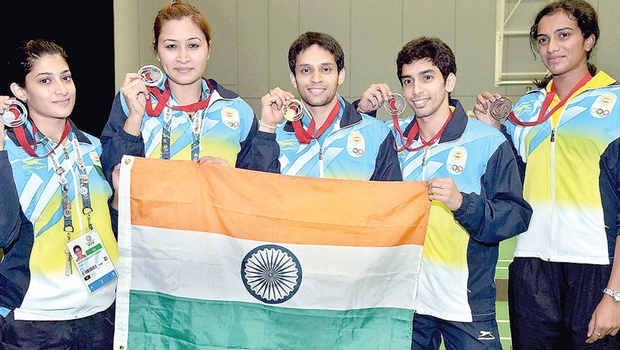
(From left) India’s Commonwealth Games 2014 badminton medallists Ashwini Ponnappa & Jwala Gutta (silver), Parupalli Kashyap (gold), RMV Gurusaidutt (bronze) and PV Sindhu (bronze) in Glasgow on Sunday | pti
Hyderabad :
The colour made the difference. Otherwise, the medals tally was the same. In the 2010 Delhi Games, India had won four medals. So too in Glasgow.
It was two gold, one silver and one bronze in Delhi. However, Indian shuttlers could bag only one gold, one silver and two bronze medals this time.
However, there will be ifs and buts on India’s show. Surely, the last-minute withdrawal of Saina Nehwal cost India a gold medal. But there were hopes that if Saina was not there, then young world championship bronze medallist PV Sindhu had the chance to retain the gold for the country instead.
But Sindhu fell to Canadian Michelle Li in the semifinals to finally end up with a bronze medal in her maiden venture. However, Parupalli Kashyap’s long wait for a championship medal was finally over. “I feel very happy for this Hyderabadi boy. He has a good game but somehow falters at crucial times. But this time there was no stopping him. He deserves the gold,” said former international Sanjay Sharma, adding, “it was not his fault if Lee Chong Wei (World No 1) pulled out like Saina.”
But Sharma was not happy with the overall performance, particularly with India failing to win a medal in the team event. “It was the biggest disappointment. We don’t have depth in doubles unlike in the singles where there is some bench strength. If India has done well in the team events in the recent past, it is surely because of Jwala Gutta, who has been a force to reckon with in the doubles for India. She has done yeomen service as far as doubles is concerned for India. But then we can’t depend too much on her every time,” he said.
Former national coach Vimal Kumar, too, agreed that doubles is surely going to be the Achilles’ heel in any team event. “The singles in the recent past was not an issue but it is the doubles that is the biggest problem for India. Jwala and Ashwini (Ponnappa) have won laurels in women’s doubles but where are the men’s and mixed doubles combinations. It hurt India and will continue to do so in future tournaments. India has to do a lot of catching up to improve their doubles combination. I think the Badminton Association of India (BAI) has to give more emphasis to doubles by grooming young talent for future tournaments,” he opined.
Sharma said if India have to think of any team medal, then BAI should make concerted efforts to groom a strong doubles combination. “When we could not win any medal in CWG, which has more of a depleted field, then India stand no chance in Asian Games and other big events. It should start planning in the right earnest for the 2016 Rio Olympics,” he added.
The former doubles specialist said the CWG gold could propel Kashyap to greater heights. “It is a huge boost to Kashyap’s confidence. We could see a pumped up Kashyap in World Championships and Asian Games where the field is much stronger.”
Vimal feels that Kashyap is always a better player in individual events. “In team events, he is under some sort of pressure. But in individual events he plays more freely. He was impressive in the individual event and I liked the way he handled the pressure, specially in the semifinals and final.
“Remember, in terms of standard of the game, CWG is not of high quality as there are no Chinese, Indonesians, Danes or Japanese players. But this win came at the right time. He will have a much tougher time at the Worlds and Asian Games,” said the former chief national coach.
Sindhu, according to Sharma and Vimal, faltered. “It is a good learning experience for Sindhu. But I thought she had a good chance to win a gold medal but then she failed to capitalize on the golden opportunity,’’ said Sharma, who is now a TV commentator on the game.
Vimal felt Sindhu has to improve her defence. “I think it is time she should depend on instructions. She should make the match analysis by herself and improve on her defence. She need to have more variations in her game,” said the present Prakash Padokone Badminton Academy coach.
source: http://www.newindianexpress.com / The New Indian Express / Home> Sport / by N. Jagannath Das / August 05th, 2014
ipika Pallikal (left) and Joshna Chinappa pose with their medals after winning the gold in women’s doubles squash event during the 2014 Commonwealth Games in Glasgow. (AFP Photo)
Glasgow :
Forget the gold. Few gave them a chance to even finish on the podium in the Commonwealth Games, given that teams with pedigree like Australia, England, New Zealand and Malaysia were in the fray.
But two girls from Chennai – Joshna Chinappa and Dipika Pallikal – squashed all doubts and did the impossible on Saturday to claim the top prize in women’s squash doubles. This is India’s first ever medal in the sport in the Commonwealth Games.
It took the fifth seeded Indian duo just 28 minutes to tame the top seeds Jenny Duncalf and Laura Massaro of England in straight games: 11-6, 11-8.
The scoreline might suggest that the game was a little one sided but it was not. The British pair, after losing the first game, roared back for a 7-2 lead in the second. The Indians fought back to clinch a famous victory .
“We were down for a while, but we were confident. We were telling ourselves that we could do it. We were not here to settle for the silver. We had the belief and the confidence that we could win the gold medal,” 22-year-old Dipika told TOI.
It was a tough competition for the Indian girls as the field included quite a few former Commonwealth Games medallists. “Doubles was a tough competition. It was important for us to take one match at a time, not thinking about whom we were going to play if we advanced. I guess that paid off as it took away the pressure,” she said.
Dipika admitted that the feeling that she and her 27-year-old partner Joshna were the architects of India’s first medal winners in squash was yet to sink in. “I guess it will take a couple of days to sink in. We are delighted.”
Former national champion Bhuvaneshwari Kumari, here as a coach, said the medal would do a world of good to the game back home. “It will inspire people back home. The government and the federation have been very supportive but I think this gold will help us get more support.”
source: http://www.timesofindia.indiatimes.com / The Times of India / Home> Sports> Tournaments> Commonwealth Games 2014 / by Biswajyoti Brahma, TNN / August 03rd, 2014
Kavery Nambisan’s poised surgical fingers cut through the heart of rural India in her charming seventh novel, A Town Like Ours. Yes, you read that right. When most people struggle with writing one book (full time), Nambisan has deftly churned out little more than half a dozen books while juggling her day job as a surgeon. If that doesn’t make you envious, then perhaps this will: her last book The Story That Must Not Be Told was shortlisted for the Man Asian Literary Prize and the DSC Prize.
In her latest offering, A Town Like Ours, you get the feeling that Nambisan has been mulling over the idea for years—lodged in her subconscious—before writing it all down in one swift sweep. It is a quiet book with an assured, elegant voice. Set in the fictional small town of Pingakshipura, the novel’s narrator is Rajakumari, a retired whore past her prime, who at one time serviced everyone and the local temple priest. This is a town where water runs black—all thanks to the temple priest—and every child’s head is white. Poignant and aching in parts, Nambisan’s motley crew of characters weave a story of love and loss and the desire to succeed in a ferocious world.
There is Saroja and Sampathu who flee a murder most morbid only to land up in Pingakshipura and raise Gundumani and Rukmini (Rukma) in a battered old taxi. No matter how odd this may seem, the two hold onto this semblance of a home. Then there is Gundumani, the boy with the crooked leg, whose can’t seem to understand his love for the woman whom he has treated as his sister, until well…let’s leave that for you to discover. Then there is Lectric Manu, who is a little too keen on Saroja; Kripa and Manohar, the childless couple who discover something unusual about each other after years of marriage.
A Town Like Ours is a sad tale that negotiates all those uncomfortable emotions gurgling underneath. Here is a little sampling of Rajakumari’s thoughts: ‘The very pith of marriage is carnal, you will do it with your husband or wife and no other. The manliness and womanliness with which couples accept this situation while attempting to imitate happiness is enough to make me weep. So it begins, this wedded happiness which is sometimes also a curse. Couples tire of each other’s bodies without realising it. They proceed to make children who grow up and go to school, the bidi factory or brothel, they live normal lives while their vague disenchantment cooks away and bounces off the walls of their cage like tired moths that slowly-slowly wither to dust.’
The writing is measured and the story unravels itself beautifully as you nudge each page. Nambisan’s book is a slow, lilting little gem that is ought to be relished on a long, monsoon-dappled train journey.
A Town Like Ours
By: Kavery Nambisan
Pages: 256 / Price: Rs 395 / Publisher: Aleph Book Company
source: http://www.newindianexpress.com / The New Indian Express / Home> LifeStyle> Books / by Supriya David / August 10th, 2014
The Mangalore zonal selection for Verbattle Junior will be held on August 1 and the selection for the Verbattle senior competition will be held on August 2 here.
The zonal selection round will be held at Samruddhi Bhavan between 9.30 am to 1 pm and between 1.30 pm to 4 pm. The team that would emerge as the sole winner among hundreds of teams participating will be awarded a grand cash prize of Rs. 1 lakh in the Junior Category. The winning team from the Beginner level will receive Rs 30,000; the winning team from Senior Category will receive Rs 50,000.
Verbattle, the country’s largest and most successful inter-school debate competition conducted by Verbattle Foundation had kicked off its tenth edition with Verbattle Beginner competitions in Bangalore on July 21.
Verbattle will be hosted and supervised by Deepak Thimaya. This year, around 1,200 students of schools and colleges are expected to actively participate in the Verbattle competition.
The selection process for the first round of Verbattle is physically conducted for two days in each of the three zones of Karnataka, namely Mangalore, Hubli and Bangalore. The selected teams are then brought to Bangalore, 27 teams from each zone, and in a spread of three weeks, the ensuing events are conducted in Bangalore. The semi-finals and finals for Verbattle Junior and Senior will be held on August 22nd, 2014. The final debates will be moderated by Thimaya and judged by some of the eminent personalities from the state.
Deepak Thimaya said: In the last nine years, we have brought together thousands of school and college students on a common platform. We have given out Rs. 21 lakh as prize money since its inception. This year Verbattle aims to make the tournament bigger and a platform of great learning experience.
Till date Verbattle has conducted 20 state level competitions in Karnataka – nine Verbattle Junior and five Verbattle Senior and also five Verbattle Beginner competitions in Bangalore. For the first time a South India level competition – Verbattle South – was held in January, 2012 after state level competitions in Tamil Nadu, Andhra Pradesh and Kerala along with Verbattle Karnataka. Currently Verbattle is organizing state, regional, national and international competitions along with its other activities such as Verbattle Forum, Club and Leadership programs.
Schools and colleges interested to participate can register by logging on to www.verbattle.com.
source: http://www.timesofindia.indiatimes.com / The Times of India / Home> City> Mangalore / Stanley Pinto, TNN / July 30th, 2014
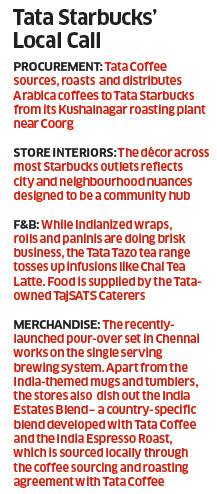
In January 2011, when Starbucks chairman and CEO Howard Schultz made his maiden India visit to sign the 50:50 JV with Tata Global Beverages, hopping over to Asia’s largest coffee maker Tata Coffee’s 8,258 sq feet roasting facility at Kushalnagar near Coorg made perfect sense. After witnessing the plant first hand, his team pointed out that the coffee at the roasting facility matched the global espresso blend that Starbucks prides itself on.
(The store in Horniman Circle…)
So for the first time ever in Starbucks’ history, the company pinned its faith on a partner-owned roasting facility, outside the five plants it owns across the world, including one at Amsterdam. Local coffee, global taste.
WHAT’S IN STORE
That set the ball rolling for a slew of localization initiatives which the JV kickstarted from October 2012, as it launched its very first outlet in Mumbai. The store in Horniman Circle, which can accommodate 120 people, has hand-carved wooden screens, tables of solid Indian teak, painted vintage trunks and old leather-bound books, harking back at Mumbai’s mercantile past.
As for the grub, there’s Konkani Twist or a Reshmi Kebab Roll, jostling for mouth-share with the standard Blueberry Muffin or the Classic Breakfast Chicken Sandwich—all coming from the Tata-owned TajSATS, India’s largest provider of meals to domestic and international airlines. While the coffee variants are largely untouched, the beans and espresso blend at the heart of the coffee are locally sourced. Even the Tata Tazo tea range throws up a spice-infused Chai Tea Latte—distinctly Indian. Similarly, when Starbucks opened shop in Delhi’s Connaught Place in February 2013, the ropework design of the store stood out as a local theme, along with food offerings, such as Murg Kathi Wrap and Murg Tikka Panini.
The Pune store, on the other hand, honours the rich copper culture of the city through copper artifacts and even has a traditional Indian swing for customers to sway. While certain elements in its food kitty are customized to suit local taste-buds, things are no different when Starbucks launched its 50th store in the country at Chennai earlier this month, which is the only outlet vending a ‘pour-over set’ single brew serving merchandise, typical of the filter coffee culture down south.
Procurement, store decor, F&B, merchandise— across locations , Tata Starbucks has set out to garner neighbourhood connect, to create what its CEO Avani Davda claims as the “third place” between the office and home. Unlike rival Cafe Coffee Day, which operates across multiple formats on a franchisee model, Tata Starbucks prefers operating the third place on its own, with an average covered floor area of 1,000-1,200 square feet. Much of that is governed by homegrown research that points to a more leisurely cafe culture in India than the west, where it is an on-the-go, grab-a-bite, kiosk-led approach with tiny outlets located near workplaces. That explains why Starbucks gets about a fourth of its revenue here from food as against 20% globally.
Though Davda’s cuppa of choice is Sumatra or a vanilla latte in the morning, she would any day welcome the growing consumption of Chai Tea Lattes from her stores. Unlike in most countries, Starbucks realized that India is largely a tea-drinking nation and has now solidified that beverage selection on its menu. It has also launched the India Estates Blend – a country-specific blend developed with Tata Coffee, and the India Espresso Roast, which is sourced locally through the coffee sourcing and roasting agreement with Tata Coffee.
LATE, YET RELEVANT
As the local theme gains momentum, Starbucks’ late entry into the country’ Rs 1,200 crore coffee chain market must not be overlooked. When it finally entered in 2012 after a botched entry in 2007 with Future Group’s Kishore Biyani , the domestic market was nearing saturation, with quite a few players snapping up prime properties in the top ten cities.
Though the JV never compromised on real estate, Starbucks President, China and Asia, John Culver said forging a sense of community will be key, while inaugurating the Horniman Circle outlet. Surely, the $14.89 billion Starbucks has also drawn lessons from the localization bids of other food retail chains, particularly KFC and McDonald’s. While the former ranks Paneer Zinger and Veg Twister as its top-sellers, McDonald’s McAloo Tikki and Masala Grill scorch the tables.
But since such chains operate across multiple formats, some of them even resort to differential pricing across different formats or locations, to cater to a broader consumer base. But Starbucks is clear about its premium pricing and aware of its international brand following.
“We now have an average customer who is very well informed, and has exposure to international brands and experiences… although price and convenience play a part in their spending decisions, they are also more and more influenced by a brand’s values,” says Manmeet Vohra, Director-Marketing & Category, Tata Starbucks.
THE NAYSAYERS
The Indianizing influence, particularly from a brand like Starbucks, has its own share of skeptics though. “People line up outside Starbucks for a global gourmet coffee experience with knowledgeable staff (partners) and baristas who can toss up the Starbucks experience…. unfortunately, the company has adopted a cookie-cutter approach (in India)….it’s like Zara saying it’ll sell salwar-kameez in India,” observes Harminder Sahni, Founder and MD, Wazir Advisors.
As a counter, Davda claims that a career at Starbucks starts with learning about coffee, often through coffee tasting and roasting events. “Our baristas are trained for specific periods by certified baristas, and each partner undergoes the training before undertaking their respective roles,” she says. Keeping the debate alive, former VPMarketing of Tata Coffee and brand consultant Harish Bijoor observes that Starbucks must not dilute its international flavor in order to grow in India.
“It must not become an Indian cafeteria from an American cafe,” says Bijoor, adding that strong brands are often inflexible. Even marketing guru Jagdish Sheth dismisses the ‘think global, act local’ approach of Starbucks, pointing out the new trend as ‘think local, act global’, with a slew of examples, such as Haldiram’s, Dabur and Pathak Pickles from India now riding high overseas with very ethnic offerings.
BANKING ON THE HOOD
But Tata executives, like Davda and Vohra, remain steadfast in their commitment to serve local communities and grow the business case around regions and neighbourhoods. It goes to explain why each outlet supports the surrounding ecosystem.
In Mumbai’s Horniman Circle store, for instance, Starbucks maintains the adjoining heritage park while in Gurgaon’s HUDA Metro Station store, partners take time out for regular cleanliness drives. Pradeep, one such partner, works the counter in Delhi’s Hamilton House branch at Connaught Place and keeps watch as the outlet’s assistant manager. Amid rope chandeliers and the surrounding wood, steel and concrete surfaces that resonates the character of the Lutyen’s-era building, Pradeep helps fellow partners with orders, calling out names of consumers alongside the order on delivery.
Right next to where he stands, about one-fifth of the food section has local offerings—”Chatpata Paratha Wraps and Tandoori Paneer Rolls are the highest selling food items in this outlet,” claims Pradeep. Though Davda will be happy to see local grub flying off the tables, for Tata Starbucks, food accounts for just 25% of its Rs 16 crore revenue. It is the core beverage category that Davda will be watching closely after ensuring that the beans at least are sourced and brewed in India.
source: http://www.articles.economictimes.indiatimes.com / The Economic Times / Home> Magazines> Corporate Dossier / Moinak Mitra, ET Bureau / July 25th, 2014
Vartika Katiyar took charge as the new Superintendent of Police of Kodagu on Tuesday.
Earlier, she was the Additional Superintendent of Police of Gokak for one year, and she is the first woman holding the post of SP in Kodagu.
Speaking to presspersons at Madikeri, Ms. Katiyar said she was inspired to join the Indian Police Service to serve society and senior women police officers.
source: http://www.thehindu.com / The Hindu / Home> National> Karnataka / by Special Correspondent / Mysore – August 06th, 2014
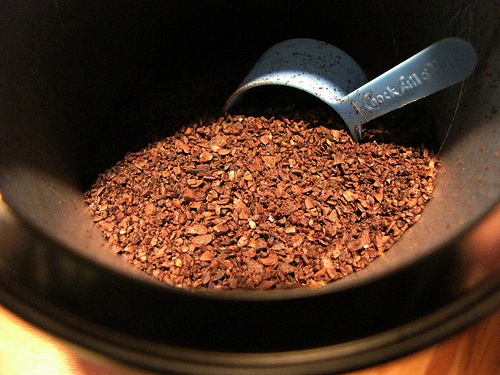
When you’ve finished with your morning pick-me-up, and you’re ready to get rid of the breakfast rubbish, put your used coffee grounds aside for a simple, smart reuse. Get started, by trying some of these easy-to-follow great ideas from the Hometalk community.
1. Fertilizer
For a beautiful, luscious garden, give your flowers a dose of nitrogen-rich coffee grounds. Pamper your plants, like Penny did for her roses, using recycled coffee grounds.
Roses Growing With Coffee Grounds via Hometalker Penny
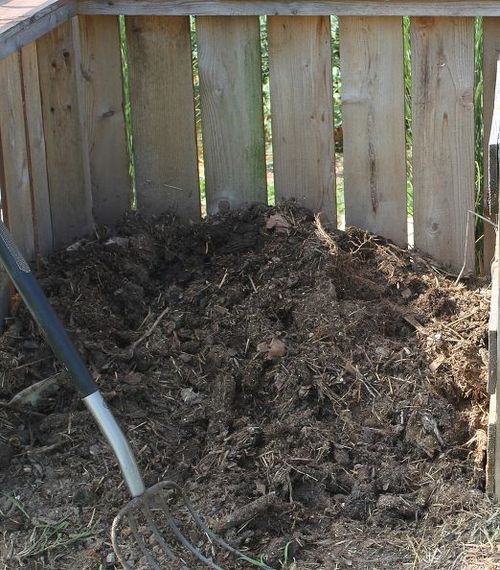
2. Compost
Who knew that your morning boost could be the missing ingredient in your compost mixture? Follow this tutorial to start a great compost pile using coffee grounds, for a superb organic addition to your mixture that will also naturally suppress the smell of decomposing materials.
Start a Great Compost Pile via Hometalker Old World Garden Farms
3. Pest Control
As much as you may love your Italian roast, critters and pests do not! Try out this idea, using recycled coffee grounds in your home to keep unwanted bugs away. Other Hometalkers utilize recycled coffee grounds in the garden to keep slugs and snails off of plants.
Deal With Ants in the House via Hometalker HomeSpot HQ
4. Wood Stain
This trick is the trifecta – the inexpensive, recycled, and non-toxic alternative to store-bought, chemical woodstain. Try this vinegar and coffee mixture to stain and age wood.
Vinigar and Coffee Stain via Hometalker Frugal Ain’t Cheap
5. Concrete Stain
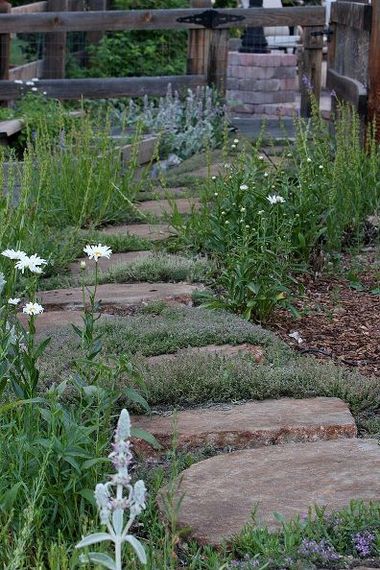
The rich color of coffee can be used for more than just wood tinting- this Hometalker changed the look of her concrete walkway by staining the stones using coffee grounds mixed with vegetable oil, and ironite.
How to Stain Concrete via Hometalker ThriftDee
6. Air Freshener
Coffee is a natural deodorizer, and can be used in tight spaces, like under your sink or in your refrigerator, to diffuse stale odor. You can even disguise deodorizing grounds in a beautified display, like this mason jar flower vase project, which disguises fresh-smelling recycled coffee grounds as soil.
Coffee Used Grounds and Mason Jar Flower Vase via Hometalker Rethink Simple
7. Body Scrub
Their coarse texture and crisp, rich scent make recycled coffee grounds ideal for exfoliating skin. Check out this simple two-ingredient DIY hand and body scrub mixture for an all-natural refreshing and cleansing upcycle.
Two-Ingredient Hand Scrub via Hometalker Cupcakes and Crinoline
Get more inspiration for your house and garden! For more ideas on how to cleverly recycle your household waste, check out the Repurposing and Upcycling topic on Hometalk .
source: http://www.huffingtonpost.com / Huff Post / Home> The Blog> HomeTalk / April 04th, 2014 (08/04/2014)
Nirmala Sitharaman plans to have a meeting of all stake-holders of the coffee industry in Bangalore and for the Tea Industry in Guwahati.
Bangalore :
Union Ministers have assured Karnataka coffee growers that the 12th Five-Year Plan for the Coffee Board would be announced by August end.
In their meeting, coffee growers told Minister of Commerce Nirmala Sitharaman that the 12th Plan outlay for coffee is overdue by about two years and many small and large growers are eagerly awaiting the Plan proposals as they have held back some investments because of the impending notification.
After patiently hearing growers’ problems, she assured them that the notification will be made by the end of August. The growers also have urged Union ministers to revisit the Kasturirangan Report and remove plantations from the preview of the act for Karnataka and Tamil Nadu, just as it has been done for Kerala. The members of the delegation that met the Union Ministers included D Govindappa Jayaram, chairman, and K Kurian, vice-chairman, of the Karnataka Planters Association; MS Jayaram, president, Thirthamallesh, secretary, Nanda Belliappa and MS Boje Gowda of the Karnataka Growers Federation; Peter Mathias, president, and Ullas Menon, Secretary-General, United Planters Association of Southern India.
The planters’ delegation was in New Delhi from July 29 to August 1 to discuss issues with Commerce Ministry officials and Nirmala Sitharaman. The delegation also met newly-elected MPs from Karnataka and apprised them on various issues. Pollution control norms for pulping were also brought to the ministers’ attention. Growers urged them to consider studies done by the University of Agricultural Sciences, Bangalore. Ministers assured the delegation that SCTL for growers above 10 hectares would be looked into. They also said that recoveries of loans which have become non-performing assets and those before the Debt Recovery Tribunal would not be brought under the SARFAESI Act for any plantation lands.
Meetings
Nirmala Sitharaman suggested plans to have a meeting for all stake-holders of the coffee industry in Bangalore and for the Tea Industry in Guwahati.
She also suggested that the Rainfall Insurance Plan will be modified to include all plantation losses caused due to heavy rainfall, drought or heavy pest attacks, such as white stem borer or stalk/bean/leaf rot (Koleroga) etc. She also said she would explore ways of including research scientists from the agricultural department for doing research on coffee, as well as getting some funding from the Agricultural Ministry for the same.
The Ministers also assured help in getting the approval of the National Horticultural Package (for Pepper) for Karnataka.
source: http://www.thehindubusinessline.com / Business Line / Home> Agri-Biz / The Hindu Bureau / Bangalore – August 03rd, 2014
Sandalwood actress Harshika Poonacha who was recently eliminated from the house of popular Kannada reality show Bigg Boss is all set to make her comeback on the show. The reason behind Harshika’s re-entry to Bigg Boss was because audiences have been demanding her comeback on the show.
And the makers of the show had no other choice, but to relent to the audiences demand. She will be once again seen on the TV show from Sunday onwards.
Hope her re-entry will be a pleasant one, and she remains in the show for long.
Recently we saw Sandalwood director Guruprasad making a wild card entry into the controversial reality show currently on air on a popular Kannada TV channel. The show, in its second season, is being hosted by Kannada superstar Sudeep.
Director Guruprasad is mostly known for portraying realistic stories on screen. Thus we wonder whether the filmmaker will be able to fight back against all the allegations and backbiting that happen on the show.
source: http://www.timesofindia.indiatimes.com / The Times of India / Home> Entertainment> Kannada / TNN / August 03rd, 2014
WELCOME. If you like what you see "SUBSCRIBE via EMAIL" to receive FREE regular UPDATES.
Read More »