Coffee makes its way into fast-food restaurants

Chennai :

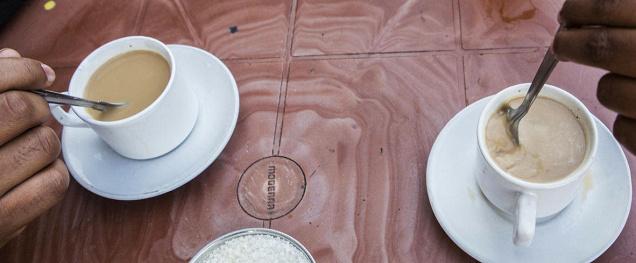
The good ol’ Indian coffee is steadily making its way into the world of pizzas and burgers in India with quick service restaurant (QSR) chains like Pizza Hut and McDonald’s making it an integral part of their offerings. QSR chains, which hitherto focused only on their flagship offerings like pizzas or BigMacs, are diversifying into the cafe concept to lure those customers, who flock to cafes since the concept of coffee and snacks between meals is growing in India.

Over the last two quarters, the QSR segment has been posting low same-store sales growth and companies are working their best to increase volume sales by offering value meals and diversifying store formats to increase footfalls. And with a $300 million Indian coffee market, growing at 17% annually, cafes are a clear option for QSRs.

Yum! Brands’ Pizza Hut has started a Hut.Cafe in a store-in-store format where a Pizza Hut restaurant houses a cafe that serves coffee, tea, smoothies and coolers; and McDonald’s recently brought in its McCafe format to India to sell its range of coffees, pastries, savouries and chilled beverages.

Pizza Hut has launched its Hut.Cafe outlet each in Chennai & Kolkata and this marks Pizza Hut’s foray into a new category of coffees. “During tough times one of the things we have done is to try and reach out to a whole new segment of customers. The Hut.Cafe will help in getting customers who just go out for coffee and snacks between meals,” said Sanjiv Razdan, general manager, Pizza Hut India.

The company now has its own range of products and has worked on specialty Indian coffees, but is also open to working with different brands to bring in their signature products to Hut.Cafe tables, Razdan said. The company has two such outlets and expects to open 10 more by the end of this year.

“McCafe has helped us bring in more customers by building a different day part and increasing footfalls within the McDonald’s restaurants,” Ranjit Paliath, vice president – business operations, McDonald’s India (west & south), said. McDonald’s now has three McCafes in India but plans to open 75-150 more in the next 3-5 years.

Coffee is so dear to the Indian consumer that dessert-chains too are looking at putting ice creams parlors and coffee shops together. American ice-cream brand Mini Melts, which recently made its foray into India, is planning to set up Mini-Melt Cafes where consumers can step in for coffee or tea, have snacks and finish off the mini-meal with ice creams.

“We are working on the design and layout of the cafe and will be launching them in Chennai, Bangalore and Hyderabad in the next three months,” said Syed Salim, chairman, HoneyBee Amusements, which has brought the US-based brand to the Indian market. The company will offer a range of Mini Melts-based dishes like ‘floats’, which will have the Mini Melts ice cream on beverages like Coca-Cola, and also serve regular coffees, is looking at typing up with large cafe chains for the coffee, Salim said.

source: http://www.timesofindia.indiatimes.com / The Times of India / Home> Business> India Business / by Sushma U N , TNN / March 17th, 2014
‘Field candidate from Kodagu district’

Representatives from district were elected only twice.

As the political parties are gearing up to field their candidates amidst the lobby from ticket aspirants across the State, people and various political party workers in Kodagu district that represents Mysore-Kodagu constituency, have placed the demand to field the candidate from the district, rather fielding an outsider.

This is mainly because of the strong feeling that the intensity of problems faced by Kodagu district can be understood by a candidate who hails from the district, than an outsider like the present MP who hails from Mysore. In the first parliamentary election post Independence, Kodagu enjoyed getting a MP’s position for the constituency. Then Kodagu was an union territory and it was later merged with Karnataka and gained the status of the ‘district’ during the unification of state in 1956.

As the population of Kodagu was limited, it was then merged with Mangalore constituency. In the 1957 election, Kodagu took shape of Mangalore-Kodagu constituency. Kodagu remained as a part of Mangalore constituency till the 14th Lok Sabha election in 2004.

In the next delimitation, Kodagu district was merged with Mysore constituency and it took the shape of Mysore-Kodagu constituency in 2009.

N Somanna from the Congress won the first parliamentary election in 1952, while C M Poonacha from the Congress won the fourth election of Mangalore Kodagu constituency in 1967. Thereafter, no Kodava or the candidate from Kodagu district got an opportunity to represent the district in the parliament.

Exception

Kodagu stands as an exception compared to other districts mainly because of certain unique practices and systems like land ownership (Jamma Bane, Jamma Malai, Paisari, Gomala etc), traditions of consuming liquor in ceremonies, licence to use guns, as a large portion of the district is covered with forest, coffee being the main crop etc. As decisions on all these aspects come under the purview of the Central government, Kodavas are largely dependent on the member of parliament from the constituency to get their demands fulfilled. Issues triggering the district like the implementation of Kasturirangan report, demand for autonomy status to the district, controlling wild elephant menace are to be resolved in the parliament. But, unfortunately, as Kodagu has sparse population, it has been represented by the MP from the neighbouring Mysore district, all these years.

Local people are of the opinion that the MPs from Mysore district who also represent Kodagu, are more bothered about the ‘vast’ Mysore district than the ‘small’ Kodagu district.

Local candidate demand

People, party workers and local political leaders have been pressurising the political parties to filed a candidate from Kodagu to represent Mysore-Kodagu constituency.

BJP leader and Madikeri MLA Appachu Ranjan has shown interest in contesting the Lok Sabha polls.

While, the JD(S) workers are demanding party leaders to give ticket to former minister B A Jeevijaya. However, there seems to be no aspirant from Kodagu to represent the Congress, perhaps because they do not want to get into a tug-of-war with the sitting MP.

source: http://www.deccanherald.com / Deccan Herald / Home> District / by Shrikanth Kallammanavar / DHNS / Madikeri – March 09th, 2014

‘Improve plight of women in rural areas’

There are several laws to protect the interest of women. Women should make use of the available laws to lead a dignified life, said First Additional District and Sessions Judge M V Jadara.

Speaking at women’s day programme organised by the State Women’s Commission, Kodagu district administration, zilla panchayat, Legal Services Authority and woman and child welfare department here Saturday, he said that women are successful in each and every field. Zilla Panchayat CEO P I Srividya said that women should be empowered economically. DySP Prasanna V Raju, Backward Classes and Minority Welfare officer K V Suresh, Women and Child welfare Deputy Director Mumthaz among others were present.

In a separate programme organised by the district legal services authority, Mahilodaya Mahila Okkuta and Bar Association, Additional Civil Judge S Siddaraju said that education helps in the progress of a country. Women should focus on education.

Ashok of ODP said that a society can progress only when they are empowered. There is a need to improve condition of women in rural areas. Child marriage, evils of dowry system should be eradicated from the society. Widows should be honoured and respected.

CMC Commissioner B B Pushpavathi read out an oath.

Mudigere

Women should engage themselves in productive works during their free time, said Ujire Church Priest Vincent.

Speaking at women’s day programme organised by Kapuchin Krishi Seva Kendra and Banakal Vimukthi SHG Federation, he said that mother mould the personality of her children.

Banakal Vimukthi SHG Federation President Prema said that the Federation has been emphasising on cleanliness. About 460 members of the Federation were given loan of Rs 5,000 each without interest to construct toilets in their houses. Women are encouraged to take up pisciculture, vermi compost and dairy farming to empower themselves financially. Women should develop leadership qualities in them and come to the mainstream of the society, said Banakal church priest Vinod.

source: http://www.deccanherald.com / Deccan Herald / Home> District / DHNS / Madikeri – March 09th, 2014

Smell the oranges (and the coffee!)

SUMMARY
The famous loose-jacketed mandarin orange was as much a part of the fabric of Coorg as the coffee alongside which it was planted.

———————————————————————————-

Owned and managed by the Ramapuram family of Kerala, Orange County Resorts and Hotels is based on the ‘Spirit of the land’ philosophy that showcases the nature and culture of the regions where it is operational. The first Orange County Resort that opened at Coorg in 1994 was built on the theme of coffee, spice and plantation life to reflect the true spirit of Coorg, and is situated amidst 300 acres of coffee and spice plantations. It is flanked on one side by the Dubare Reserve Forest and the river Cauvery on the other.

Link to the land

Reminiscing on the days of old, Cherian Ramapuram, director, Orange County Resorts and Hotels says, “The Orange County – Coorg resort was built on the plantation owned by our family from 1926. In the 90s, Coorg was not known outside Karnataka. The location was extremely beautiful, packed with history and culture. Orange trees are usually inter-planted along with shade trees for cultivating coffee. So like coffee, Coorg produced the best oranges in the country, till a virus attacked them about 18 years ago. The huge, sweet, loose jacket oranges turned into small tight skinned sour ones. The resort was christened when the oranges were good.”

The brand opened its second resort at Kabini in 2007. Inspired by the local ‘Kadukuruba Hadis’, the architecture of this tribal themed resort was crafted to transport its guests into a tribal setting from which they can enjoy the spectacle of Asia’s largest biosphere.

Cherian Ramapuram adds, “With location and luxury coming together in such a happy union, Orange County Resorts offers guests a true ‘Spirit of the land’ experience. Plantation stays are unique because they are a combination of an exclusive lifestyle, while touching the soul of the land. It also gives one an opportunity to see how the precious commodities that they buy or use in the day-to-day life are cultivated. We give the guest a very unique experience of living like a ‘Planter’ for the stay. They get to go for a signature tour of the plantation, plantation trail, nature walk, etc., which are unique to thispart of Coorg.”

The resort’s main target is the discerning traveller. Cherain Ramapuram feels that the guest profile shows a continuous evolution. Today’s guest is more educated tastes become more refined as they travel around the world. While there is no specific special interest groups in this segment, the discerning traveller looks for experiences like this. He says, “We do not promote stays or even holidays. We promote Exclusive Local Experiences.”

Community is core

Orange County’s Kabini property has been selected by National Geographic Traveller among the top 25 Eco Lodges in the world. The company takes guest feedback and suggestions very seriously. “This is evident from the feedback that you can see on sites like Tripadvisor. All these comes wrapped in highest standards of responsibility in tourism,” says the proud hotelier.

His brother Thomas Ramapuram, joint director, Orange County Resorts and Hotels elucidates on the sustainable hospitality measures the company has initiated. “The concept of responsible tourism comes naturally to Orange County Resorts. It is, after all, an extension of the vision and philosophy of the House of Ramapuram whose values are broad, contemporary and inclusive.”

The government has now made CSR mandatory part of a company’s revenues. But Orange County has long supported community development. “Over 60 per cent of our staff at both resorts are from the surrounding local areas. We constantly strive to engage with local village heads in community development programmes. We also conduct Structured Community Development Programmes on an annual basis like for example, scholarships, toilets in villages, road work, etc,” says Thomas Ramapuram.

He adds, “We believe that education is the most powerful weapon which you can use to change the world. So we have formally adopted the local school at Coorg in Karadigod Village. We are also in the process of adopting the school in Kabini (H.D.Kote Village), however we have not received a formal government approval for the same. Through adoption we have implemented various initiatives like computer facilities, better play grounds, hiring quality teachers etc. This is an ongoing continuous process and our vision is to develop these schools into world class institutions of learning.”

The brand has also adopted technological innovations to make the guest experience a seamless one. “Our indigenously developed central reservation systems compares with the best in the industry. It allows for easy storage, access and transmission of information. Our systems allow us to have an intimate knowledge of each of our guests even before they step into our properties.”

It is rare to find a two resort brand in the world today that has 60 per cent of their clients booking directly with us (as opposed to booking through a OTAs or a tour operator). We are able to achieve this through our powerful database management systems and processes.”

Being a traditional brand with a strong focus on ethics, values and other old fashioned ideas, has not stopped the brand from embracing technology and leveraging its tremendous power to deliver a superior guest experience. “Technological innovation is a core value at Orange County Resorts,” reiterates Thomas Ramapuram.

As for the brand’s foray outside Karanataka, Cherian Ramapuram says that it has not been easy to build and run resorts in the state itself. “While we have not yet looked seriously outside, we are keeping our eyes open for opportunities. We have two more locations where we have land in Karnataka. We are looking out for options outside the state and the country too,” he optimistically sums up.

source: http://www.financialexpress.com / The Financial Express / Home> Travel & Tourism / by Steena Joy / Mumbai – March 11th, 2014

Brazilian drought may make your cuppa costlier

India effect On Thursday, prices of key grades of coffee were up by ₹30-40 a kg, almost 20 per cent over the previous week.

Dry weather sets off price rally; global rates increase 45% in a month

New Delhi :

Your cup of coffee is set to cost more, courtesy, the drought in Brazil.

Reports of severe dry weather impacting this year’s Brazilian crop have sparked a sharp rally in coffee prices over the past few days and domestic raw coffee prices have moved up in tandem. Global prices — mainly of the Arabica variety — have risen by 45 per cent in the last one month.

As a result, small and mid-sized domestic roasters, who sell roast and ground filter coffee powder, are thinking of passing on the burden to consumers by increasing prices. This is because of export demand for Arabicas driving up farm-gate prices. India exports two-thirds of nearly three lakh tonnes of coffee it produces every year.

At the weekly auction on Thursday, prices of key grades of raw coffee were up by ₹30-40 a kg, an increase of almost 20 per cent over the previous week.

No option

“Roasters have to increase prices by 20-30 per cent, else quality will take a hit,” said BS Suryaprakash, CEO of Coorg Coffee Supplies, a Bangalore-based roaster and exporter.

“It’s a tricky situation. If we increase the price, there is a chance of losing customers. If we don’t, we’ll have to incur losses as the rise in raw coffee prices has been pretty steep,” he said. Coorg Coffee, which retails powder and speciality blends under the same brand, has already effected a price hike of 20 per cent, he added.

A little over a third of the 300,000 tonnes of coffee produced in India is consumed domestically. The annual growth in consumption is around six per cent, with coffee drinking becoming fashionable among the younger generation through the spread of the café culture.

“This price rise is unprecedented. If the market stays at the current level, we don’t have any option but to increase prices. We will take a call on revising the prices over the next couple of days,” said Shrikant Rao, Director at Bayar’s Coffee.


Watching developments

However, large companies such as Tata Coffee are cautious in reacting to the price rally. “The market has gone up in the past four days. We have to study the market before taking a call on prices,” said Hameed Huq, MD of Tata Coffee Ltd, the country’s largest coffee grower.

Moreover, the lower-than-expected crop size back home is seen supporting prices. The Coffee Board has lowered its estimates by about 10 per cent, pegging the current crop size at 3.1 lakh tonnes as untimely rains in Karnataka, the main producing state, has shrunk the crop. However, growers harvesting their produce said the crop is much lower than the Coffee Board’s estimates.

source: http://www.thehindubusinessline.com / Business Line / Home> Markets> Commodities/ by Vishwanath Kulkarni / New Delhi – February 21st, 2014

India uncovered: hiking in Coorg

The Coorg highlands
The Coorg highlands

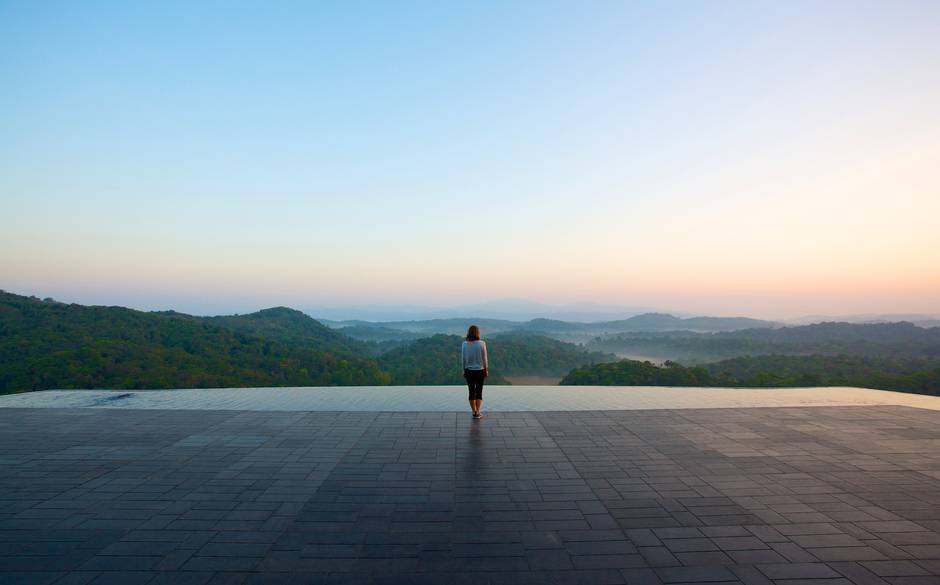
I‘m on a craggy ledge in the hills of Karnataka, and although it has been a tough four-hour hike to get up here, the views are extraordinary. At an altitude of just over 5,000ft, I can see all the way to the Arabian Sea coast and the jungles of Nagarhole.

Coorg (also known as Kodagu) is one of the wildest mountainous regions in India, covered in dense forests inhabited by wild boar, elephant, sloth bears and tropical birds. But there is little sign of man. On my way up, I have walked through rainforest, climbed over stiles, hiked through paddy fields, pastures and plantations of coffee and cardamom into misty thickets of teak and rosewood. And I have passed just 10 people.

The reasons for this are historical. Until the 19th century, the area was ruled by a clan of Kodagu rajas who deliberately kept the hill country devoid of roads, and relied on narrow jungle trails between settlements to discourage invasion. That, for a while, kept foreigners out. Even a few years ago, Coorg was little visited, and anyone adventurous enough to come here stayed in small traditional hotels, temple rooms or the private homes of the local Kodava people. There was very little on offer for travellers.

The highlands of Coorg as seen from Vivanta by Taj Picture: Chris Caldicott
The highlands of Coorg as seen from Vivanta by Taj
Picture: Chris Caldicott

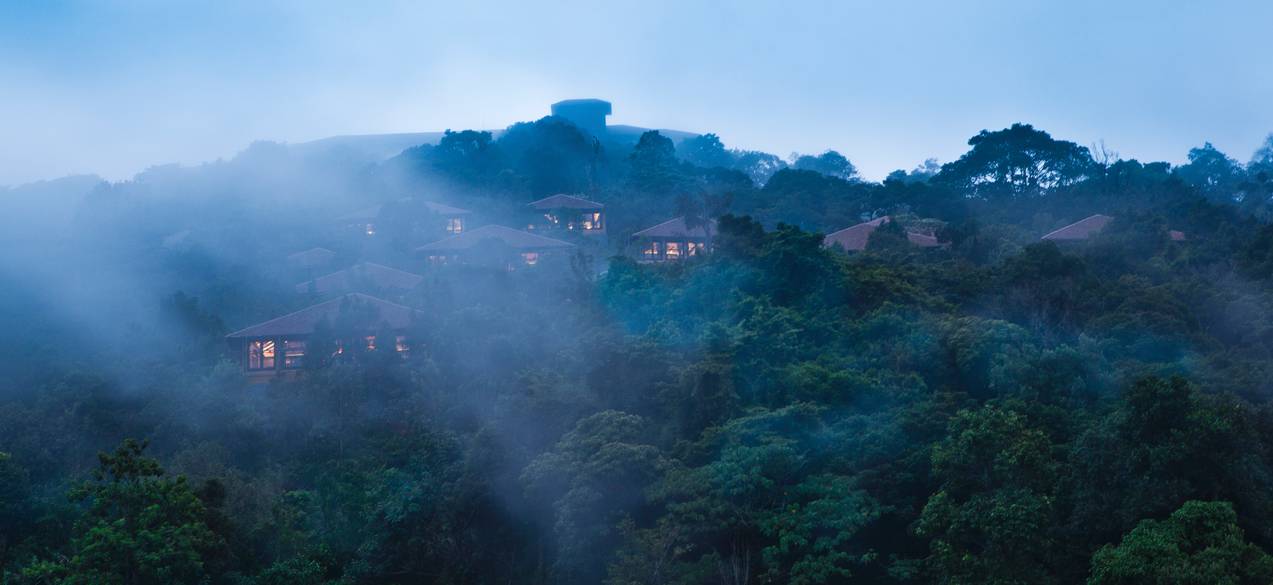
That all changed last year with the opening of Vivanta by Taj Madikeri Coorg in Madikeri, the region’s beautiful hill station capital. Now, visitors not only have a contemporary hotel in which to relax (it has glass walls to show off the spectacular views) but also a new range of activities to enjoy, based on the natural surroundings and the culture of the Kodava people (who have their own tribal dress and cuisine – and a fondness for extremely strong liquor).
VivantaCoorgexternalviewKF12mar2014
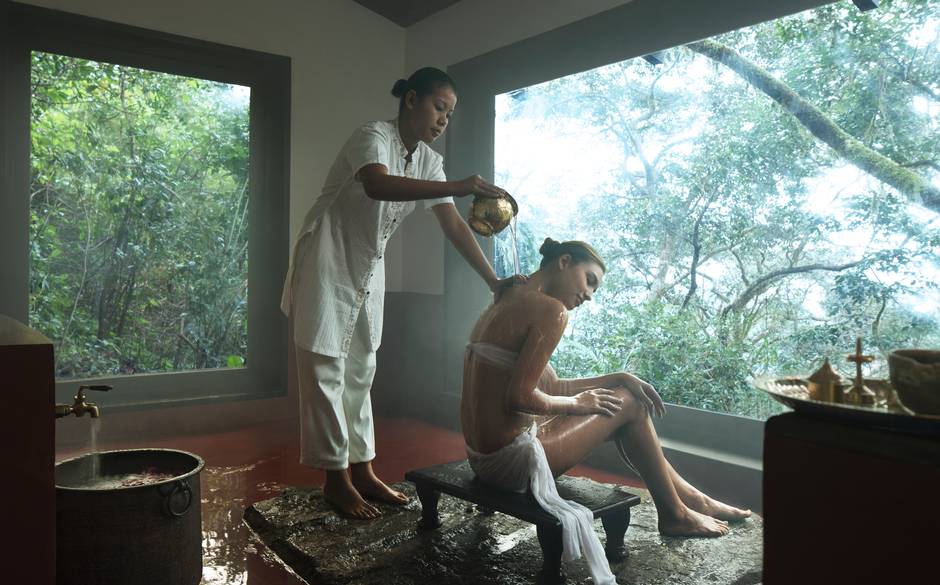
Easy day treks can be organised from Madikeri, including one to the impressive, domed Indo-Saracenic tombs of the rajas at Gaddige and the spectacular Abbi Falls. Other options for guests at the Taj property include overnight guided treks into the misty peaks, past streams and forest temples, and courses in zip-wire and high-rope skills. For the less adventurous traveller, there are botanical walks in the 180-acre forest and trips to villages to learn about pottery and other crafts. Not least of the attractions is a 30,000ft spa, for those who prefer to eschew adventure and just take up a supine position and be pummelled.
The hotel's Jiva Grande spa
The hotel’s Jiva Grande spa

The accommodation: Perched high on a forested ridge, the 63 villas are discreetly hidden in the rainforest canopy. Features include wraparound glass walls, huge marble tubs and warming fires. The architecture takes inspiration from local houses, with entrances and courtyards open to the sky and, at the spa, wood-fired Gudda baths (where guests are scrubbed and massaged). Dishes on offer range from Coorg specialities and health food to international cuisine. Doubles from £80, b&b.

Getting there: Greaves Travel is offering six nights at Vivanta by Taj and one night at Taj West End Bangalore from £1,880 per person. The price includes breakfasts, return flight with British Airways, private transfers and guides.

source: http://www.telegraph.co.uk / The Telegraph / Home> Luxury> Travel / by Chris Caldicott / March 07th, 2014

Mysore-Madikeri rail line project ‘being revived’

The 100-km rail line is expected to connect Mysore with Hunsur, Periyapatna and Kushalnagar in the first phase./  File Photo: M.A. Sriram / The Hindu
The 100-km rail line is expected to connect Mysore with Hunsur, Periyapatna and Kushalnagar in the first phase./ File Photo: M.A. Sriram / The Hindu

Earlier, it was perceived to be economically unviable and shelved

A question mark hovers over the future of the Mysore-Kushalnagar-Madikeri rail line project, for which there was a considerable push from a section of stakeholders in the region.

Although the preliminary engineering-cum-traffic survey for the new rail line was launched more than two years ago (in December 2011) and completed four months later, there has been no further progress. However, according to a railways document on the status of various projects and new lines coming under the South Western Railway, the 100-km line project seems to have been “shelved” by the Railway Board.

This was confirmed by a senior official of the construction wing of the Indian Railways. The official added that the board had shelved the project because it was perceived to be “economically unviable,” but clarified that it was being “revived” again.

“The State government has come forward to fund 50 per cent of the cost and provide land free, following which the project was sent to the Railway Board for a review. But we have not heard anything from the board so far, and will have to wait for the full-fledged budget after the new government comes into power at the Centre, to see if the project gets any financial allocation this year,” the official added.

When the survey was launched, the cost of the new rail line — expected to connect Mysore with Hunsur, Periyapatna and Kushalnagar in the first phase — was pegged at around Rs. 600 crore.

The then Railway Minister K.H. Muniyappa had averred that work on the new line would start “within a year” after the survey’s completion; however, the project did not receive any allocations in the two budgets that followed. The Railway Budget 2010–11 included the line under ‘socially desirable rail connectivity proposals’. However, given the pace of construction and the gestation period of the projects, it is anybody’s guess as to when the rail line will materialise, the official said.

Incidentally, the Mysore-Madikeri line was first mooted around 1881-82, according to the Mysore Gazetteer published by the State government. It also notes that two alternative routes connecting Mysore and Madikeri were suggested, but never took wing.

The first route was a branch line to Bettadapura and Kushalnagar, from the Mysore-K.R. Nagar main line.The second connected Mysore and Hunsur, linked with Kushalnagar. It was for this route that the survey was conducted two years ago.

source: http://www.thehindu.com / The Hindu / Home> News> National> Karnataka / by R. Krishna Kumar / Mysore – March 04th, 2014

I can play anybody now: India squash player Joshna Chinappa

India squash player Joshna Chinappa– who recently lifted her maiden WSA World Tour title with Winnipeg Open trophy beating Heba El Torky from Egypt – tells Wriddhaayan Bhattacharyya about her journey in Canada.

Joshna Chinappa RNA Research & Archives

You have won on foreign soil before. How different was Winnipeg in terms of competition?
There were players ranked higher than me in the tournament. And I have never played in Canada before, the conditions were very tough. It was minus 22 degrees. Though the court has artificial heating but it is a cold country and I had never experienced that. I made sure I kept warm at home and don’t go out much. I had to bundle up as much as I could and train outside.

The ice storm even killed people..
It was dangerous. I missed both my flights because of the storm and had to wait at the airport for over 10 hours. Then I waited for five hours for the next one, even that did not take off and finally I managed to get there late.

Who were the best players there?
There was intense competition as the girls had been winning a lot of matches since past few weeks. They were in the groove. Nicolette Fernandes (World No.19), Joey Chan (World No.23) were some of the best ones around.

How does it feel to lift a World squash title considering the sport is still not that promoted in India?
The sport got a lot more popular in the last few years if not to the extent of tennis or cricket. As far as I am concerned, I go for these tournaments to do well and win. The recognition is nice if I get it but even if that doesn’t happen, I am fine with that. But people have been supportive, some Press people called me after the victory and it felt good.

How long did you train for this tournament?
I trained the whole of December till the middle of January, through Christmas and New Year when players usually take a break. I had good momentum, felt fit and wanted to build on that.

Was the training any different from what you normally do?
It was a lot on the field, lot of sprint and shuttle running. Lot of groundwork. I concentrated on variations of sprint. I spent hours in the gym too. I followed my trainer Rajamani and worked out consistently which made the difference in Canada.

Dipika won the same tournament last year. Do the opponents across the world take the Indian players as threat?
They (including the top 10 players) don’t take us lightly at all because they know if we are at our peak, what can happen. Dipika created that platform last year.

You literally won the final in dying minutes? What gave you that adrenaline rush?
Yeah I was 10-7 down. I honestly don’t know what happened, it was such a blur that moment. I hung in there, she made a couple of errors which helped me get back to the game. When I levelled it 10-10, I thought of not delaying it any further and was more aggressive to win the remaining two points.

Your thoughts on Heba El Torky..the youngster gave you a tough time..
She did but you know the funny part? I played her last week prior to the final and I won 3-0 pretty comfortably. Probably when I went into the final, I put a little bit of pressure on myself to play well. And she came into the game with a lot of confidence as she had defeated three top seeds in the tournament which stepped her game up.

Didn’t that 3-0 win make you overconfident?
Not really because before that win, I lost to her a couple of times in the last two years. I knew what she is capable of. I have always had close games with her.

Tell us about the Egyptians, what makes them the champion players they are?
I have been based in Egypt before for training. They have 30-40 squash clubs in Cairo alone and each club has about 100 kids playing. If you have that many kids playing each other in local tournaments or league matches, you are going to get better eventually. They also have a lot of idols to look upto like Amr Shabana and Omneya Abdel Kawy. That encourages the juniors to come up and aspire to be like them. They are also very fearless. When they get on court, they don’t care who they are playing, be it a top seed or any other player. They are also very skilful with shots.

You’d once said that you don’t relish playing against Egyptians..
I’d said that long time back but now I change my opinion (laughs). More than anything, I am pretty fit today and can hang on with anybody on court. I am a better player than before. At present, I can play anybody.

Joshna ChinappaSquashWSA World TourWinnipeg Open trophy

source: http://www.danindia.com / DNA / Home> Sport / by Wriddhaayan Bhattacharyya / Agency:DNA / Tuesday – March 04th, 2014

PGCIL keen on completing Mysore-Kerala project

KodaguMapkf08mar2014
Power Grid Corporation of India Ltd., a Government of India enterprise, which is drawing the 400 KV D/C transmission line from Mysore to Kozhikode in Kerala via Kodagu district, has blamed certain non-governmental organisations of placing hurdles to the implementation of the project citing environmental reasons.

Of the 210-km transmission line, work has been completed in a stretch of 155-km (92 km in Kerala and 63 km in Karnataka). The balance 54.5-km line needs to be drawn in Kodagu, through 38 km of paddy fields and across 12 km of coffee plantations. Works covering a distance of 4.5 km in reserve forests in Kodagu has been completed. The Coorg Wildlife Society and Cauvery Sene have been opposing the project.

The apprehension created by the NGOs among the people over the project is unfounded, says S. Ravindar Kumar, Additional General Manager, PGCIL, who is in charge of the Karnataka projects. He told The Hindu that the project was entrusted to the PGCIL to evacuate power from Kaiga 3 and 4 nuclear plants, with the prior approval of the Union government. The Union Ministry of Environment and Forests had given clearance for the lines in Kodagu.

As many as 2,450 trees were cut in Kodagu to draw the line across a stretch of 4.5 km reserve forests. An estimated 6,000 trees would have to be cut in the 12-km stretch of coffee plantations and about 300 in the 38-km stretch of paddy fields. However, the contention of the NGOs that over 50,000 trees would be felled to draw the line via Kodagu was far from the truth, Mr. Kumar said.

The PGCIL had commenced the Mysore-Kozhikode line works in December 2005, which was to have been completed in 2007. But, the Kodagu stretch has remained a bone of contention. It has also planned to earmark Rs. 60 crore for payment of compensation to farmers and has already deposited Rs. 10 crore in the Kodagu district treasury. Farmers could be paid Rs. 15 to Rs.18 lakh per acre as compensation in coffee plantations and Rs. 2 lakh per acre of paddy field, Mr. Kumar said.

The alternative routes suggested by the NGOs: utilising the 220 kV Kadakola-Kaniyampetta corridor (through the Bandipur National Park) would not be possible as it is the only inter-State feeder and de-energising it cannot be done since it is critical to meet the demands of north Kerala. The second alternative, that the existing D-line could be made use of (via Nagarahole National Park) was rejected by the State and Union governments.

source: http://www.thehindu.com / The Hindu / Home> News> National> Karnataka / by K. Jeevan Chinnappa / Bangalore – March 05th, 2014

Bopanna climbs to 12th in ATP rankings

Rohan BopannaKF07mar2014
New Delhi:

India’s doubles tennis player Rohan Bopanna leaped four places to 12th in the latest ATP rankings released Monday.

The Indian achieved the feat after clinching the Dubai Duty Free Tennis Championships title with Pakistani Aisam ul Haq Qureshi.

Meanwhile, Leander Paes still remains India’s highest ranked doubles player at No.10 while another veteran Mahesh Bhupathi slipped six places to No.47.

In the men’s singles category, Somdev Devvarman and Yuki Bhambri remained static at 78th and 146th, respectively, while Sania Mirza is No.11 in the women’s doubles list.

source: http://www.ianslive.in / IANS Live / Home> Sports / New Delhi – March 03rd, 2014