Taj Madikeri, Westin Chennai Velachery among world’s hot new hotels

SUMMARY
TripAdvisor has recognised 33 hotels in 18 countries worldwide that opened within the last year.
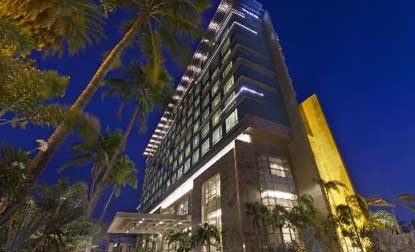
Westin Chennai Velachery

TripAdvisor has announced its inaugural list of hot new hotels, recognising 33 hotels in 18 countries worldwide that opened within the last year. These properties have provided guests with memorable experiences, according to the survey done by the travel site.
“TripAdvisor has identified the new hotels that have made lasting impressions on our community since opening their doors,” said Barbara Messing, chief marketing officer at TripAdvisor. “Whether traveling internationally or close to home, we encourage travellers to check out, or ‘check-in’ to these new hotels on the scene that are getting high reviews from other travelers.”

Hot New Hotels – Asia
1. Mandarin Oriental Pudong, Shanghai, China
2. Four Seasons Hotel Baku, Baku, Azerbaijan
3. Vivanta by Taj Madikeri, Madikeri, India
4. Raffles Makati, Makati, Philippines
5. Fairmont Makati, Makati, Philippines
6. Vana Belle, A Luxury Collection Resort, Koh Samui, Chaweng Beach, Thailand
7. InterContinental Danang Sun Peninsula Resort, Da Nang,Vietnam
8. The Westin Chennai Velachery, Chennai (Madras), India
9. Four Seasons Beijing, Beijing, China
10. Four Seasons Shanghai Pudong, Shanghai, China

Hot New Hotels – World
1. Hotel Casa San Agustin, Cartagena, Colombia
2. Kura Design Villas Uvita, Uvita, Costa Rica
3. Taj Palace Marrakech, Marrakech, Morocco
4. 21c Museum Hotel Bentonville, Bentonville, Arkansas
5. Kempinski Hotel Cathedral Square, Vilnius, Lithuania
6. Mandarin Oriental Pudong, Shanghai, Shanghai, China
7. Refinery Hotel, New York City, New York
8. The Ampersand Hotel, London, United Kingdom
9. Four Seasons Hotel Baku, Baku, Azerbaijan
10. Zero George Street, Charleston, South Carolina

source: http://www.financialexpress.com / The Financial Express / Home> Travel & Tourism / by FE Online / New Delhi / October 17th, 2013
Tableaux steal the show in Gonicoppa Dasara

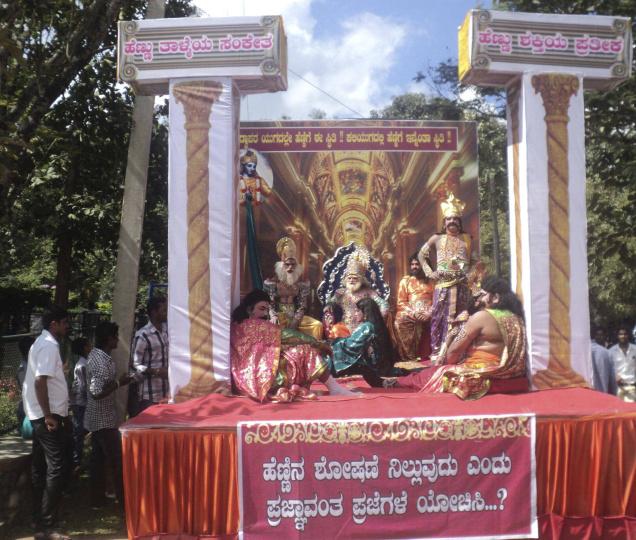
A tableau depicting ‘Draupadi Vastrapaharana’ from the Mahabharath being taken out during the Gonicoppa Dasara procession in Virajpet taluk of Kodagu on Monday / The Hindu

As many as 20 tableaux depicting various themes were taken out at Gonicoppa, marking the culmination of the cultural show of the Gonicoppa Dasara festivities in Virajpet taluk of Kodagu on Monday.

The tableaux procession was inaugurated by the president of the Gonicoppa APMC Achapanda Mahesh around 3 p.m. today. Of the 20 tableaux, as many as 12 depicted various social themes while the rest derived their themes from the Mahabharata, Keshav Kamath, a prominent citizen of Gonicoppa town told The Hindu. The procession went through the two-km route on the Gonicoppa main road ending at the Sri Uma Maheshwara Temple in the evening.

Social themes harped on issues such as the vicious shadows of terrorism, ill effects of drunkenness, pernicious effects of plastics and garbage, elephant menace that was rampant in Kodagu, dangers of sagging electric wires resulting in the electrocution of people and so on. Vehicular traffic was affected in the town till 5.30 p.m. following the tableaux procession. A large number of people watched the proceedings in the afternoon, Mr. Kamath said.

Madikeri spruced up

A cloudy atmosphere prevailed in Madikeri in the evening where Dasara festivities were slated to begin on Monday night. As many as 10 decorated mantaps (Dasha Mantaps) would emerge from as many temples late in the night in a car procession in the city towards Bannimantapa for the rituals in the morning on Tuesday.

The mantaps that would come out are from the temples of Sri Kote Maha Ganapathi, Chowtti Mariyamma, Kote Mariyamma, Dandina Mariyamma, Kanchi Kamakshi, Pete Sri Rama Mandira, Dechur Balaka Balarama Sri Rama Mandira, Chowdeshwari, Karawale Bhagavathi and Kodandarama. A large number of visitors were streaming into the city toward evening to witness the annual spectacle, Mahantesh, a resident of the city, told The Hindu.

The police have made elaborate security arrangements to prevent untoward incidents by setting up check-posts at vantage points. Parking arrangements have been made at several locations.

source: http://www.thehindu.com / The Hindu / Home> News> National> Karnataka / by Special Correspondent / Madikeri – October 15th, 2013

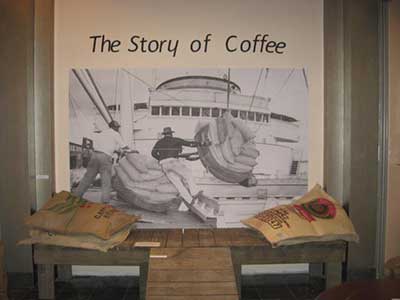
The Story of Coffee at Southern Food & Beverage Museum in New Orleans

The Story of Coffee at Southern Food & Beverage Museum in New Orleans. Do you love coffee and its culture? Then, don’t miss this place.

The Story of Coffee at Southern Food & Beverage Museum in New Orleans

New Orleans has a lot of interesting places and museums, result of a long and legendary history. But Yareah loves particularly Southern Food & Beverage Museum, a nonprofit organization dedicated to the discovery, and understanding of the food, drink and culture of the South of USA. They opened their doors on June 7, 2008 in New Orleans, Louisiana. Anyway and although the museum is in New Orleans, it celebrates all of the cultures that have come together through the centuries to create the South unique culinary heritage. Really different and of course, tasteful!

They have permanent exhibits and every year, they have different events and shows.

Among its permanent exhibits, we would highlight The Story of Coffee. The exhibition explores Coffee in Louisiana, from those days of steamships that braved the Mississippi river to bring exquisite coffee to the city of New Orleans from the tropics to our present. Because New Orleans remains the first coffee port in the USA and USA is the first coffee consuming nation in the world.

Definitely, if you love coffee, don’t miss this museum, Yareah friends. It’s worth!

Southern Food & Beverage Museum. Riverwalk, 500 Port of Orleans Place Suite 169, New Orleans, LA 70130

“Our culture runs on coffee and gasoline, the first often tasting like the second.” Edward Abbey.

See more in the Museum website http://southernfood.org/

source: http://www.yareah.com / Yareah Magazine / Home> Lifestyle> Food and Beverage / by Isabel del Rio

Storming into entertainment

Love and pride for their native district led them to create a successful music festival in Coorg

Lavin Uthappa & Sachin Bopanna, Storm Festival

Having flourished in the events industry for 19 years, Lavin Uthappa’s stint as director of Storm Festival has beenglorious. His passion and love for his homeland propelled him to forsake a flourishing career in the corporate sector and pursue event management. Along with his brother Sachin Bopanna, Lavin created Liquidspace Entertainment four-and-a-half years ago, with the aim of promoting organic fusion sounds. “We wanted to bring the best of mainstream entertainment to Coorg and make it one of the foremost camping and destination festivals of the country. What’s better than starting from home?” quips Lavin

He has worked extensively on brand promotions, visualising, strategising and executing international concerts- all of which helped him create the Storm Festival. “Years of experience in this industry have helped me achieve near perfection in all that I do.” Added to that, he is fondly referred as ‘Annaiah’ by the people he works with, because of his affable nature. Organising an outdoor festival in a small town can be a daunting task, “It takes a lot of time, passion, hard work and monetary implications to build a festival. Since non-metros are quiet for most of the year, it is a challenge to convince authorities and locals. Added to this, the tough terrain and lack of availability of raw materials makes it harder. We have to procure them from bigger cities, which is an expensive proposition too. Finally, procuring licences and requisite permissions to run these festivals as stipulated by the law of the land will ensure smooth running of these events.”

No mountain is high enough for these spirited brothers, “Branching out to create Storm was the best decision I ever made. It would not have been possible without the support of well-wishers, family and musicians. In the end, hard work always pays.”

source: http://www.bangaloremirror.com / Bangalore Mirror / Home> Columns> Work / by Sindhuja Balaji / September 13th, 2013

Poovamma overcomes tight schedule, Tintu to claim 400m

But for MR Poovamma reinforcing her credentials as the best quarter-miler in the country, there was little to brag about on the penultimate day of the 53rd Open National Athletics Championship. Otherwise, slack organising was the central theme of the rain-hit day.

The word ‘unreasonable’ best sums up the organisers’ logic in holding the heats and finals of the 400m on the same day. That too after the 400m was widely billed as the marquee fixture of the tournament, which fielded more international athletes than any other stream.

Amidst these distractions, Poovamma proved unflappable in a grid replete with stars. Tintu Luka, Anu Mariam Jose, Ashwini Akkunji and Anilda Thomas were all capable of upsetting Poovamma, who has established herself as the country’s titular figure in 400m.

Despite her recent form, Poovamma knew the race was by no means a cakewalk. And she set off to a near-perfect start and rocketed off to a handy lead.

But Tintu wasn’t to be shaken. Braving the fatigue of her gold-winning 800m spurt on Sunday and heats in the morning, she kept snapping at Poovamma’s heels and was within touching distance, so much so that the race seemed heading for a photo-finish. But Poovamma timed 53.96s, two hundredths of a second faster than Tintu.

Tintu’s mentor PT Usha felt Tintu was undone by rain and scheduling. “Tintu ran the 800m on Sunday in rain and that affected her performance in the 400m. The heats and final of the 400m was held too closely and there was no resting time,” she told TNIE.

Two meets records were created on the day. In women’s javelin, ONGC’s Anu Rani entered the record-book with an effort of 54.35m while Sudha Singh clocked 10:09.04s to better her mark in steeplechase.

RESULTS: Men: 110m hurdles: A Suresh (RLYS) 14.19s, K Prem Kumar (AP) 14.34, T Balamurugan (TN) 14.41. 3000m steeplechase: Jaiveer Singh (SER) 9:00.41, Sachin Patil (RLYS) 9:09.12, Karamvir (SER) 9:14.15. High jump: Jithin C Thomas (SER) 2.11m, A Shaiju (SER) 2.08m, Chethan (KAR) 2.05m. Discus throw: Arjun (HAR) 54.10m, Dharam Raj (SER) 50.99m, Karan Singh (RLYS) 50.19m. 20km walk: K Ganapathi (SER) 1:27:18.15s, Gurmeet Singh (RLYS) 1:28:19.30s, Baljinder Singh (PUN) 1:29:09.08s.

Women: 400m: MR Poovamma (ONGC) 53.96s, Tintu Luka (RLYS) 53.98, Chavi Sharawat (RLYS) 54.44. 100m hurdles: G Gayathry (TN) 13.70s, J Hemasree (LIC) 14.19, MM Anchu (RLYS) 14.31. 3000m steeplechase: Sudha Singh (RLYS) 10:09.04, Lalita Babar (RLYS) 10:33.40, Kiran Tiwari (HAR) 10:52.75. Pole vault: Khyati Vakharia (ONGC) 3.70m, VS Sureka (RLYS) 3.60m, Kiranbir Kaur (Police) 3.50m. Triple jump: MA Prajusha (RLYS) 12.91m, V Neena (RLYS) 12.76m, Mareena Joseph (Police) 12.50m. Javelin throw: Annu Rani (ONGC) 54.35m, Rupinder Kaur (Police) 48.16m, S Saraswathy (RLYS) 48.07m.

source: http://www.newindianexpress.com / The New Indian Express / Home> Sport / by Shan AS – Ranchi / September 10th, 2013

Namma ooru to ‘My’suru

From left: Model and actress Deeptii Mohan is dressed in traditional attire for the festive season and A photograph by Vikram Simha

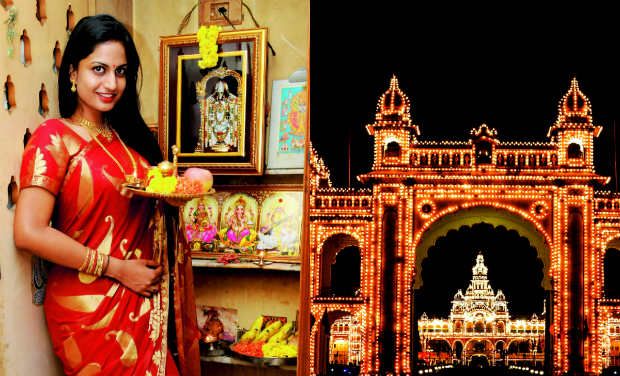
The Gods couldn’t have been kinder, for the coming weekend seems to be one filled with fun, festivities and an extra holiday. Bengalureans are heading out of the city and making a beeline to Mysore, the city known worldwide for its majestic Dasara celebrations. If Mysore is too congested and you aren’t really game for the day celebrations, then head to Madikeri, for the night festivals.

For generations, the Dasara festivities in Mysore have been the crown jewel in the city’s history of celebrations.

While in the yesteryears the king rode across the city on an ornamented elephant, now a beautiful idol of goddess Chamundeshwari sits on a gold throne (howdah) that is carried by a pachyderm throughout the city. Vikram Simha, who works as a quality regulator at an MNC says that this year, grandeur is an understatement for the festivities. “All the major circles in the city are lit and the patterns used for the illumination are very different from those done in the past. The city looks gorgeous bathed in the warm glow of the lights,” he describes. This year Vikram says that he is going to Mysore to explore the photography avenue. Vijay D, a businessman from Bengaluru who studied in Mysore cautions travelers, saying that unless hotels are booked in advance, chances are they will be no rooms available. “I am going with my wife this year. I am looking forward to the procession where different districts of the state carry out representations characteristic to their area, much like what is done during the Republic Day Parade,” states Vijay.

While the preliminary festivities offer a bounty of options for the shutterbug, the final day, that is on Monday is the grandest of the celebrations. That is when the golden howdah is prepared for the city procession. Pushpa Ramanna a homemaker traveling to Mysore with her family says, “It is my daughter’s 10th birthday and we want to ring it in as a part of the regal gala,” says the mother. Vikas Jindal another businessman says that in the three years that he has been in Bengaluru, he has only heard tales of the festival. “This year I am heading to Mysore with my friends and I can’t wait to see the Mysore Palace. I believe it is lit beautifully. We might head to Madikeri after Mysore given that it is barely a two hour drive,” he reveals.

On Monday night post 6 pm; processions will hit the main road in Madikeri from 10 different mandaps and temples. The gaiety which will be a mélange of lights and jubilation will continue till 6 in the morning. Anil HT, one of the organiser of the Madikeri Dasara says that on Monday no vehicles will be allowed into the city but there are arrangements made for parking facilities. Umesh, a lawyer from the city alternates between Mysore and Madikeri every year. “We chose Madikeri because it is less crowded, the weather is better and we have a friend’s house there. So there is no problem with lodging,” says the lawyer who celebrated Dasara in Mysore last year.

source: http://www.deccanchronicle.com / Deccan Chronicle / Home> Lifestyle> Offbeat / DC / by Zoya Philip / October 13th, 2013

Teerthodbhava occurs at Talacauvery at 12.02 p.m.

Madikeri:

The annual spectacle of ‘Teertodhbhava’, symoblising the emerging of holy water from the ‘Brahmakundike’, a tiny niche, at the foothills of mighty Brahmagiri Hills at Talacauvery in Kodagu, occurred at 12.02 p.m., amidst the chanting of Vedic hymns by priests and the delirium of devotees on Thursday. River Cauvery’s journey originates from Talacauvery.

Thousands thronged the spot vying with each other to catch a glimpse of the occurrence. A large number of devotees had reached Talacauvery much ahead of the scheduled occurrence. Anil, of the visitors, told The Hindu that the gathering was less when compared to last year. ‘Everything went off well’, Manu Muthappa, president of the Bhagandeshwara-Talacauvery Temple Management Committee, said.

Devotees are streaming into Bhagamandala to take a holy dip at the Triveni Sangama, offer prayers and proceed towards Talacauvery, located about eight km away.

Police had a tough time in preventing devotees from jumping into the main pond in front of the Brahmakundike at Talacauvery before the ‘Teerthodbhava.” A team of priests sprinkled the ‘teertha’ on the devotees as soon as it emerged from the Brahmakundike. The holy water is not be allowed to overflow from the niche since it is considered inauspicious.

Distribution of teertha to the general public would take place today evening and tomorrow morning. Television news channels beamed the event live through which many were above to see the occurrence.

Mysore-Kodagu Member of Parliament, A.H. Vishwanath, former Speaker and Virajpet MLA K.G. Bopaiah, Deputy Commissioner Anurag Tewari, and Superintendent of Police M.N. Anucheth, were present.

source: http://www.thehindu.com / The Hindu / Home> News> National> Karnataka / by K. Jeevan Chinnappa / Madikeri – October 17th, 2013

Coffee consumption to touch 125,000 tonnes

Domestic consumption growing at rate of 5-6% annually since 2010
CoffeeKF17oct2013
The Coffee Board of India has estimated consumption in India to be around 125,000 tonnes for 2013. Domestic consumption is growing at a rate of 5-6 per cent annually since 2010.

This is almost double the figure when compared with that of United States Department of Agriculture, which recently pegged the Indian consumption at 66,000 tonnes, while the International Coffee Organisation (ICO) has estimated it at over 100,000 tonnes. “We have commissioned a study to assess the exact consumption of coffee in India and the results of the study will be available by the end of December this year,” Coffee Board of India Chairman Jawaid Akhtar said. He said the domestic consumption was 58,000 tonnes in 1987 when the country’s population was 820 million. In 2011, the consumption crossed the 1,00,000 tonnes mark, while the population touched 1.21 billion. “About 7-8 years ago, the domestic consumption was growing very slowly and now, it is growing faster. South India is the largest consumer of coffee at almost 75 per cent of the total consumption. The Coffee Board is making efforts to push the consumption in western, northern and eastern parts of the country,” Akhtar said.

“The Board is organising events like India International Coffee Festival (IICF) to project Indian coffee as ‘good coffee’ and specialty coffee. In this direction, we organised our IICF at New Delhi in 2012,” he said.

Recently, the ICO stated that the consumption of coffee is growing rapidly in exporting countries like Brazil, Indonesia and India. It has pegged the Indian consumption at 114,000 tonnes, showing a growth of 4.8 per cent annually.

“Assuming that the consumption has grown only at 5-6 per cent year on year since 2010, the consumption in 2013 could be in the range of 125,000 tonnes,” Akhtar told Business Standard.

The Coffee Board has pegged the production of coffee for the year 2013-14 at 347,000 tonnes in its post blossom estimates. However, the chairman stated that it could come down by at least 10 per cent due to heavy rains between June and August this year, which resulted into ‘wet foot’ and ‘black rot’ diseases.

In an effort to increase awareness about drinking coffee and its health benefits, the Coffee Board in association with India Coffee Trust is organizing the fifth edition of IICF 2014 at Bangalore from January 21 to 25, 2014.

“The event provides avenues for enterprise development through value addition while simultaneously contributing to the creation of skill based jobs, particularly in non-conventional coffee drinking areas at the consumer end. To facilitate entrepreneurial development, the Coffee Board has been providing training sessions on coffee roasting, brewing among others,” Akhtar said.

IICF 2014 is expected to see participation of 1,000 delegates for the conference and workshops and over 10,000 visitors at the exhibition. National and international experts in the coffee industry including policy makers, exporters, manufacturers and planters are likely to attend this flagship event of the Coffee Board.

source: http://www.business-standard.com / Business Standard / Home> Markets> Commodities> Food & Edible Oils / by Mahesh R Kulkarni / Bangalore – October 14th, 2013

Tributes to M.M. Kaveriappa

A tribute to M. M Kaveriappa, Founder of Deenabandhu Charity

M.M. Kaveriappa (inset) participating in an MGP protest held in 1995 against the construction of a building in Cheluvamba Park.

Sir,

It is with great sadness I read about the passing of M.M. Kaveriappa in Star of Mysore recently. Besides his involvement with Deenabandhu Trust, he was also involved with the activities of MGP and Mysore Lok Swaraj Andolana (MLSA).

At MGP, his relentless fight to get justice in a stock market related problem with shocking number of adjournments will always be remembered to show how Consumer Courts have not been able to implement the true spirit of Consumer Protection Act. Under CPA, there must be very few adjournments. But his case showed how it was ignored.

As a member of MLSA, he took active interest to promote the involvement of professionals in electoral process, an activity most consider below their dignity.

With his passing away, Mysore has lost one more social worker this year after Dr. H.A.B. Parpia.

— Bhamy V. Shenoy, Mysore, 03.10.2013
————————————————————————————

Farewell Friend & Mentor !

Sir,

M.M. Kaveriappa passed away on Gandhi Jayanthi day. He was my friend and mentor. Hence this piece to honour him.

Kaveriappa was one of the founders of the Deenabandhu Charitable Trust and its President at the time of his sad demise.

I had worked closely with him over a period of time as Treasurer and so know the dedication and energy he brought into all he did to make the Trust what it is today. If the Trust is funding the education of needy Kodava students, if it is aiding poor patients and helping some old and inform Kodavas, it is in large measure due to the unflagging efforts of Kaveriappa.

He hid a kind heart under a brusque manner and often the recepients of the Trust’s donations would get a stern lecture from him as to the values of hard work and the need to succeed. In recognition of his contribution to our society, he was honoured by Kodava Samaja Mysore and Field Marshal K.M. Cariappa and Gen. Thimmaiah Forum. Deenabandhu Charitable Trust will miss him sorely.

Kaveriappa was a wonderful raconteur and had a fund of stories with which he often regaled us. His recounting of these stories and word pictures of people was perceptive in the extreme and very understanding of human frailities.

Besides this he had a vast knowledge of the history of Kodagu and of the Kodavas and could talk endlessly on the topic.

Another of his interests was playing the stock market. He would gleefully exclaim over even the smallest of gains and declare that with it he could survive another day! Friends were often given a tip or two to their advantage.

In his demise, the community has lost a philanthropist, the Trust has lost a tireless worker and I have lost a friend.

— Gappu Madappa , Mysore, 5.10.2013

source: http://www.starofmysore.com / Star of Mysore / Home> Voice of Reader / October 12th, 2013

State prepares for biggest elephant capture operation since 1971 ‘khedda’

OUT OF PLACE?: In Alur taluk, a herd of 25–30 elephants inhabit a tiny 5-sq. km forest patch circumscribed by agricultural fields that they routinely raid, according to M.D. Madhusudan, a member of the Karnataka Elephant Task Force./  File photo / The Hindu
OUT OF PLACE?: In Alur taluk, a herd of 25–30 elephants inhabit a tiny 5-sq. km forest patch circumscribed by agricultural fields that they routinely raid, according to M.D. Madhusudan, a member of the Karnataka Elephant Task Force./ File photo / The Hindu

At least 25 wild elephants are set to be caught in Alur taluk of Hassan district

With a green signal from the Karnataka High Court on Tuesday, the Department of Forests now sets about planning its biggest ever operation to capture wild elephants since the State’s last ‘khedda’ in 1971, when 47 animals were captured.

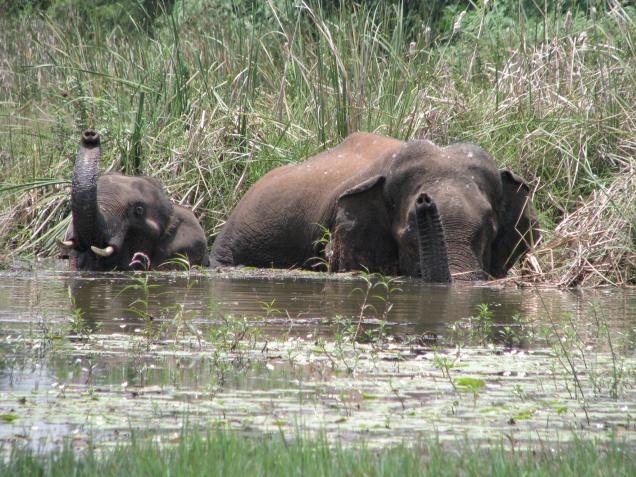
At the very least, this would mean the capture and taming of around 25 elephants in Hassan’s Alur taluk, the epicentre of human-elephant conflict in the State. The Karnataka Elephant Task Force in its report to the High Court in September 2012, identified two regions — Alur and Tumkur district’s Savandurga — as “elephant removal zones” for the “unacceptable levels” of conflict they encountered.

The department, however, places “the outer limit” for the number of elephants to be captured at 150 and hope to extend the ‘removal zone’ to parts of Kodagu where human-elephant conflict is intense. “The actual number we capture will be much less, but we’ll have to take a call on areas such as Kodagu based on an assessment of conflict levels and perceptions of people here,” said Principal Chief Conservator of Forests (Wildlife) G.S. Prabhu.

‘Extreme measure’

Members of the task force don’t quite agree. Removing wild elephants from a natural landscape is “an extreme measure” and one that should be done with the “greatest judiciousness”, said M.D. Madhusudan, scientist with the Nature Conservation Foundation and task force member. Only two areas have been identified by the task force as potential “removal zones” and Kodagu is not one of them, he said.

Alur was an anomaly of sorts and justifies the approach, he explained. The conflict in Alur was intense, and the elephant population was ecologically unviable. “Here, a herd of 25–30 elephants inhabit a tiny 5-sq. km forest patch circumscribed by agricultural fields that they routinely raid.” Between 1986 and 2011, elephants killed 46 people and injured over 240, according to the task force report, creating a “fear psychosis among people that hampers their ability to work and live normal lives.”

The situation in Kodagu was not adequately studied yet, said Raman Sukumar, chairman of the Centre for Ecological Sciences, Indian Institute of Science. “We first need to assess the conflict situation in Kodagu, understand the dynamic of elephants here (are they transitory, for instance) before we decide on a course of action.”

Meanwhile, the Department of Forests has set aside Rs. 4 crore to create kraals to restrain elephants captured, which typically take a year to tame, and new elephant camps. “The project can only begin in January, after the rain,” Mr. Prabhu said, and added that the department would be using a combination of methods that incorporate elements from traditional ‘khedda’ (stockade traps) and also modern-day chemical tranquilising.

BACK TO THE WILD

Even as it prepares for a large-scale capture of elephants, the department, ironically, admits that its 10 camps, which together have 91 elephants, are too crowded.

“We are looking at the possibility of returning around 30 of these back to the wild,” Mr. Prabhu said.

source: http://www.thehindu.com / The Hindu / Home> News> National> Karnataka / by Divya Gandhi / Bangalore – October 13th, 2013