Birds, frogs and civet coffee in Madikeri

What comes to mind when you think of Kodagu or Madikeri? Coffee, homestays, waterfalls, elephant camps, Tibetan settlements, meaty-pork stews? How many of us know that Kodagu, unlike the other districts of Karnataka, is home to a range of wildlife species? And in particular, birds and reptiles?
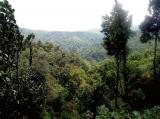
KodaguKF06sept2013
I found the answers in a plantation located in Galibeedu village, Madikeri. I visited a 25-acre plantation, in which coffee, pepper, cardamom and vanilla are cultivated for a two-day stay. It is run by a North Indian couple who quit their jobs 20 years ago to develop this piece of land into an eco initiative that can be enjoyed by all.

The plantation is dense with coffee and other spices grown under the inter-cropping method. Guests are accommodated in tents and a handful of cottages. Locally grown organic food is served to them. The entire plantation is run on solar power, bringing it as close to the nature as possible.

The plantation also serves Civet Coffee, which is made out of beans that are defecated by the civet, a wild cat, that feasts on ripe coffee berries. The beans are washed, sundried and roasted to yield maximum aroma. Due to the enzymatic activity and the touch of amino acids in the Civet’s gut, these beans acquire unique flavours—making it less bitter, more aromatic and hence one of the most expensive and exclusive kinds of coffee in the world.

The night called for a few pleasant surprises—the deafening sounds of the crickets followed by a soothing array of fireflies. Though their charm might be ephemeral, they have a magical effect on you. I tried so hard not to blink, fearing the loss of a few glints. The minimally-lit tents with below 10-watt bulbs paved a perfect setting for this magical moment.

The plantation is an ornithologist’s delight. I spotted the Malabar Whistling Thrush, Woodpeckers, Racket Tailed Drongos, Fly Catchers and Kingfishers among several tiny birds. The plantation is also home to stick insects, hibernating butterflies, tree frogs and leaf frogs. Some belonged to the Lateralus family and are endemic to the Western Ghats region. The frogs were a sight to behold; they changed colours, had shiny-green skin, big, bulgy eyes and had perched themselves on twigs as if waiting for us to visit them.

My two-day stay passed away in a blur and I decided to walk down to the much talked-about stream surrounded by birds about five kilometres away before departing. As I trekked down, the clouds got thicker and darker. I spotted a flock of birds, all different in colour and kind, perched on a tree. It suddenly began to drizzle and the birds in search of shelter, flew from one tree to the other at once. The swarming birds flew low, making it one of my most colourful memories—tints of hidden orange and blue, reds and greys exposed—a flying rainbow indeed.

Ignoring the rain and time, I soaked and hiked at my own pace. When I got back, I was the only one for breakfast and I had missed out on my last dig at the sumptuous avocados too! Oh well!! What more can one ask for when you had the experience of a flying rainbow?

source: http://www.deccanherald.com / Deccan Herald / Home> Supplements> Spectrum / by Aishwarya Madineni, DHNS / September 03rd, 2013


Team Coorg clinch Cup

CHAMPIONS: Team Coorg celebrates winning the Independence Day Cup after beating UTSC Dubai. Photo – Supplied

Muscat:

Team Coorg edged out United Thalassery Sports Club (UTSC), Dubai 2-1 to claim the honours of the commemorative hockey match to celebrate the 67th Indian Independence Day at the OFA ground in Qurum.

Chief guest J.S. Mukul, the Indian ambassador, conveyed his appreciation to the organisers for promoting the Indian national game and also praised S.A.S Naqvi for his dedicated efforts to ensure the development of the sport in Oman.

Played under the backdrop of the ongoing Asia Cup in Ipoh, Team Coorg opened the scoring in the first half by Shakeel with UTSC levelling the score in the next minute with a field goal.

The second half was all about ball possession, with each team trying to gain the upper hand. With a better passing game, Team Coorg gained the advantage with combined effort from Kavan, who slotted the ball home.

In spite of UTSCs constant foray into Team Coorg’s half, the defenders stood their ground to deny UTSC an equaliser and went on to win the game 2-1.

During the half time an entertaining match between Ambassador XI, skippered by APS Chauhan and Veterans XI, captained by Mohammed Shambeh Al Raisi, was played which had players of all age group participating.

The spectators wished the exciting match went on for few more minutes. The exhibition match was won by Veterans XI 2-1.

Kuttappa of Team Coorg in appreciation of the excellent support received from the Indian Embassy presented a memento to the Ambassador.

A lifetime achievement award was also presented to Dawood Ahmed Ali Al Raisi, former president of Oman Hockey Association.

During the ceremony, Mohammed Shambeh presented a special award for the outstanding contribution to Raqib Qureshi, who has played for Pakistan during 1964-1966 and for Bangladesh between 1978-1982. He keeps in touch with hockey every weekend at the OHA grounds and is a source of inspiration to young and old.

The presence of Nalini Bopaiah and Ponnamma Thammaiah added grace to the occasion and they gave away mementoes to the corporate sponsors Naranjee Hirjee Co, Khimji Ramdas’ Permoglaze, Al Rawahi International, Al Omaniya, Services and Trade Company.

Former Oman goalkeeper Jabbar was specially mentioned as he and Raqib Qureshi donned the role of umpires.

SAS Naqvi too presented mementos to the Ambassador and Dawood Al Raisi, while the organisers did not forget the live wire commentary rendered by Salih Thacher.

source: http://www.timesofoman.com / Times of Oman / Home / by Times News Service / September 02nd, 2013

Magic made easy

How to Levitate and Other Great Secrets of Magic

You cannot arrive at the truth unless you eliminate the false, says James Talbot who has written a book revealing magic tricks
Magic evokes a sense of wonder in us all. We would all like to try our hand at magic tricks — nothing like a book to tell us. How to Levitate and Other Great Secrets of Magic is proceeds to do just that. The slim book makes for easy reading. It is a journey of discovery that will bring the enthusiast to truth.

“It is similar to any scientific exploration,” says author James Talbot. The tricks have all been tried out by Talbot.

One can try out the tricks as all the contraptions needed are clearly indicated in the book marketed by Coorg-based Magenta Press. The 57-page book is priced at Rs. 149. The deep thought behind the exercise Talbot says is “You cannot come to the truth unless you eliminate the false. The book was written 15 years ago and the reason I chose a Western pen name was that magic uncovered by a Westerner always gels well with most of us.”

source: http://www.thehindu.com / The Hindu / Home> Books> Authors / by Ranee Kumar / September 01st, 2013

Coffee museum grounds for a visit

When thinking of museums in Cambodia, it’s usually ancient carvings and Khmer sculptures that come to mind. But there’s a new museum in town, and it doesn’t have even the slightest connection to Angkor Wat.

Instead, the Golden Mountain Coffee Museum is dedicated exclusively to celebrating everyone’s favourite pick-me-up: a good old cup of joe.

Perhaps an unexpected addition to Siem Reap’s caffeine scene, the one-month-old museum is owned by Kim Jong Yoon, a Korean coffee lover keen to share his passion with others.
“Most people drink coffee” he states, “But they don’t understand where it comes from, and the process of making it. I want to introduce people to the story behind coffee.”
And that’s exactly what the museum does.

Alongside artistic black and white photographs of all things coffee, the walls of the bright airy museum are covered in colourful displays detailing every step of the journey from bean to brew.

Visitors start by learning about how coffee is grown, selected, and harvested, before moving on to different types of coffee making machines.
Ever wondered how a French press or a vacuum pot actually works? Or perhaps how to brew traditional Turkish coffee? The answers are here.

Other displays give tips on grading, rating and roasting beans, infographics of coffee ingredients, and information on the allegedly many health benefits of drinking coffee.
And yes, ‘hangover cure’ makes the list.

Also on display is Yoon’s personal collection of coffee grinders. “They’re from all over the world” he says proudly. “I’ve always loved coffee, and have been collecting these grinders for years.” After all that learning this visitor was in need of a cup of coffee herself, and as luck would have it Yoon has opened a coffee shop beneath the museum.
“The idea is that visitors will take some time to learn about their favourite drink, and then come downstairs to taste it with a better knowledge of what they’re enjoying” says Yoon. “So far, it is working well.”

Aside from being an obvious addition to a coffee museum, Yoon wanted to re-create the stylish coffee shops he’d loved while living in Bangkok.
“I didn’t find anything like that here in Siem Reap” he says, “so I decided to build it myself.”Excitingly for the coffee addicts – and soon-to-be-experts –Yoon’s café stocks a vast variety of coffee beans from all corners of the globe.

“We offer coffee from eight different countries, including many in Southeast Asia. We import some coffee, but we also have five of our own blends from Vietnam, Thailand, Laos, Myanmar, and of course Cambodia. We roast and package them here so they’re fresh.”
That is right; Golden Mountain has its own purpose built “roasting room”, so that the coffee served up tastes as fresh as possible. Nosy guests will also be pleased to hear that a glass wall allows people to watch the entire process.

When asked about his best coffee, Yoon does not hesitate to recommend the “elephant dung” coffee that he imports from Chiang Rai in northern Thailand.
For the uninitiated, this coffee is made from coffee beans that elephants eat, digest, and then return to nature. They are then retrieved, cleaned, and readied for roasting.
“The elephant coffee doesn’t smell so good” he admits, “But the taste is naturally very sweet.” That may well be true, but at $10 a cup this is a caffeinated treat for the brave of palate and large of wallet.

But there are many other coffees available, including a strong black Dutch coffee served with ice and a little sugar syrup – a perfect choice for a typically humid day.
Yoon also has some interesting plans for his coffee shop.
“At the moment it is low season, but next year when there are more people in Siem Reap I would like to start offering tasting classes. Then my customers can learn even more about coffee.”

The Golden Mountain Coffee Museum is at the front corner of the Charming Tourist City complex, and opens daily from 8am-10pm.

Sourced: The Phnom Penh Post
source: http://www.tourismcambodia.com / Tourism of Cambodia / Home> News> Local Travel News / Saturday – June 27th, 2013

Forest officials drive back elephants into Kodagu forests

The two-day operation to drive wild elephants back into forests by the forest department in South Kodagu in progress | Express photos

The two-day initiative of the Forest Department to drive wild elephants back into the forests came to an end on Saturday.

On Friday, the operation commenced in the presence of chief conservator of forests, Kodagu circle, Brijesh Kumar Dixith, Deputy Conservator of Forests (DCF), Virajpet division, Malathi Priya, Deputy Conservator of Forests, Nagarahole wildlife division, Gokul, assistant conservator of forests and range forest officials and staff from all the forest department divisions of Kodagu district.

14 Jumbos Driven Back to Forests

The teams were able to chase away 14 elephants from Devarapura and Nokya Gram Panchayat limits, ACF Belliappa told Express.

On Saturday, the teams were unable to spot even one elephant.

He said the teams will continue to ensure the elephants do not return.

“The operation will be continued next week in Pollibetta areas. Movement of vehicles and people will be restricted through publicity arrangements,” he said.

Belliappa added that most elephants entered South Kodagu either from Mauvkal or Nagarahole forests.

Need for Public Help

The operation involved tamed elephants, special task force staff, wildlife staff from Nagarahole, Virajpet division forest officers and staff along with watchers. General public and police also extended required assistance to the department.

Chief conservator of forests, Kodagu circle, Dixith told reporters here on Saturday that as per the elephant census taken last year, as many as 6,000 elephants were located in the state. In Kodagu region, covering Gonikoppa, Thithimathi and Maldaare areas, as many as 100 wild elephants are troubling people, he said.

“Another 32 elephants are permanent residents of BBTC coffee estates in Siddapura. These should be captured and shifted,” he said. However, before their capture, a few technical and legal aspects need to be addressed, he said.

In Bramhagiri wildlife sanctuary, 30 elephants on the Kodagu-Kerala border have been identified that need to be captured and sent back into forest cover, he said. All these issues have been brought to the notice of Forest Minister Ramanath Rai, Dixith added.

source: http://www.newindianexpress.com / The New Indian Express / Home> States> Karnataka / by Express News Service – Madikeri / July 29th, 2013

On eve of Arjuna award ceremony, Joshna Chinappa wants boost for squash

Joshna Chinappa will receive the Arjuna award today, a recognition that has come after a long wait for the Chennai squash player.

The 25-year-old became the first Indian girl to win the prestigious British Junior under-19 title in 2003 and followed it up with a gold at the South Asian Federation Games gold in 2004.

Joshna Chinappa
Joshna Chinappa

Chinappa, currently ranked 27 in the world, spoke to MiD DAY on what the Arjuna award means to her and other aspects of the sport.

Excerpts:

What does the Arjuna award mean to you?
It means a lot to me. This is one of my biggest achievements. I have been recognised by the government and the feeling is special.

With you and Deepika Pallikal being the only two faces in Indian squash, what will it take for more of your kind to emerge?
Hopefully, there will be more kids taking up squash after us and pursuing it as a career. But for that, there has to be better structure to develop squash and reach out to all sections of people in different parts of the country. There is a need for good coaches, facilities, conducting tournaments all over the country and helping kids financially to play international as well as national tournaments.

How has the progress of you and Deepika changed the popularity of the sport in the past few years?
I think more people are aware of squash because of what Saurav Ghosal, Deepika Pallikal, Siddharth Suchde, Harinder Sandhu and myself have been doing on the international circuit. There have been some international events that have helped in bringing more recognition to the sport. Squash has grown a lot in Chennai, but needs to develop more in other parts of the country.

What needs to be done to give the sport a boost? It is restricted to cities and has not entered rural areas…
Squash is still a club-level sport in many cities and not everyone can afford a membership to play. We need to develop courts that are easily accessible at the grassroots level. Courts have to be built with the help of the central and state governments along with the federation. Also, a program to develop squash in particular areas. Hopefully, with a good plan, corporates will come on board to support squash and then we can see more kids
taking up the sport.

Since squash has been short-listed now for the Olympics, how difficult will it be for the federation to convince the International Olympic Committee for the final spot?
Squash being short-listed is amazing and hopefully, we can make it to the Olympics as it deserves to. But we are competing with wrestling which has a better chance of getting back in. I’m just hoping for the best.

source: http://www.mid-day.com / Mid Day / Home> Sports / by Sundari Iyer / Mumbai – August 31st, 2013

Plans on for grand Madikeri Dasara

K M Ganesh elected unopposed as Dasara Janotsava Samithi working president.

K M Ganesh has been elected unopposed as Dasara Janotsava Samithi working president for the year 2013 and 2014.

The decision was taken at a meeting chaired by Deputy Commissioner Anurag Tiwari on Wednesday.

Speaking on the occasion, Ganesh called upon the citizens to celebrate Madikeri Dasara grandeously. “Let us impress upon the district-in-charge minister to sanction additional funds to celebrate Dasara. All the differences should be kept aside and Dasara should be celebrated with traditional fervour. The funds given to Dashamantapa is meagre. There is a need to increase it.”

Dasara Committee immediate past working committee president Rabin Devaiah and former CMC president H M Nandakumar also spoke.

Office-bearers

Other elected office-bearers are Prakash Acharya, Mahesh Jaini, T H Udaykumar, Madurai, Rajesh and Abdul Razak (vice presidents); P G Manjunath (only for 2013 celebration)( general secretary), Chummi Devaiah (treasurer), Shashikumar (honorary secretary), R B Shivakumar, Venkatesh (secretary), A K Lokesh, Pushpa Poonaccha, Savitha Rai, Ashok (joint secretary), Nanda Kumar, Robin Devaiah, V P Suresh, Sathish Pai, M B Devaia, P D Ponnappa, Chidwilas, S C Subramani, B S Mohan, Muneer Ahammed, T M Ayyappa (honorary president).

Sub committee — Culture (H T Anil), Sports (Manu Manjunath), Stage (K Pemmaiah), welcome (Kanehithlu Monappa), decoration (P M Harish), poets meet (Payapanda Shashi Somaiah). Vinod has been elected as the president of Dashamantapa President.

Audit report

Without CMC elected representatives Deputy Commissioner will function as the president
of the committee.

Speaking on the occasion, DC Anurag Tiwari said that the audit report on the celebrations should be placed before the public within three months of Dasara celebrations. It should be published in the website. The committee should work in transparency.
Confusion in term

As per Madikeri Dasara Utsav Samithi bylaw, the post of general secretary and treasurer of the committee is reserved for the CMC members. As there are no elected representatives in the CMC, there was confusion over the elected members whether they can serve for two years. As a result, the elected two posts will be only for this year’s celebration.

source: http://www.deccanherald.com / Deccan Herald / Home> District / by DHNS / Madikeri – August 28th, 2013

Coffee plantations in Brazil, Colombia daze Indian planters

Brazil’s annual coffee production has surged from 30-35 million bags (of 60 kg) a decade ago to 50-55 million bags at present. / The Hindu

Coonoor :

After visiting the plantations in Brazil and Colombia, coffee planters in India admit that the industry here would have to change the way of planting and look for better varieties and clones to compete and sustain in the market.

Karnataka Planters’ Association had organised a tour of Brazil and Colombia in July. A 35-member team from India (comprising coffee farmers and industry people) visited Brazil and 17 of them went to Colombia as well.

‘We can adopt simple things such as hedge-row planting. Our terrain may not be suitable for harvester, but drip irrigation should be possible here,’ said the Chairman of Karnataka Planters’ Association Nishant R Gurjer.

Sharing his experience, he said ‘coffee plantations in Brazil are highly mechanized. This has resulted in their over dependence on scarce and expensive labour. They have also put in place drip/ fertigation systems and water management technology, contributing to high productivity.’

Brazil’s annual coffee production has surged from 30-35 million bags (of 60 kg) a decade ago to 50-55 million bags at present. There has not been a corresponding increase in area, but they have improved in cultural practice and come up with better coffee varieties.

There is no such thing as ‘off-year’ and on-year’ any more. This year, despite being an ‘off-year’ Brazil’s coffee production has been estimated at 55 million bags.

Brazil planters have moved away from frost areas to newer areas. They grow sugar cane, soya, corn etc in these areas.

The varieties and clones that they have come up with are amazing.

Colombia is the hub of coffee, but there is no Robusta here. Here, there is massive replanting taking place, he said.

Are Indian coffee planters threatened? ‘Yes,’ he says, before admitting to the need for changing planting practices, opting for newer varieties and improving productivity per acre.

source: http://www.thehindubusinessline.com / Business Line / Home> Industry> Agri-Biz / by L N Revathy / Coonoor – September 02nd, 2013

PG Center at Kodagu this year: Mangalore Varsity VC

MLC M C Nanaiah said, higher education is yet to reach about 88.8 per cent students in Karnataka.

After inaugurating the Students Council of Field Marshal K M Cariappa College here recently, he said, only 11.2 per cent of students in the age group of 16 to 24 pursue higher education in the state.

Condolence

Condemning the accident which claimed the life of a student of the college, Nanaiah said, road accidents were on the rise in the district. The police should initiate action against speed and rash driving, he said.

Mangalore University Vice-Chancellor T C Shivashankaramurthy said, the PG Centre at Chikkaluvara in Kushalanagar will be opened in November. Principal K A Erappa was present.

source: http://www.deccanherald.com / Deccan Herald / Home> District / DHNS / Madikeri – August 28th, 2013

My time is now!

2010 doubles finalist Rohan Bopanna earmarks this year’s US Open for his moment of glory.

Rohan Bopanna is taking the tourist’s route through New York City – visiting Rockefeller Center, trying a different kind of cuisine each night and planning Broadway escapades with wife Supriya. But when it comes to the top rung of ATP doubles play, the 33-year-old Indian feels absolutely at home. This fortnight, Bopanna, currently the highest-ranked Indian on the doubles roster at No. 7, is aiming to go one-up on his finals appearance at the 2010 US Open.

Mahesh Bhupathi and Leander Paes may still carry a big share of Indian hopes at Grand Slams, but Bopanna’s consistent performances over the last few months on the circuit have proven that he’s found his own niche.

Bopanna, who reached a careerhigh doubles ranking of 3rd on July 22, is partnering Frenchman Edouard Roger-Vasselin at Flushing Meadows and is seeded sixth. The two made the semi-finals at Wimbledon, exiting in five sets to the world No 1 team of Mike and Bob Bryan. Set to open his New York challenge on Wednesday against home hopes Bradley Klahn and Sam Querrey, Bopanna speaks with Mirror about his recent form and expectations from this year and the next.

You’ve seen some top results over the last few months. Have you made any specific changes to your play?

I’ve been working hard on improving the finer aspects of my game, especially volleying, which is a major part of playing doubles. Before starting practice along with my playing partner, I tend to spend an extra half an hour just working on my volleys. I’ve always had a game where I serve big and return big, but I feel that this [volleying] is key to taking me to another level. All top doubles players – the Bryans, [Daniel] Nestor, Paes, Mahesh, even the Woodies [Todd Woodbridge and Mark Woodforde], have great volleying capabilities.

Have you also made changes to your fitness program?

Oh, yes. I’ve been working a lot on cardio and agility work in order to last longer and move a little quicker. That’s what, I think, has changed for me in these past few months.

You’ve spoken of reaching the world No. 1 ranking in doubles. How realistic is that target, considering you have a lot of points to defend next year?

If you want to become the world No 1, you basically just have to win Grand Slams. So that’s my goal first and foremost. As players, we don’t think about defending points – we just go out there and play. The Grand Slams, however, are a priority. And if you win Grand Slams, that goal [of getting to world No. 1] is very achievable.

How close do you think you are to a Grand Slam? Do you believe it could be two weeks away?

It could be, definitely. I’ve made the final here before; I love playing on this surface. It could be right here in this tournament.

You have changed several doubles partners in the last few months. What is the reason for that and how does this impact your game?

In the beginning of the year I started playing with [American player] Rajeev Ram, but during the clay-court season we were not even getting into the tournaments. Then I started playing with Mahesh, but even though we were doing well in the ATP format, we didn’t perform as well in the Grand Slams. We mutually decided to work with different partners. I then started playing with Edouard and it has worked out – we’ll be playing here and until the end of the year, and hopefully we’ll qualify for the Masters.

How much does it hurt to keep switching partners?

It is definitely ideal to have just one partner long term because of practice schedules, playing tournaments, and just getting used to the courts and each other. But sometimes situations arise where you have to change partners. [For instance] when I was in Montreal, Edouard wasn’t playing there, so the options for me were to either miss the event or find somebody else. [Bopanna played with German Andre Begemann and lost in the opener.]

How much does the permanence of their partnership help Bob and Mike Bryan?

They 100 percent have an advantage there. They’ve been playing all their lives together and their success has shown that – especially in close matches where they either win in five sets or 7-6 in the third set.

Practicing together regularly will get you through the most crucial times in a game.

source: http://www.mumbaimirror.com / Mumbai Mirror / Home> Sports> Tennis / by Aabha Rathee / August 29th, 2013