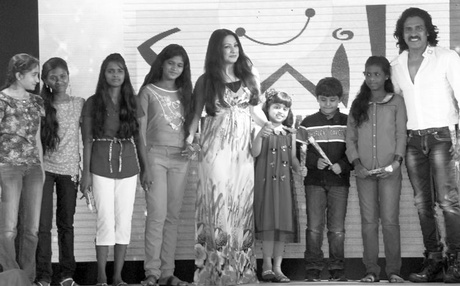
Actors Upendra and Priyanka take a bow with kids from Smile Foundation Smile Foundation, a national level development organisation, along with fashion guru Prasad Bidapa put up the 4th edition of Ramp For Champs recently .
The event started with a special performance by the students of William Joseph International Academy for Performing Arts on one of its kind classical guitar orchestra .
Throwing light on the show, Bidapa said, “This show was conceptualised with an aim to reach out to more and more privileged people for a cause. I am glad that so many eminent personalities are associated with us. I would like to thank all the people who took time out from their tight schedules and came to support us.”
Speaking on the occasion, the chief guest for the evening, Rajeev Chandrasekhar, Member of Parliament, said “Education is the most powerful weapon you can use to change the world is what Nelson Mandela said. So, education is the weapon that girl children and women need to change the still widely held, restrictive view on opportunities for them. I am happy to be a part of Ramp for Champ initiative.”
He further added, “Education is every child’s right and through the funds raised today, we intend to send 1000 children to school. However, we still believe there are thousands more who need similar support and encouragement. ”
Celebrities like, Sudha Murty-author, Vani Ganapathi- classical dancer, choreographer and designer, Priyanka Upendera- actress, Tara – actress, Nisha Millet – national level swimmer, Ashley Williams – chairman of William Joseph Music Foundation and director and conductor of Indian National Symphony Orchestra , Ramesh Arvind – actor, Aviva Bidapa – super model, Rubi Chakravarti – entertainment professional, Nadira Iqbal – fashion designer and entrepreneur also supported the cause.
source: http://www.newindianexpress.com / The New Indian Express / Home> Cities> Bangalore / Express Features – Bangalore / June 10th, 2013
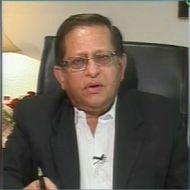
Hameed Huq of Tata Coffee told CNBC-TV18 that he expected an increase in their production of Arabica crop by 30 percent. However, he anticipated a flat growth in its Robusta crop.
Hameed Huq , Managing Director, Tata Coffee
Tata Coffee expects its Arabica crop production to increase 30 percent this year, while it aims to maintain Robusta production at last year’s levels in FY14.
Robusta variety of coffee accounts for 70 percent of the company’s total production, while Arabica accounts for 30 percent, Hameed Huq, managing director, told CNBC-TV18.
In company’s standalone accounts, 20 percent revenues are from plantations while 55-60 percent is from instant coffee production.
Since a majority of its revenues are from instant coffee production, Huq said that the fall in raw coffee prices would only benefit the company.
Also read: How industries fared in April 2013: CARE Research
Below is the edited transcript of his interview to CNBC-TV18.
Q: Reports indicate that coffee output in India could suffer due to inconsistent rains at the start of the year. Could you throw some light on the coffee output for the entire seasons? What will the prices be?
A: On coffee output, we harvest Arabica first and then go on to Robusta. We are looking at almost 30 percent increase in Arabica production over the previous year.
Last year, there was an acute drought across most of Karnataka which impacted the crop. We are not seeing that. On Robusta growth, we are looking at maintaining last year’s levels. We had a very large crop last year which again is reflective of the general industry.
The crop will not be lower next year. In fact, it definitely should be higher than harvest in the season that ended.
Q: You are dependent on 70 percent of your raw material needs on Robusta. Have the prospects for that improved with the rates?
A: I will cover that in two things. In Tata Coffee , 70 percent of our plantation is Robusta and 30 percent is Arabica. We had a very good Arabica crop last year. The Robusta prices have not slid as much as Arabica.
If you look at Tata Coffee’s standalone accounts, plantation coffee constitutes less that 20 percent of our turnover. Over 56-60 percent of our turnover actually comes from instant coffee.
To that extent, whether coffee prices are moving slightly, easing up, doesn’t really impact Tata Coffee anymore because it is not totally a coffee plantation company.
However, overall also the coffee plantation is doing well, but there has been easing of prices. Q: What is the percentage of your expenses accounted by raw materials?
A: If you look at our consolidated accounts, 83-85 percent of our turnover is based on green coffee being purchased out.
If there is any easing in prices, it adds to the business and its margins. Within the space of instant coffee, anything between 65-70 percent cost is related to green coffee.
So, when you see this easing of prices, generally it is favourable to Tata Coffee, not the other way round.
Q: You closed FY13 with a margin improvement due to benign raw material prices. How are you expecting margins to pan out in FY14? Can we expect some further improvement? Any guidance or target that you could help us with?
A: We don’t give guidance. But if you look at the basic fundamentals, we are largely driven on two of our major businesses by green coffee prices. Both of them have softened.
We have just commissioned an expansion program at Theni where our instant coffee plant exists and the capacity is going up by 30 percent. The plantation has gone on stream for the same.
source: http://www.moneycontrol.com / Moneycontrol> News> Business / CNBC TV18 / June 10th, 2013
The long pending project, would help many, when completed The work on underpass which will provide connectivity to district hospital and women and children’s ward of the hospital is in full swing.
The hospital is situated on one side of the road and the women and children’s wing of the hospital is situated on another side of the state highway near General Thimmaiah Circle.
Hundreds of vehicles ply on Mysore road between district hospital and women and childrens’ ward.
The patients and the public were finding it difficult in crossing the road between the hospital and the ward. With the completion of the underpass, the public can cross without any problem.
The public were demanding an underpass for the past several years. About 80 per cent of the work has been completed.
When the work on widening of Mysore-Madikeri-Sampje road was taken up, the KRDCL had submitted a proposal to construct an underpass two years ago.
The work on underpass has been taken up by the Karnataka State Road Development Corporation.
The KRDCL had completed the work on underpass. The remaining work is being taken up at a cost of Rs 92 lakh by the health department. The government has already released Rs 68 lakh to complete the work.
The pending work will be completed and the underpass will be inaugurated at the earliest, said health department engineering division chief engineer Prabhakar.
source: http://www.deccanherald.com / Deccan Herald / Home> District / by Srikanth Kallammanavar, DHNS / June 09th, 2013
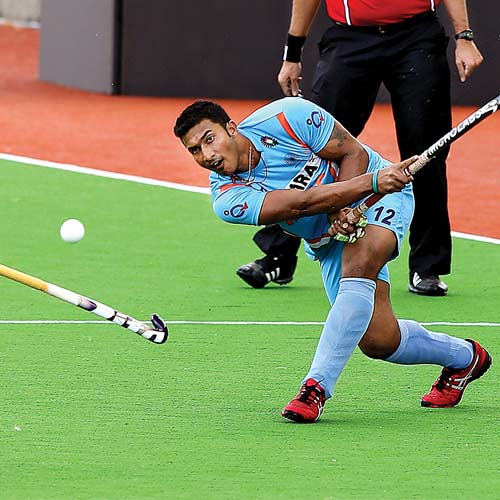
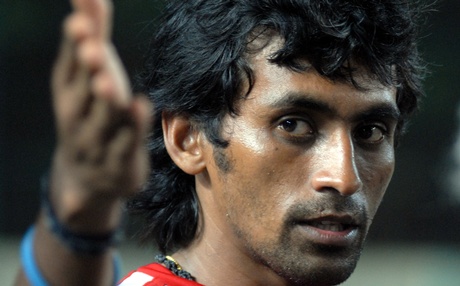
From being an underdog to Indian team vice-captain, Raghunath has come a long way. Getty Images
Most sportspersons would tell you that any sport – even if it is one of the most physical – eventually has a lot to do with the mind. India’s dragflick specialist, VR Raghunath, is no exception.
Despite being part of the illustrious list of hockey players from Coorg in Karnataka, Raghunath has had his fair share of struggles early on in his career, failing to find a regular place in the senior national team. That was until Michael Nobbs took him under his wings. Raghunath then became part of the 2012 London Olympics, and is now the vice-captain of the team.
So how did it all change for 24-year-old? “I wasn’t mentally confident about myself before. Nobbs worked on my mental strength and brought my inner game out,” Raghunath told dna before the squad departed to The Netherlands for the FIH Men’s World League Round 3 (semifinals) starting on June 13.
“Thus, I’ve also been given a leadership role to support Sardar (Singh). I’m enjoying the responsibility and hope to motivate the juniors that come in.”
Talking of juniors, India fielded a young side for the Sultan Azlan Shah Cup earlier this year, and the team going for the World League also has a lot of young faces like Mandeep Singh and Manpreet Singh. Raghunath believes that the current crop of youngsters is the best India ever had.
“It’s a transformation period after the 2012 London Olympics. And because of the Hockey India League, we’re getting a lot of good talent. I think our present junior team is one of the best we’ve had over the past few years,” he said.
Raghunath is equally elated with the comeback of ace dragflicker Sandeep Singh. “Sandeep is one of the most experienced players and he knows how to play in high-intensity games. So it’s great that we can rotate our three dragflickers and have at least two penalty corner specialists on the field at a time,” he added.
Raghunath hopes the team rises to the occasion during this key tournament, which is a qualification for the FIH Men’s World Cup in 2014.
“We had a good three-week camp in Bangalore, so our preparation has been great. I prefer to take it one match at a time, and going all out in that. We hope to start well and if we do, I’m sure we can end it well,” he said.
source: http://www.dnaindia.com / DNA / Home> Sports> Report / by Rutvick Mehta / Place:Mumbai, Agency:DNA / Thursday – June 06th, 2013
Coffee planters should think twice before using chemical fertilisers and pesticides. More emphasis has been given to environment and bio-diversity in the international market, said NABARD General Manager C P Appanna.
He was speaking after inaugurating a workshop on ‘Quality improvement, value addition and importance of butterfly rearing in coffee production’, organised jointly by Institute for Social and Economic Change (ISEC), Norwegian Institute of International Affairs (NUPI), Oslo, Agricultural University, Bangalore , Kodagu Krishi Vijnanigala Vedike, Swastha organisation and Chai Kadai, Bangalore in Madikeri recently.
“We have been growing coffee in a conducive environment in Kodagu. However, coffee from Kodagu is not getting good price in the international market. At the same time, we must get certified from an international agency on the quality of the product, to get better price for coffee,” he said.
Test
“By rearing butterflies, we need to establish the fact that no environment hazard activities have been carried out in the coffee estates. Many western countries refused to import agriculture products from India, owing to chemical content found in it,” he added.
He gave a clarion call to the farmers to adopt organic farming.
source: http://www.deccanherald.com / Deccan Herald / Home> District / Madikeri,DHNS – June 06th, 2013
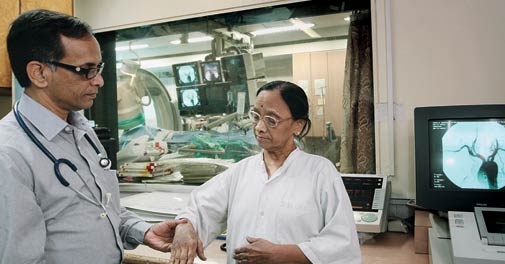
Dr Hemant Deshmukh with Jeevandayee scheme’s beneficiary Sadhna Dattaram Sawant at Mumbai’s King Edward Memorial (KEM) hospital / Photo: Bhaskar Paul
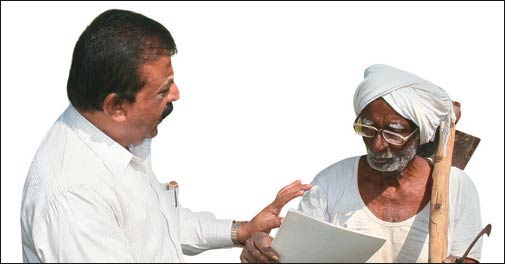
In October, Madrira Ganapathy, a rice and coffee grower in South Coorg, Karnataka, was told by doctors that he had four arterial blocks, all of them above 85 per cent, around his heart. He had to undergo surgery quickly. The following month, he got himself admitted at Fortis Cauvery Heart Hospital in Mysore and underwent surgery successfully.
The operation cost Rs 1.5 lakh but Ganapathy, who earns about Rs 60,000 a year from farming his four acres of land, did not have to pay. Why so? His bill was settled by Yeshasvini Trust, a non-profit organisation under the Karnataka government which runs a micro health insurance scheme for rural folk.
“I am not a BPL (below poverty line) card holder but, at the same time, I could not have afforded a surgery like this. The scheme is of big help to people like me,” says Ganapathy, 48, who has been part of Yeshasvini for five years. “I am now asking my friends also to enrol in the scheme.” Karnataka official P. Ramakrishne Gowda enrolling a farmer in the Yeshasvini scheme in Mandya district./ Photo: Deepak G. Pawar
Yeshasvini was launched in June 2003 and now covers about three million people in the state. It is open to all income groups in rural areas, provided the applicant has been a member of any cooperative society for at least six months. It costs Rs 210 a year per family member and covers 805 surgeries in 446 network hospitals.
The hospitals offer medical consultation for free and diagnostic facilities at a discount. In cases involving hospitalisation, the trust clears the bill via a third party administrator. In 2011/12, Yeshasvini Trust settled bills worth Rs 60.27 crore against 77,738 surgeries.
Besides, as many as 116,000 people were treated as outpatients. Since the scheme’s inception, the trust has paid Rs 412 crore for 469,000 surgeries. “We expect the outgo to hospitals to be around Rs 90 crore in 2012/13 because of the increase in hospital charges from April 1,” says Yeshasvini Trust CEO R.M. Nataraja. The trust is largely self-funded – it will mobilise about Rs 60 crore in premiums this year while the government pays Rs 40 crore.
“Yeshasvini is the first insurance programme in the world to coin the term micro health insurance, and its success is because poor people trust only the government,” says eminent heart surgeon Dr Devi Prasad Shetty, Chairman of Narayana Hrudayalaya, and a member of Yeshasvini Trust. “This is the greatest advantage the government enjoys as a large scale health insurance provider.”
The biggest success of Yeshasvini, however, is in proving that, with just about Rs 17 per person a month, it is possible to run a massive, sustainable health insurance programme. “Yeshasvini has demonstrated a model that works with the willing participation of the beneficiaries,” says G.V. Krishna Rau, Chairman of the trust, and Principal Secretary, Department of Cooperation, Karnataka. “The challenge now is to take this forward by enlarging its scope and making it a universal scheme.”
The model has inspired other states such as Tamil Nadu and Andhra Pradesh to start similar programmes. In April 2008, the Centre launched the Rashtriya Swasthya Bima Yojana, a health insurance scheme for BPL card holders which covers costs up to Rs 30,000. In late 2011, the Maharashtra government introduced the Rajiv Gandhi Jeevandayee Arogya Yojana covering about 490,000 people in eight districts.
According to programme officer Mukesh Mohode, the Maharashtra government paid a premium of Rs 180 crore to Kolkata-based National Insurance Company for coverage of these districts. The scheme provides a family floater cover of Rs 1.5 lakh a year covering 972 procedures, including cancer treatment. For kidney transplants the scheme provides up to Rs 2.5 lakh. The scheme, unlike the Yeshasvini plan, is fully funded by the state government and the beneficiaries do not have to pay any premium. Maharashtra aims to extend the scheme to all districts in two to three months.
While the Yeshasvini plan is for rural families, the Jeevandayee scheme benefits both BPL and above poverty line (APL) people (but only up to those with a maximum income of Rs 1 lakh a year) in urban areas as well. One of its recent beneficiaries is Sadhna Dattaram Sawant, a 71-year-old widow who lives in Mumbai’s Parel with her son who does not hold a regular job. She holds an orange ration card, given to people with annual income below Rs 1 lakh. Sawant had been suffering from kidney and cardiac ailments and needed a renal angioplasty to help increase blood supply to her left kidney. This would help solve her hypertension and reduce chances of a heart attack.
On November 26, doctors at the King Edward Memorial (KEM) hospital, run by the Brihanmumbai Municipal Corporation, conducted Sawant’s angioplasty. Sitting on her hospital bed the following day, wearing a hospital-issued white dress, Sawant looked happy. “I thought I would be lying in bed for a long time. I am so happy I am able to walk around a day after the procedure,” she said.
Sandhya Kamath, Dean at KEM, says the hospital has so far handled about 1,700 cases under this scheme. Hemant Deshmukh, the doctor who conducted Sawant’s procedure, says his department alone takes up at least seven or eight similar cases under the scheme every month. “The procedure would have cost Rs 50,000 at King Edward and Rs 1 lakh at a private hospital,” he says. “Under the scheme, the cost to the patient is zero.”
source: http://www.businesstoday.intoday.in / Business Today / Home> Archives> Business Today> Cover Today / by K.R. Balasubramanyam and Sumar Layak / January 06th, 2013
A hundred years of cinema were celebrated with style, grace and elegance during a recent fashion show by Manish Malhotra, in association with Styletag.com. The show displayed the timelessness and unique style of Indian movies. Many members of the fashion industry were spotted having a good time at the event. Among them were Prasad Bidappa, Radha Thomas and Ramji Chandran.
From popular polka-dots to flowing chiffon saris, the collection had it all. Manish’s creations were not all that the evening included — there was a lot more in store. Great music and an art auction were also a part of the show. City-based band ‘One Nite Stand’ added a lot of glamour and energy to the evening. The band played an eclectic mix of old retro numbers as well as jazz and rock for the audience.
The fashion show was the highlight of the evening, with the models sashaying down the ramp in beautiful saris and glittering full-length anarkalis in beautiful pastel shades. The designs showcased in the men’s collection were classy and chic. Chequered black and white waistcoats as well as bright silk sherwanis, kurtas and bandhgalas with fancy dupattas were showcased.
The gorgeous sari collection stole the show. The designs were indigenous and the colours were contemporary. The pastel collection of saris was stylish and lit up the ramp as soon as the models entered wearing them. “I loved the lime-green sari trimmed with red lace. It was elegant and yet contemporary. Manish’s collection is brilliant. We can see hints of Bollywood in it and it has something for everyone. He is a style icon in the truest sense,” says Ayesha, who attended the .
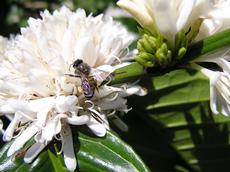
Bees of the Apis cerana (eastern honeybee) species pollinate coffee flowers. Farmers can increase the services of pollinating insects with particular cultivation methods. (Photo: J. Ghazoul / ETH Zurich)
By Peter Ruegg
No food for the human race without bees? It is not quite as straightforward as that. A case study by ecologists from ETH Zurich in a coffee-growing area in India reveals that pollinating insects are just one production factor among many. Farmers have several possibilities to increase their harvest.
All over the world, bees are dying and insect diversity is dwindling. Only recently, both the media and scientists expressed fears that insect pollination is in decline, which jeopardises food security. The (lack of) pollination has thus become a sound argument for the protection of species and natural habitats, and organic farming.
ETH-Zurich researchers from the group headed by Jaboury Ghazoul, professor of ecosystem management, set about investigating this argument by studying the influence of pollinator insects on coffee harvests in an agroforestry system at coffee plantations in the province of Kodagu in southern India. They also included soil and forest management, environmental factors such as water and soil fertility, and tree cover for the cultures in their study.
The research group thus obtained a different picture of the role of pollinators to the popular perception of this cultivation system of “no bees, no harvest”. According to their findings, pollinator bees are merely one production factor among many and to some extent coffee farmers can increase the productivity of their plantations independently of the insects. The results of the study have just been published in the journal PNAS.
Important but not the only factor
“Pollinators are important for coffee farmers,” stresses Ghazoul; “as far as effective coffee growing and increasing harvests are concerned, however, they are much less important than irrigation or liming, for instance.” This encapsulates one of the central findings from coffee farming in the Kodagu province.
Coffee is grown in a traditional agroforestry system in the region. As coffee plants must not be grown in direct sunlight, they are planted in the forest’s undergrowth or the shade of large, isolated trees. The coffee plants all bloom at the same time after heavy rains between February and March and three species of bee pollinate the flowers: the giant honeybee Apis dorsata, Apis cerana and the solitary wild bee Tetragonula iridipennis. The giant honeybee is the largest and most important pollinator, forming large colonies and needing the thick branches of tall trees to bear the weight of their nest.
Greater yield through irrigation and limestone
In order to harvest more coffee, however, the farmers have got other options than merely banking on the work of bees, as Ghazoul discovered. They can increase the yield through liming, irrespective of bee density. And instead of relying on rainfall, it is worth the farmers’ while to induce flowering with artificial irrigation. “It is particularly in a farmer’s interests to irrigate his plantations at a different time to other farmers in the vicinity,” says Ghazoul. After all, this will turn his plantations into bee magnets. This concentrated pollination increases the yield from the plantation enormously, the ETH-Zurich researchers reveal in their publication. It is a different story if the rain makes all the coffee plants in the region flower at the same time, however: the bees spread out over a wide area, the pollination is less effective and the harvest is poorer.
Trend towards deforestation
In an agroforestry system, the farmer also has another trick up his sleeve: felling trees or the forest to shed more light onto his coffee plants, which also increases the harvest. In doing so, however, he destroys the habitat of the giant honeybee (Apis dorsata).
A farmer who combines both courses of action is especially successful, initially unaffected by the disappearance of the large bees on his own plantation. Only when all farmers opt for this course of action do things take a turn for the worse. “From a plantation perspective, it makes sense to remove trees and increase yields,” says the ETH Zurich professor. “But if every farmer goes for the same option, they will all suffer the consequences of poor pollination because the giant honeybee will disappear.”
Sure enough, the researchers observed gradual deforestation in the Kodagu experiment area. Ghazoul is convinced that the farmers will lose Apis dorsata in the long run and thus – unless they take countermeasures – their valuable contribution towards coffee pollination. “It remains unclear whether the other two species of bee could compensate for this loss.” However, the farmers’ predicament is not hopeless, he says. They could domesticate Apis cerana, a very close relative of the European honeybee, and place beehives on the plantations, which would guarantee the pollination service without becoming dependent on Apis dorsata. The drawback: this absolves the farmers from their responsibility for the forest and trees. “The farmers are thus free to decide whether they want to have trees on their land or not,” stresses the ecologist, which spells bad news for nature conservation. “But good news for farmers. They have got possibilities to increase their harvest and sustain or even improve their existence.”
Unexpected threat from exotic tree species
The traditional forest trees face another danger. Farmers often replace felled local trees with the exotic Australian silver oak (Grevillea robusta), which provides the coffee plants with the shade they need. Moreover, it grows quickly and has a straight trunk, which farmers can use to grow pepper as the spice can be harvested more easily on the trunks. The sale of pepper and wood from the silver oaks is a way for the farmers to supplement their income.
However, the farmers are increasingly beginning to realise that the exotic tree also has its drawbacks. For one, its leaves barely decompose, covering the ground and coffee plants and thus becoming a breeding ground for harmful fungi and bacteria. It might also influence the nutrient cycle, which one of Ghazoul’s doctoral students is currently looking into. The silver oak leaves probably slows the nutrient cycle, preventing the coffee plants from receiving enough nitrogen in the long run, which eventually affects the harvest.
The example case of coffee growing in the province of Kodagu is interesting from a research perspective as it brings home how bees, farmers, their farming methods and natural occurrences influence and depend on each other. In this respect, the insects are not the sole influential factor in this agricultural system.
Ten principles for the reconciliation of nature and humankind
Teaming up with other scientists, ETH-Zurich professor Jaboury Ghazoul has defined ten principles that should help reconcile the conflicting interests of agriculture, nature conservation and other stakeholders with regard to a sustainable agricultural land use. The principles, which were published in the journal PNAS, include training farmers in cultivation methods that can be adapted to changing conditions. Another principle advocates taking different levels into consideration for a landscape approach, namely the landscape level itself and the individual farm level. In the example case in India, another principle is significant: the clarification of rights and responsibilities. For instance, the cultivated land belongs to the local farmers but not the trees, which belong to the state. This can cause conflicts. The principles should help to use an approach geared towards the landscape.
Further reading
Boreux V, Kushalappa CG, Vaast P, Ghazoul J. Interactive effects among ecosystem services and management practices on crop production: Pollination in coffee agroforestry systems. PNAS. 2013 May 21;110(21):8387-92. doi: 10.1073/pnas.1210590110. Epub 2013 May 13.
Sayer J, Sunderland T, Ghazoul J et al. Ten principles for a landscape approach to reconciling agriculture, conservation, and other competing land uses. PNAS 2013 110 (21) 8349-8356; published ahead of print May 21, 2013, doi:10.1073/pnas.1210595110.
source: http://www.ethlife.ethz.ch / ETH Life / Home> News Archive> Science / by Peter Ruegg / June 04th, 2013
Arjun Halappa | EPS/File
Arjun Halappa, who led India in the Sultan Azlan Shah Cup hockey tournament in Malaysia in 2011, has made history of sorts by becoming the first sportsperson to be named as a national selector while still being a very active player.
Hockey India (HI) announced a panel to be headed by former star B P Govinda and which includes Arjun Halappa’s name. Arjun is still a very active player turning out for Air India in the ongoing HI nationals at Pune. Arjun made his debut for India in 2001 against Egypt in the Prime Minister’s Gold Cup. He represented the country in the 2004 Olympic Games in Athens. He was also in the 2010 Commonwealth Games team in New Delhi where India were the runners-up and also picked up the Asiad bronze the same year in Guangzhou, China.
“I’m not going to hang up my boots. I will continue to represent my employers Air India. Playing will help me keep up with the latest trends in the game,” Arjun said.
“This is a very big surprise and I’m very excited. I’ve been a player and captain and this is a new challenge for me. It’s just early days and I don’t want to comment much,” he added. “As a player I will be able to provide inputs to the coaching staff,” said Arjun.
So the scenario now is that a player-cum-selector will also work as an advisor to the coaches. This is the first time in the history of Indian sport that something like this has happened. Players becoming coaches once they give up playing is an accepted norm. Players taking to umpiring is also welcome. But an active player also functioning as a selector? The move has, indeed, raised eyebrows.
The closest a player has come to also being a part of the selection process is in Indian cricket. The captain is part of the selection committee’s deliberations and gives his inputs. But he is not actually on the selection committee as in the case of Arjun.
What happens if Arjun strikes great form and has to decide on his own inclusion? He has still not announced his international retirement. At 34, he may not be in contention for a place. But what if the others want him in the team? Even if he is there on sheer merit, aspersions will be cast. Should a selector select or even drop himself only because he is a selector?
“It is too early to induct someone like Arjun into the selection committee. Yes, he surely deserves to be a selector but this is not the right time for him to be on the panel as he is still a very active player,” said former India skipper, coach and selector M P Ganesh.
“I became a selector only after 26 years of playing hockey. In fact I had even given up coaching the Indian team and only then I was part of the selection process. Young people are needed but not so young and not for the job of selection,” Ganesh added.
source: http://www.newindianexpress.com / The New Indian Express / Home> The Sunday Standard / by S S Shreekumar / ENS – Bangalore / June 02nd, 2013
Vikarmkant will lead the 19-member men’s Karnataka hockey squad for the third Senior National Championship to be held at Pune from May 28 to June 10.
S K Uthappa, adjudged the best player in 2011 Senior Nationals in Bhopal where Karnataka had finished runners-up, will be the vice-captain of the state side.
The team is being coached by 1994 World Cupper K K Poonacha.
source: http://www.ptinews.com / Press Trust of India / Home> Sports / by Staff Writer / May 30th, 2013
WELCOME. If you like what you see "SUBSCRIBE via EMAIL" to receive FREE regular UPDATES.
Read More »