
Arabica coffee could be extinct in the wild within 70 years, study suggests

coffeeKF24may2013
A study conducted by scientists at the Royal Botanic Gardens, Kew (UK), in collaboration with scientists in Ethiopia, reports that climate change alone could lead to the extinction of wild Arabica coffee (Coffea arabica) well before the end of this century. Wild Arabica is considered important for the sustainability of the coffee industry due to its considerable genetic diversity. The Arabicas grown in the world’s coffee plantations are from very limited genetic stock and are unlikely to have the flexibility required to cope with climate change and other threats, such as pests and diseases. In Ethiopia, the largest producer of coffee in Africa, climate change will also have a negative influence on coffee production. The climate sensitivity of Arabica is confirmed, supporting the widely reported assumption that climate change will have a damaging impact on commercial coffee production worldwide. These are worrying prospects for the world’s favourite beverage – the second most traded commodity after oil, and one crucial to the economies of several countries.

The research is published in PLOS ONE on 7 November 2012.
The study, which uses computer modelling, represents the first of its kind for wild Arabica coffee. In fact, modelling the influence of climate change on naturally occuring populations of any coffee species has never been undertaken. Surprisingly, even studies on plantation coffee have been limited, despite the concerns of farmers and other industry stakeholders.

The researchers used field study and ‘museum’ data (including herbarium specimens) to run bioclimatic models for wild Arabica coffee, in order to deduce the actual (recorded) and predicted geographical distribution for the species. The distribution was then modelled through time until 2080, based on the Hadley Centre Coupled Model, version 3 (HadCM3), a leading model used in climate change research, and the only one available that covered the desired time intervals, for several emission scenarios, at the resolution required (1 km). Three different emission scenarios over three time intervals (2020, 2050, 2080) were used. The models showed a profoundly negative influence on the number and extent of wild Arabica populations.

Two main types of analysis were performed: a locality analysis and an area analysis. In the locality analysis the most favourable outcome is a c. 65% reduction in the number of pre-existing bioclimatically suitable localities, and at the worst, an almost 100% (99.7%) reduction, by 2080. In the area analysis the most favourable outcome is a 38% reduction, and the least favourable a c. 90% reduction, by 2080. Bioclimatic suitability refers to the combination of climatic variables that are necessary for the health and survival of a species: loss of optimum bioclimatic suitability places natural populations under severe environmental stress, leading to a high risk of extinction. This study assesses the survival of Arabica, rather than productivity or beverage quality, under the influence of accelerated climate change. There are other studies showing that the productivity (yield of coffee beans) and beverage quality (e.g. taste) of Arabica are tightly linked to climatic variability, and are strongly influenced by natural climatic fluctuations.

Of the two analyses undertaken, the locality analysis is regarded by the authors as the most pragmatic and informative. The predicted reduction in the number of Arabica localities, between 65% and 99.7%, can be taken as a general assessment of the species’ survival as a whole, given the scope and coverage of the data and analyses used in the study. However, the predictions are regarded as ‘conservative’, as the modelling does not factor in the large-scale deforestation that has occurred in the highland forests of Ethiopia and South Sudan (the natural home of Arabica coffee). Moreover, because of the lack of suitable data, the models assume intact natural vegetation, whereas the highland forests of Ethiopia and South Sudan are highly fragmented due to deforestation. Other factors, such as pests and diseases, changes in flowering times, and perhaps a reduction in the number of birds (which disperse the coffee seeds), are not included in the modelling, and these are likely to have a compounding negative influence.

A visit to South Sudan (Boma Plateau) in April 2012 provided an opportunity to test the modelling predictions via on-the-ground observation. On comparing these observations with a study on Arabica made on the Boma Plateau in 1941, it was clear that not all of the environmental stress evident could be attributed to deforestation or agriculture over the 70 year period. The modelling predicted that Arabica could be extinct in these forests by the year 2020, due to climate change, and this appears to be realistic given the poor health (lack of seedlings, loss of mature Arabica specimens, low frequency of flowering and fruiting) of the remaining populations observed in 2012.

The outcome of climate change in Ethiopia for cultivated Arabica, the only coffee grown in the country, is also assumed to be profoundly negative, as natural populations, forest coffee (semi-domesticated) and some plantations occur in the same general bioclimatic area as indigenous Arabica. Generally the results of the study indicate that Arabica is a climate sensitive species, which supports previously recorded data, various reports, and anecdotal information from coffee farmers. The logical conclusion is that Arabica coffee production is, and will continue to be, strongly influenced by accelerated climate change, and that in most cases the outcome will be negative for the coffee industry. Optimum cultivation conditions are likely to become increasingly difficult to achieve in many pre-existing coffee growing areas, leading to a reduction in productivity, increased and intensified management (such as the use of irrigation), and crop failure (some areas becoming unsuitable for Arabica cultivation). Despite a recent dip, coffee prices are still the highest they have been for some 30 years, due to a combination of high demand and poor harvests. It is perceived by various stakeholders that some of the poor harvests are due to changed climate conditions, thus linking price increases to climate change.

It is hoped that the study will form the basis for developing strategies for the survival of Arabica in the wild. The study identifies a number of core sites, which might be able to sustain wild populations of Arabica throughout this century, serving as long-term in situ storehouses for coffee genetic resources. In many areas of Ethiopia loss of habitat due to deforestation might pose a more serious threat to the survival of Arabica, although it is now clear that even if a forest area is well protected, climate change alone could lead to extinction in certain locations. The study also identifies populations that require immediate conservation action, including collection and storage at more favourable sites (for example in seed banks and living collections).

Aaron Davis, Head of Coffee Research at the Royal Botanic Gardens, Kew, says, “Coffee plays an important role in supporting livelihoods and generating income, and has become part of our modern society and culture. The extinction of Arabica coffee is a startling and worrying prospect. However, the objective of the study was not to provide scaremonger predictions for the demise of Arabica in the wild. The scale of the predictions is certainly cause for concern, but should be seen more as a baseline, from which we can more fully assess what actions are required.”

Tadesse Woldemariam Gole, from the Environment and Coffee Forest Forum in Ethiopia, says, “As part of a future-proofing exercise for the long-term sustainability of Arabica production it is essential that the reserves established in Ethiopia to conserve Arabica genetic resources are appropriately funded and carefully managed.”

Justin Moat, Head of Spatial Information Science at the Royal Botanic Gardens, Kew, says, “The worst case scenario, as drawn from our analyses, is that wild Arabica could be extinct by 2080. This should alert decision makers to the fragility of the species.
“Our aim is to develop and apply these analyses to other important and threatened plants, on a routine basis. There is an immense amount of information held in museum collections around the world, such as Kew, and we have only just started to unlock their potential for assessing some of society’s most pressing issues.”

Source : http://phys.org/ Home> Biology> Ecology / Provided by Royal Botanic Gardens Kew / November 07th, 2012

A passionate journey!

Bhavani GS, a Bangalore-based artist, is thrilled to be presenting her latest project, ‘Journey With The River Cauvery’, in Chennai.

This show includes a video documentary, paintings and photographs. After exhibiting her work in Bangalore and Mysore, the next leg of her project flows on to Tamil Nadu.

“This is a narrative video of the journey taken by Cauvery to reach the Bay of Bengal,” says Bhavani. The project began in 2009 when she journeyed till Mysore and it took her almost 12 days to finish shooting. She adds, “In November 2011, I travelled to several other places, tracing the river’s journey. This took me around 15 days.”

Bhavani has captured the traditional spaces of worship and the rituals that go along with it, and various other human activity connected with the river.

Her passion for the river Cauvery is the sole reason why she chose to document her journey. “I belong to Kodagu (Coorg), the place where the river originates, and she is worshiped as ‘kuladevatha’ there. Since I moved away from my native place, I started missing Cauvery and seeing her flow in all her glory. So, I decided to translate my memory into photographs, paintings and a docu film,” she smiles.

Check out Bhavani’s Journey With The River Cauvery, at Art & Soul, 204-A, East Coast Road, Akkarai, between 11 am and 9 pm, till March 21 (except Mondays).

source: http://www.timesofindia.indiatimes.com / The Times of India / Home> Art & Culture / by Isha Sharma, TNN / March 15th, 2013

Punjab register hat-trick of defeats as UP hit ground running

Right after they had beaten Punjab Warriors 2-1 in their Hockey India League opener, the UP Wizards quartet of Nitin Thimmaiah, VR Raghunath, SK Uthappa and Pradhan Sommanna headed into the players’ enclosure to have coffee. The choice of beverage was easy to explain. All four hail from Coorg, famous for its coffee estates.

“All four of us studied in St. Thomas High School. The last few years have seen a lot of players coming into the national team from Coorg, and the hockey culture there is strong enough to produce even more players,” said Thimmaiah, who made his India debut in the Europe tour before the London Olympics.

Own goal

Thimmaiah and Raghunath set up the second goal for UP, an own goal from Punjab goalkeeper Jaap Stockmann that gave them an eventually decisive 2-1 lead. Raghunath, one of the experienced players of the national team, was also crucial in thwarting the likes of Jamie Dwyer and Mark Knowles. The 24-year-old was picked up for US$ 76,000 by UP and is the skipper of the team.

“It was great to be picked up for such a huge amount. A lot of our juniors in Coorg called me on the auction day and congratulated me. It was big news for hockey fans back home. Looking at the amount of players emerging from the region, I guess there will soon be a franchise from Coorg in the league,” said Raghunath.

Uttar Pradesh coach Roelant Oltmans, who was appointed Indian hockey’s high performance technical director on Thursday, said some of his youngsters would play key roles for India over the coming years. “Players like Thimmiah and Harbir Singh are the talents to look out for,” he said. “Their basics are good and they will benefit from playing alongside the likes of legends like Teun de Nooijer.”

source: http://www.indianexpress.com/ The Indian Express / Home / by Nitin Sharma / Jalandhar – Friday, January 18th, 2013

Bank plans to launch 80 branches

Kaveri Grameena Bank has drawn up an ambitious plan of opening 80 new branches in its area of operation to meet the obligations under financial inclusion and to expand its base.

The bank has also proposed to provide ATM facility to its customers through SBI network.

Arrangements are also afoot to provide facilities such as Real Time Gross Settlement (RTGS) to cater to the needs of the business community, said chairman D. Somashekara Sastry.

The bank covers Mysore, Mandya, Kodagu, Hassan, Chamarajnagar, Tumkur, Bangalore Rural, Bangalore Urban, Ramanagaram and Chikmagalur districts.

“The bank has been consistently showing good performance under the SHG linkage programme and the performance of the bank has been recognised by the NABARD regional office, Bangalore, which has awarded first prize under the RRB category for highest share of SHG business to overall business among RRBs in the State for the sixth consecutive year,” he said in a release here.

Appreciated

The Sampoorna Grama Concept, where the bank covered all the inhabitants by way of providing solar energy services, insurance facilities, Kisan credit card facilities , received appreciation from all quarters, including government agencies, Mr. Sastry stated.

source: http://www.thehindu.com / The Hindu / Home> National> Karnataka / by Staff Corrrespondent / Mysore, May 14th, 2013

Indian robusta bowls over Boston roasters

Bangalore :

Indian robusta coffees have been received well at the Specialty Coffee Association of America meet held recently at Boston, US.

“With Boston being in close proximity to major coffee roasters in the US, the event was attended by a sizeable crowd,” Jawaid Akhtar, Chairman, Coffee Board told Business Line.

“Robustas are generally known to be harsh, but when American roasters tested our coffees, they were amazed to discover the mildness and aroma of Indian coffees,” he said.

The Coffee Board had taken up space at the specialty coffee association and visitors tasted liquid coffee, instead of coffee samples from different regions.

At the event, a session on “Emerging Markets in Specialty Coffee: India” was also held to educate the US roasters. The one-hour session mainly focused on why specialty coffee needs Indian robustas. The session was attended by about 70 roasters from the North America, Europe, Australia and New Zealand.

Sunalini Menon, CEO, Coffeelab Ltd, talked about the distinct characteristics of Indian coffee and coffee growers’ representative Nishant Gurjer, Partner, Kaapi Royale Coffee, and Chairman of Karnataka Planters’ Association (KPA), spoke about the farm practices of cultivating coffee in India. The moderator of the event was Andrew Hetzel, consultant, CafeMakers.

The Indian delegation had, besides the Coffee Board Chairman and the KPA Chairman, quality control expert Sunalini Menon, M.P. Devaiah of Allana Sons, Bharat Mandanna of BBTC, Jacob Mammen of Bhadra Group, Kurien who was representing Small Coffee Growers Association, Kerala, and US coffee trader Joseph John.

For the last three to four years, the Coffee Board has been focussing on the US market. “Roasters in US are increasingly using robustas in their blends, it is here we are focusing our attention to penetrate the most important market in the world,” said Gurjer.

Creating awareness of the Indian coffee in the US has led to gaining some ground in the market. Indian coffee exports to US are currently averaging at around 6,000 tonnes and is the 14th important market. Exports have doubled in the last five years. In 2008-09 exports stood at 2,556 tonnes.

source: http://www.thehindubusinessline.com / Business Line / Home> Industry> Agri-Biz / by Anil Urs anil.u@thehindu.co.in / Bangalore, May 21st, 2013

Nidhi Subbaiah, on being voted No. 6 on Bangalore Times Most Desirable list

Former Sandalwood actress Nidhi Subbaiah, who has acted in Kannada films Pancharangi and Krishnan Marriage Story among others, seemed a little flustered yesterday when she saw what she had scored on the Bangalore Times Most Desirable list. The actress, who was rated number 42 in the national list, appeared at number 6 on the regional list.

(Nidhi Subbaiah )
(Nidhi Subbaiah )

Her comment on the list on Twitter began with, “These individual city polls are funny! I believe only in the national poll.. God bless small minded people! .. Tch.” The actress, who was last seen in the Bollywood film Ajab Gazabb Love opposite Jackky Bhagnani, went on to further add, “Also, nice to read em sometimes.. Get to know a lot about myself that I didn’t know!Like who’s dating who!No time to confirm? Double tch.”

The comments, however, has not gone down too well with fans, colleagues and friends. While one of her fans posted a snapshot of hers from the list congratulating the actress, Nidhi, reacted with a “hmmm no I don’t believe in this! False news.”

Actress Ramya, who topped the regional list, too could not help but react to Nidhi’s comments. “We may be small minded but we have a big heart. We mean good to others and of course we don’t forget our roots as much as we branch out,” Ramya tweeted.

source: http://www.articles.timesofindia.indiatimes.com / The Times of India / Home> Entertainment> Regional / by Parinatha Sampath, TNN / Monday – May 21st, 2013

Bringing the fruit of Himalayas to Ghats

‘The trick is to confuse the plant to think it is summer all along and make it bear apple through the year’
Though cheery and blithe in countenance, 74-year-old Chiranjit Parmar, a horticulture scientist from Himachal Pradesh, hopes to radically change the agricultural landscape of the region. After having observed the success of apple cultivation in Batu, Indonesia, Mr. Parmar wants to introduce the fruit, hitherto associated with cooler climes, in the tropical humidity of Karnataka.

“It is an experiment. And like all experiments, it can also fail,” he told the group of farmers who had assembled in the city on Saturday for his seminar on ‘Apple cultivation in Karnataka’.

The idea sounded incredulous to farmers who had travelled from as far away as Kodagu. Apple – whose mass cultivation is associated with regions on the foothills of the Himalayas such as Shimla and Kashmir — needs to have a chilly weather for it to bear fruit in the summer. How then was it supposed to survive in a region where temperatures rarely go below 12 degrees Celsius?

“The trick is to confuse the plant. The broad principle is that just after the sapling experiences chilling in Himachal or Kashmir, it is transported here. As there is not much of a temperature change here during winter, the plant thinks it is summer all along and bears fruit through the year,” Mr. Parmar told the befuddled farmers.

He illustrates this with a picture of cultivation in Indonesia, where, while half the apple orchard bears fruit, the other half is bare. “Crops can be regulated easily, as the leaves can be removed fully to stimulate winter. While in Himachal, we get six to seven tonnes of apple per hectare, in Indonesia, they get 65 tonnes and throughout the year,” he said.

So far, the experiment has seen small orchards set up in Tumkur, Somwarpet, Sringeri, and Uppinangadi – all through saplings sent by Mr. Parmar. In his first visit to the region, he said the results were encouraging, and in Tumkur, the plants were already bearing fruit within two years. “In Himachal, apple trees take five years to bear fruit. Here, it grows faster and incessantly into very tall trees as there is no crop fall or dormancy during winter,” he said.

Challenges

However, the tropical climate also brings with it a set of problems that is yet to be scientifically dealt with. For example, trees are susceptible to a variety of diseases and insect, while methods to reduce the tree height and grafting of trees needed to be worked out.


‘The trick is to confuse the apple tree to think it is always summer’

source: http://www.thehindu.com / The Hindu / Home> National> Karnataka / by Staff Correspondent / Mangalore – April 22nd, 2013

Coffee and the selfish gene

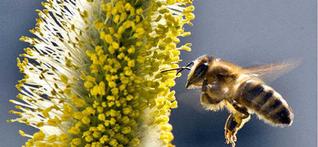
Tempting: Caffeine in nectar hooks bees.— photo: AFP

How did coffee become more popular in south India and tea in the north? History appears to give the reason. Legend has it that in the late 16{+t}{+h}century while Haji Baba Budan was returning from Haj through Yemen, he found people boiling coffee beans in water and enjoying the “decoction”. He then smuggled a handful of the (forbidden to export) beans with him and planted them on the Chikamagalur hills in Karnataka and the locals took to it with elan. Soon, coffee plantations appeared in Kodagu and the Nilgiris, and we all were hooked on to the morning coffee. Tea, on the other hand, was introduced later (early 19{+t}{+h}century) by the colonial British who copied it from the Chinese and planted it in Assam and Darjeeling. This colonial drink soon became popular among the subjects in the plains as well. Coffee and tea are thus external entrants into the Indian taste buds.

But why are we hooked on to coffee and tea? The answer comes from science, which tells us that they both contain the mood- altering and addictive drug caffeine. While this is a proximal answer, the ultimate question is why at all do these plants go to the trouble of making the molecule in the first place. After all, it takes metabolic energy to do so. The answer appears to be “to deter herbivores”, or as a defence chemical. Note that the raw bean or leaf is bitter to taste, and the animal would shy away, leaving the plant alone to grow and flourish.

Recent findings add another dimension to the tale. It has been found the caffeine is found not only in the bean or the leaves but also in the nectar that the plant produces and packs a drop or two in its flowers. And why it would do so and what this stored caffeine does in the flower nectar has been investigated by a group of researchers from U.K. and published in the March 8, 2013 issue of Science .

They note that while plant-derived drugs like caffeine and nicotine (the drug in the tobacco plant) are lethal in high doses, they do generate pleasant effects when taken in very low doses. But then why in the floral nectar? Is it in order to “hook on” bees and other pollinating insects? To understand this, the researchers first measured the levels of caffeine in the nectar of three plants, Coffee arabica , C. liberica and C. canephora , to which bees make a bee-line for (pardon the pun), and found the amounts to be less than a thousand-fold that of the sugar present in the bean — just a teasing touch.

They hypothesised that the caffeine in the nectar could affect the learning and memory of the foraging pollinators. Could it be that they would come to these flowers, enjoy the nectar and in the process take away and dispense the pollen, thus breeding these plants in preference to those that do not store caffeine in their nectar? In order to test this, the researchers took the trouble of training individual bees to associate a floral scent with sugar reward. In one set the bees would go to the containers with sugar solution, and in another set the sugar solution spiked with a bit of caffeine. And they found that the bees would consistently return to the caffeine sugar scent even three days later. In other words, caffeine acted as a memory enhancer. The bees were hooked onto caffeine.

The researchers went further ahead and investigated the biological mechanisms behind the mode of action of the caffeine. The bee brain contains what are called projection neurons or nerve cells that have a protein surface (a receptor) that normally binds to the molecule adenosine. When these nerve cells are adenosine-bound, the behaviour of the bee is one of quiet and calm. However when caffeine is brought in, it kicks out the adenosine and attaches itself to the receptors at the end of the sensory neurons. The effect is to stimulate the neurons, increase memory, and wake up and excite the insect.

In effect then, caffeine has two roles in the plant. One is defence against the predator goats and cows, while the other is to entice the pollinating insect by drugging it and tweaking its memory so that it pollinates this plant in preference to other pants that do not pack the drug in their nectar. The researchers conclude by stating that “our experiments suggest that by affecting a pollinator’s memory, plants reap the reproductive benefits arising from enhanced pollinator fidelity”.

In plainer English, one can say that the trick the coffee plants play is another example of the ‘selfish gene’ idea, namely, use any ruse to help propagate my genes over other competitors, and do so for generations; and if it takes caffeine to entice and tweak the memory of the pollinator, so be it.

source: http://www.thehindu.com / The Hindu / Home> Features> Sci-Tech & Agri / by D. Balasubramanian / April 18th, 2013

Harshika might fly to Hyderabad soon

Sandalwood actress Harshika Poonacha, who was last seen Kavita Lankesh’s Crazy Loka, featuring Ravichandran and Daisy Bopanna, seems to be flooded with offers now.

The actress, who is working on eight Kannada films this year, is also doing her debut in Kollywood with the film Anandha Thollai. Harshika, who has been in the news lately for her upcoming special number in the film Case No 18/9, is excited about her first dance number. “On my way for the dance rehearsals:)My first dance number has to be outstanding!wish me good luck tweeps, I need lot ,” tweeted the actress recently.

(Harshika Poonacha )

The Jackie heroine, in a recent voice update also says, “There’s some good news. I’m getting lots of song offers. I’ve even been offered two Telugu films. So, I might be flying to Hyderabad very soon. Your blessings should always be with me.” Though Harshika has a string of films lined this year, her first dance number sure has brought with it a lot more projects.

source: http://www.articles.timesofindia.indiatimes.com / The Times of India / Home> Entertainment> Regional> Kannada / by Parinatha Sampath, TNN / March 25th, 2013

Sandalwood runs for a cause

The 10K marathon that took place in Bangalore today saw several celebrities from the Kannada film industry participating in it. Every year we see actors from Sandalwood participating in it. But this year several actors from the industry took part.

We had actors like Pooja Gandhi, Sharmiela Mandre, Aindrita Ray, Vinayak Joshi, dancer Madhuri Upadhya and model Shubra Aiyappa, among others participating in it. Actor Puneeth Rajkumar flagged the event.

(Vinayak Joshi )
(Vinayak Joshi )

The popular RJ-turned-actor Vinayak Joshi, who once weighed as much as 121 kgs lost about 42 kgs once he took up to running. And with the actor out of Bigg Boss home, Vinayak began his new diet by giving up salt and sugar. With the TCS 10 k marathon scheduled for today morning, the actor energetically signed for the marathon today and participated in it. He tweeted, “It was an awesome run. #tcs10k was a good come back run for the running season waiting in the second half of the year. Thank u all.”

Dancer Madhuri also tweeted saying, “Ran #TCS10K ,very surreal experience!!! Thanks to @rjvinayakjoshi for introducing me to the world of running.”

source: http://www.articles.timesofindia.indiatimes.com / The Times of India / Home> Entertainment> Regional / by Sharanya CR, TNN / May 19th, 2013