The reluctant Vegetarians


For the better part of my teens, I was vegetarian by choice. Not dramatic, under normal circumstances, but since I am a Coorg, it led to many interesting situations. Most often, when we visited relatives, my announcement was met with loud cries of shock and protest, followed by expressions of sorrow and disbelief. An aunt even questioned my suitability for marriage, vegetarian that I was.

My grandmother would ask me, every day of the holidays, out of deep concern and affection, “What shall I make for you?” and exclaim, triumphantly, “Potatoes!” Somehow, the vast number of vegetarian dishes on her extravagant table remained invisible to her. I soon grew accustomed to the sound of an omelette being hastily and violently beaten up in the kitchen, wherever I went, as compensation for all the meat I was going to miss. I could never figure out what all the fuss was about, because we had such a wonderful vegetarian repertoire of the freshest flavours possible, most of it sourced from the kitchen gardens attached to every home.

As it was, there were golden curries of pumpkins, cubed and cooked with tender skin still on (kumbala curry), faintly sweet and garlicky. From the back garden came deliciously fat, creamy double beans (avare), which were curried with ground coconut. Kuru curry was thinner, and ran to the edges of your plate, carrying a lovely contrast between fresh green shells and terracotta coloured local French beans. There were lively, stir-fried greens, like kake thoppe, or chonde keere thoppe.

The leaves were garden fresh, and all it took was an onion and a few green chilies to make a stir-fry, perfect in its simplicity. Tiger striped Mangalore cucumbers were fried soft and velvety, and given a fillip with a little jaggery. And I would wait for the day when a pale, thin curry of ash gourd in curd appeared on the table. Delicate flavours, tender cubes of ash gourd and a mound of rice — it was all the lunch I needed that day. Comfort food meant thoge, a homely blend of vegetables cooked in a thin base of toovar dal.

In season came a parade of delicacies: wild mushrooms, tender bamboo shoots and enticing little mangoes that were made into a hot and sweet curry with a touch of jaggery. A large glass bowl on my grandmother’s table alternated between plain, solid curd and a selection of pachadis, made with cucumbers, the famous Coorg bitter oranges or sweet mangoes. And there was much more. Of course, things have changed. Going vegetarian is popular now, but we still hesitate, doubting ourselves. Take me for instance — my mother-in-law suddenly turned vegetarian; when she came to stay for several months, I rushed out and bought a huge tome on vegetarian cooking and, abandoning this entire legacy, cooked for her from its pages.

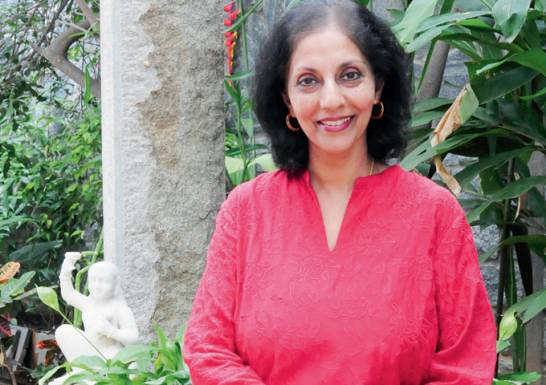
The writer is an anthropologist and independent author based in the city, who delves in to food, wine, travel and heritage. She is also behind A Gourmet’s Table In Coorg (http://coorg.com), her blog that explores the fascinating traditions of Coorg cuisine, food lore and special meals.

source: http://www.DeccanChronicle.com / Home> Channels> Lifestyle> Dine o mite / by Kaveri Ponnapa, DC / August 03rd, 2012
Temple to provide meals on Tulasankramana day

`5 cr to be spent on development of Bhagandeshwara-Talacauvery temple

Bhagandeshwara-Talacauvery temple managing committee has decided to provide meals for thousands of devotees who will visit the temple on Tulasankramana.

The decision was taken at a meeting held at Taluk Panchayat hall here on Saturday. It may be recalled that the committee had restricted supply of meals by various organisations in Mandya and Tamilnadu.

The committee okayed the action plan of Rs five crore. The fund was released by Cauvery Neeravari Nigama. Assembly Speaker K G Bopaiah said several associations are showing keen interest in supplying meals during Tulasankramana, which has created confusion in the temple premises. To avoid confusion, the temple committee has decided to supply meals this year. All those associations who would like to take part in supply of meals, can join hands with the temple committee, the meeting decided.

Talacauvery-Bhagamandala temples are religious centres. The committee will introduce dress code in the temple premises shortly, Bopaiah said.

The Speaker said that an action plan has been prepared to develop Talacauvery and Bhagamandala temples. Yathri nivasa, dining hall, and UGD work should be taken up in a scientific manner. The committee should bear 50 per cent cost for laying solar lamps in the temples.

District-in-Charge Minister Appachu Ranjan said few restrictions will be in force in Talacauvery and Bhagamandala temples as per the decision taken by the management committee. The temple should retain its sanctity. Bhagandeshwara Talacauvery Temple Managing Committee President Manu Muthappa said that paisari land near the temple should be handed over to the committee to construct quarters for the priests. ZP President Shantheyanda Ravi Kushalappa, Taluk Panchayat President Kavitha Prabhakar and others were present.

source: http://www.DeccanHerald.com / Home> District / Madikeri, DH News Service / August 18th, 2012

Bonding, super size


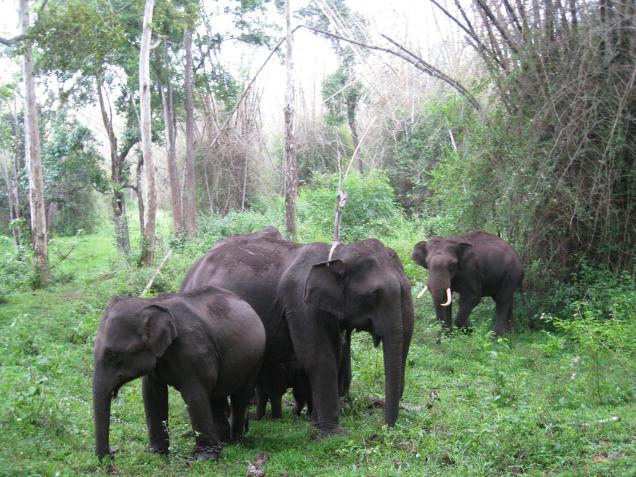
Tusker Country Watch elephants play in Dubare / Photo: Vijaya Pratap / The Hindu
We visit Dubare where elephants are trained and fall in love with them

Every time I visit Coorg, I fall in love with it all over again. Misty hills, tall areca palms, silver oak with pepper wines twisting around them, coffee plants growing in their cover, bright red hibiscus dangling from shrubs, emerald green banana plantations, one can’t help but fall hopelessly in love.

Close to Madikeri is Dubare Elephant Camp, a Jungle Lodges Resort perched on the edge of the forest. Where the woods end, the river Kaveri takes over. Huge trees on the banks, with the branches dramatically drooping over the water, make a picturesque setting. I reach camp and check into a cottage overlooking the river. Just below my balcony, I can see a myriad ripples merging into each other almost at my feet, while a symphony of cicadas, crickets, and bird calls alternates with delightful interludes of silence.

Gentle giants

I wait impatiently for daybreak and the safari. A smiling waiter bearing tea and a promise of cheerful, clear weather knocks on my door at dawn. Deep in the jungle, we find a group of elephants with two calves grazing. We stop and the driver switches off the engine. I click pictures to my heart’s content till suddenly, a huge tusker makes his majestic appearance, and with a loud trumpet suddenly comes really close, right in front of the jeep. I start getting jittery, but Jaya Prakash, the resort manager, is pumping courage. “Just wait and watch, continue your shooting,” are his cool words. My hands are too shaky to stay steady. The tusker comes closer, gives a loud trumpet in protest. ‘Why are you intruding?’ he seems to say. We maintain a guilty silence. He shakes his head and trumpets some more, as if to say ‘Ok… this time you’re pardoned, but not again,’ and starts to move away, his wife and baby following obediently. It’s a lovely sight, watching them disappear into the woods.

Dubare Forest, famous for its biodiversity and elephants, is a moist deciduous reserve forest with bamboo everywhere, which has flowered this year. This means the elephants have to go further into the Western Ghats in search of food. It is fun having elephants for company during mealtimes, though one can’t hope to compete with them in eating.

As I sip coffee, just below, an elephant downs water by gallons. An elephant just yards away is eating for hours at the same spot. The noise of breaking branches goes on till evening. Elephants have to eat 250 kg of food and drink 200 litres of water everyday to survive. All their time is used in eating, 16 to 20 hours a day, and they get hardly four hours of sleep.

I discover how harmless, intelligent and loving these animals are. We are allowed to join the mahouts to scrub the elephants down, as they placidly lie in the water. All of them are very obedient, except Ganesha, the 18-month-old tusker known for his mischief. Ganesha and another young calf who I name Karthik play and frolic most adorably, like two naughty boys. They roll over, they lock trunks, they go under, surface again. Karthik is weak, not a match to the robust first-born Ganesha, whose tusks have already started to emerge. But they play amicably, Karthik trying to keep pace with Ganesha. The staff complains that Ganesha is teaching the other one mischief! No different from our kids! After the bath, it’s breakfast time. Freshly scrubbed and shining, all the elephants line up to be fed huge balls of ragi and horsegram.

Jainu Kurubas are traditional mahouts, and even small boys can ride and control the animal. The mahout places his feet on both the animal’s ears and presses, using it as clutch and brake. He touches sensitive points like the forehead and ears with a little baton or ankush to stop and control the beast. He uses small commands and code language. I find it very interesting to see how the huge animal obeys even a little boy mahout.

Up to mischief

Mayura, a young tusker, is considered the most eligible bachelor. One day, as I watch him grazing, he slowly enters the campus and suddenly starts to uproot all the freshly planted saplings. The staff tries to stop him but he refuses to take anyone’s commands. Then, the mahout rushes to the spot and admonishes him, and Mayura meekly obeys.

After four days, I bid goodbye to Dubare. When I visit next, Ganesha will be a responsible adult tusker, wooing girl elephants. Mayura may be middle-aged by then and lose his place to Ganesha or Karthik (although I think will always play second fiddle to Ganesha!).

As Sattar starts his motor boat to take us back to the other bank, I look across the river and see Ganesha going for a bath with Karthik tagging along. My eyes mist over… I never knew such a strong bond could grow in such a short time.

source: http://www.TheHindu.com / Home> Life & Style> Travel / by Vijaya Pratap / August 10th, 2012

Rs. 100 cr. for mechanising operations in coffee plantations

Centre to provide subsidy to growers to purchase machinery during the 12th Plan period

The Centre has approved an outlay of Rs. 100 crore in the 12th Five Year Plan for implementing the scheme “Support for mechanisation of farm operations” in coffee estates.

Officials in the Coffee Board told The Hindu that the Centre would soon issue an order for implementing the scheme from the current year. The amount would be utilised for providing subsidy to coffee growers to purchase machinery. A sum of Rs. 20 crore would be utilised each year in the Plan period between 2012 and 2017.

SUBSIDY FOR GROWERS

While small growers owning less than 25 acres of plantation are eligible to get 50 per cent subsidy (up to Rs. 2 lakh) for purchase of machinery, large farmers are eligible to obtain 25 subsidy (up to Rs. 4.5 lakh). Self-help groups are eligible to get 50 per cent subsidy (up to Rs. five lakh). Nearly 97 per cent of coffee planters own less than 25 acres of estates in Karnataka.

LABOUR SHORTAGE

Officials said acute shortage of labour and rise in wages in traditional coffee growing States such as Karnataka, Kerala and Tamil Nadu is impeding expansion of area under coffee. The Board has decided to push for more mechanisation of farm activities in plantations to address the problem of absence of skilled labour.

MACHINERY

Planters could utilise funds for purchase of machineries such as weed/brush cutter, pit digging machine, telescopic pruner, hand-held/battery operated coffee harvester, sprayers, mini-tractors, power tillers, mini-transporters/rubber track carriers.

The Board has submitted proposals to the Centre seeking Rs. 1,200 crore during the 12th Plan period. The outlay during the 11th Plan period was Rs. 600 crore.

The Planning Commission, Commerce and Finance Ministries would approve various proposals on research and development, area expansion, replanting etc. in the next couple of months, officials said.

RAIN BRINGS CHEER

Heavy rainfall in the last few weeks is likely to boost the crop prospects in coffee growing districts of Kodagu, Chikmagalur and Hassan. “The situation was alarming a few weeks ago due to deficient rainfall. Heavy rainfall in the last few days helped control spread of the white stem borer disease afflicting coffee plantations,” a top Board official said.

White stem borer is one of the deadly pests that infects Arabica coffee plantations. Its larvae bores into the plant’s stem causing death of young plants. The older plants may survive but their yield is reduced and susceptibility to diseases increases.

EXPECTED YIELD

The Coffee Board has estimated output at 3.25 lakh tonnes in 2012-13 (October-September), which includes 1.04 lakh tonnes of Arabica, and 2.21 lakh tonnes of Robusta. “We analyse the output by the end of the monsoon,” the official pointed out adding that “it is difficult to estimate the production decline at this juncture”.

Karnataka Planters’ Association predicted decline in output in 2012-13 on account of poor monsoon rain in traditional coffee growing States.

source: http://www.TheHindu.com / Home> News> States> Karnataka / by Nagesh Prabhu / Bangalore, August 15th, 2012

Rajyavardhan Singh Rathore to head Arjuna selection committee

New Delhi:
Athens Olympics silver medallist shooter Rajyavardhan Singh Rathore will chair the 15-member committee, which will select this year’s Rajiv Gandhi Khel Ratna awardee and Arjuna award winners. Former hockey captain Aslam Sher Khan will head the 15-member committee which will select the Dronacharya award winners while sports secretary will be the chairperson of the committee which will select the Dhyanchand award winner.

Sources told TOI that London Olympics silver medal winner Vijay Kumar (shooting) and bronze medallist Yogeshwar Dutt (wrestling) will be considered for Rajiv Gandhi Khel Ratna, the country’s highest sporting award. All the other London Games medallists — Sushil Kumar, Gagan Narang, Saina Nehwal and MC Mary Kom — have already received the award.

Apart from several current and former sportspersons, the committees also have representatives from the Sports Authority of India (SAI) and the sports ministry. Rajiv Gandhi Khel Ratna Award consists of a cash amount of Rs 7.50 lakh, a scroll of honour and one medal. Arjuna award consist of a statuette, a scroll of honour, and a cash award of Rs five lakh. Dhyanchand Award consists of a plaque, a scroll of honour, ceremonial dress and a cash award of Rs five lakh.

To recognise the contribution made to sports development by entities other than sportspersons and coaches, the Government had instituted ‘Rashtriya Khel Protsahan Puruskar’. The Award carries a trophy and citation.

Khel Ratna/Arjuna committee:

Chairman: Rajyavardhan Singh Rathore (shooting). Members: Rajesh Kumar (wrestling), Ashwini Nachappa (athletics), Aparna Popat (badminton), Akhil Kumar (boxing), Khazan Singh (swimming), Baichung Bhutia (football), G Mulini Reddy (volleyball) KS Garcha (polo), Ravi Shastri (cricket), JS Saran, (Army Marksman Unit), Manoj Yadav (secretary, PSCB) Gopal Krishna (DG, SAI) Onkar Kedia (joint secy, sports), C Chinnappa (director, sports).

source: http://www.timesofindia.indiatimes.com / Home> Sports> More Sports / TNN & Agencies / August 15th, 2012

Kodagu at its best

DANCING DOWN THE HILLS:
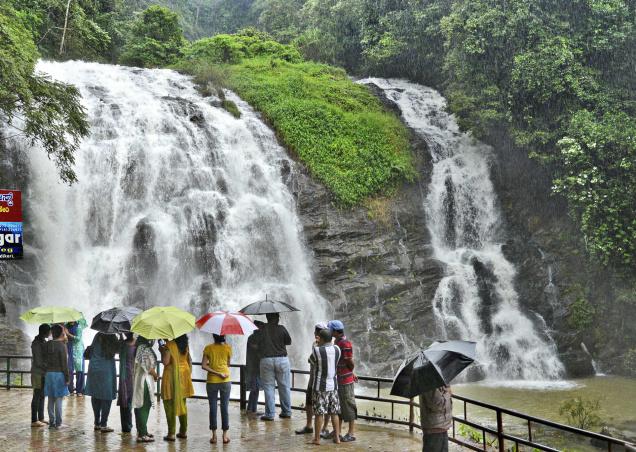
The Abbi Falls, 7 km from Madikeri in Kodagu district, has come alive thanks to heavy rains in the last few days. Located between private coffee plantations and spices estates, it presents a magnificent sight.The scenic spot is one of the popular tourist places in the region. / PHOTO: K. MURALI KUMAR / The Hindu

source: http://www.TheHindu.com / Home> National> Karnataka / Photo by K. Murali Kumarn / August 13th, 2012

Ganiga Samaja (U.A.E.) successfully conducts Blood Donation Camp in Dubai

Dubai, 09 August 2012:
The Ganiga Samaja, one of the prominent association of U.A.E organized a Blood Donation Camp on the occasion of Holy month of Ramadan. This blood camp was conducted at the Lathifa Hospital (Al Wasl Hospital) from 7pm to 10pm and a large number of blood donors participated in this successful blood donation camp.

All the members of the Ganiga Samaja Dubai (U.A.E.) were eagerly waited for the donors at the blood donation camp and welcomed them happily. The camp was held in a most cordial manner and the donors filled the forms, had tested prior to the blood donation and helped a great humanitarian deed. All donors felt and had satisfaction that by their donation they could save a few lives and also could help them to maintain their health as well.

In the donation many prominent personalities took part namely; Daya Kirodean (Dubai Karnataka Sangha), Balakrishna Salian (Vice President -Mogaveers, U.A.E.), Sudhakar Thumbe (President -Billawa Balaga Dubai), Sudhakar Alva (U.A.E Bunts), Prakash Rao Payar (Dwani Pratistana), Aruna Muthagadoor, Sadan Das (Kannada Koota U.A.E.), Murugesh Gajare(Basava), Ganesh Prasad (Kodagu Dakshina Kannada Gowda Association), Ashok Belman (Gulf Kannadiga), Prashant (Mangalore Media) and many other attended the blood donation camp.

The President of Ganiga Samaja Mr. Satish Venkataramanna and the organizing committee thanked all the participants of the first blood camp organized by them and were very grateful for all the donors.

On behalf of Ganiga Samaja, all donors who took part in this camp were gifted with Letter of Appreciation, T-Shirt, Pen and also Juice and Snacks were distributed by Chilly-Willy owner Mr. Satish Venkataramanna.

On the occasion of the Holy month of Ramadan, by organizing the first blood camp the Ganiga Samaja, Dubai (U.A.E) joined the elite group of various organizations of U.A.E who too conducted the blood camp and were lifted the value of a holy deed. This deed was greatly witnessed and endorsed by Government of U.A.E

source: http://www.bellevision.com / Bellevision Media News Network / by Ganesh Rai / Pics by Ashok Belman / Dubai, August 12th, 2012

Natural cave unearthed

The forest officials have recently unearthed a natural cave inisde the thick forest, in Kodagu district.

The cave is situated near Anderson stream inside thick forest at Vatekoli, which is 15 kms from Virajpet- Makutta road. The cave is 60 metre long and two metres in height. According to forest department officials, they have heard the sound of water inside the cave. “If there is water inside the cave, then it would be giving shelter to water creatures like fish, crab and so on. Realising the decrease in oxygen inside the cave, the officials did not make an attempt to move further inside the cave.”

The bats will welcome anyone who enters the cave. Normally, snakes live in and around those areas where bats live, say officials. Kodagu Circle Chief Conservator of Forest Deekshith said that the cave must have been formed by the flow of water through limestone and similar rocks. Water seeps into the pores and cracks of rocks and soil and bubbles beneath the earth above. Such caves are called as Solution caves.

The soil in the cave is a mixture of white and grey colour and is soft. The roof of the cave is strong. “We could not see the cave fully. The cave will provide an opportunity for the geologists to make a study. I will inform the State government on the discovery of a cave. If the government sends an expert, we will get more details on the cave,” said an official. It is said that the forest guards had discovered it a year ago. However, they had not informed it to the higher authorities. After taking charge, Deekshith visited the spot. In fact, he has marked the route to the cave through GPS.

source: http://www.DeccanHerald.com / Home> District / DHNS, Madikeri, August 08th, 2012

Actress Nidhi Subbaiah gets H-category MUDA site for excelling in sports

Mysore, Aug. 9
Kannada film actress Nidhi Subbaiah, hailing from Kodagu and a resident of Mysore, is among the 74 beneficiaries of H-category MUDA sites given to achievers in various fields.

Interestingly, the upcoming actress Nidhi has been allotted the site not for her performance in cinemas but for her achievement in the field of sports.

Before making her entry into the world of cinema, Nidhi had made her mark in international- level as a sports person by winning gold medals at National- level sports meets in sailing while she was studying II PUC in Mysore. She also has the credit of winning three gold medals in a calendar year at the sports meet in sailing events at Vishakapatnam in Andhra Pradesh and at Chilka Lake in Orissa.

Besides being a sports person of repute, Nidhi was also a Naval NCC cadet who won the best cadet award in the year 2004 before submitting an application to MUDA for allotment of a site in 2005.

The proud daughter of Bollachanda B. Subbaiah and Jhansi, Nidhi has been allotted a 30×40 site at Lal Bahadur Shastry Nagar under H-category in recognition of her contribution in the field of sports. [Presently, B.B. Subbaiah is the Hon. Secretary of Sree Cauvery Educational Institutions, Kuvempunagar].

Nidhi, who developed a flair for modeling while studying engineering at SJCE in Mysore, took to modeling before making her entry into the celluloid world.

She has featured in as many as eight TV advertisements including the one for the promotion of ‘Fair & Lovely’.

source: http://www.StarofMysore.com / Home> General News / August 09th, 2012

Motorists seek repair of Hunsur-Gonikoppal road

Mysore, Aug. 9
A group of people hailing from Kodagu have urged the State government to repair the Hunsur-Thithimathi-Gonikoppa road which is in a pathetic condition, making it nightmarish for the motorists.

The petition, signed online by 132 persons, was submitted by Bangalore-based journalist P.T. Bopanna. The petition sheds light on the unmotorable condition of the road passing through Anechowkoor Check Post.

Speaker K.G. Bopaiah, who represents the Virajpet Assembly constituency, has been requested by the people of that constituency to expedite the work on repairing the Hunsur-Gonikoppa road.

The road also comes under the purview of Hunsur and Periyapatna MLAs. However, they seem to be noncommittal towards the bad condition of the road since it is mostly used by the people of South Kodagu and Kerala State.

Though the government has sanctioned funds for the road repair, work is yet to commence as it is being delayed on the pretext of rains, alleged Bopanna in the petition and said that all people cannot be fooled all the time.

It may be mentioned here that some coffee-growers of south Kodagu, exasperated with the bad condition of the road, had pooled in money and filled up some of the crater-like potholes with several truckloads of jelly stones about two years ago.

Among the donors were former President of the Federation of Kodava Samajas M.N. Belliappa, Umamaheshwari Petrol Bunk owner Kollira Umesh and Star of Mysore Editor-in-Chief K.B. Ganapathy. However, if the government had responded positively then, the contribution would have been significant. But due to the divine neglect on part of authorities concerned, the condition of the road went from bad to worse.

The PWD engineers, when contacted in this regard, say that the road will soon be converted into an inter-State highway and under this pretext, they avoid initiating any action for the road’s repair.

The fact is that the motorists who frequently use this road are the victims of dirty politics. While the Lok Sabha member for Kodagu-Mysore constituency represents Congress, the MLA for Virajpet constituency is from BJP — Speaker Bopaiah. This road also comes under the purview of Hunsur and Periyapatna MLAs — Chikkanna and Venkatesh respectively — both from Congress.

Meanwhile, both K.G. Bopaiah and Youth Services & Sports Minister M.P. Appachu Ranjan — who are keen to fulfill the demands of Kodagu people and get the road repaired — have assured that the road work will commence from November.

It may be recalled, when some Kodagu citizens launched a protest against the un-motorable condition of this road, Police arrested them, booked cases and got them entangled in legal web. As a result no one is ready to participate in rasta roko as often happens on Mysore-Bangalore road. So our rulers are happy.

The govt., instead of performing its duty of providing basic infrastructure, is harassing citizens by fixing cases through the Police, in an attempt to bring down their morale. Is this democracy?

source: http://www.StarofMysore.com / General News / August 09th, 2012