Augustin A of Kodagu is Karnataka under-15 champion

Mangalore:

Augustin A of Kodagu has won the Karnataka State under -15 FIDE rated open chess championship that concluded here on Sunday. Overnight leader Augustin scored against local boy Sharan Rao in the ninth and final round to take his tournament tally to 7.5 points. Andria L D’Souza of Mangalore, Satvik M of Bangalore, and Amoga HA of Mysore, who all finished with 6.5 points apiece, were ranked second to fourth based on the tie-break scores.

In the final round, Augustin gained full point at the expense of Sharan in very short game. In the second board Satvik won the battle against local lad Shabdhik Varma in a game with Queens gambit orthodox variation. In the third board Amogha broke the black French defence in a typical middle game against Nikhil R Umesh Shimoga. Andria L D’souza with her black pieces employing the Caro Kann defence against local boy Vivekraj won in 54 moves.

Results : U-15 open: Ninth and final round: Augustin A (Kod) 7.5 bt Sharan Rao (Mlr) 6; M Satvik (Blr) 6.5 bt Shabdhik Varma (Mlr) 5; Amogha HA (Mys) 6.5 bt Nikhil R Umesh (Shi) 5; Vivekraj (Mlr) 5 lost to Andria L D’Souza (Mlr) 6.5; R Parthasarathy (Blr) 5.5 drew with Pangal Gopalakrishna Nayak (Mlr) 5; Ojas Kulkarni (Blr) 5 drew with Ananya S (Mlr) 5; Aditya Pai K (Mlr) 5 bt Sachin TV (Blr) 4; Sharan R Setty (Mys) 4 lost to Arjun Adappa (Mlr) 5; Ajay SM (Shi) 5 bt Chandan A (Put) 4; and Shreyash BS (Put) 3.5 lost to Shashwath S Mudenagudi (Hbl) 5.

source: http://www.articles.timesofindia.indiatimes.com / by Jaideep Shenoy, TNN / July 22nd, 2012

Kodagu Mahila Sanga holds free ‘Health Camp’


Well known dentist of the city Dr. A.A. Kuttappa inaugurating the free annual health camp for public, held under the aegis of Shree Kaveri Kodagu Mahila Sangha at Kodagu Sahakara Sangha premises in Jayalakshmipuram in city this morning.

Others seen are (from left) Ansoo Ganapathy, Dr. Padmini Kaveriappa, Dr. Somanna, Dr. Sonia Mandappa, Sangha President Parvathy Cariappa and Dr. Ramesh.

source: http://www.StarofMysore.com / General News / July 22nd, 2012

Speaker wants statehood for Kodagu; rips apart Unesco tag

Legislative assembly speaker KG Bopaiah disapproved of the Unesco tag for the Western Ghats and said he would vouch for carving out Kodagu as a separate state to preserve its green heritage.

Responding to presspersons’ questions on Wednesday regarding the World Heritage Site tag accorded to the Western Ghats , Bopaiah got miffed and said he hails from Kodagu and thus knows better about the issues concerning the region. He stressed that the heritage site tag was not needed as it would not have any positive impact on the region.

“We need not learn lessons from outsiders regarding protection of our forests. If we are given a separate state, we will show how well forests can be protected,” he said.

The speaker pointed out that the state government had deputed only three forest officers for the entire region. He said now the strength is five—which is still less—but the people of Kodagu have managed to save forests in the region. He said he would write to the Centre, explaining the futility of Unesco’s tag.
When he was asked about the resignation of BJP MLA from Kundapur, Haladi Srinivasa Shetty, he said he would answer such questions on the floor of the house rather than in a press conference.

Congress miffed

The Congress reacted strongly to Bopaiah’s statement about carving out Kodagu as a state. President of Karnataka Pradesh Congress Committee, G Parameshwar, said it was unfortunate that a person of Bopaiah’s stature had made a divisive comment.
“We condemn his statement. Such statements will strengthen the cry for a separate state of Kodagu,” he said, adding that the Congress would take up the issue in the legislature session. Opposition leader in legislative assembly, Siddaramaiah, too dubbed the speaker’s remark as unfortunate.

Later in the day, Bopaiah clarified his stance and said he had not made any divisive statement while talking about preservation of forests.

source: http://www.dnaindia.com / Daily News & Analysis / Home> Bangalore> Report / by DNA Correspondent / Place: Bangalore/Agency: DNA/ Thursday, July 19th, 2012

Why are other states eyeing B’lore models?

Giving the go by to an important fashion event slated for next week, Bangalore models will be in Chennai, walking the ramp for a fashion do. What gives?

While on the one hand, the city’s cover girls are upping and making their way to Mumbai, the demand for Bangalore models in cities like Hyderabad, Chennai and Kochi continues to be high. But why?

Flexibility of the models

That Bangalore is centrally located, well-connected and has a good market, could be a few reasons why models from the city get picked up. But the flexibility of these models in taking up offers is perhaps what helps them most in securing modelling assignments from other states. Chennai-based fashion choreographer Sunil Menon says, “Models from Bangalore are not as fussy as the ones from Delhi and Mumbai. They are not just practical and professional, but are alsosmart, well-behaved, and economical.”

Lack of opportunities in other cities

Bangalore offers more opportunities in terms of fashion as compared to the other southern states. Says Hyderabad-based designer Asmita Marwah, “It is not surprising that Hyderabad is not producing as many good models as Bangalore does. Hyderabad doesn’t have enough fashion events and when they do, they like to go for established names. There is not too much exposure in the city.” Sunil adds, “For fashion-related work, people always choose Bangalore, while for films it has to be Chennai or Hyderabad.”

Best grooming

Grooming is an important element that sets Bangalore models ahead of models from other cities. Fashion guru, Prasad Bidapa, who has been grooming models year after year, says, “Bangalore models set a great example, and fashion coordinators in the city market them well. So the opportunity is bound to be high. The problem with models from Mumbai and Delhi is their lack of grooming.”

Are other cities conservative?

There is no denying that Bangalore is more cosmopolitan than any other south Indian city. Asmita says, “Bangalore models being in such high demand may also have something to do with the fact that Hyderabad has a more conservative society than Bangalore.”

Budget and choreographer

The demand also depends on the budget and people involved with an event. Hyderabad-based model Reha Sukheja says, “The demand for models is not city-specific. A lot depends on the budget and the choreographer, who will opt for people he or she has worked with earlier and shares a good rapport with.” Sunil adds, “I’ve blocked a lot of models in the past because of their unprofessional behaviour. Bangalore models are a dream to work with and some of them are regulars in all my shows.”

Bangalore a fashion capital.

Bangalore can easily be considered the fashion capital of south India says choreographer Rahul Dev Shetty, “Bangalore is the melting pot of diverse cultures, not just for Indian cities, but foreign countries too. Since the style quotient is higher here, it motivates promising models from other cities to migrate here.”

Other cities not pushing hard enough?

Chennai-based model Rochelle Rao, who recently clinched the first runner-up title at the PFMI south contest, says, “Given that Chennai, Hyderabad and Kochi haven’t been pushing to find good models, the closest place to look for is Bangalore. Tagging yourself as a Bangalore model definitely ups your desirability and demand.”
taniya.talukdar@timesgroup.com

source: http://www.articles.timesofindia.indiatimes.com / Home> Fashion> Life & Style> Fashion / by Tanya Talukdar / TNN / July 21st, 2012

Profile: SK Uthappa

Sport: Hockey
Position: Mid-field

About
SK Uthappa:

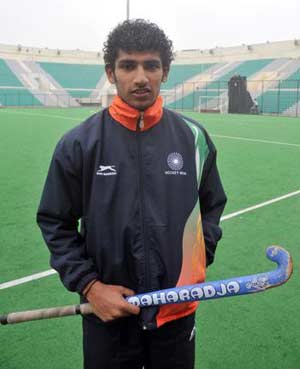
Belonging to the new breed of Indian hockey players who are both fearless and are adaptable on varying astro-turfs, Uthappa is an attacking mid-fielder who is on the move with passionate ease.

After stealing the show in the National championship in Bhopal, this player from Coorg has steadily worked his way to find a spot in the national team.

A well-build helps him in his game and his skill with the hockey stick has even had national coach Michael Nobbs rating him highly.

source: http://www.sports.ndtv.com / Home> Olympics 2012 / Friday, July 20th, 2012

Sandalwood biggies bike ride to Madikeri

This might sound unusual but then it happened for real. It is heard that recently some of the top shot heroes of the Sandalwood circuit went on a bike ride all the way up to Madikeri.

Leading from the front were Kicha Sudeep and challenging star Darshan. The bike gang also had the likes of Ravishankar, Chiranjeevi Sarja, Praveen and others.

All of them were in Bullet motorbikes and it is heard that they spent two days in Madikeri before returning to Bangalore. Sources say they spent the days having fun at a farmhouse belonging to Darshan’s friend.

source: http://www.BharatStudent.com / Home> News> Kannada Film News / July 16th, 2012

MTV adventure bikes a result of co-branding with Firefox Bikes


MTV Consumer Products have taken into their domain bags, stationery, debit cards, mobile phones and bed linen and has licenses with CitiBank, BILT, Micromax, Lava Mobiles and the like. They have now announced their new venture that is partnering with Firefox Bikes thereby taking their growth to a new level. The MTV Firefox association was spoken about extensively at the Delhi Auto Expo 2012. Since Youth Channel MTV tied up with Firefox Bikes, it was only natural that MTB biggies attended the launch ceremony.

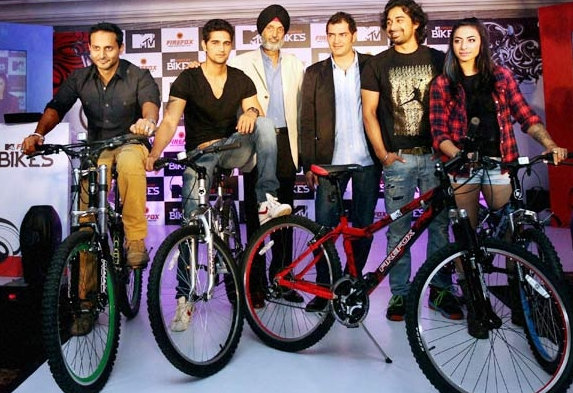
VJ Nikhil Chinappa, MTV Roadies season 9 winner Vikas, VJ Bani and VJ Rannvijay attended the launch of Firefox MTV bikes in the New Delhi on Tuesday. They were all seen astride these spectacular sports bike models like the 24 Thor, 26 Smoke, Dirt and Hades which are all priced between Rs.10,000 and Rs.16,000. The company is growing at a rate of 60% over last three years and this year too they are poised to gather momentum as they partner 22 new categories. Partnering with Firefox bikes is a rather new segment that the company is entering into. The Channel was launched in 1981 and ever since then has grown by leaps and bounds to change the way of TV viewing and the music industry.

MTV fans are connected on a global basis even outside TV with exciting products to choose from. MTV Indian market is large and has caused a significant way in which people do business today. The launch of MTV adventure bikes paves the way for more MTV licensed products and would see them venturing into new and bolder areas.

source: http://www.rushlane.com / Home> General News / July 19th, 2012

India’s One Big Shot at Olympic Glory

The field hockey team holds the country’s greatest hope for a medal at this year’s games—but its heyday may be too far in the past.
AP Images
In India, cricket is the national obsession, but it is actually field hockey that is its official game, with a more deeply embedded history within this patchwork of nations. Field hockey is the country’s most decorated international sport, and the men’s national team is the most accomplished in the Olympic event’s history—winners of 11 medals, including eight gold, dating back to 1928.

As the world’s second-fastest growing economy strives for more influence among the most powerful nations on earth, many of India’s 1.2 billion citizens view field hockey as the country’s best shot at making a statement on sport’s largest international stage—given that cricket is not an Olympic sport. Indian field hockey has fallen off in recent years though because of a lack of success, with the national team hitting rock bottom in 2008 when it failed to qualify for the Olympics for the first time ever. Hockey’s “Black Day,” as it is known, was a near-lethal blow to a sport that has been in freefall since India won its last Olympic medal, a gold, in 1980. Support for hockey has waned ever since.

But buried deep within many Indians is a hope that hockey glory will return. That longing was mirrored in Chak de! India, an award-winning 2007 film starring Bollywood’s top star, Shah Rukh Khan. It chronicled the rise of the women’s national hockey team. Today, there is even talk that Khan, whose image graces billboards and auto-rickshaw rearview mirrors nationwide, will play Indian hockey legend Dhyan Chand—the Pelé of hockey—in another upcoming film.

“I think there is always a potential for hockey,” said Arjun Halappa, a former captain of the national team, as well as one of the country’s top players the last decade. “Everyone might say hockey is gone, but still if you look into India, emotion is always there for hockey. After cricket, you can draw a crowd only with hockey.”

A RIGHT TURN and a drive down a back road from the congestion and chaos of the main drag takes visitors to the Sports Authority of India complex at the center of the southern city Bangalore. The sprawling campus is a lush and peaceful village protected from the usual accompaniments of a large Indian city—street noise, discarded food containers littering the ground, and people, everywhere. Its distance from the hustle and bustle allows it to stay free of all the clutter and dust. It is an oasis in the desert.

It’s still above 80 degrees as this late-March evening nears 6 p.m. and water is sprayed onto the Astroturf, a practice that helps slow the pace of the playing surface. The players have just finished warming up on the nearby track and are sipping cups of hot tea. The smell of burning leaves and garbage lingers in the air.

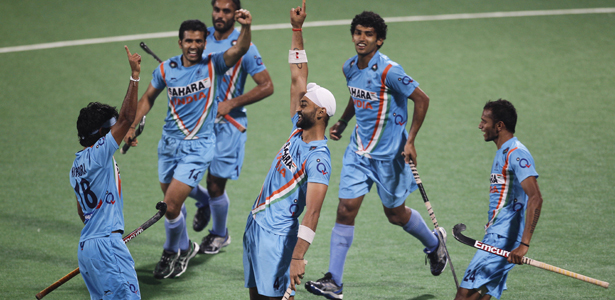
National team coach Michael Nobbs, a tall, portly Australian brought on to reestablish the team on the international scene, drops the ball on one end of the pitch. Bursts of Indian blue from players’ jerseys, with highlights of orange and white, surge through the waning day’s light. Soggy footsteps are everywhere. A brood of brown-feathered kites, long-winged birds of prey, circles high overhead.

At the other end of the turf, the short corner experts—a distinct position comparable to soccer’s star penalty kickers—are working on their first session of swings during this training camp. The band of three practices the drag-flick, essentially a 75 mph wrist shot about 15 yards from the goal. Among the trio is Sandeep Singh, the biggest name in Indian hockey right now. The 26-year-old Sikh from the northern state of Haryana has suddenly become the face of the sport after an impressive showing at the victorious Olympic qualifier held in Delhi in late-February.

Sandeep, a former captain of the national team and a winner of the 2010 Arjuna Award, the nation’s top sports honor, is the David Beckham of Indian hockey. He is a talented specialist, but his defense and value outside of this knack for set pieces has in the past been called into question. After a stunning performance to help push India over the top and back into the Olympics, which included 16 goals on penalties in six matches, he is riding a sudden wave of celebrity, endorsements and bonus money as the sport moves toward professionalization.

He has a long neck and at 6’1″ is taller than most Indians. His legs sprawl out as he sits on a metal bench chatting after practice. As is customary among Sikhs, he dons a turban—his a white wrap around his head and a coil of covered hair at its front–to go with his youthful face and well-kept beard. The Olympic rings permanently inscribed on his right arm signify him as only one of two members on the current squad to have played in the Games before, in 2004.

“In the past, we were just playing for our self-respect and country respect,” said Sandeep. “We [were] just playing for our country, plus we want to wear Tiranga, the three colors of the flag. Now in hockey, money is coming and sponsors are coming, so now is good. But before, no sponsor, no money. We [were] just playing for our country, not for money, not for nothing.”

While tradition dictates that nearly all of the national team players are given well-paid, mostly symbolic government jobs—Sandeep is a deputy superintendent of police in his home state; others are provided positions with the military or in the public sector—players have begun trying to cash in more aggressively. Sandeep and another Indian thought of as one of the best in the world, Sardara Singh—the two are unrelated, Singh is the Smith of India—have already signed deals with companies such as Reebok, Mountain Dew, and the Jaypee Group, a large Indian engineering conglomerate. Sahara, a corporate financial firm that also invests heavily in cricket, along with telecommunications giant Aircel, have stepped up as primary sponsors of the team. The national and state-level governments also frequently shower players with monetary rewards for successful tournaments.

“Everybody wants money,” said Sandeep. “If we have good money in hockey, no problem. We have small money, but everybody wants money. That’s why there are problems.”

Indeed, for those players either not on the national team or not featured as stars, the money does not come quite as easily as it does for Sandeep and Sardara. On top of that, though the enthusiasm for hockey has been reignited, a now-typical Indian conflict—old world tradition versus potential new world success—threatens to derail the sport altogether. Enter the privately sponsored World Series Hockey (WSH) league, which aims to make hockey the “‘sport of choice’ for young Indians,” and has started signing players to huge contracts. The draw to play for the unsanctioned tournament seems clear—a choice that the sport’s governing body subsequently deemed worthy of disqualification from the Olympic team.

A group of veterans from the national team has been cast off for joining the WSH, including Arjun Halappa. Perhaps more notably, Rajpal Singh, the most recent captain of the national team, who was awarded the Arjuna trophy in 2011, was also booted from the squad.

Just this past September, under the newly hired Nobbs, Rajpal guided India—without Sandeep and Sardara because both were serving behavior-related suspensions—to a penalty shot victory over archrival Pakistan in the final of an international tournament in China. Shortly after, Rajpal spoke out about the poor treatment of players by the federation and found himself stripped of his captain role. The coaching staff soon floated questions about his physical fitness level following a recent marriage and appendix surgery, both of which saw him miss significant time, and he was eventually sacked.

“There are more politics in sports than in politics,” said Indian hockey historian K. Arumugam, who is finishing his 14th book on the subject. “Politicians here have even said that. [The government] has a long way to go, but they’re going in the right direction. But the federations, they don’t have any motives to go in the right direction because they are not run by competent people. They certainly don’t change their mindset.”

Disappointed to not be on the Olympic roster, the 29-year-old Rajpal, a wiry man with penetrating brown eyes and a long face blanketed by a scraggly, jet-black beard, explained his feelings on the unlikelihood of ever representing his country on the grandest of international sporting platforms, a common dream among many Indians, following a World Series match in the capital city of Delhi in March.

“Hockey for me is special,” said Rajpal. “I always play for the passion. I play hockey because I love to play, not play for the Olympics. But this is not the end of the road. I always play good hockey, whether for my club, my state, or my country.”

While the Indian team recently managed to qualify for the 2012 Olympics, with a spate of coach firings and strategy overhaul since 2008, and now this player turnover, it is clear Indian hockey is at a turning point.

“It’s on its last legs, though everyone wants it to survive,” said Sharda Ugra, deputy editor of India Today. “Whichever way it goes, it will signify the resurgence, or the end.”

THE GOLDEN ERA of Indian hockey began when Dhyan Chand led the team to three consecutive gold medals. The team added three more, for a total of six in a row, the next three Olympics. India utterly dominated the sport during this period, going undefeated in international competition between 1928 and 1956, adding five more medals—two gold—to bring the total to 11 overall.

That hockey medals account for more than half the country’s 20 Olympic medals over 112 years, dating back to India’s first appearance in 1900 as a British occupied territory. Aside from a bronze in wrestling in 1952, since the hockey team’s first medal in 1928, the country did not medal in any other sport until 1996.

Twenty medals is a paltry take for a country of more than 1.2 billion people. Compare that to Brazil, a place often grouped with India because of their corresponding stages of recent economic development. The South American country has won more than India’s total haul in just the last two summer Olympics combined. China—another natural comparison to India because of the two countries’ similarly sized populations—won 100 medals in just the last summer games alone, which it hosted in Beijing in 2008. Even tiny Jamaica, with a population of less than 3 million people—fewer than some parts of Delhi—has won 55 medals, in seven fewer Olympic Games.

India’s Olympic record is one of the globe’s worst. Despite all this and the many systemic problems within Indian field hockey, come the end of July with the beginning of the Games of the XXX Olympiad, all eyes will be trained on London to watch the Indian team.

“What really gets Indians kicking is an India versus Pakistan match,” explained Gaurav Singh, who is trying to start a foundation to recapture interest in hockey at the grassroots level under the name of his grandfather, hockey legend Dhyan Chand. “The passions are running high and if they come out winning, the streets are jam-packed, flags are waving everywhere, and that’s what sport is supposed to do–make [people] feel like they, while watching from the stands, have achieved something.”

Hockey may not be the answer to the country’s acute problems—according to the government’s own estimates, about 450 million live on less than $1.25 a day. While between 50 and 100 million have risen above the poverty line over the last 20 years, India’s economic and social problems are vast at least in part because of the government’s ineffectiveness. But a rejuvenated national team can boost some broken spirits, raise morale and unify this sundry of statesmen. For now, these hopes rest on the team’s performance in London.

“You have the youngest population on the planet,” said coach Michael Nobbs in his heavy Australian accent. “You have 400 million 15 year olds and under. You have 200 million middle class and up. You have the greatest talent pool in the world. You just have to pump the funds in for these kids and you will have Olympic medals jumping out of your ass within 10 years, no doubt about it.”

Nobbs often says that the plan he has installed is one of long-term goals, not necessarily of short-term results. He says that his target is for his 10th-ranked team in the world is to finish in the top six or eight out of the 12 countries appearing in London this summer. Australia, Germany, and The Netherlands remain the teams to beat in the only event for which the United States didn’t even qualify. But anything less than a podium finish might not be enough for some. “Everybody wants to bet on the winning horse,” said Gaurav Singh.

Indian hockey’s future and survival depends on the support of the country’s citizens. Although the team has qualified for the Olympics, they were outscored 21-3 in four friendlies—all losses—in early May against three of the top four teams in the world. A week ago, India traded disappointing one-goal games with the 12th-ranked South African team. The men in blue then lost in their final two warm-up matches before the Olympics, to No. 4 Great Britain and No. 5 Spain, both of which should be a contenders at the Games—the same status India is striving to achieve to once again inspire the next generation of Indian players, as well as its people.

source: http://www.theatlantic.com / Home> Entertainment / by Kevin Fixler – Kevin Fixler is a writer based in Oakland, California. His work appeared on Yahoo! and ESPN / jULY 19TH, 2012
Appachu Ranjan secures a berth after a long journey

The third-time MLA from Kodagu has risen through the ranks

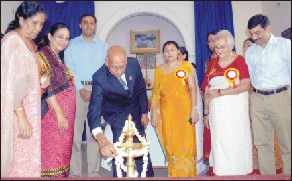
Becoming a Minister is a big reward for Mandepanda Poovaiah Appachu Ranjan, the third time MLA from Kodagu — two times from the Somwarpet constituency and currently from Madikeri constituency. It has come only after treading an arduous path and rising through the ranks of the BJP.

Mr. Ranjan, perhaps, would not have had an inkling that he would be present one day to swear in as the Minister with his traditional Kodava costume – kupya , chale , peechekathi , and mandetuni . He would not have dreamt of this scenario when he was chosen as the president of the Sri Ganapathi Temple Management Committee at Madapur, a sleepy town in Somwarpet taluk of the district in the 70s.

After being active in public life as the member of the Kumbur School Development Management Committee, president of the Madapur VSSSN, correspondent of the Chennamma Junior College in Madapur, director of the Kodagu District Coffee Growers Society in Madikeri, member of the Kushalnagar APMC, he was formally elected as a mandal panchayat member.

Mr. Ranjan’s foray into politics came in 1980 when he was elected president of the BJP youth wing in Madapur. He occupied the post of the Somwarpet taluk BJP president from 1986 to 1991 and later served as the president of the Kodagu BJP unit from 1991 to 1995. It was during his tenure that the BJP stormed the Congress bastion in Kodagu to win all three Assembly segments, others being D.S. Madappa (Madikeri) and H.D. Basavaraj (Virajpet). Somwarpet constituency was done away with during the delimitation after which Kodagu was reduced to Madikeri and Virajpet constituencies.

Comeback

Mr. Ranjan won the Assembly elections for the first time from Somwarpet in 1984 serving till 1999. He won again for the second time from the same constituency in 1999 to stay till 2004. However, he lost to B.A. Jivijaya of the Congress (now with JD(S)) in the next election. Mr. Ranjan came back in the 2008 elections winning from Madikeri constituency.

He rose to prominence by being the Chairman of the Privilege Committee and Petition Committee of the legislature. He served as the Chairman of the Karnatake State Sports Authority in 2008 as also Karnataka Land Army Corporation Limited in the same year. Mr. Ranajn is a member of the State BJP Executive Committee.

A Bachelor of Arts graduate, he was born on September 11, 1957. Mr. Ranjan is known as a progressive agriculturist and coffee grower. He originally hails from Chembebellur village near Virajpet town in Kodagu and is married to Ponnamma. His first son Poovaiah is an engineer in the U.S. and second son Cariappa, a doctor, also in the U.S. Daughter Kshira is a dentist. Mr. Ranjan’s brothers too have identified themselves with the BJP prominently.

His immediate younger brother Shuja Kushalappa is the president of the Virajpet taluk Akrama-Sakrama Samiti while his youngest brother, M.P. Sunil Subramani is a prominent member of the State BJP Executive Committee.

Celebration

Expectedly, the BJP members burst crackers at the General K.S. Thimayya Circle in Madikeri on Thursday to celebrate the induction of Mr. Ranjan into the State Cabinet. Reports of celebrations have come in from other parts of the district.

The BJP workers feel elated that the BJP Government has finally found someone from Kodagu to handle the job of district in-charge Minister.

It had become a custom with the successive governments to depute a Minister from outside the district as the Kodagu District in-charge Minister.

source: http://www.TheHindu.com / Home> National> Karnataka / by Jeevan Chinnappa / Mysore, July 13th, 2012

Tata group’s drive at rainwater harvesting

Mumbai, JULY 14:
The Tata group, which has recycled 1.69 million kilo litres of water across all its entities in 2010-11, is moving to play a major role in rainwater harvesting and groundwater recharge.

While over 30 Taj hotels have zero water discharge, 14 hotels have installed rainwater harvesting techniques. The latter helps to recharge groundwater.

The group has also installed desalination plants in hotels that are close to coastal areas. These initiatives have helped the $100-billion conglomerate reduce the demand from fresh water sources.

Similarly, at Tata Coffee, rainwater harvesting and management of water bodies along the Western Ghats in Karnataka have been undertaken on a war footing.

With the majority of the coffee grown in South India, more so in Karnataka, the company noticed the rainfall pattern had been changing over the years. The planting district has seen an annual rainfall drop by one-third — from 106 inches per year to 70 inches. Kodagu region (in Karnataka) faces a drought-like problem, especially from October to April, when water requirement for coffee and paddy is critical.

Coffee growers, who had not given a thought to irrigation, have had to build water sources by digging tanks in catchment areas.

Tata Coffee, which holds 497 million gallons in its rainwater harvesting tanks, is now looking to bridge the gap between demand and storage of rainwater.

“The most important concern in the Karnataka project is the efficient use of water. Data related to the area, geography, rainfall, water runoff, soil capability, water level, water quality, and water use pattern are available with us. Based on this data, the plan is to initiate a total package of water,” said a company spokesperson.

The package will address the issue of economy of water harvesting, water management and optimum agricultural production correlated with water use.

Similarly, though many of the Taj group hotels harvest and utilise rainwater, 35 per cent of Gateway, Luxury and Vivanta Taj hotels reused treated effluent for horticulture in 2010-11. They have also recycled process water to achieve zero water discharge. This is significant, since luxury and business hotels have large water requirements for landscaping and the swimming pool. Several of the Taj hotels’ 100-odd properties have been investing in water saving methods.

amritanair.ghaswalla@thehindu.co.in

source: http://www.thehindubusinessline.com / Home> Companies / by Amrita Nair-Ghaswalla / Mumbai, July 14th, 2012