‘Coffee is becoming trendy’

SPECIAL FEATURE: GLOBAL INVESTORS MEET
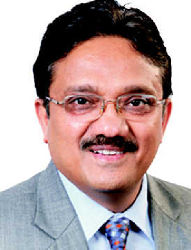
Javed Akhtar, Chairman of Coffee Board

IN the late 1960s and early 1970s, good grade coffee beans and powder were in short supply in India. One could buy them only at specially established coffee depots. There would be long queues at these depots to collect a token to purchase the beans or powder. The beans would be taken home, roasted, ground by manual grinders and then used to produce the best-smelling, best-tasting filter coffee. Today, coffee is in abundance, and there is a wide variety of beans to choose from, thanks to improved methods of cultivation, increased production and the liberalisation of the Indian coffee industry.

The credit for promoting the flavour of coffee must go to the Coffee Board of India. Set up under an Act of Parliament in 1942, the Coffee Board is an autonomous body functioning under the Ministry of Commerce and Industry. Its main focus is on basic and applied research in coffee, quality upgradation and promotion of coffee in the domestic and international markets. The Coffee Board until 1995 had a pool (controlled) marketing system for coffee. With economic liberalisation, coffee production became a strictly private sector activity. The board’s Central Coffee Research Institute, located in Chikmagalur district in Karnataka, is one of the premier coffee research institutes in the world.

The Coffee Board will, without doubt, be one of the star attractions at GIM 2012, promoting coffee and showcasing its many flavours. On the eve of the GIM, Javed Akhtar, the Coffee Board Chairman, took some time off to speak to Frontline. Excerpts from the interview:

What plans does the board have to promote coffee?

Coffee consumption in the country has been growing at a rate of 5 to 6 per cent a year. At present, coffee consumption is over one lakh tonnes a year. From being a traditional beverage consumed mainly in south India, coffee has become a trendy beverage with a national presence, consumed in several forms. Its strong presence in the domestic market provides many avenues for enterprise development.

What has facilitated this growth in consumption?

The growth of the domestic market has been possible through the promotion of awareness and consumption of pure coffee. This has been done through generic promotional campaigns using mass media and participation in domestic events and festivals. To facilitate entrepreneurial development in the coffee value chain, the Coffee Board has been training people in coffee roasting and brewing. This business vertical is complemented by providing support for setting up roasting units.

The Deputy Chairman of the Planning Commission Montek Singh Ahluwalia has suggested that tea be declared the national drink.

I am not aware of any drink being declared as the national drink. Anyway, we don’t position coffee as competing with any drink.

How do you plan to attract investors to the coffee industry?

The strong growth in coffee consumption is throwing open opportunities for value addition. The outlook for this sector is much more attractive, given the continuing industry dynamism. The interest in the domestic coffee market can be seen by the high level of investment in the sector with the establishment of a Lavazza unit, the entry of Starbucks [which has a tie-up with Tata Coffee] and the arrival of Dunkin’ Donuts [a United States-based coffee and baked-goods chain]. It is also seen that the existing coffee retailers such as Café Coffee Day, Costa Coffee, Coffee Bean &Tea Leaf, Gloria Jean’s Coffee, Aromas, Au Bon Pain and Testa Rossa are planning to expand their businesses to capitalise on this enthusiasm for coffee. At the same time, small and medium roasting units and stand-alone cafes are also finding their way into niche coffee market development.

Growers complain of a lack of stability in coffee prices.

The price of coffee has never been stable. It depends on demand and supply, the quantity and quality of harvest, the powerful and influential secondary markets in London and New York. Though coffee is grown in developing countries, it is consumed in developed countries, so the state of the economy of these countries goes a long way in determining the price of coffee. What is needed to be provided to the grower is good/adequate returns in capital and labour costs.

Growers complain of a cartelisation of prices by big growers.

There are around 74 or 75 coffee exporters, among whom 10 are big. But there is no cartelisation of prices. There is also no abnormality of prices and it is a free and mature market.

Ravi Sharma

source: http://www.frontline.in / vol.29 , issue. 11 , june 02-15, 2012
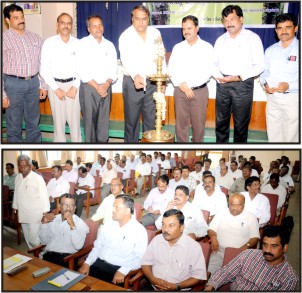
Workshop for forest officers

200 officers participate

G.V. Sugoor, Additional Principal Chief Conservator of Forests (Development), inaugurating a workshop on Afforestation of agricultural land, organised by the Forest Department at the Aranya Bhavan in Ashokapuram in city this morning as (from left) CF Vijay Kumar, CCF Cariappa, CCF (Chamarajanagar) Dilip Kumar Das, CCF K.H. Nagaraj, DCF D.S. Gaonkar and ACF C.P. Durgegowda look on.
Picture shows a section of officers attending the workshop.
Mysore, May 30

A day-long workshop for Forest Officers on ‘Afforestation of agricultural land’ organised by the Forest Department began this morning at Aranya Bhavan in Ashokapuram here.

Inaugurating the workshop, Additional Principal Chief Conservator of Forests G.V. Sugoor said “The scheme started during 2011-12 is aimed to motivate farmers to plant trees in their agricultural lands.”

He further said that a minimum of 400 saplings should be planted per hectare and the department will provide the approved variety of saplings to the farmers along with Rs. 10 per sapling as an incentive.

Apart from this, the farmers will get Rs. 15 and Rs. 20 during the subsequent two years based on good maintenance of the saplings, said the Addl. PCCF adding that Mysore district has topped in performance with 49 lakh saplings planted last year.

Sugoor advised the participating officers to meet the farmers and motivate them on the novel concept. He also asked them to maintain the nursery in good condition.

Taking a strong objection to the absence of forest officers from Kodagu district, Sugoor said that they would be issued notices.

About 200 DCFs, ACFs and RFOs of Mysore, Mandya and Hassan are attending.

CCF Dilip Kumar Das and CCF K.H. Nagaraj were present

source: http://www.StarofMysore.com / General News / may 30th, 2012

No UNESCO tag for Madikeri

Madikeri:

Madikeri Taluk Budakattu Krishikara Sangha president Kudiyara Muthappa said that the district will not receive the World Heritage Site tag in the near future.
He told reporters here on Wednesday that they received an official note from UNESCO’s World Heritage Committee which stated that they had received global objections to the issue, including from the district.

Hence, the highest deciding body on the tag has decided to drop the proposal.
The Ministry of Environment and Forest can submit a fresh proposal for nomination after three years in this regard, he added.

The Sangha had submitted a joint appeal to UNESCO opposing the tag in their respective areas quoting the reason as lack of implementation of the UN Declaration on the Rights of Indigenous People in the context of UNESCO’s World Heritage Convention.

The main objection raised by the Sangha was that the local people weren’t taken into confidence nor were they informed about the tag, he said.
Even after six years, the Recognition of Scheduled Tribes and Other Forest Dwellers Act-2006 had not been implemented and those who were living in the forest and adjoining areas were being evicted citing various Forest and Wildlife Acts, he alleged.

This was the main objection raised in the letter to UNESCO. Denying forest rights is a sheer violation of human rights of adivasis and other forest dwellers, he added.
Hence, the World Heritage Committee decided to defer on the nominations and called upon the Union Government to consult and collaborate with indigenous people.

He also released copies of the letter they had written and the replies too.
He also released the letter written by Union Minister for Tribal Affairs V Kishore Chandra Deo to all the Chief Ministers of the country quoting various problems in the implementation of the Recognition of Forest Act.

It may be recalled that the district was included in the list of World Heritage Sites as it is covered by the Western Ghats.

source: http://www.ibnlive.in.com / Home> South> Southern News> Karnataka / The New Indian Express, Express News Service / Karnataka, May 31st, 2012

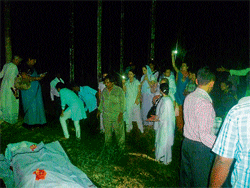
Israeli priest cremated in Gonikoppa

He had embraced Hinduism out of choice

The body of an Israeli priest who got converted to Hinduism out of choice after being influenced by Hinduism, was cremated at Hosur near Ammathi on Wednesday morning.

Itamar Oran Narada Muni (67) was cremated as per the Hindu rituals in the land belonging to local residentKuppanda Rajappa. Eight associates of Itamar along with villagers were present during the cremation.

As per the law, the Associates had taken permission from the Central government and Athur Gram Panchayat to cremate the body.

Itamar was residing in Israel during his last days. He had expressed his desire to be cremated in Karnataka.

Though he had died on April 24, his Associates who had kept the body in mortuary were searching suitable land for cremation.

Though his associates had decided to cremate the body at Koodige Mallenahalli near Kushalnagar, there was stiff opposition from the villagers.

source: http://www.DeccanHerald.com / Home> District / DHNS, Gonikoppa / May 30th, 2012

South sips tea, North cool with coffee

Bangalore:

Coffee in the North, tea in the South. In a reversal of preferences, more coffee is being consumed in North India while tea is gradually becoming the preferred drink of the South. And it’s by choice, say industry experts.

Coffee consumption has gone up by 6% in the past few years while tea consumption has shown a 3% annual growth, with both registering thumping increase in hitherto lean-consumption regions. A recent survey by Coffee Board of India, Bangalore shows that of late, more than 50% growth has come from non-South regions. The count of casual coffee drinkers has increased significantly in the past few years in the non-South regions.

“Growth opportunities lie with occasional drinkers and more so in North, East and West of India, which are potential segments to tap”, said a coffee board official.

It’s a similar story in tea. Karnataka records a per capita consumption of 822gm and features in the second highest tea consuming states category. These are in the 800-1,000gm category and include Himachal Pradesh and Rajasthan.

“India is the world’s largest consumer of tea in terms of volume. The domestic market growth has been very significant with non-southern states definitely showing a substantial growth,” G Boraiah, director, development, Tea Board of India, Kolkata, told TOI.

Reasons for shift

“Tea is high on medicinal value. Cities like Bangalore boast of a huge youth base, with access to literature and online information, and they’re perhaps making a conscious decision to switch to tea,” said Boraiah. Significantly, older people in the South still swear by coffee. South India continues to have the largest number of coffee drinkers.

“Tea contains anti-oxidants which are beneficial to the human body,” said V G Dhanakumar, director, Indian Institute of Plantation Management (IIPM), Bangalore. An initiative of the Ministry of Commerce and Industry, Government of India, IIPM is co-promoted by the commodity boards viz. Coffee Board, Rubber Board, Tea Board and Spices Board and Plantation Industry Association.

The growing popularity of coffee, including in the North-East (known to be the biggest tea consumers) can be attributed to the many international coffee chains. In southern states, with a rise in migrant population, coffee is steadily giving way tea.

“Thanks to visibility, interest and growing popularity, coffee consumption has grown thanks to increasing number of coffee bars and cafes. The primary reason has been a significant shift in demographics, increased urbanization and greater disposable income levels,” said a coffee board official.

Coffee Trends

* Consumption has shown an annual average growth of about 6% in past decade — from 70,000 MT (metric tonnes) to 1,02,000 MT till 2009

* Consumption has increased in six years by about 32,000 MT, of which more than 50% growth has come from non-south regions

* Consumption has grown in non-south regions at 42% annually (5456 MT to 21,558 MT) while it has grown by 3.5% annually in southern states (64834 MT to 80538 MT)

(Source: Coffee Board of India, Bangalore)

Tea Tale

Year Estimated consumption (at 3.7% growth)

2010

889.15

2011

922.05

2012

956.16

2013

991.54

2014

1028.23

2015

1066.27

2016

1105.73

2017

1146.64

(Consumption in million kg)

(Source: Tea Board of India, Kolkata)

source: http://www.articles.timesofindia.indiatimes.com / Home> City> Bangalore / TNN / May 29th, 2012

Modelling is fun — Ashwini

“It all began after our doubles triumph at the Delhi Commonwealth Games. Jwala (Gutta) and I did a shoot for a magazine supplement, with makeup on and much prompting from photographers. Jwala moved far more freely, while I was more guarded,” recalls Ashwini of the quiet and reserved traits she typifies. By A. Joseph Antony.
K. RAMESH BABU

Ashwini Ponnappa could well be the Ferrari of Indian badminton, all feline flair, yet packing punch and panache, carried over easily to the ramp. She may not launch a thousand ships, but should make a mark in modelling, where non-cricket sportspersons are rarely sighted.

“During a game, a fall needs only dusting off, but on the catwalk it spells disaster. Mercifully, there have been no awkward moments on either stage. While modelling for me is fun, to the professional it’s a lot more serious,” observes the 2011 badminton World Championship women’s doubles bronze medallist.

“It all began after our doubles triumph at the Delhi Commonwealth Games. Jwala (Gutta) and I did a shoot for a magazine supplement, with makeup on and much prompting from photographers. Jwala moved far more freely, while I was more guarded,” recalls Ashwini of the quiet and reserved traits she typifies.

An audio-visual TV commercial shoot for a Delhi real estate firm came next. “Dialogue delivery in English was a cakewalk, but tough in Hindi,” says the Bangalore-born lass, harking to her totally south Indian roots in breathtakingly beautiful Coorg, home to the martial race that produced famous Indian warriors, Field Marshall Cariappa and General K. S. Thimayya.

Some still photographs were taken of India’s dominant doubles duo for Li Ning, their sponsor, comprising shadow movements. With no briefing, preparation or rehearsal, Ashwini walked the ramp, dressed elegantly, yet casually, to support People for Ethical Treatment of Animals (PETA).

“I watched the others before me and simply did the same. I walked down till the end of the ramp, paused for a moment and headed back. That stroll was short but sweet,” she says.

From the ferocity of on-court smashes, she’s genteel and gracious off it. “I like it when I can recognise myself. I hate makeup (she doesn’t really need it). It’s a lot easier smiling endlessly, say for a video than appearing serious in a still shoot, which needs a wider range of expressions or innovations,” says the fledgling model.

“Confidence is a must for both, although playing is a lot easier. While I’ll chase more titles in badminton, I won’t pursue modelling offers but instead wait for them to happen. After all, it’s the game that’s made me,” she reflects, leaving little doubt about her priorities.

She doesn’t ‘skirt’ the issue that raged recently in the sport. “It’s smarter wearing attire meant for women rather than appear like men, although some see dressing up well as lack of focus. To each her own, but if skirts in squash or tennis don’t raise eyebrows, why the fuss for badminton,” she asks.

Comfortable with natural light and a cause close to her heart, she kept her cool for a shoot on a Hyderabad terrace, tolerating temperatures well into the fiery forties. Her mother Cauvery launched a designer wear range themed a ‘revival of 70’s’ with Accedo and Manzoor Hussain in Hyderabad recently.

Posing for a professional shoot would be more challenging than say sitting for a family portrait or when taking those fun pictures with cousins in Coorg. “A smile routine is smooth but serious ones needed much guidance, hands shouldn’t dangle awkwardly or come in the way, the head should be turned this way or that and feet should be in their proper place,” says Ashwini.

Unlike badminton where she has no role models, choosing to learn from seniors, contemporaries and juniors, she admires Lakshmi Menon and Lisa Hayden in modelling. Ask her how suited is she to modelling and she replies, “That depends on how others see or judge me.”

Ashwini Ponnappa on the ramp at the All Star Fashion show, conducted by People for the Ethical Treatment of Animals (PETA) to promote adoption of homeless dogs.
Is modelling as taxing, tiring and frustrating as badminton? “Both are fun. Playing comes more naturally but posing needs conscious effort and is very different from what you regularly do,” she thinks.

Does she have a favourite photographer? “I haven’t worked with so many to like them but photography can be fascinating,” she notes. So is there a favourite/ideal location for a shoot? “I’d love to shoot with animals around. I’d also have loved to be a vet, but the studies were quite demanding,” she admits.

When asked whether she would resist/avoid endorsing certain products/brands on any principle(s), as some did of cola drinks, her reply was more pragmatic. “I’ll decide when the offers come but will be quiet till then to keep people guessing,” she says with a twinkle in her eye. “I am glad to have got the best of both worlds,” she says of her badminton career and modelling. To date, the sailing has been smooth and a career in modelling/endorsement is an option Ashwini is open to.

If ‘do unto others what you’d want them to do to you,’ is a credo she abides by, the svelte shuttler is clear she won’t go beyond a point. “Despite a very liberal upbringing, I value self respect immensely,” she stresses. But badminton comes first and in a country where cricket rules the roost, a shuttler need not be the only beneficiary when endorsing, but the sport could well gain too, she concludes.

source: http://www.tssonnet.com / SPORTSTAR / Home> General> Focus / Vol.No. 35, No.23 / June 07th, 2012

Happy Birthday Gulshan!

After walking the red carpet at Cannes, Gulshan Devaiah plans to celebrate his birthday with wife Kalloroi Tzafetta

Gulshan Devaiah, new face of indie cinema has turned a year older. The actor has just retuned from walking the red carpet at Cannes International Film Festival for his movie Peddlers. The film is directed by Vasan Bala and produced by Anurag Kashyap. Gulshan shares his plan of celebrating his birthday. He says, “I’ll spend my birthday with my beautiful wife Kalliroi. We’ll probably go watch a film.”

This year has been very lucky for the young actor. Few months ago he married his girlfriend Kalliroi Tzafetta and his film (Peddlers) got selected at the pretigious Cannes Film Festival. His performance grabbed eyeballs. He also go a lot of recognition for his last release Hate Story. We wish Gulshan Devaiah Happy Birthday!

source: http://www.Filmfare.com / by Filmfare Editorial / Monday, May 28th, 2012

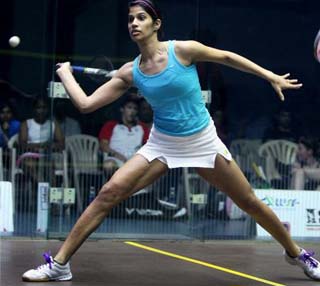
Joshna Chinappa claims the Chennai Open International Squash Championship


Joshna Chinappa claimed her maiden WISPA title at home, and sixth overall, as she rallied to beat third seed Sarah Jane Perry 3-1 in the final of the Chennai Open International Squash championship on Saturday 26th May.

The 2nd seeded Indian, ranked 71 in the world, recorded a 9-11, 11-4, 11-8, 12-10 win in the summit clash against her 3rd seeded British rival.

Joshna started off in a sluggish manner and lost the close opening game, in which score were 8-8 at one stage.

However, in the second game, Joshna build up a 6-3 advantage and was swift in her moves, covering the court well.

The Indian took five of the six points to draw the parity, pocketing the second game in just 10 minutes.

The third and the fourth games were closes affairs as Joshna trailed initially in both but showed tremendous fighting ability to come back and win.

Mukund Laddha
(Mukund Laddha GoforSports Special Contributor)

source: http://www.goforsports.org / by Mukund Laddha / Saturday, May 26th, 2012

Parlakoti team champion in Kodava family cricket

Kattemane to organise tournament in 2013

Parlakoti team has won ‘Academy cup- 2012’ cricket tournament between Kodava Gowda families organised by Kodagu Gowda Cultural Academy.

Parlakoti team beat Urubail team by eight wickets in the final match held at Madikeri district stadium ‘Man’s Compound’ on Sunday to win the cup consecutively for the second time.

Urubail team batted first and scored just 45 runs in 10 overs losing eight wickets.

Naveen was the top run scorer with 12 runs. Darshna and Sajan of Parlakoti team bagged two wickets. Parlakoti team successfully chased an average total just in 7.3 overs with eight wickets in hand. Saman played a decisive role in the match with 16 runs.

Special prize

Sajan of Parlakoti team bagged both ‘man of the match’ and ‘man of the series’ awards in the tournament which was held for two weeks. Mohan of Urubail team emerged as best bowler while Urubail Harish was the best batsman. Parlakoti Darshan, Dambekodi Deepu, Parlakoti Sajan won best wicket keeper, best fielder and best all rounder awards respectively.

Muddiyana Parashuram won the special prize for scoring 94 runs.

Throw ball award

Paremane team won the throw ball tourney organised for women for the first time. Kompuli, Muddiyana and Tuntaje teams were in second, third and fouth place respectively.

Kattemane Cup- 2013

Kattemane team will be organising Kodagu family cricket tournament in 2013. Kodagu Gowda Cultural Academy President Tuntaje Ganesh handed over the responsibility by handing over beetle leaves to Kattemane family heads.

‘Govt should give funds’

Kodagu Gowda Cultural Academy President Tuntaje Ganesh demanded that the government should fund the Kodagu Gowda cricket tournament.

Presiding over the valedictory function of the tournament Ganesh said that the State government is giving fund to the sports events organised by other communities, so government should extend the financial support to Kodava Gowda community also.

Ganesh said that Gowda Yuvaka Sangha which was started 10 years ago should be more creative. He declared Urubail Harish as the President of the Sangha. Names of Paikera Gagan and Parlakoti Sajan were mentioned for vice president and member posts. Muliya Keshava Prasad who sponsored the prizes opined that, the tournaments play a great role in uniting Kodava families.

Kodagu Pragatipara Sangha President Kuttholimane Appaiah, National- level hockey player Mudiyaru vinod were present. The State assembly Speaker K G Bopaiah kicked started the semi final matches in the morning.

source: http://www.DeccanHerald.com / Home> District / Madikeri, DHNS / May 28th, 2012

Cycle the leader in domestic incense market

Consider this: Agarbattis handcrafted by women from remote parts of Karnataka, Andhra Pradesh and Odisha are spreading fragrance in homes in Brazil, Chile and the US.

Surprised? Well, you shouldn’t be. Handcrafted incense sticks are becoming as fashionable as yoga and ayurveda in the West, thanks to the growing fascination among westerners for Eastern culture.

Cycle Pure Agarbathies, the flagship brand of Mysore-based NR Group, is keeping no stones unturned to make the brand a hit among youngsters as well. Keeping pace with the times, the company plans to launch its e-portal next month.

“We have to constantly innovate. The scope of growth in the industry is very limited. There are no economies of scale,” said Arjun M Ranga, managing partner of the third-generation business conglomerate founded by his grandfather NR Ranga in 1948.

With the untimely demise of his father, NR Ranga was faced with the responsibility of raising the family from a young age. “My grandfather had to work hard to earn a living. He used to take tuition for his classmates and seniors,” said Ranga.

Years later, having saved up a modest Rs500, Ranga moved to Mysore from Coorg where he was working in a coffee estate. “Post independence, he felt the time was right for him to start something of his own. He started by trading various products and then saw an opportunity in the agarbatti industry.”

Today Cycle is a household name across the country. For TK Bhattacharya, a retired banker, ‘Cycle all-in-one pack’ is the best buy. “It smells great and gives value for money. I purchase a pack and it lasts for around five months.”

Speaking on how the name ‘Cycle’ came about, Ranga said: “My grandfather wanted a universal symbol that would mean the same anywhere in the world. For instance, a cycle is called a cycle in any language,” he said.

The company received its first export order from Sri Lanka in 1954. Soon it started exporting agarbattis to other countries, including the US, Chile, Japan and Africa. The company, which exported agarbattis to only 12 countries in 2001, now enjoys a presence in over 60 countries. Cycle is also the leader in the agarbatti industry in the country worth Rs1,500 crore, with a 15% share in the organised market, followed by ITC.

“The West is a growing market for us as there is a huge fascination for eastern culture among westerners. The US is our biggest market overseas,” Ranga said, adding that though incense sticks are purchased for spiritual purposes in the West, they are also popular as a fragrance product.

Gulshan Dhawan, who has been living in New Jersey for the past 30 years, is a big fan of the brand. “Every time someone came from India, I used to ask him/her to bring around 10 packets of Cycle’s sandalwood agarbatti which has a very natural aroma. Thankfully, the brand is now available at the supermarket here. I also present these agarbattis as gifts to my American friends here,” said Dhawan.

The company is keen to come up with unique fragrances. “We set up a dedicated fragrance laboratory in 1958. All our fragrances are developed in-house and only family members know the secret ingredients. There is a constant need to innovate and come up with new combinations and permutations. A few years ago, fruity scents were in great demand; now people prefer earthy, musky fragrances,” Ranga said.

“Creating fragrance is a scientific and lengthy process. My brother has done a degree specialising in the art of making fragrance,” he added.

Recognising the need to stay competitive, the company diversified into products like car freshener and home decor products. “We will launch more products later this year,” Ranga said.

The company also puts a lot of emphasis on packaging its products, with around 20 designers working on revamping and modernising the brand’s look. Among the designers are those who are recruited from National Institute of Design (NID).

Jobs for rural women
The humble agarbatti provides employment to more than 30,000 rural women across the country. “We train these woman who work from home and deliver raw materials to their doorstep. The woman, called, ‘home workers’, roll about 10 kgs of bamboo sticks a month, with a potential to earn Rs3,500,” Ranga said. The company also takes the responsibility of educating children of poor employees.

Take the case of 29-year-old Manjamma. She is happy as she can now repay the loan of Rs2,000 her husband had taken from a local moneylender. “Once rolled into charcoal powder and adhesive, the bamboo sticks get transformed into raw agarbattis, which are then taken to the factory where fragrance is added and packaging is done,” she said. Manjamma starts work at 10 am, after completing household chores and sending her kids to the school, and winds up work By 6 pm.

Like most labour-intensive sectors, the agarbatti industry is also facing shortage of people. “With industrialisation taking place at a rampant pace, women have more options to choose from. They prefer working as maids and housekeepers where remuneration is more attractive. They are no longer keen on housework,” Ranga said. The increase in the prices of raw materials also eats into the company’s margins.

However, a chief executive of a rival company is all praise for the brand. “Though we are rivals, I must admit that Cycle’s success gave us confidence to enter this industry,” he said on the condition of anonymity.

Asked about the company’s outlook, Ranga said it will continue to strive to provide more employment and give back to the society. “We would also like to give people more reasons to pray,” he laughed.

source: http://www.dnaindia.com / Home> Bangalore> Report / by Suparna Goswami Bhattacharya and Supriya Ghorpade / Agency: DNA / Place: Bangalore / Monday, May 28th, 2012