Field Marshal K M Cariappa – an Officer and a Gentleman

By Richard Lasrado [ Published Date: January 29, 2012 ]

As I keep recalling the great personality I had met a few times, esp., for an interview as a budding journalist way back in 1974, the picture gets etched in the mind, deeper and deeper.

The Grand Old Man of Kodagu (then Coorg), Kodandera Madappa Cariappa (January 28 1899 – May 15, 1993), then a retired General, who was an epitome of discipline, punctuality and promptness, had graciously consented to my request to be interviewed for an Indian journal.

He, as independent India’s first and until then only Commander-in-chief, had retired in early 1952. He was made an honorary Field Marshal only later, as late as in 1986, during prime minister Rajiv Gandhi’s tenure.

A couple of kilometres down the serpentine road from Mercara, now Madikeri, to Siddapur stands the palatial ‘Roshanara’, the residence of the great man.

My nervousness was showing. Being a cub journalist, I was to meet a great warrior of world status and a hero of the world wars, who had been honoured by presidents, kings and heads of states.

Led into his drawing room by an attendant, I was awe-struck by the splendid display of military trophies, mementoes and souvenirs.
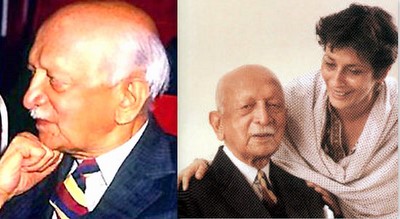
Field Marshal with his daughter Nalini
Two minutes after the appointed time, the broad-shouldered, six-foot-plus celebrity with peach-pink complexion appeared on the scene. As said already, it was not the first time that I had seen or heard him. But his simplicity and friendly nature were absolutely heart-warming and disarming at the same time. To cap it all, when the General repeatedly apologized for the two-minute delay with folded hands, I was rendered totally speechless and blank, for a moment making me forget the questions I had long planned to shoot.

Our meeting was scheduled to last just about an hour. But as the clock ticked away, the General seemed to be interested and asked to go on.

Reminiscing about that interview I had almost forty years ago invariably necessitates the quoting of some words of his, which, over the years have proved prophetic.

The following excerpts from the interview may provide an insight into his personality and thinking. They should be appraised only in the light of circumstances that prevailed in India in the early 1970s. Those among the readers who may have closely followed the India’s developments since 1970 may find his words quite fascinating.

******************

On the prospects of a military government in India and if such a measure would cure the country of all its ills and ailments.

The moment I mention a military rule, I am misunderstood. I would say, military rule can never take over India. One, we are a huge country and are beyond the control of a military machine. Two, we have too many diversities to keep us together. Three, when our defence resources are engaged at the borders, they may not be equipped to rule the country.

It makes me sad to see the inroads of foreign ‘isms’ into our body politic and havoc they have wrought. But democracy is deep down in our blood. Yet, under the present conditions, an indefinite President’s rule all over the country would do us a lot of good. Only such areas as may be unruly can be given in the hands of the army. Only after restoration of normalcy can elections be held.

The President can draw on the best talent in the country and form a cabinet of intellectuals and run the affairs of hte state more efficiently.
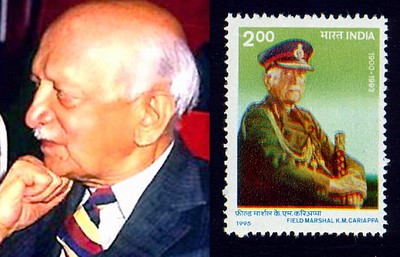
Commemorative stamp issued in his honour

On Jayaprakash Narayan’s movement against corruption in Bihar and elsewhere.

It is comforting to know there is a clean and upright person like JP to show us the way. But the public opinion is not strong enough in our country. People might curse the leader and the government. But in private the same persons run after politicians for licences, permits and favours.

Matters have come to such a dangerous pass that corruption is almost being regards as a way of life. Today’s students might call the politicians corrupt, while they indulge in copying and toehr malpractices themselves. It is just like a pot calling the kettle black.

On the future of the opposition parties and if the newly-formed Bharatiya Lok Dal (BLS) would be a mess or a Messiah?

A steam-roller of the ruling party anywhere poses a great danger to democracy. Presence of a plethora of political parties aggravates the situation.

All along, I have been advising all opposition parties to sink all their ideologies and come together on four major issues – 1. Defence of the country, 2. Foreign policy, 3. A realistic economy and 4. Internal security.

I can only say that the formation of BLD is a healthy democratic development, but how how far it is going to be a success, only the future can tell.

On the future of sports and games in India – he was a spin bowler, and a tennis and hockey player himself.

Sports is in our blood. Yet our achievements are not up to the mark. The main reason is the lack of practice as well as the grace to accept defeat. Dedicate practice is a must.

On India’s dismal failure in the field of hockey in spite of having a staggering line-up of talent.

There could be many reasons. But I would like to blame it on the lack of practice in the first place. Matters have been made worse by the ubiquitous ‘politics’. I did my best to keep this menace at bay during my tenure as three years as chairman of the All India Council of Sports (AICS), but it was in vain.

**************

I had two more issues that I wanted to broach with him. With much diffidence and hesitation, I took courage to ask him. First was about a little-known and little-publicized episode between him and Mahatma Gandhi. There was a brief pause.

Obviously, many had hesitated to put this question to him. He said, ‘Your way of asking such questions reminds of Melville de Mellow of All India Radio, who was here to meet me a few days ago.’ I was lost for words as my jaw dropped.

Then he handed me the Mahatma’s biography by Prarelal, who has devoted a whole chapter to this particur incident. The General felt that I would be better off with a third-person account than his own version.

Soon after the Indian independence, Cariappa had thundered at a metting in London that in the then-prevailing circumstances, the concept of Ahimsa (non-violence) was not going to be any help to India and a powerful army alone could make it one of the strongest nations in the world.

Gandhi was indignant at this candid outburst and shot back a rejoinder in his journal, ‘Harijan’, saying that even Generals greater than Cariappa would admit that they had no right to talk on non-violence. The concept of non-violence alone could eliminate the causes and chances of wars, wrote the Mahatma.

The General wanted to clarify matter with the Father of the Nation. They did not know each other personally and so he sought an audience. In December 1947, in full military attire, he visited Gandhi in Delhi.

It was a day of silence for the Mahatma., who was spinning his celebrated charkha. The General left his shoes behind, entered the room and saluted Gandhi. He told him that he had come to seek his blessings. Declining the chair offered by Gandhi, he preferred to squat next to him.

Bapu broke his silence and asked Cariappa if he had read the article in ‘Harijan’. Cariappa answered in the affirmative and humbly said that he felt honoured by Gandhi’s reference to his speech, all the more because he had commented on someone who he had never met before.

Then he went on to clarify that the soldiers’ community was the one that bore the brunt on many counts. They too believed in non-violence. If at all thre was a community opposed to wars, it is the soldiers’ community, he said.

Cariappa continued as Gandhi heard him with rapt attention: Soldiers did not like wars, not so much for the dangers and risks they were fraught with, but because they were aware of the futility of war in solving disputes and problems of the world. If at all soldiers fought wars, they did it as a mandate of the people. If people did not want wars, they should tell their governments so; it that didn’t work, they should change their governments. Gandhi looked impressed with the stream of thought and said he needed time to think it over.

Two days later, they met again and conferred on the same subject. On January 18, 1948 they met yet again in Birla Bhavan, Delhi. The General had come to bid good-bye on his wasy to Jammu-Kashmir action mission and seek his blessings. The Mahatma expressed the hope that the problem would be solved by peaceful and non-violent means, and asked Cariappa to report to him about his mission thereafter. The General said he would certainly do so.

By a strange quirk of fate, on January 30, 1948, the General returned to Delhi with the sole purpose of meeting the Mahatma, only to pay his last respects to the latter’s mortal remains at Raj Ghat.

====

The second question was also sensitive. I could sense a tinge of sadness and bitterness when he replied to my query. It was about the only only political shot he took by contesting a southern Mumbai – then Bombay – Lok Sabha constituency sometime in 1971.

I enquired of him as to why he had to contest from there and earn a needless tag of being a Shiv Sena candidate, although he was being supported by seven different parties, including the Bharatiya Jan Sangh and the Swatantra party. Instead, he could have contested from south Mangalore constituency which included his own home district of Kodagu, I said.

He replied: ‘ When I contested, my manifesto was simple and plain – giving priority to people’s basic needs of food, clothing and shelter and education, strongly opposing luxury life, control over pompous offices, conference and foreign tours, instilling a national feeling in everyone instead of narrow parochial and linguistic atttitude.’

I decided to contest in certain circumstances. At 71 then, I had no ambition or craving for power. One day, Congress (O) leader former railway minister Poonacha called me up and said the his party’s high command had chosen him to be their candidate. All opposition parties were to lend me their support. Hence I had to consent, he said. I thought to myself, just like General de Gaulle reached the top with military experience behind him, that I could raise my voice in the parliament at least for ex-Servicemen and thought this could give me a suitable opportunity to fight for them.

I told Poonacha, ‘ I am an VOP – very ordinary person. I do not have the resources to fight the election.’ He told me not to worry, assuring that all the parties would take care of it. However, a few days later, Poonacha called again to tell me that the party had instead chosen himself instead of me. Anyway, I said it was OK.

Another few days later, I received a telegram from the Swatantra party leaders informing me that 6 or 7 parties had chosen me as their joint candidate from southeast Bombay constituency. Shiv Sena happened to be one of them. I had a formidable Congress candidate like A G Kulkarni against me. Yet the mood was so upbeat that my victory was thought to be easy. There was even a talk going around that in the likely coalition government in Delhi, my name was thought to be the right one for the defence portfolio.

Yet I lost. Former president V V Giri once met me after the election and enquired why I lost when the chances were bright. Without mincing words, I told him, ‘One of your own central leaders came down and started saying that Cariappa was a Kannadiga and a southerner should not win in Maharashtra’ and such other narrow-minded words. There were twelve horses in the race. Jan Sangh and a few others let me down in the middle. Jan Sangh termed me pro-Muslim since I refused to attend the Vishwa Hindu Parishat programmes. Bombay Kannadigas alienated me saying that I was a Shiv Sena candidate. I called all representatives and tried to clear the misunderstanding in the presence of a Swamiji from Udupi, but it was of no avail. I fell a victim to adverse propaganda.’ Giri seemed to agree with in full.

*************************

Cariappa was a no-nonsense, no-compromise personality. There have been cases of chiefs of service staff, as they approached retirement, having tried to appease the centres of power with an eye on plum posts like those of ambassadors, governors and the like. Many retired officers have taken up adminstrative posts in corporate houses. But this intrepid fighter stood above all that. He kept on raising his voice against misrule, corruption and political chicanery.

During his tenure as India’s high commissioner to Australia and New Zealand between 1953-55, an off-the-cuff remark against the racial policy of the Australian government is said to have created a diplomatic row, which created a rumpus in the Indian parliament seeking his recall. But he stood his ground, without any fear.

His differences of opinion with the Nehru-Krishna Menon combine was a matter of an open secret. During Indira Gandhi’s rule, once he had advocated handing over of disturbed areas to the military. Politicians sought his arrest on charges of giving a call for military rule. They even demanded withdrawal of his pension.

Those were the days when a late prime minister used to blame the ubiquitous ‘foreign hand’ or the ‘CIA’ for most of the problems in the country. Cariappa did not hesitate to ridicule it saying that a day would come when the prime minister’s chest pain would be blamed on the CIA.

Naturally, he had earned the displeasure of the ruling classes. No wonder, he was not recognized until late in his life. Gen Sam Manekshaw was upgraded as Field Marshal soon after the Bangladesh war victory in 1971.

The very fact that a man like General Cariappa, who had served the Indian army for a good 33 years, was made an honorary Field Marshal 33 years after his retirement during Rajiv Gandhi’s tenure as PM, speaks of the vagaries and systemic malaise that plague our country.

Field Marshal Cariappa always said he was an Indian first, and a Kodava or Kannadiga only next. He played a major role in getting the names Mercara and Coorg changed back to their ethnic forms as Madikeri and Kodagu. He also had fought against the Kambadakada dam project which would have gobbled up thousands of acres of fertile land of Kodagu.

His residence ‘Roshanara’ and a lifesize statue at a circle on the way to Mysore stand majestically in his memory. A college in his hometown has been re-named after him.

When the messenger of death came calling in a Bangalore hospital in 1993, for sure, he mght have struggled to take away this giant, the fearless soldier who may have said good-bye to this world with sadness. Because the India of his dreams is still a long distance away.

If power lay in the hands of patriots and upright Indians like Field Marshal Cariappa, it would have been a different picture. Maybe his dream may come true some distant day, but, alas, there cannot be another Cariappa.

source: http://www.Mangalorean.com / by Richard Lasrado / January 29th, 2012

Freestyle Fitness: Bandra’s New Sports Clinic

Match Point

If the Nadal-Djokovic final made you want to up your stamina (and girlfriend standards), we suggest you rally around Freestyle Fitness. This week-old endurance training centre and ‘sports clinic’ in Bandra aims at getting you one step closer to your favourite sportstar, quite literally, with squash champion Joshna Chinappa training right next to you. There’s also members like Neha Dhupia , thrown in for the glam quotient.

Lunging With The Stars

While they have a gym where you can go about your usual exercise routine, Freestyle Fitness specialises in making personal training regimes followed by athletes accessible to you. So this means your agenda could include physiotherapy along with sports conditioning and rehabilitation. They have Crossfit ceiling bars used for a complete functional workout under the guidance of a certified trainer (Rs 6,000 a month in groups of four) and a sandpit for joggers with weak knees. The coolest bit is that they even integrate squash and tennis games into your schedule to break the monotony that comes with most gym workouts. For this, Freestyle Fitness has tied up with clubs around Bandra – Khar Gym, Bandra Gym and Otter’s Club – where they can book a court for you even if you’re not a member. Net profit, indeed!

Expect to find expert trainers here like Egypt’s ex national fitness coach, a nice upgrade from the Mr India hopefuls carelessly dictating their personal exercise routines, the kind you see in many gyms around the city. Sign up and Freestyle Fitness will conduct a thorough past and present fitness analysis on the basis of which they’ll chalk out the most effective game plan for you. They even conduct boot camps with members at Mahalaxmi Race Course, Jogger’s Park and nearby beaches to regularly test and check improved fitness levels.

Juiced Up

Coming soon: Yum smoothies and juices from Fellas Café. They’ve even tied up with sports nutrition brand Neulife for protein shakes. No Whey!

Getting there: Freestyle Fitness, 301, Silver Pearl, Waterfield Road, opposite China Gate, Bandra (W), call 31924779, Rs 6,000 a month for Crossfit training and Rs 4,000 a month for gym membership.

source: http://www.bpbweekend.com / brown paper bag / Tuesday, January 31st, 2011

Starbucks Coffee takes giant strides in India along with Tata Beverages

Tata Global Beverages Limited and Starbucks Coffee Company have announced a joint venture — Tata Starbucks Limited.

This is one of the biggest joint ventures shared between the second-largest branded tea company in the world and the iconic international coffee brand.

The 50/50 joint venture will own and operate Starbucks cafés which will be branded as Starbucks Coffee “A Tata Alliance.”

The retail stores will be developed in cities across the country, starting with Delhi and
Mumbai, in the year 2012.

Through a separate coffee sourcing and roasting agreement, Starbucks and Tata Coffee Limited will work towards developing and improving the profile of India-grown Arabica coffees around the world by elevating the stature of Indian coffee through joint marketing efforts, as well as improving the quality of coffee through sustainable practices and advanced agronomy solutions.

Together, the JV will enable an expanded range of beverage offerings for Indian consumers. As a first step, the companies have agreed to jointly leverage assets and innovation to offer a premium tea product branded, Tata Tazo. The JV will operate cafés under the Quick Service Restaurant (QSR) category. This partnership will enable the introduction of the unique Starbucks Experience to Indian consumers.

“The joint venture with Starbucks is in line with Tata Global Beverages’ strategy of growing through the inorganic growth focussing on strategic alliances in addition to organic growth,” stated R K Krishnakumar, VC, Tata Global Beverages.

He added, “It opens up exciting business opportunities and new formats for Tata Global Beverages. Starbucks brings unique retail expertise as well as a shared sense of business values. We are excited about the opportunities the alliance presents to innovate in the retail space and bring new beverage experiences to more consumers in India, leveraging the global in-home expertise of Tata Global Beverages and the global out-of-home expertise of Starbucks.”

Through an initial financial commitment, Starbucks will work with Tata to support ‘Swastha’, a school for children with special needs (in partnership with the Coorg Foundation) and aim to increase its capacity and outreach into the rural communities in the coffee-growing region of Karnataka. Tata Coffee and Starbucks also plan to work together on initiatives including the promotion of responsible agronomy practices and the provision of training local farmers, technicians and agronomists to improve their coffee-growing and milling skills, along with exploring community projects which could positively impact the communities in the coffee-growing regions where Tata is active.

source: http://www.fnbnews.com / Top News/ our Bureau, Bangalore / Thursday, February 02nd, 2012

Traditional sarees on display

Indian women set the stage alight with a resplendent show of India’s national costume – as members of the royal family, businesswomen and the diplomatic community gathered to admire the weaves and styles of the traditional unstitched garment at India House in Saar.

The special event was entitled simply Saree and organised by the Indian ambassador’s wife, Mala Kumar. It was part of the Bahrain Ministry of Foreign Affairs’ Jusoor programme aimed at helping to familiarise the wives of diplomats with the different cultural traditions found on the island.

More than 50 ladies attended the event including Shaikha Wesal Al Khalifa, wife of Bahrain’s Minister of Foreign Affairs, Shaikh Khalid bin Ahmed bin Mohamed Al Khalifa, Angela Fakhro, wife of the Industry and Commerce Minister, Dr Hassan Fakhro, the Jusoor committee and its members, and the wives of various country ambassadors.

Mrs Kumar said: “This event is just the beginning of many such programmes to showcase India’s amazing culture. India has so much to offer and the Jusoor programme gave me one such opportunity to show it.

“I chose the saree because it is timeless and goes to show that we can preserve our tradition despite modernisation. The people of India have preserved their roots but embraced progress and development in a harmonious way.”

The highlight of the morning was the appearance of nine beautifully-clad ladies who represented different styles of draping the saree from various regions of the country. Their walk and costumes were choreographed by Suvasini Srinivas, a Kathak and Bharatanatyam dancer.

The guests were also treated to a lavish display of traditional and modern sarees from various parts of the sub-continent, courtesy of Lulu, alongside a spread of Indian delicacies.

Meera Ravi, editor of Salaam Bahrain magazine, told the story of the saree and revealed that there were more than 109 ways of draping a saree – a fact unknown to most Indians in the audience!

She said: “The word saree originates from a Sanskrit word meaning ‘unstitched strip of cloth’. Of course, we have so many stitched accessories to go with it today – the petticoat and the blouse, which can cost as much as the saree.

“Every region in India has a special way to drape a saree. The weave and design is a language of its own which changes from village to village and from town to town. Indeed, a saree is a visiting card and a history lesson rolled into one!”
The ‘models’ were led by Deepa Chandran, from the state of Kerala, who draped her classic cream and gold ‘set mundu’ in a conventional style. With flowers in her hair and bedecked with gold jewellery, she carried a traditional brass lamp that represents the southern-most Indian state known for its greenery and Ayurvedic massages.

Sarju Arpit Panchal, from the state of Gujarat, followed with a resplendent blue bandhini (tie and dye) silk saree complete with embroidery and mirror work. The saree draped in the front showed off its beautiful border and Sarju topped it off with typical Gujarati accessories in her hair, plus necklaces and bangles.

The journey then took the audiences to the state of Assam in the eastern part of India and Pinky Sharma displayed her state’s attire – a two-piece ‘mekhla chador’, an off-white hand-embroidered silk cloth, where the lower part of the body is draped in a sarong-style cloth and the upper part with a shawl worn saree-style with a matching blouse.

The length of a normal saree that you would buy anywhere is six yards but the traditional Maharashtrian and Tamil Nadu Brahmin woman wear a nine-yard saree for special occasions.

Shama Kolhatkar, a Maharashtrian, displayed the comfortable-style of wearing a Nav-vari saree, which was also used by the ‘lady warriors’ of this state when riding a horse. Shama matched her attire with jewellery worn during weddings and at special religious functions.

Hamsini Krishnan, from Tamil Nadu, wore a saree in the auspicious maroon colour and showed how women in her state drape the nine-yards in what is called the ‘Madisar way’. Her long plait covered with strands of flowers and special ornaments adorning her head is typical of a Brahmin bride in her community.

The state of Bengal was represented by Bhavya Rajith, who draped her red and white silk saree in a classic Bengali-style. It stands apart from the crowd for the unique way of hanging a silver key chain at the end of her ‘pallu’ or loose end of the saree.

She was followed by Priya Shyam who donned an emerald green Benarasi silk saree worn by the women in Uttar Pradesh. A Benarasi silk saree is treasured by families for its glossy silk and silver and gold zari brocade and is worn with the upper half brought over the left shoulder and draped over the head.

With a brilliant orange and wide green border, Chitra Sinha wore a Kanjeevaram saree in the style of a Madurai flower-seller and completed her look with her hair set in a bun to a side and bead and gold necklaces around her neck.

The last model was elegant Deepa Devnarayanan wearing her saree in the style of the Kodagu women, from the coffee plantations and hills of Coorg, near Karnataka. It is completely different from other regions because the pleats are formed and tucked at the back rather than in the front.

The event concluded with Milena Padula, wife of the Italian Ambassador Enrico Padula, volunteering to get draped in a saree and walking around in it for the rest of the afternoon. Despite tip-toeing cautiously through the hallway she claimed to be ‘completely comfortable’ and said it would not be her last time in a saree.

source: http://www.GulfWeeklyWorldwide.com / Local News / by Anasuya Kesavan / February 01-07th, 2012 (Vol.10, Issue No. 57)

Keen on peace match with Bopanna as partner: Aisa

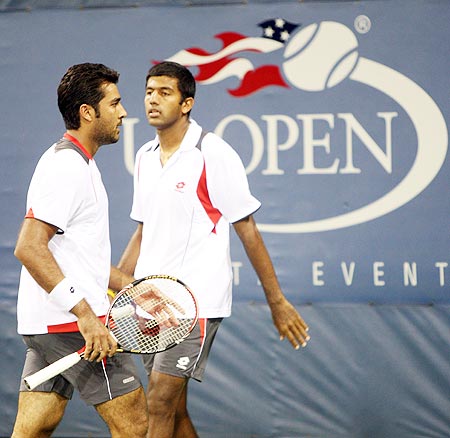
They may no longer be partners on the international circuit but Pakistan’s top tennis player Aisam-ul-Haq Qureshi has not given up on the idea of teaming up with India’s Rohan Bopanna for a ‘peace match’ to bolster Indo-Pak ties.

Bopanna and Qureshi parted ways after the Indian decided to team up with compatriot Mahesh Bhupathi this season.

“We may no longer be playing as a doubles team but we have not given up on the idea of having an Indo-Pak tennis peace match. It is still very much on the cards but depends on getting the green signal from the governments,” Aisam said.

source: http://www.rediff.com / Sports / January 31st, 2012

Madikeri: ‘Indian Army Ready to Face Greater Challenges’ – Lt Gen A K Singh

Madikeri:
Lieutenant General A K Singh, General Officer Commanding-in-Chief, Headquarters Southern Command, was here to be at the late Field Marshal K M Cariappa’s 113th birth anniversary observace. He arrived on Friday.

At a touching ceremony jointly organized by the department of Kannada and culture, Karnataka Kodava Sahitya Academy and Field Marshal Cariappa Forum on Saturday, Jan 28 – the day the great man had been born in 1899 – he received the military guard of honour and then spoke highly about him and the land he hailed from, namely, Kodagu.

“India is ready to face great challenges from adversaries in spite of the talks of friendship. Besides, all citizens should be alert of security threat in the country. We are fully alive and alert to face those elements which harm the trust and honour of the nation,” he asserted.

He said Kodagu district had given a number of soldiers to the armed forces. The trend must continue and more and more youngsters from here should join the Services, he said. He said that he had always longed to visit Kodagu, which had given great soldiers like Field Marshal Cariappa, General Thimmaya and Subedar Guddemane Appaiah Gowda. The visit was finally possible because of the 113th birth anniversary of FM Cariappa.

Having served as the Commander-in-chief of the armed forces of independent India FM Cariappa, he made a significant contribution to the nation. The country should always remember his discipline, efficiency, honesty and patriotism. Remembering him itself could inspire anyone to inculcate self-respect, dedication and discipline, he further said.

Lt Gen Singh also said that golden canteen, healthcare, rest-house and other facilities had been made available to former Servicemen in Kodagu district. He also revealed that a grant of Rs 2 lakh would be made towards observance of FM Cariappa’s birthday on Army’s behalf.

State legislative assembly speaker and Virajpet MLA K G Bopaiah, speaking on the occasion, said that it was fitting that the birthday of FM Cariappa, one of the greatest Army chiefs that India had seen, was being observed in a very apt way.

He also said that with the support of all elected representatives from the district, the government would be urged to observe the great man’s birthday throughout the state. The government had already declared two festivals of Kodagu, Tula Sankramana and Huttari, as official holidays. A request to declare FM Cariappa’s birthday as a public holiday would be submitted to the government, he said.

FM Cariappa was known for discipline, consistency and punctuality and the ideals and values he had stood for should be adopted by everyone. It was a healthy development that functions to recall such personalities were being arranged. During visits to elsewhere in the country or abroad, no one identifies Kodavas on their own. But a mention of Field Marshal Cariappa would give instant recognition, he further said.

Madikeri MLA Appachu Ranjan said that remembering the Field Marshal, who was known for discipline, honesty and commitment, by in itself was an inspiring experience. Pointing out the slump in the number of people from Kodagu joining the Armed forces, the youth should take his example of military discipline and dedication. Wishing that the birthday should be observed on a nationwide basis, he said already a library had been set up in Shanivarsanthe, the Field Marshal’s town of birth and assured to make more funds available for it.

MLC M C Nanaiah said the late Field Marshal deserved Bharat Ratna decoration and suggested that the state government would take steps to have it given posthumously to the great person. His birthday should be

Mysore-Kodagu Lok Sabha member H Vishwanath and FM Cariappa Forum convener Major Nanjappa also spoke on the occasion. Other highlights of the occasion was the release of a booklet on the Field Marshal, honouring of four individuals for their achievements and service, showering of flower petals on the Cariappa statue from a helicopter from above and an attractive march-past by NCC cadets, the Army band, police, Scouts and Guides etc. A traditional Kodava weapon, ‘Odikatti’ was presented to Lt Gen Singh.

C M Pemmaiah, coffee planter and Mandepanda Pushpa Kuttanna, a social activist, were also honoured. Besides, K C Ramamurthy, coffee planter, and Mukkatira Chengappa, a social activist, were honoured posthumously. There were spontaneous shouts of ‘Jai Cariappa’ when an army helicopter showered flower petals on the statue at the Sudarshan circle.

Kodava Sahitya Academy president Iymudianda Rani Machaiah, DC Dr N V Prasad, SP Manjunath Annigeri, Kanti Belliappa, Lt Gen C N Somanna, Lt Gen B C Nanda, Air Marshal K C Cariappa, Maj Gen B A Kariappa, Maj Gen K P Nanjappa, Col K C Subbaiah, FM Cariappa Forum vice president M M Ravindra, Kannada and culture department assistant director Vinod Chandra and many prominent citizens were present on the occasion.

Nanda Cariappa said on the occasion that his father was respected with awe not only by Kodavas but the entire people of Kodagu. His wife Meena Cariappa was with him.

Uliada Poovaiah welcomed the gathering. Madettira Belliappa and Daty Poovaiah compered the function. Kodava Samaj president Matanda Monnappa gave a vote of thanks.

source: http://www.connect.in.com / www.Mangalorean.com / Team Mangalorean – Madikeri / from Ashwini Appaiah / With Vartha Pics / publised January 29th, 2012

Tata Global Beverages Forms JV With Starbucks Group

Tata Global Beverages Limited through its subsidiary, Tata Coffee Limited has formed 50:50 JV – Tata Starbucks Limited with Starbucks group.

The first cafe will open by August-September and will be named – Starbucks Coffee – A Tata Alliance. The JV plans to open 50 outlets in the initial phase, beginning with Mumbai and Delhi and expand into other cities and Tier-II towns. The initial investment will be R400Cr ($80Mn).

Luthra & Luthra Law Offices advised Tata for the deal.

According to MOU, Starbucks will set up stores in the Tata group’s retail outlets and hotels, besides sourcing and roasting coffee beans from Tata Coffee’s Kodagu facility.

Starbucks, which runs over 16,000 stores worldwide, has been in talks with the Future Group, Reliance and Jubilant for an entry into India, but none of those discussions fructified.

Headquartered in Seattle, Starbucks operates in more than 50 countries. It has been sourcing coffee beans from India for the last seven years. Starbucks sells a wide variety of coffee and tea products with a range of complementary food items, primarily through retail stores.

Tata Global Beverages Limited engages in the development, marketing, and distribution of tea products. Tata Coffee Limited engages in growing, curing, manufacturing, marketing, retailing, and exporting coffee and tea in India and internationally.

The company produces more than 10,000 MT of shade grown Arabica and Robusta coffees at its 19 estates in South India and its two Instant Coffee manufacturing facilities have a combined installed capacity of 6000 metric tones.

It exports green coffee to countries in Europe, Asia, Middle East and North America. In 2006, Tata Coffee acquired Eight ‘O Clock Coffee Co., a segment leader in the US coffee retail market for US$ 220 million.

Last August, Tata Global acquired 31% stake in US-based Rising Beverages, which is known for vitamin water based products. It had also signed a MoU with Kerala Ayurveda to form a joint venture for product development.

In 2010, the company formed a joint venture firm with Pepsico – NourishCo Beverages, to produce non- carbonated ready to drink beverages.

In this segment major players include Barista (200 outlets), Cafe Coffee Day (1,040 outlets) and Costa Coffee and others (100).

source: http://www.dealcurry.com / Home> Category: Mergers & Acquisitions> Industry: Agro/ Food & Beverage / by Charmi Gutka/ January 31st, 2012

Registration open for K M Cariappa Memorial Hockey Tournament

Kodava Samaj, Bangalore, will conduct Field Marshall K M Cariappa Memorial Hockey Tournament from 9th to 19th February at KSHA Stadium under the auspices of Karnataka State Hockey Association (KSHA).

Teams affiliated to KSHA may send the entry to Kodava Samaja Recreation Club or KSHA office.

For further details, contact:
C S Poonacha/A B Palangappa – 9480490611/9448082668.

source: http://www.bangalore.citizenmatter.in / Sports/ by News Desk / January 31st, 2012

Indian Republic is incomplete, says CNC

Members of the Codava National Council (CNC) demanding an autonomous Kodava homeland comprising 45 erstwhile ‘nads’ (nad is a group of villages) on Thursday, staged a satyagraha at the Deputy Commissioner’s office in Madikeri and presented a memorandum to the Kodagu Additional Deputy Commissioner pressing for their demands.

The Indian Republic was “incomplete” without positively addressing the concerns of the Kodava people in Kodagu for creation of an autonomous homeland for the Kodavas, N.U. Nachappa, president of the CNC, who led the satyagraha, said. Granting ethno-linguistic tribal minority status to the Kodavas, ensuring Constitutional special guarantee to their customary laws, including Kodava language in the VIII Schedule of the Constitution, unhindered exemption under the Indian Arms Act to hold weapons, were some of the other demands.

Census

Mr. Nachappa appealed to the members of the Kodava community to ensure that the caste names in the caste census enumeration was entered as Kodava. Kodavas should see that the caste was not entered as ‘Codaga’ or ‘Coorgi’ or ‘Coorgs’ in the column meant for entering the name of the caste. The move would help the Kodavas to maintain their identity in future, Mr. Nachappa said.

The Prime Minister’s Office and the Chief Minister’s Office had acknowledged the memorandums submitted in this regard, Mr. Nachappa said.

The Assistant Registrar General, Government of India, attached to the Union Home Ministry, Pratibha Kumari, too had acknowledged the memorandum of the CNC on entering the caste, Mr. Nachappa added.

source: http://www.thehindu.com/National> Karnataka> Mysore / by Staff Correspondent / January 27th, 2012

Leading by segmentation


The Vivanta by Taj Surya, Coimbatore
The Taj brand’s decision to categorise its properties, covering the spectrum from upper upscale to budget, has been especially useful in times of recession.

Amidst an impatient and noisy crowd eager for his attention and, of course, his sound bites, Raymond N. Bickson’s unhurried voice had to sometimes struggle to make itself heard. It was the day of the launch of the Vivanta by Taj property in Coimbatore last week.

“This is our 22nd Vivanta by Taj property and the third in the last one year,” he said, over a cup of tea.

The global economic turmoil in the last few years has hit many businesses hard. The hospitality industry, particularly at the high end, is in a shambles.

Hotels have not been able to hold on to room rates since 2008. Occupancy has dropped. The national average has been hovering at 50-60 per cent.

Bickson, in his 10th year at the helm of Taj Hotels and Resorts, says, “For us, the growth came from the budget, upscale and upper upscale markets.”

Thanks to his initiative, Taj rolled out its brand architecture five years ago, segmenting the mono-brand Taj into four different brands for different markets, with the launch of its first Vivanta in Bangalore.

Besides consolidating its products under the new brand architecture, the company has also been communicating the brand specifications clearly to its guests. Taj, one of the most visible brands, was associated with all properties across categories.

“It was confusing. We wanted the brand Taj to represent only luxury. Hence the new brand architecture,” he explained earlier. The success story of the brand architecture exercise is now a Harvard case study, he says.

It has been extremely difficult since 2008 considering the recession in source markets, terrorism in the region and high inflation – particularly food inflation, mounting tremendous pressure on cost. However, for Taj, thanks to a remarkable growth in domestic travel, the budget and upscale categories really grew, driving the average room rates and RevPAR (revenue per available room) in these markets. Segmenting has really helped Taj cash in on the trend.

“The proof of the pudding is in the eating. Our Ginger (budget hotel brand), Gateway (upscale brand) and Vivanta by Taj (upper upscale brand) properties were doing really well,” he says adding, “That’s precisely where all the growth came from.”

The room inventory in India has more than doubled from 65,000 rooms in 2003 to 130,000 rooms today. Particularly in the last two-three years, there have been a lot of new players and new properties coming up across the country.

Taj itself opened 14 Gateway hotels, besides three Vivanta properties, in the last 26 months.

Notwithstanding the economic downturn, “we had to focus on our growth agenda, consolidating our brands under the new architecture. We have aggressive plans for further expansion in the domestic and overseas markets as well,” says Bickson.

Taj currently has 109 hotels (of which 16 are outside India) under four brands – 27 luxury hotels under the Taj brand, 23 Vivanta by Taj; and 10 upper upscale properties in India (which may soon be brought under the Vivanta umbrella; 25 Gateway Hotels and Resorts across India and a chain of 24 Ginger hotels.

It has close to 50 hotels under various stages of development in India and abroad. In the next couple of weeks it will launch two Vivanta properties in Hyderabad and Bekal in Kerala. Hotels in Madikeri (Coorg), Dwaraka and Gurgaon are also planned for the year.

It is also launching its 17{+t}{+h} overseas property, in Morocco, in the next few months, and the next one in Beijing. The pipeline is longer. “By 2015, we will have at least 150 properties in our fold,” he says.

Bickson believes that to compete with multinational brands effectively, Taj needs to have a considerable number of properties in source markets and other global destinations. It has half-a-dozen hotels planned for China alone.

“We are very excited about the Chinese market, and the Taj brand is well recognised there,” he says. Paris, London, Frankfurt, Zurich, Melbourne, Singapore, Brazil, Dubai, Abu Dhabi and sub-Saharan countries are also on its radar. However, he said, the growth outside India will mostly be through the asset-light model, either management contracts or property leasing. “At best, we may go in for partial ownership deals.”

This will enable Taj to achieve its target revenue ratio of 50:50 from its domestic and international businesses. Currently, it’s at 70:30.

To facilitate smooth sailing, “we need to have a good balance sheet, and in the last three years we managed to lower our debt-equity to 0.6:1 from 1.2:1 earlier,” he said.

So, is the focus only on expanding Vivanta’s footprint? “No, we are pretty much focused on our Gateway and Ginger line-up too.” In fact, the company is proposing another brand to occupy the space between Ginger and Gateway. There is a big gap between the two price points of Rs 2,500 and Rs 6,000.

“We are seriously considering another brand there in the next two to three years, before any of the foreign brands go and put one of their brands in these markets,” he said. Being in the industry for more than a century, “we want to be the first mover in that space”.

On the challenges the industry faces in India, he said the Government should facilitate business growth by simplifying processes and formalities. For example, it’s very cumbersome to set up a property here. “You need 120 permits to start a hotel in India, whereas in Singapore you need only 11 permits.”

source: http://www.TheHinduBusinessLine.com / Features> Brandline / by R. RaviKumar / January 2012