Nescafe plan: Going beyond the Cup

New Delhi, JAN. 5:
Nestlé India has rolled out the India leg of its global Nescafe Plan by setting up a coffee demonstration farm and training centre in Kodagu district, Karnataka.

Nescafe Plan is the Swiss MNC’s ambitious global initiative to bring under one umbrella coffee farming, production and consumption activities — one that it says will “help it optimise its coffee supply chain.” In 2010, when the world’s biggest coffee buyer had unveiled the Plan, it had announced an investment of CHF 500 million (Rs 2,811 crore).

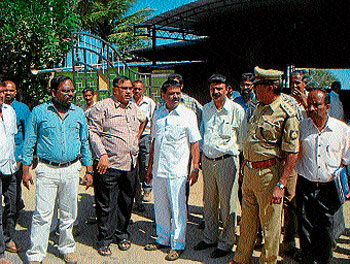
Mr Jawaid Akhtar, Chairman, Coffee Board of India, inaugurated the coffee demonstration farm at Bindhu Estate, Kodagu.
Nestle will be training farmers in using technology and best practices for sustainable production of high quality coffee.

Mr Antonio Helio Waszyk, Chairman & Managing Director, Nestlé India, said, “In the Nescafe Plan, our team will work with coffee farmers as well as other experts and the Nestlé R&D Centre in France to combine the traditional wisdom amongst the coffee farmers in India with the benefits of modern science to make coffee farming more successful and sustainable.”

Nestlé, which purchases 10 per cent of the world’s supply of green coffee every year, had launched the Nescafe Plan in 2010 in Mexico. Under the Plan, the Swiss MNC had said it would double the amount of coffee it sources from farmers directly to 180,000 tonnes in the next five years.

The idea in India, it says, is also to improve penetration of its instant coffee brand Nescafe amongst consumers and expand the market.

Mr Nandu Nandkishore, Nestlé Executive Vice-President and Zone Director for Asia, Oceania, Africa and West Asia , said, “By working with farmers in this way, we know where the coffee comes from, and they know they have a partner who will give them competitive prices for high quality produce.”

chitra.n@thehindu.co.in

source: http://www.thehindubusinessline.com / Industry & Economy / Our Bureau / New Delhi/ New Delhi, January 05th, 2012

Kodagu forest circle gets CCF

Madikeri:
In order to utilise the experiences of the senior officers in the department and get them into field work, the State Government has upgraded all the 13 Forest Circles in the state to the level of CCF (Chief Conservator of Forests) Office from the Conservator of Forests, with effect from December 24, 2011.

Kodagu got the upgradation in the first list, others being Mangalore, Belgaum, Uttarakannada and Chikmagalur district’s Forest Circles and the district also got a new Chief Conservator of Forests in the form of J N Raj who took office on December 31, 2011. Raj told Express that the upgradation will help people, as the CCF level official work will be done here and the rest will be sent to Bangalore for their consent.

The rules and guidelines will become more clear, once the scope and limits of the office will be made public, he added. He added that he will first study the situation thoroughly here and plan accordingly, since the expectations of the people will be more once the office gets upgraded. He said that the vacancies in the department and man-elephant conflict will be the big challenges before the Forest Department.

Once the summer approaches, instances of wild fire will be more, which will make the elephants come out in search for water and food. As a result, they may scatter from the group and pass through residential areas and estates leading to crop loss, human and elephants deaths.

source: http://www.ibnlive.com / South> Karnataka / Express News Service / The New Indian Express / posted January 05th, 2011

Bean Brigade

In the film Casablanca, coffee is one of the things that Ingrid Bergman professes to miss the most about the city of Casablanca. Benjamin Franklin considered coffee to be one of the most valuable luxuries on the table. Black or frothy, sweet or bitter, this steaming cup has been the centre of numerous conversations, meetings and banters.

From being a traditional beverage consumed in South India, coffee has evolved into a trendy cuppa with a national presence. Keen to tap the widespread opportunities, the coffee industry in association with the Coffee Board of India will be hosting the three-day India International Coffee Festival 2012 in Delhi.

The fourth edition of the IICF will bring together the coffee fraternity. The last three editions were held in Bengaluru. “The festival will provide an opportunity for the industry to unveil outstanding coffees and blends, apart from showcasing products associated with the coffee industry,” says Anil Bhandari, president, India Coffee Trust, and member of the Coffee Board of India.
Apart from the exhibitors, workshops with coffee professionals at the IICF will aim at providing an interactive experience that deals with various aspects associated with coffee, from roasting to espresso-making and filter coffee brewing among others.

The IICF 2012 will be held from January 18 to 20 at The Lalit.

source: http://www.IndianExpress.com / Express Features Service/ Thursday, January 05th, 2012

Instant coffee exports surge on demand from Russia, East Europe

New Delhi, JAN. 2:

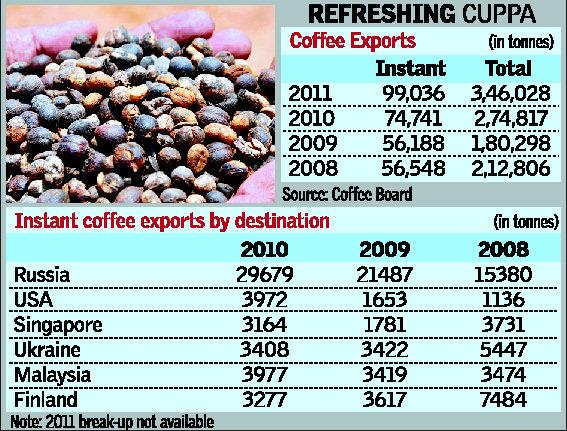
India’s instant or soluble coffee exports have surged by about three-fourths in the past three years on rising demand from the Russian Federation, Eastern Europe, South East Asia and the US. This is mainly on account of consumers in recession-affected Russia and Eastern Europe switching over to cheaper varieties of instant coffee, mainly white or private labels from the branded ones, to cut costs.

The Russian Federation is the largest market and accounts for a third of Indian instant coffees exports. Indian coffee is sold in bulk mainly to private labels in Russia and Eastern Europe. Companies, such as CCL Products (India) Ltd and Tata Coffee Ltd, are major exporters of the instant variety to these countries.

EXPORT PERMITS

For calendar 2011, the export permits for instant coffee issued by the Coffee Board till December-end marginally fell short of the one lakh tonne mark. Total coffee exports registered a 20 per cent growth in quantum to 3.46 lakh tonnes in calendar 2011, over 2010. In rupee value terms, exports grew 63 per cent to Rs 4,859 crore for 2011 over the previous year, while in dollar terms, they were up 65 per cent at $1.05 billion.

“There is a lot of demand for the low-priced instant varieties in Russia, East Europe and Asia,” said Mr Ramesh Rajah, President, Coffee Exporters Association. “Indian companies have been aggressive in pricing their products, which has helped them expand their reach in these markets,” he added

Indian firms import a lot of low-priced raw coffee, mainly the Robusta variety from Vietnam and East Africa to re-export them after converting them into instant coffee. The import of raw coffee for re-exports has shown 18 per cent growth in 2011 at 53,440 tonnes over the previous year. Besides, capacity addition by NKG Jayanti and Vayhan Coffee in recent years has aided the exports, he added.

MARKET SHARE

However, the challenge for Indian firms is to retain their share in these markets as competition grows from Brazil and Ecquador. “With rising costs, the Indian companies will have to fight hard to maintain current level. If they manage to retain their market share, it will be a fantastic achievement,” Mr Rajah said.

India’s instant coffee exports to Russia have close to doubled in the past three years, whereas these have more than trebled to the US.

However, in markets such as Ukraine and Finland, the Indian exports have come down in recent years.

vishwa@thehindu.co.in

source: http://www.TheHinduBusinessLine.com / Agri-Biz / by Vishwanath Kulkarni / New Delhi, January 02nd, 2012

Kodagu readies itself for CM’s visit today

Kushanlanagar, Jan 1, DHNS:

In the backdrop of chief minister Sadananda Gowda’s scheduled visit to Kushalnagar and Guddehosur on January 2, MLA MP Appachu Ranjan held discussions with officers recently.

The MLA, along with deputy commissioner Dr Prasad and superintendent of police Manjunath Annigeri, visited Guddehosur, the native place of the CM’s wife Dati, and discussed about security aspects.

The CM is scheduled to visit his in-laws’ house in Ballur, followed by a visit to Chamundeshwari temple.

Then the CM will take part in a get-together party of Gowda community members, which will be organised at Gowda Samaja in Kushalnagar, informed Appachu Ranjan.

The MLA visited Gowda Samaja and inspected the venue. He also visited the helipad, where the CM’s helicopter will land. The MLA asked the SP to arrange for tight security during the chief minister’s visit. Zilla panchayat member B B Bharathish, BJP district president M N Kumarappa, DySP Paul Verma and others were present.

source: http://www.DeccanHerald.com / Home> District / January 10st, 2012

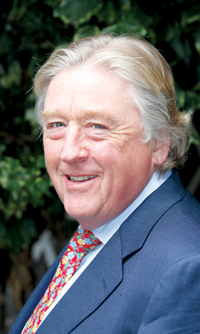
Retired IAS Officer P.M. Belliappa is ‘Coorg Person Of The Year’

Mysore, Jan. 2:
P.M. Belliappa, a retired IAS officer of Tamil Nadu, who was decorated early this year with the Most Excellent Order of the ‘Member of the British Empire’ (MBE) by the Queen of England is the ‘Coorg Person of the Year 2011.’

Pemanda Monappa Belliappa was given the MBE award for his contribution towards improving the Indo-UK relationship, especially in his capacity as President of the Association of British Sch-olars (ABS), over many years.

Belliappa was selected ‘Coorg Person of the Year’ in a poll conducted among the members of www.coorgtourisminfo.com, a news portal of Kodagu (Coorg).

Presenting the MBE award, Mike Nitharvrianakis, British Deputy High Commissioner in Southern India, had said that the award was in recognition of Belliappa’s services to environmental protection and for promoting Indo-UK alumni relations.

Belliappa, in his 35-year-long service in the IAS, had occupied important posts, starting as District Collector and also held the posts of head of the National Hydro Electric Corporation of India and the Chairman and Managing Director of the Rural Electrification Corporation of India.

He was leader and member of several Indian delegations to ESCAP, UNIDO, World Bank and other leading international institutions. He served as Chairman of International Workshop on “Clean Technologies” orga-nised by the Regional Institute of Environmental Technology (RIET) Singapore, a European Union sponsored institution.

He established the ‘Pemanda Monappa Scholarship’ in perpetuity, in Cambridge University in the name of his late father, Pemanda Monappa, former Karnataka Inspector General of Police, which will enable one student from the southern States of India to pursue a Masters course.

Belliappa has Masters degrees in both Economics and English, and also a law degree. He was a Research Fellow at the Centre for South Asian Studies, Cambridge University and also obtained a Diploma in Development Administration from Manchester University, United Kingdom.

Among the others who were nominated for this year’s ‘Coorg Person of the Year 2011,’ include M.C. Nanaiah, MLC, N.U. Nachappa of the Codava National Council (CNC), Ashwini Ponnappa, badminton champion and Sarita Mandanna, author.

The past winners of the ‘Coorg Person of the Year’ are Dr. Ka-very Nambisan, novelist, 2005; Dr Boverianda Nanjamma Chinnappa, researcher, 2006; Robin Uthappa, cricketer, 2007; Dr. Moodera Jagadeesh Sub-baiah , scientist, 2008; Air Marshal K.C. Cariappa, Retd., environmentalist, 2009; Tennis player Rohan Bopanna, 2010.

The news portal www.coorg tourisminfo.com has been promoted by senior journalist and author P.T. Bopanna.

source: http://www.StarofMysore.com / General News / January 02nd, 2012

Small is beautiful, say luxury guests

SMALL Luxury Hotels of the World (SLH) is a brand of luxury, independent hotels offering one-of-a-kind memorable experiences. The company, which celebrated its 20th year anniversary last year, has over 520 hotels in 72 countries offering a diverse variety of resorts from spas, country houses, golf resorts, island retreats, city sanctuaries, to game and wilderness lodges. TTN caught up with Paul J Kerr, chief executive officer of Small Luxury Hotels of the World, during The International Luxury Travel Mart to find out more.

Kerr…..550 hotels by 2012

How does a property benefit under the SLH portfolio?

For starters they automatically become a member of a brand of like-minded hotels. We also offer them strong distribution channels, which is highly beneficial for smaller hotels.

They also get the benefit of education, because we help them through a minefield of distribution systems and hotel rates.

The Club of Small Luxury Hotels of the World is a guest recognition programme with 140,000 members. 50 per cent of all SLH bookings are brought by Club members.

Members of The Club get several benefits like free nights, early-check-in, late check-out. The reason the Club has been so successful is because we offer them choice. Membership now exists in three tiers – Special, Love and Honoured, with the benefits increasing the more a client stays at an SLH property.

What kind of luxury experience are your guests seeking today?

I believe that guests today want an experience that they can talk about when they get home. Small hotels offer big experiences and we offer our guests a choice through our 520 hotels. The hotels are all individually owned. The bigger you get, the harder it is to give personalised service. The average size of our hotel has remained 50 rooms in the last 20 years. This allows for authentic personalised services, which reflect the local cultures. Irrespective of the size of the property, they are luxurious properties. 80 per cent of all our hotels are driven by leisure guests. Although we have a lot of corporate hotels, only 20 per cent are booking at corporate rates.

An example I would like to give here is the Orange County Coorg Hotel in Karnataka, India. This is a small hotel offering 66 rooms on a 300 acre coffee and spice plantation resort perched at a height of 800m above sea level. Every guest who stays at this hotel takes back with them the memory and experience of the region from picking peppercorns and watching coffee being ground or go on a fishing boat on the River Cauvery. I believe going forward; more guests are seeking these contrast luxury experiences.

What can we expect to see on your development pipeline?

We added 49 new properties to our portfolio in 2011, out of which 25 were in Europe, 11 in Americas and 13 in Asia Pacific. The Asia Pacific is a huge market for us with and accounts for 23 per cent of our entire portfolio, compared to just two per cent in 1991. Currently the company’s Asian portfolio includes 16 properties in India and 12 in China.

We would like to take our total number of hotels to 550 by the end of 2012. This will include properties in some new destinations including Hawaii, Latin America, China, India and Japan in Asia and Oman, Abu Dhabi, Jordan in the Middle East. We also plan to add hotels form Croatia, Turkey and Malta to the SLH portfolio.

We have not seen properties in Dubai that we believe would fit out portfolio yet, but there is always a possibility in the near future. This also depends on how many of our club members travelling around the world want to visit Dubai.

Who are your key source markets today? Do you see a lot of Arab guests in your properties?

Our top five are the US, UK, Germany, Australia and Canada. And no, we don’t really see a huge demand from the Arab market into our properties around the world. But we hope that will change in the future, since we have some wonderful properties that can offer them the luxury and privacy they look for.

Are your customer’s technology-friendly? Do you receive bookings from SLH.com?

Yes and we have launched an iPhone app which has already had 55,000 downloads. We are also keen to build on our social media outreach, expanding brand awareness and methods of communication with guests and agents internationally via Facebook, Twitter and other online tools. The brand now has almost 40,000 fans on Facebook with a steadily growing fan base from around the world. Additionally, SLH now has over 7,000 Twitter followers.

We have seen a 71 per cent increase in revenues and reservations from SLH.com year-to-date. 20 per cent of all our bookings are from our website.

source: http://www.ttnworldwide.com / TTN-Travel & Tourism News Mikddle East / COVER STORY / posted January 2012

Kodava Samaja hits a century

The association grew into being a strong force named the Kodava Samaja with more than ten thousand people from the Kodava community becoming a part of it and celebrated its hundred years of existence here on Sunday.

A majority of the women wore sarees draped in the traditional Kodava way, while the younger generations wore jeans and t-shirts.

B A Muttanna, Deputy Commissioner of Police (Traffic) East, who spoke on the occasion said that the history of the community should not be oral alone.

Till now there is no library which can help the young generation learn about the Kodava community. The Samaj must set up a library in Bangalore where books on the history of the community must be made available.”

The Kodavas regard their female folks highly and that is a matter of pride.

M Boppaiah, member of the Samaj said even during marriages, Kodavas do not depend on any priests.

Instead, the older lady of the house performs the rituals. This is to symbolise that they are respected most.

With special Kodava meals served for lunch, people from the age of 10 to 80 were seen relishing what they miss in the urban environment.

“The food took me back to my village near Virajpet,” said P Muthanna, a retired government employee.

source: http://www.DeccanHerald.com / Home> City / DHNS / September 11th, 2011

Sunburnt at Midnight

Festival director and MTV mainstay Nikhil Chinapa shares the beautiful story of how the Sunburn Festival, on next week in Goa, came into existence — and survived the haters!
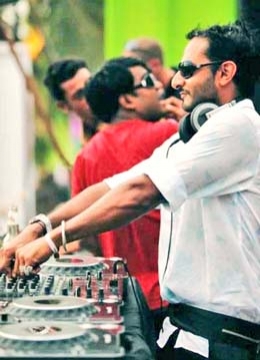
I never dreamed it would come to this. 22,000 people on a beach in Goa with the world’s number 1 DJ playing… and that was last year. For me, clubbing was simply a way of life. In Bangalore we’d go to the club on Wednesdays, Fridays and Saturdays, because that’s what we did on Wednesdays, Fridays and Saturdays. We’d wait till 4.30 in the morning for the DJ to finish his 2 hour hip-hop set because we knew at 4.30 in the morning, he’d drop BT’s Flaming June and Prodigy’s Firestarter. When the big shift happened to Mumbai with MTV, I discovered J49, where Gaurav and Kris (Correya) along with (DJ) Ruskin would gleefully spend hours helping us get unhinged on the club’s sweaty dance floor. Ibiza was a distant dream. It was just this place I had heard of. Names of clubs like Space, Amnesia, Pacha, the magical Café del Mar (which believe it or not, is anything but magical unless a 6 storey building on an awful beach is your idea of magic) hovered around my consciousness, and I have no idea of where they came from.

And then I met Pearl, who said, “Ibiza? Yup, July seems perfect” So July it was, and it was the first we planned of many dancing holidays. A week in Amsterdam, a week in Barcelona, a week in Ibiza ending with a week in Newcastle, where the UK’s version of the Love Parade was to be held that year. Just for the record, we were destroyed by the end of Ibiza, and never made it to Newcastle. In those 3 weeks, Pearl and I partied Every.Single.Night.

We did lounge bars, we did clubs, we did beach bars, even a random Cuban bar…As long as there was music and we could dance, we went. We’d watch the sunset, have dinner, go to sleep, wake up at 2 a.m. and hit the clubs by 3 a.m. On one night we finished Amnesia at 7am, and drove across to Space, which started at 8am, picking up our favourite breakfast along the way at a 7/11: chocolate milk and Pringles. Getting out of Space at 1 in the afternoon, we headed to Bora Bora, where we hung out till 4pm, before heading back to the hotel for a “nap”, waking up at sunset and heading to Café del Mar. At one of these beach stopovers, Pearl remarked, “We should bring this back to India.” The thing was, we were having loads of fun, but there was one sentiment we shared, at the end of every single night at every single club in Ibiza – that we wished we had our friends around us. Unbeknownst to us, the process had begun. Fate gleefully rubbed her hands together and had set the wheels in motion. We started to book friends we made in Ibiza and Amsterdam to play at small events we were throwing in India under a random name we came up with called Submerge (today, India’s largest dance music promotion company and online resource). The biggest of these events were annual open-to-the-public beach parties we threw at a friend’s shack in Goa called Zanzibar. With a little gentle nudging from our friend Fate, big companies started to notice. One such visionary company, Percept, with Shailendra Singh as their joint Managing Director, Devraj Sanyal as CEO and Aman Anand as Head of Production, called me in for a meeting. They asked me if I would like to help them organise a music festival in India. I asked them if I could invite the DJ’s that I liked, and had heard in London, Amsterdam and Ibiza. They said, “yes, and we have the infrastructure to build a festival around these DJs that you book”. I said – “thank you, Santa”, and signed on the dotted line.

We’d watch the sunset, have dinner, go to sleep, wake up at 2 a.m. and hit the clubs by 3 a.m. – Nikhil Chinapa
It was also at that first meeting that we decided that this festival was going to be something we could call our own. For people in India, with artists from India sharing stages with artists from around the world. The promotion and profiling of Indian talent was an integral part of Sunburn’s agenda, from the beginning and continues till today. Year one went without a hitch with Carl Cox, Above and Beyond, John 00 Fleming and Axwell sharing the stage with the Midival Punditz, Pearl, Jalebee Cartel and Sanjay Dutta. Though the festival was a success, there were financial losses that were to be expected with any project of this magnitude in its first year. Most festival fans couldn’t believe that the DJs they had looked up to all their lives were playing right in front of them.

As the euphoria and enthusiasm built up to year two, Sunburn was hit by a couple of significant events. The first was the global economic meltdown triggered by the subprime-crisis in America, followed by the Lehman Brother’s collapse. This led to an immediate freeze on all sponsorship. Coupled with the losses of year one, the lack of sponsorships put the staging of Sunburn in serious question. The bigger body blow to the entire nation were the Mumbai attacks in 2008. People became wary of travelling and gathering at large events. Events throughout India were cancelled, and understandably so. In several cases civic administration was unable to guarantee the safety of people at events like parties, and for a moment it really did look like terrorism would win. Despite these enormous challenges, the board of directors at Perecpt decided to persevere with Sunburn, and in my opinion, that decision created a watershed in the dance music scene in India. Fewer people travelled to Goa for Sunburn, but Goa was already full of tourists. Every single DJ, with one notable exception, flew to India to play. Sunburn became a rallying point for the youth in India, with the overriding sentiment being, “when the world is going to hell in a handbasket, you can still rely on Sunburn.”

Sunburn was the only music event that took place in Goa that winter. On Day Two of the festival, some busybodies used a stipulation in a noise pollution law to shut the festival down. It seems not everybody was happy with Sunburn’s success. The music was stopped at 7.50pm as John Fleming and The Digital Blonde (00.db) were playing. Not a single festival fan left the venue. Not a single person raised their voice in protest, nor did anyone ask for their money back. They simply sat down on the sand, almost with an air of “okay we know what’s going on and we’ll wait and see what happens next”. Bringing all the goodwill that Sunburn has in Goa to bear, we were able to restart the festival at 9.30pm. As John restarted his set with a track that had a muted kickdrum and as the speakers came to life…I could spot people all across the festival running towards the stage. A minute later when the bassline kicked in, the roar that went up from the crowd was the most beautiful sound I have heard in my entire life. Since that roar, there’s been no looking back for Sunburn. And when I tell people why we’ll always do Sunburn for the rest of our lives, it’s because of the people who sat down on the beach and refused to believe that the music had died.

source: http://www.sunday-guardian.com / December 19th, 2011
It got boring: Biddu

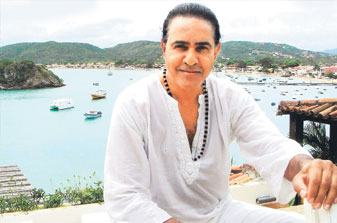
At 67, dressed in his PJs and a pair of sequinned loafers, Biddu continues to exude the charisma of an ’80s pop star. No surprise for someone who’s spent over five decades of his life making some of Indian pop music’s most memorable tunes.

Biddu

Shuttling between Mumbai, Goa, London and Spain, Biddu
has charted out a yearly travel calendar that takes him to “happy, sunny places”. “At this age, I want to avoid the cold and snow. It’s a nomadic life, but whether I’m at Marbela or Mumbai, my people know me well enough to know that I like a masala dosa or two fried eggs for breakfast.”

The Disco Deewane singer is in the city to promote his debut novel, Curse of the Godman, which he penned three years ago. Coming a year after his autobiography Made In India, which captures the singer-songwriter-producer’s journey from Bangalore to Kolkata to London, ask him if writing is his new calling and he says, “I wanted to write this novel for a long time now. But my publishers said they would only publish it if I wrote my autobiography. So I sold myself to the devil.”

He recalls, “Four years ago, it struck me that I didn’t want to do music anymore. I wanted to open a restaurant or write a book— but the story of my novel hit me sooner.”

Curse Of The Godman, a mix of “adventure, mysticism, romance and murder” is set in 1950s India and is the story of a tea plantation in Darjeeling, terrorised by a tiger. And like his prolific years as a singer, the new writer too isn’t leaving any page unturned, literally. Ahead of its launch, he reveals that he’s already finished writing his second book: “It’s set in Mumbai and deals with the sexual awakening of a young boy.”

For a man who delivered some of the biggest hits in his heyday, and still rakes in royalties, was it difficult to change career lanes? “It got boring. I’ve done this for over 50 years now. So the day I decided I had had enough, I went and gave away all my music equipment. My wife thought I had gone mad.”

For now, Biddu is content living life on his own terms. “A regular day in my life involves long walks on the beach, yoga, lunches with friends and a little bit of writing, At this age, there’s little to complain.”

Biddu’s musical highlights

Curse of the Godman is out on HarperCollins for R 299. It will be launched at Crossword Bookstore, Kemps Corner on January 13.

He won the Grammy for Kung Fu Fighting, in the best selling single category.

Till date, he has sold 38 million records.

He produced Disco Deewane which sold 60 million records worldwide.

Biddu produced music for Qurbani, with songs like Aap Jaisa Koi.

He became the pioneer of Indi-pop with his pop album Disco Deewane and Alisha Chinai’s Made In India.

Till date, royalties from Kung Fu Fighting get him anywhere between 60,000 pounds-70,000 pounds a year.

He received a Lifetime Achievement Award from Rolling Stone Magazine.

source: http://www.HindustanTimes.com / ENTERTAINMENT > Music / by Megha Mahindru / Hindustan Times, Mumbai / December 29th, 2011