Biography of Robin Uthappa

Read Biography of Robin UthappaRobin Venu Uthappa, born 11 November 1985 in Kodagu,Karnataka is an Indian cricketer. His father is Venu Uthappa, an international hockey referee and mother Roselyn is a home maker hails from Kozhikode. He made his One-Day International debut in the seventh and final match of the English tour of India in April 2006. He had a successful debut, making 86 as an opening batsman before being run out. It was the highest score for anyIndian debutant in a limited overs match.

Uthappa first came to the public’s attention when he made 66 for India B against India A in the Challenger Trophy in 2005. The following year, in the same tournament, Uthappa made matchwinning 93-ball 100 against the same team which propelled him in the big league. Previously, he had been a member of the India under-19 team that won the Asia Cup. Once a wicketkeeper-batsman, his List A batting average of near 40 with a strike rate of approximately 90 has made him regarded as something of a limited overs cricket specialist.

He was recalled to the ODI side in January 2007 for the series againstthe West Indies where he smashed a 70 from just 41 balls.

He was selected in the 15-member squad of the Indian Cricket team for the 2007 Cricket World Cup held in the West Indies in March-April 2007. He played in all 3 group games, but only scored 30 runs in total as India suffered a shock defeat to Bangladesh and a loss to Sri Lanka resulting in the team not qualifying for the Super 8 stage.

In the sixth ODI of the NatWest Series 2007-2008, he scored a sensational 47 of 33 balls to take India to a thrilling victory, keepingIndian hopes alive in the 7 match series that they were trailing 2-3 before the match. Used to batting as an opener, in this match he came in at the unfamiliar position of no 7. When he came at the crease India were 5 down for 234 after 40.2 overs, still needing 83 from less than 10 overs. After Dhoni got out in the 47th over with the Indian score at 294, Uthappa kept a cool head to take India to the target with two balls to spare in a remarkable victory.

Uthappa also scored a crucial 50 against Pakistan in the 20-20 World Cup in South Africa, when India were tottering at 36/4. India subsequently won the match in bowl out 3-0.

He is known for his trademark ‘walking slam-bang’ shot.

Uthappa played for Karnataka institute of cricket (KIOC) – under the guidance of Irfan Sait who runs the cricket camp.

source: http://www.yasni.com


Debut Author Creates A Whole New World in “Scotland of India” with her Book ” Tiger Hills”

Arts Interview  :  SARITA MANDANNA

Tiger Hills author Sarita Mandanna on buzzine.com
Some authors like to create new worlds. Others like to reflect in a world they are most familiar with. Sarita Mandanna chose to dab a little in both, creating a new world while also staying close to home in her debut novel Tiger Hills, which just hit bookstands in 18 countries and is being translated in 14 different languages, including French, Italian, Spanish, Catalan, Hebrew, Hungarian, Dutch, Russian, Slovenian, and Greater Chinese.
A native of Coorg, Sarita’s hometown provides the stunning setting of Tiger Hills. According to her, Coorg is often described as the “Scotland of India,” ergo providing an ideal backdrop for the romanticism of her story. WhileTiger Hills is quite the fictional tale about Coorg, there are a few truths to share about Sarita, such as her degree from the Indian Institute of Management, as well as an MBA from the Wharton Business School. After working as a private equity investor in New York, Sarita moved to Canada in 2010. When she finally wrote and completedTiger Hills, the novel was long-listed for the 2011 Man Asian Literary Prize and was a 2011 TV Book Club pick in the United Kingdom.
Every so often, I choose to drift from the narrative storytelling and offer you, the reader, a chance to observe a conversation in almost complete entirety. In such situations, it is far more compelling for you to feel a part of the conversation and take whatever messages, if any, you choose to take as opposed to me taking liberties of determining what is important and what is not.
With that, enjoy the conversation I had with Sarita. She is more than a promising talent; Sarita is someone who I believe will go places with her writing talents, and I certainly hope that, after reading her story below, you will go out and support her by buying her book or recommending her work to a friend. Either way, enjoy!
Parimal M. Rohit: Let’s start with the most interesting of observations. You reportedly garnered the highest advance for a debut novel. How did that come about? What was it about the story that made Penguin India believe in your story that much to pay you a high fee up front?
Sarita Mandanna: That is a question best reserved for Penguin India! It was a huge honor, of course, to have my debut novel published by Penguin and for them to express the confidence in it that they have. They were the first to come on board, and Tiger Hills has since been sold in 18 countries to date. As far as the actual amount is concerned, there have been many conjectures in the Indian media–suffice it to say that, had I received but a fraction of the amount I was supposed to have, I would be on a very expensive vacation, lounging on a beach somewhere right now!
PMR: Funny! As for the story itself, the title is very revealing, especially to those who know of the true setting of Tiger Hills in India. Tell us about the world you built and how you brought it to life through your words…
SM: Tiger Hills is named for a fictional coffee plantation in Coorg, which is a beautiful part of Southern India. It’s where I’m from–my family traces roots here for centuries. I love it dearly, and when I began to write Tiger Hills, I knew that Coorg would be the setting, and none other. Tiger Hills begins in 1878 and spans the next 70-odd years, through World War II and beyond. It traces the lives of Devi and Devanna, two childhood friends, inseparable until Devi meets Machu, a tiger-killer and a man of much honor and pride. It is the relationship between the three that sets into motion a series of events that change all three lives, with consequences that affect generations to come. While Coorg forms the highly personalized canvas of the story, the characters in the novel all struggle with universal themes. What do we do when thrust into circumstances not of our choosing? Tiger Hills explores the nexus between fortitude and acceptance, the choices we make, and the far-reaching impact they can carry.
PMR: What made you choose the time period?
SM: I wanted to write a story that was almost classical in structure–something with a large narrative arc. Tiger Hillsspans almost the entire lifetime of the central protagonist, Devi, beginning with the day of her birth and following her through maturity and into her dotage. To cover that length of time necessarily meant that the novel had to start decades in the past. The early 1900s were also a particularly interesting period in Coorg. Coffee-planting had become widespread, introduced by English and European settlers in the mid-1800s, and there was a significant influx of wealth into the region. There was a whole new generation of Coorgs still wedded to the old ways but simultaneously Westernized, being sent overseas to study, etc. That intermingling of cultures, especially in the context of the time, was intriguing enough that I wanted to explore that in the course of the novel.
PMR: Are there any characters in the book you most identify with? Anyone a fictitious representation of who you are in real life?
SM: All the characters are fictional in the aggregate but draw in bits and pieces from people I have known. As far as any of the characters representing me–not really. Devanna is bookish, and I can certainly identify with that. Devi is headstrong and, well, no surprises there either. Other than that, no, they are all completely fictional!
PMR: What do you want the reader to feel as they read the book? How about the feeling after they complete it?
SM: I take it as the ultimate compliment when people tell me that Tiger Hills is a page-turner and that they were unable to put it down. It’s also fantastic when they tell me that they found themselves exploring a new world and that they were angry, they were sad, they were laughing out loud as they read; that they were so invested in the characters that they find themselves thinking about them well after the last page is turned.
PMR: Any prospects of selling the movie rights?
SM: I haven’t really given it much thought.  I’ll cross that bridge when it I come to it, I suppose.
PMR: As this is your debut, what was the writing process like? Was it much more difficult or enduring than you realized? What did you learn from the process that’ll help you with your next book?
SM: Tiger Hills was five years and counting in the making. I wrote it while living and working in New York City. It wasn’t an easy time–while deeply satisfying in the aggregate, there were also days when I seriously questioned my sanity for taking this on.  Extracting yourself from the immediate world–the physicality of it–and immersing yourself in one of the imagination takes a bit of transitioning, and it was all the more challenging in the case of Tiger Hills because I was working full-time as well. While work took priority, I wrote in all the spare time that I had, even correcting drafts while on the treadmill. I’d write late at night, after the work day …and on all the weekends when I wasn’t working. I don’t think writing the next book is going to be particularly easier or different. I just hope it doesn’t take another five years and that I get a bit more sleep during the process than I did while crafting Tiger Hills!
PMR: Speaking of your next book, do you have any ideas of what it will be about (assuming you are planning for a second book, of course)? If there is another book, is it still in idea phase, or are you already writing?
SM: I’m in the process of researching an idea. It is still early days, and it is in very nebulous form right now. I’m excited about it, though, and am looking forward to plunging into the writing once more.
PMR: Finally, tell us about your background.
SM: I was always an avid reader, and while I did think that I would write, it was very much a “one day, some day” kind of aspiration. About seven years ago, after a particularly draining week, I came back home from work itching for a creative outlet and to do something completely removed from what I did during the day. I booted up my laptop and simply began to write. That initial output became a short story, followed by six more in rapid succession, and formed the springboard to Tiger Hills.

(Photo Credit: Dan Abramovici)
source: http://www.buzzinebollywood.com / by Parimal M. Rohit / Mar 18th, 2011


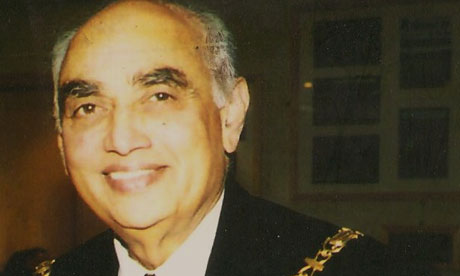
Keeki Thammaiah

Keeki Thammaiah obituary

Keeki Thammaiah 

The trappings of office were relished by Keeki Thammaiah as they echoed his native Karnataka ceremonial attire

My friend the lawyer, educationist and local politician Keeki Thammaiah, who has died of a heart attack aged 76, became the first Asian mayor of Harrow, north-west London, in 2000.

He came to politics relatively late when elected as a Labour councillor in 1994. As mayor, he demonstrated his skill in working with people across the divide of politics, race and class. He relished the ceremonials – the robes and chains – not only because of his innate respect for the office but also because he felt comfortable with these trappings. Their lavishness echoed the ceremonial attire of his native Coorg in Karnataka, south India, particularly that of the traditional kupya chaleworn by Coorg men – long black tunics with red and gold brocaded cummerbunds from which intricately worked swords in gold and silver were slung.

Keeki came from an affluent landowning family, and after qualifying as a lawyer served as an advocate in the courts of justice in Bangalore. He arrived in Britain in 1964, drawn by the vibrancy of its contemporary culture (listening to the Beatles for the first time was clearly a defining experience), as well as its legal traditions. He taught business law at institutions including Westminster College for a number of years.

Keeki and Naila, his wife of 40 years, kept an open house, and visiting Indians – dignitaries, students and tourists – enjoyed the warmth of their hospitality. A champion of Karnataka culture, with its rich tradition of Kannada literature and performing arts, Keeki supported initiatives that helped younger generations living in Britain to engage with this culture. On the day before his death, he and Naila had hosted a reception to launch an initiative to promote Karnataka and its artistic heritage.

He is survived by Naila, his son, Ponnu, and two grandchildren, Adit and Alok.

source: http://www.guardian.co.uk / by Nima Poovaya-Smith / The Guardian / Thursday, May 19th, 2011

Zulfi Syed to get Hitched Next Year

Bυt the model-turned-actor is уеt to find hіѕ girl

Hіѕ humble, shy and a low-profile nature mаkеѕ hіm different from others. Bυt, all these qualities haven’t really hеƖреԁ model-turned-actor Zulfi Syed, who was last seen in the film Deshdrohi. Such an persona has not only kept hіm away from the limelight, but has also deterred hіѕ filmi career from taking οff. Tο this he ѕауѕ, “I know іt’s vital to market yourself well when you have so many competitors, but I аm very weak in my PR skills. I’ll do it when I come up with something really ехсеƖƖеnt.”

Film buffs have not seen hіm since Deshdrohi. Qυеѕtіοn hіm whу, and he аnѕwеrѕ candidly, “I didn’t do any film after Deshdrohi because nothing fаѕсіnаtіnɡ came my way. In view οf thе fact thаt I believe in quality work, I thουɡht іt’s better to concentrate on modelling and fashion shows rаthеr than opting for something that ԁοеѕ not have substance.” Earlier Zulfi had revealed that he would be ‘doing an action movie soon,’ but that has not happened. Clearing the air, the actor ѕауѕ, “Thе scripting administer is going οn, and I аm just waiting for it to complete. I mау ѕtаrt shooting soon.”

FаѕсіnаtіnɡƖу, in hіѕ time in the industry, Zulfi has also managed to maintain a sqeauky сƖеаn persona. “If you have to survive, you have to do quality work. Whаt matters are the scripts and quality of the films. Controversies give you your five minutes of fame, but people will commence to see you in a different persona,” he states.

Thе actor was in the limelight in the reality ѕhοw Bigg Boss Season 2. Qυеѕtіοn hіm if he is game for another such ѕhοw, and he ѕауѕ, “I would Ɩіkе to be part of an adventure ѕhοw. I had an offer tοο, but couldn’t do it as I was busy with my restaurant business, which I аm looking to expand. Thеу will serve road food from all over the world.” Sο, is Zulfi a good cook tοο? “I have a degree in hotel management, I аm a good chef and a big foodie tοο,” he quips.

Along with hіѕ work, thеrе’s something еƖѕе on hіѕ priority list. “I рƖοt to get married in 2012. Bυt, I’m still in search of a girl who is homely and is a good cook tοο.”

source: http://www.whatisnew.in / Jun 16th, 2011 / by Elina Priyadarshini Nayak (Bombay Times) Jun 17th, 2011

Kodava Goes Filmi

Kodava goes filmi

He’s a Bengalurean who now calls Mumbai his home. Meet Kodava hottie Gulshan Devaiah who has taken Bollywood by storm with his performances in Shaitan and Dum Maaro Dum. Well-spoken, funny and passionate, Gulshan plays KC, a wild child whose parents don’t know his true colours in Shaitan. “He’s always living life on the edge. He loves women, flirts and sleeps around with them. But inside, he’s a very insecure person.”

But Gulshan’s the complete opposite of KC when it comes to women. “When I was in PUC, I’d have a bunch of girls waiting for me. I was incredibly shy and needed a lot of courage to talk to them. I’m also a non-violent guy who thinks fights are emotionally draining. I just like sitting at home and being by myself.”

Gulshan was born and brought up in Bengaluru. “I studied at Cluny Convent and then at St Joseph’s PUC. I wasn’t particularly good at studies and even failed my second PUC! I also lived in a rough neighbourhood where people would randomly get beaten up. Once, I got beaten up by a guy who used to like a girl that I would chat with!” he laughs.

But what saved him was the fashion world. He went onto study fashion at NIFT. “I worked in the fashion business for 10 years. I taught fashion at a college, started a business and even freelanced.” However, Gulshan gave it all up to follow his childhood dream — acting. He wasn’t new to acting when he entered B-Town. This drama enthusiast started doing theatre at a very young age. “I would come up with my own acts for school functions. I even did a lot miming and solo acts (which was called ‘mono acting’ back then!). I did semi-professional theatre with a Kannada troupe. I’ve been active in amateur English theatre since 2000,” says Gulshan who is now busy with his play Butter and Mashed Banana.

While there have been talks about Shiv and Neil puckering up in Shaitan, Gulshan laughs, “Mine’s the real kiss and nobody’s talking about it! It’s a proper Hollywood type one!”

The Bengaluru boy adds. “I miss my mom and dad a lot. When I visit Bengaluru, I miss India Coffee House in its original place. The atmosphere and dosas — were just awesome!”

source: http://www.deccanchronicle.com / Tabloid / Jun 21st, 2011


That Hungry Look


No, no, no, no no. Big Boss Season-2  housemate Zulfi Syed does not have a crush on Sambhavna Seth, insists his family. But yes, he must be missing his mother’s biryani and handi sweets made in Mysore.

His family is watching the reality show closely here in Bangalore. “He doesn’t have any such crush,” said Sharier Khan, Zulfi’s brother-in-law, “He is the sort of guy who stays away from controversies. But such things come up since the show is like that. Some inmates may be trying to vote him out.”

Missing home food

“He looks dull,” said Vihar, Zulfi’s brother, “As there are no better cooks in the Big Boss house, Zulfi misses homemade biryani. It is evident in his face.”

In keeping with the rules of the show, the family has not been in touch with him for the last 30 days. They appreciate Zulfi for not manipulating things as most do on the show. They say his nature in real life continues on TV too.

“At first we were surprised that he wanted to go on the show,” said Vihar. “We even  doubted his survival. But as the days pass, we are confident he will make it. He keeps away from gossip and talks when required. That will help him.”

“We pray for his success,” said Mahid Begum, Zulfi’s mother. “Though he believes in himself, luck counts. I hope he wins.”

Who’s that boy?

Zulfi Syed, one of the housemates in reality show Big Boss 2, is a Coorgi and comes from a family that fought for freedom. His grandfather was known as the Gandhi of Coorg. Zulfi is a super model and has featured in many videos and films including Chupke Se and Wajahh.

He is a primary contestant with  Sambhavna, Rahul Mahajan, Aalina and Raja in Bigg Boss. He is among nine contestants still in the race.


No, no, no, no no. Big Boss Season-2  housemate Zulfi Syed does not have a crush on Sambhavna Seth, insists his family. But yes, he must be missing his mother’s biryani and handi sweets made in Mysore.

His family is watching the reality show closely here in Bangalore. “He doesn’t have any such crush,” said Sharier Khan, Zulfi’s brother-in-law, “He is the sort of guy who stays away from controversies. But such things come up since the show is like that. Some inmates may be trying to vote him out.”

Missing home food

“He looks dull,” said Vihar, Zulfi’s brother, “As there are no better cooks in the Big Boss house, Zulfi misses homemade biryani. It is evident in his face.”

In keeping with the rules of the show, the family has not been in touch with him for the last 30 days. They appreciate Zulfi for not manipulating things as most do on the show. They say his nature in real life continues on TV too.

“At first we were surprised that he wanted to go on the show,” said Vihar. “We even  doubted his survival. But as the days pass, we are confident he will make it. He keeps away from gossip and talks when required. That will help him.”

“We pray for his success,” said Mahid Begum, Zulfi’s mother. “Though he believes in himself, luck counts. I hope he wins.”

Who’s that boy?

Zulfi Syed, one of the housemates in reality show Big Boss 2, is a Coorgi and comes from a family that fought for freedom. His grandfather was known as the Gandhi of Coorg. Zulfi is a super model and has featured in many videos and films including Chupke Se and Wajahh.

He is a primary contestant with  Sambhavna, Rahul Mahajan, Aalina and Raja in Bigg Boss. He is among nine contestants still in the race.

source: http://www.mid-day.com / by Chetan R / 2008.09.16

New Ray of Hope for Indian Tennis

There was more than one ray of hope on the horizon but Indian tennis in 2003 continued to look upto the old Messiah for deliverence.

Rohan Bopanna announced his arrival on the big stage with a courageous performance in the Davis Cup play-off; Prakash Amritraj, the son of the legendary Vijay Amritraj, left a blazing trail on his way to the top of Indian rankings; and Sania Mirza with her historic Wimbledon crown marked the changing face of women’s game in the country.

Yet, the entire nation looked upto one man, the ‘Miracle Man’ of Indian tennis, to bring salvation. Leander Paes at 30 rejuvenated his own sagging career with two grand slam titles with Martina Navratilova but without his magical inspiration India stumbled for the fourth consecutive time at the play off stage of the Davis Cup.

The brain cyst that laid him down in the middle of the season brought out those fighting qualities in the man who had time and again pulled off miraculous victories for the country in the past, overcoming a series of adversities in his colourful career.

And the mass outpouring of love for Paes one saw when a billion voices prayed for his recovery was something unheard of in recent history of mankind.

Paes did eventually come out of the hospital but his absence from the World Group qualifying tie proved to be a major handicap for India who lost 5-0 to the Netherlands.

Nevertheless, India did unearth a hero in defeat at Zwolle. In one of the longest matches in Cup history since tie-break was introduced, Rohan Bopanna almost pulled the rug from under the feet of Martin Verkerk. Stretching a top-20 player to five sets was in itself an achievement.

And, ranked in the 400s, had Bopanna pulled it off – he lost the decider 12/10 – it would have been a truly ‘Leanderian’ achievement.

In a country of few sporting achievements, what Bopanna did that September evening was akin to a 15-year old Sachin Tendulkar taking Abdul Qadir to the cleaners. To be sure, the wiry 23-year old lad from Coorg, Karnataka, was not exactly playing in his maiden Davis Cup tie.

When he entered the cauldron that was Eisselhallen, Bopanna had two wins under his belt, but those had come in a more friendly environment of grass surface at home. More importantly, he had looked a slaughtered lamb in his defeat against Australia when he made his debut in a similar play-off last season.

In Zwolle, the Dutch had assembled their best team, and it was on fast hard courts away from home. But in the more than four hours he spent on court that Friday, Bopanna had won many a heart with his fighting performance.

In the end, it did not matter that he did not win – none expected him to – but the bold manner in which he put his best foot forward and cut down the ego of the home team to size augured well for Indian tennis.

After Bopanna’s marathon performance, Prakash Amritraj lost in straight sets to Sjeng Schalken and although Bhupathi and Bopanna started promisingly in the doubles rubber, the Indians were actually running for cover over the next two days.

Amritraj did nothing earth-shattering that day but well before his first match in Indian colours, the 19-year old US-born had truly established himself as the number one Indian player on the circuit.

“Having a famous surname does not help you win matches, does it,” Amritraj had said smiling after losing in a Challenger event in India in April. Behind that smile was hidden attributes that helped him zoom from the 1000s to top-300 in ATP rankings.

Attributes handed down to him from his famous father – not the media savvyness but a strong work ethic and dedication to the game. He returned to the same dusty courts two months later for the Satellite circuit when he truly ‘came, saw and conquered’ the competition and the hearts.

For a player whose bread and butter was serve and volley, Amritraj’s rapid rise was a fantastic achievement in every sense. If anything, it presented a pleasant contrast to the eyes weary of the baseline slugfests.

And besides blowing away the myth that successful fathers don’t foster successful sons, it also assured the Indian fans that the sport had other talents to look up to besides the ageing Paes and Bhupathi.

source: http://www.mid-day.com / 2003-12-24


Be a Green Thumb this New Year

Turn over a new leaf this year with these no fuss potted plants that will brighten up any corner of your home

When software engineer Shabari Madappa had a baby she decided to make the most of her homemaker status by plunging her hands into mud and manure literally. She got together with friend Dhanya Menon (an interior designer) to start Green Essence, a gardening venture and soon-to-be store where she sells ornamental plants, herbs, orchids and bonsai among others potted in colourful planters and garden accessories.

Started in November, 2010, Green Essence is an extension of  Madappa being quite a green thumb herself. “I love gardening and have been into it. We also have a nursery in my family’s coffee estate in Coorg” says Madappa. Under Green Essence, the duo sells easy-to-care for cubicle planters such as cactus and succulents, herbs like lemongrass, oregano, rosemary, thyme, basil, curry and mint leaves for your kitchen window, exotic plants like orchids, desert rose and dromeliada.

They also do balcony and terrace makeovers and sell ceramic planters and Bio degradable pots made out of coconut choir. One of their best products, according to Madappa, are the self watering planters that only require you to water plants once in three weeks.

“The excess water collects in a tray and the soil pulls it back in a reverse osmosis process. There is no leaking or mess, so we even have these decorative covers or skins for these planters,” says Madappa. Green Essence will soon launch itself in the form of a store in the same premises as lifestyle store Orange Bicycle. Madappa plans to start a bonsai club once the store is in place where people can display their bonsais and even sell them.

At: Orange Bicycle, House no. 3353, 12th A Main, 5th Cross, HAL 2nd Stage, Indiranagar
Call: 98458 27010
Log on to: the Facebook page for Green Essence
For: Ornamental and herb planters, Rs 250 onwards, exotic planters ,Rs 850 onwards, bonsai Rs 3,000 onwards and balcony makeovers Rs 5,000.

onwardsource: http://www.mid-day.com / by Amirta Bose / 2011.01.03

Caf’e Civet day

In a pretty little camp in Coorg, you can find one of the world’s most expensive coffees. The rider: it comes in the guise of cat poop

Kari Beckoo (so called in Kannada) or Kopi Luwak is one of the most expensive, most aromatic coffees in the world. Internationally, it can fetch anywhere between Rs 15,000 and 20,000 a kilo. A cuppa will set you back by a cool Rs 2,000. For something so obviously exclusive, Kopi Luwak (as it is known in Indonesia and the Philippines), has very down to earth origins.

Type: Food discovery
Best from: Bengaluru
You need: 2 days

Coffee beans drying in the sun are a common site on most house terracesin the area and estates. Pics/ AMrita Bose

It comes from the poo of the civet cat. Our visit to the Civet Creek Camp, located 18 km from Madikeri, the district headquarters of Kodagu or Coorg, was centred around an agenda very different from that of regular tourism. We were hot on the trail of the Asian Palm Civet cat and its bowel movements to inspect it from a purely epicurean perspective. The Palm Civet cat’s droppings, left under coffee plants, are responsible for one of the most expensive and aromatic coffees in the world.


The Palm Civet Cat feeds on ripe coffee berries that are partly digested
and worked on by enzymes before being discarded in its excreta.

Bordered by reserve forest area and frequently visited by civet cats, Civet Creek Camp was started three years ago on an eight-year-old coffee estate that offers accommodation only in tents. Pitch your own tent in the open or borrow one under a shack and you are all set to play (boy or girl) scout. Warm up with rope walking, air rifle shooting, trampling, or spider walking or just lie on the web at night to watch the stars.

We timed our visit with the beginning of the coffee picking season — just after December; usually the time when civet cats eat ripe coffee berries. Although the owner Madappa warned us about the difficulty of finding droppings since the season was almost over, we were determined.

Mission poo
The area frequented by civet cats was near a waterfall in a forest area bordering a village called Awandur. Getting there involved trekking a distance of four kilometres on foot. We set out early in the morning with our guide Vasu, who is considered a poop-spotting expert.

The trek involved meandering through narrow coffee estate pathways, through terraced fields, passing by thatched roofed homes and watching coffee beans drying in the sun while scarecrows stood guard next to a couple of new homes under construction. Here, the scarecrows help ward off the evil eye and bring in good luck.

Like a hound strong on the trail of blood, Vasu was on high alert by now, poking around in coffee bushes as we trudged uphill next to a meandering stream fed by a waterfall. On the way, we spotted a giant Shikakai tree — a natural detangler for hair — the black sooty sap of which is extracted for incense sticks and the occasional cardamom plant.

Vasu explained that Coorg was originally known for its cardamom plantations, not coffee, but dwindling labour forces in recent years, and the vulnerable nature of cardamom plants had given way to hardy coffee plantations of Arabica and Robusta varities.

A rare species of a fiery coloured snail found in forests nearby

A cat with good taste
Suddenly, Vasu disappeared under a thick coffee shrub only to emerge with what looked like sticky peanut chikki. A little squeamish, we approached it with trepidation. Strangely odourless, the poop contained half-eaten coffee beans.

Enzymes in the cat’s digestive system work on the beans, breaking them down before it’s excreting from its body. The part-digested beans are separated from the dung by washing them thoroughly, and keeping them in water, before drying and roasting them.

The fact that this coffee is completely organically processed, and that the civet cat is one with good taste (it picks only the best coffee beans for consumption), goes a long way in determining the delicate flavour and the aroma associated with this frightfully expensive coffee.

Although the estate doesn’t produce enough to brew or sell this coffee on a largescale basis, the coffee board is willing to accept it at between Rs 3,000 and 5,000 a kilo.

Expensive stash
Eventually, we made it back to Civet Creek Camp in a happy daze, clutching at our prized discovery now neatly sealed in a plastic bag. Oh, and the regular coffee beans drying in the sun that Coorg is oh-so-famous for? We couldn’t care less. The writer travelled to Civet Creek Camp on invitation.

Bored of expensive cat potty? Here’s what you can do in and around Civet Creek Camp
Talakaveri: The birthplace of River Kaveri and a known pilgrimage site, Talakaveri is located on the Brahmagiri hills. The river originates as a spring and feeds into a tank where pilgrims bathe.


Jumping on a trampoline is one of the acitivities offered here.

Dubare Elephant Training Camp: Located about 40 km away from Civet Creek, this elephant training camp is run by the Karnataka Forest Department. It houses elephants that are trained under naturalists, and doubles up as a tourist spot. It’s located on the banks of the River Kaveri, with the Dubare Reserve Forest as a backdrop.

Tourists are allowed to participate in a three-hour interaction with elephants which begins with their grooming and scrubbing, feeding them and taking them on a 45-minute ride in the jungle. Resident naturalists will also give you a lowdown on all you need to know about these pachyderms. You need to reach the camp by 8.30 am.

Abbey Falls: Also known as Abbi or Abbe, this waterfall is located in a private coffee estate among pepper trees, about seven km away from Madikeri. A hanging bridge opposite the waterfall offers a breathtaking view.

Kaveri Nisargadhama: A picnic spot on an island formed by river Kaveri is a nature resort with a deer park, orchidarium and a forest full of bamboo, teak and rosewood. The island can be accessed via a hanging bridge. You can rent out tree houses run by the forest department.

Stock up on Coorgi delights
Coffee Powder: A mix of Arabica and Robusta, you can buy filter coffee from the Coffee Board or local shops at Madikeri.

Coorgi Pork Masala: The perfect aid to making the famous Coorgi Pandhi or Pork Curry. Also don’t forget to buy a bottle of black vinegar extracted from Kachampuli, a wild, tart fruit. This vinegar gives that distinct black colour and tangy flavour to the Pandhi curry.

Spices: Stock up on nutmeg, star anise, pepper and cardamom.

Civet Creek Camp FAQs
It only offers tent accommodation with common bathrooms. The camp organises treks to nearby waterfalls, mountain peaks and coffee estate walks. You can request for a special trek to spot civet cat droppings along with estate coffee pickers. Night treks can be organised too. Rs 1,350 per night per person gets you two breakfasts, lunch, dinner and barbeque with unlimited coffee, tea or juice.

Call: 9845827010
Email: civetcreek@gmail.com


Getting there

BY ROAD: Karnataka State Road Transport Corporation (KSRTC) Volvo buses, known as Airavat, leave Bengaluru every day at 2 pm, 4 pm and 11 pm, and take you to Coorg in five hours. Frequent buses from Mysore are available too. Take any bus going to Talakaveri or an auto rickshaw, and get off at the Betegeri village junction to get to Civet Creek Camp.

BY RAIL: The nearest rail head is Mysore which is connected to all major cities and is two-and-a-half hours away from Madikeri.

BY AIR: The nearest airport is Mysore (120 km) followed by Mangalore (135 km) and Bangalore (250 km).

BEST TIME TO GO:  The best time to visit Coorg is between October and March. The weather is pleasant during the day but temperatures may dip at night. Carry a jacket.


source: http://www.mid-day.com / by Amrita Bose / 2011.03.06 / Place: Mumbai

A Coorg Away From Coorg

You might have to wait till the weekend for this feast, but the food served at Coorg the restaurant comes very close to the fare that might be cooked out a of a home kitchen
During the 80’s a student of St Joseph’s college started writing freelance articles on formula one racing for the Sunday MiD DAY to earn a buck or two and also to sustain his crazy obsession about sports. Whatever he would earn, he would spend on buying copies of his favourite magazine Sportsweek (now defunct).

Coorg
Food: homestyle
Service: attentive
Ambience: quirky

A Coorgie Spread Pics / Sanjay M D

Though the association with MiD DAY might have ended somewhere along the line, KC Aiyappa has not given up his dream of doing something other than tending and working on coffee plantation, a staple Coorgie profession for the last decade.
A year back, Aiyappa decided to turn his Indiranagar home’s terrace into a little Coorgie joint and started serving up a simple buffet for those who craved a taste of food from back home in Coorg. The buffet (Rs 275 plus taxes) is served only for dinner during the weekend and also extends to Fridays.

After you have ended up trudging three flights up all the way to the terrace, you will be greeted into a bamboo adorned space with Janice Joplin shrieking from the speakers and you will get transported instantly to a beachside-like shack.

Coorg is stamped all over the place with a wall dedicated to the culture, flora and fauna of this hill station in the form of pictures and coffee table books. Coffee beans in jars adorn the walls as decoration, along with some old fish traps, a device that squeezes out rice noodles, sepia toned photographs of coffee planters and other paraphernalia that will remind you of the region.

The highlight of the eatery though is a long board that notes down the  family names of people from Coorg. Currently, the record shows about 600 odd families that have visited the restaurant in a year.

We headed straight to the buffet that offers both vegetarian and non vegetarian Coorgie dishes. We started off with noolputtu or string hoppers, rice noodles shaped into a mound and steamed. We teamed up the noolputtu with a chicken curry.

The Coorgie chicken curry was thickened with poppy paste and coconut and had a lovely aftertaste of cinnamon. While the chicken was mild and was perfect for moping up with the hoppers, it was the pandi or pork curry, we were waiting for eagerly. But we decided to keep the suspense going on by opting for the mushroom curry and the daal first.

Hot Akki rotis were served on our tables as we went through the first course of the meal. Though the vegetarian fare was nice, it was the dry fried jackfruit that found favour with us. The jackfruit had been shredded and tempered with mustard and curry leaves and fried with spices.

The pandi curry was almost blackened by the addition of the Kochampulli, a tarty fruit that grows in the wild in Coorg and adds that tangy flavour to the otherwise immensely spicy curry. The pork was tender on the bone and fat had melted to just the right consistency and it went splendidly with rice soaked up with ghee, caramelised onions and cashewnuts.

The buffet also offers salads, raita and some interesting chutneys which we didn’t care for much thanks to the pandi curry. We finished our meal with caramel custard which reminded us of our mother’s cooking. It was sweet without being overpoweringly so and came flecked with nuts.

While we have had some outstanding Coorgie food in the city, what might draw people to food served in Coorg is the fact that it is free of frills and greasiness of a restaurant offering and will exactly make you feel satiated after a good home cooked meal.

At: 477, Krishna Temple Road, 1st Stage, Indiranagar
On: Friday, Saturday and Sunday, 7.30 pm onwards for dinner
Call: 98454 93688
Meal for two: Rs 650

Coorg didn’t know we were there. The Guide reviews anonymously and pays for meals.

source: http://www.mid-day.com / by Amrita Bose, Date 12.06.2010 / Bangalore