In Kodagu, a COVID-19 vaccine task force has come into force in connection with the preparations to be made in the district in anticipation of vaccine availability next year.
The first meeting of the task force was held to discuss about the arrangements to be made and the steps to be taken as per the State government’s directives in view of various reports and the claims on the possibilities of vaccine coming to the market early next year.
Deputy Commissioner Annies Kanmani Joy, who chaired the meeting in Madikeri on Wednesday, asked the officials to prepare the list of those who are likely to be vaccinated on a priority as announced by the government. They include COVID-19 warriors and all the frontline workers.
Gopinath, District Officer in charge of immunisation, gave a PowerPoint presentation on the status of COVID-19 vaccine research, citing the recent reports and also those who are likely to get the vaccine in the first phase. They include doctors and all healthcare workers and staff from the Departments of Health and Medical Education, doctors and staff of all the private hospitals, and ASHA and anganwadi workers.
Mr. Joy told the officials to prepare the list of all staff and sought coordination among all the key departments as the data being prepared now would be used to distribute the vaccine.
source: http://www.thehindu.com / The Hindu / Home> News> States> Karnataka / by Special Correspondent / Mysuru – October 29th, 2020
With heavy downpour, landslides and floods ravaging Kodagu district for the past couple of years, Madikeri MLA M.P. Appachu Ranjan said that the Centre will be appealed for constructing flood walls along River Cauvery for preventing floods.
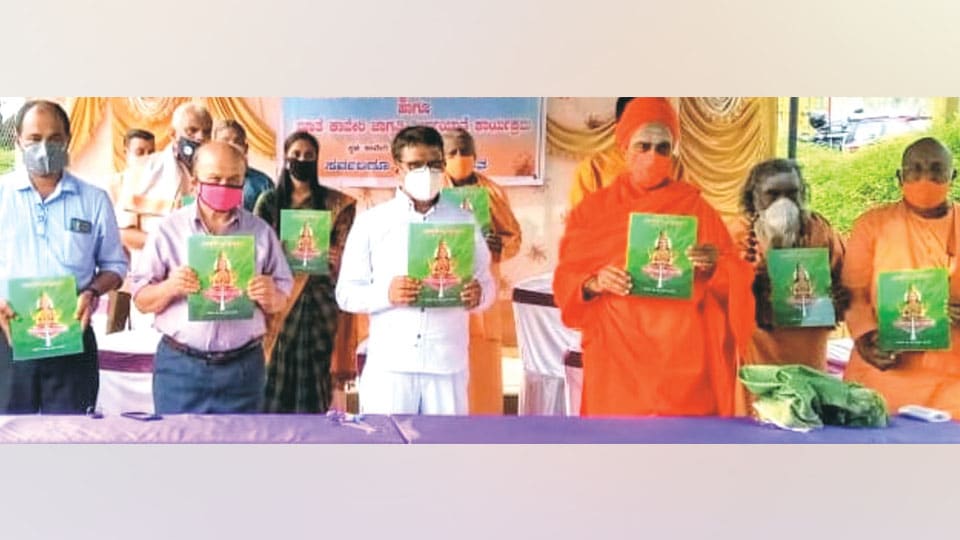
He was speaking after releasing ‘Namami Cauvery’ volume at a programme jointly organised by Cauvery River Swachhata Andolana and Cauvery Maha Arathi Balaga at Kushalnagar recently.
Asserting that all efforts will be made for stopping Cauvery floods in the future, Appachu Ranjan said that Swachhata Andolana activities have resulted in 60 percent cleansing of River Cauvery so far, which is a noteworthy achievement.
Senior Journalist J. Rajendra said that lack of hygienity was haunting the entire world.
Stressing on the need for everyone to practice cleanliness, he warned against fighting for pride in respect of Talacauvery.
Highlighting that it is important for maintaining the sanctity of River Cauvery, which is the lifeline for crores of people in the Southern States, he wanted the Government to constitute a District-level Committee for Talacauvery, Bhagamandala.
Cautioning against political meddling in the forming of Temple Committees, Rajendra bemoaned the apathetic attitude of officials in responding to the plight of the people in the wake of natural disasters.
Earlier, Kirikodli Mutt Seer Sri Sadashiva Swamiji, who spoke after inaugurating the programme, said that rivers are getting polluted because of lack of a hygienic and scientific sense among the people.
Observing that it is important for everyone to have an understanding on the ways of preserving nature, he said that it is vital that wastes are not dumped to the rivers and such unsensible acts will only destroy their sanctity and serenity.
Senior Priest Krishnamurthy Bhat, Pourakarmikas Ganesh and Purushottam, ‘Namami Cauvery’ Editorial Board Members H.T. Anil, B.C. Dinesh, Vinod and B.M. Latish were felicitated on the occasion.
M.N. Chandramohan delivered the keynote address. Zilla Panchayat (ZP) Member Manjula, Kushalnagar Development Authority Chairman M.M. Charan, Members V.D. Pundarikaksha and Vaishak, Town Panchayat Members Jayavardhan and Amrutraj, Kushalnagar BJP President V.N. Umashankar and others were present.
source: http://www.starofmysore.com / Star of Mysore / Home> News / October 28th, 2020
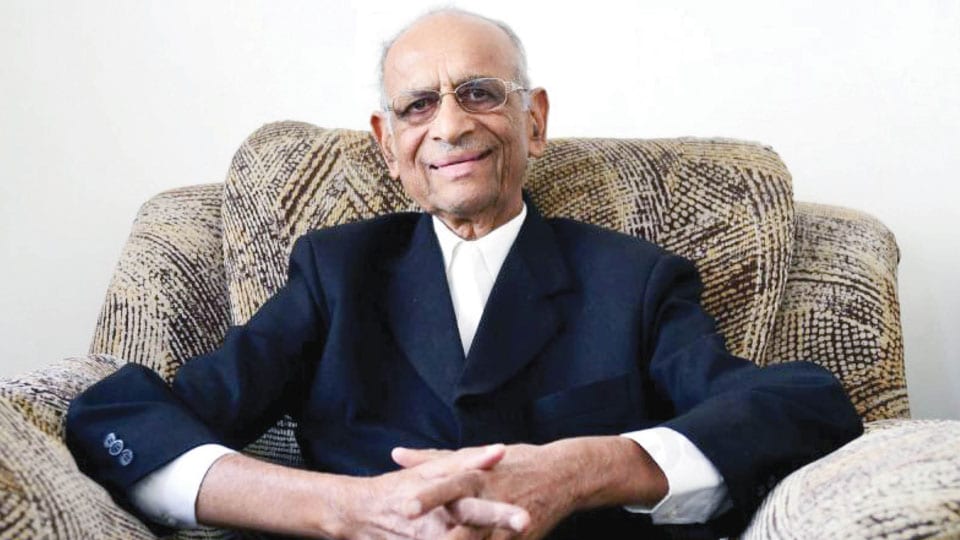
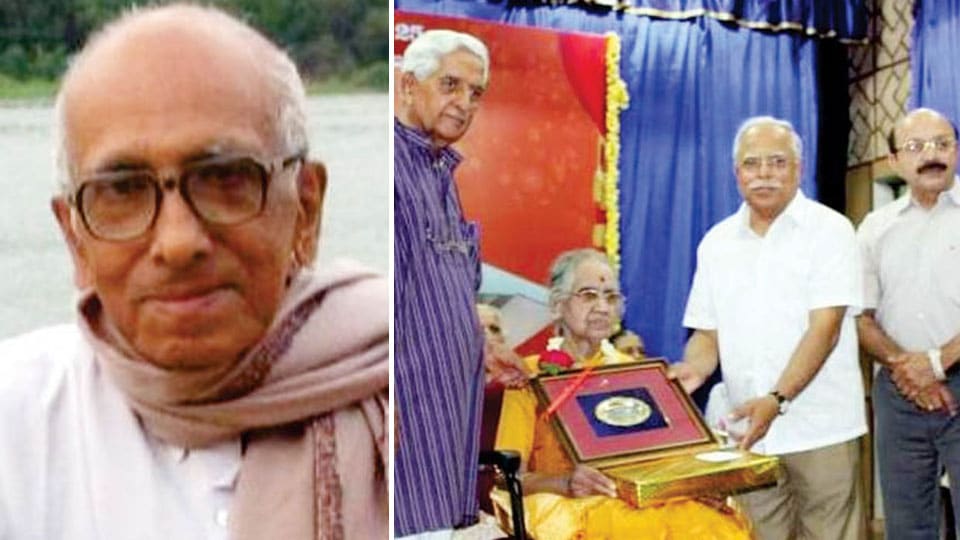
I first heard of and saw A.K. Subbaiah when I was in the first year BA at Madikeri First Grade College (Kodagu). I was staying in the upper hostel close to the College and I guess he too was in the hostel doing his BSc. He was a senior student in age compared to others like me. He had come to the College after quitting his job as a Second Division clerk in the Department (Health) where he served for a few years. We students learnt that he had lost his father, when he was an infant, due to a fall from a tree and despite hardship he pursued education.
In the year 1958-59 (I think) there was a student strike demanding proper water supply, good quality food in the hostel, against corruption etc., etc. In retrospect, I realise the demands were frivolous and a lame excuse to go on a strike to embarrass the Principal for whatever reason.
The leadership of this strike and a protest march from the College to the Police Parade ground nearby was not individually identified. However, a few vocal students, displaying bravado, like me, to impress the fellow students, including girl students, got the students on to the road, holding a couple of National Flags and shouting slogans. The march began. When the Police came on the scene one student got panicky and was shouting, “I can’t hold this flag.” I, in my enthusiasm, took that flag and marched on hoping I would get a chance to speak. After all, I had just lost the College election. It was for the first time I learnt of election rigging!
Be that as it may, about 150 students gathered at the Police ground and one NCC Under-Officer began to speak. I think M.C. Nanaiah, a very good student-speaker of Communist orientation, then began to speak — in the same way he does even today — without giving us a road-map. It was then some vocal students were raring to speak, but from nowhere A.K. Subbaiah, a tall-lanky man appeared and began to speak like a sudden, lashing of summer rains. There was sound, there was force and there was flow. We were held spell-bound. He himself declared that no need for any speech, not even vote of thanks and ‘ordered’ the gathering to disperse. A motley crowd simply obeyed and our ‘great college strike’ ended for good.
It was only later, some of us were rusticated from the hostel, including me, and some removed from the College, among them were A.K. Subbaiah and a couple of my friends. I went to Bengaluru after passing BA in Madikeri while A.K. Subbaiah came to Sarada Vilas College, Mysore, where after BSc he did his Law. I came to know that he was practicing Law in Virajpet, Kodagu and also joined politics, first I think Socialist Party and then Jan Sangh. He was a successful lawyer on the criminal side and was making a name.
It must be at this time he got married from a good family, his father-in-law also famous as Chiyakpoovanda Bheemaiah lawyer (whom I knew later) who worked in UN, New York for some years. Thereon, as I know, A.K. Subbaiah joined Jan Sangh. Being a tall and very fluent, powerful public speaker he soon got elected to the Karnataka Legislative Council (1966). He had played a major role in influencing local Kodavas and other Hindus as supporters of RSS and Jan Sangh. I used to hear about his progress, so also of another Kodava politician M.C. Nanaiah, another powerful speaker both in English, Kannada and Kodava, whenever I came to Mysore to visit my parents and brothers from Mumbai and Pune.
A.K. Subbaiah came from a rich family in Kodagu known as Ajjikuttira though he himself was poor. It was like saying ‘India is a rich country where poor people live.’ The Ajjikuttira family in South Kodagu was also into politics and some like Chinnappa played a role in freedom movement. A.N. Somaiah was an MLC (Janata Party) and now we have his one son A.S. Bopanna as the Supreme Court Judge. There was also a Minister from that family in the Karnataka Ministry. But among all these famous people from the family it was only A.K. Subbaiah who made big news and was known all over Karnataka and political circles. No wonder News Media described him as ‘Suddimaduva Subbaiah’ (Subbaiah, the news-maker). And indeed he was that.
The Tamara Coorg has been announced the winner in the “Rural Accommodation Category” at the recent Skål International Sustainable Tourism award 2020. The prestigious award function was part of the 19th Edition, with 23 countries competing where winners were chosen from 9 different categories at the virtual General Assembly of Skål Clubs Delegates held through Zoom.
The Skål International Sustainable Tourism Awards are geared towards enhancing the visibility and grant recognition to entities from the Travel and Tourism industry. The selection has been made based on the pillars of sustainability of the Responsible Tourism Institute and the winner offered a one-year free Biosphere Certification in one of their available categories.
Shruti Shibulal, CEO and Director, Tamara Leisure Experiences Pvt. Ltd, said “At Tamara Leisure Experiences, our core ethos has always been based on a foundation of workplace ethics and sustainable business practices. To that end, every Tamara property is designed, built and operated with a conscious emphasis on environment and community. This award is an encouraging recognition of our effort and strengthen even more our commitment to responsible hospitality.”
Tamara is deeply committed to responsible tourism, respecting and supporting local culture and practices and intruding on the surrounding natural environment as little as possible. To this end, all Tamara properties are constructed with care and respect for the environment, aiming to create the experience of a Sustainable Good Life for every guest
The Tamara Coorg is a luxury experience nestled in the heart of the hills, where you can rediscover the joy of being in nature; where your quest for serenity ends. The Tamara Coorg spans 180 acres where you will experience nature and luxury at its best as you wake up to the breath-taking view and the calming silence of the hills, disturbed only by the chirping birds and the rustle of leaves. The unique nature-based experiences at The Tamara Coorg includes Forest Therapy, Trekking, Plantation Tours, Blossom to Brew, Bird Watching amongst others.
The exquisite cottages at The Tamara Coorg are designed to provide guests with a rustic, luxurious space to unwind, and enjoy an unmatched view of the hills in the distance, while suspended in nature. Relaxation gets even better at the award-winning spa and wellness centre, The Elevation Spa. It offers signature spa treatments, while the fitness centre includes a steam & sauna, a state-of-the-art fitness center, and a Yoga Temple.
source: http://www.voyagerworld.in / Voyager World / Home> Hospitality / by VW Bureau / October 28th, 2020
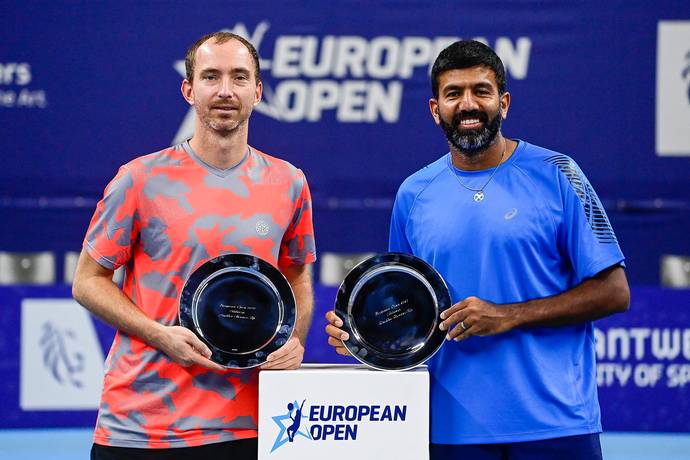
Rohan Bopanna and Matwe Middelkoop finished runners up at the European Open in Antwerp, losing to second seeds John Peers and Michael Venus in the final.
Rohan Bopanna and Matwe Middelkoop pose with their runners up titles. – EUROPEAN OPEN WEBSITE (HTTPS://EUROPEANOPEN.BE)
The Indian-Dutch team of Rohan Bopannaand Matwe Middelkoop was beaten 6-3, 6-4 by second seeds John Peers and Michael Venus in the doubles final of the European Open in Antwerp, Belgium.
It was the first time the Indian-Dutch duo has reached a final. Bopanna and Middelkoop had earlier beaten Sander Gille and Joran Vliegen 4-6, 6-3, 10-8 in the semifinal.
Elsewhere in the Wolffkran Open challenger in Germany, seventh seed Prajnesh Gunneswaranlost 7-6 (6), 6-1 to Botic van de Zandschulp in the semifinal.
The results:
European Open in Antwerp, Belgium
Doubles (final): John Peers (Aus) & Michael Venus (Nzl) bt Matwe Middelkoop (Ned) & Rohan Bopanna 6-3, 6-4;
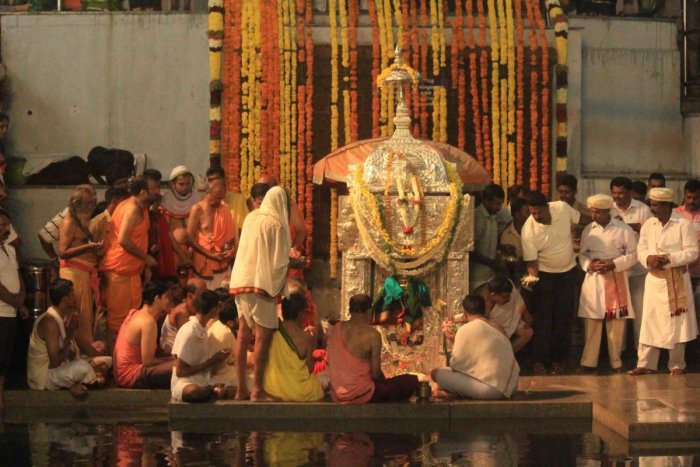
Priests offer prayers at Brahma Kundike prior to theerthodbhava at Talakaveri. DH File Photo
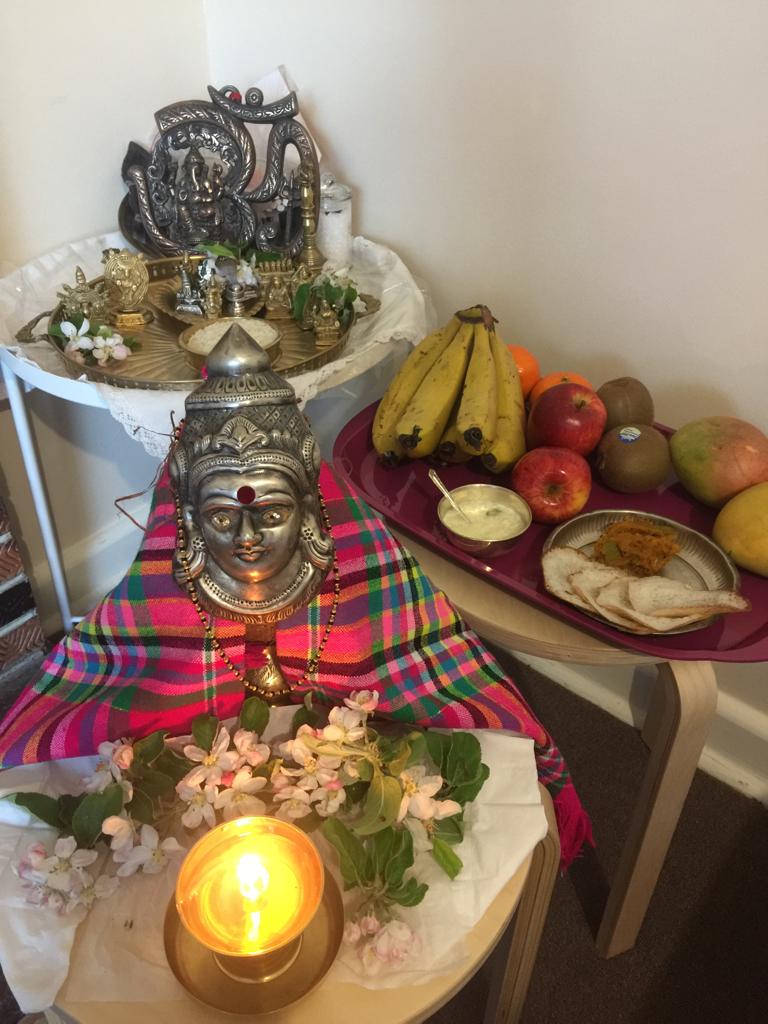
Kaveri Sankramana, an auspicious festival of Kodavas, is celebrated on the first day of Tula or Tholyar month of the Hindu calendar which generally falls in mid-October. This festival celebrates the birth of River Kaveri at Talakaveri located on Brahmagiri hills in Kodagu.
The most wonderful aspect of this festival is the theerthodbhava. At a particular time (corresponding to the sun entering and transiting into the Tula Rasi or Libra sign), water starts gushing out of the Brahma Kundike or the fountain head and flows into the pond at Talakaveri. This holy water called theertha is collected by people and is preserved at every Kodava home until the next Sankramana, as it is believed that if this holy water is fed to the dying, they will attain salvation.
From the pond, the river flows underground and re-emerges at some distance from the temple.
People from Kodagu as well as from different regions of the state and elsewhere gather at the holy site to witness this spectacle. It is a common belief that taking a dip in the temple pond washes away one’s sins.
This year too, people plan to go to Talakaveri to witness the theerthodbhava at 7:03 am while taking all necessary precautions. Kodava men in traditional kupiya chele and women in Kodava saree will pay obeisance to Goddess Kaveri, who is the chief deity and mother goddess of Kodavas.
Those who cannot make it to Talakaveri, also worship at other pilgrim centers situated on the banks of River Kaveri such as Bhagamandala, Harishachandra, Balamuri and Guyya.
Kodavas perform Kani Pooja at their homes to worship Goddess Kaveri. Photo credit: Karthachira Nisha Shyam
The next day, Kodavas perform Kani Pooja at their homes to worship Goddess Kaveri. Married women draped in silk sarees wrap a coconut in red silk, and deck it with beautiful flowers and traditional gold ornaments. The adorned coconut symbolises Goddess Kaveri and is placed on a tray containing three betel leaves and three areca nuts. An oil lamp called taliyakki bolcha is lit next to it and all the family members worship the goddess by sprinkling rice grains (akshata) on the coconut.
An essential component of this festival is the preparation of dosa and pumpkin curry which is also offered to the gods.
Traditionally, bothh posts (made from a tree, locally called bothh) are installed in front of the house, cow sheds, paddy fields, and coffee estates. Dosa, jaggery and small coconut pieces are placed on these posts, only to be eaten by mischievous children when no one is watching.
According to folklore, people placed these tree posts to mark their properties when Pandavas after losing their kingdom to Kauravas had visited Kodagu and had asked Goddess Kaveri to give them some land.
However, it is said that the main reason for placing these stumps is to protect the growing paddy and other crops by scaring away birds and repelling insects. Some also say that it wards away evil spirits and ensures a bumper harvest.
source: http://www.deccanherald.com / Deccan Herald / Home> Spectrum> Spectrum Statescan / by Dhanyata M Poovaiah / October 16th, 2020
A t2 chat with the actor, who started his career with a bang in Shaitan, spending 10 years in films and why he enjoys being a ‘troll’
” I am definitely not over the moon in terms of how my career has panned out since 2011. It could have been a lot better, I wish it was a lot better….it’s not. But it’s okay…..it’s not terrible . A lot of it is sometimes luck, you know….. I am not regretful of the decisions I made…. I wish i had got some better opportunities, but those did’nt happen “. Sourced by The Telegraph
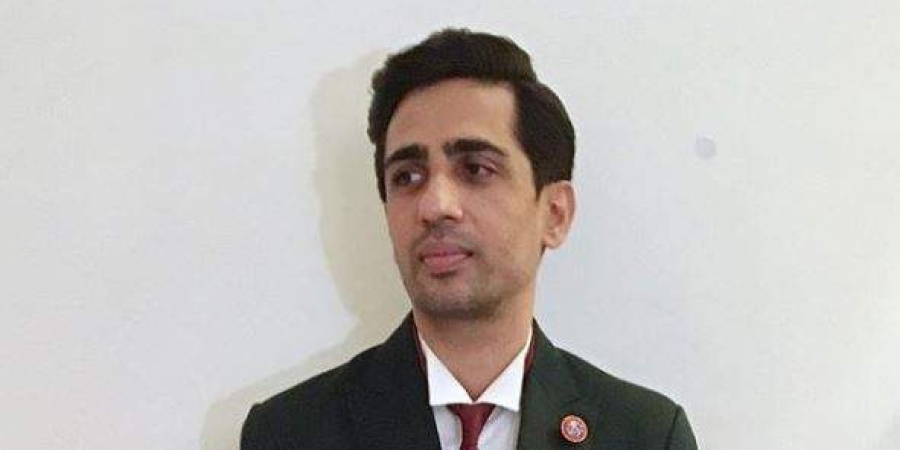
It’s been almost a decade for Gulshan Devaiah in films and the actor has a thriller called Footfairy, that focuses on a serial killer with a foot fetish, releasing on October 24 on &Pictures, in a direct-to-TV-release. t2 chatted with the 42-year-old actor, who started his career with a bang in Shaitan, on spending 10 years in films and why he enjoys being a “troll”.
Footfairy looks like a bonafide Bollywood thriller after a long time. And it’s releasing first on TV…
News channels were providing entertainment all these days, so now it’s time for entertainment channels to do that! (Laughs) I don’t know how the buzz for a film is created, but I did see comments on the trailer like, ‘Gulshan Sir, underrated actor’ and things like that. I don’t pay much attention to stuff like this, but it feels nice that even after 10 years in the film industry, people still like me.
Have you evolved into this sense of detachment or was it always there?
No, I wasn’t always like that. I have suffered very badly because of too much attachment to the result of my films (laughs). During my theatre days, I was a process-oriented actor, but somewhere I lost track a little bit. I am not saying that if a film of mine does badly, I don’t get affected at all. Mard Ko Dard Nahi Hota had a very bad theatrical release due to various circumstances. That did upset me a little bit, but I was better equipped as compared to early on in my career where I had little or no understanding of how the business of cinema works. I am older and wiser now and, therefore, more detached.
What made you sign on Footfairy? We’ve heard you are a big thriller fan…
I am a David Fincher fan, who has made some landmark thrillers. What jumped out at me in the case of Footfairy was the ending. I liked the kind of referencing that Kanishk Varma, who is the writer-director on this film, had put into the script. He’s also a fan of the genre, and many people, incidents, films and books have inspired this story.
When we had spoken after Mard Ko Dard Nahi Hota, you had said that you have a problem with films going directly to digital. Do you still feel the same, especially given how things have changed, and your own film is releasing on TV first?
I have made my peace with it, to a large extent. At that point of time, as a lover of the art form of cinema, I was a bit concerned with the advent of OTT platforms, that the cinematic experience is going to suffer. But I slowly began to understand that both the mediums will thrive and coexist. There’s a lot that they can learn from each other. The box-office medium can be both rigid and ruthless, and this is a viable alternative.
We are also operating in special circumstances where the traditional exhibition model is not going to work anywhere. So one has to innovate. And I feel that through Footfairy, &Pictures has come up with a great way of getting a new release directly into people’s homes. Which means that TV can also emerge as a medium, along with movie theatres and digital platforms, and the three can compete in a healthy way.
Having said that, I love the cinema experience. I have grown up watching films in theatres and I won’t let go of that. Movie theatres in Mumbai still haven’t opened, but once they do and if Tenet releases, you will find me in a theatre, even if I have to land up in a PPE suit! (Laughs)
It’s been almost a decade for you in films. Are you happy with the choices you’ve made, given the last time we had spoken you had said that the opportunities are opening up but they aren’t consistent…
I am definitely not over the moon in terms of how my career has panned out since 2011. It could have been a lot better, I wish it was a lot better… it’s not. But it’s okay… it’s not terrible. A lot of it is sometimes luck, you know.
If any one of my films had made a lot of money, that would have put me in a different place… that would have empowered me as an actor. I’ve done some good films, worked with some great people, I’ve had a variety of experiences, most of them really good. I have no reason to complain, and I am upbeat with what’s going to come up. I just did some work with (directors) Raj & DK and once they are ready to shoot, I have to go back to Rajasthan and finish shooting for my web series Fallen, which is directed by Reema Kagti (and co-stars Sonakshi Sinha, Vijay Varma and Sohum Shah).
I am not regretful of the decisions I made… I wish I had got some better opportunities, but those didn’t happen.
Screengrab from the trailer of Footfairy. Sourced by The Telegraph
One thing that happened in the lockdown is that you’ve really exploded on Twitter over the last few months…
(Laughs) I think I’ve just found my way of authentic expression. I always try and be authentic, in my work and in how I express myself. There’s also a certain sense of humour that I want to hold on to. Which, in a way, is helping me cope with a lot of the nonsense that’s been going around. Especially over the last few months, urban society has been sadly exposed, there’s been a lot of decay. I can’t do anything about it, but I tried to let it affect me less by holding on to the sense of humour that I have. I am quite happy being a troll on Twitter… most of the time I am trolling people! (Laughs)
Film-maker Vivek Agnihotri has already branded you his favourite troll!
(Laughs) He has no option! We do like each other, we made a film together (Hate Story) and I have respect for him for the professional relationship we’ve had. But mostly he says things to which I have an opposing opinion and I have to figure out how to respond to that. I think I have found my calling with him and our relationship has transitioned from director-actor to nuisance value and troll! (Laughs) He is a bit of a nuisance value.
source: http://www.telegraphindia.com / The Telegraph Online / Home> Entertainment / by Priyanka Roy / October 21st, 2020
Commonly known as black vinegar, ‘kachampuli’ is indigenous to the district and is prepared by locals.
Madikeri :
Udiyanda Subbaiah, a 90-year-old resident of K Nidugane in Madikeri, is always busy during the rainy season. While most of the residents stay indoors due to the wet and chilly weather, Subbaiah (aka thaatha) goes out early in the morning and begins his search for the Malabar tamarind fruit – scientifically called Garcinia gummi-gutta.
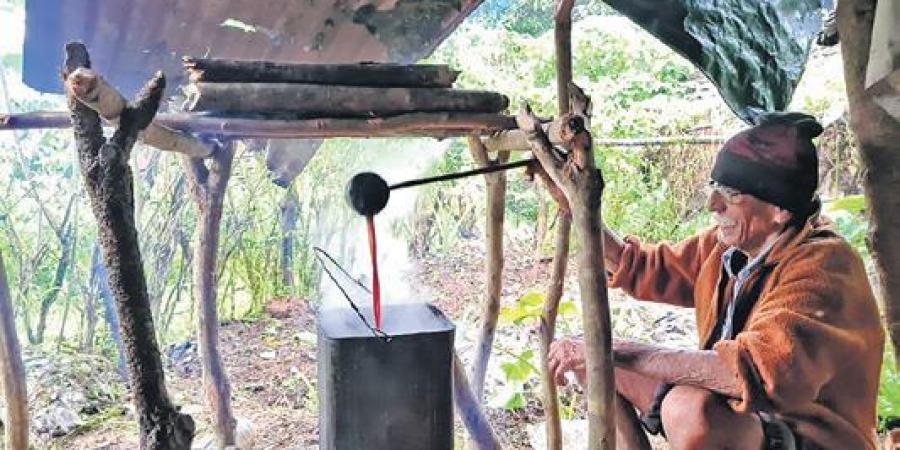
With his feet buried in slush, Subbaiah walks miles to collect the ripened fruits. He rushes back home with a basketful and sits down to remove loads of bloodsucking leeches that have crept all over him. He later sets up a make-shift tent and begins the tedious job of brewing vinegar from the fruit – popularly known as Kodagu’s ‘kachampuli’.
Kodagu district is known for its exclusive traditional culinary and the ‘pandi’ (pork) curry tops the table. And adding the special tang to these traditional non-vegetarian dishes is ‘kachampuli’ or ‘pulineer’ (puli in Kodava language means sour). Commonly known as black vinegar, ‘kachampuli’ is indigenous to the district and is prepared by the locals during the rainy season.
“The ‘kachampuli’ fruits start to ripen following the first rain in the monsoon season. Every day, we collect the ripened fruits that are mostly fallen on the ground. We take the fruits home and separate the seeds. Next, we put the fruits on a handmade wooden grill, which is fixed atop wood fire. The fruits have to be dried at high temperature continuously for nearly two days. The dried fruits are then put in boiling water (measured in proper proportion) and kept in a container for over a day.
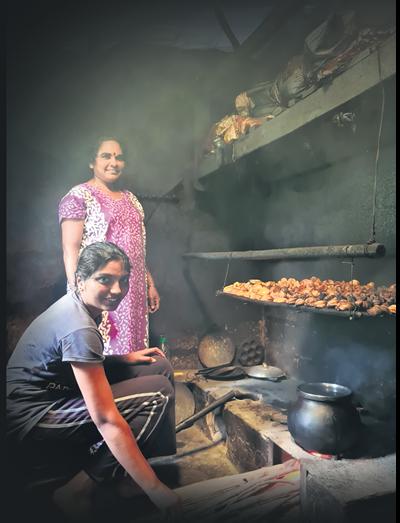
The pulp gets separated from the fruit in the boiling water and the water is strained, which is then heated constantly on wood fire for nearly two days…the water must be heated until it gets thick and starts foaming. It might take more than two days sometimes,” explains K A Vedavathi, a resident of Galibeedu, about this sour extract. She has been brewing ‘kachampuli’ for nearly 25 years now.
While there are various methods of making ‘kachampuli’, Subbaiah follows the simplest one. “Until the extracted vinegar is thick and filled with flavour, the method used to brew it will not make much of a difference,” he opines. Subbaiah collects the ripe fruits, squeezes the pulp and brings the liquid to perfect blend by constantly heating it – sometimes for two days straight.
Kodengada Sumithra Nanaiah of Kiruguru village has been brewing ‘kachampuli’ in the most authentic way for 25 years now. “A funnel-like structure is raised using wooden logs and this structure is called ‘bhalley’ in Kodava language. Banana leaves are used to cover the funnel and the ‘bhalley’ is filled with the ripened fruits. The structure is covered to prevent rainwater entering it and a container is placed under the filter. Once the fruits start to ferment, the juice drops down into the container. The liquid collected is then heated on wood fire and the thickened extract is ‘kachampuli’ or ‘pulineer’,” explains Anju Thimmaiah, daughter-in-law of Sumithra.
The popularity of this black vinegar is reaching worldwide even as Michelin Star Chef Gordon Ramsay was introduced to its authentic taste during his recent visit to Kodagu. ‘Kachampuli’ is usually bought from the locals who prepare it without adulteration. The numerous spices shops that have opened across the district have become good marketers for the product and the vinegar is reaching all across the country. “We sell the thickened vinegar at Rs 700 to Rs 800 per 750 ml bottle. The same is sold at a higher price in retail shops, but the product at retail shops is prone to adulteration and is usually watery,” explains Ramyashree, daughter of Vedavathi.
The Ponnampet Forestry College has now started an initiative to rejuvenate the Garcinia gummi-gutta trees. They have started a nursery where grafts of the plant are sold to farmers. The college administration is also promoting the traditional art of brewing ‘kachampuli’ as the Garcinia gummi-gutta fruits are collected in large numbers from the farmers and the students of the college are involved in brewing the traditional vinegar.
PULI POINTS
‘Kachampuli’ is locally brewed by many residents and this earns the local families an annual income
This vinegar has a shelf-life of nearly three years
Malabar tamarind trees are not cultivated but are found naturally across the terrains of the district
Mother-daughter duo Vedavathi and Ramyashree at work. Nonagenarian Subbaiah brewing Kachampuli. Inset: Garcinia gummi-gutta fruit | Express
VARIOUS USES
Nothing goes waste while preparing ‘pulineer’. There is great demand for the dried pulp in neighbouring Kerala. It is sold between Rs 75 and Rs 100 per kg
source: http://www.newindianexpress.com / The New Indian Express / Home> States> Karnataka / by Prajna G R / Express News Service / October 25th, 2020
KBG’s ‘Nostalgically Speaking-8’ write-up on Prof. G.T. Narayana Rao in SOM dated Sept.6, 2020, has prompted me to write about my association with him since 1975. He joined our team of Ganabharathi as Committee Member in 1980 when I was the Vice-President.
Guddehittalu Thimmappaiah Narayana Rao, GTN as he was popularly called, after his early education in Madikeri and Mangalore passed MA in Mathematics at Madras (1947). Lecturer in Madikeri College (1953-63) was his first appointment. After a three-year stint in Government College in Bangalore he came to Mysore in 1969 to settle down. He was absolutely simple in his dress, wearing white pant and bush shirt and chappals, going on a cycle or by walk wherever he had to go but equally forthright in speaking his mind out. He was a role model to some of us who were much younger to him.
GTN took the mantle of collecting funds for the construction of Veene Seshanna Bhavana on Adichunchanagiri road. His slogan was ‘Jagannatha’s Rath has to be drawn by all’ and believed in ‘No great work has ever suffered for want of funds.’ He never hesitated to ask any stranger for funds and he even carried a receipt book in his bag to give it readily. His involvement was so much as he did not spare some of the shop owners on Sayyaji Rao and Dhanvanthri Roads.
I fondly remember him barging into my clinic even during busy hours just to tell me a ‘vismaya’ (miracle in his words) that he collected a few hundred rupees. The major donation of Rs. 1 lakh he got was from Dr. Veerendra Heggade of Dharmasthala who was his student in a Bangalore College.
As the estimated cost of construction was Rs.12 lakh he had to make a couple of trips to Bombay. Once he was invited by the Bombay University to deliver a lecture on Science subjects offering him the flight and hotel charges. He politely refused to accept it and travelled in Gandhi class and stayed for a few days in his friend’s house asking the organisers to make that amount as a donation to Ganabharathi!
His love for Karnatak music started while he was in Madras and it continued till his end in 2008. His reviews on music were unbiased and forthright, sometimes quite open and critical too.
Ganabharathi on the occasion of Veene Seshanna Bhavan’s Silver Jubilee in 2016 posthumously honoured GTN with a Silver Plaque which was received by his wife Lakshmi Devi Rao. It is also gratifying to note that a memorial music concert is instituted in his memory in Ganabharathi. His admirers have contributed handsomely to this fund.
Being an avid student of Science he always used to quote Einstein’s popular saying ‘Science without religion is lame and Religion without science is blind’. He has written several books on science including Nobel Laureates Einstein and Chandrashekar. One of his books in Kannada ‘Vijnanada Moolatatvagalu’ has won an award also. After becoming the President of Ganabharathi in 2011, I am proud to say that I am following his footsteps in collecting funds for the development of the institution.
I would like to conclude with GTN’s yet another selfless service for a cause. With his intense commitment to the improvement of art and culture in Mysuru he had provided free of cost a place in his house for the noted Dance Master late Muralidhara Rao to conduct his classes.
– Dr. C.G. Narasimhan, Mysuru, 9.10.2020
source:http://www.starofmysore.com / Star of Mysore / Home> Voice of the Reader / by Dr C G Narasimhan / October 22nd, 2020
The actor said even though it’s a ‘bit too late’, he has began to put his feet in important doors to break casting stereotype and land roles that will, otherwise, not come to him.
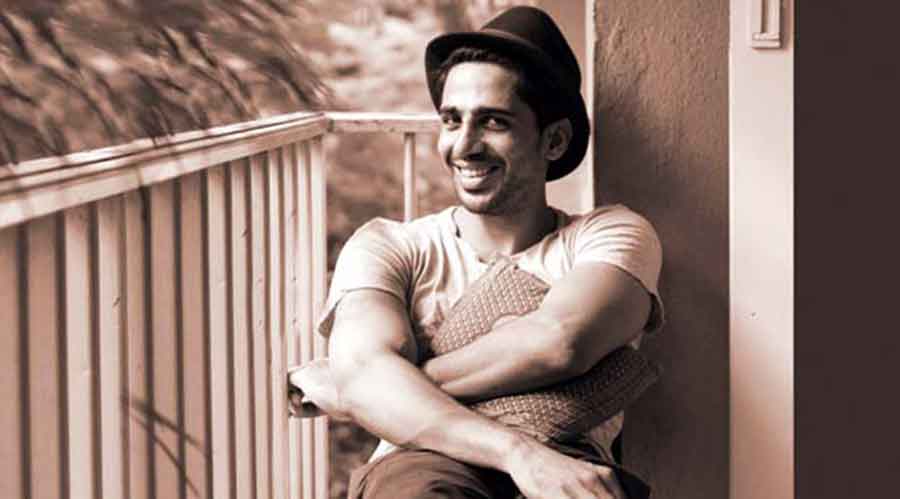
Bollywood actor Gulshan Devaiah (Photo | Gulshan Devaiah Instagram)
Mumbai :
Actor Gulshan Devaiah says after a decade in the industry he has finally started to pitch himself for projects he is interested in.
Devaiah has been a part of several acclaimed films, starting from his 2011 breakthrough “Shaitan”, “Hunterrr” (2015) and Vasan Bala’s 2018 action-comedy “Mard Ko Dard Nahi Hota”.
The actor said even though it’s a “bit too late”, he has began to put his feet in important doors to break casting stereotype and land roles that will, otherwise, not come to him.
Devaiah said he started doing this after realising that meritocracy can’t exist in art as it’s difficult to measure a person’s talent with another.
“You can’t do that with a performance. What is it then? It’s all about perception. We are in the business of perception which is why actors like to control their perception through PR, Instagram, wearing expensive rental clothes, by shaking the right hands.
“Many of them do it subconsciously because we know meritocracy can’t exist in art.
I am conscious about that too, so I can’t keep whining that I’m not getting opportunities.
Because you’re in the place of perception, if you don’t hustle then your career won’t go forward,” the actor told PTI.
Though Devaiah has garnered considerable acclaim for his performances, the actor said he could’ve done better.
“If I had one film that was a smashing box office success, then I would have been empowered. It puts you in the spotlight. But when that’s not the case, you have to try and look for opportunities.”
The pitfalls of merely wishing to do better but not actively pursuing those opportunities has resulted in people from the industry often looking at him and wondering ‘Damn! Why didn’t we think of you’, the actor said.
Devaiah’s attempt is to now gently remind people of his talent at every given opportunity.
“If I feel there are certain directors or projects that I find interesting because I’ve heard about them, I’m going to find out if there’s something in there for me.
“They can say no and so far it has only been no! I’ve come really close many times but nothing, zero so far. But I’m happy that I can hustle.”
The actor is gearing up for his latest crime thriller “Footfairy”, set to release on October 24 on &Pictures.
Billed as a cat and mouse chase between a CBI officer, played by Devaiah, and a mysterious serial killer, the film is written and directed by Kanishk Varma.
Devaiah gravitated towards the film as it offered him a chance to break free from the “villain” characters he felt he was getting trapped into.
“I was getting bored with the negative characters. A lot of the offers were also repetitive, I’d be offered a villain or a grey character. I thought this would be nice and break the mould. Negative characters for me are now retired indefinitely.”
The actor said it’s pointless to “endlessly complain” about getting only certain kinds of roles without even trying to break the chain by saying no.
“I don’t want to do similar roles even if I’m told that people love me in negative roles. I tell them I’ll give you an opportunity to love me in other roles too.
You have to take responsibility for yourself and stop blaming the system. I am happy people want to work with me, it’s unfortunate that they’re offering me villain roles. It’s not their fault,” he added.
“Footfairy” also stars Kunaal Roy Kapur and Sagrika Ghatge.
source: http://www.newindianexpress.com / The New Indian Express / Home> Entertainment> Hindi / by PTI / October 22nd, 2020
WELCOME. If you like what you see "SUBSCRIBE via EMAIL" to receive FREE regular UPDATES.
Read More »