Mangaluru: Indian hockey star S V Sunil ties knot at Kudroli temple

Mangaluru :

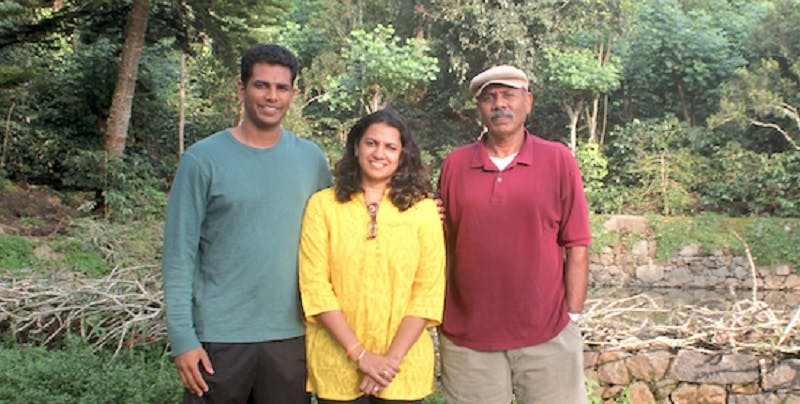
Indian national team hockey player and Arjuna awardee Somwarpet Vittalacharya Sunil, known as S V Sunil tied the nuptial knot with Mangalurean Nisha at Kudroli temple on Sunday, March 4.

Nisha, daughter of Tharnath Acharya hails from Derebail Konchady. SV Sunil and Nisha got engaged last year at Konchady.

The reception ceremony will be on March 5 at Madikeri where several hockey players are expected to take part.

SV Sunil, son of Vittal Acharya, made his international debut at the young age of 18. With 11 years of experience, presently S V Sunil is one of the key members in the Indian hockey team. He was part of the team in the year 2008 for the Sultan Azlan Shah Cup, in which India won the silver medal. In 2011, he played in the Champion’s Challenge and scored four stunning goals, the most by any Indian forwarder. He was also part of the team that secured gold in 2014 at the Asian Games at Incheon. Sunil was part of the team in the Hero Champions Trophy 2016 and won the silver medal.

S V Sunil received the prestigious ‘Arjuna Award’ from president Ram Nath Kovind on the birth anniversary of hockey wizard Dhyan Chand on August 29 last year.

source: http://www.daijiworld.com / DaijiWorld.com / Home> Karnataka / by Daijiworld Media Network – Mangaluru (ANK) / Mangaluru – March 05th, 2018

A welcome retreat

RetreatKF14mar2018

The recent withdrawal of the amendment bill to the Karnataka Preservation of Trees Act, 1976 (KPT Act) by the government, which would have allowed indiscriminate cutting down of some 50 tree species, came about under pressure from green NGOs but is perfectly welcome. Farmers prefer growing hebbevu, eucalyptus, Casuarina, silver oak, Acacia auriculiformis, shivane, teak, sandal, etc.

The first four of the above species are already on the exemption list. The current proposal of the Forest department for inclusion in the exemption list includes Acacia auriculiformis, Kakke, Gulmohar, Peltoform, Raintree, Christmas tree, orange tree, Purple Bauhinia, mulberry, curry leaf, drumstick, Simaruba glauca, African tulip, tabebuia, Tecoma, Indian cork tree (Mellingtonia), etc.

Granting exemption on Gulmohar, Peltoform, Raintree, Purple Bauhinia, Tabebuia, Tecoma would lead to destruction of trees from urban areas. Thankfully, withdrawal of the exemption proposal does not hurt farmers as these are not their preferred species.

Acacia auriculiformis was the main species of forest plantations for more than three decades. Now, the planting is banned in some areas, yet its exemption may induce smuggling from older plantations. It is understood that the plantations are to be protected by the department, then why not include other species like teak, etc., on the exemption list?

When KPT Act was legislated in 1976, Casuarina and Hopea wightina were in the exemption list. Other species required permission. But, for nine districts, namely Chikkamagaluru, Chamrajnagar, Dakshin Kannada, Hassan, Kodagu, Mysuru, Shivamogga, Udupi, Uttar Kannada, felling permission is not needed for any species except sandalwood and rosewood.

Even in these districts, tree-owners had provision for domestic consumption. People were harassed in the districts by Revenue and Forest officers. In 1987, the Act was amended to include Coconut, Erythrina, Eucalyptus, Glyrecidia, Prosopis, Rubber, Sesbania and Silver oak in the exemption list.

There were difficulties in protecting exempted species in the forests, yet the amendment was not retracted. The red tape in the lower bureaucracy continued to harass tree-owners for several other species. By another amendment in 2015, the exemption list was extended to subabul, areca nut, coffee, guava, hebbevu, Ailenthus excelsa, lemon, Maeopsis eminni, mango, sapota, Dendracalamus stocksii, Burma bamboo, Yellow bamboo, Acacia mangium, Acacia hybrid, Balangi and Cashew.

Exemption for mango and Balangi posed a serious threat to forest conservation in the Western Ghat areas. Huge mango trees growing on water courses in the forests were illicitly cut away, sometimes with the connivance of the officers. Many varieties of mango disappeared.

The loss of these trees from water courses can deplete water flow in the tributaries of major rivers. The Karnataka High Court removed the exemption on mango trees. The exemption of other species did not bring any negative impact on the conservation of forests.

To popularise farm forestry, Karnataka took some interesting initiatives. Krishi Aranya Protsah Yojane (KAPY) was launched in 2011, where tree-growers were paid an incentive for successfully growing plants for three continuous years. The initiative has picked up well.

The recently published Forest Survey of India (FSI) report confirms that the state’s forest cover has gone up from 36,449 sqkm to 37,550 sqkm in two years. The cover in recorded forests, Revenue and Paisary lands has gone up by 359 sqkm. However, in private wooded areas, coffee estates, and coconut and areca nut gardens, it has increased by 742 sqkm, but the assessment has not separated the contributions of forests and horticultural plants. Tree groves below one hectare and strip plantations are also assessed by FSI, where tree-cover is found to have increased from 5,552 sqkm to 5,713 sqkm in the same period.

The assessment is based on satellite imagery of October 2016. Assuming that five years’ growth is necessary for a signature to be picked up in satellite imagery, the increase, if any, can be attributed to plantations raised prior to 2012, and not due to the impact of KAPY and exempting additional species from KTP Act.

Mixed findings

FSI has also brought out the district-wise status of forests. It is heartening to note that the tree-cover in all dry districts has gone up, and horticultural plantations have also contributed. The success of the forestry programme in dry districts can be attributed to the fact that these districts are not covered under KPT Act and the movement of growing trees has picked up well.

Further, there is a disturbing trend of forest cover in Malnad districts like Dakshina Kannada, Kodagu, Mysuru and Shivamogga having decreased. This is the negative impact of KPT Act, as some of the exempted species have been illicitly removed from forests. The forests in these districts must be preserved as these are the catchments of many important rivers. Kodagu is a hilly district extending over 4,102 sqkm, of which only 1,700 sqkm is recorded forests. The vegetation on private land is equally important in the catchment of Cauvery river. The KPT Act has played havoc there in the past. It is time to suspend felling of naturally-growing trees on private lands in Kodagu.

Forests are the ‘mothers’ of several rivers, and the KPT Act is important for conservation. At the same time, growing trees on private lands must be encouraged and authorities must be held accountable for any laxity in dealing with cases under KPT Act. Bureaucratic hurdles are man-made, which must be dealt with severely.

Prime Minister Modi’s vision is to double farmers’ incomes by 2022. Among other things, he has been talking about soil testing, easy availability of neem-coated urea to reduce costs and growing tree species on the periphery of farmlands as well as bee-keeping to boost incomes. We have been importing wood for quite some time for our domestic consumption. The only way to save the foreign exchange is to grow our wood requirement indigenously.

(The writer is a former Principal Chief Conservator of Forests, Karnataka)

source: http://www.deccanherald.com / Deccan Herald / Home> Main Article / by B.K. Singh / March 10th, 2018


‘Our batch was the first to organize Chiguru’

HarshikaKF14mar2018

Actress Harshika Poonacha got to relive her college days on Saturday at Cambridge Institute of Technology, where she was the chief guest for the college’s fest – Chiguru 2018.

Speaking to us, Harshika says, “It was wonderful to be back in college after so many years. It is always a nice feeling to go back to your school or college, especially as a guest. Not only did it bring back fond memories, but I felt so proud, I don’t know how to express my happiness.”

It was a flashback of the good old days for the actress, who felt nostalgic during her visit. “I went around and showed my chairman and principal all those place where we would hide as students. We were the first batch to graduate from the college and first ones to organize Chiguru. The whole aura feels different now because there are so many students, and the fest has grown” says the actress.

Harshika, was accompanied by her parents. “The only time my parents had come to college was when I had joined. Back in those days, we never had any PTA. So, it was indeed a proud moment for me to take them back to my college,” she says.

source: http://www.timesofindia.indiatimes.com / The Times of India / Home> Entertainment> Kannada / by Sandra Marina Fernandes / March 12th, 2018

Varsha Bollamma is here to stay

Varsha Bollamma, who captured Malayali hearts through her Dubsmash, has made her debut in M’wood.

Varsha Bollamma
Varsha Bollamma

Varsha Bollamma is no stranger to Malayalis. Even though she has acted in only one movie, the spunky actress has already been celebrated on Facebook and Instagram.

Remember her Dubsmash? Varsha became the talk of the town after she uploaded a Dubsmash video in which she was seen impersonating actress Nazriya’s dialogue from Raja Rani. Interestingly, she is also a dead ringer for Nazriya. After the video viral, many started to think she is her twin. In a fortnight’s time, the video was seen by almost by 1.5 lakhs people.

She says, “I have become so popular that people have started to recognise me wherever I go.” She made her acting debut with the 2015 Tamil film Sathuran. She was also a part of Tamil films like Ivan Yaarendru Therigiradhaa and Yaanum Theeyavan. In Malayalam, she made her debut through the recently released Kalyanam.

“Acting in a Malayalam movie was totally a different experience. Here everything is different, even the acting style. Neither the director nor viewers expect overacting. Everything needs to be real. That is the beauty of Malayalam movies. You won’t see any over-the-top expressions or unwanted dialogues here. So I was very relaxed and could do it without any pressure.”

The movie Kalyanam also saw the debut of another star son. Shravan, son of versatile Malayalam actor Mukesh. “Acting with Shravan was really good.

Though this was his first movie, he never showed any discomfort. We could create a good chemistry and I was very comfortable. The whole crew gelled well together. It was fun and Asha Aravind who acted as my mother really helped me with the Malayalam translation and taught me some words.”

In her upcoming film Mandaram, she acts opposite Asif Ali. “It is a romcom and I play a fashion designer,” she says. The movie tells the story that spans 25-plus years — from the protagonist’s childhood to his life at 32, which will be directed by debutant Vijesh Vijay.

When asked about her taste for Malayalam movies, she said she is a big fan of actress Revathi. One of her favourite movies is Kilukkam. Opportunities are pouring in for her from Tamil and Malayalam movies and she is hopeful of doing more challenging roles in the future.

source: http://www.deccanchronicle.com / Deccan Chronicle / Home> Entertainment> Mollywood / by Gokul M.G, Deccan Chronicle / March 12th, 2018

Robin Uthappa mentor and brand ambassador of Tayyarah.com 10PL team

RobinUthappaKF14mar2018

Robin Uthappa will be seen in a new avatar at the upcoming Tayyarah.com 10 PL. The veteran Indian cricketer has been signed as the brand ambassador and mentor for Tayyarah.com’s side in the Ten Premier League (10PL). The league is slated between March 19 and 23 at the Sharjah Cricket Stadium. In all 16 teams will be participating in what is the world’s biggest tennis ball cricket tournament.

Uthappa will be present in Sharjah on 21 March to cheer and support his team during the team’s two matches on the day, news agency PTI has reported.

“It will be interesting to see cricket in a new form. I am fortunate that I can bring in some of experience to cheer my squad, albeit from the sidelines. All of us have played tennis ball cricket at sometime in our lives in India. So it would be great to relive that experience,’’ said Uthappa.

Pakistan paceman Mohammed Asif, Sri Lanka’s Thilan Thushara and Chamara Silva are also likely to play in the tournament. From India a number of players who have played Ranji Trophy are listed in squads, alongside former Rajasthan Royals paceman Kamran Khan.

Former Pakistan captain Wasim Akram, also the brand ambassador for the tournament, has earlier unveiled the jersey, anthem and the trophy of the tournament. The launch event, held at the Intercontinental Hotel in Dubai Festival City, was attended by the teams along with several other stakeholders including sponsors and other commercial partners.

This new and exciting format of cricket is the brainchild of UAE-based leading Sports Management Company Petromann Events, headed by Mr. Abdul Latif Khan. The tournament boasts the highest prize money for tennis ball cricket anywhere in the world and is valued at a total of 250,000 Dirhams (USD $68K).

The schedule of the tournament, under the aegis of the Sharjah Cricket Council, was announced in January 2018.

source: http://www.insidesport.co / IndiaSport / Home> Sport> Cricket / by InsideSport Desk / March 12th, 2018

Harshika Poonacha: Playing a supermodel

HarshikaKF09mar2018

Setting her first footsteps in Mollywood, popular Kannada actress Harshika Poonacha is excited about her debut. The romantic thriller Charminar will hit the theatres today. Ajith C Logesh, who wrote the script for Money Ratnam, starring Fahadh Faasil, is wearing the director’s cap for the first time with Charminar.

The actress goes candid about her experiences and her role. “I had a wonderful experience working in a Malayalam film. The film had a great team on and off the camera. It was a blessing to be part of this beautiful venture,” Harshika said. She plays the role of Nanditha, a girl next door who goes on to become a supermodel. “The character has multiple shades and is a performance-oriented one,” she said.

According to Harshika, it was Charminar’s commendable storyline that made her sign the movie. Harshika is sharing shared screen space with talented actors like Ashwin Kumar and Hemanth Menon. “When people in front of us perform really well, we will try to match up to them. There was a healthy competition between three of us,” she said.

She also said that the beautiful songs composed by Jecin George and cinematography by Faisal V Khalid made the film look good. The actress, who entered Kannada films at the age of 15, said that there is a lot of difference in both industries.

“In Kannada, actors work in three or four schedules and it takes a longer time to complete the movie.

But in Malayalam, I completed the filming within a month,” she said.

Due to this, she could continue to play the same role until the film got over, without switching to another character in another film. However.

Harshika said that both industries have a space for heroine-centric movies. “I have done many special appearances in various Kannada films because I liked the roles. The number of scenes doesn’t matter to me if the character has something worthwhile to do,” she said.

Harshika is hoping Charminar will be loved by the audience.

source: http://www.newindianexpress.com / The New Indian Express / Home> Entertainment> Malayalam / by Express News Service / March 09t, 2018

Chondamma Cariappa is helping keep traditional ethos alive with her handcrafted footwear label

From advertising to blogging, and then finally designing shoes for her own footwear label, Chondamma Cariappa has come a long way. Read her #PassionToPaycheck story below.

Chondamma01KF08mar2018

These boots are meant for walking, and that’s just what they’ll do.

These lines from Nancy Sinatra’s hit number could very well be the theme for Chondamma Carippa – an avid traveller-turned-footwear entrepreneur.

Hailing from a small hill town in Coorg, the travel bug bit Chondamma at a very young age. “I grew up in various cities across India because my Dad was in the army and we would move every few years,” Chondamma recalls.

Chondamma was always drawn towards shoes, especially the handcrafted kind. “In school, my sisters wore delicate ballerinas while I was made to wear sturdy handmade shoes, because I would ruin the dainty ones,” she says.

So it was only time before she decided to combine her love for travel and shoes with her own footwear label, ‘The Sole Sisters’.

The first steps
It all began with a Facebook album named ‘Fetish’. Chondamma, an advertising professional, would post pictures of the shoes from various parts of the world that she came across on her travels. This soon took the form of a blog titled ‘The Sole Sisters’, and Chondamma started inviting followers to share their shoe stories. But what she didn’t anticipate was the kind of attention the blog would receive. She says, “That’s when it struck me that I can turn this into a much larger platform for women to share and discuss shoes. And since I already had a community of women (from the blog), along with a creative background and my fascination with shoes, I decided to make a capsule collection and introduce it to the blog community.”

Chondamma02KF08mar2018

The response that followed was so overwhelming that Chondamma decided to quit her advertising job and make time to learn the art of designing shoes. “One of the main challenges was teaching myself shoe-making techniques. With no prior training in this craft, it was initially a bit of a roadblock,” she adds. But things finally fell into place, and Chondamma started ‘The Sole Sisters’ label in January 2014 along with Parveez Shaikh, a screenplay writer.

A soleful adventure
“Knowing how much we love rocking a strong stride, our first priority has always been comfort and quality. Then comes our sense of unique style, where we believe every woman is rooted, yet reaching up to find herself in the most individualistic way possible. This is why we’ve chosen to re-invent, handcraft, and deep-design every process that goes into each pair,” says Chondamma.

Chondamma03KF08mar2018

‘The Sole Sisters’ draws inspiration from traditional crafts and earthy culture. Chondamma’s ideas and thoughts are based on her travels, surroundings and observations. She also relies heavily on her gut instinct for colors and combinations. The next step is spending hours with the right craftspeople. She explains, “Once I’ve decided on the designs, most of the time is spent in new development/sampling. I feel this is the most important stage in the process. Comfort and usage of materials is the key. After we’re done with the samples I test them with my close circle of family and friends.” This is the cycle they follow every time a new collection is launched.

At present, ‘The Sole Sisters’ clientele ranges from women in their early 20s to late 40s, across the globe. Every shoe that is made is handcrafted from personally sourced leather and fabric. “After traveling across the country, I fell in love with local culture, textile and craft. This love for the traditional is the inspiration for my fabric and motifs, which I blend with a strong contemporary aesthetic. The fabric of every shoe is hand-spun and hand-woven because we do our best to support and empower local crafts and women,” she says.

The path ahead

Chondamma feels that they’ve reached the right markets so far. There has been an organic growth, and they never felt the need to raise funding. She says, “We love our craft and will continue to make handcrafted shoes and reach boutiques and stores who understand and appreciate this process. We intend to make money via this process gradually as opposed to mass producing.”

The entrepreneur wants to expand ‘The Sole Sisters’ range to include footwear for younger girls. Apart from that, a website is also in the pipeline. It’s been quite a journey for Chondamma, and it hasn’t been without hitches. But Chondamma believes in taking risks, and ‘The Sole Sisters’ was one of them. “If you strongly believe in your passion, my advice would be to take risks. Things fall in place eventually. You have all your life to play safe,” she signs off.

source: http://www.yourstory.com / YourStory.com / Home> Signature Startup – Brand Spotlight / by Deepika Singhania / March 07th, 2018

25-year-old wakes up and smells the coffee; builds single origin coffee brand Cauvery Peak

With coffee consumption on the rise globally, fifth-generation entrepreneur Vishnu Rajes wants to take single origin coffee from his estate in Yercaud to homes across India with ecommerce.

At a glance:

Founded: 2017

Founders: Vijayan and Vishnu Rajes

Type of Business: Ecommerce for coffee single origin

Funding: Self funded.

Based in: Yercaud

Sector: Digital Commerce

What happens when you have a 150-year-old legacy of growing coffee? You use it to build an ecommerce business of selling coffee across the world. The GlenFell Estate Classic Arabica Coffee, of Cauvery Peak, is rated five stars on Amazon. Peruse the Cauvery Peak website, and you will find premium coffees that are gourmet standard. If you are used to coffee with chicory, Cauvery Peak isn’t for you.

But fifth-generation entrepreneur Vishnu Rajes realised that things – and the taste for coffee – were changing in India. Vishnu had been groomed to take over his family business, MSP Plantations, in Yercaud, Tamil Nadu, and continue trading coffee. But his stint abroad, at Washington College in the US, made this 25-year-old realise that the power to build a brand – and not trading – was the need of the hour.

Founders of Cauvery Peak

He came back and began creating coffees at his plantation. Not long after, in mid-2017, he floated his website Cauvery Peak.

The key, though, was in the creation of the coffee.

“I realised that the market out there for connoisseurs of coffee was very large globally. Even in India, premium coffees have not been marketed very well,” says Vishnu, Co-founder of Cauvery Peak. He began sorting coffee based on their nose and palette. “The opportunity to create a brand was too large to ignore because we were supplying coffee beans to traders who were selling it to coffee companies,” he says.

However, Vishnu needed investment and told his father, Vijayan Rajes, who was keen on the idea and became the investor and co-founder. He seed funded Vishnu with Rs 50 lakh for the business.

The origins of the business
Although the family has been in the business for 75 years, after taking it off British hands, the current strain of coffee has connections to the American continent. To improve the coffee strain Vishnu’s grandfather travelled the world for a plant whose beans could add a bold flavour.

The coffee strain at the Yercaud estate is of Costa Rican origin. The story goes that Vishnu Rajes’ grandfather went to the estate of Judy Garland, the famous American actress of the forties, who advised him to procure the plant strain from Costa Rica. Ever since then, the company has been supplying coffee beans to local traders based on this plant strain from Costa Rica.

But under Cauvery Peak, the taste caters to the palate and its three varieties of coffee vary in taste and nose. Cauvery Peak serves the modern customer who is global and shops digital.

“The single estate coffee beans are planted, picked, processed, roasted, packed, and dispatched from the estate directly to you in order to ensure freshness, consistency, traceability, and quality,” Vishnu says. He adds that being online allows him to reach a wider audience. The variety’s sold on the website include single origin coffees like Shevroys Estate single origin. This coffee produces a sharp flavour profile for discerning coffee enthusiasts who love a fine aroma, crisp acidic flavour, medium body and a distinct citrus aftertaste in the cup. The Cauvery Peak Estate single origin has a sweetly round aroma, richly low-key acidity, full body. Hints of fresh- cut cedar, lemon and chocolate in the aroma. In the cup, mid toned with distinct, clean fruit leaning toward chocolate.

Then the Glenfell estate is planted with both Arabica and Robusta varieties and inter-planted with cloves, nutmeg and pepper vines.

The competition and opportunity
Vishnu is building the reach slowly. He has opened three retail outlets in Yercaud and is also supplying his coffee to six hotels across the country. Currently the brand is only nine months old and Vishnu is not worried about sales as yet. He is taking the brand to forums like the Coffee Board of India and to conferences on coffee.

Over the last year, several coffee retailing companies have been born. Startups that offer purchase of coffee online include Flying Squirrel, from Coorg and Chikmagalur region; and Blue Tokai, from Delhi. These brands bring single origin coffees to the table.

Research and Markets, in its India Packaged Coffee & Cafe Chain Market Overview, said that the packaged coffee market is expected to grow between 10-15 percent CAGR over the next five years. The report added that coffee as a segment has steadily gained share of total consumer spending on beverages over the last many years. The growth of cafe chains over the last decade has also boosted the visibility and per capita consumption of coffee among Indian consumers. Cafe Coffee Day, Barista and Tata Starbucks are some of the leading players in the cafe market.

Coffee consumption is higher in the southern part of the country. However, it is expected to increase in other regions during the forecast period. The production of Robusta coffee is much higher than Arabica in India, which is anticipated to increase in the future years. According to Franchise India, the coffee and tea industry has taken a big leap from Rs 25,166 crore in 2013 to almost Rs 41,800 crore in 2017. In less than five years, the industry has grown three-fold, bringing out a lot of business opportunities in the tea and coffee sectors. It is being predicted that the total number of organised cafe chains will increase from the 3,500 at present to almost 6,200 by 2020. These figures are a clear indication of the success brewing for interested investors.

But, for Vishnu Rajes, the journey of coffee has just begun. The reason they call their brand Cauvery Peak is because they could see the river Cauvery from the mountain top of their estate. This legacy brand has successfully gone from local to pan-Indian; and Vishnu now has plans to take it global.

Website
https://www.cauverypeakestate.com/index.php

source: http://www.yourstory.com / YourStory.com / Home> Start Ups / by Vishal Krishna / posted March 06th, 2018

Kodagu’s encounter with the missionaries

OldKodaguKF07mar2018

When East India Company annexed Kodagu in 1834, there were no schools in the erstwhile kingdom, and none of the locals had any formal education. Lt Col James Fraser, a political agent of the company decided to open vernacular schools in Madikeri, Virajpet and Kushalnagar. Kodagu now has one of the highest literacy rates in Karnataka.

People of Kodagu took to education enthusiastically and encouraged both boys and girls to study. The British, in their policy of ‘enlightened self-interest’, supported education and introduced English along with Kannada. By 1850s, there were a number of educated locals taking up jobs in the government especially in the police, forest and revenue departments, and later in the armed forces.

However, in Kodagu, the credit for furthering education goes to two German missionaries from the Basel Mission. They were Rev Hermann Moegling and Rev Georg Richter. Moegling came to Kodagu in 1853. He first came to Mangalore in 1836 and established a seminary and a school. He not only mastered Kannada but also started the first Kannada newspaper Mangaluru Samachara in 1843.

Lt Col Mark Cubbon was the chief commissioner of Kodagu at the time, and he encouraged Moegling to establish the first Protestant church and a school in Madikeri in 1855. Georg Richter arrived at Kannur in 1855 with a group of Basel missionaries. Within days, he was sent to Mangalore where he started teaching in the Basel Mission English School started by Moegling. He was an exceptionally good teacher and was soon popular amongst the locals and the Europeans. Before coming to India, Richter spent time in London to improve his English and learn the latest teaching methods.

The book by Albrecht Frenz, Georg Richter: His Work in Kodagu on the Basis of Official Reports, provides insights into Richter’s journey to India, his journey from Mangalore to Kodagu and his work in Kodagu. During his time in Kodagu, Richter plunged himself into serious work, teaching as well as helping Moegling in setting up a settlement for Christian converts in Anandapur, where a coffee estate was being developed. In 1858, Richter married Armella, the daughter of Bernhard Schmid, who worked in Tirunelveli and Ooty. When Moegling returned to Germany in 1860, Richter took his place. The book also gives details of Richter’s work in the field of education in his capacity as principal of Government Central School, Madikeri, which he helped establish in 1869.

He later took over as inspector of schools in Kodagu. His wife helped him in his work and she focussed on encouraging girl students. One of the skills she taught them was needlework. Richter took an interest in learning about locals and their history. His book, Gazetteer of Coorg, published in 1870, is a comprehensive recording of social, cultural, historical and geographical aspects of Kodagu.

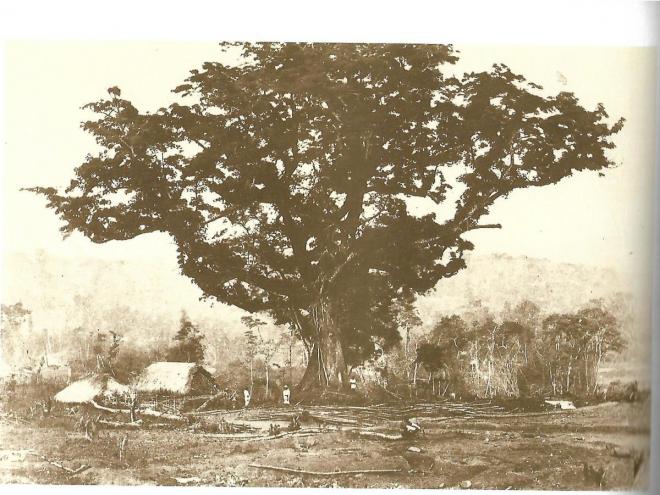
He was an avid photographer and the book by Albrecht Frenz has compiled the photographs taken by Richter during the 1860s in Kodagu, Nilgiris, and in parts of Tamil Nadu and Kerala. Richter and Armella returned to Germany in 1896. Richter has left an indelible mark on Kodagu by his quintessential work in the field of education, and the seminal recordings about Kodagu in the Gazetteer of Coorg.

source: http://www.deccanherald.com / Deccan Herald / Home> Supplements> Spectrum / by C.P. Belliappa / March 05th, 2018

Robin Uthappa and I complement each other well: KKR skipper Dinesh Karthik

Talking to reporters after being announced as Kolkata Knight Riders captain for Indian Premier League 2018, Dinesh Karthik said he would like to carry on with the legacy of past captains Gautam Gambhir and Sourav Ganguly.

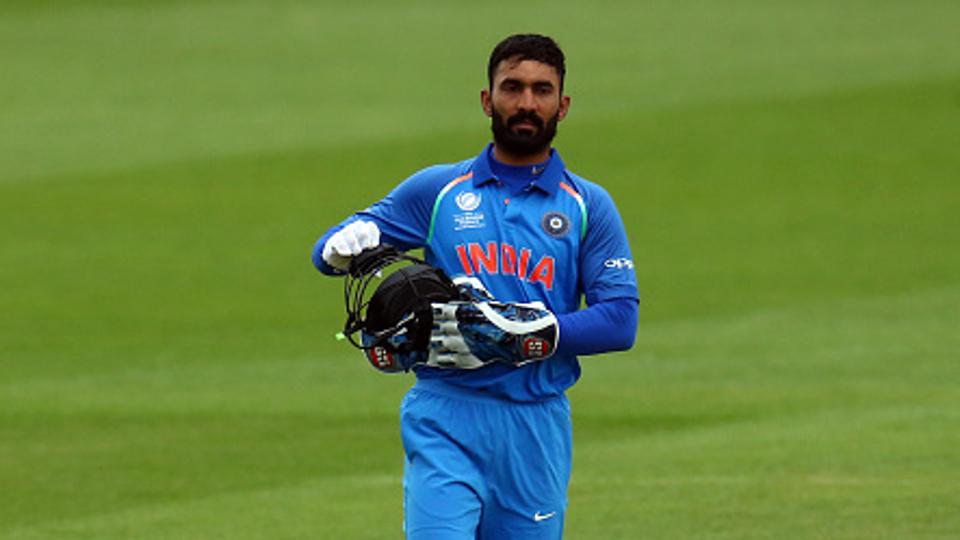
Dinesh Karthik will captain Kolkata Knight Riders in the 2018 Indian Premier League.(Getty Images)

Dinesh Karthik was named captain of the Kolkata Knight Riders on Sunday ahead of the 2018 Indian Premier League (IPL) season. The announcement was made live on Star Sports by the team management on Sunday morning.

Talking to reporters after the announcement, Karthik said he was very pleased to receive the honour and would like to carry on with the legacy of past captains Gautam Gambhir and Sourav Ganguly.

In the run up to the announcement, Karnataka batsman Robin Uthappa had emerged as the frontrunner to lead the two-time IPL winning franchise from Kolkata. Uthappa, who was later named vice captain, though welcomed the decision and said the right choice was made.

Karthik was also all praise for Uthappa and said both of them complement each other well.

“Robin and I share a great deal of camaraderie. We have different personalities and therefore we play a perfect foil to each other. I take my decisions rationallly and don’t like to show too much of emotion. Robin, on the other hand, is quite emotional and loves to wear his heart on his sleeve. In that sense, we make a perfect pair,” the 32-year-old said.

Karthik also appeared excited with the talent pool that is at his disposal at the KKR.

“We have a great balance. Lynn, Russell, Starc and Narine are probably going to be our four overseas players in the team and all of them are proven match winners. We have a great bunch of Indian players as well.”

The Tamil Nadu batsman also said he would use this opportunity to press for his inclusion in the Indian team as well.

“I am looking forward to doing well with bat as well as gloves behind the stumps. Hopefully, I will be able to establish myself as a key member of Indian team in future as well.”

source: http://www.hindustantimes.com / Hindustan Times / Home> Sports> Cricket / by Ankit Kumar Singh, Mumbai / March 04th, 2018